
密智君 Crypto Plus AI
1.9k Posts

密智君 Crypto Plus AI
Report
Block User
分享AI Crypto创新洞见,AI实用工具 & 技巧分享,心得,热门话题探讨#CryptoAGI
111 Following
1.0K+ Followers
1.9K+ Liked
Posts
All
Quotes
Videos
Live
PINNED
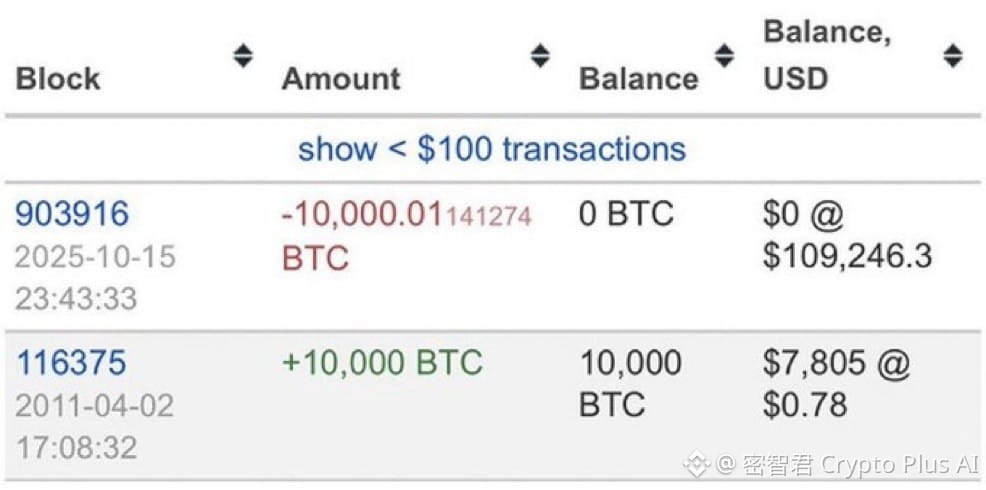
Wow, this guy made 140,000 times his investment in 14 years. Who else can be as awesome as him? In 2011, he spent less than $8,000 to buy 10,000 $BTC, when one Bitcoin was only $0.78.
So what happened? He just held on for 14 years! By October 2025, when Bitcoin broke through $109,000, he sold everything and cashed out over $1 billion. A 140,000 times return, this is not just investment, this is simply like cultivating immortality.
To be honest, what I admire most is not that he bought early, but that he was able to hold on. Over these 14 years, he experienced hundreds of crashes and endured four long bear markets lasting several years. How many times did the market halve, how many times did the media shout 'Bitcoin will go to zero', and he never wavered once. This kind of determination is really not something ordinary people can possess.
I used to have quite a few good stocks, but I sold when they rose two or three times, and cut losses when they fell by 20%. Seeing others get a 140,000 times increase, I can only mock myself: people like us who can't hold on deserve to miss out on big money.
Risk Warning: This kind of 'get rich quick myth' is an extreme case of survivor bias. Just because he made a fortune after 14 years, don’t think you can do the same. Investment requires caution; first, ask yourself if you can withstand a 90% drawdown.
What do you think? If you bought 10,000 Bitcoins in 2011, could you still hold on until now? Be honest in the comments, at which point would you get off the ride?
$BTC
Wow, this guy made 140,000 times his investment in 14 years. Who else can be as awesome as him? In 2011, he spent less than $8,000 to buy 10,000 $BTC , when one Bitcoin was only $0.78.
So what happened? He just held on for 14 years! By October 2025, when Bitcoin broke through $109,000, he sold everything and cashed out over $1 billion. A 140,000 times return, this is not just investment, this is simply like cultivating immortality.
To be honest, what I admire most is not that he bought early, but that he was able to hold on. Over these 14 years, he experienced hundreds of crashes and endured four long bear markets lasting several years. How many times did the market halve, how many times did the media shout 'Bitcoin will go to zero', and he never wavered once. This kind of determination is really not something ordinary people can possess.
I used to have quite a few good stocks, but I sold when they rose two or three times, and cut losses when they fell by 20%. Seeing others get a 140,000 times increase, I can only mock myself: people like us who can't hold on deserve to miss out on big money.
Risk Warning: This kind of 'get rich quick myth' is an extreme case of survivor bias. Just because he made a fortune after 14 years, don’t think you can do the same. Investment requires caution; first, ask yourself if you can withstand a 90% drawdown.
What do you think? If you bought 10,000 Bitcoins in 2011, could you still hold on until now? Be honest in the comments, at which point would you get off the ride?
$BTC
So what happened? He just held on for 14 years! By October 2025, when Bitcoin broke through $109,000, he sold everything and cashed out over $1 billion. A 140,000 times return, this is not just investment, this is simply like cultivating immortality.
To be honest, what I admire most is not that he bought early, but that he was able to hold on. Over these 14 years, he experienced hundreds of crashes and endured four long bear markets lasting several years. How many times did the market halve, how many times did the media shout 'Bitcoin will go to zero', and he never wavered once. This kind of determination is really not something ordinary people can possess.
I used to have quite a few good stocks, but I sold when they rose two or three times, and cut losses when they fell by 20%. Seeing others get a 140,000 times increase, I can only mock myself: people like us who can't hold on deserve to miss out on big money.
Risk Warning: This kind of 'get rich quick myth' is an extreme case of survivor bias. Just because he made a fortune after 14 years, don’t think you can do the same. Investment requires caution; first, ask yourself if you can withstand a 90% drawdown.
What do you think? If you bought 10,000 Bitcoins in 2011, could you still hold on until now? Be honest in the comments, at which point would you get off the ride?
$BTC
49
2
52
97.8k
🎙️ Today’s Shanzhai Coin Rebound—Can BTC Reach 90,000?
End
02 h 59 m 26 s
37

BNB
Holding
-388.65
1
0
Holy crap! He stole 50,000 bitcoins from the Silk Road, hid them for 9 years, and in the end the FBI found the key inside a popcorn tin.
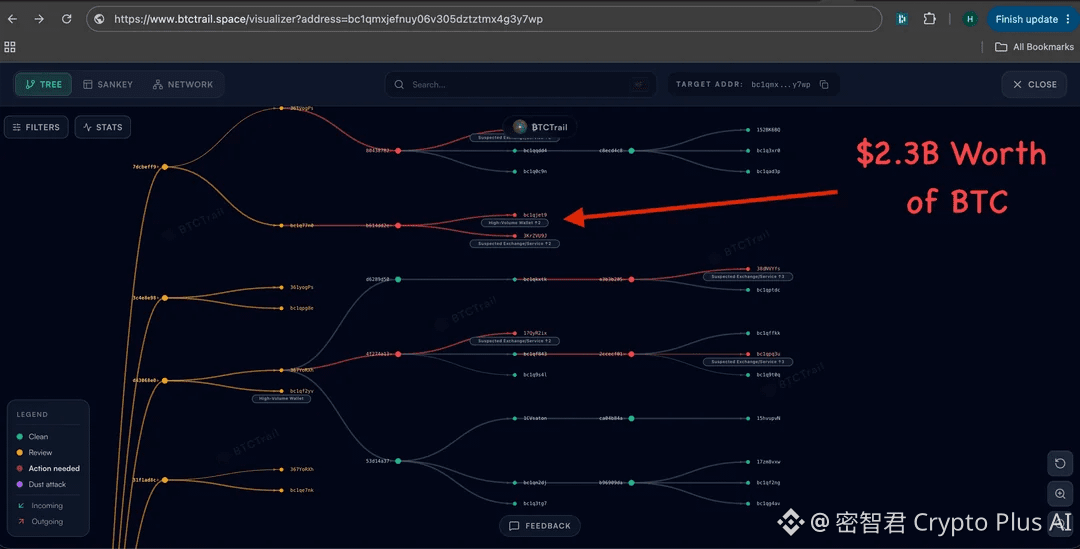
A big shot has mapped out the bitcoin transaction history for James Zhong, who was indicted. In 2012, he used a payment system vulnerability on Silk Road to steal about 50,000 bitcoins. After that, he hid those bitcoins away for nearly a decade.
In November 2021, the U.S. Internal Revenue Service Criminal Investigation division raided his residence in Gainesville and seized approximately 50,491 bitcoins (worth about $3.36 billion at the time) from equipment in a floor safe... as well as a single-board computer tucked under a blanket inside a popcorn tin stashed in a bathroom wall cabinet.
There were also: $661,000 in cash and 25 Casascius coins (each equivalent to 1 bitcoin).
What really tripped him up was the on-chain transactions. Years later, he mixed an address related to the Silk Road into a spending record from a wallet that had already been registered under his name. Just that one transaction—turns out it was that simple.
I traced how the funds were consolidated into the seized wallet. Watching billions that had been idle for years suddenly pour into one place—it's absolutely insane.
Moral: You might be able to outsmart the Silk Road, but you can’t outsmart a popcorn tin. 😂
What do you think? #比特币突破8万美元大关 $BTC
Holy crap! He stole 50,000 bitcoins from the Silk Road, hid them for 9 years, and in the end the FBI found the key inside a popcorn tin.
A big shot has mapped out the bitcoin transaction history for James Zhong, who was indicted. In 2012, he used a payment system vulnerability on Silk Road to steal about 50,000 bitcoins. After that, he hid those bitcoins away for nearly a decade.
In November 2021, the U.S. Internal Revenue Service Criminal Investigation division raided his residence in Gainesville and seized approximately 50,491 bitcoins (worth about $3.36 billion at the time) from equipment in a floor safe... as well as a single-board computer tucked under a blanket inside a popcorn tin stashed in a bathroom wall cabinet.
There were also: $661,000 in cash and 25 Casascius coins (each equivalent to 1 bitcoin).
What really tripped him up was the on-chain transactions. Years later, he mixed an address related to the Silk Road into a spending record from a wallet that had already been registered under his name. Just that one transaction—turns out it was that simple.
I traced how the funds were consolidated into the seized wallet. Watching billions that had been idle for years suddenly pour into one place—it's absolutely insane.
Moral: You might be able to outsmart the Silk Road, but you can’t outsmart a popcorn tin. 😂
What do you think? #比特币突破8万美元大关 $BTC
A big shot has mapped out the bitcoin transaction history for James Zhong, who was indicted. In 2012, he used a payment system vulnerability on Silk Road to steal about 50,000 bitcoins. After that, he hid those bitcoins away for nearly a decade.
In November 2021, the U.S. Internal Revenue Service Criminal Investigation division raided his residence in Gainesville and seized approximately 50,491 bitcoins (worth about $3.36 billion at the time) from equipment in a floor safe... as well as a single-board computer tucked under a blanket inside a popcorn tin stashed in a bathroom wall cabinet.
There were also: $661,000 in cash and 25 Casascius coins (each equivalent to 1 bitcoin).
What really tripped him up was the on-chain transactions. Years later, he mixed an address related to the Silk Road into a spending record from a wallet that had already been registered under his name. Just that one transaction—turns out it was that simple.
I traced how the funds were consolidated into the seized wallet. Watching billions that had been idle for years suddenly pour into one place—it's absolutely insane.
Moral: You might be able to outsmart the Silk Road, but you can’t outsmart a popcorn tin. 😂
What do you think? #比特币突破8万美元大关 $BTC
1
1.1k
Damn, Musk is still awesome! Someone asked Musk: with wealth worth several tens of trillions that you could never possibly spend in many lifetimes, why does he still maintain such high-intensity work for the long term?
He said that lying on a beach doing nothing is the worst life he can imagine. He would get so bored he’d go crazy—he likes high intensity.
Money can explain why someone starts working, but it can’t explain why they can’t stop even after having everything. For Musk, work isn’t just about earning wealth—it’s like a kind of spiritual order: when problems are difficult enough and rockets, cars, chips, and AI fill all his attention, other noise temporarily fades away.
What a person truly can’t let go of is often not money, but the problem that makes them feel like they’re still moving forward. Do you think Musk’s work style is something that can be learned? #巴菲特转任伯克希尔荣誉董事长 $SPCXB
Damn, Musk is still awesome! Someone asked Musk: with wealth worth several tens of trillions that you could never possibly spend in many lifetimes, why does he still maintain such high-intensity work for the long term?
He said that lying on a beach doing nothing is the worst life he can imagine. He would get so bored he’d go crazy—he likes high intensity.
Money can explain why someone starts working, but it can’t explain why they can’t stop even after having everything. For Musk, work isn’t just about earning wealth—it’s like a kind of spiritual order: when problems are difficult enough and rockets, cars, chips, and AI fill all his attention, other noise temporarily fades away.
What a person truly can’t let go of is often not money, but the problem that makes them feel like they’re still moving forward. Do you think Musk’s work style is something that can be learned? #巴菲特转任伯克希尔荣誉董事长 $SPCXB
He said that lying on a beach doing nothing is the worst life he can imagine. He would get so bored he’d go crazy—he likes high intensity.
Money can explain why someone starts working, but it can’t explain why they can’t stop even after having everything. For Musk, work isn’t just about earning wealth—it’s like a kind of spiritual order: when problems are difficult enough and rockets, cars, chips, and AI fill all his attention, other noise temporarily fades away.
What a person truly can’t let go of is often not money, but the problem that makes them feel like they’re still moving forward. Do you think Musk’s work style is something that can be learned? #巴菲特转任伯克希尔荣誉董事长 $SPCXB
2
354
Damn, this is way too abstract. V God is starting to study political science—like what effective altruism and defensive accelerationism. Is this them starting to seize power after being pushed out of the foundation? $ETH #V神
Damn, this is way too abstract. V God is starting to study political science—like what effective altruism and defensive accelerationism. Is this them starting to seize power after being pushed out of the foundation? $ETH #V神

225
September 17, 2026 Latest Market Analysis|ZEC Surges by More Than 20%, but BTC Is Still Stuck
Brothers, last night the Fed raised rates by 25 basis points and signaled that there may be more hikes later this year. The US dollar climbed to a seven-week high, and US Treasury yields moved higher, keeping pressure on risk assets. However, after the rate hike landed, crypto didn’t continue to sell off in unison: as of this morning, $BTC is about $76,100, $ETH is about $2,420—overall the trend has been relatively stable.
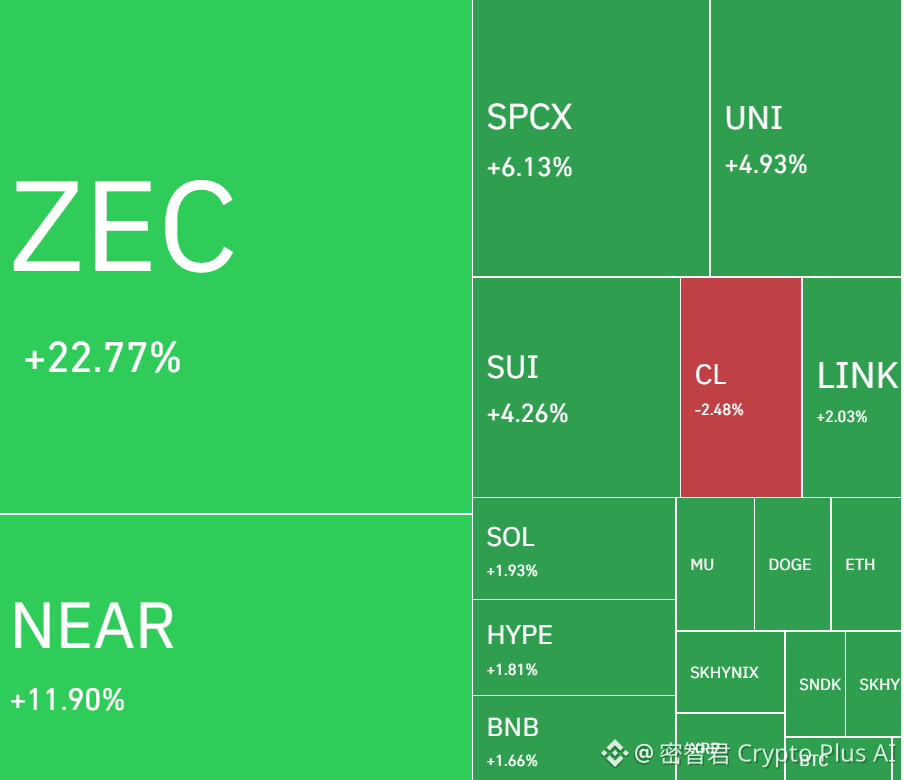
$ZEC is up about 22.8%, NEAR is up about 11.9%, yet BTC’s gains are minimal. Capital is chasing a small number of strong coins, so you can’t conclude from this that the entire altcoin market has turned bullish. ZEC’s daily gain is more than 20%; if it then falls back with volume, volatility will quickly amplify as well.
Gold XAU is taking a different path: after spiking higher last night, it pulled back, and in the Asian morning it’s around $4,269. Next, we’ll need to see whether the US dollar and Treasury yields can stop rising.
For BTC, first watch whether last night’s low at $75,200 can hold. Holding the level is only a sign of stabilization—true strength would only be possible after it reclaims the prior high. Do you think BTC still has a chance to surge toward $90,000 by year-end? #美联储加息25基点美股收跌 #Zcash上涨6%
September 17, 2026 Latest Market Analysis|ZEC Surges by More Than 20%, but BTC Is Still Stuck
Brothers, last night the Fed raised rates by 25 basis points and signaled that there may be more hikes later this year. The US dollar climbed to a seven-week high, and US Treasury yields moved higher, keeping pressure on risk assets. However, after the rate hike landed, crypto didn’t continue to sell off in unison: as of this morning, $BTC is about $76,100, $ETH is about $2,420—overall the trend has been relatively stable.
$ZEC is up about 22.8%, NEAR is up about 11.9%, yet BTC’s gains are minimal. Capital is chasing a small number of strong coins, so you can’t conclude from this that the entire altcoin market has turned bullish. ZEC’s daily gain is more than 20%; if it then falls back with volume, volatility will quickly amplify as well.
Gold XAU is taking a different path: after spiking higher last night, it pulled back, and in the Asian morning it’s around $4,269. Next, we’ll need to see whether the US dollar and Treasury yields can stop rising.
For BTC, first watch whether last night’s low at $75,200 can hold. Holding the level is only a sign of stabilization—true strength would only be possible after it reclaims the prior high. Do you think BTC still has a chance to surge toward $90,000 by year-end? #美联储加息25基点美股收跌 #Zcash上涨6%
Brothers, last night the Fed raised rates by 25 basis points and signaled that there may be more hikes later this year. The US dollar climbed to a seven-week high, and US Treasury yields moved higher, keeping pressure on risk assets. However, after the rate hike landed, crypto didn’t continue to sell off in unison: as of this morning, $BTC is about $76,100, $ETH is about $2,420—overall the trend has been relatively stable.
$ZEC is up about 22.8%, NEAR is up about 11.9%, yet BTC’s gains are minimal. Capital is chasing a small number of strong coins, so you can’t conclude from this that the entire altcoin market has turned bullish. ZEC’s daily gain is more than 20%; if it then falls back with volume, volatility will quickly amplify as well.
Gold XAU is taking a different path: after spiking higher last night, it pulled back, and in the Asian morning it’s around $4,269. Next, we’ll need to see whether the US dollar and Treasury yields can stop rising.
For BTC, first watch whether last night’s low at $75,200 can hold. Holding the level is only a sign of stabilization—true strength would only be possible after it reclaims the prior high. Do you think BTC still has a chance to surge toward $90,000 by year-end? #美联储加息25基点美股收跌 #Zcash上涨6%
429
September 15, 2026 Latest Morning News | The Fed decision is approaching—BTC and gold are both waiting for direction
Brothers, during today’s Asia morning session, $BTC continues to trade in a range of 76,000–78,000 USD, while $ETH remains around 2,500 USD. In the U.S., August CPI year-over-year rose 3.4%, and the market has already priced in this week’s rate hike to a high degree. The 10-year Treasury yield is nearing 5%, and risk assets remain pressured from above.
In the latest verifiable trading days, U.S. spot BTC ETFs saw net outflows of 282.6 million USD, marking a third consecutive day of outflows. If BTC can hold above 78,000 USD, it may continue to test 80,000 USD. If it breaks below 76,000 USD, watch the 72,000–74,000 USD range for support. Only after ETH holds above 2,500 USD will there be an opportunity to test 2,600 USD; if it breaks below 2,400 USD, the structure weakens.
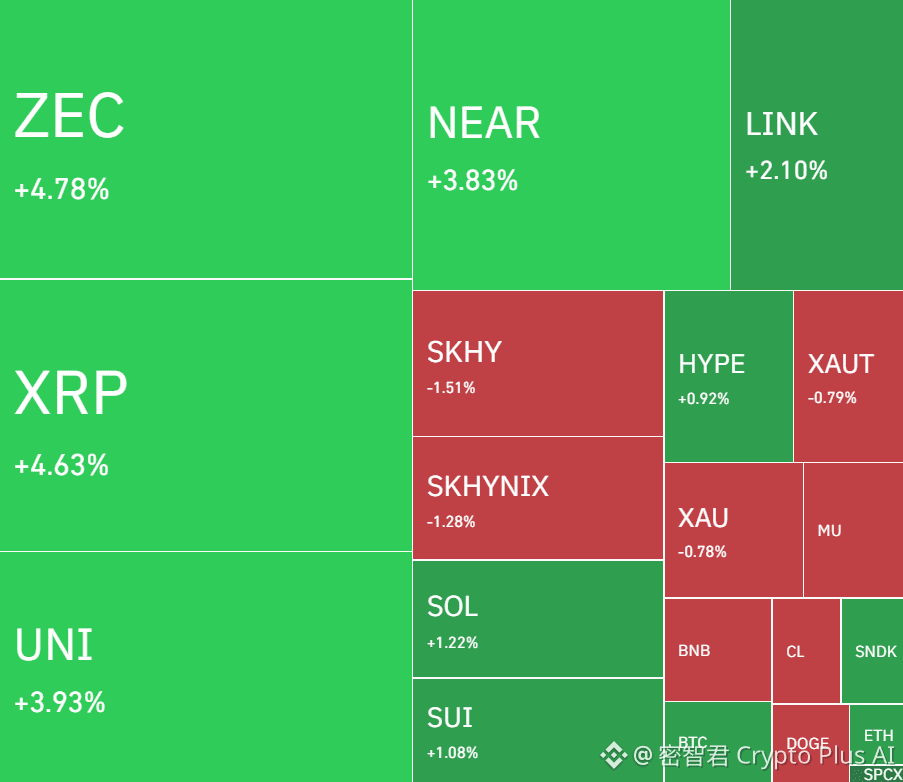
Altcoins generally started to rebound: $ZEC is up 4.78%, XRP is up 4.63%, UNI up 3.93%, NEAR up 3.83%, and LINK, SOL, and SUI have also shown rebounds. BTC has not yet broken through a key range; for now, it remains in a phase of local rotation.
Gold XAU stays around 4,350 USD. Geopolitical tensions and energy-driven inflation support safe-haven demand, but elevated U.S. Treasury yields limit upside. 4,300 USD remains short-term support. After a break above 4,400 USD, look toward 4,450 USD; if it falls below 4,300 USD, watch 4,250 USD.
The U.S. Federal Reserve meetings on September 15–16 are the key variables this week. While rate hikes have already been priced by most of the market, more attention is now on the subsequent interest-rate path. How is your position today? #比特币守稳77000美元上方 #SEC主席敦促国会推进CLARITY法案
September 15, 2026 Latest Morning News | The Fed decision is approaching—BTC and gold are both waiting for direction
Brothers, during today’s Asia morning session, $BTC continues to trade in a range of 76,000–78,000 USD, while $ETH remains around 2,500 USD. In the U.S., August CPI year-over-year rose 3.4%, and the market has already priced in this week’s rate hike to a high degree. The 10-year Treasury yield is nearing 5%, and risk assets remain pressured from above.
In the latest verifiable trading days, U.S. spot BTC ETFs saw net outflows of 282.6 million USD, marking a third consecutive day of outflows. If BTC can hold above 78,000 USD, it may continue to test 80,000 USD. If it breaks below 76,000 USD, watch the 72,000–74,000 USD range for support. Only after ETH holds above 2,500 USD will there be an opportunity to test 2,600 USD; if it breaks below 2,400 USD, the structure weakens.
Altcoins generally started to rebound: $ZEC is up 4.78%, XRP is up 4.63%, UNI up 3.93%, NEAR up 3.83%, and LINK, SOL, and SUI have also shown rebounds. BTC has not yet broken through a key range; for now, it remains in a phase of local rotation.
Gold XAU stays around 4,350 USD. Geopolitical tensions and energy-driven inflation support safe-haven demand, but elevated U.S. Treasury yields limit upside. 4,300 USD remains short-term support. After a break above 4,400 USD, look toward 4,450 USD; if it falls below 4,300 USD, watch 4,250 USD.
The U.S. Federal Reserve meetings on September 15–16 are the key variables this week. While rate hikes have already been priced by most of the market, more attention is now on the subsequent interest-rate path. How is your position today? #比特币守稳77000美元上方 #SEC主席敦促国会推进CLARITY法案
Brothers, during today’s Asia morning session, $BTC continues to trade in a range of 76,000–78,000 USD, while $ETH remains around 2,500 USD. In the U.S., August CPI year-over-year rose 3.4%, and the market has already priced in this week’s rate hike to a high degree. The 10-year Treasury yield is nearing 5%, and risk assets remain pressured from above.
In the latest verifiable trading days, U.S. spot BTC ETFs saw net outflows of 282.6 million USD, marking a third consecutive day of outflows. If BTC can hold above 78,000 USD, it may continue to test 80,000 USD. If it breaks below 76,000 USD, watch the 72,000–74,000 USD range for support. Only after ETH holds above 2,500 USD will there be an opportunity to test 2,600 USD; if it breaks below 2,400 USD, the structure weakens.
Altcoins generally started to rebound: $ZEC is up 4.78%, XRP is up 4.63%, UNI up 3.93%, NEAR up 3.83%, and LINK, SOL, and SUI have also shown rebounds. BTC has not yet broken through a key range; for now, it remains in a phase of local rotation.
Gold XAU stays around 4,350 USD. Geopolitical tensions and energy-driven inflation support safe-haven demand, but elevated U.S. Treasury yields limit upside. 4,300 USD remains short-term support. After a break above 4,400 USD, look toward 4,450 USD; if it falls below 4,300 USD, watch 4,250 USD.
The U.S. Federal Reserve meetings on September 15–16 are the key variables this week. While rate hikes have already been priced by most of the market, more attention is now on the subsequent interest-rate path. How is your position today? #比特币守稳77000美元上方 #SEC主席敦促国会推进CLARITY法案
396
🎙️ Good morning on Monday! A video that explains the most famous trading theory in depth—Chan theory. Let's make money together!

End
03 h 23 m 02 s
23
BNB
Holding
-453.76
1
0
Is an ETH bull market coming? September 14, 2026 | ETH trading volume surpasses BTC, and the market is still waiting for the Fed’s interest-rate-hike guidance!
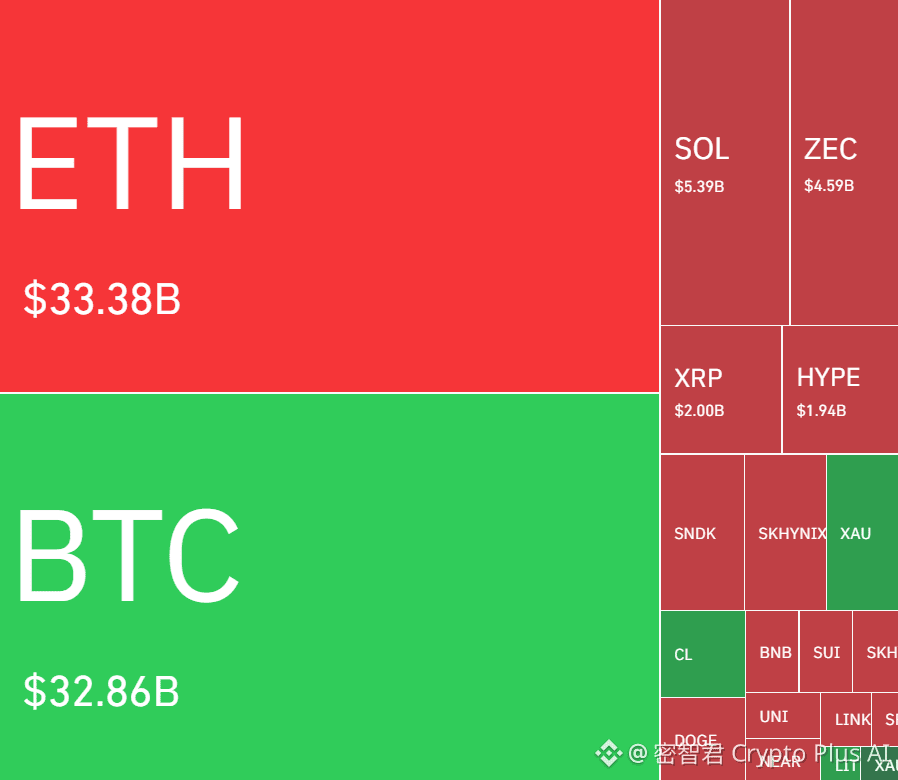
Good morning, brothers—happy Monday! The most obvious change this morning is that $ETH ’s 24-hour trading volume reached $33.38 billion, slightly higher than $BTC ’s $32.86 billion, but the price performance is weaker than BTC. Trading volume has expanded without a matching rise, suggesting that ETH still faces heavy turnover pressure around the $2,500 level.
Altcoins haven’t formed a unified direction. $UNI strengthened against the trend; NEAR and HYPE rose slightly. ZEC fell 2.67%, while SOL, SUI, and LINK continued to be relatively weak. Storage-related stocks like SK Hynix and their on-chain counterparts fell in sync—risk capital is still concentrated in only a handful of assets.
Gold (XAU) closed at around $4,349. The Middle East situation supports safe-haven demand, but the 10-year U.S. Treasury yield is approaching 5% and the market has heavily priced in a September rate hike, keeping gold under pressure. $4,300 is short-term support; if it holds, gold could test $4,400–$4,450. If it breaks down, watch $4,250.
Continue to monitor BTC at $76,000–$78,000. Only if it holds above $78,000 will there be conditions to retest $80,000. If it breaks below $76,000, the correction could extend to the $72,000–$74,000 range. The Fed meetings on September 15–16 will determine the direction for the next phase. How’s your position today? #全网爆仓6.74亿美元 #比特币四周内第三次单块重组
Is an ETH bull market coming? September 14, 2026 | ETH trading volume surpasses BTC, and the market is still waiting for the Fed’s interest-rate-hike guidance!
Good morning, brothers—happy Monday! The most obvious change this morning is that $ETH ’s 24-hour trading volume reached $33.38 billion, slightly higher than $BTC ’s $32.86 billion, but the price performance is weaker than BTC. Trading volume has expanded without a matching rise, suggesting that ETH still faces heavy turnover pressure around the $2,500 level.
Altcoins haven’t formed a unified direction. $UNI strengthened against the trend; NEAR and HYPE rose slightly. ZEC fell 2.67%, while SOL, SUI, and LINK continued to be relatively weak. Storage-related stocks like SK Hynix and their on-chain counterparts fell in sync—risk capital is still concentrated in only a handful of assets.
Gold (XAU) closed at around $4,349. The Middle East situation supports safe-haven demand, but the 10-year U.S. Treasury yield is approaching 5% and the market has heavily priced in a September rate hike, keeping gold under pressure. $4,300 is short-term support; if it holds, gold could test $4,400–$4,450. If it breaks down, watch $4,250.
Continue to monitor BTC at $76,000–$78,000. Only if it holds above $78,000 will there be conditions to retest $80,000. If it breaks below $76,000, the correction could extend to the $72,000–$74,000 range. The Fed meetings on September 15–16 will determine the direction for the next phase. How’s your position today? #全网爆仓6.74亿美元 #比特币四周内第三次单块重组
Good morning, brothers—happy Monday! The most obvious change this morning is that $ETH ’s 24-hour trading volume reached $33.38 billion, slightly higher than $BTC ’s $32.86 billion, but the price performance is weaker than BTC. Trading volume has expanded without a matching rise, suggesting that ETH still faces heavy turnover pressure around the $2,500 level.
Altcoins haven’t formed a unified direction. $UNI strengthened against the trend; NEAR and HYPE rose slightly. ZEC fell 2.67%, while SOL, SUI, and LINK continued to be relatively weak. Storage-related stocks like SK Hynix and their on-chain counterparts fell in sync—risk capital is still concentrated in only a handful of assets.
Gold (XAU) closed at around $4,349. The Middle East situation supports safe-haven demand, but the 10-year U.S. Treasury yield is approaching 5% and the market has heavily priced in a September rate hike, keeping gold under pressure. $4,300 is short-term support; if it holds, gold could test $4,400–$4,450. If it breaks down, watch $4,250.
Continue to monitor BTC at $76,000–$78,000. Only if it holds above $78,000 will there be conditions to retest $80,000. If it breaks below $76,000, the correction could extend to the $72,000–$74,000 range. The Fed meetings on September 15–16 will determine the direction for the next phase. How’s your position today? #全网爆仓6.74亿美元 #比特币四周内第三次单块重组
272
Verified
September 13, 2026|Weekend BTC sees low-volume choppy consolidation as gold waits for Fed pricing
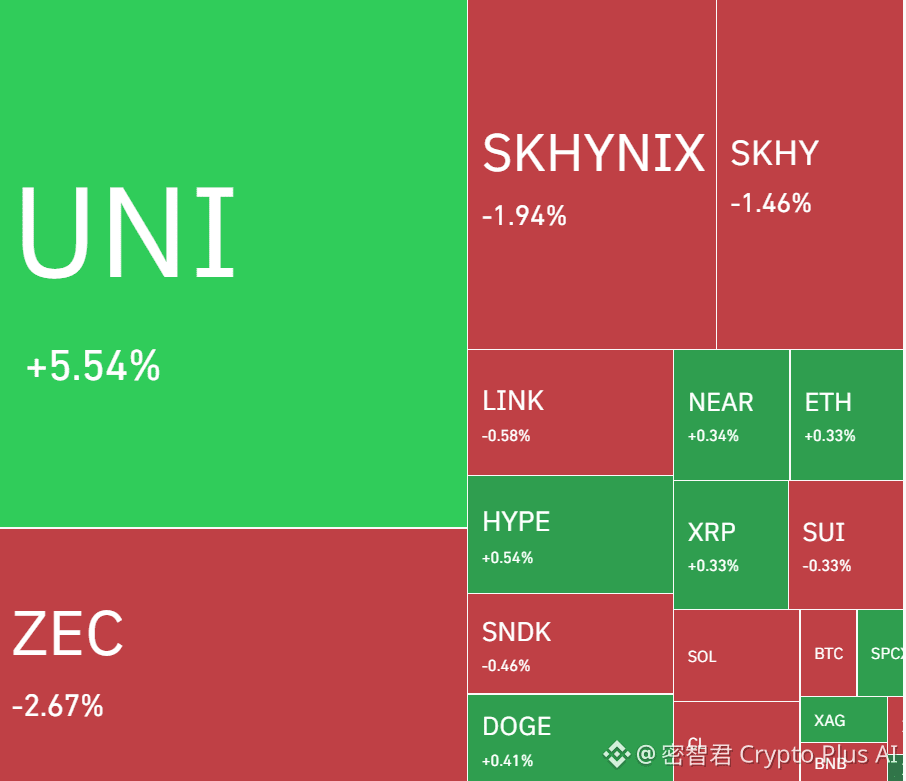
Brothers, are you all resting on the weekend? The weekend market hasn’t formed a full rebound. $BTC is still hovering around $77,000, and $ETH is up slightly by 0.33%. UNI is up 5.54%; HYPE, NEAR, and XRP are modestly stronger, while ZEC is down 2.67%. SOL and SUI remain relatively weak. Capital is concentrated in a handful of coins, and the altcoin action is still mainly rotation.
The macro market is closed over the weekend. Gold XAU latest settled around $4,349, down about 1.4% last week. Geopolitical risk supports safe-haven demand, but 10-year U.S. Treasury yields are nearing 5%, and the probability of a September rate hike has risen to nearly 90%, limiting gold’s upside.
For XAU next week, watch support at $4,300 first. If it holds, the $4,400–$4,450 area can be retested. If it breaks down, then look to $4,250. For BTC, watch the $76,000–$78,000 range. If it reclaims $78,000, there may be another attempt at $80,000. If it breaks below $76,000, it could continue to look for support in the $72,000–$74,000 area.
The latest U.S. spot BTC ETF saw net outflows of $282.6 million on the most recent trading day, marking the third consecutive day of outflows. Next week’s Fed rate decision will simultaneously affect BTC, gold, and tech stocks. Hold your positions—we just need to wait for the bull market to arrive. What do you think? #美国10年期国债收益率逼近5% #Clarity法案9月15日程序性投票
September 13, 2026|Weekend BTC sees low-volume choppy consolidation as gold waits for Fed pricing
Brothers, are you all resting on the weekend? The weekend market hasn’t formed a full rebound. $BTC is still hovering around $77,000, and $ETH is up slightly by 0.33%. UNI is up 5.54%; HYPE, NEAR, and XRP are modestly stronger, while ZEC is down 2.67%. SOL and SUI remain relatively weak. Capital is concentrated in a handful of coins, and the altcoin action is still mainly rotation.
The macro market is closed over the weekend. Gold XAU latest settled around $4,349, down about 1.4% last week. Geopolitical risk supports safe-haven demand, but 10-year U.S. Treasury yields are nearing 5%, and the probability of a September rate hike has risen to nearly 90%, limiting gold’s upside.
For XAU next week, watch support at $4,300 first. If it holds, the $4,400–$4,450 area can be retested. If it breaks down, then look to $4,250. For BTC, watch the $76,000–$78,000 range. If it reclaims $78,000, there may be another attempt at $80,000. If it breaks below $76,000, it could continue to look for support in the $72,000–$74,000 area.
The latest U.S. spot BTC ETF saw net outflows of $282.6 million on the most recent trading day, marking the third consecutive day of outflows. Next week’s Fed rate decision will simultaneously affect BTC, gold, and tech stocks. Hold your positions—we just need to wait for the bull market to arrive. What do you think? #美国10年期国债收益率逼近5% #Clarity法案9月15日程序性投票
Brothers, are you all resting on the weekend? The weekend market hasn’t formed a full rebound. $BTC is still hovering around $77,000, and $ETH is up slightly by 0.33%. UNI is up 5.54%; HYPE, NEAR, and XRP are modestly stronger, while ZEC is down 2.67%. SOL and SUI remain relatively weak. Capital is concentrated in a handful of coins, and the altcoin action is still mainly rotation.
The macro market is closed over the weekend. Gold XAU latest settled around $4,349, down about 1.4% last week. Geopolitical risk supports safe-haven demand, but 10-year U.S. Treasury yields are nearing 5%, and the probability of a September rate hike has risen to nearly 90%, limiting gold’s upside.
For XAU next week, watch support at $4,300 first. If it holds, the $4,400–$4,450 area can be retested. If it breaks down, then look to $4,250. For BTC, watch the $76,000–$78,000 range. If it reclaims $78,000, there may be another attempt at $80,000. If it breaks below $76,000, it could continue to look for support in the $72,000–$74,000 area.
The latest U.S. spot BTC ETF saw net outflows of $282.6 million on the most recent trading day, marking the third consecutive day of outflows. Next week’s Fed rate decision will simultaneously affect BTC, gold, and tech stocks. Hold your positions—we just need to wait for the bull market to arrive. What do you think? #美国10年期国债收益率逼近5% #Clarity法案9月15日程序性投票
2
1.3k
September 12, 2026 Morning Report | Oil Prices Pull Back Driving a Rebound; Gold Holds at $4,300
Brothers, enjoy your weekend—let’s make money! The U.S. August CPI rose 0.4% month-over-month and 3.4% year-over-year; the probability of a September rate hike has risen to nearly 90%. However, Brent crude pulled back from a peak of $109.97 to around $104. U.S. stocks ended a four-day losing streak: the S&P rose 0.86% and the Nasdaq gained 0.96%.
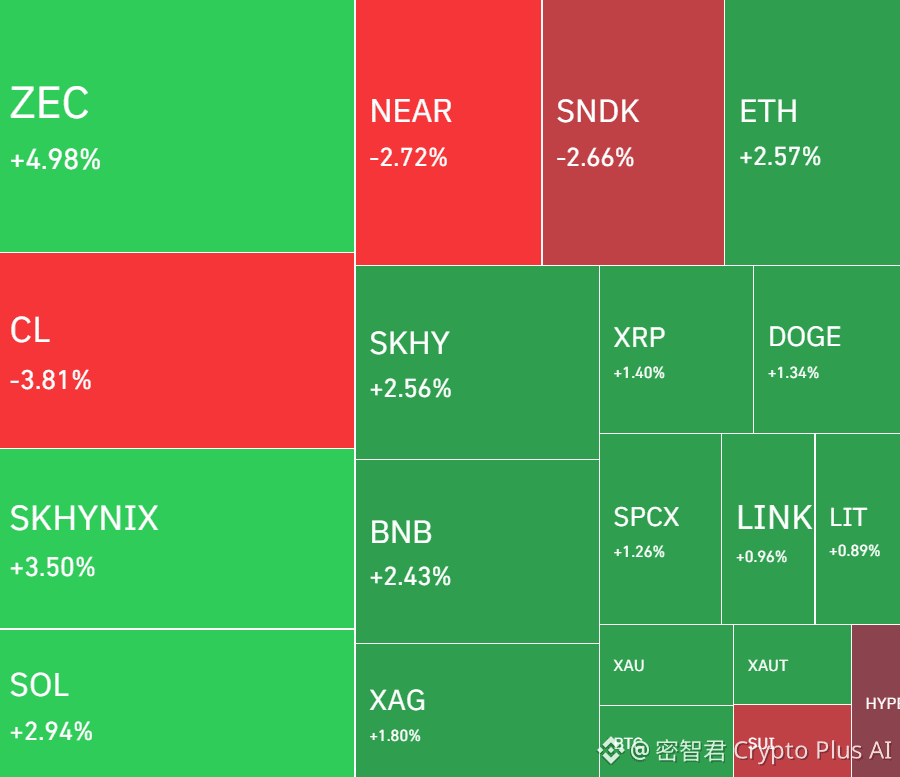
$BTC This morning around $77,300; $ETH about $2,538. ETH is up 2.57%, with SOL, BNB, and XRP rebounding in sync; ZEC rose 4.98%. NEAR and SanDisk continue to fall. The latest trading day for U.S. spot BTC ETFs saw net outflows of $282.6 million, the third consecutive day of outflows. Even though BTC has rebounded, it still lacks confirmation from spot inflow.
Gold $XAUT is trading around $4,349, up about 0.75% intraday. High interest rates suppress gold valuation, but geopolitical risks and inflation concerns driven by oil prices still provide support. For the short term, first look at $4,300; if it holds, it can continue testing the $4,400–$4,450 zone. If it breaks below $4,300, the next support to watch is $4,250.
BTC holding above $76,000 still looks like range consolidation. Only if it reclaims $78,000 will there be a chance to retest $80,000. #现货黄金涨0.87%白银涨1.13% #比特币金叉后回落至7.7万美元
September 12, 2026 Morning Report | Oil Prices Pull Back Driving a Rebound; Gold Holds at $4,300
Brothers, enjoy your weekend—let’s make money! The U.S. August CPI rose 0.4% month-over-month and 3.4% year-over-year; the probability of a September rate hike has risen to nearly 90%. However, Brent crude pulled back from a peak of $109.97 to around $104. U.S. stocks ended a four-day losing streak: the S&P rose 0.86% and the Nasdaq gained 0.96%.
$BTC This morning around $77,300; $ETH about $2,538. ETH is up 2.57%, with SOL, BNB, and XRP rebounding in sync; ZEC rose 4.98%. NEAR and SanDisk continue to fall. The latest trading day for U.S. spot BTC ETFs saw net outflows of $282.6 million, the third consecutive day of outflows. Even though BTC has rebounded, it still lacks confirmation from spot inflow.
Gold $XAUT is trading around $4,349, up about 0.75% intraday. High interest rates suppress gold valuation, but geopolitical risks and inflation concerns driven by oil prices still provide support. For the short term, first look at $4,300; if it holds, it can continue testing the $4,400–$4,450 zone. If it breaks below $4,300, the next support to watch is $4,250.
BTC holding above $76,000 still looks like range consolidation. Only if it reclaims $78,000 will there be a chance to retest $80,000. #现货黄金涨0.87%白银涨1.13% #比特币金叉后回落至7.7万美元
Brothers, enjoy your weekend—let’s make money! The U.S. August CPI rose 0.4% month-over-month and 3.4% year-over-year; the probability of a September rate hike has risen to nearly 90%. However, Brent crude pulled back from a peak of $109.97 to around $104. U.S. stocks ended a four-day losing streak: the S&P rose 0.86% and the Nasdaq gained 0.96%.
$BTC This morning around $77,300; $ETH about $2,538. ETH is up 2.57%, with SOL, BNB, and XRP rebounding in sync; ZEC rose 4.98%. NEAR and SanDisk continue to fall. The latest trading day for U.S. spot BTC ETFs saw net outflows of $282.6 million, the third consecutive day of outflows. Even though BTC has rebounded, it still lacks confirmation from spot inflow.
Gold $XAUT is trading around $4,349, up about 0.75% intraday. High interest rates suppress gold valuation, but geopolitical risks and inflation concerns driven by oil prices still provide support. For the short term, first look at $4,300; if it holds, it can continue testing the $4,400–$4,450 zone. If it breaks below $4,300, the next support to watch is $4,250.
BTC holding above $76,000 still looks like range consolidation. Only if it reclaims $78,000 will there be a chance to retest $80,000. #现货黄金涨0.87%白银涨1.13% #比特币金叉后回落至7.7万美元
1
304
🎙️ It’s Friday—let’s talk about how the market should move?

End
03 h 38 m 16 s
9
BNB
Holding
-467.06
0
0
Damn! Oil prices surged above $108, and BTC is falling toward the $76,000 support level! Latest market news for Sep 11, 2026
Brothers, last night the US PPI rose 0.4% month-over-month. Brent crude briefly broke above $108. The 10-year US Treasury yield climbed to 4.95%, and the probability of a September rate hike rose to about 70%. The S&P and Nasdaq have fallen for the fourth consecutive day. $BTC this morning is around $76,800, down 1.57% over 24 hours; $ETH is around $2,475.
The market continues to tighten: $ZEC is down 11.27%. HYPE and SUI are down more than 4%, while XRP is down 3.35%. NEAR, however, is up 2.32% against the trend, but it’s not enough to lift altcoins overall. High rates are also weighing on precious metals: silver is down 5.7%, and gold and XAUT are down about 1.5%. Oil is up 5.47%, and capital is still circling energy-inflation trades.
US spot BTC ETFs saw a daily net outflow of $120.2 million, marking the second straight day of outflows. ETH ETFs had a net inflow of $34.75 million.
For BTC, first look at $75,600. As long as it holds, it still looks like a pullback within the range. If it breaks, watch $72,000. Only if it reclaims $78,000 will there be a chance to test $80,000 again. Tonight’s CPI will determine whether this round of rate and risk-asset repricing continues. What positions are you holding right now? #美国8月PPI涨幅低于预期 #美国8月PPI年率升至5.4%
Damn! Oil prices surged above $108, and BTC is falling toward the $76,000 support level! Latest market news for Sep 11, 2026
Brothers, last night the US PPI rose 0.4% month-over-month. Brent crude briefly broke above $108. The 10-year US Treasury yield climbed to 4.95%, and the probability of a September rate hike rose to about 70%. The S&P and Nasdaq have fallen for the fourth consecutive day. $BTC this morning is around $76,800, down 1.57% over 24 hours; $ETH is around $2,475.
The market continues to tighten: $ZEC is down 11.27%. HYPE and SUI are down more than 4%, while XRP is down 3.35%. NEAR, however, is up 2.32% against the trend, but it’s not enough to lift altcoins overall. High rates are also weighing on precious metals: silver is down 5.7%, and gold and XAUT are down about 1.5%. Oil is up 5.47%, and capital is still circling energy-inflation trades.
US spot BTC ETFs saw a daily net outflow of $120.2 million, marking the second straight day of outflows. ETH ETFs had a net inflow of $34.75 million.
For BTC, first look at $75,600. As long as it holds, it still looks like a pullback within the range. If it breaks, watch $72,000. Only if it reclaims $78,000 will there be a chance to test $80,000 again. Tonight’s CPI will determine whether this round of rate and risk-asset repricing continues. What positions are you holding right now? #美国8月PPI涨幅低于预期 #美国8月PPI年率升至5.4%
Brothers, last night the US PPI rose 0.4% month-over-month. Brent crude briefly broke above $108. The 10-year US Treasury yield climbed to 4.95%, and the probability of a September rate hike rose to about 70%. The S&P and Nasdaq have fallen for the fourth consecutive day. $BTC this morning is around $76,800, down 1.57% over 24 hours; $ETH is around $2,475.
The market continues to tighten: $ZEC is down 11.27%. HYPE and SUI are down more than 4%, while XRP is down 3.35%. NEAR, however, is up 2.32% against the trend, but it’s not enough to lift altcoins overall. High rates are also weighing on precious metals: silver is down 5.7%, and gold and XAUT are down about 1.5%. Oil is up 5.47%, and capital is still circling energy-inflation trades.
US spot BTC ETFs saw a daily net outflow of $120.2 million, marking the second straight day of outflows. ETH ETFs had a net inflow of $34.75 million.
For BTC, first look at $75,600. As long as it holds, it still looks like a pullback within the range. If it breaks, watch $72,000. Only if it reclaims $78,000 will there be a chance to test $80,000 again. Tonight’s CPI will determine whether this round of rate and risk-asset repricing continues. What positions are you holding right now? #美国8月PPI涨幅低于预期 #美国8月PPI年率升至5.4%

376
So happy! In Vietnam, what happens when two brides meet on their wedding day? They exchange bouquets to wish each other good luck. If it were you, would you bless them? $NVDAB
So happy! In Vietnam, what happens when two brides meet on their wedding day? They exchange bouquets to wish each other good luck. If it were you, would you bless them? $NVDAB
270
No matter whether you are a teacher with orders, a classroom teacher, or a master of harvesting people’s money, teachers—happy holidays to everyone! $BNB
No matter whether you are a teacher with orders, a classroom teacher, or a master of harvesting people’s money, teachers—happy holidays to everyone! $BNB

哈刚炒币
·
--
Happy Teachers' Day🎉

171
September 10, 2026 Latest Market Analysis|Oil Prices Break Through $100, Altcoins’ Sell-Off Clearly Expands!
Brothers, good morning! This morning, $BTC stayed around $79,000, while $ETH was about $2,465. Brent crude rose to $101.21, and the 10-year U.S. Treasury yield climbed to 4.84%; the S&P fell 0.48%, and the Nasdaq dropped 0.64%. Energy prices boosted inflation expectations, and the market is re-pricing the risk of further rate hikes, putting overall Crypto under pressure.
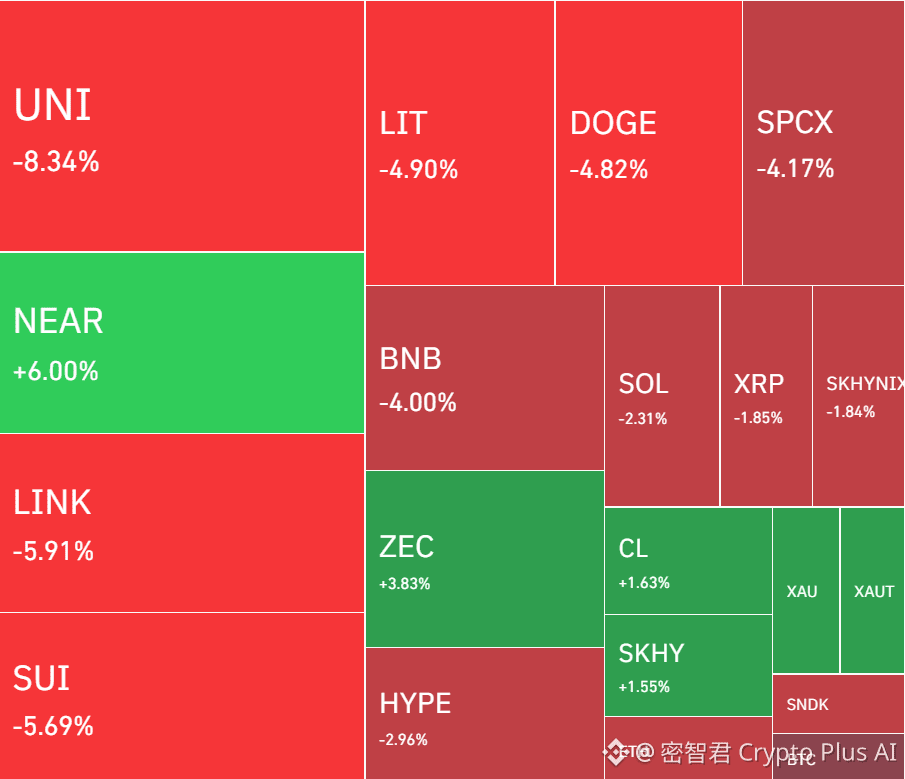
The market has shifted from BTC’s range-bound consolidation to a concentrated pullback in altcoins: $UNI is down 8.34%, LINK is down 5.91%, SUI is down 5.69%, and LIT, DOGE, and BNB have all fallen by more than 4%; NEAR is bucking the trend up 6%, ZEC is up 3.83%, and capital is still concentrated in a small number of independent movers.
On-chain stocks: SPCX is down 4.17%, and storage-related stocks are mixed. Oil and gold are rising, with risk-off and inflation trades leading.
The latest trading day for U.S. spot BTC ETFs saw net outflows of $46.6 million, ending three straight days of inflows. For BTC, first watch $78,000; if it breaks down, then focus on $75,600. Only after it reclaims $80,000 will there be conditions to test $82,800. For ETH, continue monitoring the $2,400–$2,500 range.
Tonight’s PPI and Friday’s CPI will determine whether rate-hike expectations can keep heating up.
What coin are you buying today?
#比特币突破79000美元 #比特币突破79000美元
September 10, 2026 Latest Market Analysis|Oil Prices Break Through $100, Altcoins’ Sell-Off Clearly Expands!
Brothers, good morning! This morning, $BTC stayed around $79,000, while $ETH was about $2,465. Brent crude rose to $101.21, and the 10-year U.S. Treasury yield climbed to 4.84%; the S&P fell 0.48%, and the Nasdaq dropped 0.64%. Energy prices boosted inflation expectations, and the market is re-pricing the risk of further rate hikes, putting overall Crypto under pressure.
The market has shifted from BTC’s range-bound consolidation to a concentrated pullback in altcoins: $UNI is down 8.34%, LINK is down 5.91%, SUI is down 5.69%, and LIT, DOGE, and BNB have all fallen by more than 4%; NEAR is bucking the trend up 6%, ZEC is up 3.83%, and capital is still concentrated in a small number of independent movers.
On-chain stocks: SPCX is down 4.17%, and storage-related stocks are mixed. Oil and gold are rising, with risk-off and inflation trades leading.
The latest trading day for U.S. spot BTC ETFs saw net outflows of $46.6 million, ending three straight days of inflows. For BTC, first watch $78,000; if it breaks down, then focus on $75,600. Only after it reclaims $80,000 will there be conditions to test $82,800. For ETH, continue monitoring the $2,400–$2,500 range.
Tonight’s PPI and Friday’s CPI will determine whether rate-hike expectations can keep heating up.
What coin are you buying today?
#比特币突破79000美元 #比特币突破79000美元
Brothers, good morning! This morning, $BTC stayed around $79,000, while $ETH was about $2,465. Brent crude rose to $101.21, and the 10-year U.S. Treasury yield climbed to 4.84%; the S&P fell 0.48%, and the Nasdaq dropped 0.64%. Energy prices boosted inflation expectations, and the market is re-pricing the risk of further rate hikes, putting overall Crypto under pressure.
The market has shifted from BTC’s range-bound consolidation to a concentrated pullback in altcoins: $UNI is down 8.34%, LINK is down 5.91%, SUI is down 5.69%, and LIT, DOGE, and BNB have all fallen by more than 4%; NEAR is bucking the trend up 6%, ZEC is up 3.83%, and capital is still concentrated in a small number of independent movers.
On-chain stocks: SPCX is down 4.17%, and storage-related stocks are mixed. Oil and gold are rising, with risk-off and inflation trades leading.
The latest trading day for U.S. spot BTC ETFs saw net outflows of $46.6 million, ending three straight days of inflows. For BTC, first watch $78,000; if it breaks down, then focus on $75,600. Only after it reclaims $80,000 will there be conditions to test $82,800. For ETH, continue monitoring the $2,400–$2,500 range.
Tonight’s PPI and Friday’s CPI will determine whether rate-hike expectations can keep heating up.
What coin are you buying today?
#比特币突破79000美元 #比特币突破79000美元
122
This week’s trending search candidates are ready 🫡
Which major event successfully grabbed the most of your screen time?
📱 Vote and leave your reason, or add other hot topics—5 winners will receive 30U!
A. Standard Chartered UAE launches crypto trading; the first global bank to enter
B. Major coins are generally strengthening, and market sentiment is clearly improving
C. Several major banks are preparing stablecoins, and traditional finance is accelerating on-chain
D. Global bond markets see a sell-off; yields rise to multi-year highs
$BNB
This week’s trending search candidates are ready 🫡
Which major event successfully grabbed the most of your screen time?
📱 Vote and leave your reason, or add other hot topics—5 winners will receive 30U!
A. Standard Chartered UAE launches crypto trading; the first global bank to enter
B. Major coins are generally strengthening, and market sentiment is clearly improving
C. Several major banks are preparing stablecoins, and traditional finance is accelerating on-chain
D. Global bond markets see a sell-off; yields rise to multi-year highs
$BNB
Which major event successfully grabbed the most of your screen time?
📱 Vote and leave your reason, or add other hot topics—5 winners will receive 30U!
A. Standard Chartered UAE launches crypto trading; the first global bank to enter
B. Major coins are generally strengthening, and market sentiment is clearly improving
C. Several major banks are preparing stablecoins, and traditional finance is accelerating on-chain
D. Global bond markets see a sell-off; yields rise to multi-year highs
$BNB


币安Binance华语
·
--
🔥 #安友周一观察团 This week's hot search candidates are in position 🫡
Which major event successfully took away the most of your screen time?
📱 Vote and leave a reason, or add other hot topics, and 5 people will be selected to receive 30U!
A. Standard Chartered UAE launches crypto trading, the first global major bank to enter the market
B. Major cryptocurrencies generally strengthen, and market sentiment clearly rebounds
C. Several major banks prepare stablecoins, and traditional finance accelerates on-chain
D. Global bond markets face selling pressure, with yields rising to multi-year highs
Which major event successfully took away the most of your screen time?
📱 Vote and leave a reason, or add other hot topics, and 5 people will be selected to receive 30U!
A. Standard Chartered UAE launches crypto trading, the first global major bank to enter the market
B. Major cryptocurrencies generally strengthen, and market sentiment clearly rebounds
C. Several major banks prepare stablecoins, and traditional finance accelerates on-chain
D. Global bond markets face selling pressure, with yields rising to multi-year highs




83
🎙️ Borrowed 2000U to start private-domain order trading, target 10x. The market doesn’t rest on weekends. If you’re interested, let’s chat.
End
05 h 15 m 40 s
73
BNB
Holding
-421.5
1
0
Crypto morning brief: know it first — September 6, 2026 | BTC is still near 80k, and funds have already started chasing DeFi
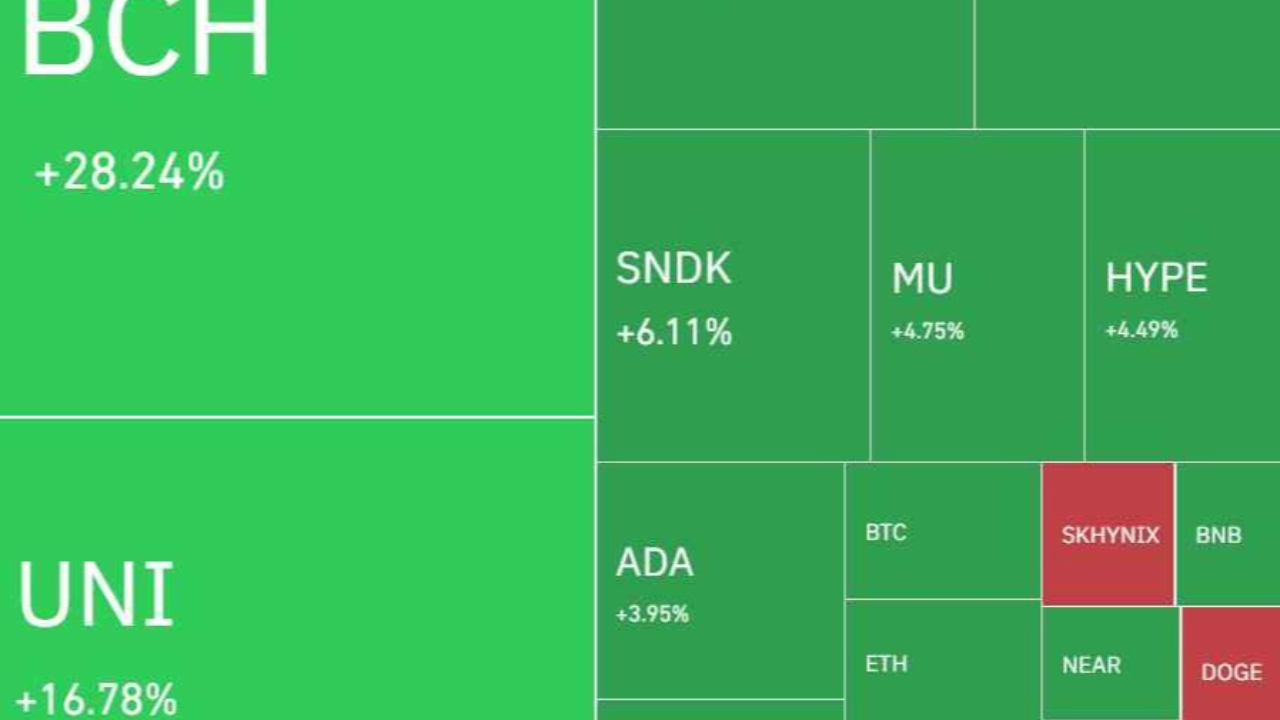
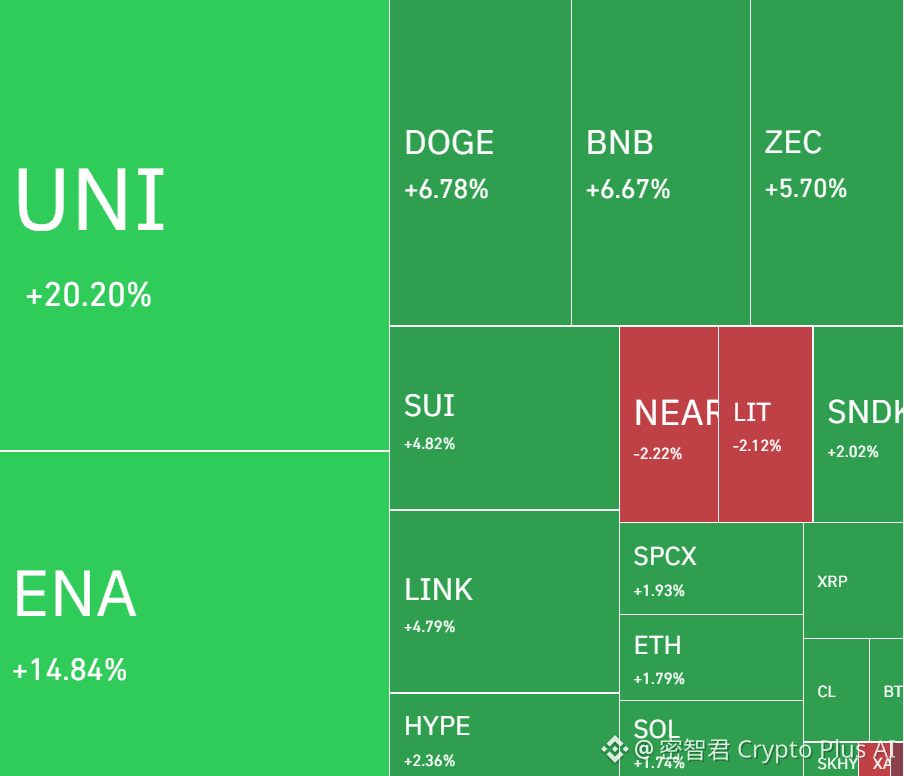
This morning’s market clearly isn’t being led by BTC. $UNI surged 20.2%, $ENA rose 14.84%, and DOGE, BNB, and ZEC also gained more than 5%. Capital is spreading from BTC and ETH into high-beta assets.
UNI has the strongest fundamental support this round. Robinhood Chain trading volume exploded, Uniswap captured most of the DEX flow, and on September 4 about 184,000 UNI were burned in a single day, worth $1.15 million. In the past, people complained that UNI only had governance rights, but now protocol revenue is finally starting to affect token supply.
ENA’s rise is more about trading Ethena Pay, buyback expectations, and whale money. Although the protocol’s TVL has climbed to around $4.7 billion, fees have not surged in tandem. Rising fast does not mean fundamentals have already caught up with price.
$SNDK , SPCX, and SK Hynix are also rising, and U.S. stocks are starting to see capital flow back in.
If BTC holds 79,900 USD, altcoins may continue to rotate; once it falls below 76,000 USD, UNI and ENA, which rose the most today, are usually also among the first to give back gains. Do you think this market has reached the bottom of a bear market, or do we need to wait for more capital inflows?#比特币以太坊触及数月高点 #BTC触及80000美元
Crypto morning brief: know it first — September 6, 2026 | BTC is still near 80k, and funds have already started chasing DeFi
This morning’s market clearly isn’t being led by BTC. $UNI surged 20.2%, $ENA rose 14.84%, and DOGE, BNB, and ZEC also gained more than 5%. Capital is spreading from BTC and ETH into high-beta assets.
UNI has the strongest fundamental support this round. Robinhood Chain trading volume exploded, Uniswap captured most of the DEX flow, and on September 4 about 184,000 UNI were burned in a single day, worth $1.15 million. In the past, people complained that UNI only had governance rights, but now protocol revenue is finally starting to affect token supply.
ENA’s rise is more about trading Ethena Pay, buyback expectations, and whale money. Although the protocol’s TVL has climbed to around $4.7 billion, fees have not surged in tandem. Rising fast does not mean fundamentals have already caught up with price.
$SNDK , SPCX, and SK Hynix are also rising, and U.S. stocks are starting to see capital flow back in.
If BTC holds 79,900 USD, altcoins may continue to rotate; once it falls below 76,000 USD, UNI and ENA, which rose the most today, are usually also among the first to give back gains. Do you think this market has reached the bottom of a bear market, or do we need to wait for more capital inflows?#比特币以太坊触及数月高点 #BTC触及80000美元
This morning’s market clearly isn’t being led by BTC. $UNI surged 20.2%, $ENA rose 14.84%, and DOGE, BNB, and ZEC also gained more than 5%. Capital is spreading from BTC and ETH into high-beta assets.
UNI has the strongest fundamental support this round. Robinhood Chain trading volume exploded, Uniswap captured most of the DEX flow, and on September 4 about 184,000 UNI were burned in a single day, worth $1.15 million. In the past, people complained that UNI only had governance rights, but now protocol revenue is finally starting to affect token supply.
ENA’s rise is more about trading Ethena Pay, buyback expectations, and whale money. Although the protocol’s TVL has climbed to around $4.7 billion, fees have not surged in tandem. Rising fast does not mean fundamentals have already caught up with price.
$SNDK , SPCX, and SK Hynix are also rising, and U.S. stocks are starting to see capital flow back in.
If BTC holds 79,900 USD, altcoins may continue to rotate; once it falls below 76,000 USD, UNI and ENA, which rose the most today, are usually also among the first to give back gains. Do you think this market has reached the bottom of a bear market, or do we need to wait for more capital inflows?#比特币以太坊触及数月高点 #BTC触及80000美元
454
🤔Is this true? I want to know what kind of business can save up a fortune of 4.1 billion yuan with 3000 yuan? $BNB
🤔Is this true? I want to know what kind of business can save up a fortune of 4.1 billion yuan with 3000 yuan? $BNB

1
633
Log in to explore more content
Join global crypto users on Binance Square
⚡️ Get latest and useful information about crypto.
💬 Trusted by the world’s largest crypto exchange.
👍 Discover real insights from verified creators.
Email / Phone number
Trending Topics
FortitudeRaisesCreditLineTo$50M
180 views
34 Discussing
#FortitudeRaisesCreditLineTo$50M
Fortitude Expands Credit Line to $50M—The ZEC Funding Detail Matters
Fortitude Mining has expanded its credit facility with parent Digital Currency Group from $26 million to $50 million. The amendment adds $24 million to the commitment, leaving approximately $31 million available to borrow, subject to the facility’s terms.
Fortitude expects the remaining availability to be funded in ZEC and plans to sell those tokens to finance mining equipment, facilities and expansion. The loans remain denominated and repayable in US dollars.
About $7 million is expected to be drawn before September ends to help pay for previously announced orders for 9,000 mining machines.
My take: This links infrastructure investment with potential token sales. More funding could help bring machines online, while the market impact of selling ZEC would depend on timing, execution and available liquidity.
The operational test is whether the new capacity produces enough cash flow to justify its equipment, power and financing costs. I’d watch actual drawdowns, deployment milestones and operating margins before treating a larger borrowing limit as evidence of improved profitability.
For ZEC holders, the timing of capital deployment and token sales will help explain how this financing translates into market activity.
Which matters more for ZEC here: mining expansion or how the planned token sales are managed?
#zcash #CryptoMining
$ZEC $NOM $LSK
Blockchain Boss X
·0 Likes
·247 views
USWeighsPromotingDollarStablecoinsAbroad
5,804 views
409 Discussing
US10YTreasuryYieldHits19YearHigh
5,057 views
316 Discussing