
AL معراج Group of Trading
141 Posts

AL معراج Group of Trading
Report
Block User
Focus on your Goals 🎧 trading 🖤
Open Trade
High-Frequency Trader
3.2 Years
29 Following
41 Followers
180 Liked
Posts
Portfolio
All
Quotes
Videos
·
--
Bullish
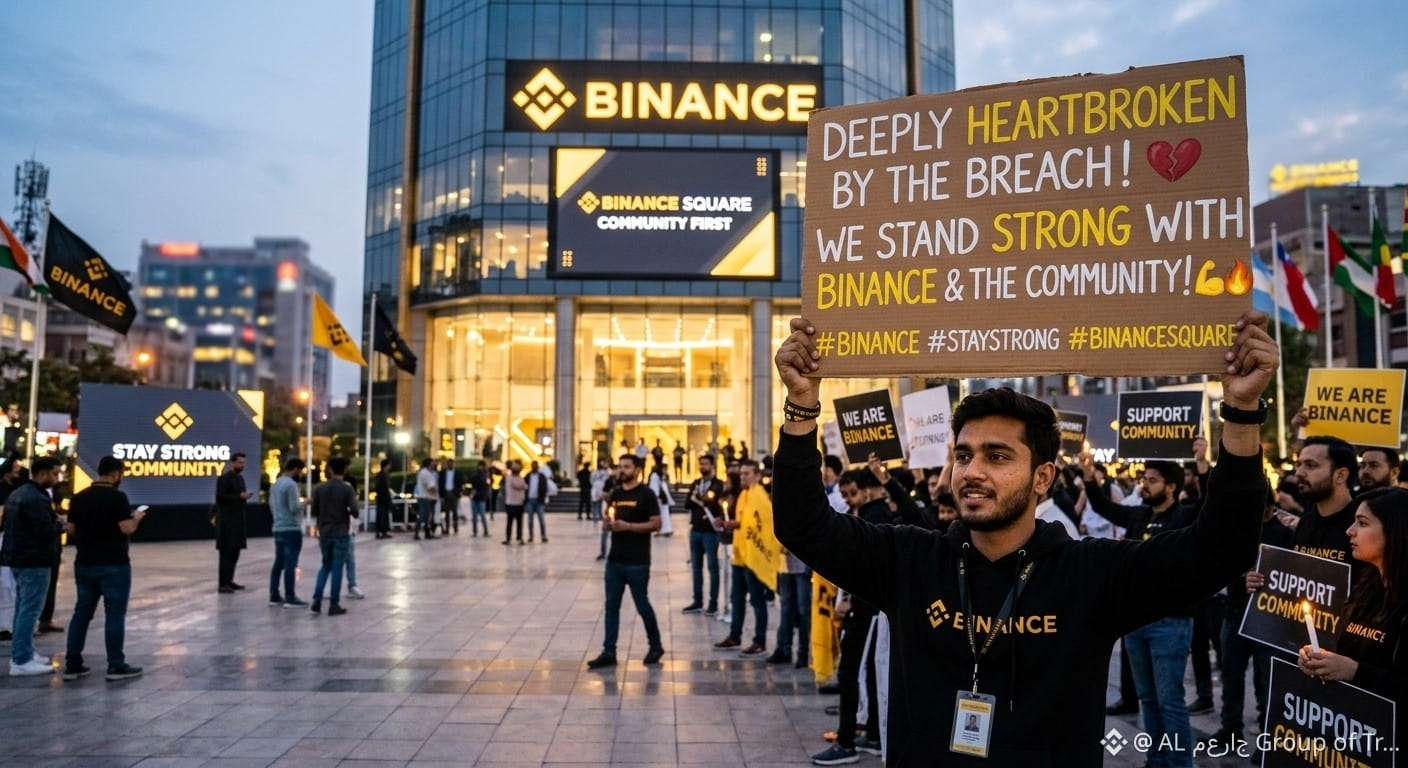
$"Deeply heartbroken to witness such a massive breach and betrayal on Binance! 💔 But in tough times, we don't abandon our own. We stand strong with Binance and the entire community through this challenge. Hoping the platform bounces back even stronger! 💪🔥 #Binance #CryptoCommunity #StayStrong #BinanceSquare" $BNB
{spot}(BNBUSDT)
$"Deeply heartbroken to witness such a massive breach and betrayal on Binance! 💔 But in tough times, we don't abandon our own. We stand strong with Binance and the entire community through this challenge. Hoping the platform bounces back even stronger! 💪🔥 #Binance #CryptoCommunity #StayStrong #BinanceSquare" $BNB
79
#BinanceTurns9 Binance Turns 9 - Built By You
#BinanceTurns9 Binance Turns 9 - Built By You
67
#BinancePickAndWin good chance 🤞 easy to win pick and wins square $NVDAB $SPCXB $MUB #MicronHitsRecordHigh SpaceXLosesOver$600BInThreeDays#BinanceMarginToListXLMTradingPairs SPCXFalls17.44%InPreMarketTo$148.34
#BinancePickAndWin good chance 🤞 easy to win pick and wins square $NVDAB $SPCXB $MUB #MicronHitsRecordHigh SpaceXLosesOver$600BInThreeDays#BinanceMarginToListXLMTradingPairs SPCXFalls17.44%InPreMarketTo$148.34
98
·
--
Bullish
#BinancePickAndWin Turn your football instincts into real crypto rewards. Make your daily match picks, share the campaign, and open exclusive reward boxes on Binance Square today! ⚽🔥 #BinancePickAndWin$NVDAB $SPCXB $BNB WTIFallsBelow$80
#BinancePickAndWin Turn your football instincts into real crypto rewards. Make your daily match picks, share the campaign, and open exclusive reward boxes on Binance Square today! ⚽🔥 #BinancePickAndWin$NVDAB $SPCXB $BNB WTIFallsBelow$80
11
·
--
Bullish
#BinancePickAndWin Exciting matches ahead in the 2026 football tournament! Form and strategy are everything. Ready to lock in my daily predictions on the app and secure a share of the massive prize pool. What are your top match picks for today? Let's win together! #BinancePickAndWin$SPCXB $NVDAB $BNB
#BinancePickAndWin Exciting matches ahead in the 2026 football tournament! Form and strategy are everything. Ready to lock in my daily predictions on the app and secure a share of the massive prize pool. What are your top match picks for today? Let's win together! #BinancePickAndWin$SPCXB $NVDAB $BNB
8
·
--
Bullish
#BinancePickAndWin Can't wait for the next kickoff! Making my matchday predictions for a share of the $4M pool. What are your top choices today? #BinancePickAndWin$BNB
#BinancePickAndWin Can't wait for the next kickoff! Making my matchday predictions for a share of the $4M pool. What are your top choices today? #BinancePickAndWin$BNB
16
·
--
Bullish
My dream 100 likes on my post 🥺 kindly support me like my post and follow me kindly $BTC #WhenWillBTCRebound #PreciousMetalsTurbulence #MarketCorrection #CZAMAonBinanceSquare #USPPIJump
My dream 100 likes on my post 🥺 kindly support me like my post and follow me kindly $BTC #WhenWillBTCRebound #PreciousMetalsTurbulence #MarketCorrection #CZAMAonBinanceSquare #USPPIJump
1
38
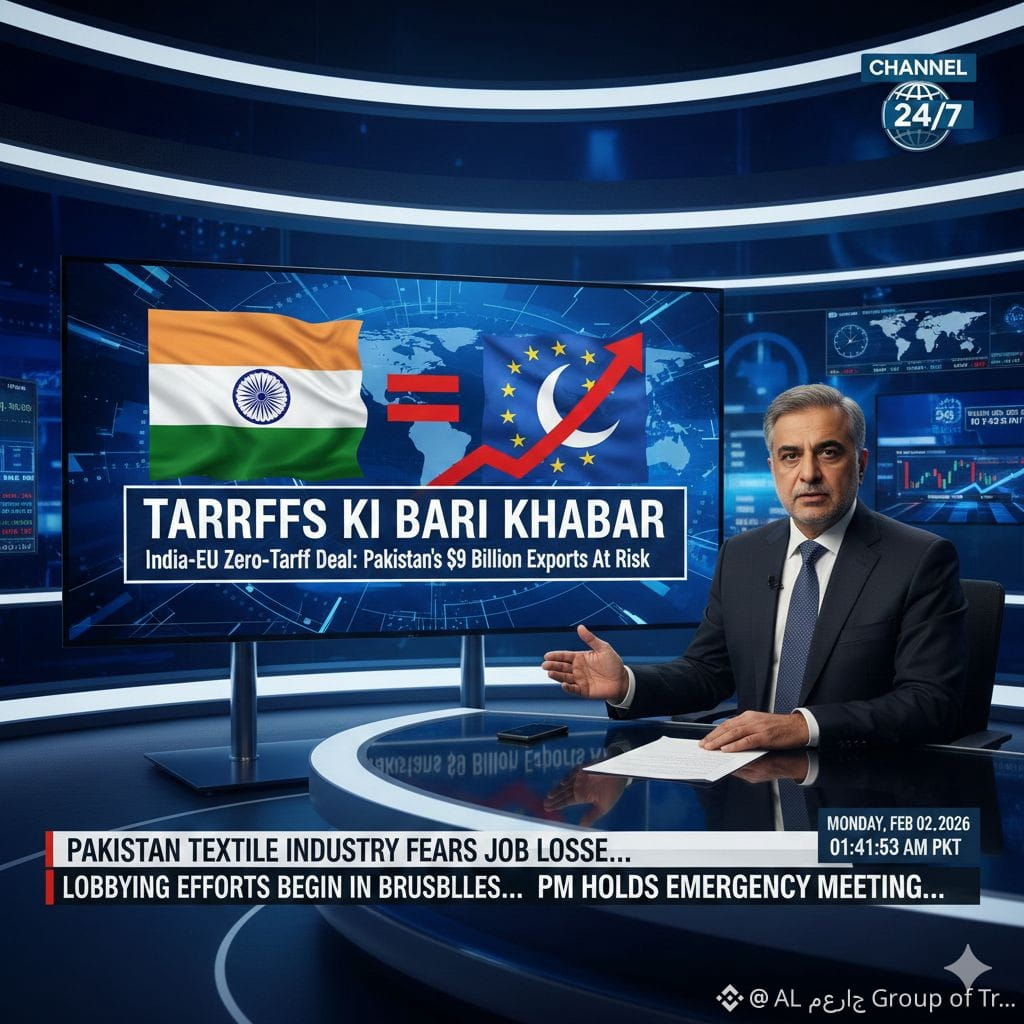
The news regarding the India-European Union Free Trade Agreement (FTA) is being called the "Mother of All Deals" in the region. Since it was finalized just a few days ago (January 27, 2026), it has created significant waves in Pakistan’s economic circles.
Here is the breakdown of why this is a major "tariff warning" for Pakistan:
1. The End of Pakistan’s "Tariff Advantage"
For years, Pakistan has enjoyed GSP+ status, which allowed about 90% of its textile and apparel exports to enter the EU with zero duties. During this time, Indian exporters had to pay duties of 12% to 17%.
The Change: Under the new FTA, India has secured duty-free access for almost all of its textile and apparel lines.The Impact: Pakistan no longer has a price advantage. Since India has a larger production capacity and lower energy costs, Pakistani goods are now at risk of being replaced by Indian ones.
2. $9 Billion at Risk
The EU is Pakistan's largest export destination, bringing in approximately $9 billion annually.
Experts and former commerce ministers have warned that this "honeymoon period" of zero tariffs is over.
There are fears that if Pakistan doesn't lower its own internal costs (like electricity and taxes), it could lose a significant chunk of these exports and potentially affect 10 million jobs in the textile sector.
3. Diplomatic and Economic Scramble The Pakistani government is taking this very seriously:
Emergency Meetings: The Deputy Prime Minister and Foreign Minister have held high-level meetings this week to review the FTA's impact.
Lobbying in Brussels: Pakistan is preparing to lobby the EU to maintain its GSP+ status (which is up for renewal/review) and is seeking ways to make local industries more competitive.#WhenWillBTCRebound #PreciousMetalsTurbulence #MarketCorrection #CZAMAonBinanceSquare #USPPIJump
{spot}(BTCUSDT)
The news regarding the India-European Union Free Trade Agreement (FTA) is being called the "Mother of All Deals" in the region. Since it was finalized just a few days ago (January 27, 2026), it has created significant waves in Pakistan’s economic circles.
Here is the breakdown of why this is a major "tariff warning" for Pakistan:
1. The End of Pakistan’s "Tariff Advantage"
For years, Pakistan has enjoyed GSP+ status, which allowed about 90% of its textile and apparel exports to enter the EU with zero duties. During this time, Indian exporters had to pay duties of 12% to 17%.
The Change: Under the new FTA, India has secured duty-free access for almost all of its textile and apparel lines.The Impact: Pakistan no longer has a price advantage. Since India has a larger production capacity and lower energy costs, Pakistani goods are now at risk of being replaced by Indian ones.
2. $9 Billion at Risk
The EU is Pakistan's largest export destination, bringing in approximately $9 billion annually.
Experts and former commerce ministers have warned that this "honeymoon period" of zero tariffs is over.
There are fears that if Pakistan doesn't lower its own internal costs (like electricity and taxes), it could lose a significant chunk of these exports and potentially affect 10 million jobs in the textile sector.
3. Diplomatic and Economic Scramble The Pakistani government is taking this very seriously:
Emergency Meetings: The Deputy Prime Minister and Foreign Minister have held high-level meetings this week to review the FTA's impact.
Lobbying in Brussels: Pakistan is preparing to lobby the EU to maintain its GSP+ status (which is up for renewal/review) and is seeking ways to make local industries more competitive.#WhenWillBTCRebound #PreciousMetalsTurbulence #MarketCorrection #CZAMAonBinanceSquare #USPPIJump
1
5
477
·
--
Bullish
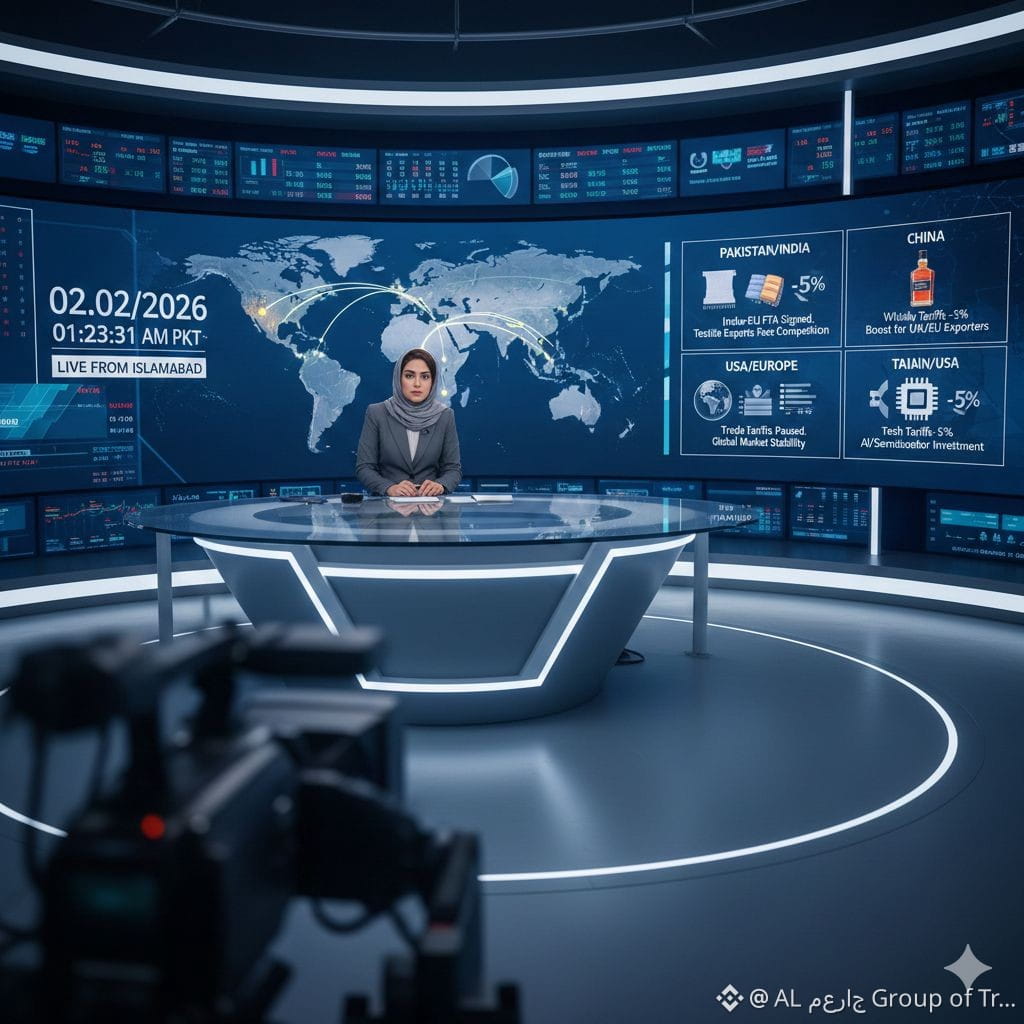
The "Reciprocal Tariff" Cap
The U.S. has agreed to lower and cap its reciprocal tariffs on most Taiwanese goods at 15% (down from the previously threatened 20% to 25%).
Equal Footing: This move puts Taiwan on the same trade level as major U.S. partners like Japan, South Korea, and the European Union.
Scope: While it focuses heavily on tech, the 15% cap also applies to auto parts, timber, and aircraft components.
The "$500 Billion" Commitment
In exchange for these lower tariffs, Taiwan has agreed to a massive investment package in the United States, totaling half a trillion dollars:
Direct Investment ($250 Billion): Leading Taiwanese firms, including TSMC, will invest at least $250 billion to build and expand advanced semiconductor fabs and AI infrastructure on U.S. soil.Credit Guarantees ($250 Billion): The Taiwanese government will provide $250 billion in credit guarantees to help smaller Taiwanese tech suppliers move their operations to the U.S. to create "industrial clusters."
Key Strategic Points
The "Taiwan Model": The agreement allows Taiwanese companies to follow their own investment plans rather than being forced into specific government mandates, provided they meet the reshored production targets.
Section 232 Exemptions: Taiwanese companies building new capacity in the U.S. are granted special exemptions, allowing them to import raw materials and equipment tariff-free during their construction phases.
National Security: The U.S. Commerce Department framed this as a way to "reshore" 40% of the chip supply chain to North America, reducing dependence on factories located in geopolitically sensitive areas.$BTC #WhenWillBTCRebound #PreciousMetalsTurbulence #MarketCorrection #USPPIJump
{spot}(BTCUSDT)
The "Reciprocal Tariff" Cap
The U.S. has agreed to lower and cap its reciprocal tariffs on most Taiwanese goods at 15% (down from the previously threatened 20% to 25%).
Equal Footing: This move puts Taiwan on the same trade level as major U.S. partners like Japan, South Korea, and the European Union.
Scope: While it focuses heavily on tech, the 15% cap also applies to auto parts, timber, and aircraft components.
The "$500 Billion" Commitment
In exchange for these lower tariffs, Taiwan has agreed to a massive investment package in the United States, totaling half a trillion dollars:
Direct Investment ($250 Billion): Leading Taiwanese firms, including TSMC, will invest at least $250 billion to build and expand advanced semiconductor fabs and AI infrastructure on U.S. soil.Credit Guarantees ($250 Billion): The Taiwanese government will provide $250 billion in credit guarantees to help smaller Taiwanese tech suppliers move their operations to the U.S. to create "industrial clusters."
Key Strategic Points
The "Taiwan Model": The agreement allows Taiwanese companies to follow their own investment plans rather than being forced into specific government mandates, provided they meet the reshored production targets.
Section 232 Exemptions: Taiwanese companies building new capacity in the U.S. are granted special exemptions, allowing them to import raw materials and equipment tariff-free during their construction phases.
National Security: The U.S. Commerce Department framed this as a way to "reshore" 40% of the chip supply chain to North America, reducing dependence on factories located in geopolitically sensitive areas.$BTC #WhenWillBTCRebound #PreciousMetalsTurbulence #MarketCorrection #USPPIJump
2
96
·
--
Bullish
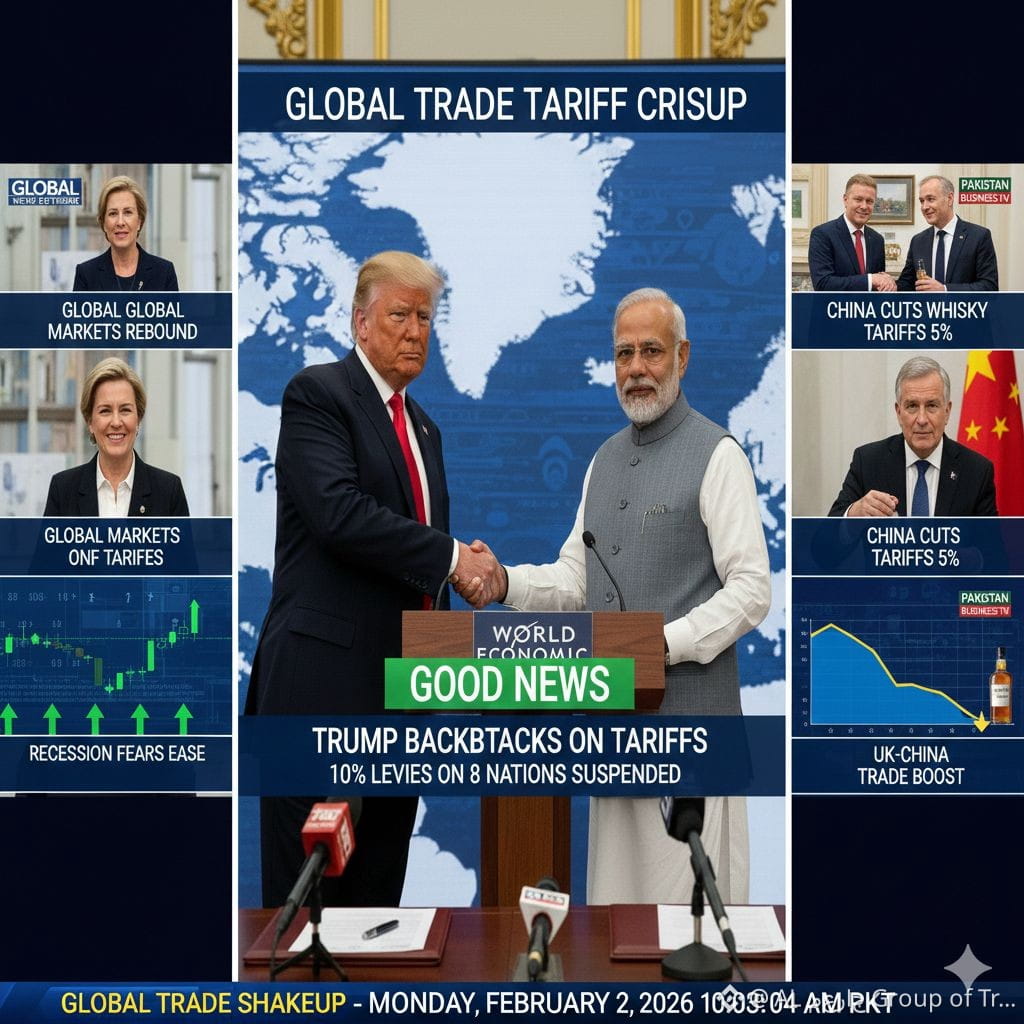
The U.S. "Greenland Tariff" De-escalation
President Trump has officially withdrawn the threat of heavy tariffs against eight key European allies, which were scheduled to go into effect yesterday and today (February 1–2, 2026).
The Backtrack: The planned 10% tariff on imports from Denmark, France, Germany, the UK, Norway, Sweden, Finland, and the Netherlands has been suspended indefinitely.
The "Framework" Deal: The reversal follows a high-stakes meeting at the World Economic Forum (Davos) between President Trump and NATO Secretary-General Mark Rutte. Trump announced a "framework of a future deal" regarding Arctic security and the "Golden Dome" missile defense shield.The Terms: While Denmark and Greenland have maintained that "Greenland is not for sale," the compromise involves allowing the U.S. to build more military bases on the island and increasing NATO's role in blocking Russian and Chinese influence in the Arctic.
Market Reaction: Global stock markets, which had dropped sharply in late January due to the threat of a trade war, have rebounded strongly today as the fear of a €93 billion retaliatory package from the EU has subsided.$BTC #WhenWillBTCRebound #PreciousMetalsTurbulence #MarketCorrection #USPPIJump
{spot}(BTCUSDT)
The U.S. "Greenland Tariff" De-escalation
President Trump has officially withdrawn the threat of heavy tariffs against eight key European allies, which were scheduled to go into effect yesterday and today (February 1–2, 2026).
The Backtrack: The planned 10% tariff on imports from Denmark, France, Germany, the UK, Norway, Sweden, Finland, and the Netherlands has been suspended indefinitely.
The "Framework" Deal: The reversal follows a high-stakes meeting at the World Economic Forum (Davos) between President Trump and NATO Secretary-General Mark Rutte. Trump announced a "framework of a future deal" regarding Arctic security and the "Golden Dome" missile defense shield.The Terms: While Denmark and Greenland have maintained that "Greenland is not for sale," the compromise involves allowing the U.S. to build more military bases on the island and increasing NATO's role in blocking Russian and Chinese influence in the Arctic.
Market Reaction: Global stock markets, which had dropped sharply in late January due to the threat of a trade war, have rebounded strongly today as the fear of a €93 billion retaliatory package from the EU has subsided.$BTC #WhenWillBTCRebound #PreciousMetalsTurbulence #MarketCorrection #USPPIJump
1
5
998
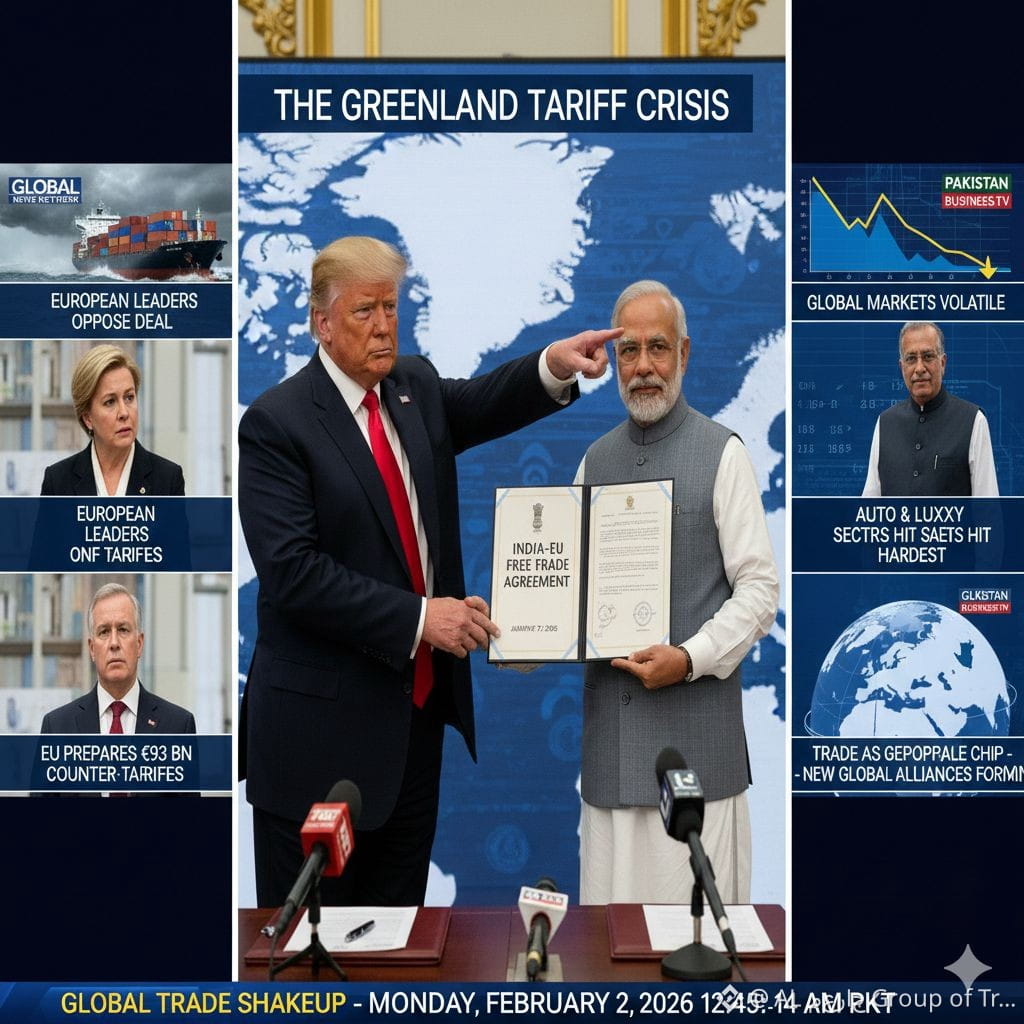
The "Greenland" Tariff Crisis
The most shocking trade news of 2026 is the link between real estate and global tariffs. President Trump has used trade levies as a "bargaining chip" for a territorial dispute.
The Threat: In mid-January, President Trump announced a 10% tariff on all goods from eight European nations (Denmark, Norway, Sweden, France, Germany, the UK, the Netherlands, and Finland).
The Reason: These countries opposed the U.S. proposal to purchase Greenland from Denmark. Trump stated the tariffs would remain until a deal for the "Total purchase of Greenland" was reached.
The Escalation: He threatened to increase these tariffs to 25% by June 1, 2026, if no progress was made.Current Status (As of February 2, 2026)
There has been a slight de-escalation in the last few days, but the tension remains "red hot":
Temporary Suspension: On January 30, the U.S. signaled a pause on the February 1st tariff start date. This came after a "framework" for discussions was established with NATO leaders.
European Response: The EU has already prepared a "nuclear deterrent" package of €93 billion in retaliatory tariffs against U.S. products (like tech, bourbon, and motorcycles) if the U.S. moves forward.
Economic Impact: Global markets have been volatile. European equities—especially in the automotive and luxury sectors (like French wine)—have seen sharp drops because of the uncertainty.#WhenWillBTCRebound #PreciousMetalsTurbulence #MarketCorrection #USPPIJump
{spot}(BTCUSDT)
The "Greenland" Tariff Crisis
The most shocking trade news of 2026 is the link between real estate and global tariffs. President Trump has used trade levies as a "bargaining chip" for a territorial dispute.
The Threat: In mid-January, President Trump announced a 10% tariff on all goods from eight European nations (Denmark, Norway, Sweden, France, Germany, the UK, the Netherlands, and Finland).
The Reason: These countries opposed the U.S. proposal to purchase Greenland from Denmark. Trump stated the tariffs would remain until a deal for the "Total purchase of Greenland" was reached.
The Escalation: He threatened to increase these tariffs to 25% by June 1, 2026, if no progress was made.Current Status (As of February 2, 2026)
There has been a slight de-escalation in the last few days, but the tension remains "red hot":
Temporary Suspension: On January 30, the U.S. signaled a pause on the February 1st tariff start date. This came after a "framework" for discussions was established with NATO leaders.
European Response: The EU has already prepared a "nuclear deterrent" package of €93 billion in retaliatory tariffs against U.S. products (like tech, bourbon, and motorcycles) if the U.S. moves forward.
Economic Impact: Global markets have been volatile. European equities—especially in the automotive and luxury sectors (like French wine)—have seen sharp drops because of the uncertainty.#WhenWillBTCRebound #PreciousMetalsTurbulence #MarketCorrection #USPPIJump
1
470
·
--
Bullish
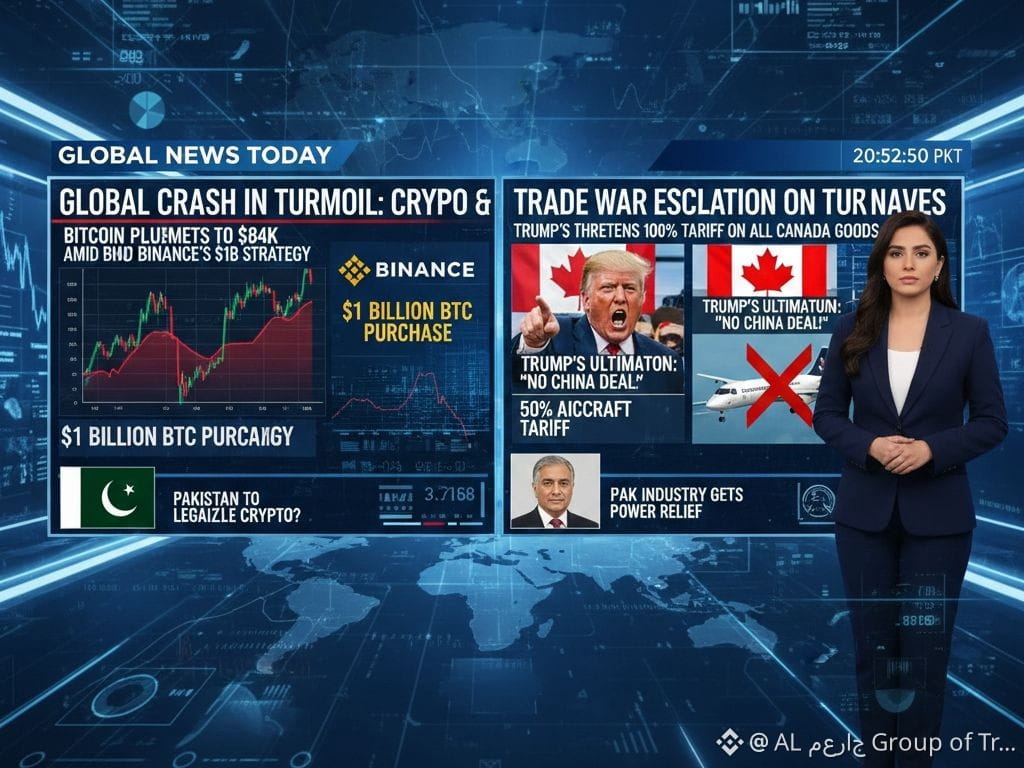
📈 Tariff News: Trump’s Trade War & Industrial Relief
Trade tariffs are dominating global headlines as the U.S. intensifies its "America First" policy.
1. The US-Canada "Aircraft War"
President Donald Trump has threatened a massive 50% tariff on Canadian-made aircraft (specifically targeting Bombardier).
The Conflict: This is a retaliatory move because Canada has allegedly blocked the certification of American Gulfstream jets.The 100% Threat: Trump warned that if Canada signs its upcoming trade deal with China, he will slap a 100% tariff on every Canadian export entering the U.S.
2. Pakistan’s Industrial Electricity Relief
In a major local tariff update, Prime Minister Shehbaz Sharif announced a reduction of Rs. 4.4 per unit in electricity tariffs for the industrial sector.
Goal: To lower production costs and make Pakistani exports more competitive in the global market.
3. Mexico Halts Oil to Cuba
Following Trump’s executive order imposing tariffs on countries that supply oil to Cuba, Mexico has officially suspended its oil shipments to avoid U.S. trade penalties.$BTC $ETH #CZAMAonBinanceSquare #USPPIJump #WhoIsNextFedChair #MarketCorrection #PreciousMetalsTurbulence
2
47
·
--
Bullish
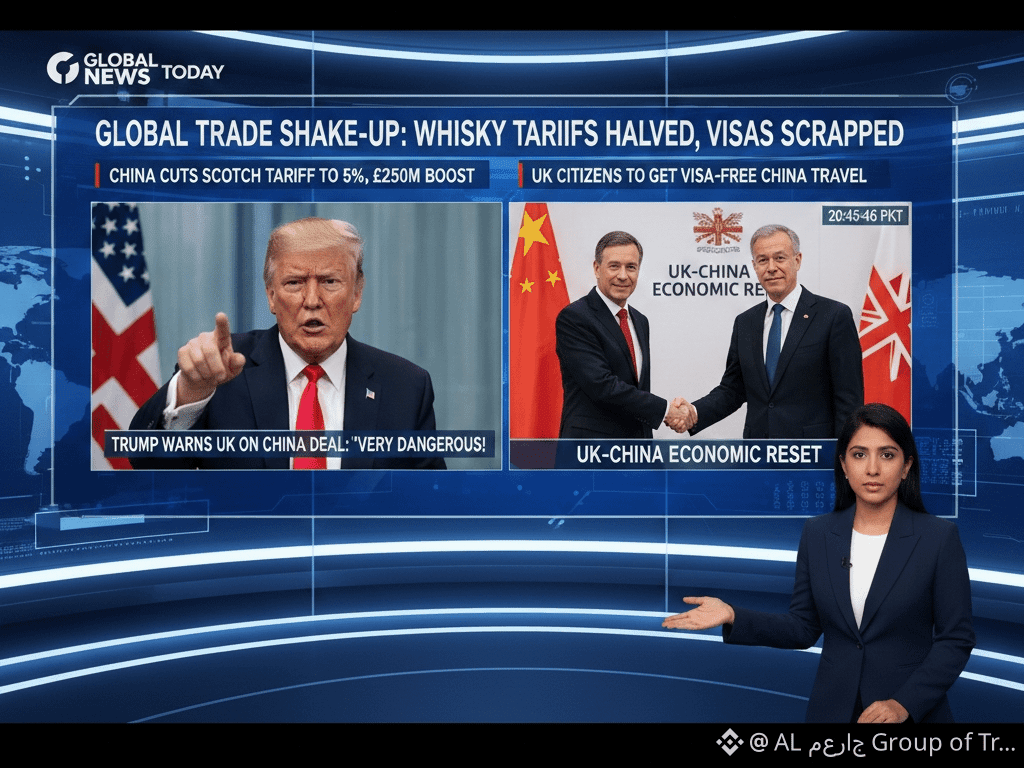
UK-China Trade Breakthrough & Trump’s Warning
On January 30, 2026, UK Prime Minister Keir Starmer concluded his landmark visit to China with a significant trade deal, but it has sparked a sharp reaction from Washington.
1. Scotch Whisky Tariff Halved
In a major win for the British economy, China has agreed to halve the import tariff on Scotch Whisky from 10% to 5%.

Economic Impact: This deal is estimated to be worth £250 million to the UK economy over the next five years.

Context: This follows a similar success in the UK-India trade deal and aims to reverse the recent 31% dip in whisky exports to China.

2. Visa-Free Travel for UK Citizens
As part of the "economic reset," China announced that UK citizens will no longer need a visa for visits lasting under 30 days. This applies to both tourists and business travelers, putting the UK on par with countries like France and Germany.

3. Donald Trump’s "Dangerous" Warning
Despite the economic gains, U.S. President Donald Trump has publicly criticized the move.

Speaking from Washington, Trump called the UK’s attempt to strengthen ties with Beijing "very dangerous."

He warned that relying on China for economic growth is a mistake, reiterating his "America First" stance and his general hostility toward China's trade practices.
4. The UK’s Response
Prime Minister Starmer defended his strategy in Shanghai, stating that it would be unwise for the UK to "stick its head in the sand" given that China is the world's second-largest economy. He emphasized a "pragmatic and sophisticated" relationship that balances trade with national security.$BTC #CZAMAonBinanceSquare #USPPIJump #WhoIsNextFedChair #PreciousMetalsTurbulence #ZAMAPreTGESale
1
85
·
--
Bullish
hye friends Hope you are fine ☺️ I need support ❤️ Please 🥺 support me kindly follow me and like my posts 💖🙏 thank you Binance family $BTC $ETH #USIranStandoff #ZAMAPreTGESale #FedHoldsRates #GoldOnTheRise #WhoIsNextFedChair
{spot}(ETHUSDT)
hye friends Hope you are fine ☺️ I need support ❤️ Please 🥺 support me kindly follow me and like my posts 💖🙏 thank you Binance family $BTC $ETH #USIranStandoff #ZAMAPreTGESale #FedHoldsRates #GoldOnTheRise #WhoIsNextFedChair
1
52
·
--
Bullish
Trump "De-escalates" with Europe over Greenland
President Trump has reportedly stepped back from his threats to impose heavy tariffs on European allies.
The Context: Tensions had spiked over US interest in Greenland’s strategic minerals and Arctic security.
The Result: After talks with NATO leaders, the US has withdrawn the immediate threat of transatlantic tariffs, providing a massive sigh of relief for agricultural and commodity markets.$BTC #USIranStandoff #ZAMAPreTGESale #FedHoldsRates #GoldOnTheRise
{spot}(XRPUSDT)
Trump "De-escalates" with Europe over Greenland
President Trump has reportedly stepped back from his threats to impose heavy tariffs on European allies.
The Context: Tensions had spiked over US interest in Greenland’s strategic minerals and Arctic security.
The Result: After talks with NATO leaders, the US has withdrawn the immediate threat of transatlantic tariffs, providing a massive sigh of relief for agricultural and commodity markets.$BTC #USIranStandoff #ZAMAPreTGESale #FedHoldsRates #GoldOnTheRise
2
55
Bitcoin (BTC): Struggling at Key Support
Bitcoin is currently teetering around the $87,700 – $88,000 mark.
Price Movement: It has seen a roughly 1.7% decline in the last 24 hours.
The "MSCI" Effect: Earlier this month, speculation regarding a major company ("Strategy Inc.") and its inclusion in the MSCI fund drove BTC toward $98,000. However, as the specifics of that decision settled, the price entered a correction phase.
ETF Outlook: Institutional appetite appears fragile today, with reports showing approximately $150 million in outflows from Bitcoin ETFs recently, signaling that big players are waiting for a better entry point.$BTC #USIranStandoff #ZAMAPreTGESale #GoldOnTheRise
{spot}(BTCUSDT)
Bitcoin (BTC): Struggling at Key Support
Bitcoin is currently teetering around the $87,700 – $88,000 mark.
Price Movement: It has seen a roughly 1.7% decline in the last 24 hours.
The "MSCI" Effect: Earlier this month, speculation regarding a major company ("Strategy Inc.") and its inclusion in the MSCI fund drove BTC toward $98,000. However, as the specifics of that decision settled, the price entered a correction phase.
ETF Outlook: Institutional appetite appears fragile today, with reports showing approximately $150 million in outflows from Bitcoin ETFs recently, signaling that big players are waiting for a better entry point.$BTC #USIranStandoff #ZAMAPreTGESale #GoldOnTheRise
1
49
·
--
Bullish
Vietnam & EU Upgrade Strategic Ties
Vietnam and the EU have upgraded their relationship to a "Comprehensive Strategic Partnership" today in Hanoi.
Why it matters: As the U.S. increases tariffs on Vietnamese electronics and garments, Vietnam is pivoting toward Europe to secure its export-led growth.
Global Shift: This is part of a broader trend where "middle power" countries are forming new alliances to hedge against U.S. economic aggression.$BTC #ZAMAPreTGESale #FedHoldsRates #GoldOnTheRise #WhoIsNextFedChair #TokenizedSilverSurge
1
40
·
--
Bullish
EU and India Reach "History-Making" Trade Deal
In a direct response to U.S. tariff pressures, the European Union and India have officially concluded a landmark Free Trade Agreement (FTA) today.
Scope: This creates a free trade zone of 2 billion people.
Tariff Cuts: India will slash tariffs on EU cars from 110% to 10%, and duties on European wines will drop from 150% to 75% (eventually reaching 20%).
Strategic Move: Analysts see this as a way for both regions to reduce their dependence on the U.S. market amidst the ongoing trade war.$BTC #ZAMAPreTGESale #FedHoldsRates #GoldOnTheRise #VIRBNB #StrategyBTCPurchase
{spot}(BTCUSDT)
EU and India Reach "History-Making" Trade Deal
In a direct response to U.S. tariff pressures, the European Union and India have officially concluded a landmark Free Trade Agreement (FTA) today.
Scope: This creates a free trade zone of 2 billion people.
Tariff Cuts: India will slash tariffs on EU cars from 110% to 10%, and duties on European wines will drop from 150% to 75% (eventually reaching 20%).
Strategic Move: Analysts see this as a way for both regions to reduce their dependence on the U.S. market amidst the ongoing trade war.$BTC #ZAMAPreTGESale #FedHoldsRates #GoldOnTheRise #VIRBNB #StrategyBTCPurchase
2
61
·
--
Bullish
Institutional "Red Flags"
A specific concern today involves Strategy Inc. (a major institutional BTC holder).
Reports suggest that their inclusion in the MSCI Fund didn't get the "full backing" expected, which has caused some "Smart Money" to sell off their positions, adding downward pressure on the price.$BTC $ETH #ZAMAPreTGESale #FedHoldsRates #WhoIsNextFedChair #TSLALinkedPerpsOnBinance
1
3
Log in to explore more content
Join global crypto users on Binance Square
⚡️ Get latest and useful information about crypto.
💬 Trusted by the world’s largest crypto exchange.
👍 Discover real insights from verified creators.
Email / Phone number
Trending Topics
BinanceWithdrawalScamWarning
56,768 views
737 Discussing
Binance Warns Users of Withdrawal Scams as Services Resume: It Will Never Charge Fees, Sell Queue Spots or Ask You to Move Funds to a “Vault”
Binance News
·16 Likes
·8.7k views
USMidtermElections
629,244 views
3,304 Discussing
USOctoberNFP-AreRateCutsStillPossible
61,288 views
588 Discussing