

Crypto Web3 Today
9.9k Posts
Crypto Web3 Today
 Square Verified+
Report
Block User
I am interested in digital currencies and a professional trader
66 Following
141.9K+ Followers
114.5K+ Liked
Posts
All
Quotes
Videos
·
--
Bullish
Verified
#Tesla $TSLAB
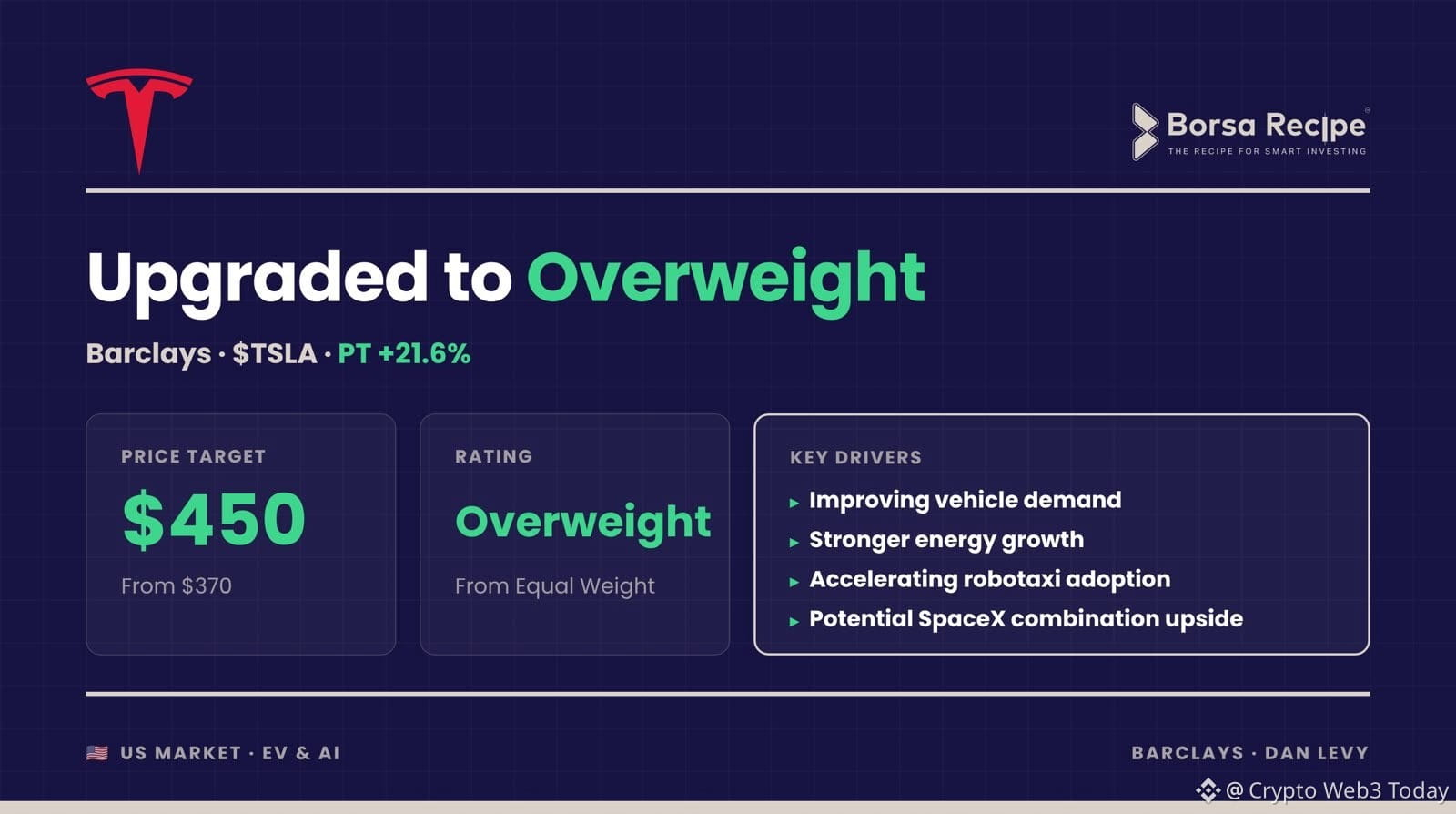
Barclays changes its outlook on Tesla—raises price target by $80 🚗⚡
Rating: Upgraded from "Equal Weight" to "Overweight" 🟢
Price Target: Raised from $370 to $450 🟢
A 21.6% increase in the target price 🟢
And the fourth reason is a surprise 👇
🔋🔋🔋
Analyst Dan Levy points to improving demand for vehicles, stronger growth in the energy sector, and the accelerated adoption of Robotaxis.
As for the surprise—it involves potential gains from a merger with SpaceX, a scenario that has not been officially announced yet 🚀
$TSLAB
{spot}(TSLABUSDT)
#usastocks
#US_MARKET
#Tesla $TSLAB
Barclays changes its outlook on Tesla—raises price target by $80 🚗⚡
Rating: Upgraded from "Equal Weight" to "Overweight" 🟢
Price Target: Raised from $370 to $450 🟢
A 21.6% increase in the target price 🟢
And the fourth reason is a surprise 👇
🔋🔋🔋
Analyst Dan Levy points to improving demand for vehicles, stronger growth in the energy sector, and the accelerated adoption of Robotaxis.
As for the surprise—it involves potential gains from a merger with SpaceX, a scenario that has not been officially announced yet 🚀
$TSLAB
#usastocks
#US_MARKET
1
2
749
Has an AI funding crisis begun—one that could shake the markets?
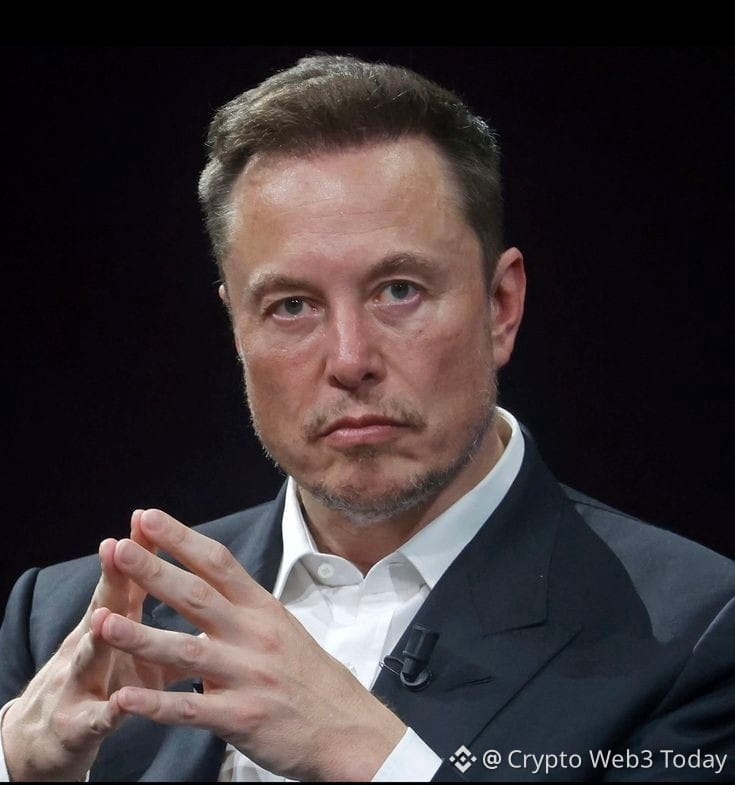
Elon Musk warns that debt markets have all but completely shut their doors to artificial intelligence companies.
If this funding crunch persists, AI firms—especially those relying on borrowing to fuel their massive expansion—could face significant pressure.
But the most intriguing part is what might happen next:
A decline in AI company stocks.
An outflow of capital from the tech sector.
A potential shift in liquidity toward Bitcoin and other assets.
The bursting of an AI bubble does not automatically mean capital will flow into BTC—but a reallocation of liquidity across asset classes could completely transform the landscape.
$BTC
{spot}(BTCUSDT)
$AI
{spot}(AIUSDT)
$AMZNB
{spot}(AMZNBUSDT)
Has an AI funding crisis begun—one that could shake the markets?
Elon Musk warns that debt markets have all but completely shut their doors to artificial intelligence companies.
If this funding crunch persists, AI firms—especially those relying on borrowing to fuel their massive expansion—could face significant pressure.
But the most intriguing part is what might happen next:
A decline in AI company stocks.
An outflow of capital from the tech sector.
A potential shift in liquidity toward Bitcoin and other assets.
The bursting of an AI bubble does not automatically mean capital will flow into BTC—but a reallocation of liquidity across asset classes could completely transform the landscape.
$BTC
$AI
$AMZNB

2
216
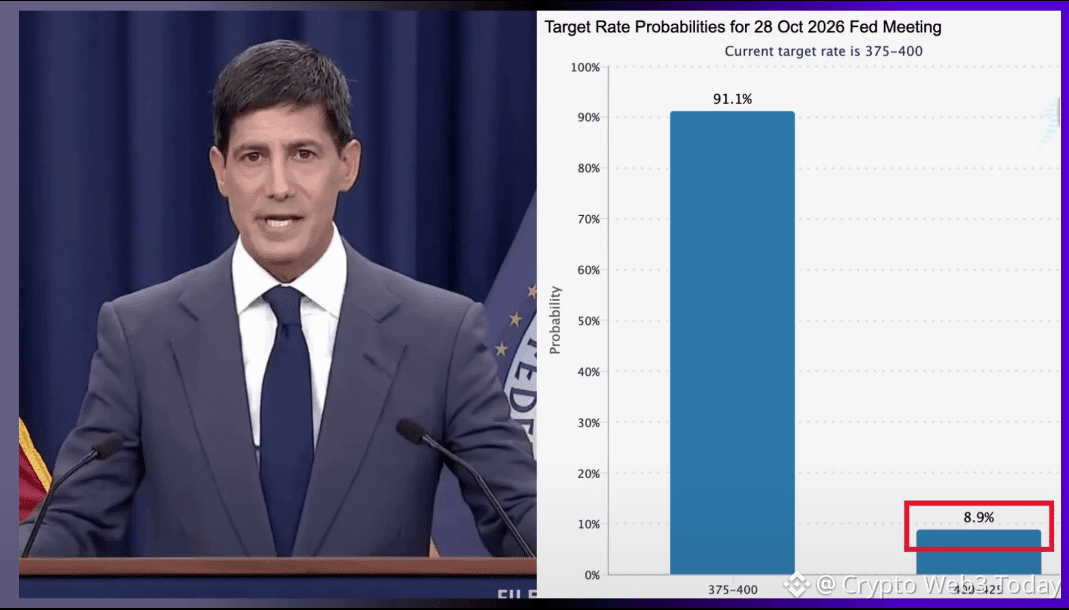
🚨🚨 The Federal Reserve faces a decision that could shift market sentiment within 48 hours.
Market expectations currently point to a 91.1% probability that interest rates will remain unchanged at the October 28 meeting, compared to an 8.9% chance of a hike.
However, the real surprise may not lie in the decision itself.
Keeping rates steady might already be priced in; what could truly move the markets is the tone adopted by Kevin Warsh and any signals he provides regarding the next move.
Cryptocurrencies and stocks are heading toward a critical test: will the Federal Reserve simply hold rates steady, or will it offer commentary that alters investor expectations?
$BTC
{spot}(BTCUSDT)
$ETH
{spot}(ETHUSDT)
$SOL
{spot}(SOLUSDT)
🚨🚨 The Federal Reserve faces a decision that could shift market sentiment within 48 hours.
Market expectations currently point to a 91.1% probability that interest rates will remain unchanged at the October 28 meeting, compared to an 8.9% chance of a hike.
However, the real surprise may not lie in the decision itself.
Keeping rates steady might already be priced in; what could truly move the markets is the tone adopted by Kevin Warsh and any signals he provides regarding the next move.
Cryptocurrencies and stocks are heading toward a critical test: will the Federal Reserve simply hold rates steady, or will it offer commentary that alters investor expectations?
$BTC
$ETH
$SOL
2
336
Partly True
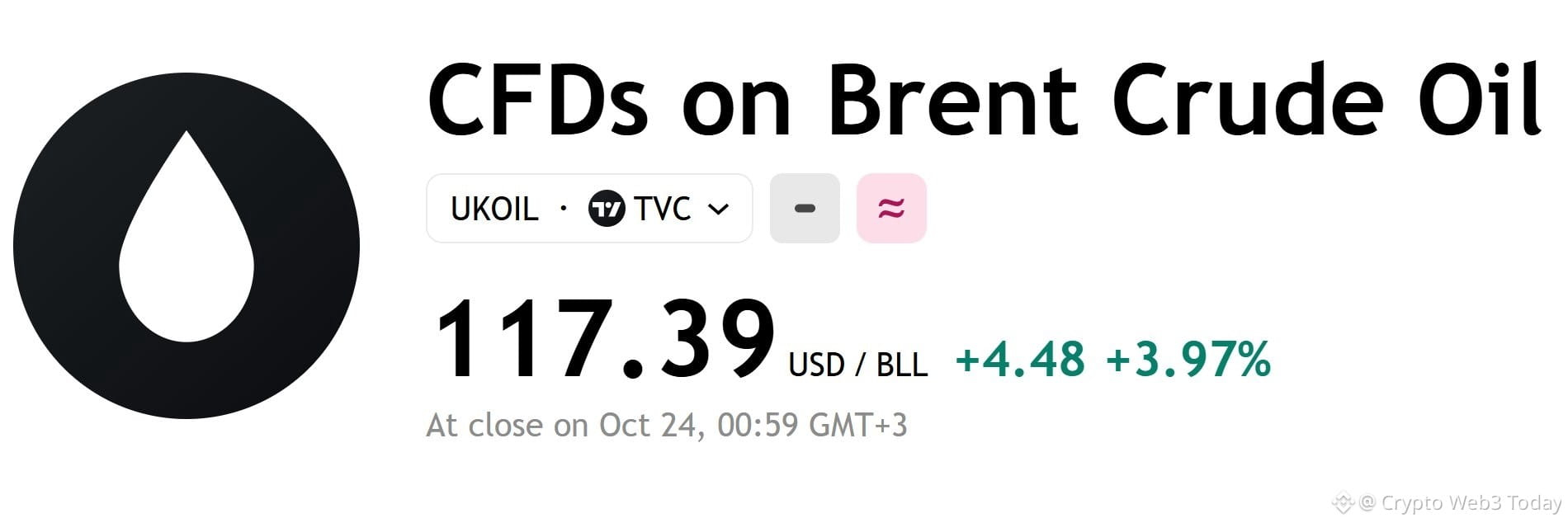
🛢️ Oil surpasses $117—and the impact could reach your own pocket.
A rise in oil prices doesn’t just mean higher fuel costs; it can also drive up transportation and production expenses, ultimately leading to an increase in the prices of goods and services.
The greater concern arises if this upward trend persists for months: it could fuel inflation and erode the purchasing power of your savings.
In my view, a sustained rise in oil prices poses a greater economic risk than a one-day spike to a high price.
The question now is not how high oil prices will go, but rather: how much will households and businesses end up paying as a result of this increase?
$OII.US
{stock_us}(OII.US)
$ONDO
{spot}(ONDOUSDT)
$AMZNB
{spot}(AMZNBUSDT)
🛢️ Oil surpasses $117—and the impact could reach your own pocket.
A rise in oil prices doesn’t just mean higher fuel costs; it can also drive up transportation and production expenses, ultimately leading to an increase in the prices of goods and services.
The greater concern arises if this upward trend persists for months: it could fuel inflation and erode the purchasing power of your savings.
In my view, a sustained rise in oil prices poses a greater economic risk than a one-day spike to a high price.
The question now is not how high oil prices will go, but rather: how much will households and businesses end up paying as a result of this increase?
$OII.US
$ONDO
$AMZNB
3
7
6.2k
🚨 Binance founder CZ anticipates a shift that could change the future of payments forever.
Imagine millions of AI agents purchasing services, paying bills, and transacting with one another—all without the need for a single bank card.
Binance founder CZ believes that cryptocurrencies could serve as the natural payment method for these agents, noting that the volume of transactions could potentially increase by up to a million-fold.
Here is a point worth considering:
While a human might make a few purchases a day, an AI agent can execute thousands of transactions automatically, around the clock.
If this scenario becomes reality, the next wave of demand for crypto might not come from millions of individual investors buying coins—
—but rather from the billions of transactions carried out incessantly by machines.
We are heading toward a future where cryptocurrencies become the language of payment between AI agents.
$BNB
{spot}(BNBUSDT)
$SOL
{spot}(SOLUSDT)
$SUI
{spot}(SUIUSDT)
🚨 Binance founder CZ anticipates a shift that could change the future of payments forever.
Imagine millions of AI agents purchasing services, paying bills, and transacting with one another—all without the need for a single bank card.
Binance founder CZ believes that cryptocurrencies could serve as the natural payment method for these agents, noting that the volume of transactions could potentially increase by up to a million-fold.
Here is a point worth considering:
While a human might make a few purchases a day, an AI agent can execute thousands of transactions automatically, around the clock.
If this scenario becomes reality, the next wave of demand for crypto might not come from millions of individual investors buying coins—
—but rather from the billions of transactions carried out incessantly by machines.
We are heading toward a future where cryptocurrencies become the language of payment between AI agents.
$BNB
$SOL
$SUI

3
933
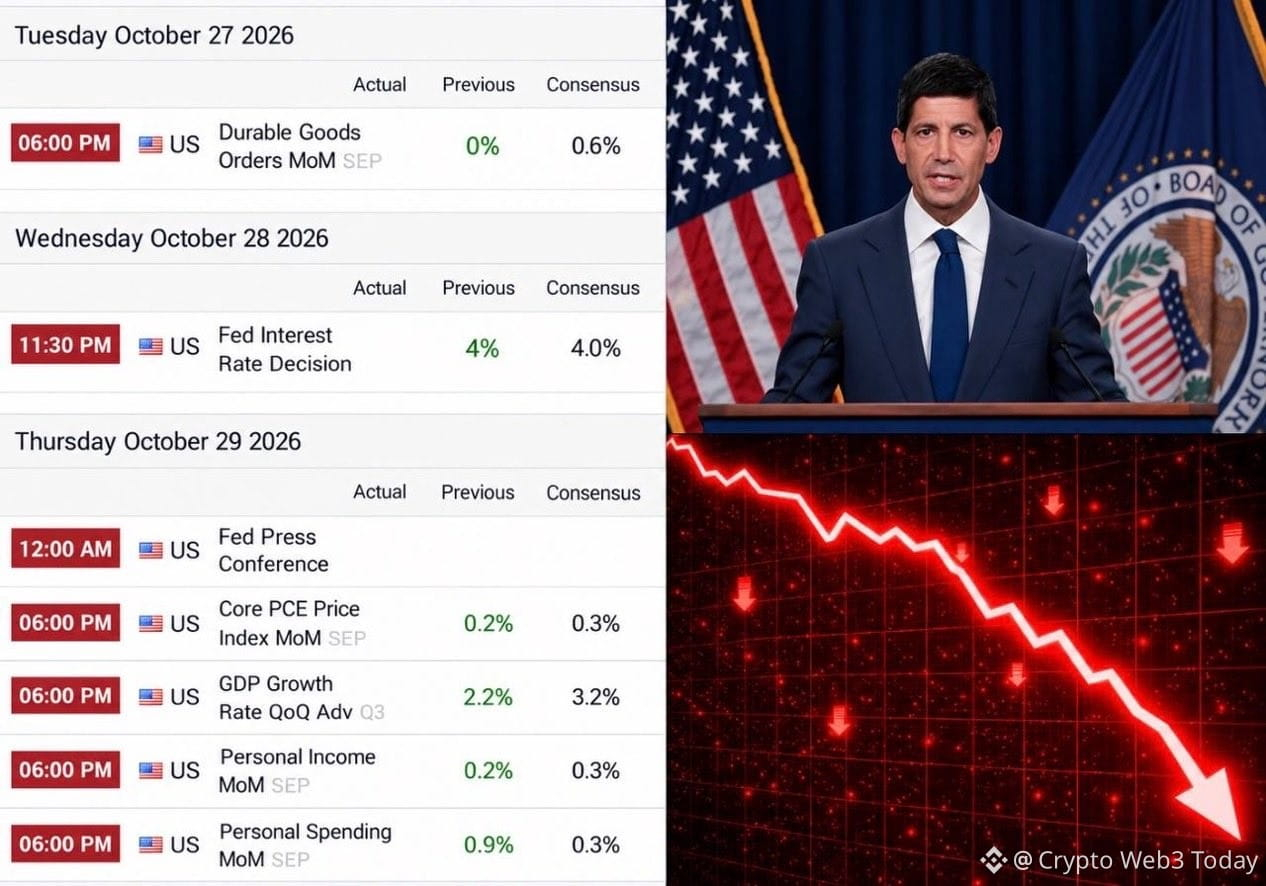
🚨 The coming week could be extremely volatile for global markets.
Several key events are set to potentially trigger sharp market fluctuations:
🔴 Monday: U.S. markets reopen amid warnings from Trump regarding another potential strike on Iran—all while the price of Brent crude is already approaching $117.
🔴 Tuesday: Release of U.S. data on employment, the housing sector, and consumer confidence.
🔴 Wednesday: The Federal Open Market Committee (FOMC) decision and a press conference featuring Kevin Warsh. While interest rates are expected to remain unchanged, the Federal Reserve may signal future hikes.
🔴 Thursday: Release of U.S. Personal Consumption Expenditures (PCE) data and GDP figures. With inflation projected to rise from 3.4% to 3.6%, and oil prices climbing, we could see another upward shock.
🔴 Friday: Unemployment data from Japan and wage inflation figures from the United States.
All of this unfolds just days before the U.S. midterm elections.
Oil prices are surging, inflation concerns are mounting, and there is growing unease regarding spending on artificial intelligence.
If inflation figures come in high and the Federal Reserve hints at the possibility of further interest rate hikes, we could see a widespread sell-off across stocks, metals, and cryptocurrencies.
$ZEC
{spot}(ZECUSDT)
$SUI
{spot}(SUIUSDT)
$TAO
{spot}(TAOUSDT)
🚨 The coming week could be extremely volatile for global markets.
Several key events are set to potentially trigger sharp market fluctuations:
🔴 Monday: U.S. markets reopen amid warnings from Trump regarding another potential strike on Iran—all while the price of Brent crude is already approaching $117.
🔴 Tuesday: Release of U.S. data on employment, the housing sector, and consumer confidence.
🔴 Wednesday: The Federal Open Market Committee (FOMC) decision and a press conference featuring Kevin Warsh. While interest rates are expected to remain unchanged, the Federal Reserve may signal future hikes.
🔴 Thursday: Release of U.S. Personal Consumption Expenditures (PCE) data and GDP figures. With inflation projected to rise from 3.4% to 3.6%, and oil prices climbing, we could see another upward shock.
🔴 Friday: Unemployment data from Japan and wage inflation figures from the United States.
All of this unfolds just days before the U.S. midterm elections.
Oil prices are surging, inflation concerns are mounting, and there is growing unease regarding spending on artificial intelligence.
If inflation figures come in high and the Federal Reserve hints at the possibility of further interest rate hikes, we could see a widespread sell-off across stocks, metals, and cryptocurrencies.
$ZEC
$SUI
$TAO
1
6
3.2k
·
--
Bearish
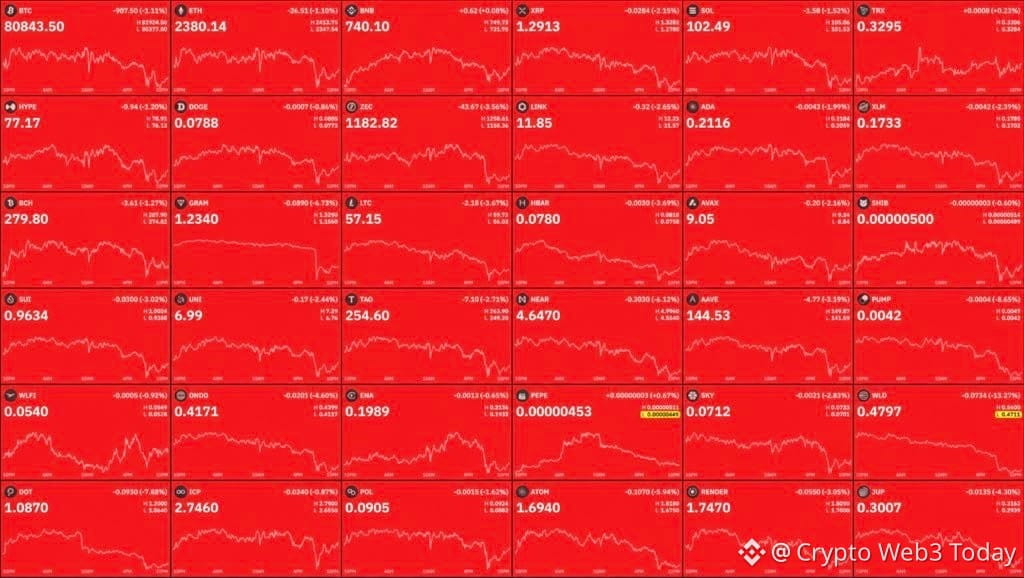
🚨 Folks, what is this earthquake hitting the crypto market? 🔥
Just imagine—$140 billion has evaporated from the cryptocurrency market in a single week! 😳💸
Meanwhile, oil prices are soaring toward $120 a barrel as tensions escalate between the U.S. and Iran. 🔥
The markets are clearly on edge, and fear is mounting with every new development.
The chilling question now is: if this escalation continues, what could happen to Bitcoin and the rest of the cryptocurrencies? 📉
$BTC
{spot}(BTCUSDT)
$SOL
{spot}(SOLUSDT)
$ETH
{spot}(ETHUSDT)
🚨 Folks, what is this earthquake hitting the crypto market? 🔥
Just imagine—$140 billion has evaporated from the cryptocurrency market in a single week! 😳💸
Meanwhile, oil prices are soaring toward $120 a barrel as tensions escalate between the U.S. and Iran. 🔥
The markets are clearly on edge, and fear is mounting with every new development.
The chilling question now is: if this escalation continues, what could happen to Bitcoin and the rest of the cryptocurrencies? 📉
$BTC
$SOL
$ETH
1
8
4.2k
Verified
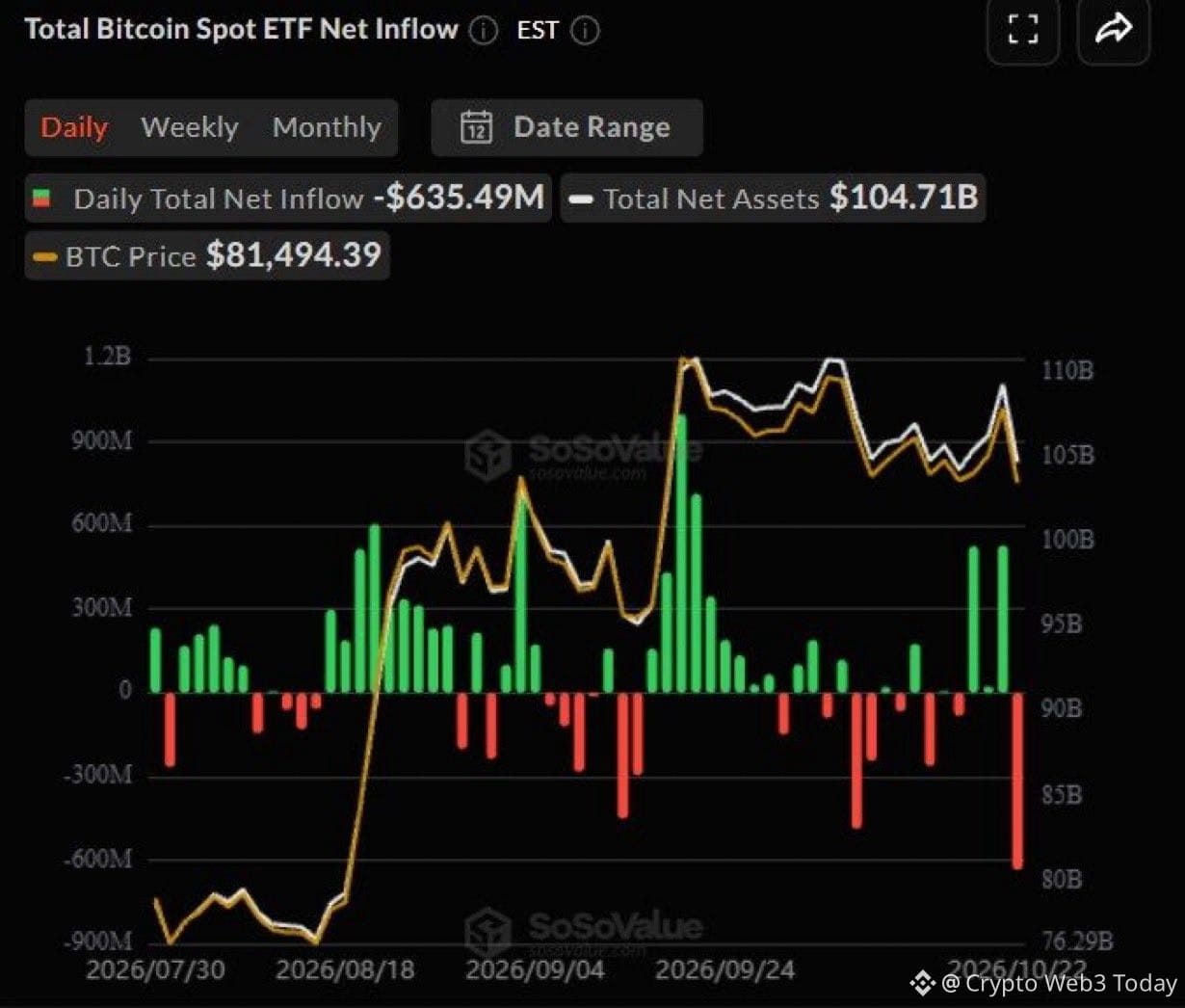
🔴 Spot Bitcoin ETFs record largest outflow since June!
🔻 Spot Bitcoin ETFs saw net outflows of $635.6 million in a single day—the largest capital exodus since June.
🔺 BlackRock’s $IBIT fund alone recorded outflows of $254.1 million.
$BTC
{spot}(BTCUSDT)
🔴 Spot Bitcoin ETFs record largest outflow since June!
🔻 Spot Bitcoin ETFs saw net outflows of $635.6 million in a single day—the largest capital exodus since June.
🔺 BlackRock’s $IBIT fund alone recorded outflows of $254.1 million.
$BTC
🔻 Spot Bitcoin ETFs saw net outflows of $635.6 million in a single day—the largest capital exodus since June.
🔺 BlackRock’s $IBIT fund alone recorded outflows of $254.1 million.
$BTC
5
1.4k
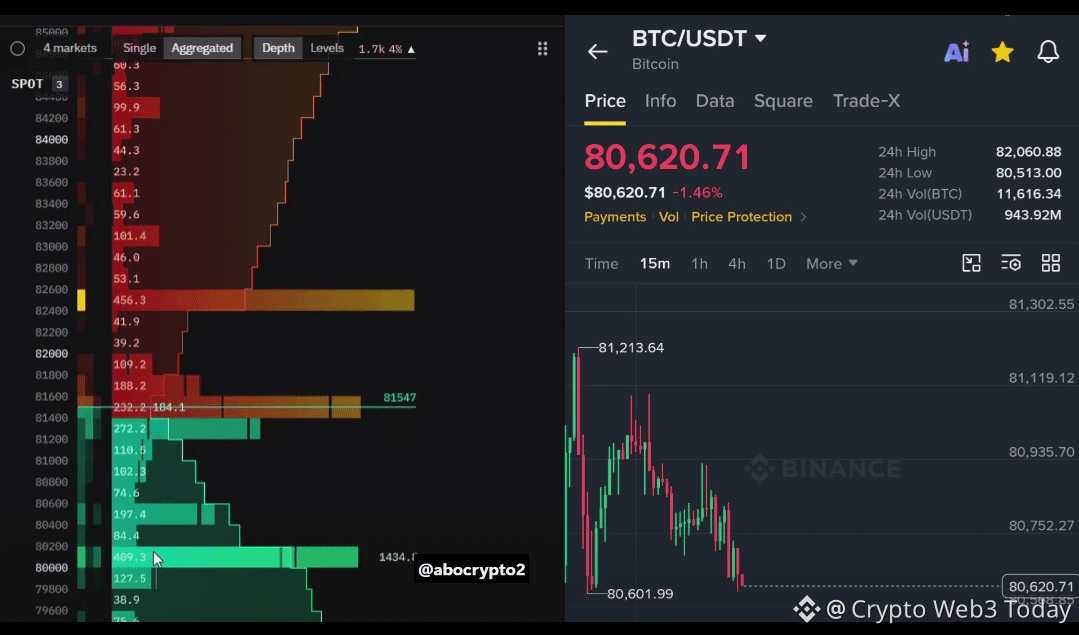
Bitcoin is trapped between two walls, and one of them is about to be tested:
$82,500 — A sell wall that could hinder an upward move.
$80,000 — A buy wall that could halt a decline.
There is only a $2,500 gap between them, but the real battle is to see which wall will hold.
$BTC
{spot}(BTCUSDT)
Bitcoin is trapped between two walls, and one of them is about to be tested:
$82,500 — A sell wall that could hinder an upward move.
$80,000 — A buy wall that could halt a decline.
There is only a $2,500 gap between them, but the real battle is to see which wall will hold.
$BTC
$82,500 — A sell wall that could hinder an upward move.
$80,000 — A buy wall that could halt a decline.
There is only a $2,500 gap between them, but the real battle is to see which wall will hold.
$BTC
3
437
·
--
Bullish
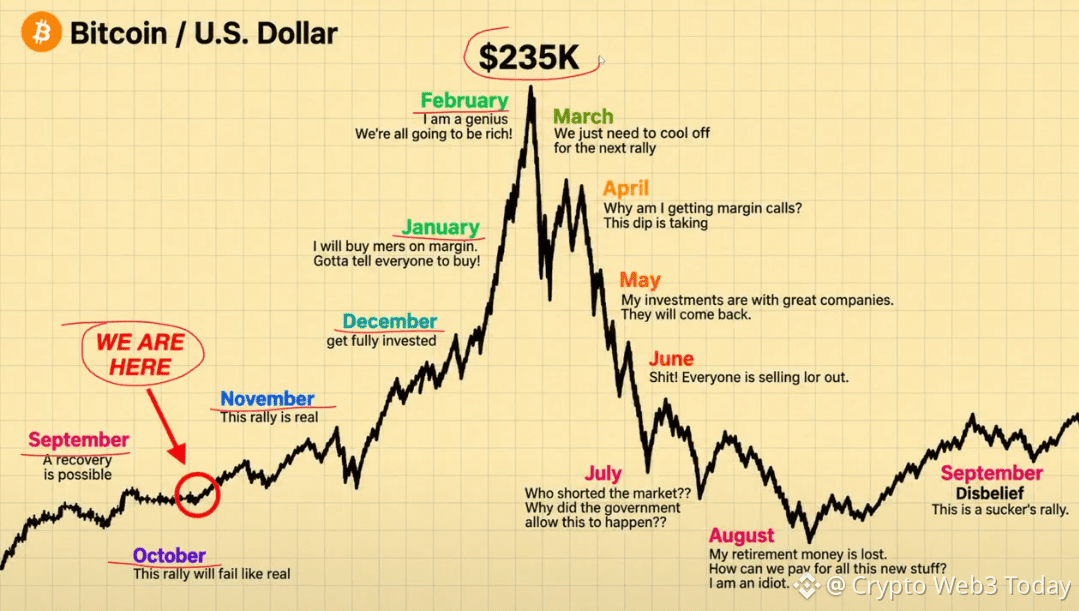
🚨 Warning: The 2026–2027 Major Upswing Timeline
September → Disbelief
October → Hope
November → Local Bottom
December → Recovery
January → Euphoria
February → New All-Time High
March → Altcoin Season
April → Bull Trap
May → Panic Selling
June → Bear Market
The crowd will buy near the top and panic-sell near the bottom.
$BTC
{spot}(BTCUSDT)
$SOL
{spot}(SOLUSDT)
$ETH
{spot}(ETHUSDT)
🚨 Warning: The 2026–2027 Major Upswing Timeline
September → Disbelief
October → Hope
November → Local Bottom
December → Recovery
January → Euphoria
February → New All-Time High
March → Altcoin Season
April → Bull Trap
May → Panic Selling
June → Bear Market
The crowd will buy near the top and panic-sell near the bottom.
$BTC
$SOL
$ETH
September → Disbelief
October → Hope
November → Local Bottom
December → Recovery
January → Euphoria
February → New All-Time High
March → Altcoin Season
April → Bull Trap
May → Panic Selling
June → Bear Market
The crowd will buy near the top and panic-sell near the bottom.
$BTC
$SOL
$ETH
12
1
24
14k
🚨 Reminder: The US Purchasing Managers' Index (PMI) may impact the markets today.
🇺🇸 At 9:45 AM ET, the preliminary reading for the Manufacturing PMI will be released—a key indicator ahead of the Federal Reserve’s interest rate decision on October 28.
📉 If the index is above 56.0: Potential for downward pressure.
⚖️ If the index is between 55.3 and 55.5: A neutral scenario.
📈 If the index is below 55.0: Potential for upward momentum.
Bitcoin and other cryptocurrencies may experience price volatility.
$BTC
{spot}(BTCUSDT)
$ETH
{spot}(ETHUSDT)
$SOL
{spot}(SOLUSDT)
🚨 Reminder: The US Purchasing Managers' Index (PMI) may impact the markets today.
🇺🇸 At 9:45 AM ET, the preliminary reading for the Manufacturing PMI will be released—a key indicator ahead of the Federal Reserve’s interest rate decision on October 28.
📉 If the index is above 56.0: Potential for downward pressure.
⚖️ If the index is between 55.3 and 55.5: A neutral scenario.
📈 If the index is below 55.0: Potential for upward momentum.
Bitcoin and other cryptocurrencies may experience price volatility.
$BTC
$ETH
$SOL

5
1.3k
·
--
Bearish
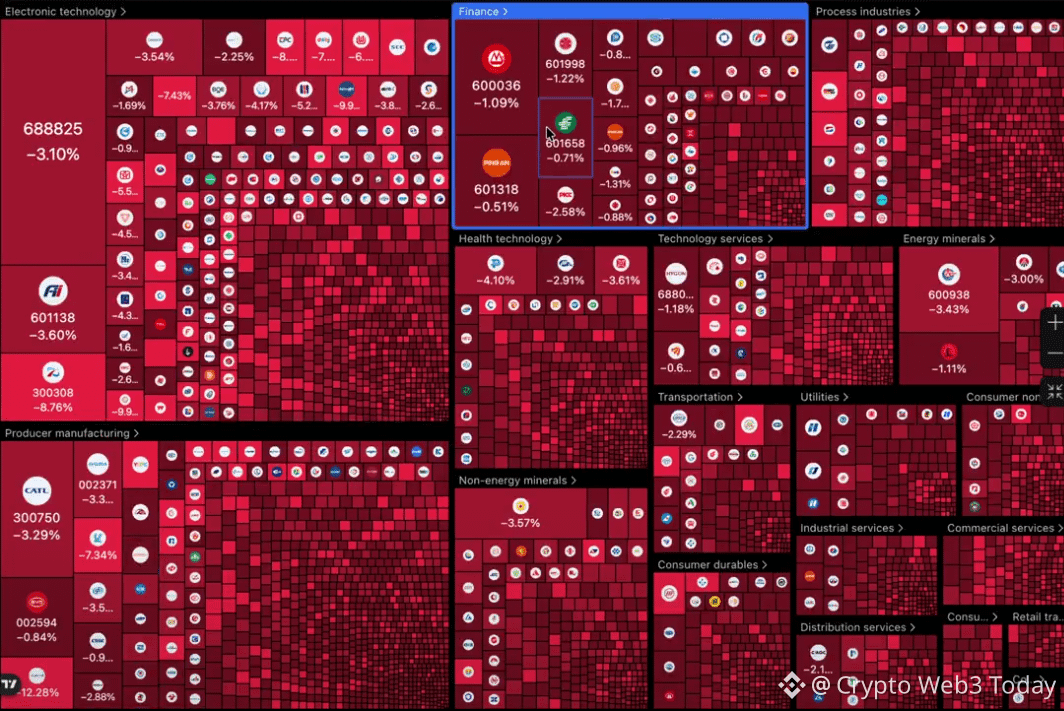
🚨 900 billion yuan wiped off the Chinese stock market in a single day 🇨🇳
The Shanghai Composite Index fell by more than 1.3%, with artificial intelligence (AI) stocks coming under heavy pressure.
Most concerning is that the AI craze is no longer immune to sell-offs.
If this pressure spreads to global markets, investor risk appetite could shift, putting high-risk assets—including cryptocurrencies—to a new test.
The market had been chasing the AI narrative, but it is now serving as a reminder that even the most popular trends are not exempt from a collapse.
$SAMSUNGEM
{future}(SAMSUNGEMUSDT)
$SKHYB
{spot}(SKHYBUSDT)
$CHNR.US
{stock_us}(CHNR.US)
🚨 900 billion yuan wiped off the Chinese stock market in a single day 🇨🇳
The Shanghai Composite Index fell by more than 1.3%, with artificial intelligence (AI) stocks coming under heavy pressure.
Most concerning is that the AI craze is no longer immune to sell-offs.
If this pressure spreads to global markets, investor risk appetite could shift, putting high-risk assets—including cryptocurrencies—to a new test.
The market had been chasing the AI narrative, but it is now serving as a reminder that even the most popular trends are not exempt from a collapse.
$SAMSUNGEM
$SKHYB
$CHNR.US
1
4
3.8k
·
--
Bearish
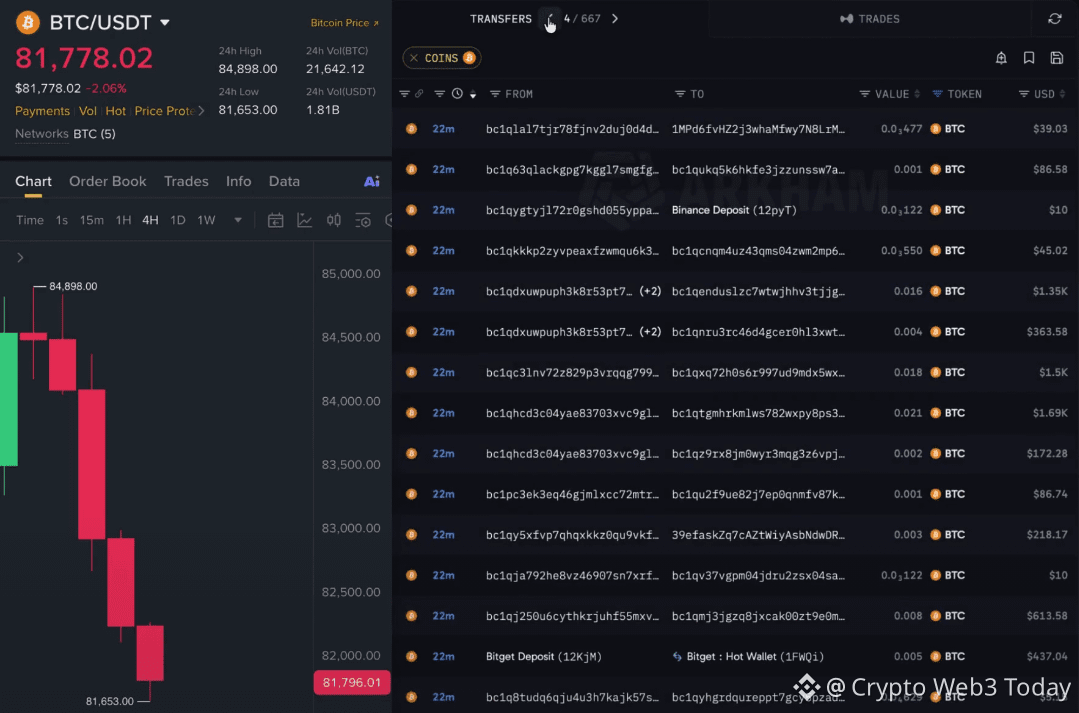
🩸 MASSIVE:
Crypto whales are dumping millions of dollars worth of assets as fears of a potential US-Iran war continue to rise.
$BTC has fallen below $82,000, while ETH is trading around $2,400.
Something BIG could be brewing… ⚠️
$BTC
{spot}(BTCUSDT)
$ETH
{spot}(ETHUSDT)
🩸 MASSIVE:
Crypto whales are dumping millions of dollars worth of assets as fears of a potential US-Iran war continue to rise.
$BTC has fallen below $82,000, while ETH is trading around $2,400.
Something BIG could be brewing… ⚠️
$BTC
$ETH
Crypto whales are dumping millions of dollars worth of assets as fears of a potential US-Iran war continue to rise.
$BTC has fallen below $82,000, while ETH is trading around $2,400.
Something BIG could be brewing… ⚠️
$BTC
$ETH
2
2.4k
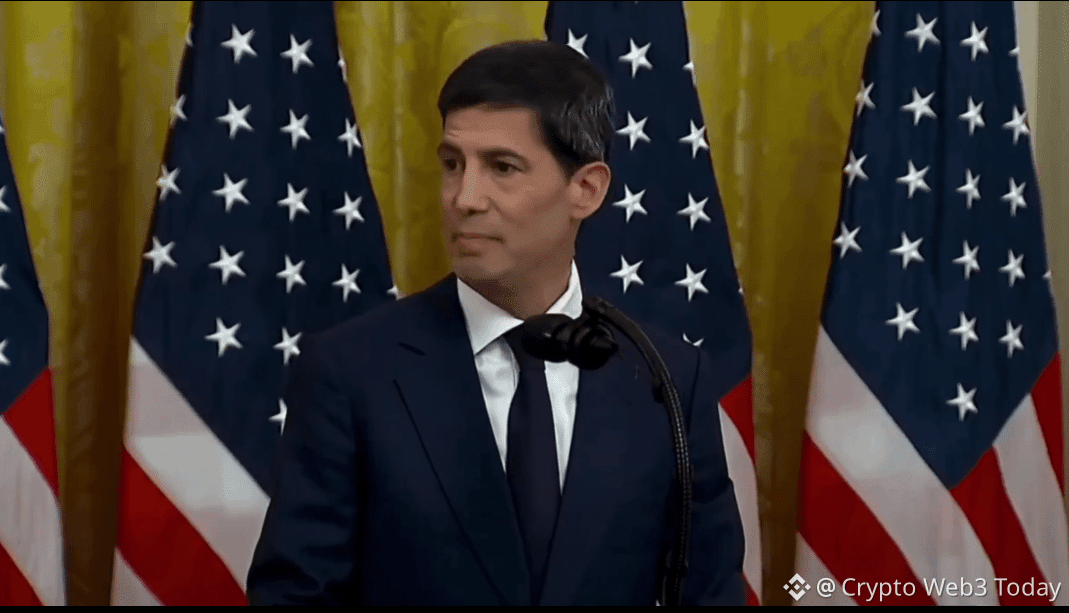
🚨 BREAKING
🇺🇸 US INITIAL JOBLESS CLAIMS WILL BE RELEASED TODAY AT 8:30 AM ET
IF CLAIMS < 195K = MARKETS WILL PUMP
IF CLAIMS ~ 200K = MARKETS WILL STAY FLAT
IF CLAIMS > 205K = MARKETS WILL DUMP
POSITION ACCORDINGLY!
$SOL
{spot}(SOLUSDT)
$ZEC
{spot}(ZECUSDT)
$DYDX
{spot}(DYDXUSDT)
🚨 BREAKING
🇺🇸 US INITIAL JOBLESS CLAIMS WILL BE RELEASED TODAY AT 8:30 AM ET
IF CLAIMS < 195K = MARKETS WILL PUMP
IF CLAIMS ~ 200K = MARKETS WILL STAY FLAT
IF CLAIMS > 205K = MARKETS WILL DUMP
POSITION ACCORDINGLY!
$SOL
$ZEC
$DYDX
🇺🇸 US INITIAL JOBLESS CLAIMS WILL BE RELEASED TODAY AT 8:30 AM ET
IF CLAIMS < 195K = MARKETS WILL PUMP
IF CLAIMS ~ 200K = MARKETS WILL STAY FLAT
IF CLAIMS > 205K = MARKETS WILL DUMP
POSITION ACCORDINGLY!
$SOL
$ZEC
$DYDX
1
1
15
11.3k
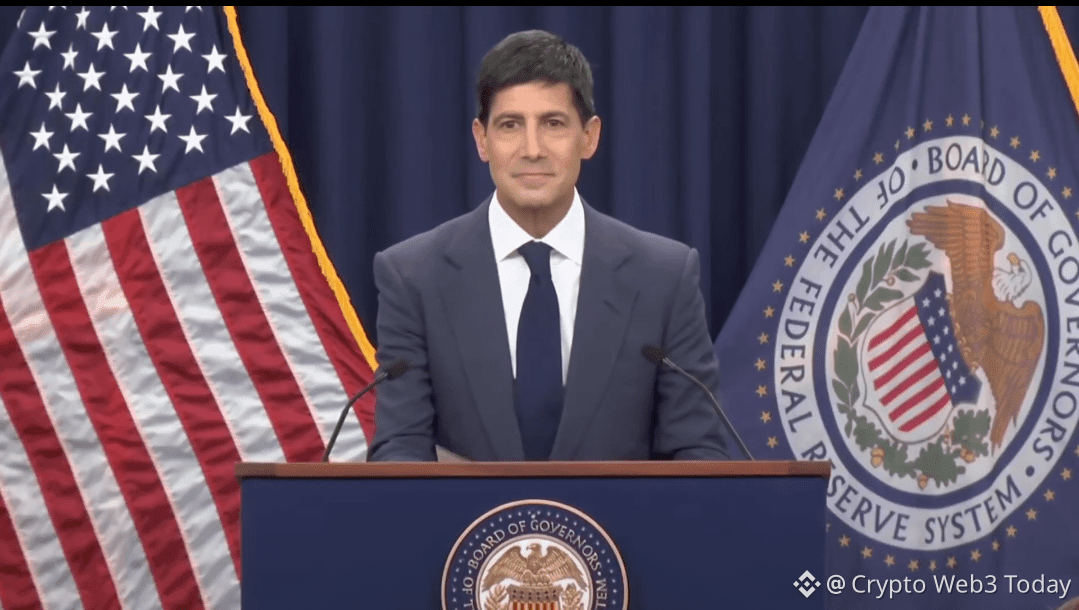
🚨🚨 Today, a single figure could determine whether the markets will breathe a sigh of relief or enter a new wave of pressure.
U.S. jobless claims data will be released at 8:30 AM New York time, and the result could shift investor expectations regarding interest rates:
Below 195,000: Supports the dollar while putting pressure on stocks and cryptocurrencies.
Around 200,000: Likely to have a limited impact, in line with prevailing expectations.
Above 205,000: Bolsters expectations for monetary policy easing—a positive outcome for stocks and cryptocurrencies.
All eyes are on today’s data; the surprise could stem from the figure itself or the market’s reaction to it.
The market doesn’t always fear bad news; sometimes, it fears good news arriving at the wrong time. An economy that is "too strong" can actually be bad news for crypto.
$BTC
{spot}(BTCUSDT)
$ETH
{spot}(ETHUSDT)
$SOL
{spot}(SOLUSDT)
🚨🚨 Today, a single figure could determine whether the markets will breathe a sigh of relief or enter a new wave of pressure.
U.S. jobless claims data will be released at 8:30 AM New York time, and the result could shift investor expectations regarding interest rates:
Below 195,000: Supports the dollar while putting pressure on stocks and cryptocurrencies.
Around 200,000: Likely to have a limited impact, in line with prevailing expectations.
Above 205,000: Bolsters expectations for monetary policy easing—a positive outcome for stocks and cryptocurrencies.
All eyes are on today’s data; the surprise could stem from the figure itself or the market’s reaction to it.
The market doesn’t always fear bad news; sometimes, it fears good news arriving at the wrong time. An economy that is "too strong" can actually be bad news for crypto.
$BTC
$ETH
$SOL
8
859
·
--
Bullish
🚨🇺🇸 Breaking and Official: The U.S. Opens a New Chapter in the History of Digital Currencies… What Does This Mean for Bitcoin? ₿
In a historic move that could reshape the global financial system, the U.S. Office of the Comptroller of the Currency (OCC) announced today, October 21, 2026, the adoption of final regulations to implement the "GENIUS Act"—a law governing dollar-pegged stablecoins.
🔥 What Has Changed?
✅ Established clear rules for the financial reserves backing stablecoins.
✅ Regulated redemption rights and protections for stablecoin holders.
✅ Imposed requirements for licensing, oversight, auditing, and risk management.
✅ Regulated the activities of foreign stablecoin issuers within the U.S. market.
✅ Opened the door for banks and financial institutions to participate within a clear legal framework.
📅 Effective Date: January 18, 2027.
💰 What Does This Mean for the Cryptocurrency Market?
🔸 Bitcoin $BTC May benefit indirectly from increased institutional confidence and the expansion of digital asset infrastructure.
🔸 Ethereum $ETH May benefit from the expanded use of stablecoins across blockchain networks.
🔸 USDC and $USDT : Entering a new phase of competition and regulatory compliance—though this decision does not constitute an automatic endorsement of these specific assets.
🔸 The U.S. Dollar: An opportunity to strengthen its global reach through digital, dollar-pegged stablecoins.
🧠 The Bottom Line:
The United States is not merely allowing digital currencies to exist; it is actively integrating a core component of their infrastructure into the regulated financial system.
And that is precisely why this news is so significant! This decision may not boost the price of Bitcoin today, but it establishes a regulatory foundation that could influence capital flows into digital assets in the coming years.
⚠️ These regulations apply to entities under the supervision of the OCC; they do not signify the completion of all U.S. regulations related to this legislation.
#Bitcoin
#GENIUSAct

2
1
6
2.2k
·
--
Bullish
Wall Street raises price targets for SpaceX following stellar Q3 earnings! 🚨🔥 $SPCX
A wave of intense optimism and conviction is sweeping through major investment banks after SpaceX announced historic financial figures—marked by a surge in profits driven by its Starlink and advanced infrastructure divisions! 📊⚡️
💡 New Wall Street Price Targets:
1️⃣ Morgan Stanley: $300, with an "Overweight" rating 🚀
2️⃣ Wells Fargo: Raised target to $274 (up from $214) 📈
3️⃣ Citi: Raised target to $240 (up from $200) 💰
4️⃣ UBS: Raised target to $230 (up from $210) 🏛️
5️⃣ Mizuho: Raised target to $205 (up from $200) ⚙️
🎯 The Bottom Line: SpaceX is evolving beyond a mere space company into a powerhouse of liquidity and integrated infrastructure—with the full backing of Wall Street’s biggest players! 💎🌍
#USmarket
$SPCXB
{spot}(SPCXBUSDT)
Wall Street raises price targets for SpaceX following stellar Q3 earnings! 🚨🔥 $SPCX
A wave of intense optimism and conviction is sweeping through major investment banks after SpaceX announced historic financial figures—marked by a surge in profits driven by its Starlink and advanced infrastructure divisions! 📊⚡️
💡 New Wall Street Price Targets:
1️⃣ Morgan Stanley: $300, with an "Overweight" rating 🚀
2️⃣ Wells Fargo: Raised target to $274 (up from $214) 📈
3️⃣ Citi: Raised target to $240 (up from $200) 💰
4️⃣ UBS: Raised target to $230 (up from $210) 🏛️
5️⃣ Mizuho: Raised target to $205 (up from $200) ⚙️
🎯 The Bottom Line: SpaceX is evolving beyond a mere space company into a powerhouse of liquidity and integrated infrastructure—with the full backing of Wall Street’s biggest players! 💎🌍
#USmarket
$SPCXB
3
416
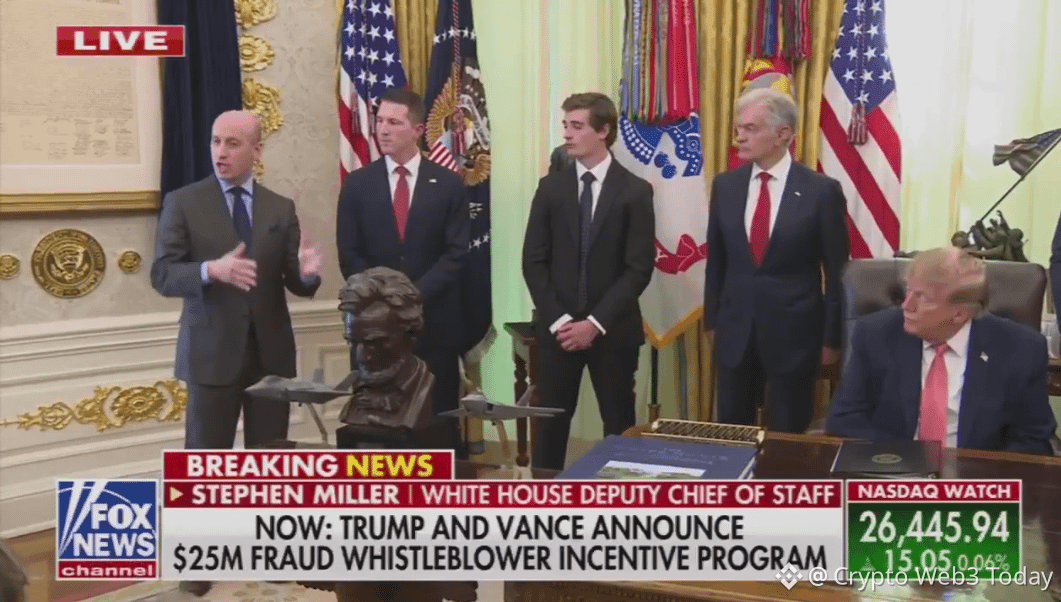
🚨🔥 Urgent! A bombshell statement from the White House is igniting a major controversy in the U.S.!
Just imagine what’s being said to the American middle class!
A White House official claimed that, prior to the Trump administration, the average American was spending half their life working—only for their tax dollars to end up in the hands of scammers and fraudsters!
😳 In other words, while ordinary citizens work, pay their taxes, and follow the law, others have been siphoning off government funds—for instance, by setting up fake daycare centers and claiming subsidies for children who don’t even exist!
💰 Even more striking, the administration claims it has already recovered $250 billion, with a goal of reaching $1 trillion!
🔥 What do you think—has the U.S. truly begun clawing back stolen funds, or do these figures require closer scrutiny?
$TRUMP
{spot}(TRUMPUSDT)
$SOL
{spot}(SOLUSDT)
$ZEC
{spot}(ZECUSDT)
🚨🔥 Urgent! A bombshell statement from the White House is igniting a major controversy in the U.S.!
Just imagine what’s being said to the American middle class!
A White House official claimed that, prior to the Trump administration, the average American was spending half their life working—only for their tax dollars to end up in the hands of scammers and fraudsters!
😳 In other words, while ordinary citizens work, pay their taxes, and follow the law, others have been siphoning off government funds—for instance, by setting up fake daycare centers and claiming subsidies for children who don’t even exist!
💰 Even more striking, the administration claims it has already recovered $250 billion, with a goal of reaching $1 trillion!
🔥 What do you think—has the U.S. truly begun clawing back stolen funds, or do these figures require closer scrutiny?
$TRUMP
$SOL
$ZEC
1
6
5.5k
·
--
Bullish
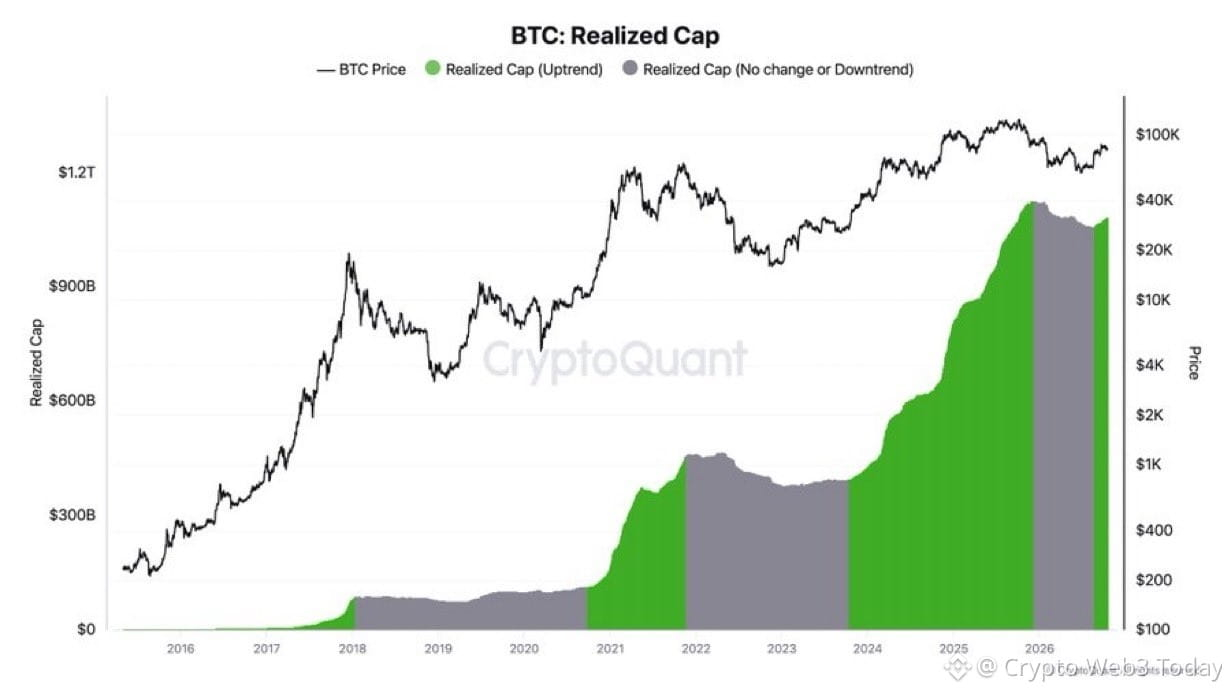
📊 CryptoQuant CEO:
Ki Young Ju states that new capital is flowing into Bitcoin, adding that "this only happens during bull markets." 📈
$BTC
{spot}(BTCUSDT)
📊 CryptoQuant CEO:
Ki Young Ju states that new capital is flowing into Bitcoin, adding that "this only happens during bull markets." 📈
$BTC
Ki Young Ju states that new capital is flowing into Bitcoin, adding that "this only happens during bull markets." 📈
$BTC
1
226
·
--
Bullish
Verified
🚨 Asian markets rebound... with South Korea leading the way! 🇰🇷📈
Asian stocks closed with gains, led by the South Korean market and bolstered by a strong performance in semiconductor shares.
🔥 Shares of Samsung and SK Hynix surged by approximately 7%, driven by a recovery in the chip sector.
📉 This rebound comes just one day after South Korea’s KOSPI index hit a six-month low!
👀 Is risk appetite returning to the markets, or are we simply seeing a temporary bounce following the recent downturn?
$SAMSUNGEM
{future}(SAMSUNGEMUSDT)
$SKHYB
{spot}(SKHYBUSDT)
🚨 Asian markets rebound... with South Korea leading the way! 🇰🇷📈
Asian stocks closed with gains, led by the South Korean market and bolstered by a strong performance in semiconductor shares.
🔥 Shares of Samsung and SK Hynix surged by approximately 7%, driven by a recovery in the chip sector.
📉 This rebound comes just one day after South Korea’s KOSPI index hit a six-month low!
👀 Is risk appetite returning to the markets, or are we simply seeing a temporary bounce following the recent downturn?
$SAMSUNGEM
$SKHYB
4
1.7k
Log in to explore more content
Join global crypto users on Binance Square
⚡️ Get latest and useful information about crypto.
💬 Trusted by the world’s largest crypto exchange.
👍 Discover real insights from verified creators.
Email / Phone number