

Crypto Currency School
35 Posts

Crypto Currency School
Report
Block User
Daily provideLatest Crypto News
9 Following
38 Followers
24 Liked
Posts
All
Quotes
PINNED
·
--
Bullish
#BTC BOOM BOOM BTC
#BTC BOOM BOOM BTC
65476
37%
70,000
19%
73,000
16%
88,000
28%
116 votes • Voting closed
4
615
Article
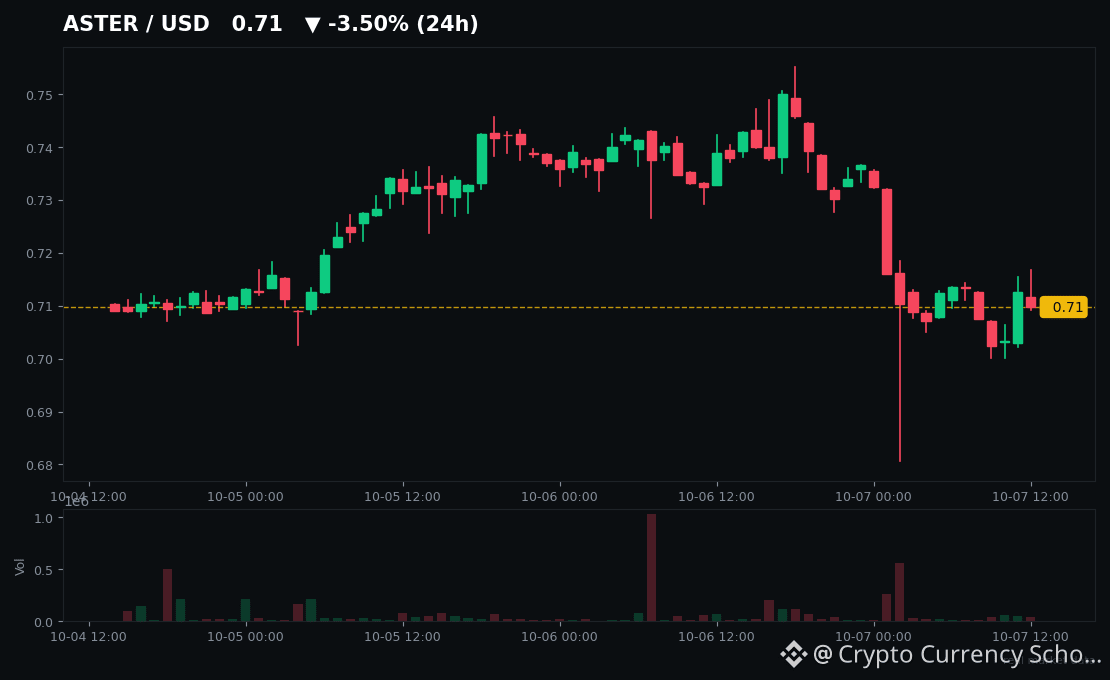
$ASTER Is Down 70% a Year After Binance Listing — Here's the Real StoryOne year ago, Binance listed the most hyped token of 2025 — and the chart since then is a warning every trader should study.
$ASTER is trading at ~$0.71 right now. That's roughly 70% below its $2.41 all-time high. Let that sink in before you read the next paragraph.
**The setup**
In September 2025, CZ publicly praised Aster — the $BNB Chain perp DEX with ex-Binance staff behind it and his YZi Labs holding a minority stake. What followed was pure frenzy: $ASTER ran ~1,500% in days, from under $0.10 to $2.41 by September 24.
Then came the official catalyst: on October 6, 2025, Binance spot-listed ASTER with USDT/USDC/TRY pairs and a Seed Tag. The announcement alone spiked it 10% in an hour, back above $2. On paper, the dream scenario.
**The unraveling**
Three things broke the story — and all three still matter today.
1. **The volume was suspect.** DeFiLlama delisted Aster's perp volume data after its founder showed Aster's volumes mirroring Binance's perps almost exactly — a correlation he said was unlikely to occur naturally. One snapshot showed Aster printing $2.76B in volume with just $7.2M in liquidations. Real traders liquidate. Loops don't.
2. **The unlocks never stopped.** Only ~2.7B of 8B tokens circulate today. The team had to slash monthly emissions 97% in March 2026 just to slow the bleeding. The airdrop tranche keeps vesting for 80 months.
3. **The king never left.** Hyperliquid now does ~$216.9B in 30-day perp volume vs Aster's $68.1B — and $48.3M in 30-day fees vs Aster's $4.4M. The "Aster flipped $HYPE" headline was a moment, not an era.
**So is it dead?**
No — and that's the interesting part. Aster is still the #2 perp DEX, with ~$479M in cumulative protocol fees and ~$1.49T in cumulative perp volume. TVL sits near $800M. CZ's publicly disclosed ~$2M+ personal buy ("I buy and hold") still anchors the bull case — and retail is still riding the dream, while signal traders short every bounce near $0.70.
Here's my take: listings are exits for the patient, not entries for the late. The data on Binance listings is brutal — on average, newly listed tokens dump ~70% from peak, and nearly half top on listing day itself. $ASTER followed the script almost perfectly.
The question isn't whether Aster the DEX survives. It's whether $ASTER the token ever earns its 2025 price again.
Not financial advice. DYOR.
$ASTER Is Down 70% a Year After Binance Listing — Here's the Real Story
One year ago, Binance listed the most hyped token of 2025 — and the chart since then is a warning every trader should study.
$ASTER is trading at ~$0.71 right now. That's roughly 70% below its $2.41 all-time high. Let that sink in before you read the next paragraph.
**The setup**
In September 2025, CZ publicly praised Aster — the $BNB Chain perp DEX with ex-Binance staff behind it and his YZi Labs holding a minority stake. What followed was pure frenzy: $ASTER ran ~1,500% in days, from under $0.10 to $2.41 by September 24.
Then came the official catalyst: on October 6, 2025, Binance spot-listed ASTER with USDT/USDC/TRY pairs and a Seed Tag. The announcement alone spiked it 10% in an hour, back above $2. On paper, the dream scenario.
**The unraveling**
Three things broke the story — and all three still matter today.
1. **The volume was suspect.** DeFiLlama delisted Aster's perp volume data after its founder showed Aster's volumes mirroring Binance's perps almost exactly — a correlation he said was unlikely to occur naturally. One snapshot showed Aster printing $2.76B in volume with just $7.2M in liquidations. Real traders liquidate. Loops don't.
2. **The unlocks never stopped.** Only ~2.7B of 8B tokens circulate today. The team had to slash monthly emissions 97% in March 2026 just to slow the bleeding. The airdrop tranche keeps vesting for 80 months.
3. **The king never left.** Hyperliquid now does ~$216.9B in 30-day perp volume vs Aster's $68.1B — and $48.3M in 30-day fees vs Aster's $4.4M. The "Aster flipped $HYPE " headline was a moment, not an era.
**So is it dead?**
No — and that's the interesting part. Aster is still the #2 perp DEX, with ~$479M in cumulative protocol fees and ~$1.49T in cumulative perp volume. TVL sits near $800M. CZ's publicly disclosed ~$2M+ personal buy ("I buy and hold") still anchors the bull case — and retail is still riding the dream, while signal traders short every bounce near $0.70.
Here's my take: listings are exits for the patient, not entries for the late. The data on Binance listings is brutal — on average, newly listed tokens dump ~70% from peak, and nearly half top on listing day itself. $ASTER followed the script almost perfectly.
The question isn't whether Aster the DEX survives. It's whether $ASTER the token ever earns its 2025 price again.
Not financial advice. DYOR.
$ASTER is trading at ~$0.71 right now. That's roughly 70% below its $2.41 all-time high. Let that sink in before you read the next paragraph.
**The setup**
In September 2025, CZ publicly praised Aster — the $BNB Chain perp DEX with ex-Binance staff behind it and his YZi Labs holding a minority stake. What followed was pure frenzy: $ASTER ran ~1,500% in days, from under $0.10 to $2.41 by September 24.
Then came the official catalyst: on October 6, 2025, Binance spot-listed ASTER with USDT/USDC/TRY pairs and a Seed Tag. The announcement alone spiked it 10% in an hour, back above $2. On paper, the dream scenario.
**The unraveling**
Three things broke the story — and all three still matter today.
1. **The volume was suspect.** DeFiLlama delisted Aster's perp volume data after its founder showed Aster's volumes mirroring Binance's perps almost exactly — a correlation he said was unlikely to occur naturally. One snapshot showed Aster printing $2.76B in volume with just $7.2M in liquidations. Real traders liquidate. Loops don't.
2. **The unlocks never stopped.** Only ~2.7B of 8B tokens circulate today. The team had to slash monthly emissions 97% in March 2026 just to slow the bleeding. The airdrop tranche keeps vesting for 80 months.
3. **The king never left.** Hyperliquid now does ~$216.9B in 30-day perp volume vs Aster's $68.1B — and $48.3M in 30-day fees vs Aster's $4.4M. The "Aster flipped $HYPE " headline was a moment, not an era.
**So is it dead?**
No — and that's the interesting part. Aster is still the #2 perp DEX, with ~$479M in cumulative protocol fees and ~$1.49T in cumulative perp volume. TVL sits near $800M. CZ's publicly disclosed ~$2M+ personal buy ("I buy and hold") still anchors the bull case — and retail is still riding the dream, while signal traders short every bounce near $0.70.
Here's my take: listings are exits for the patient, not entries for the late. The data on Binance listings is brutal — on average, newly listed tokens dump ~70% from peak, and nearly half top on listing day itself. $ASTER followed the script almost perfectly.
The question isn't whether Aster the DEX survives. It's whether $ASTER the token ever earns its 2025 price again.
Not financial advice. DYOR.
103
Article
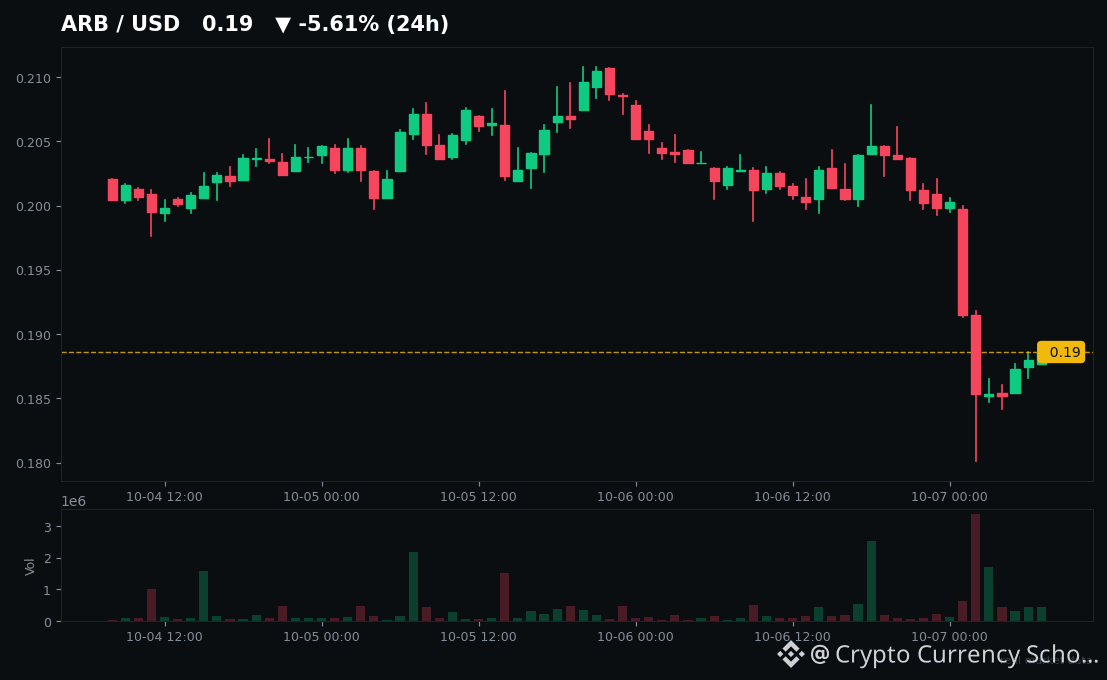
A Bank Says $ARB Could 70x — But It Is Down 5.6% Today. Here Is the Real Story$ARB is down 5.6% today, trading at $0.1886. Meanwhile, one of the world's biggest banks says it could 70x by 2030.
Both of those things are true. And that contradiction is exactly why you should be paying attention right now.
Let's start with the bank. Three weeks ago, Standard Chartered's head of digital assets research, Geoff Kendrick, initiated coverage on Arbitrum — calling it "the blockchain for TradFi." His price path: $0.50 by end of 2026, $1.50 in 2027, all the way to $10 by 2030. His thesis is simple: tokenized real-world assets could hit $4 trillion by 2028, and Arbitrum is quietly becoming the rails for that world.
And there's real smoke behind the call. Arbitrum just disclosed a record September: $5.45M in revenue, roughly 5x the month before.
But here's the catch — and this is the part most hype posts won't tell you. About $4.75M of that revenue (87%) came from Orbit licensing fees, mostly paid by one chain: Robinhood's memecoin chain. Arbitrum One's own transaction fees were just $507K. Plus, Robinhood's gas subsidy ended September 29. October is the first clean read on whether this is organic demand or one memecoin-boom month.
Still, the Arbitrum machine isn't sitting still. This week alone brought two fresh catalysts. Paxos launched its Global Dollar (USDG) on Arbitrum — a DAO proposal is now asking for 100M ARB in incentives to build USDG liquidity. And the Security Council paused new Stylus contract activations as a defensive move against malicious WASM programs — the kind of responsible security action that builders respect, even if it slows new app launches short-term.
Now the honest bear case, because you deserve it: the next token unlock hits October 16 — 92.6M ARB (~$20M) entering circulation. $ARB has no direct revenue share; protocol revenue goes to the DAO treasury, not holders. TVL sits at $1.414B while Base pulls ahead. And $0.21 keeps rejecting the price — trader Zach Anderson calls it "the line in the sand," with a daily close above it opening the path toward $0.25, or a rejection sliding toward $0.17.
So what does this actually mean? ARB has doubled off its June lows near $0.07, but it still sits 92% below its all-time high. A bank sees infrastructure for a $4 trillion market. The market sees a token with an unlock in nine days and a chart that can't hold $0.21.
One of those two stories is wrong. October will tell us which.
What's your take — is the bank early, or is everyone else late?
#Arbitrum #Layer2
Not financial advice. DYOR.
A Bank Says $ARB Could 70x — But It Is Down 5.6% Today. Here Is the Real Story
$ARB is down 5.6% today, trading at $0.1886. Meanwhile, one of the world's biggest banks says it could 70x by 2030.
Both of those things are true. And that contradiction is exactly why you should be paying attention right now.
Let's start with the bank. Three weeks ago, Standard Chartered's head of digital assets research, Geoff Kendrick, initiated coverage on Arbitrum — calling it "the blockchain for TradFi." His price path: $0.50 by end of 2026, $1.50 in 2027, all the way to $10 by 2030. His thesis is simple: tokenized real-world assets could hit $4 trillion by 2028, and Arbitrum is quietly becoming the rails for that world.
And there's real smoke behind the call. Arbitrum just disclosed a record September: $5.45M in revenue, roughly 5x the month before.
But here's the catch — and this is the part most hype posts won't tell you. About $4.75M of that revenue (87%) came from Orbit licensing fees, mostly paid by one chain: Robinhood's memecoin chain. Arbitrum One's own transaction fees were just $507K. Plus, Robinhood's gas subsidy ended September 29. October is the first clean read on whether this is organic demand or one memecoin-boom month.
Still, the Arbitrum machine isn't sitting still. This week alone brought two fresh catalysts. Paxos launched its Global Dollar (USDG) on Arbitrum — a DAO proposal is now asking for 100M ARB in incentives to build USDG liquidity. And the Security Council paused new Stylus contract activations as a defensive move against malicious WASM programs — the kind of responsible security action that builders respect, even if it slows new app launches short-term.
Now the honest bear case, because you deserve it: the next token unlock hits October 16 — 92.6M ARB (~$20M) entering circulation. $ARB has no direct revenue share; protocol revenue goes to the DAO treasury, not holders. TVL sits at $1.414B while Base pulls ahead. And $0.21 keeps rejecting the price — trader Zach Anderson calls it "the line in the sand," with a daily close above it opening the path toward $0.25, or a rejection sliding toward $0.17.
So what does this actually mean? ARB has doubled off its June lows near $0.07, but it still sits 92% below its all-time high. A bank sees infrastructure for a $4 trillion market. The market sees a token with an unlock in nine days and a chart that can't hold $0.21.
One of those two stories is wrong. October will tell us which.
What's your take — is the bank early, or is everyone else late?
#Arbitrum #Layer2
Not financial advice. DYOR.
Both of those things are true. And that contradiction is exactly why you should be paying attention right now.
Let's start with the bank. Three weeks ago, Standard Chartered's head of digital assets research, Geoff Kendrick, initiated coverage on Arbitrum — calling it "the blockchain for TradFi." His price path: $0.50 by end of 2026, $1.50 in 2027, all the way to $10 by 2030. His thesis is simple: tokenized real-world assets could hit $4 trillion by 2028, and Arbitrum is quietly becoming the rails for that world.
And there's real smoke behind the call. Arbitrum just disclosed a record September: $5.45M in revenue, roughly 5x the month before.
But here's the catch — and this is the part most hype posts won't tell you. About $4.75M of that revenue (87%) came from Orbit licensing fees, mostly paid by one chain: Robinhood's memecoin chain. Arbitrum One's own transaction fees were just $507K. Plus, Robinhood's gas subsidy ended September 29. October is the first clean read on whether this is organic demand or one memecoin-boom month.
Still, the Arbitrum machine isn't sitting still. This week alone brought two fresh catalysts. Paxos launched its Global Dollar (USDG) on Arbitrum — a DAO proposal is now asking for 100M ARB in incentives to build USDG liquidity. And the Security Council paused new Stylus contract activations as a defensive move against malicious WASM programs — the kind of responsible security action that builders respect, even if it slows new app launches short-term.
Now the honest bear case, because you deserve it: the next token unlock hits October 16 — 92.6M ARB (~$20M) entering circulation. $ARB has no direct revenue share; protocol revenue goes to the DAO treasury, not holders. TVL sits at $1.414B while Base pulls ahead. And $0.21 keeps rejecting the price — trader Zach Anderson calls it "the line in the sand," with a daily close above it opening the path toward $0.25, or a rejection sliding toward $0.17.
So what does this actually mean? ARB has doubled off its June lows near $0.07, but it still sits 92% below its all-time high. A bank sees infrastructure for a $4 trillion market. The market sees a token with an unlock in nine days and a chart that can't hold $0.21.
One of those two stories is wrong. October will tell us which.
What's your take — is the bank early, or is everyone else late?
#Arbitrum #Layer2
Not financial advice. DYOR.
1
256
Article
Whales Quietly Loaded 12M of DOGE While It Sat Under /bin/bash.10Your DOGE bag just bled another 4% and you're one click from rage-quitting.
Meanwhile, the wallets holding billions of coins are treating this dip like Black Friday.
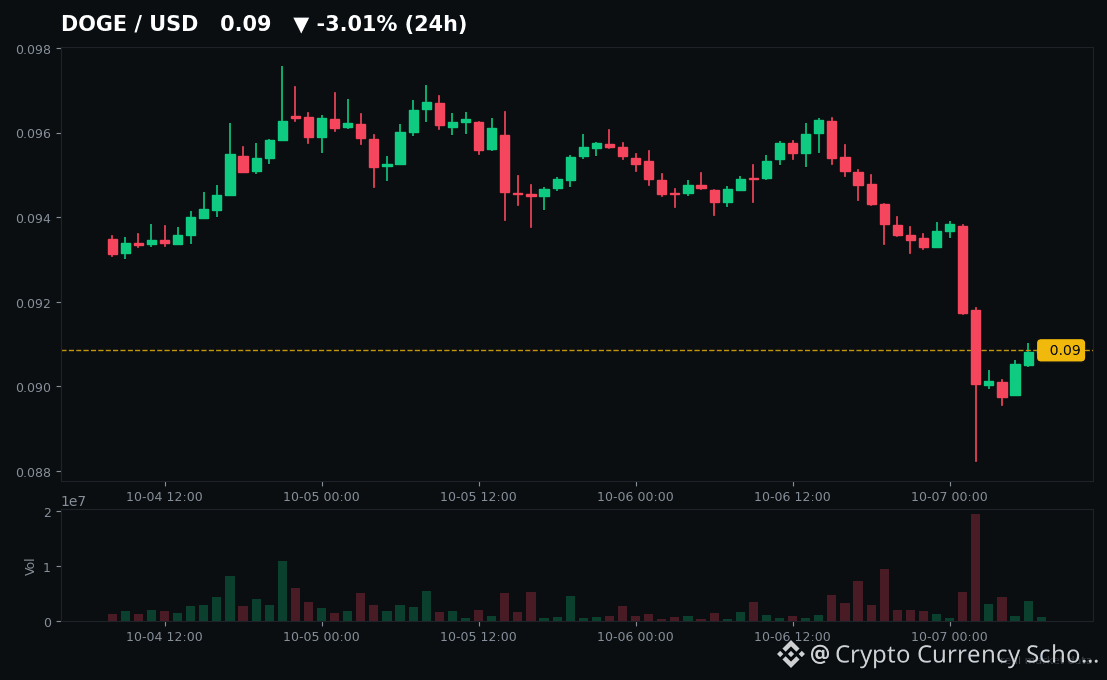
Here's the setup. $DOGE is sitting at ~$0.09 today, down about 3-4% with a wick down to $0.0882. $BTC's flush dragged the whole meme sector down 3-5% — SHIB, PEPE, WIF, BONK all red. Nobody's excited. That's usually when you should pay attention.
Because here's what the chain data shows.
Around September 26-27, wallets holding 100M-1B DOGE swallowed 1.14 BILLION DOGE — roughly $112M — in just 96 hours. That's Santiment data via analyst Ali Martinez, and it pushed this cohort's share of total supply from 20.75% to 21.55%. Follow-up reports say another 310M+ DOGE got added by large wallets in early October. This isn't retail FOMO. It's positioning.
The technicals are setting up too. Analysts are watching $0.095 — a 4-hour close above it confirms a breakout toward $0.106 (Martinez, Oct 4). And per Oct 5 reports, DOGE just printed its first daily golden cross since August 2025. Support sits at the 200-day EMA near $0.0932. Lose that, and sellers take the wheel.
Now the ETF twist nobody's pricing in. Bitwise is shutting down its Dogecoin ETF — last trade Oct 14, barely $800K in assets, nobody showed up. Sounds bearish? The other spot DOGE ETFs just posted RECORD ~$2.9M weekly inflows, led by Grayscale's GDOG which now owns ~81% of the DOGE ETF market. The money didn't leave DOGE. It consolidated behind the winner. Add SEC/CFTC guidance classifying DOGE as a digital commodity, plus the DogeOS Chikyū smart-contract testnet going live Oct 5 — the "just a meme" story is getting harder to tell.
The honest side, because you deserve both: DOGE is still ~88% below its $0.74 ATH from May 2021. Inflation never sleeps — ~5B new coins enter circulation every year. And when memes rotate, the smaller names eat first: on the Sept 22 rotation, PEPE ripped +20% and WIF +22% while DOGE managed +7%. Whale buying is a signal, not a guarantee.
So what's my read? Everyone is bored of $DOGE at $0.09. The whales clearly aren't. When the crowd goes quiet and the big wallets get loud — I listen.
Are you buying this dip, or waiting for $0.10 to break first?
Not financial advice. DYOR.
Whales Quietly Loaded 12M of DOGE While It Sat Under /bin/bash.10
Your DOGE bag just bled another 4% and you're one click from rage-quitting.
Meanwhile, the wallets holding billions of coins are treating this dip like Black Friday.
Here's the setup. $DOGE is sitting at ~$0.09 today, down about 3-4% with a wick down to $0.0882. $BTC 's flush dragged the whole meme sector down 3-5% — SHIB, PEPE, WIF, BONK all red. Nobody's excited. That's usually when you should pay attention.
Because here's what the chain data shows.
Around September 26-27, wallets holding 100M-1B DOGE swallowed 1.14 BILLION DOGE — roughly $112M — in just 96 hours. That's Santiment data via analyst Ali Martinez, and it pushed this cohort's share of total supply from 20.75% to 21.55%. Follow-up reports say another 310M+ DOGE got added by large wallets in early October. This isn't retail FOMO. It's positioning.
The technicals are setting up too. Analysts are watching $0.095 — a 4-hour close above it confirms a breakout toward $0.106 (Martinez, Oct 4). And per Oct 5 reports, DOGE just printed its first daily golden cross since August 2025. Support sits at the 200-day EMA near $0.0932. Lose that, and sellers take the wheel.
Now the ETF twist nobody's pricing in. Bitwise is shutting down its Dogecoin ETF — last trade Oct 14, barely $800K in assets, nobody showed up. Sounds bearish? The other spot DOGE ETFs just posted RECORD ~$2.9M weekly inflows, led by Grayscale's GDOG which now owns ~81% of the DOGE ETF market. The money didn't leave DOGE. It consolidated behind the winner. Add SEC/CFTC guidance classifying DOGE as a digital commodity, plus the DogeOS Chikyū smart-contract testnet going live Oct 5 — the "just a meme" story is getting harder to tell.
The honest side, because you deserve both: DOGE is still ~88% below its $0.74 ATH from May 2021. Inflation never sleeps — ~5B new coins enter circulation every year. And when memes rotate, the smaller names eat first: on the Sept 22 rotation, PEPE ripped +20% and WIF +22% while DOGE managed +7%. Whale buying is a signal, not a guarantee.
So what's my read? Everyone is bored of $DOGE at $0.09. The whales clearly aren't. When the crowd goes quiet and the big wallets get loud — I listen.
Are you buying this dip, or waiting for $0.10 to break first?
Not financial advice. DYOR.
Meanwhile, the wallets holding billions of coins are treating this dip like Black Friday.
Here's the setup. $DOGE is sitting at ~$0.09 today, down about 3-4% with a wick down to $0.0882. $BTC 's flush dragged the whole meme sector down 3-5% — SHIB, PEPE, WIF, BONK all red. Nobody's excited. That's usually when you should pay attention.
Because here's what the chain data shows.
Around September 26-27, wallets holding 100M-1B DOGE swallowed 1.14 BILLION DOGE — roughly $112M — in just 96 hours. That's Santiment data via analyst Ali Martinez, and it pushed this cohort's share of total supply from 20.75% to 21.55%. Follow-up reports say another 310M+ DOGE got added by large wallets in early October. This isn't retail FOMO. It's positioning.
The technicals are setting up too. Analysts are watching $0.095 — a 4-hour close above it confirms a breakout toward $0.106 (Martinez, Oct 4). And per Oct 5 reports, DOGE just printed its first daily golden cross since August 2025. Support sits at the 200-day EMA near $0.0932. Lose that, and sellers take the wheel.
Now the ETF twist nobody's pricing in. Bitwise is shutting down its Dogecoin ETF — last trade Oct 14, barely $800K in assets, nobody showed up. Sounds bearish? The other spot DOGE ETFs just posted RECORD ~$2.9M weekly inflows, led by Grayscale's GDOG which now owns ~81% of the DOGE ETF market. The money didn't leave DOGE. It consolidated behind the winner. Add SEC/CFTC guidance classifying DOGE as a digital commodity, plus the DogeOS Chikyū smart-contract testnet going live Oct 5 — the "just a meme" story is getting harder to tell.
The honest side, because you deserve both: DOGE is still ~88% below its $0.74 ATH from May 2021. Inflation never sleeps — ~5B new coins enter circulation every year. And when memes rotate, the smaller names eat first: on the Sept 22 rotation, PEPE ripped +20% and WIF +22% while DOGE managed +7%. Whale buying is a signal, not a guarantee.
So what's my read? Everyone is bored of $DOGE at $0.09. The whales clearly aren't. When the crowd goes quiet and the big wallets get loud — I listen.
Are you buying this dip, or waiting for $0.10 to break first?
Not financial advice. DYOR.
66
Bitcoin Whales Pull Supply Off Exchanges While $87K Blocks the RallyWhales are quietly pulling Bitcoin off exchanges — while price refuses to break $87K.
On-chain data from the past 24–48 hours tells a two-sided story. Bitcoin closed the weekend at $85,413, trading in a tight band between $84,500 and $87,000, and repeated rejections near $87,000 have kept the $90K milestone out of reach. Yet underneath that consolidation, supply is leaving exchanges, not arriving.
Whale flows: The clearest supply-side signal
Tracked exchange flows show roughly 4,655 BTC left exchanges versus only 2,482 BTC arriving — a net outflow of about 2,172 BTC ($185.5M) in a single day. This is part of a broader shift: a three-month period of net whale deposits into exchanges ended in late August, and whale exchange flows have been negative since. Large holders are currently moving more Bitcoin into self-custody than toward potential sale points.
Whale behavior is rebalancing, not one-directional. Data shows 512 tracked whales flipped toward accumulation (net +259,822 BTC) while 472 moved toward distribution (net −221,686 BTC). Separately, on-chain analysts note whales have added roughly 14,335 BTC (~$1.22B) since October 1.
The caution flag: whale activity is rising.
Bitcoin's Exchange Whale Ratio has climbed toward 0.30–0.35, with transfers above $100,000 staying elevated. Transfers in the 10–100 BTC bucket are taking a growing share of exchange inflows. Elevated whale activity while price stalls below resistance means sell-side risk stays on the table — deposits don't always equal selling (custody moves, OTC settlement, collateral), but the timing warrants respect.
Sentiment and institutional demand
The Crypto Fear & Greed Index sits in "Greed" at 65–70, cooling from 74 — constructive but not euphoric. Spot Bitcoin ETFs posted a third straight week of net inflows ($241.1M), while Ether ETFs flipped to $138M in weekly outflows after pulling in $690M the week before. $BTC dominance holds around 59%, keeping the market's weight on Bitcoin's next move.
What to watch next
- Whether daily exchange outflows continue or flip back to inflows
- The $86,700 breakout level versus the $83,300–$84,600 support zone, where 1.59M BTC changed hands
- $ETH ETF flows recovering from this week's redemptions
The takeaway: supply keeps tightening while sentiment cools — a setup that rewards patience, not chasing. Not financial advice. DYOR.
Bitcoin Whales Pull Supply Off Exchanges While $87K Blocks the Rally
Whales are quietly pulling Bitcoin off exchanges — while price refuses to break $87K.
On-chain data from the past 24–48 hours tells a two-sided story. Bitcoin closed the weekend at $85,413, trading in a tight band between $84,500 and $87,000, and repeated rejections near $87,000 have kept the $90K milestone out of reach. Yet underneath that consolidation, supply is leaving exchanges, not arriving.
Whale flows: The clearest supply-side signal
Tracked exchange flows show roughly 4,655 BTC left exchanges versus only 2,482 BTC arriving — a net outflow of about 2,172 BTC ($185.5M) in a single day. This is part of a broader shift: a three-month period of net whale deposits into exchanges ended in late August, and whale exchange flows have been negative since. Large holders are currently moving more Bitcoin into self-custody than toward potential sale points.
Whale behavior is rebalancing, not one-directional. Data shows 512 tracked whales flipped toward accumulation (net +259,822 BTC) while 472 moved toward distribution (net −221,686 BTC). Separately, on-chain analysts note whales have added roughly 14,335 BTC (~$1.22B) since October 1.
The caution flag: whale activity is rising.
Bitcoin's Exchange Whale Ratio has climbed toward 0.30–0.35, with transfers above $100,000 staying elevated. Transfers in the 10–100 BTC bucket are taking a growing share of exchange inflows. Elevated whale activity while price stalls below resistance means sell-side risk stays on the table — deposits don't always equal selling (custody moves, OTC settlement, collateral), but the timing warrants respect.
Sentiment and institutional demand
The Crypto Fear & Greed Index sits in "Greed" at 65–70, cooling from 74 — constructive but not euphoric. Spot Bitcoin ETFs posted a third straight week of net inflows ($241.1M), while Ether ETFs flipped to $138M in weekly outflows after pulling in $690M the week before. $BTC dominance holds around 59%, keeping the market's weight on Bitcoin's next move.
What to watch next
- Whether daily exchange outflows continue or flip back to inflows
- The $86,700 breakout level versus the $83,300–$84,600 support zone, where 1.59M BTC changed hands
- $ETH ETF flows recovering from this week's redemptions
The takeaway: supply keeps tightening while sentiment cools — a setup that rewards patience, not chasing. Not financial advice. DYOR.
On-chain data from the past 24–48 hours tells a two-sided story. Bitcoin closed the weekend at $85,413, trading in a tight band between $84,500 and $87,000, and repeated rejections near $87,000 have kept the $90K milestone out of reach. Yet underneath that consolidation, supply is leaving exchanges, not arriving.
Whale flows: The clearest supply-side signal
Tracked exchange flows show roughly 4,655 BTC left exchanges versus only 2,482 BTC arriving — a net outflow of about 2,172 BTC ($185.5M) in a single day. This is part of a broader shift: a three-month period of net whale deposits into exchanges ended in late August, and whale exchange flows have been negative since. Large holders are currently moving more Bitcoin into self-custody than toward potential sale points.
Whale behavior is rebalancing, not one-directional. Data shows 512 tracked whales flipped toward accumulation (net +259,822 BTC) while 472 moved toward distribution (net −221,686 BTC). Separately, on-chain analysts note whales have added roughly 14,335 BTC (~$1.22B) since October 1.
The caution flag: whale activity is rising.
Bitcoin's Exchange Whale Ratio has climbed toward 0.30–0.35, with transfers above $100,000 staying elevated. Transfers in the 10–100 BTC bucket are taking a growing share of exchange inflows. Elevated whale activity while price stalls below resistance means sell-side risk stays on the table — deposits don't always equal selling (custody moves, OTC settlement, collateral), but the timing warrants respect.
Sentiment and institutional demand
The Crypto Fear & Greed Index sits in "Greed" at 65–70, cooling from 74 — constructive but not euphoric. Spot Bitcoin ETFs posted a third straight week of net inflows ($241.1M), while Ether ETFs flipped to $138M in weekly outflows after pulling in $690M the week before. $BTC dominance holds around 59%, keeping the market's weight on Bitcoin's next move.
What to watch next
- Whether daily exchange outflows continue or flip back to inflows
- The $86,700 breakout level versus the $83,300–$84,600 support zone, where 1.59M BTC changed hands
- $ETH ETF flows recovering from this week's redemptions
The takeaway: supply keeps tightening while sentiment cools — a setup that rewards patience, not chasing. Not financial advice. DYOR.
67
VanEck's BNB ETF Drew 7M in One Day as 1inch Lists 77 Tokenized Stocks on BNB ChainWall Street knocked on BNB's door twice this week — and $BNB barely blinked. That disconnect is the real story.
The $97 million question
VanEck reported that its BNB ETF took in $97 million in a single session last Friday, a large figure for a fund tied to a token outside the bitcoin and ether pair. Independent flow trackers reported noticeably quieter numbers for the same session, and the gap has not been reconciled publicly. As Crypto Briefing flagged, the cause is usually timing or methodology, and until the numbers converge, $97 million is best read as the issuer's reported figure, not a settled tally.
Still, the direction matters. A nine-figure day would be a notable data point for issuers weighing products beyond $BTC and $ETH, and one outlet framed it as a possible sign of rising investor interest in altcoin ETFs. That is their interpretation, not a confirmed trend.
77 tokenized stocks land on BNB Chain
In the same stretch, swap aggregator 1inch listed 77 bStocks products on its BNB Chain deployment — a mix of tokenized US equities and ETFs. Users can now route into those products the same way they swap any other token on the chain. The reporting frames it as widening retail access to US stocks, though the measured effect on volumes or chain activity has not yet been reported.
Together, the two developments show traditional finance moving onto the chain while traditional investment money moves into the token. Yet $BNB traded at $781.35, down 1.47% over 24 hours — no surge, no sell-off.
What to watch
BNB is up 36.2% over the past 90 days, though still about 10% below where it stood a year ago. The past month has been flatter, with a 2.44% gain. The open question now is whether Friday's ETF figure holds up once both sides reconcile their numbers, and whether tokenized equities translate into sustained chain activity. Those answers will come from data, not headlines.
Not financial advice. DYOR.
VanEck's BNB ETF Drew 7M in One Day as 1inch Lists 77 Tokenized Stocks on BNB Chain
Wall Street knocked on BNB's door twice this week — and $BNB barely blinked. That disconnect is the real story.
The $97 million question
VanEck reported that its BNB ETF took in $97 million in a single session last Friday, a large figure for a fund tied to a token outside the bitcoin and ether pair. Independent flow trackers reported noticeably quieter numbers for the same session, and the gap has not been reconciled publicly. As Crypto Briefing flagged, the cause is usually timing or methodology, and until the numbers converge, $97 million is best read as the issuer's reported figure, not a settled tally.
Still, the direction matters. A nine-figure day would be a notable data point for issuers weighing products beyond $BTC and $ETH , and one outlet framed it as a possible sign of rising investor interest in altcoin ETFs. That is their interpretation, not a confirmed trend.
77 tokenized stocks land on BNB Chain
In the same stretch, swap aggregator 1inch listed 77 bStocks products on its BNB Chain deployment — a mix of tokenized US equities and ETFs. Users can now route into those products the same way they swap any other token on the chain. The reporting frames it as widening retail access to US stocks, though the measured effect on volumes or chain activity has not yet been reported.
Together, the two developments show traditional finance moving onto the chain while traditional investment money moves into the token. Yet $BNB traded at $781.35, down 1.47% over 24 hours — no surge, no sell-off.
What to watch
BNB is up 36.2% over the past 90 days, though still about 10% below where it stood a year ago. The past month has been flatter, with a 2.44% gain. The open question now is whether Friday's ETF figure holds up once both sides reconcile their numbers, and whether tokenized equities translate into sustained chain activity. Those answers will come from data, not headlines.
Not financial advice. DYOR.
The $97 million question
VanEck reported that its BNB ETF took in $97 million in a single session last Friday, a large figure for a fund tied to a token outside the bitcoin and ether pair. Independent flow trackers reported noticeably quieter numbers for the same session, and the gap has not been reconciled publicly. As Crypto Briefing flagged, the cause is usually timing or methodology, and until the numbers converge, $97 million is best read as the issuer's reported figure, not a settled tally.
Still, the direction matters. A nine-figure day would be a notable data point for issuers weighing products beyond $BTC and $ETH , and one outlet framed it as a possible sign of rising investor interest in altcoin ETFs. That is their interpretation, not a confirmed trend.
77 tokenized stocks land on BNB Chain
In the same stretch, swap aggregator 1inch listed 77 bStocks products on its BNB Chain deployment — a mix of tokenized US equities and ETFs. Users can now route into those products the same way they swap any other token on the chain. The reporting frames it as widening retail access to US stocks, though the measured effect on volumes or chain activity has not yet been reported.
Together, the two developments show traditional finance moving onto the chain while traditional investment money moves into the token. Yet $BNB traded at $781.35, down 1.47% over 24 hours — no surge, no sell-off.
What to watch
BNB is up 36.2% over the past 90 days, though still about 10% below where it stood a year ago. The past month has been flatter, with a 2.44% gain. The open question now is whether Friday's ETF figure holds up once both sides reconcile their numbers, and whether tokenized equities translate into sustained chain activity. Those answers will come from data, not headlines.
Not financial advice. DYOR.
82
I buy sole 227💔
I buy sole 227💔

GreenOn
·
--
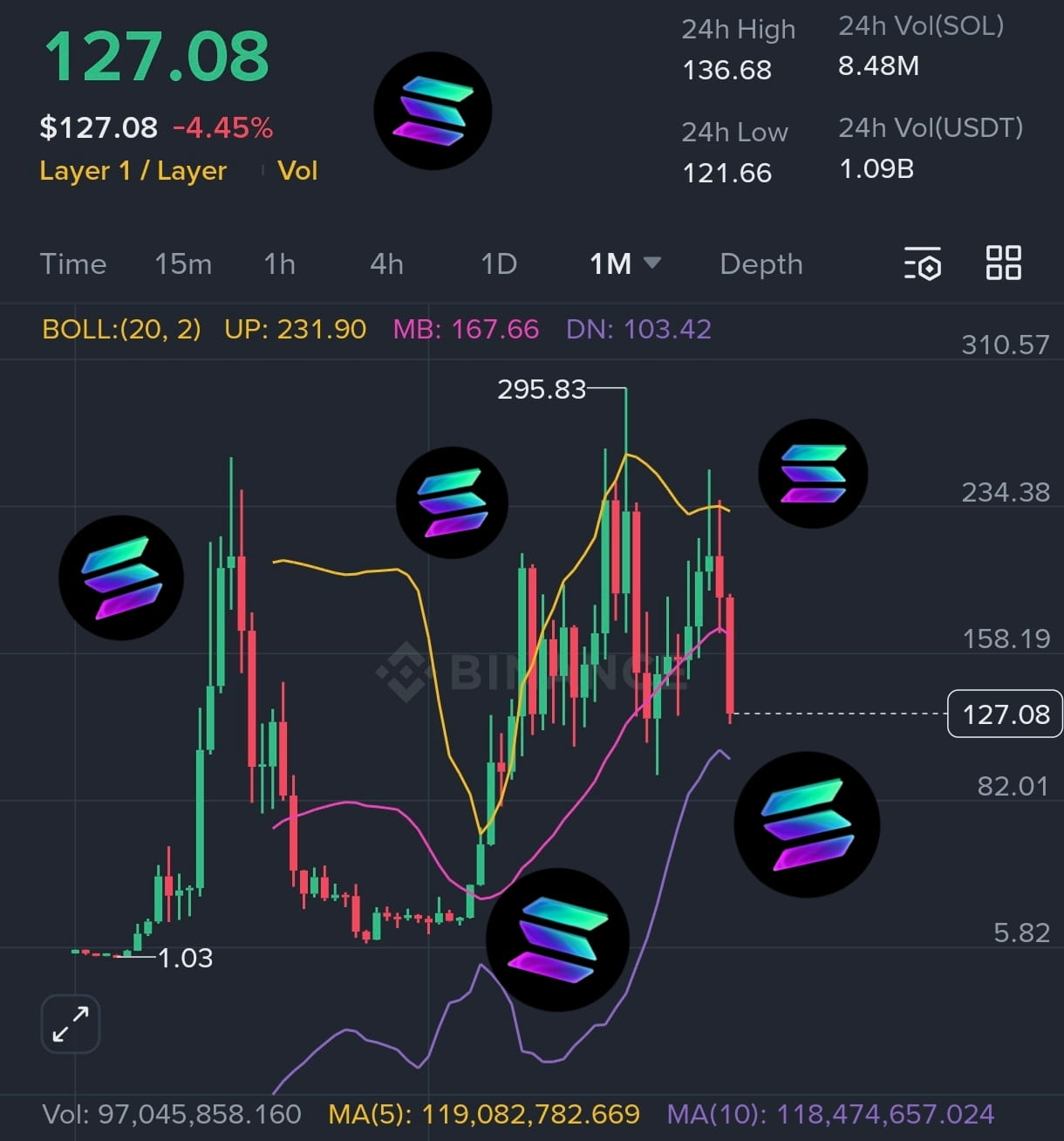
BullishWhy sell at $125❔
when you can sell at $1225❕
Yesterday, I took some positions in Solana 👇
$SOL Solana Made for fly high 🦅
when you can sell at $1225❕
Yesterday, I took some positions in Solana 👇
$SOL Solana Made for fly high 🦅
7
177🥹🥹🥹🥹🥹
177🥹🥹🥹🥹🥹


Hua BNB
·
--
Bullish$SOL Holding Steady with Fresh Bullish Strength...
Buyers defending support and looking ready for the next breakout leg.
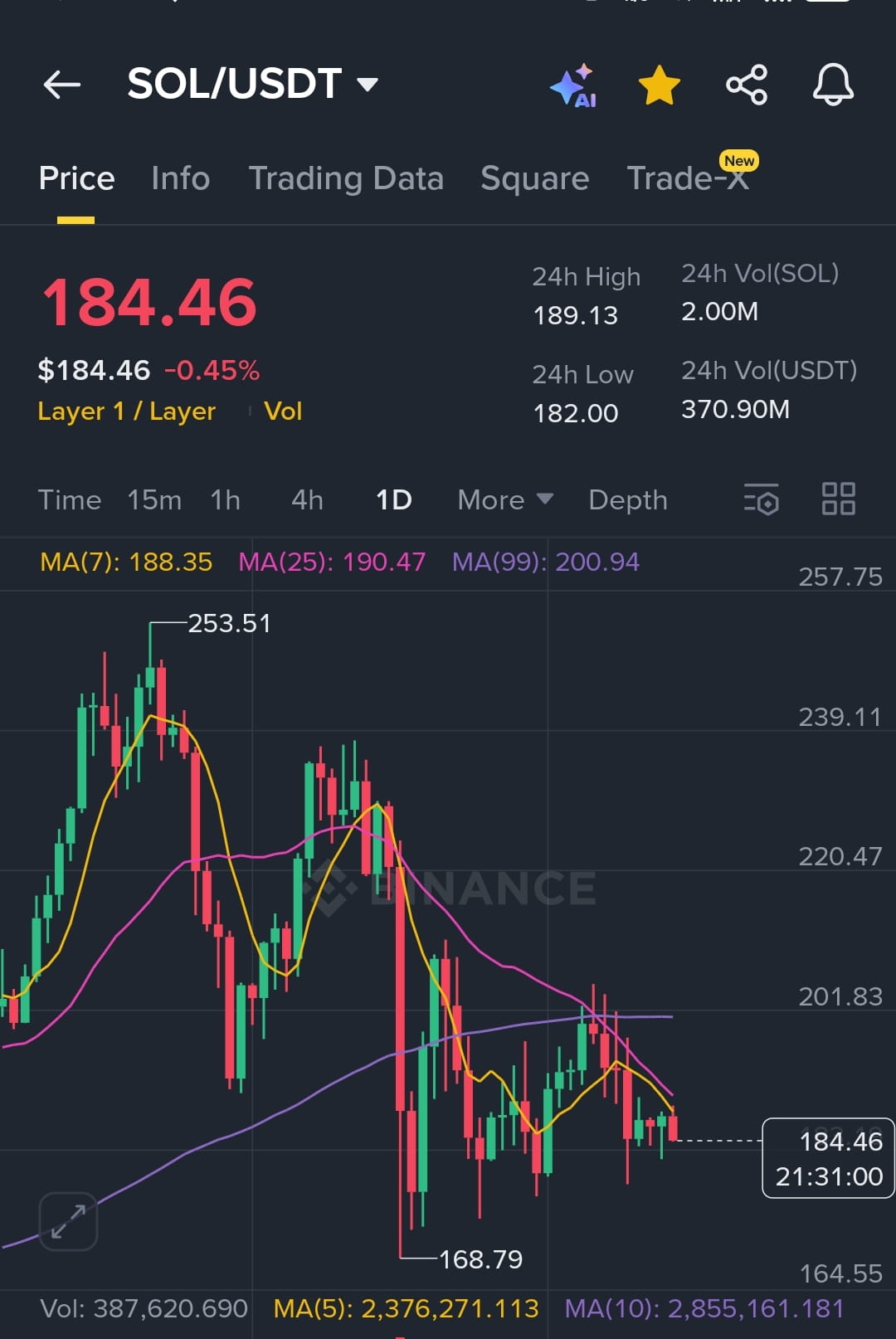
$SOL is trading around $184.46 after a healthy pullback from recent highs, showing strong support and renewed buying pressure. Volume remains stable, confirming bullish control in the current trend.
Long Setup:
Entry: $182 – $184
TP1: $187
TP2: $190
TP3: $195
Stop-Loss: $177
Momentum looks solid, bulls are regaining strength and could drive $SOL higher as the uptrend resumes toward key resistance zones.
Buyers defending support and looking ready for the next breakout leg.
$SOL is trading around $184.46 after a healthy pullback from recent highs, showing strong support and renewed buying pressure. Volume remains stable, confirming bullish control in the current trend.
Long Setup:
Entry: $182 – $184
TP1: $187
TP2: $190
TP3: $195
Stop-Loss: $177
Momentum looks solid, bulls are regaining strength and could drive $SOL higher as the uptrend resumes toward key resistance zones.
Wait inshallha recover my buy price 227
Wait inshallha recover my buy price 227

Abdullah990A
·
--
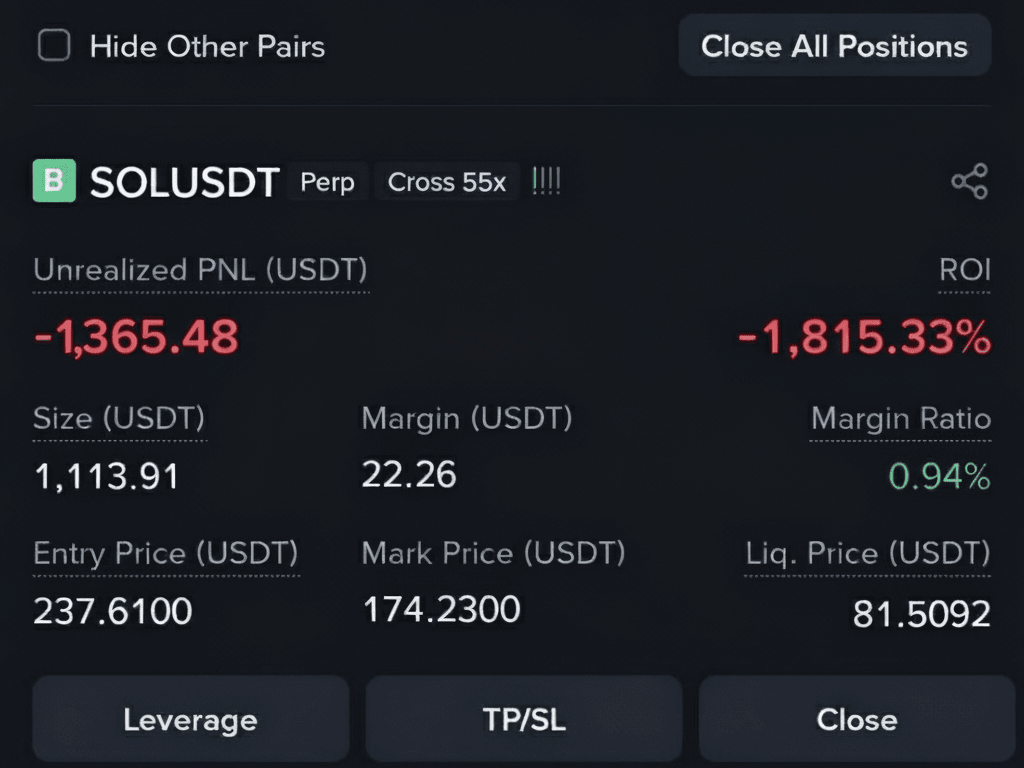
😭 Is market back to $SOL 237$ ???
I'm holding from 2 days what to do experts
Hold or Close Now ??? 😭😭😭😭😭😭
Check $SOL Here 👈
I'm holding from 2 days what to do experts
Hold or Close Now ??? 😭😭😭😭😭😭
Check $SOL Here 👈
1
Baqwas bus ata jata kuch ha nhi or a jaty ha
Baqwas bus ata jata kuch ha nhi or a jaty ha

Nilanjan Crypto
·
--
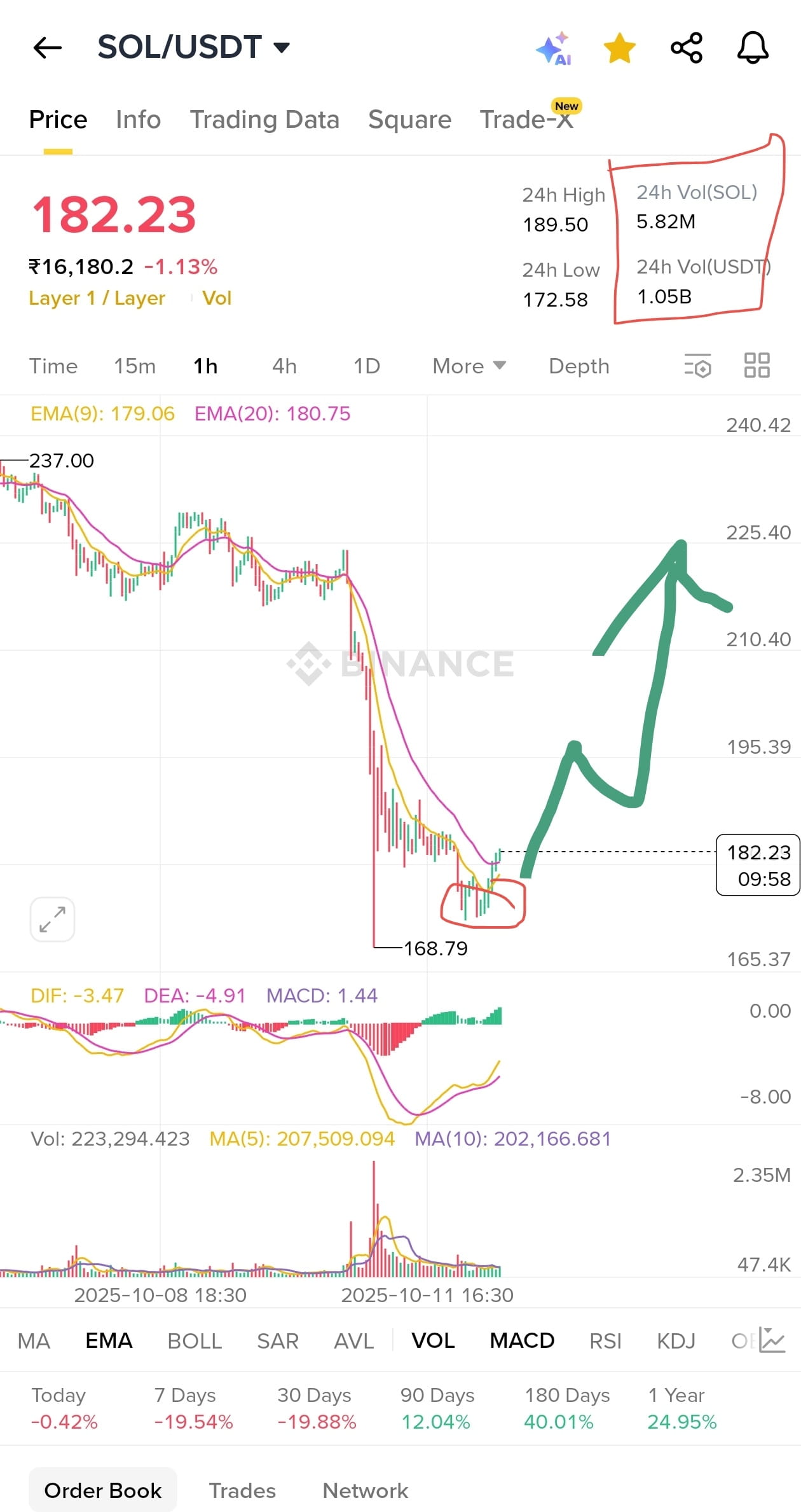
Bullishgo for long position on $SOL
💸💸💸🙌🤑🤑💯💎💎🫂
💸💸💸🙌🤑🤑💯💎💎🫂
2
😅😅😅
😅😅😅

Trend user
·
--
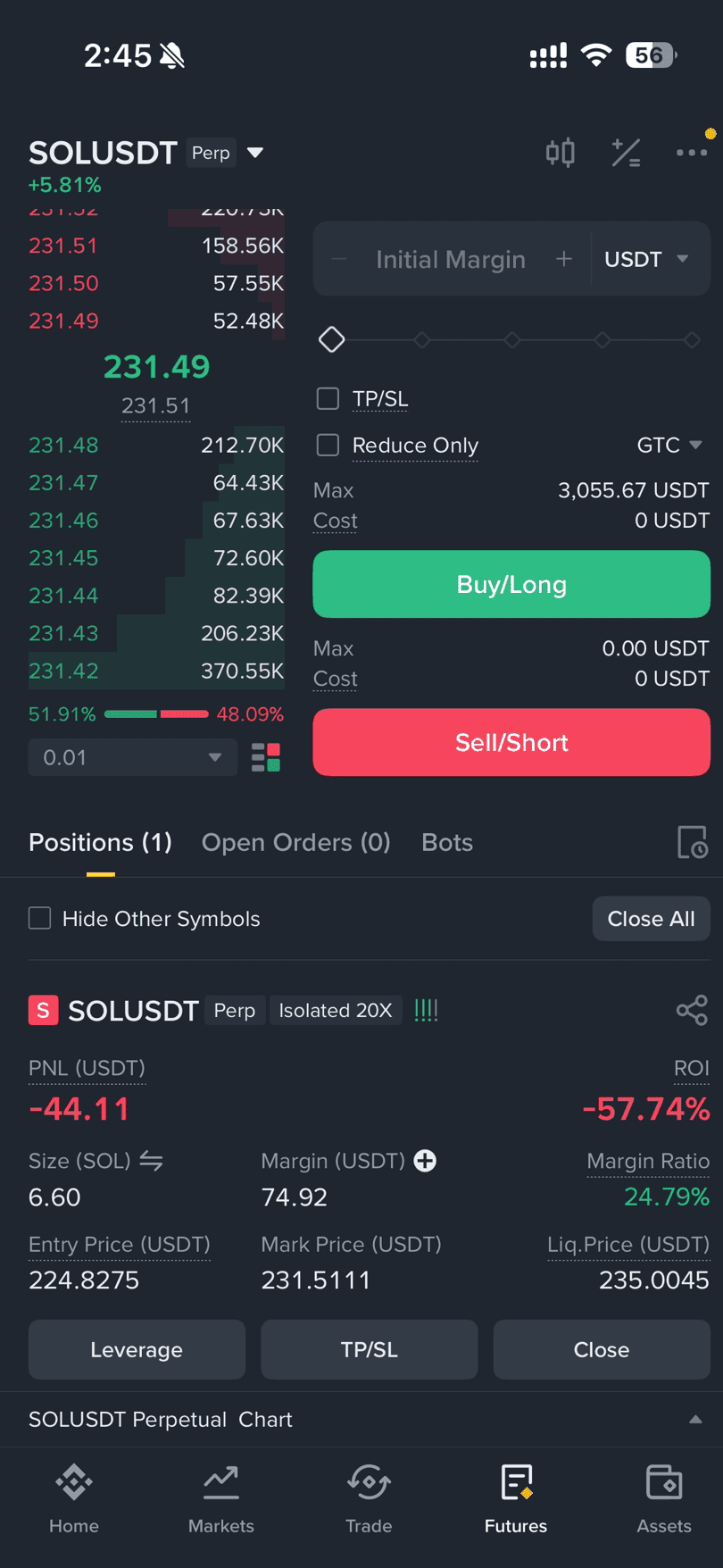
$SOL makes me unhappy 😭😔 I loss 10 days salary 😭😞 Experts plz help 🙏😭$2Z
1
Sol price This time 223.15$
Sol price This time 223.15$

Phantom Xtreme
·
--
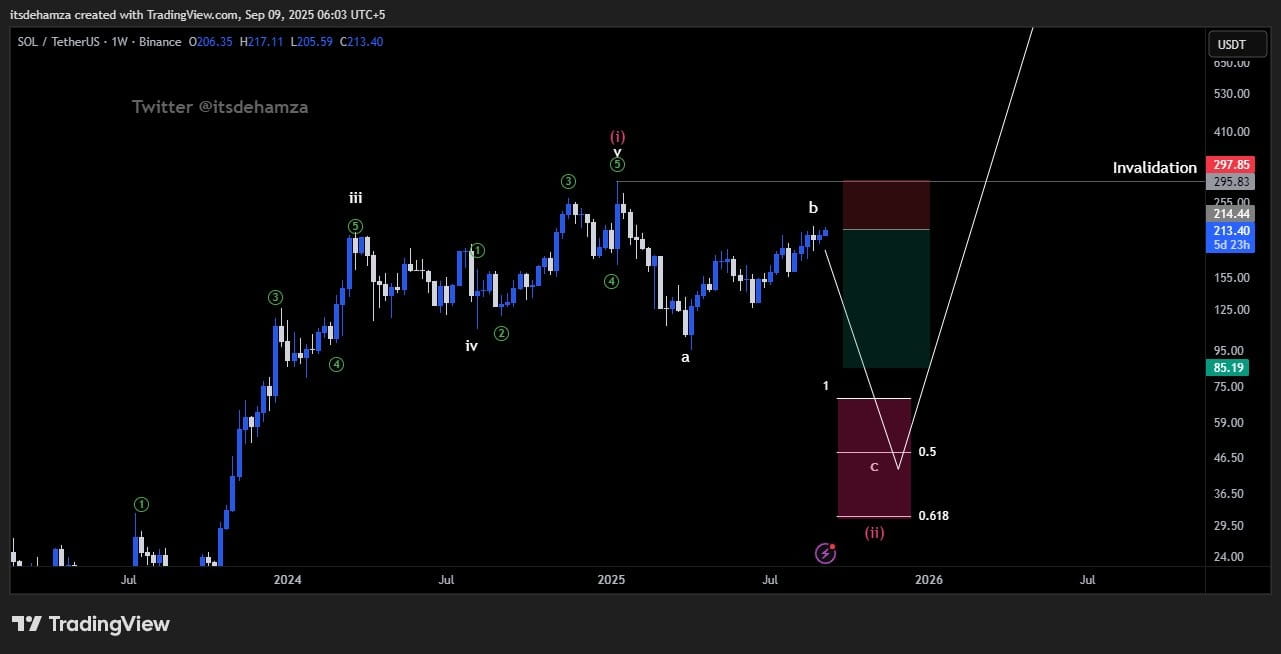
Sold my house to short #SOL Will sleep on the streets for few days then buy a mansion$SOL
36
Really i watched all videos
Really i watched all videos
Phantom Xtreme
·
--
Sold my house to short #SOL Will sleep on the streets for few days then buy a mansion$SOL
1
Hold 1000 Years 😂
Hold 1000 Years 😂

NAGRAX12
·
--
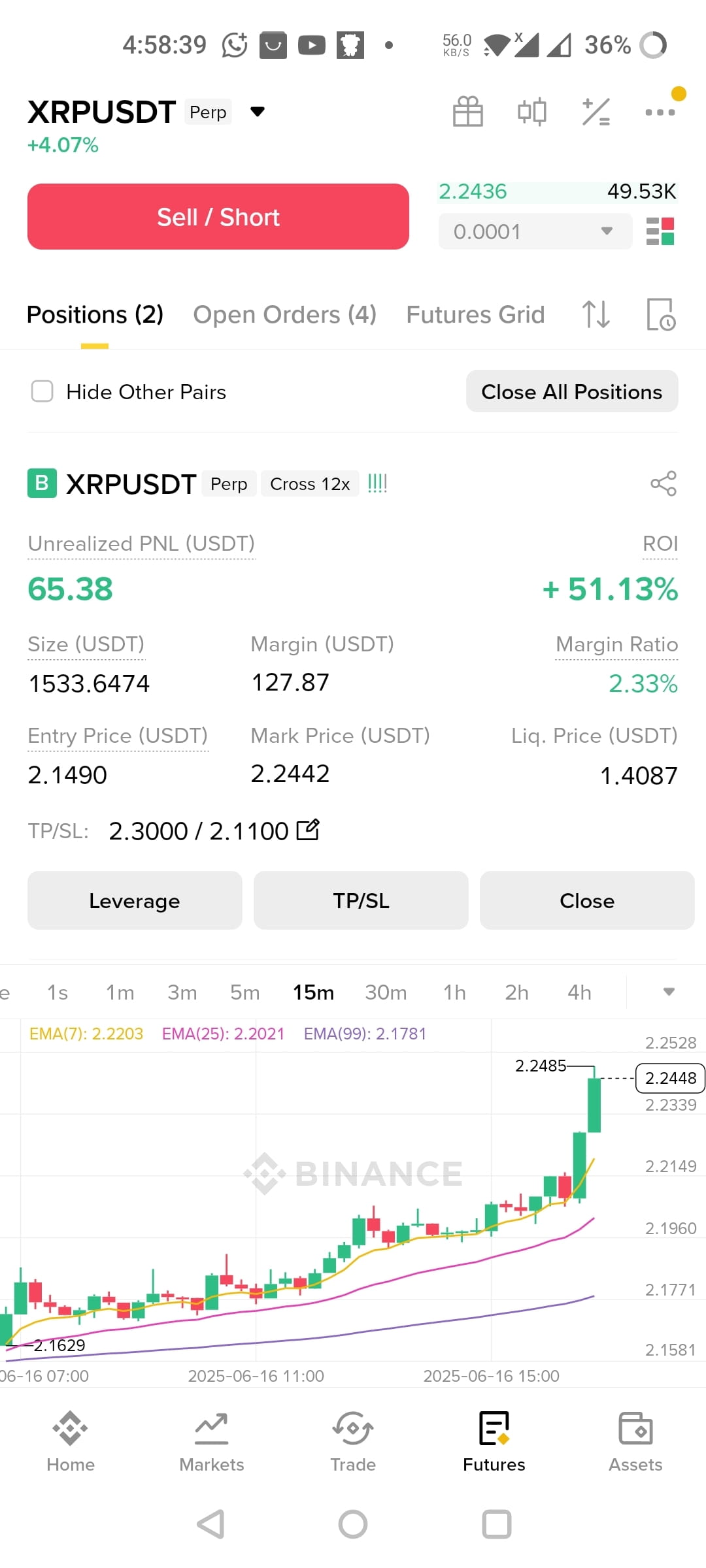
$XRP Hold For 1 Week More or Cut it here ??
4
Not Hold 😁😄😂
Not Hold 😁😄😂
NAGRAX12
·
--
$XRP Hold For 1 Week More or Cut it here ??
Lol Bina Account Ka Trade kha sa ho gi. Just Chatgpt Copy paste
Lol Bina Account Ka Trade kha sa ho gi. Just Chatgpt Copy paste

Divine SP
·
--
🚨 Binance Users, Alert!
Yeh 5 Galtiyaan Aapko BAN Karwa Sakti Hain! 🚫
Agar aap Binance par trading kar rahe ho, toh yeh post aapke liye bahut zaroori hai!
Galti se bhi in mistakes ko mat repeat karna — warna account ban hone ka full chance hai! 🔒
🔍 Top 5 Mistakes Jo Aapke Binance Account Ko Risk Mein Daal Sakti Hain:
1️⃣ KYC Complete Na Karna
Bina identity verify kiye trade karna Binance ko suspicious lagta hai.
➡️ Solution: Apna KYC turant complete karo aur documents updated rakho.
2️⃣ Restricted Countries Se Login Karna (VPN Ke Saath Bhi!)
VPN use karke bhi login karna Binance detect kar leta hai — mat sochna ke woh nahi pakdega.
➡️ Tip: VPN se login karna terms violation hai. Safe side pe raho.
3️⃣ Suspicious Ya Automated Trading Activities
Fake volume create karna, bots ka misuse ya pump-and-dump schemes — sab Binance ke radar pe hoti hain.
➡️ Tip: Official tools aur ethical trading practices ka hi use karo.
4️⃣ Account Access Share Karna Ya Unsafe Bots Use Karna
Login kisi aur ko dena ya third-party bots se account connect karna security threat ban sakta hai.
➡️ Tip: Hamesha 2FA enable rakho aur apna login kisi se share na karo.
5️⃣ Binance Ki Warnings Ko Ignore Karna
Binance aapko warning bhejta hai — agar ignore kiya, toh account freeze hone ka full chance hai.
➡️ Tip: Email aur app notifications regularly check karo, aur turant action lo.
---
✅ Secure Trading Ka Easy Formula:
✔️ KYC hamesha complete aur updated rakho
✔️ VPN ya restricted areas se login mat karo
✔️ Transparent aur fair trading karo
✔️ Apna login kisi se share na karo
✔️ Binance ki alerts ko seriously lo
📌 Aakhri Advice:
Aaj profit ho raha hai, kal account freeze ho gaya toh?
⚠️ Risk mat lo — abhi action lo.
Safe trade karo, smart trade karo! 💼📲
$BTC $ETH $BNB
Yeh 5 Galtiyaan Aapko BAN Karwa Sakti Hain! 🚫
Agar aap Binance par trading kar rahe ho, toh yeh post aapke liye bahut zaroori hai!
Galti se bhi in mistakes ko mat repeat karna — warna account ban hone ka full chance hai! 🔒
🔍 Top 5 Mistakes Jo Aapke Binance Account Ko Risk Mein Daal Sakti Hain:
1️⃣ KYC Complete Na Karna
Bina identity verify kiye trade karna Binance ko suspicious lagta hai.
➡️ Solution: Apna KYC turant complete karo aur documents updated rakho.
2️⃣ Restricted Countries Se Login Karna (VPN Ke Saath Bhi!)
VPN use karke bhi login karna Binance detect kar leta hai — mat sochna ke woh nahi pakdega.
➡️ Tip: VPN se login karna terms violation hai. Safe side pe raho.
3️⃣ Suspicious Ya Automated Trading Activities
Fake volume create karna, bots ka misuse ya pump-and-dump schemes — sab Binance ke radar pe hoti hain.
➡️ Tip: Official tools aur ethical trading practices ka hi use karo.
4️⃣ Account Access Share Karna Ya Unsafe Bots Use Karna
Login kisi aur ko dena ya third-party bots se account connect karna security threat ban sakta hai.
➡️ Tip: Hamesha 2FA enable rakho aur apna login kisi se share na karo.
5️⃣ Binance Ki Warnings Ko Ignore Karna
Binance aapko warning bhejta hai — agar ignore kiya, toh account freeze hone ka full chance hai.
➡️ Tip: Email aur app notifications regularly check karo, aur turant action lo.
---
✅ Secure Trading Ka Easy Formula:
✔️ KYC hamesha complete aur updated rakho
✔️ VPN ya restricted areas se login mat karo
✔️ Transparent aur fair trading karo
✔️ Apna login kisi se share na karo
✔️ Binance ki alerts ko seriously lo
📌 Aakhri Advice:
Aaj profit ho raha hai, kal account freeze ho gaya toh?
⚠️ Risk mat lo — abhi action lo.
Safe trade karo, smart trade karo! 💼📲
$BTC $ETH $BNB

2
·
--
Bullish
Binance Officially Launched Date #HotTrends
Binance, the global cryptocurrency exchange, was officially launched on July 14th, 20171. It was founded by Changpeng Zhao, a developer who had previously created high-frequency trading software2. Initially based in China, Binance moved its servers and headquarters out of the country in advance of the Chinese government’s ban on cryptocurrency trading in September 2017
$BTC $BTC $BNB #BTC #ETH
Binance Officially Launched Date #HotTrends
Binance, the global cryptocurrency exchange, was officially launched on July 14th, 20171. It was founded by Changpeng Zhao, a developer who had previously created high-frequency trading software2. Initially based in China, Binance moved its servers and headquarters out of the country in advance of the Chinese government’s ban on cryptocurrency trading in September 2017
$BTC $BTC $BNB #BTC #ETH
Binance, the global cryptocurrency exchange, was officially launched on July 14th, 20171. It was founded by Changpeng Zhao, a developer who had previously created high-frequency trading software2. Initially based in China, Binance moved its servers and headquarters out of the country in advance of the Chinese government’s ban on cryptocurrency trading in September 2017
$BTC $BTC $BNB #BTC #ETH
4
1.6k

Article
What is blockchain technology?Blockchain technology:is a revolutionary digital ledger system that has gained prominence for its critical role in underpinning cryptocurrencies like Bitcoin. It’s a distributed database that allows for secure, transparent, and tamper-proof record-keeping of transactions across a network of computers.Here’s how blockchain works:Distributed Ledger: Unlike traditional databases that are centralized, blockchain distributes its ledger across a network of computers, known as nodes. This means that every participant in the network has access to the entire database and its complete history.Immutable Records: Once a transaction is entered into the blockchain, it cannot be altered or deleted. This immutability ensures that the data is secure and trustworthy.
Blocks and Chains: Transactions are grouped into blocks, and each block is linked to the previous one, forming a chain. This linkage is secured by cryptographic hashes, which are complex algorithms that turn data into a fixed-size string of characters.Consensus Mechanisms: For a transaction to be added to the blockchain, it must be verified by the nodes in the network. This is done through consensus mechanisms like Proof of Work or Proof of Stake, which require nodes to agree on the validity of transactions.Smart Contracts: These are self-executing contracts with the terms of the agreement directly written into code. They automatically enforce and execute the terms of a contract when certain conditions are met.Blockchain’s potential extends far beyond cryptocurrencies. It’s being explored for a wide range of applications, including supply chain management, voting systems, identity verification, and more, due to its ability to provide a secure and unchangeable record of transactions.For a deeper dive into blockchain technology, you can explore resources like IBM’s insights on blockchain or Investopedia’s detailed explanation. These sources offer comprehensive information on how blockchain can be utilized across various industries and its implications for the future of digital transactions.
What is blockchain technology?
Blockchain technology:is a revolutionary digital ledger system that has gained prominence for its critical role in underpinning cryptocurrencies like Bitcoin. It’s a distributed database that allows for secure, transparent, and tamper-proof record-keeping of transactions across a network of computers.Here’s how blockchain works:Distributed Ledger: Unlike traditional databases that are centralized, blockchain distributes its ledger across a network of computers, known as nodes. This means that every participant in the network has access to the entire database and its complete history.Immutable Records: Once a transaction is entered into the blockchain, it cannot be altered or deleted. This immutability ensures that the data is secure and trustworthy.
Blocks and Chains: Transactions are grouped into blocks, and each block is linked to the previous one, forming a chain. This linkage is secured by cryptographic hashes, which are complex algorithms that turn data into a fixed-size string of characters.Consensus Mechanisms: For a transaction to be added to the blockchain, it must be verified by the nodes in the network. This is done through consensus mechanisms like Proof of Work or Proof of Stake, which require nodes to agree on the validity of transactions.Smart Contracts: These are self-executing contracts with the terms of the agreement directly written into code. They automatically enforce and execute the terms of a contract when certain conditions are met.Blockchain’s potential extends far beyond cryptocurrencies. It’s being explored for a wide range of applications, including supply chain management, voting systems, identity verification, and more, due to its ability to provide a secure and unchangeable record of transactions.For a deeper dive into blockchain technology, you can explore resources like IBM’s insights on blockchain or Investopedia’s detailed explanation. These sources offer comprehensive information on how blockchain can be utilized across various industries and its implications for the future of digital transactions.
Blocks and Chains: Transactions are grouped into blocks, and each block is linked to the previous one, forming a chain. This linkage is secured by cryptographic hashes, which are complex algorithms that turn data into a fixed-size string of characters.Consensus Mechanisms: For a transaction to be added to the blockchain, it must be verified by the nodes in the network. This is done through consensus mechanisms like Proof of Work or Proof of Stake, which require nodes to agree on the validity of transactions.Smart Contracts: These are self-executing contracts with the terms of the agreement directly written into code. They automatically enforce and execute the terms of a contract when certain conditions are met.Blockchain’s potential extends far beyond cryptocurrencies. It’s being explored for a wide range of applications, including supply chain management, voting systems, identity verification, and more, due to its ability to provide a secure and unchangeable record of transactions.For a deeper dive into blockchain technology, you can explore resources like IBM’s insights on blockchain or Investopedia’s detailed explanation. These sources offer comprehensive information on how blockchain can be utilized across various industries and its implications for the future of digital transactions.
3
143
Log in to explore more content
Join global crypto users on Binance Square
⚡️ Get latest and useful information about crypto.
💬 Trusted by the world’s largest crypto exchange.
👍 Discover real insights from verified creators.
Email / Phone number
Trending Topics
FedMinutesFocusOnOctoberPause
3,740 views
224 Discussing
#fedminutesfocusonoctoberpause
The Fed minutes are about to drop—and here's the twist: The meeting isn't even over, yet everyone thinks they already know the Fed's "next moves"! 🤫
A lot of you are wondering: "The FOMC minutes won't be released for almost another six hours, so why are news outlets already analyzing them as if they're out?" The truth is, this is a "calculated leak" based on Fed officials' earlier remarks. The New York Fed chief said "there's no rush," while the Dallas Fed chief called for a "one-two punch." Combined with cooling inflation and a weakening jobs market, the market is reading between the lines: the Fed will pause rate hikes this October to catch its breath, rather than stay as hawkish as before.
What should traders do? Don't FOMO and jump the gun. When the official minutes come out, any surprises could send charts sweeping both ways in a flash. Sit tight and buckle up!
⚠️ This is not financial advice.
Sign up for Binance using code VINHTOCDO or this link: https://www.binance.com/register?ref=VINHTOCDO to claim your offer!
Click the trade button below to support me: $BTC
, $ETH
, $SOL
#FOMCMinutes #TinFed #TradFiNews #TheoDõiFOMC #VINHTOCDO
Vinhtocdo
·2 Likes
·1.6k views
BinanceLaunchesBinanceIntelligence
896,408 views
5,486 Discussing
RobinhoodAdds$25MInBitcoinToBalanceSheet
372 views
20 Discussing