

Crypto_GR
1.6k Posts
Crypto_GR
 Square Verified+
Report
Block User
Trader | Binance Square creator | Investor | Streamer | In crypto since 2020

Creator Awards 2024

#BinanceTurns7 task 2

#BinanceTurns7
41 Following
38.6K+ Followers
26.3K+ Liked
4 Badges
Posts
All
Quotes
Videos
Live
PINNED
·
--
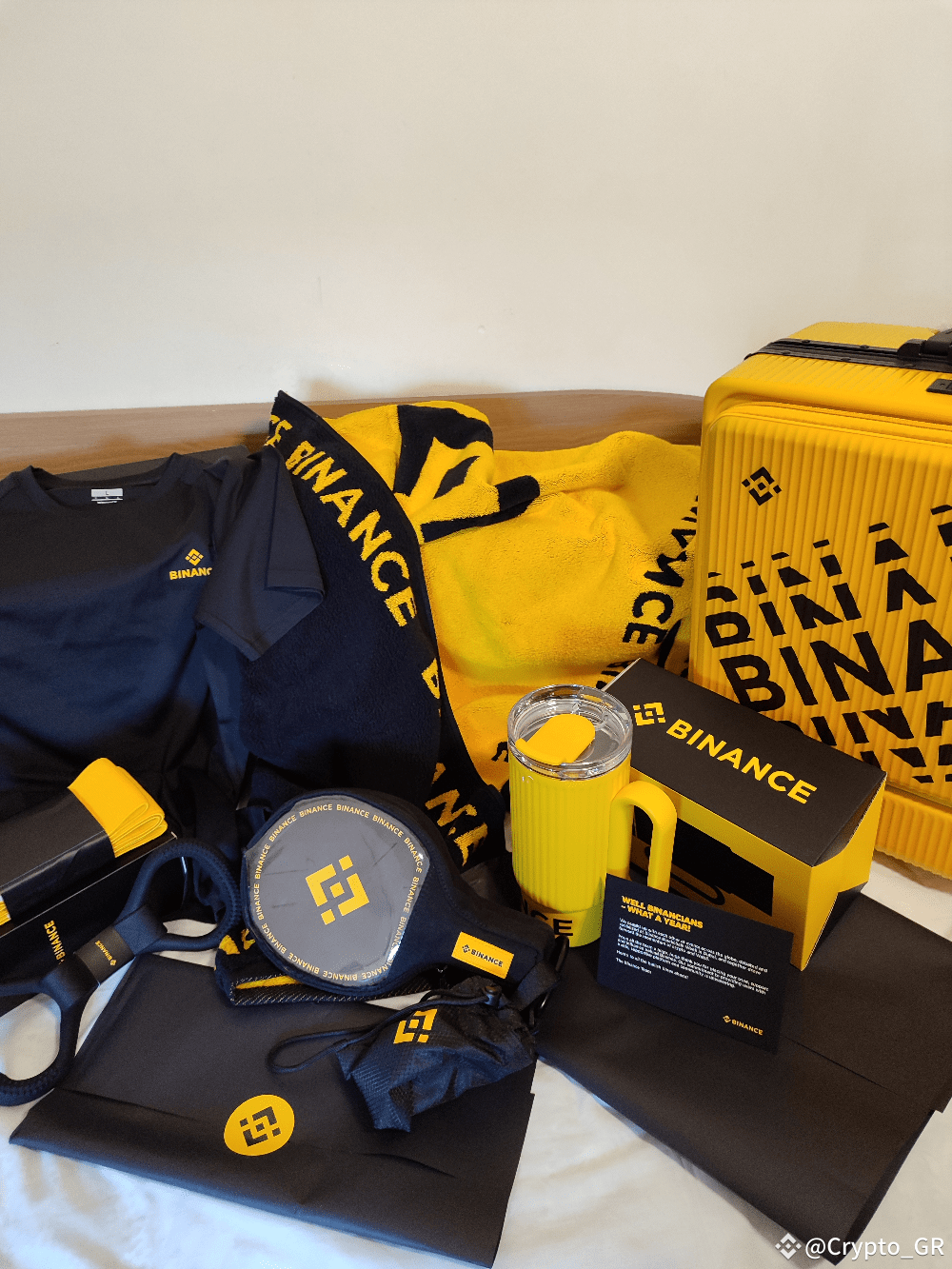
🫂🤝 Many thanks to Binance for this gift. Another dream come true. I am very happy and grateful. Many thanks also to everyone who supports me daily.
Let's keep building Binance Square ❤️
🫂🤝 Many thanks to Binance for this gift. Another dream come true. I am very happy and grateful. Many thanks also to everyone who supports me daily.
Let's keep building Binance Square ❤️
Let's keep building Binance Square ❤️
25
12
62
9.5k
·
--
Verified
BNB Chain Targets a New High-Speed Blockchain for 2027
$BNB Chain is developing a new Layer 1 blockchain focused on faster on-chain trading and payments, with a mainnet launch targeted for early 2027.
The network will run alongside BNB Smart Chain (BSC), rather than replace it. According to the project’s technical documentation, it aims to produce blocks every 200 milliseconds and provide transaction pre-confirmations in around 20 milliseconds. These are targets, not confirmed real-world performance results.
Another key detail is that there will be no separate token. $BNB will continue to be used for transaction fees, staking and governance, while a native bridge is planned to connect both networks.
The public testnet is expected before the end of 2026, with the mainnet planned for early 2027.
CZ summed up the idea in a short message: “Multiple chains, one coin.”
BNB Chain Targets a New High-Speed Blockchain for 2027
$BNB Chain is developing a new Layer 1 blockchain focused on faster on-chain trading and payments, with a mainnet launch targeted for early 2027.
The network will run alongside BNB Smart Chain (BSC), rather than replace it. According to the project’s technical documentation, it aims to produce blocks every 200 milliseconds and provide transaction pre-confirmations in around 20 milliseconds. These are targets, not confirmed real-world performance results.
Another key detail is that there will be no separate token. $BNB will continue to be used for transaction fees, staking and governance, while a native bridge is planned to connect both networks.
The public testnet is expected before the end of 2026, with the mainnet planned for early 2027.
CZ summed up the idea in a short message: “Multiple chains, one coin.”
$BNB Chain is developing a new Layer 1 blockchain focused on faster on-chain trading and payments, with a mainnet launch targeted for early 2027.
The network will run alongside BNB Smart Chain (BSC), rather than replace it. According to the project’s technical documentation, it aims to produce blocks every 200 milliseconds and provide transaction pre-confirmations in around 20 milliseconds. These are targets, not confirmed real-world performance results.
Another key detail is that there will be no separate token. $BNB will continue to be used for transaction fees, staking and governance, while a native bridge is planned to connect both networks.
The public testnet is expected before the end of 2026, with the mainnet planned for early 2027.
CZ summed up the idea in a short message: “Multiple chains, one coin.”
2
1
1.1k
·
--
$ETH Investor Turns $31K Into Millions After 9 Years
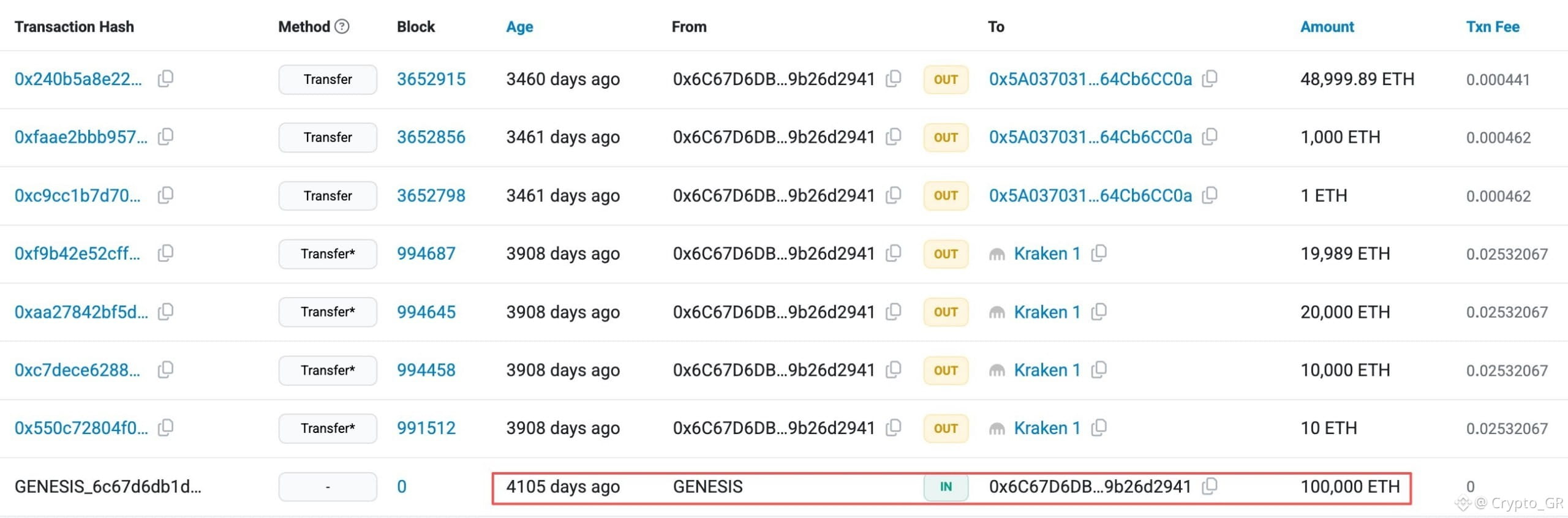
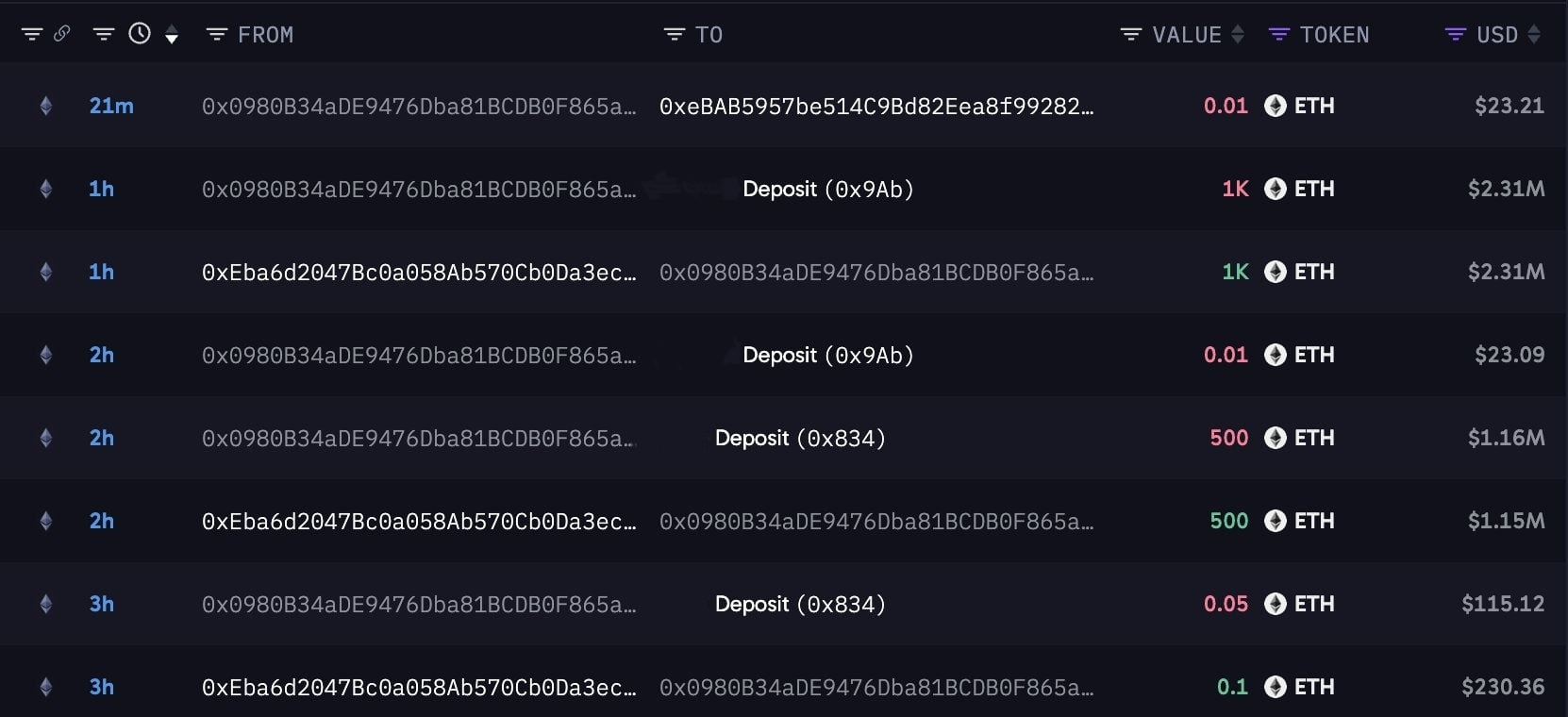
An early Ethereum investor has reportedly sold 1,500 $ETH worth around $3.46 million after years of inactivity.
The investor bought 100,000 $ETH during the 2015 ICO at just $0.31 per token, spending around $31,000 in total.
Despite the recent sale, the wallet reportedly still holds 48,500 $ETH, valued at approximately $112.7 million.
One of Ethereum’s earliest investors is still sitting on a massive position after more than a decade.
$ETH Investor Turns $31K Into Millions After 9 Years
An early Ethereum investor has reportedly sold 1,500 $ETH worth around $3.46 million after years of inactivity.
The investor bought 100,000 $ETH during the 2015 ICO at just $0.31 per token, spending around $31,000 in total.
Despite the recent sale, the wallet reportedly still holds 48,500 $ETH , valued at approximately $112.7 million.
One of Ethereum’s earliest investors is still sitting on a massive position after more than a decade.
An early Ethereum investor has reportedly sold 1,500 $ETH worth around $3.46 million after years of inactivity.
The investor bought 100,000 $ETH during the 2015 ICO at just $0.31 per token, spending around $31,000 in total.
Despite the recent sale, the wallet reportedly still holds 48,500 $ETH , valued at approximately $112.7 million.
One of Ethereum’s earliest investors is still sitting on a massive position after more than a decade.
1
556
·
--
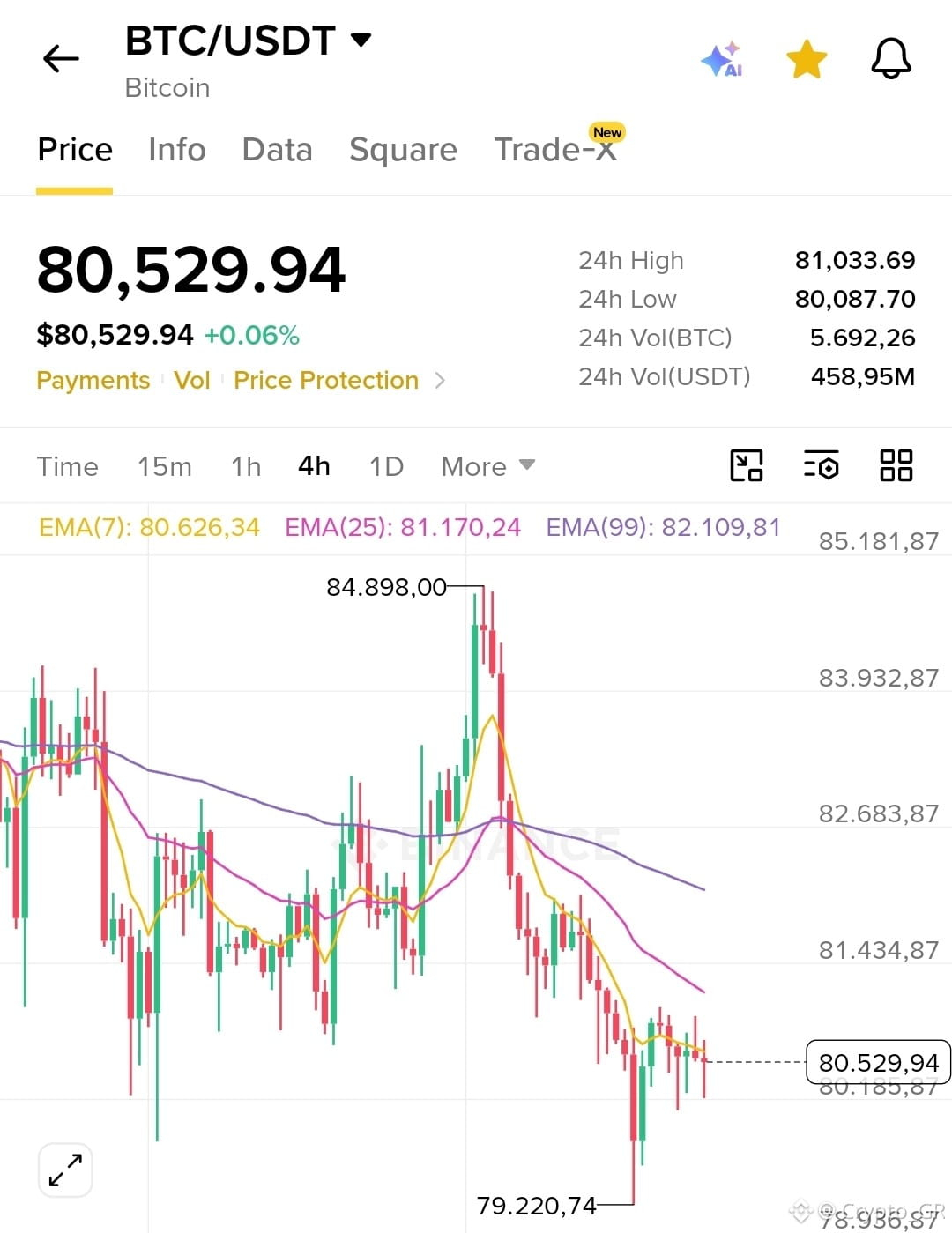
If $BTC closes the daily timeframe below $80,000, we could see a deeper correction. The next few days will be important to understand the market's direction.
Monday could bring more clarity as markets react to economic data and uncertainty around the US elections.
If $BTC closes the daily timeframe below $80,000, we could see a deeper correction. The next few days will be important to understand the market's direction.
Monday could bring more clarity as markets react to economic data and uncertainty around the US elections.
Monday could bring more clarity as markets react to economic data and uncertainty around the US elections.
2.2k
·
--
Verified
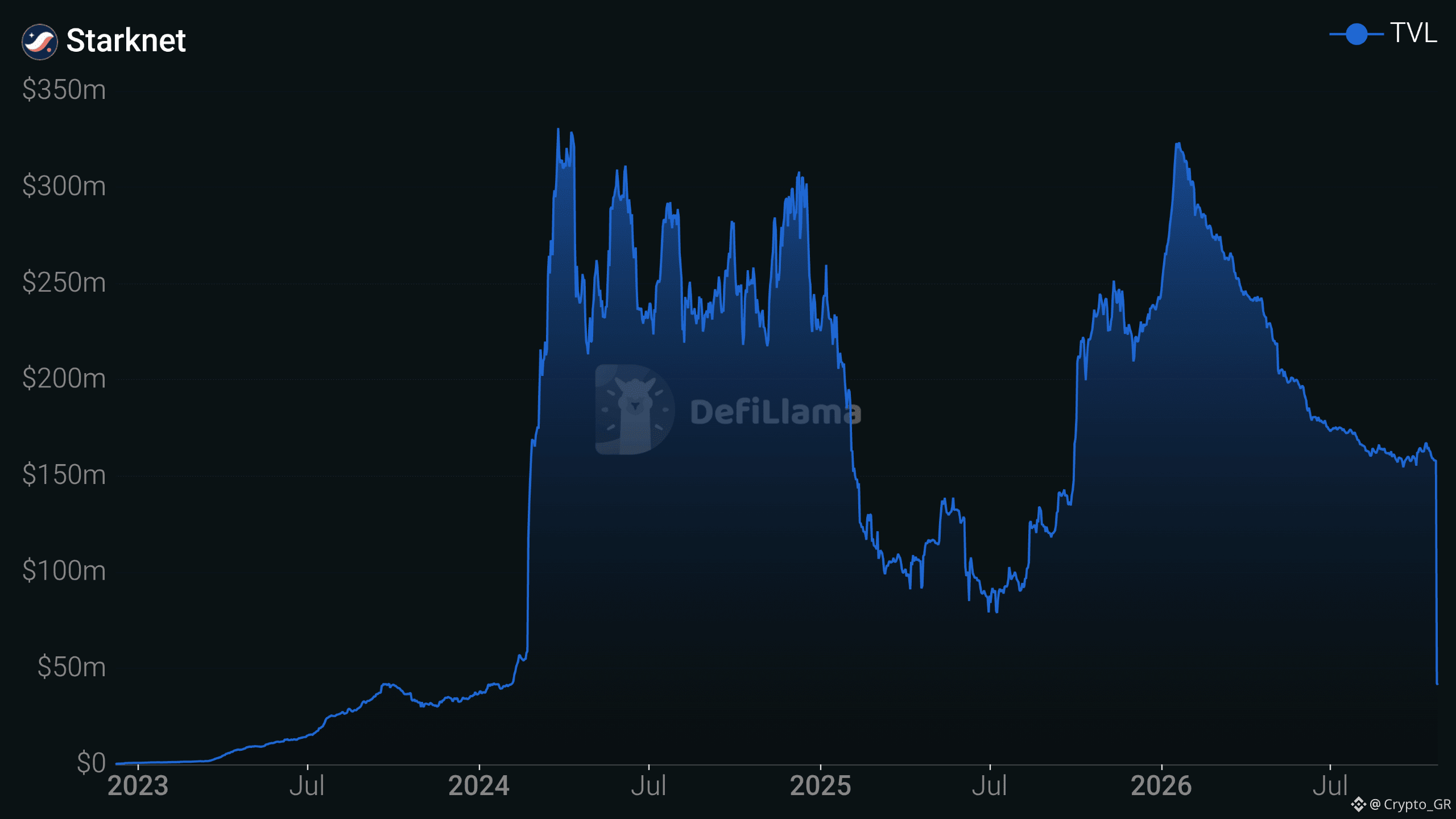
On October 21, Starknet held around $158M in DeFi liquidity. By October 24, that figure had fallen to roughly $41M, according to DeFiLlama.
The main trigger was Extended’s move to Circle’s Arc blockchain, which removed a major source of liquidity from Starknet.
But there’s more to watch: stablecoin liquidity also fell from around $148M to $37M, while daily DEX trading volume is now around $8M.
The drop doesn’t mean Starknet is shutting down, but its ability to rebuild liquidity will be an important metric to watch.
On October 21, Starknet held around $158M in DeFi liquidity. By October 24, that figure had fallen to roughly $41M, according to DeFiLlama.
The main trigger was Extended’s move to Circle’s Arc blockchain, which removed a major source of liquidity from Starknet.
But there’s more to watch: stablecoin liquidity also fell from around $148M to $37M, while daily DEX trading volume is now around $8M.
The drop doesn’t mean Starknet is shutting down, but its ability to rebuild liquidity will be an important metric to watch.
The main trigger was Extended’s move to Circle’s Arc blockchain, which removed a major source of liquidity from Starknet.
But there’s more to watch: stablecoin liquidity also fell from around $148M to $37M, while daily DEX trading volume is now around $8M.
The drop doesn’t mean Starknet is shutting down, but its ability to rebuild liquidity will be an important metric to watch.
3
1.8k
·
--
15 Crypto Projects Have Lost Almost All Their Value
15 crypto projects are facing serious questions about their future after losing most of their token value.
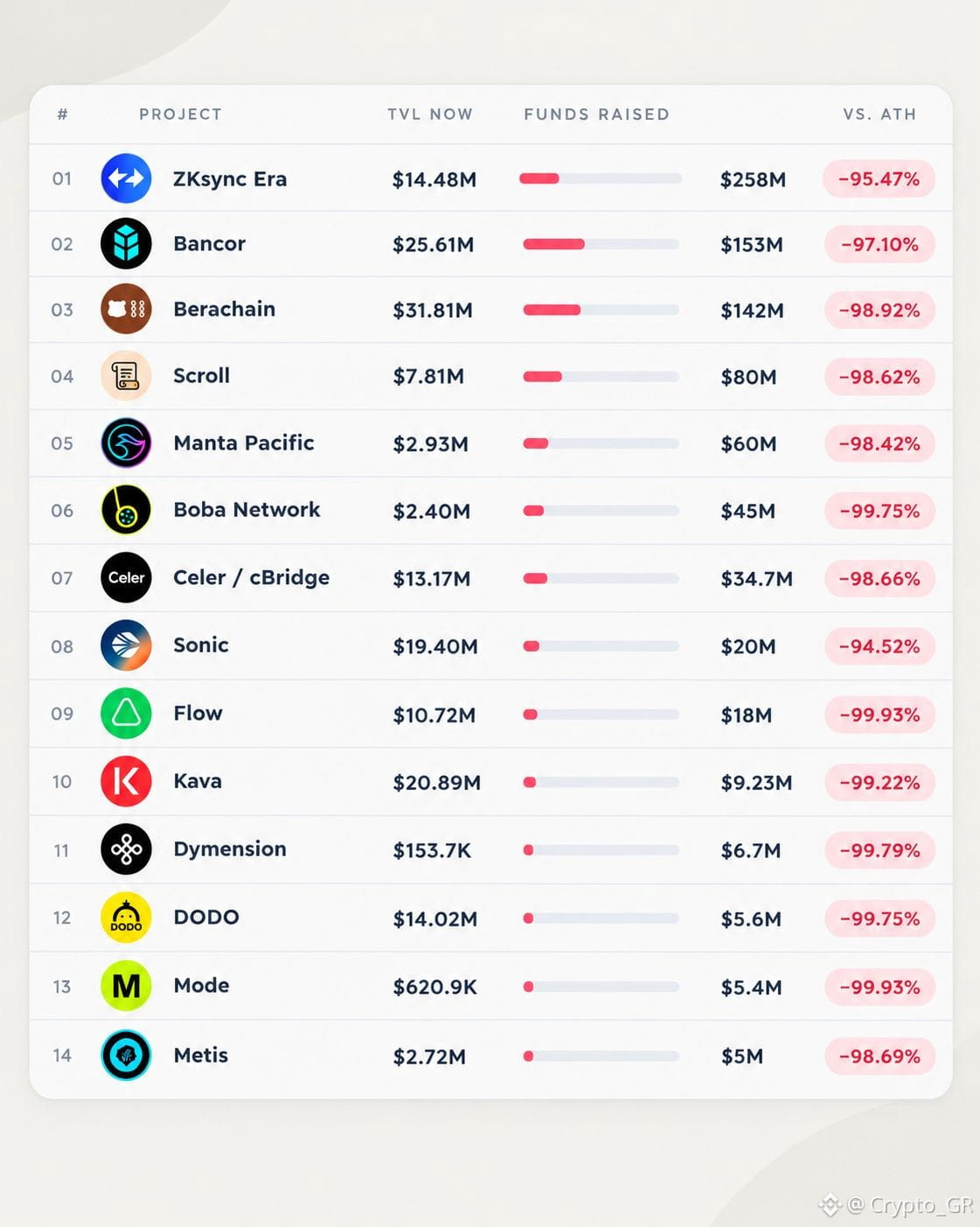
According to Top 7 analysts, these projects raised a total of $855 million in funding, but only around $171 million in assets remain locked in their ecosystems.
Some of the biggest declines include:
• ZKsync Era: $258 million raised, with $14.48 million remaining in TVL.
• Dymension: TVL has fallen to around $154,000.
• Mode: Its token is down 99.93% from its all-time high, with TVL at around $621,000.
• Flow: Its token has also fallen 99.93% from its all-time high.
These figures raise concerns about the long-term future of these projects and their ability to attract users and capital.
15 Crypto Projects Have Lost Almost All Their Value
15 crypto projects are facing serious questions about their future after losing most of their token value.
According to Top 7 analysts, these projects raised a total of $855 million in funding, but only around $171 million in assets remain locked in their ecosystems.
Some of the biggest declines include:
• ZKsync Era: $258 million raised, with $14.48 million remaining in TVL.
• Dymension: TVL has fallen to around $154,000.
• Mode: Its token is down 99.93% from its all-time high, with TVL at around $621,000.
• Flow: Its token has also fallen 99.93% from its all-time high.
These figures raise concerns about the long-term future of these projects and their ability to attract users and capital.
15 crypto projects are facing serious questions about their future after losing most of their token value.
According to Top 7 analysts, these projects raised a total of $855 million in funding, but only around $171 million in assets remain locked in their ecosystems.
Some of the biggest declines include:
• ZKsync Era: $258 million raised, with $14.48 million remaining in TVL.
• Dymension: TVL has fallen to around $154,000.
• Mode: Its token is down 99.93% from its all-time high, with TVL at around $621,000.
• Flow: Its token has also fallen 99.93% from its all-time high.
These figures raise concerns about the long-term future of these projects and their ability to attract users and capital.
2
2.2k
·
--
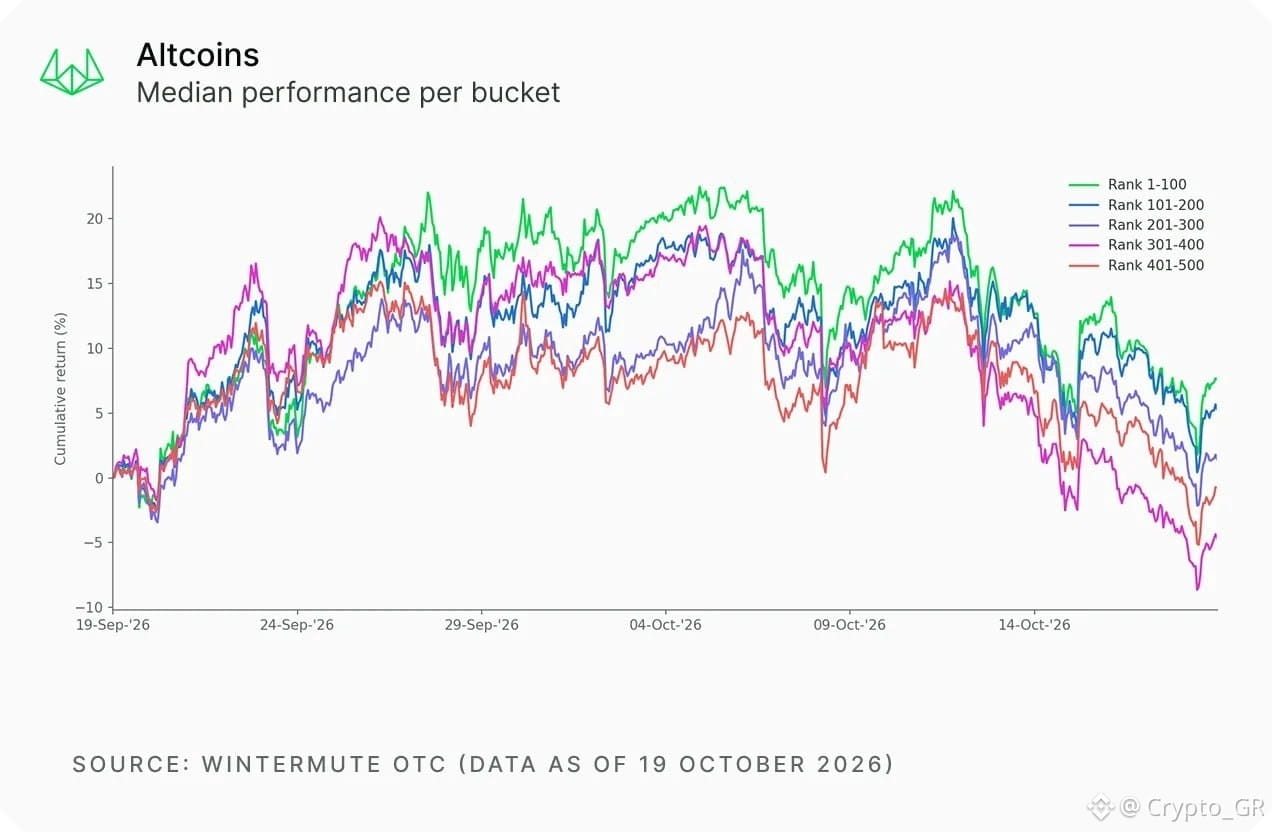
Bitcoin and Ethereum are attracting more capital while most altcoins continue to face selling pressure.
According to Wintermute’s latest market report, altcoins fell 5.69% over the past week. The firm also notes that capital is moving toward larger cryptocurrencies, leaving much of the altcoin market struggling to recover.
This creates a difficult situation for altcoin holders. If $BTC rises, many altcoins may continue moving sideways. If the wider market turns lower, they could fall even further.
Bitcoin and Ethereum are attracting more capital while most altcoins continue to face selling pressure.
According to Wintermute’s latest market report, altcoins fell 5.69% over the past week. The firm also notes that capital is moving toward larger cryptocurrencies, leaving much of the altcoin market struggling to recover.
This creates a difficult situation for altcoin holders. If $BTC rises, many altcoins may continue moving sideways. If the wider market turns lower, they could fall even further.
According to Wintermute’s latest market report, altcoins fell 5.69% over the past week. The firm also notes that capital is moving toward larger cryptocurrencies, leaving much of the altcoin market struggling to recover.
This creates a difficult situation for altcoin holders. If $BTC rises, many altcoins may continue moving sideways. If the wider market turns lower, they could fall even further.
766
·
--
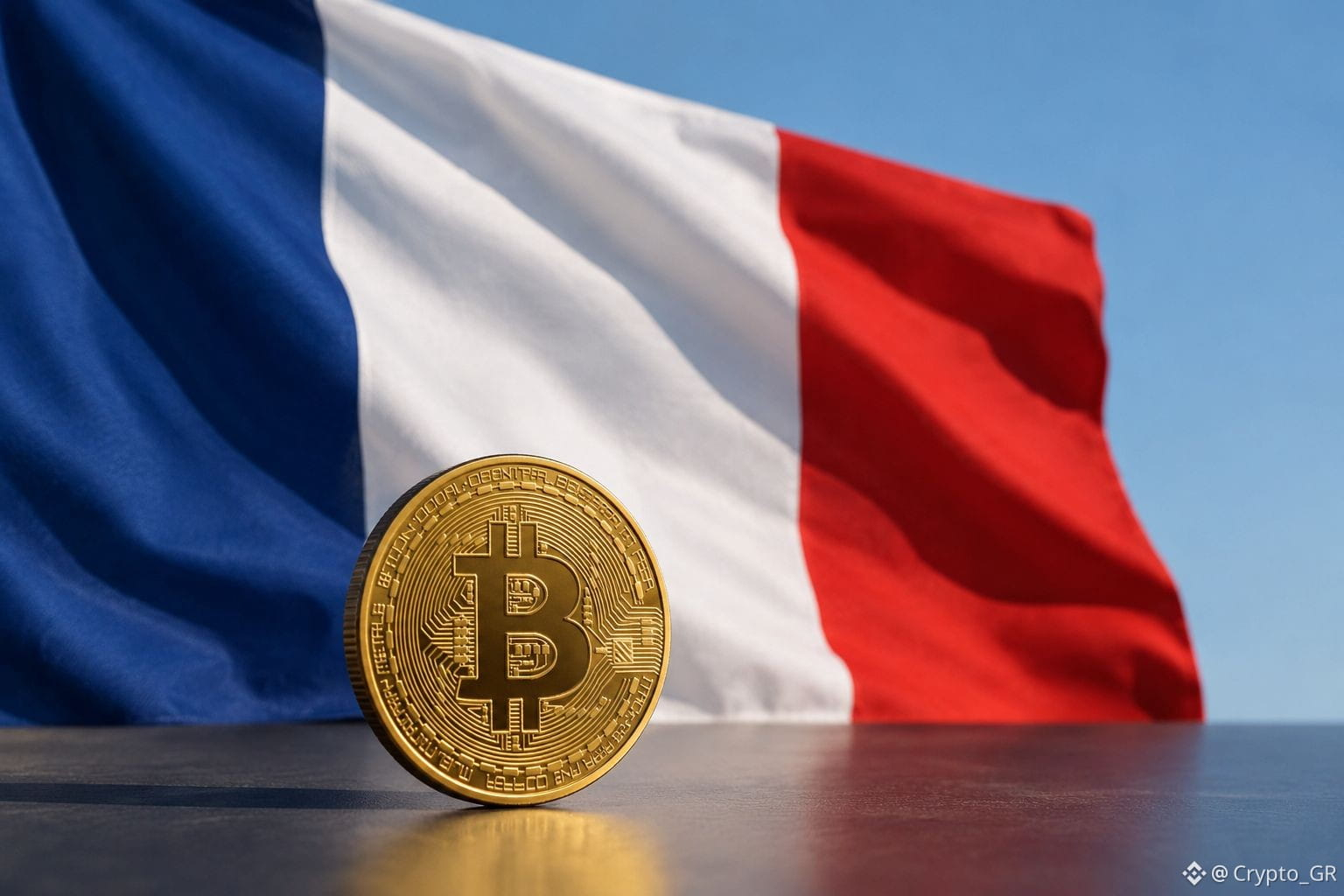
France’s National Assembly has approved an amendment that would tax profits when investors exchange cryptocurrencies for certain stablecoins classified as electronic money under MiCA.
Under the proposal, converting $BTC into one of these stablecoins after its price has increased could trigger a 31.4% tax on the profit, even if the funds never reach a bank account.
The measure could take effect on January 1, 2027, if it receives final approval.
France’s National Assembly has approved an amendment that would tax profits when investors exchange cryptocurrencies for certain stablecoins classified as electronic money under MiCA.
Under the proposal, converting $BTC into one of these stablecoins after its price has increased could trigger a 31.4% tax on the profit, even if the funds never reach a bank account.
The measure could take effect on January 1, 2027, if it receives final approval.
Under the proposal, converting $BTC into one of these stablecoins after its price has increased could trigger a 31.4% tax on the profit, even if the funds never reach a bank account.
The measure could take effect on January 1, 2027, if it receives final approval.
1
138
·
--
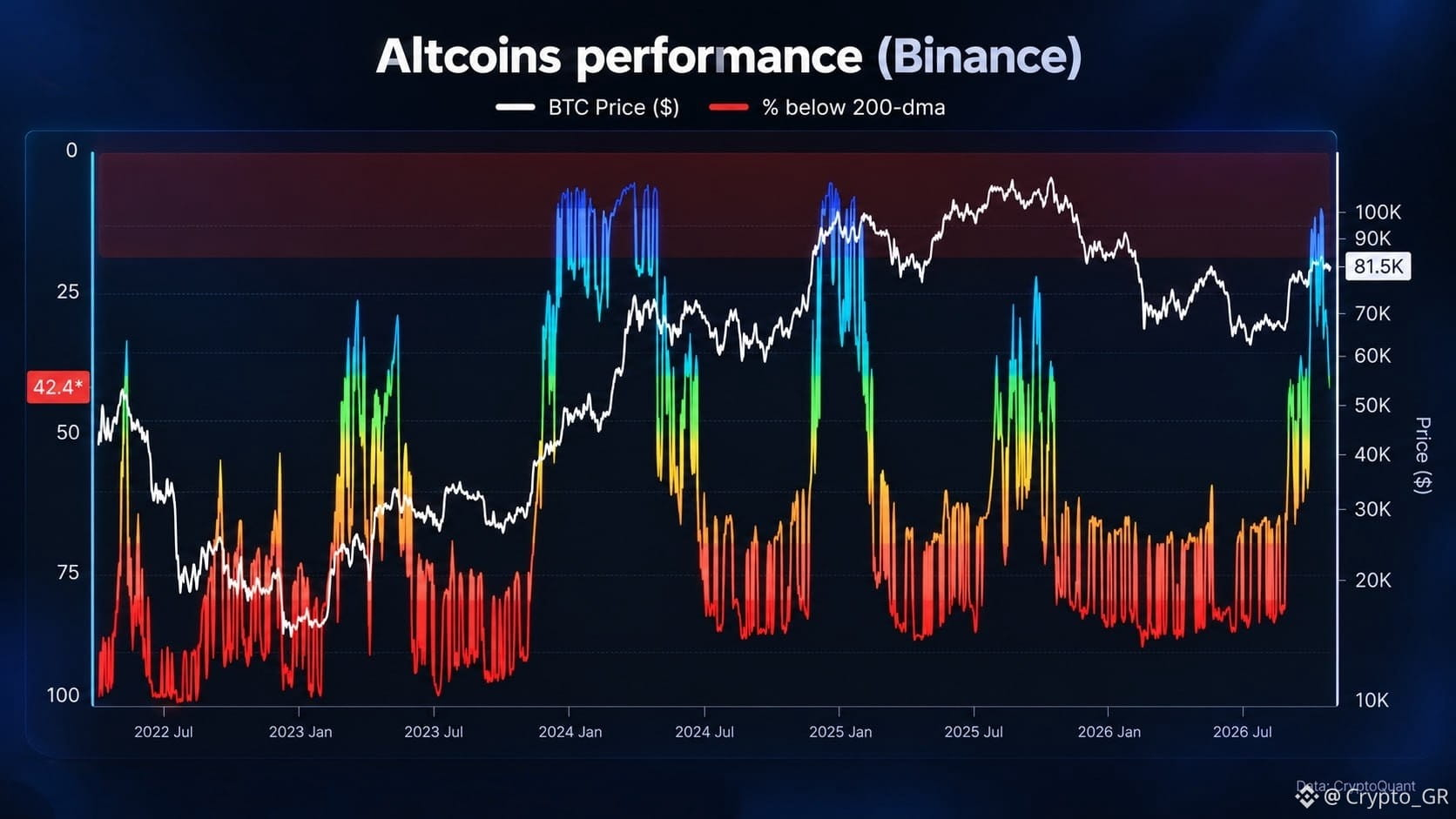
Altcoins Lose $134B in Market Cap in Just 15 Days
The altcoin market is showing signs of weakness. According to analyst Darkfost, its total market capitalization has fallen by more than $134 billion over the past 15 days.
Almost 48.4% of altcoins listed on Binance are now trading below their 200-day moving average, a key indicator of the long-term trend. At the beginning of October, this figure was below 10%.
One possible reason is that investors are taking profits quickly after the recent rally, putting additional pressure on prices.
Altcoins Lose $134B in Market Cap in Just 15 Days
The altcoin market is showing signs of weakness. According to analyst Darkfost, its total market capitalization has fallen by more than $134 billion over the past 15 days.
Almost 48.4% of altcoins listed on Binance are now trading below their 200-day moving average, a key indicator of the long-term trend. At the beginning of October, this figure was below 10%.
One possible reason is that investors are taking profits quickly after the recent rally, putting additional pressure on prices.
The altcoin market is showing signs of weakness. According to analyst Darkfost, its total market capitalization has fallen by more than $134 billion over the past 15 days.
Almost 48.4% of altcoins listed on Binance are now trading below their 200-day moving average, a key indicator of the long-term trend. At the beginning of October, this figure was below 10%.
One possible reason is that investors are taking profits quickly after the recent rally, putting additional pressure on prices.
933
·
--
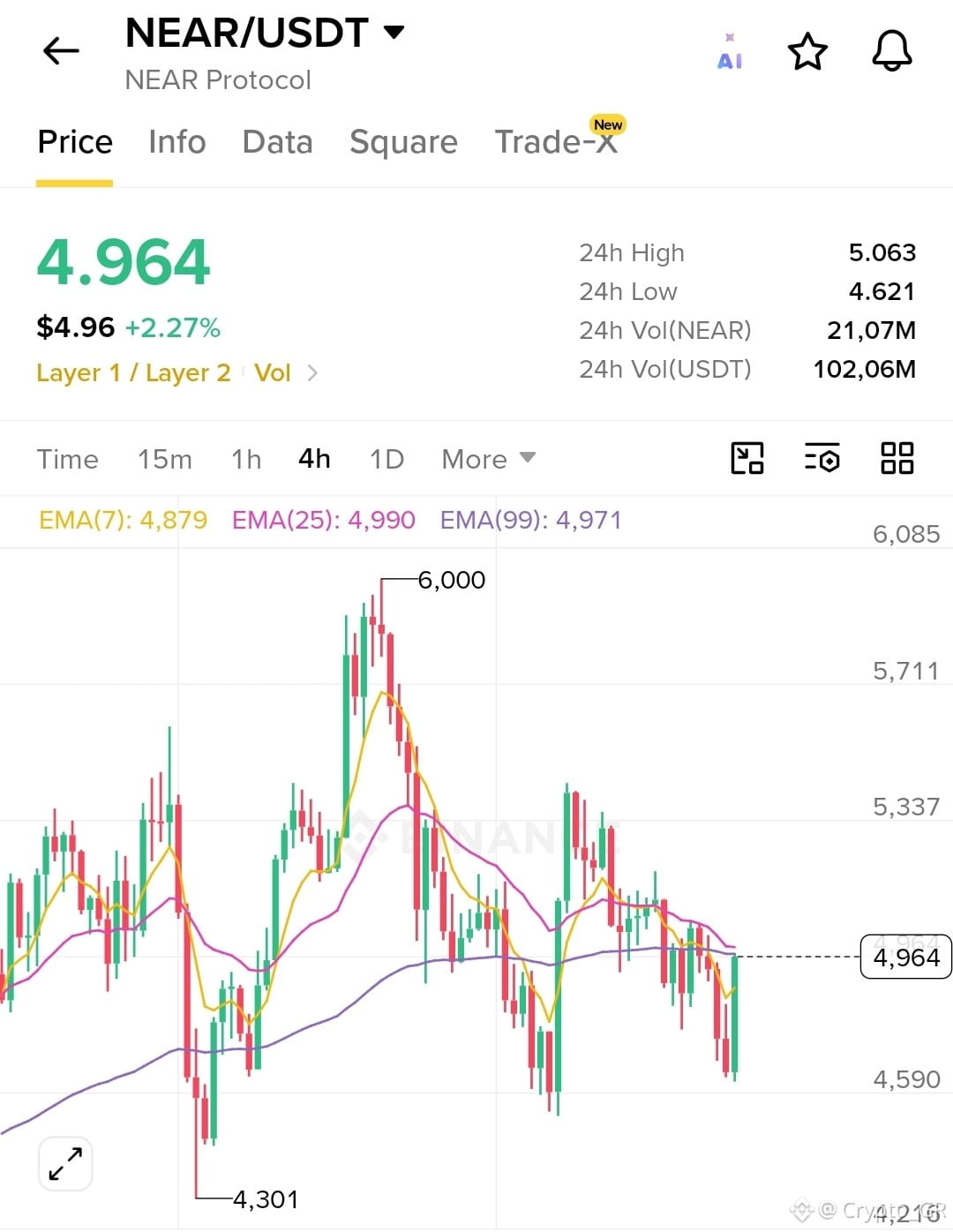
$NEAR has bounced several times from the $4.50–$4.60 area, with the price later moving back above $5.
Personally, I’d consider buying more around $4.50–$4.30 if the price drops. The key is to see whether buyers defend this area again, as a break below it could put further pressure on the price.
$NEAR has bounced several times from the $4.50–$4.60 area, with the price later moving back above $5.
Personally, I’d consider buying more around $4.50–$4.30 if the price drops. The key is to see whether buyers defend this area again, as a break below it could put further pressure on the price.
Personally, I’d consider buying more around $4.50–$4.30 if the price drops. The key is to see whether buyers defend this area again, as a break below it could put further pressure on the price.
5
2.9k
·
--
Lately, I've been seeing a lot of people talking about how much money they've lost in crypto. But I think there are two important things worth remembering.
First, losing money doesn't automatically mean you've failed. Every investor makes mistakes, and losses can be valuable lessons if you understand what went wrong. What matters is whether you learn from them or keep repeating the same mistakes.
Second, many losses come from a lack of knowledge, poor risk management, and decisions driven by hype or emotions. The problem is that too many people act like experts, give advice, and make predictions without fully understanding what they're talking about. Then, when the market moves against them, they blame everything except their own decisions.
Nobody knows everything about crypto, and there's nothing wrong with being wrong. The real mistake is pretending to know it all instead of learning.
You don't need to be right all the time to become a good investor. You need to understand your mistakes, manage your risk, and keep learning.
Lately, I've been seeing a lot of people talking about how much money they've lost in crypto. But I think there are two important things worth remembering.
First, losing money doesn't automatically mean you've failed. Every investor makes mistakes, and losses can be valuable lessons if you understand what went wrong. What matters is whether you learn from them or keep repeating the same mistakes.
Second, many losses come from a lack of knowledge, poor risk management, and decisions driven by hype or emotions. The problem is that too many people act like experts, give advice, and make predictions without fully understanding what they're talking about. Then, when the market moves against them, they blame everything except their own decisions.
Nobody knows everything about crypto, and there's nothing wrong with being wrong. The real mistake is pretending to know it all instead of learning.
You don't need to be right all the time to become a good investor. You need to understand your mistakes, manage your risk, and keep learning.
First, losing money doesn't automatically mean you've failed. Every investor makes mistakes, and losses can be valuable lessons if you understand what went wrong. What matters is whether you learn from them or keep repeating the same mistakes.
Second, many losses come from a lack of knowledge, poor risk management, and decisions driven by hype or emotions. The problem is that too many people act like experts, give advice, and make predictions without fully understanding what they're talking about. Then, when the market moves against them, they blame everything except their own decisions.
Nobody knows everything about crypto, and there's nothing wrong with being wrong. The real mistake is pretending to know it all instead of learning.
You don't need to be right all the time to become a good investor. You need to understand your mistakes, manage your risk, and keep learning.
1
3
1.6k
·
--
Deutsche Bank Moves Into Crypto Custody
Deutsche Bank is preparing to launch a new service that will allow corporate and institutional clients to store their crypto assets through the bank. The launch in Germany is expected within weeks, with plans to expand into major Asian financial centers in 2027.
The service will initially support $BTC and $ETH , alongside selected stablecoins such as USDC and EURC. Deutsche Bank also plans to expand into tokenized deposits and help companies issue digital bonds using blockchain technology.
Deutsche Bank Moves Into Crypto Custody
Deutsche Bank is preparing to launch a new service that will allow corporate and institutional clients to store their crypto assets through the bank. The launch in Germany is expected within weeks, with plans to expand into major Asian financial centers in 2027.
The service will initially support $BTC and $ETH , alongside selected stablecoins such as USDC and EURC. Deutsche Bank also plans to expand into tokenized deposits and help companies issue digital bonds using blockchain technology.
Deutsche Bank is preparing to launch a new service that will allow corporate and institutional clients to store their crypto assets through the bank. The launch in Germany is expected within weeks, with plans to expand into major Asian financial centers in 2027.
The service will initially support $BTC and $ETH , alongside selected stablecoins such as USDC and EURC. Deutsche Bank also plans to expand into tokenized deposits and help companies issue digital bonds using blockchain technology.
1
183
·
--
Verified
Binance bStocks Hit $1B in Just Four Months
Binance’s tokenized stock platform, bStocks, has surpassed $1 billion in assets under management just four months after launch, making it the fastest tokenized equity product to reach this milestone, according to Binance.
The platform has grown from just 5 assets to nearly 100 U.S. stocks and ETFs. Each token is backed 1:1 by the underlying security, and users can trade around the clock, even when traditional U.S. stock markets are closed.
One key detail stands out: around 62% of bStocks trading volume in July took place outside regular U.S. market hours. Since launch, the platform has also recorded over $40 billion in total trading volume.
This growth highlights the rising demand for tokenized stocks and the potential of blockchain technology to make traditional financial markets more accessible.
Binance bStocks Hit $1B in Just Four Months
Binance’s tokenized stock platform, bStocks, has surpassed $1 billion in assets under management just four months after launch, making it the fastest tokenized equity product to reach this milestone, according to Binance.
The platform has grown from just 5 assets to nearly 100 U.S. stocks and ETFs. Each token is backed 1:1 by the underlying security, and users can trade around the clock, even when traditional U.S. stock markets are closed.
One key detail stands out: around 62% of bStocks trading volume in July took place outside regular U.S. market hours. Since launch, the platform has also recorded over $40 billion in total trading volume.
This growth highlights the rising demand for tokenized stocks and the potential of blockchain technology to make traditional financial markets more accessible.
Binance’s tokenized stock platform, bStocks, has surpassed $1 billion in assets under management just four months after launch, making it the fastest tokenized equity product to reach this milestone, according to Binance.
The platform has grown from just 5 assets to nearly 100 U.S. stocks and ETFs. Each token is backed 1:1 by the underlying security, and users can trade around the clock, even when traditional U.S. stock markets are closed.
One key detail stands out: around 62% of bStocks trading volume in July took place outside regular U.S. market hours. Since launch, the platform has also recorded over $40 billion in total trading volume.
This growth highlights the rising demand for tokenized stocks and the potential of blockchain technology to make traditional financial markets more accessible.
1
991
·
--
Verified
Solana’s New Upgrade Could Make Transactions 85x Faster
Solana is preparing to activate its Alpenglow upgrade on October 21, bringing major changes to how the network confirms transactions.
The update aims to reduce transaction finality from 12.8 seconds to just 150 milliseconds, making the process around 85 times faster.
Validators will communicate directly instead of recording their votes on the blockchain. This should reduce network workload and free up more space for user transactions.
Existing applications, transaction formats and fees are expected to remain unchanged.
Solana’s New Upgrade Could Make Transactions 85x Faster
Solana is preparing to activate its Alpenglow upgrade on October 21, bringing major changes to how the network confirms transactions.
The update aims to reduce transaction finality from 12.8 seconds to just 150 milliseconds, making the process around 85 times faster.
Validators will communicate directly instead of recording their votes on the blockchain. This should reduce network workload and free up more space for user transactions.
Existing applications, transaction formats and fees are expected to remain unchanged.
Solana is preparing to activate its Alpenglow upgrade on October 21, bringing major changes to how the network confirms transactions.
The update aims to reduce transaction finality from 12.8 seconds to just 150 milliseconds, making the process around 85 times faster.
Validators will communicate directly instead of recording their votes on the blockchain. This should reduce network workload and free up more space for user transactions.
Existing applications, transaction formats and fees are expected to remain unchanged.
3
678
·
--
Verified
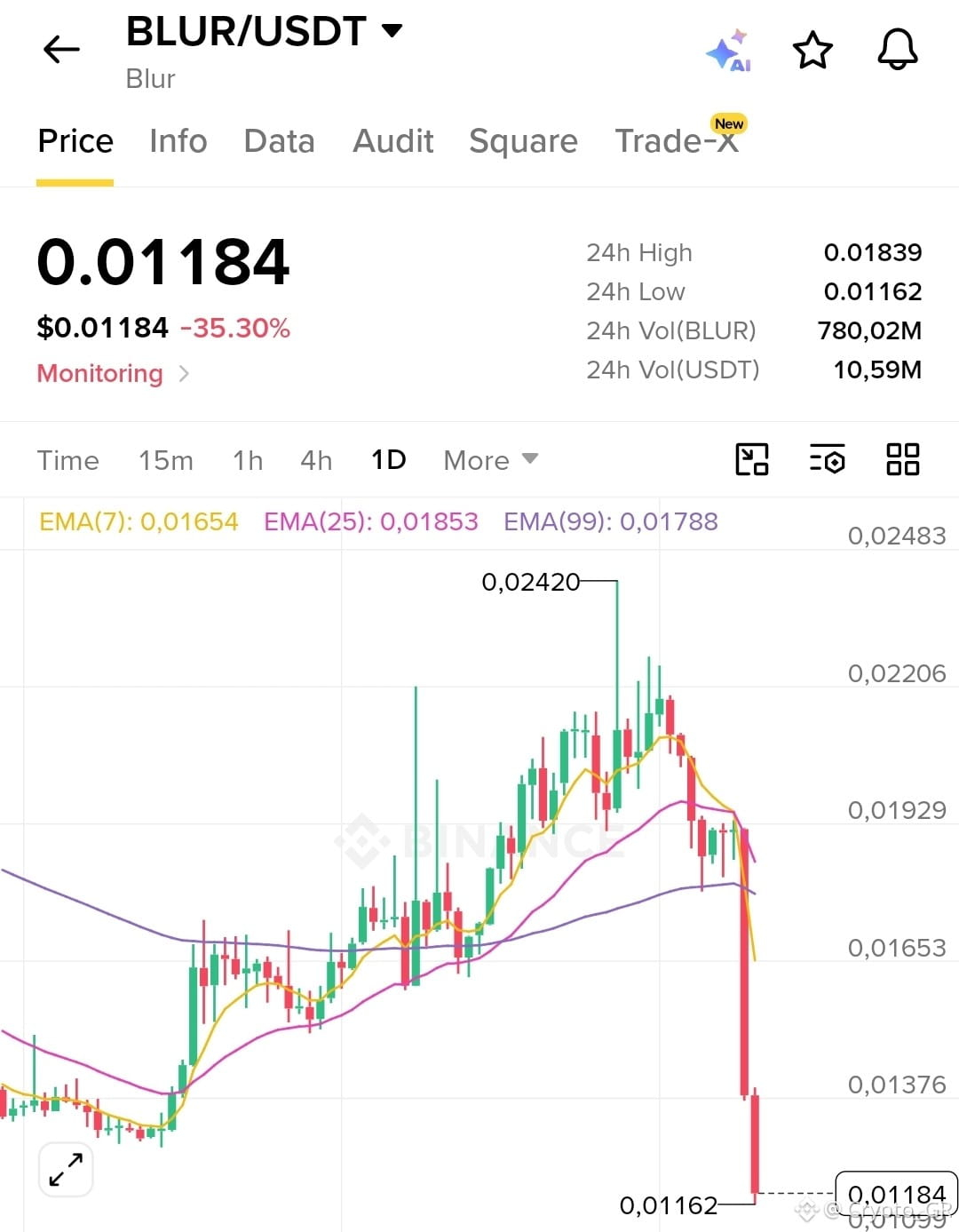
$BLUR has fallen more than 35% after Blur announced it will close its website on November 12.
The marketplace's trading system will remain active on the blockchain, but users will no longer be able to trade through the usual website. Its NFT lending service, Blend, will also stop accepting new loans.
The decision comes after a major drop in NFT trading activity. Blur's monthly trading volume fell from around $1.43B at its peak in 2023 to less than $7M in March 2026.
$BLUR has fallen more than 35% after Blur announced it will close its website on November 12.
The marketplace's trading system will remain active on the blockchain, but users will no longer be able to trade through the usual website. Its NFT lending service, Blend, will also stop accepting new loans.
The decision comes after a major drop in NFT trading activity. Blur's monthly trading volume fell from around $1.43B at its peak in 2023 to less than $7M in March 2026.
The marketplace's trading system will remain active on the blockchain, but users will no longer be able to trade through the usual website. Its NFT lending service, Blend, will also stop accepting new loans.
The decision comes after a major drop in NFT trading activity. Blur's monthly trading volume fell from around $1.43B at its peak in 2023 to less than $7M in March 2026.
1
3
3.3k
·
--
US Reviews Binance’s $4.3B Settlement
The US Department of Justice is reviewing whether Binance has followed the terms of its $4.3 billion settlement from 2023, as authorities investigate possible violations of US sanctions against Iran.
The investigation focuses on whether Binance knowingly allowed transactions that may have breached sanctions and whether the exchange met its compliance obligations.
US Reviews Binance’s $4.3B Settlement
The US Department of Justice is reviewing whether Binance has followed the terms of its $4.3 billion settlement from 2023, as authorities investigate possible violations of US sanctions against Iran.
The investigation focuses on whether Binance knowingly allowed transactions that may have breached sanctions and whether the exchange met its compliance obligations.
The US Department of Justice is reviewing whether Binance has followed the terms of its $4.3 billion settlement from 2023, as authorities investigate possible violations of US sanctions against Iran.
The investigation focuses on whether Binance knowingly allowed transactions that may have breached sanctions and whether the exchange met its compliance obligations.
2
1k
·
--
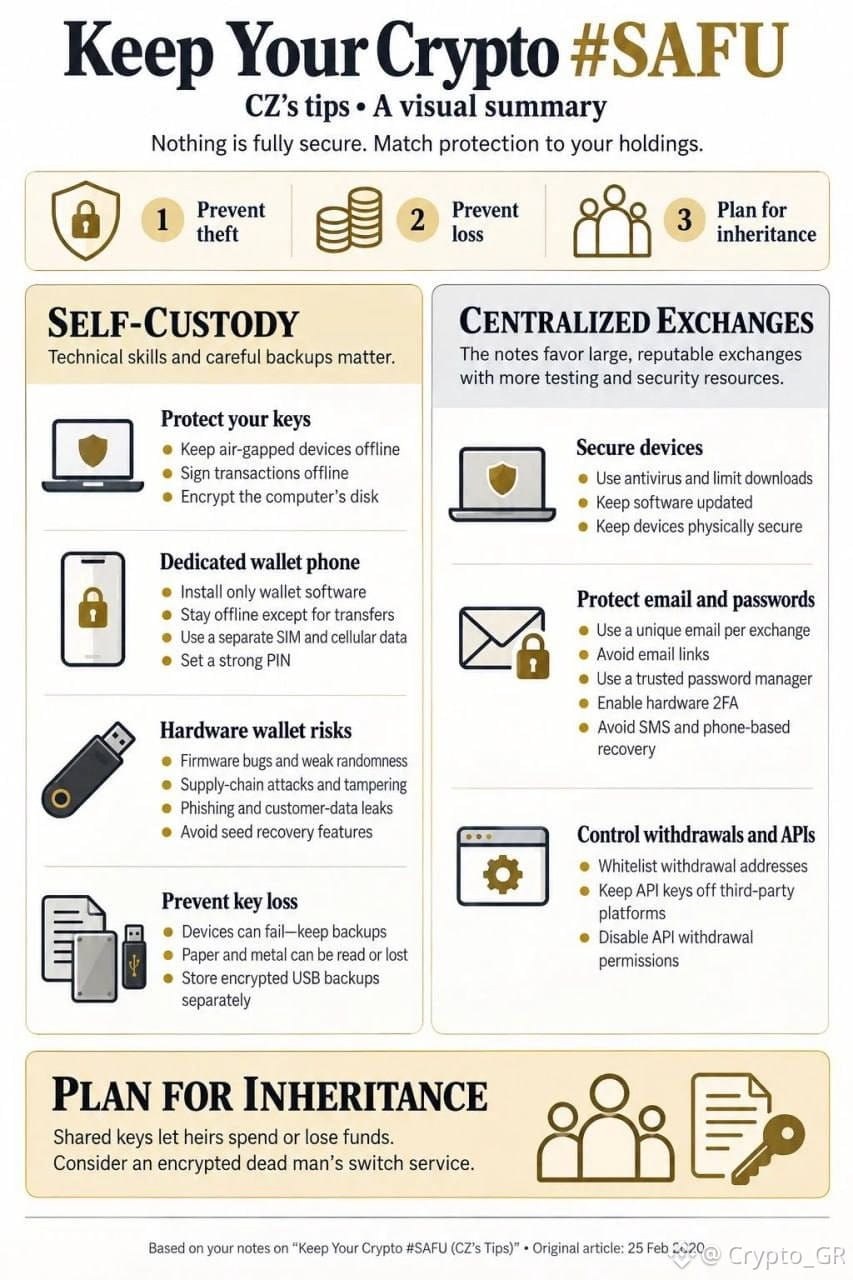
CZ Shares Simple Tips to Keep Your Crypto Safe
Binance founder CZ has shared some tips on how to keep your crypto safe. His main point is simple: you need to protect your funds from both hackers and losing access to them.
Here are his main tips:
• Use a separate device for crypto and avoid installing unnecessary apps.
• Keep backup copies of your recovery phrase in different safe places. If you lose your device, you should still be able to access your funds.
• Use a different email and a strong password for each exchange. Enable 2FA with a security key if possible, and avoid SMS verification.
• Set up a list of approved withdrawal addresses. Never share your API keys with untrusted services, and turn off withdrawals through API keys.
• Hardware wallets are not 100% safe. Fake devices, software problems and phishing attacks can still put your crypto at risk.
• Plan how your family could access your crypto if something happens to you, without sharing your keys too early.
The key lesson: keeping your crypto safe is not just about stopping hackers. You also need to make sure you never lose access to your funds.
CZ Shares Simple Tips to Keep Your Crypto Safe
Binance founder CZ has shared some tips on how to keep your crypto safe. His main point is simple: you need to protect your funds from both hackers and losing access to them.
Here are his main tips:
• Use a separate device for crypto and avoid installing unnecessary apps.
• Keep backup copies of your recovery phrase in different safe places. If you lose your device, you should still be able to access your funds.
• Use a different email and a strong password for each exchange. Enable 2FA with a security key if possible, and avoid SMS verification.
• Set up a list of approved withdrawal addresses. Never share your API keys with untrusted services, and turn off withdrawals through API keys.
• Hardware wallets are not 100% safe. Fake devices, software problems and phishing attacks can still put your crypto at risk.
• Plan how your family could access your crypto if something happens to you, without sharing your keys too early.
The key lesson: keeping your crypto safe is not just about stopping hackers. You also need to make sure you never lose access to your funds.
Binance founder CZ has shared some tips on how to keep your crypto safe. His main point is simple: you need to protect your funds from both hackers and losing access to them.
Here are his main tips:
• Use a separate device for crypto and avoid installing unnecessary apps.
• Keep backup copies of your recovery phrase in different safe places. If you lose your device, you should still be able to access your funds.
• Use a different email and a strong password for each exchange. Enable 2FA with a security key if possible, and avoid SMS verification.
• Set up a list of approved withdrawal addresses. Never share your API keys with untrusted services, and turn off withdrawals through API keys.
• Hardware wallets are not 100% safe. Fake devices, software problems and phishing attacks can still put your crypto at risk.
• Plan how your family could access your crypto if something happens to you, without sharing your keys too early.
The key lesson: keeping your crypto safe is not just about stopping hackers. You also need to make sure you never lose access to your funds.
1
2
1.8k
·
--
Verified
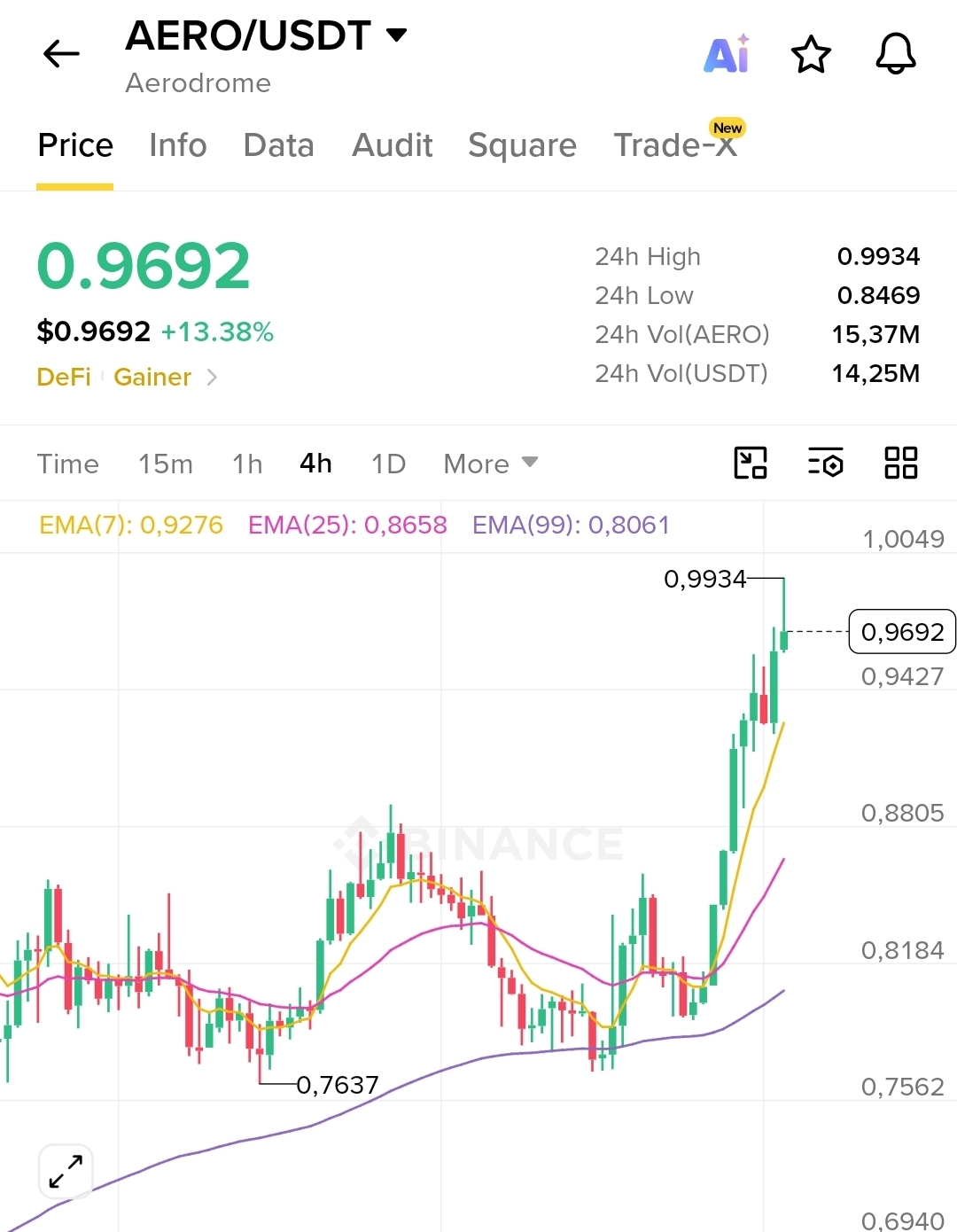
Why is $AERO up more than 13% today?
$AERO has gained around 75% in the last 30 days, with the upcoming Aerodrome and Velodrome merger being one of the main catalysts behind the move.
The new platform, called Aero, is scheduled to launch on October 21. Existing $AERO tokens will convert 1:1, while VELO holders will receive around 0.044 AERO per token. Trading activity has also increased, with daily volume rising above $130M.
Why is $AERO up more than 13% today?
$AERO has gained around 75% in the last 30 days, with the upcoming Aerodrome and Velodrome merger being one of the main catalysts behind the move.
The new platform, called Aero, is scheduled to launch on October 21. Existing $AERO tokens will convert 1:1, while VELO holders will receive around 0.044 AERO per token. Trading activity has also increased, with daily volume rising above $130M.
$AERO has gained around 75% in the last 30 days, with the upcoming Aerodrome and Velodrome merger being one of the main catalysts behind the move.
The new platform, called Aero, is scheduled to launch on October 21. Existing $AERO tokens will convert 1:1, while VELO holders will receive around 0.044 AERO per token. Trading activity has also increased, with daily volume rising above $130M.
1
1
2.7k
·
--
Crypto Hacker Stole $53M and Spent It on Pokémon Cards
A crypto hacker stole around $53.3 million from Uranium Finance in 2021 by exploiting a flaw in its smart contract. The attack left the platform without enough funds to continue operating.
Part of the stolen money was used to buy rare collectibles, including a Pokémon card set for $750,000, a Black Lotus card from Magic: The Gathering for $500,000, and an ancient Roman coin worth around $601,545.
The purchases also included 18 sealed Magic card packs worth about $1.51 million and a sealed first-edition Pokémon box for $257,500. Authorities seized some of the collectibles and around $31 million in cryptocurrency in February 2025.
In October 2026, a US jury found the hacker guilty of computer fraud and money laundering. He faces a maximum of 30 years in prison, although the final sentence will be decided by a judge.
Crypto Hacker Stole $53M and Spent It on Pokémon Cards
A crypto hacker stole around $53.3 million from Uranium Finance in 2021 by exploiting a flaw in its smart contract. The attack left the platform without enough funds to continue operating.
Part of the stolen money was used to buy rare collectibles, including a Pokémon card set for $750,000, a Black Lotus card from Magic: The Gathering for $500,000, and an ancient Roman coin worth around $601,545.
The purchases also included 18 sealed Magic card packs worth about $1.51 million and a sealed first-edition Pokémon box for $257,500. Authorities seized some of the collectibles and around $31 million in cryptocurrency in February 2025.
In October 2026, a US jury found the hacker guilty of computer fraud and money laundering. He faces a maximum of 30 years in prison, although the final sentence will be decided by a judge.
A crypto hacker stole around $53.3 million from Uranium Finance in 2021 by exploiting a flaw in its smart contract. The attack left the platform without enough funds to continue operating.
Part of the stolen money was used to buy rare collectibles, including a Pokémon card set for $750,000, a Black Lotus card from Magic: The Gathering for $500,000, and an ancient Roman coin worth around $601,545.
The purchases also included 18 sealed Magic card packs worth about $1.51 million and a sealed first-edition Pokémon box for $257,500. Authorities seized some of the collectibles and around $31 million in cryptocurrency in February 2025.
In October 2026, a US jury found the hacker guilty of computer fraud and money laundering. He faces a maximum of 30 years in prison, although the final sentence will be decided by a judge.
1
2.1k
·
--
Verified
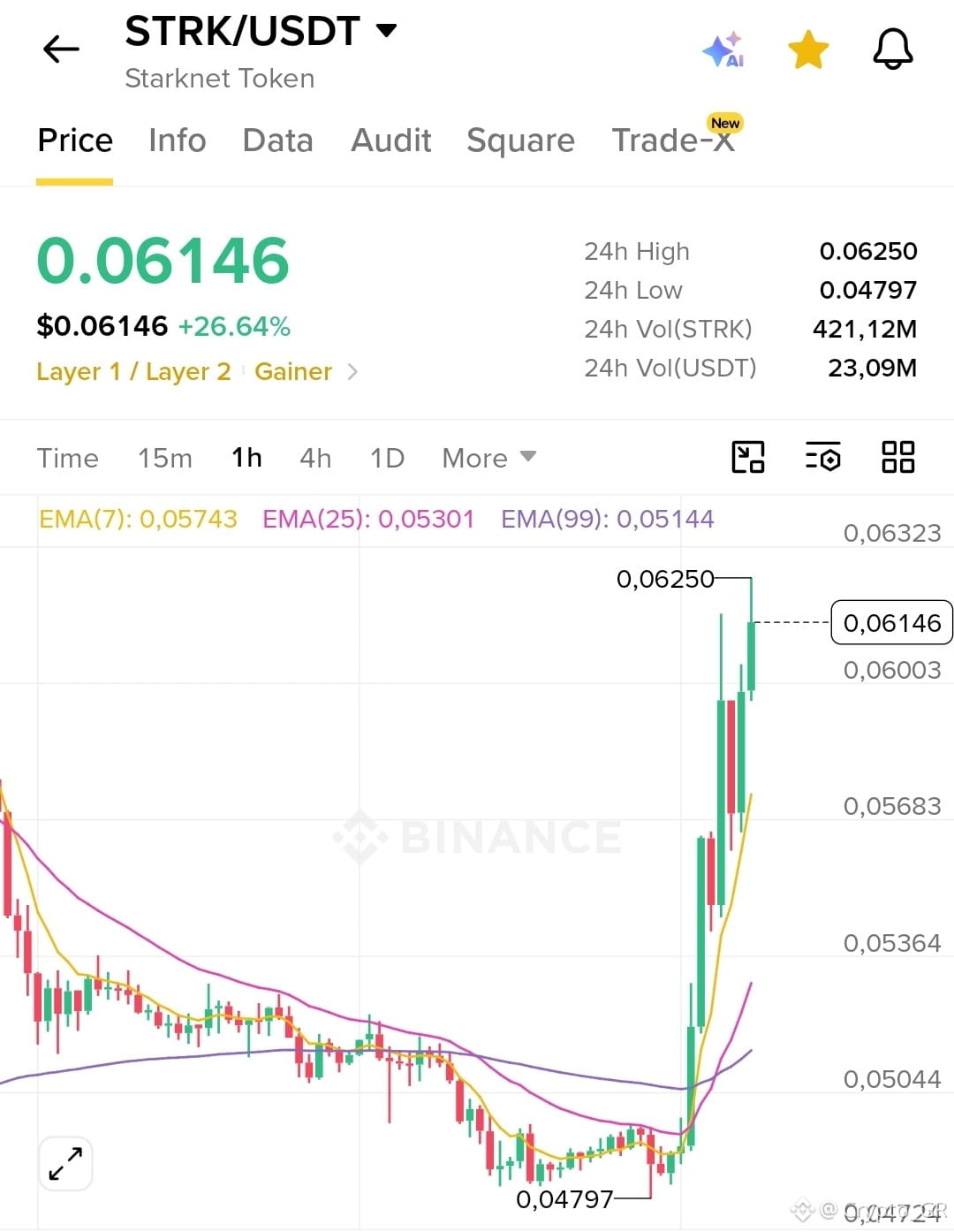
Why is $STRK moving while most of the market is falling?
$STRK has risen more than 25% today. There hasn't been much major news behind the move, but the Starknet team said it is seriously considering becoming a Layer 1.
The main goal would be to make Starknet resistant to future quantum computers. The team is targeting 2027 for this.
Starknet is already working on technology that could protect the network from quantum computers, so becoming an L1 would be a major step for the project.
Why is $STRK moving while most of the market is falling?
$STRK has risen more than 25% today. There hasn't been much major news behind the move, but the Starknet team said it is seriously considering becoming a Layer 1.
The main goal would be to make Starknet resistant to future quantum computers. The team is targeting 2027 for this.
Starknet is already working on technology that could protect the network from quantum computers, so becoming an L1 would be a major step for the project.
$STRK has risen more than 25% today. There hasn't been much major news behind the move, but the Starknet team said it is seriously considering becoming a Layer 1.
The main goal would be to make Starknet resistant to future quantum computers. The team is targeting 2027 for this.
Starknet is already working on technology that could protect the network from quantum computers, so becoming an L1 would be a major step for the project.
3
2.7k
Log in to explore more content
Join global crypto users on Binance Square
⚡️ Get latest and useful information about crypto.
💬 Trusted by the world’s largest crypto exchange.
👍 Discover real insights from verified creators.
Email / Phone number
Trending Topics
BinancePick
3.2M views
159,920 Discussing
Join #EarningsSeason: Predict Earnings on Binance Pick, Share Your Take on Binance Square!
Binance Square Official
·416 Likes
·344.3k views
EarningsSeason
5.4M views
26,419 Discussing
StrategySkipsBitcoinPurchasesSpends$205MOnSTRCBuybacks
0 views
0 Discussing