
阿简在路上
610 Posts

阿简在路上
Report
Block User
野生加密研究员|用数据拆解市场叙事|长期主义|NFA|📩 DM Open
Open Trade
High-Frequency Trader
4.7 Years
6 Following
303 Followers
1.2K+ Liked
Posts
Portfolio
All
Quotes
Videos
·
--
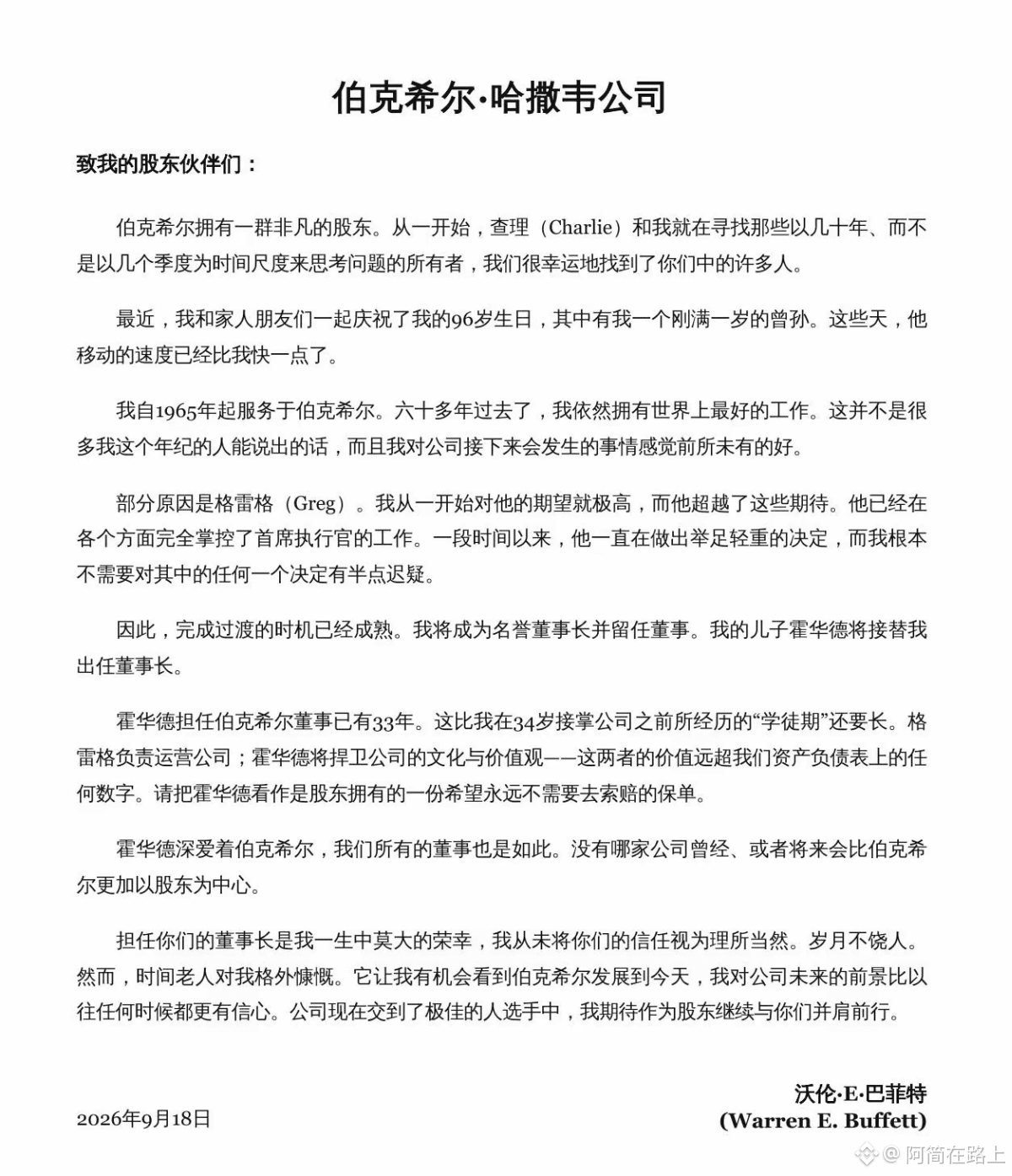
The current rebound across not only $BTC but the entire market has an easily overlooked reason. Aside from the apparent restoration of risk appetite and short-covering squeezes, another variable is also extremely important: the SEC has granted a five-year innovation exemption for Tokenized Stock trading. This aligns perfectly with A Jian’s earlier inference that, although the Clear Act was blocked, U.S. regulators would still continue pushing on-chain finance
As a result, the Crypto market is not simply receiving a regulatory tailwind. Instead, while progress along the legislative track is stalled, the regulatory enforcement track is still moving forward. The real significance of the SEC’s opening this time is that it has begun to allow certain on-chain securities trading to genuinely take shape. Who could deny that the future has already arrived? #比特币突破8万美元大关
{future}(BTCUSDT)
The current rebound across not only $BTC but the entire market has an easily overlooked reason. Aside from the apparent restoration of risk appetite and short-covering squeezes, another variable is also extremely important: the SEC has granted a five-year innovation exemption for Tokenized Stock trading. This aligns perfectly with A Jian’s earlier inference that, although the Clear Act was blocked, U.S. regulators would still continue pushing on-chain finance
As a result, the Crypto market is not simply receiving a regulatory tailwind. Instead, while progress along the legislative track is stalled, the regulatory enforcement track is still moving forward. The real significance of the SEC’s opening this time is that it has begun to allow certain on-chain securities trading to genuinely take shape. Who could deny that the future has already arrived? #比特币突破8万美元大关
As a result, the Crypto market is not simply receiving a regulatory tailwind. Instead, while progress along the legislative track is stalled, the regulatory enforcement track is still moving forward. The real significance of the SEC’s opening this time is that it has begun to allow certain on-chain securities trading to genuinely take shape. Who could deny that the future has already arrived? #比特币突破8万美元大关
6
417
·
--
209
·
--
Verified
Brent crude oil ($BZ ) has fallen for the third consecutive day. The main reason is that the market has started to believe that Saudi Arabia can restore part of its oil supply through other channels, but it still remains above $100. The energy crisis has not ended yet, and the sword of Damocles hanging over the heads of global central banks is still there. Ajian will continue to monitor whether it truly breaks below $100 next—not because the number 100 has any magical economic meaning, but because it will genuinely shape businesses’ and consumers’ expectations
{future}(BZUSDT)
Brent crude oil ($BZ ) has fallen for the third consecutive day. The main reason is that the market has started to believe that Saudi Arabia can restore part of its oil supply through other channels, but it still remains above $100. The energy crisis has not ended yet, and the sword of Damocles hanging over the heads of global central banks is still there. Ajian will continue to monitor whether it truly breaks below $100 next—not because the number 100 has any magical economic meaning, but because it will genuinely shape businesses’ and consumers’ expectations
492
·
--
Recently, Ai Jian has been focusing on how $BTC responds to the 10-year U.S. Treasury yield. I want to verify whether, if 10Y falls back to around 4.8%, BTC would clearly receive liquidity support. If it rises again to 5%, would BTC face immediate pressure? If the answers to both are yes, then in the future 10Y could become a very useful auxiliary variable for BTC macro trading. Otherwise, it would suggest that crypto’s own capital logic is strengthening
{future}(BTCUSDT)
Recently, Ai Jian has been focusing on how $BTC responds to the 10-year U.S. Treasury yield. I want to verify whether, if 10Y falls back to around 4.8%, BTC would clearly receive liquidity support. If it rises again to 5%, would BTC face immediate pressure? If the answers to both are yes, then in the future 10Y could become a very useful auxiliary variable for BTC macro trading. Otherwise, it would suggest that crypto’s own capital logic is strengthening
137
·
--
Bullish
FXRP’s collateral borrowing of RLUSD has already been launched on Ethereum via Morpho. You should know that the most common narratives in the past $XRP were payments, cross-border settlement, and institutional transfers, but this time it’s directly using XRP assets as collateral, $RLUSD as the borrowed stablecoin, Morpho managing the lending market, and Flare connecting XRP assets and the EVM. This is a major addition to the XRP narrative
{future}(XRPUSDT)
FXRP’s collateral borrowing of RLUSD has already been launched on Ethereum via Morpho. You should know that the most common narratives in the past $XRP were payments, cross-border settlement, and institutional transfers, but this time it’s directly using XRP assets as collateral, $RLUSD as the borrowed stablecoin, Morpho managing the lending market, and Flare connecting XRP assets and the EVM. This is a major addition to the XRP narrative
328
·
--
Across Protocol plans to gradually shut down $ACX , with the goal of completing the exit after January 8, 2027. Nothing particularly unusual here, but their buyback is pretty interesting: holders can redeem for AcrossCo equity or USDC at an agreed $0.04375/ACX. The minimum participation threshold is about 250K ACX, and it requires KYC.
Compared with a traditional buyback, this is more like setting up a conversion channel between token holders and company equity. I think this attempt by Across is meaningful for many protocols that have a disconnect between company operations and token value capture.
If you hold enough ACX, A-Jian recommends you check the official portal now—review the KYC requirements, the deadline, and the share class—to aim for a decent exit.
Across Protocol plans to gradually shut down $ACX , with the goal of completing the exit after January 8, 2027. Nothing particularly unusual here, but their buyback is pretty interesting: holders can redeem for AcrossCo equity or USDC at an agreed $0.04375/ACX. The minimum participation threshold is about 250K ACX, and it requires KYC.
Compared with a traditional buyback, this is more like setting up a conversion channel between token holders and company equity. I think this attempt by Across is meaningful for many protocols that have a disconnect between company operations and token value capture.
If you hold enough ACX, A-Jian recommends you check the official portal now—review the KYC requirements, the deadline, and the share class—to aim for a decent exit.
Compared with a traditional buyback, this is more like setting up a conversion channel between token holders and company equity. I think this attempt by Across is meaningful for many protocols that have a disconnect between company operations and token value capture.
If you hold enough ACX, A-Jian recommends you check the official portal now—review the KYC requirements, the deadline, and the share class—to aim for a decent exit.
586
·
--
Bullish
Verified
Zcash’s NU7 mainnet upgrade plan to go live on November 5, with the testnet scheduled to launch on October 6; after the upgrade, the block time will be shortened to 25 seconds and new sustainability mechanisms will be added. Before, A-Jian has broken down multiple times the forces behind the rise of $ZEC : the Grayscale ETF, the privacy narrative, and this NU7 technical upgrade. Zcash is positioning itself as a candidate for turning from a privacy coin into privacy financial infrastructure. The technical upgrade speeds up transaction confirmations, the ETF provides a traditional account entry point, and when the two combine, the narrative naturally grows stronger—plus the squeeze on shorts—no wonder it can keep climbing
{future}(ZECUSDT)
Zcash’s NU7 mainnet upgrade plan to go live on November 5, with the testnet scheduled to launch on October 6; after the upgrade, the block time will be shortened to 25 seconds and new sustainability mechanisms will be added. Before, A-Jian has broken down multiple times the forces behind the rise of $ZEC : the Grayscale ETF, the privacy narrative, and this NU7 technical upgrade. Zcash is positioning itself as a candidate for turning from a privacy coin into privacy financial infrastructure. The technical upgrade speeds up transaction confirmations, the ETF provides a traditional account entry point, and when the two combine, the narrative naturally grows stronger—plus the squeeze on shorts—no wonder it can keep climbing
4
3
1.5k
·
--
Bullish
Uniswap v4 has just launched the StablePair Hook, targeting stablecoin trading pairs like USDC/USDT. It attempts to reduce LP arbitrage losses through dynamic fees and a Dutch auction. A-Jian believes this is an attempt to solve a very real problem: stablecoin trading volume is large, but LPs may not necessarily earn well, because stablecoin prices fluctuate very little, while arbitrage bots can continuously capture even tiny differences in the pool. Uniswap’s goal is to keep a larger share of value for LPs and the protocol.
Competition in DeFi is getting increasingly detail-focused. It’s no longer about who has the highest TVL; it’s about who can reduce LP impermanent loss, arbitrage losses, and gas friction. This move by Uniswap could directly improve the efficiency of the entire trading market. Compared with a standard buyback, it’s a major positive for $UNI
{future}(UNIUSDT)
Uniswap v4 has just launched the StablePair Hook, targeting stablecoin trading pairs like USDC/USDT. It attempts to reduce LP arbitrage losses through dynamic fees and a Dutch auction. A-Jian believes this is an attempt to solve a very real problem: stablecoin trading volume is large, but LPs may not necessarily earn well, because stablecoin prices fluctuate very little, while arbitrage bots can continuously capture even tiny differences in the pool. Uniswap’s goal is to keep a larger share of value for LPs and the protocol.
Competition in DeFi is getting increasingly detail-focused. It’s no longer about who has the highest TVL; it’s about who can reduce LP impermanent loss, arbitrage losses, and gas friction. This move by Uniswap could directly improve the efficiency of the entire trading market. Compared with a standard buyback, it’s a major positive for $UNI
Competition in DeFi is getting increasingly detail-focused. It’s no longer about who has the highest TVL; it’s about who can reduce LP impermanent loss, arbitrage losses, and gas friction. This move by Uniswap could directly improve the efficiency of the entire trading market. Compared with a standard buyback, it’s a major positive for $UNI
1.2k
·
--
Verified
The Bank of Japan today raised its policy rate by 25bp to 1.25% with a 7-2 vote, reaching the highest level in 31 years—exactly as Aijian had expected. Meanwhile, the yen also did not rise after the rate hike in the usual way; instead, it once fell to around 156.7. The reason is something I broke down previously as well. This time, the rate hike itself was already fully priced in by the market, and the BOJ did not provide a sufficiently hawkish forward path.
I think the only aspect worth watching from this BOJ meeting is that the rate hike was ultimately approved 7-2. Two委员 voted against the hike, which suggests that the BOJ’s internal view on how quickly to continue tightening is not unanimously aligned.
Finally, a reminder again: in FX trading, it’s never about whether there is a rate hike or not—it’s about the difference between the actual outcome and what the market expected. The expectation gap is what FX truly trades #日本央行加息至31年高位
The Bank of Japan today raised its policy rate by 25bp to 1.25% with a 7-2 vote, reaching the highest level in 31 years—exactly as Aijian had expected. Meanwhile, the yen also did not rise after the rate hike in the usual way; instead, it once fell to around 156.7. The reason is something I broke down previously as well. This time, the rate hike itself was already fully priced in by the market, and the BOJ did not provide a sufficiently hawkish forward path.
I think the only aspect worth watching from this BOJ meeting is that the rate hike was ultimately approved 7-2. Two委员 voted against the hike, which suggests that the BOJ’s internal view on how quickly to continue tightening is not unanimously aligned.
Finally, a reminder again: in FX trading, it’s never about whether there is a rate hike or not—it’s about the difference between the actual outcome and what the market expected. The expectation gap is what FX truly trades #日本央行加息至31年高位
I think the only aspect worth watching from this BOJ meeting is that the rate hike was ultimately approved 7-2. Two委员 voted against the hike, which suggests that the BOJ’s internal view on how quickly to continue tightening is not unanimously aligned.
Finally, a reminder again: in FX trading, it’s never about whether there is a rate hike or not—it’s about the difference between the actual outcome and what the market expected. The expectation gap is what FX truly trades #日本央行加息至31年高位
2k
·
--
Bullish
Verified
Another major macro event that many friends seem to have missed: a U.S. House committee advanced H.R. 8957 with a vote of 28:21. The bill would put the Strategic $BTC reserve into law, including at least a 20-year holding period and annual reporting requirements. This creates a strong contrast with the stalled CLARITY Act: on one side, the comprehensive market-structure bill could not move forward, and on the other, issues related to strategic reserves and taxes continue to progress. This is exactly what Ajian has always emphasized: U.S. crypto policy doesn’t move forward or backward as a whole—it follows different paths depending on the specific bill.
So the market will price this separately. Policies favorable to BTC don’t necessarily benefit every token at the same time; this bill is still more directly aimed at BTC. That also explains why when the comprehensive regulatory bill stalls, BTC may still show more policy resilience than altcoins.
{future}(BTCUSDT)
Another major macro event that many friends seem to have missed: a U.S. House committee advanced H.R. 8957 with a vote of 28:21. The bill would put the Strategic $BTC reserve into law, including at least a 20-year holding period and annual reporting requirements. This creates a strong contrast with the stalled CLARITY Act: on one side, the comprehensive market-structure bill could not move forward, and on the other, issues related to strategic reserves and taxes continue to progress. This is exactly what Ajian has always emphasized: U.S. crypto policy doesn’t move forward or backward as a whole—it follows different paths depending on the specific bill.
So the market will price this separately. Policies favorable to BTC don’t necessarily benefit every token at the same time; this bill is still more directly aimed at BTC. That also explains why when the comprehensive regulatory bill stalls, BTC may still show more policy resilience than altcoins.
So the market will price this separately. Policies favorable to BTC don’t necessarily benefit every token at the same time; this bill is still more directly aimed at BTC. That also explains why when the comprehensive regulatory bill stalls, BTC may still show more policy resilience than altcoins.
175
·
--
Verified
Honestly speaking, if we look at this Fed rate hike, the central bank that should find it most troublesome is the Bank of Japan (BOJ). Now, the market generally expects that tomorrow the BOJ will raise its policy rate to 1.25%, reaching a 31-year high. The problem lies right here: after the Fed hikes, the yen weakens again. The USD/JPY pair once returned to around 155.5. As the market treated the BOJ’s rate hike just like it did the Fed’s—by pricing it in fully—if tomorrow the BOJ fails to provide a clear and continuous tightening path, A Jian believes the yen exchange rate may face immediate weakening pressure, falling below the 158 level and then probing again toward 160.
And there’s another issue: what if, ultimately, the BOJ turns hawkish as well, just like the Fed? How would global interest rate spreads change then? So the yen is no longer just Japan’s own problem now. It will go hand in hand with the dollar in a continuous global repricing of funding costs #日本加息
Honestly speaking, if we look at this Fed rate hike, the central bank that should find it most troublesome is the Bank of Japan (BOJ). Now, the market generally expects that tomorrow the BOJ will raise its policy rate to 1.25%, reaching a 31-year high. The problem lies right here: after the Fed hikes, the yen weakens again. The USD/JPY pair once returned to around 155.5. As the market treated the BOJ’s rate hike just like it did the Fed’s—by pricing it in fully—if tomorrow the BOJ fails to provide a clear and continuous tightening path, A Jian believes the yen exchange rate may face immediate weakening pressure, falling below the 158 level and then probing again toward 160.
And there’s another issue: what if, ultimately, the BOJ turns hawkish as well, just like the Fed? How would global interest rate spreads change then? So the yen is no longer just Japan’s own problem now. It will go hand in hand with the dollar in a continuous global repricing of funding costs #日本加息
And there’s another issue: what if, ultimately, the BOJ turns hawkish as well, just like the Fed? How would global interest rate spreads change then? So the yen is no longer just Japan’s own problem now. It will go hand in hand with the dollar in a continuous global repricing of funding costs #日本加息
105
·
--
Bullish
Verified
Avalanche plans to execute the Helicon upgrade on September 22, shortening the validator cycle from the shortest 14 days to 48 hours. It will support automatic renewal, raise the minimum uptime to 90%, and reduce short-term validator rewards. This looks like a routine adjustment to validator capital efficiency—by reducing the opportunity cost of participating in validation while also preventing a large number of short-term mercenary validators.
As for whether this move can be beneficial to $AVAX , A-Jian thinks that when looking at a PoS chain, you should not only consider the staked APR. You should also look at the lockup period, exit time, slash risk, node costs, and the reward structure—so that participation cost and attack cost remain balanced.
{future}(AVAXUSDT)
Avalanche plans to execute the Helicon upgrade on September 22, shortening the validator cycle from the shortest 14 days to 48 hours. It will support automatic renewal, raise the minimum uptime to 90%, and reduce short-term validator rewards. This looks like a routine adjustment to validator capital efficiency—by reducing the opportunity cost of participating in validation while also preventing a large number of short-term mercenary validators.
As for whether this move can be beneficial to $AVAX , A-Jian thinks that when looking at a PoS chain, you should not only consider the staked APR. You should also look at the lockup period, exit time, slash risk, node costs, and the reward structure—so that participation cost and attack cost remain balanced.
As for whether this move can be beneficial to $AVAX , A-Jian thinks that when looking at a PoS chain, you should not only consider the staked APR. You should also look at the lockup period, exit time, slash risk, node costs, and the reward structure—so that participation cost and attack cost remain balanced.
3
1.1k
·
--
Bearish
After Arc’s mainnet went live yesterday, within two hours it attracted 372M USDC and about 176K addresses. Even early cross-chain USDC saw premiums as high as 80%-100%. So what’s next? With more than 50 launchpads fighting for attention, liquidity rapidly becomes fragmented. “Dragon #1” $ARGUS is like a clump of poop, and the Fed’s rate hikes plus the wise “third brother” and “little black” at the developers’ conference only fan the flames.
Ajian believes that chains like Arc—stablecoin-native chains—definitely have demand, but infrastructure hype doesn’t automatically mean every meme is valuable. When everyone rushes in like this, the more on-chain capital there is and the more launchpads there are, the less liquidity a single token may end up getting.
Be sure to distinguish: mainnet launch is an infrastructure event, while a meme surge is an attention event
After Arc’s mainnet went live yesterday, within two hours it attracted 372M USDC and about 176K addresses. Even early cross-chain USDC saw premiums as high as 80%-100%. So what’s next? With more than 50 launchpads fighting for attention, liquidity rapidly becomes fragmented. “Dragon #1” $ARGUS is like a clump of poop, and the Fed’s rate hikes plus the wise “third brother” and “little black” at the developers’ conference only fan the flames.
Ajian believes that chains like Arc—stablecoin-native chains—definitely have demand, but infrastructure hype doesn’t automatically mean every meme is valuable. When everyone rushes in like this, the more on-chain capital there is and the more launchpads there are, the less liquidity a single token may end up getting.
Be sure to distinguish: mainnet launch is an infrastructure event, while a meme surge is an attention event
Ajian believes that chains like Arc—stablecoin-native chains—definitely have demand, but infrastructure hype doesn’t automatically mean every meme is valuable. When everyone rushes in like this, the more on-chain capital there is and the more launchpads there are, the less liquidity a single token may end up getting.
Be sure to distinguish: mainnet launch is an infrastructure event, while a meme surge is an attention event

1
1.1k
·
--
Bearish
$PUMP After a rise of more than 100% prior to this, it then retraced about 30% from the high point. Meanwhile, around $25M worth of tokens are set to unlock. In the past 24 hours, it has risen again by about 10%. Ajian thinks this is simply the most classic attention-asset cycle textbook: it goes up first, then unlocks, then retraces, and finally the capital tries to rush in for a rebound.
PUMP has real platform revenue, but the token will still be affected by unlocks, team supply, and meme cycles. If you only look at protocol earnings, it’s easy to overestimate the token; if you only look at unlocks, you might underestimate the platform business. It’s recommended to treat $0.00317 as one of the key structure levels the market is focused on, and also continue to watch whether the unlock addresses transfer to exchanges.
{future}(PUMPUSDT)
$PUMP After a rise of more than 100% prior to this, it then retraced about 30% from the high point. Meanwhile, around $25M worth of tokens are set to unlock. In the past 24 hours, it has risen again by about 10%. Ajian thinks this is simply the most classic attention-asset cycle textbook: it goes up first, then unlocks, then retraces, and finally the capital tries to rush in for a rebound.
PUMP has real platform revenue, but the token will still be affected by unlocks, team supply, and meme cycles. If you only look at protocol earnings, it’s easy to overestimate the token; if you only look at unlocks, you might underestimate the platform business. It’s recommended to treat $0.00317 as one of the key structure levels the market is focused on, and also continue to watch whether the unlock addresses transfer to exchanges.
PUMP has real platform revenue, but the token will still be affected by unlocks, team supply, and meme cycles. If you only look at protocol earnings, it’s easy to overestimate the token; if you only look at unlocks, you might underestimate the platform business. It’s recommended to treat $0.00317 as one of the key structure levels the market is focused on, and also continue to watch whether the unlock addresses transfer to exchanges.
2
1
2.7k
·
--
Verified
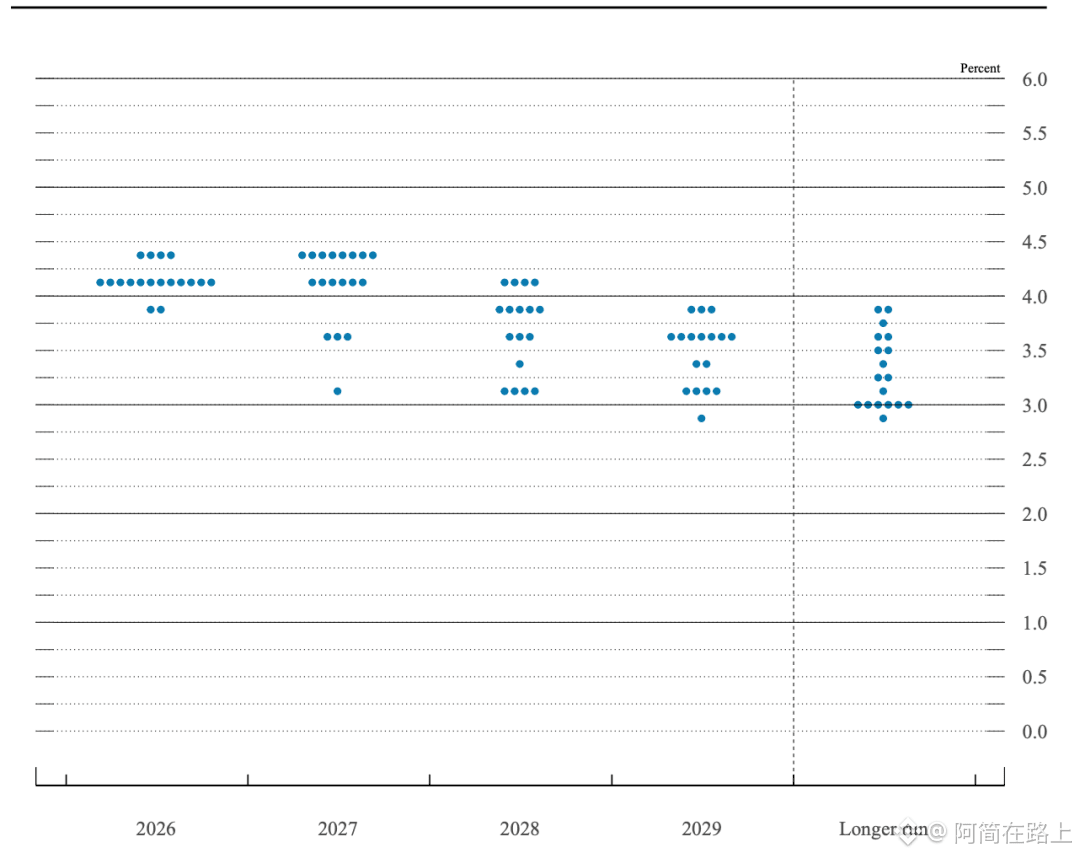
#点阵图预示2026年再加息一次 This is the most worth-watching chart: in the Fed’s economic projections released last night, the median federal funds rate at the end of 2026 reaches 4.1%. Now the target range is already 3.75%–4%, which means the dot plot still leaves room for further rate hikes.
This is exactly what A-jian analyzed earlier: whether there would be signals that the market is waiting for—a possible additional round of rate hikes.
So after the Fed, the U.S. 2-year Treasury yield rose to about 4.71% at one point, but the 10-year yield stayed around 5% without continuing to break upward meaningfully. This is very typical of bear flattening: tighter policy in the front end, with the long end relatively stable.
This suggests the market believes short-term monetary policy needs to be tighter, but expectations for the long-term economy and inflation have not deteriorated in tandem.
#点阵图预示2026年再加息一次 This is the most worth-watching chart: in the Fed’s economic projections released last night, the median federal funds rate at the end of 2026 reaches 4.1%. Now the target range is already 3.75%–4%, which means the dot plot still leaves room for further rate hikes.
This is exactly what A-jian analyzed earlier: whether there would be signals that the market is waiting for—a possible additional round of rate hikes.
So after the Fed, the U.S. 2-year Treasury yield rose to about 4.71% at one point, but the 10-year yield stayed around 5% without continuing to break upward meaningfully. This is very typical of bear flattening: tighter policy in the front end, with the long end relatively stable.
This suggests the market believes short-term monetary policy needs to be tighter, but expectations for the long-term economy and inflation have not deteriorated in tandem.
This is exactly what A-jian analyzed earlier: whether there would be signals that the market is waiting for—a possible additional round of rate hikes.
So after the Fed, the U.S. 2-year Treasury yield rose to about 4.71% at one point, but the 10-year yield stayed around 5% without continuing to break upward meaningfully. This is very typical of bear flattening: tighter policy in the front end, with the long end relatively stable.
This suggests the market believes short-term monetary policy needs to be tighter, but expectations for the long-term economy and inflation have not deteriorated in tandem.
4
2
3.8k
·
--
#美联储加息 no unexpected rate hike, and the market has responded to it as well; it was already priced in long ago, and even $BTC isn’t making much of a stir 😮💨
{future}(BTCUSDT)
#美联储加息 no unexpected rate hike, and the market has responded to it as well; it was already priced in long ago, and even $BTC isn’t making much of a stir 😮💨
826
·
--
I don’t feel like coding today, so I’ll share my early-year vacation video:
When you dive into the deep waters beyond four thousand meters off the coast of Mauritius,
the underwater Tyndall effect turns sunlight into a tangible, shaped presence,
a pod of sperm whales—each over ten meters long—swims past you,
and in that moment, nature’s ultimate romance left me teary-eyed.
I don’t feel like coding today, so I’ll share my early-year vacation video:
When you dive into the deep waters beyond four thousand meters off the coast of Mauritius,
the underwater Tyndall effect turns sunlight into a tangible, shaped presence,
a pod of sperm whales—each over ten meters long—swims past you,
and in that moment, nature’s ultimate romance left me teary-eyed.
When you dive into the deep waters beyond four thousand meters off the coast of Mauritius,
the underwater Tyndall effect turns sunlight into a tangible, shaped presence,
a pod of sperm whales—each over ten meters long—swims past you,
and in that moment, nature’s ultimate romance left me teary-eyed.
1k
·
--
Bullish
Verified
As expected, the U.S. Senate, through a procedural vote of 49 to 50, did not allow the CLARITY Act to move forward. The market’s immediate first reaction was very direct: crypto-related assets such as $COINB dropped, and $BTC also came under pressure and briefly fell below $75k. But A Jian still believes there’s no need to interpret this as the U.S. not wanting Crypto; it’s simply that the timing for the next phase of U.S. crypto regulation has become uncertain again.
The bill being blocked is indeed a near-term negative, but if the CFTC and SEC continue to advance by issuing rules and through enforcement boundaries, the market may not necessarily come to a complete standstill. Moreover, some of the pressure that $BTC has been bearing these past two days also comes from macro factors such as oil prices and the U.S. dollar, and cannot be entirely attributed to the bill not being passed—those industry-internal factors aren’t the only drivers.
In addition, there’s another easily overlooked point: the setback of the Clarity Act doesn’t mean the U.S. has already rejected stablecoins. On the contrary, the U.S. has already taken an important step in completing the regulatory framework for stablecoins. In the foreseeable future, Crypto will become increasingly clearly divided into two lines:
One is trading and speculative assets; the other is U.S. dollar payments, settlement, and financial infrastructure. The latter’s connection to traditional finance will be more important than just “trading coins” #美参议院否决CLARITY法案
{future}(BTCUSDT)
{spot}(COINBUSDT)
As expected, the U.S. Senate, through a procedural vote of 49 to 50, did not allow the CLARITY Act to move forward. The market’s immediate first reaction was very direct: crypto-related assets such as $COINB dropped, and $BTC also came under pressure and briefly fell below $75k. But A Jian still believes there’s no need to interpret this as the U.S. not wanting Crypto; it’s simply that the timing for the next phase of U.S. crypto regulation has become uncertain again.
The bill being blocked is indeed a near-term negative, but if the CFTC and SEC continue to advance by issuing rules and through enforcement boundaries, the market may not necessarily come to a complete standstill. Moreover, some of the pressure that $BTC has been bearing these past two days also comes from macro factors such as oil prices and the U.S. dollar, and cannot be entirely attributed to the bill not being passed—those industry-internal factors aren’t the only drivers.
In addition, there’s another easily overlooked point: the setback of the Clarity Act doesn’t mean the U.S. has already rejected stablecoins. On the contrary, the U.S. has already taken an important step in completing the regulatory framework for stablecoins. In the foreseeable future, Crypto will become increasingly clearly divided into two lines:
One is trading and speculative assets; the other is U.S. dollar payments, settlement, and financial infrastructure. The latter’s connection to traditional finance will be more important than just “trading coins” #美参议院否决CLARITY法案
The bill being blocked is indeed a near-term negative, but if the CFTC and SEC continue to advance by issuing rules and through enforcement boundaries, the market may not necessarily come to a complete standstill. Moreover, some of the pressure that $BTC has been bearing these past two days also comes from macro factors such as oil prices and the U.S. dollar, and cannot be entirely attributed to the bill not being passed—those industry-internal factors aren’t the only drivers.
In addition, there’s another easily overlooked point: the setback of the Clarity Act doesn’t mean the U.S. has already rejected stablecoins. On the contrary, the U.S. has already taken an important step in completing the regulatory framework for stablecoins. In the foreseeable future, Crypto will become increasingly clearly divided into two lines:
One is trading and speculative assets; the other is U.S. dollar payments, settlement, and financial infrastructure. The latter’s connection to traditional finance will be more important than just “trading coins” #美参议院否决CLARITY法案
540
·
--
Bullish
On-chain data shows BlackRock’s IBIT has cumulatively bought about $1.08B BTC over the past 20 days; Grayscale’s GBTC, meanwhile, has sold about $254.7M BTC over the same period. Clear divergence is also occurring within the ETFs—it's not the case that all institutions are blindly buying; some older products may still be in the realization/lock-in phase.
Ajian believes BlackRock’s continued buying is one of the hardest downside-support variables in the current $BTC , especially as BTC is still consolidating around $77K. This suggests that at least one group of funds is willing to keep building exposure at these elevated levels. Although GBTC, mining companies, short-term holders, and market makers are also providing selling pressure at the same time, IBIT is indeed one of the key drivers behind the breakout above $80K.
{future}(BTCUSDT)
On-chain data shows BlackRock’s IBIT has cumulatively bought about $1.08B BTC over the past 20 days; Grayscale’s GBTC, meanwhile, has sold about $254.7M BTC over the same period. Clear divergence is also occurring within the ETFs—it's not the case that all institutions are blindly buying; some older products may still be in the realization/lock-in phase.
Ajian believes BlackRock’s continued buying is one of the hardest downside-support variables in the current $BTC , especially as BTC is still consolidating around $77K. This suggests that at least one group of funds is willing to keep building exposure at these elevated levels. Although GBTC, mining companies, short-term holders, and market makers are also providing selling pressure at the same time, IBIT is indeed one of the key drivers behind the breakout above $80K.
Ajian believes BlackRock’s continued buying is one of the hardest downside-support variables in the current $BTC , especially as BTC is still consolidating around $77K. This suggests that at least one group of funds is willing to keep building exposure at these elevated levels. Although GBTC, mining companies, short-term holders, and market makers are also providing selling pressure at the same time, IBIT is indeed one of the key drivers behind the breakout above $80K.
129
·
--
Verified
News about Arc going live on the mainnet tomorrow has been pretty hot these past two days. From A-jian’s perspective, things may look a bit different. I think the most interesting part is that BlackRock and DTCC are also participating as validators. A meme launchpad + traditional finance giants—really gives you quite a vivid picture.
Of course, for now it’s limited to a validator identity only. It doesn’t mean an endorsement of every launchpad token. Regular traders still need to figure out the risks of on-chain safety versus application assets on their own. A well-known validator doesn’t necessarily mean the issued assets are reliable.
News about Arc going live on the mainnet tomorrow has been pretty hot these past two days. From A-jian’s perspective, things may look a bit different. I think the most interesting part is that BlackRock and DTCC are also participating as validators. A meme launchpad + traditional finance giants—really gives you quite a vivid picture.
Of course, for now it’s limited to a validator identity only. It doesn’t mean an endorsement of every launchpad token. Regular traders still need to figure out the risks of on-chain safety versus application assets on their own. A well-known validator doesn’t necessarily mean the issued assets are reliable.
Of course, for now it’s limited to a validator identity only. It doesn’t mean an endorsement of every launchpad token. Regular traders still need to figure out the risks of on-chain safety versus application assets on their own. A well-known validator doesn’t necessarily mean the issued assets are reliable.
917
Log in to explore more content
Join global crypto users on Binance Square
⚡️ Get latest and useful information about crypto.
💬 Trusted by the world’s largest crypto exchange.
👍 Discover real insights from verified creators.
Email / Phone number
Trending Topics
BTCBreaks80K
163,143 views
2,629 Discussing
Surprise liquidations or liquidity hunt? The truth behind the $80K of Bitcoin 📉🚀
If you had Short positions around the $80,000 mark, you most likely felt the pressure from the last few hours. Many label this sudden rise as "manipulation without volume," but the futures market mechanics tell a completely different story.
Here’s what really happened behind the weekly candle:
1️⃣ Thin order book: When most of the market is positioned bearish (short), the sell limit orders above the price become very scarce. A moderate amount of buying volume is enough to sweep the stops.
2️⃣ Cascade effect (Short Squeeze): Once the shorts’ liquidation levels are hit, the exchange automatically executes market buys to close those losing positions. This wasn’t a "secret manipulator" pushing the price; it was the sellers’ own stop-losses funding the pump.
3️⃣ Weekly candle close: Algorithms and institutions typically look for closes above key moving averages before the candle flips to help sustain the trend.
Risk management takeaway: Never trade with leverage without a properly placed technical stop, and avoid going short when the market is overloaded with sell pressure.
What do you think? Do you believe we’re consolidating above $80K to seek new highs, or is a re-test of the $78,000 area coming? I’ll read your thoughts in the comments!
$BTC #BTC #BTCBreaks80K #BinanceSquar
Angelo_Coin
·0 Likes
·1.2k views
比特币突破8万
113,525 views
338 Discussing
BitcoinMarketCapTopsTesla
3,753 views
194 Discussing