

Draven Kai
17.9k Posts

Draven Kai
 Square Verified+
Report
Block User
Crypto enthusit | Crypto Lover | Binnace $BTC $ETH $BNB
Open Trade
Occasional Trader
1.8 Years
690 Following
34.9K+ Followers
26.6K+ Liked
Posts
Portfolio
All
Live
·
--
Bullish
$ETH
VIP SIGNAL | LONG
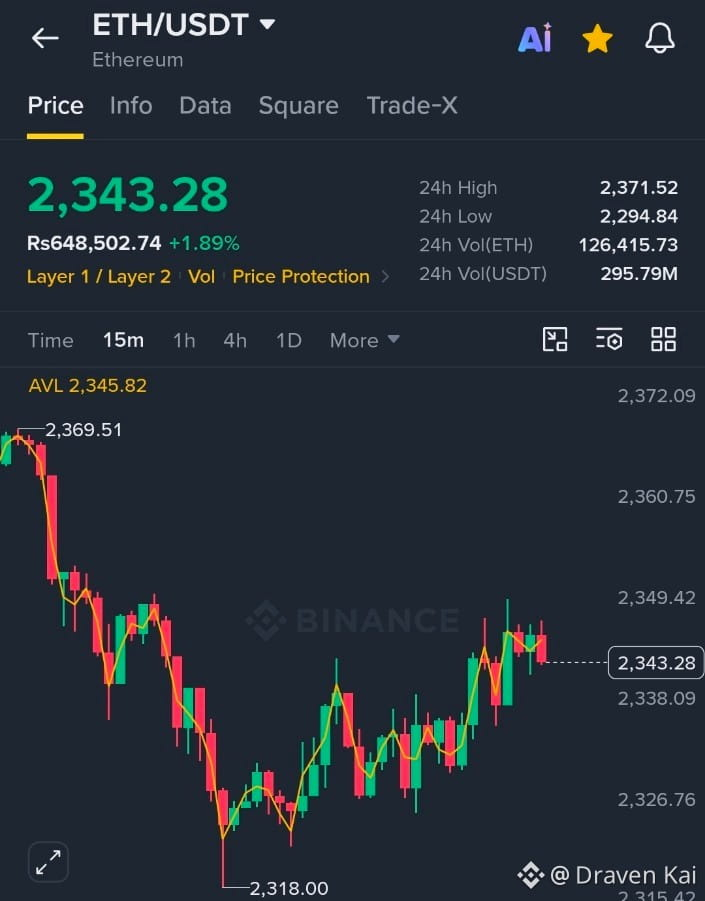
EP: 2340–2344
TP1: 2350
TP2: 2360
TP3: 2369
SL: 2334
Technical Analysis:
ETH is recovering from the 2318 support zone, forming higher lows and showing renewed bullish momentum on the 15M chart. Price is consolidating near 2343, with resistance at 2349 as the key breakout level. A confirmed break above resistance could trigger further upside toward 2360–2369. Maintain disciplined risk management and avoid chasing the breakout.
$ETH
{spot}(ETHUSDT)
$ETH
VIP SIGNAL | LONG
EP: 2340–2344
TP1: 2350
TP2: 2360
TP3: 2369
SL: 2334
Technical Analysis:
ETH is recovering from the 2318 support zone, forming higher lows and showing renewed bullish momentum on the 15M chart. Price is consolidating near 2343, with resistance at 2349 as the key breakout level. A confirmed break above resistance could trigger further upside toward 2360–2369. Maintain disciplined risk management and avoid chasing the breakout.
$ETH
VIP SIGNAL | LONG
EP: 2340–2344
TP1: 2350
TP2: 2360
TP3: 2369
SL: 2334
Technical Analysis:
ETH is recovering from the 2318 support zone, forming higher lows and showing renewed bullish momentum on the 15M chart. Price is consolidating near 2343, with resistance at 2349 as the key breakout level. A confirmed break above resistance could trigger further upside toward 2360–2369. Maintain disciplined risk management and avoid chasing the breakout.
$ETH
116
·
--
Bullish
$BTC
VIP SIGNAL | BTC/USDT
Bias: LONG — Pullback Entry
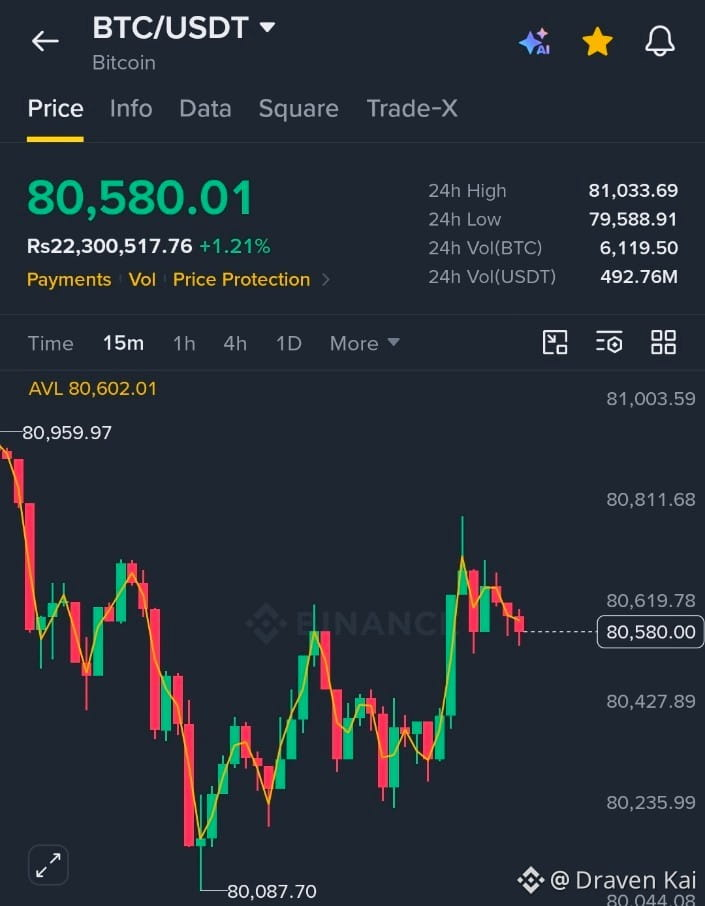
BTC has rebounded strongly from the $80,087 support zone and pushed toward $80,800 resistance. Price is now consolidating near $80,580, with short-term momentum cooling. A hold above $80,450 could fuel another move higher.
EP: $80,500 – $80,580
TP1: $80,620
TP2: $80,800
TP3: $81,000
SL: $80,380
Execution: Maintain disciplined risk management. Invalidation below support cancels the bullish setup.
$BTC
{spot}(BTCUSDT)
$BTC
VIP SIGNAL | BTC/USDT
Bias: LONG — Pullback Entry
BTC has rebounded strongly from the $80,087 support zone and pushed toward $80,800 resistance. Price is now consolidating near $80,580, with short-term momentum cooling. A hold above $80,450 could fuel another move higher.
EP: $80,500 – $80,580
TP1: $80,620
TP2: $80,800
TP3: $81,000
SL: $80,380
Execution: Maintain disciplined risk management. Invalidation below support cancels the bullish setup.
$BTC
VIP SIGNAL | BTC/USDT
Bias: LONG — Pullback Entry
BTC has rebounded strongly from the $80,087 support zone and pushed toward $80,800 resistance. Price is now consolidating near $80,580, with short-term momentum cooling. A hold above $80,450 could fuel another move higher.
EP: $80,500 – $80,580
TP1: $80,620
TP2: $80,800
TP3: $81,000
SL: $80,380
Execution: Maintain disciplined risk management. Invalidation below support cancels the bullish setup.
$BTC
252
·
--
Bullish
$BNB
VIP SIGNAL | BNB/USDT
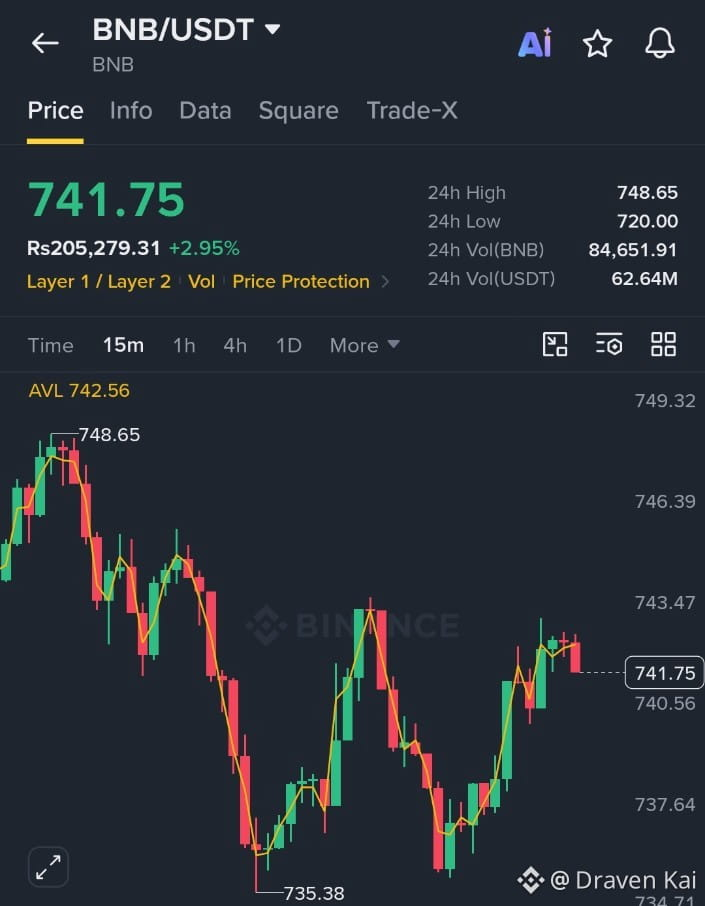
EP: 741.00–742.00
TP1: 743.50
TP2: 746.00
TP3: 748.50
SL: 738.80
Technical Analysis: BNB is recovering from the 735.38 swing low, showing short-term bullish momentum. Price is consolidating near 742 resistance after a strong rebound. A confirmed breakout above 743.50 could trigger continuation toward 746.00 and 748.50. Failure to hold the 740 zone weakens the setup.
Execution: Long only with confirmation and strict risk management.
$BNB
{spot}(BNBUSDT)
$BNB
VIP SIGNAL | BNB/USDT
EP: 741.00–742.00
TP1: 743.50
TP2: 746.00
TP3: 748.50
SL: 738.80
Technical Analysis: BNB is recovering from the 735.38 swing low, showing short-term bullish momentum. Price is consolidating near 742 resistance after a strong rebound. A confirmed breakout above 743.50 could trigger continuation toward 746.00 and 748.50. Failure to hold the 740 zone weakens the setup.
Execution: Long only with confirmation and strict risk management.
$BNB
VIP SIGNAL | BNB/USDT
EP: 741.00–742.00
TP1: 743.50
TP2: 746.00
TP3: 748.50
SL: 738.80
Technical Analysis: BNB is recovering from the 735.38 swing low, showing short-term bullish momentum. Price is consolidating near 742 resistance after a strong rebound. A confirmed breakout above 743.50 could trigger continuation toward 746.00 and 748.50. Failure to hold the 740 zone weakens the setup.
Execution: Long only with confirmation and strict risk management.
$BNB
127
·
--
Bearish
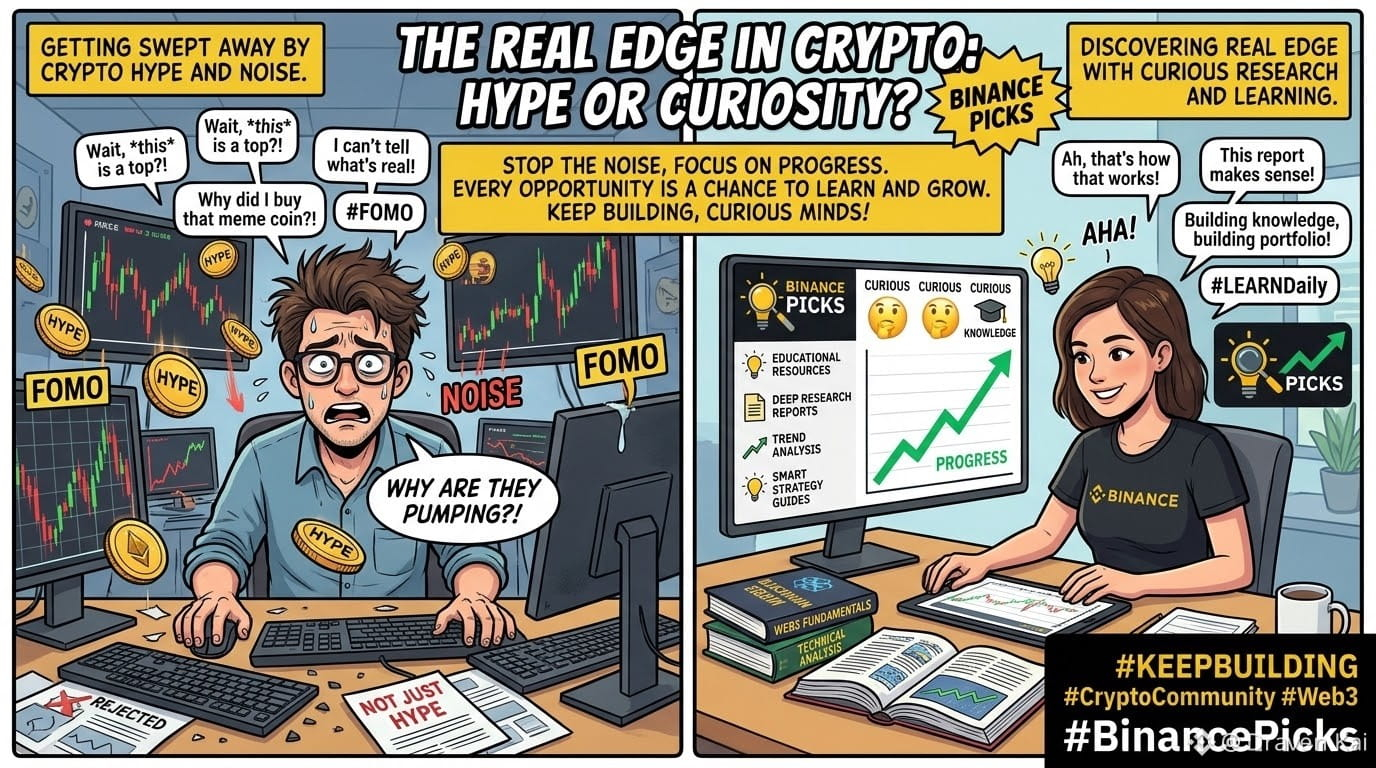
👀 In crypto, the real edge comes from curiosity, not just hype! 🚀🔥
Every new opportunity is a chance to discover something valuable, sharpen your strategy, and grow your knowledge. 💡
With Binance Picks, stay curious, keep exploring, and focus on progress over noise. The market keeps changing, and those who keep learning stay ready for what’s next. 💛📈
Explore smart. Learn daily. Build consistently. 🌟
#BinancePick
$STEEM
{future}(STEEMUSDT)
$ZEC
{future}(ZECUSDT)
👀 In crypto, the real edge comes from curiosity, not just hype! 🚀🔥
Every new opportunity is a chance to discover something valuable, sharpen your strategy, and grow your knowledge. 💡
With Binance Picks, stay curious, keep exploring, and focus on progress over noise. The market keeps changing, and those who keep learning stay ready for what’s next. 💛📈
Explore smart. Learn daily. Build consistently. 🌟
#BinancePick
$STEEM
$ZEC
Every new opportunity is a chance to discover something valuable, sharpen your strategy, and grow your knowledge. 💡
With Binance Picks, stay curious, keep exploring, and focus on progress over noise. The market keeps changing, and those who keep learning stay ready for what’s next. 💛📈
Explore smart. Learn daily. Build consistently. 🌟
#BinancePick
$STEEM
$ZEC
1
4
563
·
--
Bearish
$BTC
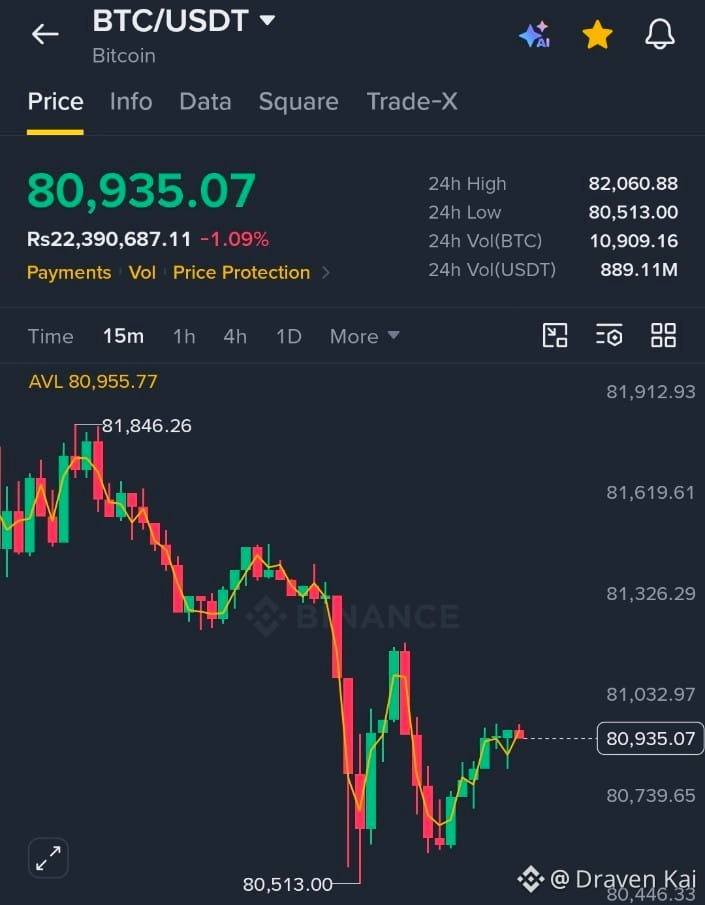
$BTC /USDT — VIP SIGNAL
Direction: SHORT
EP: 80,930–81,000
TP1: 80,740
TP2: 80,600
TP3: 80,515
SL: 81,150
Technical Analysis: BTC remains under bearish pressure on the 15m timeframe, with lower highs and a sharp breakdown confirming seller dominance. The current recovery is approaching resistance, where rejection could trigger another move toward the 80,515 support zone.
Risk Management: Wait for bearish confirmation before entry. Protect capital and avoid overleveraging.
$BTC
{spot}(BTCUSDT)
$BTC
$BTC /USDT — VIP SIGNAL
Direction: SHORT
EP: 80,930–81,000
TP1: 80,740
TP2: 80,600
TP3: 80,515
SL: 81,150
Technical Analysis: BTC remains under bearish pressure on the 15m timeframe, with lower highs and a sharp breakdown confirming seller dominance. The current recovery is approaching resistance, where rejection could trigger another move toward the 80,515 support zone.
Risk Management: Wait for bearish confirmation before entry. Protect capital and avoid overleveraging.
$BTC
$BTC /USDT — VIP SIGNAL
Direction: SHORT
EP: 80,930–81,000
TP1: 80,740
TP2: 80,600
TP3: 80,515
SL: 81,150
Technical Analysis: BTC remains under bearish pressure on the 15m timeframe, with lower highs and a sharp breakdown confirming seller dominance. The current recovery is approaching resistance, where rejection could trigger another move toward the 80,515 support zone.
Risk Management: Wait for bearish confirmation before entry. Protect capital and avoid overleveraging.
$BTC
142
·
--
Bullish
$BNB
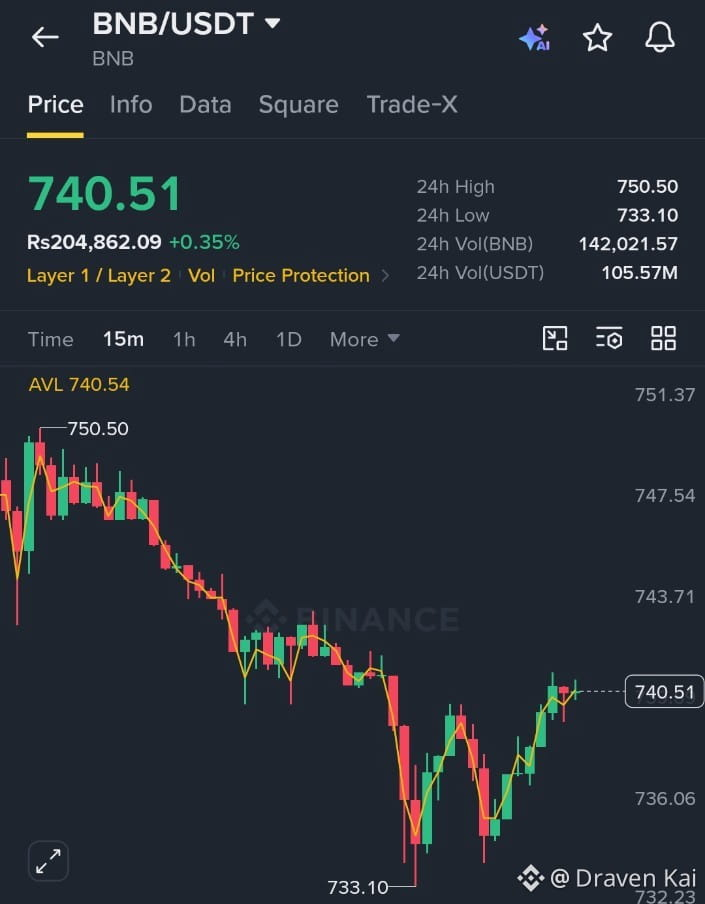
VIP SIGNAL | BNB/USDT
Bias: SHORT-TERM BULLISH RECOVERY
BNB is rebounding from the 733.10 support zone after a sharp sell-off. Buyers are regaining momentum, with price reclaiming 740.00. A sustained hold above this level could drive a move toward nearby resistance.
EP: 739.80–740.60
TP1: 742.00
TP2: 744.00
TP3: 747.00
SL: 737.80
Trade Setup: Enter only with confirmation that support holds. Secure partial profits at TP1 and protect capital with disciplined risk management.
$BNB
{spot}(BNBUSDT)
$BNB
VIP SIGNAL | BNB/USDT
Bias: SHORT-TERM BULLISH RECOVERY
BNB is rebounding from the 733.10 support zone after a sharp sell-off. Buyers are regaining momentum, with price reclaiming 740.00. A sustained hold above this level could drive a move toward nearby resistance.
EP: 739.80–740.60
TP1: 742.00
TP2: 744.00
TP3: 747.00
SL: 737.80
Trade Setup: Enter only with confirmation that support holds. Secure partial profits at TP1 and protect capital with disciplined risk management.
$BNB
VIP SIGNAL | BNB/USDT
Bias: SHORT-TERM BULLISH RECOVERY
BNB is rebounding from the 733.10 support zone after a sharp sell-off. Buyers are regaining momentum, with price reclaiming 740.00. A sustained hold above this level could drive a move toward nearby resistance.
EP: 739.80–740.60
TP1: 742.00
TP2: 744.00
TP3: 747.00
SL: 737.80
Trade Setup: Enter only with confirmation that support holds. Secure partial profits at TP1 and protect capital with disciplined risk management.
$BNB
150
·
--

Article
🎃 A Night of Halloween Magic, Mystery, and Crypto Dreams with Binance 👻Halloween has always been one of the most exciting times of the year for people who love creativity, imagination, mystery, and a little bit of spooky fun. 🎃👻 For me, Halloween is more than just scary costumes, pumpkins, and decorations. It is a celebration of imagination, happiness, unforgettable stories, and the wonderful feeling of sharing something special with a community. This year, I want to celebrate the Halloween spirit by bringing together creativity, spooky vibes, and my enthusiasm for Binance!
🎃 The Magic of Halloween Night
Imagine a dark evening filled with glowing pumpkins, mysterious shadows, orange lights, and the sound of the wind blowing through the trees. The streets look different, the atmosphere feels magical, and every little shadow seems to hide a mysterious story. Some people dress up as ghosts, witches, vampires, or monsters, while others decorate their homes with pumpkins, spider webs, and colorful lights.
What makes Halloween so special is that everyone can express their imagination in their own unique way. You do not need an expensive costume or a big party to enjoy the occasion. Sometimes, a creative idea, a few decorations, and a good story are enough to make the night unforgettable.
If I could design my perfect Halloween celebration, I would decorate a cozy space with glowing orange pumpkins, tiny lights, spooky paper bats, and a mysterious background. I would create a fun Halloween atmosphere, take creative photographs, and share the excitement with friends and online communities.
👻 A Spooky Story: The Mysterious Pumpkin
One Halloween evening, imagine walking down a quiet street where every house is decorated with glowing pumpkins. Suddenly, you notice one unusual pumpkin sitting outside an old house. Unlike the others, it has a strange golden glow and a mysterious symbol carved into its surface.
Curiosity makes you walk closer. As you approach, the lights around the house begin to flicker. A cold breeze passes by, and you hear a whisper: “The greatest treasure is not always what you expect.”
You look around, but nobody is there.
For a moment, the street feels completely silent. Then you notice a small envelope beside the pumpkin. Inside it is a message reminding you that creativity, courage, and kindness are more valuable than anything hidden in the darkness.
Suddenly, the spooky atmosphere no longer feels frightening. It feels magical. You smile, take a photograph of the glowing pumpkin, and continue your Halloween adventure with a new appreciation for the unexpected surprises life can bring.
Perhaps the best Halloween stories are not really about ghosts or monsters. They are about curiosity, imagination, and the excitement of discovering something new.
🟡 Celebrating Halloween with Binance
This Halloween, I am excited to bring a little extra creativity to the Binance community. Binance is a familiar name in the world of cryptocurrency, and Binance Square gives community members a place to share ideas, stories, creativity, and experiences.
For this campaign, I imagine combining the golden and black colors associated with Binance with the traditional orange and purple colors of Halloween. A glowing pumpkin, spooky decorations, and a clearly visible Binance logo can create a unique photograph that connects the Halloween spirit with the crypto community.
Just as Halloween encourages people to think creatively, the crypto world encourages people to learn, explore new ideas, and understand emerging technologies. Both worlds can be full of surprises. The important thing is to stay curious, keep learning, and make thoughtful decisions.
For me, participating in this campaign is an opportunity to express creativity, connect with other community members, and celebrate a fun seasonal event. Winning a reward would certainly be exciting, but sharing an original idea and participating positively in the community are valuable experiences too.
🦇 The Real Spirit of Halloween
Halloween reminds us that life becomes more interesting when we allow ourselves to be creative. A simple pumpkin can become a work of art, an ordinary photograph can tell an extraordinary story, and a community post can bring people together from different places around the world.
I believe the best celebrations are the ones that spread happiness, encourage originality, and create positive memories. Whether someone celebrates Halloween with an elaborate costume, a homemade decoration, a spooky story, or a simple photograph, every creative contribution can make the occasion more enjoyable.
As members of the Binance community, we can bring the same spirit of creativity and respect to our online interactions. We can share original content, support other creators, exchange ideas, and make our community more welcoming and engaging.
🎃 My Halloween Wish
My wish this Halloween is simple: more creativity, more learning, more positive connections, and more unforgettable moments. May every glowing pumpkin remind us to keep our imagination alive, every spooky story inspire a smile, and every new opportunity encourage us to explore something different.
I am happy to celebrate this Halloween with Binance and the Binance Square community. Let's make this season memorable with original ideas, creative photographs, and stories that bring a little magic to everyone's feed.
Remember, the real treasure of Halloween is not hidden in a haunted house or beneath a mysterious pumpkin. It is found in our imagination, our willingness to share, and the connections we build with others.
Happy Halloween, Binance community! May your night be spooky, your creativity shine brightly, and your crypto journey be filled with learning and exciting possibilities! 🎃🟡👻
#SEAPumpkinFrenzy
🎃 A Night of Halloween Magic, Mystery, and Crypto Dreams with Binance 👻
Halloween has always been one of the most exciting times of the year for people who love creativity, imagination, mystery, and a little bit of spooky fun. 🎃👻 For me, Halloween is more than just scary costumes, pumpkins, and decorations. It is a celebration of imagination, happiness, unforgettable stories, and the wonderful feeling of sharing something special with a community. This year, I want to celebrate the Halloween spirit by bringing together creativity, spooky vibes, and my enthusiasm for Binance!
🎃 The Magic of Halloween Night
Imagine a dark evening filled with glowing pumpkins, mysterious shadows, orange lights, and the sound of the wind blowing through the trees. The streets look different, the atmosphere feels magical, and every little shadow seems to hide a mysterious story. Some people dress up as ghosts, witches, vampires, or monsters, while others decorate their homes with pumpkins, spider webs, and colorful lights.
What makes Halloween so special is that everyone can express their imagination in their own unique way. You do not need an expensive costume or a big party to enjoy the occasion. Sometimes, a creative idea, a few decorations, and a good story are enough to make the night unforgettable.
If I could design my perfect Halloween celebration, I would decorate a cozy space with glowing orange pumpkins, tiny lights, spooky paper bats, and a mysterious background. I would create a fun Halloween atmosphere, take creative photographs, and share the excitement with friends and online communities.
👻 A Spooky Story: The Mysterious Pumpkin
One Halloween evening, imagine walking down a quiet street where every house is decorated with glowing pumpkins. Suddenly, you notice one unusual pumpkin sitting outside an old house. Unlike the others, it has a strange golden glow and a mysterious symbol carved into its surface.
Curiosity makes you walk closer. As you approach, the lights around the house begin to flicker. A cold breeze passes by, and you hear a whisper: “The greatest treasure is not always what you expect.”
You look around, but nobody is there.
For a moment, the street feels completely silent. Then you notice a small envelope beside the pumpkin. Inside it is a message reminding you that creativity, courage, and kindness are more valuable than anything hidden in the darkness.
Suddenly, the spooky atmosphere no longer feels frightening. It feels magical. You smile, take a photograph of the glowing pumpkin, and continue your Halloween adventure with a new appreciation for the unexpected surprises life can bring.
Perhaps the best Halloween stories are not really about ghosts or monsters. They are about curiosity, imagination, and the excitement of discovering something new.
🟡 Celebrating Halloween with Binance
This Halloween, I am excited to bring a little extra creativity to the Binance community. Binance is a familiar name in the world of cryptocurrency, and Binance Square gives community members a place to share ideas, stories, creativity, and experiences.
For this campaign, I imagine combining the golden and black colors associated with Binance with the traditional orange and purple colors of Halloween. A glowing pumpkin, spooky decorations, and a clearly visible Binance logo can create a unique photograph that connects the Halloween spirit with the crypto community.
Just as Halloween encourages people to think creatively, the crypto world encourages people to learn, explore new ideas, and understand emerging technologies. Both worlds can be full of surprises. The important thing is to stay curious, keep learning, and make thoughtful decisions.
For me, participating in this campaign is an opportunity to express creativity, connect with other community members, and celebrate a fun seasonal event. Winning a reward would certainly be exciting, but sharing an original idea and participating positively in the community are valuable experiences too.
🦇 The Real Spirit of Halloween
Halloween reminds us that life becomes more interesting when we allow ourselves to be creative. A simple pumpkin can become a work of art, an ordinary photograph can tell an extraordinary story, and a community post can bring people together from different places around the world.
I believe the best celebrations are the ones that spread happiness, encourage originality, and create positive memories. Whether someone celebrates Halloween with an elaborate costume, a homemade decoration, a spooky story, or a simple photograph, every creative contribution can make the occasion more enjoyable.
As members of the Binance community, we can bring the same spirit of creativity and respect to our online interactions. We can share original content, support other creators, exchange ideas, and make our community more welcoming and engaging.
🎃 My Halloween Wish
My wish this Halloween is simple: more creativity, more learning, more positive connections, and more unforgettable moments. May every glowing pumpkin remind us to keep our imagination alive, every spooky story inspire a smile, and every new opportunity encourage us to explore something different.
I am happy to celebrate this Halloween with Binance and the Binance Square community. Let's make this season memorable with original ideas, creative photographs, and stories that bring a little magic to everyone's feed.
Remember, the real treasure of Halloween is not hidden in a haunted house or beneath a mysterious pumpkin. It is found in our imagination, our willingness to share, and the connections we build with others.
Happy Halloween, Binance community! May your night be spooky, your creativity shine brightly, and your crypto journey be filled with learning and exciting possibilities! 🎃🟡👻
#SEAPumpkinFrenzy
🎃 The Magic of Halloween Night
Imagine a dark evening filled with glowing pumpkins, mysterious shadows, orange lights, and the sound of the wind blowing through the trees. The streets look different, the atmosphere feels magical, and every little shadow seems to hide a mysterious story. Some people dress up as ghosts, witches, vampires, or monsters, while others decorate their homes with pumpkins, spider webs, and colorful lights.
What makes Halloween so special is that everyone can express their imagination in their own unique way. You do not need an expensive costume or a big party to enjoy the occasion. Sometimes, a creative idea, a few decorations, and a good story are enough to make the night unforgettable.
If I could design my perfect Halloween celebration, I would decorate a cozy space with glowing orange pumpkins, tiny lights, spooky paper bats, and a mysterious background. I would create a fun Halloween atmosphere, take creative photographs, and share the excitement with friends and online communities.
👻 A Spooky Story: The Mysterious Pumpkin
One Halloween evening, imagine walking down a quiet street where every house is decorated with glowing pumpkins. Suddenly, you notice one unusual pumpkin sitting outside an old house. Unlike the others, it has a strange golden glow and a mysterious symbol carved into its surface.
Curiosity makes you walk closer. As you approach, the lights around the house begin to flicker. A cold breeze passes by, and you hear a whisper: “The greatest treasure is not always what you expect.”
You look around, but nobody is there.
For a moment, the street feels completely silent. Then you notice a small envelope beside the pumpkin. Inside it is a message reminding you that creativity, courage, and kindness are more valuable than anything hidden in the darkness.
Suddenly, the spooky atmosphere no longer feels frightening. It feels magical. You smile, take a photograph of the glowing pumpkin, and continue your Halloween adventure with a new appreciation for the unexpected surprises life can bring.
Perhaps the best Halloween stories are not really about ghosts or monsters. They are about curiosity, imagination, and the excitement of discovering something new.
🟡 Celebrating Halloween with Binance
This Halloween, I am excited to bring a little extra creativity to the Binance community. Binance is a familiar name in the world of cryptocurrency, and Binance Square gives community members a place to share ideas, stories, creativity, and experiences.
For this campaign, I imagine combining the golden and black colors associated with Binance with the traditional orange and purple colors of Halloween. A glowing pumpkin, spooky decorations, and a clearly visible Binance logo can create a unique photograph that connects the Halloween spirit with the crypto community.
Just as Halloween encourages people to think creatively, the crypto world encourages people to learn, explore new ideas, and understand emerging technologies. Both worlds can be full of surprises. The important thing is to stay curious, keep learning, and make thoughtful decisions.
For me, participating in this campaign is an opportunity to express creativity, connect with other community members, and celebrate a fun seasonal event. Winning a reward would certainly be exciting, but sharing an original idea and participating positively in the community are valuable experiences too.
🦇 The Real Spirit of Halloween
Halloween reminds us that life becomes more interesting when we allow ourselves to be creative. A simple pumpkin can become a work of art, an ordinary photograph can tell an extraordinary story, and a community post can bring people together from different places around the world.
I believe the best celebrations are the ones that spread happiness, encourage originality, and create positive memories. Whether someone celebrates Halloween with an elaborate costume, a homemade decoration, a spooky story, or a simple photograph, every creative contribution can make the occasion more enjoyable.
As members of the Binance community, we can bring the same spirit of creativity and respect to our online interactions. We can share original content, support other creators, exchange ideas, and make our community more welcoming and engaging.
🎃 My Halloween Wish
My wish this Halloween is simple: more creativity, more learning, more positive connections, and more unforgettable moments. May every glowing pumpkin remind us to keep our imagination alive, every spooky story inspire a smile, and every new opportunity encourage us to explore something different.
I am happy to celebrate this Halloween with Binance and the Binance Square community. Let's make this season memorable with original ideas, creative photographs, and stories that bring a little magic to everyone's feed.
Remember, the real treasure of Halloween is not hidden in a haunted house or beneath a mysterious pumpkin. It is found in our imagination, our willingness to share, and the connections we build with others.
Happy Halloween, Binance community! May your night be spooky, your creativity shine brightly, and your crypto journey be filled with learning and exciting possibilities! 🎃🟡👻
#SEAPumpkinFrenzy
17
14
294
·
--
Bearish
$SOL
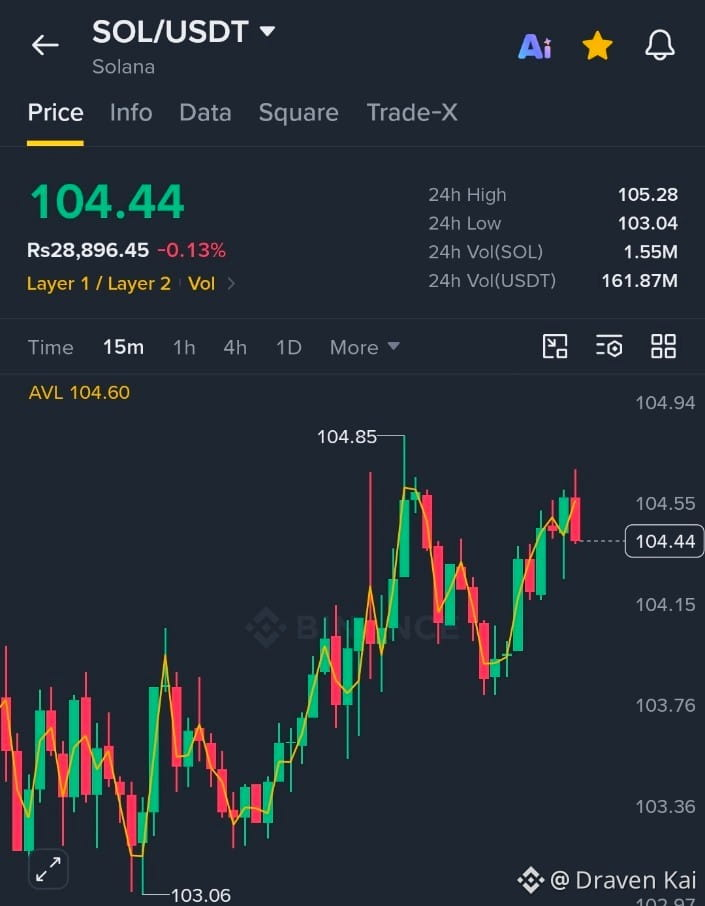
SOL/USDT — VIP SIGNAL | LONG
Technical Analysis: SOL is showing bullish recovery momentum with higher lows and renewed buying pressure. Price is consolidating near 104.44, with resistance at 104.55–104.85. A breakout above this zone could trigger the next upward move.
EP: 104.35–104.45
TP1: 104.60
TP2: 104.85
TP3: 105.20
SL: 104.05
Risk Management: Maintain disciplined position sizing. Secure partial profits at each target and watch for a confirmed breakout.
$SOL
{spot}(SOLUSDT)
$SOL
SOL/USDT — VIP SIGNAL | LONG
Technical Analysis: SOL is showing bullish recovery momentum with higher lows and renewed buying pressure. Price is consolidating near 104.44, with resistance at 104.55–104.85. A breakout above this zone could trigger the next upward move.
EP: 104.35–104.45
TP1: 104.60
TP2: 104.85
TP3: 105.20
SL: 104.05
Risk Management: Maintain disciplined position sizing. Secure partial profits at each target and watch for a confirmed breakout.
$SOL
SOL/USDT — VIP SIGNAL | LONG
Technical Analysis: SOL is showing bullish recovery momentum with higher lows and renewed buying pressure. Price is consolidating near 104.44, with resistance at 104.55–104.85. A breakout above this zone could trigger the next upward move.
EP: 104.35–104.45
TP1: 104.60
TP2: 104.85
TP3: 105.20
SL: 104.05
Risk Management: Maintain disciplined position sizing. Secure partial profits at each target and watch for a confirmed breakout.
$SOL
2
169
·
--
Bearish
$BTC
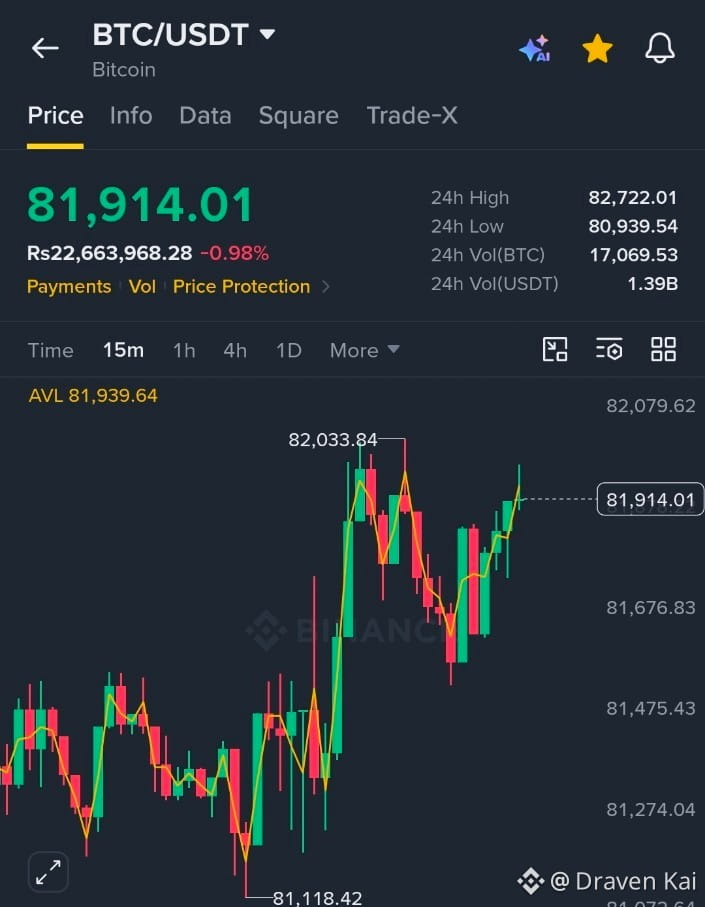
VIP SIGNAL | LONG
Technical Analysis: BTC is showing strong bullish recovery on the 15M chart, forming higher lows after bouncing from 81,118. Price is approaching the 82,033 resistance zone, with momentum favoring another upside test if buyers maintain control.
EP: 81,850–81,950
TP1: 82,050
TP2: 82,250
TP3: 82,500
SL: 81,600
Execution: Maintain disciplined risk management. A confirmed breakout above 82,033 strengthens the bullish continuation setup; rejection at resistance may trigger a pullback.
$BTC
{spot}(BTCUSDT)
$BTC
VIP SIGNAL | LONG
Technical Analysis: BTC is showing strong bullish recovery on the 15M chart, forming higher lows after bouncing from 81,118. Price is approaching the 82,033 resistance zone, with momentum favoring another upside test if buyers maintain control.
EP: 81,850–81,950
TP1: 82,050
TP2: 82,250
TP3: 82,500
SL: 81,600
Execution: Maintain disciplined risk management. A confirmed breakout above 82,033 strengthens the bullish continuation setup; rejection at resistance may trigger a pullback.
$BTC
VIP SIGNAL | LONG
Technical Analysis: BTC is showing strong bullish recovery on the 15M chart, forming higher lows after bouncing from 81,118. Price is approaching the 82,033 resistance zone, with momentum favoring another upside test if buyers maintain control.
EP: 81,850–81,950
TP1: 82,050
TP2: 82,250
TP3: 82,500
SL: 81,600
Execution: Maintain disciplined risk management. A confirmed breakout above 82,033 strengthens the bullish continuation setup; rejection at resistance may trigger a pullback.
$BTC
364
·
--
Bullish
$BMT
VIP SIGNAL | LONG SETUP
EP: 0.02850–0.02880
TP1: 0.02940
TP2: 0.03015
TP3: 0.03100
SL: 0.02745
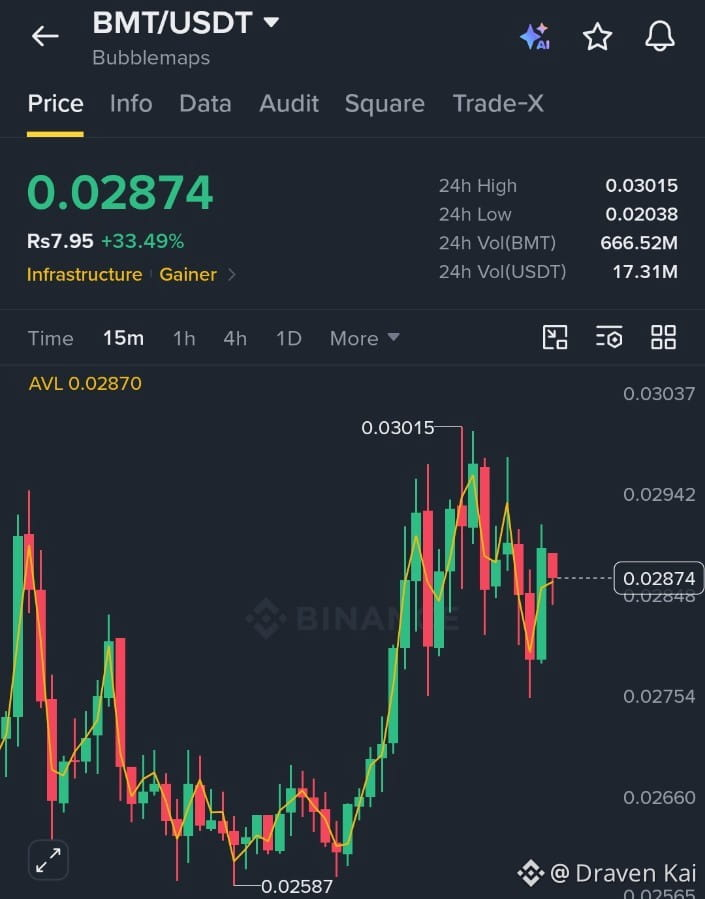
Technical Analysis: BMT is showing strong bullish momentum after a sharp breakout from the 0.02587 support zone. Price is consolidating near 0.02874, with buyers defending the recent pullback. A clean breakout above 0.03015 could trigger the next bullish expansion.
Execution: Enter within the defined zone, manage risk strictly, and secure partial profits at each target. A breakdown below support invalidates the setup.
$BMT
{future}(BMTUSDT)
$BMT
VIP SIGNAL | LONG SETUP
EP: 0.02850–0.02880
TP1: 0.02940
TP2: 0.03015
TP3: 0.03100
SL: 0.02745
Technical Analysis: BMT is showing strong bullish momentum after a sharp breakout from the 0.02587 support zone. Price is consolidating near 0.02874, with buyers defending the recent pullback. A clean breakout above 0.03015 could trigger the next bullish expansion.
Execution: Enter within the defined zone, manage risk strictly, and secure partial profits at each target. A breakdown below support invalidates the setup.
$BMT
VIP SIGNAL | LONG SETUP
EP: 0.02850–0.02880
TP1: 0.02940
TP2: 0.03015
TP3: 0.03100
SL: 0.02745
Technical Analysis: BMT is showing strong bullish momentum after a sharp breakout from the 0.02587 support zone. Price is consolidating near 0.02874, with buyers defending the recent pullback. A clean breakout above 0.03015 could trigger the next bullish expansion.
Execution: Enter within the defined zone, manage risk strictly, and secure partial profits at each target. A breakdown below support invalidates the setup.
$BMT
1
295
·
--
Bearish
$NEAR /USDT — SHORT SETUP
Direction: SHORT
EP: 4.950–4.980
TP1: 4.920
TP2: 4.890
TP3: 4.850
SL: 5.045
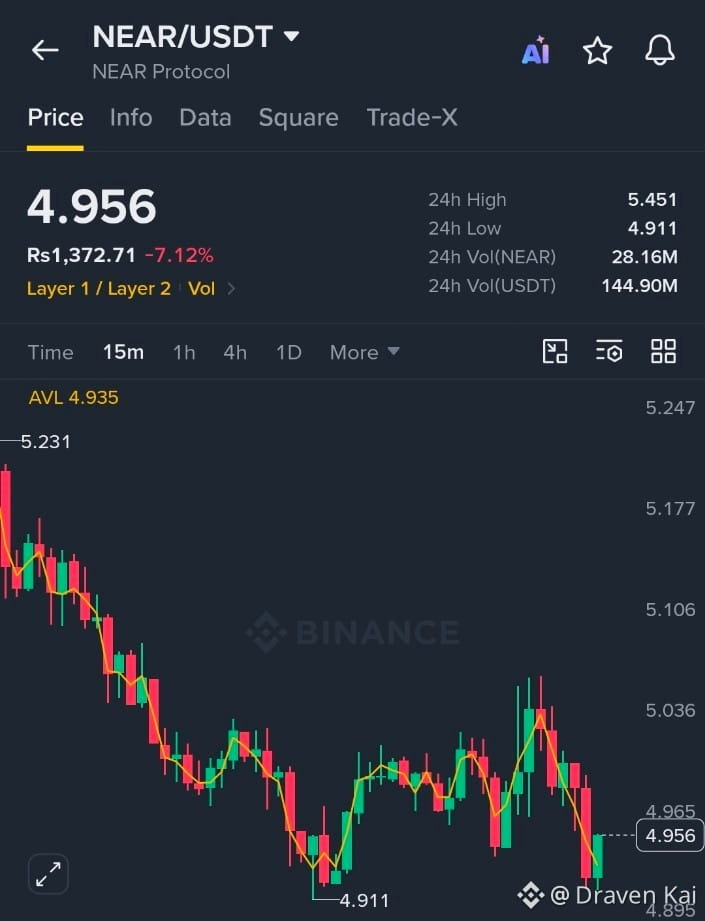
Technical Analysis: NEAR remains under bearish pressure on the 15m timeframe, with lower highs and renewed selling momentum. Price is attempting a minor rebound near 4.911 support, but resistance around 4.980–5.035 remains critical. A rejection from the entry zone favors continuation toward lower support levels.
Risk Management: Wait for bearish confirmation before entry. Protect capital with a strict stop loss.
$NEAR
{spot}(NEARUSDT)
$NEAR /USDT — SHORT SETUP
Direction: SHORT
EP: 4.950–4.980
TP1: 4.920
TP2: 4.890
TP3: 4.850
SL: 5.045
Technical Analysis: NEAR remains under bearish pressure on the 15m timeframe, with lower highs and renewed selling momentum. Price is attempting a minor rebound near 4.911 support, but resistance around 4.980–5.035 remains critical. A rejection from the entry zone favors continuation toward lower support levels.
Risk Management: Wait for bearish confirmation before entry. Protect capital with a strict stop loss.
$NEAR
Direction: SHORT
EP: 4.950–4.980
TP1: 4.920
TP2: 4.890
TP3: 4.850
SL: 5.045
Technical Analysis: NEAR remains under bearish pressure on the 15m timeframe, with lower highs and renewed selling momentum. Price is attempting a minor rebound near 4.911 support, but resistance around 4.980–5.035 remains critical. A rejection from the entry zone favors continuation toward lower support levels.
Risk Management: Wait for bearish confirmation before entry. Protect capital with a strict stop loss.
$NEAR
1
466
·
--
Bearish
$BTC
VIP SIGNAL | SHORT
Current Price: 81,600
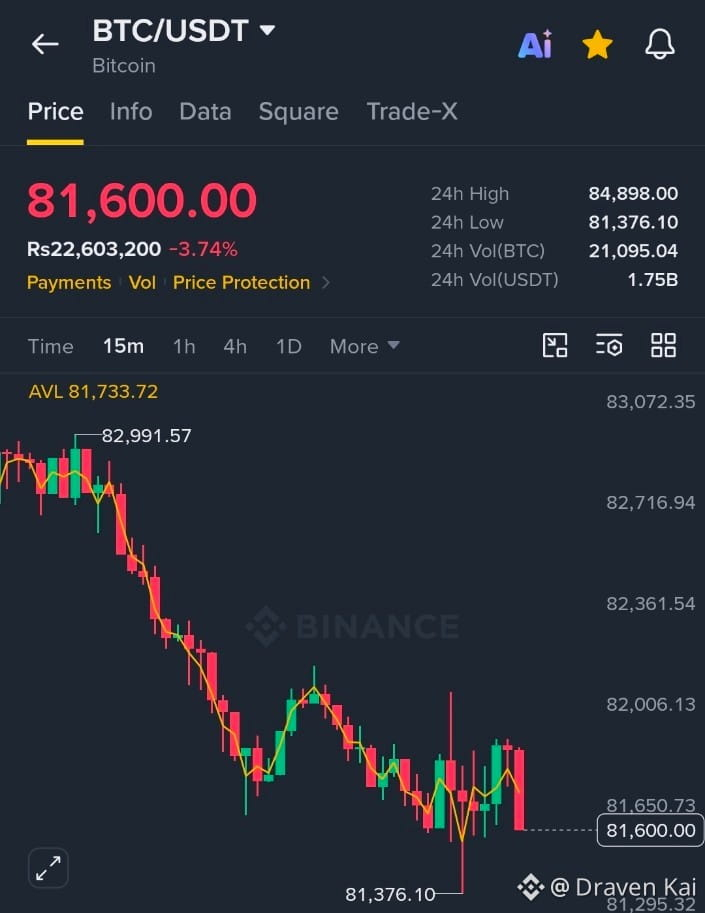
Technical Analysis: BTC is showing strong bearish momentum on the 15M timeframe, with consistent lower highs and lower lows. Price is trading below the average line, and the latest bearish candle signals renewed selling pressure. A break below 81,376 could accelerate downside momentum.
EP (Entry Price): 81,550–81,650
TP1: 81,376
TP2: 81,295
TP3: 81,100
SL (Stop Loss): 81,950
Execution: Sell on a confirmed breakdown or a weak retest of resistance. Maintain strict risk management and avoid chasing extended candles.
$BTC
{spot}(BTCUSDT)
$BTC
VIP SIGNAL | SHORT
Current Price: 81,600
Technical Analysis: BTC is showing strong bearish momentum on the 15M timeframe, with consistent lower highs and lower lows. Price is trading below the average line, and the latest bearish candle signals renewed selling pressure. A break below 81,376 could accelerate downside momentum.
EP (Entry Price): 81,550–81,650
TP1: 81,376
TP2: 81,295
TP3: 81,100
SL (Stop Loss): 81,950
Execution: Sell on a confirmed breakdown or a weak retest of resistance. Maintain strict risk management and avoid chasing extended candles.
$BTC
VIP SIGNAL | SHORT
Current Price: 81,600
Technical Analysis: BTC is showing strong bearish momentum on the 15M timeframe, with consistent lower highs and lower lows. Price is trading below the average line, and the latest bearish candle signals renewed selling pressure. A break below 81,376 could accelerate downside momentum.
EP (Entry Price): 81,550–81,650
TP1: 81,376
TP2: 81,295
TP3: 81,100
SL (Stop Loss): 81,950
Execution: Sell on a confirmed breakdown or a weak retest of resistance. Maintain strict risk management and avoid chasing extended candles.
$BTC
1
497
·
--
Bullish
$ALT
VIP SIGNAL | ALT/USDT
EP: 0.01175–0.01190
TP1: 0.01220
TP2: 0.01265
TP3: 0.01320
SL: 0.01145
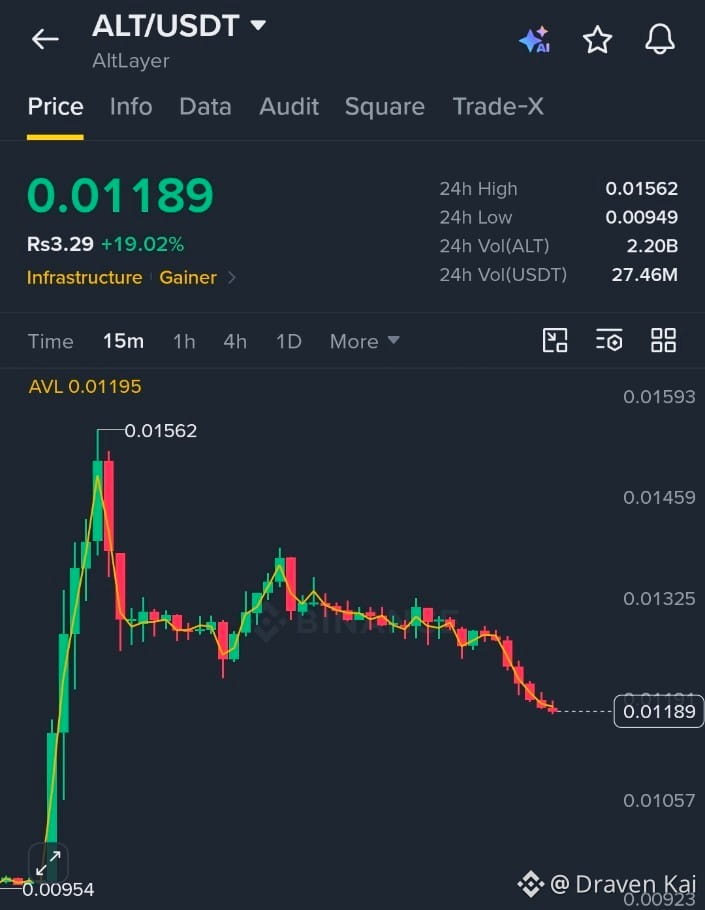
Technical Analysis: ALT is testing a critical support zone after a sustained 15-minute pullback. Momentum remains bearish in the short term, but a confirmed hold above 0.01175 could trigger a relief bounce toward the marked resistance levels. Entry requires confirmation; a breakdown below support invalidates the setup.
Risk Management: Keep position size controlled and secure partial profits at each target. No confirmation, no trade.
$ALT
{spot}(ALTUSDT)
$ALT
VIP SIGNAL | ALT/USDT
EP: 0.01175–0.01190
TP1: 0.01220
TP2: 0.01265
TP3: 0.01320
SL: 0.01145
Technical Analysis: ALT is testing a critical support zone after a sustained 15-minute pullback. Momentum remains bearish in the short term, but a confirmed hold above 0.01175 could trigger a relief bounce toward the marked resistance levels. Entry requires confirmation; a breakdown below support invalidates the setup.
Risk Management: Keep position size controlled and secure partial profits at each target. No confirmation, no trade.
$ALT
VIP SIGNAL | ALT/USDT
EP: 0.01175–0.01190
TP1: 0.01220
TP2: 0.01265
TP3: 0.01320
SL: 0.01145
Technical Analysis: ALT is testing a critical support zone after a sustained 15-minute pullback. Momentum remains bearish in the short term, but a confirmed hold above 0.01175 could trigger a relief bounce toward the marked resistance levels. Entry requires confirmation; a breakdown below support invalidates the setup.
Risk Management: Keep position size controlled and secure partial profits at each target. No confirmation, no trade.
$ALT
1
281
·
--
Bullish
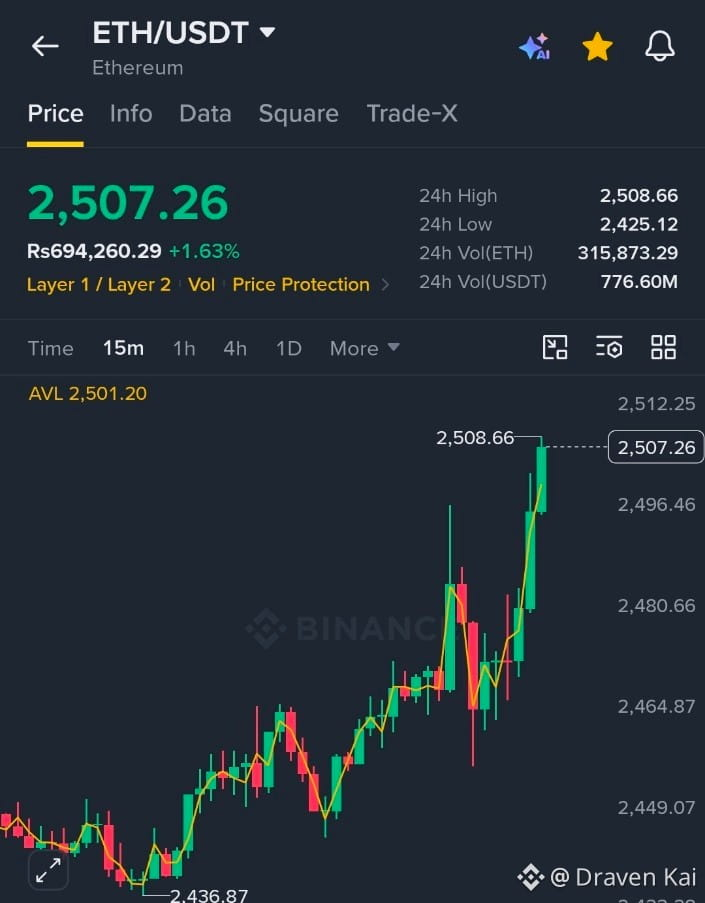
$ETH
VIP SIGNAL | LONG
EP: 2,498–2,503
TP1: 2,512
TP2: 2,525
TP3: 2,540
SL: 2,484
Technical Analysis:
ETH is showing strong bullish momentum on the 15-minute chart, printing higher highs with aggressive buying pressure. Price is testing the 24H high at 2,508.66. A confirmed breakout could extend the rally toward higher resistance levels.
Trade Plan: Enter on a controlled pullback or confirmed breakout retest. Avoid chasing extended candles. Maintain strict risk management.
$ETH
{spot}(ETHUSDT)
$ETH
VIP SIGNAL | LONG
EP: 2,498–2,503
TP1: 2,512
TP2: 2,525
TP3: 2,540
SL: 2,484
Technical Analysis:
ETH is showing strong bullish momentum on the 15-minute chart, printing higher highs with aggressive buying pressure. Price is testing the 24H high at 2,508.66. A confirmed breakout could extend the rally toward higher resistance levels.
Trade Plan: Enter on a controlled pullback or confirmed breakout retest. Avoid chasing extended candles. Maintain strict risk management.
$ETH
VIP SIGNAL | LONG
EP: 2,498–2,503
TP1: 2,512
TP2: 2,525
TP3: 2,540
SL: 2,484
Technical Analysis:
ETH is showing strong bullish momentum on the 15-minute chart, printing higher highs with aggressive buying pressure. Price is testing the 24H high at 2,508.66. A confirmed breakout could extend the rally toward higher resistance levels.
Trade Plan: Enter on a controlled pullback or confirmed breakout retest. Avoid chasing extended candles. Maintain strict risk management.
$ETH
1
85
·
--
Bearish
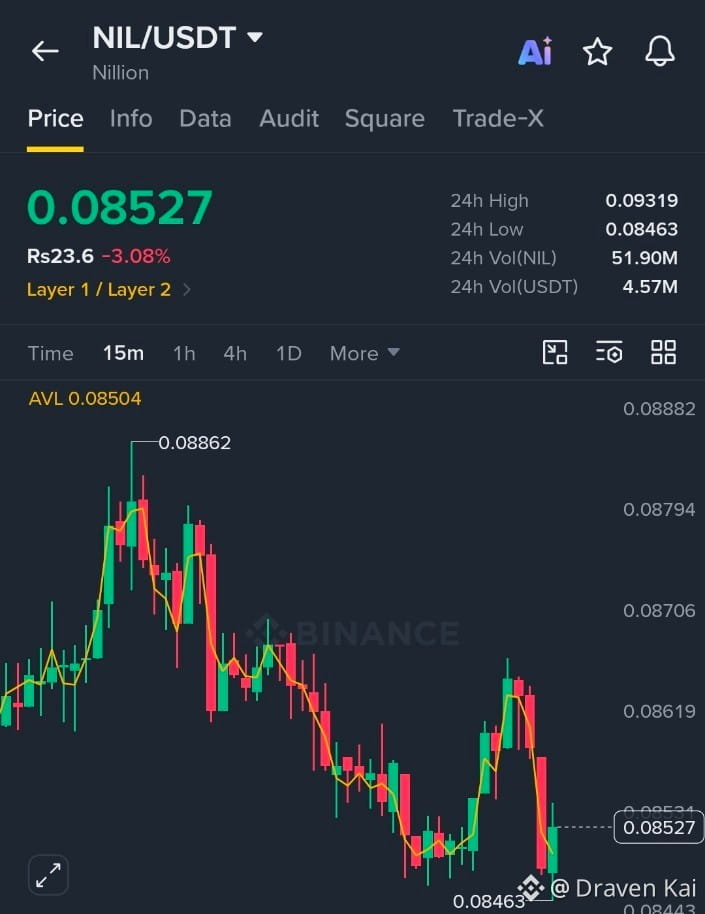
$NIL
$NIL /USDT — VIP TRADE SIGNAL
Bias: LONG | Rebound Setup
EP: 0.08520–0.08535
TP1: 0.08580
TP2: 0.08620
TP3: 0.08680
SL: 0.08450
Technical Analysis: NIL is attempting a rebound after sweeping the 0.08463 local low. Short-term recovery momentum is emerging, but resistance around 0.08580–0.08620 remains the key hurdle. A sustained move above this zone could accelerate bullish continuation.
Risk Management: Protect capital with a strict stop-loss. Confirm entry strength before execution.
$NIL
{spot}(NILUSDT)
$NIL
$NIL /USDT — VIP TRADE SIGNAL
Bias: LONG | Rebound Setup
EP: 0.08520–0.08535
TP1: 0.08580
TP2: 0.08620
TP3: 0.08680
SL: 0.08450
Technical Analysis: NIL is attempting a rebound after sweeping the 0.08463 local low. Short-term recovery momentum is emerging, but resistance around 0.08580–0.08620 remains the key hurdle. A sustained move above this zone could accelerate bullish continuation.
Risk Management: Protect capital with a strict stop-loss. Confirm entry strength before execution.
$NIL
$NIL /USDT — VIP TRADE SIGNAL
Bias: LONG | Rebound Setup
EP: 0.08520–0.08535
TP1: 0.08580
TP2: 0.08620
TP3: 0.08680
SL: 0.08450
Technical Analysis: NIL is attempting a rebound after sweeping the 0.08463 local low. Short-term recovery momentum is emerging, but resistance around 0.08580–0.08620 remains the key hurdle. A sustained move above this zone could accelerate bullish continuation.
Risk Management: Protect capital with a strict stop-loss. Confirm entry strength before execution.
$NIL
1
2
234
·
--
Bullish
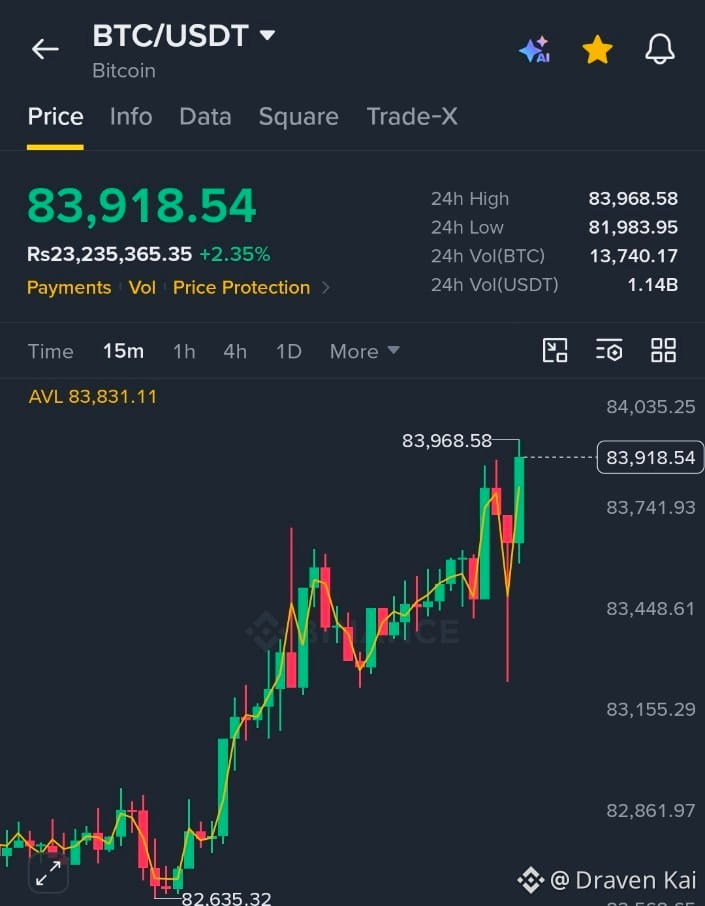
$BTC
VIP SIGNAL | LONG
Technical Analysis: BTC is showing strong bullish momentum on the 15M timeframe, forming higher highs and higher lows. Price is testing the 83,968 resistance zone, with a breakout potentially opening the next upside move.
EP: 83,850–83,930
TP1: 84,100
TP2: 84,300
TP3: 84,500
SL: 83,650
Execution: Maintain disciplined risk management. Secure partial profits at TP1 and trail the stop if momentum continues. Avoid chasing an unconfirmed breakout.
$BTC
{spot}(BTCUSDT)
$BTC
VIP SIGNAL | LONG
Technical Analysis: BTC is showing strong bullish momentum on the 15M timeframe, forming higher highs and higher lows. Price is testing the 83,968 resistance zone, with a breakout potentially opening the next upside move.
EP: 83,850–83,930
TP1: 84,100
TP2: 84,300
TP3: 84,500
SL: 83,650
Execution: Maintain disciplined risk management. Secure partial profits at TP1 and trail the stop if momentum continues. Avoid chasing an unconfirmed breakout.
$BTC
VIP SIGNAL | LONG
Technical Analysis: BTC is showing strong bullish momentum on the 15M timeframe, forming higher highs and higher lows. Price is testing the 83,968 resistance zone, with a breakout potentially opening the next upside move.
EP: 83,850–83,930
TP1: 84,100
TP2: 84,300
TP3: 84,500
SL: 83,650
Execution: Maintain disciplined risk management. Secure partial profits at TP1 and trail the stop if momentum continues. Avoid chasing an unconfirmed breakout.
$BTC
1
122
Log in to explore more content
Join global crypto users on Binance Square
⚡️ Get latest and useful information about crypto.
💬 Trusted by the world’s largest crypto exchange.
👍 Discover real insights from verified creators.
Email / Phone number
Trending Topics
BinancePick
2.7M views
143,489 Discussing
Join #EarningsSeason: Predict Earnings on Binance Pick, Share Your Take on Binance Square!
Binance Square Official
·402 Likes
·339.1k views
EarningsSeason
5M views
24,628 Discussing
SouthKoreaReportedlyWeighsFourthCryptoTaxDelay
1,176 views
94 Discussing