

Contador cripto
2.6k Posts
Contador cripto
Report
Block User
Contador Cripto 📊🌴 Trader, Agricultor de Medjool Comparto mi camino real: trading, familia y $MEDJ Desde Mexicali 🇲🇽No es consejo financiero.
Open Trade

BNB Holder
High-Frequency Trader
7.9 Years
318 Following
1.0K+ Followers
1.2K+ Liked
Posts
Portfolio
All
Quotes
·
--
Bullish
🏦 KEEPING YOUR CRYPTOCURRENCIES ON AN EXCHANGE DOES NOT ELIMINATE THE RISK.
And understanding that can save you a lot of trouble.
Today’s news about a possible security incident involving Binance reminds us that, in the crypto world, it’s not enough to keep an eye on the price of Bitcoin.
We also need to consider where and how we hold our money.
🔐 Three concepts every investor should know:
1️⃣ EXCHANGE
A platform that lets you buy, sell, and trade cryptocurrencies. The convenience of using one doesn’t mean it’s risk-free.
2️⃣ SELF-CUSTODY
Taking control of the keys to your own cryptocurrencies through a personal wallet. It gives you greater control, but also greater responsibility: losing your keys could mean losing access to your funds.
3️⃣ RISK MANAGEMENT
Diversifying how you hold your assets, enabling security measures, and understanding the risks of each platform can help protect your wealth.
⚠️ Important: using your own wallet doesn’t guarantee absolute security either. There are risks of phishing, key theft, transfer errors, and technical vulnerabilities.
My recommendation as a Crypto Accountant in Mexicali: don’t just ask how much you could earn.
Also ask yourself:
💡 Where are my assets?
💡 Who controls the keys?
💡 What would happen if I lost access to my account?
💡 Do I have a recovery plan?
The first rule for growing your wealth is understanding how you could lose it.
Do you prefer to keep your cryptocurrencies on an exchange or use your own wallet? Why?
#CryptoSecurity #Bitcoin #Binance #Blockchain #FinancialEducation #CryptoAccountant
⚠️ Educational post. Not financial advice.
3
204
·
--
Bullish
📉 Do you have money available and want to enter the crypto market? Read this first.
One of the most common mistakes is investing all your capital in a single trade because we think the price has already hit bottom.
The problem is that no one can know an asset’s lowest price for certain.
One alternative you can look into is dollar-cost averaging, or DCA:
✅ Divide your capital into several purchases.
✅ Set amounts and dates in advance.
✅ Avoid making impulsive decisions.
✅ Keep some cash available for unexpected expenses.
Important: buying gradually doesn’t guarantee profits or prevent losses if the market keeps falling.
Your strategy should be tailored to your goals, investment horizon, and risk tolerance.
Question: If you had $10,000 MXN to invest, would you invest it all at once or make several purchases?
I’ll be reading your comments. 👇
— Carlos Patiño | Crypto Accountant from Mexicali
📌 This is not financial advice.
#DCA #Bitcoin #FinancialEducation #Binance
1
1
163
·
--
Bullish
💵 The digital dollar is changing the way money moves.
Imagine you need to send value to another country, pay an international supplier, or hold digital funds without being directly exposed to Bitcoin price fluctuations.
That’s where stablecoins come in.
🔹 They aim to maintain a stable value relative to a reference asset, such as the dollar.
🔹 They can facilitate digital transfers.
🔹 They are used within the crypto ecosystem.
But be careful: a stablecoin is NOT the same as having dollars in a bank account.
There are risks related to issuers, reserves, liquidity, regulation, and loss of the peg.
As an accountant, my recommendation is to understand the instrument before using it.
A question for business owners in Mexicali:
Would you use digital dollars to pay your international suppliers if they were suitable for your business?
I’d love to hear from you. 👇
📌 Educational content. Not financial advice.
#Stablecoins #USDT #USDC #Binance #DigitalFinance
Si uso dólares digitales
83%
No los uso
17%
6 votes • Voting closed
604
·
--
Bullish
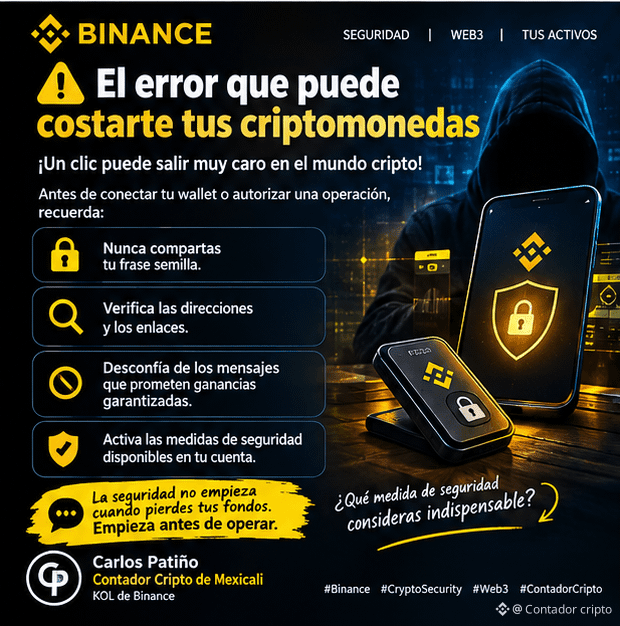
🚨 One click can cost you dearly in the crypto world!
Before connecting your wallet or authorizing a transaction, remember:
🔐 Never share your seed phrase.
🔎 Verify addresses and links.
⛔ Be wary of messages promising guaranteed profits.
✅ Enable the security features available for your account.
Security doesn’t start after you lose your funds. It starts before you make a transaction.
💬 What security measure do you consider essential?
#Binance #CryptoSecurity #Web3 #ContadorCripto
2
178
·
--
Bullish
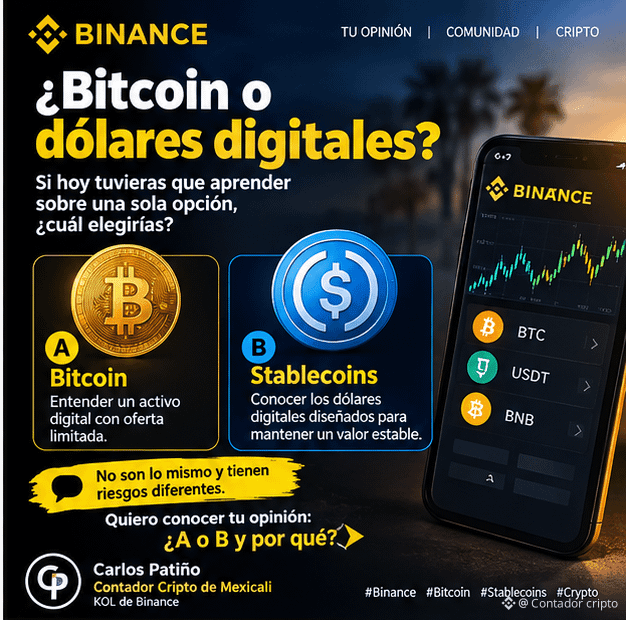
🤔 If you had to learn about just one option today, which would you choose?
🟠 A) Bitcoin: understanding a digital asset with a limited supply.
💵 B) Stablecoins: learning about digital dollars designed to maintain a stable value.
They’re not the same and carry different risks.
I’d love to hear your opinion: A or B, and why? 👇
I’m Carlos Patiño, a Binance KOL and the Crypto Accountant from Mexicali.
#Binance #Bitcoin #Stablecoins $BTC
100
·
--
Bullish
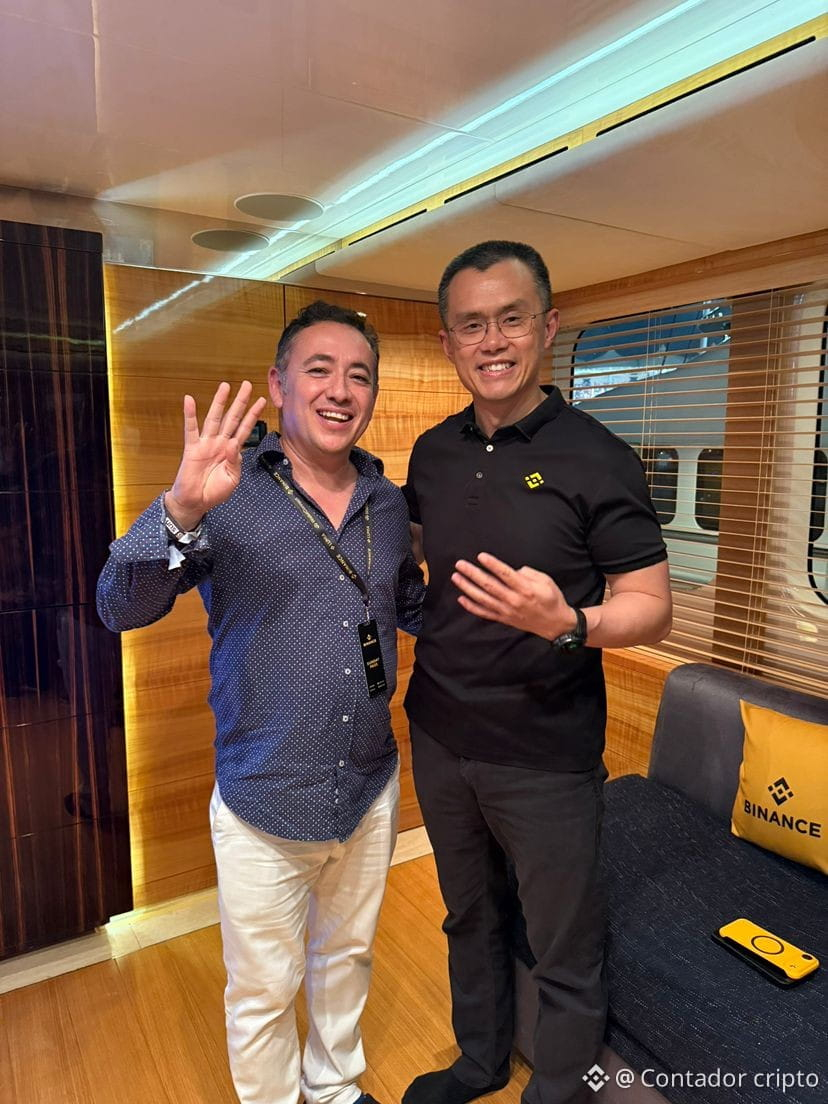
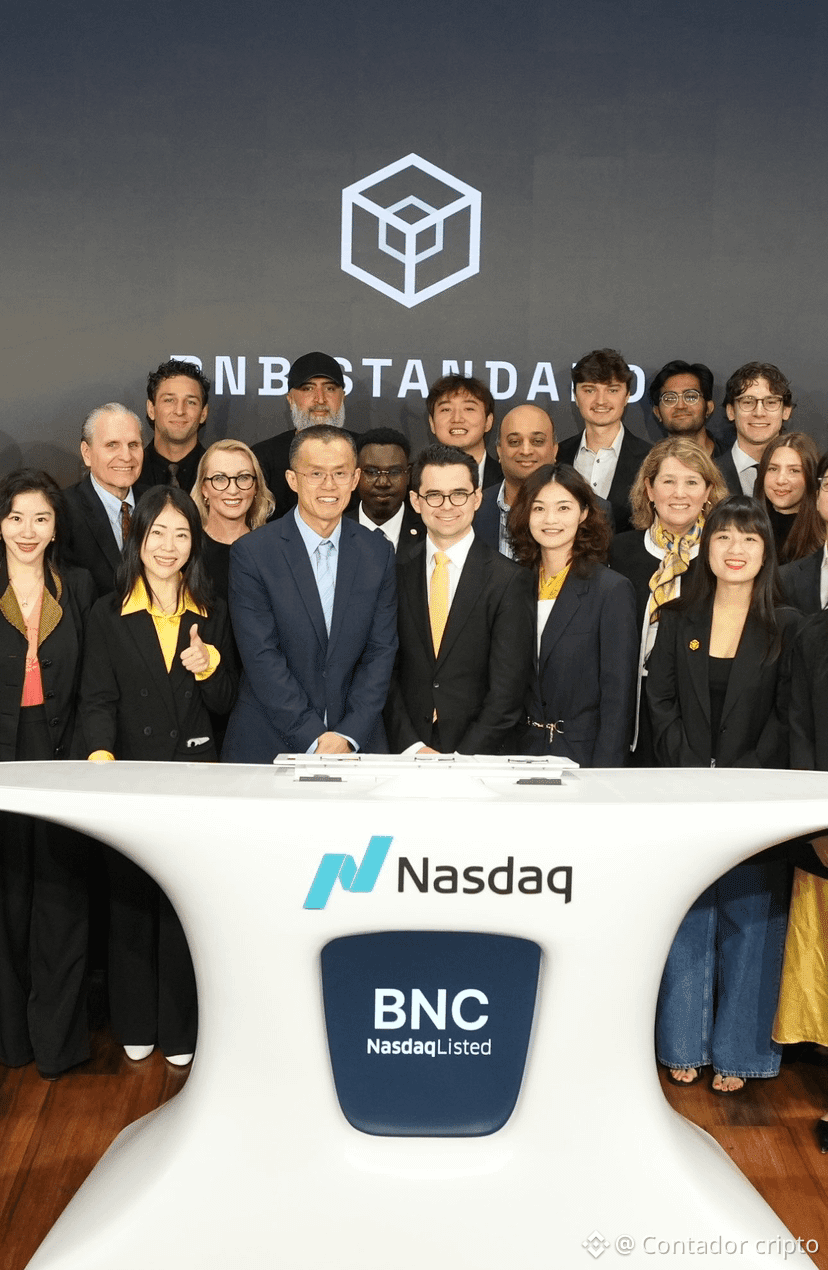
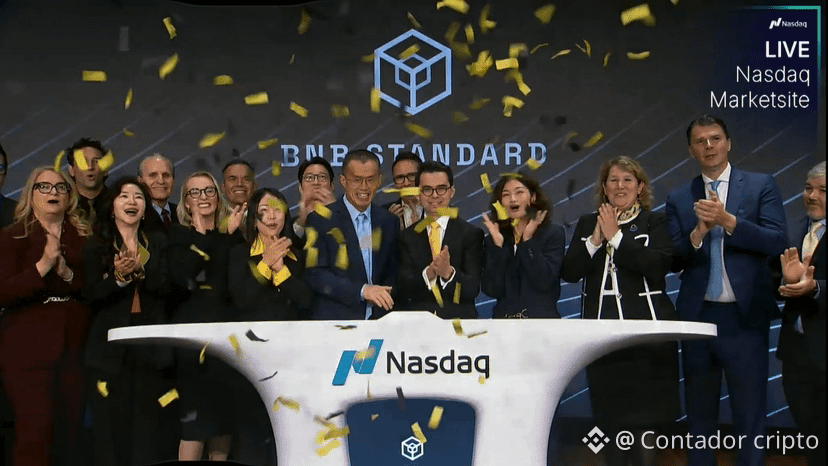
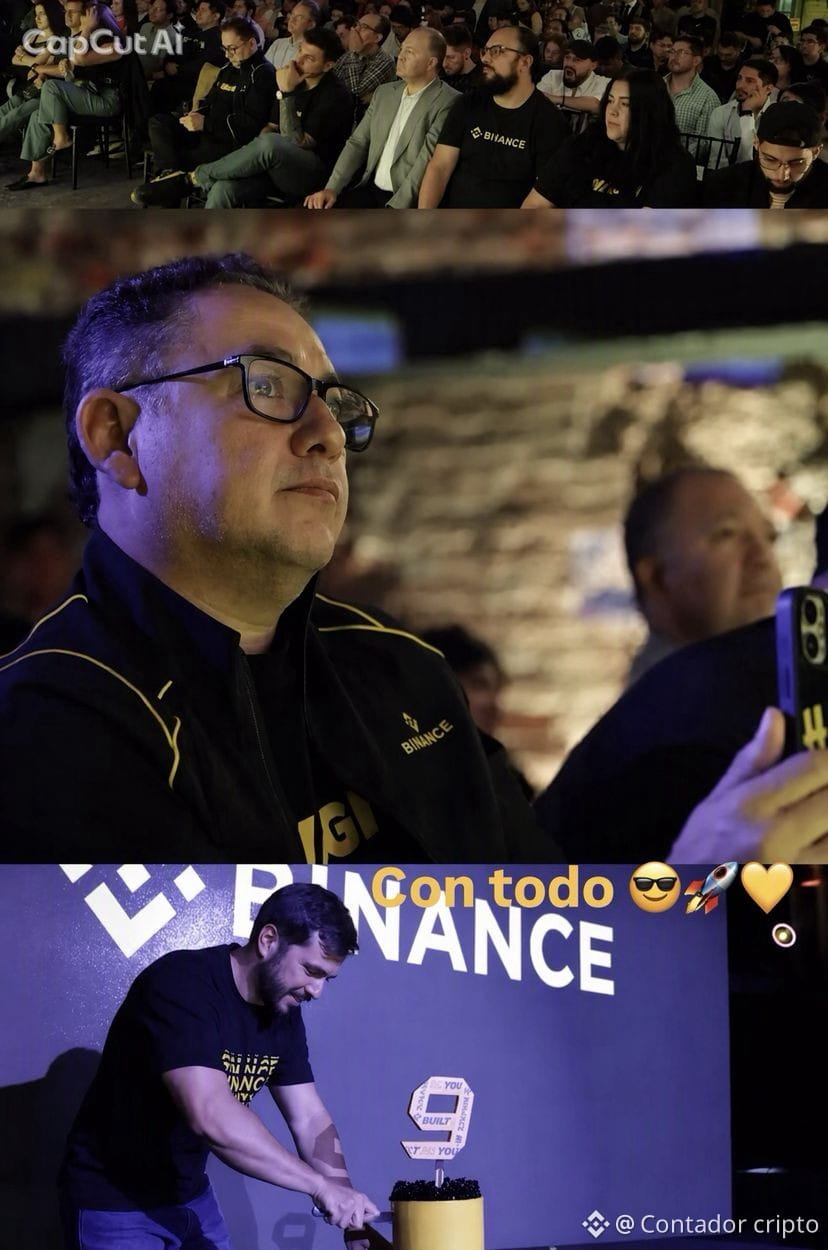
🔔 Some sounds mark the beginning of a new era. 🚀
Congratulations, CZ! 🟡🔥 BNB continues to make history and bring the crypto world closer to traditional finance.
The future is being built today! 🌎
#CZ #Binance #BNB #Crypto #BNBChain #Web3 #TikTokCrypto #ContadorCripto @CZ
🔔 Some sounds mark the beginning of a new era. 🚀
Congratulations, CZ! 🟡🔥 BNB continues to make history and bring the crypto world closer to traditional finance.
The future is being built today! 🌎
#CZ #Binance #BNB #Crypto #BNBChain #Web3 #TikTokCrypto #ContadorCripto @CZ
Congratulations, CZ! 🟡🔥 BNB continues to make history and bring the crypto world closer to traditional finance.
The future is being built today! 🌎
#CZ #Binance #BNB #Crypto #BNBChain #Web3 #TikTokCrypto #ContadorCripto @CZ
1
284
·
--
Bullish
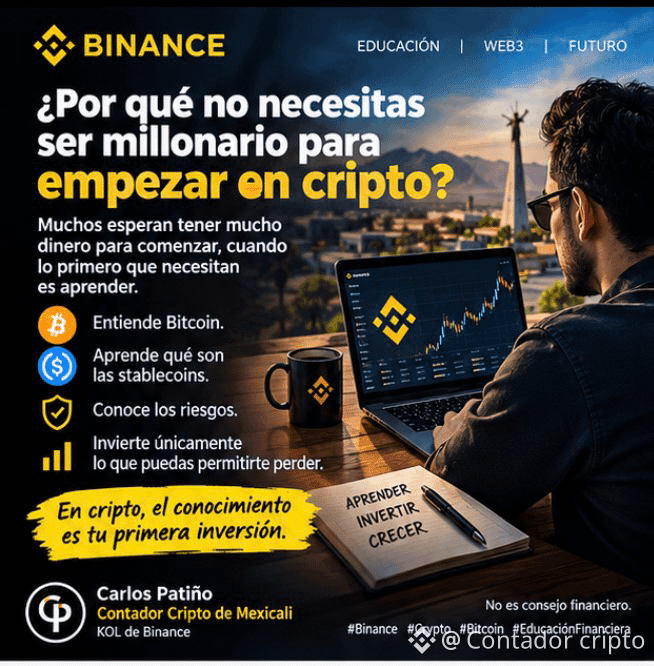
💰 Do you think you need thousands of dollars to enter the crypto world? Not necessarily!
Many people wait until they have a lot of money to get started, when the first thing they need is to learn.
🔹 Understand Bitcoin.
🔹 Learn what stablecoins are.
🔹 Know the risks.
🔹 Invest only what you can afford to lose.
🚀 In crypto, knowledge is your first investment.
I'm Carlos Patiño, the Crypto Accountant from Mexicali, and I'm here to help you understand this ecosystem.
⚠️ This is not financial advice.
#Binance #Crypto #Bitcoin #EducaciónFinanciera
$XRP $BNB
{spot}(BNBUSDT)
💰 Do you think you need thousands of dollars to enter the crypto world? Not necessarily!
Many people wait until they have a lot of money to get started, when the first thing they need is to learn.
🔹 Understand Bitcoin.
🔹 Learn what stablecoins are.
🔹 Know the risks.
🔹 Invest only what you can afford to lose.
🚀 In crypto, knowledge is your first investment.
I'm Carlos Patiño, the Crypto Accountant from Mexicali, and I'm here to help you understand this ecosystem.
⚠️ This is not financial advice.
#Binance #Crypto #Bitcoin #EducaciónFinanciera
$XRP $BNB
234
$MEDJ 🌴 WHAT DOES A DATE PALM HAVE TO DO WITH BLOCKCHAIN?
Much more than you might think.
I’m Carlos Patiño, from Mexicali, and I’m developing Medjool Token, a project that aims to connect agriculture with blockchain technology.
My vision is to explore how digital traceability, crop data, and real-world assets (RWAs) can bring agriculture closer to a new generation of investors.
Why am I interested in this path?
🌱 Because food is essential.
🔗 Because blockchain can bring transparency to certain processes.
🌎 Because agriculture can innovate, too.
But there’s something fundamental: tokenization doesn’t automatically turn an asset into a profitable investment or guarantee ownership rights.
Technology must be supported by documentation, transparency, and a verifiable economic model.
My goal is to build a bridge between the Mexican countryside and the digital economy.
💬 If you could connect a traditional sector with blockchain, would you choose agriculture, real estate, energy, or infrastructure?
#MedjoolToken #RWA #Blockchain #BinanceSquare #Agriculture
1
1
138
·
--
Bullish
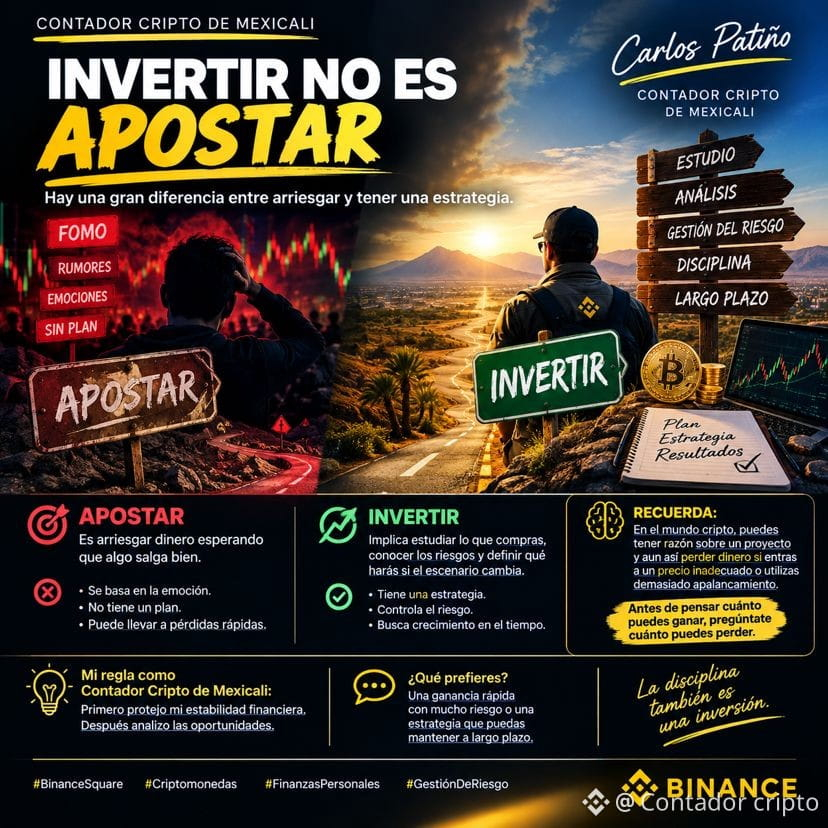
🧠 THERE'S A DIFFERENCE BETWEEN INVESTING AND GAMBLING.
Gambling means risking money and hoping things work out.
Disciplined investing means researching what you buy, understanding the risks, and deciding what you'll do if the situation changes.
In the crypto world, you can be right about a project and still lose money if you enter at the wrong price or use too much leverage.
So before thinking about how much you could make, ask yourself how much you could lose.
📌 My rule as the Crypto Accountant of Mexicali:
First, I protect my financial stability. Then I analyze opportunities.
Because the goal isn't to win on one trade and disappear from the market.
The goal is to learn to make better decisions over the years.
💬 Which do you prefer: a quick profit with a lot of risk, or a strategy you can stick with for the long term?
#BinanceSquare #PersonalFinance #Bitcoin #TradingResponsable $BTC
84
·
--
Bullish
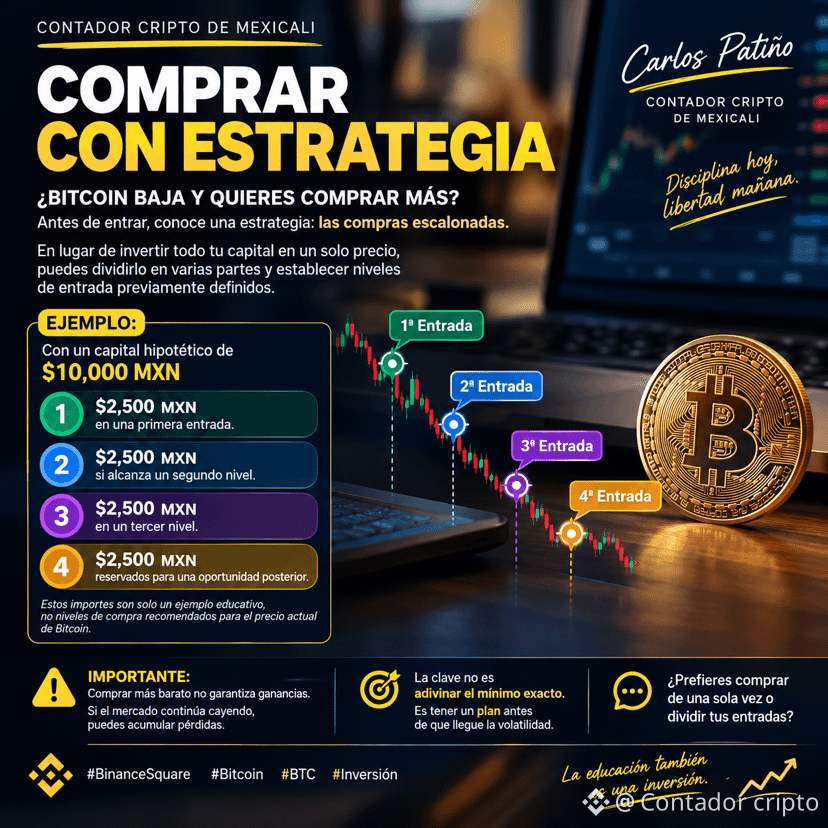
📉 BITCOIN IS DOWN AND YOU WANT TO BUY MORE?
Before you jump in, learn about one strategy: dollar-cost averaging.
Instead of investing all your capital at a single price, you can divide it into several portions and set predefined entry levels.
For example, with a hypothetical capital of $10,000 MXN:
💰 $2,500 for a first entry.
💰 $2,500 if it reaches a second level.
💰 $2,500 at a third level.
💰 $2,500 set aside for a later opportunity.
These amounts are just an educational example, not recommended buy levels for Bitcoin’s current price.
⚠️ Important: buying at a lower price doesn’t guarantee profits. If the market keeps falling, you could accumulate losses.
The key isn’t to guess the exact bottom. It’s to have a plan before volatility hits.
📊 Do you prefer to buy all at once or split up your entries?
#Bitcoin #BTC #BinanceSquare #Inversión $BTC
{spot}(BTCUSDT)
📉 BITCOIN IS DOWN AND YOU WANT TO BUY MORE?
Before you jump in, learn about one strategy: dollar-cost averaging.
Instead of investing all your capital at a single price, you can divide it into several portions and set predefined entry levels.
For example, with a hypothetical capital of $10,000 MXN:
💰 $2,500 for a first entry.
💰 $2,500 if it reaches a second level.
💰 $2,500 at a third level.
💰 $2,500 set aside for a later opportunity.
These amounts are just an educational example, not recommended buy levels for Bitcoin’s current price.
⚠️ Important: buying at a lower price doesn’t guarantee profits. If the market keeps falling, you could accumulate losses.
The key isn’t to guess the exact bottom. It’s to have a plan before volatility hits.
📊 Do you prefer to buy all at once or split up your entries?
#Bitcoin #BTC #BinanceSquare #Inversión $BTC
95
·
--
Bullish
🚨 3 MISTAKES THAT CAN COST YOU DEARLY IN CRYPTO.
1️⃣ Buying because everyone is talking about a coin.
2️⃣ Investing money you need to pay your bills.
3️⃣ Selling out of panic without understanding what’s going on.
The problem isn’t always choosing the wrong cryptocurrency. Sometimes, the real problem is not having a strategy.
Before you buy, ask yourself:
✅ Why am I getting in?
✅ How much can I afford to lose without jeopardizing my finances?
✅ Under what conditions would I change my decision?
You don’t need to get every trade right. You need to learn how to manage your mistakes.
💬 Be honest: which of these three mistakes have you made?
#BinanceSquare #Cryptocurrency #Trading #GestiónDeRiesgo $XRP
120
·
--
Bullish
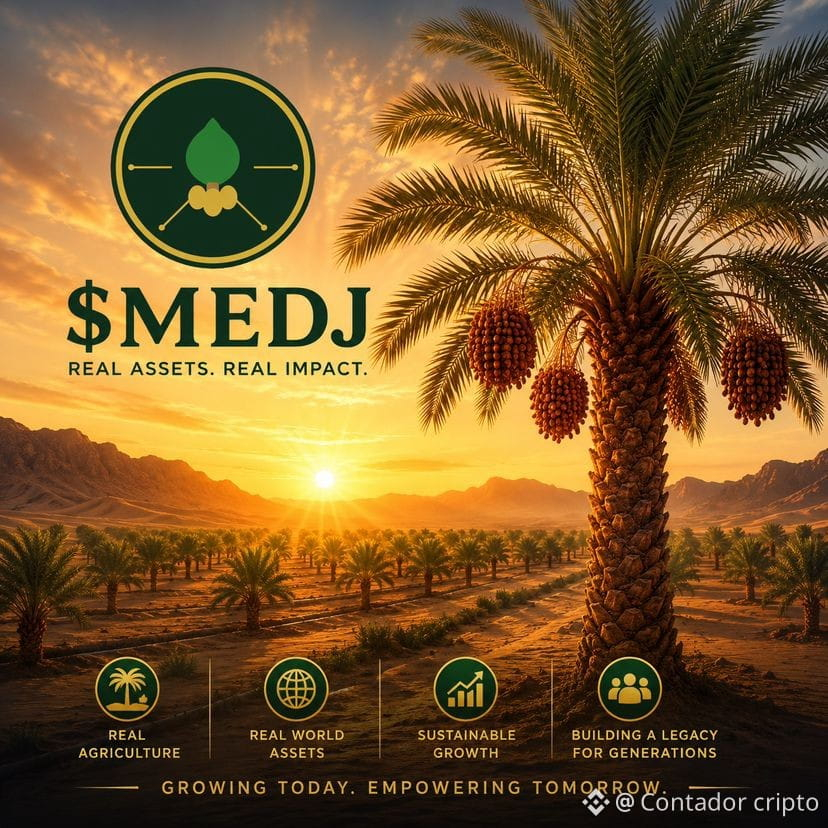
🌴 THE COUNTRYSIDE TAUGHT ME SOMETHING THAT ALSO APPLIES TO CRYPTOCURRENCIES.
A date palm doesn’t bear fruit overnight.
It needs time, water, care, and discipline.
Investing in cryptocurrencies is similar: it’s not enough to buy and expect to get rich. You have to study, manage risk, and be patient.
📈 The market rewards some decisions, but it also punishes impulsive moves.
I’m Carlos Patiño, a Crypto Accountant from Mexicali, and I believe the best investment starts with education.
💬 What’s harder for you as an investor: waiting or resisting the urge to buy out of FOMO?
#BinanceSquare #Bitcoin #Crypto #EducaciónFinanciera $XRP
276
·
--
Bullish
😍 fit mama ❤️
😍 fit mama ❤️
Tokenfitmama
·
--
The future is calling me… and I answered with sparkle ✨📞
#BinanceSquare #BNB #CryptoLife
💥
#BinanceSquare #BNB #CryptoLife
💥
1
31
·
--
Bullish
🌎 NOT EVERYTHING WORTH BUILDING DELIVERS IMMEDIATE RESULTS.
In business, investing, and life, there’s a constant temptation: wanting to see results too soon.
But building a company takes time.
Learning a market requires preparation.
And developing a project takes consistency.
Growing up in Mexicali has taught me to value hard work, family, and the importance of thinking long term.
In the crypto world, where prices can change in a matter of minutes, we mustn’t confuse speed with progress.
You don’t need to win every trade.
You don’t need to chase every trend.
And you don’t need to prove anything to the market every day.
Sometimes, moving forward means studying, correcting mistakes, and waiting for the right moment.
📈 True progress isn’t always measured by what you earn today, but by what you’re building for tomorrow.
I’m the Crypto Accountant from Mexicali. See you tomorrow so we can keep learning together.
What are you working on today that you hope to thank yourself for five years from now?
#BinanceSquare #FinancialMindset #Investments #Crypto #Mexicali $BTC
{spot}(BTCUSDT)
🌎 NOT EVERYTHING WORTH BUILDING DELIVERS IMMEDIATE RESULTS.
In business, investing, and life, there’s a constant temptation: wanting to see results too soon.
But building a company takes time.
Learning a market requires preparation.
And developing a project takes consistency.
Growing up in Mexicali has taught me to value hard work, family, and the importance of thinking long term.
In the crypto world, where prices can change in a matter of minutes, we mustn’t confuse speed with progress.
You don’t need to win every trade.
You don’t need to chase every trend.
And you don’t need to prove anything to the market every day.
Sometimes, moving forward means studying, correcting mistakes, and waiting for the right moment.
📈 True progress isn’t always measured by what you earn today, but by what you’re building for tomorrow.
I’m the Crypto Accountant from Mexicali. See you tomorrow so we can keep learning together.
What are you working on today that you hope to thank yourself for five years from now?
#BinanceSquare #FinancialMindset #Investments #Crypto #Mexicali $BTC
1
298
·
--
Bullish
$MEDJ 🌴 WHAT IF THE FUTURE OF BLOCKCHAIN WERE ALSO GROWN IN THE MEXICAN COUNTRYSIDE? 🇲🇽
Many people know cryptocurrencies for their charts, their highs and their lows.
But blockchain technology can explore applications that go far beyond speculation.
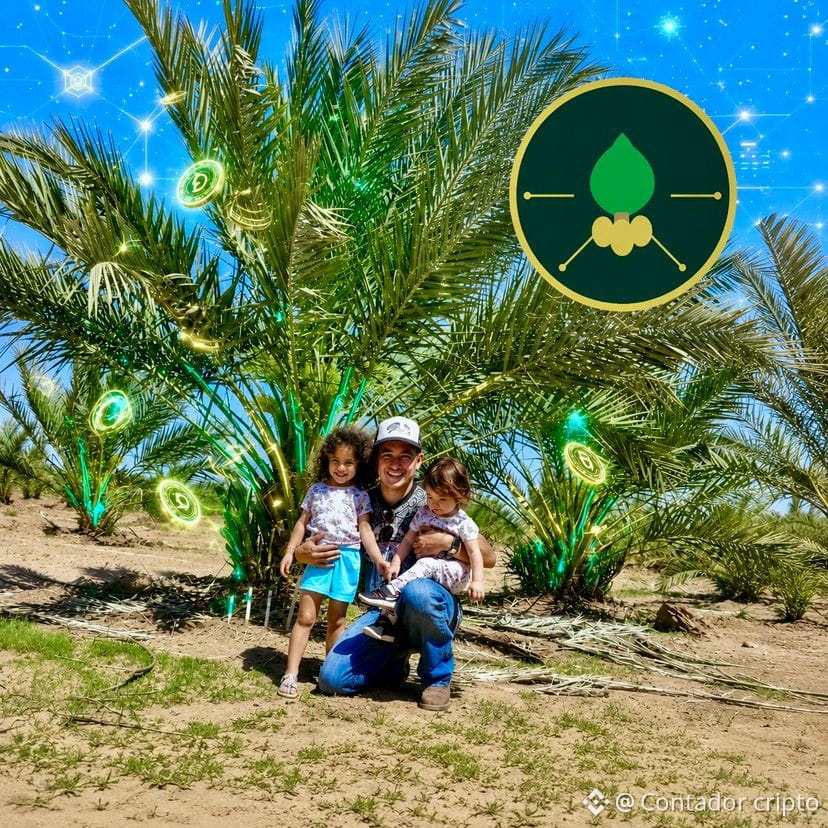
I’m Carlos Patiño, a public accountant from Mexicali, an agricultural entrepreneur, and founder of Medjool Token ($MEDJ).
My vision is to connect two worlds I’m passionate about:
🌴 Real agricultural production.
🌐 Blockchain technology.
I imagine a value chain where technology can help improve product traceability, document production information, and connect participants across the agricultural sector.
The goal is to explore how tools like digital records, QR codes, and production data can bring transparency to the supply chain.
Because talking about real-world assets (RWA) shouldn’t be limited to talking about tokens.
We should also ask what asset exists, what economic value it has, how it can be verified, and what rights each digital instrument represents.
From Mexicali, I want to contribute to that conversation and show that Mexico can also take part in developing Web3 solutions connected to agriculture.
🌱 Technology can be digital. The value we aim to connect can also come from the land.
Which Mexican agricultural product would you like to see with blockchain-based traceability?
🥭 Mango
🌴 Date
☕ Coffee
🥑 Avocado
I’m looking forward to your answers. 👇
#MedjoolToken #MEDJ #RWA #Blockchain #Web3 #Mexicali
$MEDJ 🌴 WHAT IF THE FUTURE OF BLOCKCHAIN WERE ALSO GROWN IN THE MEXICAN COUNTRYSIDE? 🇲🇽
Many people know cryptocurrencies for their charts, their highs and their lows.
But blockchain technology can explore applications that go far beyond speculation.
I’m Carlos Patiño, a public accountant from Mexicali, an agricultural entrepreneur, and founder of Medjool Token ($MEDJ ).
My vision is to connect two worlds I’m passionate about:
🌴 Real agricultural production.
🌐 Blockchain technology.
I imagine a value chain where technology can help improve product traceability, document production information, and connect participants across the agricultural sector.
The goal is to explore how tools like digital records, QR codes, and production data can bring transparency to the supply chain.
Because talking about real-world assets (RWA) shouldn’t be limited to talking about tokens.
We should also ask what asset exists, what economic value it has, how it can be verified, and what rights each digital instrument represents.
From Mexicali, I want to contribute to that conversation and show that Mexico can also take part in developing Web3 solutions connected to agriculture.
🌱 Technology can be digital. The value we aim to connect can also come from the land.
Which Mexican agricultural product would you like to see with blockchain-based traceability?
🥭 Mango
🌴 Date
☕ Coffee
🥑 Avocado
I’m looking forward to your answers. 👇
#MedjoolToken #MEDJ #RWA #Blockchain #Web3 #Mexicali
1
245
·
--
Bullish
🌴 A FARMER AND AN INVESTOR HAVE SOMETHING IN COMMON.
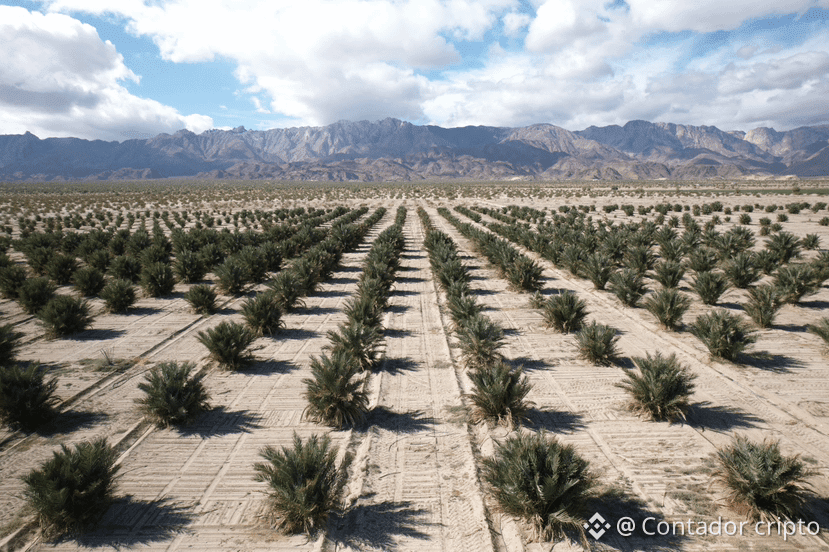
I’m from Mexicali, Baja California. In addition to being a certified public accountant and having been in the crypto world since 2018, I’m also an agricultural entrepreneur.
And there’s a lesson the land has taught me:
🌱 You can’t plant today and expect a date palm to bear fruit tomorrow.
You need time.
You need discipline.
You need to take care of your investment.
And you need to understand that not every season is the same.
Something similar happens in the crypto market.
📈 When the market goes up, everyone wants to buy.
📉 When it goes down, many forget why they invested.
But a good investor doesn’t make decisions based solely on emotion. They analyze, manage risk, and understand their investment horizon.
In farming and in cryptocurrency, patience without a strategy isn’t enough. Discipline paired with knowledge can make all the difference.
🇲🇽 From Mexicali, bringing a farming mindset to the Web3 world.
Are you someone who plants with the future in mind, or someone looking for immediate results? 👇
#BinanceSquare #Bitcoin #Crypto #Investments #MedjoolToken $BTC
{spot}(BTCUSDT)
🌴 A FARMER AND AN INVESTOR HAVE SOMETHING IN COMMON.
I’m from Mexicali, Baja California. In addition to being a certified public accountant and having been in the crypto world since 2018, I’m also an agricultural entrepreneur.
And there’s a lesson the land has taught me:
🌱 You can’t plant today and expect a date palm to bear fruit tomorrow.
You need time.
You need discipline.
You need to take care of your investment.
And you need to understand that not every season is the same.
Something similar happens in the crypto market.
📈 When the market goes up, everyone wants to buy.
📉 When it goes down, many forget why they invested.
But a good investor doesn’t make decisions based solely on emotion. They analyze, manage risk, and understand their investment horizon.
In farming and in cryptocurrency, patience without a strategy isn’t enough. Discipline paired with knowledge can make all the difference.
🇲🇽 From Mexicali, bringing a farming mindset to the Web3 world.
Are you someone who plants with the future in mind, or someone looking for immediate results? 👇
#BinanceSquare #Bitcoin #Crypto #Investments #MedjoolToken $BTC
214
·
--
Bullish
30D trade $BNB 8.9K USDT
🔥 IF YOU HAD TO CHOOSE JUST ONE CRYPTOCURRENCY TO STUDY THIS MONDAY, WHICH WOULD IT BE?
I’m not asking which one will go up tomorrow. No one can guarantee that.
I want to know which one you find most interesting to study over the long term.
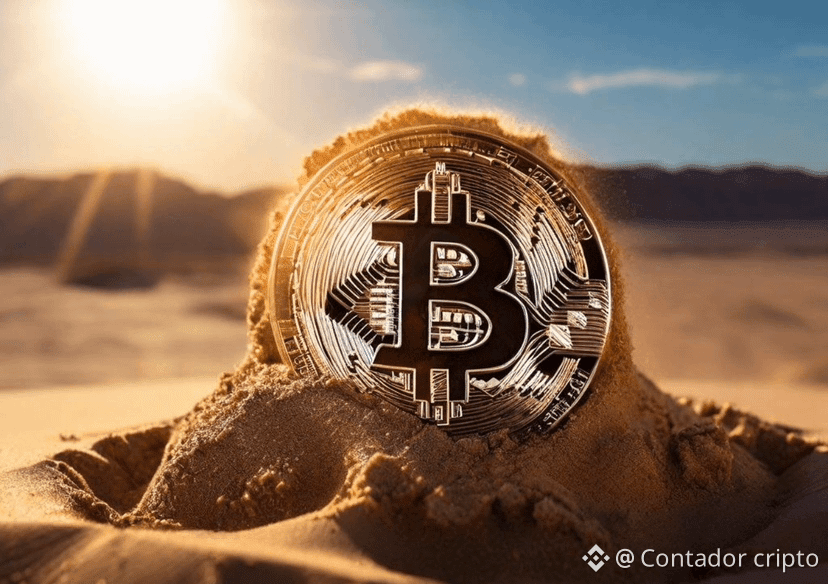
₿ BITCOIN (BTC): programmed scarcity, decentralization, and its role in the crypto market.
🟡 BNB: the asset linked to the BNB Chain ecosystem and its various use cases.
💧 XRP: an asset associated with the XRP Ledger ecosystem and its focus on payments and transfers of value.
Each has different characteristics, risks, and valuation factors.
As an accountant, I’m interested in analyzing more than just the price: utility, adoption, supply, demand, liquidity, and risks.
It’s not about buying because someone says a coin is going to increase tenfold.
It’s about understanding what you’re buying and why.
📊 My question for the community:
If you had to study just one over the next 12 months, which would you choose?
A) BTC
B) BNB
C) XRP
Comment with your choice and explain your reasoning. 👇
⚠️ Educational content. This is not a recommendation to buy or sell.
#Bitcoin $BTC $XRP $BNB
47
·
--
Bullish
💭 AN UNCOMFORTABLE QUESTION FOR THIS SATURDAY…
Are you investing to build wealth, or are you looking for the next coin that will make you money fast?
They’re not the same thing.
Building wealth takes goals, money management, patience, and risk control.
Chasing quick profits can lead you to make impulsive decisions, buy out of FOMO, and sell out of fear.
There’s no coin that can guarantee your financial future. And there’s no risk-free strategy.
As an accountant and a participant in the crypto ecosystem since 2018, I believe financial education should accompany every investment decision.
It’s not about knowing everything.
It’s about learning before you take a risk.
👇 Complete this sentence:
“One thing I’ve learned about money is that __________.”
I’d love to hear about your experiences. 🇲🇽🌎
#BinanceSquare #Cryptocurrency #FinancialEducation #ContadorCripto $BTC
{spot}(BTCUSDT)
💭 AN UNCOMFORTABLE QUESTION FOR THIS SATURDAY…
Are you investing to build wealth, or are you looking for the next coin that will make you money fast?
They’re not the same thing.
Building wealth takes goals, money management, patience, and risk control.
Chasing quick profits can lead you to make impulsive decisions, buy out of FOMO, and sell out of fear.
There’s no coin that can guarantee your financial future. And there’s no risk-free strategy.
As an accountant and a participant in the crypto ecosystem since 2018, I believe financial education should accompany every investment decision.
It’s not about knowing everything.
It’s about learning before you take a risk.
👇 Complete this sentence:
“One thing I’ve learned about money is that __________.”
I’d love to hear about your experiences. 🇲🇽🌎
#BinanceSquare #Cryptocurrency #FinancialEducation #ContadorCripto $BTC
1
220
·
--
Bullish
$MEDJ 🌴 WHAT DO DATE PALMS HAVE TO DO WITH BLOCKCHAIN?
Much more than you might think.
From Mexicali, Baja California, I’m working on a vision that brings two worlds together: agriculture and digital assets.
My project, Medjool Token ($MEDJ), was born from an idea: to explore how blockchain technology can help connect agricultural production with new tools for traceability and digital participation.
To me, innovation isn’t just about creating a token.
It’s also about asking ourselves how we can add value to a real-world productive activity.
Agriculture takes work, time, resources, and patience. Technology can open up new possibilities, but it must be applied responsibly and transparently.
My goal is to help more people discover the potential of real-world assets (RWA).
🇲🇽 From Mexicali, bringing an agricultural vision to the Web3 ecosystem.
Which sector of the economy do you think could benefit most from blockchain: agriculture, real estate, energy, or logistics?
#MedjoolToken #MEDJ #RWA #Blockchain #Web3
$MEDJ 🌴 WHAT DO DATE PALMS HAVE TO DO WITH BLOCKCHAIN?
Much more than you might think.
From Mexicali, Baja California, I’m working on a vision that brings two worlds together: agriculture and digital assets.
My project, Medjool Token ($MEDJ ), was born from an idea: to explore how blockchain technology can help connect agricultural production with new tools for traceability and digital participation.
To me, innovation isn’t just about creating a token.
It’s also about asking ourselves how we can add value to a real-world productive activity.
Agriculture takes work, time, resources, and patience. Technology can open up new possibilities, but it must be applied responsibly and transparently.
My goal is to help more people discover the potential of real-world assets (RWA).
🇲🇽 From Mexicali, bringing an agricultural vision to the Web3 ecosystem.
Which sector of the economy do you think could benefit most from blockchain: agriculture, real estate, energy, or logistics?
#MedjoolToken #MEDJ #RWA #Blockchain #Web3
77
·
--
Bullish
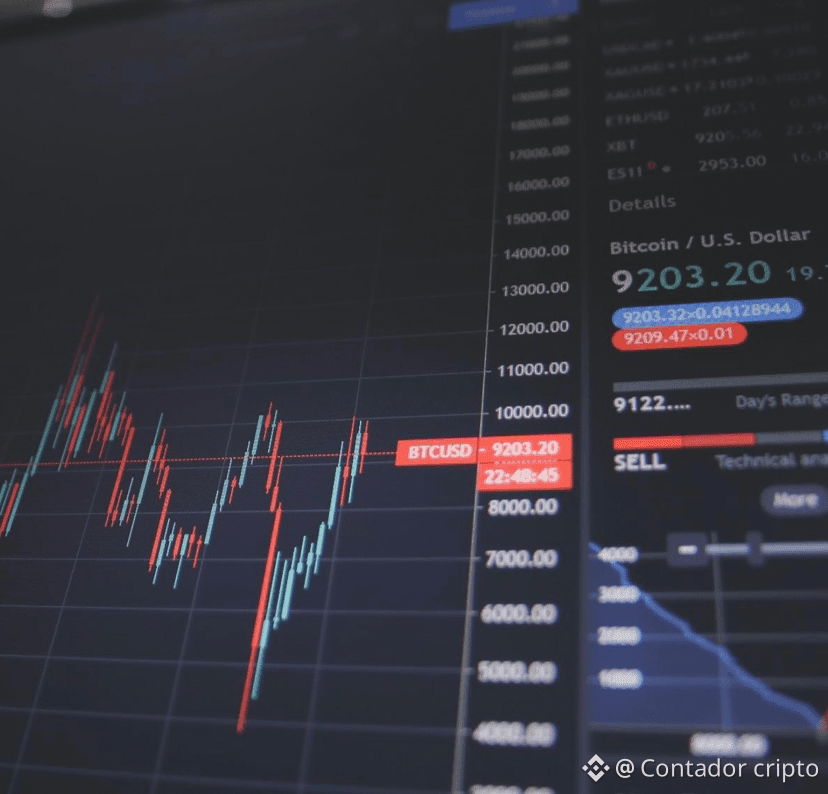
THE MARKET IS FALLING… WHAT DO YOU DO NOW?
When Bitcoin drops, two types of reactions emerge:
😰 Those who sell out of fear without reviewing their strategy.
🧠 Those who pause, analyze their position, and weigh their options.
But be careful: a drop doesn’t automatically mean it’s a buying opportunity.
Before investing, ask yourself:
1️⃣ Why is the market falling?
2️⃣ Am I investing money I’ll need soon?
3️⃣ How much can I afford to lose without jeopardizing my finances?
4️⃣ Is my decision based on analysis or fear?
As an accountant, I always say that numbers should come before emotions.
The market doesn’t know how much you need to earn or when you need to get your money back.
For this crypto Saturday: if Bitcoin drops 10%, do you buy, hold, or wait? Why? 👇
$BTC #Crypto #BinanceSquare #FinancialEducation #CryptoAccountant
Educational content; this is not financial advice.
{spot}(BTCUSDT)
THE MARKET IS FALLING… WHAT DO YOU DO NOW?
When Bitcoin drops, two types of reactions emerge:
😰 Those who sell out of fear without reviewing their strategy.
🧠 Those who pause, analyze their position, and weigh their options.
But be careful: a drop doesn’t automatically mean it’s a buying opportunity.
Before investing, ask yourself:
1️⃣ Why is the market falling?
2️⃣ Am I investing money I’ll need soon?
3️⃣ How much can I afford to lose without jeopardizing my finances?
4️⃣ Is my decision based on analysis or fear?
As an accountant, I always say that numbers should come before emotions.
The market doesn’t know how much you need to earn or when you need to get your money back.
For this crypto Saturday: if Bitcoin drops 10%, do you buy, hold, or wait? Why? 👇
$BTC #Crypto #BinanceSquare #FinancialEducation #CryptoAccountant
Educational content; this is not financial advice.
1
154
Log in to explore more content
Join global crypto users on Binance Square
⚡️ Get latest and useful information about crypto.
💬 Trusted by the world’s largest crypto exchange.
👍 Discover real insights from verified creators.
Email / Phone number
Trending Topics
BinanceSAFUFundTransferCompleted7499BTC
24,348 views
622 Discussing
Binance Says SAFU Fund Transfer Completed, Covering 7,499 BTC
Binance News
·28 Likes
·14k views
BinanceRecovery90% of stolen assets
101,035 views
148 Discussing
YiHe:ProofOfReserves:10TokensAt100%Backing
111,765 views
641 Discussing