
玉米-重新出發版本
327 Posts

玉米-重新出發版本
Report
Block User
還債超過1,500萬,還剩500萬持續公開紀錄,不賣課,純分享策略與生活
Frequent Trader
5.2 Years
13 Following
379 Followers
165 Liked
Posts
All
Quotes
Videos
·
--
Even Google’s Founder Got It Wrong: “I Didn’t Pay Attention to AI Back Then”
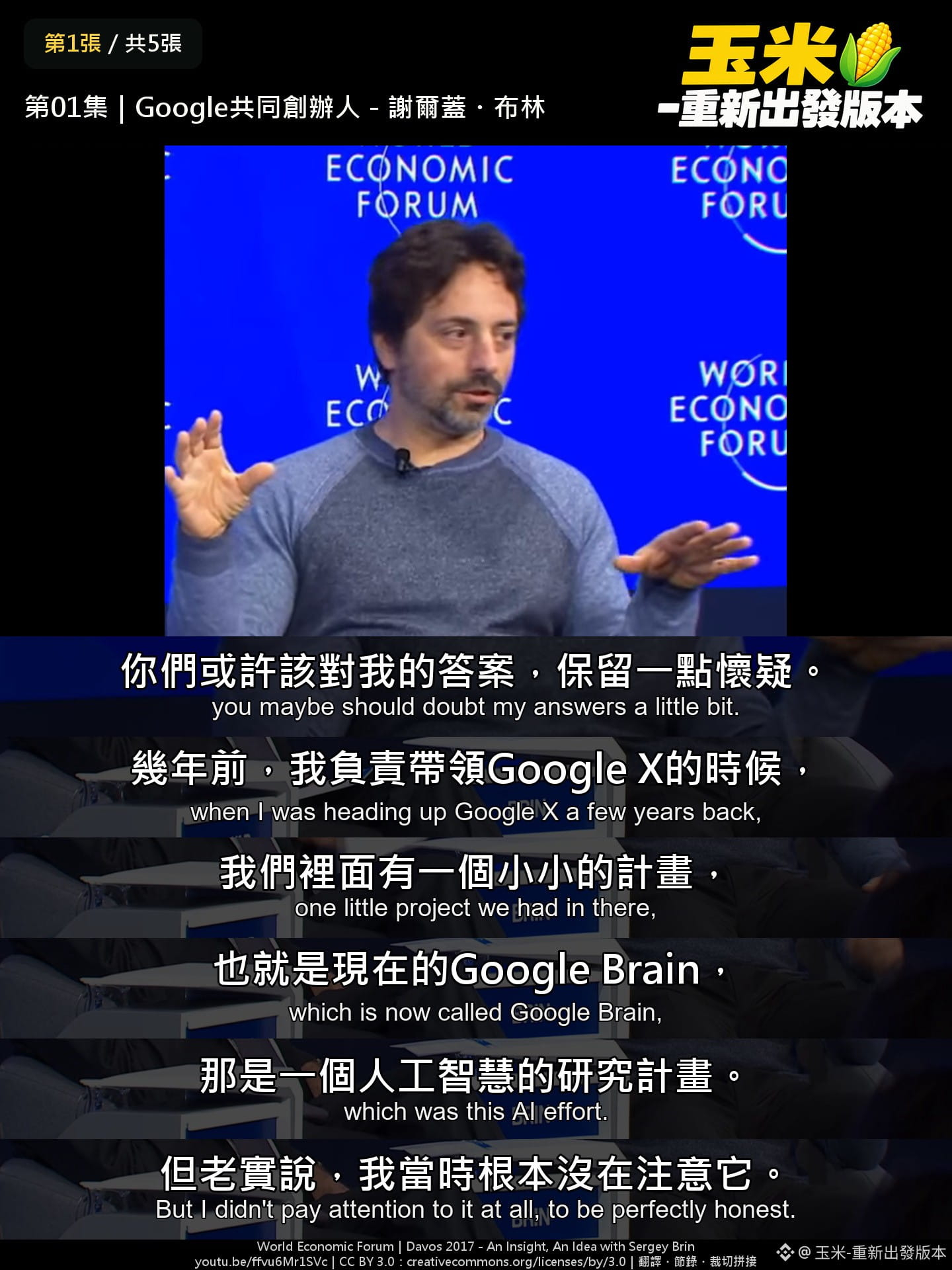
Do you think people at the forefront of technology never get things wrong? In a 2017 interview at Davos, Google co-founder Sergey Brin first told everyone not to put too much stock in his answers, then shared how he had overlooked AI.
01 | The project was right there, but he wasn’t paying attention
At the time, he was leading Google X, which had an AI project that later became known as Google Brain. He admitted frankly: “Honestly, I didn’t pay any attention to it at the time.”
02 | His past training shaped his judgment
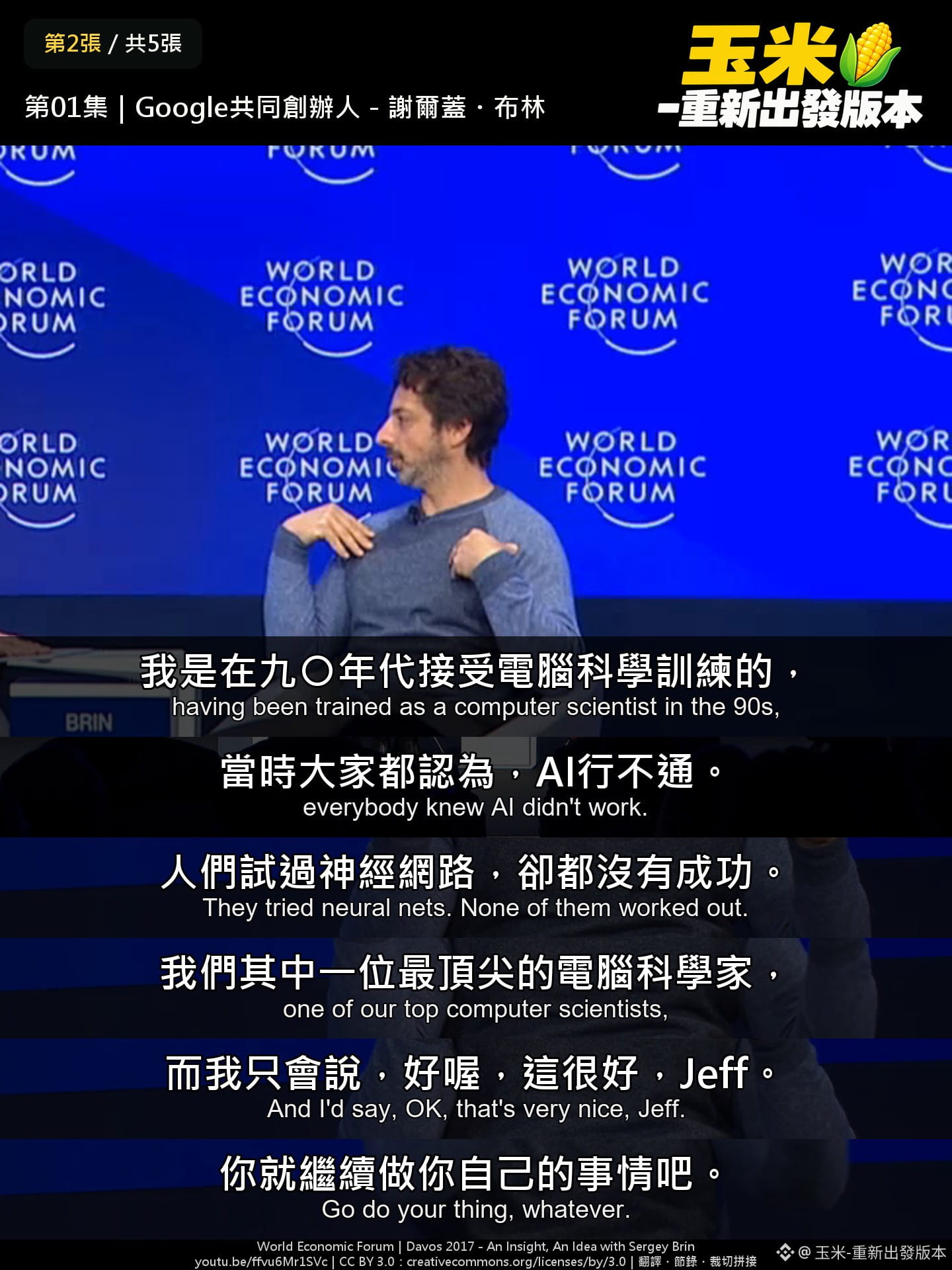
He studied computer science in the 1990s, when the prevailing experience suggested that AI wouldn’t work. People had tried neural networks, but they hadn’t delivered the expected results. Even as his colleagues made progress, he didn’t immediately see the potential behind it.
03 | A few years later, it was part of the core business
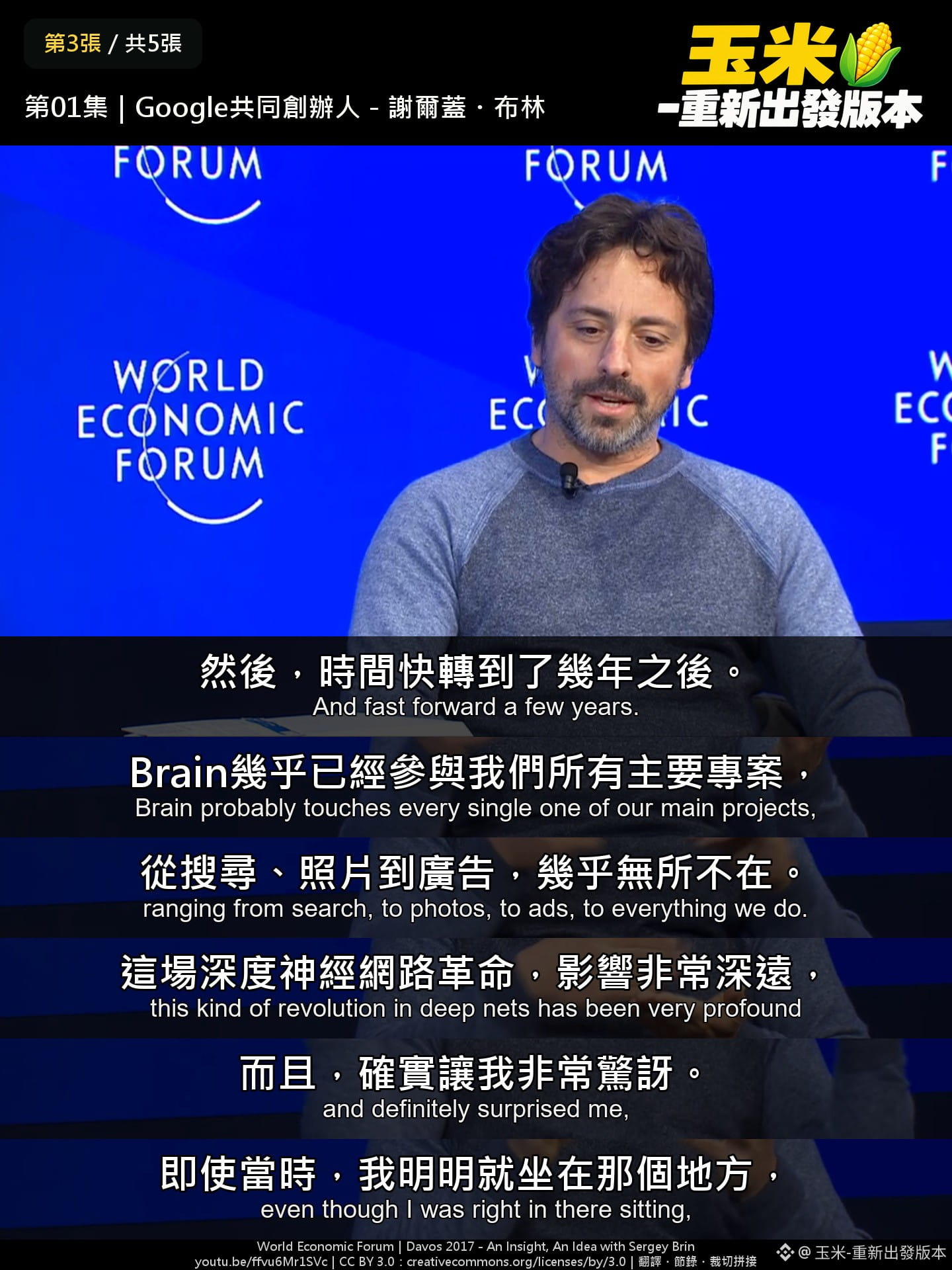
As time went on, Brain gradually became involved in major projects such as Search, Photos, and Ads. He said that deep neural networks brought about profound changes—and even he, who had been there all along, was surprised.
04 | He admitted he was surprised—and that his ability to predict was limited
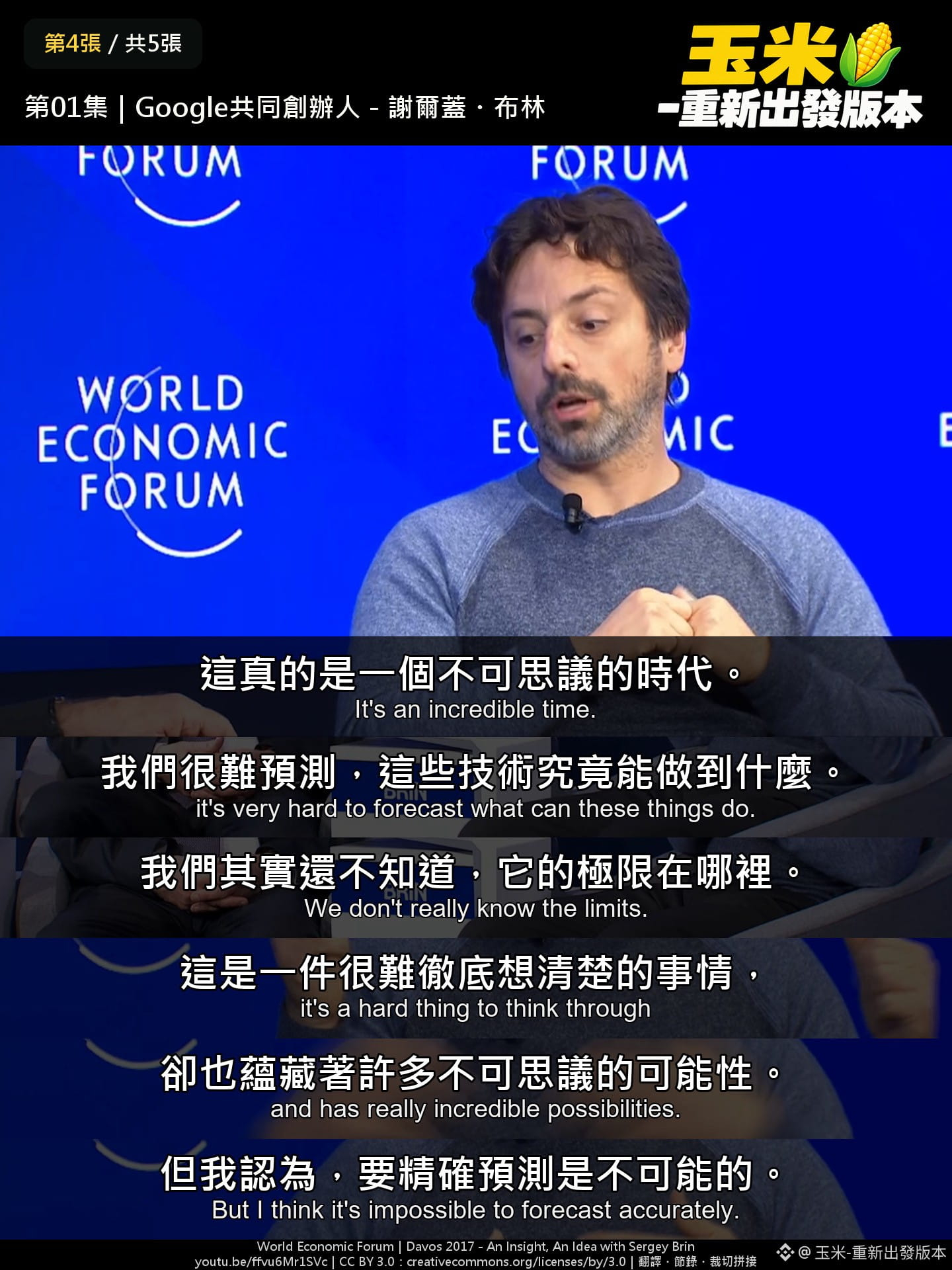
He didn’t go on to offer a definitive answer. Instead, he said that no one yet knew the limits of these technologies, and that precise predictions were impossible. These were his actual words in 2017, reflecting his candor as he looked back on his own judgment.
Is there something you currently think is impossible that you may only disbelieve because of your past experience?
#Google #SergeyBrin #創業 #AI #人物訪談
Corn’s Investment Take
This made me think of two things that are easy to conflate in crypto investing: understanding a new technology and deciding whether a token is worth investing in. They are not the same question at all.
I look separately at technological progress, a token’s practical utility, and what new evidence might overturn my original judgment. Being wrong in the past isn’t a reason to chase prices now; past failures aren’t a reason to reject anything new forever, either.
This content may generate Binance Creator Rewards or trading commissions. Rewards are not guaranteed.
AI-assisted editing and formatting. The interviewee’s remarks are from a public interview at the 2017 World Economic Forum. The investment take is Corn’s own interpretation and is not cryptocurrency investment advice from the interviewee.
55
·
--
With the $ETH mark price below the index price, can longs receive funding? I wouldn’t judge based on this spread alone.
Binance snapshot at 07:03 UTC on November 3: mark price 2246.25, index price 2247.31255814 USDT, with the former about 1.06 lower. Yet the funding rate in the same response was positive at 0.01%.
The funding rate takes into account factors including the average premium index and the interest rate. The premium index is calculated using impact bid and ask prices; it is not equal to the mark price minus the index price. To determine who pays, check the rate applicable at settlement and your position. The rate shown in a snapshot may change, and the mark price does not guarantee execution.
This content may generate Binance creator rewards or trading commissions; rewards are not guaranteed.
AI-assisted creation; data from official Binance futures market data.

131
·
--
Can the $ETH hourly closing price represent the market’s average trading price for that hour? I’ll look at the two separately, then compare them with my own actual trades.
The 1-hour candlestick for October 31, 10:00–11:00 UTC recorded a trading volume of 40,857.388 ETH and a turnover of approximately 91.7141 million USDT. Dividing the two gives a market volume-weighted average price of approximately 2,244.74 USDT, while the closing price was 2,243.37.
The former summarizes market trades during that hour; it is not your execution price and does not predict price movements. To compare execution prices, use the same contract and time period, distinguish between buy and sell orders, and calculate fees separately. Different time windows cannot be compared directly.
This content may generate Binance Creator Rewards or trading commissions; rewards are not guaranteed.
AI-assisted content; data sourced from Binance’s official contract market data.

158
·
--
Now that $SOL has risen, is the reward-to-risk ratio still the same? With the target and invalidation price unchanged, a higher entry means less potential profit and more distance to the loss level.
The last 1-hour candle for Oct 30, 00:00–03:00 UTC closed at 95.37. The latest price in the snapshot at 04:04:52 UTC was 96.81 USDT. Assuming a long position with a target of 100 and an invalidation price of 94, using each price as an entry reference, the gross reward-to-risk ratio per coin drops from about 4.63÷1.37 = 3.38 to 3.19÷2.81 = 1.14.
100 and 94 are hypothetical, not technical levels; reference prices are not execution prices. Fees, slippage, and funding fees are excluded. The reward-to-risk ratio does not indicate the probability of success; recalculate if either endpoint changes.
This content may generate Binance creator rewards or trading commissions; rewards are not guaranteed.
Created with AI assistance; data is from Binance’s official futures market data.

220
·
--
This content may generate Binance creator rewards or trading commissions; rewards are not guaranteed.
Buying $ETH in two batches—does the average price look right? For equal-amount purchases, check the quantities first.
The two 1-hour candles from 20:00 to 22:00 UTC on October 29 opened at 2335.68 and 2256.63 USDT, respectively. Assuming a notional amount of 1000 USDT per batch and execution at the open price, the quantities would be approximately 0.42814 and 0.44314 ETH. Dividing 2000 by the total quantity gives an average price of approximately 2295.47, while the simple average of the two prices is 2296.16.
You can average the two prices directly only when buying equal quantities. Notional amount is not margin; execution prices are hypothetical, and fees, slippage, and funding are calculated separately. A lower average price does not mean the risk is gone.
AI-assisted creation; data sourced from Binance’s official futures market data.

369
Log in to explore more content
Join global crypto users on Binance Square
⚡️ Get latest and useful information about crypto.
💬 Trusted by the world’s largest crypto exchange.
👍 Discover real insights from verified creators.
Email / Phone number
Trending Topics
USMidterms-WhatAreMarketsExpecting?
750 views
70 Discussing
UBS: Rising Democratic 'Blue Wave' Expectations Deepen Market Risk Aversion
Binance News
·0 Likes
·451 views
USOctoberNFP-AreRateCutsStillPossible
193,406 views
1,444 Discussing
AMDBeatsExpectations-AINarrativeContinues
196 views
38 Discussing