
alert的会所
882 Posts

alert的会所
 Square Verified
推特:@BTC_Alert_ 有一家做海外电商的公司,自己玩币,没社区,不抽奖,不pua,不收钱开课。你说的都对,不争不抢。分享宏观经济、周期性交易,投资点项目和团队,寻找公司转型方向。

原创之星

BTC Holder
High-Frequency Trader
8.7 Years
32 Following
8.8K+ Followers
9.4K+ Liked
1 Badges
Posts
All
Quotes
Videos
Live
alert的会所
·
--
Let’s talk about trading again: about a month ago, I bought six coins on BSC.
Not being able to hold isn’t the reason you don’t make money. The real reason you don’t make money is self-deception and trying only a little.
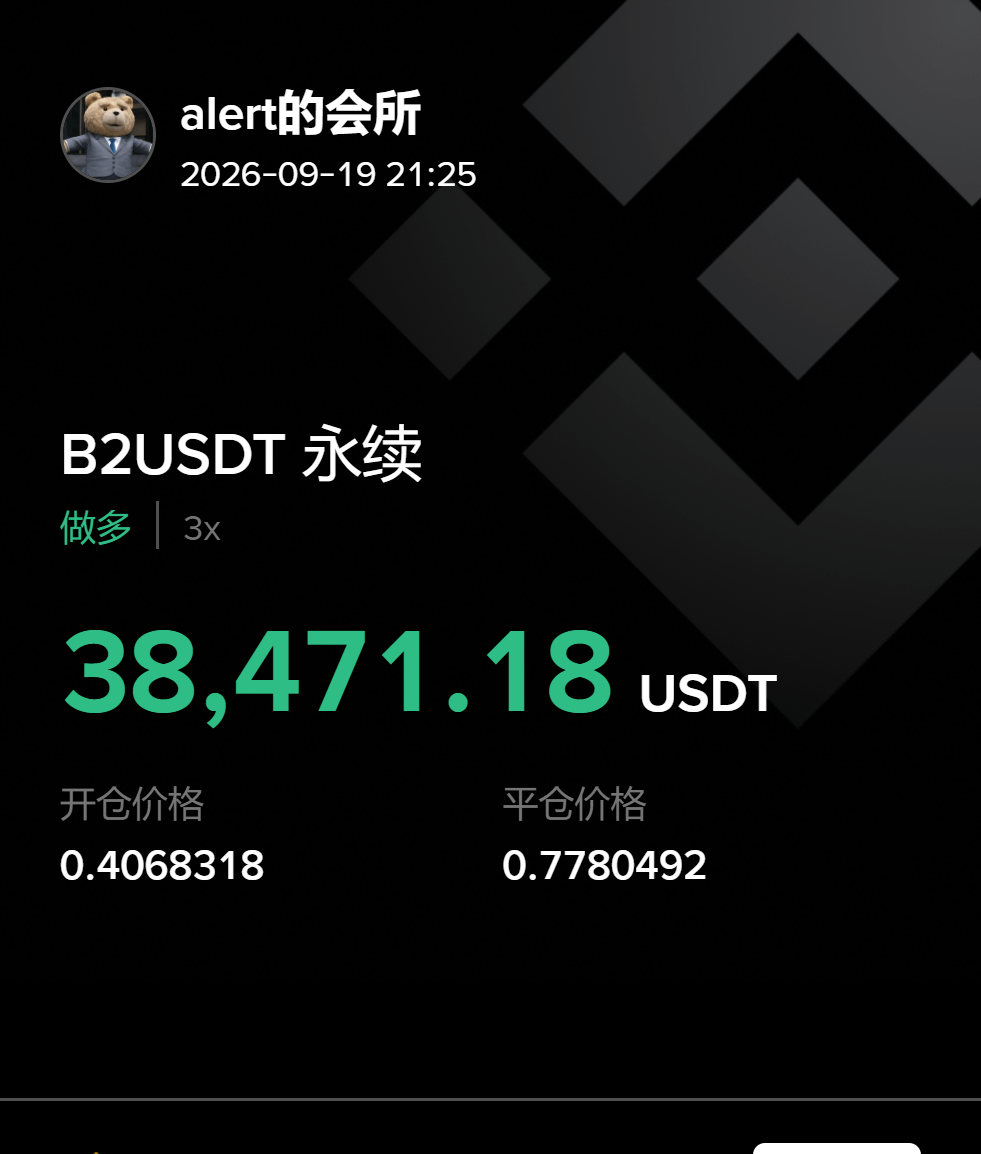
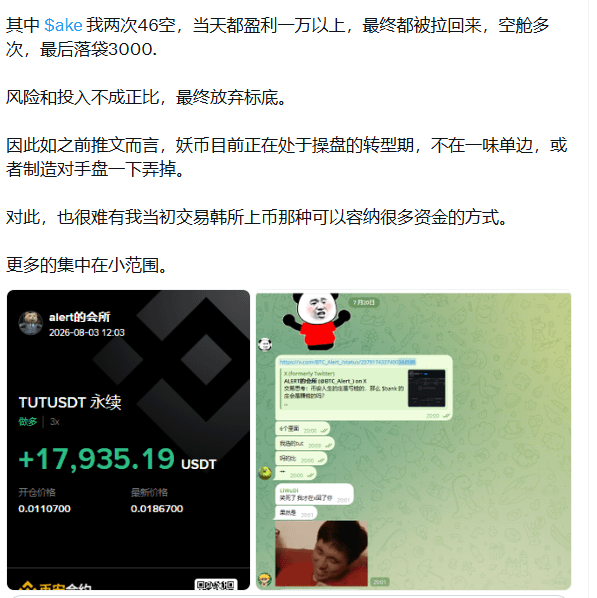
A month ago, I traded $AKE . The volatility was too high, and in the end I woke up too early and caught the late train.
I’ve been thinking: is there a more reliable way to find some “hot” coins—maybe even set a trap and wait?
There are two expectations here:
1. Coins on BSC with a market cap below 2000w, and the liquidity/position holders have redistribution and concentration.
The “shell” price on Binance perps is around 1000w. Even if the 2000w spot price may not be sold for 1000w, they’re still controlling the float—then it will launch.
Monitoring point: when OI is close to the market cap or greater than the market cap.
2. There’s some level of consensus/“narrative” injected.
Take Binance Life as an example: as a meme, if there’s a team behind it, they’ll definitely consider risk.
Especially during the bear market, and when they were reducing the number of listings.
And the biggest advantage of Life is there’s no delisting risk. Even if four does some dirty, tiring work, they’re still treated like the “real child”—just the same.
No matter whether it’s the cost of accumulating positions or the time involved, you can get reliable returns.
In summary: whether it’s spot or futures, you can buy and hold.
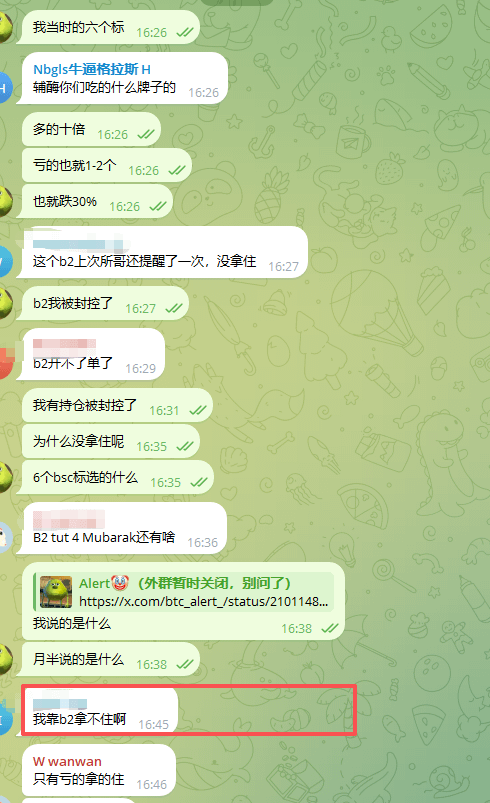
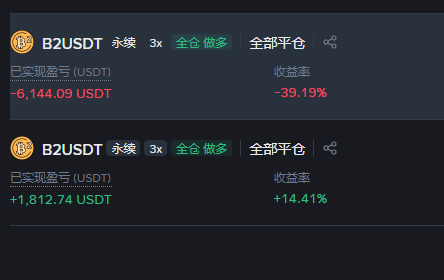
What I chose is 4 — White Cloth $Lobster $B2 tut tst I’m here, damn it.
From the whole community, only $TUT made money.
The reason is simple: the holding experience is good—after 4-5 days, it brought more trades and even compensation events from other exchanges.
But many people didn’t hold.
The info I saw was:
“Brother, are you still there?”
“I’m screwed—lost a lot!”
“I’m still here. I added.”
“Or they started daydreaming.”
Why they added? No one knows. Whether expectations changed is unclear. I don’t know if OI or the order book changed, whether the float increased on-chain, or whether there were any suspicious transfer operations—nobody mentions any of that.
This is simply the most basic thing in futures trading: no special technique needed. You could even just pick any monitor and do it.
I spent a long time writing a recap post, and they seemed excited, but they didn’t dig into it much.
It seems like: they think they can find a convincing-sounding rationale to persuade themselves, then have a sudden realization and treat it as a “gain,” reassuring themselves that everything makes sense.
In the end: consoling themselves for missing out—haha, I’m the one who didn’t hold.
But: is it only that you didn’t hold?
Even up to today, there are still people talking about the -2% futures fee cap.
And that was already after so many versions passed.
Not being able to hold isn’t the reason you don’t make money. The real reason you don’t make money is self-deception and trying only a little.
A month ago, I traded $AKE . The volatility was too high, and in the end I woke up too early and caught the late train.
I’ve been thinking: is there a more reliable way to find some “hot” coins—maybe even set a trap and wait?
There are two expectations here:
1. Coins on BSC with a market cap below 2000w, and the liquidity/position holders have redistribution and concentration.
The “shell” price on Binance perps is around 1000w. Even if the 2000w spot price may not be sold for 1000w, they’re still controlling the float—then it will launch.
Monitoring point: when OI is close to the market cap or greater than the market cap.
2. There’s some level of consensus/“narrative” injected.
Take Binance Life as an example: as a meme, if there’s a team behind it, they’ll definitely consider risk.
Especially during the bear market, and when they were reducing the number of listings.
And the biggest advantage of Life is there’s no delisting risk. Even if four does some dirty, tiring work, they’re still treated like the “real child”—just the same.
No matter whether it’s the cost of accumulating positions or the time involved, you can get reliable returns.
In summary: whether it’s spot or futures, you can buy and hold.
What I chose is 4 — White Cloth $Lobster $B2 tut tst I’m here, damn it.
From the whole community, only $TUT made money.
The reason is simple: the holding experience is good—after 4-5 days, it brought more trades and even compensation events from other exchanges.
But many people didn’t hold.
The info I saw was:
“Brother, are you still there?”
“I’m screwed—lost a lot!”
“I’m still here. I added.”
“Or they started daydreaming.”
Why they added? No one knows. Whether expectations changed is unclear. I don’t know if OI or the order book changed, whether the float increased on-chain, or whether there were any suspicious transfer operations—nobody mentions any of that.
This is simply the most basic thing in futures trading: no special technique needed. You could even just pick any monitor and do it.
I spent a long time writing a recap post, and they seemed excited, but they didn’t dig into it much.
It seems like: they think they can find a convincing-sounding rationale to persuade themselves, then have a sudden realization and treat it as a “gain,” reassuring themselves that everything makes sense.
In the end: consoling themselves for missing out—haha, I’m the one who didn’t hold.
But: is it only that you didn’t hold?
Even up to today, there are still people talking about the -2% futures fee cap.
And that was already after so many versions passed.

月半771
·
--
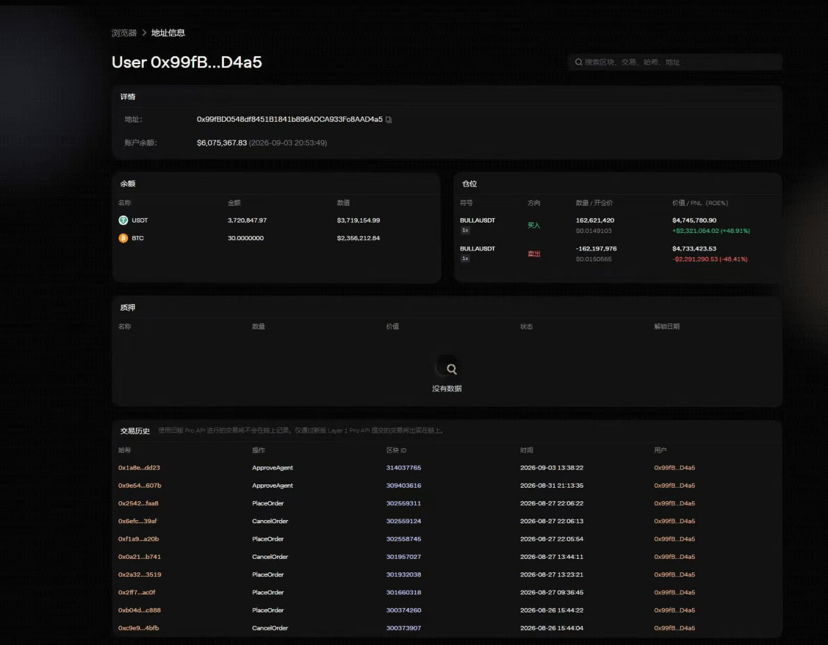
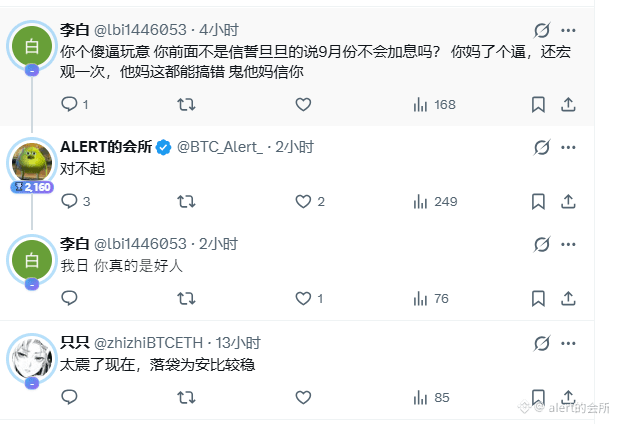
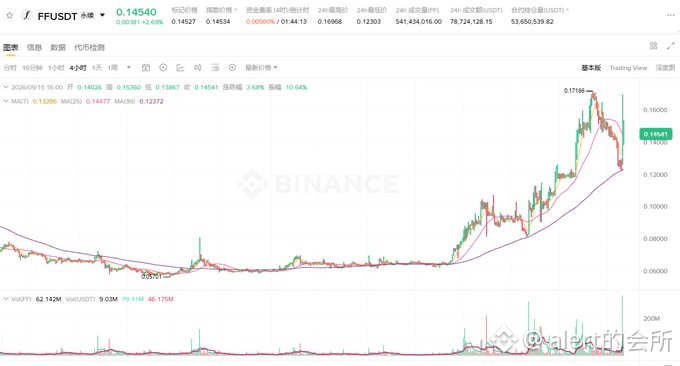
$BULLA Some friends asked me how I noticed it, so I’ll briefly explain. I’ve been paying attention to this for more than a month. What’s relatively unusual is that he opened a two-way single, so I only dared to play short-term.
Also, the on-chain big player has recently withdrawn a lot. Last night he removed the two-way single. It’s bound to pick a direction, so I’m taking a gamble. I won’t explain the details. I’m tired.
Also, the on-chain big player has recently withdrawn a lot. Last night he removed the two-way single. It’s bound to pick a direction, so I’m taking a gamble. I won’t explain the details. I’m tired.
alert的会所
·
--
Let’s talk about trading again: what kind of “art” is it when you’re buying late, resulting in a loss of $110k.
$MEME
The highest floating profit was $130k, and then I sold off more than half at 0.1–0.13. After that, the rest I went into alpha and then sold as well. I took out $40k in total—so that’s basically a loss of $80k.
$牛来 I’m on spot. On BSC, it was another whole round of being killed; Robinhood got its valuation smashed.
I sold the RH hype and went to chase Robinhood’s “dragon one,” betting on a rebound.
$PONS Loss of $16k. Actually, the expectation was that it wouldn’t break 0.6 and would bounce back. The last bounce was very strong, but this one was weak. There was selling from the front seats, so I made a quick swing trade and wanted to claw back the loss on a small altcoin. When I saw the front-seat selling, I just left.
That altcoin loss was $7,200.
I don’t know how it happened—before, everyone would sweep in together and then discuss trade expectations. Now everyone’s just turned into late buyers.
A group mate originally went long at 0.658. Seeing the price was higher than mine, he bailed immediately—insisting on being the late buyer.
I was mocking that this isn’t trading. What kind of trade has “good lights only for late buyers”?
In the end, he just chuckled. He didn’t get the art of late buying.
How can the group admin go first, and then the next few thousand people wait to be late buyers?
$MEME
The highest floating profit was $130k, and then I sold off more than half at 0.1–0.13. After that, the rest I went into alpha and then sold as well. I took out $40k in total—so that’s basically a loss of $80k.
$牛来 I’m on spot. On BSC, it was another whole round of being killed; Robinhood got its valuation smashed.
I sold the RH hype and went to chase Robinhood’s “dragon one,” betting on a rebound.
$PONS Loss of $16k. Actually, the expectation was that it wouldn’t break 0.6 and would bounce back. The last bounce was very strong, but this one was weak. There was selling from the front seats, so I made a quick swing trade and wanted to claw back the loss on a small altcoin. When I saw the front-seat selling, I just left.
That altcoin loss was $7,200.
I don’t know how it happened—before, everyone would sweep in together and then discuss trade expectations. Now everyone’s just turned into late buyers.
A group mate originally went long at 0.658. Seeing the price was higher than mine, he bailed immediately—insisting on being the late buyer.
I was mocking that this isn’t trading. What kind of trade has “good lights only for late buyers”?
In the end, he just chuckled. He didn’t get the art of late buying.
How can the group admin go first, and then the next few thousand people wait to be late buyers?
Partly True

alert的会所
·
--
About trading again: I don’t have the energy to play Robinhood; I’ll stick to what I’m good at.
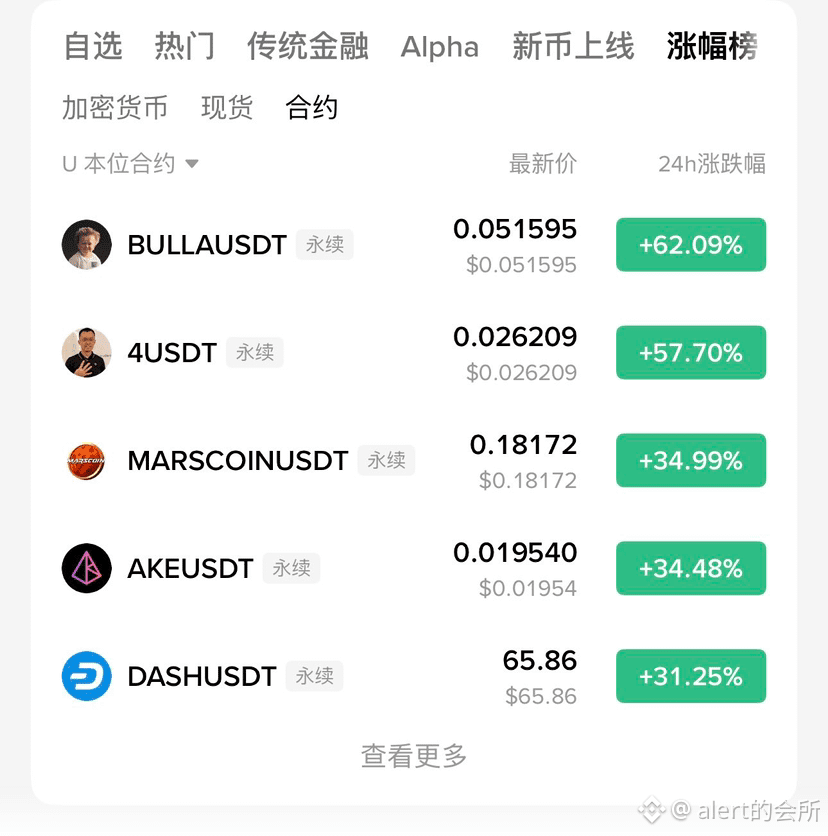
1. $BULLA : Last night I detected extraction from Matcha. By midday, the order book became thinner—around 2 million OI.
Consolidate the chips, reduce liquidity, and earlier they only poked OI for themselves.
Getting in to go long—calling it a “妖币” doesn’t help. When the OI from non-firms increases, the market maker will definitely keep washing. You can only discuss it in the community.
2. CP’s transfer went to dgrid’s test address. It seemed likely to go up on Alpha, but it never got announced.
cb and okx have spot trading; if it does go up on Alpha, it might surge into futures. I’m preparing 200 million to take it.
Maybe it was because the cake deployment of liquidity couldn’t be worked out—no Alpha, so I gave up on the trade.
3. $AKE triggered an alert. Did it mean abandoning BTR and continuing to do AKE instead—cutting the cross-exchange arbitrage? I’m impotent; I went to bed and woke up early and missed it.
I basically don’t check Twitter or news anymore—everything is just shitcoins making money.
Many people also write “Robinhood” because writing it gets traffic. Exchanges are competing for trading volume, and they’re all reducing trading fees.
BN’s delisting happened faster than its listing; the shell token price skyrocketed. Lots of other shitcoins are also taking advantage while the market still has room to move.
Focus on what you’re good at. Traffic is of little use—make money first.
Good night.
1. $BULLA : Last night I detected extraction from Matcha. By midday, the order book became thinner—around 2 million OI.
Consolidate the chips, reduce liquidity, and earlier they only poked OI for themselves.
Getting in to go long—calling it a “妖币” doesn’t help. When the OI from non-firms increases, the market maker will definitely keep washing. You can only discuss it in the community.
2. CP’s transfer went to dgrid’s test address. It seemed likely to go up on Alpha, but it never got announced.
cb and okx have spot trading; if it does go up on Alpha, it might surge into futures. I’m preparing 200 million to take it.
Maybe it was because the cake deployment of liquidity couldn’t be worked out—no Alpha, so I gave up on the trade.
3. $AKE triggered an alert. Did it mean abandoning BTR and continuing to do AKE instead—cutting the cross-exchange arbitrage? I’m impotent; I went to bed and woke up early and missed it.
I basically don’t check Twitter or news anymore—everything is just shitcoins making money.
Many people also write “Robinhood” because writing it gets traffic. Exchanges are competing for trading volume, and they’re all reducing trading fees.
BN’s delisting happened faster than its listing; the shell token price skyrocketed. Lots of other shitcoins are also taking advantage while the market still has room to move.
Focus on what you’re good at. Traffic is of little use—make money first.
Good night.

顺天改命大犀牛
·
--
Pig-Butchering Scam
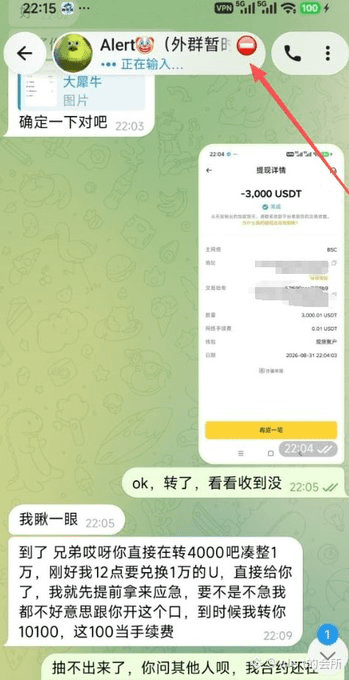
Last night I went through a scam where the fraudsters “dumped and escaped the order book” on Telegram (TG) — I was cheated out of 6,000 USDT. I think it’s necessary to share what happened to help prevent more people from falling for it. Here’s how it went.
A couple of months ago, I met a person I’ll call “Brother Suo” and added his TG. Last night, the two of us chatted about recent trading. Then the fake “Brother Suo” asked me whether I had any Ethereum spot. He told me to first transfer some to him to use, and that later he would transfer it back to me. I said I don’t have any spot, I don’t hold any — I only trade futures.
Then the fake “Brother Suo” said, “Then transfer me a few thousand U first. It’s urgent.” I agreed. I asked, “Can it be 2,000 U?” The fake “Brother Suo” replied, “3,000 U.” So I transferred it. After he received it, he asked again that I was short by a bit, and asked me to transfer another 3,000, and he would return it to me at 0:00. I didn’t say much and just transferred it.
Finally, after I received the money, for the third time he asked whether I could make it up to 10,000 U. He said it was urgent, so he needed to “make it full.” At this point I already felt something was off, because normally he wouldn’t ask again and again like that. Why didn’t he just ask for 10,000 the first time? If he kept asking like this, it would mean it wouldn’t stop after this transfer.
So I refused, saying that futures trading needs to top up margin — I needed to pause and ask “Fat Brother” first to confirm whether Brother Suo’s TG account had been compromised. When I transferred the second time, I actually had a slight suspicion already. But when I checked the past chat history, all the historical messages were still there. I thought, maybe Brother Suo’s account was fine — we’d been chatting on and off for several months.
After I asked Fat Brother, and Fat Brother contacted Brother Suo by phone, it turned out there was a problem.
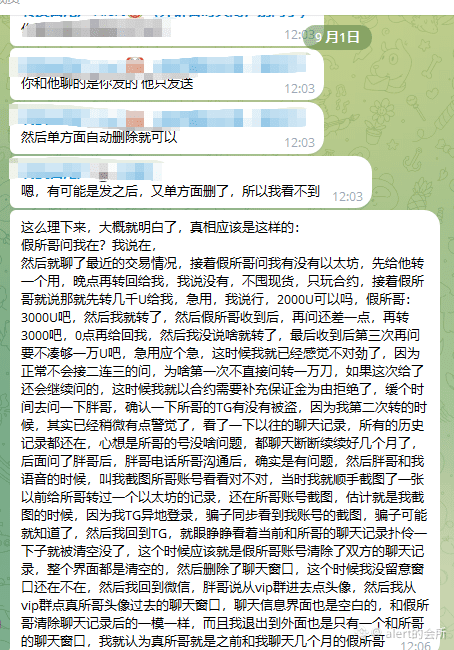
Analysis shows: the very earliest TG I added was actually the real Brother Suo’s TG. But that TG had already been stolen earlier. That means the scammer could log into my TG on other devices. Last night I also saw two login locations. Both were in Thailand. That same night, in the early hours, the scammer deleted the chat window between me and Brother Suo.
Then he created a fake “Brother Suo” account with the same avatar (with a red “1” added — basically a TG scammer tag indicator), and also changed to a username that was basically the same. The only difference was that the letters were I vs l (capital i and lowercase L are almost indistinguishable). Then he copied and synchronized the conversations between me and the real Brother Suo into the fake “Brother Suo” account.
Because the fake Brother Suo account was controlled by the scammer, and my account could also be freely logged into by the scammer, the two accounts could send messages back and forth automatically. For the past two months, I had been chatting normally with the fake Brother Suo account for two months — I never noticed anything wrong.
So when I made the transfer last night, I didn’t suspect anything either. I could still see the prior chat history. Only on the third transfer did I start to suspect something.
In the past conversations, the fake Brother Suo acted like a “relay” to pass messages. He had even chatted with me for months. The scammer really laid a long line to catch a big fish.
So this is a very classic scam — everyone should take it as a warning and avoid being fooled. Be careful when transferring money online. Even if you must transfer, verify from multiple sides and don’t be careless. Also, if you use Telegram, you must remember to enable two-step verification. When you log into a new device, you need to enter your password — it will protect you much more.@alert的会所 >
A couple of months ago, I met a person I’ll call “Brother Suo” and added his TG. Last night, the two of us chatted about recent trading. Then the fake “Brother Suo” asked me whether I had any Ethereum spot. He told me to first transfer some to him to use, and that later he would transfer it back to me. I said I don’t have any spot, I don’t hold any — I only trade futures.
Then the fake “Brother Suo” said, “Then transfer me a few thousand U first. It’s urgent.” I agreed. I asked, “Can it be 2,000 U?” The fake “Brother Suo” replied, “3,000 U.” So I transferred it. After he received it, he asked again that I was short by a bit, and asked me to transfer another 3,000, and he would return it to me at 0:00. I didn’t say much and just transferred it.
Finally, after I received the money, for the third time he asked whether I could make it up to 10,000 U. He said it was urgent, so he needed to “make it full.” At this point I already felt something was off, because normally he wouldn’t ask again and again like that. Why didn’t he just ask for 10,000 the first time? If he kept asking like this, it would mean it wouldn’t stop after this transfer.
So I refused, saying that futures trading needs to top up margin — I needed to pause and ask “Fat Brother” first to confirm whether Brother Suo’s TG account had been compromised. When I transferred the second time, I actually had a slight suspicion already. But when I checked the past chat history, all the historical messages were still there. I thought, maybe Brother Suo’s account was fine — we’d been chatting on and off for several months.
After I asked Fat Brother, and Fat Brother contacted Brother Suo by phone, it turned out there was a problem.
Analysis shows: the very earliest TG I added was actually the real Brother Suo’s TG. But that TG had already been stolen earlier. That means the scammer could log into my TG on other devices. Last night I also saw two login locations. Both were in Thailand. That same night, in the early hours, the scammer deleted the chat window between me and Brother Suo.
Then he created a fake “Brother Suo” account with the same avatar (with a red “1” added — basically a TG scammer tag indicator), and also changed to a username that was basically the same. The only difference was that the letters were I vs l (capital i and lowercase L are almost indistinguishable). Then he copied and synchronized the conversations between me and the real Brother Suo into the fake “Brother Suo” account.
Because the fake Brother Suo account was controlled by the scammer, and my account could also be freely logged into by the scammer, the two accounts could send messages back and forth automatically. For the past two months, I had been chatting normally with the fake Brother Suo account for two months — I never noticed anything wrong.
So when I made the transfer last night, I didn’t suspect anything either. I could still see the prior chat history. Only on the third transfer did I start to suspect something.
In the past conversations, the fake Brother Suo acted like a “relay” to pass messages. He had even chatted with me for months. The scammer really laid a long line to catch a big fish.
So this is a very classic scam — everyone should take it as a warning and avoid being fooled. Be careful when transferring money online. Even if you must transfer, verify from multiple sides and don’t be careless. Also, if you use Telegram, you must remember to enable two-step verification. When you log into a new device, you need to enter your password — it will protect you much more.@alert的会所 >

Log in to explore more content