
加密阿杰
960 Posts

加密阿杰
公众号:加密杰哥 聊天室id:jiege5566,八年币圈交易经验,不定期分享经验与动态,专业指导学习
5 Following
2.5K+ Followers
2.1K+ Liked
Posts
All
Quotes
PINNED
Binance has now launched a new feature - you can chat directly via private messages within the platform.
Friends who need to communicate or consult can directly scan the QR code below to add.
The personal profile also has a chat ID, just enter the ID to search and add Brother Jie.
Friends who need to communicate or consult can directly scan the QR code below to add.
The personal profile also has a chat ID, just enter the ID to search and add Brother Jie.

Is there still a bull market in China’s crypto market in 2026?
Someone from an exchange told me:
Compared to early last year, 70% to 80% of accounts have nearly zeroed out and entered the “dead account” state. After Trump’s coin launch, the number of new users surged straight up to a peak, then crashed sharply again. Now it’s only about 2% of the peak.
In just two years, nearly four-fifths of retail traders are gone. What a bull market—too much “benefit.”
You keep adding to your losing positions, and that doesn’t redeem you—it keeps giving the other side more chances to profit, until finally it swallows you whole!
You couldn’t bear to cut off a finger to survive, but in the end a small mistake led to a huge one, and you lost everything.
Although it’s falling every day now, what I said—there’s no “benefit”—has never meant “it’s going down.”
Let me stress it again: when I say there’s no “benefit,” it never refers to the fact that it will drop.
I’ve repeated this line many times.
But somehow, whenever people go up, they come to curse me; and when it goes down, they flatter me in every way.
“Not having benefit” means:
1. In the industry, lots of old money has emerged, and opportunities for newcomers are getting fewer.
2. There are fewer and fewer trends; more and more ranging.
3. Volatility is getting lower and lower.
If you can’t understand that, then you’re in the mildly intellectually disabled group, and you’re not suited for trading—you’re only suited to screw bolts.
One big misconception is thinking that to trade, you need to know a lot of things.
Let me use weight loss as an example.
Do you need to understand nutrition science, fitness science, and postpartum care for a sow to lose weight?
Do you? Do you? Do you?
No.
Weight loss only needs six words: eat less, move more.
Everyone knows that.
So why are there still so many fat people?
Because they don’t have execution.
Tell a fat person to eat less—it’s harder than killing them.
I don’t believe it: if I eat only one meal a day like I do, can I still get fat???
The core of trading is execution.
If you can’t make money, it’s not because you know too little—it’s because, like those dead fat pigs, you lack execution.
Follow Big Brother Jie. No bragging, no empty promises—just practical experience that helps you survive in this circle. If you’re still losing repeatedly and restarting repeatedly, come talk to me. I’ll teach you how to make trading simple.
Someone from an exchange told me:
Compared to early last year, 70% to 80% of accounts have nearly zeroed out and entered the “dead account” state. After Trump’s coin launch, the number of new users surged straight up to a peak, then crashed sharply again. Now it’s only about 2% of the peak.
In just two years, nearly four-fifths of retail traders are gone. What a bull market—too much “benefit.”
You keep adding to your losing positions, and that doesn’t redeem you—it keeps giving the other side more chances to profit, until finally it swallows you whole!
You couldn’t bear to cut off a finger to survive, but in the end a small mistake led to a huge one, and you lost everything.
Although it’s falling every day now, what I said—there’s no “benefit”—has never meant “it’s going down.”
Let me stress it again: when I say there’s no “benefit,” it never refers to the fact that it will drop.
I’ve repeated this line many times.
But somehow, whenever people go up, they come to curse me; and when it goes down, they flatter me in every way.
“Not having benefit” means:
1. In the industry, lots of old money has emerged, and opportunities for newcomers are getting fewer.
2. There are fewer and fewer trends; more and more ranging.
3. Volatility is getting lower and lower.
If you can’t understand that, then you’re in the mildly intellectually disabled group, and you’re not suited for trading—you’re only suited to screw bolts.
One big misconception is thinking that to trade, you need to know a lot of things.
Let me use weight loss as an example.
Do you need to understand nutrition science, fitness science, and postpartum care for a sow to lose weight?
Do you? Do you? Do you?
No.
Weight loss only needs six words: eat less, move more.
Everyone knows that.
So why are there still so many fat people?
Because they don’t have execution.
Tell a fat person to eat less—it’s harder than killing them.
I don’t believe it: if I eat only one meal a day like I do, can I still get fat???
The core of trading is execution.
If you can’t make money, it’s not because you know too little—it’s because, like those dead fat pigs, you lack execution.
Follow Big Brother Jie. No bragging, no empty promises—just practical experience that helps you survive in this circle. If you’re still losing repeatedly and restarting repeatedly, come talk to me. I’ll teach you how to make trading simple.
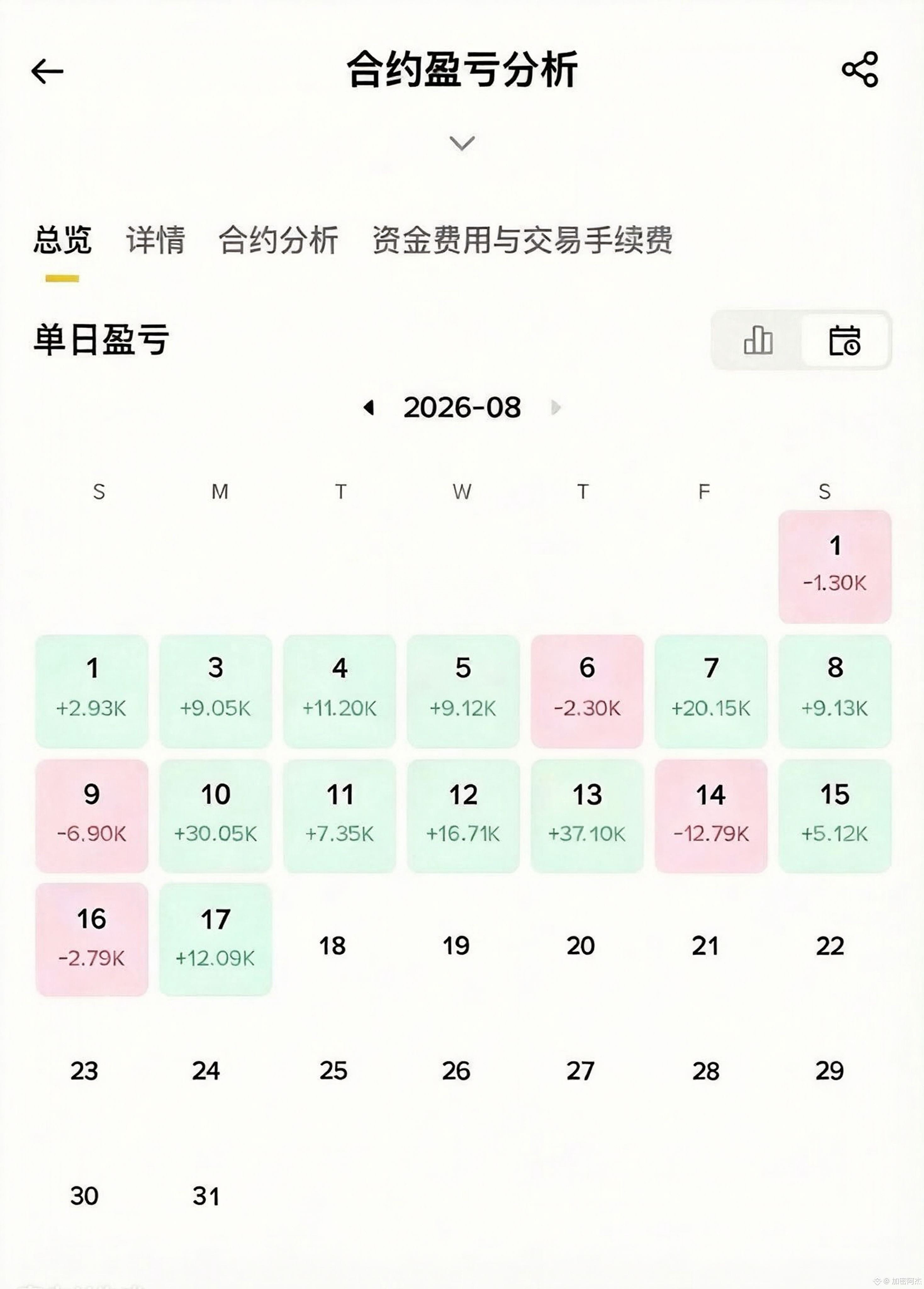
A fan told me: “Over the past period on SNDK, he lost 80,000. What should he do?”
What else can he do? Accept reality. A lot of people have blown up too—this isn’t only happening to you.
So would his mood be any better?
Human nature in trading is exactly like this: when you just get trapped, everyone thinks they can hold on. But when the floating loss keeps growing and the time holding gets longer, your thoughts change into: “God, please let me get out of this trade. As long as I can break even, I’ll GTFO immediately.”
That’s normal human nature. So if you make a mistake, stop the loss immediately. If you don’t stop the loss right away, then by the second time you won’t be able to bring yourself to cut anymore. The floating loss will keep getting bigger. In the meantime, your trading mindset will undergo a total 180. When you finally reach the limits of your psychology and your capital, that’s when the real top and bottom show up. So when you cut a position, it’s either at the ceiling or at the floor. Don’t think the main force is missing one little retail investor/“hedge fund blade of grass” just for you—actually, a huge wave of people are driven by the same psychology. Even if you manage to hold through, the moment you get back to break-even, you’ll run immediately. There’s absolutely no way you’ll still have a good mindset waiting to make money.
I once saw a quote: “Cutting loss, even if it’s wrong, is still right. Not cutting loss, even if it’s right, is still wrong.”
Holding a position is a kind of wrong behavior, but this wrong behavior doesn’t always end in getting liquidated. Sometimes you can even hold it back and end up with big profits. The biggest variable determining which outcome you get is luck. That reinforces people’s sense of luck and makes them complacent. Unless you can guarantee you’ll always be lucky, over a longer cycle there will be at least one time when you can’t afford to lose—and an extreme move will take you out.
Compared to producing correct results through wrong methods, Gege cares more about “procedural justice” in the trading process—producing correct results through correct methods.
If you could make money just by learning candlestick charts, how did Livermore—who didn’t have candlesticks back then—make money?
When you know this: “When you profit, you have to hold; when you lose, you have to cut.”
But in reality, you run as soon as you make a little. Then you beat your chest in regret. And when you’re losing, you clutch the position and desperately hold, hoping for a rebound.
Isn’t it like that?
What you need to learn isn’t how to “read candlesticks,” but how to hold—and how to cut losses.
Follow Gege. No bragging, no empty promises. Just share real-world experience that helps you survive in this circle. If you’re still repeatedly losing and starting over, come talk to me—I’ll teach you how to make trading simple.
What else can he do? Accept reality. A lot of people have blown up too—this isn’t only happening to you.
So would his mood be any better?
Human nature in trading is exactly like this: when you just get trapped, everyone thinks they can hold on. But when the floating loss keeps growing and the time holding gets longer, your thoughts change into: “God, please let me get out of this trade. As long as I can break even, I’ll GTFO immediately.”
That’s normal human nature. So if you make a mistake, stop the loss immediately. If you don’t stop the loss right away, then by the second time you won’t be able to bring yourself to cut anymore. The floating loss will keep getting bigger. In the meantime, your trading mindset will undergo a total 180. When you finally reach the limits of your psychology and your capital, that’s when the real top and bottom show up. So when you cut a position, it’s either at the ceiling or at the floor. Don’t think the main force is missing one little retail investor/“hedge fund blade of grass” just for you—actually, a huge wave of people are driven by the same psychology. Even if you manage to hold through, the moment you get back to break-even, you’ll run immediately. There’s absolutely no way you’ll still have a good mindset waiting to make money.
I once saw a quote: “Cutting loss, even if it’s wrong, is still right. Not cutting loss, even if it’s right, is still wrong.”
Holding a position is a kind of wrong behavior, but this wrong behavior doesn’t always end in getting liquidated. Sometimes you can even hold it back and end up with big profits. The biggest variable determining which outcome you get is luck. That reinforces people’s sense of luck and makes them complacent. Unless you can guarantee you’ll always be lucky, over a longer cycle there will be at least one time when you can’t afford to lose—and an extreme move will take you out.
Compared to producing correct results through wrong methods, Gege cares more about “procedural justice” in the trading process—producing correct results through correct methods.
If you could make money just by learning candlestick charts, how did Livermore—who didn’t have candlesticks back then—make money?
When you know this: “When you profit, you have to hold; when you lose, you have to cut.”
But in reality, you run as soon as you make a little. Then you beat your chest in regret. And when you’re losing, you clutch the position and desperately hold, hoping for a rebound.
Isn’t it like that?
What you need to learn isn’t how to “read candlesticks,” but how to hold—and how to cut losses.
Follow Gege. No bragging, no empty promises. Just share real-world experience that helps you survive in this circle. If you’re still repeatedly losing and starting over, come talk to me—I’ll teach you how to make trading simple.
Log in to explore more content