
BRO BNB
2.2k Posts

BRO BNB
Report
Block User
4 Following
4.6K+ Followers
1.0K+ Liked
Posts
·
--
Bullish
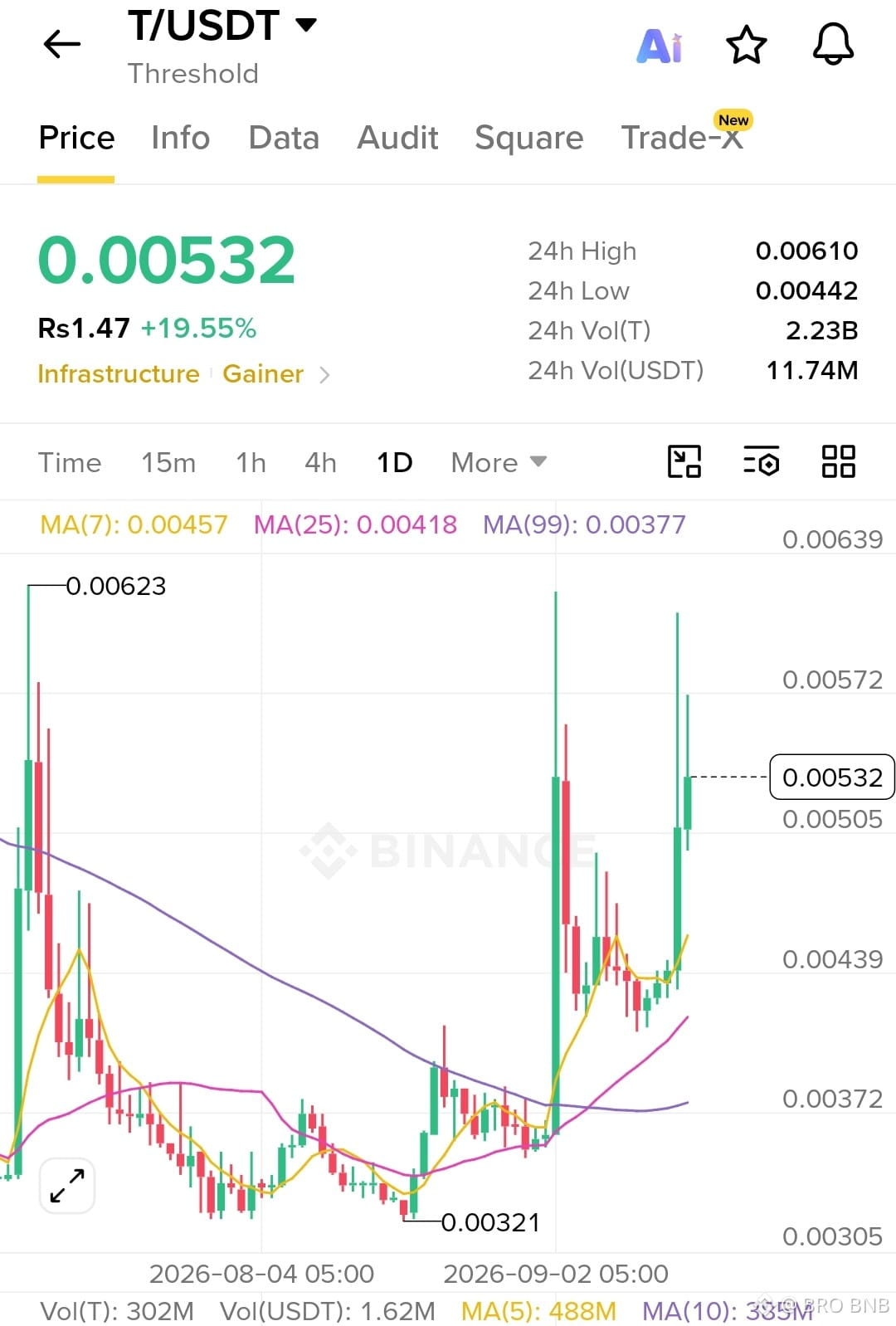
$T /USDT): Momentum is explosive, with price above MA7, MA25 and MA99. Short-term resistance sits 0.00572–0.00610; support 0.00505, then 0.00439. TG1 0.00572, TG2 0.00610, TG3 0.00639. Long-term trend improves above 0.00639. Pro tip: avoid chasing spikes; trade confirmed breakouts with.
$T
{spot}(TUSDT)
#GrayscalePutsXRPAt26.11%InAdvisorPortfolio #PhiladelphiaSemiconductorIndexFalls5.9% #FedHikeOddsRiseTo89% #UKSeeksViewsOnTokenizingGold #AnthropicCEOCallsForAISlowdown
$T /USDT): Momentum is explosive, with price above MA7, MA25 and MA99. Short-term resistance sits 0.00572–0.00610; support 0.00505, then 0.00439. TG1 0.00572, TG2 0.00610, TG3 0.00639. Long-term trend improves above 0.00639. Pro tip: avoid chasing spikes; trade confirmed breakouts with.
$T
#GrayscalePutsXRPAt26.11%InAdvisorPortfolio #PhiladelphiaSemiconductorIndexFalls5.9% #FedHikeOddsRiseTo89% #UKSeeksViewsOnTokenizingGold #AnthropicCEOCallsForAISlowdown
$T
#GrayscalePutsXRPAt26.11%InAdvisorPortfolio #PhiladelphiaSemiconductorIndexFalls5.9% #FedHikeOddsRiseTo89% #UKSeeksViewsOnTokenizingGold #AnthropicCEOCallsForAISlowdown
125
·
--
Bullish
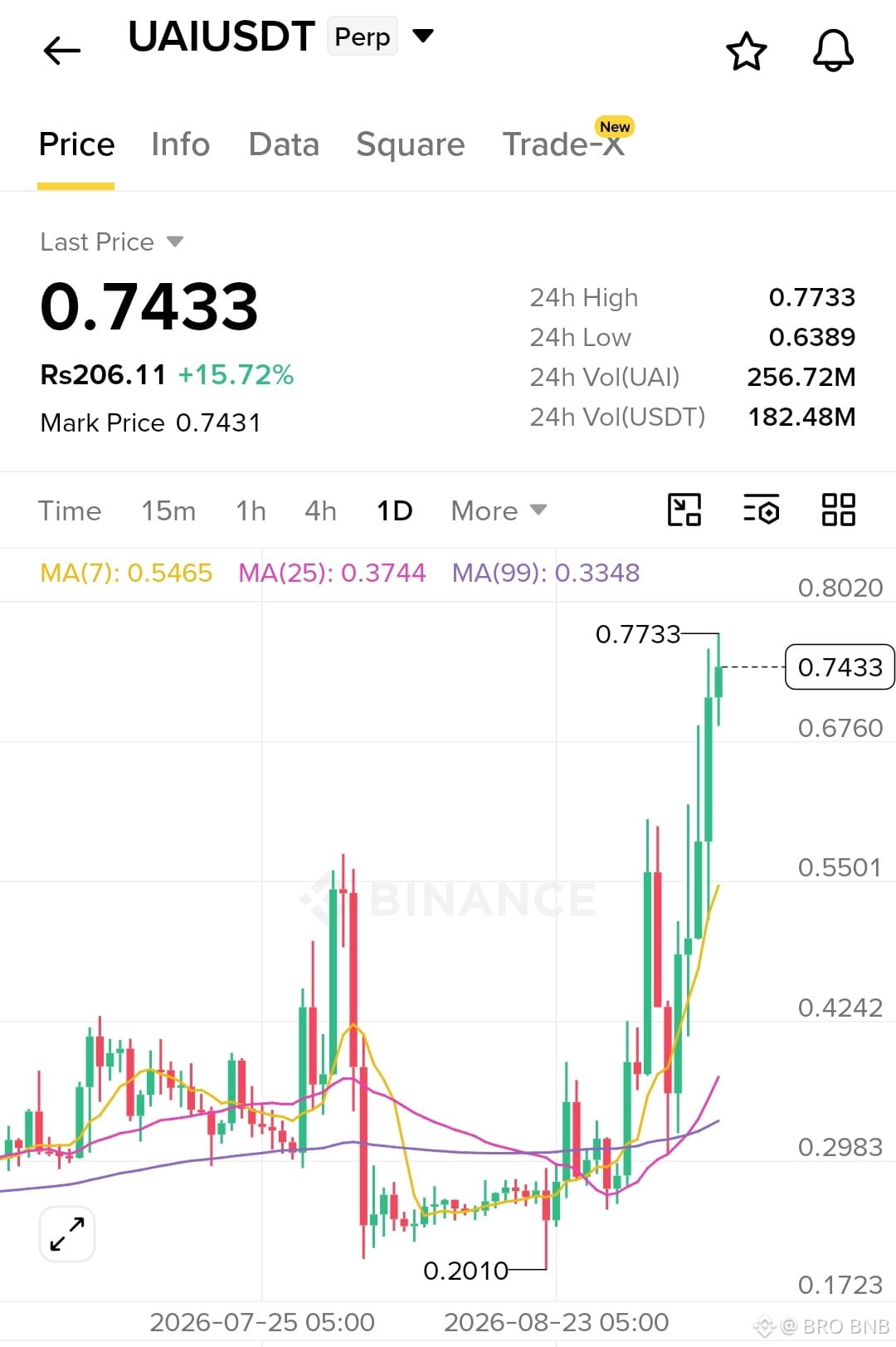
$UAI USDT trades at 0.7433, showing strong momentum. Resistance: 0.7733, 0.8020. Support: 0.6760, 0.5501. Short term bias remains bullish above 0.6760. Long term structure favors continuation. Pro tip: avoid chasing spikes. TG1 0.7733, TG2 0.8020, TG3 0.8500.
$UAI
{future}(UAIUSDT)
#CanadaTariffsOnUSTakeEffect #SaudiHaltsSouthernEnergySitesAfterAttacks #IranSaysItHit3USShips3Tankers
$UAI USDT trades at 0.7433, showing strong momentum. Resistance: 0.7733, 0.8020. Support: 0.6760, 0.5501. Short term bias remains bullish above 0.6760. Long term structure favors continuation. Pro tip: avoid chasing spikes. TG1 0.7733, TG2 0.8020, TG3 0.8500.
$UAI
#CanadaTariffsOnUSTakeEffect #SaudiHaltsSouthernEnergySitesAfterAttacks #IranSaysItHit3USShips3Tankers
$UAI
#CanadaTariffsOnUSTakeEffect #SaudiHaltsSouthernEnergySitesAfterAttacks #IranSaysItHit3USShips3Tankers
176
·
--
Bullish
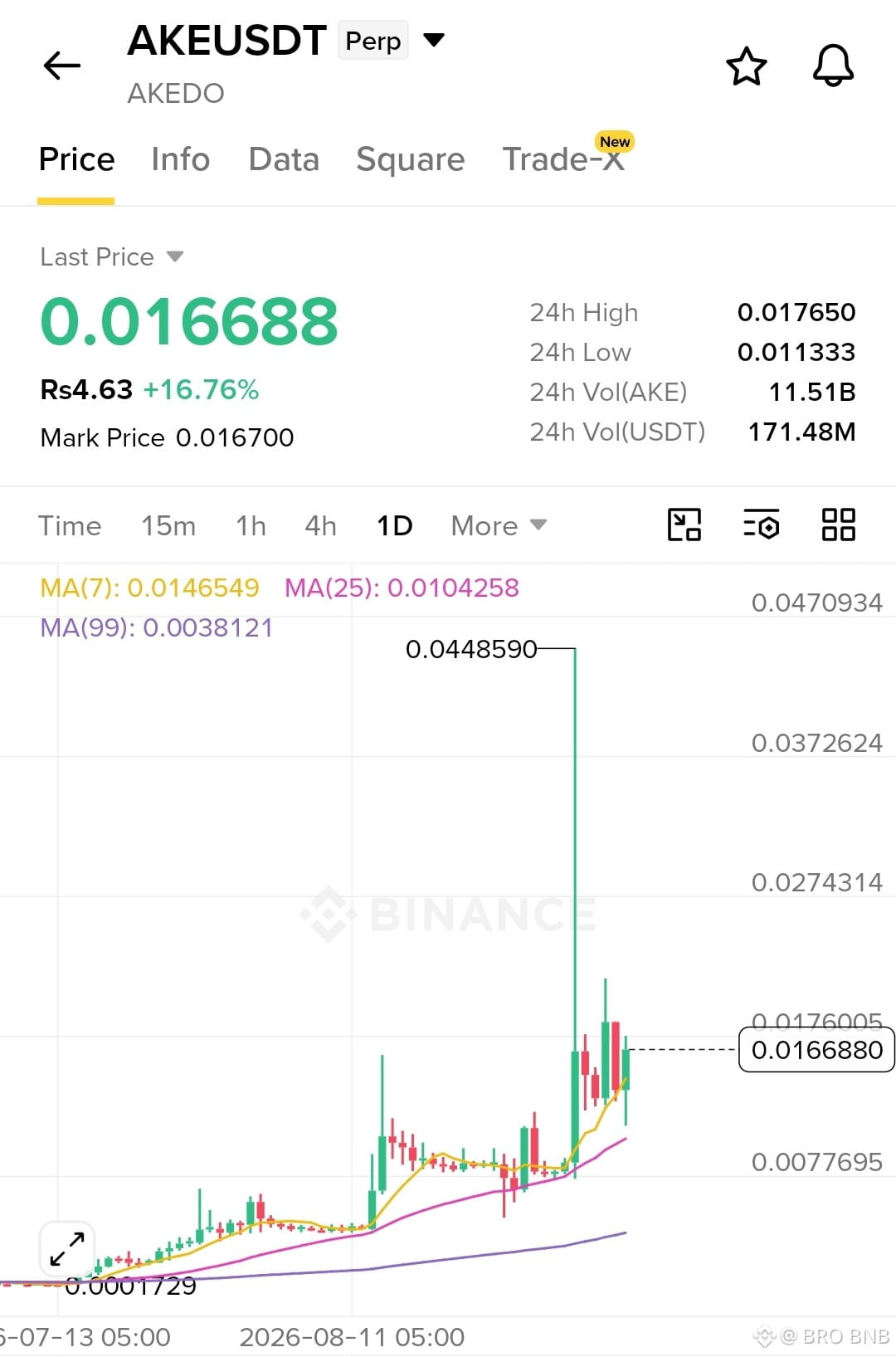
$AKE shows bullish momentum, holding above MA7 and MA25. Support: 0.0146, 0.0113. Resistance: 0.0176, 0.0274. Short term, breakout above 0.0176 targets TG1 0.0200, TG2 0.0274, TG3 0.0372. Long term remains bullish. Pro tip: trail stops aggressively.
$AKE
{future}(AKEUSDT)
#SideSwapSuspendsLiquidServices #IMFSaysElSalvadorBTCNoPublicFunds #IranToSetRestrictedZoneNearHormuz
$AKE shows bullish momentum, holding above MA7 and MA25. Support: 0.0146, 0.0113. Resistance: 0.0176, 0.0274. Short term, breakout above 0.0176 targets TG1 0.0200, TG2 0.0274, TG3 0.0372. Long term remains bullish. Pro tip: trail stops aggressively.
$AKE
#SideSwapSuspendsLiquidServices #IMFSaysElSalvadorBTCNoPublicFunds #IranToSetRestrictedZoneNearHormuz
$AKE
#SideSwapSuspendsLiquidServices #IMFSaysElSalvadorBTCNoPublicFunds #IranToSetRestrictedZoneNearHormuz
1
255
·
--
Bullish
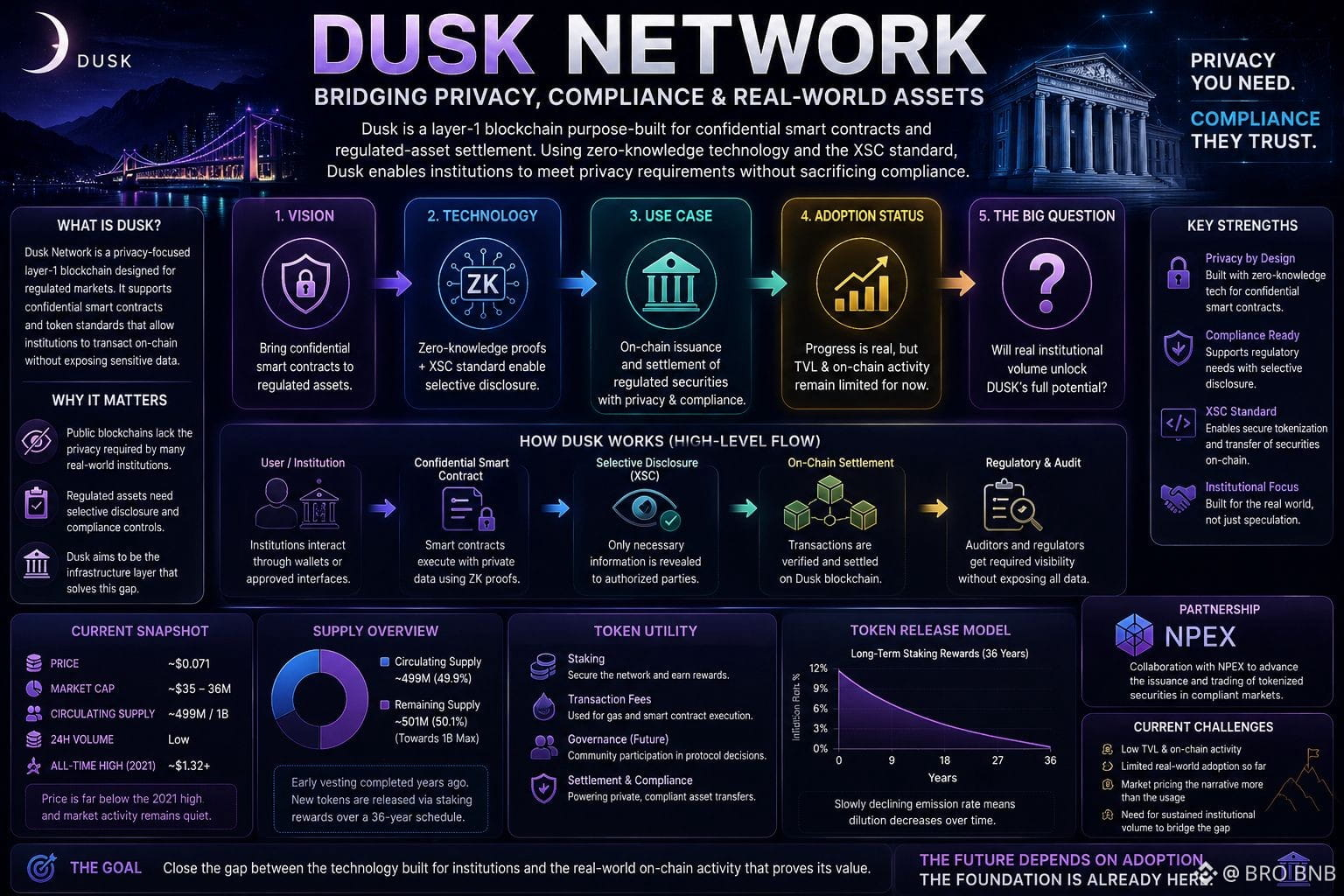
Last night I left a chart open longer than I meant to and somehow ended up staring at Dusk again. It was sitting around $0.071, market cap roughly $35–36 million, with about 499 million tokens circulating against a one-billion max. Volume was quiet. Price still a long way from that 2021 high.
Something about the project’s quiet consistency made me dig a little deeper. For years Dusk has been positioning itself as a layer-1 built for confidential smart contracts and the XSC standard — basically trying to give regulated securities a private but still compliant way to settle on-chain. Selective disclosure and zero-knowledge tools are supposed to ease the tension between public ledgers and the privacy institutions actually need.
What stands out is how slowly that vision has turned into anything you can see. On-chain metrics and TVL are still pretty thin even after mainnet progress and the NPEX partnership. The market seems to be pricing the regulated-asset story far more than the usage that’s happening right now.
Supply is fairly transparent. Early vesting wrapped up years ago. New tokens keep coming in through staking rewards on a long, slowly declining 36-year schedule. Holders absorb that dilution while the people who might actually need the privacy and compliance features mostly just interact for gas and settlement. Staking and fees give the token some utility, but that hasn’t been what’s driving the price so far.
The question that keeps lingering is whether real, sustained institutional volume will ever close the gap between what the technology is built for and the thin activity we still see today.
#dusk $DUSK @Dusk_Foundation
Last night I left a chart open longer than I meant to and somehow ended up staring at Dusk again. It was sitting around $0.071, market cap roughly $35–36 million, with about 499 million tokens circulating against a one-billion max. Volume was quiet. Price still a long way from that 2021 high.
Something about the project’s quiet consistency made me dig a little deeper. For years Dusk has been positioning itself as a layer-1 built for confidential smart contracts and the XSC standard — basically trying to give regulated securities a private but still compliant way to settle on-chain. Selective disclosure and zero-knowledge tools are supposed to ease the tension between public ledgers and the privacy institutions actually need.
What stands out is how slowly that vision has turned into anything you can see. On-chain metrics and TVL are still pretty thin even after mainnet progress and the NPEX partnership. The market seems to be pricing the regulated-asset story far more than the usage that’s happening right now.
Supply is fairly transparent. Early vesting wrapped up years ago. New tokens keep coming in through staking rewards on a long, slowly declining 36-year schedule. Holders absorb that dilution while the people who might actually need the privacy and compliance features mostly just interact for gas and settlement. Staking and fees give the token some utility, but that hasn’t been what’s driving the price so far.
The question that keeps lingering is whether real, sustained institutional volume will ever close the gap between what the technology is built for and the thin activity we still see today.
#dusk $DUSK @Dusk
Something about the project’s quiet consistency made me dig a little deeper. For years Dusk has been positioning itself as a layer-1 built for confidential smart contracts and the XSC standard — basically trying to give regulated securities a private but still compliant way to settle on-chain. Selective disclosure and zero-knowledge tools are supposed to ease the tension between public ledgers and the privacy institutions actually need.
What stands out is how slowly that vision has turned into anything you can see. On-chain metrics and TVL are still pretty thin even after mainnet progress and the NPEX partnership. The market seems to be pricing the regulated-asset story far more than the usage that’s happening right now.
Supply is fairly transparent. Early vesting wrapped up years ago. New tokens keep coming in through staking rewards on a long, slowly declining 36-year schedule. Holders absorb that dilution while the people who might actually need the privacy and compliance features mostly just interact for gas and settlement. Staking and fees give the token some utility, but that hasn’t been what’s driving the price so far.
The question that keeps lingering is whether real, sustained institutional volume will ever close the gap between what the technology is built for and the thin activity we still see today.
#dusk $DUSK @Dusk
1
2
496
·
--
Bullish
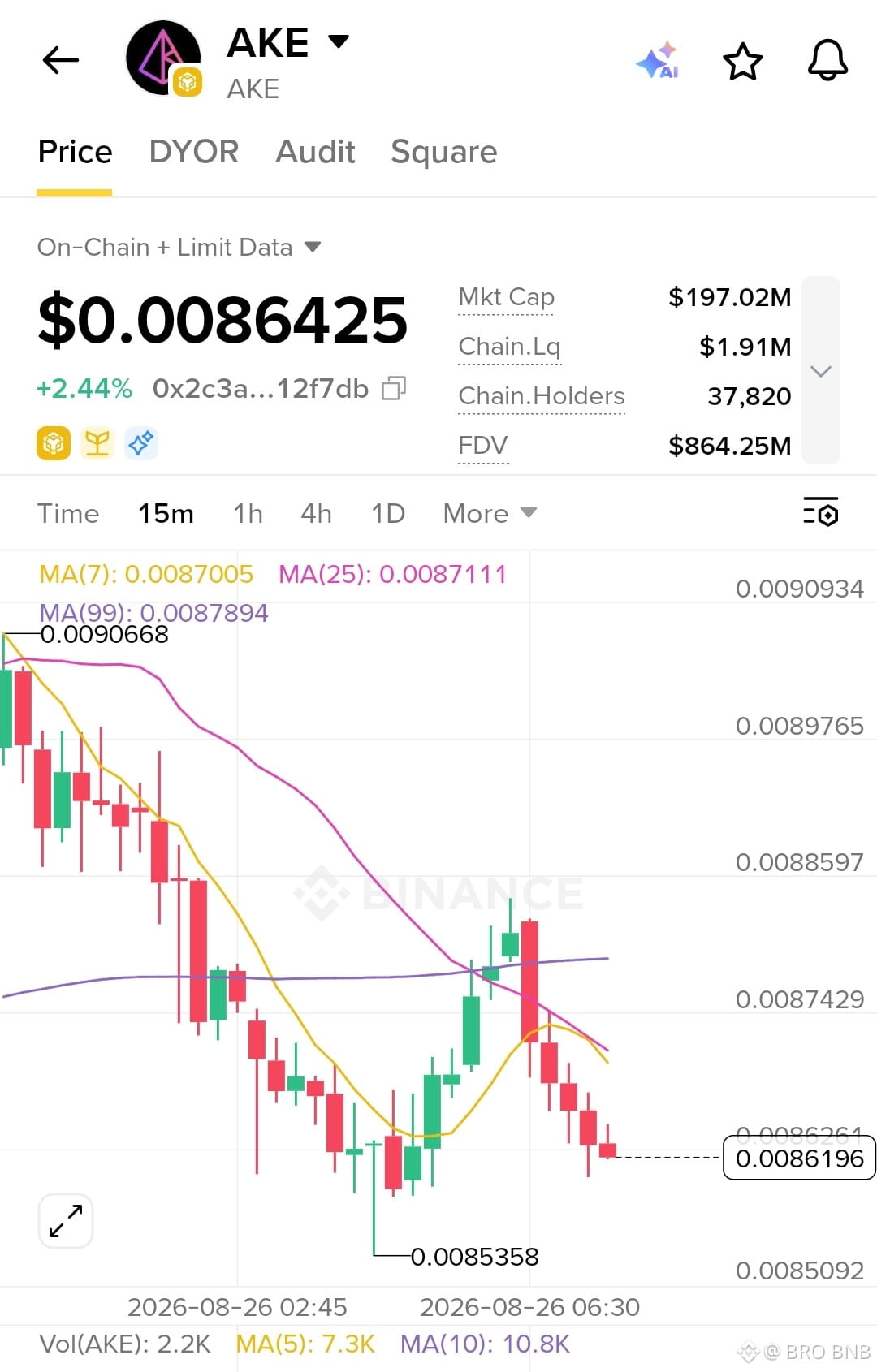
$AKE trades near 0.00862, facing short term weakness below 0.00870. Support 0.00853, resistance 0.00879. Short term: bearish unless 0.00870 reclaims. Long term: recovery needs 0.00909. Targets: TG1 0.00879, TG2 0.00909, TG3 0.00930. Tip: wait for volume confirmation before entering any trade setup.
$AKE
{future}(AKEUSDT)
#HKJulyGoldNetExportsToMainland56.193Tons #JapanNoAdditionalOilReserveReleaseInSepOct #CanadaImposesUpTo50%CounterTariffsOnUSGoods
$AKE trades near 0.00862, facing short term weakness below 0.00870. Support 0.00853, resistance 0.00879. Short term: bearish unless 0.00870 reclaims. Long term: recovery needs 0.00909. Targets: TG1 0.00879, TG2 0.00909, TG3 0.00930. Tip: wait for volume confirmation before entering any trade setup.
$AKE
#HKJulyGoldNetExportsToMainland56.193Tons #JapanNoAdditionalOilReserveReleaseInSepOct #CanadaImposesUpTo50%CounterTariffsOnUSGoods
$AKE
#HKJulyGoldNetExportsToMainland56.193Tons #JapanNoAdditionalOilReserveReleaseInSepOct #CanadaImposesUpTo50%CounterTariffsOnUSGoods
220
·
--
Bullish
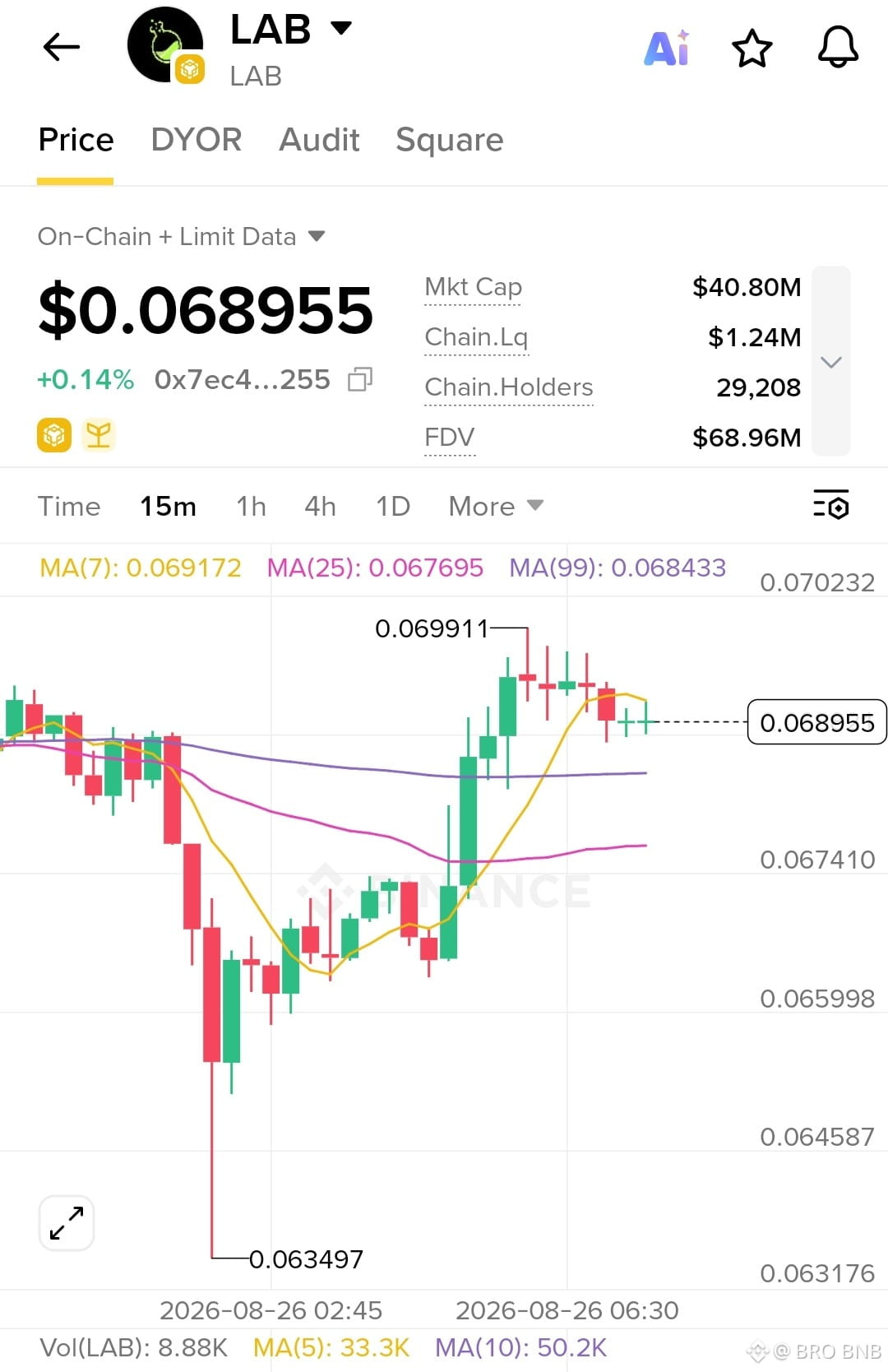
$LAB trades around 0.06896, holding above key moving averages after a strong rebound. Support 0.06843, resistance 0.06991. Short term: bullish above 0.06843. Long term: 0.07023 breakout opens upside. Targets: TG1 0.06991, TG2 0.07023, TG3 0.07150. Tip: protect profits near resistance and trail stops upward.
$LAB #HKJulyGoldNetExportsToMainland56.193Tons #JapanNoAdditionalOilReserveReleaseInSepOct
#USCryptoEquityIndexRises5.04%
$LAB trades around 0.06896, holding above key moving averages after a strong rebound. Support 0.06843, resistance 0.06991. Short term: bullish above 0.06843. Long term: 0.07023 breakout opens upside. Targets: TG1 0.06991, TG2 0.07023, TG3 0.07150. Tip: protect profits near resistance and trail stops upward.
$LAB #HKJulyGoldNetExportsToMainland56.193Tons #JapanNoAdditionalOilReserveReleaseInSepOct
#USCryptoEquityIndexRises5.04%
$LAB #HKJulyGoldNetExportsToMainland56.193Tons #JapanNoAdditionalOilReserveReleaseInSepOct
#USCryptoEquityIndexRises5.04%
254
·
--
Bullish
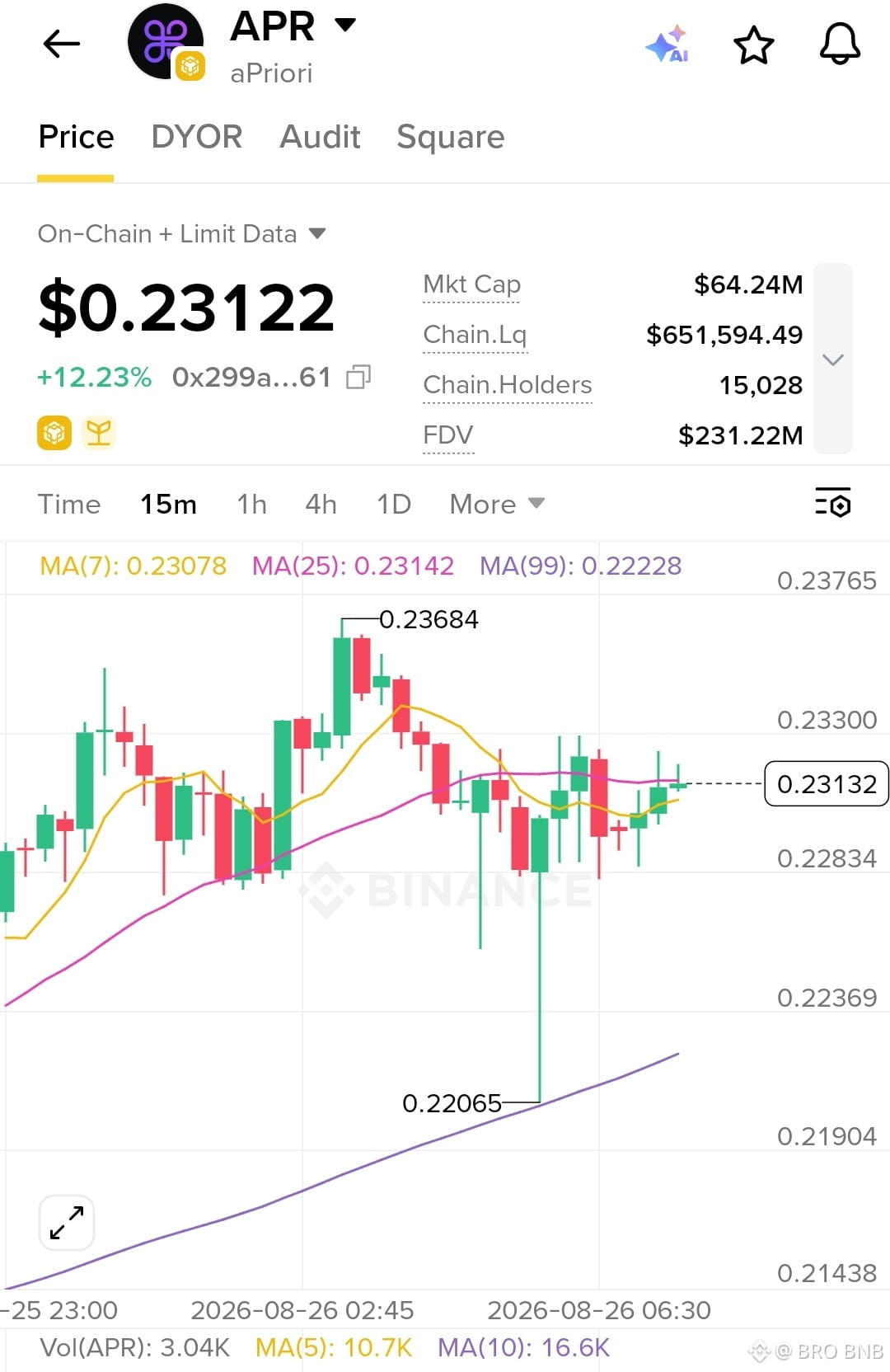
$APR sits near 0.2312, stabilizing after volatile swings. Support 0.2283, resistance 0.2330. Short term: neutral bullish above 0.2314. Long term: 0.2368 breakout strengthens structure. Targets: TG1 0.2330, TG2 0.2368, TG3 0.2400. Tip: enter only after confirmation and rising volume, never chase momentum.
$APR
{future}(APRUSDT)
#HKJulyGoldNetExportsToMainland56.193Tons #KazakhstanCutsOilOutputForecastTo96MTons #USCryptoEquityIndexRises5.04%
$APR sits near 0.2312, stabilizing after volatile swings. Support 0.2283, resistance 0.2330. Short term: neutral bullish above 0.2314. Long term: 0.2368 breakout strengthens structure. Targets: TG1 0.2330, TG2 0.2368, TG3 0.2400. Tip: enter only after confirmation and rising volume, never chase momentum.
$APR
#HKJulyGoldNetExportsToMainland56.193Tons #KazakhstanCutsOilOutputForecastTo96MTons #USCryptoEquityIndexRises5.04%
$APR
#HKJulyGoldNetExportsToMainland56.193Tons #KazakhstanCutsOilOutputForecastTo96MTons #USCryptoEquityIndexRises5.04%
195
·
--
Bullish
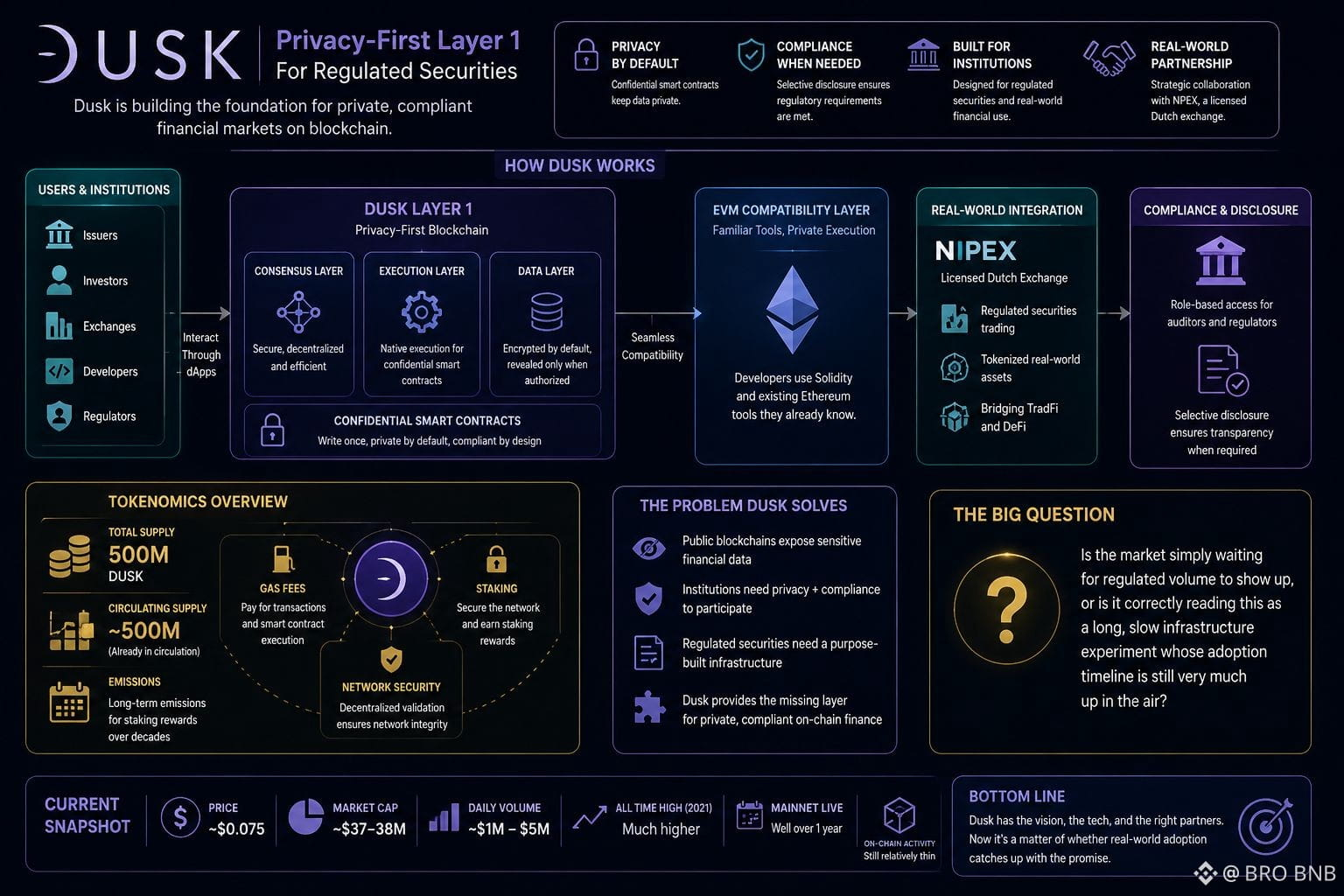
Late last night I was poking around some of the quieter charts and ended up staring at Dusk for a while. It’s sitting near $0.075, market cap somewhere around $37–38 million, volume in the mid single millions on a typical day. Pretty much the entire original 500 million tokens are already out there; the rest is scheduled to drip out over decades for staking rewards. Price has crept up a little these past few weeks, but it’s still miles below the 2021 high. Nothing flashy at all.
The project itself has always been pretty straightforward about what it’s trying to build: a privacy-first Layer 1 aimed at regulated securities. Confidential smart contracts that keep things private by default but still let you selectively open the books when compliance demands it. Native execution, an EVM layer so people can use the tools they already know, and a real partnership with NPEX, a licensed Dutch exchange. That last part actually gives the story some weight. The problem it’s going after is real—public chains have never felt like a natural home for institutional money.
But the gap between the story and the actual numbers is hard to ignore. Mainnet has been live for well over a year now. On-chain activity and liquidity still look pretty thin. The EVM side is only just reaching testnet. Token utility is basically just gas and staking; there’s no strong fee-capture mechanism in place yet. Institutions that eventually use the contracts get the privacy and compliance features. Token holders are the ones carrying the price risk and dealing with the ongoing emissions.
I keep circling back to the same question. Is the market simply waiting for regulated volume to show up, or is it correctly reading this as a long, slow infrastructure experiment whose adoption timeline is still very much up in the air?
#dusk $DUSK @Dusk_Foundation
Late last night I was poking around some of the quieter charts and ended up staring at Dusk for a while. It’s sitting near $0.075, market cap somewhere around $37–38 million, volume in the mid single millions on a typical day. Pretty much the entire original 500 million tokens are already out there; the rest is scheduled to drip out over decades for staking rewards. Price has crept up a little these past few weeks, but it’s still miles below the 2021 high. Nothing flashy at all.
The project itself has always been pretty straightforward about what it’s trying to build: a privacy-first Layer 1 aimed at regulated securities. Confidential smart contracts that keep things private by default but still let you selectively open the books when compliance demands it. Native execution, an EVM layer so people can use the tools they already know, and a real partnership with NPEX, a licensed Dutch exchange. That last part actually gives the story some weight. The problem it’s going after is real—public chains have never felt like a natural home for institutional money.
But the gap between the story and the actual numbers is hard to ignore. Mainnet has been live for well over a year now. On-chain activity and liquidity still look pretty thin. The EVM side is only just reaching testnet. Token utility is basically just gas and staking; there’s no strong fee-capture mechanism in place yet. Institutions that eventually use the contracts get the privacy and compliance features. Token holders are the ones carrying the price risk and dealing with the ongoing emissions.
I keep circling back to the same question. Is the market simply waiting for regulated volume to show up, or is it correctly reading this as a long, slow infrastructure experiment whose adoption timeline is still very much up in the air?
#dusk $DUSK @Dusk
The project itself has always been pretty straightforward about what it’s trying to build: a privacy-first Layer 1 aimed at regulated securities. Confidential smart contracts that keep things private by default but still let you selectively open the books when compliance demands it. Native execution, an EVM layer so people can use the tools they already know, and a real partnership with NPEX, a licensed Dutch exchange. That last part actually gives the story some weight. The problem it’s going after is real—public chains have never felt like a natural home for institutional money.
But the gap between the story and the actual numbers is hard to ignore. Mainnet has been live for well over a year now. On-chain activity and liquidity still look pretty thin. The EVM side is only just reaching testnet. Token utility is basically just gas and staking; there’s no strong fee-capture mechanism in place yet. Institutions that eventually use the contracts get the privacy and compliance features. Token holders are the ones carrying the price risk and dealing with the ongoing emissions.
I keep circling back to the same question. Is the market simply waiting for regulated volume to show up, or is it correctly reading this as a long, slow infrastructure experiment whose adoption timeline is still very much up in the air?
#dusk $DUSK @Dusk
1
2
219
·
--
Bullish
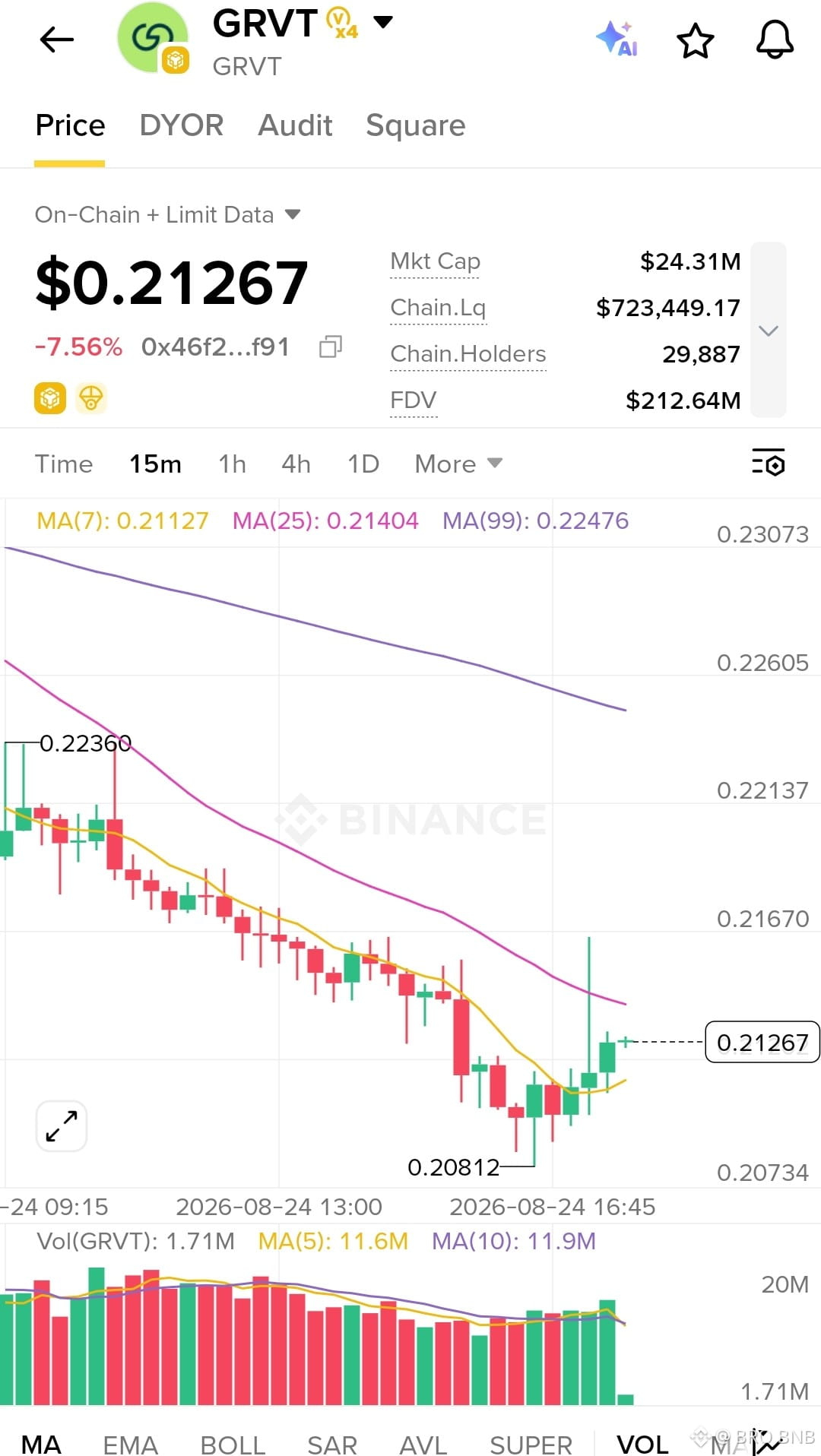
$GRVT remains under pressure at 0.2127, despite a rebound. Support: 0.2081, then 0.2073. Resistance: 0.2140, 0.2167. Short term bounce needs volume confirmation. Long term trend stays bearish. Pro trader tip: avoid chasing. TG1 0.2140, TG2 0.2167, TG3 0.2214. carefully today
$GRVT
{future}(GRVTUSDT)
#BrentDrops1.87% #SamsungFalls8.97%DraggingKospiDown3.24% #BitcoinOpenInterestFallsToTwoMonthLow #Binance
$GRVT remains under pressure at 0.2127, despite a rebound. Support: 0.2081, then 0.2073. Resistance: 0.2140, 0.2167. Short term bounce needs volume confirmation. Long term trend stays bearish. Pro trader tip: avoid chasing. TG1 0.2140, TG2 0.2167, TG3 0.2214. carefully today
$GRVT
#BrentDrops1.87% #SamsungFalls8.97%DraggingKospiDown3.24% #BitcoinOpenInterestFallsToTwoMonthLow #Binance
$GRVT
#BrentDrops1.87% #SamsungFalls8.97%DraggingKospiDown3.24% #BitcoinOpenInterestFallsToTwoMonthLow #Binance
274
·
--
Bullish
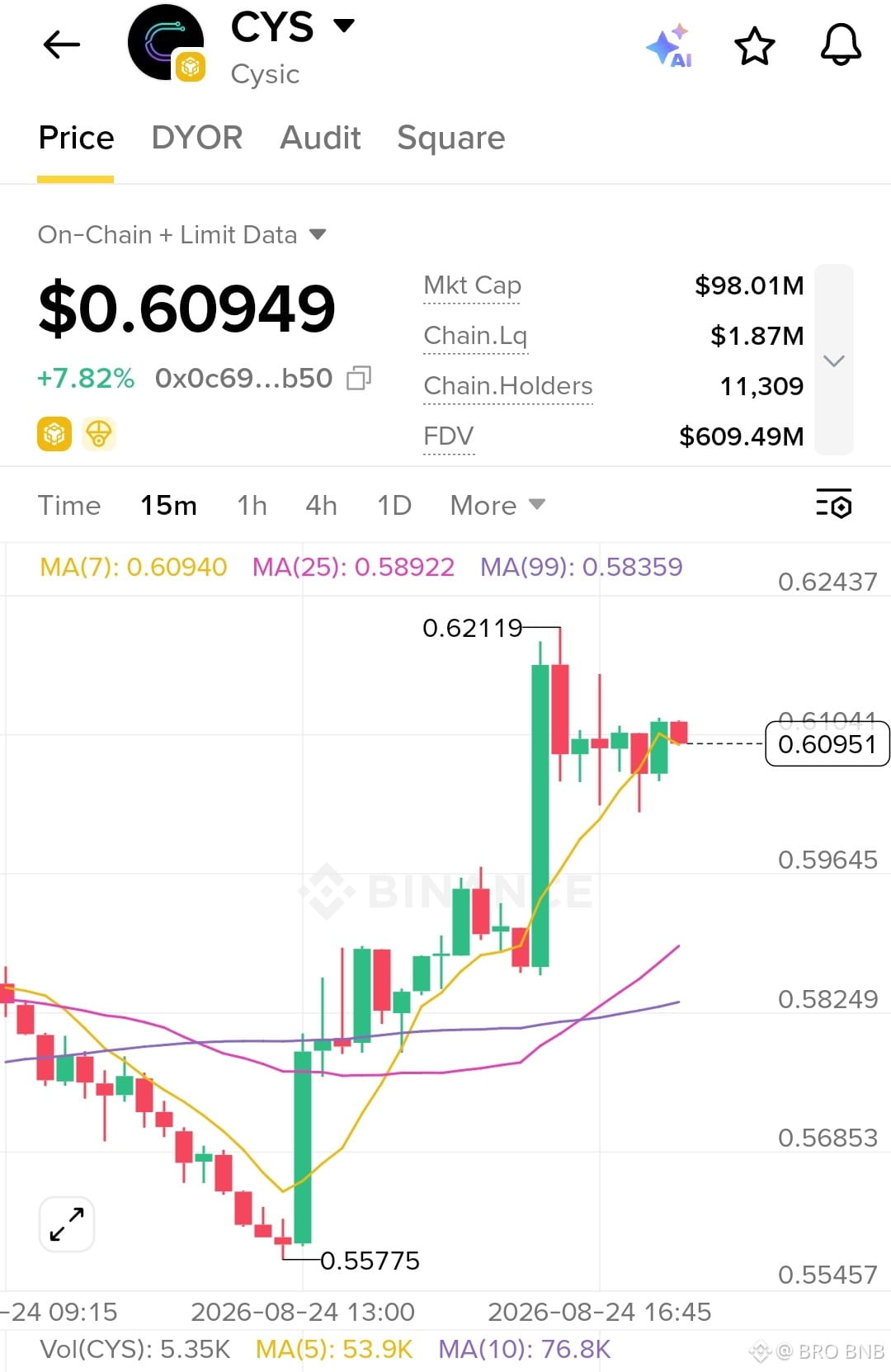
$CYS is showing strong momentum near 0.6095 after breaking higher. Support: 0.5965, then 0.5892. Resistance: 0.6104, 0.6212. Short term bias remains bullish. Long term structure improved today. Pro tip: protect gains near resistance. TG1 0.6104, TG2 0.6150, TG3 0.6212. now
$CYS
{future}(CYSUSDT)
#BrentDrops1.87% #SamsungFalls8.97%DraggingKospiDown3.24% #BitcoinOpenInterestFallsToTwoMonthLow
$CYS is showing strong momentum near 0.6095 after breaking higher. Support: 0.5965, then 0.5892. Resistance: 0.6104, 0.6212. Short term bias remains bullish. Long term structure improved today. Pro tip: protect gains near resistance. TG1 0.6104, TG2 0.6150, TG3 0.6212. now
$CYS
#BrentDrops1.87% #SamsungFalls8.97%DraggingKospiDown3.24% #BitcoinOpenInterestFallsToTwoMonthLow
$CYS
#BrentDrops1.87% #SamsungFalls8.97%DraggingKospiDown3.24% #BitcoinOpenInterestFallsToTwoMonthLow
153
·
--
Bullish
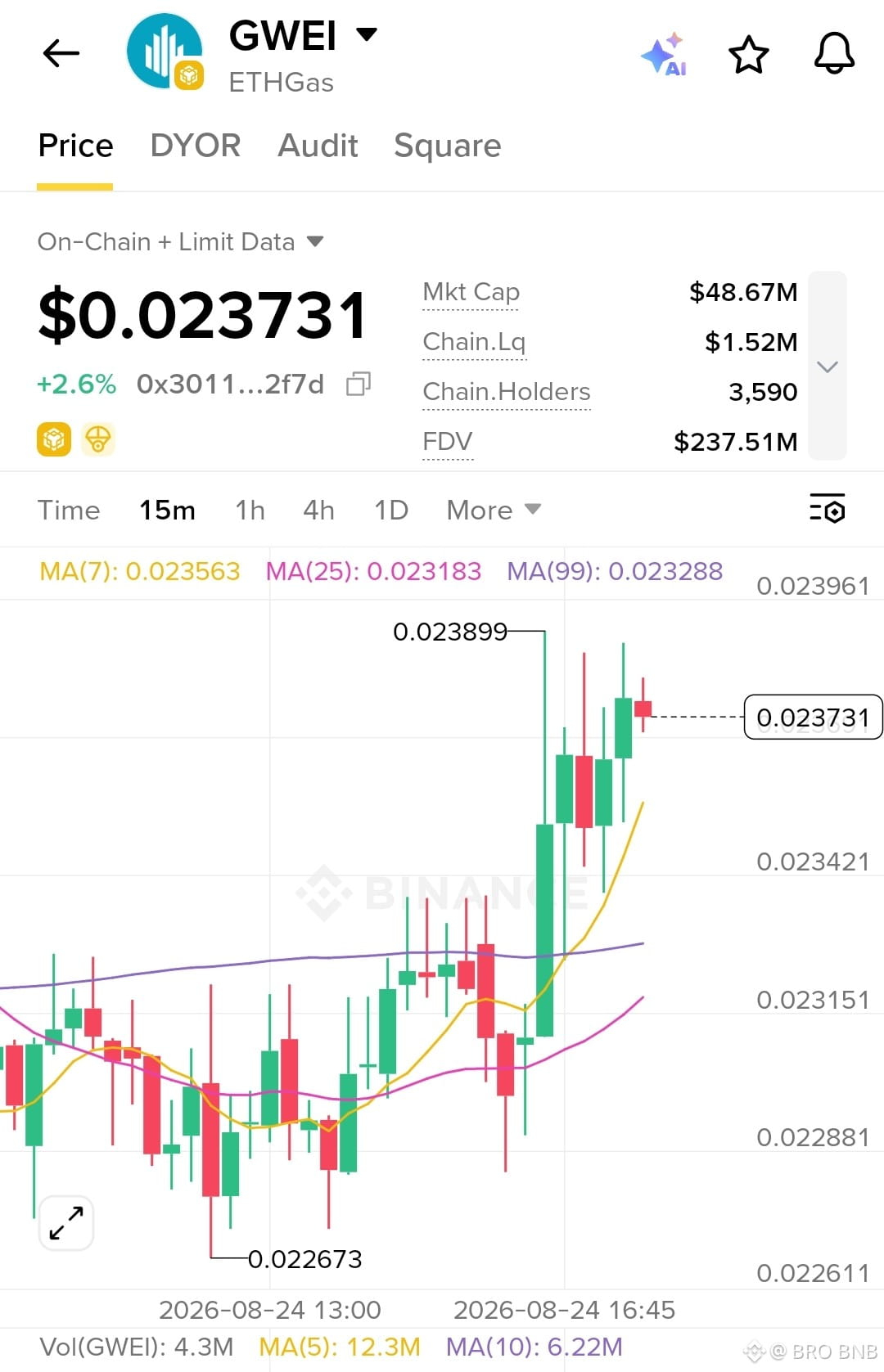
$GWEI is pressing 0.02373 after a sharp breakout. Support: 0.02342, then 0.02315. Resistance: 0.02390, 0.02396. Short term bias stays bullish above support. Long term structure is improving. Pro tip today: wait for breakout confirmation. TG1 0.02390, TG2 0.02396, TG3 0.02430.
$GWEI
{future}(GWEIUSDT)
#BrentDrops1.87% #SamsungFalls8.97%DraggingKospiDown3.24% #BitcoinOpenInterestFallsToTwoMonthLow
$GWEI is pressing 0.02373 after a sharp breakout. Support: 0.02342, then 0.02315. Resistance: 0.02390, 0.02396. Short term bias stays bullish above support. Long term structure is improving. Pro tip today: wait for breakout confirmation. TG1 0.02390, TG2 0.02396, TG3 0.02430.
$GWEI
#BrentDrops1.87% #SamsungFalls8.97%DraggingKospiDown3.24% #BitcoinOpenInterestFallsToTwoMonthLow
$GWEI
#BrentDrops1.87% #SamsungFalls8.97%DraggingKospiDown3.24% #BitcoinOpenInterestFallsToTwoMonthLow
320
·
--
Bullish
Verified
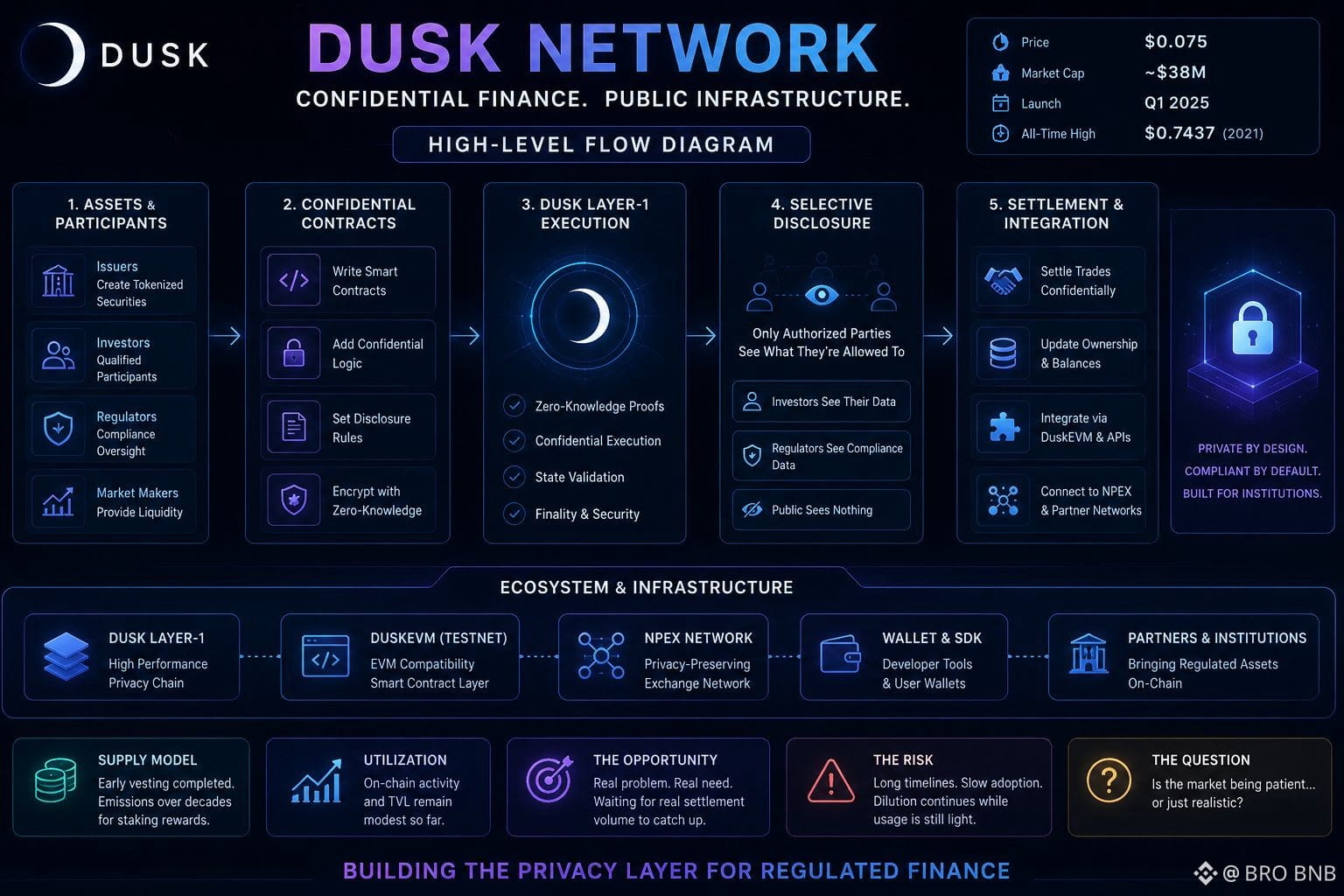
Late last night I found myself scrolling through charts for no particular reason when Dusk stopped me. About $0.075, market cap sitting near $38 million, a modest uptick on the day. Still more than 90% below that 2021 high. It just felt familiar—the kind of quiet price action you see when a project has been building for years, finally got mainnet live in early 2025, and the market still treats it like the real chapter hasn’t started yet.
The core idea makes sense. Public chains put everything on display. Regulated finance can’t work that way. Dusk’s confidential contracts and zero-knowledge setup are built so institutions can issue and settle securities without broadcasting every position. That problem is legitimate.
What I keep turning over is the gap between that story and the numbers on the ground. On-chain activity and TVL have stayed pretty muted against the institutional pitch. DuskEVM on testnet and the NPEX link are reasonable moves, but the kind of volume that would actually prove the thing is still thin.
Supply side is cleaner than a lot of tokens. Early vesting finished long ago. The rest of the emissions drip out over decades for staking rewards—predictable, but still dilutive while usage stays light. The people who might use the privacy features don’t have to hold the token in size. The holders are the ones sitting with the risk for now.
Maybe the market is just patient, waiting for real settlement flow. Or maybe it’s correctly reading how long these things usually take. Either way, that distance between the narrative and what’s actually showing up is still the part that sticks with me.
#dusk $DUSK @Dusk_Foundation
{spot}(DUSKUSDT)
Late last night I found myself scrolling through charts for no particular reason when Dusk stopped me. About $0.075, market cap sitting near $38 million, a modest uptick on the day. Still more than 90% below that 2021 high. It just felt familiar—the kind of quiet price action you see when a project has been building for years, finally got mainnet live in early 2025, and the market still treats it like the real chapter hasn’t started yet.
The core idea makes sense. Public chains put everything on display. Regulated finance can’t work that way. Dusk’s confidential contracts and zero-knowledge setup are built so institutions can issue and settle securities without broadcasting every position. That problem is legitimate.
What I keep turning over is the gap between that story and the numbers on the ground. On-chain activity and TVL have stayed pretty muted against the institutional pitch. DuskEVM on testnet and the NPEX link are reasonable moves, but the kind of volume that would actually prove the thing is still thin.
Supply side is cleaner than a lot of tokens. Early vesting finished long ago. The rest of the emissions drip out over decades for staking rewards—predictable, but still dilutive while usage stays light. The people who might use the privacy features don’t have to hold the token in size. The holders are the ones sitting with the risk for now.
Maybe the market is just patient, waiting for real settlement flow. Or maybe it’s correctly reading how long these things usually take. Either way, that distance between the narrative and what’s actually showing up is still the part that sticks with me.
#dusk $DUSK @Dusk
The core idea makes sense. Public chains put everything on display. Regulated finance can’t work that way. Dusk’s confidential contracts and zero-knowledge setup are built so institutions can issue and settle securities without broadcasting every position. That problem is legitimate.
What I keep turning over is the gap between that story and the numbers on the ground. On-chain activity and TVL have stayed pretty muted against the institutional pitch. DuskEVM on testnet and the NPEX link are reasonable moves, but the kind of volume that would actually prove the thing is still thin.
Supply side is cleaner than a lot of tokens. Early vesting finished long ago. The rest of the emissions drip out over decades for staking rewards—predictable, but still dilutive while usage stays light. The people who might use the privacy features don’t have to hold the token in size. The holders are the ones sitting with the risk for now.
Maybe the market is just patient, waiting for real settlement flow. Or maybe it’s correctly reading how long these things usually take. Either way, that distance between the narrative and what’s actually showing up is still the part that sticks with me.
#dusk $DUSK @Dusk
6
5
1.1k
·
--
Bullish
Verified
Late last week I caught myself staring at Dusk’s chart longer than usual. Not because anything dramatic happened—there wasn’t a sharp move—just that same steady, low-volume range that’s defined most of 2026 so far.
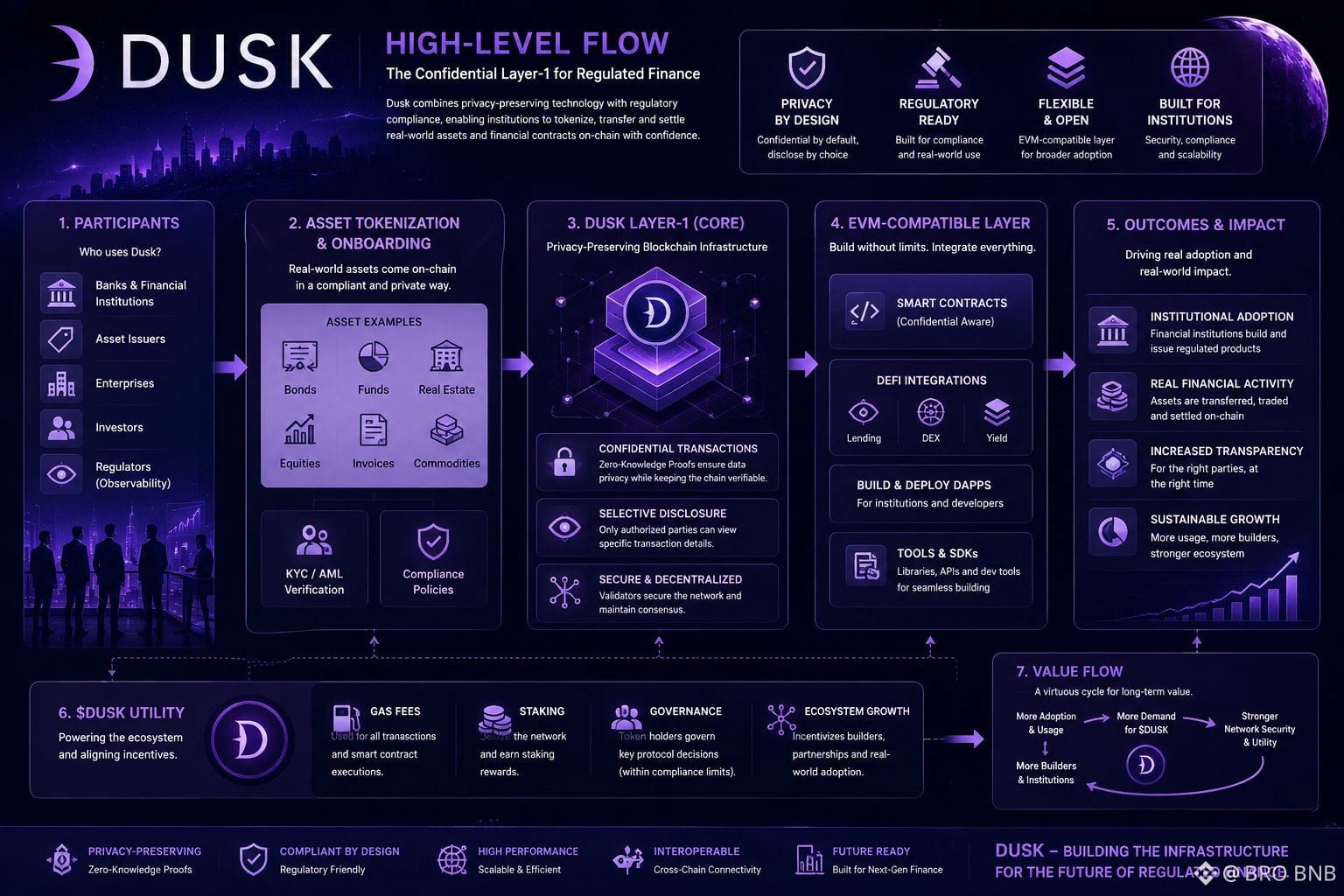
The project’s thesis is still clear: a Layer-1 built for confidential financial contracts and regulated asset tokenization. Mainnet has been live since January 2025. The tech stack (privacy-preserving transactions, selective disclosure, plus the newer EVM-compatible layer) hangs together on paper. Partnerships and product work are still moving.
The market tells a different story. Price sits around $0.073–0.074, market cap is stuck in the high $30 millions to low $40 millions, and daily volume rarely gets above a few million dollars. There was some post-launch staking and bridging activity, but sustained on-chain usage and TVL have stayed limited. The token remains well below its previous cycle high.
Supply is relatively straightforward. Early allocations finished vesting a while ago. Ongoing staking emissions continue at a declining rate, adding gradual pressure over years. Token holders keep absorbing that inflation while the people the protocol is actually built for—issuers and institutions—only benefit if real financial activity shows up.
Utility is there (gas, staking, governance within compliance limits), but it hasn’t translated into strong demand yet. The open question is whether the market is still mostly pricing the privacy-and-compliance narrative, or whether measurable adoption will eventually close the gap. That part is still unresolved.
#dusk $DUSK @Dusk_Foundation
{spot}(DUSKUSDT)
Late last week I caught myself staring at Dusk’s chart longer than usual. Not because anything dramatic happened—there wasn’t a sharp move—just that same steady, low-volume range that’s defined most of 2026 so far.
The project’s thesis is still clear: a Layer-1 built for confidential financial contracts and regulated asset tokenization. Mainnet has been live since January 2025. The tech stack (privacy-preserving transactions, selective disclosure, plus the newer EVM-compatible layer) hangs together on paper. Partnerships and product work are still moving.
The market tells a different story. Price sits around $0.073–0.074, market cap is stuck in the high $30 millions to low $40 millions, and daily volume rarely gets above a few million dollars. There was some post-launch staking and bridging activity, but sustained on-chain usage and TVL have stayed limited. The token remains well below its previous cycle high.
Supply is relatively straightforward. Early allocations finished vesting a while ago. Ongoing staking emissions continue at a declining rate, adding gradual pressure over years. Token holders keep absorbing that inflation while the people the protocol is actually built for—issuers and institutions—only benefit if real financial activity shows up.
Utility is there (gas, staking, governance within compliance limits), but it hasn’t translated into strong demand yet. The open question is whether the market is still mostly pricing the privacy-and-compliance narrative, or whether measurable adoption will eventually close the gap. That part is still unresolved.
#dusk $DUSK @Dusk
The project’s thesis is still clear: a Layer-1 built for confidential financial contracts and regulated asset tokenization. Mainnet has been live since January 2025. The tech stack (privacy-preserving transactions, selective disclosure, plus the newer EVM-compatible layer) hangs together on paper. Partnerships and product work are still moving.
The market tells a different story. Price sits around $0.073–0.074, market cap is stuck in the high $30 millions to low $40 millions, and daily volume rarely gets above a few million dollars. There was some post-launch staking and bridging activity, but sustained on-chain usage and TVL have stayed limited. The token remains well below its previous cycle high.
Supply is relatively straightforward. Early allocations finished vesting a while ago. Ongoing staking emissions continue at a declining rate, adding gradual pressure over years. Token holders keep absorbing that inflation while the people the protocol is actually built for—issuers and institutions—only benefit if real financial activity shows up.
Utility is there (gas, staking, governance within compliance limits), but it hasn’t translated into strong demand yet. The open question is whether the market is still mostly pricing the privacy-and-compliance narrative, or whether measurable adoption will eventually close the gap. That part is still unresolved.
#dusk $DUSK @Dusk
6
5
1.7k
·
--
Bullish
Verified
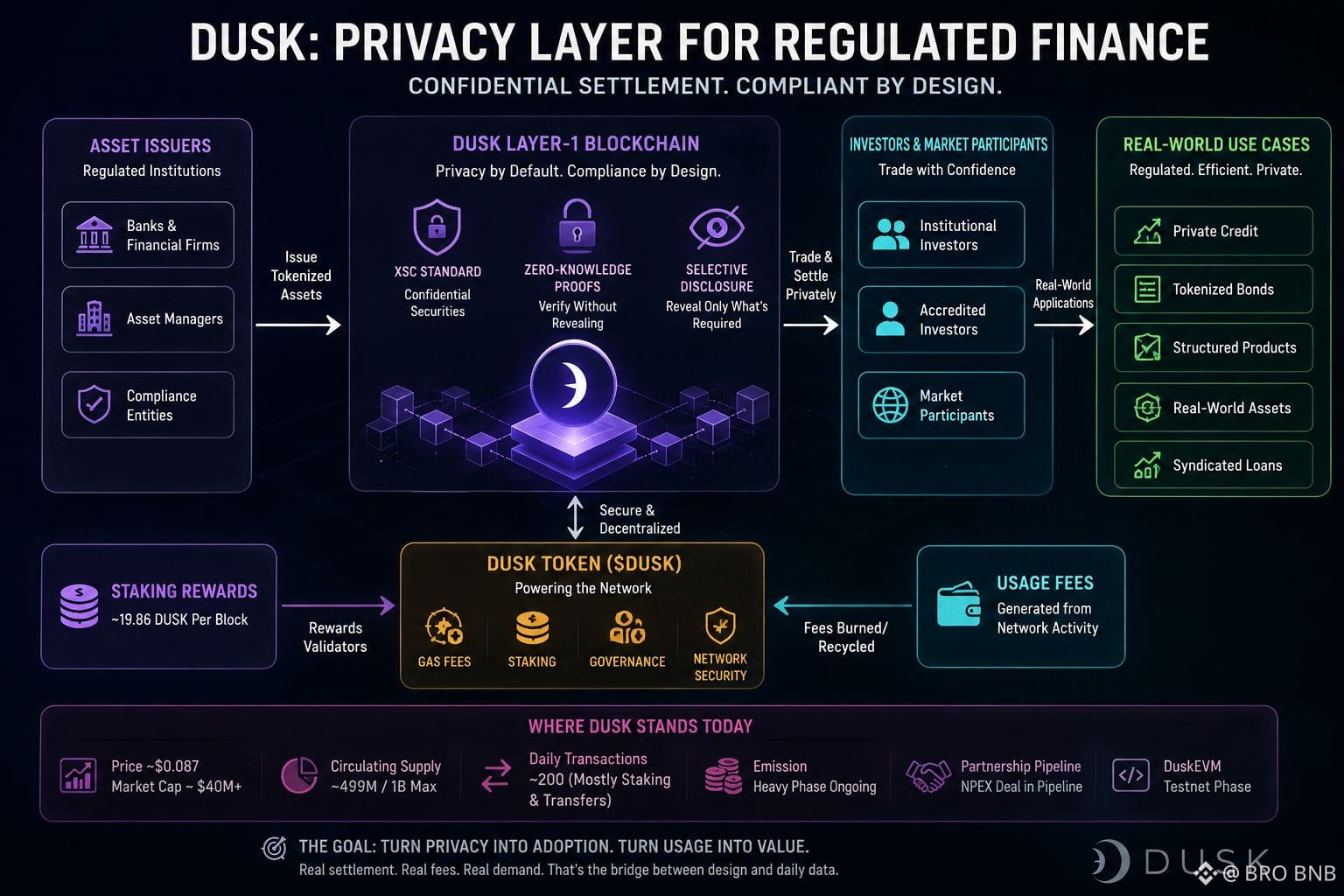
Yesterday I pulled up the Dusk explorer again. Token was sitting around $0.087, market cap somewhere in the mid-$40 millions. Daily transactions were still barely cracking 200—mostly staking and the usual small transfers. That quiet on-chain picture next to all the talk about confidential securities is what made me stop and think.
The whole thing is built as a layer-1 for regulated finance. XSC standard lets assets settle with privacy and selective disclosure. The zero-knowledge angle actually tries to solve a real problem institutions run into. Fair enough. But right now the market seems a lot more interested in the story than in what’s happening day to day. Circulating supply is about 499 million out of a billion max. Early vesting finished years ago; what’s left is the long emission schedule, still in its heaviest phase at roughly 19.86 DUSK per block for staking rewards.
Institutions that might eventually use the confidentiality features mostly just need gas and the settlement layer. Token holders are the ones carrying the inflation and whatever sell pressure comes with it. Fees collected so far are still tiny. The NPEX partnership hints at a possible pipeline of regulated assets in the hundreds of millions of euros, yet we haven’t seen that show up clearly in repeated on-chain volume. DuskEVM is still on testnet, waiting to let more builders in.
Maybe the market is already pricing in that future shift. Or maybe it’s just valuing the regulatory positioning for now. The real test will be whether actual settlement activity starts generating meaningful fees that can soak up the emissions. Until those numbers start moving, the gap between the design and the daily data is the part that keeps being interesting.
#dusk $DUSK @Dusk_Foundation
{spot}(DUSKUSDT)
Yesterday I pulled up the Dusk explorer again. Token was sitting around $0.087, market cap somewhere in the mid-$40 millions. Daily transactions were still barely cracking 200—mostly staking and the usual small transfers. That quiet on-chain picture next to all the talk about confidential securities is what made me stop and think.
The whole thing is built as a layer-1 for regulated finance. XSC standard lets assets settle with privacy and selective disclosure. The zero-knowledge angle actually tries to solve a real problem institutions run into. Fair enough. But right now the market seems a lot more interested in the story than in what’s happening day to day. Circulating supply is about 499 million out of a billion max. Early vesting finished years ago; what’s left is the long emission schedule, still in its heaviest phase at roughly 19.86 DUSK per block for staking rewards.
Institutions that might eventually use the confidentiality features mostly just need gas and the settlement layer. Token holders are the ones carrying the inflation and whatever sell pressure comes with it. Fees collected so far are still tiny. The NPEX partnership hints at a possible pipeline of regulated assets in the hundreds of millions of euros, yet we haven’t seen that show up clearly in repeated on-chain volume. DuskEVM is still on testnet, waiting to let more builders in.
Maybe the market is already pricing in that future shift. Or maybe it’s just valuing the regulatory positioning for now. The real test will be whether actual settlement activity starts generating meaningful fees that can soak up the emissions. Until those numbers start moving, the gap between the design and the daily data is the part that keeps being interesting.
#dusk $DUSK @Dusk
The whole thing is built as a layer-1 for regulated finance. XSC standard lets assets settle with privacy and selective disclosure. The zero-knowledge angle actually tries to solve a real problem institutions run into. Fair enough. But right now the market seems a lot more interested in the story than in what’s happening day to day. Circulating supply is about 499 million out of a billion max. Early vesting finished years ago; what’s left is the long emission schedule, still in its heaviest phase at roughly 19.86 DUSK per block for staking rewards.
Institutions that might eventually use the confidentiality features mostly just need gas and the settlement layer. Token holders are the ones carrying the inflation and whatever sell pressure comes with it. Fees collected so far are still tiny. The NPEX partnership hints at a possible pipeline of regulated assets in the hundreds of millions of euros, yet we haven’t seen that show up clearly in repeated on-chain volume. DuskEVM is still on testnet, waiting to let more builders in.
Maybe the market is already pricing in that future shift. Or maybe it’s just valuing the regulatory positioning for now. The real test will be whether actual settlement activity starts generating meaningful fees that can soak up the emissions. Until those numbers start moving, the gap between the design and the daily data is the part that keeps being interesting.
#dusk $DUSK @Dusk
8
8
4.3k
·
--
Bullish
Late last night I had a few explorer tabs open and just sat there looking at the numbers for a while. Dusk has been live long enough that you’d think the financial use-case would be showing clearer signs of life by now. Instead the chain still feels quiet.
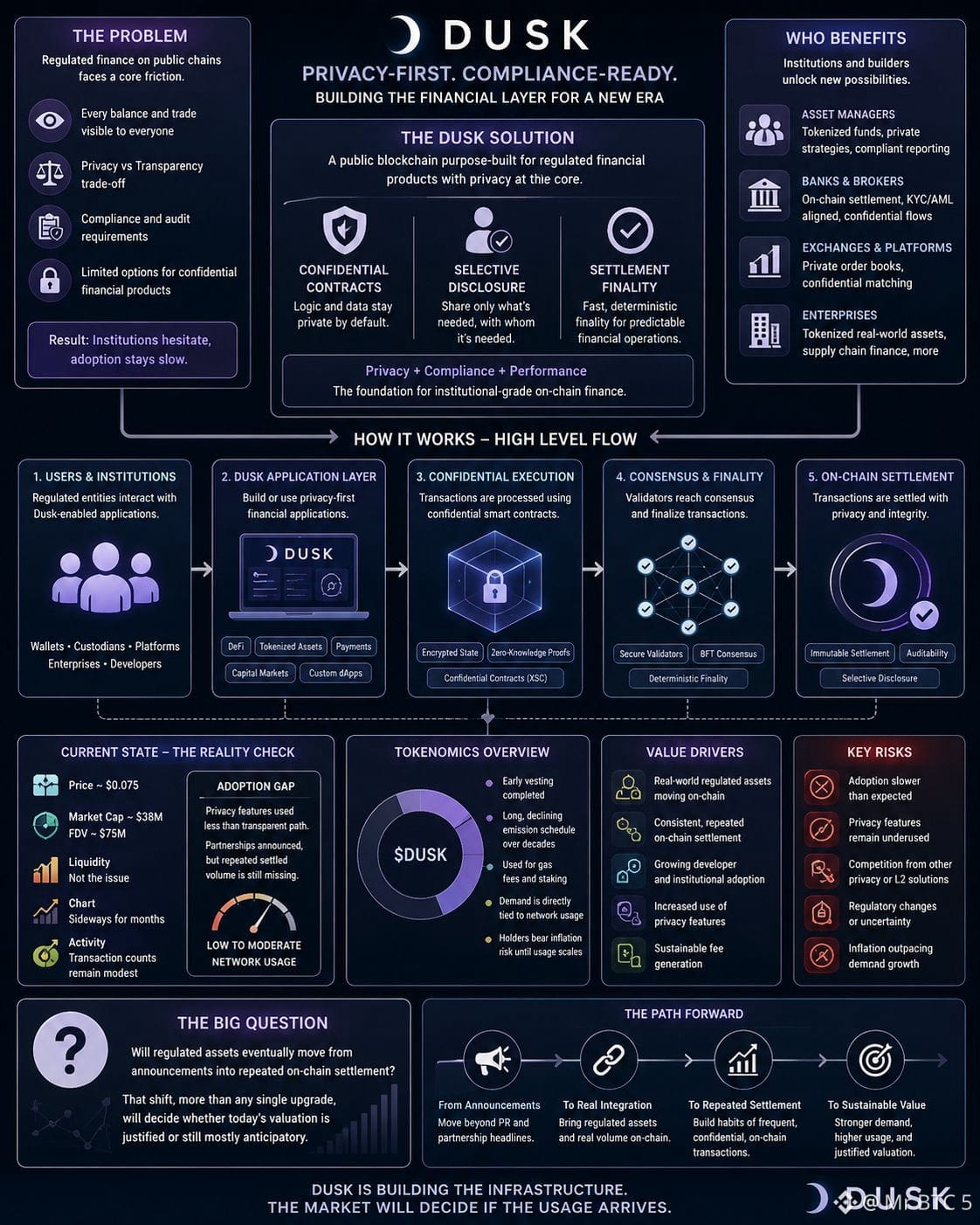
Price is hanging around $0.075, market cap roughly $38 million, fully diluted closer to $75 million. Liquidity isn’t the problem, but the chart has mostly gone sideways for months. Whatever bounce came after mainnet has largely faded.
On paper the protocol is built for a real friction point: letting regulated financial products run on a public chain without putting every balance and trade out in the open. Confidential contracts, selective disclosure, settlement finality — it’s a clean design for that institutional gap.
What still feels unfinished is the jump from design to actual daily use. Transaction counts stay modest. The privacy features that are supposed to be the point get used less than the transparent path. Big partnership numbers get mentioned, yet the kind of repeated settled volume that would actually generate consistent fees still hasn’t shown up in force.
Supply is fairly straightforward. Early vesting wrapped up years ago. What’s left is a long, declining emission schedule stretched across decades. The token only really does gas and staking, so demand lives or dies with network usage. Holders are carrying the inflation risk while that usage is still trying to develop.
I keep coming back to the same question: will the regulated assets eventually move from announcements into repeated on-chain settlement? That shift, more than any single upgrade, is what will decide whether the current valuation is justified or still mostly anticipatory.
#dusk $DUSK @Dusk_Foundation
$SAMSUNG $KORU
{future}(KORUUSDT)
{future}(SAMSUNGUSDT)
Late last night I had a few explorer tabs open and just sat there looking at the numbers for a while. Dusk has been live long enough that you’d think the financial use-case would be showing clearer signs of life by now. Instead the chain still feels quiet.
Price is hanging around $0.075, market cap roughly $38 million, fully diluted closer to $75 million. Liquidity isn’t the problem, but the chart has mostly gone sideways for months. Whatever bounce came after mainnet has largely faded.
On paper the protocol is built for a real friction point: letting regulated financial products run on a public chain without putting every balance and trade out in the open. Confidential contracts, selective disclosure, settlement finality — it’s a clean design for that institutional gap.
What still feels unfinished is the jump from design to actual daily use. Transaction counts stay modest. The privacy features that are supposed to be the point get used less than the transparent path. Big partnership numbers get mentioned, yet the kind of repeated settled volume that would actually generate consistent fees still hasn’t shown up in force.
Supply is fairly straightforward. Early vesting wrapped up years ago. What’s left is a long, declining emission schedule stretched across decades. The token only really does gas and staking, so demand lives or dies with network usage. Holders are carrying the inflation risk while that usage is still trying to develop.
I keep coming back to the same question: will the regulated assets eventually move from announcements into repeated on-chain settlement? That shift, more than any single upgrade, is what will decide whether the current valuation is justified or still mostly anticipatory.
#dusk $DUSK @Dusk
$SAMSUNG $KORU
Price is hanging around $0.075, market cap roughly $38 million, fully diluted closer to $75 million. Liquidity isn’t the problem, but the chart has mostly gone sideways for months. Whatever bounce came after mainnet has largely faded.
On paper the protocol is built for a real friction point: letting regulated financial products run on a public chain without putting every balance and trade out in the open. Confidential contracts, selective disclosure, settlement finality — it’s a clean design for that institutional gap.
What still feels unfinished is the jump from design to actual daily use. Transaction counts stay modest. The privacy features that are supposed to be the point get used less than the transparent path. Big partnership numbers get mentioned, yet the kind of repeated settled volume that would actually generate consistent fees still hasn’t shown up in force.
Supply is fairly straightforward. Early vesting wrapped up years ago. What’s left is a long, declining emission schedule stretched across decades. The token only really does gas and staking, so demand lives or dies with network usage. Holders are carrying the inflation risk while that usage is still trying to develop.
I keep coming back to the same question: will the regulated assets eventually move from announcements into repeated on-chain settlement? That shift, more than any single upgrade, is what will decide whether the current valuation is justified or still mostly anticipatory.
#dusk $DUSK @Dusk
$SAMSUNG $KORU
7
6
238
·
--
Bullish
Verified
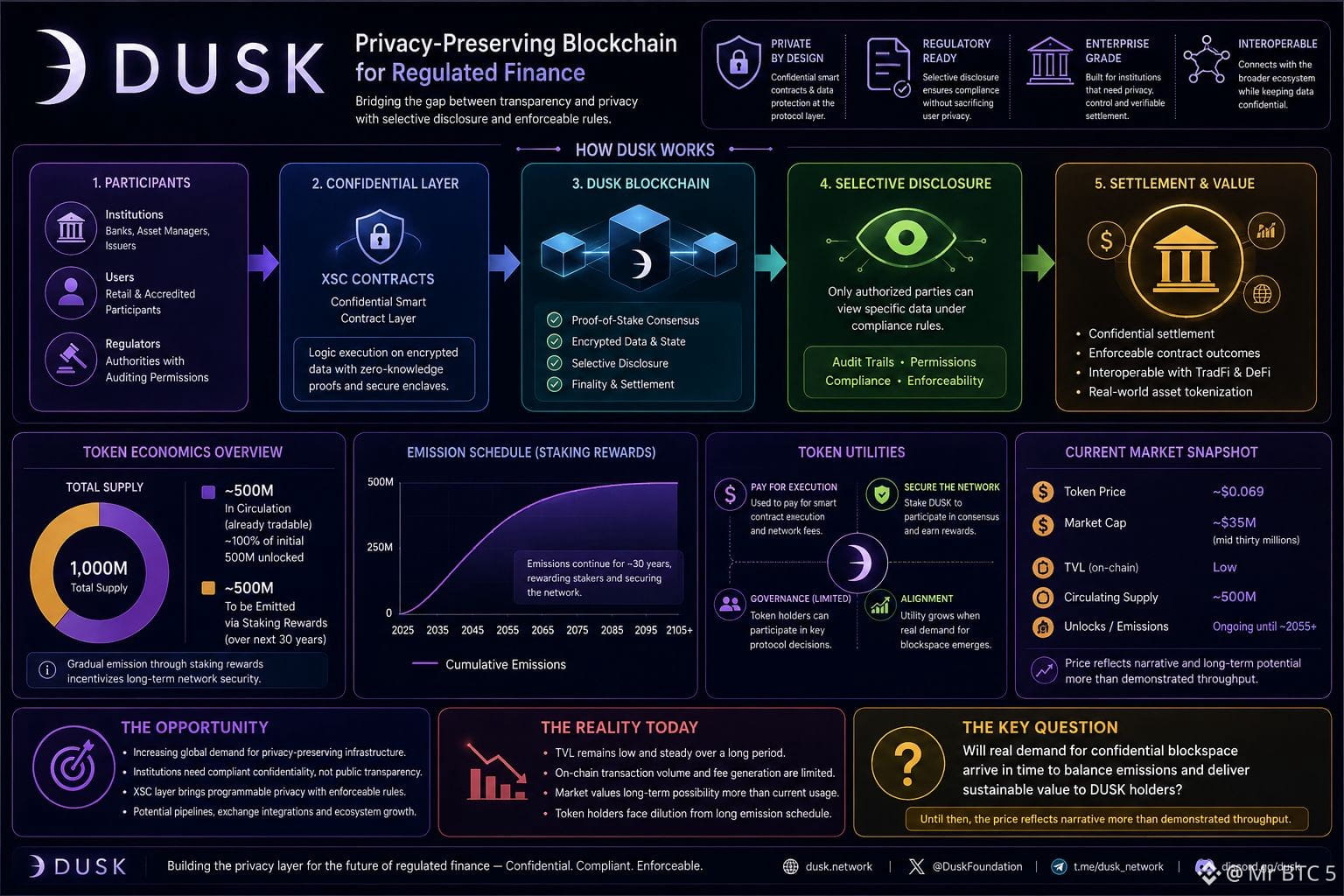
Something felt off when I cross-checked the circulating supply against the emission schedule. DUSK is sitting around $0.069 with a market cap in the mid-thirties of millions. Nearly all of the original 500 million tokens are already free to trade, while another 500 million is still scheduled to come online over the next three decades through staking rewards.
The protocol’s core pitch is that regulated finance needs a chain capable of keeping sensitive data private while still allowing selective disclosure and enforceable settlement rules. XSC contracts and the confidential smart-contract layer are meant to sit in that middle ground between fully transparent ledgers and pure privacy coins.
What’s striking is how slowly measurable usage has followed the technical work. TVL has stayed low for a long time. Potential pipelines and exchange partnerships get discussed, yet the actual volume of repeated, fee-generating transactions on the ledger hasn’t scaled in parallel. The market keeps assigning value more to the long-term possibility than to what’s happening right now.
There’s a practical separation at work here. Parties that might eventually issue or settle confidential instruments can get real utility out of the privacy and compliance features without needing to hold large token positions. Holders and stakers, on the other hand, live with the gradual supply increase and the volatility that comes with a relatively small capitalization.
The token does have defined roles—paying for execution, securing the network through stake, and limited governance—but those roles only start carrying real economic weight once demand for blockspace becomes consistent. Whether that demand shows up in time to balance the emission curve is still an open question. For now the price seems to reflect narrative more than demonstrated throughput.
#dusk $DUSK @Dusk_Foundation
$BOME $BTW
{future}(BTWUSDT)
{spot}(BOMEUSDT)
Something felt off when I cross-checked the circulating supply against the emission schedule. DUSK is sitting around $0.069 with a market cap in the mid-thirties of millions. Nearly all of the original 500 million tokens are already free to trade, while another 500 million is still scheduled to come online over the next three decades through staking rewards.
The protocol’s core pitch is that regulated finance needs a chain capable of keeping sensitive data private while still allowing selective disclosure and enforceable settlement rules. XSC contracts and the confidential smart-contract layer are meant to sit in that middle ground between fully transparent ledgers and pure privacy coins.
What’s striking is how slowly measurable usage has followed the technical work. TVL has stayed low for a long time. Potential pipelines and exchange partnerships get discussed, yet the actual volume of repeated, fee-generating transactions on the ledger hasn’t scaled in parallel. The market keeps assigning value more to the long-term possibility than to what’s happening right now.
There’s a practical separation at work here. Parties that might eventually issue or settle confidential instruments can get real utility out of the privacy and compliance features without needing to hold large token positions. Holders and stakers, on the other hand, live with the gradual supply increase and the volatility that comes with a relatively small capitalization.
The token does have defined roles—paying for execution, securing the network through stake, and limited governance—but those roles only start carrying real economic weight once demand for blockspace becomes consistent. Whether that demand shows up in time to balance the emission curve is still an open question. For now the price seems to reflect narrative more than demonstrated throughput.
#dusk $DUSK @Dusk
$BOME $BTW
The protocol’s core pitch is that regulated finance needs a chain capable of keeping sensitive data private while still allowing selective disclosure and enforceable settlement rules. XSC contracts and the confidential smart-contract layer are meant to sit in that middle ground between fully transparent ledgers and pure privacy coins.
What’s striking is how slowly measurable usage has followed the technical work. TVL has stayed low for a long time. Potential pipelines and exchange partnerships get discussed, yet the actual volume of repeated, fee-generating transactions on the ledger hasn’t scaled in parallel. The market keeps assigning value more to the long-term possibility than to what’s happening right now.
There’s a practical separation at work here. Parties that might eventually issue or settle confidential instruments can get real utility out of the privacy and compliance features without needing to hold large token positions. Holders and stakers, on the other hand, live with the gradual supply increase and the volatility that comes with a relatively small capitalization.
The token does have defined roles—paying for execution, securing the network through stake, and limited governance—but those roles only start carrying real economic weight once demand for blockspace becomes consistent. Whether that demand shows up in time to balance the emission curve is still an open question. For now the price seems to reflect narrative more than demonstrated throughput.
#dusk $DUSK @Dusk
$BOME $BTW
47
17
2.2k
·
--
Bullish
I’ve been sitting with Dusk longer than most of these projects really deserve at this point.
The usual cycle fatigue is real. One season it’s yield farming, next it’s jpegs, then AI agents, then real-world assets. The pitch decks change outfits but the underlying pattern stays pretty familiar. After a while you stop expecting the next announcement to actually rearrange anything fundamental.
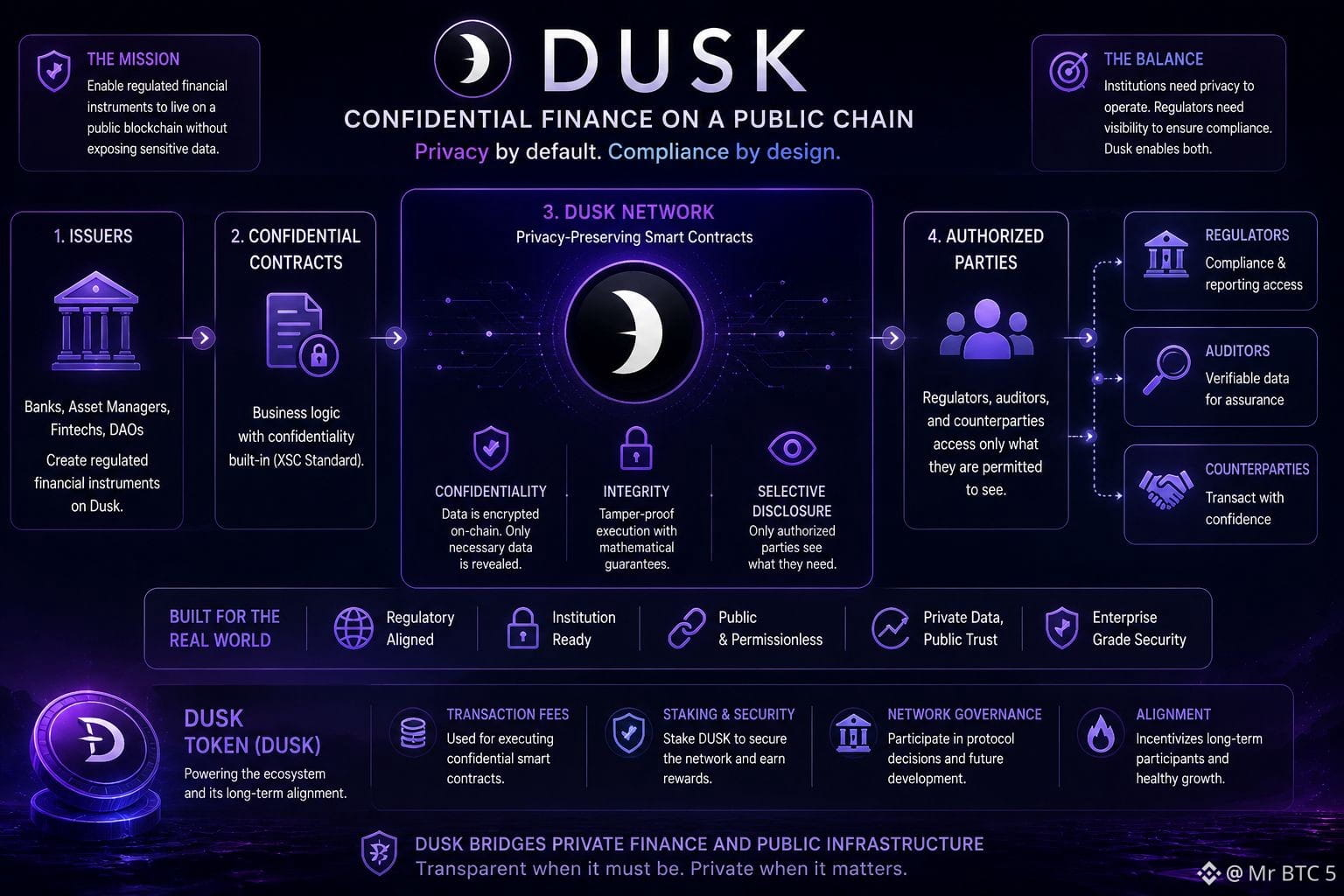
Dusk still catches my attention for a quieter reason. It’s trying to let regulated financial instruments live on a public chain without turning every position and transfer into public information. Confidential contracts, the XSC standard, selective disclosure for the people who actually need to see the data. The core tension feels legitimate: institutions can’t operate in full transparency, yet pure privacy breaks the rules they have to follow.
That doesn’t mean the thing will work. Volume is still low. Getting real issuers and venues to move meaningful assets takes years of trust that whitepapers can’t manufacture. Liquidity doesn’t show up just because the cryptography is sound. And the DUSK token, while functional for fees and staking, also creates the usual second story that often runs ahead of the actual infrastructure.
I keep coming back to the same unfinished thought. The gap between private finance and public ledgers isn’t going away. Most attempts just perform the solution. A smaller number seem willing to sit inside the friction a little longer. Dusk feels like it belongs in that smaller group for now. I’m still curious. I’m not convinced.
#dusk $DUSK @Dusk_Foundation
$BTW $HEMI
{spot}(HEMIUSDT)
{future}(BTWUSDT)
I’ve been sitting with Dusk longer than most of these projects really deserve at this point.
The usual cycle fatigue is real. One season it’s yield farming, next it’s jpegs, then AI agents, then real-world assets. The pitch decks change outfits but the underlying pattern stays pretty familiar. After a while you stop expecting the next announcement to actually rearrange anything fundamental.
Dusk still catches my attention for a quieter reason. It’s trying to let regulated financial instruments live on a public chain without turning every position and transfer into public information. Confidential contracts, the XSC standard, selective disclosure for the people who actually need to see the data. The core tension feels legitimate: institutions can’t operate in full transparency, yet pure privacy breaks the rules they have to follow.
That doesn’t mean the thing will work. Volume is still low. Getting real issuers and venues to move meaningful assets takes years of trust that whitepapers can’t manufacture. Liquidity doesn’t show up just because the cryptography is sound. And the DUSK token, while functional for fees and staking, also creates the usual second story that often runs ahead of the actual infrastructure.
I keep coming back to the same unfinished thought. The gap between private finance and public ledgers isn’t going away. Most attempts just perform the solution. A smaller number seem willing to sit inside the friction a little longer. Dusk feels like it belongs in that smaller group for now. I’m still curious. I’m not convinced.
#dusk $DUSK @Dusk
$BTW $HEMI
The usual cycle fatigue is real. One season it’s yield farming, next it’s jpegs, then AI agents, then real-world assets. The pitch decks change outfits but the underlying pattern stays pretty familiar. After a while you stop expecting the next announcement to actually rearrange anything fundamental.
Dusk still catches my attention for a quieter reason. It’s trying to let regulated financial instruments live on a public chain without turning every position and transfer into public information. Confidential contracts, the XSC standard, selective disclosure for the people who actually need to see the data. The core tension feels legitimate: institutions can’t operate in full transparency, yet pure privacy breaks the rules they have to follow.
That doesn’t mean the thing will work. Volume is still low. Getting real issuers and venues to move meaningful assets takes years of trust that whitepapers can’t manufacture. Liquidity doesn’t show up just because the cryptography is sound. And the DUSK token, while functional for fees and staking, also creates the usual second story that often runs ahead of the actual infrastructure.
I keep coming back to the same unfinished thought. The gap between private finance and public ledgers isn’t going away. Most attempts just perform the solution. A smaller number seem willing to sit inside the friction a little longer. Dusk feels like it belongs in that smaller group for now. I’m still curious. I’m not convinced.
#dusk $DUSK @Dusk
$BTW $HEMI
49
24
2.1k
·
--
Bullish
I’ve been turning Dusk Network over in my head more than I probably should. They call it a privacy blockchain for financial stuff—a real layer-1 that runs the Confidential Security Contract standard and actual confidential smart contracts. The pitch is that banks and issuers should be able to move securities around without every balance and counterparty name getting published for the world to see.
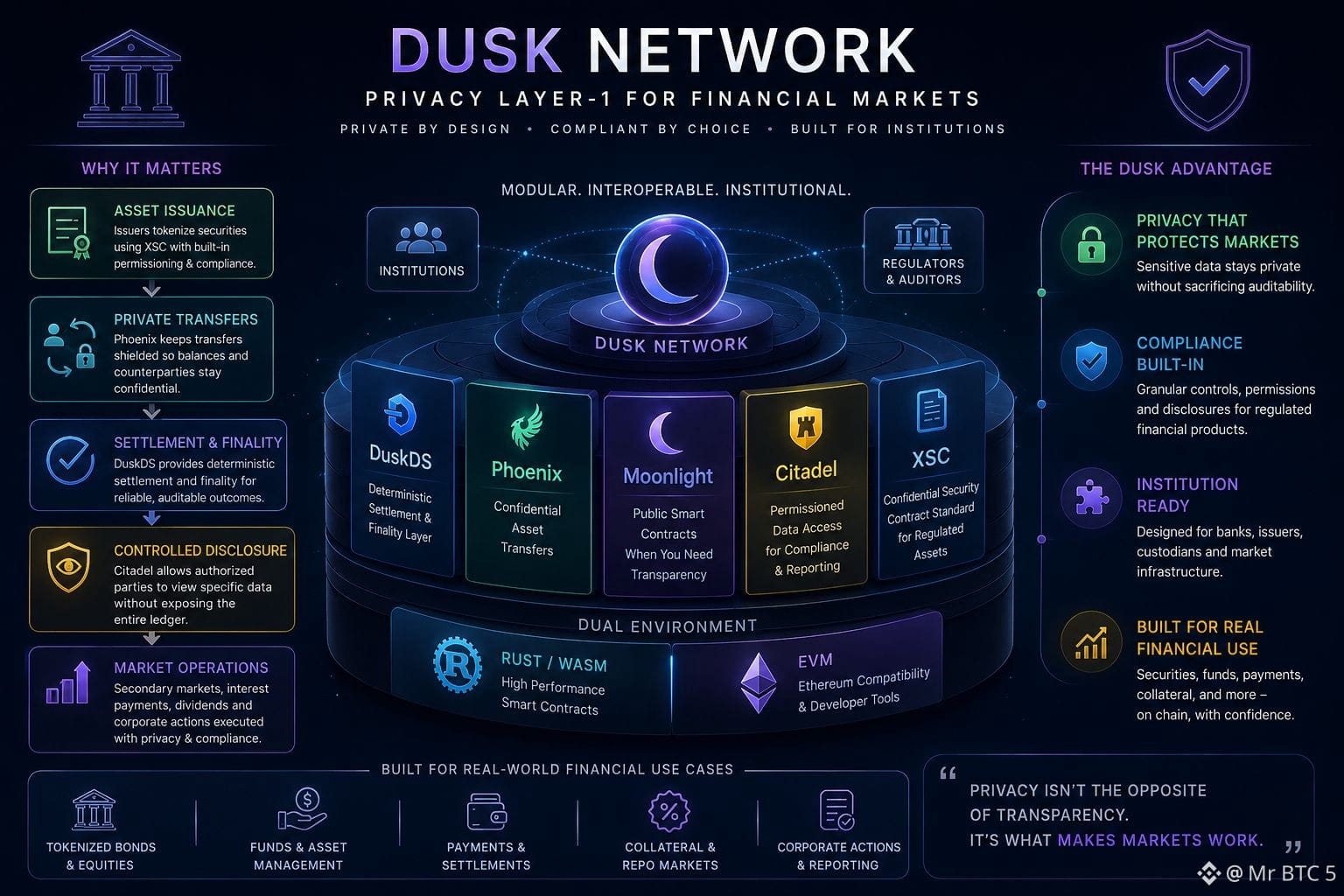
They built the stack in pieces. Settlement and finality sit in DuskDS. Phoenix keeps transfers shielded; Moonlight stays open when you need it. There’s a Rust/WASM side and an EVM side so people can show up with whatever tools they already know. Citadel lets the right people peek without opening the whole ledger. XSC tries to give issuers the controls they actually care about—who can hold, how to recover keys, dividends, votes—while the money still moves privately.
It feels like the right direction for regulated markets. Tokenizing a bond is easy. Stopping the market from reverse-engineering someone’s position every time an interest payment hits is the hard part. Privacy helps the participants, sure, but it also makes price discovery and market-making messier. The big announced pipelines still look a lot bigger than the actual settled volume. Liquidity hasn’t just shown up.
I keep wondering if the institutions sitting on the sidelines will eventually trust a chain that talks their language of controlled disclosure, or if the coordination headaches will keep most of the real money exactly where it is. The tech is careful. Whether careful wins is still an open question.
#dusk $DUSK @Dusk_Foundation
{spot}(DUSKUSDT)
$GIGGLE
{spot}(GIGGLEUSDT)
$GPS
{spot}(GPSUSDT)
I’ve been turning Dusk Network over in my head more than I probably should. They call it a privacy blockchain for financial stuff—a real layer-1 that runs the Confidential Security Contract standard and actual confidential smart contracts. The pitch is that banks and issuers should be able to move securities around without every balance and counterparty name getting published for the world to see.
They built the stack in pieces. Settlement and finality sit in DuskDS. Phoenix keeps transfers shielded; Moonlight stays open when you need it. There’s a Rust/WASM side and an EVM side so people can show up with whatever tools they already know. Citadel lets the right people peek without opening the whole ledger. XSC tries to give issuers the controls they actually care about—who can hold, how to recover keys, dividends, votes—while the money still moves privately.
It feels like the right direction for regulated markets. Tokenizing a bond is easy. Stopping the market from reverse-engineering someone’s position every time an interest payment hits is the hard part. Privacy helps the participants, sure, but it also makes price discovery and market-making messier. The big announced pipelines still look a lot bigger than the actual settled volume. Liquidity hasn’t just shown up.
I keep wondering if the institutions sitting on the sidelines will eventually trust a chain that talks their language of controlled disclosure, or if the coordination headaches will keep most of the real money exactly where it is. The tech is careful. Whether careful wins is still an open question.
#dusk $DUSK @Dusk
$GIGGLE
$GPS
They built the stack in pieces. Settlement and finality sit in DuskDS. Phoenix keeps transfers shielded; Moonlight stays open when you need it. There’s a Rust/WASM side and an EVM side so people can show up with whatever tools they already know. Citadel lets the right people peek without opening the whole ledger. XSC tries to give issuers the controls they actually care about—who can hold, how to recover keys, dividends, votes—while the money still moves privately.
It feels like the right direction for regulated markets. Tokenizing a bond is easy. Stopping the market from reverse-engineering someone’s position every time an interest payment hits is the hard part. Privacy helps the participants, sure, but it also makes price discovery and market-making messier. The big announced pipelines still look a lot bigger than the actual settled volume. Liquidity hasn’t just shown up.
I keep wondering if the institutions sitting on the sidelines will eventually trust a chain that talks their language of controlled disclosure, or if the coordination headaches will keep most of the real money exactly where it is. The tech is careful. Whether careful wins is still an open question.
#dusk $DUSK @Dusk
$GIGGLE
$GPS
95
36
2.3k
·
--
Bullish
Verified
Late last night I found myself staring at the Dusk chart again. Not because it was doing anything dramatic—price just sitting there around $0.07—but because the silence around it felt louder than the numbers. Market cap roughly $35 million, almost 500 million tokens circulating. It has that familiar mid-cap look of something that never quite left the waiting room.
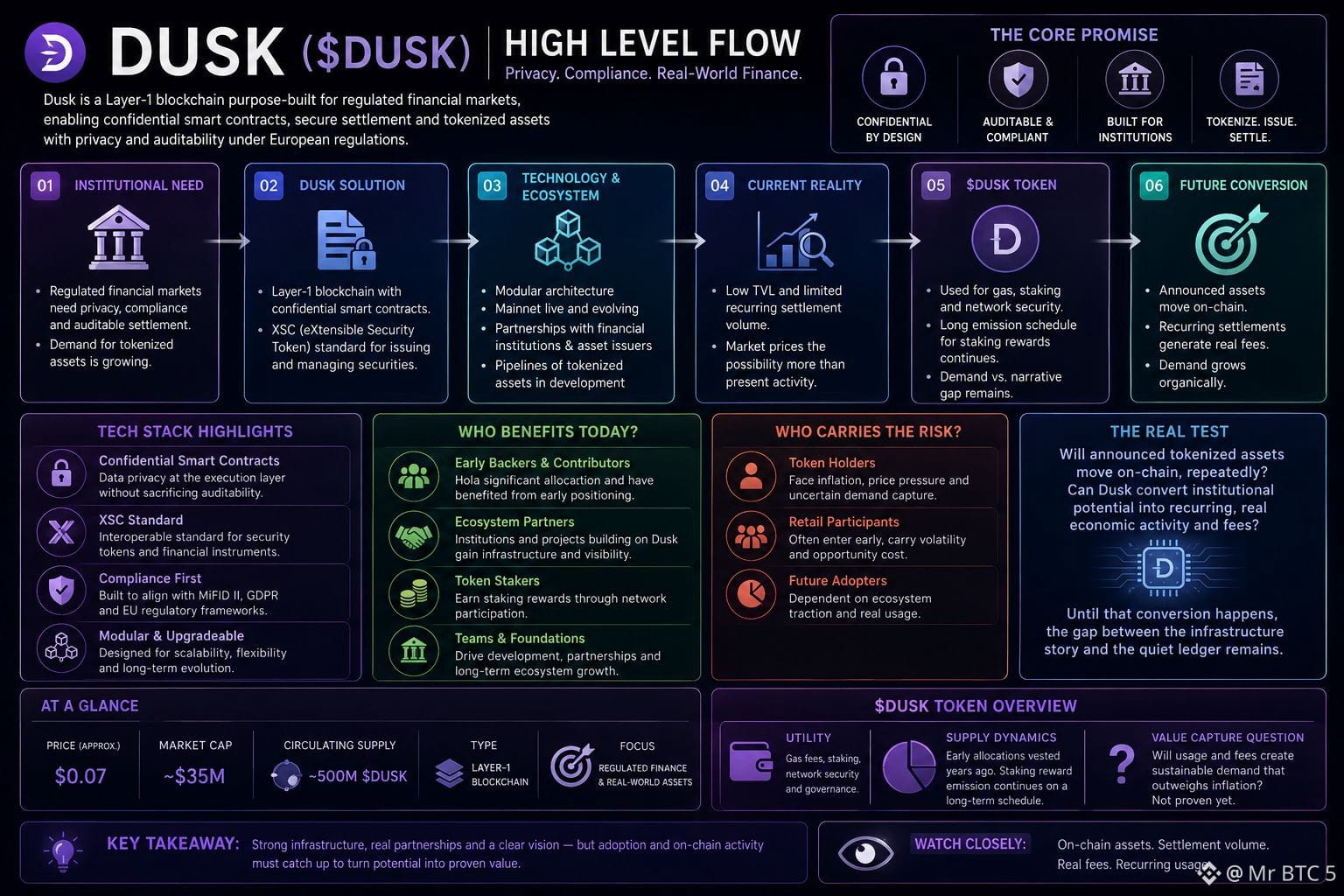
What the project keeps saying is straightforward enough. It’s a layer-1 built for regulated financial markets, with confidential smart contracts and the XSC standard so institutions can issue and settle securities while keeping data private yet still auditable under European rules. The tech stack has gotten more modular over time, and the partnerships still talk about sizable pipelines of tokenized assets waiting in the wings.
The part that sticks with me is how little of that story has shown up as actual network use. Mainnet has been live, products have shipped, yet total value locked stays thin and recurring settlement volume is still hard to find. The market seems to be pricing the possibility more than the present activity.
Supply pressure has shifted some. The early allocations finished vesting years ago, but the long emission schedule for staking rewards keeps rolling. The token pays for gas and secures the chain, sure—but it’s not obvious yet whether that creates lasting demand or just props up the narrative.
I keep coming back to the same question: who is actually benefiting right now, and who is carrying the risk while real fees stay modest? The real test will be whether those announced assets start moving on-chain, repeatedly. Until that conversion happens, the gap between the infrastructure story and the quiet ledger is what stays with me.
@Dusk_Foundation #dusk $DUSK
{spot}(DUSKUSDT)
$APR
{future}(APRUSDT)
$ACE
{spot}(ACEUSDT)
Late last night I found myself staring at the Dusk chart again. Not because it was doing anything dramatic—price just sitting there around $0.07—but because the silence around it felt louder than the numbers. Market cap roughly $35 million, almost 500 million tokens circulating. It has that familiar mid-cap look of something that never quite left the waiting room.
What the project keeps saying is straightforward enough. It’s a layer-1 built for regulated financial markets, with confidential smart contracts and the XSC standard so institutions can issue and settle securities while keeping data private yet still auditable under European rules. The tech stack has gotten more modular over time, and the partnerships still talk about sizable pipelines of tokenized assets waiting in the wings.
The part that sticks with me is how little of that story has shown up as actual network use. Mainnet has been live, products have shipped, yet total value locked stays thin and recurring settlement volume is still hard to find. The market seems to be pricing the possibility more than the present activity.
Supply pressure has shifted some. The early allocations finished vesting years ago, but the long emission schedule for staking rewards keeps rolling. The token pays for gas and secures the chain, sure—but it’s not obvious yet whether that creates lasting demand or just props up the narrative.
I keep coming back to the same question: who is actually benefiting right now, and who is carrying the risk while real fees stay modest? The real test will be whether those announced assets start moving on-chain, repeatedly. Until that conversion happens, the gap between the infrastructure story and the quiet ledger is what stays with me.
@Dusk #dusk $DUSK
$APR
$ACE
What the project keeps saying is straightforward enough. It’s a layer-1 built for regulated financial markets, with confidential smart contracts and the XSC standard so institutions can issue and settle securities while keeping data private yet still auditable under European rules. The tech stack has gotten more modular over time, and the partnerships still talk about sizable pipelines of tokenized assets waiting in the wings.
The part that sticks with me is how little of that story has shown up as actual network use. Mainnet has been live, products have shipped, yet total value locked stays thin and recurring settlement volume is still hard to find. The market seems to be pricing the possibility more than the present activity.
Supply pressure has shifted some. The early allocations finished vesting years ago, but the long emission schedule for staking rewards keeps rolling. The token pays for gas and secures the chain, sure—but it’s not obvious yet whether that creates lasting demand or just props up the narrative.
I keep coming back to the same question: who is actually benefiting right now, and who is carrying the risk while real fees stay modest? The real test will be whether those announced assets start moving on-chain, repeatedly. Until that conversion happens, the gap between the infrastructure story and the quiet ledger is what stays with me.
@Dusk #dusk $DUSK
$APR
$ACE
103
35
3.5k
·
--
Bullish
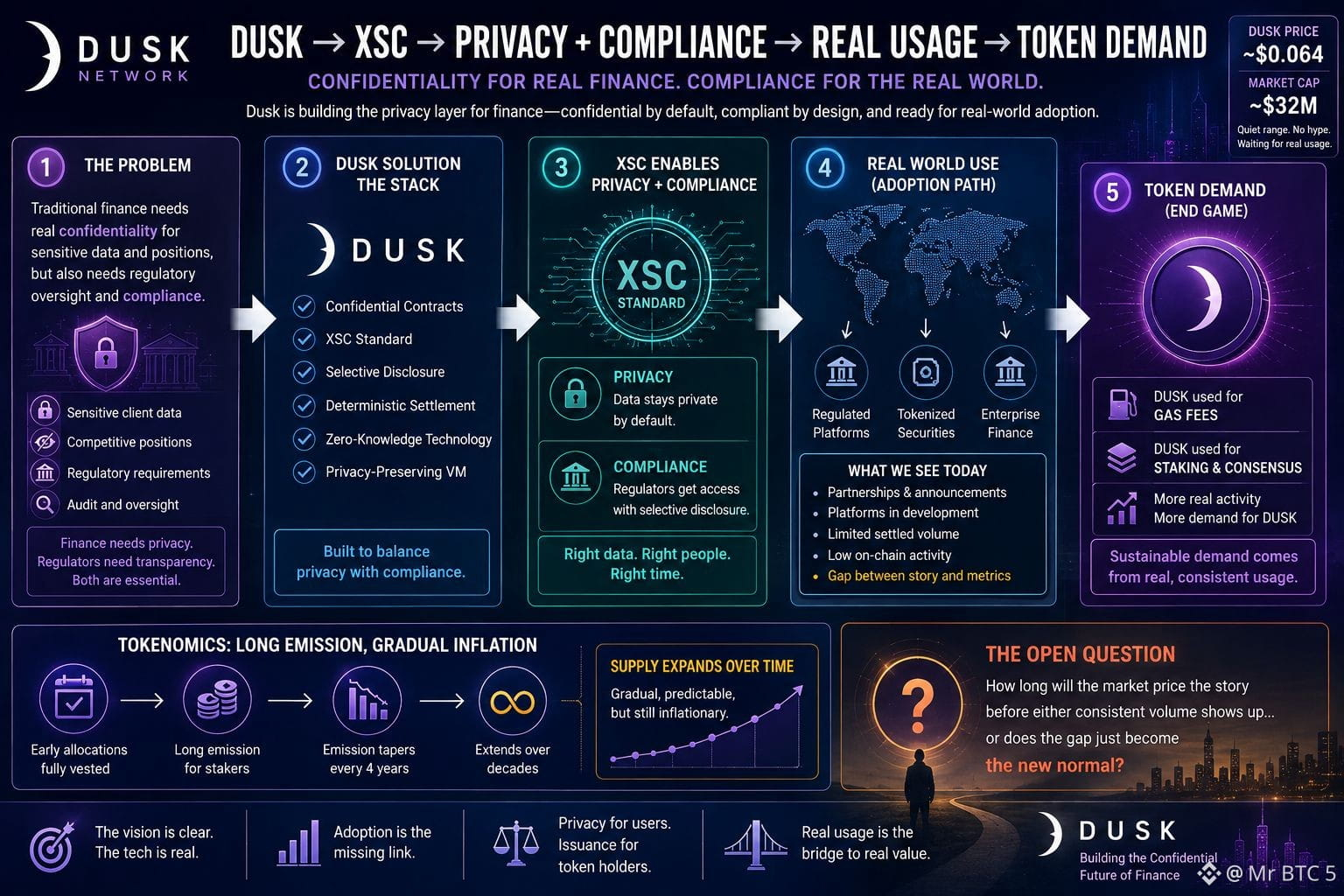
Something felt off this afternoon when I refreshed the numbers. DUSK was still hovering around $0.064, market cap stuck near $32 million—the same quiet range it’s occupied for a long time. No sudden spikes, no obvious catalyst on the surface.
The core pitch has always been pretty specific. Traditional finance needs real confidentiality for sensitive positions and client data, but it also needs ways for regulators to check compliance. Dusk built its stack around that exact tension: confidential contracts, the XSC standard, selective disclosure, deterministic settlement. The technical work is legitimate and has been grinding along for years.
Yet the on-chain reality still looks quiet. Usage metrics and locked value haven’t grown in a way that matches the size of the story being told. Partnerships are there, announcements keep coming—including regulated platforms eyeing tokenized securities—but the actual flow of settled volume that would generate real, sustained fee demand is still limited. The gap between what’s described and what’s currently measurable is hard to ignore.
Early allocations finished vesting a while ago. What’s left is the long emission schedule meant to reward stakers, tapering every four years over decades. That design keeps the inflation gradual rather than abrupt, but supply still expands over time. The token is needed for gas and for participating in consensus, so higher real activity should eventually support demand. Right now that link still feels more theoretical than observed.
The protocol’s eventual users would get the privacy and compliance features they need. Token holders, meanwhile, absorb the ongoing issuance while waiting for that activity to scale. I keep coming back to the same open question: how long the market will keep pricing the story before either consistent volume shows up or the gap just becomes the new normal.
@Dusk_Foundation #dusk $DUSK
$AKE $APR
Something felt off this afternoon when I refreshed the numbers. DUSK was still hovering around $0.064, market cap stuck near $32 million—the same quiet range it’s occupied for a long time. No sudden spikes, no obvious catalyst on the surface.
The core pitch has always been pretty specific. Traditional finance needs real confidentiality for sensitive positions and client data, but it also needs ways for regulators to check compliance. Dusk built its stack around that exact tension: confidential contracts, the XSC standard, selective disclosure, deterministic settlement. The technical work is legitimate and has been grinding along for years.
Yet the on-chain reality still looks quiet. Usage metrics and locked value haven’t grown in a way that matches the size of the story being told. Partnerships are there, announcements keep coming—including regulated platforms eyeing tokenized securities—but the actual flow of settled volume that would generate real, sustained fee demand is still limited. The gap between what’s described and what’s currently measurable is hard to ignore.
Early allocations finished vesting a while ago. What’s left is the long emission schedule meant to reward stakers, tapering every four years over decades. That design keeps the inflation gradual rather than abrupt, but supply still expands over time. The token is needed for gas and for participating in consensus, so higher real activity should eventually support demand. Right now that link still feels more theoretical than observed.
The protocol’s eventual users would get the privacy and compliance features they need. Token holders, meanwhile, absorb the ongoing issuance while waiting for that activity to scale. I keep coming back to the same open question: how long the market will keep pricing the story before either consistent volume shows up or the gap just becomes the new normal.
@Dusk #dusk $DUSK
$AKE $APR
The core pitch has always been pretty specific. Traditional finance needs real confidentiality for sensitive positions and client data, but it also needs ways for regulators to check compliance. Dusk built its stack around that exact tension: confidential contracts, the XSC standard, selective disclosure, deterministic settlement. The technical work is legitimate and has been grinding along for years.
Yet the on-chain reality still looks quiet. Usage metrics and locked value haven’t grown in a way that matches the size of the story being told. Partnerships are there, announcements keep coming—including regulated platforms eyeing tokenized securities—but the actual flow of settled volume that would generate real, sustained fee demand is still limited. The gap between what’s described and what’s currently measurable is hard to ignore.
Early allocations finished vesting a while ago. What’s left is the long emission schedule meant to reward stakers, tapering every four years over decades. That design keeps the inflation gradual rather than abrupt, but supply still expands over time. The token is needed for gas and for participating in consensus, so higher real activity should eventually support demand. Right now that link still feels more theoretical than observed.
The protocol’s eventual users would get the privacy and compliance features they need. Token holders, meanwhile, absorb the ongoing issuance while waiting for that activity to scale. I keep coming back to the same open question: how long the market will keep pricing the story before either consistent volume shows up or the gap just becomes the new normal.
@Dusk #dusk $DUSK
$AKE $APR
107
36
558
Log in to explore more content
Join global crypto users on Binance Square
⚡️ Get latest and useful information about crypto.
💬 Trusted by the world’s largest crypto exchange.
👍 Discover real insights from verified creators.
Email / Phone number
Trending Topics
BitcoinReboundsTo$79K
19,832 views
168 Discussing
🚨 $BTC is pushing higher.
Bitcoin is trading around $78,804, up roughly 1.9%, after reclaiming the $78K area. The next level to watch is the intraday high near $78,905.
A clean break above that level could open the way toward $79K–$80K. If BTC gets rejected, support sits around $78,300, then $77,975.
Bulls have momentum, but BTC needs to hold above $78K.
#Bitcoin #BTC #CryptoTrading #CryptoMarket #CryptoAnalysis
PulseON
·18 Likes
·17k views
BitcoinSpotETFsNetInflow$160M
40 views
21 Discussing
SouthKoreaCryptoTaxDelayPetitionTops50000
7,877 views
220 Discussing