

比特耶夫
138 Posts

比特耶夫
Report
Block User
BitKoi·A silent observer of the crypto realm, deciphering the codes and chasing the hidden gems.
Open Trade

FIGHT Holder
Frequent Trader
3.9 Years
117 Following
19.3K+ Followers
8.1K+ Liked
Posts
Portfolio
All
Quotes
Videos
·
--
Bullish
Many people study stablecoins, but
all they care about each day is how they’re used on exchanges.
But on October 26, Binance published an announcement that made me feel a much bigger trend is emerging.
Binance plans to add a USDC/AED trading pair.
What does that mean?
Put simply, it creates a new trading channel between a stablecoin and a real-world fiat currency.
What’s really worth paying attention to isn’t the addition of yet another trading pair.
It’s that stablecoins are increasingly connecting with local currencies, payment systems, and financial infrastructure around the world.
In the past, many people thought of crypto as just a standalone trading market.
But in the future, stablecoins may be used more and more for cross-border settlements, business payments, and automated payments by AI agents.
Of course, the launch of a trading pair doesn’t mean global payment adoption has already been achieved, nor does it mean users in every region can use it.
For real-world commercial adoption, challenges around regulation, liquidity, fund security, and actual payment needs still need to be addressed.
But I believe:
The most important thing to watch in the next phase of stablecoins isn’t who creates more digital assets, but who can connect digital assets with real-world commercial systems more efficiently.
One of the most important areas of competition in Web3’s future may be the ability to connect with the real-world financial system.
Where do you think stablecoins’ biggest use case will be in the future?
#Binance #BinanceSquare #Web3 #Stablecoins #CrossBorderPayments #FinTech
19
2
49
·
--
Bullish
An automated program suddenly failed,
and $16 million was gone!
Many people think the biggest risk in cryptocurrency is a sharp drop in prices.
But a security incident disclosed by a major crypto exchange on October 25 showed me another problem.
A program responsible for automatically transferring funds malfunctioned, leaving a large amount of money in old wallets that had already been decommissioned.
The final loss was close to $16 million!
What’s even more worth thinking about is this:
These wallets had originally been decommissioned because of security concerns.
What does this tell us?
In the world of digital finance, advanced technology doesn’t necessarily mean sound management.
AI can help automate trading, and blockchain can make fund flows more transparent.
But if access controls, anomaly monitoring, or fund consolidation fail, even the most advanced technology can lead to losses.
I believe that, looking ahead, what’s truly worth paying attention to in digital asset platforms—including Binance—is not just trading volume, but also the strength of their security systems and risk controls.
In the next phase of the crypto industry, success may not go to whoever moves fastest, but to whoever can stay secure and survive the longest.
What do you think matters most for digital asset platforms: trading efficiency or fund security?
#Binance #BinanceSquare #Web3 #DigitalFinance #Blockchain #AssetSecurity
16
2
47
·
--
Bullish
A country wants to use cryptocurrency to counter financial sanctions,
but its central bank publicly opposes the idea!
Something happened recently that the entire Web3 industry should reflect on.
The Israeli prime minister proposed exploring the use of blockchain and cryptocurrency to counter potential international banking sanctions in the future.
In response, the Bank of Israel publicly stated:
Cryptocurrency must not become a way to bypass international sanctions.
This got me thinking:
If even governments are beginning to explore blockchain-based financial infrastructure, does that mean the practical value of digital currencies is being reconsidered?
In my view, what really deserves attention is not using digital currencies to circumvent rules.
It’s these three questions:
First, can blockchain make cross-border payments more efficient?
Second, can digital assets circulate globally more easily while remaining legal and compliant?
Third, can traditional finance and Web3 build more reliable connections?
For global digital asset platforms like Binance, and the entire BNB Chain ecosystem, long-term commercial value also needs to be demonstrated through real-world applications.
The competition in digital finance may not be just about trading volume.
Those who can strike a balance between security, efficiency, and compliance may have the opportunity to become important players in the next generation of financial infrastructure.
What do you think will be the greatest value of digital currencies in the future: trading or payments?
#Binance #BinanceSquare #BNBChain #Web3 #DigitalFinance
The above is industry commentary and does not constitute investment advice.
222
2
278
·
--
Bullish
Binance is quietly changing one thing: in the future, we may be trading more than just cryptocurrencies!
In the past, when people heard “Binance,” they usually thought of cryptocurrency trading.
But you may not have noticed that on October 14, Binance expanded the use cases for tokenized securities.
What does that mean?
Simply put, it means representing the economic rights of traditional financial assets through blockchain products, so eligible users can use these assets within a new trading system.
What’s really worth paying attention to isn’t which stock went up, but the gradual connection between traditional finance and Web3.
The competition in the future may not just be about trading volume, but about who can better connect stocks, payments, settlement, and digital asset services.
I increasingly feel that what’s truly worth studying long term in Web3 is how financial infrastructure is changing—not just whether prices go up or down.
Do you think traditional finance and Web3 will gradually converge in the future?
#Binance #BinanceSquare #Web3 #FinTech #Blockchain
1
111
·
--
A noteworthy shift has recently emerged in the Web3 industry.
In the past, when discussing digital assets and U.S. stocks, we focused more on trading platforms, ETFs, or tokenized securities.
Now, however, some digital asset companies are starting to enter the U.S. capital markets directly through SPAC mergers.
What does this mean?
Assets that once existed mainly on-chain are entering traditional securities markets through new corporate structures.
But there’s also an easily overlooked issue here.
A publicly traded company holding a large amount of digital assets doesn’t necessarily mean its stock is worth investing in.
You also need to consider net asset value, debt, free float, redemption rates, and the risk of future dilution.
I think the next wave of change in Web3 could be very interesting:
The boundaries between on-chain assets and traditional capital markets are becoming increasingly blurred.
What’s truly worth studying isn’t which concept is hottest, but who can build a transparent and sustainable asset management and trading system.
#Binance #BinanceSquare #Web3 #DigitalAssets #USStocks #FinTech
1
186
·
--
This woman says she has 10 BTC—how can I get it into my wallet?
This woman says she has 10 BTC—how can I get it into my wallet?

2
1.3k

·
--
The World Cup is here!
Who do you think has the best shot at taking home the trophy this year?
I’m ready to reward the friend who guesses the champion right with 100 USDT.
In football, it’s all about skill, but in crypto, it’s about vision.
Let’s see whose judgment is sharper this time.
Meet me in the comments,
let’s find out who the real prophet is.
#世界杯 #冠军预测
#币安广场 #USDT #足球竞猜

48
1
3
222
·
--
Partly True
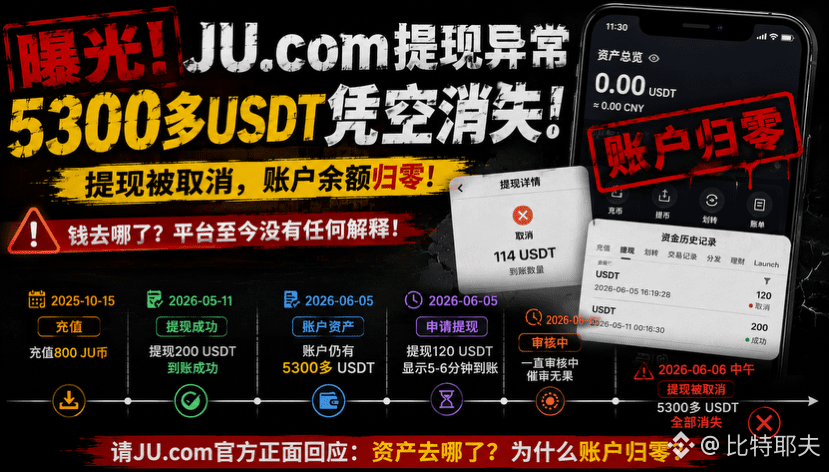
After my withdrawal from JU.com was canceled,
over 5300 USDT disappeared from my account. I need an explanation from the platform!
I'm going to publicly document this issue and hope for a direct response from JU.com.
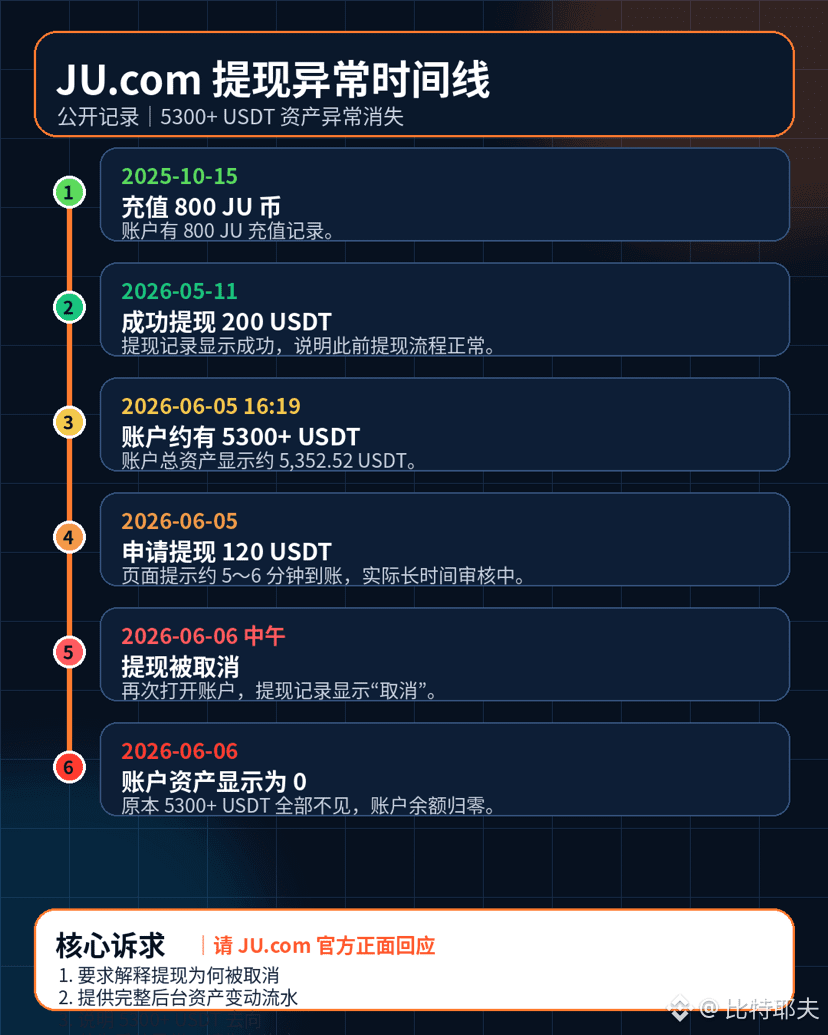
The timeline is crystal clear:
On October 15, 2025, I deposited 800 JU coins into JU.com.
On May 11, 2026, I successfully withdrew 200 USDT, and the withdrawal process was smooth back then.
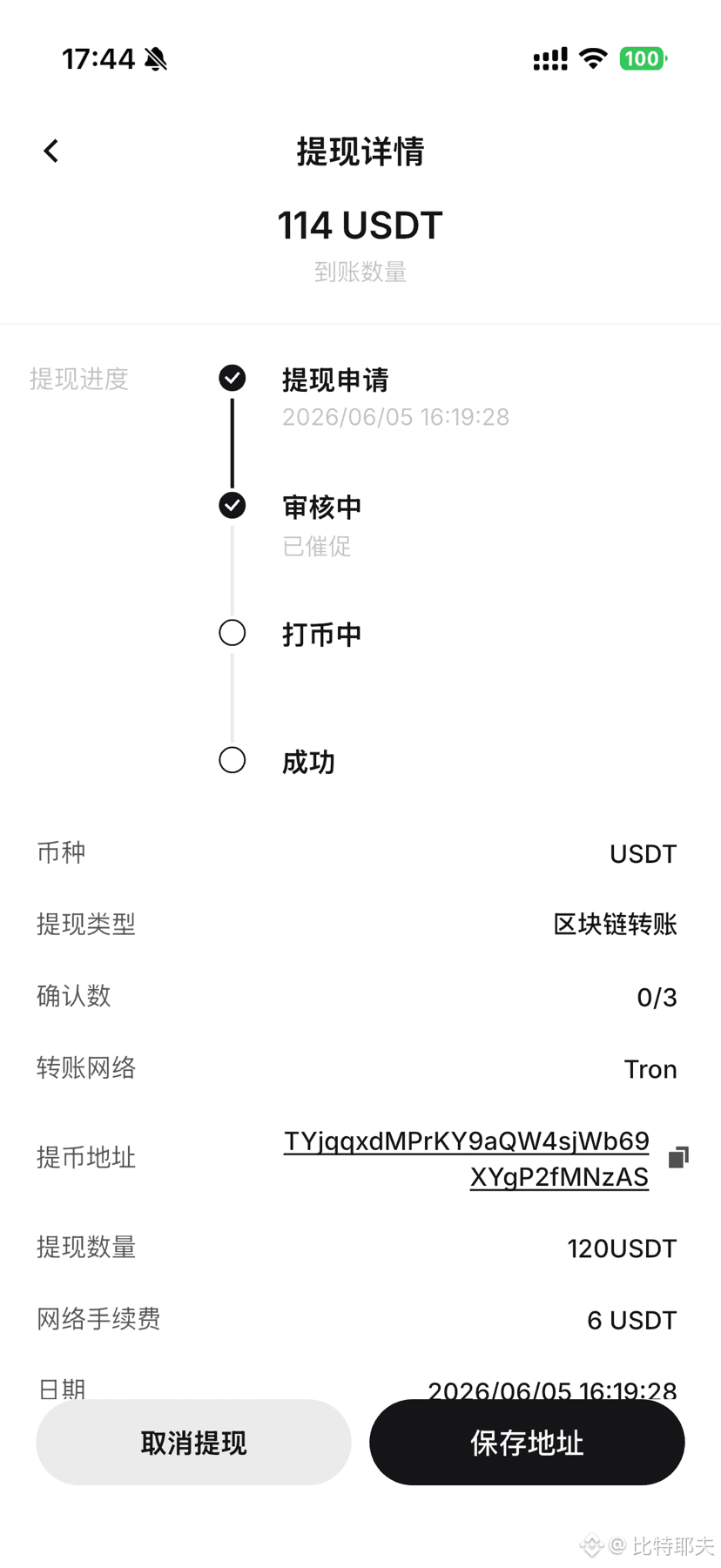
By June 5, 2026, I still had over 5300 USDT in my account, and then I requested a withdrawal of 120 USDT. The page indicated it would take about 5-6 minutes to process, but it was stuck in review for a long time. I even clicked to expedite the review, but after waiting most of the day, there was still no update.
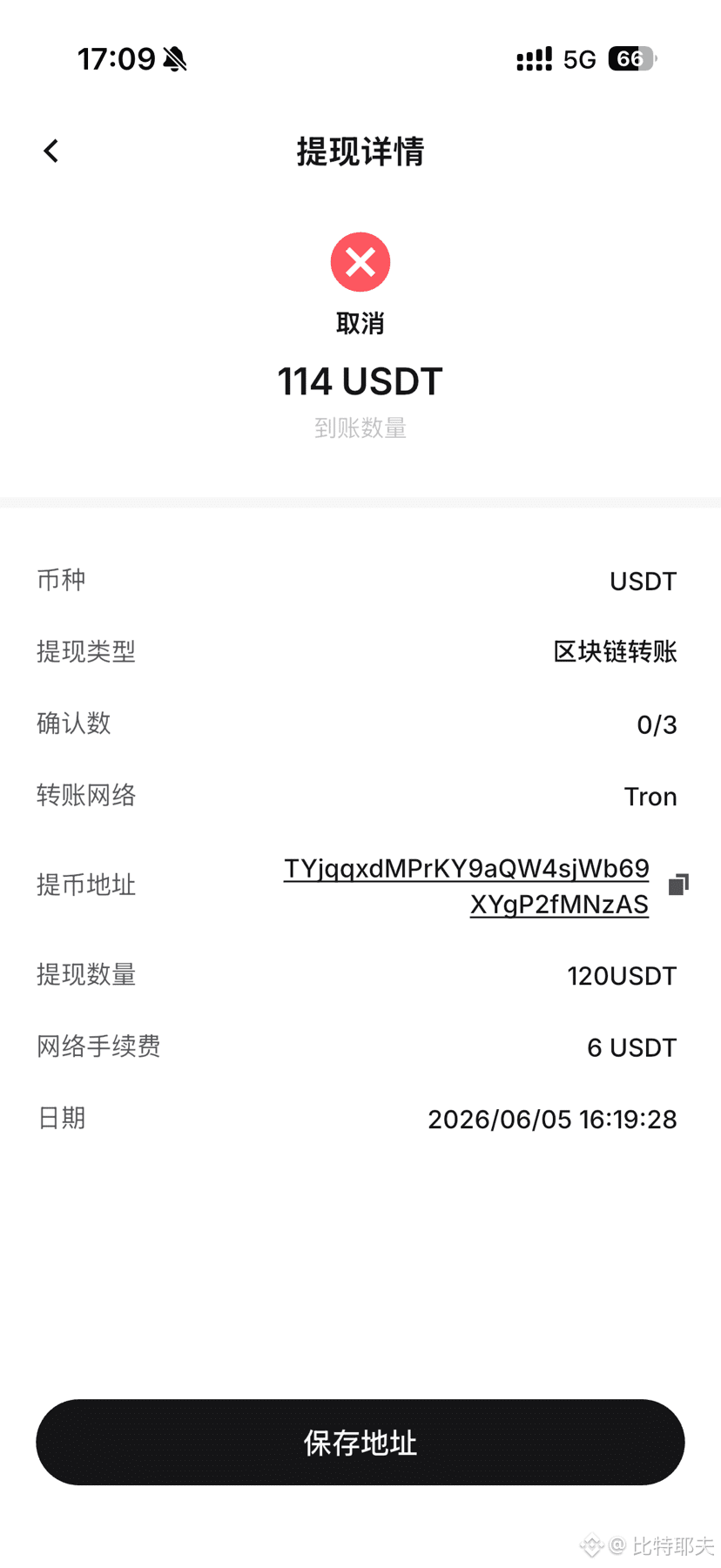
At noon on June 6, I checked my account again and saw that this withdrawal showed as canceled.
What I can't accept is that after the withdrawal was canceled, all over 5300 USDT in my account completely vanished, and my current account balance shows as 0.
I just want to ask JU.com a few questions:
First, why was the withdrawal canceled?
Second, why did my assets not return to my account after the cancellation?
Third, where did the over 5300 USDT in my account go?
Fourth, can the platform provide a complete backend asset flow and operational records?
I've kept screenshots of the withdrawal details, fund history, account asset page, and customer service communications.
If this is a system error, please restore my account's assets.
If this is a risk control review, please provide clear justification.
If it's a backend deduction, please publicly explain the flow of funds.
User assets can't just be brushed off with phrases like 'in review', 'in queue', or 'system issues'.
I will keep updating on this situation and hope that others with similar experiences can comment below to gather evidence together.
Please JU.com, respond directly: where did my over 5300 USDT go?
#JU #JUcom #USDT #withdrawal_issue #account_zeroed #crypto_asset_security #digital_currency#JU币跑路
30
19
32.1k



·
--
To avoid bad reviews,
I ran up to the 28th floor to deliver food,
my legs shook when I came down,
all for a better life—it's not easy!
#Strategy增持比特币
To avoid bad reviews,
I ran up to the 28th floor to deliver food,
my legs shook when I came down,
all for a better life—it's not easy!
#Strategy增持比特币
I ran up to the 28th floor to deliver food,
my legs shook when I came down,
all for a better life—it's not easy!
#Strategy增持比特币
75
·
--
Bullish

3
547


·
--
Bullish
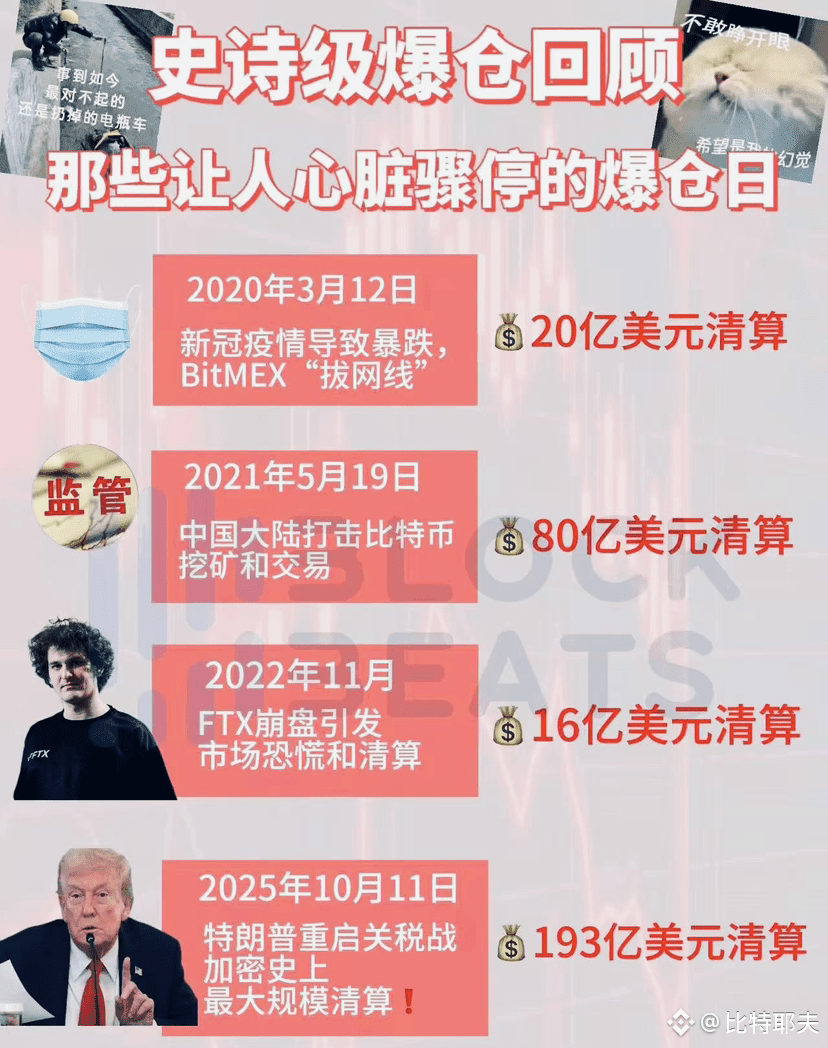
Those heart-stopping liquidation days, did you participate?
#美国加征关税
Those heart-stopping liquidation days, did you participate?
#美国加征关税
#美国加征关税
2.6k
1.2k
174
2.6k
·
--
Bullish
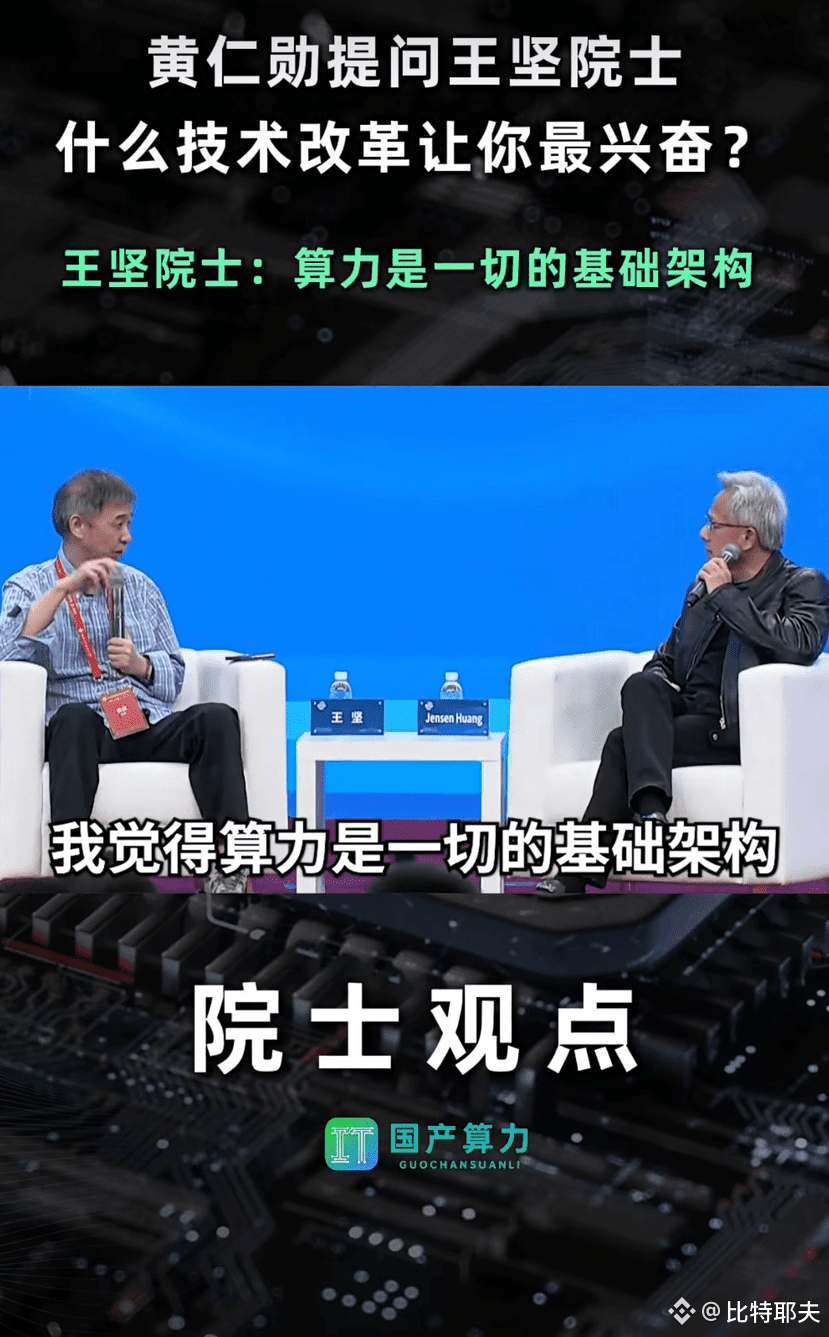
Some are trading cryptocurrencies, some are trading stocks, some are investing in real estate, while those who truly master 'computing power' are already defining the next era.
Jensen Huang said that AI is an industrial revolution,
Academician Wang Jian stated that computing power is the foundation of everything.
We are truly fortunate to participate in this wave of AI,
and we are currently engaged in this most fundamental and stable business.
#Ai算力托管租赁
Jensen Huang said that AI is an industrial revolution,
Academician Wang Jian stated that computing power is the foundation of everything.
We are truly fortunate to participate in this wave of AI,
and we are currently engaged in this most fundamental and stable business.
#Ai算力托管租赁
3
162
Log in to explore more content
Join global crypto users on Binance Square
⚡️ Get latest and useful information about crypto.
💬 Trusted by the world’s largest crypto exchange.
👍 Discover real insights from verified creators.
Email / Phone number