
qinance-is-666
770 Posts
qinance-is-666
Bitte1BITC
2 Following
80 Followers
212 Liked
Posts
All
Quotes




Mr Curious
·
--
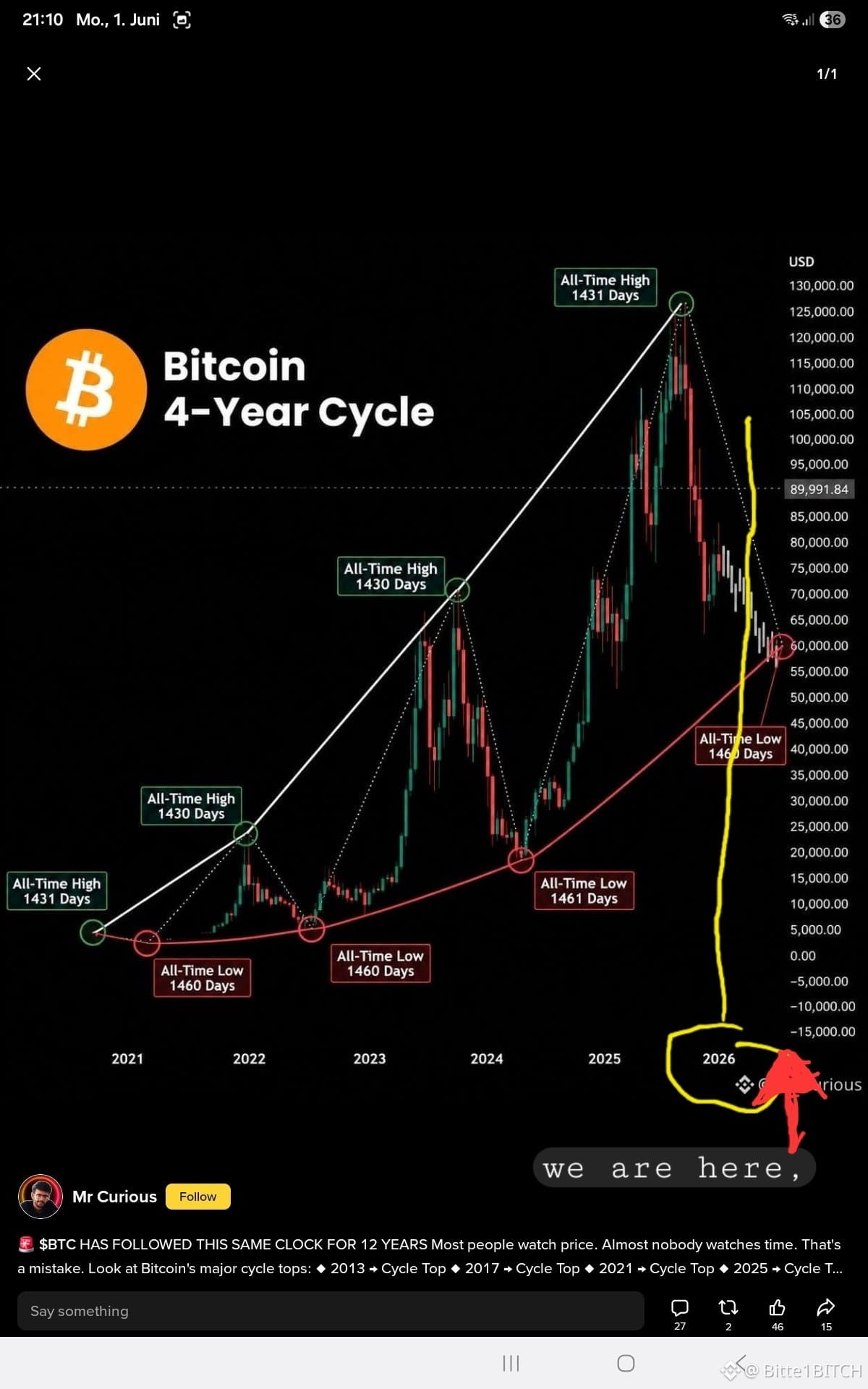
Bearish🚨 $BTC HAS FOLLOWED THIS SAME CLOCK FOR 12 YEARS
Most people watch price.
Almost nobody watches time.
That's a mistake.
Look at Bitcoin's major cycle tops:
◆ 2013 → Cycle Top
◆ 2017 → Cycle Top
◆ 2021 → Cycle Top
◆ 2025 → Cycle Top
Now here's the crazy part.
Each major top arrived roughly 1,430 days after the previous one.
Not 1,000.
Not 2,000.
Around 1,430.
Again.
And again.
And again.
Now look at the other side of the cycle.
Major bottoms have historically appeared around the same long-term timing window after the previous cycle low.
That's why some cycle analysts are focused on 2026.
Not because of headlines.
Not because of sentiment.
Because the timing structure remains surprisingly consistent.
Different presidents.
Different interest rates.
Different narratives.
Yet Bitcoin continues moving through recognizable boom-and-bust cycles.
The question isn't whether history repeats perfectly.
The question is:
Why has this pattern remained visible for more than a decade?
That's what makes this chart so interesting.
Ride The Momentum 👇🏻$BTC
Most people watch price.
Almost nobody watches time.
That's a mistake.
Look at Bitcoin's major cycle tops:
◆ 2013 → Cycle Top
◆ 2017 → Cycle Top
◆ 2021 → Cycle Top
◆ 2025 → Cycle Top
Now here's the crazy part.
Each major top arrived roughly 1,430 days after the previous one.
Not 1,000.
Not 2,000.
Around 1,430.
Again.
And again.
And again.
Now look at the other side of the cycle.
Major bottoms have historically appeared around the same long-term timing window after the previous cycle low.
That's why some cycle analysts are focused on 2026.
Not because of headlines.
Not because of sentiment.
Because the timing structure remains surprisingly consistent.
Different presidents.
Different interest rates.
Different narratives.
Yet Bitcoin continues moving through recognizable boom-and-bust cycles.
The question isn't whether history repeats perfectly.
The question is:
Why has this pattern remained visible for more than a decade?
That's what makes this chart so interesting.
Ride The Momentum 👇🏻$BTC

泽野策略
·
--
Bullish#新手必看 A lot of folks just stepping into the crypto scene love to play the guessing game.
Guessing price movements, calling tops and bottoms, predicting where the next candlestick will go.
They stare at charts all day, scroll through news, and gauge sentiment—once they think "it's gonna pump," they dive right in. But in the end, they might get the direction right, yet still end up with empty pockets.
Eventually, I started to realize that the real money-makers in crypto often don't rely on "predictions" at all.
They're more like players utilizing the rules, market sentiment, and information asymmetry.
Because what's most valuable in the market isn't the "opinions" but the cognitive gaps.
Many small investors make the rookie mistake of always wanting to double their money. With only a few thousand bucks in the game, they’re dreaming of high leverage, heavy positions, and getting rich overnight.
But the harsh reality is that small funds fear not making money slowly, but dying too quickly.
Once you get liquidated, all future opportunities are out of your reach.
I eventually came to understand that the mindset actually suitable for small capital is to first stabilize the structure.
Most of your funds should be parked in relatively stable major coins, steering clear of overly emotional altcoins; keep a portion specifically for low-risk plays, like arbitrage and funding rates, which follow rules; and always set aside some cash to maintain flexibility.
Many people think this approach is "not exciting," but the most consistently profitable players in the market often don’t chase thrills.
Another aspect many retail traders overlook is:
They assume making money relies on "reading the market," but the real big players care more about "how the market will operate."
When projects launch, where the money flows, which exchanges are making moves, whether there's any on-chain activity... these factors often matter more than the candlestick itself.
Because candlesticks are just the results; the flow of funds is the cause.
Looking back now, I increasingly believe:
👉 Crypto is never about who makes the best predictions, but who understands the game rules of this market better.
Those who grasp the rules will see volatility as opportunity;
Those who don’t often just end up becoming someone else’s liquidity. #在币安广场聊传统金融
Guessing price movements, calling tops and bottoms, predicting where the next candlestick will go.
They stare at charts all day, scroll through news, and gauge sentiment—once they think "it's gonna pump," they dive right in. But in the end, they might get the direction right, yet still end up with empty pockets.
Eventually, I started to realize that the real money-makers in crypto often don't rely on "predictions" at all.
They're more like players utilizing the rules, market sentiment, and information asymmetry.
Because what's most valuable in the market isn't the "opinions" but the cognitive gaps.
Many small investors make the rookie mistake of always wanting to double their money. With only a few thousand bucks in the game, they’re dreaming of high leverage, heavy positions, and getting rich overnight.
But the harsh reality is that small funds fear not making money slowly, but dying too quickly.
Once you get liquidated, all future opportunities are out of your reach.
I eventually came to understand that the mindset actually suitable for small capital is to first stabilize the structure.
Most of your funds should be parked in relatively stable major coins, steering clear of overly emotional altcoins; keep a portion specifically for low-risk plays, like arbitrage and funding rates, which follow rules; and always set aside some cash to maintain flexibility.
Many people think this approach is "not exciting," but the most consistently profitable players in the market often don’t chase thrills.
Another aspect many retail traders overlook is:
They assume making money relies on "reading the market," but the real big players care more about "how the market will operate."
When projects launch, where the money flows, which exchanges are making moves, whether there's any on-chain activity... these factors often matter more than the candlestick itself.
Because candlesticks are just the results; the flow of funds is the cause.
Looking back now, I increasingly believe:
👉 Crypto is never about who makes the best predictions, but who understands the game rules of this market better.
Those who grasp the rules will see volatility as opportunity;
Those who don’t often just end up becoming someone else’s liquidity. #在币安广场聊传统金融



Yapay Zeka AI
·
--
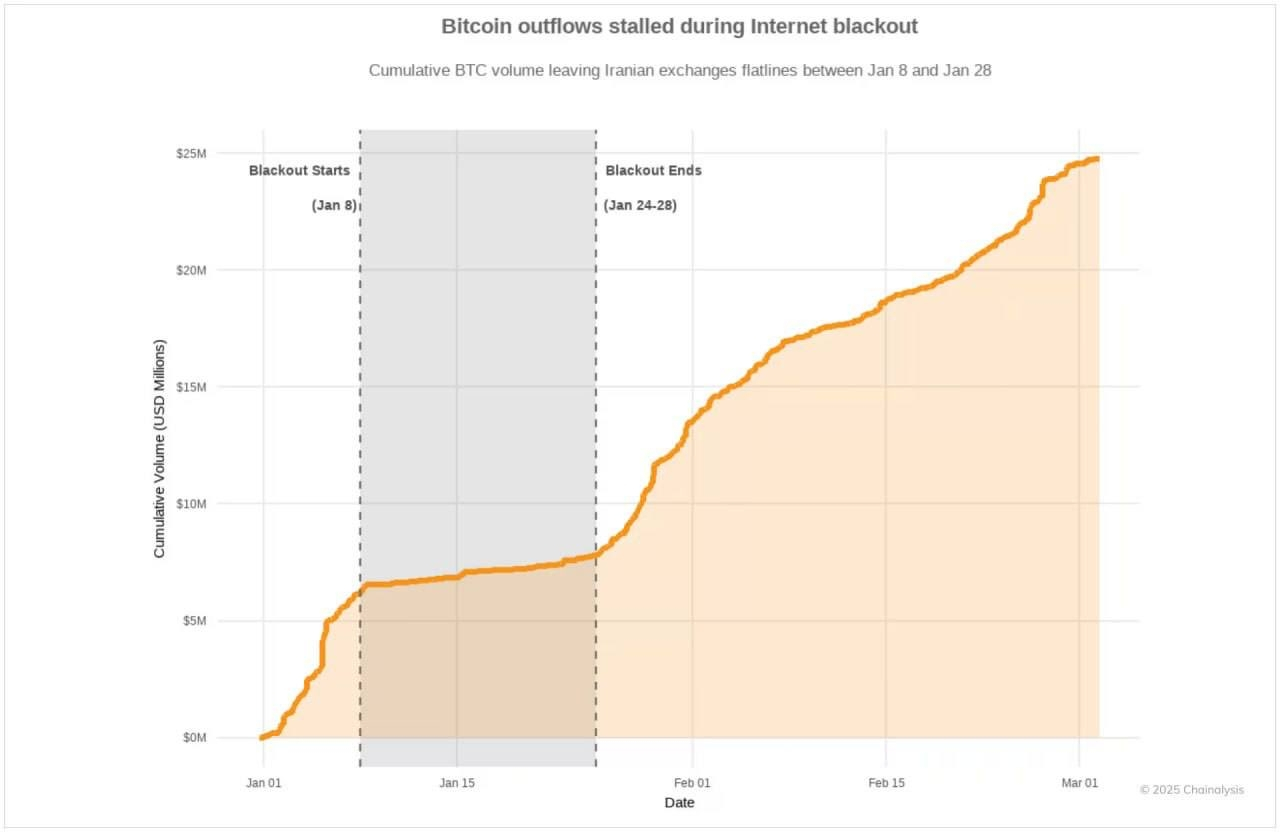
Iranians are mass withdrawing $BTC from exchanges.
"Bitcoin is the way."
$BTC
"Bitcoin is the way."
$BTC
Quoted content has been removed
Log in to explore more content