

BitFrog
29 Posts

BitFrog
Report
Block User
BitFrog是专业级加密货币交易服务平台,提供多种交易返佣服务、多交易所跟单、实盘追踪及行情数据等服务,连接全球交易者与优质交易资源。
1 Following
6 Followers
4 Liked
1 Badges
Posts
·
--
Article
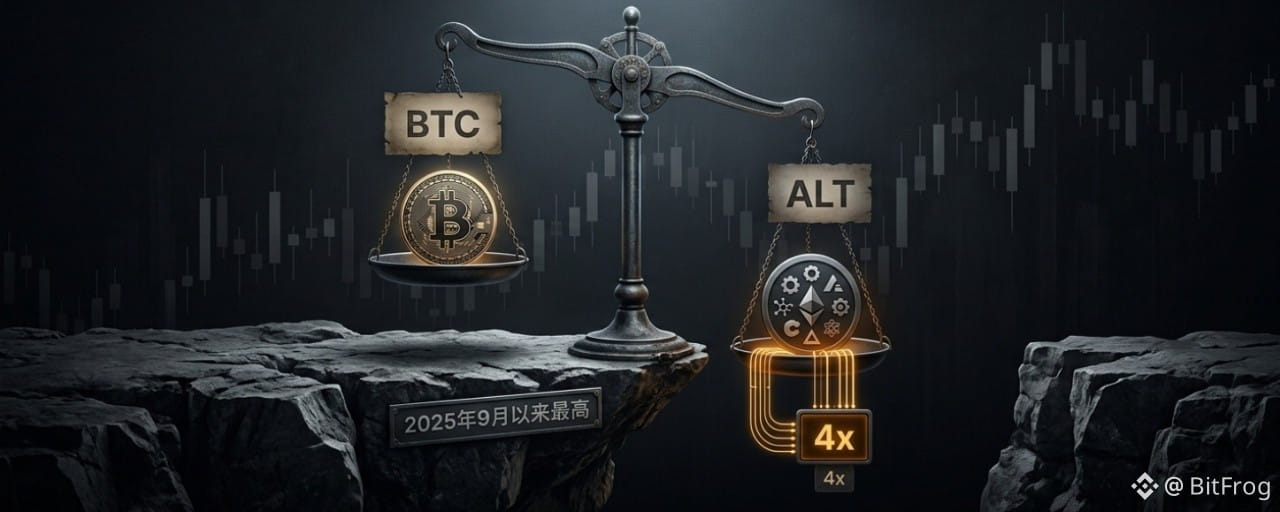
Altcoin trading volume is nearly four times Bitcoin—top signal?Altcoin Volume Nears 4x Bitcoin. A Top Signal?
Summary: Glassnode: Altcoin volume is nearing 4x BTC and often corresponds to the stage at the top.
On September 29, Glassnode data showed that total spot trading volume for altcoins had reached close to 4 times Bitcoin—its highest level since September 2025.
This ratio itself is a coordinate. It doesn’t describe price—it describes where the money is moving.
Volume doesn’t determine direction, but it reveals where capital prefers to go. When altcoin volume is close to four times that of Bitcoin, the risk appetite dial has already shifted.
What does a fourfold increase in trading volume mean?
Altcoin trading volume is nearly four times Bitcoin—top signal?
Altcoin Volume Nears 4x Bitcoin. A Top Signal?
Summary: Glassnode: Altcoin volume is nearing 4x BTC and often corresponds to the stage at the top.
On September 29, Glassnode data showed that total spot trading volume for altcoins had reached close to 4 times Bitcoin—its highest level since September 2025.
This ratio itself is a coordinate. It doesn’t describe price—it describes where the money is moving.
Volume doesn’t determine direction, but it reveals where capital prefers to go. When altcoin volume is close to four times that of Bitcoin, the risk appetite dial has already shifted.
What does a fourfold increase in trading volume mean?
Summary: Glassnode: Altcoin volume is nearing 4x BTC and often corresponds to the stage at the top.
On September 29, Glassnode data showed that total spot trading volume for altcoins had reached close to 4 times Bitcoin—its highest level since September 2025.
This ratio itself is a coordinate. It doesn’t describe price—it describes where the money is moving.
Volume doesn’t determine direction, but it reveals where capital prefers to go. When altcoin volume is close to four times that of Bitcoin, the risk appetite dial has already shifted.
What does a fourfold increase in trading volume mean?
163
·
--
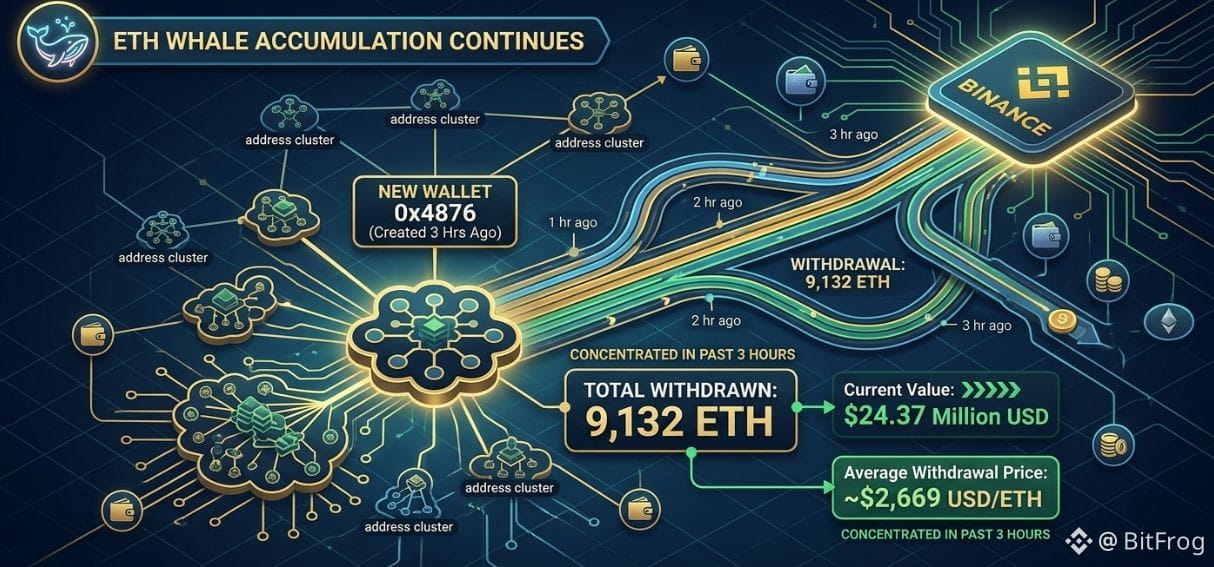
The signs of ETH giant whale accumulation are continuing. On-chain monitoring has detected a brand-new wallet 0x4876 that, within the past 3 hours, withdrew 9,132 of #ETH tokens from Binance. Based on the current value, this is approximately $24.37 million, which translates to an average withdrawal price of about $2,669.
The signs of ETH giant whale accumulation are continuing. On-chain monitoring has detected a brand-new wallet 0x4876 that, within the past 3 hours, withdrew 9,132 of #ETH tokens from Binance. Based on the current value, this is approximately $24.37 million, which translates to an average withdrawal price of about $2,669.
118
·
--
On-chain data shows that Strategy has transferred out 3,568 BTC in the past 9 hours, worth approximately $297 million at the current price. The nature of this transaction is not yet clear; it could be a sale, or it could simply be transferring assets to a new wallet address.
On-chain data shows that Strategy has transferred out 3,568 BTC in the past 9 hours, worth approximately $297 million at the current price. The nature of this transaction is not yet clear; it could be a sale, or it could simply be transferring assets to a new wallet address.

88
·
--
On-chain monitoring revealed that another Bitcoin whale has ended its more than four-year hiatus: address bc1qd6...qdg transferred out 4,500 Bitcoins (#BTC ) about half an hour ago, worth approximately $378.79 million at current value. In other words, this long-dormant wallet suddenly became active, withdrawing nearly $380 million worth of Bitcoin in a single transaction.
On-chain monitoring revealed that another Bitcoin whale has ended its more than four-year hiatus: address bc1qd6...qdg transferred out 4,500 Bitcoins (#BTC ) about half an hour ago, worth approximately $378.79 million at current value. In other words, this long-dormant wallet suddenly became active, withdrawing nearly $380 million worth of Bitcoin in a single transaction.

322
·
--
On-chain monitoring has detected a new wallet making a large withdrawal: address 0xC3... was created only recently, and just 1 hour ago it transferred three assets from Binance—$UNI , $BNB , and #LTC .
In detail:
- UNI: approximately 814,020 tokens, worth about $7.24 million;
- BNB: 2,382 tokens, worth about $1.85 million;
- LTC: 12,397 tokens, worth about $841,000.
Combined, the three transactions total about $9.93 million—meaning this new wallet withdrew nearly $10 million worth of tokens from Binance in one go.
On-chain monitoring has detected a new wallet making a large withdrawal: address 0xC3... was created only recently, and just 1 hour ago it transferred three assets from Binance—$UNI , $BNB , and #LTC .
In detail:
- UNI: approximately 814,020 tokens, worth about $7.24 million;
- BNB: 2,382 tokens, worth about $1.85 million;
- LTC: 12,397 tokens, worth about $841,000.
Combined, the three transactions total about $9.93 million—meaning this new wallet withdrew nearly $10 million worth of tokens from Binance in one go.
In detail:
- UNI: approximately 814,020 tokens, worth about $7.24 million;
- BNB: 2,382 tokens, worth about $1.85 million;
- LTC: 12,397 tokens, worth about $841,000.
Combined, the three transactions total about $9.93 million—meaning this new wallet withdrew nearly $10 million worth of tokens from Binance in one go.
103
·
--
Article
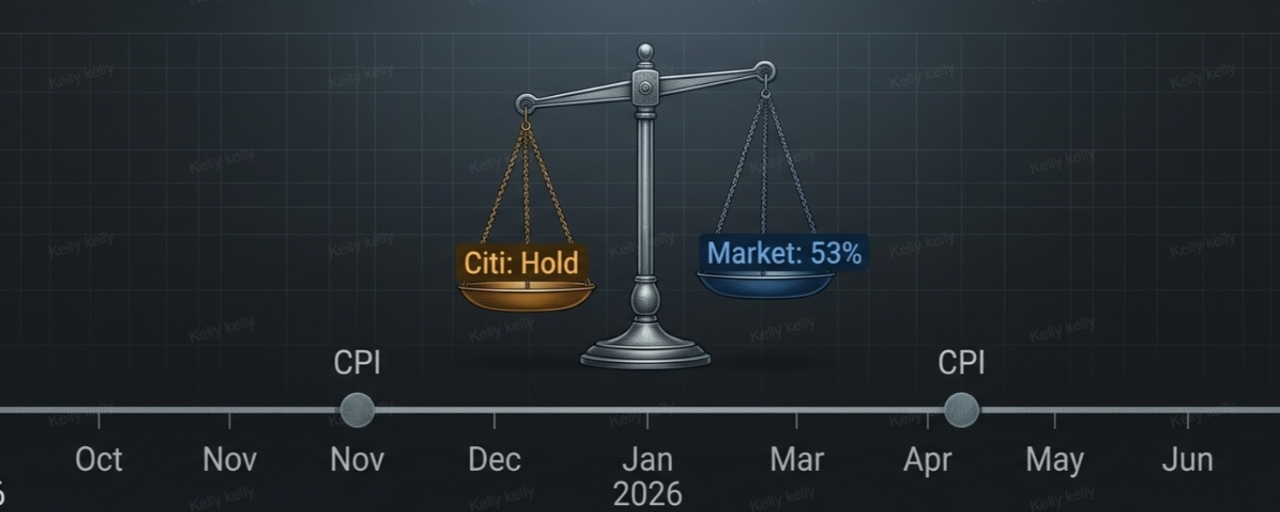
Citigroup bets on a pause, with the market pricing a 53% chance of a hikeCitigroup Bets on a Pause. The Market Is Still Pricing in a Hike.
Summary: Citigroup expects rates to stay on hold in October and December, with rate cuts resuming in June 2027, amid a clear divergence from market expectations.
On September 24, Caixin reported citing a Citigroup note that Citigroup expects the Federal Reserve to keep interest rates unchanged in October to assess the impact of the September 25-basis-point rate hike, and to hold steady again in December. As inflation data continues to cool, Citigroup expects the Fed to resume rate cuts in June 2027.
There is a clear divergence from the market’s current pricing. After the Fed’s rate hike on September 16, the CME FedWatch tool showed that the probability of another 25-basis-point hike in October rose to 53.1%. Citigroup’s outlook points to a “pause,” while market pricing points to “close to a 50-50 split.”
Citigroup bets on a pause, with the market pricing a 53% chance of a hike
Citigroup Bets on a Pause. The Market Is Still Pricing in a Hike.
Summary: Citigroup expects rates to stay on hold in October and December, with rate cuts resuming in June 2027, amid a clear divergence from market expectations.
On September 24, Caixin reported citing a Citigroup note that Citigroup expects the Federal Reserve to keep interest rates unchanged in October to assess the impact of the September 25-basis-point rate hike, and to hold steady again in December. As inflation data continues to cool, Citigroup expects the Fed to resume rate cuts in June 2027.
There is a clear divergence from the market’s current pricing. After the Fed’s rate hike on September 16, the CME FedWatch tool showed that the probability of another 25-basis-point hike in October rose to 53.1%. Citigroup’s outlook points to a “pause,” while market pricing points to “close to a 50-50 split.”
Summary: Citigroup expects rates to stay on hold in October and December, with rate cuts resuming in June 2027, amid a clear divergence from market expectations.
On September 24, Caixin reported citing a Citigroup note that Citigroup expects the Federal Reserve to keep interest rates unchanged in October to assess the impact of the September 25-basis-point rate hike, and to hold steady again in December. As inflation data continues to cool, Citigroup expects the Fed to resume rate cuts in June 2027.
There is a clear divergence from the market’s current pricing. After the Fed’s rate hike on September 16, the CME FedWatch tool showed that the probability of another 25-basis-point hike in October rose to 53.1%. Citigroup’s outlook points to a “pause,” while market pricing points to “close to a 50-50 split.”
155
·
--
On-chain monitoring shows that the OTC whale/institution at address 0x8c58...04b1 only added to its position yesterday—starting with a buy of 15,000 ETH. But when the market dropped early this morning, it chose to take profit, cutting most of its holdings:
7 hours ago, it transferred 42,000 units of #ETH (about $112 million) into Galaxy Digital, locking in approximately $21.12 million in profit;
Over the past two months, it accumulated 52,000 ETH at an average price of about $2,161;
Early this morning, it reduced its holdings by selling 42,000 ETH at a price of $2,664.
Simply put: this address built its position over two months, added more yesterday, and after the early-morning dip, quickly took profit—turning most of its ETH into gains.
On-chain monitoring shows that the OTC whale/institution at address 0x8c58...04b1 only added to its position yesterday—starting with a buy of 15,000 ETH. But when the market dropped early this morning, it chose to take profit, cutting most of its holdings:
7 hours ago, it transferred 42,000 units of #ETH (about $112 million) into Galaxy Digital, locking in approximately $21.12 million in profit;
Over the past two months, it accumulated 52,000 ETH at an average price of about $2,161;
Early this morning, it reduced its holdings by selling 42,000 ETH at a price of $2,664.
Simply put: this address built its position over two months, added more yesterday, and after the early-morning dip, quickly took profit—turning most of its ETH into gains.
7 hours ago, it transferred 42,000 units of #ETH (about $112 million) into Galaxy Digital, locking in approximately $21.12 million in profit;
Over the past two months, it accumulated 52,000 ETH at an average price of about $2,161;
Early this morning, it reduced its holdings by selling 42,000 ETH at a price of $2,664.
Simply put: this address built its position over two months, added more yesterday, and after the early-morning dip, quickly took profit—turning most of its ETH into gains.
193
·
--
Article
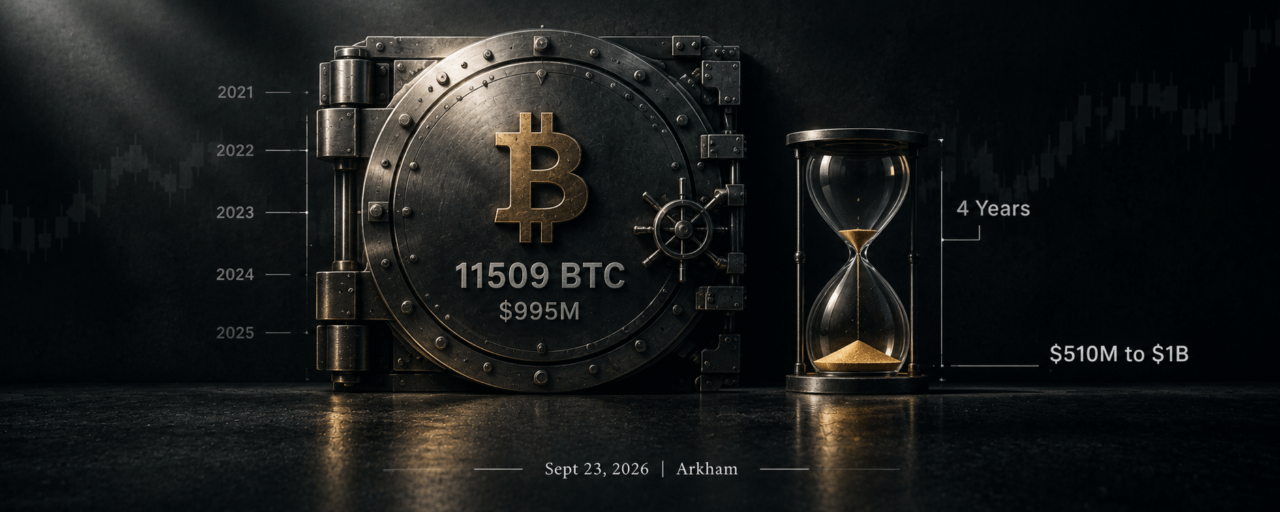
11,509 BTC, Tesla hasn’t touched them in four yearsFour Years. $510M Short of $1B.
Summary: Tesla’s 11,509 BTC are worth 0.995 billion, unmoved for four years, just $51 million short of 1 billion.
Tesla holds 11,509 BTC, which is worth about $995 million at current prices. This is data published by Arkham on the X platform. This week, Bitcoin is up 14%, and the value of Tesla’s holdings increased by about $123 million—just about $51 million short of $1 billion.
The number of holdings has remained unchanged for 4 consecutive years.
Between 0.995 billion and 1 billion
$5.1 million, less than 0.6% of the total value of the holdings. If Bitcoin rises a few more percentage points, this figure will be crossed.
11,509 BTC, Tesla hasn’t touched them in four years
Four Years. $510M Short of $1B.
Summary: Tesla’s 11,509 BTC are worth 0.995 billion, unmoved for four years, just $51 million short of 1 billion.
Tesla holds 11,509 BTC, which is worth about $995 million at current prices. This is data published by Arkham on the X platform. This week, Bitcoin is up 14%, and the value of Tesla’s holdings increased by about $123 million—just about $51 million short of $1 billion.
The number of holdings has remained unchanged for 4 consecutive years.
Between 0.995 billion and 1 billion
$5.1 million, less than 0.6% of the total value of the holdings. If Bitcoin rises a few more percentage points, this figure will be crossed.
Summary: Tesla’s 11,509 BTC are worth 0.995 billion, unmoved for four years, just $51 million short of 1 billion.
Tesla holds 11,509 BTC, which is worth about $995 million at current prices. This is data published by Arkham on the X platform. This week, Bitcoin is up 14%, and the value of Tesla’s holdings increased by about $123 million—just about $51 million short of $1 billion.
The number of holdings has remained unchanged for 4 consecutive years.
Between 0.995 billion and 1 billion
$5.1 million, less than 0.6% of the total value of the holdings. If Bitcoin rises a few more percentage points, this figure will be crossed.
54
·
--
Article
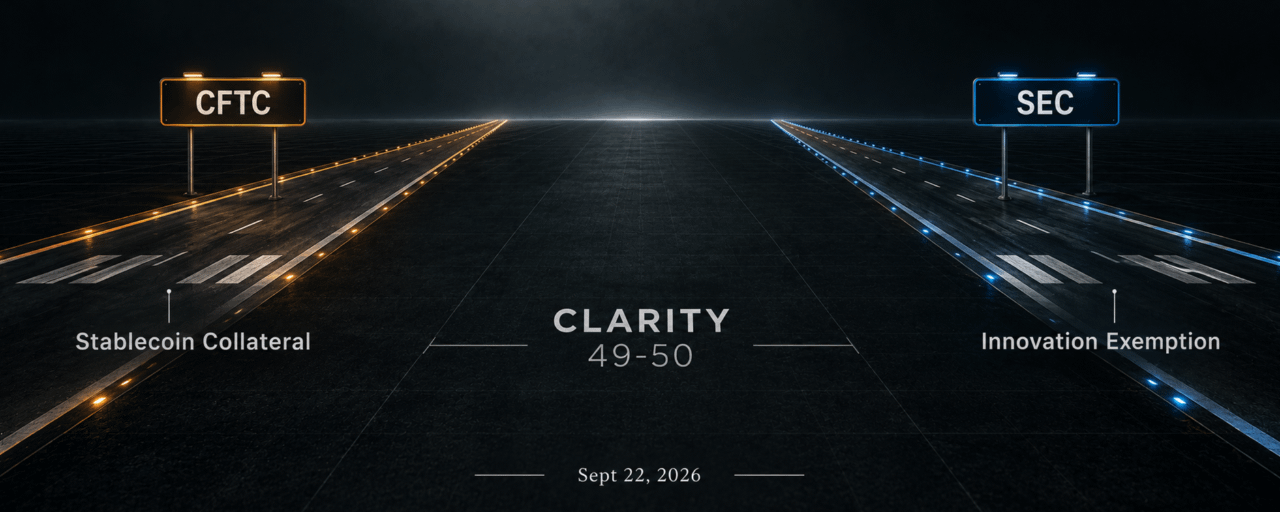
Two Runways for Tokenization, Congress Not IncludedTwo Regulators. Two Runways. No Congress.
Summary: CFTC Chairman calls for preparations for large-scale tokenization, while moving forward with the SEC separately; the CLARITY Act is shelved.
On September 22, CFTC Chairman Selig, in a public speech, said the U.S. needs to prepare markets for “large-scale tokenization,” adapt to new technologies such as blockchain and AI, and anticipate that changes to financial markets over the next decade will exceed the total of the past several decades.
The timing of this statement is worth noting. It has been a week since the Senate narrowly rejected the CLARITY Act with a procedural vote of 49 to 50. It has been five days since the SEC issued the “Innovation Exemptions” framework.
Two Runways for Tokenization, Congress Not Included
Two Regulators. Two Runways. No Congress.
Summary: CFTC Chairman calls for preparations for large-scale tokenization, while moving forward with the SEC separately; the CLARITY Act is shelved.
On September 22, CFTC Chairman Selig, in a public speech, said the U.S. needs to prepare markets for “large-scale tokenization,” adapt to new technologies such as blockchain and AI, and anticipate that changes to financial markets over the next decade will exceed the total of the past several decades.
The timing of this statement is worth noting. It has been a week since the Senate narrowly rejected the CLARITY Act with a procedural vote of 49 to 50. It has been five days since the SEC issued the “Innovation Exemptions” framework.
Summary: CFTC Chairman calls for preparations for large-scale tokenization, while moving forward with the SEC separately; the CLARITY Act is shelved.
On September 22, CFTC Chairman Selig, in a public speech, said the U.S. needs to prepare markets for “large-scale tokenization,” adapt to new technologies such as blockchain and AI, and anticipate that changes to financial markets over the next decade will exceed the total of the past several decades.
The timing of this statement is worth noting. It has been a week since the Senate narrowly rejected the CLARITY Act with a procedural vote of 49 to 50. It has been five days since the SEC issued the “Innovation Exemptions” framework.
284
·
--

Article
Bitcoin ETF Single-Day Inflows Near $1 Billion$999M in one day. The highest in 11 months.
Summary: Bitcoin spot ETFs saw a net inflow of $999 million in a single day, the highest in 11 months.
On September 21, Monday, U.S. Bitcoin spot ETFs recorded a net inflow of $999 million, the highest in 11 months. Bitcoin briefly broke through $87,000 during the day. Spot Ethereum ETFs also recorded large inflows at the same time.
BlackRock's IBIT led with a net inflow of $381 million.
$381 million concentration
IBIT's single-day inflow of $381 million accounted for about 38% of the day's total inflows. Among the highest single-day inflows in the past 11 months, more than one-third flowed into the same fund.
Bitcoin ETF Single-Day Inflows Near $1 Billion
$999M in one day. The highest in 11 months.
Summary: Bitcoin spot ETFs saw a net inflow of $999 million in a single day, the highest in 11 months.
On September 21, Monday, U.S. Bitcoin spot ETFs recorded a net inflow of $999 million, the highest in 11 months. Bitcoin briefly broke through $87,000 during the day. Spot Ethereum ETFs also recorded large inflows at the same time.
BlackRock's IBIT led with a net inflow of $381 million.
$381 million concentration
IBIT's single-day inflow of $381 million accounted for about 38% of the day's total inflows. Among the highest single-day inflows in the past 11 months, more than one-third flowed into the same fund.
Summary: Bitcoin spot ETFs saw a net inflow of $999 million in a single day, the highest in 11 months.
On September 21, Monday, U.S. Bitcoin spot ETFs recorded a net inflow of $999 million, the highest in 11 months. Bitcoin briefly broke through $87,000 during the day. Spot Ethereum ETFs also recorded large inflows at the same time.
BlackRock's IBIT led with a net inflow of $381 million.
$381 million concentration
IBIT's single-day inflow of $381 million accounted for about 38% of the day's total inflows. Among the highest single-day inflows in the past 11 months, more than one-third flowed into the same fund.
37
·
--

Article
The First Entrants to On-Chain Stocks—See You Next QuarterThe First TSVs Are Coming. The Notice Is the Signal.
Summary: The SEC innovation exemption is now in effect, and the first batch of compliant tokenized stock venues will most likely launch next quarter.
On September 22, in an interview, Taylor Lindman, Chief Legal Counsel of the SEC’s Crypto Enforcement Task Force, provided a clear timeline: under the five-year “innovation exemption” framework, the first batch of compliant tokenized stock trading venues (TSVs) could begin rolling out as early as next quarter.
The exemption has already officially taken effect. Institutions looking to enter the space need to publish an operational notice externally, and file it with the SEC within one business day after publication. Lindman expects that there may be some lag in companies submitting the relevant notices, and that this will most likely fall within next quarter.
The First Entrants to On-Chain Stocks—See You Next Quarter
The First TSVs Are Coming. The Notice Is the Signal.
Summary: The SEC innovation exemption is now in effect, and the first batch of compliant tokenized stock venues will most likely launch next quarter.
On September 22, in an interview, Taylor Lindman, Chief Legal Counsel of the SEC’s Crypto Enforcement Task Force, provided a clear timeline: under the five-year “innovation exemption” framework, the first batch of compliant tokenized stock trading venues (TSVs) could begin rolling out as early as next quarter.
The exemption has already officially taken effect. Institutions looking to enter the space need to publish an operational notice externally, and file it with the SEC within one business day after publication. Lindman expects that there may be some lag in companies submitting the relevant notices, and that this will most likely fall within next quarter.
Summary: The SEC innovation exemption is now in effect, and the first batch of compliant tokenized stock venues will most likely launch next quarter.
On September 22, in an interview, Taylor Lindman, Chief Legal Counsel of the SEC’s Crypto Enforcement Task Force, provided a clear timeline: under the five-year “innovation exemption” framework, the first batch of compliant tokenized stock trading venues (TSVs) could begin rolling out as early as next quarter.
The exemption has already officially taken effect. Institutions looking to enter the space need to publish an operational notice externally, and file it with the SEC within one business day after publication. Lindman expects that there may be some lag in companies submitting the relevant notices, and that this will most likely fall within next quarter.
93
·
--

Article
ETH Outperforms Bitcoin—The Answer Isn’t in the PriceETH Outperformed. The Answer Is in Withdrawal Data.
Summary: Binance’s monthly average ETH withdrawals surpassed 90,000 for the first time since 2023. Behind the gains is hoarding.
On September 21, data released by CryptoQuant analyst Darkfost showed that the monthly average number of ETH withdrawal transactions on the Binance platform has surpassed 90,000, reaching the highest level since 2023. This figure is double the level at the beginning of the year.
Over the past three months, ETH has risen from about $1,510 to $2,650, an increase of more than 75%, and it has broken above April’s high. During the same period, Bitcoin has not yet firmly established itself above May’s high. The strength or weakness suggested by price is only superficial—withdrawal data provides another perspective.
ETH Outperforms Bitcoin—The Answer Isn’t in the Price
ETH Outperformed. The Answer Is in Withdrawal Data.
Summary: Binance’s monthly average ETH withdrawals surpassed 90,000 for the first time since 2023. Behind the gains is hoarding.
On September 21, data released by CryptoQuant analyst Darkfost showed that the monthly average number of ETH withdrawal transactions on the Binance platform has surpassed 90,000, reaching the highest level since 2023. This figure is double the level at the beginning of the year.
Over the past three months, ETH has risen from about $1,510 to $2,650, an increase of more than 75%, and it has broken above April’s high. During the same period, Bitcoin has not yet firmly established itself above May’s high. The strength or weakness suggested by price is only superficial—withdrawal data provides another perspective.
Summary: Binance’s monthly average ETH withdrawals surpassed 90,000 for the first time since 2023. Behind the gains is hoarding.
On September 21, data released by CryptoQuant analyst Darkfost showed that the monthly average number of ETH withdrawal transactions on the Binance platform has surpassed 90,000, reaching the highest level since 2023. This figure is double the level at the beginning of the year.
Over the past three months, ETH has risen from about $1,510 to $2,650, an increase of more than 75%, and it has broken above April’s high. During the same period, Bitcoin has not yet firmly established itself above May’s high. The strength or weakness suggested by price is only superficial—withdrawal data provides another perspective.
151
·
--

Article
Crypto market cap returns to $2.8 trillion, with altcoins leading the gainsAltcoins Led the Rebound. The Breadth Is the Signal.
Summary: Crypto total market cap returned to $2.8 trillion on September 19, with altcoins’ weekly increase outpacing BTC.
On September 19, the total market value of cryptocurrencies returned to $2.8 trillion, at one point edging close to $2.9 trillion during the day. Bitcoin rose 5% to $81,914, its highest level since September 4. And three days earlier, on September 16, Bitcoin had briefly fallen below $75,000.
From $75,000 to $81,914 in three days, a 9.2% move. But what’s most noteworthy about this rebound isn’t how quickly Bitcoin recovered—it’s who surged the most.
Altcoins’ gains ran ahead of Bitcoin
Crypto market cap returns to $2.8 trillion, with altcoins leading the gains
Altcoins Led the Rebound. The Breadth Is the Signal.
Summary: Crypto total market cap returned to $2.8 trillion on September 19, with altcoins’ weekly increase outpacing BTC.
On September 19, the total market value of cryptocurrencies returned to $2.8 trillion, at one point edging close to $2.9 trillion during the day. Bitcoin rose 5% to $81,914, its highest level since September 4. And three days earlier, on September 16, Bitcoin had briefly fallen below $75,000.
From $75,000 to $81,914 in three days, a 9.2% move. But what’s most noteworthy about this rebound isn’t how quickly Bitcoin recovered—it’s who surged the most.
Altcoins’ gains ran ahead of Bitcoin
Summary: Crypto total market cap returned to $2.8 trillion on September 19, with altcoins’ weekly increase outpacing BTC.
On September 19, the total market value of cryptocurrencies returned to $2.8 trillion, at one point edging close to $2.9 trillion during the day. Bitcoin rose 5% to $81,914, its highest level since September 4. And three days earlier, on September 16, Bitcoin had briefly fallen below $75,000.
From $75,000 to $81,914 in three days, a 9.2% move. But what’s most noteworthy about this rebound isn’t how quickly Bitcoin recovered—it’s who surged the most.
Altcoins’ gains ran ahead of Bitcoin
441
·
--

Article
93.9% Compression Indicator — Fourth Time the 200-Day Line Is Holding Below It93.9% Compression. Fourth Time This Cycle.
Abstract: Bitcoin’s 30-day compression indicator rose to 93.9%. Price has continued to test the 200-day moving average line without success, as the direction decision draws near.
On September 20, Bitcoin traded in a tight range around $81,000, with a 24-hour swing of only 0.08%. On that same day, CryptoQuant analyst Axel Adler Jr. posted a brief assessment on an on-chain data platform: Bitcoin’s 30-day compression indicator has returned to an extreme zone at 93.9%, marking the fourth time similar conditions have appeared since this bear market phase began.
This figure itself doesn’t indicate direction. What it shows is that the market has tightened itself very firmly, while price has repeatedly tested the annual moving average line over the past 20 days and still hasn’t managed to hold above it effectively.
93.9% Compression Indicator — Fourth Time the 200-Day Line Is Holding Below It
93.9% Compression. Fourth Time This Cycle.
Abstract: Bitcoin’s 30-day compression indicator rose to 93.9%. Price has continued to test the 200-day moving average line without success, as the direction decision draws near.
On September 20, Bitcoin traded in a tight range around $81,000, with a 24-hour swing of only 0.08%. On that same day, CryptoQuant analyst Axel Adler Jr. posted a brief assessment on an on-chain data platform: Bitcoin’s 30-day compression indicator has returned to an extreme zone at 93.9%, marking the fourth time similar conditions have appeared since this bear market phase began.
This figure itself doesn’t indicate direction. What it shows is that the market has tightened itself very firmly, while price has repeatedly tested the annual moving average line over the past 20 days and still hasn’t managed to hold above it effectively.
Abstract: Bitcoin’s 30-day compression indicator rose to 93.9%. Price has continued to test the 200-day moving average line without success, as the direction decision draws near.
On September 20, Bitcoin traded in a tight range around $81,000, with a 24-hour swing of only 0.08%. On that same day, CryptoQuant analyst Axel Adler Jr. posted a brief assessment on an on-chain data platform: Bitcoin’s 30-day compression indicator has returned to an extreme zone at 93.9%, marking the fourth time similar conditions have appeared since this bear market phase began.
This figure itself doesn’t indicate direction. What it shows is that the market has tightened itself very firmly, while price has repeatedly tested the annual moving average line over the past 20 days and still hasn’t managed to hold above it effectively.
1
58
·
--
Article
Saylor’s Opponents, and a Severely Overvalued PassSchiff Says Tokenized Stocks Kill Bitcoin. The Math Says Not Yet.
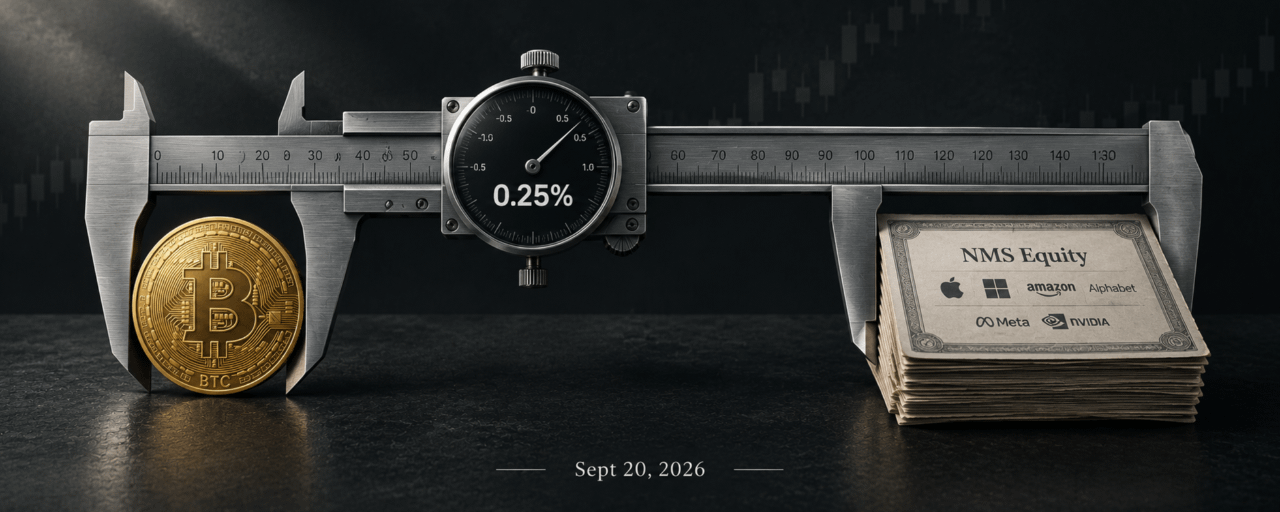
Abstract: Schiff says tokenized stocks are bearish for Bitcoin, but the SEC sets a 0.25% trading-volume limit, and the two are not on the same scale.
On September 20, Peter Schiff, a long-time critic of Bitcoin, posted on X calling the SEC’s “innovation exemption” a bearish factor for Bitcoin. His logic is straightforward: Bitcoin’s rise after the announcement is “meaningless,” because the policy effectively creates a competitor that is superior to Bitcoin—tokenized stocks backed by the assets of profitable companies, offering all the convenience of digital trading, plus dividends and voting rights, and without the risk of a decentralized system collapsing.
Saylor’s Opponents, and a Severely Overvalued Pass
Schiff Says Tokenized Stocks Kill Bitcoin. The Math Says Not Yet.
Abstract: Schiff says tokenized stocks are bearish for Bitcoin, but the SEC sets a 0.25% trading-volume limit, and the two are not on the same scale.
On September 20, Peter Schiff, a long-time critic of Bitcoin, posted on X calling the SEC’s “innovation exemption” a bearish factor for Bitcoin. His logic is straightforward: Bitcoin’s rise after the announcement is “meaningless,” because the policy effectively creates a competitor that is superior to Bitcoin—tokenized stocks backed by the assets of profitable companies, offering all the convenience of digital trading, plus dividends and voting rights, and without the risk of a decentralized system collapsing.
Abstract: Schiff says tokenized stocks are bearish for Bitcoin, but the SEC sets a 0.25% trading-volume limit, and the two are not on the same scale.
On September 20, Peter Schiff, a long-time critic of Bitcoin, posted on X calling the SEC’s “innovation exemption” a bearish factor for Bitcoin. His logic is straightforward: Bitcoin’s rise after the announcement is “meaningless,” because the policy effectively creates a competitor that is superior to Bitcoin—tokenized stocks backed by the assets of profitable companies, offering all the convenience of digital trading, plus dividends and voting rights, and without the risk of a decentralized system collapsing.
102
·
--

Article
The Compromise Saylor Refused—And the Key Sent by RegulatorsSaylor Says No to CLARITY. The Regulators Are Already Moving.
Summary: After the CLARITY Act stalled, the SEC and the CFTC moved in separately. Saylor said the industry should prioritize rolling out products.
On September 17, the SEC issued an “innovation exemption” framework via Order No. 34106402. On the same day, the CFTC also published a statement of non-action regarding passive software providers. Two days earlier, a procedural vote in the Senate—49 in favor and 50 against—failed to move the CLARITY Act to the next stage of consideration.
On September 20, Michael Saylor, Chairman of Strategy, posted on X, pointing directly to the core contradiction in the current situation: rather than accepting the various restrictions in the final compromise version of the CLARITY Act, the digital asset industry should use the next two years, with the support of the SEC, CFTC, the Treasury, and bank regulators, to advance the rollout of compliant products.
The Compromise Saylor Refused—And the Key Sent by Regulators
Saylor Says No to CLARITY. The Regulators Are Already Moving.
Summary: After the CLARITY Act stalled, the SEC and the CFTC moved in separately. Saylor said the industry should prioritize rolling out products.
On September 17, the SEC issued an “innovation exemption” framework via Order No. 34106402. On the same day, the CFTC also published a statement of non-action regarding passive software providers. Two days earlier, a procedural vote in the Senate—49 in favor and 50 against—failed to move the CLARITY Act to the next stage of consideration.
On September 20, Michael Saylor, Chairman of Strategy, posted on X, pointing directly to the core contradiction in the current situation: rather than accepting the various restrictions in the final compromise version of the CLARITY Act, the digital asset industry should use the next two years, with the support of the SEC, CFTC, the Treasury, and bank regulators, to advance the rollout of compliant products.
Summary: After the CLARITY Act stalled, the SEC and the CFTC moved in separately. Saylor said the industry should prioritize rolling out products.
On September 17, the SEC issued an “innovation exemption” framework via Order No. 34106402. On the same day, the CFTC also published a statement of non-action regarding passive software providers. Two days earlier, a procedural vote in the Senate—49 in favor and 50 against—failed to move the CLARITY Act to the next stage of consideration.
On September 20, Michael Saylor, Chairman of Strategy, posted on X, pointing directly to the core contradiction in the current situation: rather than accepting the various restrictions in the final compromise version of the CLARITY Act, the digital asset industry should use the next two years, with the support of the SEC, CFTC, the Treasury, and bank regulators, to advance the rollout of compliant products.
343
·
--
Article
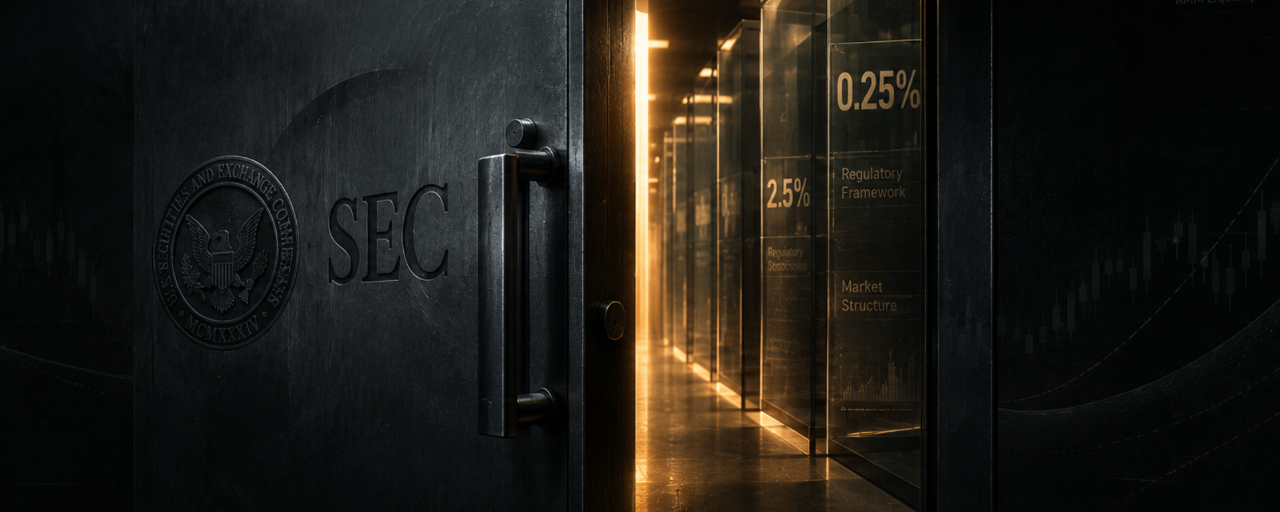
The first pass for on-chain stocks—filled with constraint conditionsAbstract: The SEC approves a five-year innovation exemption, enabling the first compliant on-chain trading of tokenized US stocks, but the rules are packed with restrictions.
On September 17, the SEC officially released a temporary regulatory framework called the “Innovation Exemption” in the form of Order No. 34106402. Under the order, qualifying venues for tokenized securities (TSVs) may, for five years, conduct on-chain trading of tokenized NMS stocks through a permissioned regime with automatic market makers and liquidity pools, without being classified as an “exchange” under the (Securities Exchange Act of 1934).
Within 24 hours of the announcement, Uniswap jumped more than 15% to nearly $8, while Hyperliquid rose about 11% to break above $86, hitting a new high since November 2025.
The first pass for on-chain stocks—filled with constraint conditions
Abstract: The SEC approves a five-year innovation exemption, enabling the first compliant on-chain trading of tokenized US stocks, but the rules are packed with restrictions.
On September 17, the SEC officially released a temporary regulatory framework called the “Innovation Exemption” in the form of Order No. 34106402. Under the order, qualifying venues for tokenized securities (TSVs) may, for five years, conduct on-chain trading of tokenized NMS stocks through a permissioned regime with automatic market makers and liquidity pools, without being classified as an “exchange” under the (Securities Exchange Act of 1934).
Within 24 hours of the announcement, Uniswap jumped more than 15% to nearly $8, while Hyperliquid rose about 11% to break above $86, hitting a new high since November 2025.
On September 17, the SEC officially released a temporary regulatory framework called the “Innovation Exemption” in the form of Order No. 34106402. Under the order, qualifying venues for tokenized securities (TSVs) may, for five years, conduct on-chain trading of tokenized NMS stocks through a permissioned regime with automatic market makers and liquidity pools, without being classified as an “exchange” under the (Securities Exchange Act of 1934).
Within 24 hours of the announcement, Uniswap jumped more than 15% to nearly $8, while Hyperliquid rose about 11% to break above $86, hitting a new high since November 2025.
374
·
--
Article
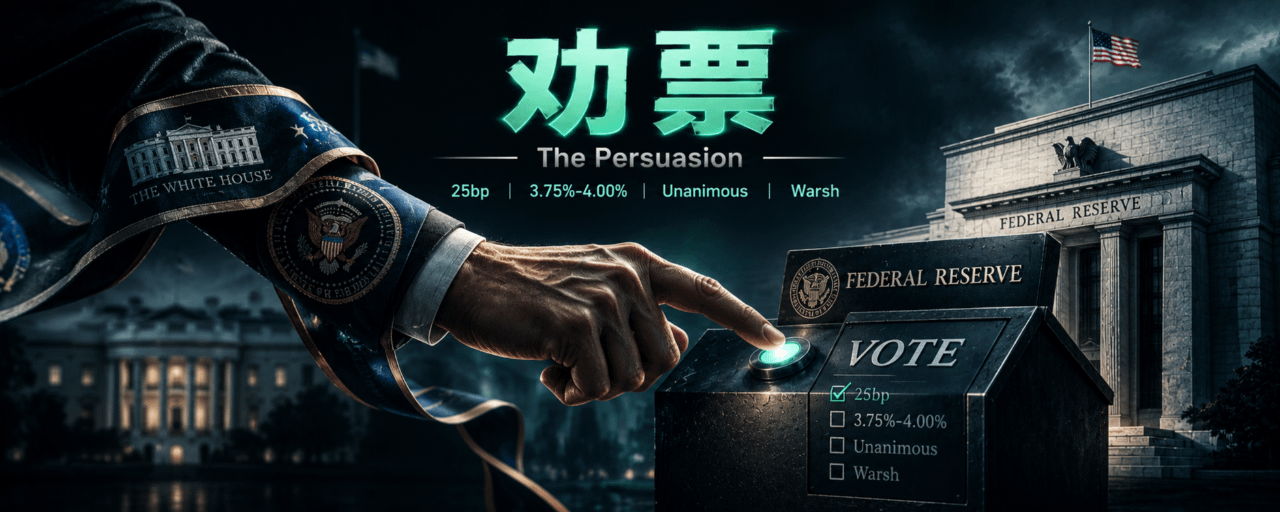
Trump publicly comments on the Federal Reserve rate hike; he advised it, but says he shouldn't haveTrump publicly admitted that he had urged Federal Reserve governor Warsh to vote in favor of raising interest rates. In the same remarks, he said he hoped the Federal Reserve would remain independent. After the Federal Reserve raised rates by 25 basis points unanimously, the president put himself in charge of monetary policy.
On September 17, the Federal Reserve announced a rate hike of 25 basis points to 3.75%-4.00%.
A few hours later, Trump told reporters at the White House a speech.
He revealed that he had urged Federal Reserve governor Kevin Warsh to vote for the rate hike along with other governors.
Then he said the Federal Reserve Board was “full of hostility, politicized, packed with political appointees, doing the wrong things.”
Trump publicly comments on the Federal Reserve rate hike; he advised it, but says he shouldn't have
Trump publicly admitted that he had urged Federal Reserve governor Warsh to vote in favor of raising interest rates. In the same remarks, he said he hoped the Federal Reserve would remain independent. After the Federal Reserve raised rates by 25 basis points unanimously, the president put himself in charge of monetary policy.
On September 17, the Federal Reserve announced a rate hike of 25 basis points to 3.75%-4.00%.
A few hours later, Trump told reporters at the White House a speech.
He revealed that he had urged Federal Reserve governor Kevin Warsh to vote for the rate hike along with other governors.
Then he said the Federal Reserve Board was “full of hostility, politicized, packed with political appointees, doing the wrong things.”
On September 17, the Federal Reserve announced a rate hike of 25 basis points to 3.75%-4.00%.
A few hours later, Trump told reporters at the White House a speech.
He revealed that he had urged Federal Reserve governor Kevin Warsh to vote for the rate hike along with other governors.
Then he said the Federal Reserve Board was “full of hostility, politicized, packed with political appointees, doing the wrong things.”
73
·
--

Article
The Fed hiked rates, and the euro dropped firstThe Fed’s first rate hike in three years—raising rates by 25 basis points to 3.75%-4.00%, with most officials supporting further hikes within the year. The euro/dollar fell to around 1.1460. The ECB also raised rates last week, but the euro is still falling—rate hikes don’t necessarily mean a currency strengthens; who’s more hawkish is the answer.
On September 17 in the Asian trading session, the euro/dollar fell to around 1.1460.
The day before, the Fed announced a 25-basis-point rate hike, raising the target range for the federal funds rate to 3.75%-4.00%.
This is the Fed’s first rate hike in three years.
The last time the Fed raised rates was in 2023. After three years of holding steady, the first move they made was aimed at slamming the euro.
The Fed hiked rates, and the euro dropped first
The Fed’s first rate hike in three years—raising rates by 25 basis points to 3.75%-4.00%, with most officials supporting further hikes within the year. The euro/dollar fell to around 1.1460. The ECB also raised rates last week, but the euro is still falling—rate hikes don’t necessarily mean a currency strengthens; who’s more hawkish is the answer.
On September 17 in the Asian trading session, the euro/dollar fell to around 1.1460.
The day before, the Fed announced a 25-basis-point rate hike, raising the target range for the federal funds rate to 3.75%-4.00%.
This is the Fed’s first rate hike in three years.
The last time the Fed raised rates was in 2023. After three years of holding steady, the first move they made was aimed at slamming the euro.
On September 17 in the Asian trading session, the euro/dollar fell to around 1.1460.
The day before, the Fed announced a 25-basis-point rate hike, raising the target range for the federal funds rate to 3.75%-4.00%.
This is the Fed’s first rate hike in three years.
The last time the Fed raised rates was in 2023. After three years of holding steady, the first move they made was aimed at slamming the euro.
139
·
--
See translation
🐸 BitFrog 2026.09(第 2 周)全网带单收益榜
Top 交易员表现:Binance + 全网带单
🚀 最高周收益:487,456 USDT
🏆 鑫湖 ❖ 本周摘得全网第一,收益 487,456 USDT
🥈 蛋九熊HBJX ❖ 收益 251,640 USDT,位列全网第二
🥉 β 易月目 ▣ 收益 98,864 USDT,位列全网第三
平台核心表现:
🔶 Binance 榜首:鑫湖(320,227 USDT)
——
🔶 Binance 周榜 Top 3:
1️⃣ 鑫湖 — 320,227 USDT
2️⃣ 蛋九熊HBJX — 289,831 USDT
3️⃣ 熬鹰资本 — 179,595 USDT
交易返现 · 行情预警 · 实盘跟单
返现、预警、实盘跟单一站式解决你的交易需求。
🐸 BitFrog 2026.09(第 2 周)全网带单收益榜
Top 交易员表现:Binance + 全网带单
🚀 最高周收益:487,456 USDT
🏆 鑫湖 ❖ 本周摘得全网第一,收益 487,456 USDT
🥈 蛋九熊HBJX ❖ 收益 251,640 USDT,位列全网第二
🥉 β 易月目 ▣ 收益 98,864 USDT,位列全网第三
平台核心表现:
🔶 Binance 榜首:鑫湖(320,227 USDT)
——
🔶 Binance 周榜 Top 3:
1️⃣ 鑫湖 — 320,227 USDT
2️⃣ 蛋九熊HBJX — 289,831 USDT
3️⃣ 熬鹰资本 — 179,595 USDT
交易返现 · 行情预警 · 实盘跟单
返现、预警、实盘跟单一站式解决你的交易需求。
Top 交易员表现:Binance + 全网带单
🚀 最高周收益:487,456 USDT
🏆 鑫湖 ❖ 本周摘得全网第一,收益 487,456 USDT
🥈 蛋九熊HBJX ❖ 收益 251,640 USDT,位列全网第二
🥉 β 易月目 ▣ 收益 98,864 USDT,位列全网第三
平台核心表现:
🔶 Binance 榜首:鑫湖(320,227 USDT)
——
🔶 Binance 周榜 Top 3:
1️⃣ 鑫湖 — 320,227 USDT
2️⃣ 蛋九熊HBJX — 289,831 USDT
3️⃣ 熬鹰资本 — 179,595 USDT
交易返现 · 行情预警 · 实盘跟单
返现、预警、实盘跟单一站式解决你的交易需求。

1
1
Log in to explore more content
Join global crypto users on Binance Square
⚡️ Get latest and useful information about crypto.
💬 Trusted by the world’s largest crypto exchange.
👍 Discover real insights from verified creators.
Email / Phone number
Trending Topics
TrumpRejectsAIRulesForVoluntaryAudits
1,956 views
131 Discussing
Super Intelligence" & The AI Policy Shift: Self-Policing or a Risky Gamble?
Nurul Hasnat Samir
·0 Likes
·328 views
BitgetHotWalletBreachTiedToThirdPartySecurityFlaw
905 views
99 Discussing
OpenAIUnveilsAlwaysOnAgentDots
2,002 views
147 Discussing