

Bitcoin.org
3.1k Posts

Bitcoin.org
Report
Block User
Bitcoin is an open source censorship-resistant peer-to-peer immutable network. Trackable digital gold. Don't trust; verify. Not your keys; not your coins.
0 Following
11.1K+ Followers
3.8K+ Liked
Posts
·
--
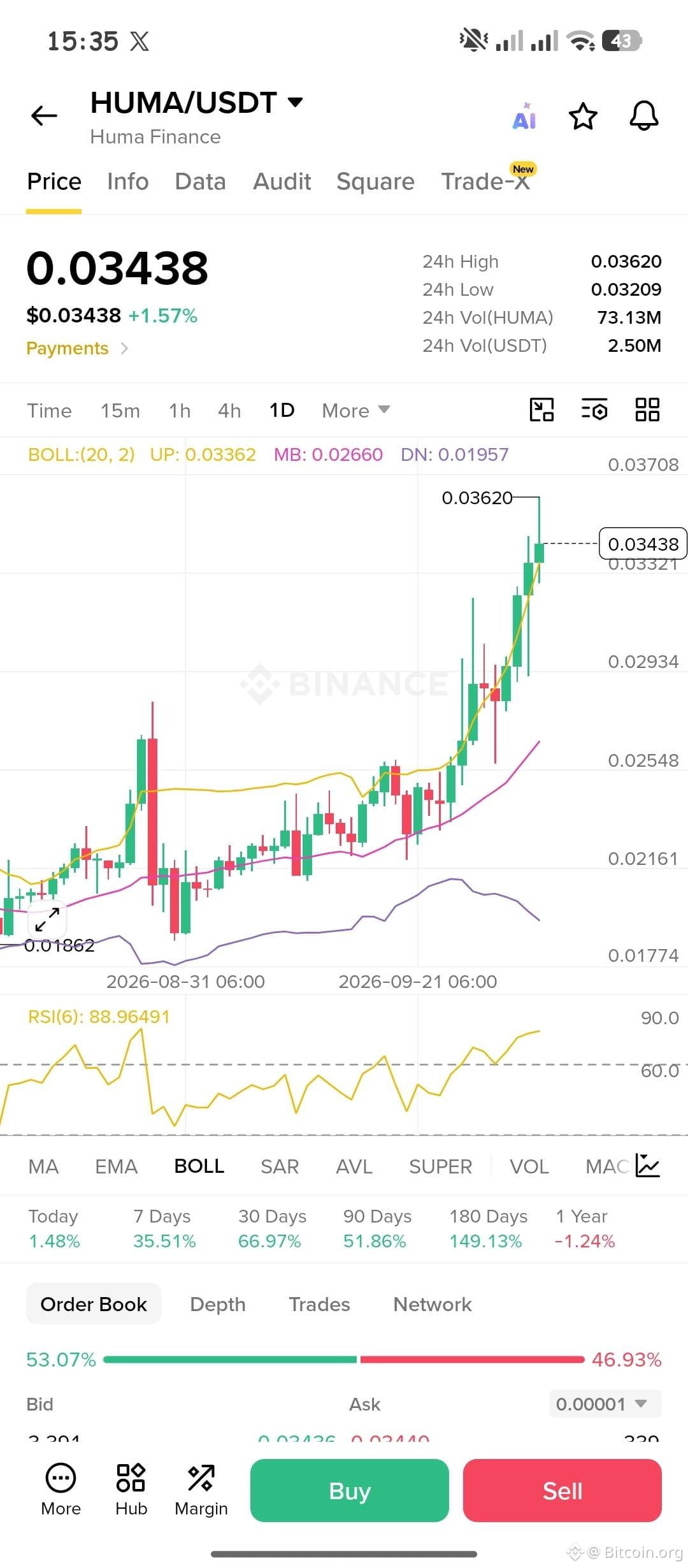
Huma Finance $HUMA book is for 18B but currently only circulating around 35%.
It can't re-rate because the chart got loud. It can't go. Its top searched gems yesterday but when i looked at its tokonomics and circulation i feel what's the reason behind it's intraday surge.
$HUMA is a PayFi Network. Or also a protocol.
On this nish there are a bunch of projects.
But the difference is HUMA circulating supply is very high but think again. The supply is not unlocked too fast. There are only 4 unlocked events over the year.
So the last circulation will arrive later in 2143.
So practically we need to study Huma whats its building and what are others Impact the price.
Recently it has partnered with Titan.
Major development happens in the backdrop.
But we all need top gainers.
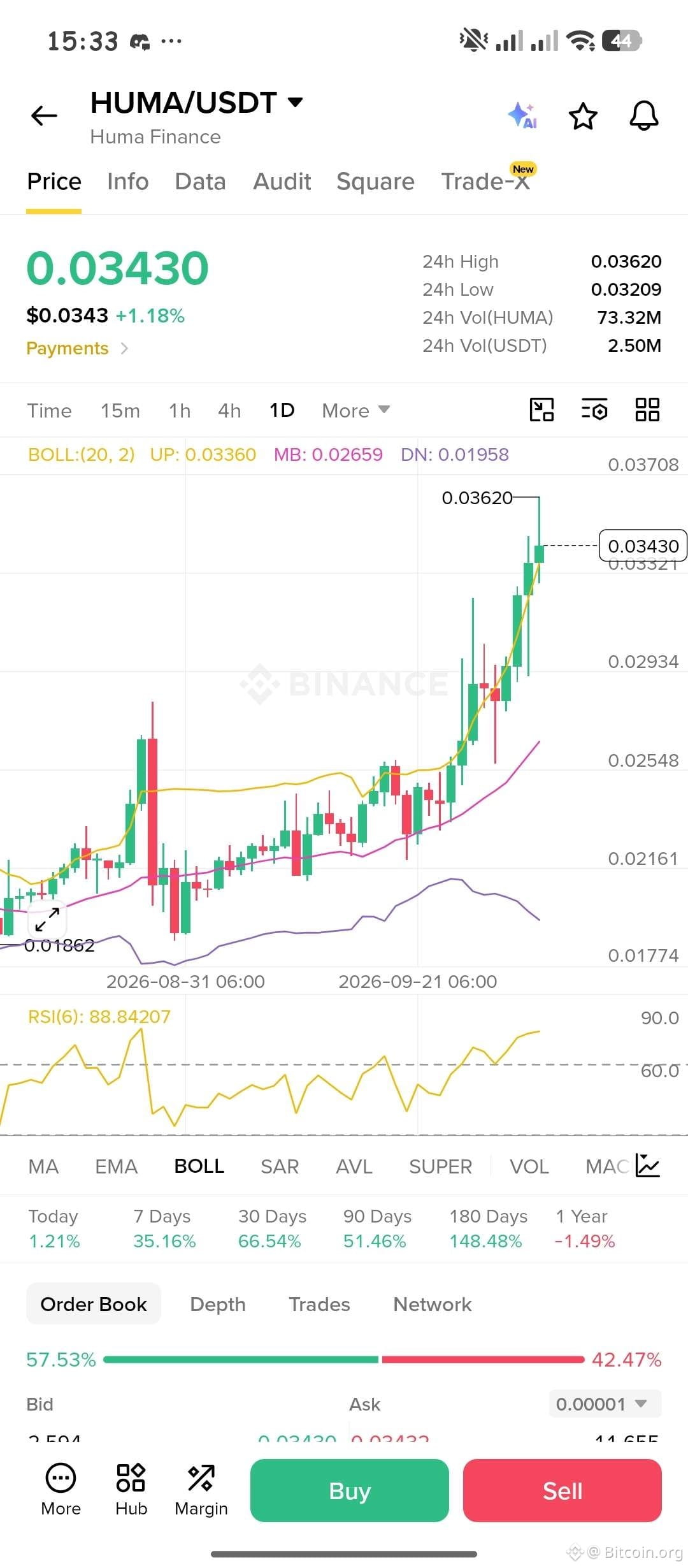
Huma is about 0.035 6-8% in a day.
Right now cooling off for a quick retracement.
So the market is slightly lower. Low volume.
But idk why it's top searched.
Maybe there is an opportunity behind it. Low cap with positive chart movement like 68% of month.
#Huma #TopSearch
Huma Finance $HUMA book is for 18B but currently only circulating around 35%.
It can't re-rate because the chart got loud. It can't go. Its top searched gems yesterday but when i looked at its tokonomics and circulation i feel what's the reason behind it's intraday surge.
$HUMA is a PayFi Network. Or also a protocol.
On this nish there are a bunch of projects.
But the difference is HUMA circulating supply is very high but think again. The supply is not unlocked too fast. There are only 4 unlocked events over the year.
So the last circulation will arrive later in 2143.
So practically we need to study Huma whats its building and what are others Impact the price.
Recently it has partnered with Titan.
Major development happens in the backdrop.
But we all need top gainers.
Huma is about 0.035 6-8% in a day.
Right now cooling off for a quick retracement.
So the market is slightly lower. Low volume.
But idk why it's top searched.
Maybe there is an opportunity behind it. Low cap with positive chart movement like 68% of month.
#Huma #TopSearch
It can't re-rate because the chart got loud. It can't go. Its top searched gems yesterday but when i looked at its tokonomics and circulation i feel what's the reason behind it's intraday surge.
$HUMA is a PayFi Network. Or also a protocol.
On this nish there are a bunch of projects.
But the difference is HUMA circulating supply is very high but think again. The supply is not unlocked too fast. There are only 4 unlocked events over the year.
So the last circulation will arrive later in 2143.
So practically we need to study Huma whats its building and what are others Impact the price.
Recently it has partnered with Titan.
Major development happens in the backdrop.
But we all need top gainers.
Huma is about 0.035 6-8% in a day.
Right now cooling off for a quick retracement.
So the market is slightly lower. Low volume.
But idk why it's top searched.
Maybe there is an opportunity behind it. Low cap with positive chart movement like 68% of month.
#Huma #TopSearch
1
247
·
--
$PHA is another not Just another ai gem .
Phala network shifted to Ethereum Layer 2 using $OP succinct stack.
It mainly delivers decentralized ai infrastructure.
But this is old to know it.
I came here to show up the what actually happening in $PHA.
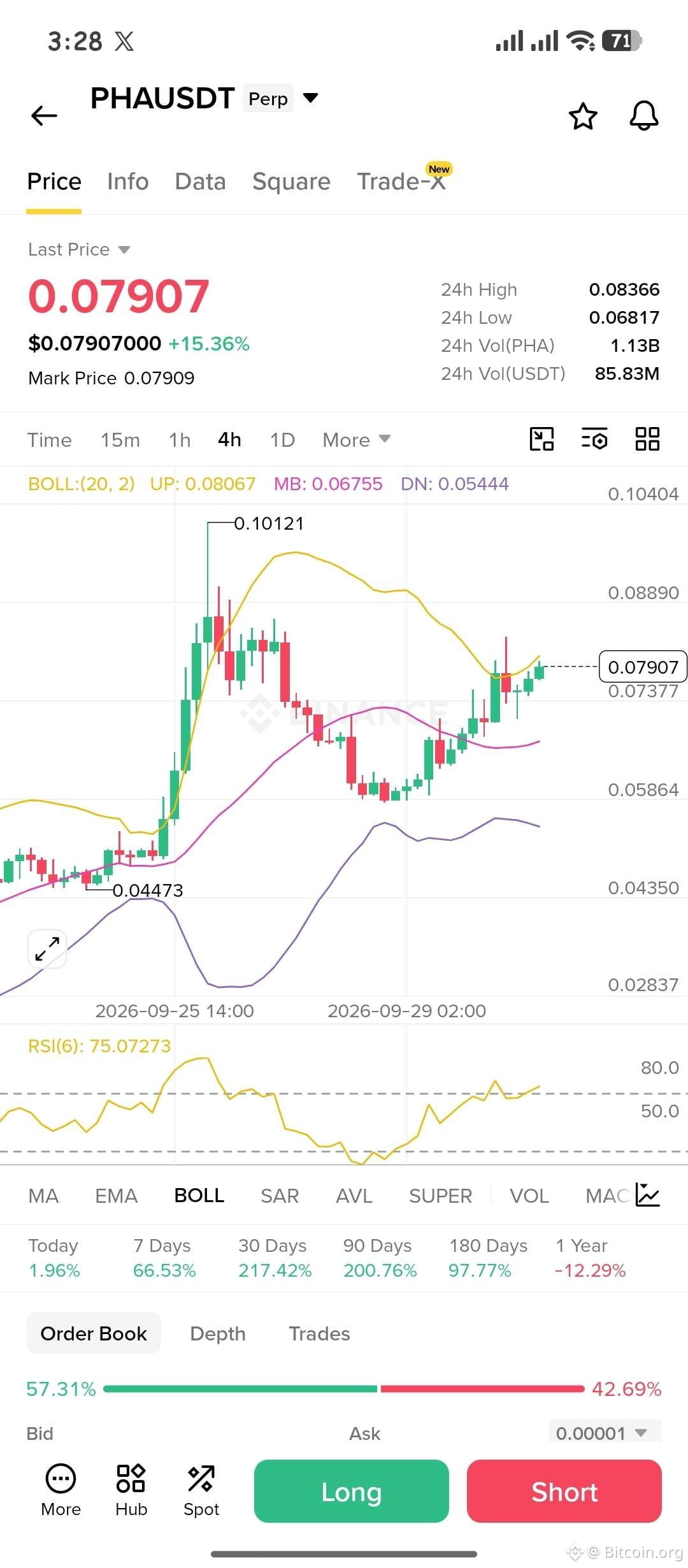
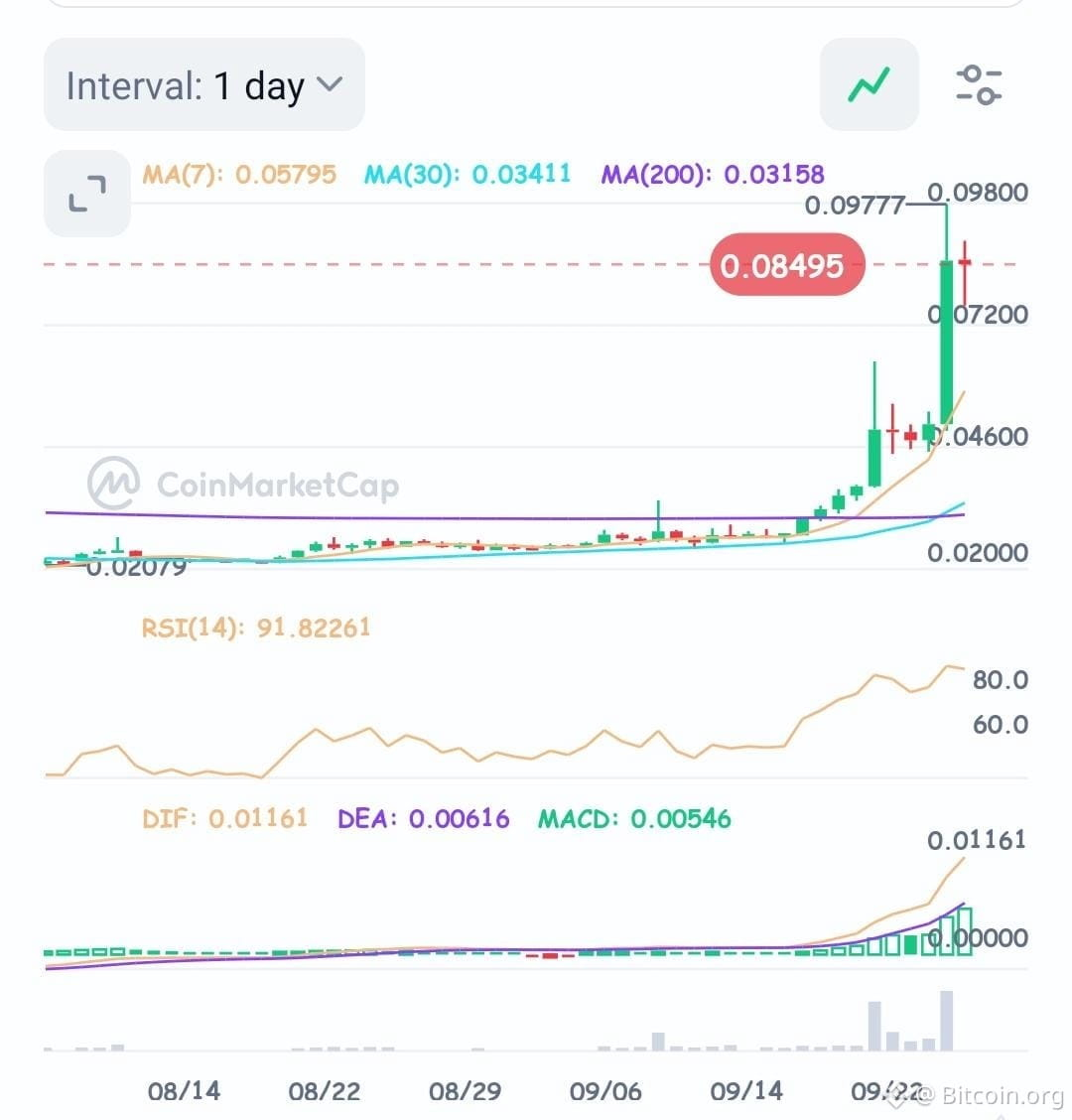
After the recent development announcement it's surged a lot. It’s make spike towards 0.0997.
But right now It's chart already make a A double-bottom reversal structure
What actually it means. It means the project can be potential only their community is still grinding.
So the potential project got later . So they just stop hunting.
Trade smartly.
#TradeSamayu
$PHA is another not Just another ai gem .
Phala network shifted to Ethereum Layer 2 using $OP succinct stack.
It mainly delivers decentralized ai infrastructure.
But this is old to know it.
I came here to show up the what actually happening in $PHA.
After the recent development announcement it's surged a lot. It’s make spike towards 0.0997.
But right now It's chart already make a A double-bottom reversal structure
What actually it means. It means the project can be potential only their community is still grinding.
So the potential project got later . So they just stop hunting.
Trade smartly.
#TradeSamayu
Phala network shifted to Ethereum Layer 2 using $OP succinct stack.
It mainly delivers decentralized ai infrastructure.
But this is old to know it.
I came here to show up the what actually happening in $PHA.
After the recent development announcement it's surged a lot. It’s make spike towards 0.0997.
But right now It's chart already make a A double-bottom reversal structure
What actually it means. It means the project can be potential only their community is still grinding.
So the potential project got later . So they just stop hunting.
Trade smartly.
#TradeSamayu
2
470
·
--
History repeat itself.
Even few weeks ago you didn’t believe that
$BTC will reach 86k
You're waiting for more deep. But in the critical time in world it's surged and proves you wrong.
Just like this this is going to happen again. Today or tomorrow. Anyway it find it's way.
So most likely history will repeat again in 13 yrs of $BTC journey.
History repeat itself.
Even few weeks ago you didn’t believe that
$BTC will reach 86k
You're waiting for more deep. But in the critical time in world it's surged and proves you wrong.
Just like this this is going to happen again. Today or tomorrow. Anyway it find it's way.
So most likely history will repeat again in 13 yrs of $BTC journey.
Even few weeks ago you didn’t believe that
$BTC will reach 86k
You're waiting for more deep. But in the critical time in world it's surged and proves you wrong.
Just like this this is going to happen again. Today or tomorrow. Anyway it find it's way.
So most likely history will repeat again in 13 yrs of $BTC journey.
1
150
·
--
$AERO is no longer just a Base DEX. It is rapidly turning into the liquidity engine for the entire Superchain, yet the market still prices it like a standard AMM.
Base has no native token. That makes AERO the primary liquid beta for the entire Coinbase onchain ecosystem. Every retail user entering through smart wallets, every tokenized real-world asset, and every stock trading pair routes volume straight through Aerodrome pools. When Coinbase wins, AERO captures the flow.
The massive catalyst is the unification of Velodrome and Aerodrome into Aero. Rolling VELO into $AERO consolidates fragmented attention and market cap into one unified token. Deployments across Ethereum Mainnet, OP Mainnet, Arbitrum, Ink, and Arc mean seamless cross-chain swaps without bridge slippage.
Over fifty percent of circulating supply is locked in veAERO for years, choking liquid float. One hundred percent of fees route to lockers in real yield like USDC and ETH, not inflationary farm rewards. Do not fade the liquidity hub of this cycle.
$AERO is no longer just a Base DEX. It is rapidly turning into the liquidity engine for the entire Superchain, yet the market still prices it like a standard AMM.
Base has no native token. That makes AERO the primary liquid beta for the entire Coinbase onchain ecosystem. Every retail user entering through smart wallets, every tokenized real-world asset, and every stock trading pair routes volume straight through Aerodrome pools. When Coinbase wins, AERO captures the flow.
The massive catalyst is the unification of Velodrome and Aerodrome into Aero. Rolling VELO into $AERO consolidates fragmented attention and market cap into one unified token. Deployments across Ethereum Mainnet, OP Mainnet, Arbitrum, Ink, and Arc mean seamless cross-chain swaps without bridge slippage.
Over fifty percent of circulating supply is locked in veAERO for years, choking liquid float. One hundred percent of fees route to lockers in real yield like USDC and ETH, not inflationary farm rewards. Do not fade the liquidity hub of this cycle.
Base has no native token. That makes AERO the primary liquid beta for the entire Coinbase onchain ecosystem. Every retail user entering through smart wallets, every tokenized real-world asset, and every stock trading pair routes volume straight through Aerodrome pools. When Coinbase wins, AERO captures the flow.
The massive catalyst is the unification of Velodrome and Aerodrome into Aero. Rolling VELO into $AERO consolidates fragmented attention and market cap into one unified token. Deployments across Ethereum Mainnet, OP Mainnet, Arbitrum, Ink, and Arc mean seamless cross-chain swaps without bridge slippage.
Over fifty percent of circulating supply is locked in veAERO for years, choking liquid float. One hundred percent of fees route to lockers in real yield like USDC and ETH, not inflationary farm rewards. Do not fade the liquidity hub of this cycle.
1
407
·
--
$ENA /USDT
$ENA/USDT Bullish Expansion: Bulls Target Higher Resistances After Base Reversal
ENA is staging an aggressive intraday rebound after finding firm support near the 0.1970 level. A decisive break through the midline has pushed price into a steep upward trajectory, backed by heavy buyer participation on the 1-hour timeframe. With market structure flipping firmly bullish, buyers are currently testing the upper bands of the local range.
Market Data & Technical Structure:
Last Price: 0.22705 USDT (+9.92% 24h Change)
24h Range: High 0.22965 USDT / Low 0.19912 USDT
24h Volume: 1.40B ENA (~$299.64M USDT)
Order Book Depth: 82.59% Bid vs 17.41% Ask
Bollinger Bands: Middle band support at 0.21462 USDT; upper band expanding at 0.23090 USDT
RSI(6): 77.63, reflecting aggressive upside momentum
Immediate Resistance: 0.2296 - 0.2310 USDT
Secondary Target: 0.2450 - 0.2600 USDT
Macro Target: 0.3000 USDT
The structural double-bottom around 0.19769 USDT triggered an impulsive wave that successfully reclaimed the 20-period moving average. While short-term consolidation around 0.2170–0.2200 USDT is possible due to high momentum readings, order flow remains dominated by buyers. A confirmed hourly close above 0.2310 USDT sets the stage for a continuation run toward the 0.2450–0.2600 USDT supply pocket.
$ENA /USDT
$ENA/USDT Bullish Expansion: Bulls Target Higher Resistances After Base Reversal
ENA is staging an aggressive intraday rebound after finding firm support near the 0.1970 level. A decisive break through the midline has pushed price into a steep upward trajectory, backed by heavy buyer participation on the 1-hour timeframe. With market structure flipping firmly bullish, buyers are currently testing the upper bands of the local range.
Market Data & Technical Structure:
Last Price: 0.22705 USDT (+9.92% 24h Change)
24h Range: High 0.22965 USDT / Low 0.19912 USDT
24h Volume: 1.40B ENA (~$299.64M USDT)
Order Book Depth: 82.59% Bid vs 17.41% Ask
Bollinger Bands: Middle band support at 0.21462 USDT; upper band expanding at 0.23090 USDT
RSI(6): 77.63, reflecting aggressive upside momentum
Immediate Resistance: 0.2296 - 0.2310 USDT
Secondary Target: 0.2450 - 0.2600 USDT
Macro Target: 0.3000 USDT
The structural double-bottom around 0.19769 USDT triggered an impulsive wave that successfully reclaimed the 20-period moving average. While short-term consolidation around 0.2170–0.2200 USDT is possible due to high momentum readings, order flow remains dominated by buyers. A confirmed hourly close above 0.2310 USDT sets the stage for a continuation run toward the 0.2450–0.2600 USDT supply pocket.
$ENA/USDT Bullish Expansion: Bulls Target Higher Resistances After Base Reversal
ENA is staging an aggressive intraday rebound after finding firm support near the 0.1970 level. A decisive break through the midline has pushed price into a steep upward trajectory, backed by heavy buyer participation on the 1-hour timeframe. With market structure flipping firmly bullish, buyers are currently testing the upper bands of the local range.
Market Data & Technical Structure:
Last Price: 0.22705 USDT (+9.92% 24h Change)
24h Range: High 0.22965 USDT / Low 0.19912 USDT
24h Volume: 1.40B ENA (~$299.64M USDT)
Order Book Depth: 82.59% Bid vs 17.41% Ask
Bollinger Bands: Middle band support at 0.21462 USDT; upper band expanding at 0.23090 USDT
RSI(6): 77.63, reflecting aggressive upside momentum
Immediate Resistance: 0.2296 - 0.2310 USDT
Secondary Target: 0.2450 - 0.2600 USDT
Macro Target: 0.3000 USDT
The structural double-bottom around 0.19769 USDT triggered an impulsive wave that successfully reclaimed the 20-period moving average. While short-term consolidation around 0.2170–0.2200 USDT is possible due to high momentum readings, order flow remains dominated by buyers. A confirmed hourly close above 0.2310 USDT sets the stage for a continuation run toward the 0.2450–0.2600 USDT supply pocket.
270
·
--
Verified
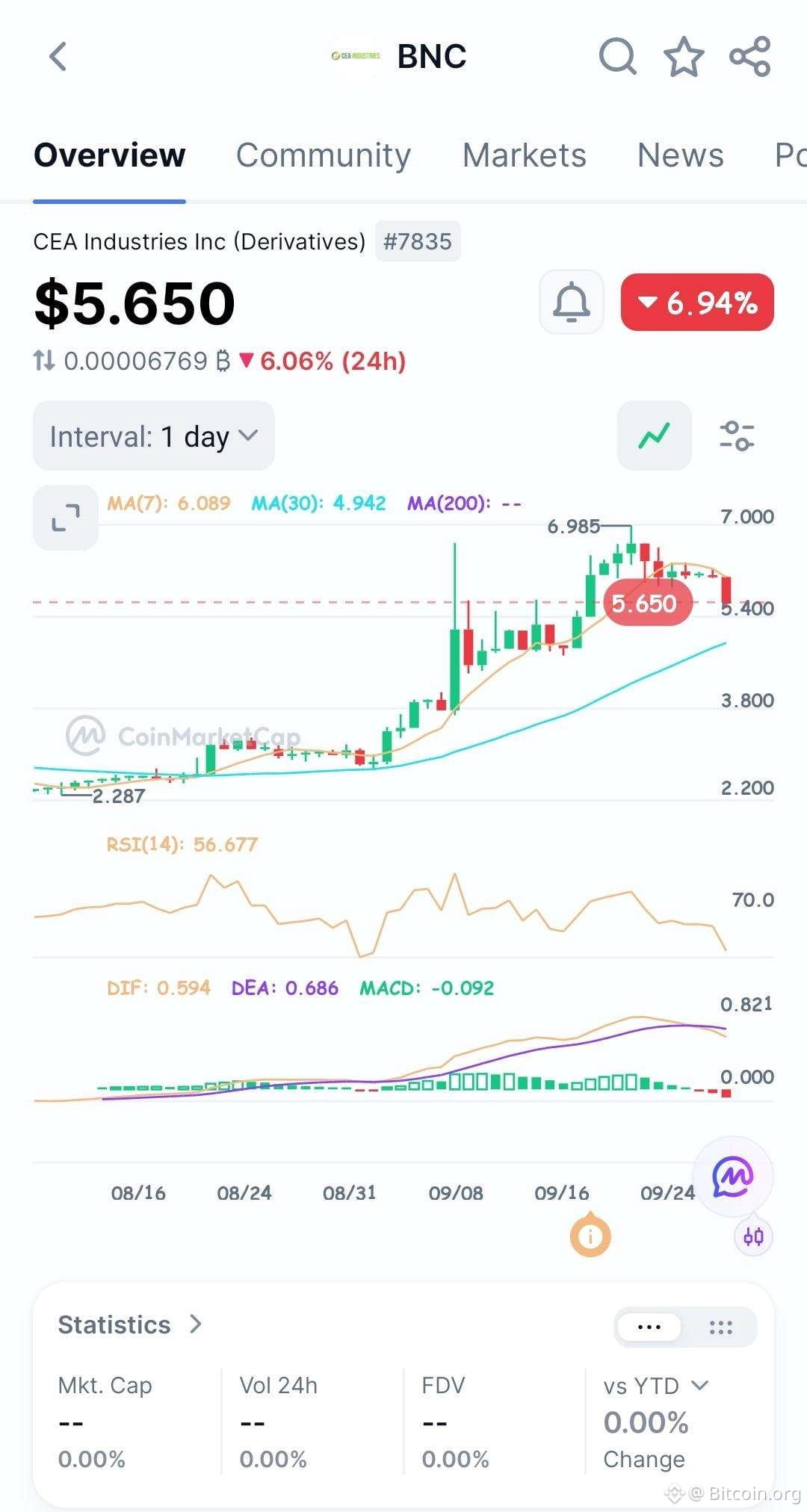
$BNC Binance is executing a dual-engine institutional strategy.
Binance recently invested 100m at $CRCL
So there are a lot more spaces to be seamless in cryoto cash.
Hhile BNB chain also expanded their business across the ecosystem.
Circle investment is for
So Binance and BNBhain making real Impact across the Binance evros ute l.
$BNC Binance is executing a dual-engine institutional strategy.
Binance recently invested 100m at $CRCL
So there are a lot more spaces to be seamless in cryoto cash.
Hhile BNB chain also expanded their business across the ecosystem.
Circle investment is for
So Binance and BNBhain making real Impact across the Binance evros ute l.
Binance recently invested 100m at $CRCL
So there are a lot more spaces to be seamless in cryoto cash.
Hhile BNB chain also expanded their business across the ecosystem.
Circle investment is for
So Binance and BNBhain making real Impact across the Binance evros ute l.
1
1.1k
·
--
Banks don't need another chain. They just need a translator.
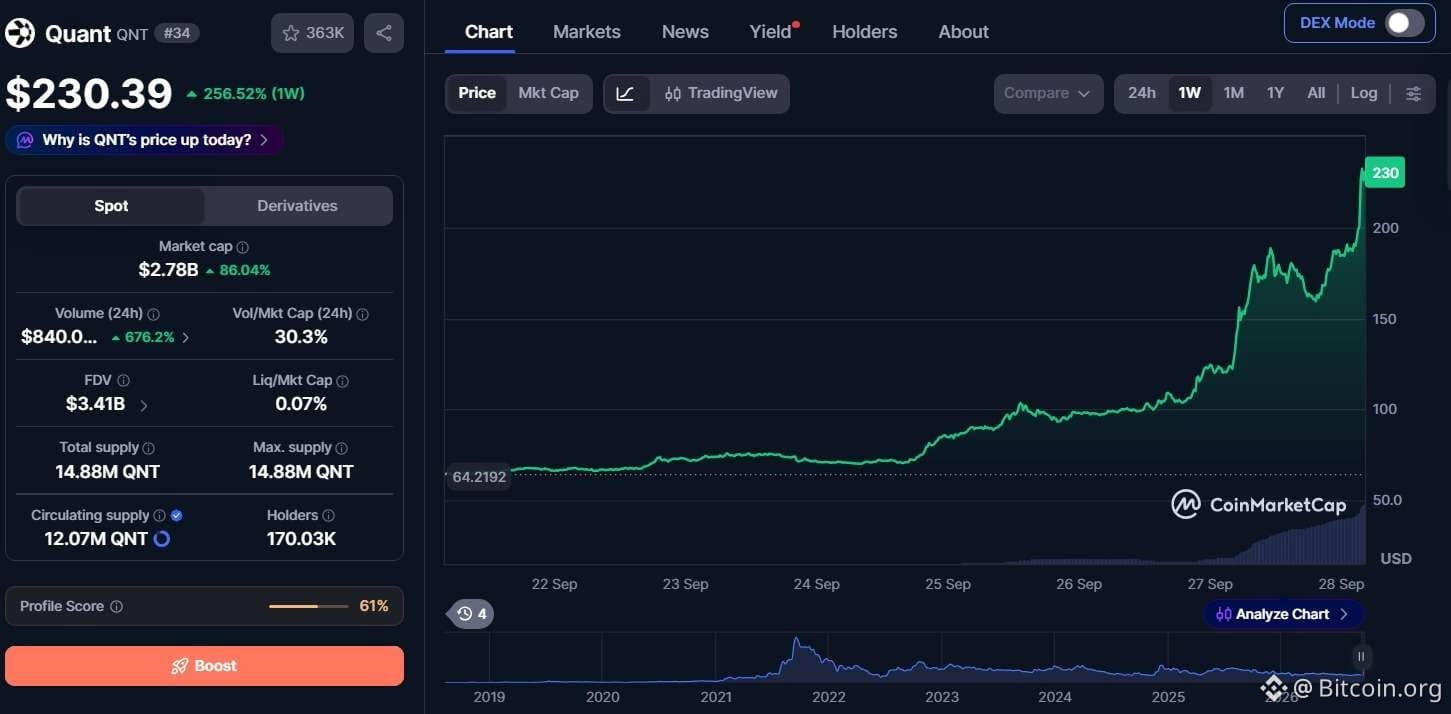
$QNT pumping not for a meme.
It focuses on the blockchain interoperability. Blockchain trilemma has once a scaling issue with blockchain interoperability. $QNT connecting traditional system with digital assets, rather than operating a decentralized exchange.
It lives with the Overledger connect the ledgers. Fusion executes all of them. Fusion live with 74 networks earlier. Recently 25+ US banks on tokenized deposits. And RTP and CHIPS in the sentence aimed to live at 2027.
All this not just like another bullish news but actually the development of blockchain uses and adoption.
The market pumped over the hype. This gem is an old chap so it has previous history. Very old rails but it's still developing that attracts potential investors.
So it printed 1.5B+ in a single day. Let's see how it hodl after the day closes.
Maybe a new week will send it to another ATH.
Trade smartly. Potential in uses but that does not mean you can enter during FOMO.
#TopGainers #Quant
Banks don't need another chain. They just need a translator.
$QNT pumping not for a meme.
It focuses on the blockchain interoperability. Blockchain trilemma has once a scaling issue with blockchain interoperability. $QNT connecting traditional system with digital assets, rather than operating a decentralized exchange.
It lives with the Overledger connect the ledgers. Fusion executes all of them. Fusion live with 74 networks earlier. Recently 25+ US banks on tokenized deposits. And RTP and CHIPS in the sentence aimed to live at 2027.
All this not just like another bullish news but actually the development of blockchain uses and adoption.
The market pumped over the hype. This gem is an old chap so it has previous history. Very old rails but it's still developing that attracts potential investors.
So it printed 1.5B+ in a single day. Let's see how it hodl after the day closes.
Maybe a new week will send it to another ATH.
Trade smartly. Potential in uses but that does not mean you can enter during FOMO.
#TopGainers #Quant
$QNT pumping not for a meme.
It focuses on the blockchain interoperability. Blockchain trilemma has once a scaling issue with blockchain interoperability. $QNT connecting traditional system with digital assets, rather than operating a decentralized exchange.
It lives with the Overledger connect the ledgers. Fusion executes all of them. Fusion live with 74 networks earlier. Recently 25+ US banks on tokenized deposits. And RTP and CHIPS in the sentence aimed to live at 2027.
All this not just like another bullish news but actually the development of blockchain uses and adoption.
The market pumped over the hype. This gem is an old chap so it has previous history. Very old rails but it's still developing that attracts potential investors.
So it printed 1.5B+ in a single day. Let's see how it hodl after the day closes.
Maybe a new week will send it to another ATH.
Trade smartly. Potential in uses but that does not mean you can enter during FOMO.
#TopGainers #Quant
1
558
·
--
Base printed the volume. $AERO kept the spread.
$AERO didn’t randomly wake up. After Binance listing Aerodrome kept the work in flow.
Base did.
Tokenized stocks, Conibase on ramp, USDC pipe retail that actually clicks swap.
Recent days 0.53 to 0.97
+30%+ this week+65% this month..
The base got liquidity here. The green candle is the proof of potentiality.
It also increased a few security measures.
Base is the hub of layer two. It concentrated liquidity, fees, mev auction. All this paired at Aerodrome finance.
Only one layer 2 that dominates. Along with robinhood and arbritrum.
First they dominate one L2 that coinbase avv
Base printed the volume. $AERO kept the spread.
$AERO didn’t randomly wake up. After Binance listing Aerodrome kept the work in flow.
Base did.
Tokenized stocks, Conibase on ramp, USDC pipe retail that actually clicks swap.
Recent days 0.53 to 0.97
+30%+ this week+65% this month..
The base got liquidity here. The green candle is the proof of potentiality.
It also increased a few security measures.
Base is the hub of layer two. It concentrated liquidity, fees, mev auction. All this paired at Aerodrome finance.
Only one layer 2 that dominates. Along with robinhood and arbritrum.
First they dominate one L2 that coinbase avv
$AERO didn’t randomly wake up. After Binance listing Aerodrome kept the work in flow.
Base did.
Tokenized stocks, Conibase on ramp, USDC pipe retail that actually clicks swap.
Recent days 0.53 to 0.97
+30%+ this week+65% this month..
The base got liquidity here. The green candle is the proof of potentiality.
It also increased a few security measures.
Base is the hub of layer two. It concentrated liquidity, fees, mev auction. All this paired at Aerodrome finance.
Only one layer 2 that dominates. Along with robinhood and arbritrum.
First they dominate one L2 that coinbase avv
215
·
--
$PHA Network is the model that is private but the receipt is public.
This is $PHA like other ghost models.
Notable development across the crypto ecosystem. Phala cloud, dstack, private ai gateway and recently added sayGM privacy-first interference gateway on Phala cloud.
Don't need to be deep to Understand, they are actually building $PHA as the payment token for Cloud Usage.
This concept is not new. The conviction is not old.
But actually the different things are the crypto market. Likely previously $ENA started to pump before the news from bstockfinance.
Just like this Phala network showing signs for potential territory for breakouts.
This low cap gem building payment gateway is also complex TEE.
But all we need is a pump. It started this for.
Did you believe the Phala network is still underrated?
#Phala #PHA #PhalaCloud
$PHA Network is the model that is private but the receipt is public.
This is $PHA like other ghost models.
Notable development across the crypto ecosystem. Phala cloud, dstack, private ai gateway and recently added sayGM privacy-first interference gateway on Phala cloud.
Don't need to be deep to Understand, they are actually building $PHA as the payment token for Cloud Usage.
This concept is not new. The conviction is not old.
But actually the different things are the crypto market. Likely previously $ENA started to pump before the news from bstockfinance.
Just like this Phala network showing signs for potential territory for breakouts.
This low cap gem building payment gateway is also complex TEE.
But all we need is a pump. It started this for.
Did you believe the Phala network is still underrated?
#Phala #PHA #PhalaCloud
This is $PHA like other ghost models.
Notable development across the crypto ecosystem. Phala cloud, dstack, private ai gateway and recently added sayGM privacy-first interference gateway on Phala cloud.
Don't need to be deep to Understand, they are actually building $PHA as the payment token for Cloud Usage.
This concept is not new. The conviction is not old.
But actually the different things are the crypto market. Likely previously $ENA started to pump before the news from bstockfinance.
Just like this Phala network showing signs for potential territory for breakouts.
This low cap gem building payment gateway is also complex TEE.
But all we need is a pump. It started this for.
Did you believe the Phala network is still underrated?
#Phala #PHA #PhalaCloud
1
465
·
--
$NEAR isn’t just an L1 anymore.
It’s building something to be a new layer. Previously that we never noticed.
It’s Shift its layer 1 speed story.
Near protocol goes with dynamic resharing, post quantum signing, also planned for SPICE.
When most of project building hype it's building into the background.
Right now its with 30B+ cited volume, across 30+ chains with 300m day high.
They introduce more product like previously near mobile. This time It's simply cover all needs like swap, earn, perps tokenized stocks with free confidentially. Like ghost orders it supports confidential limit orders.
Also near claw.
Partnered with recently Ondo finance for accessibility of tokenized era.It’s helps to grow the TVL. For perps hyperliquid
Just as wallets, Ledger, Solflare, Startgate, Stripe/ Tempo payments, x402 Foundation so more.
So the old $NEAR : smart contract
New NEAR pitch : human and agent move any assets any chain, without any leaking.
The token will trade as token.
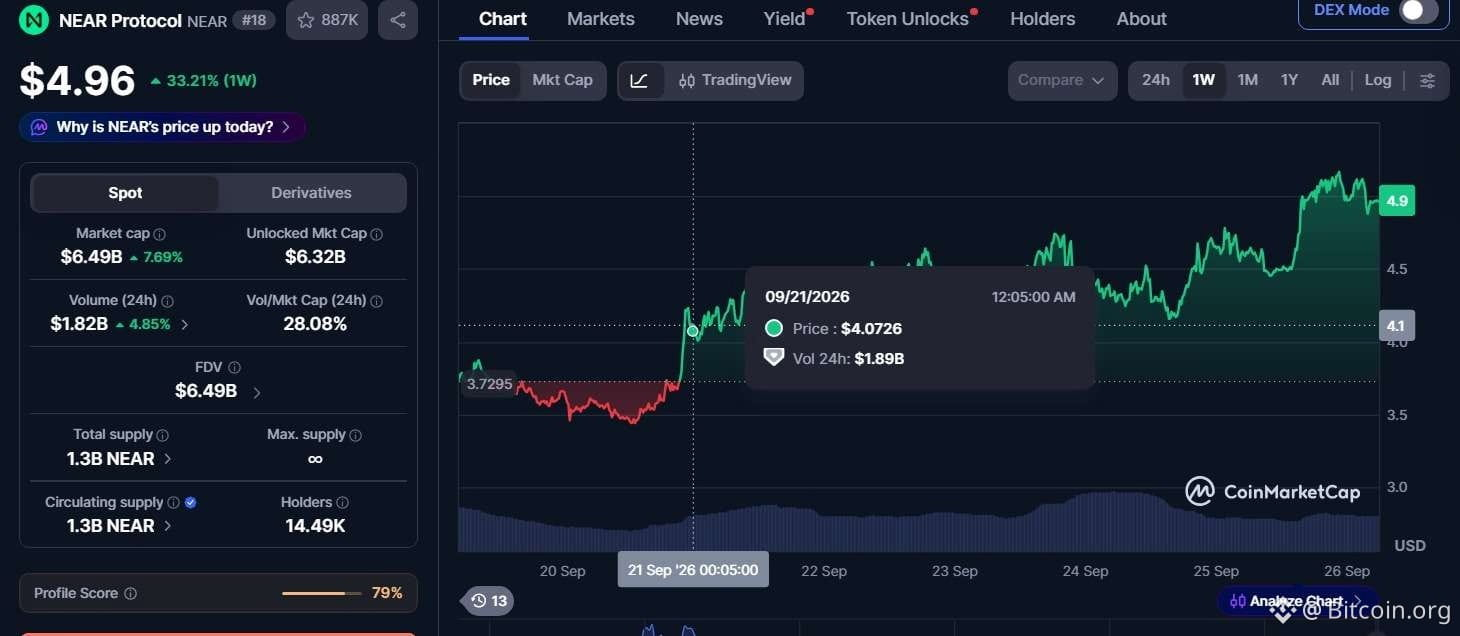
Check chart.
#NEAR #NEARProtocol
$NEAR isn’t just an L1 anymore.
It’s building something to be a new layer. Previously that we never noticed.
It’s Shift its layer 1 speed story.
Near protocol goes with dynamic resharing, post quantum signing, also planned for SPICE.
When most of project building hype it's building into the background.
Right now its with 30B+ cited volume, across 30+ chains with 300m day high.
They introduce more product like previously near mobile. This time It's simply cover all needs like swap, earn, perps tokenized stocks with free confidentially. Like ghost orders it supports confidential limit orders.
Also near claw.
Partnered with recently Ondo finance for accessibility of tokenized era.It’s helps to grow the TVL. For perps hyperliquid
Just as wallets, Ledger, Solflare, Startgate, Stripe/ Tempo payments, x402 Foundation so more.
So the old $NEAR : smart contract
New NEAR pitch : human and agent move any assets any chain, without any leaking.
The token will trade as token.
Check chart.
#NEAR #NEARProtocol
It’s building something to be a new layer. Previously that we never noticed.
It’s Shift its layer 1 speed story.
Near protocol goes with dynamic resharing, post quantum signing, also planned for SPICE.
When most of project building hype it's building into the background.
Right now its with 30B+ cited volume, across 30+ chains with 300m day high.
They introduce more product like previously near mobile. This time It's simply cover all needs like swap, earn, perps tokenized stocks with free confidentially. Like ghost orders it supports confidential limit orders.
Also near claw.
Partnered with recently Ondo finance for accessibility of tokenized era.It’s helps to grow the TVL. For perps hyperliquid
Just as wallets, Ledger, Solflare, Startgate, Stripe/ Tempo payments, x402 Foundation so more.
So the old $NEAR : smart contract
New NEAR pitch : human and agent move any assets any chain, without any leaking.
The token will trade as token.
Check chart.
#NEAR #NEARProtocol
1
1
139
·
--
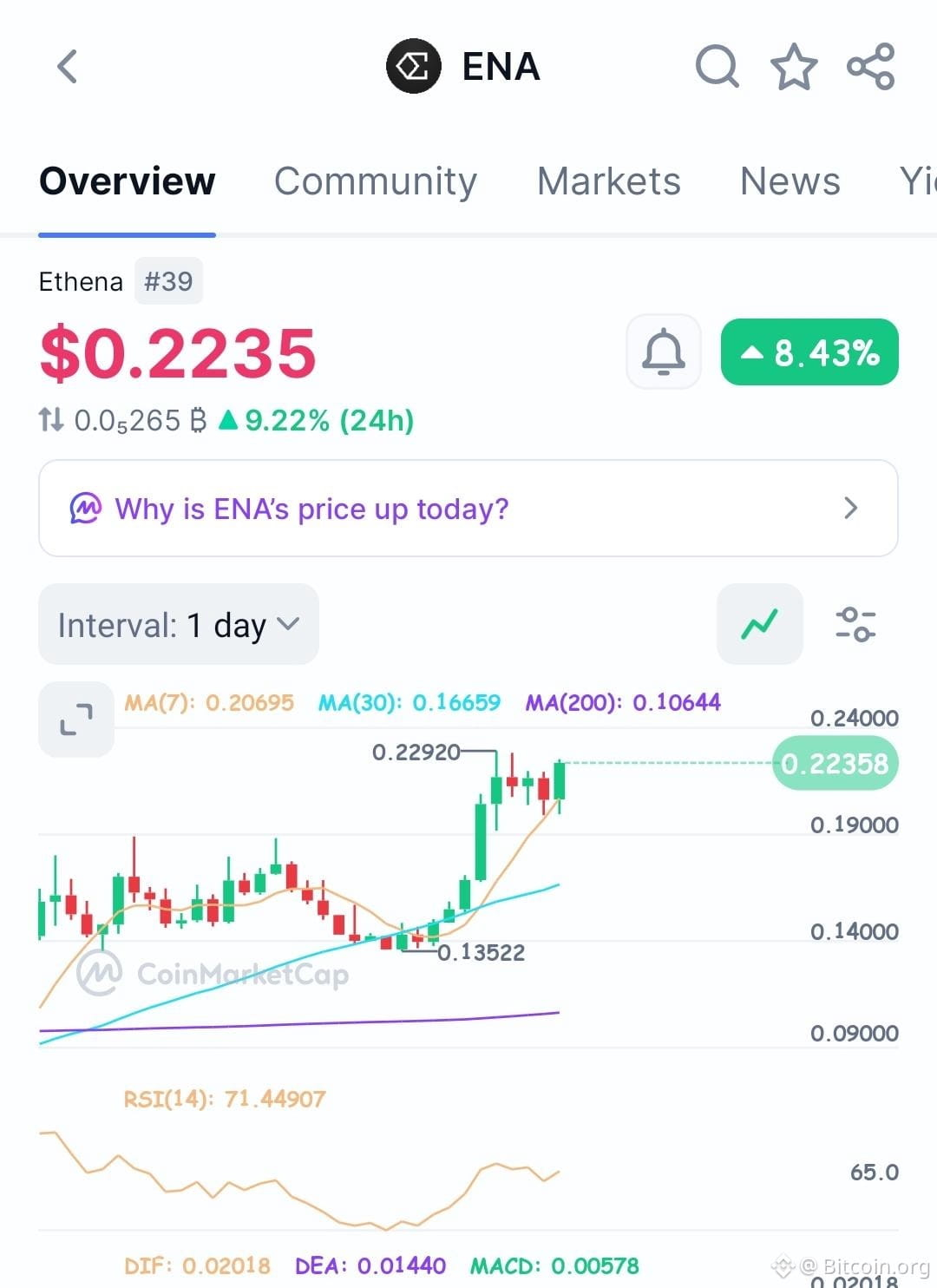
$ENA is coiling right under resistance and today's candle says it all. Price ripped 7.8 percent higher off the daily open, pushing from 0.2065 to a high of 0.2269 before settling near 0.2226. Volume is heavy, buyers are stepping in with size, and the pair is holding right at the top of its range into the close.
This is the kind of setup that precedes a breakout. Strong daily close above 0.22 flips this into momentum territory and opens the door for a move toward 0.24 and beyond. Bulls are firmly in control here, dips are getting bought immediately, and the structure looks primed to continue once this candle locks in.
ENA looking loaded. Watch the close.
#MarketInsight #Gainers
$ENA is coiling right under resistance and today's candle says it all. Price ripped 7.8 percent higher off the daily open, pushing from 0.2065 to a high of 0.2269 before settling near 0.2226. Volume is heavy, buyers are stepping in with size, and the pair is holding right at the top of its range into the close.
This is the kind of setup that precedes a breakout. Strong daily close above 0.22 flips this into momentum territory and opens the door for a move toward 0.24 and beyond. Bulls are firmly in control here, dips are getting bought immediately, and the structure looks primed to continue once this candle locks in.
ENA looking loaded. Watch the close.
#MarketInsight #Gainers
This is the kind of setup that precedes a breakout. Strong daily close above 0.22 flips this into momentum territory and opens the door for a move toward 0.24 and beyond. Bulls are firmly in control here, dips are getting bought immediately, and the structure looks primed to continue once this candle locks in.
ENA looking loaded. Watch the close.
#MarketInsight #Gainers
1
320
·
--
$BTC 1 hour to go before the market closes and open a brand new day.
The market already started to feel bullish.
Just like the previous Friday. This Friday it will go higher.
Momentum is still in the bull phase. Everyone's thoughts before another move here will be consolidating or correction. But market seems there is no need for rest just pump and pump.
What do you think this time it can break the resistance.?
In with $BTC i'm also looking at $ENA chart that's already looks ready for bullish breakout.
$BTC 100K soon
#BTC Price Analysis# #Macro Insights#
$BTC 1 hour to go before the market closes and open a brand new day.
The market already started to feel bullish.
Just like the previous Friday. This Friday it will go higher.
Momentum is still in the bull phase. Everyone's thoughts before another move here will be consolidating or correction. But market seems there is no need for rest just pump and pump.
What do you think this time it can break the resistance.?
In with $BTC i'm also looking at $ENA chart that's already looks ready for bullish breakout.
$BTC 100K soon
#BTC Price Analysis# #Macro Insights#
The market already started to feel bullish.
Just like the previous Friday. This Friday it will go higher.
Momentum is still in the bull phase. Everyone's thoughts before another move here will be consolidating or correction. But market seems there is no need for rest just pump and pump.
What do you think this time it can break the resistance.?
In with $BTC i'm also looking at $ENA chart that's already looks ready for bullish breakout.
$BTC 100K soon
#BTC Price Analysis# #Macro Insights#
165
·
--
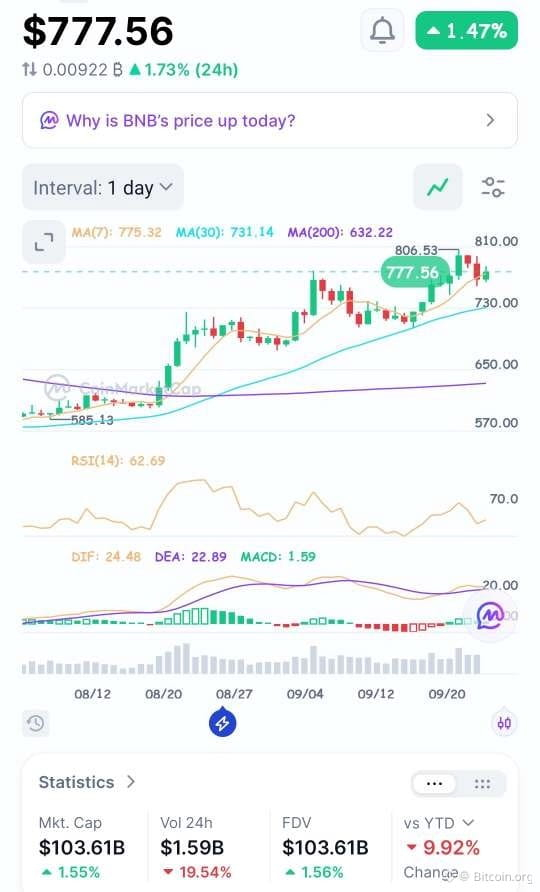
Binance bigger play : $BNB $BNCB $CRCLB
The next financial rail seed ed from Binance....
On 22th September just happened. Binance announced about the 100$m for circle investment.
After the announcement Binance removed a few USDC pairs.
Circle is the company behind USDC. Recently they introduced their main net named Arc. This is not alone it's also one of the world. Currently everyone focuses on the stablecoin. Circle is one of the world's largest dollar-backed stablecoins.
So their five year partnership may shine.
The stablecoin market is already worth more than 300B, with over 75B of that total. Circle reported around $14.8 trillion transaction volume during the Q2
Day by day stablecoin moves as human rights.
Bcz traditional finance moving this way. Recently 21 major financial institutions.
We are not just talking about the circle.
Circle is surging $BNB is scaling.
While BNBchain Partner with BNC pair.
In crypto everything moves fast keep an eye on this trio.
Perhaps the biggest story today not simply BNB circke usdc or tokenized assets. It may be the gradual convergence of the bank into a financial form.
So stablecoin becomes a digital layer connection tradeFI and crypto?
If so which company are you?
#BTC Price Analysis# #Macro Insights#
Binance bigger play : $BNB $BNCB $CRCLB
The next financial rail seed ed from Binance....
On 22th September just happened. Binance announced about the 100$m for circle investment.
After the announcement Binance removed a few USDC pairs.
Circle is the company behind USDC. Recently they introduced their main net named Arc. This is not alone it's also one of the world. Currently everyone focuses on the stablecoin. Circle is one of the world's largest dollar-backed stablecoins.
So their five year partnership may shine.
The stablecoin market is already worth more than 300B, with over 75B of that total. Circle reported around $14.8 trillion transaction volume during the Q2
Day by day stablecoin moves as human rights.
Bcz traditional finance moving this way. Recently 21 major financial institutions.
We are not just talking about the circle.
Circle is surging $BNB is scaling.
While BNBchain Partner with BNC pair.
In crypto everything moves fast keep an eye on this trio.
Perhaps the biggest story today not simply BNB circke usdc or tokenized assets. It may be the gradual convergence of the bank into a financial form.
So stablecoin becomes a digital layer connection tradeFI and crypto?
If so which company are you?
#BTC Price Analysis# #Macro Insights#
The next financial rail seed ed from Binance....
On 22th September just happened. Binance announced about the 100$m for circle investment.
After the announcement Binance removed a few USDC pairs.
Circle is the company behind USDC. Recently they introduced their main net named Arc. This is not alone it's also one of the world. Currently everyone focuses on the stablecoin. Circle is one of the world's largest dollar-backed stablecoins.
So their five year partnership may shine.
The stablecoin market is already worth more than 300B, with over 75B of that total. Circle reported around $14.8 trillion transaction volume during the Q2
Day by day stablecoin moves as human rights.
Bcz traditional finance moving this way. Recently 21 major financial institutions.
We are not just talking about the circle.
Circle is surging $BNB is scaling.
While BNBchain Partner with BNC pair.
In crypto everything moves fast keep an eye on this trio.
Perhaps the biggest story today not simply BNB circke usdc or tokenized assets. It may be the gradual convergence of the bank into a financial form.
So stablecoin becomes a digital layer connection tradeFI and crypto?
If so which company are you?
#BTC Price Analysis# #Macro Insights#
293
·
--
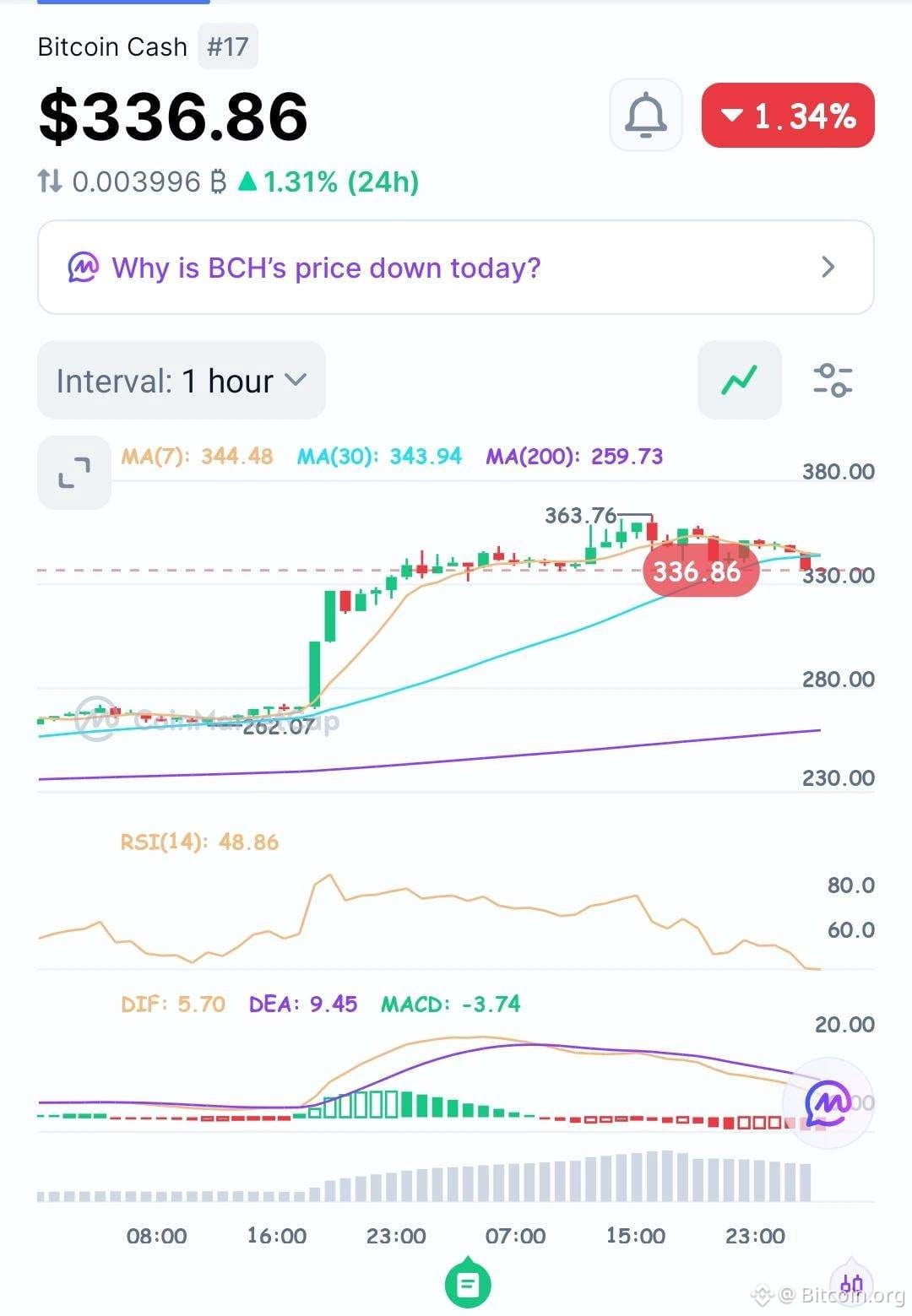
$BCH Is that start for a pullback?
After tapping the high. Today market showing sign for potential pullback sign. But it didn’t fade it.
Today everything is going for higher spike but bear just catch at that high.
So after the spike its immediately fall.
Bitcoin Cash is down 2.62 percent in the last 24 hours, trading at 334.50 dollars after opening at 343.50, tapping a high of 366.40 and a low of 324.10. That's a wide daily range, price already rejected hard from the top and is now trading well off both the high and the open, more evidence for the pullback thesis than the reversal being resolved.
So this is going to start for deep dive or a new high.
#Macro Insights# #Altcoin Season#
$BCH Is that start for a pullback?
After tapping the high. Today market showing sign for potential pullback sign. But it didn’t fade it.
Today everything is going for higher spike but bear just catch at that high.
So after the spike its immediately fall.
Bitcoin Cash is down 2.62 percent in the last 24 hours, trading at 334.50 dollars after opening at 343.50, tapping a high of 366.40 and a low of 324.10. That's a wide daily range, price already rejected hard from the top and is now trading well off both the high and the open, more evidence for the pullback thesis than the reversal being resolved.
So this is going to start for deep dive or a new high.
#Macro Insights# #Altcoin Season#
After tapping the high. Today market showing sign for potential pullback sign. But it didn’t fade it.
Today everything is going for higher spike but bear just catch at that high.
So after the spike its immediately fall.
Bitcoin Cash is down 2.62 percent in the last 24 hours, trading at 334.50 dollars after opening at 343.50, tapping a high of 366.40 and a low of 324.10. That's a wide daily range, price already rejected hard from the top and is now trading well off both the high and the open, more evidence for the pullback thesis than the reversal being resolved.
So this is going to start for deep dive or a new high.
#Macro Insights# #Altcoin Season#
142
·
--
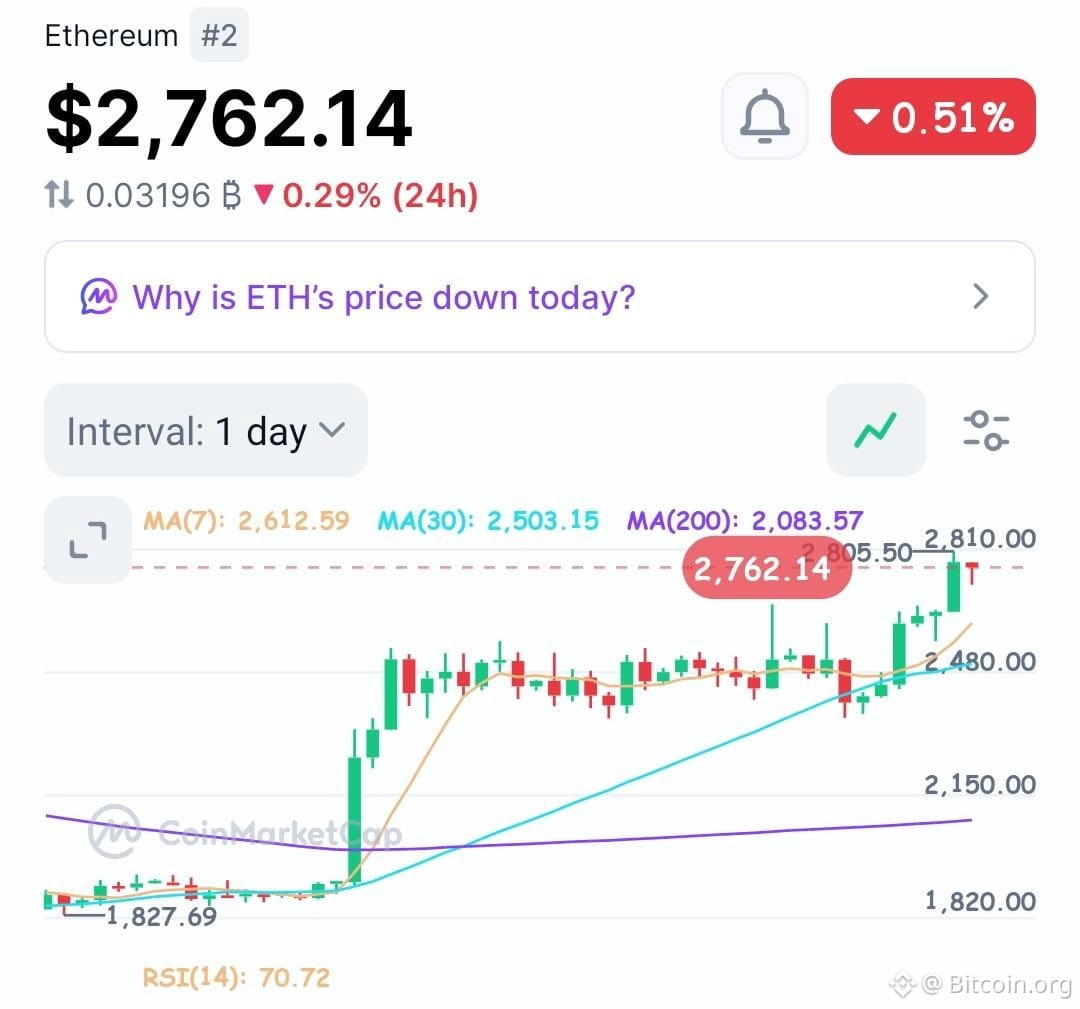
$ETH Still trying to catch the day opening.
People talk about $BTC all day but actually the real crypto is Ethereum.
Ethereum right now 2767 today its open at 2777 so close to the opening. And now time for the day close in the UTC zone.
Ethereum is built potentialities across the crypto world. But market mostly relay on the narrative like bitcoin did.
Lots of inflow news from ETH. Not such a narrative. Just following the basic chart. And 9 days left bfore the Q3 ends. Q4 is for Ethereum Glamsterdem upgrade.
This upgrade is about 200gas limit. And mostly about scaling.
Ethereum is built different.
If It's breaks the 2850 resistance then it can easily out perform $BTC.
A perfect day close can send it.
What you think?
#Meme Alpha# #Altcoin Season#
$ETH Still trying to catch the day opening.
People talk about $BTC all day but actually the real crypto is Ethereum.
Ethereum right now 2767 today its open at 2777 so close to the opening. And now time for the day close in the UTC zone.
Ethereum is built potentialities across the crypto world. But market mostly relay on the narrative like bitcoin did.
Lots of inflow news from ETH. Not such a narrative. Just following the basic chart. And 9 days left bfore the Q3 ends. Q4 is for Ethereum Glamsterdem upgrade.
This upgrade is about 200gas limit. And mostly about scaling.
Ethereum is built different.
If It's breaks the 2850 resistance then it can easily out perform $BTC.
A perfect day close can send it.
What you think?
#Meme Alpha# #Altcoin Season#
People talk about $BTC all day but actually the real crypto is Ethereum.
Ethereum right now 2767 today its open at 2777 so close to the opening. And now time for the day close in the UTC zone.
Ethereum is built potentialities across the crypto world. But market mostly relay on the narrative like bitcoin did.
Lots of inflow news from ETH. Not such a narrative. Just following the basic chart. And 9 days left bfore the Q3 ends. Q4 is for Ethereum Glamsterdem upgrade.
This upgrade is about 200gas limit. And mostly about scaling.
Ethereum is built different.
If It's breaks the 2850 resistance then it can easily out perform $BTC.
A perfect day close can send it.
What you think?
#Meme Alpha# #Altcoin Season#
101
·
--
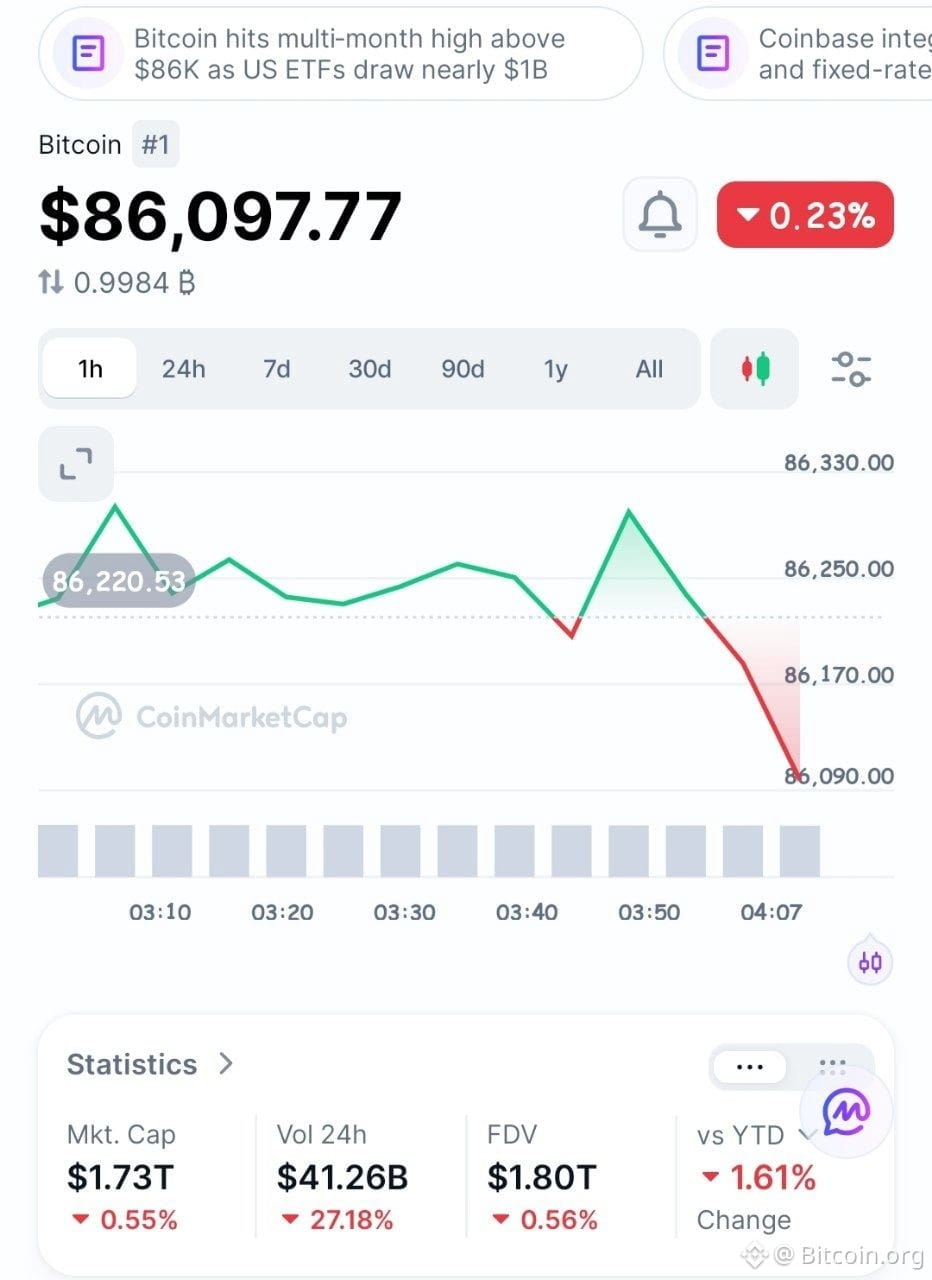
$BTC is still holding 86K so the next breakout will send it 100K.
We hope about this. Yes we want this breakout. Like we jumped over the crash, war, crash again, quantum fud, clarity act, fed hikes.
Even we fight against the Bear Saylor. So ultimately there is no reason to fall now. So 100k is the next jump.
Actually we can't actually believe how It's possible to survive and now make a milestone.
$BTC makes eight month historical high.
Today $BCH joined the rally along with our inspiring $DOGE major 20 gems that are tried hard.
But we focused on #Bitcoin again. A few things are still worth noticing. Bitcoin options expire on the 25th of September. 181k BTC worth of options are reported to expire. So there is possible correction waiting if its still hold mid 86k.
Major event like us us CPI data, CFTC rules aare coming to October. Bitcoin mining difficulty.
But rather then narrative we still hopes that it will move for another high.
The supremacy is all behind this are people. So we can send it.
One more things if you entered early don't forget to take some partial profits. Still market unpredictable. If we are in bull cycle then we are already pre-rich.
What do you think this cycle can retire your bloodline?
#BTC Price Analysis# #Macro Insights# #MajorMoves
$BTC is still holding 86K so the next breakout will send it 100K.
We hope about this. Yes we want this breakout. Like we jumped over the crash, war, crash again, quantum fud, clarity act, fed hikes.
Even we fight against the Bear Saylor. So ultimately there is no reason to fall now. So 100k is the next jump.
Actually we can't actually believe how It's possible to survive and now make a milestone.
$BTC makes eight month historical high.
Today $BCH joined the rally along with our inspiring $DOGE major 20 gems that are tried hard.
But we focused on #Bitcoin again. A few things are still worth noticing. Bitcoin options expire on the 25th of September. 181k BTC worth of options are reported to expire. So there is possible correction waiting if its still hold mid 86k.
Major event like us us CPI data, CFTC rules aare coming to October. Bitcoin mining difficulty.
But rather then narrative we still hopes that it will move for another high.
The supremacy is all behind this are people. So we can send it.
One more things if you entered early don't forget to take some partial profits. Still market unpredictable. If we are in bull cycle then we are already pre-rich.
What do you think this cycle can retire your bloodline?
#BTC Price Analysis# #Macro Insights# #MajorMoves
We hope about this. Yes we want this breakout. Like we jumped over the crash, war, crash again, quantum fud, clarity act, fed hikes.
Even we fight against the Bear Saylor. So ultimately there is no reason to fall now. So 100k is the next jump.
Actually we can't actually believe how It's possible to survive and now make a milestone.
$BTC makes eight month historical high.
Today $BCH joined the rally along with our inspiring $DOGE major 20 gems that are tried hard.
But we focused on #Bitcoin again. A few things are still worth noticing. Bitcoin options expire on the 25th of September. 181k BTC worth of options are reported to expire. So there is possible correction waiting if its still hold mid 86k.
Major event like us us CPI data, CFTC rules aare coming to October. Bitcoin mining difficulty.
But rather then narrative we still hopes that it will move for another high.
The supremacy is all behind this are people. So we can send it.
One more things if you entered early don't forget to take some partial profits. Still market unpredictable. If we are in bull cycle then we are already pre-rich.
What do you think this cycle can retire your bloodline?
#BTC Price Analysis# #Macro Insights# #MajorMoves
122
·
--
$BTC still parabolic...Still looks like it can break 90k again.
You're actually thinking just like this. Its true nature. Everyone thinks that's the truth. But the real question is why it's pumping this high.
Do you know the answers. No!
This is no one sending it. We just send it to people sending it. Just a week ago it looked like everything had collapsed. But we know always the fuds work opposite. Every time a narrative tries to push it down. But the real money real people's real narrative makes a comeback with more strength.
We just need to trust the process.
Right now $BNB at 800 $ETH at 2765 all they just plummeted the fuds and proved that how the real utility works out.
But one more thing is worth noticing. You need to secure your gains. When the market moves fast it can go to either side. So one day 10% gains can be caused the next day -20%. I mean you just need a proper position managing that's all.
#BTC Price Analysis# #Macro Insights# #Altcoin Season#
$BTC still parabolic...Still looks like it can break 90k again.
You're actually thinking just like this. Its true nature. Everyone thinks that's the truth. But the real question is why it's pumping this high.
Do you know the answers. No!
This is no one sending it. We just send it to people sending it. Just a week ago it looked like everything had collapsed. But we know always the fuds work opposite. Every time a narrative tries to push it down. But the real money real people's real narrative makes a comeback with more strength.
We just need to trust the process.
Right now $BNB at 800 $ETH at 2765 all they just plummeted the fuds and proved that how the real utility works out.
But one more thing is worth noticing. You need to secure your gains. When the market moves fast it can go to either side. So one day 10% gains can be caused the next day -20%. I mean you just need a proper position managing that's all.
#BTC Price Analysis# #Macro Insights# #Altcoin Season#
You're actually thinking just like this. Its true nature. Everyone thinks that's the truth. But the real question is why it's pumping this high.
Do you know the answers. No!
This is no one sending it. We just send it to people sending it. Just a week ago it looked like everything had collapsed. But we know always the fuds work opposite. Every time a narrative tries to push it down. But the real money real people's real narrative makes a comeback with more strength.
We just need to trust the process.
Right now $BNB at 800 $ETH at 2765 all they just plummeted the fuds and proved that how the real utility works out.
But one more thing is worth noticing. You need to secure your gains. When the market moves fast it can go to either side. So one day 10% gains can be caused the next day -20%. I mean you just need a proper position managing that's all.
#BTC Price Analysis# #Macro Insights# #Altcoin Season#
1
638
·
--
Market is back again to Its true form. Just right now.
Market back after the deep correction. Likely $ETH from 2577 to 2626 now
$BNB didn’t go much deep. It’s back from 753 to 759
And the big Pancake $BTC gains 0.88%
So market make this ups and down. It’s actually worth noticing. It’s always works with impulsive and retracement move.
Just right now market. So after the correction again market looking for more uoside.
So the actual entry opportunity back and back.
Green candle are just clearing the path.
This #BullRun2026 hasn’t even starting yet.
Bull run can send few gem to another ATH.
What you think?
#MarketMovement #ImpulsiveMove #Breakouts
Market is back again to Its true form. Just right now.
Market back after the deep correction. Likely $ETH from 2577 to 2626 now
$BNB didn’t go much deep. It’s back from 753 to 759
And the big Pancake $BTC gains 0.88%
So market make this ups and down. It’s actually worth noticing. It’s always works with impulsive and retracement move.
Just right now market. So after the correction again market looking for more uoside.
So the actual entry opportunity back and back.
Green candle are just clearing the path.
This #BullRun2026 hasn’t even starting yet.
Bull run can send few gem to another ATH.
What you think?
#MarketMovement #ImpulsiveMove #Breakouts
Market back after the deep correction. Likely $ETH from 2577 to 2626 now
$BNB didn’t go much deep. It’s back from 753 to 759
And the big Pancake $BTC gains 0.88%
So market make this ups and down. It’s actually worth noticing. It’s always works with impulsive and retracement move.
Just right now market. So after the correction again market looking for more uoside.
So the actual entry opportunity back and back.
Green candle are just clearing the path.
This #BullRun2026 hasn’t even starting yet.
Bull run can send few gem to another ATH.
What you think?
#MarketMovement #ImpulsiveMove #Breakouts
80
·
--
$CRCLB is just launched its USDC native blockchain and the crypto world already adopted it.
This Arc Chain is completed major problem like gas calculation. Also somethings like fast finality. EVM compatible so already introduced top tiers dApp can start from the starting.
They major think is this the $USDC backed by USD so there is no more comolex calculation over the transaction cost. Protocol fees. Or others expenses.
One more point it's also trying to partnered with toptier rwa project. So i think $CRCLB is potential.
But still going downside in long timeframe.
So this should be a opportunity to grab this crypto native bStocks.
What you think people will add bStocks rather then crypto?
#BNBChain# #Macro Insights#
$CRCLB is just launched its USDC native blockchain and the crypto world already adopted it.
This Arc Chain is completed major problem like gas calculation. Also somethings like fast finality. EVM compatible so already introduced top tiers dApp can start from the starting.
They major think is this the $USDC backed by USD so there is no more comolex calculation over the transaction cost. Protocol fees. Or others expenses.
One more point it's also trying to partnered with toptier rwa project. So i think $CRCLB is potential.
But still going downside in long timeframe.
So this should be a opportunity to grab this crypto native bStocks.
What you think people will add bStocks rather then crypto?
#BNBChain# #Macro Insights#
This Arc Chain is completed major problem like gas calculation. Also somethings like fast finality. EVM compatible so already introduced top tiers dApp can start from the starting.
They major think is this the $USDC backed by USD so there is no more comolex calculation over the transaction cost. Protocol fees. Or others expenses.
One more point it's also trying to partnered with toptier rwa project. So i think $CRCLB is potential.
But still going downside in long timeframe.
So this should be a opportunity to grab this crypto native bStocks.
What you think people will add bStocks rather then crypto?
#BNBChain# #Macro Insights#
66
·
--
Every cycle comes with hope and ends with pain.
Newcomers always make a few mistakes. They Don't understand the process.
How it actually works.
Just a few hours ago the market was at its peak. But right now all red with. But the greed and fear index still suggests 71. Means still people are hoping for more pumps.
I'm also bullish. But newcomers think that's all we got. This is time for the red ones. But actually it's just a retracement move. Before another impulsive move market can consolidate or test the support zone.
But when i was newcomer i already sell it in panic.
So what is the reason behind it. It’s just works along with our psychological manner.
Market gains 10x in day. But then market goes 2x low and people got oanicked. But you need to trust the Process. Its always happens in every cycle. Even Michael Saylor bought Bitcoin at its peak.
But he managed to DCA but newcomers don't know how to manage it all.
That's why newbies rush to sell and make a loss.
So right now the market is just making its correction not crash or panic sell yet. This happens bcz some people bought it early and they secured their bag.
So this time you add some potential gem your bag.
Like $SUI $BNB
#BTC Price Analysis# #Altcoin Season#
Every cycle comes with hope and ends with pain.
Newcomers always make a few mistakes. They Don't understand the process.
How it actually works.
Just a few hours ago the market was at its peak. But right now all red with. But the greed and fear index still suggests 71. Means still people are hoping for more pumps.
I'm also bullish. But newcomers think that's all we got. This is time for the red ones. But actually it's just a retracement move. Before another impulsive move market can consolidate or test the support zone.
But when i was newcomer i already sell it in panic.
So what is the reason behind it. It’s just works along with our psychological manner.
Market gains 10x in day. But then market goes 2x low and people got oanicked. But you need to trust the Process. Its always happens in every cycle. Even Michael Saylor bought Bitcoin at its peak.
But he managed to DCA but newcomers don't know how to manage it all.
That's why newbies rush to sell and make a loss.
So right now the market is just making its correction not crash or panic sell yet. This happens bcz some people bought it early and they secured their bag.
So this time you add some potential gem your bag.
Like $SUI $BNB
#BTC Price Analysis# #Altcoin Season#
Newcomers always make a few mistakes. They Don't understand the process.
How it actually works.
Just a few hours ago the market was at its peak. But right now all red with. But the greed and fear index still suggests 71. Means still people are hoping for more pumps.
I'm also bullish. But newcomers think that's all we got. This is time for the red ones. But actually it's just a retracement move. Before another impulsive move market can consolidate or test the support zone.
But when i was newcomer i already sell it in panic.
So what is the reason behind it. It’s just works along with our psychological manner.
Market gains 10x in day. But then market goes 2x low and people got oanicked. But you need to trust the Process. Its always happens in every cycle. Even Michael Saylor bought Bitcoin at its peak.
But he managed to DCA but newcomers don't know how to manage it all.
That's why newbies rush to sell and make a loss.
So right now the market is just making its correction not crash or panic sell yet. This happens bcz some people bought it early and they secured their bag.
So this time you add some potential gem your bag.
Like $SUI $BNB
#BTC Price Analysis# #Altcoin Season#
133
Log in to explore more content
Join global crypto users on Binance Square
⚡️ Get latest and useful information about crypto.
💬 Trusted by the world’s largest crypto exchange.
👍 Discover real insights from verified creators.
Email / Phone number
Trending Topics
SECHaltsCryptoETFReviewsAmidFundingLapse
87,013 views
837 Discussing
🚨 More than 90 applications for crypto currency-based exchange-traded funds (ETFs) have been temporarily paused.
And this is not only about Bitcoin.
$PEPE $SOL $XRP
Due to a funding lapse in the United States, the SEC’s review process for new crypto-based ETF products has effectively slowed to a halt.
Yesterday, Canary filed for a PEPE ETF.
Today, the broader ETF pipeline is running into trouble. 👀
Important:
This is not a rejection.
Existing funds continue trading normally.
But new registrations and reviews can’t proceed the usual way until the SEC resumes its normal operations.
This means that one of the biggest institutional narratives in the crypto world has lost its timeline.
Which altcoin ETF story will be hit the hardest by the delay?
PEPE · SOL · XRP
Please follow up
#SECHaltsCryptoETFReviewsAmidFundingLapse
Shamika Metting
·2 Likes
·871 views
ZcashETFPostsFirstWeeklyOutflow$93.6M
68,420 views
215 Discussing
GreekPoliceBustCryptoScamRingArrest17
235,697 views
1,643 Discussing