
Bunjaminus
439 Posts

Bunjaminus
Report
Block User
Subscribe to stay up-to-date with the latest coin news. Your likes and comments will help me improve the quality of my content.
1 Following
41 Followers
78 Liked
Posts
All
Quotes
·
--
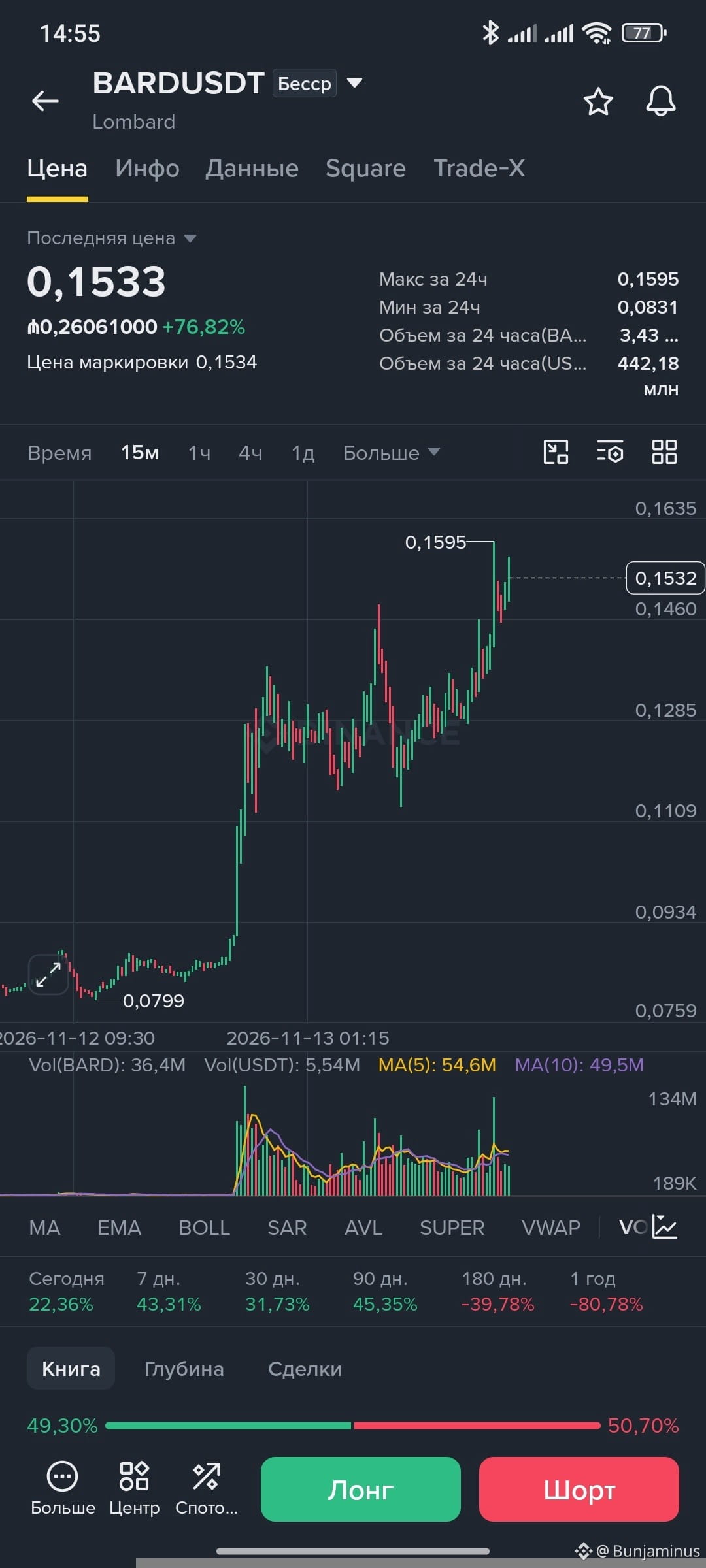
Coin $BARD surprised us with its growth, but the drop is already very near. It’s expected to rise to $0.17, but I’d advise you to open small short positions right now so you can average in. The drop will be colossal, so don’t miss your chance to earn enough for coffee 😉
Share your profits in the comments ⬇️ Wishing everyone profitable days 🥰
Futures:$BARD
Share your profits in the comments ⬇️ Wishing everyone profitable days 🥰
Futures:$BARD
10
·
--
Bearish
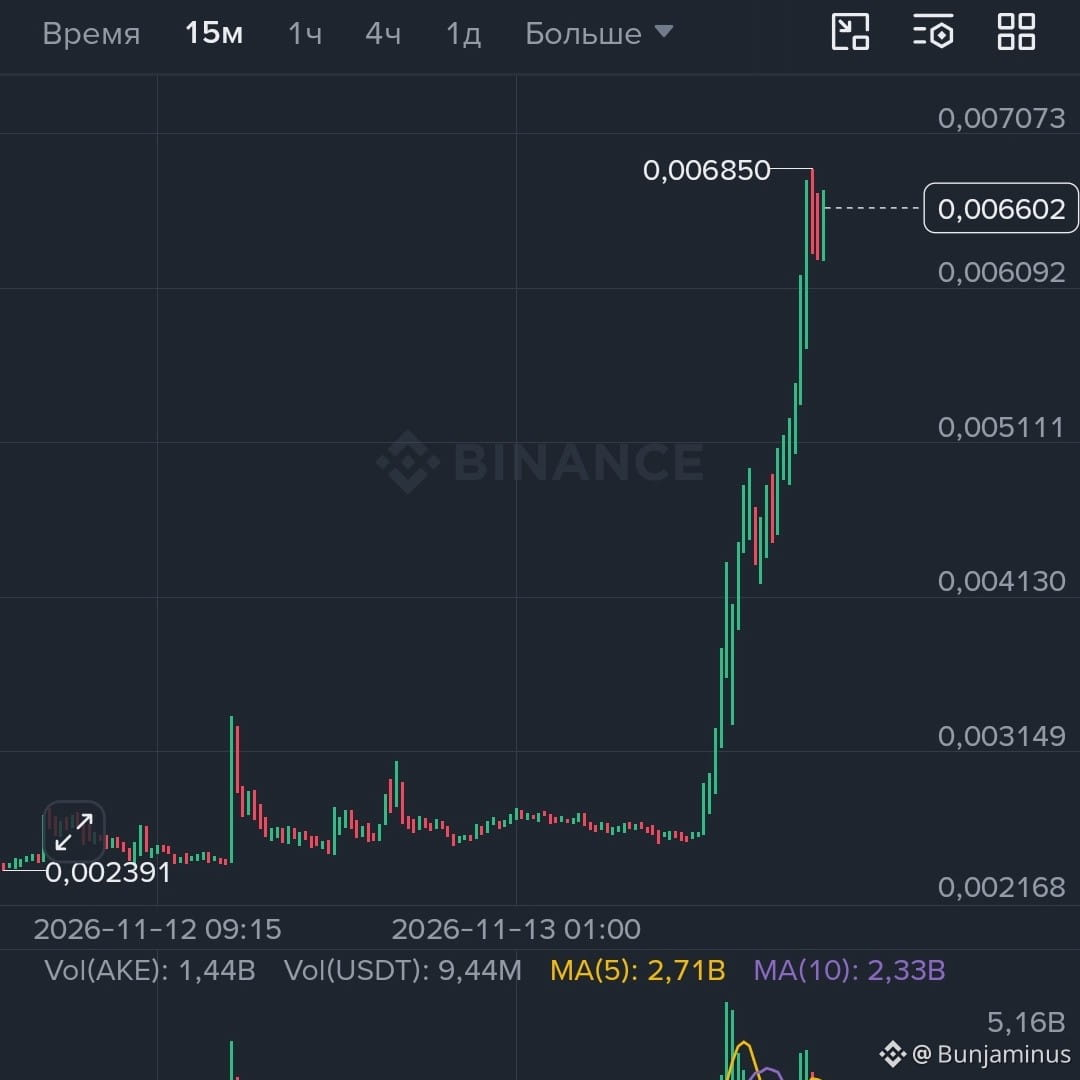
Coin $AKE has seen a pretty decent price increase—up a whopping 135%. What can we expect next? A drop, of course. The coin will hold around its current level for maybe two hours at most, then head back down, so open your shorts and rake in the profits😉
Don’t miss your chance to earn enough for a coffee😄
Share your profits in the comments⬇️
Futures:
{future}(AKEUSDT)
Coin $AKE has seen a pretty decent price increase—up a whopping 135%. What can we expect next? A drop, of course. The coin will hold around its current level for maybe two hours at most, then head back down, so open your shorts and rake in the profits😉
Don’t miss your chance to earn enough for a coffee😄
Share your profits in the comments⬇️
Futures:
Don’t miss your chance to earn enough for a coffee😄
Share your profits in the comments⬇️
Futures:
9
·
--
Fundamental Focus on ZK Infrastructure: On the technical front, the team continues to build out verifiable data and privacy infrastructure powered by Zero-Knowledge Proofs (ZKP), Proof Carrying Data, and Fully Homomorphic Encryption—including core products like zkDatabase. The project positions itself as a decentralized oracle and verifiable computation layer for DeFi, gaming, and cross-chain applications.
Market Sentiment: Analysts note that ON is currently treated as a higher-risk, long-term infrastructure bet rather than a short-term momentum play. For a sustained price recovery, the market is looking for verifiable on-chain adoption and consistent protocol fee generation in ON to offset new token supply.
Futures:$ON
Spot:
{alpha}(560x0e4f6209ed984b21edea43ace6e09559ed051d48)
Fundamental Focus on ZK Infrastructure: On the technical front, the team continues to build out verifiable data and privacy infrastructure powered by Zero-Knowledge Proofs (ZKP), Proof Carrying Data, and Fully Homomorphic Encryption—including core products like zkDatabase. The project positions itself as a decentralized oracle and verifiable computation layer for DeFi, gaming, and cross-chain applications.
Market Sentiment: Analysts note that ON is currently treated as a higher-risk, long-term infrastructure bet rather than a short-term momentum play. For a sustained price recovery, the market is looking for verifiable on-chain adoption and consistent protocol fee generation in ON to offset new token supply.
Futures:$ON
Spot:

2
·
--
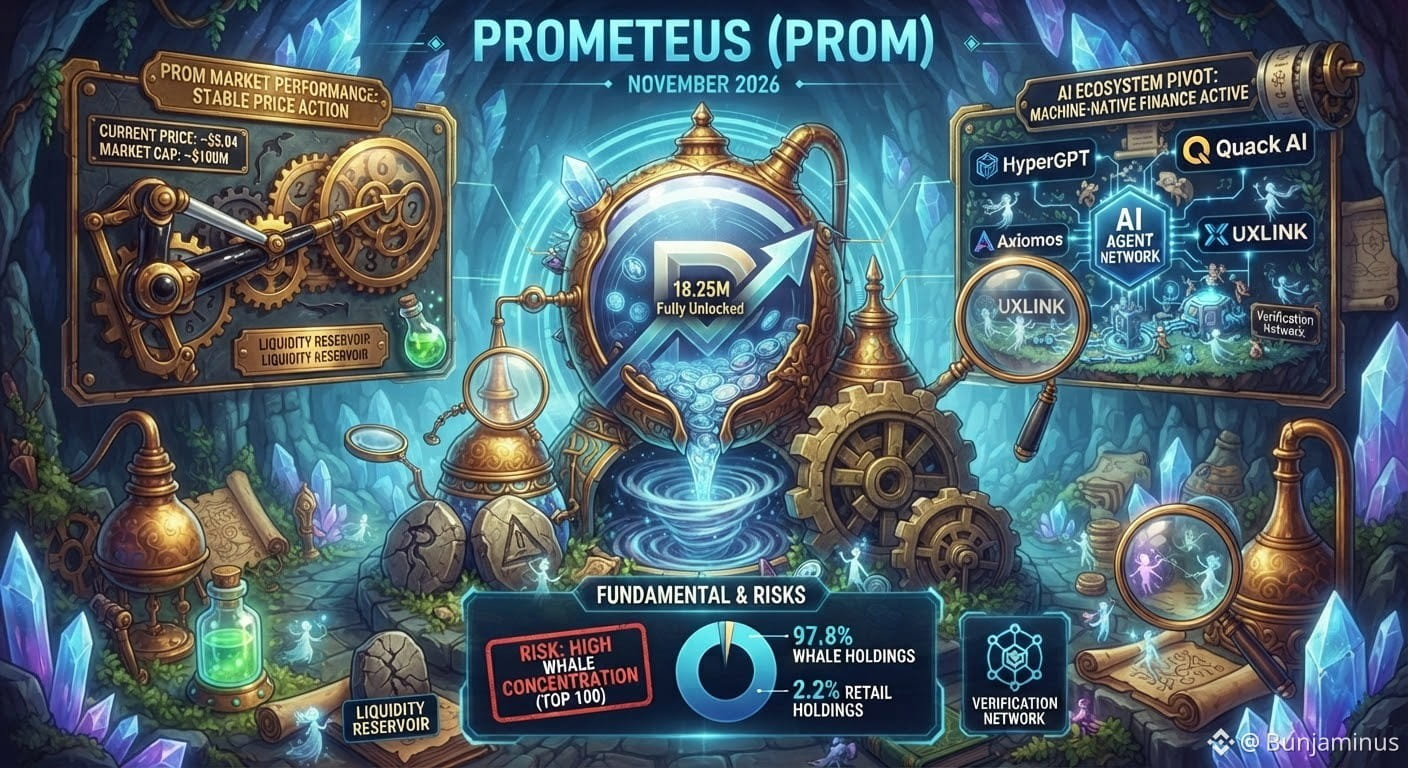
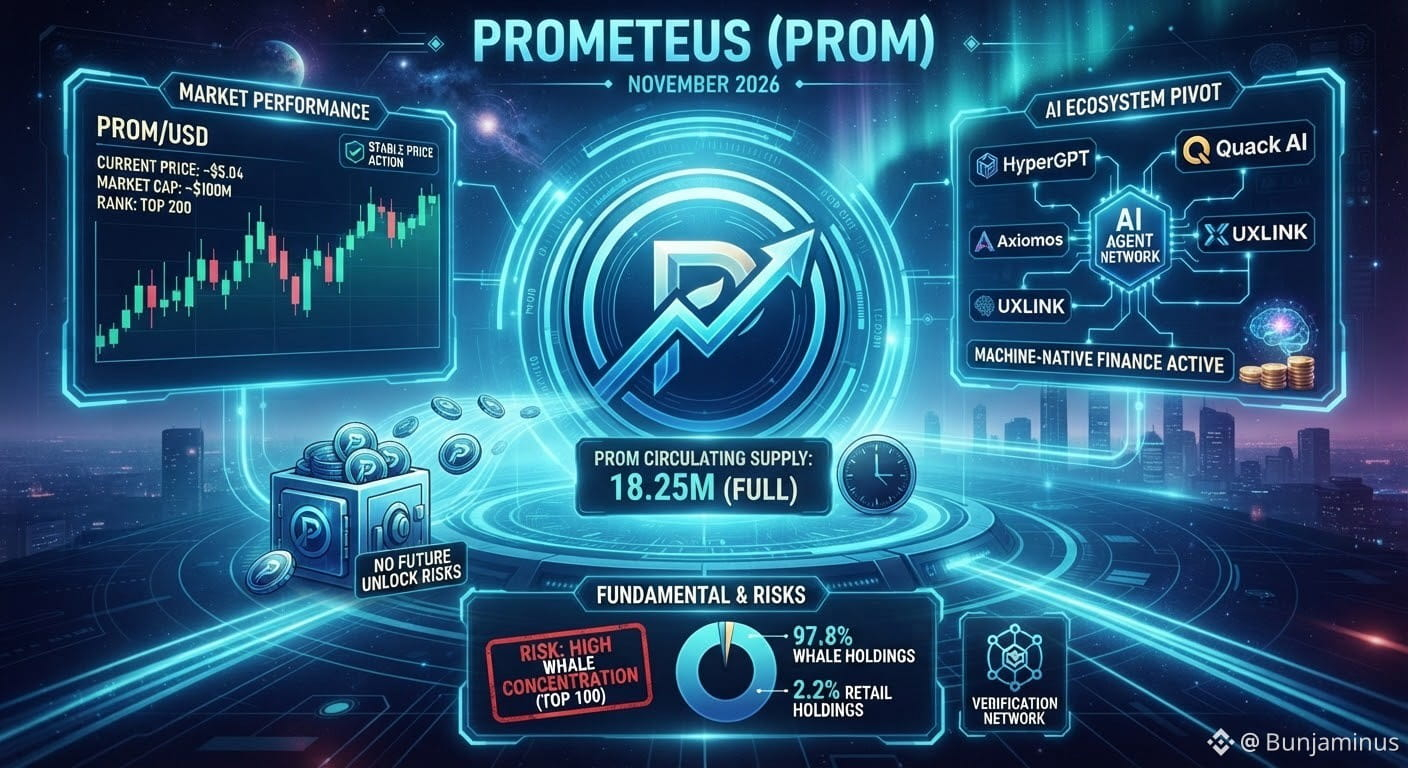
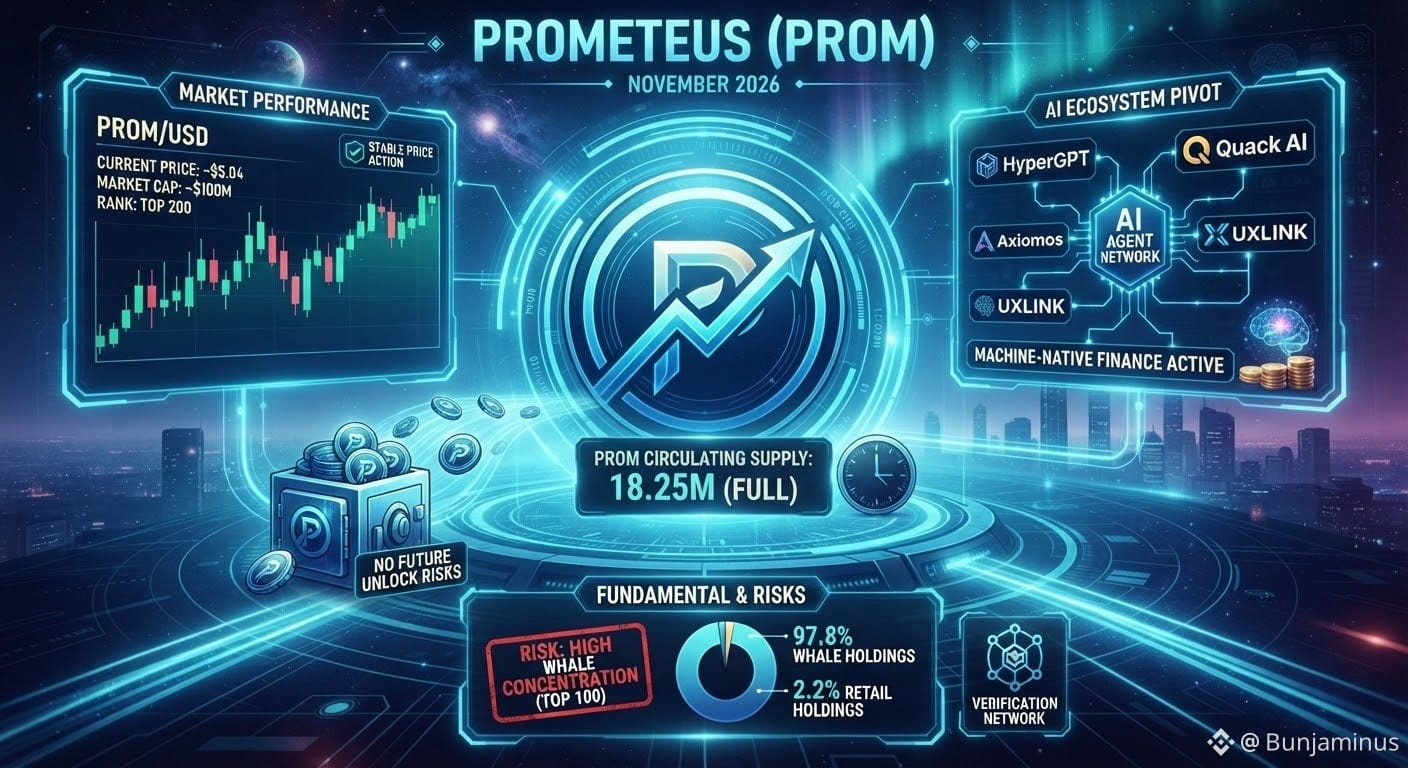
Key events and current market situation surrounding the Prometeus project (ticker: PROM) as of November 2026:
1. Market metrics and quotes
Current price: The PROM token is trading in the $4.85–$5.23 range, showing moderate stability amid local fluctuations in the crypto market.
Market cap and supply: The project’s market capitalization is approximately $95.6–$105 million, and the asset holds a position among the top 200 cryptocurrencies (approximately #178–282). The circulating supply is recorded at 18.25 million PROM out of a total maximum supply of 19–19.25 million tokens, meaning that nearly all tokens have been unlocked.
Futures:$PROM
Spot:
{spot}(PROMUSDT)
Key events and current market situation surrounding the Prometeus project (ticker: PROM) as of November 2026:
1. Market metrics and quotes
Current price: The PROM token is trading in the $4.85–$5.23 range, showing moderate stability amid local fluctuations in the crypto market.
Market cap and supply: The project’s market capitalization is approximately $95.6–$105 million, and the asset holds a position among the top 200 cryptocurrencies (approximately #178–282). The circulating supply is recorded at 18.25 million PROM out of a total maximum supply of 19–19.25 million tokens, meaning that nearly all tokens have been unlocked.
Futures:$PROM
Spot:
5
·
--
2. Strategic pivot toward the AI agent ecosystem
Integrating machine-native finance: The project is actively transforming from a universal Layer 2 solution into an “economic layer for autonomous AI agents.”
Key partnerships: Over the course of the year, the team entered into a number of partnership agreements with AI-focused projects (including HyperGPT, Quack AI, Axiomos, and UXLINK). The collaboration, particularly with HyperGPT, aims to build infrastructure where AI agents can independently conduct transactions and settlements on the Prom network, as well as launch a dedicated verification network for task monitoring (Agent-to-Agent Verification Network). In the long term, investors view this as a strong fundamental driver of demand for the token as a means of settlement.
Futures:$PROM
Spot:
{spot}(PROMUSDT)
2. Strategic pivot toward the AI agent ecosystem
Integrating machine-native finance: The project is actively transforming from a universal Layer 2 solution into an “economic layer for autonomous AI agents.”
Key partnerships: Over the course of the year, the team entered into a number of partnership agreements with AI-focused projects (including HyperGPT, Quack AI, Axiomos, and UXLINK). The collaboration, particularly with HyperGPT, aims to build infrastructure where AI agents can independently conduct transactions and settlements on the Prom network, as well as launch a dedicated verification network for task monitoring (Agent-to-Agent Verification Network). In the long term, investors view this as a strong fundamental driver of demand for the token as a means of settlement.
Futures:$PROM
Spot:
4
·
--
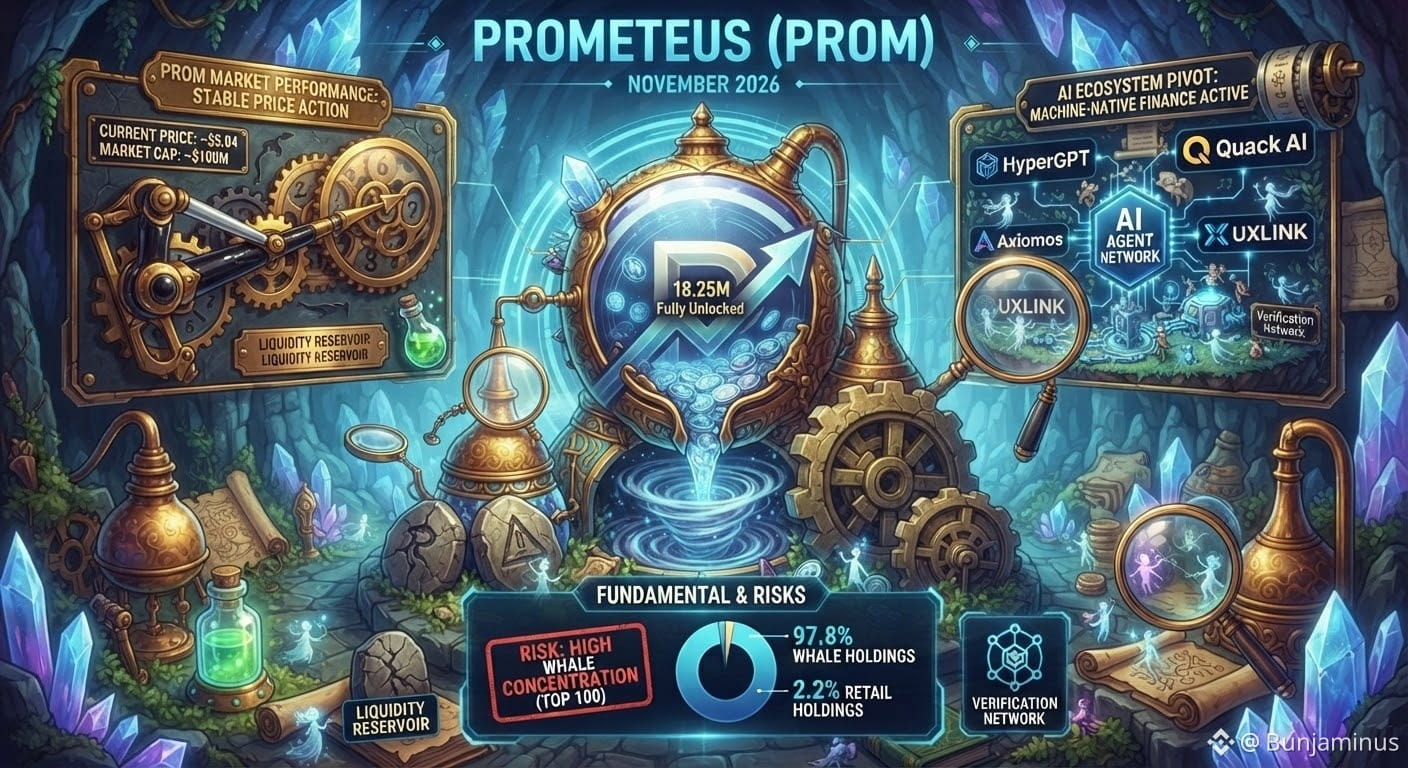
3. Structural risks and characteristics of derivatives
Whale Concentration: A high degree of centralization is observed — according to on-chain data, the top 100 wallets control around 97.8% of the token supply. This creates a persistent structural risk of sharp price fluctuations when large transactions occur in thin liquidity pools.
Futures market activity: Daily trading volume in derivatives and spot markets remains elevated, while open interest (Open Interest) is around $17.8 million. The funding rate remains slightly positive (~0.0215%), and recent movements have been accompanied by localized liquidations of traders' positions (predominantly longs).
Futures:$PROM
Spot:
{spot}(PROMUSDT)
3. Structural risks and characteristics of derivatives
Whale Concentration: A high degree of centralization is observed — according to on-chain data, the top 100 wallets control around 97.8% of the token supply. This creates a persistent structural risk of sharp price fluctuations when large transactions occur in thin liquidity pools.
Futures market activity: Daily trading volume in derivatives and spot markets remains elevated, while open interest (Open Interest) is around $17.8 million. The funding rate remains slightly positive (~0.0215%), and recent movements have been accompanied by localized liquidations of traders' positions (predominantly longs).
Futures:$PROM
Spot:
34
·
--
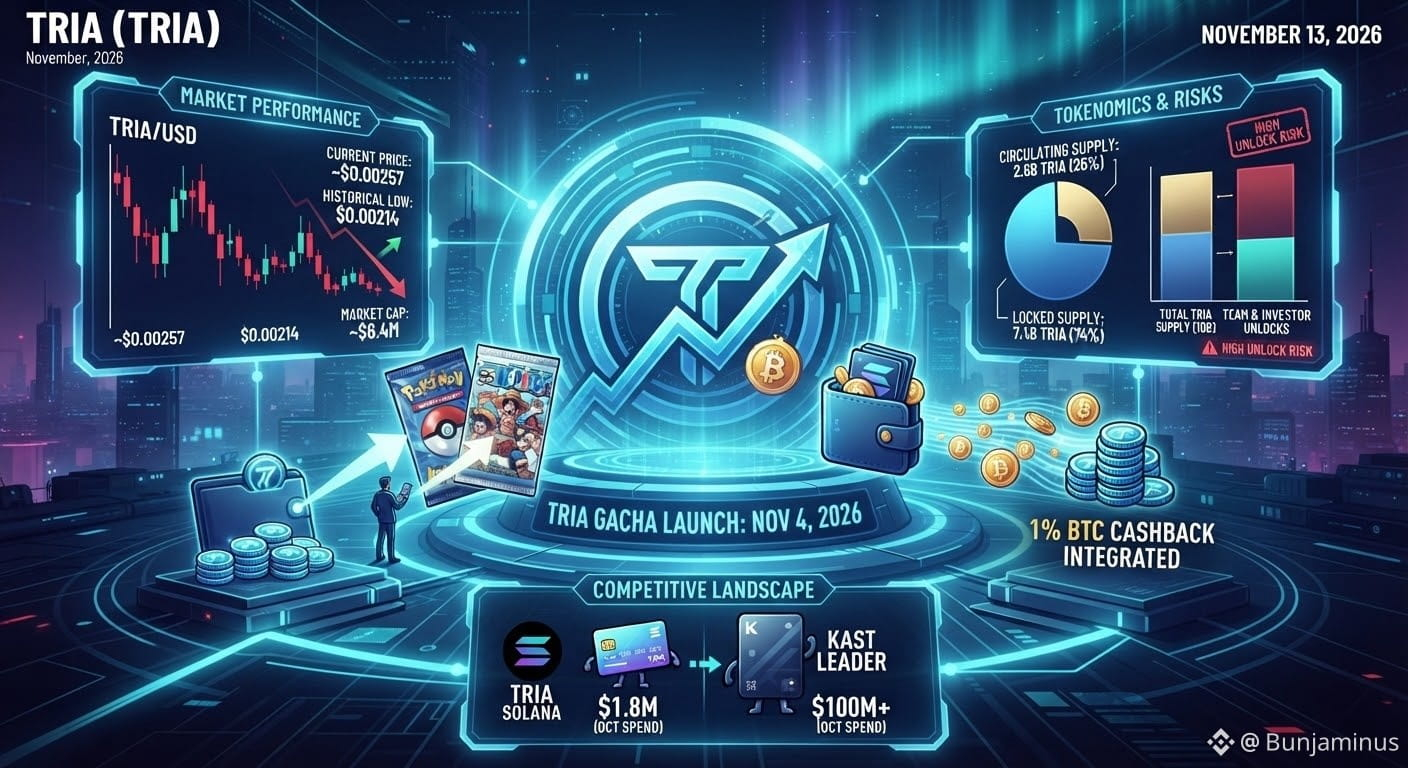
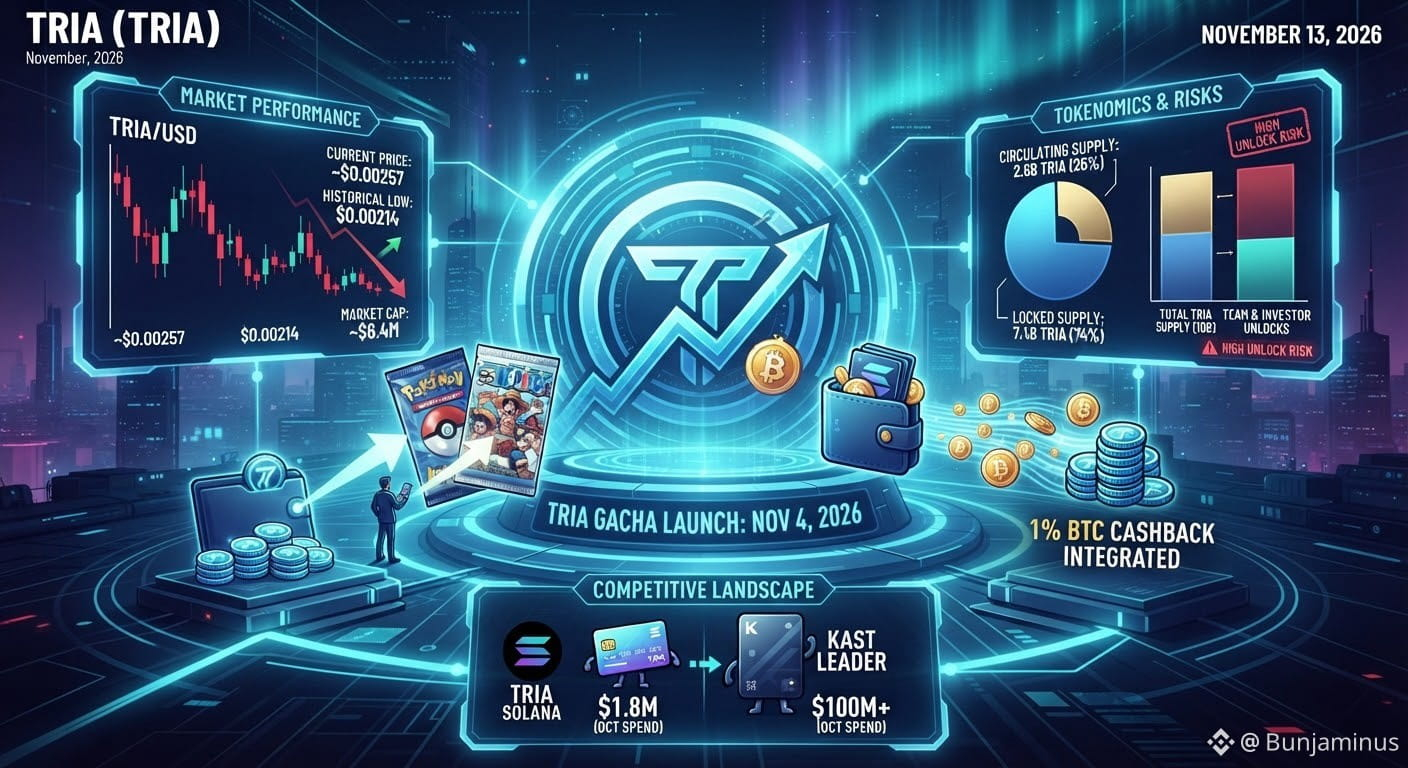
Key events and the latest market situation surrounding the crypto neobank Tria (TRIA token) as of November 13, 2026:
1. Launch of the Tria Gacha platform and Bitcoin rewards
New venture: On November 4, 2026, the project officially launched the Tria Gacha platform, bringing the culture of collectible cards onto the blockchain. Users can purchase digital card packs linked to real, certified Pokémon and One Piece collectible cards.
Cashback mechanics: As part of the launch, payments via the Tria Wallet were integrated, offering unlimited daily 1% cashback in Bitcoin and a monthly leaderboard for active participants
Futures:$TRIA
Spot:
{alpha}(560xb0b92de23baa85fb06208277e925ced53edab482)
Key events and the latest market situation surrounding the crypto neobank Tria (TRIA token) as of November 13, 2026:
1. Launch of the Tria Gacha platform and Bitcoin rewards
New venture: On November 4, 2026, the project officially launched the Tria Gacha platform, bringing the culture of collectible cards onto the blockchain. Users can purchase digital card packs linked to real, certified Pokémon and One Piece collectible cards.
Cashback mechanics: As part of the launch, payments via the Tria Wallet were integrated, offering unlimited daily 1% cashback in Bitcoin and a monthly leaderboard for active participants
Futures:$TRIA
Spot:
4
·
--
2. TRIA Token Market Conditions and Metrics
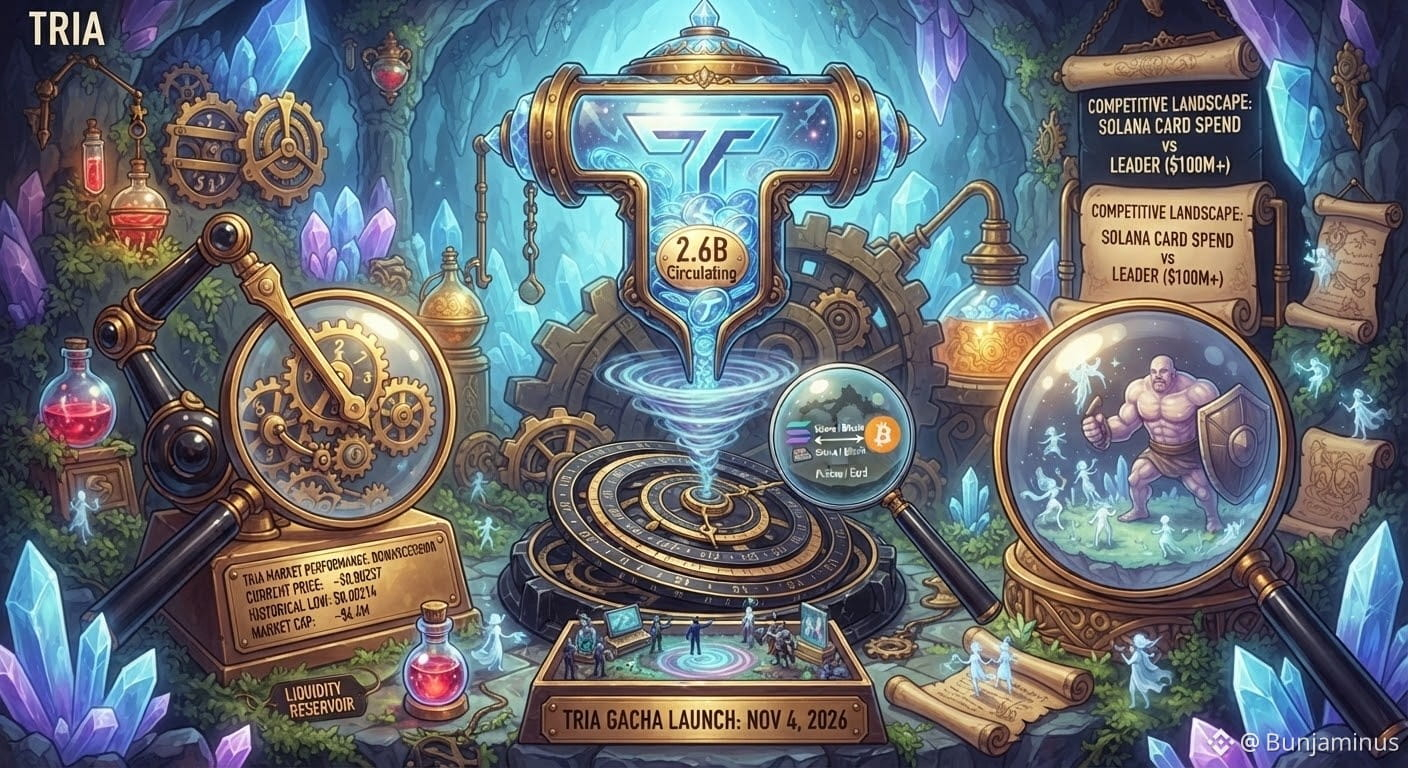
Prices: The TRIA token is trading around $0.00246–$0.00268, attempting to stabilize after recently setting a new all-time low ($0.00214–$0.00215), recorded on November 5, 2026. Since reaching its spring high (~$0.050–$0.051 in March–May 2026), the price has fallen by approximately 95%.
Market capitalization and volumes: Market capitalization is around $5.6–$7.2 million, with a fully diluted valuation (FDV) of approximately $25 million. Daily trading volume remains in the $1.4–$2.4 million range. Approximately 2.16–2.85 billion TRIA are in circulation (21.6–28.5% of the total supply of 10 billion coins).
Futures:$TRIA
Spot:
{alpha}(560xb0b92de23baa85fb06208277e925ced53edab482)
2. TRIA Token Market Conditions and Metrics
Prices: The TRIA token is trading around $0.00246–$0.00268, attempting to stabilize after recently setting a new all-time low ($0.00214–$0.00215), recorded on November 5, 2026. Since reaching its spring high (~$0.050–$0.051 in March–May 2026), the price has fallen by approximately 95%.
Market capitalization and volumes: Market capitalization is around $5.6–$7.2 million, with a fully diluted valuation (FDV) of approximately $25 million. Daily trading volume remains in the $1.4–$2.4 million range. Approximately 2.16–2.85 billion TRIA are in circulation (21.6–28.5% of the total supply of 10 billion coins).
Futures:$TRIA
Spot:
39
·
--
3. Sector competition and structural risks
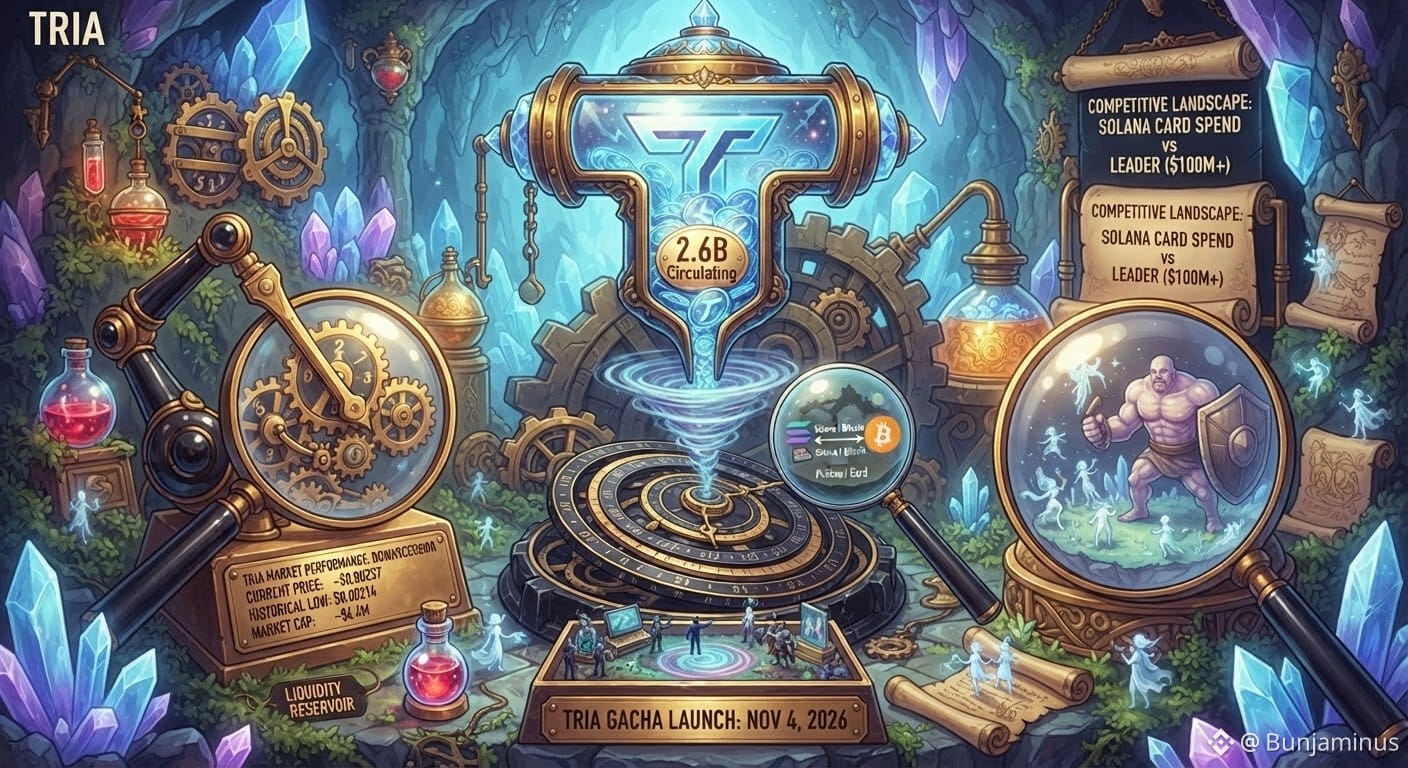
Unlock pressure: Analysts note that more than 70% of the total coin supply remains locked. The phased vesting of investors’ (13.96%) and team members’ (12%) allocations creates a long-term risk of selling pressure from an oversupply.
Competition and security: Despite expanding globally to more than 150 countries and having over 600,000 accounts, the project faces stiff competition in the crypto card niche (in October, spending volume on Tria cards built on Solana totaled $1.84 million, compared with over $100 million for segment leader KAST). In addition, investors are cautiously assessing third-party infrastructure risks following an incident in late August, when a vulnerability in an external smart contract affected 636 customers (the company fully reimbursed users for losses totaling around $432,000).
Futures:$TRIA
Spot:
{alpha}(560xb0b92de23baa85fb06208277e925ced53edab482)
3. Sector competition and structural risks
Unlock pressure: Analysts note that more than 70% of the total coin supply remains locked. The phased vesting of investors’ (13.96%) and team members’ (12%) allocations creates a long-term risk of selling pressure from an oversupply.
Competition and security: Despite expanding globally to more than 150 countries and having over 600,000 accounts, the project faces stiff competition in the crypto card niche (in October, spending volume on Tria cards built on Solana totaled $1.84 million, compared with over $100 million for segment leader KAST). In addition, investors are cautiously assessing third-party infrastructure risks following an incident in late August, when a vulnerability in an external smart contract affected 636 customers (the company fully reimbursed users for losses totaling around $432,000).
Futures:$TRIA
Spot:
2
·
--
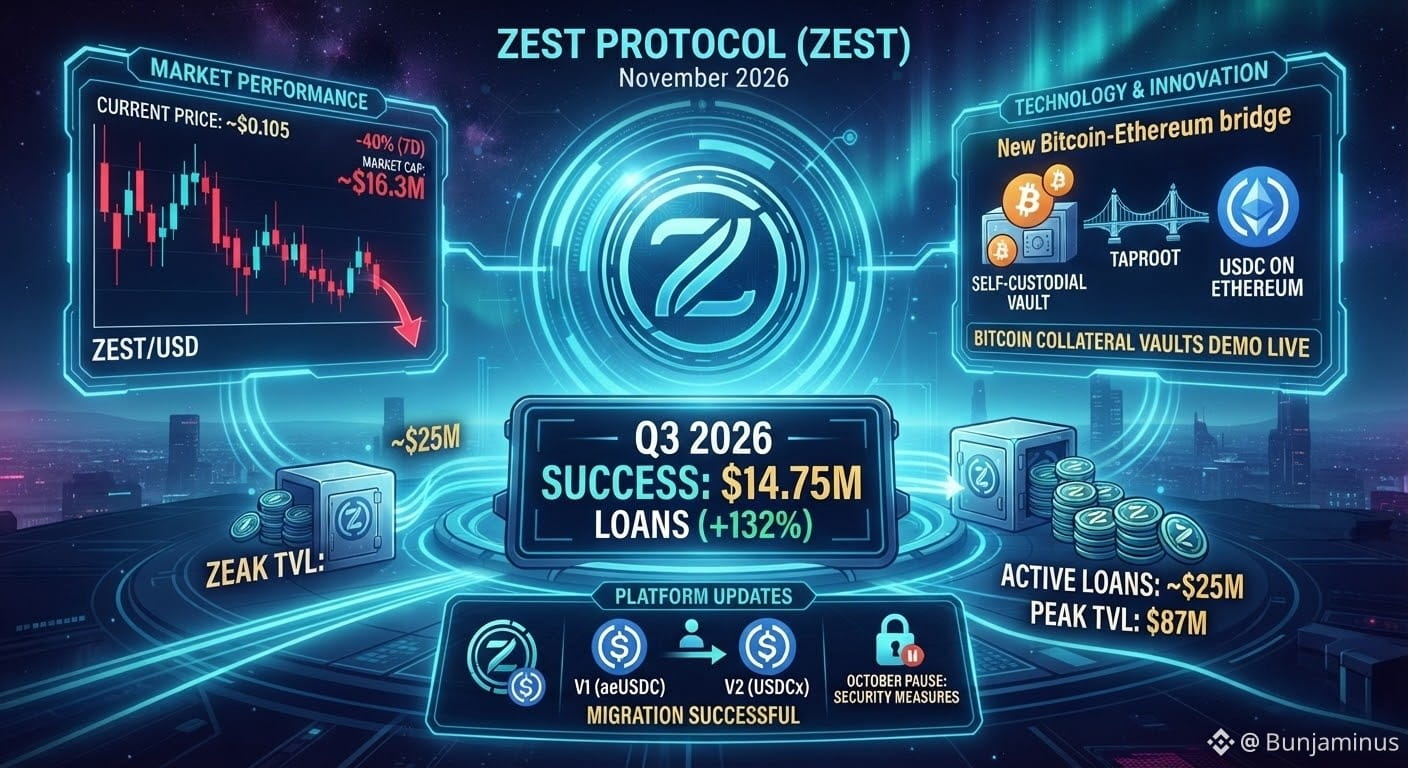
Key events and current market situation surrounding the Zest Protocol project (ZEST token) as of November 2026:
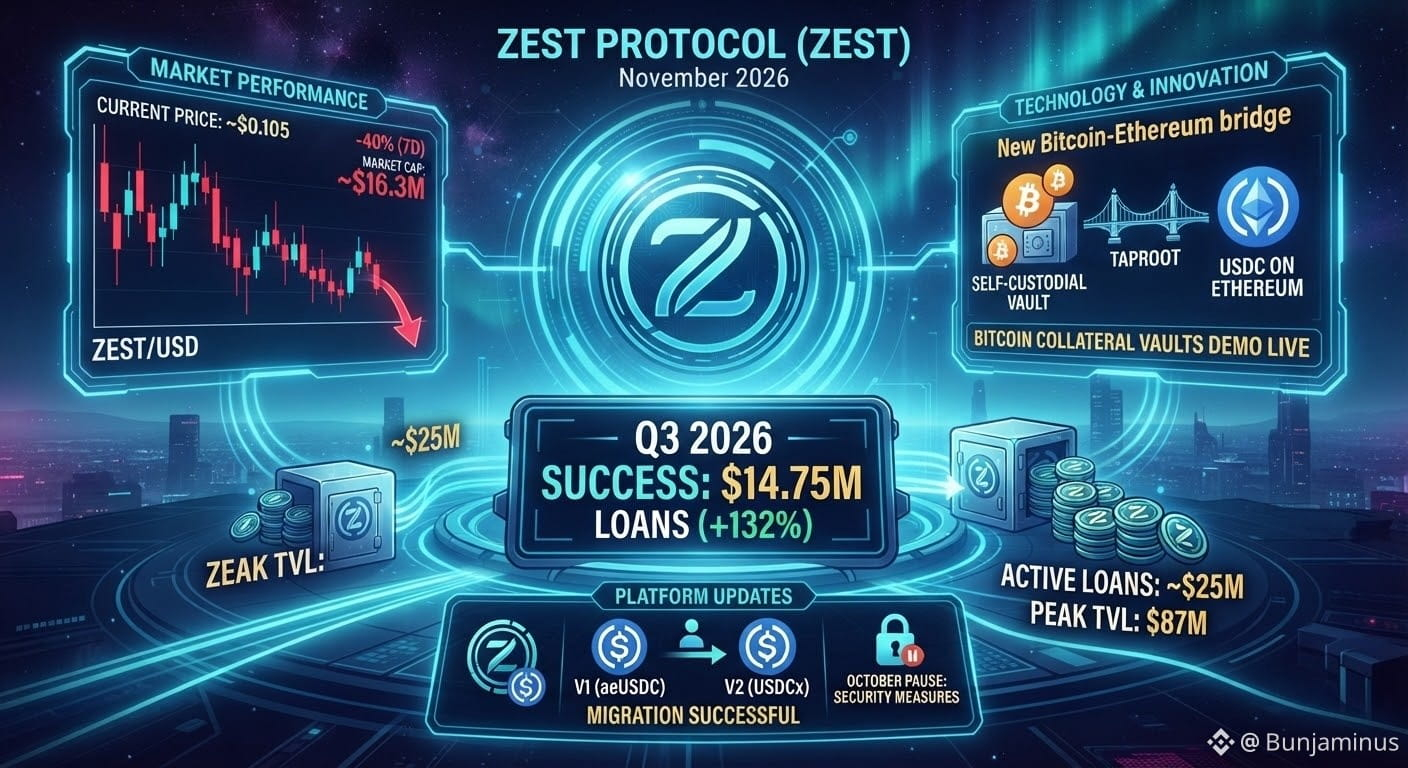
1. Operational successes and growth in metrics (Q3 2026)
Surge in lending volume: According to reports for the third quarter of 2026, the volume of active loans in the Stacks V2 market increased by 132%, reaching $14.75 million by the end of the quarter.
Peak values and current TVL: In October, the project's metrics showed several-fold growth—the volume of loans exceeded $40 million, while total value locked (TVL) reached $87.28 million. By early November, amid a market correction, active loans had settled at around $25 million, and TVL stood at approximately $46.6 million. The protocol's cumulative fees surpassed $540,000.
Futures:$ZEST
Spot:
{alpha}(560x5506599c722389a60580b5213ea1da60d64754a1)
Key events and current market situation surrounding the Zest Protocol project (ZEST token) as of November 2026:
1. Operational successes and growth in metrics (Q3 2026)
Surge in lending volume: According to reports for the third quarter of 2026, the volume of active loans in the Stacks V2 market increased by 132%, reaching $14.75 million by the end of the quarter.
Peak values and current TVL: In October, the project's metrics showed several-fold growth—the volume of loans exceeded $40 million, while total value locked (TVL) reached $87.28 million. By early November, amid a market correction, active loans had settled at around $25 million, and TVL stood at approximately $46.6 million. The protocol's cumulative fees surpassed $540,000.
Futures:$ZEST
Spot:
45
·
--
2. Launch of Bitcoin Vaults on L1 and Technical Updates
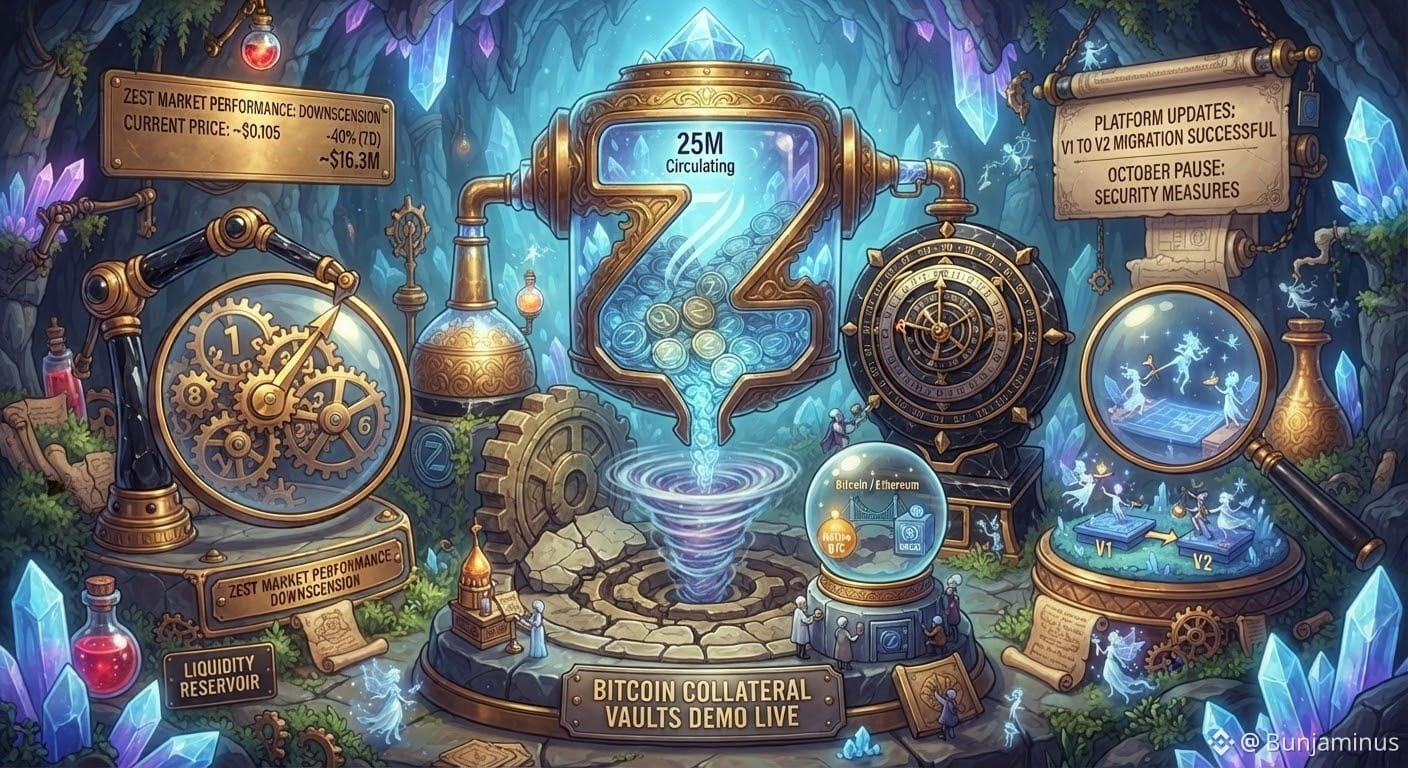
Testing Bitcoin Collateral Vaults: The project launched a mainnet demo of its Bitcoin Collateral Vaults, which allow users to borrow USDC on Ethereum against native Bitcoin (BTC) held in Taproot-based self-custodial vaults, without the need to wrap or bridge assets.
Migration and Security: In October–early November, the protocol successfully completed the technical migration of users from the V1 market (aeUSDC) to V2 (USDCx) following the shutdown of the Allbridge bridge. In late October, the team also temporarily suspended the issuance of new loans amid external market incidents to protect users’ funds.
Futures:$ZEST
Spot:
{alpha}(560x5506599c722389a60580b5213ea1da60d64754a1)
2. Launch of Bitcoin Vaults on L1 and Technical Updates
Testing Bitcoin Collateral Vaults: The project launched a mainnet demo of its Bitcoin Collateral Vaults, which allow users to borrow USDC on Ethereum against native Bitcoin (BTC) held in Taproot-based self-custodial vaults, without the need to wrap or bridge assets.
Migration and Security: In October–early November, the protocol successfully completed the technical migration of users from the V1 market (aeUSDC) to V2 (USDCx) following the shutdown of the Allbridge bridge. In late October, the team also temporarily suspended the issuance of new loans amid external market incidents to protect users’ funds.
Futures:$ZEST
Spot:
68
·
--
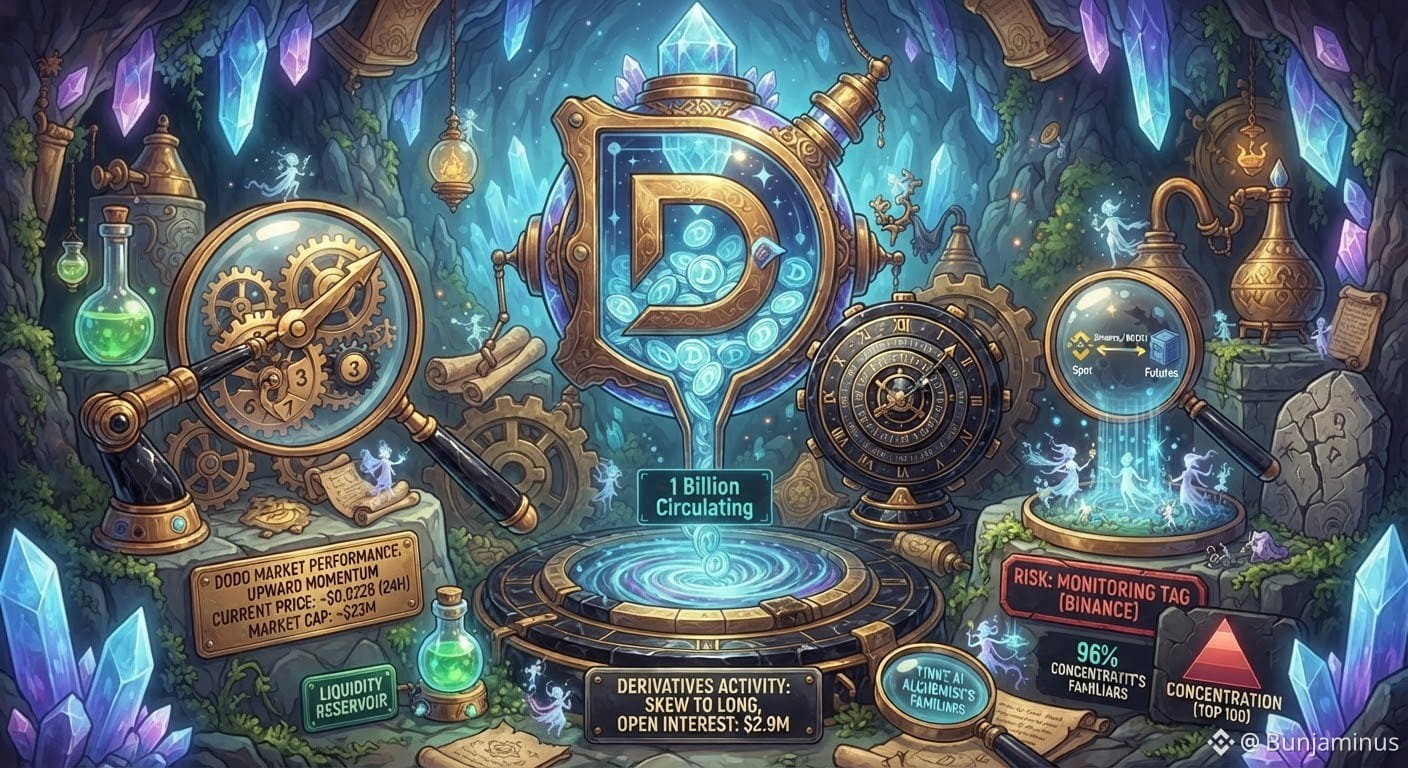
3. Fundamental Background and Key Risks
Development of AI Products and Infrastructure: The team is focused on deploying artificial intelligence-powered tools—in particular, developing an AI agent for copy trading and strategies on Telegram (EDGE AI), the ChainPilot tool for on-chain analytics, and BirdLayer’s omnichain liquidity infrastructure. In the summer, the project also joined the ENI Super Node corporate Web3 initiative.
Exchange Oversight and Coin Concentration: Analysts identify two main structural risks for the asset:
Being placed under Binance’s Monitoring Tag (assigned in May 2026), which makes institutional traders more cautious due to the risk of delisting if liquidity declines.
High supply concentration: the top 100 wallets hold more than 96% of the total coin supply, making the price sensitive to the actions of large holders given the relatively small market capitalization.
Futures:$DODOX
Spot:
{spot}(DODOUSDT)
3. Fundamental Background and Key Risks
Development of AI Products and Infrastructure: The team is focused on deploying artificial intelligence-powered tools—in particular, developing an AI agent for copy trading and strategies on Telegram (EDGE AI), the ChainPilot tool for on-chain analytics, and BirdLayer’s omnichain liquidity infrastructure. In the summer, the project also joined the ENI Super Node corporate Web3 initiative.
Exchange Oversight and Coin Concentration: Analysts identify two main structural risks for the asset:
Being placed under Binance’s Monitoring Tag (assigned in May 2026), which makes institutional traders more cautious due to the risk of delisting if liquidity declines.
High supply concentration: the top 100 wallets hold more than 96% of the total coin supply, making the price sensitive to the actions of large holders given the relatively small market capitalization.
Futures:$DODOX
Spot:
9
·
--
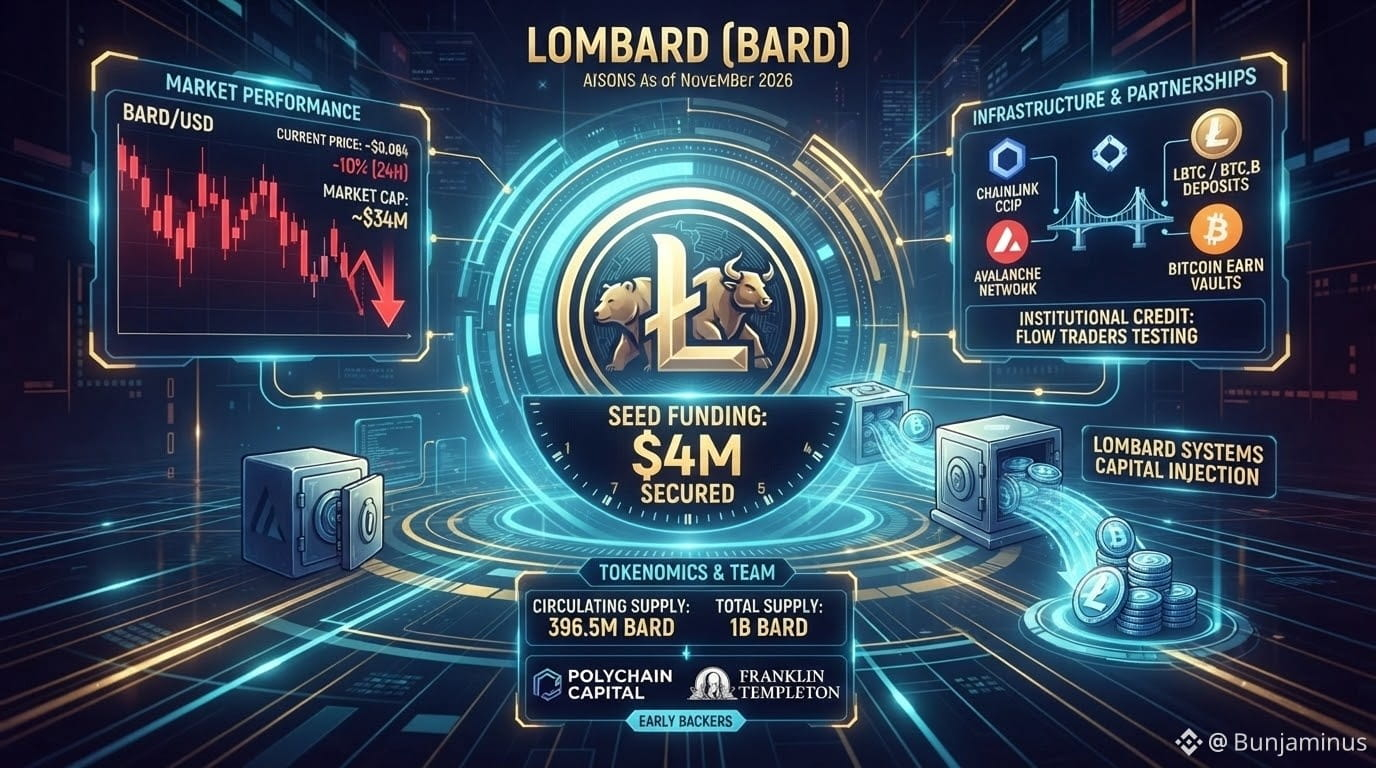
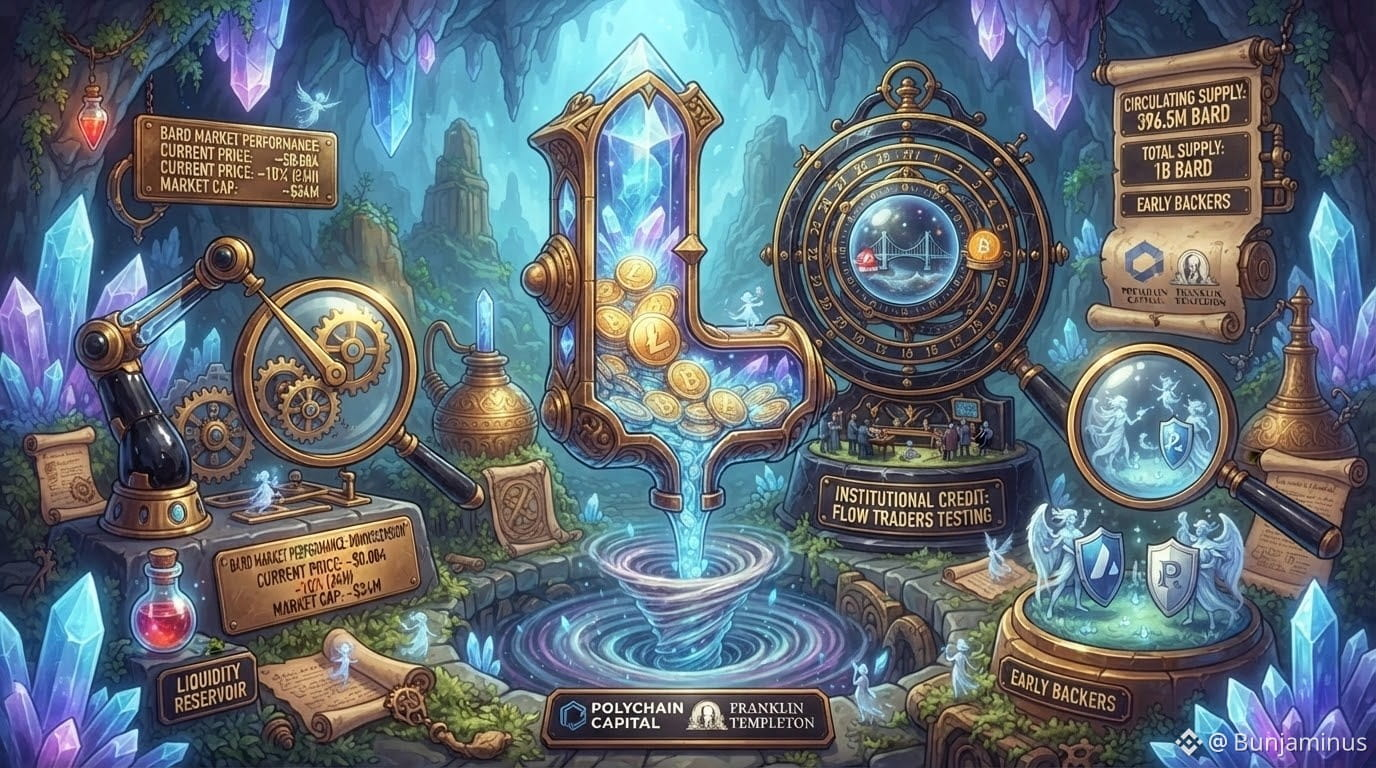
Key events and the current situation surrounding the Lombard project (ticker: BARD) as of November 2026:
1. Funding round (Pre-Seed / Seed)
Capital raise: Lombard Systems officially announced that it had raised $4 million in a funding round (pre-seed and seed) aimed at simplifying lending against tokenized assets.
Futures:$BARD
Spot:
{spot}(BARDUSDT)
Key events and the current situation surrounding the Lombard project (ticker: BARD) as of November 2026:
1. Funding round (Pre-Seed / Seed)
Capital raise: Lombard Systems officially announced that it had raised $4 million in a funding round (pre-seed and seed) aimed at simplifying lending against tokenized assets.
Futures:$BARD
Spot:
1. Funding round (Pre-Seed / Seed)
Capital raise: Lombard Systems officially announced that it had raised $4 million in a funding round (pre-seed and seed) aimed at simplifying lending against tokenized assets.
Futures:$BARD
Spot:
10
Log in to explore more content
Join global crypto users on Binance Square
⚡️ Get latest and useful information about crypto.
💬 Trusted by the world’s largest crypto exchange.
👍 Discover real insights from verified creators.
Email / Phone number
Trending Topics
USPPIMissMayEaseBTCPressure
999 views
96 Discussing
US PPI Rises 6.5% a Year in October, Slightly Below 6.6% Forecast
Binance News
·9 Likes
·4.5k views
WhatWillDriveCryptoandStocks’NextRebound?
83,469 views
1,138 Discussing
BitcoinBreaksBelow200WeekMovingAverage
8,197 views
181 Discussing