
红豆加冰
1.4k Posts

红豆加冰
Report
Block User
X:红豆加冰(@BCAD312_)|公众号: 加密领袖投研

BNB Holder
Occasional Trader
3.5 Years
506 Following
2.6K+ Followers
2.2K+ Liked
Posts
All
Quotes
Videos
Live
PINNED
·
--

Article
2026 AI 'Lobster Farming' Ultimate Guide: A Complete Strategy from Zero Deployment to Monthly Income of 140,000Refuse to be Lao Deng, turning your computer into a 24-hour money printing machine
Recently, a tough guy in the crypto circle has become famous, with 40 servers lined up, looking like a mining farm, but in reality, there isn't a single mining machine—it's all lobster robots running quantitative arbitrage.
Sharp-eyed people uncovered the Polymarket account lit up on the screen: gabagool22. Data shows that this account has a total profit of $868,000, with 28,620 trades, almost exclusively betting on BTC's 15-minute price fluctuations, earning a stable monthly income of $140,000.
This is the 'lobster farming' that OpenClaw has brought to the forefront: transforming complex automated arbitrage into a robotic business that ordinary people can also set up.
2026 AI 'Lobster Farming' Ultimate Guide: A Complete Strategy from Zero Deployment to Monthly Income of 140,000
Refuse to be Lao Deng, turning your computer into a 24-hour money printing machine
Recently, a tough guy in the crypto circle has become famous, with 40 servers lined up, looking like a mining farm, but in reality, there isn't a single mining machine—it's all lobster robots running quantitative arbitrage.
Sharp-eyed people uncovered the Polymarket account lit up on the screen: gabagool22. Data shows that this account has a total profit of $868,000, with 28,620 trades, almost exclusively betting on BTC's 15-minute price fluctuations, earning a stable monthly income of $140,000.
This is the 'lobster farming' that OpenClaw has brought to the forefront: transforming complex automated arbitrage into a robotic business that ordinary people can also set up.
Recently, a tough guy in the crypto circle has become famous, with 40 servers lined up, looking like a mining farm, but in reality, there isn't a single mining machine—it's all lobster robots running quantitative arbitrage.
Sharp-eyed people uncovered the Polymarket account lit up on the screen: gabagool22. Data shows that this account has a total profit of $868,000, with 28,620 trades, almost exclusively betting on BTC's 15-minute price fluctuations, earning a stable monthly income of $140,000.
This is the 'lobster farming' that OpenClaw has brought to the forefront: transforming complex automated arbitrage into a robotic business that ordinary people can also set up.
2
17
5.4k
·
--
Article
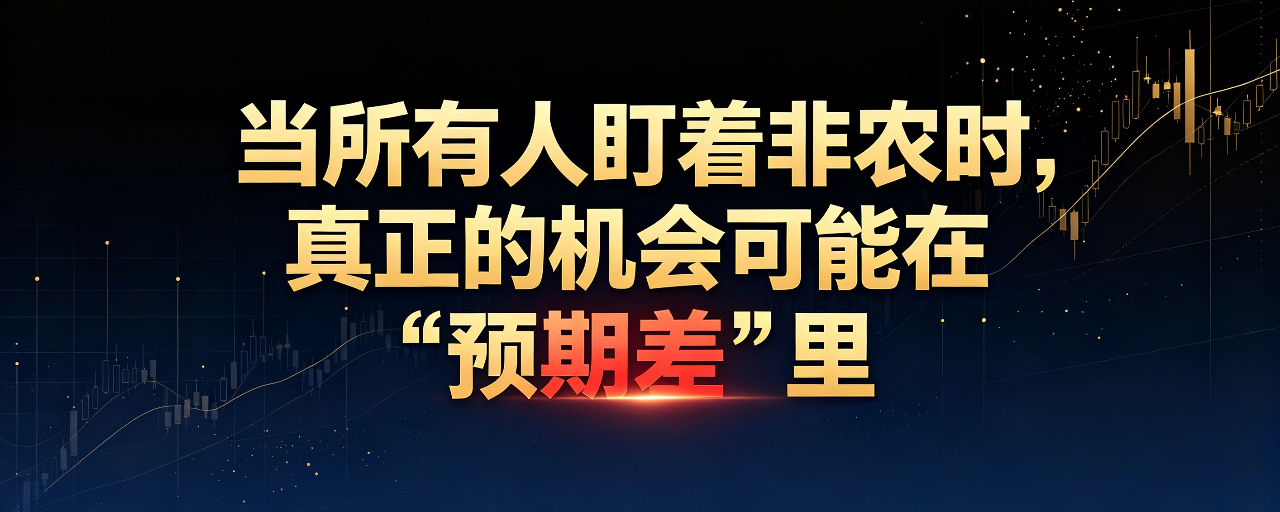
Everyone is watching NFP, but you might be betting on the wrong directionAfter Warsh’s remarks, the odds of a rate hike in September jumped from 35% to 65%. Bitcoin plunged sharply from $81,000, at one point falling below $76,000. Everyone is waiting for Friday’s Non-Farm Payrolls (NFP). But maybe the real question isn’t “what will NFP come in at,” but rather—“how much has the market already priced in?”
I. A speech that changed the entire market’s game rules
At 10:00 p.m. Beijing time on August 28, Federal Reserve Chair Kevin Warsh delivered his keynote address titled (In Our Time) at the Jackson Hole Global Central Bank Annual Meeting. This was his first appearance at Jackson Hole since taking charge of the Fed this past May.
Everyone is watching NFP, but you might be betting on the wrong direction
After Warsh’s remarks, the odds of a rate hike in September jumped from 35% to 65%. Bitcoin plunged sharply from $81,000, at one point falling below $76,000. Everyone is waiting for Friday’s Non-Farm Payrolls (NFP). But maybe the real question isn’t “what will NFP come in at,” but rather—“how much has the market already priced in?”
I. A speech that changed the entire market’s game rules
At 10:00 p.m. Beijing time on August 28, Federal Reserve Chair Kevin Warsh delivered his keynote address titled (In Our Time) at the Jackson Hole Global Central Bank Annual Meeting. This was his first appearance at Jackson Hole since taking charge of the Fed this past May.
I. A speech that changed the entire market’s game rules
At 10:00 p.m. Beijing time on August 28, Federal Reserve Chair Kevin Warsh delivered his keynote address titled (In Our Time) at the Jackson Hole Global Central Bank Annual Meeting. This was his first appearance at Jackson Hole since taking charge of the Fed this past May.
1
493
·
--
Article
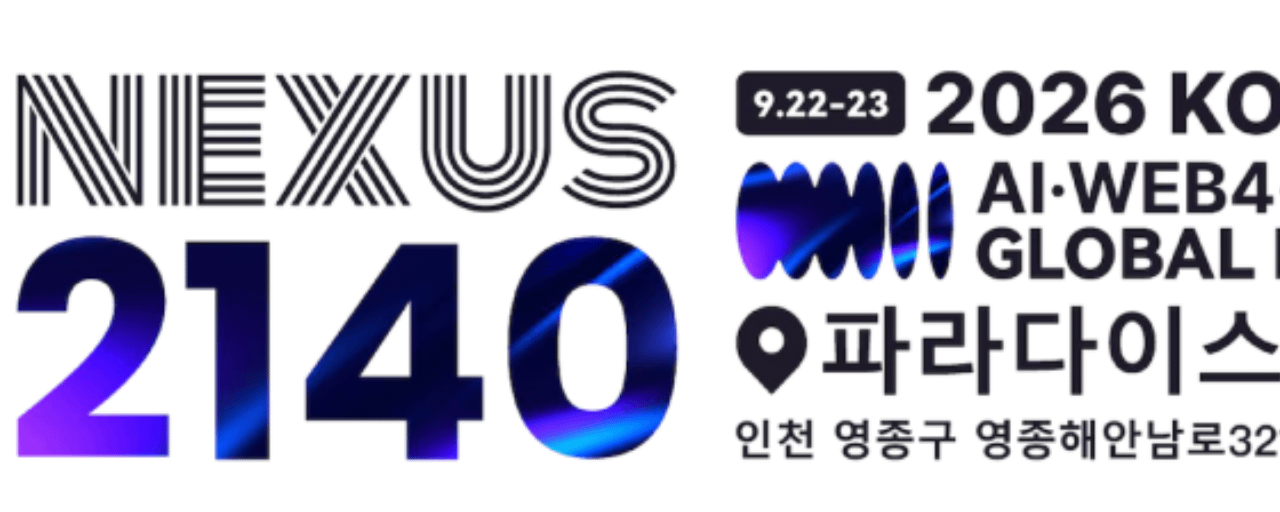
Position for the Korean Market: Unlock the Strategic Value of the NEXUS 2140 AI·WEB4·RWA Global Expo— September 22–23, 2026, Paradise City, Incheon: an industry connection event you can’t miss
If you are planning to enter the Korean or Northeast Asian market, make sure to set aside time on September 22–23, 2026. On these days, NEXUS 2140 AI·WEB4·RWA GLOBAL EXPO will be held grandly at Paradise City, Incheon, South Korea. This is not an ordinary industry trade show—it is an efficient platform tailored for cross-border industrial cooperation. It brings together global resources, the local ecosystem, and official endorsement, helping attendees break through both the awareness and relationship hurdles in the shortest possible time.
Position for the Korean Market: Unlock the Strategic Value of the NEXUS 2140 AI·WEB4·RWA Global Expo
— September 22–23, 2026, Paradise City, Incheon: an industry connection event you can’t miss
If you are planning to enter the Korean or Northeast Asian market, make sure to set aside time on September 22–23, 2026. On these days, NEXUS 2140 AI·WEB4·RWA GLOBAL EXPO will be held grandly at Paradise City, Incheon, South Korea. This is not an ordinary industry trade show—it is an efficient platform tailored for cross-border industrial cooperation. It brings together global resources, the local ecosystem, and official endorsement, helping attendees break through both the awareness and relationship hurdles in the shortest possible time.
If you are planning to enter the Korean or Northeast Asian market, make sure to set aside time on September 22–23, 2026. On these days, NEXUS 2140 AI·WEB4·RWA GLOBAL EXPO will be held grandly at Paradise City, Incheon, South Korea. This is not an ordinary industry trade show—it is an efficient platform tailored for cross-border industrial cooperation. It brings together global resources, the local ecosystem, and official endorsement, helping attendees break through both the awareness and relationship hurdles in the shortest possible time.
23
·
--
Article
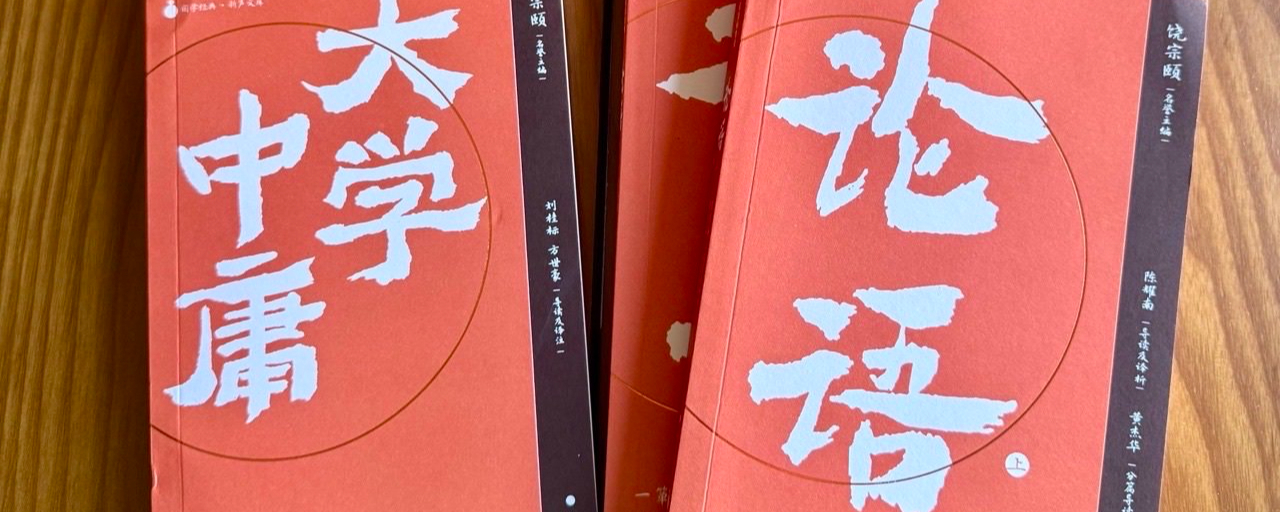
Read a lot: when you read more books, you become better. Recommend a book you like more—(The Analects).Today is September 1st. I’d like to recommend (The Analects) to everyone.
If you ask me: there’s a book I buy and put by my bedside, then after a while I flip through a few pages—every time I read it, I gain something new—then I would recommend (The Analects) without hesitation.
To my embarrassment, my first real encounter with (The Analects) wasn’t something dignified.
When I was little, there was a rough decorative picture hanging on the wall in our home. It said, "Zengzi said: I examine myself three times a day..." At the time, I just glanced at it and walked on, thinking: doesn’t someone who reflects on themselves all day get tired of living?
In middle school textbooks, a few selections from (The Analects) are included. I also remember there are chapters that are hard to understand, like (Ji Shi Will Attack Zhu Yu). As a rebellious kid, all I thought was that Confucius really loved to scold people—"Rotting wood cannot be carved.""Loam walls cannot be plastered." I kept flipping back and forth among the same few lines. That’s how I passed through the initial education from (The Analects) with zero reverence, laughing and joking.
Read a lot: when you read more books, you become better. Recommend a book you like more—(The Analects).
Today is September 1st. I’d like to recommend (The Analects) to everyone.
If you ask me: there’s a book I buy and put by my bedside, then after a while I flip through a few pages—every time I read it, I gain something new—then I would recommend (The Analects) without hesitation.
To my embarrassment, my first real encounter with (The Analects) wasn’t something dignified.
When I was little, there was a rough decorative picture hanging on the wall in our home. It said, "Zengzi said: I examine myself three times a day..." At the time, I just glanced at it and walked on, thinking: doesn’t someone who reflects on themselves all day get tired of living?
In middle school textbooks, a few selections from (The Analects) are included. I also remember there are chapters that are hard to understand, like (Ji Shi Will Attack Zhu Yu). As a rebellious kid, all I thought was that Confucius really loved to scold people—"Rotting wood cannot be carved.""Loam walls cannot be plastered." I kept flipping back and forth among the same few lines. That’s how I passed through the initial education from (The Analects) with zero reverence, laughing and joking.
If you ask me: there’s a book I buy and put by my bedside, then after a while I flip through a few pages—every time I read it, I gain something new—then I would recommend (The Analects) without hesitation.
To my embarrassment, my first real encounter with (The Analects) wasn’t something dignified.
When I was little, there was a rough decorative picture hanging on the wall in our home. It said, "Zengzi said: I examine myself three times a day..." At the time, I just glanced at it and walked on, thinking: doesn’t someone who reflects on themselves all day get tired of living?
In middle school textbooks, a few selections from (The Analects) are included. I also remember there are chapters that are hard to understand, like (Ji Shi Will Attack Zhu Yu). As a rebellious kid, all I thought was that Confucius really loved to scold people—"Rotting wood cannot be carved.""Loam walls cannot be plastered." I kept flipping back and forth among the same few lines. That’s how I passed through the initial education from (The Analects) with zero reverence, laughing and joking.
1
239
·
--
Article
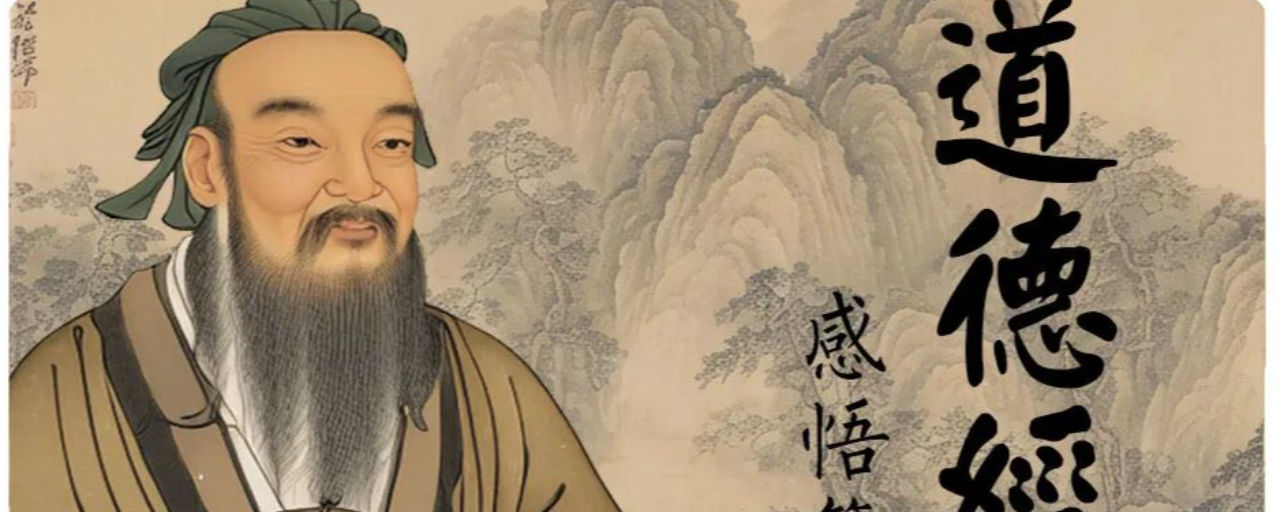
Read a lot: the more you read, the better you’ll become. I recommend a book you’ll probably like.Today is September 1st. I’d like to talk with everyone about a book that I keep reading—one that stays fresh the more you read it: the (Tao Te Ching).
To be honest, it was my first time opening the (Tao Te Ching) right after I graduated from college. I was young and headstrong then, thinking that five thousand words could somehow lay out big truths. I flipped through a few pages and was met with sentences like "The Tao that can be told is not the eternal Tao" and "In the nameless, begins heaven and earth." It was all so cloudy and foggy. I decided it wasn’t for me and closed the book.
What truly made me pick up this book again was years later, after I’d been through a particularly trying stretch of days. Work was going badly, relationships were failing me, and it felt like I was trapped inside a transparent dome—I couldn’t break free no matter what I tried. A friend came to see me. Just before leaving, he took a slim book out of his bag, set it on the table, and said, "When you’re bothered, flip through it—if only read a single sentence, that’s enough."
Read a lot: the more you read, the better you’ll become. I recommend a book you’ll probably like.
Today is September 1st. I’d like to talk with everyone about a book that I keep reading—one that stays fresh the more you read it: the (Tao Te Ching).
To be honest, it was my first time opening the (Tao Te Ching) right after I graduated from college. I was young and headstrong then, thinking that five thousand words could somehow lay out big truths. I flipped through a few pages and was met with sentences like "The Tao that can be told is not the eternal Tao" and "In the nameless, begins heaven and earth." It was all so cloudy and foggy. I decided it wasn’t for me and closed the book.
What truly made me pick up this book again was years later, after I’d been through a particularly trying stretch of days. Work was going badly, relationships were failing me, and it felt like I was trapped inside a transparent dome—I couldn’t break free no matter what I tried. A friend came to see me. Just before leaving, he took a slim book out of his bag, set it on the table, and said, "When you’re bothered, flip through it—if only read a single sentence, that’s enough."
To be honest, it was my first time opening the (Tao Te Ching) right after I graduated from college. I was young and headstrong then, thinking that five thousand words could somehow lay out big truths. I flipped through a few pages and was met with sentences like "The Tao that can be told is not the eternal Tao" and "In the nameless, begins heaven and earth." It was all so cloudy and foggy. I decided it wasn’t for me and closed the book.
What truly made me pick up this book again was years later, after I’d been through a particularly trying stretch of days. Work was going badly, relationships were failing me, and it felt like I was trapped inside a transparent dome—I couldn’t break free no matter what I tried. A friend came to see me. Just before leaving, he took a slim book out of his bag, set it on the table, and said, "When you’re bothered, flip through it—if only read a single sentence, that’s enough."
1
1
2
715
·
--
Article
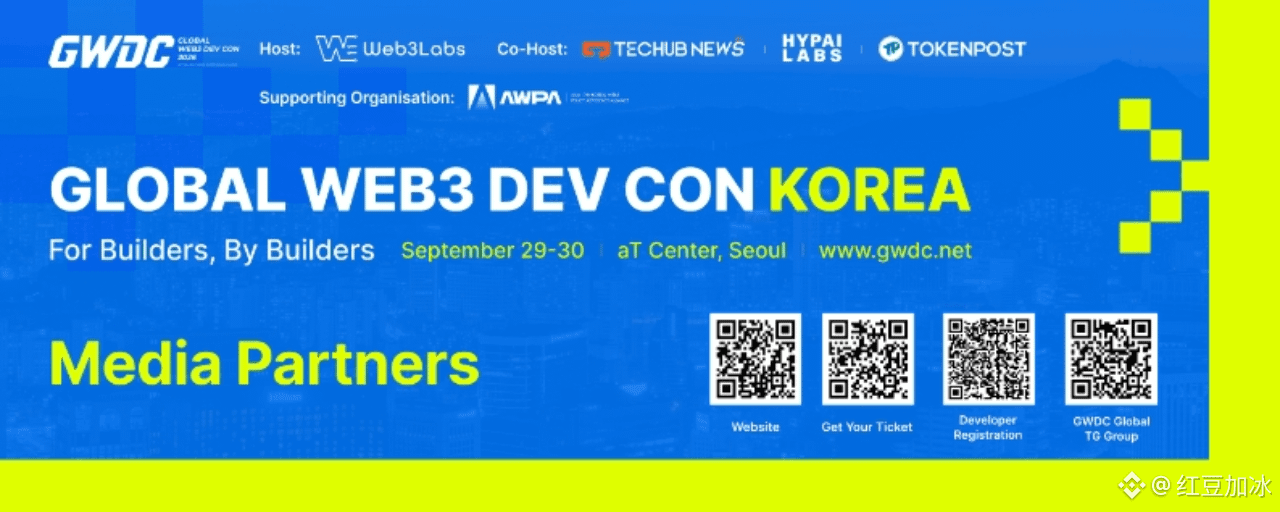
GWDC 2026 Korea Welcomes Five More Official Media Partners as Global Hype for Web3×AI Continues to RiseBy / Techub News
August 28, 2026, Seoul—With just one month remaining until the opening of GWDC 2026 Korea, the organizers today officially announced the roster of the fifth cohort of official media partners. Five leading industry media outlets—CoinNess, Bitpush, Nexblock, DeFam, and Web3 Vision—have joined in full force, further strengthening the event’s global communication lineup.
After this expansion, GWDC’s media network has deeply penetrated mainstream Web3 communities in Korea, Japan, the Chinese-speaking region, and Europe/USA, forming a cross-regional, multi-language three-dimensional communication matrix. This not only brings the conference broader industry exposure, but also effectively connects developers, entrepreneurial projects, investment institutions, and the broader industry ecosystem—so that cutting-edge voices at the intersection of Web3 and AI can reach more key stakeholders.
GWDC 2026 Korea Welcomes Five More Official Media Partners as Global Hype for Web3×AI Continues to Rise
By / Techub News
August 28, 2026, Seoul—With just one month remaining until the opening of GWDC 2026 Korea, the organizers today officially announced the roster of the fifth cohort of official media partners. Five leading industry media outlets—CoinNess, Bitpush, Nexblock, DeFam, and Web3 Vision—have joined in full force, further strengthening the event’s global communication lineup.
After this expansion, GWDC’s media network has deeply penetrated mainstream Web3 communities in Korea, Japan, the Chinese-speaking region, and Europe/USA, forming a cross-regional, multi-language three-dimensional communication matrix. This not only brings the conference broader industry exposure, but also effectively connects developers, entrepreneurial projects, investment institutions, and the broader industry ecosystem—so that cutting-edge voices at the intersection of Web3 and AI can reach more key stakeholders.
August 28, 2026, Seoul—With just one month remaining until the opening of GWDC 2026 Korea, the organizers today officially announced the roster of the fifth cohort of official media partners. Five leading industry media outlets—CoinNess, Bitpush, Nexblock, DeFam, and Web3 Vision—have joined in full force, further strengthening the event’s global communication lineup.
After this expansion, GWDC’s media network has deeply penetrated mainstream Web3 communities in Korea, Japan, the Chinese-speaking region, and Europe/USA, forming a cross-regional, multi-language three-dimensional communication matrix. This not only brings the conference broader industry exposure, but also effectively connects developers, entrepreneurial projects, investment institutions, and the broader industry ecosystem—so that cutting-edge voices at the intersection of Web3 and AI can reach more key stakeholders.
355
·
--
Article
When the discussion about AI and Web4 takes place beneath Damien Hirst’s golden PegasusA trade show’s destination is never just a random point on the map; it’s a carefully chosen fit for the dialogue context.
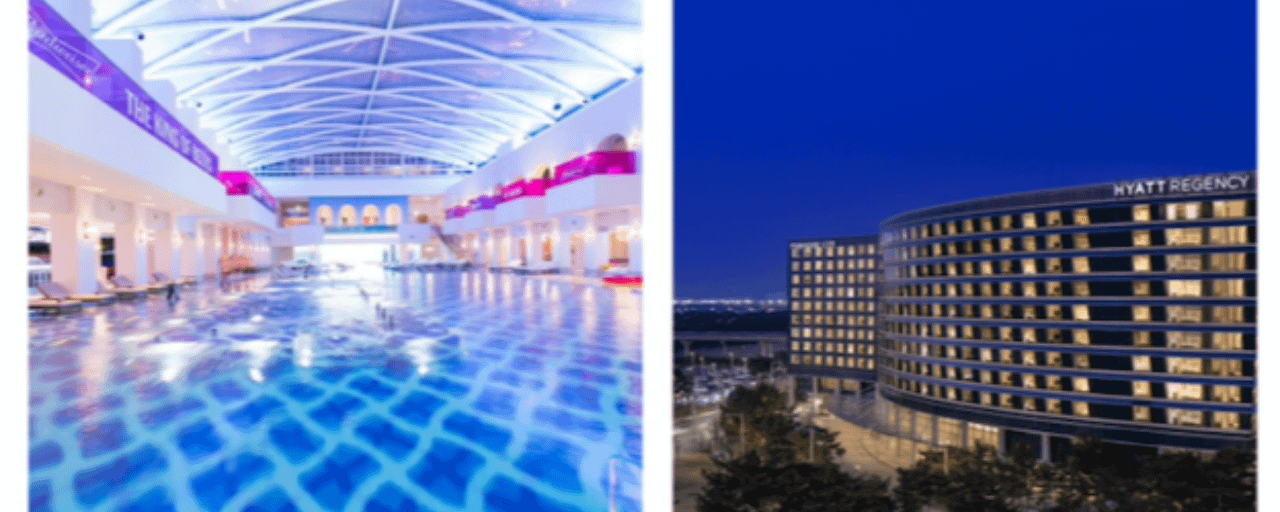
From September 22 to 23, 2026, the NEXUS 2140 AI·WEB4·RWA GLOBAL EXPO will be held at Paradise City in Incheon, South Korea—this choice alone is worth discussing separately.
Northeast Asia’s first “arts and entertainment” integrated complex
The Paradise City, Korea’s first and also the earliest opened integrated resort in Northeast Asia, was developed by local tourism giant Paradise Group in partnership with Japan’s Sega Sammy Holdings. With an investment of 1.3 trillion won, the companies built a micro-city on 330,000 square meters of land. Since it opened in 2017, it has long ceased to be just a hotel or an amusement park—it has become an self-contained ecosystem space.
When the discussion about AI and Web4 takes place beneath Damien Hirst’s golden Pegasus
A trade show’s destination is never just a random point on the map; it’s a carefully chosen fit for the dialogue context.
From September 22 to 23, 2026, the NEXUS 2140 AI·WEB4·RWA GLOBAL EXPO will be held at Paradise City in Incheon, South Korea—this choice alone is worth discussing separately.
Northeast Asia’s first “arts and entertainment” integrated complex
The Paradise City, Korea’s first and also the earliest opened integrated resort in Northeast Asia, was developed by local tourism giant Paradise Group in partnership with Japan’s Sega Sammy Holdings. With an investment of 1.3 trillion won, the companies built a micro-city on 330,000 square meters of land. Since it opened in 2017, it has long ceased to be just a hotel or an amusement park—it has become an self-contained ecosystem space.
From September 22 to 23, 2026, the NEXUS 2140 AI·WEB4·RWA GLOBAL EXPO will be held at Paradise City in Incheon, South Korea—this choice alone is worth discussing separately.
Northeast Asia’s first “arts and entertainment” integrated complex
The Paradise City, Korea’s first and also the earliest opened integrated resort in Northeast Asia, was developed by local tourism giant Paradise Group in partnership with Japan’s Sega Sammy Holdings. With an investment of 1.3 trillion won, the companies built a micro-city on 330,000 square meters of land. Since it opened in 2017, it has long ceased to be just a hotel or an amusement park—it has become an self-contained ecosystem space.
565
·
--
Article
From KINTEX to 百乐达斯城: After a year, why did the NEXUS 2140 Korea event upgrade?Open the photo album of the KINTEX exhibition hall in June 2025, and several on-site photos to this day leave a lasting impression.
In front of the main stage, the crowd density far exceeded that of a typical industry expo—standing attendees, people sitting on the floor, and those on their tiptoes holding up their phones to record, filling the entire opening area so tightly it was like water couldn’t pass through. Sponsor hanging banners draped from the ceiling vault, stretching all the way into the depths of the exhibition hall, with no end in sight. In another group photo, thirteen guests stood side by side on the opening stage, including government representatives and industry leaders from multiple countries. Their presence was so commanding that it didn’t feel like an industry summit—it felt more like a cross-border technology summit.
From KINTEX to 百乐达斯城: After a year, why did the NEXUS 2140 Korea event upgrade?
Open the photo album of the KINTEX exhibition hall in June 2025, and several on-site photos to this day leave a lasting impression.
In front of the main stage, the crowd density far exceeded that of a typical industry expo—standing attendees, people sitting on the floor, and those on their tiptoes holding up their phones to record, filling the entire opening area so tightly it was like water couldn’t pass through. Sponsor hanging banners draped from the ceiling vault, stretching all the way into the depths of the exhibition hall, with no end in sight. In another group photo, thirteen guests stood side by side on the opening stage, including government representatives and industry leaders from multiple countries. Their presence was so commanding that it didn’t feel like an industry summit—it felt more like a cross-border technology summit.
In front of the main stage, the crowd density far exceeded that of a typical industry expo—standing attendees, people sitting on the floor, and those on their tiptoes holding up their phones to record, filling the entire opening area so tightly it was like water couldn’t pass through. Sponsor hanging banners draped from the ceiling vault, stretching all the way into the depths of the exhibition hall, with no end in sight. In another group photo, thirteen guests stood side by side on the opening stage, including government representatives and industry leaders from multiple countries. Their presence was so commanding that it didn’t feel like an industry summit—it felt more like a cross-border technology summit.
212
·
--
Article
DeepSeek Liang Wenfeng: We ordinary people want to achieve AGI with the greatest goodwillA financing round that reshaped the AI industry landscape
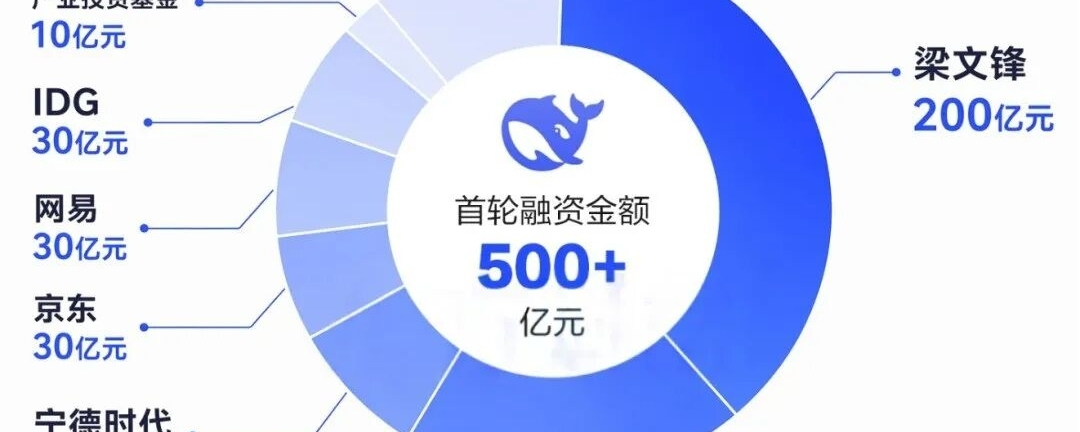
In May 2026, China’s AI industry saw a landmark event—DeepSeek completed its first round of external financing, raising a total of more than 50 billion yuan (about $7.4 billion), with a post-investment valuation exceeding $5 billion. This is the first time the leading model company, which had long stayed away from the capital markets, has opened the door to fundraising.
The lineup of investors is nothing short of impressive: founder Liang Wenfeng personally invested 20 billion yuan, Tencent contributed 10 billion yuan, CATL (Ningde Times) put in 5 billion yuan, and NetEase, JD.com, and IDG Capital each invested 3 billion yuan. Monolith RQ Capital, Zhenxingu Investment, and others were also among them.
DeepSeek Liang Wenfeng: We ordinary people want to achieve AGI with the greatest goodwill
A financing round that reshaped the AI industry landscape
In May 2026, China’s AI industry saw a landmark event—DeepSeek completed its first round of external financing, raising a total of more than 50 billion yuan (about $7.4 billion), with a post-investment valuation exceeding $5 billion. This is the first time the leading model company, which had long stayed away from the capital markets, has opened the door to fundraising.
The lineup of investors is nothing short of impressive: founder Liang Wenfeng personally invested 20 billion yuan, Tencent contributed 10 billion yuan, CATL (Ningde Times) put in 5 billion yuan, and NetEase, JD.com, and IDG Capital each invested 3 billion yuan. Monolith RQ Capital, Zhenxingu Investment, and others were also among them.
In May 2026, China’s AI industry saw a landmark event—DeepSeek completed its first round of external financing, raising a total of more than 50 billion yuan (about $7.4 billion), with a post-investment valuation exceeding $5 billion. This is the first time the leading model company, which had long stayed away from the capital markets, has opened the door to fundraising.
The lineup of investors is nothing short of impressive: founder Liang Wenfeng personally invested 20 billion yuan, Tencent contributed 10 billion yuan, CATL (Ningde Times) put in 5 billion yuan, and NetEase, JD.com, and IDG Capital each invested 3 billion yuan. Monolith RQ Capital, Zhenxingu Investment, and others were also among them.
2
2.5k
·
--
Article
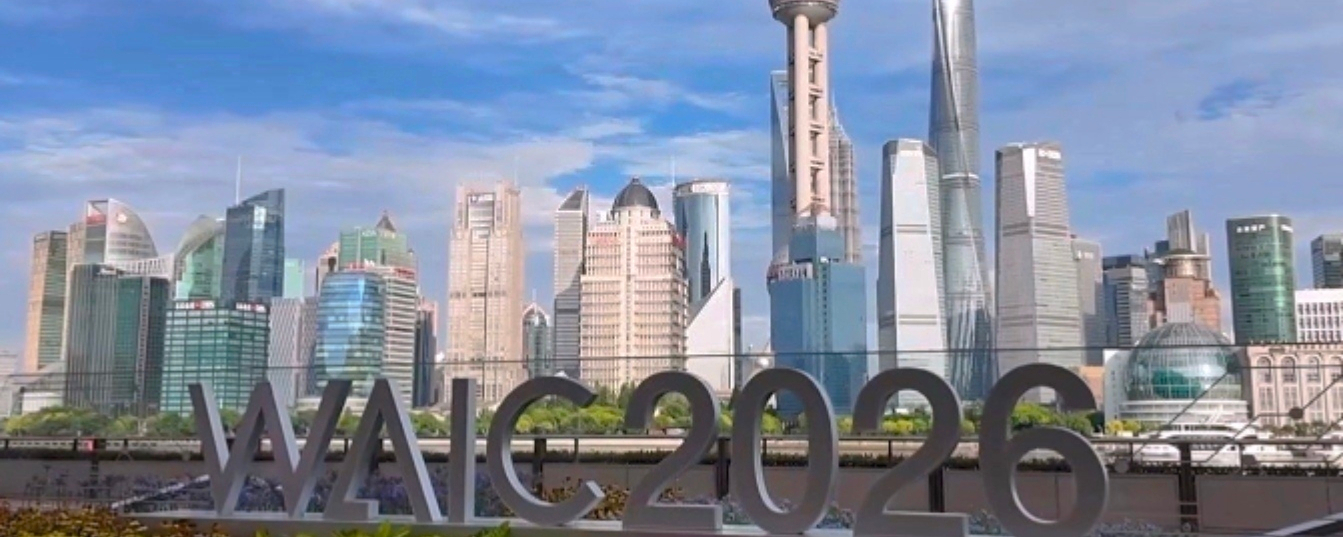
Observations on the 2026 World Artificial Intelligence Conference: AI is shifting from “able to chat” to “able to do”Seventy years ago, at the Dartmouth Conference, the concept of “artificial intelligence” was first proposed. Seventy years later, AI is no longer satisfied with just chatting—it has started truly “getting to work.”
From July 17 to 20, 2026, the World Artificial Intelligence Conference will be held in Shanghai. The theme of this year’s conference is “Intelligent Partners, Co-creating the Future.” It is distributed across four venues in three areas: the Expo area, Zhangjiang, and the West Bank.
The exhibition area first surpassed 100,000 square meters. Over 1,100 enterprises brought more than 3,000 exhibits, with more than 300 products unveiled in concentrated launches. This is the largest event in the history of WAIC by scale.
Two major tracks—intelligent computing and embodied intelligence—each bring together more than 200 enterprises.
Observations on the 2026 World Artificial Intelligence Conference: AI is shifting from “able to chat” to “able to do”
Seventy years ago, at the Dartmouth Conference, the concept of “artificial intelligence” was first proposed. Seventy years later, AI is no longer satisfied with just chatting—it has started truly “getting to work.”
From July 17 to 20, 2026, the World Artificial Intelligence Conference will be held in Shanghai. The theme of this year’s conference is “Intelligent Partners, Co-creating the Future.” It is distributed across four venues in three areas: the Expo area, Zhangjiang, and the West Bank.
The exhibition area first surpassed 100,000 square meters. Over 1,100 enterprises brought more than 3,000 exhibits, with more than 300 products unveiled in concentrated launches. This is the largest event in the history of WAIC by scale.
Two major tracks—intelligent computing and embodied intelligence—each bring together more than 200 enterprises.
From July 17 to 20, 2026, the World Artificial Intelligence Conference will be held in Shanghai. The theme of this year’s conference is “Intelligent Partners, Co-creating the Future.” It is distributed across four venues in three areas: the Expo area, Zhangjiang, and the West Bank.
The exhibition area first surpassed 100,000 square meters. Over 1,100 enterprises brought more than 3,000 exhibits, with more than 300 products unveiled in concentrated launches. This is the largest event in the history of WAIC by scale.
Two major tracks—intelligent computing and embodied intelligence—each bring together more than 200 enterprises.
206
·
--

Article
“GWDC 2026 KOREA” A New Asian Paradigm for Web3 and AI—Landing in Seoul on September 29–30. Join us for a global developers’ summit
After the first Global Web3 Developers Conference (GWDC HK) was successfully held in Hong Kong in February this year, igniting the wave of technology across Asia-Pacific and bringing together more than 2,000 industry elites, today the event organizer, Web3Labs, officially announced a major upgrade: the second Global Web3 Developers Conference (GWDC 2026 Korea) will be held in Seoul at aT Center on September 29–30. Continuing the hard-core geek spirit of “For Builders, By Builders,” this conference will focus on Asia’s top technology hubs, aiming to create a new paradigm for the global Web3 developer ecosystem and the integration with next-generation industries.
After the first Global Web3 Developers Conference (GWDC HK) was successfully held in Hong Kong in February this year, igniting the wave of technology across Asia-Pacific and bringing together more than 2,000 industry elites, today the event organizer, Web3Labs, officially announced a major upgrade: the second Global Web3 Developers Conference (GWDC 2026 Korea) will be held in Seoul at aT Center on September 29–30. Continuing the hard-core geek spirit of “For Builders, By Builders,” this conference will focus on Asia’s top technology hubs, aiming to create a new paradigm for the global Web3 developer ecosystem and the integration with next-generation industries.
“GWDC 2026 KOREA” A New Asian Paradigm for Web3 and AI—Landing in Seoul on September 29–30. Join us for a global developers’ summit
After the first Global Web3 Developers Conference (GWDC HK) was successfully held in Hong Kong in February this year, igniting the wave of technology across Asia-Pacific and bringing together more than 2,000 industry elites, today the event organizer, Web3Labs, officially announced a major upgrade: the second Global Web3 Developers Conference (GWDC 2026 Korea) will be held in Seoul at aT Center on September 29–30. Continuing the hard-core geek spirit of “For Builders, By Builders,” this conference will focus on Asia’s top technology hubs, aiming to create a new paradigm for the global Web3 developer ecosystem and the integration with next-generation industries.
5
4k
·
--
Verified
Article
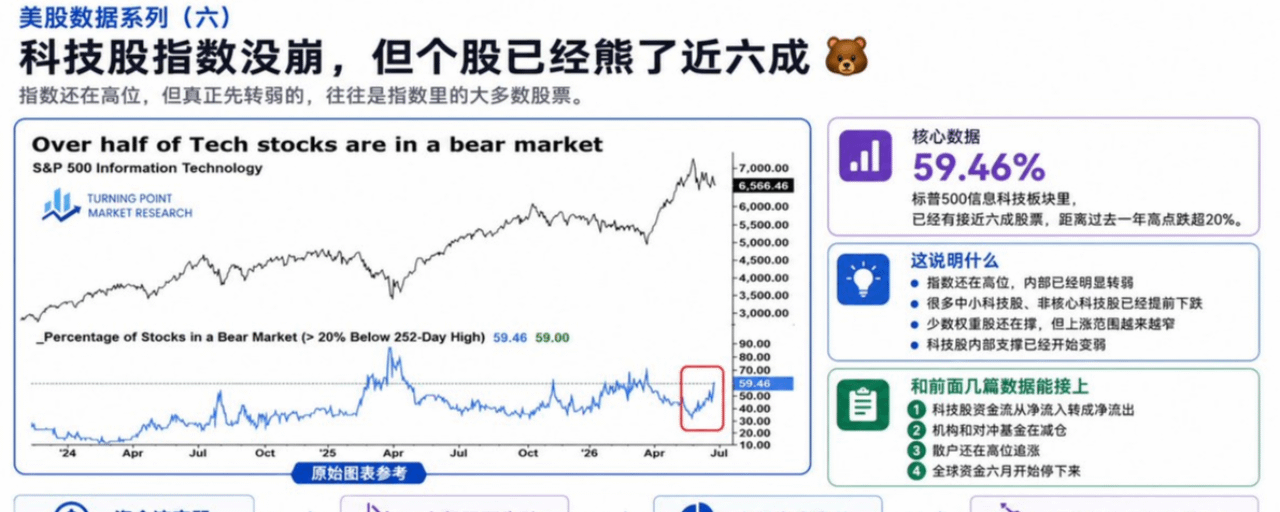
In these Fed minutes, what truly matters isn’t that the “interest rate hasn’t changed”When the June FOMC minutes were released, the interest-rate range was kept at 3.50%-3.75%. The market had already expected it, so asset prices barely reacted.
But if you just look at this part, it’s like you haven’t looked at anything.
What’s really worth关注 is what’s happening inside the Fed: its judgment on inflation, its redefinition of AI, and its adjustment to how it communicates policy. Taken together, these three things point to a clear conclusion:
Rate cuts aren’t the main story—inflation is.
1. Inflation worries are back on the rise, and AI has been added to the “suspects list”
The biggest change in this set of minutes is that inflation concerns have clearly heated up.
The Fed’s core PCE inflation forecast for 2026 has been raised to 3.3%. This isn’t a minor tweak—it’s a signal: the Fed doesn’t believe inflation will naturally return to 2%.
In these Fed minutes, what truly matters isn’t that the “interest rate hasn’t changed”
When the June FOMC minutes were released, the interest-rate range was kept at 3.50%-3.75%. The market had already expected it, so asset prices barely reacted.
But if you just look at this part, it’s like you haven’t looked at anything.
What’s really worth关注 is what’s happening inside the Fed: its judgment on inflation, its redefinition of AI, and its adjustment to how it communicates policy. Taken together, these three things point to a clear conclusion:
Rate cuts aren’t the main story—inflation is.
1. Inflation worries are back on the rise, and AI has been added to the “suspects list”
The biggest change in this set of minutes is that inflation concerns have clearly heated up.
The Fed’s core PCE inflation forecast for 2026 has been raised to 3.3%. This isn’t a minor tweak—it’s a signal: the Fed doesn’t believe inflation will naturally return to 2%.
But if you just look at this part, it’s like you haven’t looked at anything.
What’s really worth关注 is what’s happening inside the Fed: its judgment on inflation, its redefinition of AI, and its adjustment to how it communicates policy. Taken together, these three things point to a clear conclusion:
Rate cuts aren’t the main story—inflation is.
1. Inflation worries are back on the rise, and AI has been added to the “suspects list”
The biggest change in this set of minutes is that inflation concerns have clearly heated up.
The Fed’s core PCE inflation forecast for 2026 has been raised to 3.3%. This isn’t a minor tweak—it’s a signal: the Fed doesn’t believe inflation will naturally return to 2%.
1
7.7k
·
--
Article
With one sentence from Meta, the US hardware industry chain collapsedSome see excess computing power, while others see a positive feedback loop
The scariest news tonight is none other than this—
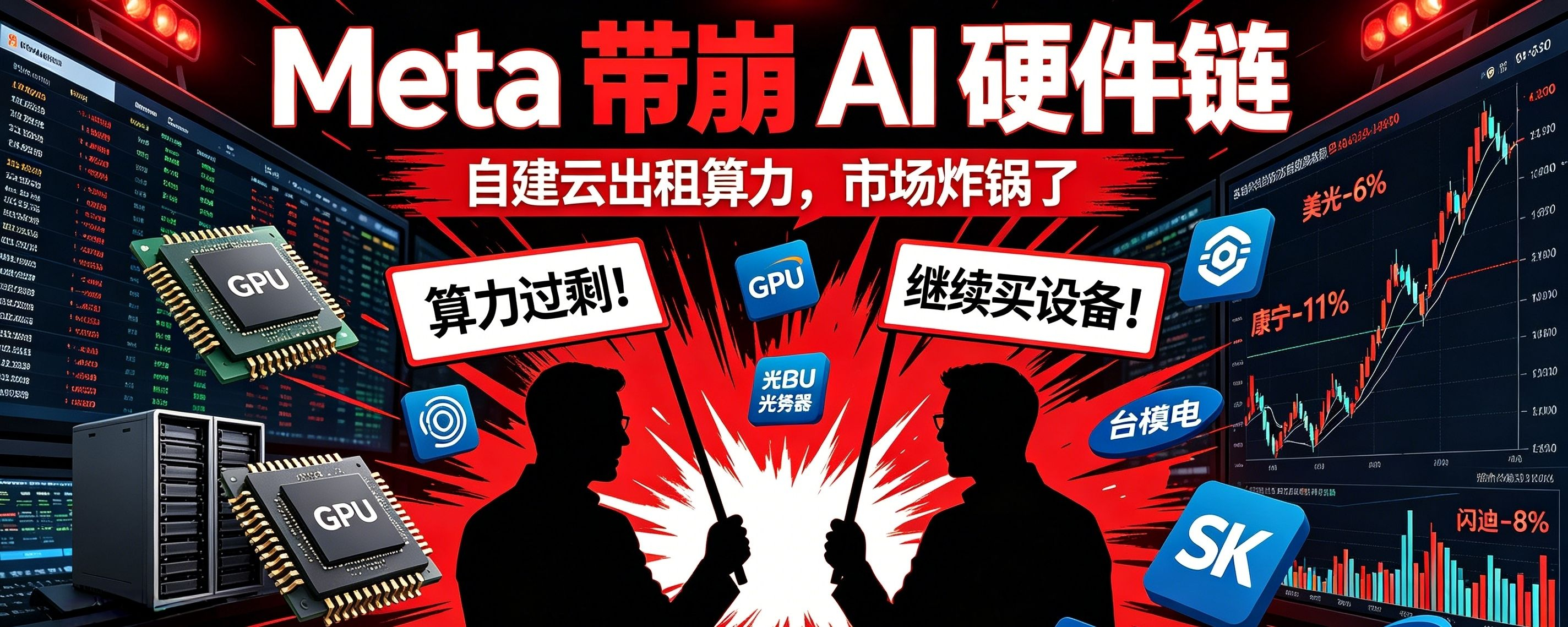
Meta is building its own cloud business, planning to rent out its excess AI computing power to the outside.
The moment the news came out, US stocks split straight in two. Meta itself surged more than 8% to $610.45; but on the hardware industry chain side, it was a bloodbath—Micron fell more than 6%, SanDisk plunged 8%, and Corning dropped 11%.
With one move, Meta brought down the entire hardware industry chain—how exactly is the market interpreting this play?
01 Old-timers: There’s excess computing capacity, so the high-optimism hardware story needs a discount
The “old-timers’” logic is pretty straightforward—if Meta does this, it means it has more computing power than it can use.
With one sentence from Meta, the US hardware industry chain collapsed
Some see excess computing power, while others see a positive feedback loop
The scariest news tonight is none other than this—
Meta is building its own cloud business, planning to rent out its excess AI computing power to the outside.
The moment the news came out, US stocks split straight in two. Meta itself surged more than 8% to $610.45; but on the hardware industry chain side, it was a bloodbath—Micron fell more than 6%, SanDisk plunged 8%, and Corning dropped 11%.
With one move, Meta brought down the entire hardware industry chain—how exactly is the market interpreting this play?
01 Old-timers: There’s excess computing capacity, so the high-optimism hardware story needs a discount
The “old-timers’” logic is pretty straightforward—if Meta does this, it means it has more computing power than it can use.
The scariest news tonight is none other than this—
Meta is building its own cloud business, planning to rent out its excess AI computing power to the outside.
The moment the news came out, US stocks split straight in two. Meta itself surged more than 8% to $610.45; but on the hardware industry chain side, it was a bloodbath—Micron fell more than 6%, SanDisk plunged 8%, and Corning dropped 11%.
With one move, Meta brought down the entire hardware industry chain—how exactly is the market interpreting this play?
01 Old-timers: There’s excess computing capacity, so the high-optimism hardware story needs a discount
The “old-timers’” logic is pretty straightforward—if Meta does this, it means it has more computing power than it can use.
4
6.9k
·
--
Article
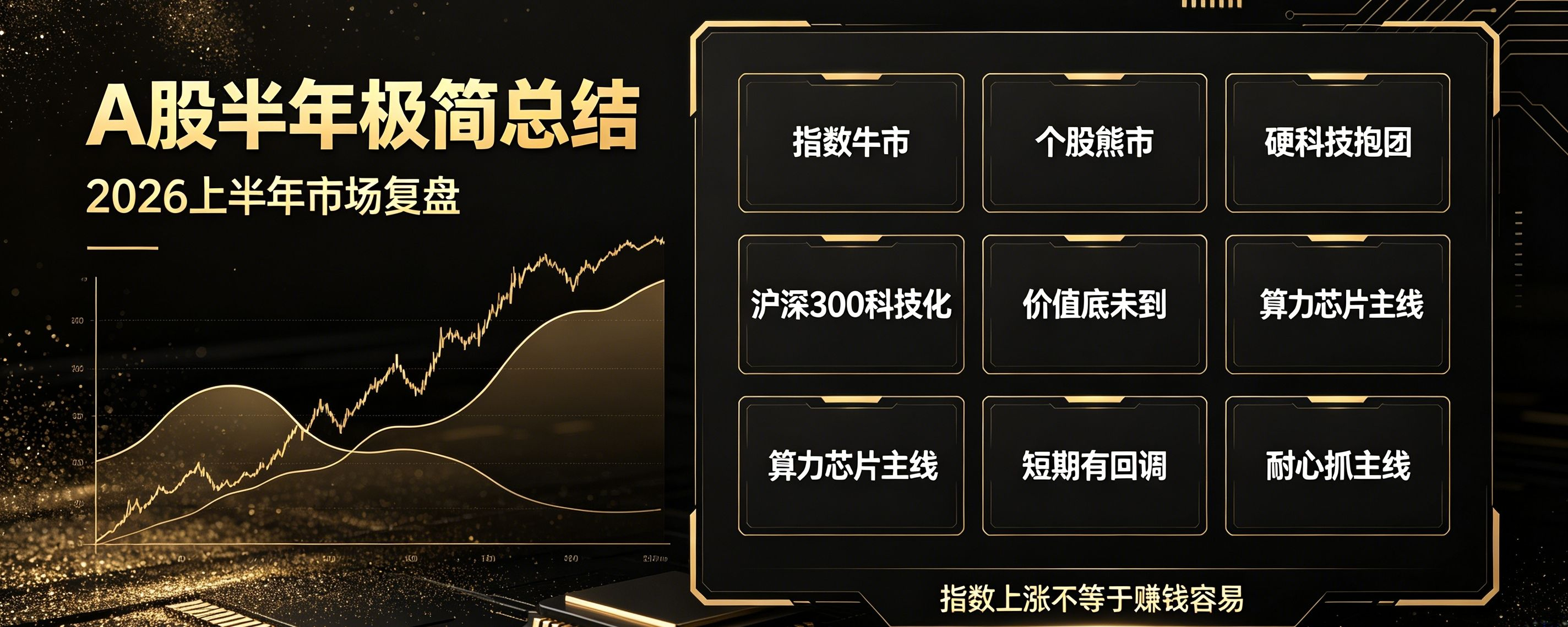
A Half-Year Review of A-Shares: Under an Extreme Structural Market, See the Truth and Avoid Cognitive TrapsIn the blink of an eye, June 30 has arrived, marking the official close of the first half of 2026. Looking back at the A-share market over these six months, the most striking features have been extreme segmentation and violent rotation—so extreme that the movements have far exceeded most people’s expectations.
If you only look at the official gains of major broad-based indices, this year’s A-shares clearly look like a bull market, with standout data performance:
- CSI 300: up 7.55%
- CSI 500: up 20.97%
- CSI 1000: up 15.99%
- ChiNext Index: up 35.58%
- STAR 50 Index: surged 53.99%
But the real market experience is completely different from index gains—most investors are trapped in the dilemma of “making money on the index but not on their own trades.”
A Half-Year Review of A-Shares: Under an Extreme Structural Market, See the Truth and Avoid Cognitive Traps
In the blink of an eye, June 30 has arrived, marking the official close of the first half of 2026. Looking back at the A-share market over these six months, the most striking features have been extreme segmentation and violent rotation—so extreme that the movements have far exceeded most people’s expectations.
If you only look at the official gains of major broad-based indices, this year’s A-shares clearly look like a bull market, with standout data performance:
- CSI 300: up 7.55%
- CSI 500: up 20.97%
- CSI 1000: up 15.99%
- ChiNext Index: up 35.58%
- STAR 50 Index: surged 53.99%
But the real market experience is completely different from index gains—most investors are trapped in the dilemma of “making money on the index but not on their own trades.”
If you only look at the official gains of major broad-based indices, this year’s A-shares clearly look like a bull market, with standout data performance:
- CSI 300: up 7.55%
- CSI 500: up 20.97%
- CSI 1000: up 15.99%
- ChiNext Index: up 35.58%
- STAR 50 Index: surged 53.99%
But the real market experience is completely different from index gains—most investors are trapped in the dilemma of “making money on the index but not on their own trades.”
2k
·
--
Article
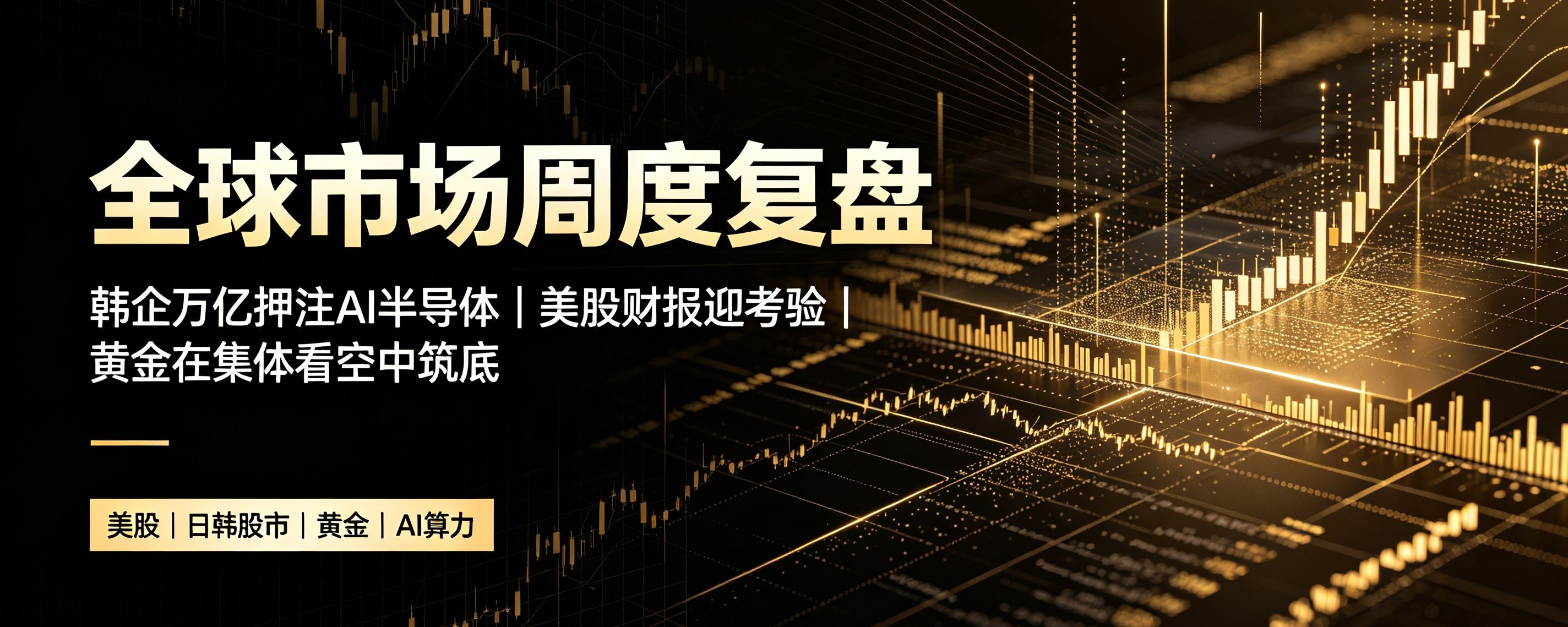
Wall Street Is Singing Bearish on Gold! With Everyone Aligned in Pessimism, the Major Bottom May Already Be HereThis week, global equity markets are facing multiple variables: South Korea’s two major conglomerates have unveiled a trillion-level industrial investment blueprint, injecting long-term incremental growth into the semiconductor industry; U.S. stocks have officially kicked off the Q2 earnings season, with high concentration of profitability along the AI industry chain becoming the key determinant of market performance; meanwhile, the equity markets of Japan and South Korea have diverged sharply in their capital flows—Korean stocks are caught in a structural rift described as “retail investors taking the baton while foreign capital withdraws.” At the same time, gold has closed lower for four consecutive weeks, and under a backdrop of broad bearish sentiment from both institutions and retail investors, the battle between bulls and bears has entered a highly heated phase. Combining the latest data from multiple investment banks, we break down the main themes of this market cycle and the potential risks.
Wall Street Is Singing Bearish on Gold! With Everyone Aligned in Pessimism, the Major Bottom May Already Be Here
This week, global equity markets are facing multiple variables: South Korea’s two major conglomerates have unveiled a trillion-level industrial investment blueprint, injecting long-term incremental growth into the semiconductor industry; U.S. stocks have officially kicked off the Q2 earnings season, with high concentration of profitability along the AI industry chain becoming the key determinant of market performance; meanwhile, the equity markets of Japan and South Korea have diverged sharply in their capital flows—Korean stocks are caught in a structural rift described as “retail investors taking the baton while foreign capital withdraws.” At the same time, gold has closed lower for four consecutive weeks, and under a backdrop of broad bearish sentiment from both institutions and retail investors, the battle between bulls and bears has entered a highly heated phase. Combining the latest data from multiple investment banks, we break down the main themes of this market cycle and the potential risks.
2
5k
·
--
AI compute-tier stratification: big firms squander tokens, small developers go to work paying out of pocket, and face an invisible pay cutThe AI wave is sweeping through the development world. Tokens are already a necessity for driving large model operations—indispensable like gasoline or electricity. Writing code, refactoring architectures, and troubleshooting vulnerabilities: every interaction with AI steadily consumes token compute power.
In contrast, the industry’s polarized situation is creating a new class within the programmer community: the “Token Rich,” who hold companies’ seemingly unlimited compute, and the “Token Poor,” who need to pay out of their own pockets to obtain quotas. The compute gap is turning into an invisible, silent pay cut for working people.
1. Absurd workplace reality: productivity doubles, but the cost is carried by employees themselves
AI compute-tier stratification: big firms squander tokens, small developers go to work paying out of pocket, and face an invisible pay cut
The AI wave is sweeping through the development world. Tokens are already a necessity for driving large model operations—indispensable like gasoline or electricity. Writing code, refactoring architectures, and troubleshooting vulnerabilities: every interaction with AI steadily consumes token compute power.
In contrast, the industry’s polarized situation is creating a new class within the programmer community: the “Token Rich,” who hold companies’ seemingly unlimited compute, and the “Token Poor,” who need to pay out of their own pockets to obtain quotas. The compute gap is turning into an invisible, silent pay cut for working people.
1. Absurd workplace reality: productivity doubles, but the cost is carried by employees themselves
In contrast, the industry’s polarized situation is creating a new class within the programmer community: the “Token Rich,” who hold companies’ seemingly unlimited compute, and the “Token Poor,” who need to pay out of their own pockets to obtain quotas. The compute gap is turning into an invisible, silent pay cut for working people.
1. Absurd workplace reality: productivity doubles, but the cost is carried by employees themselves
1
2k
·
--
Epic Turnaround! US Semiconductor Stocks Soar, Micron's Explosive Earnings Ignite the AI Storage MainlineWaking up to an epic turnaround in US stocks, particularly in the semiconductor sector: Amid the gloom of inflation and interest rate hikes, the sector was generally weak, but after Micron, Qualcomm, and Nvidia released significant positive news post-market, storage and AI chips soared, leading to an epic reversal dominated by performance and industry certainty.
Under pressure during the day, but celebrating post-market, the semiconductor sector collectively surged
This morning, during the US stock trading session, the market was overshadowed by the upcoming announcement of the US May PCE inflation data, with rate hike concerns suppressing tech stock performance, while the semiconductor sector saw most stocks weaken; however, the optical communication sector performed strongly, with Corning rising 6% during the day and adding another 3% post-market.
Epic Turnaround! US Semiconductor Stocks Soar, Micron's Explosive Earnings Ignite the AI Storage Mainline
Waking up to an epic turnaround in US stocks, particularly in the semiconductor sector: Amid the gloom of inflation and interest rate hikes, the sector was generally weak, but after Micron, Qualcomm, and Nvidia released significant positive news post-market, storage and AI chips soared, leading to an epic reversal dominated by performance and industry certainty.
Under pressure during the day, but celebrating post-market, the semiconductor sector collectively surged
This morning, during the US stock trading session, the market was overshadowed by the upcoming announcement of the US May PCE inflation data, with rate hike concerns suppressing tech stock performance, while the semiconductor sector saw most stocks weaken; however, the optical communication sector performed strongly, with Corning rising 6% during the day and adding another 3% post-market.
Under pressure during the day, but celebrating post-market, the semiconductor sector collectively surged
This morning, during the US stock trading session, the market was overshadowed by the upcoming announcement of the US May PCE inflation data, with rate hike concerns suppressing tech stock performance, while the semiconductor sector saw most stocks weaken; however, the optical communication sector performed strongly, with Corning rising 6% during the day and adding another 3% post-market.
1.6k
·
--
Article
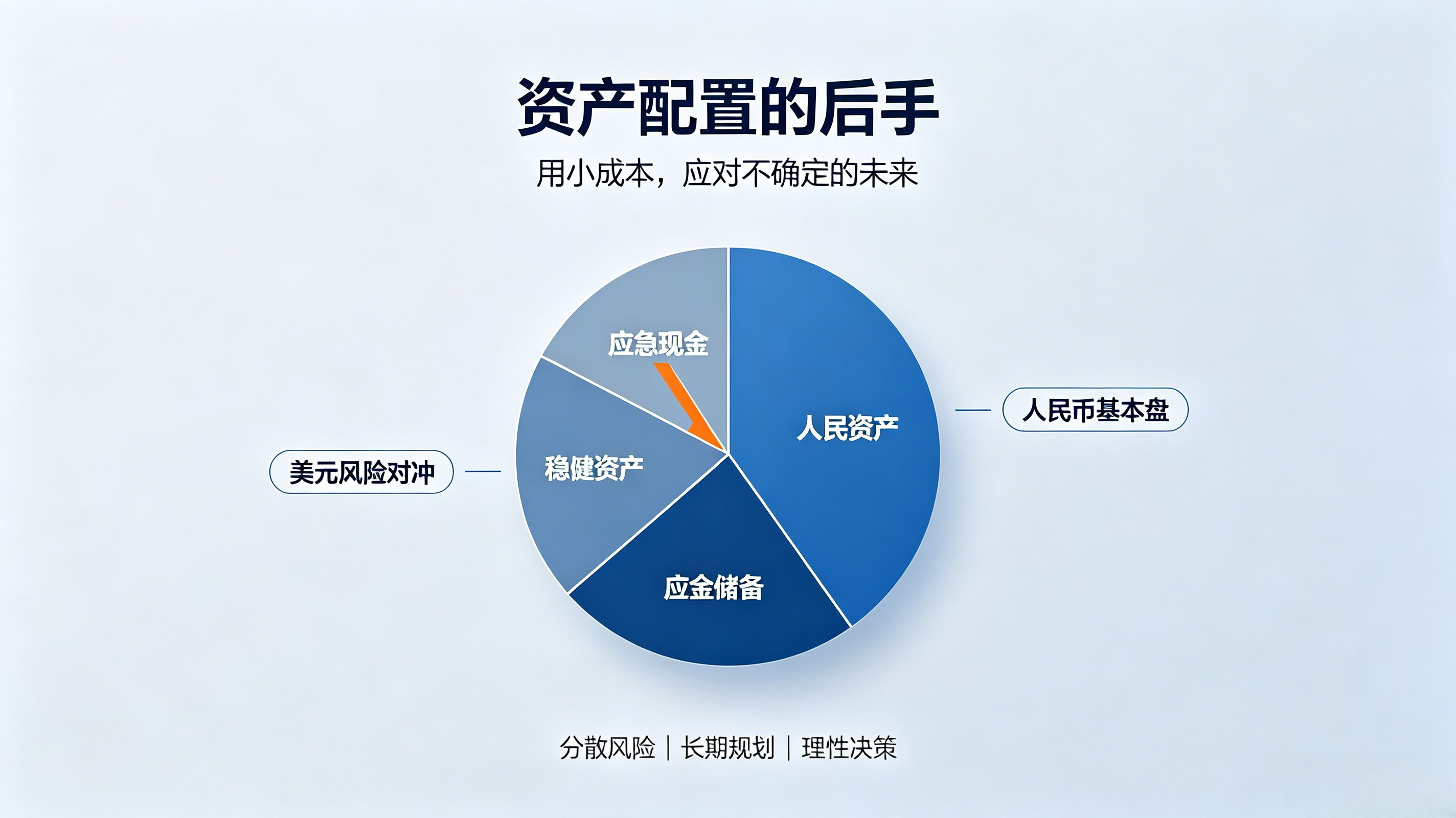
Stacking RMB or USD? The 2026 Truth About Asset Hedging for Regular FolksLately, a lot of folks are caught up in a core financial dilemma: with the current market, should we stack up on RMB or swap for USD?
Especially with the RMB exchange rate strengthening lately, many are even more confused: if we exchange for USD, it feels like a losing trade; but holding all RMB makes us anxious about potential unknown risks in the future.
Honestly, for most regular folks here, there’s no extreme 'either-or' answer. It’s all about a 'main allocation + hedging' strategy. If you ignore the basic living logic and dive into currency speculation, you're likely to end up following the herd and losing money.
Today, let’s cut through the market noise and break down a currency asset allocation logic that everyday people can understand and use.
Stacking RMB or USD? The 2026 Truth About Asset Hedging for Regular Folks
Lately, a lot of folks are caught up in a core financial dilemma: with the current market, should we stack up on RMB or swap for USD?
Especially with the RMB exchange rate strengthening lately, many are even more confused: if we exchange for USD, it feels like a losing trade; but holding all RMB makes us anxious about potential unknown risks in the future.
Honestly, for most regular folks here, there’s no extreme 'either-or' answer. It’s all about a 'main allocation + hedging' strategy. If you ignore the basic living logic and dive into currency speculation, you're likely to end up following the herd and losing money.
Today, let’s cut through the market noise and break down a currency asset allocation logic that everyday people can understand and use.
Especially with the RMB exchange rate strengthening lately, many are even more confused: if we exchange for USD, it feels like a losing trade; but holding all RMB makes us anxious about potential unknown risks in the future.
Honestly, for most regular folks here, there’s no extreme 'either-or' answer. It’s all about a 'main allocation + hedging' strategy. If you ignore the basic living logic and dive into currency speculation, you're likely to end up following the herd and losing money.
Today, let’s cut through the market noise and break down a currency asset allocation logic that everyday people can understand and use.
1
2.3k
·
--
Article
Brokerage Stocks Surge: Five Major Bullish Factors Converge, Valuation Repair Under 'High-Low Cut'Market insiders affectionately dubbed the brokerage sector 'Old Deng,' finally saw a long-awaited breakout after the Dragon Boat Festival.
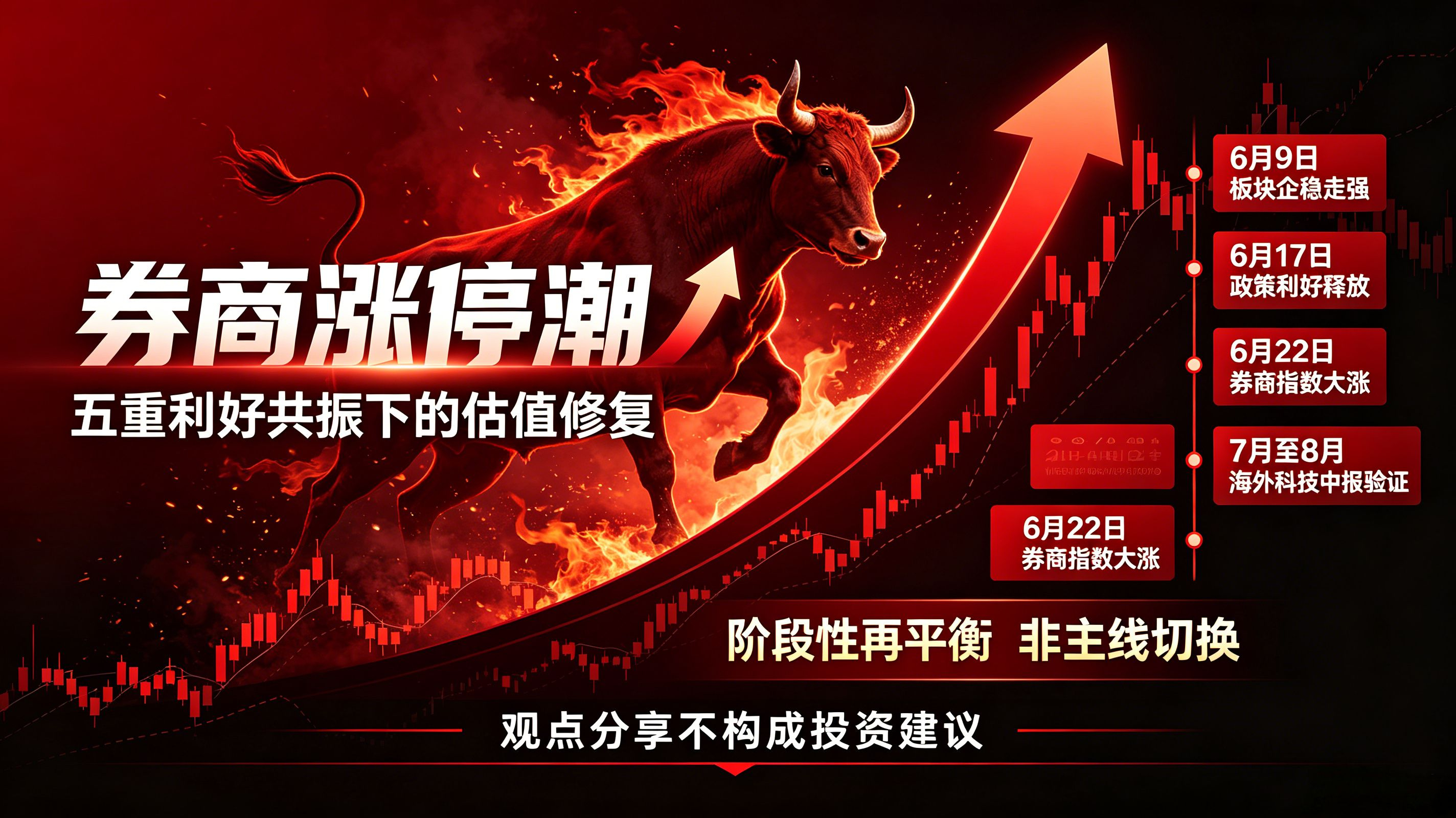
On June 22, the A-shares brokerage sector experienced a surge. Dongfang Caifu shot up by 12.74%, with multiple stocks like Citic JianTou, GF Securities, Changjiang Securities, and Caitong Securities hitting their daily limits; Citic Securities rose over 6%, while Huatai Securities climbed over 7%. The Wind brokerage index surged by more than 7.5%, standing out impressively among all A-share sectors. The total trading volume in Shanghai and Shenzhen reached 3.74 trillion yuan, marking the second-highest in history, with an increase of 427.1 billion yuan compared to the previous trading day.
Why did brokerages suddenly skyrocket? Overall, it's the result of a convergence of five major bullish factors.
Brokerage Stocks Surge: Five Major Bullish Factors Converge, Valuation Repair Under 'High-Low Cut'
Market insiders affectionately dubbed the brokerage sector 'Old Deng,' finally saw a long-awaited breakout after the Dragon Boat Festival.
On June 22, the A-shares brokerage sector experienced a surge. Dongfang Caifu shot up by 12.74%, with multiple stocks like Citic JianTou, GF Securities, Changjiang Securities, and Caitong Securities hitting their daily limits; Citic Securities rose over 6%, while Huatai Securities climbed over 7%. The Wind brokerage index surged by more than 7.5%, standing out impressively among all A-share sectors. The total trading volume in Shanghai and Shenzhen reached 3.74 trillion yuan, marking the second-highest in history, with an increase of 427.1 billion yuan compared to the previous trading day.
Why did brokerages suddenly skyrocket? Overall, it's the result of a convergence of five major bullish factors.
On June 22, the A-shares brokerage sector experienced a surge. Dongfang Caifu shot up by 12.74%, with multiple stocks like Citic JianTou, GF Securities, Changjiang Securities, and Caitong Securities hitting their daily limits; Citic Securities rose over 6%, while Huatai Securities climbed over 7%. The Wind brokerage index surged by more than 7.5%, standing out impressively among all A-share sectors. The total trading volume in Shanghai and Shenzhen reached 3.74 trillion yuan, marking the second-highest in history, with an increase of 427.1 billion yuan compared to the previous trading day.
Why did brokerages suddenly skyrocket? Overall, it's the result of a convergence of five major bullish factors.
1
5.6k
·
--
Article
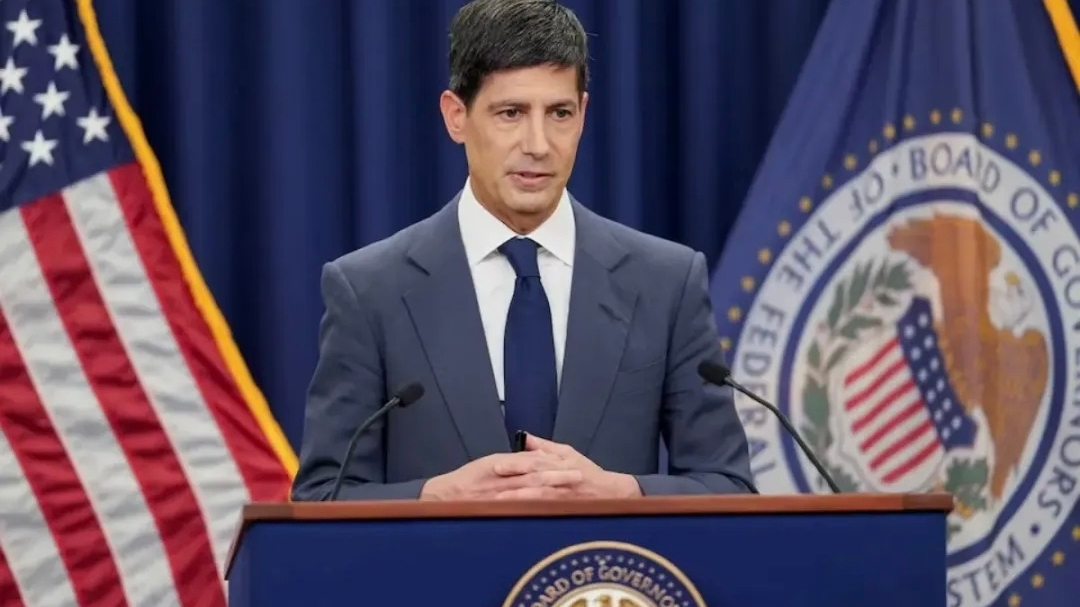
Fed goes full hawk, US stocks and gold take a diveIn the early hours of June 18th, Beijing time, the new Fed chair Kevin Wash made his debut.
The rate itself was a no-brainer—holding steady at 3.50%-3.75%, keeping it on hold for the fourth time in a row, with a unanimous vote for the first time in nine months. But what really sent the market into a frenzy were the three things Wash put out: a significantly trimmed-down statement, an unexpectedly hawkish dot plot, and a complete cancellation of forward guidance.
What's Wash up to?
First, let's look at the statement. The FOMC statement from April had 341 words, and this time it’s down to just 130, cutting almost two-thirds. They removed all hints of 'further rate adjustments' and scrapped the forward guidance.
Fed goes full hawk, US stocks and gold take a dive
In the early hours of June 18th, Beijing time, the new Fed chair Kevin Wash made his debut.
The rate itself was a no-brainer—holding steady at 3.50%-3.75%, keeping it on hold for the fourth time in a row, with a unanimous vote for the first time in nine months. But what really sent the market into a frenzy were the three things Wash put out: a significantly trimmed-down statement, an unexpectedly hawkish dot plot, and a complete cancellation of forward guidance.
What's Wash up to?
First, let's look at the statement. The FOMC statement from April had 341 words, and this time it’s down to just 130, cutting almost two-thirds. They removed all hints of 'further rate adjustments' and scrapped the forward guidance.
The rate itself was a no-brainer—holding steady at 3.50%-3.75%, keeping it on hold for the fourth time in a row, with a unanimous vote for the first time in nine months. But what really sent the market into a frenzy were the three things Wash put out: a significantly trimmed-down statement, an unexpectedly hawkish dot plot, and a complete cancellation of forward guidance.
What's Wash up to?
First, let's look at the statement. The FOMC statement from April had 341 words, and this time it’s down to just 130, cutting almost two-thirds. They removed all hints of 'further rate adjustments' and scrapped the forward guidance.
14
8.7k
Log in to explore more content
Join global crypto users on Binance Square
⚡️ Get latest and useful information about crypto.
💬 Trusted by the world’s largest crypto exchange.
👍 Discover real insights from verified creators.
Email / Phone number
Trending Topics
SolanaFallsOver3%
15,065 views
439 Discussing
$SOL
SOL got beaten up by the market again—down more than 3% 😂
Today’s tape is pretty interesting.
BTC dips a bit, and SOL just amplifies it.
When the market gets slightly nervous:
BTC: Fine, I’ll drop 2% first.
SOL: Then I’ll do 3%+.
That’s what a high-beta asset is like.
When the market is bullish, it runs faster than anyone.
When the market flinches, it’s also the first one kicked out by the funds 😂
This time SOL is down mainly because:
the escalation of the US-Iran conflict, and oil prices rising.
Global bond yields continue climbing.
The market has started to worry again about inflation and interest rates.
In an environment like this,
funds naturally cut first into high-risk, high-volatility assets.
So this time SOL is down 3%.
It doesn’t really have much to do with fundamentals.
It’s mostly about market sentiment.
Once macro risk shows up,
this high-beta SOL gets slapped first.
Right now, SOL’s price is around 99.
After it surged to 110 a few days ago, it’s been falling and correcting.
If it can hold above the 97 area,
then this pullback after the breakdown could be considered a test.
The first support zone below is between 95.5 and 97.5.
Long brothers can scale in and go long around 95.
The strongest support is 93.
If it breaks, the uptrend will be damaged,
and then things won’t be so easy to predict.
For resistance above:
the first level is around 102,
then 110.
I think 130 should be achievable in the future.
168 also seems possible 😀
The situation is still unclear.
For long-term positions, enter in batches.
Buy a little on the dips.
For short-term trading, brothers be cautious about shorting.
Try to trade in line with the bigger trend.
Use strict stop-losses on your trades.
#solanafallsover3%
孔大锤
·0 Likes
·1.6k views
DellSurges8%OnEarningsBeat
15,455 views
370 Discussing
USAugADPJobsSmallestGainSinceJan
14,293 views
306 Discussing