

Lady Bee 1
49 Posts

Lady Bee 1
Report
Block User
0 Following
0 Followers
1 Liked
Posts
·
--
What if your wallet could give you access to $TON without you thinking about where the liquidity comes from?
That’s what makes STON.fi’s latest integration with MoonPay Trade interesting.
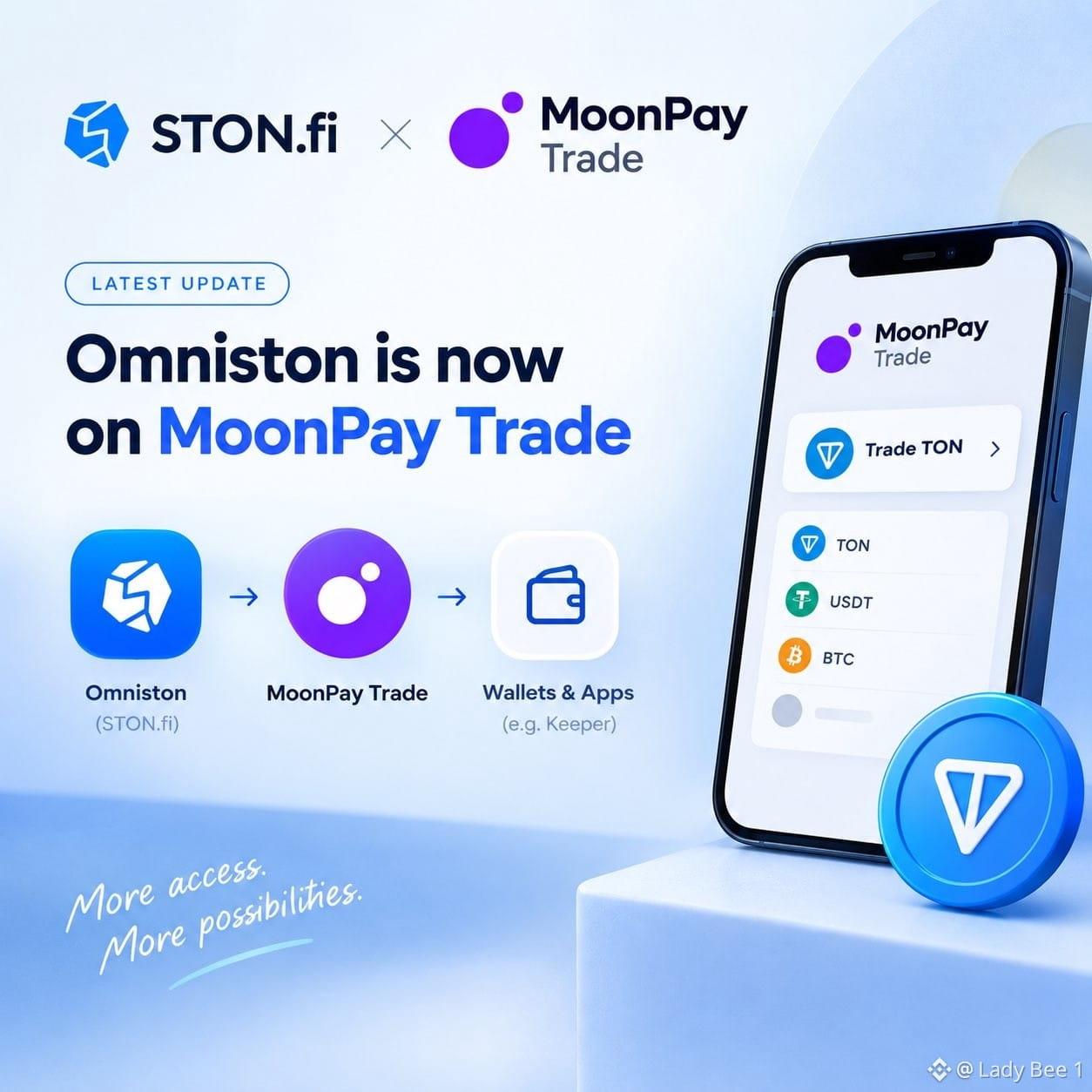
Omniston is now integrated into MoonPay Trade, giving wallets and apps access to TON trading infrastructure through the integration.
The important part isn't simply the partnership.
It’s what happens underneath.
A wallet can potentially offer TON trading without having to build its own TON liquidity and routing infrastructure from scratch.
Users choose what they want to trade.
Omniston handles the complicated execution underneath.
That makes Omniston more than a swap feature on STON.fi.
It becomes infrastructure that other applications can use to bring TON trading closer to their users.
The bigger question now:
How much $TON activity can these integrations actually bring onchain?
That’s what I’ll be watching.
#STONfi #DeFi #MarketAnalysis #BTC
What if your wallet could give you access to $TON without you thinking about where the liquidity comes from?
That’s what makes STON.fi’s latest integration with MoonPay Trade interesting.
Omniston is now integrated into MoonPay Trade, giving wallets and apps access to TON trading infrastructure through the integration.
The important part isn't simply the partnership.
It’s what happens underneath.
A wallet can potentially offer TON trading without having to build its own TON liquidity and routing infrastructure from scratch.
Users choose what they want to trade.
Omniston handles the complicated execution underneath.
That makes Omniston more than a swap feature on STON.fi.
It becomes infrastructure that other applications can use to bring TON trading closer to their users.
The bigger question now:
How much $TON activity can these integrations actually bring onchain?
That’s what I’ll be watching.
#STONfi #DeFi #MarketAnalysis #BTC
That’s what makes STON.fi’s latest integration with MoonPay Trade interesting.
Omniston is now integrated into MoonPay Trade, giving wallets and apps access to TON trading infrastructure through the integration.
The important part isn't simply the partnership.
It’s what happens underneath.
A wallet can potentially offer TON trading without having to build its own TON liquidity and routing infrastructure from scratch.
Users choose what they want to trade.
Omniston handles the complicated execution underneath.
That makes Omniston more than a swap feature on STON.fi.
It becomes infrastructure that other applications can use to bring TON trading closer to their users.
The bigger question now:
How much $TON activity can these integrations actually bring onchain?
That’s what I’ll be watching.
#STONfi #DeFi #MarketAnalysis #BTC
56
·
--
USDT is USDT, right?
Not when you look under the hood.
$USDT on $TRX and USDT on $TON share the same ticker, but they are separate network-native assets. Moving between them is therefore a cross-chain swap, not simply a token transfer.
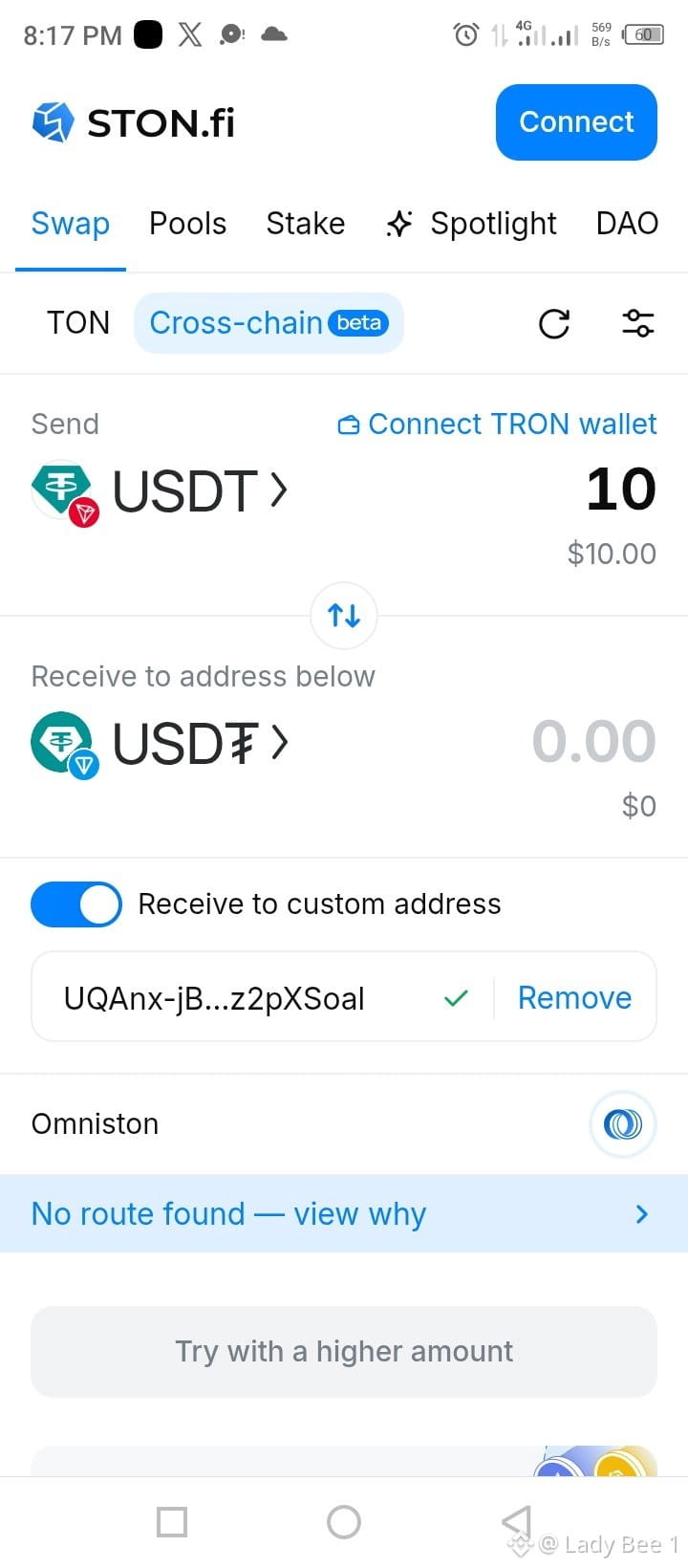
I tested TRON → TON USDT swaps on @ston_fi with three different amounts:
► 10 USDT: No route found
► 25 USDT: Quote appeared, but execution was blocked
► 200 USDT: Quote improved, but was still blocked
At first glance, this might look like a failed swap.
But there’s a more interesting takeaway.
The amount matters.
Cross-chain liquidity isn't static.
A route that doesn't make economic sense for 10 USDT can become available at a higher amount because liquidity, solver economics, fees, and execution conditions can change with trade size.
And even when a quote exists, that doesn't necessarily mean the transaction can be executed.
That's an important distinction:
Quote ≠ guaranteed execution.
A cross-chain aggregator can find a potential route, but that route still has to satisfy the conditions required for settlement.
This is why checking only the displayed price isn't enough.
When swapping across networks, you're really evaluating three things:
1. Route availability
Can the infrastructure find a path between the two assets?
2. Execution economics
Does the trade size make sense for the available liquidity and route?
3. Settlement conditions
Can that route actually execute under the current conditions?
My small test was a reminder that cross-chain swaps aren't simply:
Send USDT → receive USDT.
There's an entire execution layer working underneath.
And the amount you enter can change what that layer can actually deliver.
#STONfi #BTC #Macro
USDT is USDT, right?
Not when you look under the hood.
$USDT on $TRX and USDT on $TON share the same ticker, but they are separate network-native assets. Moving between them is therefore a cross-chain swap, not simply a token transfer.
I tested TRON → TON USDT swaps on @ston_fi with three different amounts:
► 10 USDT: No route found
► 25 USDT: Quote appeared, but execution was blocked
► 200 USDT: Quote improved, but was still blocked
At first glance, this might look like a failed swap.
But there’s a more interesting takeaway.
The amount matters.
Cross-chain liquidity isn't static.
A route that doesn't make economic sense for 10 USDT can become available at a higher amount because liquidity, solver economics, fees, and execution conditions can change with trade size.
And even when a quote exists, that doesn't necessarily mean the transaction can be executed.
That's an important distinction:
Quote ≠ guaranteed execution.
A cross-chain aggregator can find a potential route, but that route still has to satisfy the conditions required for settlement.
This is why checking only the displayed price isn't enough.
When swapping across networks, you're really evaluating three things:
1. Route availability
Can the infrastructure find a path between the two assets?
2. Execution economics
Does the trade size make sense for the available liquidity and route?
3. Settlement conditions
Can that route actually execute under the current conditions?
My small test was a reminder that cross-chain swaps aren't simply:
Send USDT → receive USDT.
There's an entire execution layer working underneath.
And the amount you enter can change what that layer can actually deliver.
#STONfi #BTC #Macro
Not when you look under the hood.
$USDT on $TRX and USDT on $TON share the same ticker, but they are separate network-native assets. Moving between them is therefore a cross-chain swap, not simply a token transfer.
I tested TRON → TON USDT swaps on @ston_fi with three different amounts:
► 10 USDT: No route found
► 25 USDT: Quote appeared, but execution was blocked
► 200 USDT: Quote improved, but was still blocked
At first glance, this might look like a failed swap.
But there’s a more interesting takeaway.
The amount matters.
Cross-chain liquidity isn't static.
A route that doesn't make economic sense for 10 USDT can become available at a higher amount because liquidity, solver economics, fees, and execution conditions can change with trade size.
And even when a quote exists, that doesn't necessarily mean the transaction can be executed.
That's an important distinction:
Quote ≠ guaranteed execution.
A cross-chain aggregator can find a potential route, but that route still has to satisfy the conditions required for settlement.
This is why checking only the displayed price isn't enough.
When swapping across networks, you're really evaluating three things:
1. Route availability
Can the infrastructure find a path between the two assets?
2. Execution economics
Does the trade size make sense for the available liquidity and route?
3. Settlement conditions
Can that route actually execute under the current conditions?
My small test was a reminder that cross-chain swaps aren't simply:
Send USDT → receive USDT.
There's an entire execution layer working underneath.
And the amount you enter can change what that layer can actually deliver.
#STONfi #BTC #Macro
71
·
--
🌐 Arc Joins STON.fi’s Cross-Chain Network
Another network is now connected to STON.fi’s cross-chain infrastructure.
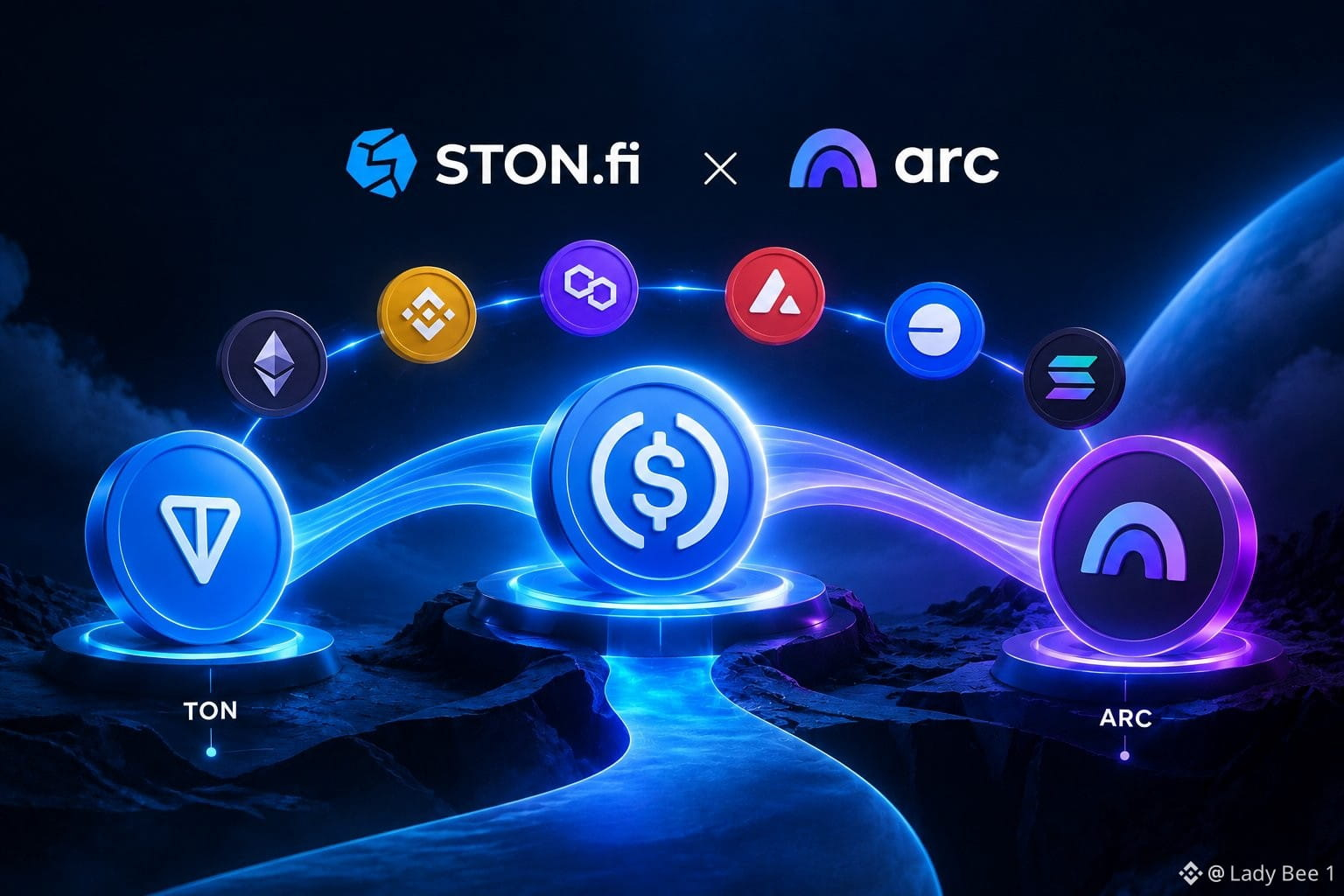
Arc is live on STON.fi.
$ARC is an EVM-compatible Layer 1 designed around stablecoin-based financial activity, with USDC used as the native gas token.
With Arc support, users can swap supported USDC liquidity across Arc, TON, and other connected networks through STON.fi’s cross-chain interface.
The interesting part is what happens underneath.
Omniston handles the cross-chain execution.
It was built by STON.fi as a resolver-based execution layer that coordinates quotes and settlement across different blockchains. Its cross-chain model uses paired Hashed Timelock Contracts (HTLCs) for atomic settlement rather than simply moving a wrapped representation of the asset between networks.
That means the user experience can stay simple:
Choose what you have → choose what you want → let the infrastructure handle the route.
With Arc added, STON.fi’s cross-chain network now spans multiple ecosystems, including $GRAM , $ETH m, $BNB Chain, Base, Avalanche, Arbitrum, Polygon, TRON, Robinhood Chain, X Layer and Arc.
For DeFi users, the bigger picture is liquidity fragmentation.
Assets are spread across different networks, while the opportunities users want may exist somewhere else.
Connecting those ecosystems reduces one layer of friction.
⚠️ Arc transactions are currently subject to an initial $1,000 per-transaction limit, according to the rollout details provided by STON.fi.
As always, verify the supported assets, limits and route before swapping.
🔗 Try STON.fi Cross-Chain Sw
#STONfi #Arc #BTC Price Analysis# #Macro Insights#
🌐 Arc Joins STON.fi’s Cross-Chain Network
Another network is now connected to STON.fi’s cross-chain infrastructure.
Arc is live on STON.fi.
$ARC is an EVM-compatible Layer 1 designed around stablecoin-based financial activity, with USDC used as the native gas token.
With Arc support, users can swap supported USDC liquidity across Arc, TON, and other connected networks through STON.fi’s cross-chain interface.
The interesting part is what happens underneath.
Omniston handles the cross-chain execution.
It was built by STON.fi as a resolver-based execution layer that coordinates quotes and settlement across different blockchains. Its cross-chain model uses paired Hashed Timelock Contracts (HTLCs) for atomic settlement rather than simply moving a wrapped representation of the asset between networks.
That means the user experience can stay simple:
Choose what you have → choose what you want → let the infrastructure handle the route.
With Arc added, STON.fi’s cross-chain network now spans multiple ecosystems, including $GRAM , $ETH m, $BNB Chain, Base, Avalanche, Arbitrum, Polygon, TRON, Robinhood Chain, X Layer and Arc.
For DeFi users, the bigger picture is liquidity fragmentation.
Assets are spread across different networks, while the opportunities users want may exist somewhere else.
Connecting those ecosystems reduces one layer of friction.
⚠️ Arc transactions are currently subject to an initial $1,000 per-transaction limit, according to the rollout details provided by STON.fi.
As always, verify the supported assets, limits and route before swapping.
🔗 Try STON.fi Cross-Chain Sw
#STONfi #Arc #BTC Price Analysis# #Macro Insights#
Another network is now connected to STON.fi’s cross-chain infrastructure.
Arc is live on STON.fi.
$ARC is an EVM-compatible Layer 1 designed around stablecoin-based financial activity, with USDC used as the native gas token.
With Arc support, users can swap supported USDC liquidity across Arc, TON, and other connected networks through STON.fi’s cross-chain interface.
The interesting part is what happens underneath.
Omniston handles the cross-chain execution.
It was built by STON.fi as a resolver-based execution layer that coordinates quotes and settlement across different blockchains. Its cross-chain model uses paired Hashed Timelock Contracts (HTLCs) for atomic settlement rather than simply moving a wrapped representation of the asset between networks.
That means the user experience can stay simple:
Choose what you have → choose what you want → let the infrastructure handle the route.
With Arc added, STON.fi’s cross-chain network now spans multiple ecosystems, including $GRAM , $ETH m, $BNB Chain, Base, Avalanche, Arbitrum, Polygon, TRON, Robinhood Chain, X Layer and Arc.
For DeFi users, the bigger picture is liquidity fragmentation.
Assets are spread across different networks, while the opportunities users want may exist somewhere else.
Connecting those ecosystems reduces one layer of friction.
⚠️ Arc transactions are currently subject to an initial $1,000 per-transaction limit, according to the rollout details provided by STON.fi.
As always, verify the supported assets, limits and route before swapping.
🔗 Try STON.fi Cross-Chain Sw
#STONfi #Arc #BTC Price Analysis# #Macro Insights#
65
·
--
🚀 $150K in One Day: Omniston Hits a New Milestone
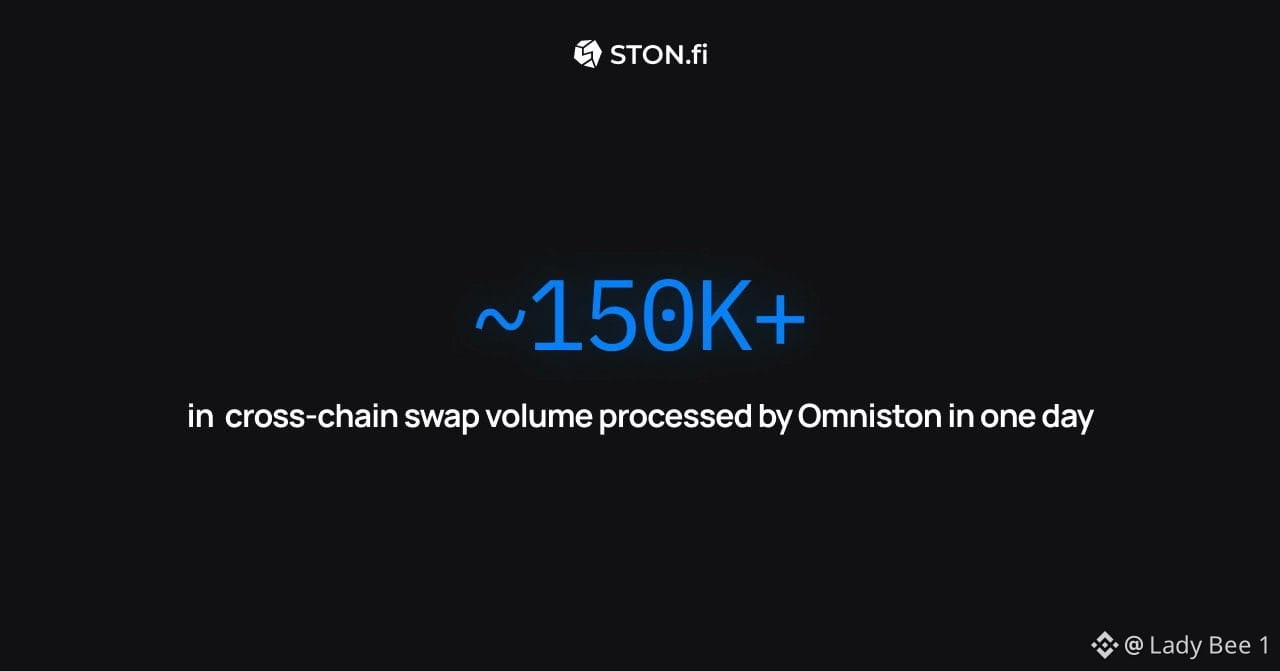
On August 25, Omniston, STON.fi’s cross-chain execution layer, processed roughly $150K in swap volume in a single day.
$150K may look small compared with the broader crypto market.
But the more interesting story is what that volume represents.
Crypto liquidity is still fragmented across chains.
$USDT can sit on one network, $USDC on another, while the DeFi opportunity you want may exist somewhere else.
The liquidity is there.
Moving it efficiently is the challenge.
This is where Omniston comes in.
Instead of making users navigate the complexity of different chains, bridges and liquidity routes themselves, Omniston is designed to coordinate cross-chain swaps underneath the interface.
Users choose what they have.
They choose what they want.
The infrastructure handles the cross-chain execution.
And now, we're seeing measurable activity.
$150K in daily volume means users are actually interacting with the system.
Swaps are happening.
Routes are being used.
Liquidity is moving between ecosystems.
That usage matters because real activity creates the data needed to understand where demand exists and where the infrastructure can improve.
But let's keep the milestone in perspective.
$150K doesn't mean cross-chain DeFi is solved.
It means the infrastructure is being used.
The real test is what happens next:
Can Omniston continue growing volume?
Can it attract deeper liquidity?
Can it make cross-chain swaps increasingly seamless?
That's the part worth watching. #STONfi #USDT #BTC
🚀 $150K in One Day: Omniston Hits a New Milestone
On August 25, Omniston, STON.fi’s cross-chain execution layer, processed roughly $150K in swap volume in a single day.
$150K may look small compared with the broader crypto market.
But the more interesting story is what that volume represents.
Crypto liquidity is still fragmented across chains.
$USDT can sit on one network, $USDC on another, while the DeFi opportunity you want may exist somewhere else.
The liquidity is there.
Moving it efficiently is the challenge.
This is where Omniston comes in.
Instead of making users navigate the complexity of different chains, bridges and liquidity routes themselves, Omniston is designed to coordinate cross-chain swaps underneath the interface.
Users choose what they have.
They choose what they want.
The infrastructure handles the cross-chain execution.
And now, we're seeing measurable activity.
$150K in daily volume means users are actually interacting with the system.
Swaps are happening.
Routes are being used.
Liquidity is moving between ecosystems.
That usage matters because real activity creates the data needed to understand where demand exists and where the infrastructure can improve.
But let's keep the milestone in perspective.
$150K doesn't mean cross-chain DeFi is solved.
It means the infrastructure is being used.
The real test is what happens next:
Can Omniston continue growing volume?
Can it attract deeper liquidity?
Can it make cross-chain swaps increasingly seamless?
That's the part worth watching. #STONfi #USDT #BTC
On August 25, Omniston, STON.fi’s cross-chain execution layer, processed roughly $150K in swap volume in a single day.
$150K may look small compared with the broader crypto market.
But the more interesting story is what that volume represents.
Crypto liquidity is still fragmented across chains.
$USDT can sit on one network, $USDC on another, while the DeFi opportunity you want may exist somewhere else.
The liquidity is there.
Moving it efficiently is the challenge.
This is where Omniston comes in.
Instead of making users navigate the complexity of different chains, bridges and liquidity routes themselves, Omniston is designed to coordinate cross-chain swaps underneath the interface.
Users choose what they have.
They choose what they want.
The infrastructure handles the cross-chain execution.
And now, we're seeing measurable activity.
$150K in daily volume means users are actually interacting with the system.
Swaps are happening.
Routes are being used.
Liquidity is moving between ecosystems.
That usage matters because real activity creates the data needed to understand where demand exists and where the infrastructure can improve.
But let's keep the milestone in perspective.
$150K doesn't mean cross-chain DeFi is solved.
It means the infrastructure is being used.
The real test is what happens next:
Can Omniston continue growing volume?
Can it attract deeper liquidity?
Can it make cross-chain swaps increasingly seamless?
That's the part worth watching. #STONfi #USDT #BTC
85
·
--
Hyperliquid Perps Are Coming to Telegram Through WenLong and Omniston
Perpetual futures are becoming more accessible through Telegram, with WenLong bringing Hyperliquid trading into the app and Omniston handling the cross chain asset movement.
Here’s how the flow works:
WenLong lets users access leveraged perpetuals from Telegram using assets held on $GRAM .
Behind the scenes, Omniston handles the cross chain swap, converting USDT on TON into $USDC on Arbitrum before routing the funds toward a Hyperliquid deposit.
The interesting part is the abstraction. Users don't need to manually manage the cross chain steps. The infrastructure handles that part while the application focuses on the trading experience.
This shows how cross chain infrastructure can make complex blockchain actions feel more like a normal application flow.
As Telegram continues to become a major entry point for crypto, integrations like this could make multi chain trading more accessible to everyday users.
As always, third party applications carry their own risks, so users should research them independently before interacting. #STONfi #TON ecosystem, here to discover the latest projects# #BTC
Hyperliquid Perps Are Coming to Telegram Through WenLong and Omniston
Perpetual futures are becoming more accessible through Telegram, with WenLong bringing Hyperliquid trading into the app and Omniston handling the cross chain asset movement.
Here’s how the flow works:
WenLong lets users access leveraged perpetuals from Telegram using assets held on $GRAM .
Behind the scenes, Omniston handles the cross chain swap, converting USDT on TON into $USDC on Arbitrum before routing the funds toward a Hyperliquid deposit.
The interesting part is the abstraction. Users don't need to manually manage the cross chain steps. The infrastructure handles that part while the application focuses on the trading experience.
This shows how cross chain infrastructure can make complex blockchain actions feel more like a normal application flow.
As Telegram continues to become a major entry point for crypto, integrations like this could make multi chain trading more accessible to everyday users.
As always, third party applications carry their own risks, so users should research them independently before interacting. #STONfi #TON ecosystem, here to discover the latest projects# #BTC
Perpetual futures are becoming more accessible through Telegram, with WenLong bringing Hyperliquid trading into the app and Omniston handling the cross chain asset movement.
Here’s how the flow works:
WenLong lets users access leveraged perpetuals from Telegram using assets held on $GRAM .
Behind the scenes, Omniston handles the cross chain swap, converting USDT on TON into $USDC on Arbitrum before routing the funds toward a Hyperliquid deposit.
The interesting part is the abstraction. Users don't need to manually manage the cross chain steps. The infrastructure handles that part while the application focuses on the trading experience.
This shows how cross chain infrastructure can make complex blockchain actions feel more like a normal application flow.
As Telegram continues to become a major entry point for crypto, integrations like this could make multi chain trading more accessible to everyday users.
As always, third party applications carry their own risks, so users should research them independently before interacting. #STONfi #TON ecosystem, here to discover the latest projects# #BTC
45
·
--
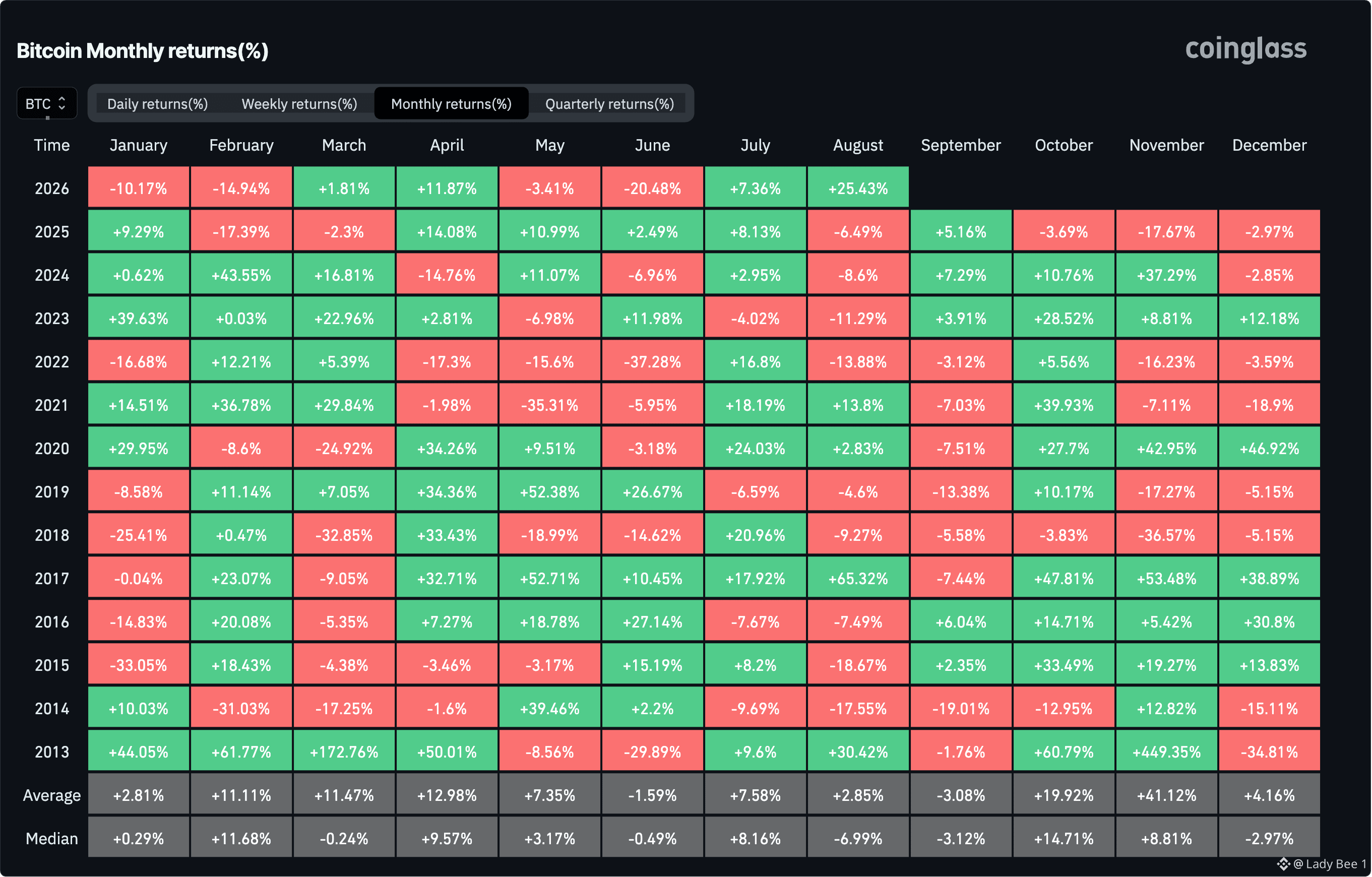
$BTC just survived its first serious test after the rally.
Now comes the important part.
Bitcoin is around $77K, but the $77.5K to $80K zone remains a key resistance area.
The next move could tell us a lot.
If BTC breaks and holds above $80K, it could signal renewed buyer strength.
If sellers reject the move, $74K to $76K becomes an important area to watch. Holding that zone would keep the broader bullish structure intact.
For now, I’m watching one thing:
Breakout or rejection?
What are you watching?
$BTC just survived its first serious test after the rally.
Now comes the important part.
Bitcoin is around $77K, but the $77.5K to $80K zone remains a key resistance area.
The next move could tell us a lot.
If BTC breaks and holds above $80K, it could signal renewed buyer strength.
If sellers reject the move, $74K to $76K becomes an important area to watch. Holding that zone would keep the broader bullish structure intact.
For now, I’m watching one thing:
Breakout or rejection?
What are you watching?
Now comes the important part.
Bitcoin is around $77K, but the $77.5K to $80K zone remains a key resistance area.
The next move could tell us a lot.
If BTC breaks and holds above $80K, it could signal renewed buyer strength.
If sellers reject the move, $74K to $76K becomes an important area to watch. Holding that zone would keep the broader bullish structure intact.
For now, I’m watching one thing:
Breakout or rejection?
What are you watching?
55
·
--
🗿 STON.fi Weekly Round Up
This week’s data gives a clearer picture of activity across TON DeFi.
STON.fi processed about 78% of DEX swap volume on $GRAM , while weekly swap volume reached $12.3M. TVL stood at $25.3M, with liquidity providers earning about $19,734.
Cross chain swaps also became more flexible, allowing users to send swapped assets directly to a different destination address.
The July Stonbassadors program distributed 12,554 $STON among 481 contributors, highlighting the growing role of community research and educational content.
On the liquidity side, active farm APRs currently range from 13% to 65%, depending on the pair.
The bigger picture is simple: TON’s DeFi activity continues to develop across trading, liquidity, cross chain infrastructure, and community participation. #STONfi #BTC Price Analysis# #BTC
🗿 STON.fi Weekly Round Up
This week’s data gives a clearer picture of activity across TON DeFi.
STON.fi processed about 78% of DEX swap volume on $GRAM , while weekly swap volume reached $12.3M. TVL stood at $25.3M, with liquidity providers earning about $19,734.
Cross chain swaps also became more flexible, allowing users to send swapped assets directly to a different destination address.
The July Stonbassadors program distributed 12,554 $STON among 481 contributors, highlighting the growing role of community research and educational content.
On the liquidity side, active farm APRs currently range from 13% to 65%, depending on the pair.
The bigger picture is simple: TON’s DeFi activity continues to develop across trading, liquidity, cross chain infrastructure, and community participation. #STONfi #BTC Price Analysis# #BTC
This week’s data gives a clearer picture of activity across TON DeFi.
STON.fi processed about 78% of DEX swap volume on $GRAM , while weekly swap volume reached $12.3M. TVL stood at $25.3M, with liquidity providers earning about $19,734.
Cross chain swaps also became more flexible, allowing users to send swapped assets directly to a different destination address.
The July Stonbassadors program distributed 12,554 $STON among 481 contributors, highlighting the growing role of community research and educational content.
On the liquidity side, active farm APRs currently range from 13% to 65%, depending on the pair.
The bigger picture is simple: TON’s DeFi activity continues to develop across trading, liquidity, cross chain infrastructure, and community participation. #STONfi #BTC Price Analysis# #BTC

82
·
--
📬 Cross-Chain Swaps on STON.fi Just Got More Flexible
Cross-chain swaps can now be completed without connecting a wallet on both chains.
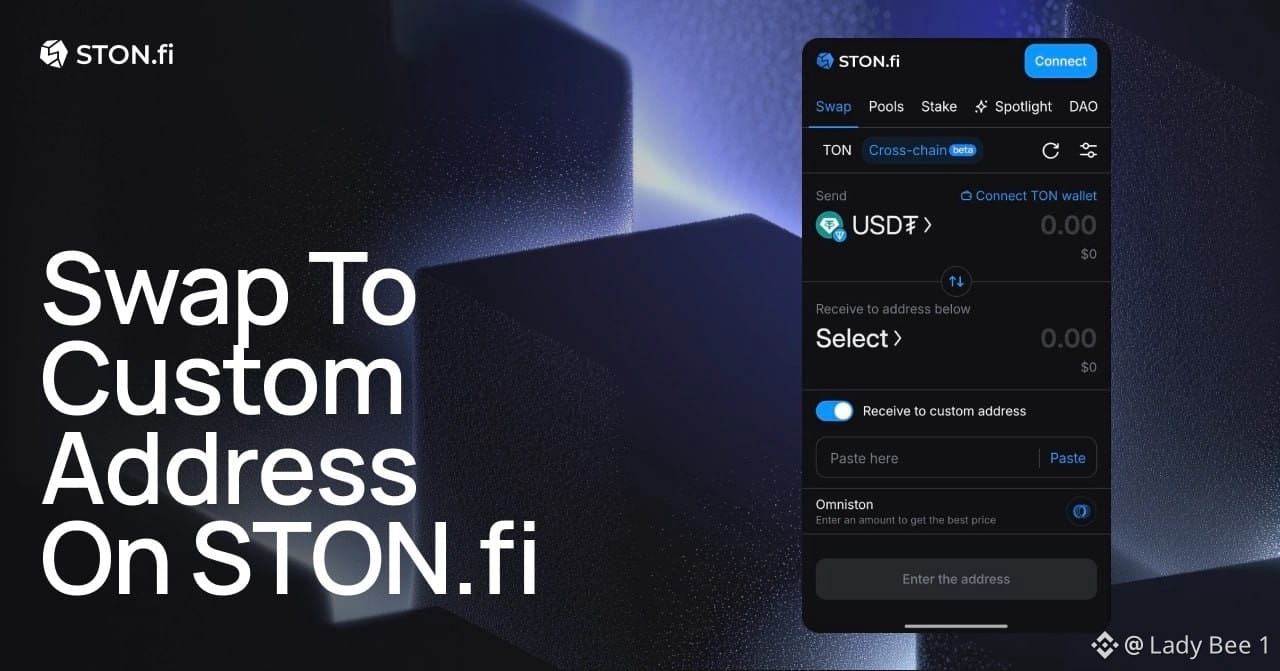
With STON.fi’s Custom Address option, you only need to connect the wallet you're swapping from. For the destination, simply paste the receiving wallet address and the swapped tokens will be sent there directly.
Here’s how it works:
1️⃣ Connect your source-chain wallet
2️⃣ Select the token and destination chain
3️⃣ Turn on “Receive to custom address”
4️⃣ Paste the destination wallet address
5️⃣ Confirm the swap
The feature is powered by Omniston, STON.fi’s cross-chain liquidity and swap infrastructure.
💎 Supported assets include:
• $USDT on $TON and $TRX
• USDT & USDC on Ethereum, BNB Chain, Base and Avalanche
• USDT0 & USDC on Arbitrum
• PUSD & $USDC on Polygon
• USDG on $HOOD Chain
The interesting part?
You can send the resulting assets to a wallet that isn't connected to STON.fi.
That can be useful when you want to swap from one wallet while directing the received tokens to another address.
⚠️ Always verify the destination address and network before confirming. A wrong address or unsupported destination can result in permanent loss of funds.
DYOR and verify the current supported assets and routes before swapping.
#STONfi #Macro #ROBINHOOD #Altcoin Season#
📬 Cross-Chain Swaps on STON.fi Just Got More Flexible
Cross-chain swaps can now be completed without connecting a wallet on both chains.
With STON.fi’s Custom Address option, you only need to connect the wallet you're swapping from. For the destination, simply paste the receiving wallet address and the swapped tokens will be sent there directly.
Here’s how it works:
1️⃣ Connect your source-chain wallet
2️⃣ Select the token and destination chain
3️⃣ Turn on “Receive to custom address”
4️⃣ Paste the destination wallet address
5️⃣ Confirm the swap
The feature is powered by Omniston, STON.fi’s cross-chain liquidity and swap infrastructure.
💎 Supported assets include:
• $USDT on $TON and $TRX
• USDT & USDC on Ethereum, BNB Chain, Base and Avalanche
• USDT0 & USDC on Arbitrum
• PUSD & $USDC on Polygon
• USDG on $HOOD Chain
The interesting part?
You can send the resulting assets to a wallet that isn't connected to STON.fi.
That can be useful when you want to swap from one wallet while directing the received tokens to another address.
⚠️ Always verify the destination address and network before confirming. A wrong address or unsupported destination can result in permanent loss of funds.
DYOR and verify the current supported assets and routes before swapping.
#STONfi #Macro #ROBINHOOD #Altcoin Season#
Cross-chain swaps can now be completed without connecting a wallet on both chains.
With STON.fi’s Custom Address option, you only need to connect the wallet you're swapping from. For the destination, simply paste the receiving wallet address and the swapped tokens will be sent there directly.
Here’s how it works:
1️⃣ Connect your source-chain wallet
2️⃣ Select the token and destination chain
3️⃣ Turn on “Receive to custom address”
4️⃣ Paste the destination wallet address
5️⃣ Confirm the swap
The feature is powered by Omniston, STON.fi’s cross-chain liquidity and swap infrastructure.
💎 Supported assets include:
• $USDT on $TON and $TRX
• USDT & USDC on Ethereum, BNB Chain, Base and Avalanche
• USDT0 & USDC on Arbitrum
• PUSD & $USDC on Polygon
• USDG on $HOOD Chain
The interesting part?
You can send the resulting assets to a wallet that isn't connected to STON.fi.
That can be useful when you want to swap from one wallet while directing the received tokens to another address.
⚠️ Always verify the destination address and network before confirming. A wrong address or unsupported destination can result in permanent loss of funds.
DYOR and verify the current supported assets and routes before swapping.
#STONfi #Macro #ROBINHOOD #Altcoin Season#
71
·
--
🚀 STON.fi Extends Boost Farm APR for STON/USDt V2
STON.fi has extended its Boost Farm APR campaign, giving STON stakers more time to increase their farming rewards in the $STON / $USDT V2 pool.
Here’s how the boost works:
• Stake 500+ STON → up to 1.5× farm APR
• Stake 1,000+ STON → up to 2× farm APR
• Farm in the eligible STON/USDt V2 pool
• The boosted portion is distributed in STON via airdrop
• Maximum eligible liquidity: $10,000 per participant
The important part: staking alone isn’t enough.
To qualify, you need to both stake STON in the STON.fi app and actively farm the eligible STON/USDt V2 pool. The boost remains active while your stake and farming position remain eligible during the campaign.
📅 Campaign period:
August 1 – August 31
🎁 Boosted rewards distribution:
Through September 10, according to the campaign rules.
This essentially gives $STON holders another utility for their staked tokens while contributing liquidity to the STON/USDt V2 market.
But remember: boosted APR does not remove the risks associated with liquidity provision, including impermanent loss and changing market conditions.
DYOR before staking or providing liquidity.
📖 Read the official STON.fi guide for the full mechanics and eligibility rules:
"STON.fi Boost Farm APR Guide" (https://reference-url-citation.invalid/2)
#STONfi #BTC #Macro
🚀 STON.fi Extends Boost Farm APR for STON/USDt V2
STON.fi has extended its Boost Farm APR campaign, giving STON stakers more time to increase their farming rewards in the $STON / $USDT V2 pool.
Here’s how the boost works:
• Stake 500+ STON → up to 1.5× farm APR
• Stake 1,000+ STON → up to 2× farm APR
• Farm in the eligible STON/USDt V2 pool
• The boosted portion is distributed in STON via airdrop
• Maximum eligible liquidity: $10,000 per participant
The important part: staking alone isn’t enough.
To qualify, you need to both stake STON in the STON.fi app and actively farm the eligible STON/USDt V2 pool. The boost remains active while your stake and farming position remain eligible during the campaign.
📅 Campaign period:
August 1 – August 31
🎁 Boosted rewards distribution:
Through September 10, according to the campaign rules.
This essentially gives $STON holders another utility for their staked tokens while contributing liquidity to the STON/USDt V2 market.
But remember: boosted APR does not remove the risks associated with liquidity provision, including impermanent loss and changing market conditions.
DYOR before staking or providing liquidity.
📖 Read the official STON.fi guide for the full mechanics and eligibility rules:
"STON.fi Boost Farm APR Guide" (https://reference-url-citation.invalid/2)
#STONfi #BTC #Macro
STON.fi has extended its Boost Farm APR campaign, giving STON stakers more time to increase their farming rewards in the $STON / $USDT V2 pool.
Here’s how the boost works:
• Stake 500+ STON → up to 1.5× farm APR
• Stake 1,000+ STON → up to 2× farm APR
• Farm in the eligible STON/USDt V2 pool
• The boosted portion is distributed in STON via airdrop
• Maximum eligible liquidity: $10,000 per participant
The important part: staking alone isn’t enough.
To qualify, you need to both stake STON in the STON.fi app and actively farm the eligible STON/USDt V2 pool. The boost remains active while your stake and farming position remain eligible during the campaign.
📅 Campaign period:
August 1 – August 31
🎁 Boosted rewards distribution:
Through September 10, according to the campaign rules.
This essentially gives $STON holders another utility for their staked tokens while contributing liquidity to the STON/USDt V2 market.
But remember: boosted APR does not remove the risks associated with liquidity provision, including impermanent loss and changing market conditions.
DYOR before staking or providing liquidity.
📖 Read the official STON.fi guide for the full mechanics and eligibility rules:
"STON.fi Boost Farm APR Guide" (https://reference-url-citation.invalid/2)
#STONfi #BTC #Macro
3
·
--
Moving liquidity from $ETH , $BNB Chain, or Base into $GRAM DeFi is becoming easier.
But there’s still one important question:
Which route should you take?
There are two common approaches.
1️⃣ Bridge
Your asset is locked on the source chain and a wrapped Jetton is issued on TON.
2️⃣ Atomic swap via Omniston
Instead of receiving a wrapped representation, Omniston, STON.fi’s cross-chain execution layer, facilitates the swap into a native TON asset using paired Hashed Timelock Contracts (HTLCs).
Both approaches can work.
But they create a different experience on the destination chain.
For users who want to move into TON DeFi and immediately use the asset that arrives, the atomic-swap route can offer a cleaner experience.
Why?
⚡ No traditional bridge waiting period
The cross-chain swap settles through the atomic-swap mechanism rather than relying on the conventional lock-and-mint bridge model.
📊 Price impact is locked at confirmation
You know the swap terms before confirming the transaction, rather than discovering the final outcome after a longer bridging process.
This is where cross-chain infrastructure becomes more than just moving tokens between networks.
It becomes about making liquidity feel native wherever it lands.
And that’s the role Omniston is designed to play within the STON.fi ecosystem.
#STON #TON #Crypto #DeFi
Moving liquidity from $ETH , $BNB Chain, or Base into $GRAM DeFi is becoming easier.
But there’s still one important question:
Which route should you take?
There are two common approaches.
1️⃣ Bridge
Your asset is locked on the source chain and a wrapped Jetton is issued on TON.
2️⃣ Atomic swap via Omniston
Instead of receiving a wrapped representation, Omniston, STON.fi’s cross-chain execution layer, facilitates the swap into a native TON asset using paired Hashed Timelock Contracts (HTLCs).
Both approaches can work.
But they create a different experience on the destination chain.
For users who want to move into TON DeFi and immediately use the asset that arrives, the atomic-swap route can offer a cleaner experience.
Why?
⚡ No traditional bridge waiting period
The cross-chain swap settles through the atomic-swap mechanism rather than relying on the conventional lock-and-mint bridge model.
📊 Price impact is locked at confirmation
You know the swap terms before confirming the transaction, rather than discovering the final outcome after a longer bridging process.
This is where cross-chain infrastructure becomes more than just moving tokens between networks.
It becomes about making liquidity feel native wherever it lands.
And that’s the role Omniston is designed to play within the STON.fi ecosystem.
#STON #TON #Crypto #DeFi
But there’s still one important question:
Which route should you take?
There are two common approaches.
1️⃣ Bridge
Your asset is locked on the source chain and a wrapped Jetton is issued on TON.
2️⃣ Atomic swap via Omniston
Instead of receiving a wrapped representation, Omniston, STON.fi’s cross-chain execution layer, facilitates the swap into a native TON asset using paired Hashed Timelock Contracts (HTLCs).
Both approaches can work.
But they create a different experience on the destination chain.
For users who want to move into TON DeFi and immediately use the asset that arrives, the atomic-swap route can offer a cleaner experience.
Why?
⚡ No traditional bridge waiting period
The cross-chain swap settles through the atomic-swap mechanism rather than relying on the conventional lock-and-mint bridge model.
📊 Price impact is locked at confirmation
You know the swap terms before confirming the transaction, rather than discovering the final outcome after a longer bridging process.
This is where cross-chain infrastructure becomes more than just moving tokens between networks.
It becomes about making liquidity feel native wherever it lands.
And that’s the role Omniston is designed to play within the STON.fi ecosystem.
#STON #TON #Crypto #DeFi
53
·
--
🗿 Telegram’s Gram Wallet Is Coming. What Will Builders Create?
Telegram-native crypto could be entering a new phase with the upcoming launch of the non-custodial Gram Wallet.
But the bigger question is:
What will people actually build around it?
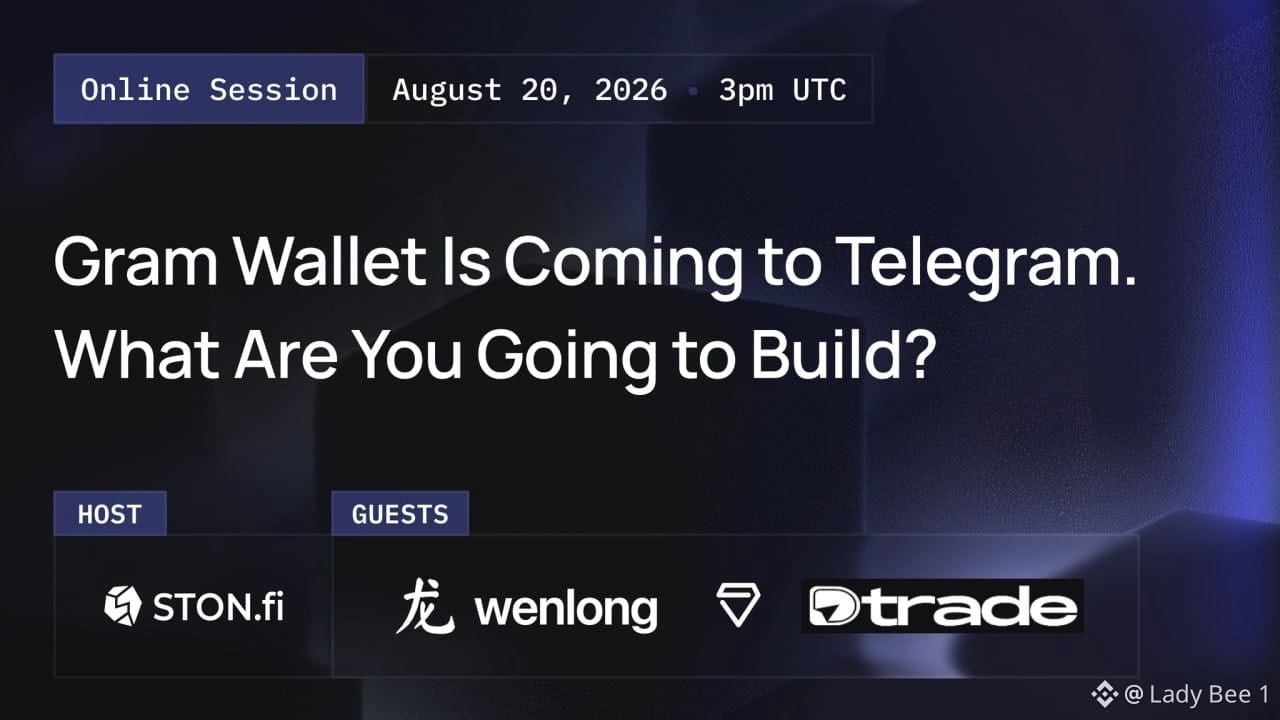
On August 20, STON.fi is bringing builders and the community together for a live discussion around the future of Telegram-native crypto products.
📅 August 20
⏰ 15:00 UTC
The discussion will cover:
• What WenLong, Gram Store and DTrade are building
• How users interact with Telegram-native products today
• What builders expect from the Gram Wallet launch
• How STON.fi infrastructure can support this emerging ecosystem
There’ll also be a live community poll, with the results becoming part of the conversation.
🎁 And there’s a reward for staying until the end.
A question will be asked by the speakers. Submit your answer under the official event post on X by August 21, 15:00 UTC for a chance to share 150 STON:
• 1 best answer → 70 $STON
• 2 random winners → 40 $STON each
The interesting part isn't just the wallet.
It's what gets built once millions of Telegram users can interact with crypto infrastructure more natively.
Mark your calendar.
📅 August 20 · 15:00 UTC
#STONfi i #TON #Macro Insights# #BTC
🗿 Telegram’s Gram Wallet Is Coming. What Will Builders Create?
Telegram-native crypto could be entering a new phase with the upcoming launch of the non-custodial Gram Wallet.
But the bigger question is:
What will people actually build around it?
On August 20, STON.fi is bringing builders and the community together for a live discussion around the future of Telegram-native crypto products.
📅 August 20
⏰ 15:00 UTC
The discussion will cover:
• What WenLong, Gram Store and DTrade are building
• How users interact with Telegram-native products today
• What builders expect from the Gram Wallet launch
• How STON.fi infrastructure can support this emerging ecosystem
There’ll also be a live community poll, with the results becoming part of the conversation.
🎁 And there’s a reward for staying until the end.
A question will be asked by the speakers. Submit your answer under the official event post on X by August 21, 15:00 UTC for a chance to share 150 STON:
• 1 best answer → 70 $STON
• 2 random winners → 40 $STON each
The interesting part isn't just the wallet.
It's what gets built once millions of Telegram users can interact with crypto infrastructure more natively.
Mark your calendar.
📅 August 20 · 15:00 UTC
#STONfi i #TON #Macro Insights# #BTC
Telegram-native crypto could be entering a new phase with the upcoming launch of the non-custodial Gram Wallet.
But the bigger question is:
What will people actually build around it?
On August 20, STON.fi is bringing builders and the community together for a live discussion around the future of Telegram-native crypto products.
📅 August 20
⏰ 15:00 UTC
The discussion will cover:
• What WenLong, Gram Store and DTrade are building
• How users interact with Telegram-native products today
• What builders expect from the Gram Wallet launch
• How STON.fi infrastructure can support this emerging ecosystem
There’ll also be a live community poll, with the results becoming part of the conversation.
🎁 And there’s a reward for staying until the end.
A question will be asked by the speakers. Submit your answer under the official event post on X by August 21, 15:00 UTC for a chance to share 150 STON:
• 1 best answer → 70 $STON
• 2 random winners → 40 $STON each
The interesting part isn't just the wallet.
It's what gets built once millions of Telegram users can interact with crypto infrastructure more natively.
Mark your calendar.
📅 August 20 · 15:00 UTC
#STONfi i #TON #Macro Insights# #BTC
73
·
--
STON.fi Expands Cross-Chain Reach with TRON Integration
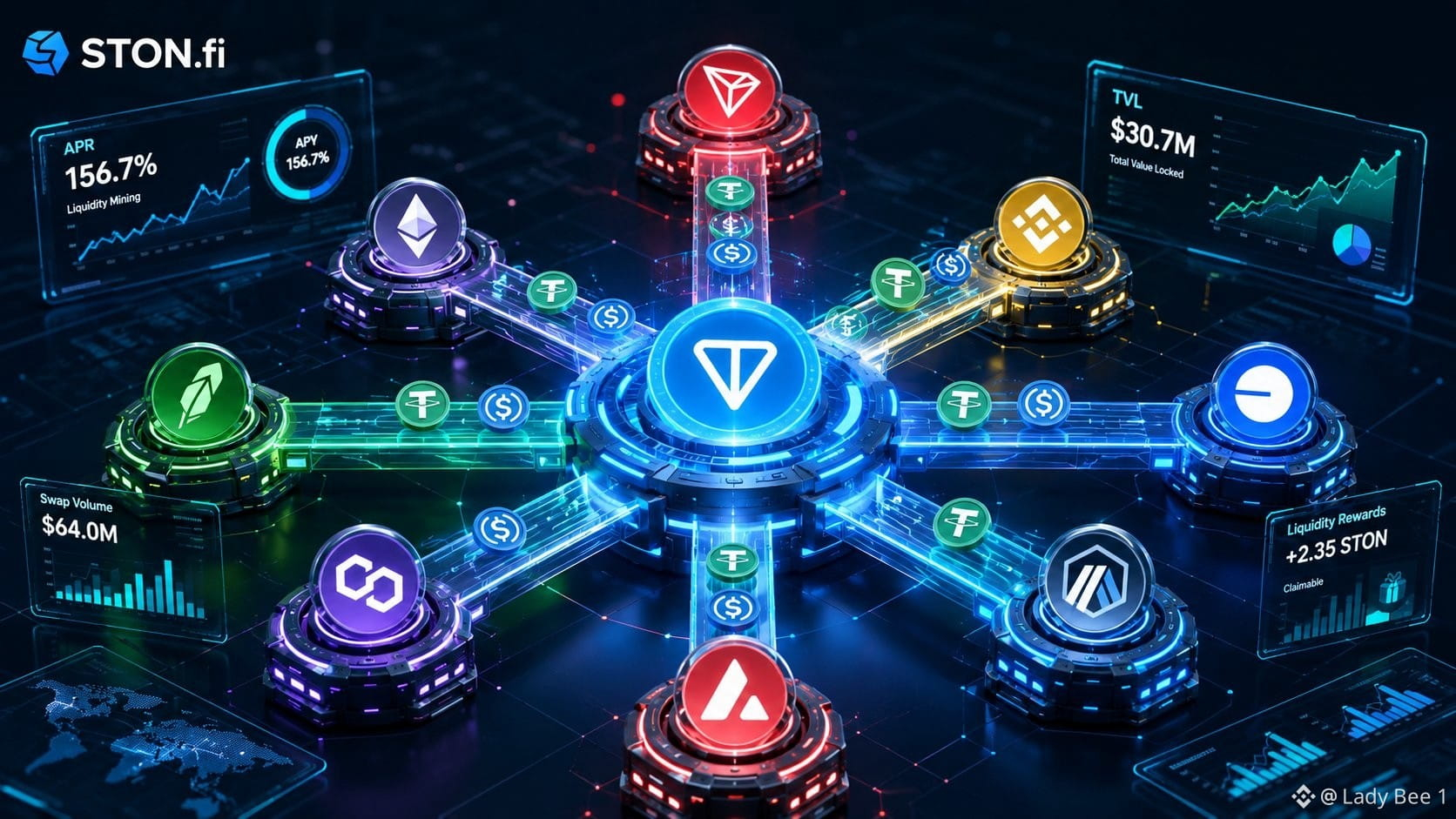
STON.fi introduced support for $TRX cross-chain swaps via Omniston, enabling users to transfer supported stablecoins across $GRAM , TRON, and major EVM networks within a single self-custodial transaction, eliminating the need for separate bridges or multiple applications.
Alongside the integration, the platform launched several new tools designed to enhance the DeFi experience, including:
- APR/APY Calculator
- Impermanent Loss Calculator
- Daily Pool Updates
Weekly On-Chain Highlights:
- 14.6M TON in swap volume
- 18.1M TON in total value locked (TVL)
- 33,382 TON distributed in liquidity provider (LP) rewards
The latest updates reflect STON.fi's continued focus on simplifying cross-chain DeFi by improving accessibility, streamlining user experience, and expanding interoperability across blockchain ecosystems.
#STONfi i #TON #TRON #Macro Insights#
STON.fi Expands Cross-Chain Reach with TRON Integration
STON.fi introduced support for $TRX cross-chain swaps via Omniston, enabling users to transfer supported stablecoins across $GRAM , TRON, and major EVM networks within a single self-custodial transaction, eliminating the need for separate bridges or multiple applications.
Alongside the integration, the platform launched several new tools designed to enhance the DeFi experience, including:
- APR/APY Calculator
- Impermanent Loss Calculator
- Daily Pool Updates
Weekly On-Chain Highlights:
- 14.6M TON in swap volume
- 18.1M TON in total value locked (TVL)
- 33,382 TON distributed in liquidity provider (LP) rewards
The latest updates reflect STON.fi's continued focus on simplifying cross-chain DeFi by improving accessibility, streamlining user experience, and expanding interoperability across blockchain ecosystems.
#STONfi i #TON #TRON #Macro Insights#
STON.fi introduced support for $TRX cross-chain swaps via Omniston, enabling users to transfer supported stablecoins across $GRAM , TRON, and major EVM networks within a single self-custodial transaction, eliminating the need for separate bridges or multiple applications.
Alongside the integration, the platform launched several new tools designed to enhance the DeFi experience, including:
- APR/APY Calculator
- Impermanent Loss Calculator
- Daily Pool Updates
Weekly On-Chain Highlights:
- 14.6M TON in swap volume
- 18.1M TON in total value locked (TVL)
- 33,382 TON distributed in liquidity provider (LP) rewards
The latest updates reflect STON.fi's continued focus on simplifying cross-chain DeFi by improving accessibility, streamlining user experience, and expanding interoperability across blockchain ecosystems.
#STONfi i #TON #TRON #Macro Insights#
71
·
--
> Six days ago, it was a $2.5B $BTC bull call spread targeting the $70K to $72K range by month end.
Today, it's become "$5B in whale bets on Bitcoin."
The catch? The $5B figure reflects options open interest, not $5B in fresh capital or spot BTC purchases.
A large portion includes the original bull call spread, a strategy that buys the $70K call and sells the $72K call, reducing cost while capping upside.
That's a bullish position, but it's not an unlimited bet on Bitcoin.
Reports of large wallet accumulation are interesting, but they don't prove those holders own the options or that both datasets represent the same investors.
Bitcoin could still reach $70K. But open interest isn't spot inflow, notional isn't new money, and a strike price isn't a prediction.
Sometimes the market narrative grows faster than the trade itself.
#Bitcoin #Crypto #Options #MarketNarratives
> Six days ago, it was a $2.5B $BTC bull call spread targeting the $70K to $72K range by month end.
Today, it's become "$5B in whale bets on Bitcoin."
The catch? The $5B figure reflects options open interest, not $5B in fresh capital or spot BTC purchases.
A large portion includes the original bull call spread, a strategy that buys the $70K call and sells the $72K call, reducing cost while capping upside.
That's a bullish position, but it's not an unlimited bet on Bitcoin.
Reports of large wallet accumulation are interesting, but they don't prove those holders own the options or that both datasets represent the same investors.
Bitcoin could still reach $70K. But open interest isn't spot inflow, notional isn't new money, and a strike price isn't a prediction.
Sometimes the market narrative grows faster than the trade itself.
#Bitcoin #Crypto #Options #MarketNarratives
Today, it's become "$5B in whale bets on Bitcoin."
The catch? The $5B figure reflects options open interest, not $5B in fresh capital or spot BTC purchases.
A large portion includes the original bull call spread, a strategy that buys the $70K call and sells the $72K call, reducing cost while capping upside.
That's a bullish position, but it's not an unlimited bet on Bitcoin.
Reports of large wallet accumulation are interesting, but they don't prove those holders own the options or that both datasets represent the same investors.
Bitcoin could still reach $70K. But open interest isn't spot inflow, notional isn't new money, and a strike price isn't a prediction.
Sometimes the market narrative grows faster than the trade itself.
#Bitcoin #Crypto #Options #MarketNarratives
42
·
--
Making better DeFi decisions starts with understanding the numbers, not just chasing the highest APR.
$STON offers three useful tools that can help you evaluate liquidity opportunities before committing funds.
First is the APR Calculator. By entering your deposit amount, annual interest rate, and investment period, you can estimate potential returns under both simple and compound interest scenarios. It's a practical way to compare different assumptions and understand how changing variables may affect projected outcomes.
Next is the STON.fi Pools Updates Telegram channel. Instead of manually checking pools, you can receive daily snapshots of top pools ranked by APR, making it easier to monitor changes over time.
The third tool is the Impermanent Loss Calculator. Since impermanent loss is one of the most important risks for liquidity providers, this calculator helps estimate how changes in token prices could impact your position compared to simply holding the assets.
These tools are designed to support research, not replace it. The estimates they provide are for educational purposes and should not be treated as guaranteed returns or actual outcomes. Understanding potential rewards, monitoring pool performance, and evaluating risks together can lead to more informed DeFi decisions. #STONfi #BTC Price Analysis# #Crypto
Making better DeFi decisions starts with understanding the numbers, not just chasing the highest APR.
$STON offers three useful tools that can help you evaluate liquidity opportunities before committing funds.
First is the APR Calculator. By entering your deposit amount, annual interest rate, and investment period, you can estimate potential returns under both simple and compound interest scenarios. It's a practical way to compare different assumptions and understand how changing variables may affect projected outcomes.
Next is the STON.fi Pools Updates Telegram channel. Instead of manually checking pools, you can receive daily snapshots of top pools ranked by APR, making it easier to monitor changes over time.
The third tool is the Impermanent Loss Calculator. Since impermanent loss is one of the most important risks for liquidity providers, this calculator helps estimate how changes in token prices could impact your position compared to simply holding the assets.
These tools are designed to support research, not replace it. The estimates they provide are for educational purposes and should not be treated as guaranteed returns or actual outcomes. Understanding potential rewards, monitoring pool performance, and evaluating risks together can lead to more informed DeFi decisions. #STONfi #BTC Price Analysis# #Crypto
$STON offers three useful tools that can help you evaluate liquidity opportunities before committing funds.
First is the APR Calculator. By entering your deposit amount, annual interest rate, and investment period, you can estimate potential returns under both simple and compound interest scenarios. It's a practical way to compare different assumptions and understand how changing variables may affect projected outcomes.
Next is the STON.fi Pools Updates Telegram channel. Instead of manually checking pools, you can receive daily snapshots of top pools ranked by APR, making it easier to monitor changes over time.
The third tool is the Impermanent Loss Calculator. Since impermanent loss is one of the most important risks for liquidity providers, this calculator helps estimate how changes in token prices could impact your position compared to simply holding the assets.
These tools are designed to support research, not replace it. The estimates they provide are for educational purposes and should not be treated as guaranteed returns or actual outcomes. Understanding potential rewards, monitoring pool performance, and evaluating risks together can lead to more informed DeFi decisions. #STONfi #BTC Price Analysis# #Crypto

41
·
--
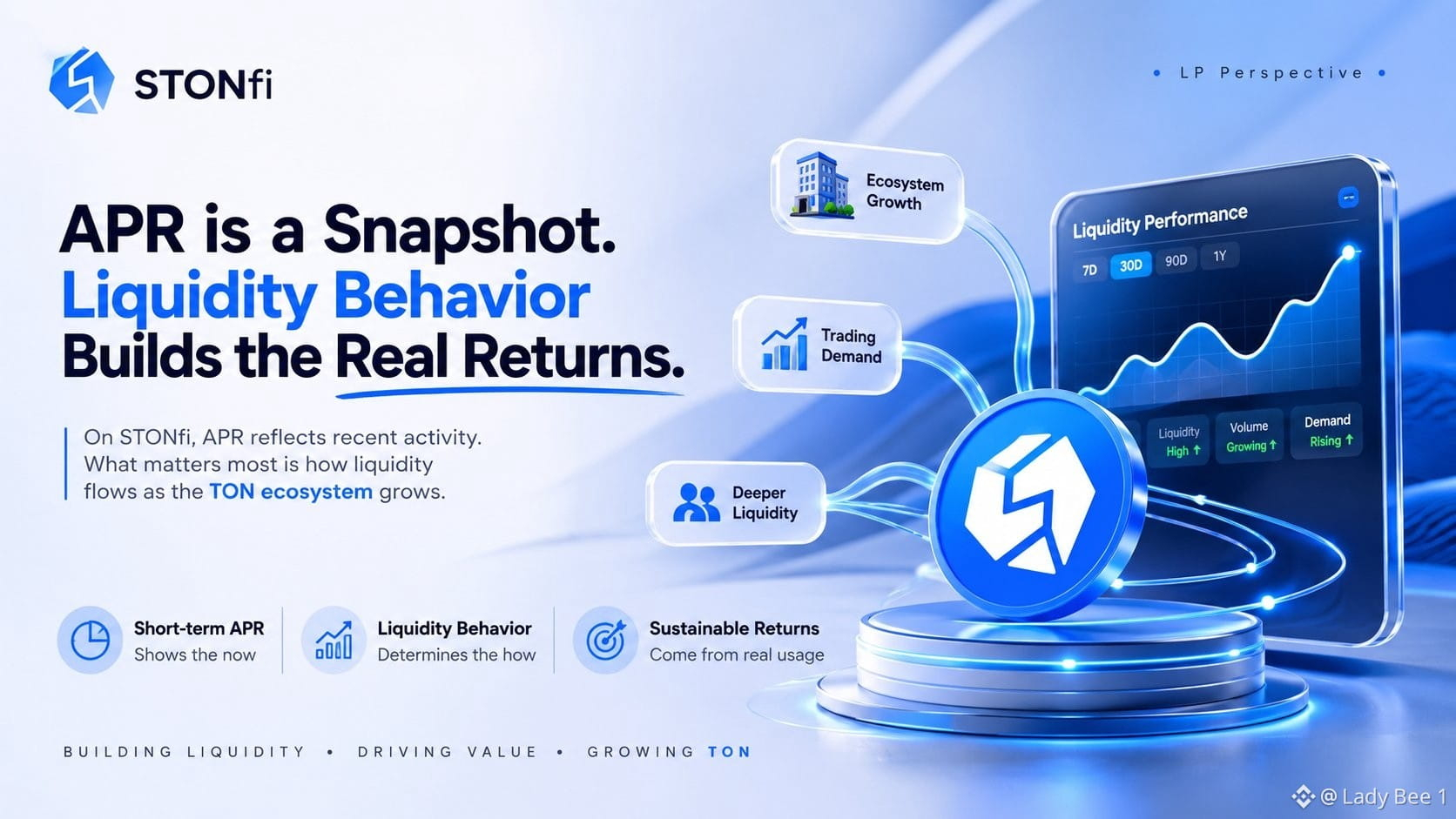
Many people treat APR as if it's a guaranteed return, but that's not how liquidity pools work. On $STON , APR is only a snapshot of recent trading activity, not a promise of future earnings. What actually shapes long term returns is trading volume, your share of the liquidity pool, and how the TON ecosystem evolves over time.
Every swap on STONfi generates trading fees, and a portion of those fees is allocated to liquidity providers. This means LP returns are driven by real trading activity rather than relying only on token incentives. As adoption and on chain activity grow, sustainable trading volume becomes an increasingly important factor.
Your earnings also depend on your ownership of the pool. For example, if you hold 2 percent of the LP tokens, you generally receive about 2 percent of the fees generated by the pool. However, that share changes as new liquidity enters or existing liquidity leaves, making capital flows just as important to monitor as APR.
Another feature worth understanding is that STONfi keeps LP fees within the pool instead of distributing them after every trade. This increases the value of LP tokens over time and creates an automatic compounding effect.
Of course, returns are not without risk. Impermanent loss can reduce performance compared to simply holding the underlying assets, especially during periods of high price volatility. That's why experienced liquidity providers evaluate trading volume, liquidity depth, price behavior, and broader ecosystem growth together rather than focusing on APR alone.
The key takeaway is simple. APR is only one data point. A better understanding of LP performance comes from looking at trading activity, ownership share, fee generation, and the risks involved. If you're exploring liquidity provision on $GRAM , the STONfi developer documentation is a useful resource for learning how the protocol works before making any decisions. #STONfi #Macro #TON ecosystem, here to discover the latest projects#
Many people treat APR as if it's a guaranteed return, but that's not how liquidity pools work. On $STON , APR is only a snapshot of recent trading activity, not a promise of future earnings. What actually shapes long term returns is trading volume, your share of the liquidity pool, and how the TON ecosystem evolves over time.
Every swap on STONfi generates trading fees, and a portion of those fees is allocated to liquidity providers. This means LP returns are driven by real trading activity rather than relying only on token incentives. As adoption and on chain activity grow, sustainable trading volume becomes an increasingly important factor.
Your earnings also depend on your ownership of the pool. For example, if you hold 2 percent of the LP tokens, you generally receive about 2 percent of the fees generated by the pool. However, that share changes as new liquidity enters or existing liquidity leaves, making capital flows just as important to monitor as APR.
Another feature worth understanding is that STONfi keeps LP fees within the pool instead of distributing them after every trade. This increases the value of LP tokens over time and creates an automatic compounding effect.
Of course, returns are not without risk. Impermanent loss can reduce performance compared to simply holding the underlying assets, especially during periods of high price volatility. That's why experienced liquidity providers evaluate trading volume, liquidity depth, price behavior, and broader ecosystem growth together rather than focusing on APR alone.
The key takeaway is simple. APR is only one data point. A better understanding of LP performance comes from looking at trading activity, ownership share, fee generation, and the risks involved. If you're exploring liquidity provision on $GRAM , the STONfi developer documentation is a useful resource for learning how the protocol works before making any decisions. #STONfi #Macro #TON ecosystem, here to discover the latest projects#
Every swap on STONfi generates trading fees, and a portion of those fees is allocated to liquidity providers. This means LP returns are driven by real trading activity rather than relying only on token incentives. As adoption and on chain activity grow, sustainable trading volume becomes an increasingly important factor.
Your earnings also depend on your ownership of the pool. For example, if you hold 2 percent of the LP tokens, you generally receive about 2 percent of the fees generated by the pool. However, that share changes as new liquidity enters or existing liquidity leaves, making capital flows just as important to monitor as APR.
Another feature worth understanding is that STONfi keeps LP fees within the pool instead of distributing them after every trade. This increases the value of LP tokens over time and creates an automatic compounding effect.
Of course, returns are not without risk. Impermanent loss can reduce performance compared to simply holding the underlying assets, especially during periods of high price volatility. That's why experienced liquidity providers evaluate trading volume, liquidity depth, price behavior, and broader ecosystem growth together rather than focusing on APR alone.
The key takeaway is simple. APR is only one data point. A better understanding of LP performance comes from looking at trading activity, ownership share, fee generation, and the risks involved. If you're exploring liquidity provision on $GRAM , the STONfi developer documentation is a useful resource for learning how the protocol works before making any decisions. #STONfi #Macro #TON ecosystem, here to discover the latest projects#
42
·
--
STON.fi has expanded its cross chain swap capabilities with the addition of TRON, connecting one of the largest stablecoin ecosystems to $GRAM through a unified self custodial interface.
The integration enables users to swap supported stablecoins across TON, $TRX , Ethereum, $BNB Chain, Base, Avalanche, Arbitrum, Polygon, and Robinhood Chain. According to STON.fi, cross chain execution is powered by Omniston, which coordinates transactions from quote to settlement while displaying the final amount before confirmation.
Most transactions are expected to complete within 15 to 40 seconds, although the platform currently applies a temporary transaction limit of $1,000 per swap during the initial rollout.
The launch reflects STON.fi's continued focus on improving blockchain interoperability and simplifying stablecoin transfers across multiple networks. As always, users should conduct their own research before interacting with any DeFi protocol or digital asset. #STONfi #Macro Insights# #BNB
STON.fi has expanded its cross chain swap capabilities with the addition of TRON, connecting one of the largest stablecoin ecosystems to $GRAM through a unified self custodial interface.
The integration enables users to swap supported stablecoins across TON, $TRX , Ethereum, $BNB Chain, Base, Avalanche, Arbitrum, Polygon, and Robinhood Chain. According to STON.fi, cross chain execution is powered by Omniston, which coordinates transactions from quote to settlement while displaying the final amount before confirmation.
Most transactions are expected to complete within 15 to 40 seconds, although the platform currently applies a temporary transaction limit of $1,000 per swap during the initial rollout.
The launch reflects STON.fi's continued focus on improving blockchain interoperability and simplifying stablecoin transfers across multiple networks. As always, users should conduct their own research before interacting with any DeFi protocol or digital asset. #STONfi #Macro Insights# #BNB
The integration enables users to swap supported stablecoins across TON, $TRX , Ethereum, $BNB Chain, Base, Avalanche, Arbitrum, Polygon, and Robinhood Chain. According to STON.fi, cross chain execution is powered by Omniston, which coordinates transactions from quote to settlement while displaying the final amount before confirmation.
Most transactions are expected to complete within 15 to 40 seconds, although the platform currently applies a temporary transaction limit of $1,000 per swap during the initial rollout.
The launch reflects STON.fi's continued focus on improving blockchain interoperability and simplifying stablecoin transfers across multiple networks. As always, users should conduct their own research before interacting with any DeFi protocol or digital asset. #STONfi #Macro Insights# #BNB

79
·
--
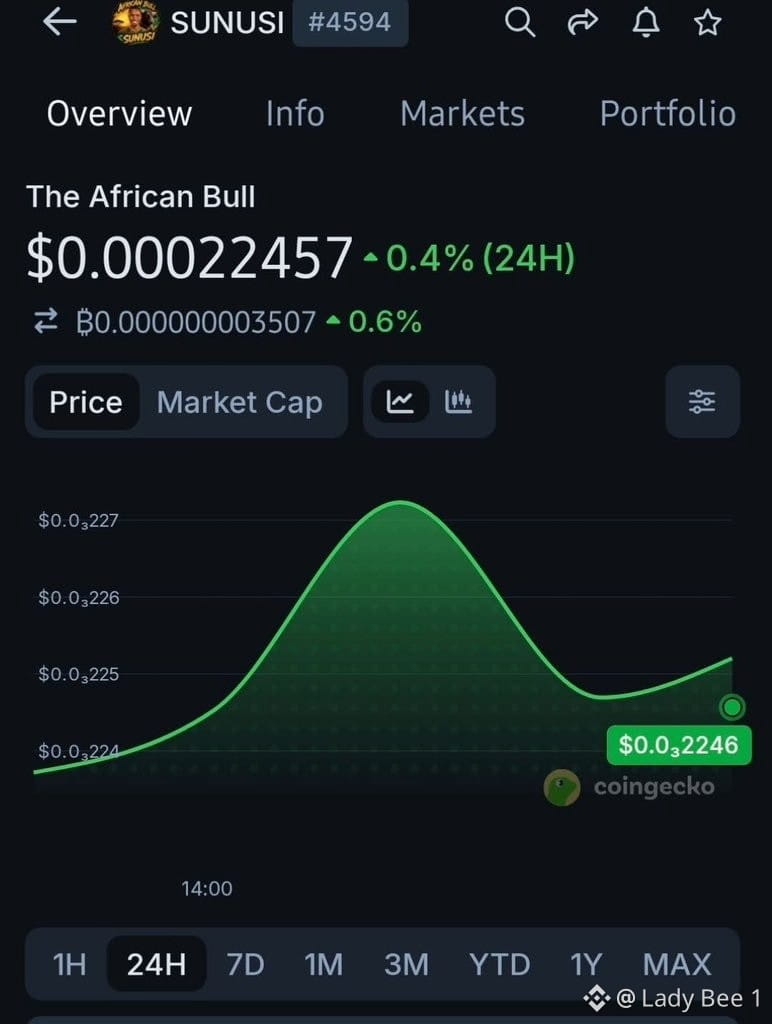
$SUNUSI has been launched on coingecko something is coming
$SUNUSI has been launched on coingecko something is coming
56
·
--
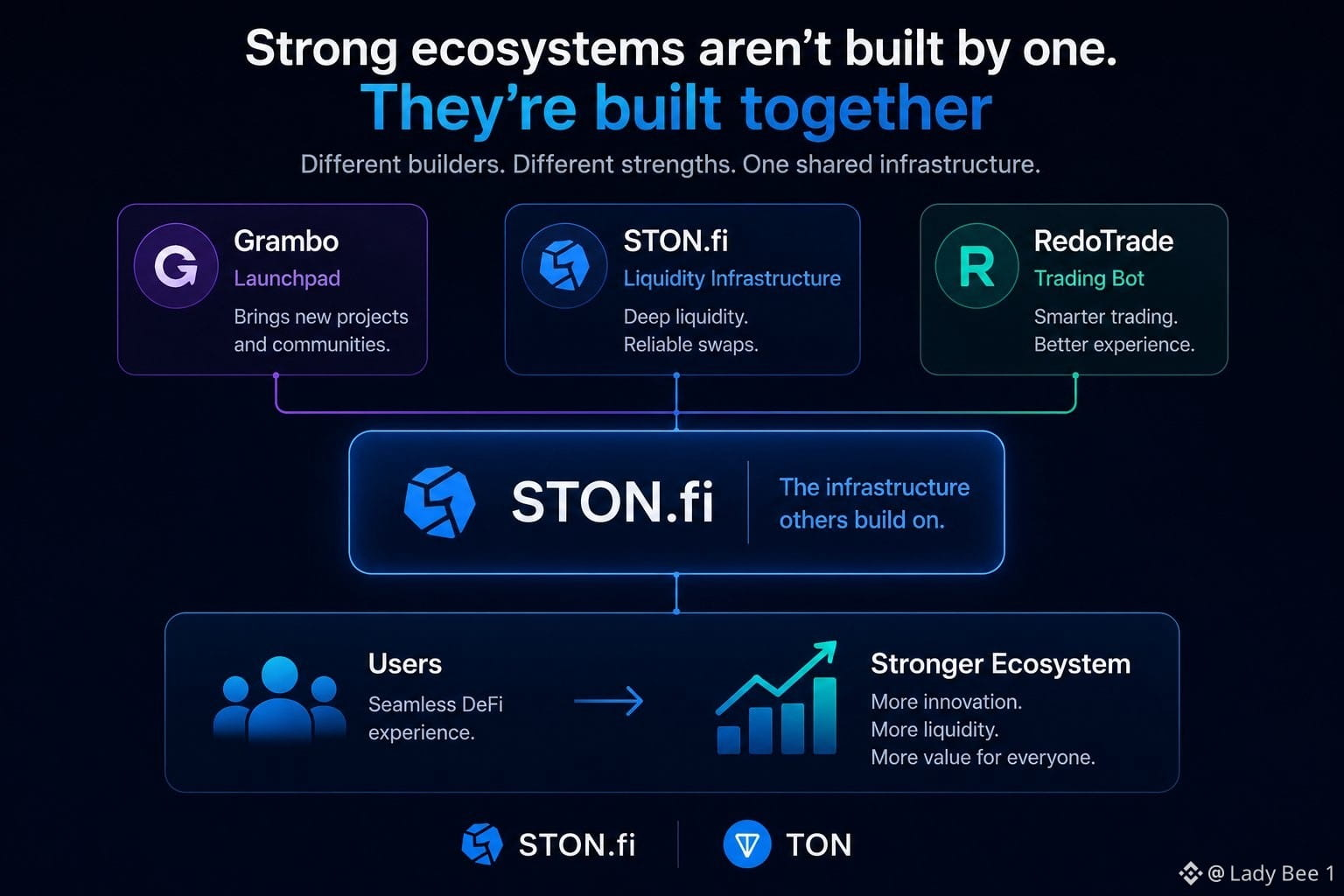
The growth of a blockchain ecosystem is rarely driven by a single application. Instead, it often comes from multiple protocols and services working together to create a more complete user experience. Within the $GRAM ecosystem, projects such as Grambo and RedoTrade have integrated STON.fi infrastructure to support their products. These integrations demonstrate how shared liquidity and trading infrastructure can help developers focus on building unique features while contributing to a more connected ecosystem. As additional applications leverage common infrastructure, collaboration may become a key driver of innovation, improving accessibility, liquidity, and functionality across the TON DeFi landscape. As always, users should conduct their own research before interacting with any protocol or digital asset. #Gram #Stonfi #Crypto
The growth of a blockchain ecosystem is rarely driven by a single application. Instead, it often comes from multiple protocols and services working together to create a more complete user experience. Within the $GRAM ecosystem, projects such as Grambo and RedoTrade have integrated STON.fi infrastructure to support their products. These integrations demonstrate how shared liquidity and trading infrastructure can help developers focus on building unique features while contributing to a more connected ecosystem. As additional applications leverage common infrastructure, collaboration may become a key driver of innovation, improving accessibility, liquidity, and functionality across the TON DeFi landscape. As always, users should conduct their own research before interacting with any protocol or digital asset. #Gram #Stonfi #Crypto
76
·
--
STON.fi has expanded its cross chain swap functionality with support for Robinhood Chain, providing $GRAM users with access to assets on the newly launched EVM compatible Layer 2 network.
The integration enables swaps between supported stablecoins across multiple blockchain networks, including TON, Robinhood Chain, Ethereum, $BNB Chain, Base, Avalanche, Arbitrum, and Polygon. According to STON.fi, cross chain execution is powered by Omniston, which coordinates the transaction from quote to settlement while displaying the final amount before confirmation.
Robinhood Chain is designed to support on chain financial applications, while USDG serves as its US dollar pegged stablecoin for blockchain based payments and liquidity.
At launch, STON.fi noted that cross chain swap transactions on Robinhood Chain are temporarily capped at $1,000 per transaction. The integration represents another step toward improving interoperability and simplifying asset transfers across blockchain ecosystems.
As always, users should conduct their own research before interacting with any DeFi protocol or digital asset. #Gram #Robinhood #Macro Insights#
STON.fi has expanded its cross chain swap functionality with support for Robinhood Chain, providing $GRAM users with access to assets on the newly launched EVM compatible Layer 2 network.
The integration enables swaps between supported stablecoins across multiple blockchain networks, including TON, Robinhood Chain, Ethereum, $BNB Chain, Base, Avalanche, Arbitrum, and Polygon. According to STON.fi, cross chain execution is powered by Omniston, which coordinates the transaction from quote to settlement while displaying the final amount before confirmation.
Robinhood Chain is designed to support on chain financial applications, while USDG serves as its US dollar pegged stablecoin for blockchain based payments and liquidity.
At launch, STON.fi noted that cross chain swap transactions on Robinhood Chain are temporarily capped at $1,000 per transaction. The integration represents another step toward improving interoperability and simplifying asset transfers across blockchain ecosystems.
As always, users should conduct their own research before interacting with any DeFi protocol or digital asset. #Gram #Robinhood #Macro Insights#
The integration enables swaps between supported stablecoins across multiple blockchain networks, including TON, Robinhood Chain, Ethereum, $BNB Chain, Base, Avalanche, Arbitrum, and Polygon. According to STON.fi, cross chain execution is powered by Omniston, which coordinates the transaction from quote to settlement while displaying the final amount before confirmation.
Robinhood Chain is designed to support on chain financial applications, while USDG serves as its US dollar pegged stablecoin for blockchain based payments and liquidity.
At launch, STON.fi noted that cross chain swap transactions on Robinhood Chain are temporarily capped at $1,000 per transaction. The integration represents another step toward improving interoperability and simplifying asset transfers across blockchain ecosystems.
As always, users should conduct their own research before interacting with any DeFi protocol or digital asset. #Gram #Robinhood #Macro Insights#

66
·
--
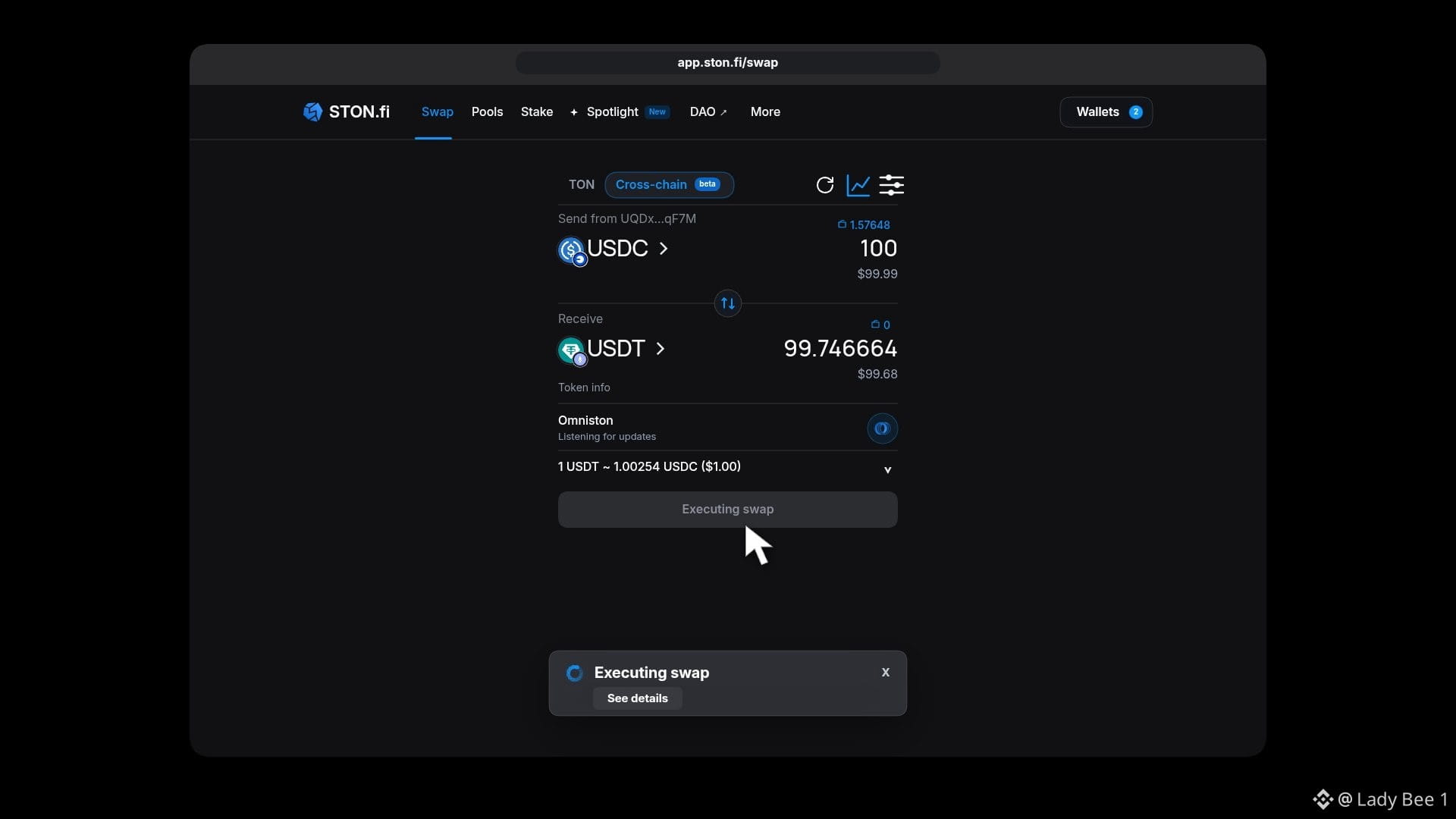
I recently tested $STON new cross chain swap feature to see how the experience compares with traditional bridging.
For the test, I swapped $USDC on $BASE for $USDT on $ETH directly through the STON.fi dApp. Instead of using multiple platforms, setting up bridges, and managing several transactions, the entire process was completed from a single interface.
The feature is powered by Omniston, STON.fi's cross chain execution layer, which coordinates the swap while presenting the quoted amount before confirmation. The experience was straightforward and removed much of the complexity typically associated with moving assets between blockchain networks.
With cross chain swaps now available across $GRAM , Ethereum, Base, BNB Chain, and Polygon, STON.fi is expanding its multichain capabilities and making asset transfers more accessible for users.
As always, users should conduct their own research and understand the risks before interacting with any DeFi protocol. #TON ecosystem, here to discover the latest projects# #STONFI #Crypto
I recently tested $STON new cross chain swap feature to see how the experience compares with traditional bridging.
For the test, I swapped $USDC on $BASE for $USDT on $ETH directly through the STON.fi dApp. Instead of using multiple platforms, setting up bridges, and managing several transactions, the entire process was completed from a single interface.
The feature is powered by Omniston, STON.fi's cross chain execution layer, which coordinates the swap while presenting the quoted amount before confirmation. The experience was straightforward and removed much of the complexity typically associated with moving assets between blockchain networks.
With cross chain swaps now available across $GRAM , Ethereum, Base, BNB Chain, and Polygon, STON.fi is expanding its multichain capabilities and making asset transfers more accessible for users.
As always, users should conduct their own research and understand the risks before interacting with any DeFi protocol. #TON ecosystem, here to discover the latest projects# #STONFI #Crypto
For the test, I swapped $USDC on $BASE for $USDT on $ETH directly through the STON.fi dApp. Instead of using multiple platforms, setting up bridges, and managing several transactions, the entire process was completed from a single interface.
The feature is powered by Omniston, STON.fi's cross chain execution layer, which coordinates the swap while presenting the quoted amount before confirmation. The experience was straightforward and removed much of the complexity typically associated with moving assets between blockchain networks.
With cross chain swaps now available across $GRAM , Ethereum, Base, BNB Chain, and Polygon, STON.fi is expanding its multichain capabilities and making asset transfers more accessible for users.
As always, users should conduct their own research and understand the risks before interacting with any DeFi protocol. #TON ecosystem, here to discover the latest projects# #STONFI #Crypto
54
Log in to explore more content
Join global crypto users on Binance Square
⚡️ Get latest and useful information about crypto.
💬 Trusted by the world’s largest crypto exchange.
👍 Discover real insights from verified creators.
Email / Phone number