
For-Exx Kripto 1
331 Posts

For-Exx Kripto 1
Report
Block User
Cryptocurrency Reviews / Technical and Fundamental Analysis / Important Market News
0 Following
44 Followers
34 Liked
Posts
All
Videos
🔐 END-OF-DAY MARKET REPORT — SEPTEMBER 9, 2026 🌐 TOP NEWS OF THE DAY Zcash ( $ZEC ) reached 1,290 $, its highest since 2016, driven by Grayscale’s ZCSH ETF. ZEC is up 57% weekly, 138% monthly and ~2,400% yearly; ETF assets reached 463M $. The Liquid attacker returned 3,400 BTC (~85% of withdrawn BTC). 598.5 BTC (~47M $) remains outstanding and the network is suspended. Ledger CTO Charles Guillemet called the retained balance inconsistent with a white-hat bounty. US-Iran conflict continued; oil neared 100 $/barrel, boosting hike expectations. BTC formed a golden cross, improving its trend structure but remaining a lagging signal. ━━━ ₿ BITCOIN $BTC opened at 78,446 $, down 0.8%, then recovered to 78,800-78,900 $. It remains near 78,600 $, below 79,500 $ resistance. A four-hour close above could reopen 82,000 $; failure risks 70,500-67,200 $. The cross is unconfirmed. ETF demand remains strong, with little evidence of whale selling. ━━━ 🔷 ETHEREUM & ALTCOINS ETH opened at 2,485 $, down 0.2%. Zcash remains the standout, with ETF demand and rising open interest driving the rally. Analysts see 1,435-1,500 $ as the next test. ━━━ 📋 KEY CRYPTO NEWS Liquid’s federation reserve fell from ~4,200 BTC to ~197 BTC. Patched software was distributed; no timetable exists for normal peg-outs. ━━━ 🔓 TOKEN UNLOCKS Linea (LINEA) September 10, 2026 ~2.75M $ (3%) — 960.13M tokens Recipients: Consortium + Ignition, equally split Selling pressure: 🟡 ━━━ 🔭 OUTLOOK & UPCOMING EVENTS August CPI on September 11 is the key event before the September 15-16 FOMC decision. A hot reading could strengthen hike expectations and pressure BTC. Liquid’s 598.5 BTC outstanding and reopening remain key watchpoints, while oil’s response to the Iran conflict continues to complicate inflation. BTC’s ability to break 79,500 $ and confirm the golden cross is the key technical test; failure risks 70,500-67,200 $. Zcash’s 1,435-1,500 $ target and LINEA/APT unlocks are tests.
🔐 END-OF-DAY MARKET REPORT — SEPTEMBER 9, 2026 🌐 TOP NEWS OF THE DAY Zcash ( $ZEC ) reached 1,290 $, its highest since 2016, driven by Grayscale’s ZCSH ETF. ZEC is up 57% weekly, 138% monthly and ~2,400% yearly; ETF assets reached 463M $. The Liquid attacker returned 3,400 BTC (~85% of withdrawn BTC). 598.5 BTC (~47M $) remains outstanding and the network is suspended. Ledger CTO Charles Guillemet called the retained balance inconsistent with a white-hat bounty. US-Iran conflict continued; oil neared 100 $/barrel, boosting hike expectations. BTC formed a golden cross, improving its trend structure but remaining a lagging signal. ━━━ ₿ BITCOIN $BTC opened at 78,446 $, down 0.8%, then recovered to 78,800-78,900 $. It remains near 78,600 $, below 79,500 $ resistance. A four-hour close above could reopen 82,000 $; failure risks 70,500-67,200 $. The cross is unconfirmed. ETF demand remains strong, with little evidence of whale selling. ━━━ 🔷 ETHEREUM & ALTCOINS ETH opened at 2,485 $, down 0.2%. Zcash remains the standout, with ETF demand and rising open interest driving the rally. Analysts see 1,435-1,500 $ as the next test. ━━━ 📋 KEY CRYPTO NEWS Liquid’s federation reserve fell from ~4,200 BTC to ~197 BTC. Patched software was distributed; no timetable exists for normal peg-outs. ━━━ 🔓 TOKEN UNLOCKS Linea (LINEA) September 10, 2026 ~2.75M $ (3%) — 960.13M tokens Recipients: Consortium + Ignition, equally split Selling pressure: 🟡 ━━━ 🔭 OUTLOOK & UPCOMING EVENTS August CPI on September 11 is the key event before the September 15-16 FOMC decision. A hot reading could strengthen hike expectations and pressure BTC. Liquid’s 598.5 BTC outstanding and reopening remain key watchpoints, while oil’s response to the Iran conflict continues to complicate inflation. BTC’s ability to break 79,500 $ and confirm the golden cross is the key technical test; failure risks 70,500-67,200 $. Zcash’s 1,435-1,500 $ target and LINEA/APT unlocks are tests.

52
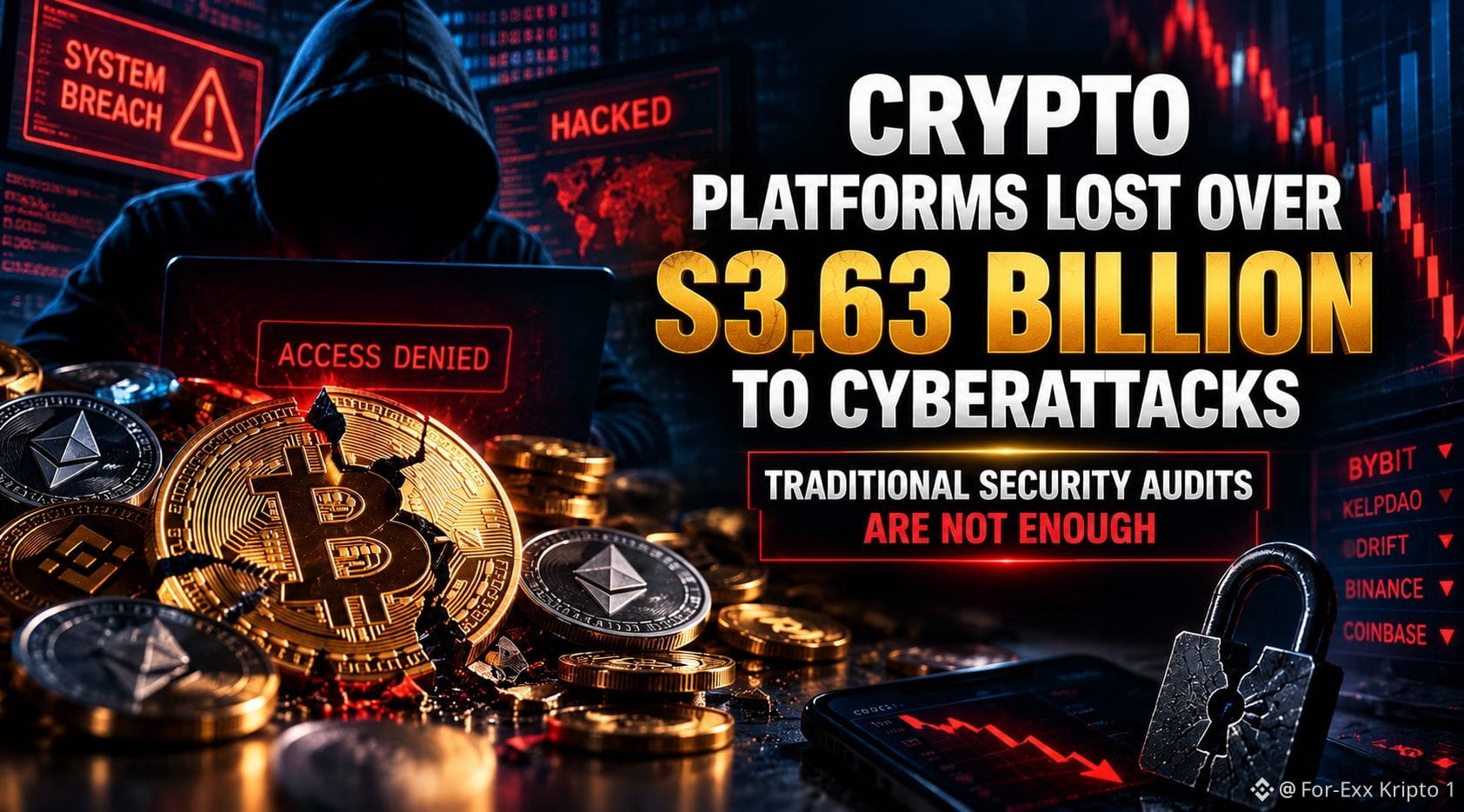
# Crypto Platforms Under Security Alarm: 3.63 Billion $ Lost in Cyberattacks Despite widespread security audits, crypto platforms remain vulnerable to cyberattacks. According to CoinGecko, **more than 3.63 billion $ was lost through attacks and compromised credentials between January 2025 and July 2026.** Notably, many attacked platforms had previously undergone independent security audits. ## Why Are Security Audits Falling Short? CoinGecko’s August 27 report found that approximately **88% of stolen funds** and **60% of attacked platforms** had undergone independent security audits. Attackers often target vulnerabilities outside standard audit scopes. Passing an audit does not guarantee protection against real-time attacks or complex vulnerabilities. Beyond smart contracts, access permissions, private keys, employee accounts are also major targets. ## Bybit Suffered the Largest Loss **Bybit** is identified as the largest attack during the period. In February 2025, approximately **1.4 billion $** in assets were stolen. Elliptic assessed that the attack was linked to North Korean actors. **KelpDAO**, with a loss of **292 million $**, ranked second, followed by **Drift Protocol**, with a loss of **285 million $**. None of the three platforms had immediately responded to CNBC’s requests for comment. ## Passing an Audit Is Not a Security Guarantee Security audits remain important for DeFi and smart contracts. Recent attacks show a gap between audit scope and real-world attack methods. With billions held in decentralized or semi-centralized systems, relying solely on code audits creates serious risks. **The 3.63 billion $ loss shows that crypto security cannot be built solely around “passing an audit.”** Going forward, platforms will need to focus not only on smart contract vulnerabilities but also on **private key management, access controls, employee accounts, and incident response mechanisms.** $BTC $XRP
# Crypto Platforms Under Security Alarm: 3.63 Billion $ Lost in Cyberattacks Despite widespread security audits, crypto platforms remain vulnerable to cyberattacks. According to CoinGecko, **more than 3.63 billion $ was lost through attacks and compromised credentials between January 2025 and July 2026.** Notably, many attacked platforms had previously undergone independent security audits. ## Why Are Security Audits Falling Short? CoinGecko’s August 27 report found that approximately **88% of stolen funds** and **60% of attacked platforms** had undergone independent security audits. Attackers often target vulnerabilities outside standard audit scopes. Passing an audit does not guarantee protection against real-time attacks or complex vulnerabilities. Beyond smart contracts, access permissions, private keys, employee accounts are also major targets. ## Bybit Suffered the Largest Loss **Bybit** is identified as the largest attack during the period. In February 2025, approximately **1.4 billion $** in assets were stolen. Elliptic assessed that the attack was linked to North Korean actors. **KelpDAO**, with a loss of **292 million $**, ranked second, followed by **Drift Protocol**, with a loss of **285 million $**. None of the three platforms had immediately responded to CNBC’s requests for comment. ## Passing an Audit Is Not a Security Guarantee Security audits remain important for DeFi and smart contracts. Recent attacks show a gap between audit scope and real-world attack methods. With billions held in decentralized or semi-centralized systems, relying solely on code audits creates serious risks. **The 3.63 billion $ loss shows that crypto security cannot be built solely around “passing an audit.”** Going forward, platforms will need to focus not only on smart contract vulnerabilities but also on **private key management, access controls, employee accounts, and incident response mechanisms.** $BTC $XRP
47
# BitConnect (BCC): One of Crypto’s Biggest Ponzi Scandals BitConnect emerged during the 2017 crypto boom by promising high and nearly guaranteed returns. Its BCC token surged to roughly 470 $, attracting thousands of investors and pushing the project’s value into the billions. ## What Was BitConnect? Launched in 2016, BitConnect built a lending platform around BCC. Investors locked tokens for high returns. The project claimed its “Trading Bot” and “Volatility Software” generated profits from market volatility. The lack of verifiable trading activity raised questions about those returns. ## The BCC Explosion BCC traded at only a few dollars early in 2017 before reaching roughly 470 $ by year-end. The surge reinforced confidence in the system. ## How Did BitConnect Collapse? In early 2018, regulatory and investor pressure intensified. BitConnect shut down its lending platform, triggering massive selling pressure. BCC fell from hundreds of dollars to a few dollars within days, causing many investors to lose most of their holdings. ## Fraud Allegations and Legal Action U.S. authorities investigated BitConnect after its collapse. The DOJ and SEC alleged that the project raised billions while promoting misleading returns. Glenn Arcaro, a leading U.S. promoter, pleaded guilty to fraud and was sentenced to prison. Founder Satish Kumbhani also became the subject of legal proceedings. ## Investor Losses Many victims suffered severe losses. Compensation mechanisms were later created for some victims, while authorities seized certain crypto assets linked to BitConnect. Some losses could not be recovered. ## Conclusion BitConnect remains one of crypto’s biggest investment scandals. BCC reached roughly 470 $ before the platform’s shutdown caused it to lose almost all its value. **Extremely high, regular and nearly risk-free return promises, especially in crypto, should be viewed as a warning sign of serious risk rather than an investment opportunity.** $BTC
# BitConnect (BCC): One of Crypto’s Biggest Ponzi Scandals BitConnect emerged during the 2017 crypto boom by promising high and nearly guaranteed returns. Its BCC token surged to roughly 470 $, attracting thousands of investors and pushing the project’s value into the billions. ## What Was BitConnect? Launched in 2016, BitConnect built a lending platform around BCC. Investors locked tokens for high returns. The project claimed its “Trading Bot” and “Volatility Software” generated profits from market volatility. The lack of verifiable trading activity raised questions about those returns. ## The BCC Explosion BCC traded at only a few dollars early in 2017 before reaching roughly 470 $ by year-end. The surge reinforced confidence in the system. ## How Did BitConnect Collapse? In early 2018, regulatory and investor pressure intensified. BitConnect shut down its lending platform, triggering massive selling pressure. BCC fell from hundreds of dollars to a few dollars within days, causing many investors to lose most of their holdings. ## Fraud Allegations and Legal Action U.S. authorities investigated BitConnect after its collapse. The DOJ and SEC alleged that the project raised billions while promoting misleading returns. Glenn Arcaro, a leading U.S. promoter, pleaded guilty to fraud and was sentenced to prison. Founder Satish Kumbhani also became the subject of legal proceedings. ## Investor Losses Many victims suffered severe losses. Compensation mechanisms were later created for some victims, while authorities seized certain crypto assets linked to BitConnect. Some losses could not be recovered. ## Conclusion BitConnect remains one of crypto’s biggest investment scandals. BCC reached roughly 470 $ before the platform’s shutdown caused it to lose almost all its value. **Extremely high, regular and nearly risk-free return promises, especially in crypto, should be viewed as a warning sign of serious risk rather than an investment opportunity.** $BTC

42
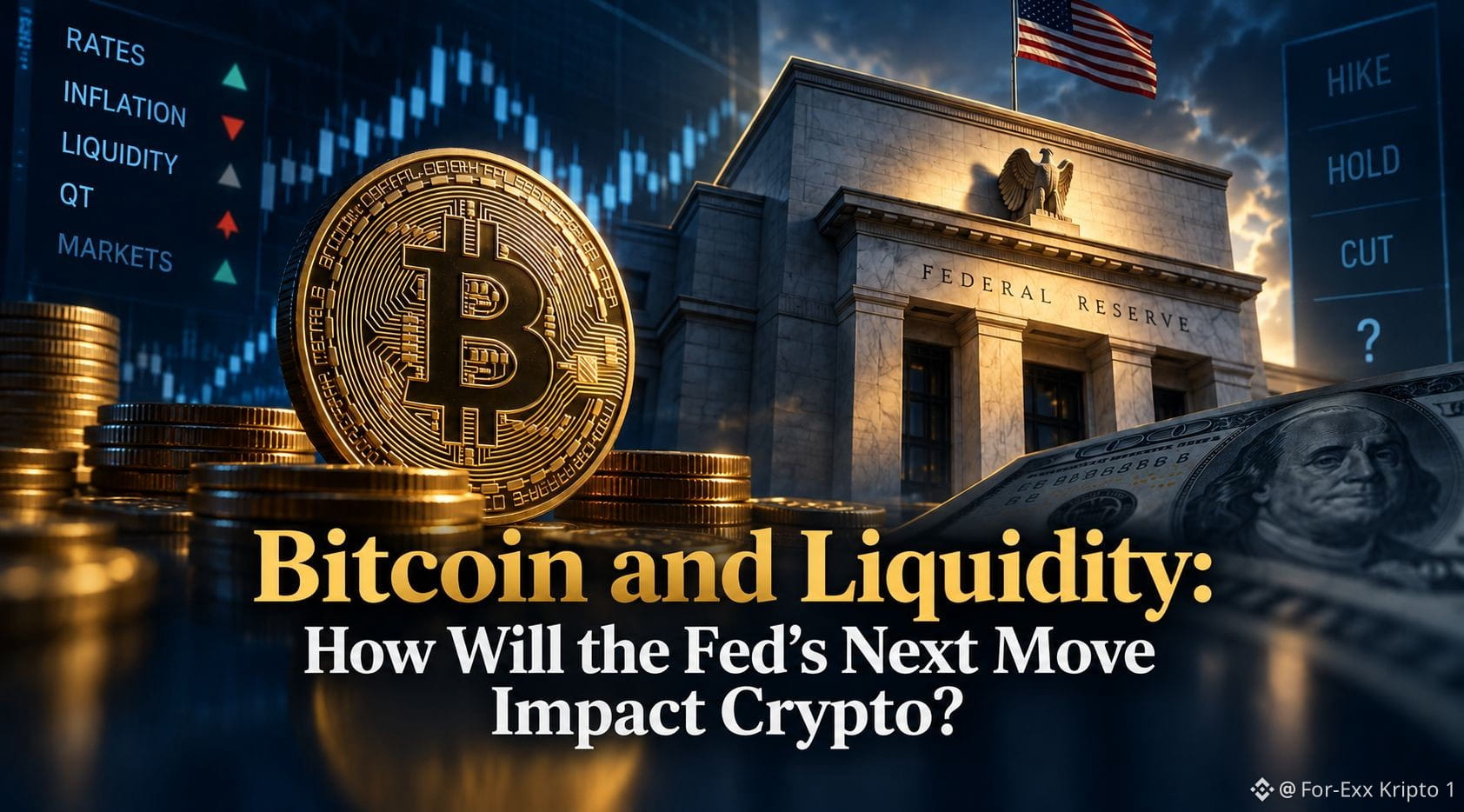
## Bitcoin and Liquidity: How Will the Fed’s Next Move Affect Crypto? Bitcoin is entering a critical phase as investors focus increasingly on Fed policy and global liquidity. The key question: **Will liquidity expand or tighten?** ## The Fed’s Critical Decision The Fed will announce its next rate decision at the September 15–16 FOMC meeting. Stronger August employment increased the possibility of tighter policy, but inflation remains decisive. ## Why Liquidity Matters Institutional participation has made Bitcoin more sensitive to liquidity. Low rates and abundant liquidity support risk-taking and Bitcoin. Higher rates make bonds and cash more attractive and can reduce risk capital. ## Hawkish vs. Dovish Fed A restrictive Fed could strengthen the dollar, raise Treasury yields and weaken risk appetite. High leverage could amplify selling through liquidations. Falling inflation and weaker activity could revive rate-cut expectations, while lower yields, a weaker dollar and easier financial conditions could support Bitcoin. **No rate hike does not mean liquidity is expanding.** ## The Fed Balance Sheet Matters The Fed’s balance sheet, reserves and liquidity also matter. Stable rates while the balance sheet shrinks do not necessarily mean liquidity is expanding. ## Three Scenarios **Hawkish:** Higher rates or prolonged restrictive policy could pressure Bitcoin. **Neutral:** Rates remain unchanged; macro data and institutional flows determine direction. **Dovish:** Falling inflation and stronger cut expectations could ease financial conditions and revive risk appetite. ## Bitcoin’s Real Test Is Liquidity ETFs, institutional investors and traditional-finance integration have made Bitcoin part of the global liquidity cycle. **A sustainable Bitcoin rally may depend not merely on the Fed avoiding a hike, but on global liquidity beginning to expand again.** **“Will global liquidity support Bitcoin’s next major move?”** $BTC $XRP
## Bitcoin and Liquidity: How Will the Fed’s Next Move Affect Crypto? Bitcoin is entering a critical phase as investors focus increasingly on Fed policy and global liquidity. The key question: **Will liquidity expand or tighten?** ## The Fed’s Critical Decision The Fed will announce its next rate decision at the September 15–16 FOMC meeting. Stronger August employment increased the possibility of tighter policy, but inflation remains decisive. ## Why Liquidity Matters Institutional participation has made Bitcoin more sensitive to liquidity. Low rates and abundant liquidity support risk-taking and Bitcoin. Higher rates make bonds and cash more attractive and can reduce risk capital. ## Hawkish vs. Dovish Fed A restrictive Fed could strengthen the dollar, raise Treasury yields and weaken risk appetite. High leverage could amplify selling through liquidations. Falling inflation and weaker activity could revive rate-cut expectations, while lower yields, a weaker dollar and easier financial conditions could support Bitcoin. **No rate hike does not mean liquidity is expanding.** ## The Fed Balance Sheet Matters The Fed’s balance sheet, reserves and liquidity also matter. Stable rates while the balance sheet shrinks do not necessarily mean liquidity is expanding. ## Three Scenarios **Hawkish:** Higher rates or prolonged restrictive policy could pressure Bitcoin. **Neutral:** Rates remain unchanged; macro data and institutional flows determine direction. **Dovish:** Falling inflation and stronger cut expectations could ease financial conditions and revive risk appetite. ## Bitcoin’s Real Test Is Liquidity ETFs, institutional investors and traditional-finance integration have made Bitcoin part of the global liquidity cycle. **A sustainable Bitcoin rally may depend not merely on the Fed avoiding a hike, but on global liquidity beginning to expand again.** **“Will global liquidity support Bitcoin’s next major move?”** $BTC $XRP
45
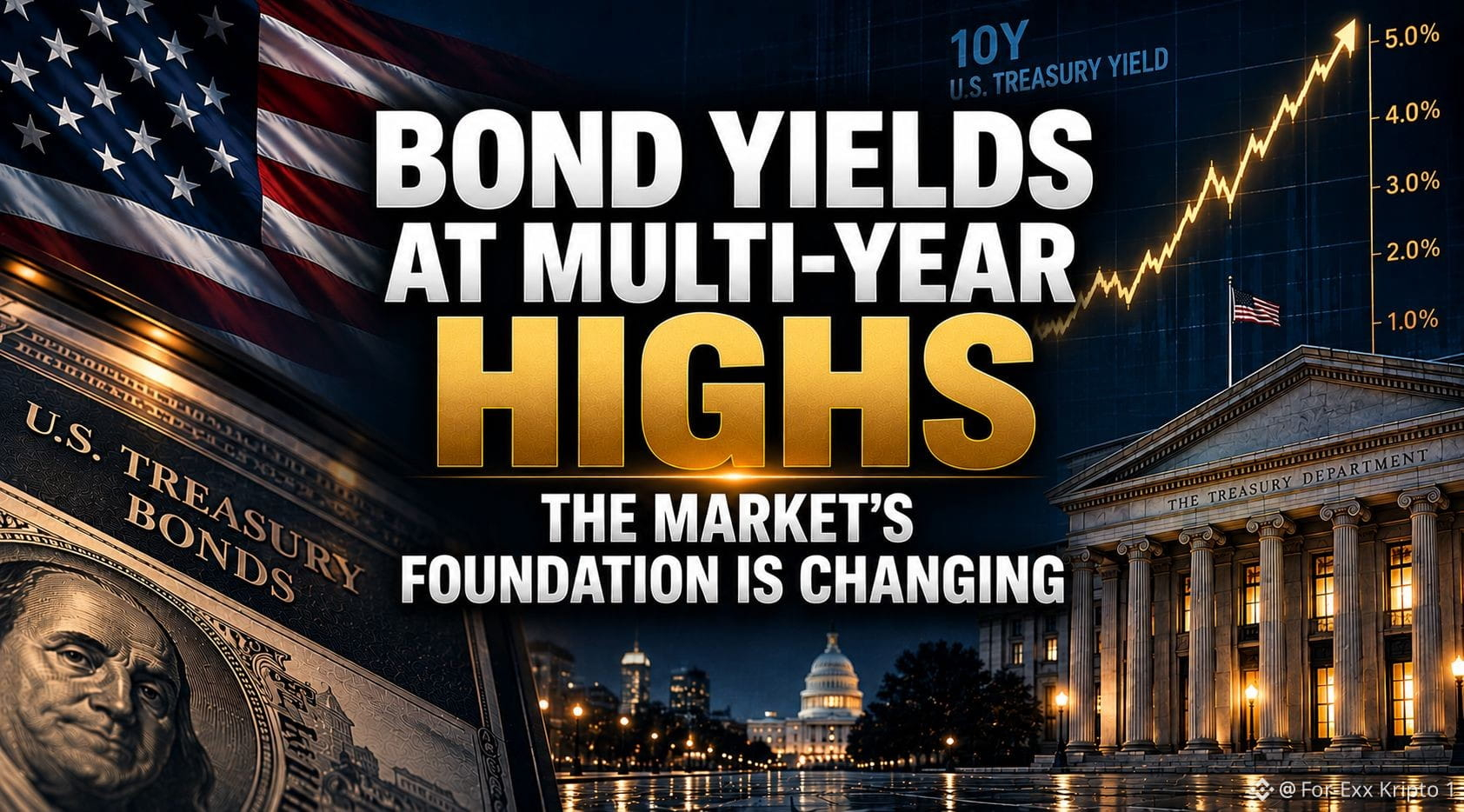
## Bond Yields at Multi-Decade Highs: The Market’s Foundation Is Changing **Government bond yields at multi-decade highs are changing the pricing backdrop for stocks, gold and crypto.** ━━━━━━━━━━━━━━━━━ ### Where We Stand — September 4 Close **U.S.:** 10-year Treasury yield closed at 4.78%, after reaching 4.812%, its highest since November 2023. **UK:** 10-year gilt closed at 5.13%, reaching 5.29%, its highest since August 2007. **Europe & Japan:** Germany’s 10-year reached 3.39%; Japan’s JGB crossed 3% for the first time since 1996. ━━━━━━━━━━━━━━━━━ ### Why Yields Are Rising **Energy inflation is back.** U.S.–Iran tensions and Hormuz disruption pushed Brent to 96.28 $ and WTI to 91.48 $, raising inflation. **Fiscal pressure is worsening.** U.S. debt exceeded 40 trillion $, with the 2026 deficit projected at 1.9 trillion $. **Fed expectations shifted.** August NFP hit 162K versus 55K expected, strengthening the September hike case. ━━━━━━━━━━━━━━━━━ ### Impact on Asset Classes **Equities.** Higher yields pressure growth stocks. Friday: S&P 500 -0.38%, Dow -0.51%, Nasdaq -0.29%. **Gold.** Gold fell to 4,432 $, about 21% below its record, as higher real yields increased holding costs. **Crypto.** Bitcoin is around 79,900 $. It rose above 81,000 $ when yields eased, then fell below 80,000 $ after stronger jobs data. Support: 75,000–76,500 $. Resistance: 81,000–86,000 $. ━━━━━━━━━━━━━━━━━ ### What Is the Real Risk? The danger is not the **level** of yields, but the **reason** behind the rise. Fiscal distrust and inflation are more damaging. Rising yields increase interest costs and force more issuance. Inflation shocks can push bonds and equities down together; crypto faces the same liquidity risk. ━━━━━━━━━━━━━━━━━ ### What to Watch This Week Wednesday: 10-year Treasury auction. Thursday: PPI and jobless claims. Friday: CPI, expected at 0.4% headline and 0.2% monthly growth. Japan’s bond auctions, Hormuz and oil prices remain drivers. $BTC
## Bond Yields at Multi-Decade Highs: The Market’s Foundation Is Changing **Government bond yields at multi-decade highs are changing the pricing backdrop for stocks, gold and crypto.** ━━━━━━━━━━━━━━━━━ ### Where We Stand — September 4 Close **U.S.:** 10-year Treasury yield closed at 4.78%, after reaching 4.812%, its highest since November 2023. **UK:** 10-year gilt closed at 5.13%, reaching 5.29%, its highest since August 2007. **Europe & Japan:** Germany’s 10-year reached 3.39%; Japan’s JGB crossed 3% for the first time since 1996. ━━━━━━━━━━━━━━━━━ ### Why Yields Are Rising **Energy inflation is back.** U.S.–Iran tensions and Hormuz disruption pushed Brent to 96.28 $ and WTI to 91.48 $, raising inflation. **Fiscal pressure is worsening.** U.S. debt exceeded 40 trillion $, with the 2026 deficit projected at 1.9 trillion $. **Fed expectations shifted.** August NFP hit 162K versus 55K expected, strengthening the September hike case. ━━━━━━━━━━━━━━━━━ ### Impact on Asset Classes **Equities.** Higher yields pressure growth stocks. Friday: S&P 500 -0.38%, Dow -0.51%, Nasdaq -0.29%. **Gold.** Gold fell to 4,432 $, about 21% below its record, as higher real yields increased holding costs. **Crypto.** Bitcoin is around 79,900 $. It rose above 81,000 $ when yields eased, then fell below 80,000 $ after stronger jobs data. Support: 75,000–76,500 $. Resistance: 81,000–86,000 $. ━━━━━━━━━━━━━━━━━ ### What Is the Real Risk? The danger is not the **level** of yields, but the **reason** behind the rise. Fiscal distrust and inflation are more damaging. Rising yields increase interest costs and force more issuance. Inflation shocks can push bonds and equities down together; crypto faces the same liquidity risk. ━━━━━━━━━━━━━━━━━ ### What to Watch This Week Wednesday: 10-year Treasury auction. Thursday: PPI and jobless claims. Friday: CPI, expected at 0.4% headline and 0.2% monthly growth. Japan’s bond auctions, Hormuz and oil prices remain drivers. $BTC
📰 MARKET AGENDA — SEPTEMBER 5, 2026 ━━━━━━━━━━━━━━━━ 🗺️ GLOBAL & GEOPOLITICAL • U.S.-Iran tensions flared again after a tanker was hit in Hormuz. • Iran threatened a “much harsher” response targeting U.S. bases. • JD Vance said talks require an end to attacks on commercial vessels; Israel threatened to “paralyze” Iran’s infrastructure. ━━━━━━━━━━━━━━━━ 📈 MARKET NEWS • WTI rose more than 9% to 91–92 $, while Brent reached 95–96 $. • U.S. August NFP rose 162K versus 53–55K expected; unemployment held at 4.1% and hourly wages rose 0.3%. • Rate-hike pricing rose from 55% to 62% as oil prices raised inflation concerns. ━━━━━━━━━━━━━━━━ ₿ CRYPTO NEWS • Bitcoin reached 81,272 $ on Thursday (+5.14%) after Waller signaled support for holding rates steady, but fell to 79,600–79,700 $ on Friday as stronger jobs data boosted hike expectations. • Spot Bitcoin ETFs posted 731M $ of inflows on Sept. 4, their largest since January. $ETH rose above 2,500 $, while XRP reached 1.45 $. • Bitcoin short liquidations exceeded 440M $. Stablecoin exchange inflows turned positive after 113 days of net outflows. • Analysts warn of renewed year-end downside risk, while ETF inflows remain structural support. 77,000 $ is key. ━━━━━━━━━━━━━━━━ 🔓 TOKEN UNLOCKS $HYPE — Sept. 6, ~797M $ 🔴 largest cliff unlock of the month. TRUMP — September linear vesting, ~60.3M $ 🟡 medium pressure. SEI — Sept. 15, ~1.5% of supply 🔴 high pressure. RAIN — September linear, ~569M $ 🔴 high cumulative pressure. ━━━━━━━━━━━━━━━━ 🔭 WEEK-AHEAD OUTLOOK • Sept. 6: OPEC+ output meeting; surprises could trigger oil volatility. • Sept. 8–9: Markets will watch Iran’s retaliation and its impact on Hormuz costs. • Sept. 10–11: U.S. CPI and PPI will be key ahead of the FOMC. • Sept. 15–16: FOMC meeting; oil-driven inflation versus weakening employment will be central. • Hormuz tensions, Iran’s response and HYPE’s 797M $ unlock remain key risks.
📰 MARKET AGENDA — SEPTEMBER 5, 2026 ━━━━━━━━━━━━━━━━ 🗺️ GLOBAL & GEOPOLITICAL • U.S.-Iran tensions flared again after a tanker was hit in Hormuz. • Iran threatened a “much harsher” response targeting U.S. bases. • JD Vance said talks require an end to attacks on commercial vessels; Israel threatened to “paralyze” Iran’s infrastructure. ━━━━━━━━━━━━━━━━ 📈 MARKET NEWS • WTI rose more than 9% to 91–92 $, while Brent reached 95–96 $. • U.S. August NFP rose 162K versus 53–55K expected; unemployment held at 4.1% and hourly wages rose 0.3%. • Rate-hike pricing rose from 55% to 62% as oil prices raised inflation concerns. ━━━━━━━━━━━━━━━━ ₿ CRYPTO NEWS • Bitcoin reached 81,272 $ on Thursday (+5.14%) after Waller signaled support for holding rates steady, but fell to 79,600–79,700 $ on Friday as stronger jobs data boosted hike expectations. • Spot Bitcoin ETFs posted 731M $ of inflows on Sept. 4, their largest since January. $ETH rose above 2,500 $, while XRP reached 1.45 $. • Bitcoin short liquidations exceeded 440M $. Stablecoin exchange inflows turned positive after 113 days of net outflows. • Analysts warn of renewed year-end downside risk, while ETF inflows remain structural support. 77,000 $ is key. ━━━━━━━━━━━━━━━━ 🔓 TOKEN UNLOCKS $HYPE — Sept. 6, ~797M $ 🔴 largest cliff unlock of the month. TRUMP — September linear vesting, ~60.3M $ 🟡 medium pressure. SEI — Sept. 15, ~1.5% of supply 🔴 high pressure. RAIN — September linear, ~569M $ 🔴 high cumulative pressure. ━━━━━━━━━━━━━━━━ 🔭 WEEK-AHEAD OUTLOOK • Sept. 6: OPEC+ output meeting; surprises could trigger oil volatility. • Sept. 8–9: Markets will watch Iran’s retaliation and its impact on Hormuz costs. • Sept. 10–11: U.S. CPI and PPI will be key ahead of the FOMC. • Sept. 15–16: FOMC meeting; oil-driven inflation versus weakening employment will be central. • Hormuz tensions, Iran’s response and HYPE’s 797M $ unlock remain key risks.

80
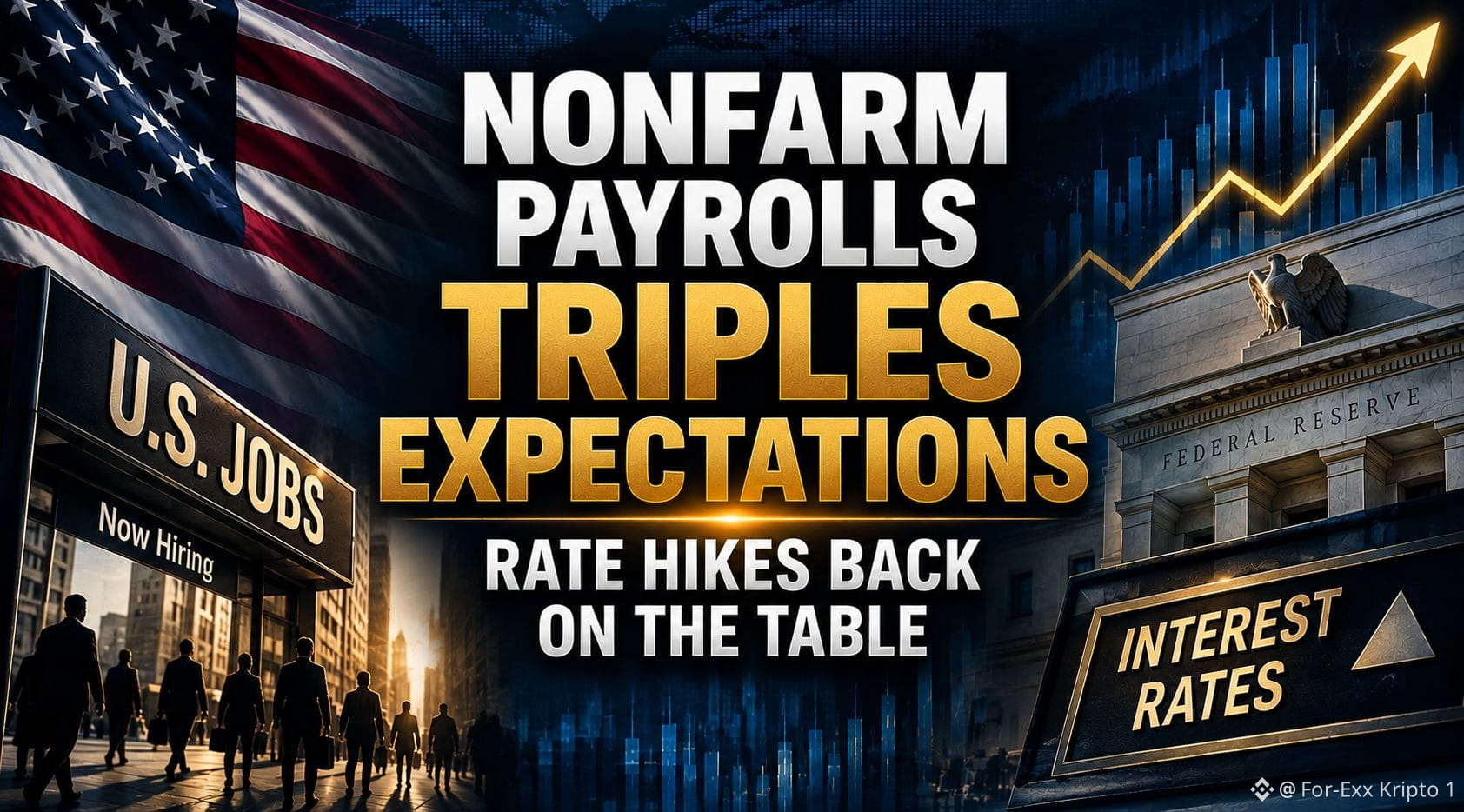
# Nonfarm Payrolls Triple Expectations: Rate Hike Returns August NFP showed the opposite of market expectations. Employment rose 162K versus 55K expected, while July’s 23K decline was revised into positive territory. Unemployment held at 4.1%. Average hourly earnings rose 0.3% MoM and 3.1% YoY, in line with expectations. Jobless claims were 206K. ## The Reaction Function Has Reversed In 2024–2025, weak employment meant rate-cut expectations and stronger risk appetite. In September 2026, the equation is reversed: with a hike on the table, strong data is hawkish and weak data dovish. Warsh’s hawkish stance pushed September hike pricing to 63%, while Waller’s comments pulled it toward 50%. Today’s data raised 25-bp hike odds for Sept. 16 from 52% to 59–60%. ## Gold Gold fell more than 2% to ~4,470 $, while silver lost more than 3%. Higher real yields increase the cost of holding non-yielding assets. Key gold support is 4,400 $; 4,500 $ is the recovery level. ## Crypto: Back Below 80,000 $ $BTC fell 2–3%, dropping from 81,000–82,000 $ to ~79,300 $. Leveraged long liquidations added pressure. Institutional demand remains strong: Spot Bitcoin ETFs saw 731M $ of inflows on Sept. 3, their strongest daily inflow since January. Total net ETF assets exceeded 103B $. 80,000 $ is the key level. A close above it could signal absorption; below it, 76,000–77,000 $ could come into focus. ETH and major altcoins fell more sharply than BTC. ## The Real Test: September 11 CPI August CPI is due Sept. 11, five days before the Sept. 15–16 FOMC meeting. Cleveland Fed’s nowcast sees headline inflation at 3.38%, while core inflation remains the key risk. ## What to Watch Focus has shifted from growth to inflation. Strong employment can reinforce restrictive Fed policy. The key variables are the 2Y yield above 4.40%, the dollar and August core CPI. A ~60% hike probability does not mean a hike is certain, but the risk has shifted toward renewed tightening.
# Nonfarm Payrolls Triple Expectations: Rate Hike Returns August NFP showed the opposite of market expectations. Employment rose 162K versus 55K expected, while July’s 23K decline was revised into positive territory. Unemployment held at 4.1%. Average hourly earnings rose 0.3% MoM and 3.1% YoY, in line with expectations. Jobless claims were 206K. ## The Reaction Function Has Reversed In 2024–2025, weak employment meant rate-cut expectations and stronger risk appetite. In September 2026, the equation is reversed: with a hike on the table, strong data is hawkish and weak data dovish. Warsh’s hawkish stance pushed September hike pricing to 63%, while Waller’s comments pulled it toward 50%. Today’s data raised 25-bp hike odds for Sept. 16 from 52% to 59–60%. ## Gold Gold fell more than 2% to ~4,470 $, while silver lost more than 3%. Higher real yields increase the cost of holding non-yielding assets. Key gold support is 4,400 $; 4,500 $ is the recovery level. ## Crypto: Back Below 80,000 $ $BTC fell 2–3%, dropping from 81,000–82,000 $ to ~79,300 $. Leveraged long liquidations added pressure. Institutional demand remains strong: Spot Bitcoin ETFs saw 731M $ of inflows on Sept. 3, their strongest daily inflow since January. Total net ETF assets exceeded 103B $. 80,000 $ is the key level. A close above it could signal absorption; below it, 76,000–77,000 $ could come into focus. ETH and major altcoins fell more sharply than BTC. ## The Real Test: September 11 CPI August CPI is due Sept. 11, five days before the Sept. 15–16 FOMC meeting. Cleveland Fed’s nowcast sees headline inflation at 3.38%, while core inflation remains the key risk. ## What to Watch Focus has shifted from growth to inflation. Strong employment can reinforce restrictive Fed policy. The key variables are the 2Y yield above 4.40%, the dollar and August core CPI. A ~60% hike probability does not mean a hike is certain, but the risk has shifted toward renewed tightening.
81
🔐 END-OF-DAY MARKET REPORT — SEPTEMBER 2, 2026
🌐 TOP STORIES OF THE DAY
U.S. Central Command said it completed a new wave of strikes on Sept. 1 against ~100 targets in Iran; Iran responded with missiles and drones against U.S. bases; the IRGC said it struck two tankers with mines in Hormuz.
Crypto fell — ETH ~2%, BTC ~1.5%. Rising oil prices are increasing inflation concerns and rate-hike expectations ahead of this month’s FOMC.
September is set for ~$4.7B in token unlocks.
━━━
₿ BITCOIN
$BTC opened near 77,400 $, down 1.5%, and fell to 76,600 $. Analysts watch 76,500–77,000 $ as support, 80,000 $ as resistance and 81,000–82,000 $ for breakout. Wintermute’s warning level is 72,000 $. Binance accounts are 56.3% long; funding is 0.007% per 8h. August BTC treasury purchases reached ~$3.5B; Strategy bought 4,603 BTC for 370M $.
━━━
🔷 ETHEREUM & ALTCOINS
ETH opened at 2,417 $, down 2%, and fell to 2,374 $. TRON and BNB remain closely watched due to their historical correlation with Iranian stablecoin flows.
━━━
📋 KEY CRYPTO DEVELOPMENTS
Chainalysis data from the Feb–Apr Iran conflict showed IRGC-linked wallet activity and possible recurring capital flight.
CoinStats sentiment remains in “greed,” with the 30-day change at ~+23.7%.
HYPE, SUI and ENA face a combined ~$1.5B unlock in the first week of September; HYPE’s Sept. 6 unlock totals ~$797M.
━━━
🔓 TOKEN UNLOCKS
Hyperliquid ( $HYPE )
Sept. 6, 2026
~797M $ (2.37%) — 9.92M tokens
Recipient: Core contributors
Selling pressure: 🔴
━━━
🔭 OUTLOOK & UPCOMING EVENTS
Friday’s U.S. August NFP is the key event. Expectations are 55K after July’s -23K. A second weak reading could largely eliminate rate-hike expectations for the Sept. 15–16 FOMC, but Iran-related inflation pressure complicates the outlook. Rising oil could support hawkish pricing. HYPE’s 797M $ unlock on Sept. 6 is the first major crypto test.
🔐 END-OF-DAY MARKET REPORT — SEPTEMBER 2, 2026
🌐 TOP STORIES OF THE DAY
U.S. Central Command said it completed a new wave of strikes on Sept. 1 against ~100 targets in Iran; Iran responded with missiles and drones against U.S. bases; the IRGC said it struck two tankers with mines in Hormuz.
Crypto fell — ETH ~2%, BTC ~1.5%. Rising oil prices are increasing inflation concerns and rate-hike expectations ahead of this month’s FOMC.
September is set for ~$4.7B in token unlocks.
━━━
₿ BITCOIN
$BTC opened near 77,400 $, down 1.5%, and fell to 76,600 $. Analysts watch 76,500–77,000 $ as support, 80,000 $ as resistance and 81,000–82,000 $ for breakout. Wintermute’s warning level is 72,000 $. Binance accounts are 56.3% long; funding is 0.007% per 8h. August BTC treasury purchases reached ~$3.5B; Strategy bought 4,603 BTC for 370M $.
━━━
🔷 ETHEREUM & ALTCOINS
ETH opened at 2,417 $, down 2%, and fell to 2,374 $. TRON and BNB remain closely watched due to their historical correlation with Iranian stablecoin flows.
━━━
📋 KEY CRYPTO DEVELOPMENTS
Chainalysis data from the Feb–Apr Iran conflict showed IRGC-linked wallet activity and possible recurring capital flight.
CoinStats sentiment remains in “greed,” with the 30-day change at ~+23.7%.
HYPE, SUI and ENA face a combined ~$1.5B unlock in the first week of September; HYPE’s Sept. 6 unlock totals ~$797M.
━━━
🔓 TOKEN UNLOCKS
Hyperliquid ( $HYPE )
Sept. 6, 2026
~797M $ (2.37%) — 9.92M tokens
Recipient: Core contributors
Selling pressure: 🔴
━━━
🔭 OUTLOOK & UPCOMING EVENTS
Friday’s U.S. August NFP is the key event. Expectations are 55K after July’s -23K. A second weak reading could largely eliminate rate-hike expectations for the Sept. 15–16 FOMC, but Iran-related inflation pressure complicates the outlook. Rising oil could support hawkish pricing. HYPE’s 797M $ unlock on Sept. 6 is the first major crypto test.
🌐 TOP STORIES OF THE DAY
U.S. Central Command said it completed a new wave of strikes on Sept. 1 against ~100 targets in Iran; Iran responded with missiles and drones against U.S. bases; the IRGC said it struck two tankers with mines in Hormuz.
Crypto fell — ETH ~2%, BTC ~1.5%. Rising oil prices are increasing inflation concerns and rate-hike expectations ahead of this month’s FOMC.
September is set for ~$4.7B in token unlocks.
━━━
₿ BITCOIN
$BTC opened near 77,400 $, down 1.5%, and fell to 76,600 $. Analysts watch 76,500–77,000 $ as support, 80,000 $ as resistance and 81,000–82,000 $ for breakout. Wintermute’s warning level is 72,000 $. Binance accounts are 56.3% long; funding is 0.007% per 8h. August BTC treasury purchases reached ~$3.5B; Strategy bought 4,603 BTC for 370M $.
━━━
🔷 ETHEREUM & ALTCOINS
ETH opened at 2,417 $, down 2%, and fell to 2,374 $. TRON and BNB remain closely watched due to their historical correlation with Iranian stablecoin flows.
━━━
📋 KEY CRYPTO DEVELOPMENTS
Chainalysis data from the Feb–Apr Iran conflict showed IRGC-linked wallet activity and possible recurring capital flight.
CoinStats sentiment remains in “greed,” with the 30-day change at ~+23.7%.
HYPE, SUI and ENA face a combined ~$1.5B unlock in the first week of September; HYPE’s Sept. 6 unlock totals ~$797M.
━━━
🔓 TOKEN UNLOCKS
Hyperliquid ( $HYPE )
Sept. 6, 2026
~797M $ (2.37%) — 9.92M tokens
Recipient: Core contributors
Selling pressure: 🔴
━━━
🔭 OUTLOOK & UPCOMING EVENTS
Friday’s U.S. August NFP is the key event. Expectations are 55K after July’s -23K. A second weak reading could largely eliminate rate-hike expectations for the Sept. 15–16 FOMC, but Iran-related inflation pressure complicates the outlook. Rising oil could support hawkish pricing. HYPE’s 797M $ unlock on Sept. 6 is the first major crypto test.

28
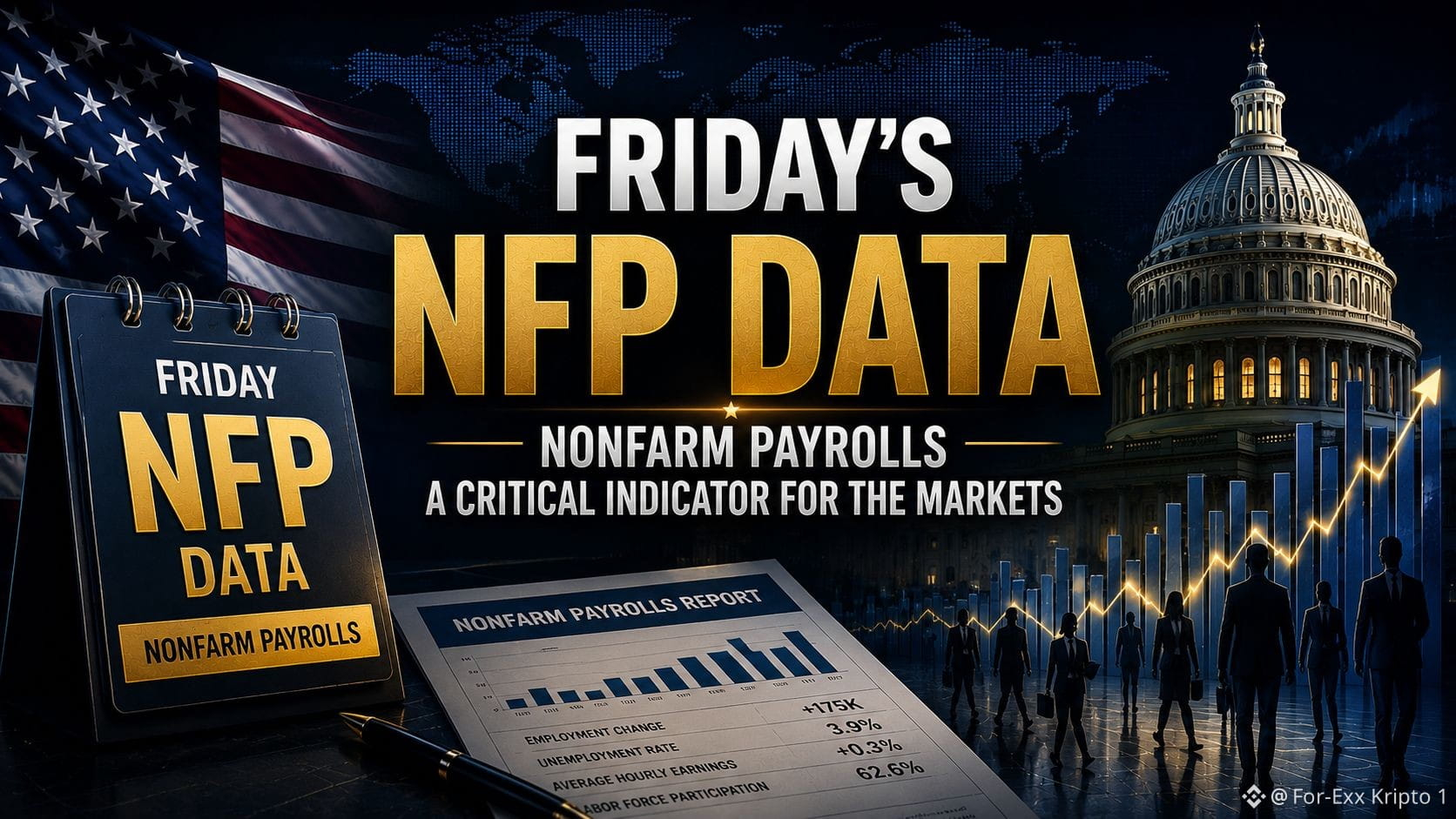
FRIDAY’S NFP: POSSIBLE SCENARIOS FOR THE FED, GOLD, BITCOIN & STOCKS Friday’s U.S. Nonfarm Payrolls (NFP) will be a key data point ahead of the Fed’s September meeting. Markets expect 55–60K new jobs and unemployment at 4.1–4.2%. Reaction will depend on payrolls,unemployment, wages and revisions. NFP BELOW 30K: With unemployment at 4.2%+ and weak wages,lower rate expectations could strengthen. 2Y yields and DXY could fall, supporting gold,Bitcoin and Nasdaq. NFP 30–50K: A miss without a sharp economic slowdown could still support markets if wages weaken. NFP 50–70K: A result near expectations could cause limited changes in Fed pricing, with focus shifting to wages, unemployment and revisions. NFP 70–100K: A stronger result with low unemployment and strong wages could raise rate-hike expectations. Yields and DXY could rise, pressuring gold, Bitcoin and Nasdaq. NFP ABOVE 100K: A much stronger reading, especially with unemployment at 4.1% or below and strong wages, could reinforce a hawkish Fed outlook, pressuring gold, Bitcoin and tech stocks. THE KEY POINT: NFP AND WAGES MUST BE ASSESSED TOGETHER. Strong NFP + weak wages could eventually lower rate expectations. Weak NFP + strong wages could signal persistent inflation pressure,creating a more complex Fed outlook. GOLD: Weak NFP + weak wages + higher unemployment + lower yields + weaker dollar → supportive. Opposite conditions → pressure. BITCOIN: Lower rate expectations → supportive. Higher rates, yields and a stronger dollar → pressure. Extremely weak NFP could initially trigger risk-asset selling if recession fears increase. U.S. STOCKS: Weak NFP without recession fears could support Nasdaq. Very strong NFP could pressure tech stocks. Extremely weak data could produce different initial and subsequent reactions. Key issue: how NFP changes Fed rate expectations. Weak jobs + weak wages → dovish. Strong jobs + strong wages → hawkish. Weak jobs + strong wages → complex inflation/growth pricing. $BTC $XAUt
FRIDAY’S NFP: POSSIBLE SCENARIOS FOR THE FED, GOLD, BITCOIN & STOCKS Friday’s U.S. Nonfarm Payrolls (NFP) will be a key data point ahead of the Fed’s September meeting. Markets expect 55–60K new jobs and unemployment at 4.1–4.2%. Reaction will depend on payrolls,unemployment, wages and revisions. NFP BELOW 30K: With unemployment at 4.2%+ and weak wages,lower rate expectations could strengthen. 2Y yields and DXY could fall, supporting gold,Bitcoin and Nasdaq. NFP 30–50K: A miss without a sharp economic slowdown could still support markets if wages weaken. NFP 50–70K: A result near expectations could cause limited changes in Fed pricing, with focus shifting to wages, unemployment and revisions. NFP 70–100K: A stronger result with low unemployment and strong wages could raise rate-hike expectations. Yields and DXY could rise, pressuring gold, Bitcoin and Nasdaq. NFP ABOVE 100K: A much stronger reading, especially with unemployment at 4.1% or below and strong wages, could reinforce a hawkish Fed outlook, pressuring gold, Bitcoin and tech stocks. THE KEY POINT: NFP AND WAGES MUST BE ASSESSED TOGETHER. Strong NFP + weak wages could eventually lower rate expectations. Weak NFP + strong wages could signal persistent inflation pressure,creating a more complex Fed outlook. GOLD: Weak NFP + weak wages + higher unemployment + lower yields + weaker dollar → supportive. Opposite conditions → pressure. BITCOIN: Lower rate expectations → supportive. Higher rates, yields and a stronger dollar → pressure. Extremely weak NFP could initially trigger risk-asset selling if recession fears increase. U.S. STOCKS: Weak NFP without recession fears could support Nasdaq. Very strong NFP could pressure tech stocks. Extremely weak data could produce different initial and subsequent reactions. Key issue: how NFP changes Fed rate expectations. Weak jobs + weak wages → dovish. Strong jobs + strong wages → hawkish. Weak jobs + strong wages → complex inflation/growth pricing. $BTC $XAUt
29
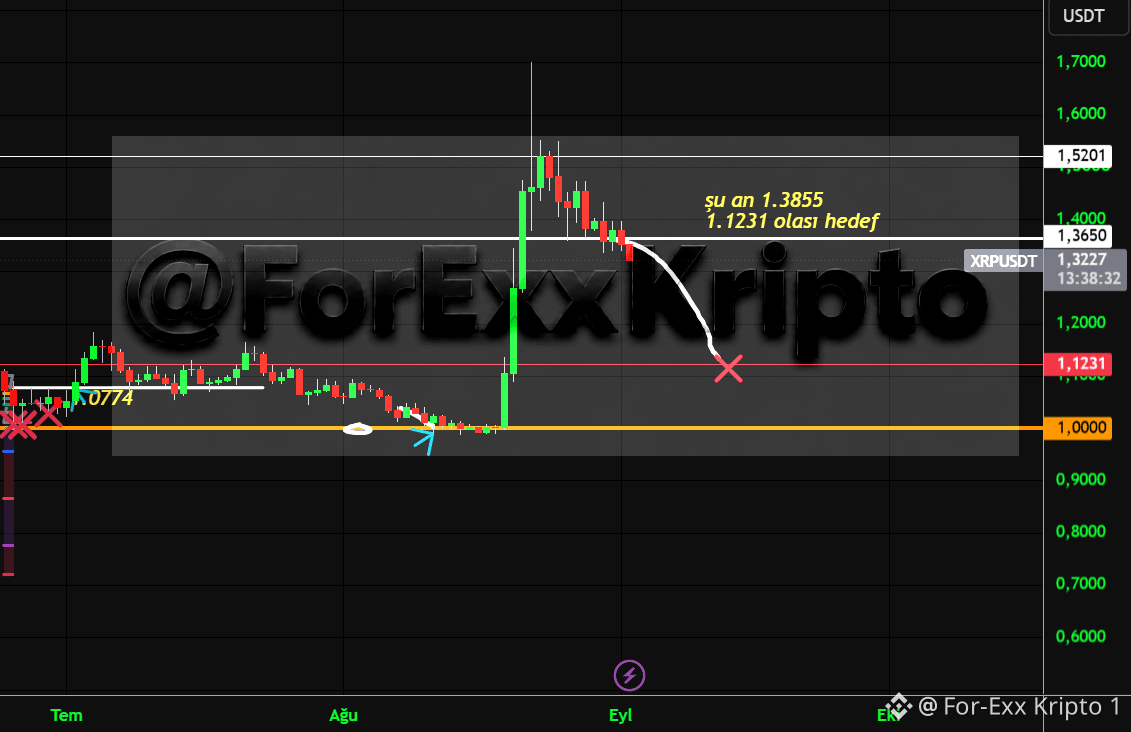
As I mentioned in yesterday’s video when $XRP was at $1.3855, $1.3650 was an important support level. A daily close below that level would set the target at $1.1231.
As I mentioned in yesterday’s video when $XRP was at $1.3855, $1.3650 was an important support level. A daily close below that level would set the target at $1.1231.
37
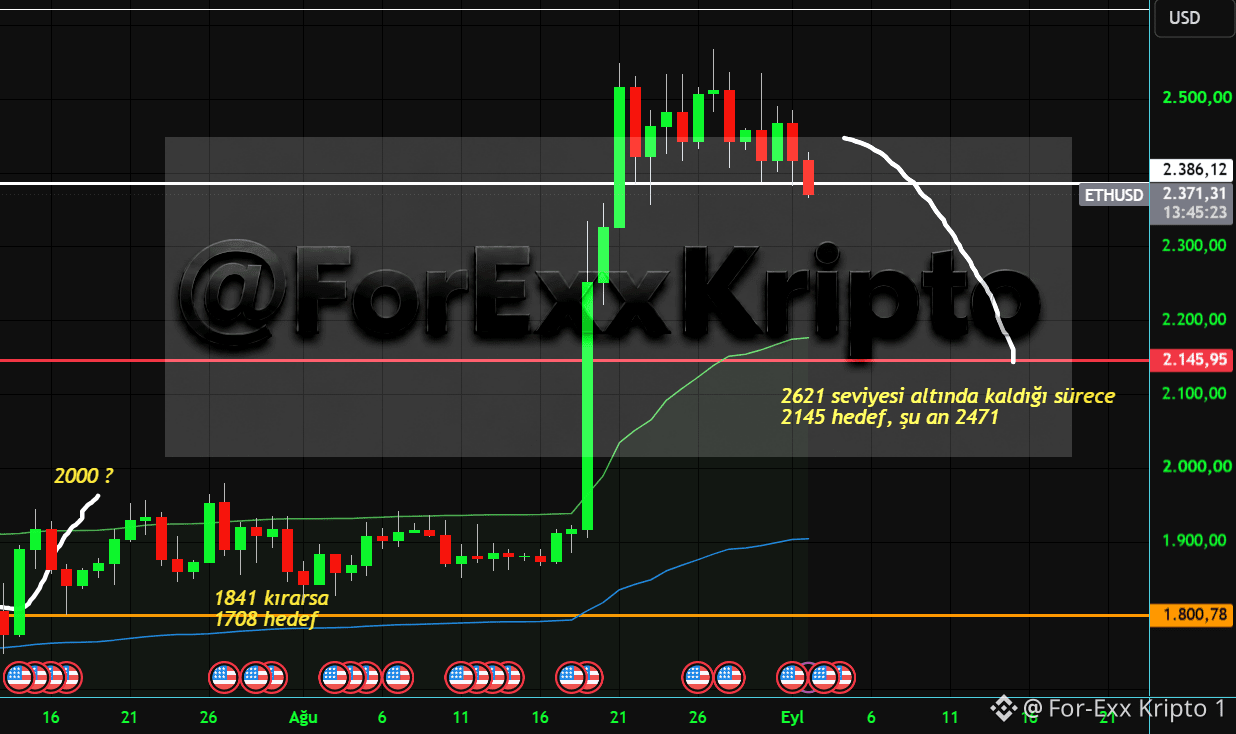
The $ETH I mentioned in yesterday’s video when it was at $2,471 is now at $2,371. If it closes the day below $2,390, the $2,145 level could come into play as the target.
The $ETH I mentioned in yesterday’s video when it was at $2,471 is now at $2,371. If it closes the day below $2,390, the $2,145 level could come into play as the target.
49
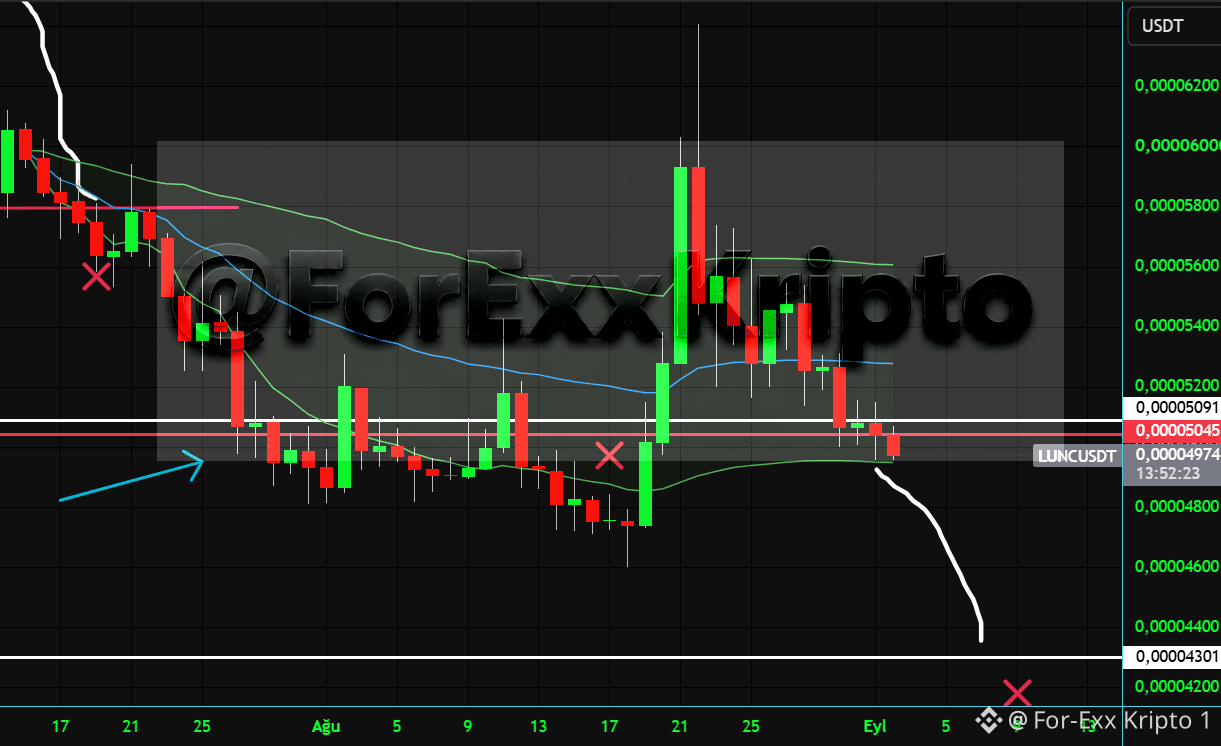
$LUNC ’s target will be 4301 if it closes below the 5045 level. If the decline I’m expecting across the broader crypto market materializes, it will likely reach that level. It should hold there without breaking below it; a potential bounce from that support could trigger an upward reaction.
$LUNC ’s target will be 4301 if it closes below the 5045 level. If the decline I’m expecting across the broader crypto market materializes, it will likely reach that level. It should hold there without breaking below it; a potential bounce from that support could trigger an upward reaction.
66
🔐 END-OF-DAY MARKET REPORT — SEPTEMBER 1, 2026 🌐 TOP STORIES Russia’s 282-FZ crypto law took effect, allowing licensed BTC, ETH and USDT trading/custody; retail transactions are capped at 300,000 rubles (~3,700 $), while domestic crypto payments remain banned Bitcoin Knots’ BLAKE2b hard fork goes live, replacing SHA-256d; existing BTC mining hardware is incompatible with the new chain U.S. strikes on Iranian rocket sites and further threats are lifting oil and rate-hike expectations, pressuring BTC and ETH ━━━ ₿ BITCOIN $BTC opened at 77,700–78,700 $, initially +1.1% before slipping to 77,650–77,950 $. It remains near 78,000 $, below 80,000 $ resistance. Rising Treasury yields pressure non-yielding assets. BTC remains above its 200-day MA; the bull flag targets 81,500 $, then 85,000 $. August gained ~24%, its strongest month of 2026. ━━━ 🔷 ETHEREUM & ALTCOINS $ETH trades at 2,440–2,463 $, XRP 1.37–1.38 $, SOL ~102 $, BNB ~688 $. INJ at 4.88 $ sits between EMA20/EMA50, with RSI 48.23. Fear & Greed is 69, while total market cap fell 2.72% to 2.63 trillion $. ━━━ 📋 KEY CRYPTO DEVELOPMENTS SEC comments continue on “Regulation Crypto Assets,” including a 5 million $ startup exemption and another allowing up to 75 million $ annual funding Zama raised 73 million $ in Series A for fully homomorphic encryption ━━━ 🔓 TOKEN UNLOCKS Sui (SUI) — September 1 ~9.7–18 million $; ~0.33–0.89% of circulating supply. Early Contributors + Community Reserve + Mysten Labs Treasury. Selling pressure: 🟢 Ethena (ENA) — September 2 ~6.05 million $; 0.46% of circulating supply. Foundation. Selling pressure: 🟢 ━━━ 🔭 OUTLOOK Friday’s August NFP is the key catalyst: 55K expected vs -23K in July. Another weak reading could reduce September hike expectations and support BTC; strong data could restore hawkish pricing and hinder an 80,000 $ breakout. ADP, ISM and JOLTS provide earlier signals. Iran and rising yields remain pressure factors.
🔐 END-OF-DAY MARKET REPORT — SEPTEMBER 1, 2026 🌐 TOP STORIES Russia’s 282-FZ crypto law took effect, allowing licensed BTC, ETH and USDT trading/custody; retail transactions are capped at 300,000 rubles (~3,700 $), while domestic crypto payments remain banned Bitcoin Knots’ BLAKE2b hard fork goes live, replacing SHA-256d; existing BTC mining hardware is incompatible with the new chain U.S. strikes on Iranian rocket sites and further threats are lifting oil and rate-hike expectations, pressuring BTC and ETH ━━━ ₿ BITCOIN $BTC opened at 77,700–78,700 $, initially +1.1% before slipping to 77,650–77,950 $. It remains near 78,000 $, below 80,000 $ resistance. Rising Treasury yields pressure non-yielding assets. BTC remains above its 200-day MA; the bull flag targets 81,500 $, then 85,000 $. August gained ~24%, its strongest month of 2026. ━━━ 🔷 ETHEREUM & ALTCOINS $ETH trades at 2,440–2,463 $, XRP 1.37–1.38 $, SOL ~102 $, BNB ~688 $. INJ at 4.88 $ sits between EMA20/EMA50, with RSI 48.23. Fear & Greed is 69, while total market cap fell 2.72% to 2.63 trillion $. ━━━ 📋 KEY CRYPTO DEVELOPMENTS SEC comments continue on “Regulation Crypto Assets,” including a 5 million $ startup exemption and another allowing up to 75 million $ annual funding Zama raised 73 million $ in Series A for fully homomorphic encryption ━━━ 🔓 TOKEN UNLOCKS Sui (SUI) — September 1 ~9.7–18 million $; ~0.33–0.89% of circulating supply. Early Contributors + Community Reserve + Mysten Labs Treasury. Selling pressure: 🟢 Ethena (ENA) — September 2 ~6.05 million $; 0.46% of circulating supply. Foundation. Selling pressure: 🟢 ━━━ 🔭 OUTLOOK Friday’s August NFP is the key catalyst: 55K expected vs -23K in July. Another weak reading could reduce September hike expectations and support BTC; strong data could restore hawkish pricing and hinder an 80,000 $ breakout. ADP, ISM and JOLTS provide earlier signals. Iran and rising yields remain pressure factors.

55
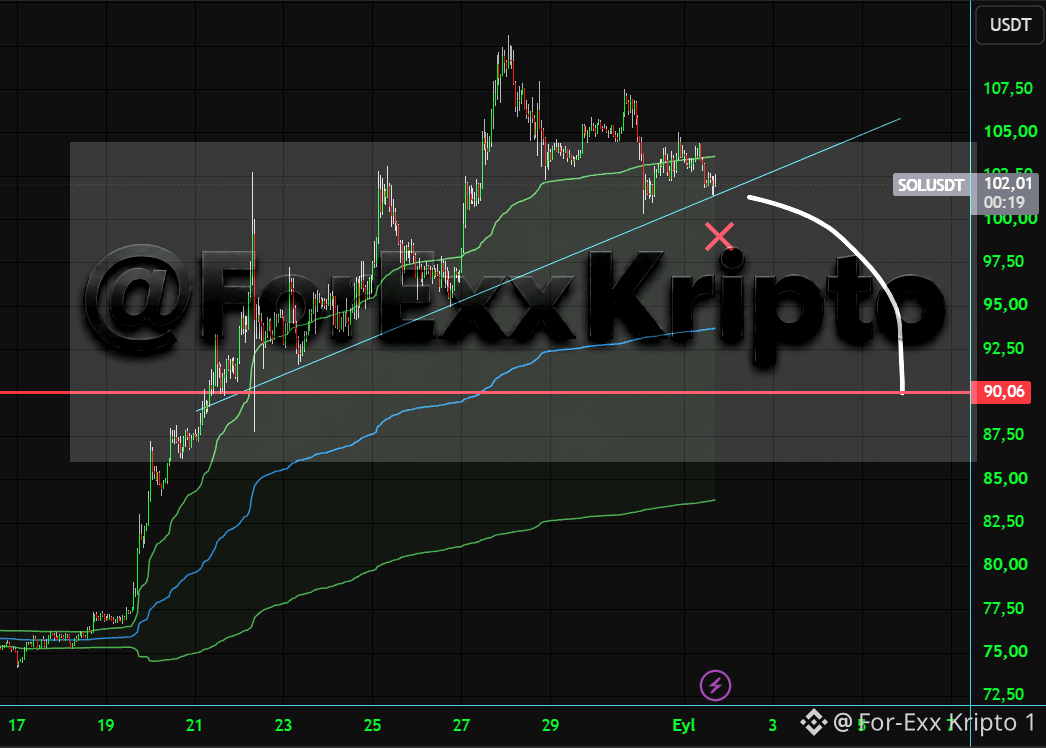
$SOL dropping below the $100 level could trigger a decline toward $90.
A move like this in the major coins could also create a domino effect across other major cryptocurrencies. On the bigger picture, the Head & Shoulders pattern I previously highlighted with a target of $51.98 is still playing out.
$SOL dropping below the $100 level could trigger a decline toward $90.
A move like this in the major coins could also create a domino effect across other major cryptocurrencies. On the bigger picture, the Head & Shoulders pattern I previously highlighted with a target of $51.98 is still playing out.
A move like this in the major coins could also create a domino effect across other major cryptocurrencies. On the bigger picture, the Head & Shoulders pattern I previously highlighted with a target of $51.98 is still playing out.
66
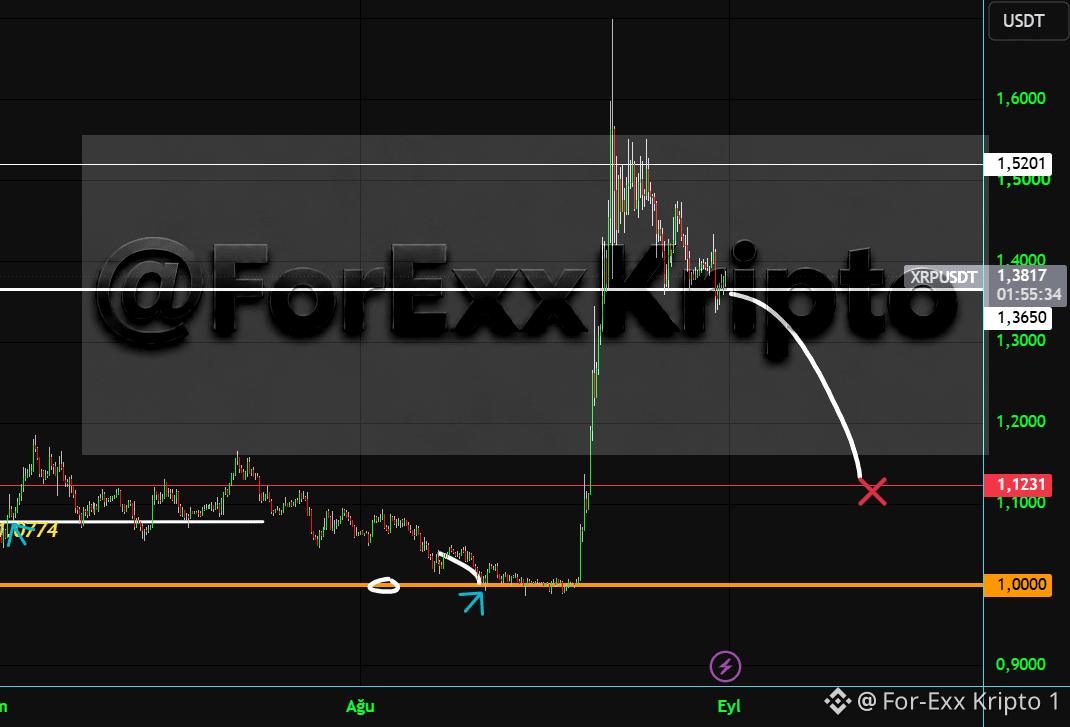
$XRP closes below 1.38, the potential for a decline toward the 1.12 level will come into play.
$XRP closes below 1.38, the potential for a decline toward the 1.12 level will come into play.
33
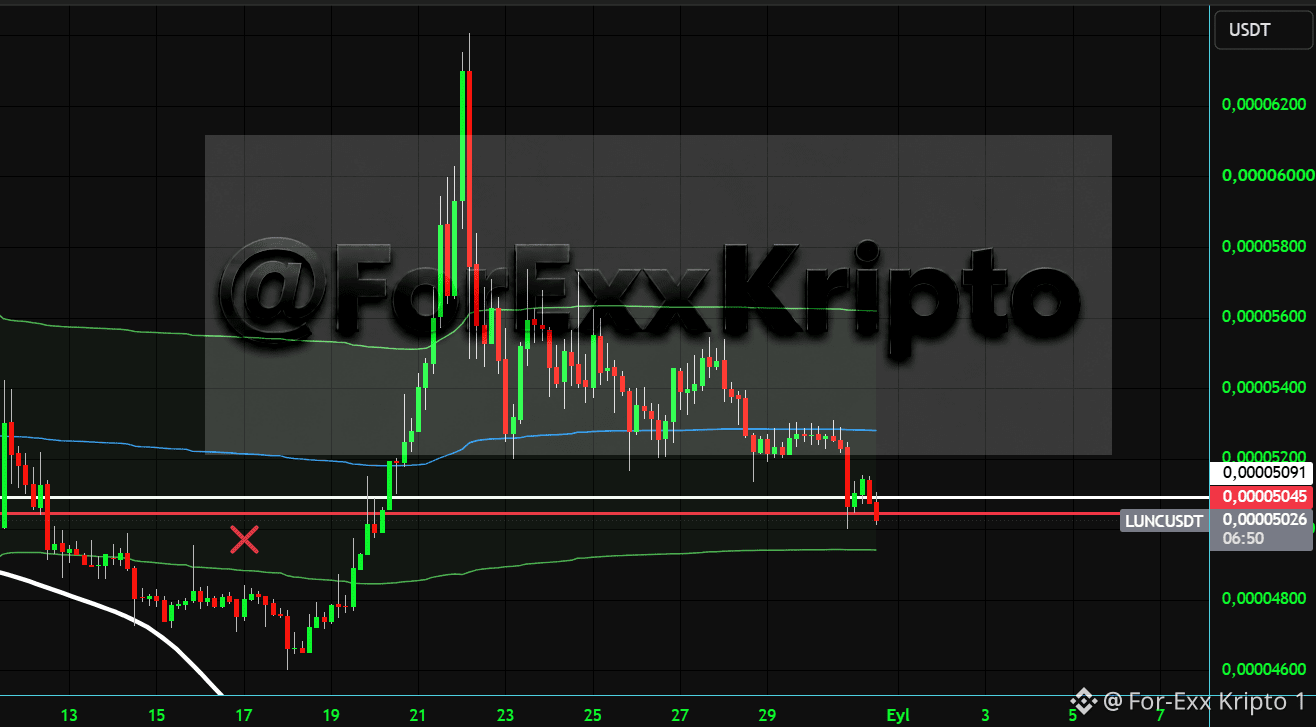
$LUNC , like other cryptocurrencies, made a pump higher amid the bond-buying euphoria, but is now once again trying to break below the critical 5045 support.
If it breaks below 5045, it could complete the unfinished move toward the 4301 level.
$LUNC , like other cryptocurrencies, made a pump higher amid the bond-buying euphoria, but is now once again trying to break below the critical 5045 support.
If it breaks below 5045, it could complete the unfinished move toward the 4301 level.
If it breaks below 5045, it could complete the unfinished move toward the 4301 level.
38
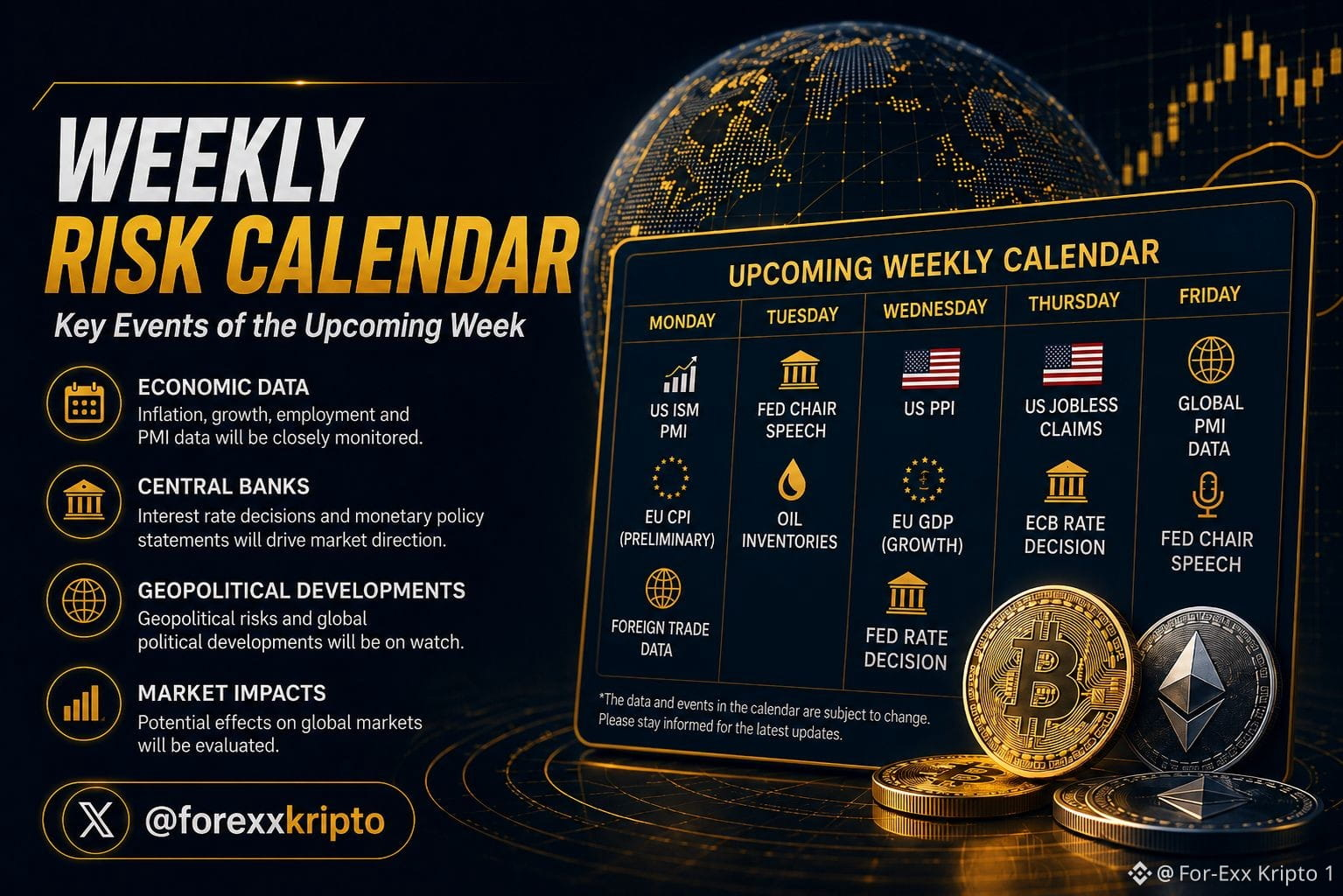
August 31 – September 4, 2026 | Weekly Risk Calendar 🎯 WEEKLY THEME Friday’s August NFP is the climax, preceded by ISM, JOLTS, ADP and Challenger job cuts. BoC and RBNZ also decide rates in the same week, creating CAD/NZD whipsaw risk. Fed Governor Waller’s Thursday speech is also key ahead of NFP. 📅 ECONOMIC CALENDAR Tuesday – September 1 17:00 TRT — ISM Manufacturing PMI, August 2026 17:00 TRT — JOLTS, July 2026 Weak data strengthens slowdown expectations; strong data raises caution. Thursday – September 3 15:30 TRT — Challenger Job-Cut Report, August 2026 15:30 TRT — Weekly Jobless Claims 17:00 TRT — ISM Services PMI, August 2026 Three key releases one day before NFP; Challenger provides an early layoffs signal. During the day — Fed Governor Christopher Waller Speech Waller’s stance is key ahead of NFP. Friday – September 4 15:30 TRT — NFP, Unemployment Rate & Average Hourly Earnings, August 2026 15:30 TRT — Canada Employment Report, August 2026 The main catalyst before September 16 FOMC. After July’s -23K, markets will assess whether weakness continues. ⚡ **CRYPTO & MARKET RISKS** ISM + JOLTS: Weak readings → stronger September hold expectations and support risk assets. Strong data → greater caution ahead of NFP. ADP + BoC/RBNZ: ADP will shape positioning into NFP. CAD/NZD volatility may spill into crypto through the dollar index. NFP: Strong payrolls + high wage growth → weaker September hold expectations, stronger dollar and pressure on crypto leverage. Weak payrolls → firmer hold expectations and stronger risk-on conditions. Earlier data will pre-position markets, reducing surprise risk — but a result far from expectations can still trigger a sharp reaction. $BTC $ETH
August 31 – September 4, 2026 | Weekly Risk Calendar 🎯 WEEKLY THEME Friday’s August NFP is the climax, preceded by ISM, JOLTS, ADP and Challenger job cuts. BoC and RBNZ also decide rates in the same week, creating CAD/NZD whipsaw risk. Fed Governor Waller’s Thursday speech is also key ahead of NFP. 📅 ECONOMIC CALENDAR Tuesday – September 1 17:00 TRT — ISM Manufacturing PMI, August 2026 17:00 TRT — JOLTS, July 2026 Weak data strengthens slowdown expectations; strong data raises caution. Thursday – September 3 15:30 TRT — Challenger Job-Cut Report, August 2026 15:30 TRT — Weekly Jobless Claims 17:00 TRT — ISM Services PMI, August 2026 Three key releases one day before NFP; Challenger provides an early layoffs signal. During the day — Fed Governor Christopher Waller Speech Waller’s stance is key ahead of NFP. Friday – September 4 15:30 TRT — NFP, Unemployment Rate & Average Hourly Earnings, August 2026 15:30 TRT — Canada Employment Report, August 2026 The main catalyst before September 16 FOMC. After July’s -23K, markets will assess whether weakness continues. ⚡ **CRYPTO & MARKET RISKS** ISM + JOLTS: Weak readings → stronger September hold expectations and support risk assets. Strong data → greater caution ahead of NFP. ADP + BoC/RBNZ: ADP will shape positioning into NFP. CAD/NZD volatility may spill into crypto through the dollar index. NFP: Strong payrolls + high wage growth → weaker September hold expectations, stronger dollar and pressure on crypto leverage. Weak payrolls → firmer hold expectations and stronger risk-on conditions. Earlier data will pre-position markets, reducing surprise risk — but a result far from expectations can still trigger a sharp reaction. $BTC $ETH
70
🔐 END-OF-DAY MARKET REPORT — August 24, 2026 🌐 TODAY’S TOP HEADLINES Bitcoin and Ethereum posted their strongest recent weekend performance; BTC hit its highest since May and ETH its highest since late January. Butterfill called the rally “a macro, not crypto story,” citing softer inflation and weaker jobs data. The Fed’s Jackson Hole Symposium runs Aug. 27-29, with digital assets in focus. Warsh’s comments will be critical. SEC-CFTC comment period on crypto derivatives rules closes today. BNB Smart Chain activates the Pasteur hard fork at 22:30 TRT. U.S. ADP data arrives Aug. 25 ━ ₿ BITCOIN $BTC opened at 77,700-79,100 $, up 0.8%, after gaining 22-24% over seven days and trading near the Aug. 22 high of 78,048 $. Since 64,928 $ on July 24, the monthly gain is about 12,788 $. Analysts cite ETF demand, short covering and broader risk appetite; ETFs attracted ~1.92B $ over the past week. 80,000 $ is the next psychological test, with profit-taking risk rising. ━ 🔷 ETHEREUM & ALTCOINS ETH opened at 2,463-2,507 $, up 1.6% and ~26% weekly, outperforming BTC. XRP gained 14.6% last week and Solana 6-7%. SEC proposals and CLARITY Act momentum support risk appetite ━ 📋 TOP CRYPTO NEWS Hung Tran said the Fed’s future direction under a new chair may matter more than Powell’s “farewell speech.” CoinDesk highlighted Jackson Hole’s collision with geopolitical risk as U.S.-Iran and Russia-Ukraine tensions persist. ━ 🔓 TOKEN UNLOCKS Humanity Protocol ( $H ) — Aug. 25: ~21.3M $ (2.66% of circulating supply), 266.47M tokens. 🟡 Plasma (XPL) — Aug. 25: ~8.91M $ (3.31%), 88.89M tokens. 🟡 Aug. 25 total: ~30.4M $. HUMA also unlocks 4.59% (~9.3M $) on Aug. 26. ━ 🔭 OUTLOOK Jackson Hole is the week’s key event. A dovish tone or further yield declines could extend the rally, while a hawkish surprise could trigger profit-taking. A sustained BTC break above 80,000 $ is the key technical threshold. H, XPL and HUMA unlocks appear relatively absorbable in the current risk-on environment.
🔐 END-OF-DAY MARKET REPORT — August 24, 2026 🌐 TODAY’S TOP HEADLINES Bitcoin and Ethereum posted their strongest recent weekend performance; BTC hit its highest since May and ETH its highest since late January. Butterfill called the rally “a macro, not crypto story,” citing softer inflation and weaker jobs data. The Fed’s Jackson Hole Symposium runs Aug. 27-29, with digital assets in focus. Warsh’s comments will be critical. SEC-CFTC comment period on crypto derivatives rules closes today. BNB Smart Chain activates the Pasteur hard fork at 22:30 TRT. U.S. ADP data arrives Aug. 25 ━ ₿ BITCOIN $BTC opened at 77,700-79,100 $, up 0.8%, after gaining 22-24% over seven days and trading near the Aug. 22 high of 78,048 $. Since 64,928 $ on July 24, the monthly gain is about 12,788 $. Analysts cite ETF demand, short covering and broader risk appetite; ETFs attracted ~1.92B $ over the past week. 80,000 $ is the next psychological test, with profit-taking risk rising. ━ 🔷 ETHEREUM & ALTCOINS ETH opened at 2,463-2,507 $, up 1.6% and ~26% weekly, outperforming BTC. XRP gained 14.6% last week and Solana 6-7%. SEC proposals and CLARITY Act momentum support risk appetite ━ 📋 TOP CRYPTO NEWS Hung Tran said the Fed’s future direction under a new chair may matter more than Powell’s “farewell speech.” CoinDesk highlighted Jackson Hole’s collision with geopolitical risk as U.S.-Iran and Russia-Ukraine tensions persist. ━ 🔓 TOKEN UNLOCKS Humanity Protocol ( $H ) — Aug. 25: ~21.3M $ (2.66% of circulating supply), 266.47M tokens. 🟡 Plasma (XPL) — Aug. 25: ~8.91M $ (3.31%), 88.89M tokens. 🟡 Aug. 25 total: ~30.4M $. HUMA also unlocks 4.59% (~9.3M $) on Aug. 26. ━ 🔭 OUTLOOK Jackson Hole is the week’s key event. A dovish tone or further yield declines could extend the rally, while a hawkish surprise could trigger profit-taking. A sustained BTC break above 80,000 $ is the key technical threshold. H, XPL and HUMA unlocks appear relatively absorbable in the current risk-on environment.

68
Jackson Hole Summit to Be the Main Focus for Markets This Week **Spot/Summary:** During the August 24–28 week, investors will focus on the Jackson Hole Economic Symposium hosted by the Kansas City Fed. Fed Chair Kevin Warsh’s speech on Thursday could shape year-end and 2027 expectations for monetary policy. --- Following last week’s Fed minutes and global leading indicators, markets will focus directly on central bank leadership this week. The symposium, held in Wyoming and bringing together central bankers, finance ministers and academics from around the world, has historically been a platform for important policy signals. **Key Data Points of the Week** On Wednesday, the U.S. will release July PCE data — the Fed’s preferred inflation gauge — along with a second-quarter GDP revision, personal income/spending and durable goods orders, creating a dense data package. These figures will provide the market’s last major economic picture before Warsh’s speech on Thursday. **Warsh’s Speech** Fed Chair Kevin Warsh is expected to discuss monetary policy during his speech on Thursday. The market’s focus will be on the probability and magnitude of potential rate hikes during the year and into next year. On Friday, the University of Michigan’s final consumer sentiment and inflation expectations survey will be closely watched. **What Does It Mean for Markets?** Analysts say that if PCE data comes in above expectations, expectations for tighter policy at the September rate decision could strengthen. A cautious tone from Warsh, meanwhile, could support risk appetite. There have been instances in previous years when the symposium triggered unexpected shifts in markets; therefore, volatility is expected to remain above normal throughout the week. $BTC $XRP
Jackson Hole Summit to Be the Main Focus for Markets This Week **Spot/Summary:** During the August 24–28 week, investors will focus on the Jackson Hole Economic Symposium hosted by the Kansas City Fed. Fed Chair Kevin Warsh’s speech on Thursday could shape year-end and 2027 expectations for monetary policy. --- Following last week’s Fed minutes and global leading indicators, markets will focus directly on central bank leadership this week. The symposium, held in Wyoming and bringing together central bankers, finance ministers and academics from around the world, has historically been a platform for important policy signals. **Key Data Points of the Week** On Wednesday, the U.S. will release July PCE data — the Fed’s preferred inflation gauge — along with a second-quarter GDP revision, personal income/spending and durable goods orders, creating a dense data package. These figures will provide the market’s last major economic picture before Warsh’s speech on Thursday. **Warsh’s Speech** Fed Chair Kevin Warsh is expected to discuss monetary policy during his speech on Thursday. The market’s focus will be on the probability and magnitude of potential rate hikes during the year and into next year. On Friday, the University of Michigan’s final consumer sentiment and inflation expectations survey will be closely watched. **What Does It Mean for Markets?** Analysts say that if PCE data comes in above expectations, expectations for tighter policy at the September rate decision could strengthen. A cautious tone from Warsh, meanwhile, could support risk appetite. There have been instances in previous years when the symposium triggered unexpected shifts in markets; therefore, volatility is expected to remain above normal throughout the week. $BTC $XRP

77
Log in to explore more content
Join global crypto users on Binance Square
⚡️ Get latest and useful information about crypto.
💬 Trusted by the world’s largest crypto exchange.
👍 Discover real insights from verified creators.
Email / Phone number
Trending Topics
AppleDebutsFoldablePhone
16,107 views
343 Discussing
$BTC
Apple just released a foldable phone
Apple fans are calculating installments
Old “weak hands” are figuring out how many BTC
Brothers
Apple finally can’t hold it back anymore
Its first foldable phone
iPhone Duo
Starts at 15,999 yuan in mainland China
The top configuration goes straight up to 26,499
I swear—when I saw the price
my first reaction wasn’t “too expensive”
It was, “Quick, open the exchange and calculate.”
Based on the current coin price,
this phone is about 0.025 BTC
0.025 BTC
Doesn’t sound like much, right?
But go look at history.
When the iPhone 4s launched back then,
the price translated to 162 BTC
iPhone 6 was 1.7 BTC
iPhone 13 was 0.018 BTC
iPhone 17 was 0.007 BTC
Got the trend now?
It’s not that your money is growing
It’s Bitcoin diluting Apple’s pricing for you
What’s interesting is that at the event itself,
Apple’s stock price rode a roller coaster.
It got hit at the open—then it bounced back.
By the close, it finished down slightly.
Whether the market thinks this high-priced foldable phone can sell big—
there’s quite a split 😂😂
But brothers,
don’t see Apple releasing a new phone and start imagining that “tech bull run” is here.
The big-bag (BTC) needs to follow the trend
Apple doesn’t have a direct capital pipeline to the crypto market.
No matter how many phones it sells,
not a single automatic cent flows into crypto.
This is only a hardware tailwind on the consumer side,
not the big logic that directly pushes BTC higher.
BTC’s pricing main driver is still
the Fed cutting rates and US Treasury yields.
Apple’s new product is just a small industry hotspot.
It can only boost sector sentiment in the short term.
It can’t change the big market’s overall trend.
If you were already planning to change your phone,
and you also happen to have some spare money worth 0.025 BTC in hand
Would you buy it?
#appledebutsfoldablephone
孔大锤
·3 Likes
·2.4k views
EUExtendsCentralContactPointToCASPs
2,436 views
91 Discussing
US10YTreasuryYieldHitsHighestSinceNov2023
18,093 views
317 Discussing