
Drake_
686 Posts

Drake_
Report
Block User
Crypto since 2016 | Trader by Profession | Follow me for the latest market updates 🚀 #Binance #CMC
Open Trade
Occasional Trader
4.5 Years
123 Following
108 Followers
540 Liked
Posts
Portfolio
All
Quotes
Videos
·
--
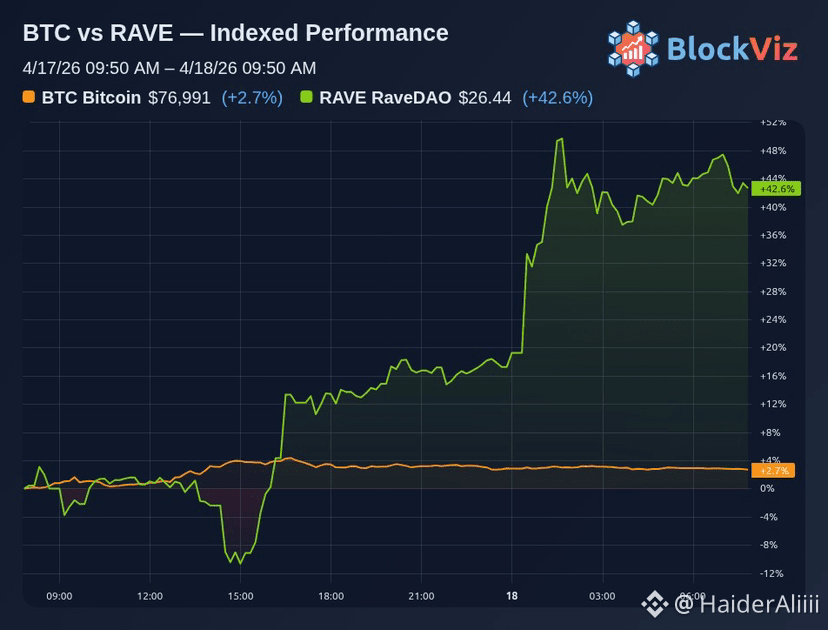
RaveDAO (RAVE) is demonstrating an explosive outperformance against Bitcoin (BTC), leading by a staggering 39.9% in indexed performance over the last two days. RAVE's impressive 41.98% gain in 24 hours stands in stark contrast to Bitcoin's notable 2.67% rise, highlighting a clear and dramatic divergence in short-term market dynamics. The peak spread between these two assets reached a remarkable 46.7% within the period.
This robust outperformance from RAVE, an asset with a market capitalization exceeding $6.5 billion, is a key indicator for market participants. It suggests that capital is currently flowing aggressively into specific altcoins, indicating where notable growth is concentrated within the crypto ecosystem, rather than general market movements. Such a significant divergence offers strong insight into evolving market preferences and risk appetite, even as Bitcoin experiences positive movement
$RAVE
RaveDAO (RAVE) is demonstrating an explosive outperformance against Bitcoin (BTC), leading by a staggering 39.9% in indexed performance over the last two days. RAVE's impressive 41.98% gain in 24 hours stands in stark contrast to Bitcoin's notable 2.67% rise, highlighting a clear and dramatic divergence in short-term market dynamics. The peak spread between these two assets reached a remarkable 46.7% within the period.
This robust outperformance from RAVE, an asset with a market capitalization exceeding $6.5 billion, is a key indicator for market participants. It suggests that capital is currently flowing aggressively into specific altcoins, indicating where notable growth is concentrated within the crypto ecosystem, rather than general market movements. Such a significant divergence offers strong insight into evolving market preferences and risk appetite, even as Bitcoin experiences positive movement
$RAVE
This robust outperformance from RAVE, an asset with a market capitalization exceeding $6.5 billion, is a key indicator for market participants. It suggests that capital is currently flowing aggressively into specific altcoins, indicating where notable growth is concentrated within the crypto ecosystem, rather than general market movements. Such a significant divergence offers strong insight into evolving market preferences and risk appetite, even as Bitcoin experiences positive movement
$RAVE
11
·
--
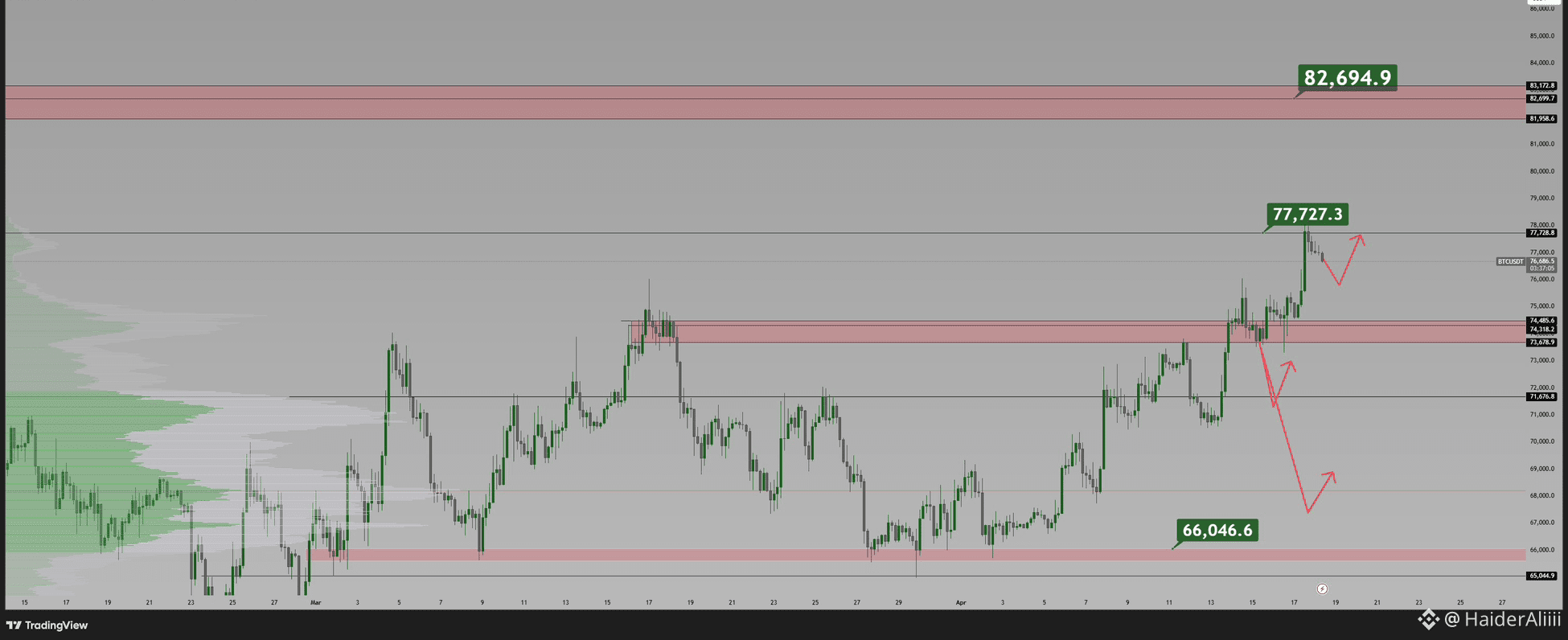
I think in the short term we'll go a bit lower. The most important zone for me right now is the 82k level, a higher timeframe resistance. That's the next point where I will take profit.
Other zones are still valid. In the short term, we could drop to 75.9k, and then 74.5k.
Midterm I'm bullish, but the main trend is still bearish until we break above 82.6k zone.
What do you think?
$BTC #BTCPriceAnalysis
I think in the short term we'll go a bit lower. The most important zone for me right now is the 82k level, a higher timeframe resistance. That's the next point where I will take profit.
Other zones are still valid. In the short term, we could drop to 75.9k, and then 74.5k.
Midterm I'm bullish, but the main trend is still bearish until we break above 82.6k zone.
What do you think?
$BTC #BTCPriceAnalysis
Other zones are still valid. In the short term, we could drop to 75.9k, and then 74.5k.
Midterm I'm bullish, but the main trend is still bearish until we break above 82.6k zone.
What do you think?
$BTC #BTCPriceAnalysis
43
·
--
Goldman Sachs: Al is Back with a Vengeance!
Goldman Sachs confirms the Al theme is reviving "very, very fast." While software lags, semiconductors are already hitting new highs!
This tech-driven momentum often serves as a massive tailwind for Bitcoin, as liquidity flows back into high-growth assets. The Strategy:
Senior advisor Dominic Wilson suggests a
"nibble and hedge" approach. Add risk to $BTC and Al at lower prices, but keep hedges aggressive to survive volatility.
Stay nimble - Al and BTC are the engines, but protection is the key!
Goldman Sachs: Al is Back with a Vengeance!
Goldman Sachs confirms the Al theme is reviving "very, very fast." While software lags, semiconductors are already hitting new highs!
This tech-driven momentum often serves as a massive tailwind for Bitcoin, as liquidity flows back into high-growth assets. The Strategy:
Senior advisor Dominic Wilson suggests a
"nibble and hedge" approach. Add risk to $BTC and Al at lower prices, but keep hedges aggressive to survive volatility.
Stay nimble - Al and BTC are the engines, but protection is the key!
Goldman Sachs confirms the Al theme is reviving "very, very fast." While software lags, semiconductors are already hitting new highs!
This tech-driven momentum often serves as a massive tailwind for Bitcoin, as liquidity flows back into high-growth assets. The Strategy:
Senior advisor Dominic Wilson suggests a
"nibble and hedge" approach. Add risk to $BTC and Al at lower prices, but keep hedges aggressive to survive volatility.
Stay nimble - Al and BTC are the engines, but protection is the key!
37
·
--
JUST IN: 🇮🇷🇺🇸 Iran officially closes the Strait of Hormuz again after US says it will not end its blockade.
JUST IN: 🇮🇷🇺🇸 Iran officially closes the Strait of Hormuz again after US says it will not end its blockade.
18
·
--
Article
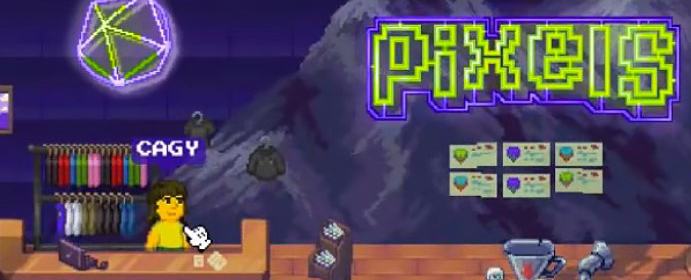
Tomorrow is a big day for $PIXEL and most holders haven’t even noticed.On April 19 literally tomorrow 91.18 million PIXEL tokens unlock. That’s $717K worth of supply hitting the market across Treasury, Advisors, Ecosystem Rewards, Private Sale investors, and Team wallets all at once.
Last time a unlock this size landed, the price dropped 55% over the following 60 days.
And yet right now, Pixel is sitting at $0.0078 — up 12.3% on the week — with $24.7 million in 24h volume. The market is either not paying attention, or it has already priced it in. Those are two very different situations.
Here’s what I think is actually going on.
The people receiving tomorrow’s unlock — advisors, early investors, team — are not the same people who have been staking through two years of red candles. The staking cohort already survived the August 2025 unlock without flinching. 139 million tokens locked, still sitting there. That group has shown it isn’t leaving over a supply event.
The unlock recipients are a different story. Whether they hold or dump is the only question that matters for the next 30 days.
Circulating supply right now is 770 million PIXEL out of a 5 billion total — just 15.4% of the full supply in the market. That number is worth sitting with. 84.6% of Pixel hasn’t entered circulation yet. Every future unlock is a small stress test. Tomorrow is the next one.
The project itself hasn’t changed. 1 million daily users, $25M in ecosystem revenue, a profitability milestone that most GameFi tokens never reach. Stacked is live, multi-game staking is expanding, Chapter 4 is coming.
None of that stops an unlock from being an unlock.
Watch the price action tomorrow and Sunday closely. If it holds above $0.007 through the weekend, the staking floor is real and the structure is holding. If it cracks below $0.006, the unlock pressure is winning and the next entry is being set.
Either outcome tells you something. Most people won’t be watching.
“Source: CoinGecko, April 18 2026”
CoinGecko’s PIXEL page showing tomorrow’s 91.18M unlock breakdown it’s right there on the page.
@pixels ([https://www.binance.com/en/square/profile/pixels](https://www.binance.com/en/square/profile/pixels)) #pixel $PIXEL
Tomorrow is a big day for $PIXEL and most holders haven’t even noticed.
On April 19 literally tomorrow 91.18 million PIXEL tokens unlock. That’s $717K worth of supply hitting the market across Treasury, Advisors, Ecosystem Rewards, Private Sale investors, and Team wallets all at once.
Last time a unlock this size landed, the price dropped 55% over the following 60 days.
And yet right now, Pixel is sitting at $0.0078 — up 12.3% on the week — with $24.7 million in 24h volume. The market is either not paying attention, or it has already priced it in. Those are two very different situations.
Here’s what I think is actually going on.
The people receiving tomorrow’s unlock — advisors, early investors, team — are not the same people who have been staking through two years of red candles. The staking cohort already survived the August 2025 unlock without flinching. 139 million tokens locked, still sitting there. That group has shown it isn’t leaving over a supply event.
The unlock recipients are a different story. Whether they hold or dump is the only question that matters for the next 30 days.
Circulating supply right now is 770 million PIXEL out of a 5 billion total — just 15.4% of the full supply in the market. That number is worth sitting with. 84.6% of Pixel hasn’t entered circulation yet. Every future unlock is a small stress test. Tomorrow is the next one.
The project itself hasn’t changed. 1 million daily users, $25M in ecosystem revenue, a profitability milestone that most GameFi tokens never reach. Stacked is live, multi-game staking is expanding, Chapter 4 is coming.
None of that stops an unlock from being an unlock.
Watch the price action tomorrow and Sunday closely. If it holds above $0.007 through the weekend, the staking floor is real and the structure is holding. If it cracks below $0.006, the unlock pressure is winning and the next entry is being set.
Either outcome tells you something. Most people won’t be watching.
“Source: CoinGecko, April 18 2026”
CoinGecko’s PIXEL page showing tomorrow’s 91.18M unlock breakdown it’s right there on the page.
@Pixels (https://www.binance.com/en/square/profile/pixels) #pixel $PIXEL
Last time a unlock this size landed, the price dropped 55% over the following 60 days.
And yet right now, Pixel is sitting at $0.0078 — up 12.3% on the week — with $24.7 million in 24h volume. The market is either not paying attention, or it has already priced it in. Those are two very different situations.
Here’s what I think is actually going on.
The people receiving tomorrow’s unlock — advisors, early investors, team — are not the same people who have been staking through two years of red candles. The staking cohort already survived the August 2025 unlock without flinching. 139 million tokens locked, still sitting there. That group has shown it isn’t leaving over a supply event.
The unlock recipients are a different story. Whether they hold or dump is the only question that matters for the next 30 days.
Circulating supply right now is 770 million PIXEL out of a 5 billion total — just 15.4% of the full supply in the market. That number is worth sitting with. 84.6% of Pixel hasn’t entered circulation yet. Every future unlock is a small stress test. Tomorrow is the next one.
The project itself hasn’t changed. 1 million daily users, $25M in ecosystem revenue, a profitability milestone that most GameFi tokens never reach. Stacked is live, multi-game staking is expanding, Chapter 4 is coming.
None of that stops an unlock from being an unlock.
Watch the price action tomorrow and Sunday closely. If it holds above $0.007 through the weekend, the staking floor is real and the structure is holding. If it cracks below $0.006, the unlock pressure is winning and the next entry is being set.
Either outcome tells you something. Most people won’t be watching.
“Source: CoinGecko, April 18 2026”
CoinGecko’s PIXEL page showing tomorrow’s 91.18M unlock breakdown it’s right there on the page.
@Pixels (https://www.binance.com/en/square/profile/pixels) #pixel $PIXEL
1
113
·
--
It printed +193% in 24 hours.
Then the question nobody wanted to askFor most of February 2026, $PIXEL was trading around $0.0045. A number so far from its starting point that it had stopped feeling like a price and started feeling like an abstraction. People who bought near the top had been watching it for two years. People who bought the dip were wondering which dip they meant.
And then, in March, something shifted. Volume exploded — not 20%, not 50%, but over 6,000% in a single 24-hour window. The price moved from roughly $0.007 to nearly $0.020 before settling. 193% in a day. The kind of number that empties Discord threads of nuance and fills them with price targets instead.
The interesting thing wasn't the move. Thin-liquidity altcoins make moves like that. The interesting thing was what the move exposed about how people were holding.
Some wallets that had been underwater for eighteen months finally had a window to exit at a smaller loss. Some wallets that had been staking through the entire decline saw their position appreciate in hours. Some wallets — the ones that had just found the token three days earlier on a trending list — were making decisions about an asset they barely understood in a timeframe that rewarded instinct over analysis.
All three of those behaviors happened simultaneously in the same market. And none of them had much to do with whether Pixels the game had gotten better or worse, whether Stacked had meaningful traction, whether the RORS was sustainable. The price moved because liquidity shifted and sentiment ignited, not because the fundamentals changed in 24 hours.
That gap — between what a price does and what a project is — is the oldest tension in this space. People talk about it endlessly in bear markets and forget about it completely during green candles. The Pixel rally was a reminder that neither extreme is accurate.
The on-chain data from that rally is actually reassuring in one specific way. The turnover ratio — the proportion of circulating supply that traded hands during the move — came in at 1.02. That's not an empty pump driven by one whale and a lot of wash trading. It's a liquid market where buyers and sellers genuinely found each other at scale. The fundamentals, as the on-chain analysts noted at the time, were holding underneath the volatility.
But "holding underneath" is different from "being recognized by the market." A game with one million daily active users, $25 million in revenue, a positive RORS, and 139 million staked tokens still trades at a market cap of roughly $22 million. The math doesn't resolve cleanly. Either the market is severely underpricing a working ecosystem, or there is something it's seeing in the supply schedule and vesting structure that hasn't fully landed in the community narrative yet.
Both can be true. Usually, both are.
The rally happened. Then it settled. And now Pixel sits where it usually sits — between what it has built and what the market has decided to price that building at. The distance between those two points is either an opportunity or a warning, depending on which questions you're willing to hold without answering them
@pixels ([https://www.binance.com/en/square/profile/pixels](https://www.binance.com/en/square/profile/pixels)) · $PIXEL #pixel
It printed +193% in 24 hours. Then the question nobody wanted to ask
For most of February 2026, $PIXEL was trading around $0.0045. A number so far from its starting point that it had stopped feeling like a price and started feeling like an abstraction. People who bought near the top had been watching it for two years. People who bought the dip were wondering which dip they meant.
And then, in March, something shifted. Volume exploded — not 20%, not 50%, but over 6,000% in a single 24-hour window. The price moved from roughly $0.007 to nearly $0.020 before settling. 193% in a day. The kind of number that empties Discord threads of nuance and fills them with price targets instead.
The interesting thing wasn't the move. Thin-liquidity altcoins make moves like that. The interesting thing was what the move exposed about how people were holding.
Some wallets that had been underwater for eighteen months finally had a window to exit at a smaller loss. Some wallets that had been staking through the entire decline saw their position appreciate in hours. Some wallets — the ones that had just found the token three days earlier on a trending list — were making decisions about an asset they barely understood in a timeframe that rewarded instinct over analysis.
All three of those behaviors happened simultaneously in the same market. And none of them had much to do with whether Pixels the game had gotten better or worse, whether Stacked had meaningful traction, whether the RORS was sustainable. The price moved because liquidity shifted and sentiment ignited, not because the fundamentals changed in 24 hours.
That gap — between what a price does and what a project is — is the oldest tension in this space. People talk about it endlessly in bear markets and forget about it completely during green candles. The Pixel rally was a reminder that neither extreme is accurate.
The on-chain data from that rally is actually reassuring in one specific way. The turnover ratio — the proportion of circulating supply that traded hands during the move — came in at 1.02. That's not an empty pump driven by one whale and a lot of wash trading. It's a liquid market where buyers and sellers genuinely found each other at scale. The fundamentals, as the on-chain analysts noted at the time, were holding underneath the volatility.
But "holding underneath" is different from "being recognized by the market." A game with one million daily active users, $25 million in revenue, a positive RORS, and 139 million staked tokens still trades at a market cap of roughly $22 million. The math doesn't resolve cleanly. Either the market is severely underpricing a working ecosystem, or there is something it's seeing in the supply schedule and vesting structure that hasn't fully landed in the community narrative yet.
Both can be true. Usually, both are.
The rally happened. Then it settled. And now Pixel sits where it usually sits — between what it has built and what the market has decided to price that building at. The distance between those two points is either an opportunity or a warning, depending on which questions you're willing to hold without answering them
@Pixels (https://www.binance.com/en/square/profile/pixels) · $PIXEL #pixel
And then, in March, something shifted. Volume exploded — not 20%, not 50%, but over 6,000% in a single 24-hour window. The price moved from roughly $0.007 to nearly $0.020 before settling. 193% in a day. The kind of number that empties Discord threads of nuance and fills them with price targets instead.
The interesting thing wasn't the move. Thin-liquidity altcoins make moves like that. The interesting thing was what the move exposed about how people were holding.
Some wallets that had been underwater for eighteen months finally had a window to exit at a smaller loss. Some wallets that had been staking through the entire decline saw their position appreciate in hours. Some wallets — the ones that had just found the token three days earlier on a trending list — were making decisions about an asset they barely understood in a timeframe that rewarded instinct over analysis.
All three of those behaviors happened simultaneously in the same market. And none of them had much to do with whether Pixels the game had gotten better or worse, whether Stacked had meaningful traction, whether the RORS was sustainable. The price moved because liquidity shifted and sentiment ignited, not because the fundamentals changed in 24 hours.
That gap — between what a price does and what a project is — is the oldest tension in this space. People talk about it endlessly in bear markets and forget about it completely during green candles. The Pixel rally was a reminder that neither extreme is accurate.
The on-chain data from that rally is actually reassuring in one specific way. The turnover ratio — the proportion of circulating supply that traded hands during the move — came in at 1.02. That's not an empty pump driven by one whale and a lot of wash trading. It's a liquid market where buyers and sellers genuinely found each other at scale. The fundamentals, as the on-chain analysts noted at the time, were holding underneath the volatility.
But "holding underneath" is different from "being recognized by the market." A game with one million daily active users, $25 million in revenue, a positive RORS, and 139 million staked tokens still trades at a market cap of roughly $22 million. The math doesn't resolve cleanly. Either the market is severely underpricing a working ecosystem, or there is something it's seeing in the supply schedule and vesting structure that hasn't fully landed in the community narrative yet.
Both can be true. Usually, both are.
The rally happened. Then it settled. And now Pixel sits where it usually sits — between what it has built and what the market has decided to price that building at. The distance between those two points is either an opportunity or a warning, depending on which questions you're willing to hold without answering them
@Pixels (https://www.binance.com/en/square/profile/pixels) · $PIXEL #pixel
76
·
--
JUST IN: 🇮🇷 Iranian official says ships will still be required to pay tolls to cross the Strait of Hormuz.
JUST IN: 🇮🇷 Iranian official says ships will still be required to pay tolls to cross the Strait of Hormuz.
7
·
--
Article
$PIXEL is not being rewarded for what it built. It’s being punished for what the market remembers.There is a version of this project that would be celebrated right now. A Web3 game with over one million daily active users. An ecosystem that crossed $25 million in revenue. A staking system that locked 139 million tokens even as the price was falling. A profitability milestone — net spend exceeding token rewards — that almost no GameFi project has ever reached.
That version exists. The data confirms it.
And yet $PIXEL trades at roughly $0.0075 as of April 2026. Down 99.3% from its all-time high of $1.02. Market cap sitting around $22 million — less than what some influencer-backed meme tokens raise in a weekend.
The market is not pricing what Pixels built in 2025 and 2026. It is still pricing what GameFi did to people in 2022.
Source: TradingView, April 2026
That distinction matters more than most analysis gives it credit for. When Axie Infinity collapsed, when SAND and MANA lost 96% of their value, when millions of players realized their “earnings” had evaporated — the market made a collective decision. It decided that play-to-earn was a category error, not just a bad cycle. And it has been applying that verdict to every gaming token since, regardless of what the individual project actually does.
Pixels spent four years trying to prove that verdict wrong. They eliminated the $BERRY inflation loop that was slowly bleeding the economy. They introduced vPIXEL to reduce sell pressure on daily rewards. They built Stacked — a cross-game rewards platform now available to external studios — and ran a campaign that delivered 178% improvement in spending conversion and a 131% return on reward spend.
Those are not theoretical improvements. They show up in the revenue numbers.
Source: DappRadar, April 2026
The on-chain picture adds another layer. Only 15.42% of the total 5 billion Pixel supply is currently circulating. The rest sits in vesting schedules — 34% alone allocated to Ecosystem Rewards, released in cliff unlocks that hit the market all at once. The August 2025 unlock of 91 million tokens pushed the price down 55.8% over sixty days. Another unlock was scheduled for March 19, 2026.
Source: Tokenomist.ai, April 2026
This is the structural tension that the positive metrics cannot fully escape. You can build a working economy and still have a token that gets sold by recipients of scheduled unlocks who were never players and never will be. The game and the token are connected but they are not the same thing, and the people selling unlock allocations are not making decisions based on DAU numbers.
What changed in March 2026 was not the fundamentals. The fundamentals had been building quietly for months. What changed was attention — a 6,000% volume spike in 24 hours that briefly pulled $PIXEL into the rotation of tokens people were watching. The price hit $0.018 before settling back. The turnover ratio of 1.02 during that window confirmed it was real two-sided market activity, not a single actor moving a thin order book.
It settled. As it usually does.
But the staking numbers did not retreat. 139 million tokens remain locked. Monthly reward emissions are capped at 28 million $PIXEL. The people who chose to stay inside the ecosystem through two years of price decline are still there.
That is either the foundation of something, or the last act of sunk-cost psychology. The data cannot tell you which one. Only the next twelve months of execution can.
What I know is this: if Pixels were a traditional gaming company with these user numbers and this revenue trajectory, the conversation would be about growth, not survival. The discount applied to the Pixel token is almost entirely a discount applied to the category it belongs to — not to the product itself.
Whether the category ever gets repriced is a question nobody in this space has answered yet. The people still staking seem to believe it will. The market, for now, disagrees.
Both of them are looking at the same data and reaching different conclusions. That gap, more than any chart pattern, is the most interesting thing about Pixel right now.
@pixels ([https://www.binance.com/en/square/profile/pixels](https://www.binance.com/en/square/profile/pixels)) | $PIXEL
#pixel #SquareCreator #GameFi #web3gaming #RONIN
$PIXEL is not being rewarded for what it built. It’s being punished for what the market remembers.
There is a version of this project that would be celebrated right now. A Web3 game with over one million daily active users. An ecosystem that crossed $25 million in revenue. A staking system that locked 139 million tokens even as the price was falling. A profitability milestone — net spend exceeding token rewards — that almost no GameFi project has ever reached.
That version exists. The data confirms it.
And yet $PIXEL trades at roughly $0.0075 as of April 2026. Down 99.3% from its all-time high of $1.02. Market cap sitting around $22 million — less than what some influencer-backed meme tokens raise in a weekend.
The market is not pricing what Pixels built in 2025 and 2026. It is still pricing what GameFi did to people in 2022.
Source: TradingView, April 2026
That distinction matters more than most analysis gives it credit for. When Axie Infinity collapsed, when SAND and MANA lost 96% of their value, when millions of players realized their “earnings” had evaporated — the market made a collective decision. It decided that play-to-earn was a category error, not just a bad cycle. And it has been applying that verdict to every gaming token since, regardless of what the individual project actually does.
Pixels spent four years trying to prove that verdict wrong. They eliminated the $BERRY inflation loop that was slowly bleeding the economy. They introduced vPIXEL to reduce sell pressure on daily rewards. They built Stacked — a cross-game rewards platform now available to external studios — and ran a campaign that delivered 178% improvement in spending conversion and a 131% return on reward spend.
Those are not theoretical improvements. They show up in the revenue numbers.
Source: DappRadar, April 2026
The on-chain picture adds another layer. Only 15.42% of the total 5 billion Pixel supply is currently circulating. The rest sits in vesting schedules — 34% alone allocated to Ecosystem Rewards, released in cliff unlocks that hit the market all at once. The August 2025 unlock of 91 million tokens pushed the price down 55.8% over sixty days. Another unlock was scheduled for March 19, 2026.
Source: Tokenomist.ai, April 2026
This is the structural tension that the positive metrics cannot fully escape. You can build a working economy and still have a token that gets sold by recipients of scheduled unlocks who were never players and never will be. The game and the token are connected but they are not the same thing, and the people selling unlock allocations are not making decisions based on DAU numbers.
What changed in March 2026 was not the fundamentals. The fundamentals had been building quietly for months. What changed was attention — a 6,000% volume spike in 24 hours that briefly pulled $PIXEL into the rotation of tokens people were watching. The price hit $0.018 before settling back. The turnover ratio of 1.02 during that window confirmed it was real two-sided market activity, not a single actor moving a thin order book.
It settled. As it usually does.
But the staking numbers did not retreat. 139 million tokens remain locked. Monthly reward emissions are capped at 28 million $PIXEL . The people who chose to stay inside the ecosystem through two years of price decline are still there.
That is either the foundation of something, or the last act of sunk-cost psychology. The data cannot tell you which one. Only the next twelve months of execution can.
What I know is this: if Pixels were a traditional gaming company with these user numbers and this revenue trajectory, the conversation would be about growth, not survival. The discount applied to the Pixel token is almost entirely a discount applied to the category it belongs to — not to the product itself.
Whether the category ever gets repriced is a question nobody in this space has answered yet. The people still staking seem to believe it will. The market, for now, disagrees.
Both of them are looking at the same data and reaching different conclusions. That gap, more than any chart pattern, is the most interesting thing about Pixel right now.
@Pixels (https://www.binance.com/en/square/profile/pixels) | $PIXEL
#pixel #SquareCreator #GameFi #web3gaming #RONIN
That version exists. The data confirms it.
And yet $PIXEL trades at roughly $0.0075 as of April 2026. Down 99.3% from its all-time high of $1.02. Market cap sitting around $22 million — less than what some influencer-backed meme tokens raise in a weekend.
The market is not pricing what Pixels built in 2025 and 2026. It is still pricing what GameFi did to people in 2022.
Source: TradingView, April 2026
That distinction matters more than most analysis gives it credit for. When Axie Infinity collapsed, when SAND and MANA lost 96% of their value, when millions of players realized their “earnings” had evaporated — the market made a collective decision. It decided that play-to-earn was a category error, not just a bad cycle. And it has been applying that verdict to every gaming token since, regardless of what the individual project actually does.
Pixels spent four years trying to prove that verdict wrong. They eliminated the $BERRY inflation loop that was slowly bleeding the economy. They introduced vPIXEL to reduce sell pressure on daily rewards. They built Stacked — a cross-game rewards platform now available to external studios — and ran a campaign that delivered 178% improvement in spending conversion and a 131% return on reward spend.
Those are not theoretical improvements. They show up in the revenue numbers.
Source: DappRadar, April 2026
The on-chain picture adds another layer. Only 15.42% of the total 5 billion Pixel supply is currently circulating. The rest sits in vesting schedules — 34% alone allocated to Ecosystem Rewards, released in cliff unlocks that hit the market all at once. The August 2025 unlock of 91 million tokens pushed the price down 55.8% over sixty days. Another unlock was scheduled for March 19, 2026.
Source: Tokenomist.ai, April 2026
This is the structural tension that the positive metrics cannot fully escape. You can build a working economy and still have a token that gets sold by recipients of scheduled unlocks who were never players and never will be. The game and the token are connected but they are not the same thing, and the people selling unlock allocations are not making decisions based on DAU numbers.
What changed in March 2026 was not the fundamentals. The fundamentals had been building quietly for months. What changed was attention — a 6,000% volume spike in 24 hours that briefly pulled $PIXEL into the rotation of tokens people were watching. The price hit $0.018 before settling back. The turnover ratio of 1.02 during that window confirmed it was real two-sided market activity, not a single actor moving a thin order book.
It settled. As it usually does.
But the staking numbers did not retreat. 139 million tokens remain locked. Monthly reward emissions are capped at 28 million $PIXEL . The people who chose to stay inside the ecosystem through two years of price decline are still there.
That is either the foundation of something, or the last act of sunk-cost psychology. The data cannot tell you which one. Only the next twelve months of execution can.
What I know is this: if Pixels were a traditional gaming company with these user numbers and this revenue trajectory, the conversation would be about growth, not survival. The discount applied to the Pixel token is almost entirely a discount applied to the category it belongs to — not to the product itself.
Whether the category ever gets repriced is a question nobody in this space has answered yet. The people still staking seem to believe it will. The market, for now, disagrees.
Both of them are looking at the same data and reaching different conclusions. That gap, more than any chart pattern, is the most interesting thing about Pixel right now.
@Pixels (https://www.binance.com/en/square/profile/pixels) | $PIXEL
#pixel #SquareCreator #GameFi #web3gaming #RONIN
2
1
19
·
--
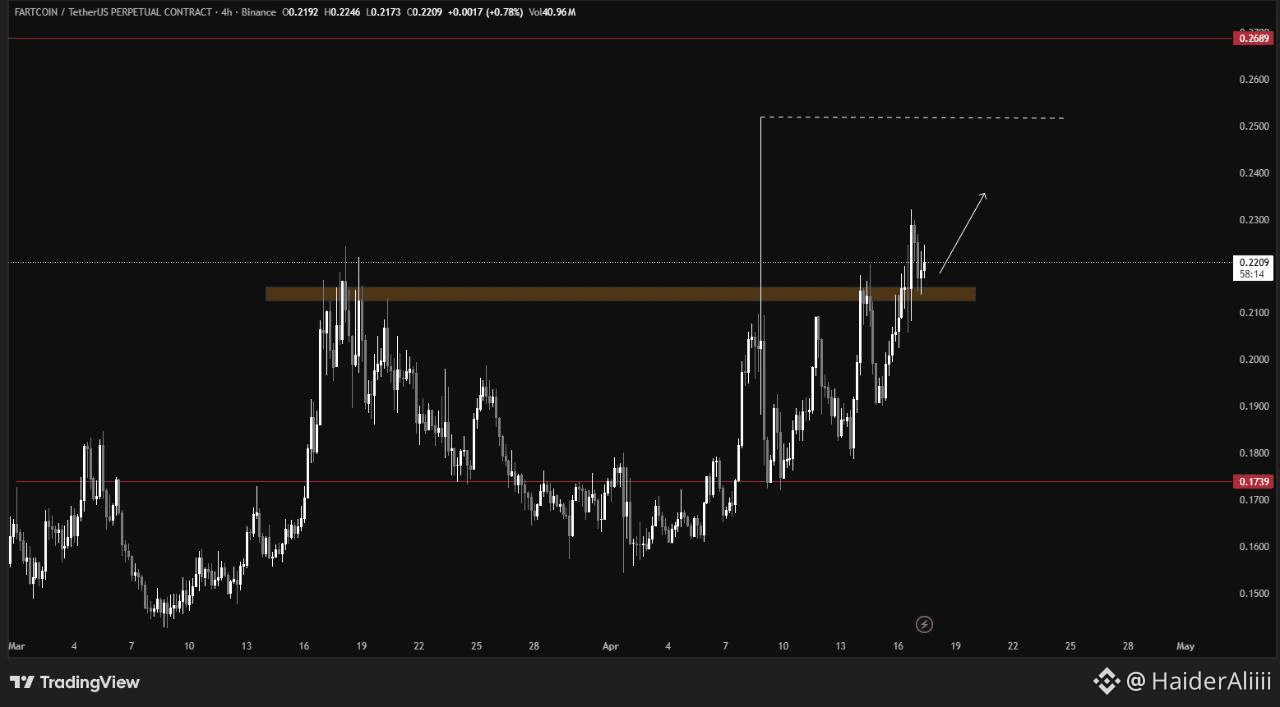
*$FARTCOIN* 📊
Strong bullish momentum in play — the breakout and retest setup has already confirmed. Now it’s time to see how this move unfolds. 🚀
*$FARTCOIN* 📊
Strong bullish momentum in play — the breakout and retest setup has already confirmed. Now it’s time to see how this move unfolds. 🚀
Strong bullish momentum in play — the breakout and retest setup has already confirmed. Now it’s time to see how this move unfolds. 🚀
103
·
--
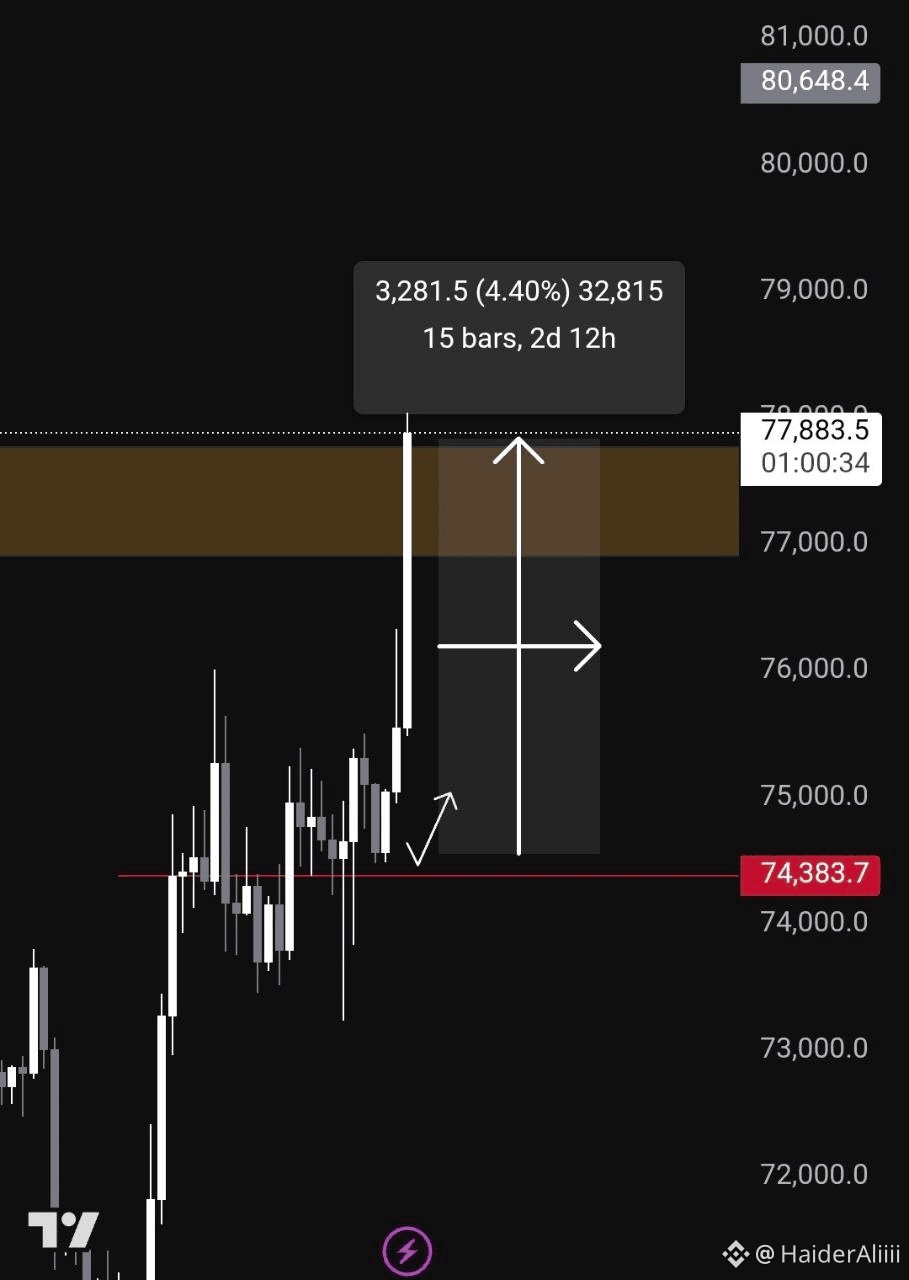
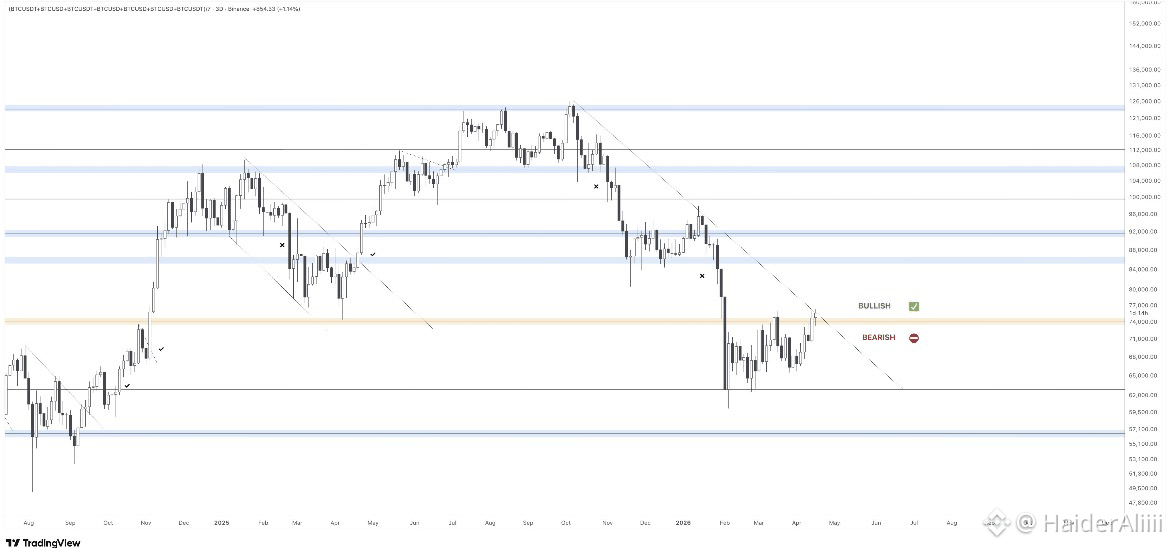
Decision time for
$BTC : Pushing over the
main downtrend resistance and looking to trigger the bullish reversal.
Are you ready?
Decision time for
$BTC : Pushing over the
main downtrend resistance and looking to trigger the bullish reversal.
Are you ready?
$BTC : Pushing over the
main downtrend resistance and looking to trigger the bullish reversal.
Are you ready?
61
·
--
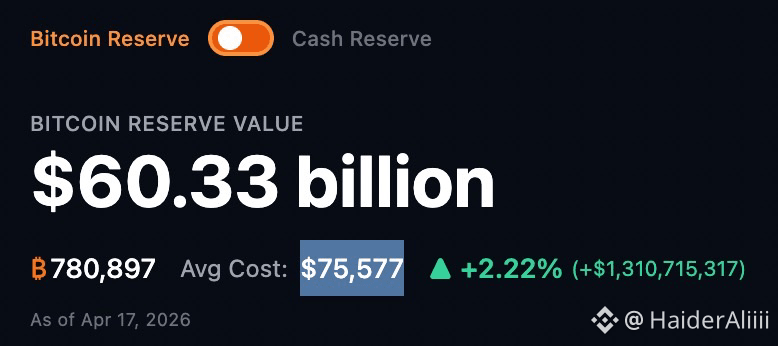
Saylor Back In Profit As Key Cost Basis:
$BTC Reclaims
As #Bitcoin pushes back above the $77K zone, Michael Saylor's aggressive accumulation strategy is once again validated, with his massive BTC holdings flipping back into profit territory. After enduring a prolonged drawdown below the average entry, this move marks a critical inflection point where conviction begins to outperform volatility.
The reclaim of this cost basis is more than just a psychological win, it signals that large-scale institutional positioning is being structurally defended. If Bitcoin sustains above this range, the market may enter a phase where previously underwater capital transitions into momentum fuel, reinforcing upside continuation.
Saylor Back In Profit As Key Cost Basis:
$BTC Reclaims
As #Bitcoin pushes back above the $77K zone, Michael Saylor's aggressive accumulation strategy is once again validated, with his massive BTC holdings flipping back into profit territory. After enduring a prolonged drawdown below the average entry, this move marks a critical inflection point where conviction begins to outperform volatility.
The reclaim of this cost basis is more than just a psychological win, it signals that large-scale institutional positioning is being structurally defended. If Bitcoin sustains above this range, the market may enter a phase where previously underwater capital transitions into momentum fuel, reinforcing upside continuation.
$BTC Reclaims
As #Bitcoin pushes back above the $77K zone, Michael Saylor's aggressive accumulation strategy is once again validated, with his massive BTC holdings flipping back into profit territory. After enduring a prolonged drawdown below the average entry, this move marks a critical inflection point where conviction begins to outperform volatility.
The reclaim of this cost basis is more than just a psychological win, it signals that large-scale institutional positioning is being structurally defended. If Bitcoin sustains above this range, the market may enter a phase where previously underwater capital transitions into momentum fuel, reinforcing upside continuation.
4
·
--
After spending $54 billion on the war, and losing men and machines, America has finally managed to open the Strait of Hormuz, which was already open before the war began. And now it’s called the Strait of Iran. Big win for Trump.
After spending $54 billion on the war, and losing men and machines, America has finally managed to open the Strait of Hormuz, which was already open before the war began. And now it’s called the Strait of Iran. Big win for Trump.
Drake_
·
--
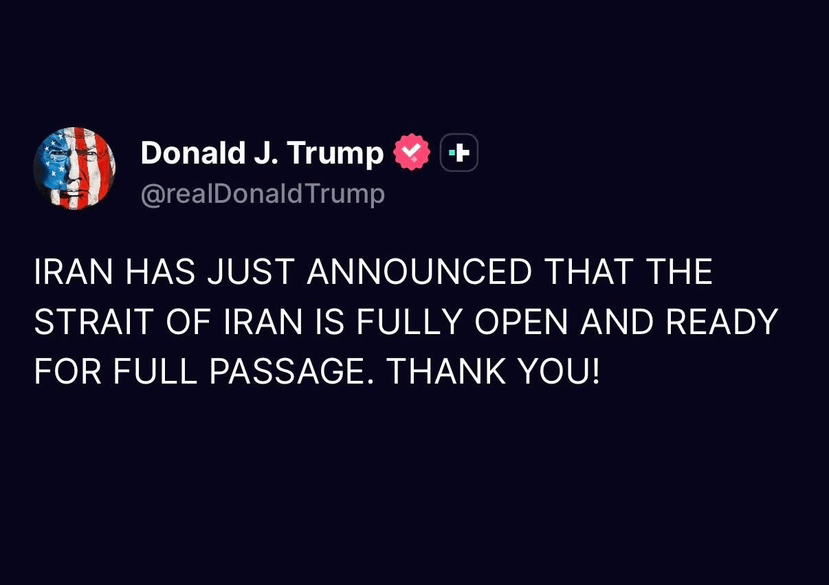
🚨 BREAKING: TRUMP THANKS IRAN AS STRAIT OF HORMUZ REOPENS
Oil drops below $100 after spiking to $130.
Israel-Lebanon ceasefire now in effect.
Peace deal potentially days away.
Markets rallying. Risk-on is back.
Oil drops below $100 after spiking to $130.
Israel-Lebanon ceasefire now in effect.
Peace deal potentially days away.
Markets rallying. Risk-on is back.
213
·
--

Article
15.42% of the supply is circulating. The rest is a promise nobody reads closelyThere is a document somewhere — probably a tokenomics page, probably last updated during a market cycle that feels distant now — that describes exactly when the remaining 84.58% of $PIXEL supply will enter circulation. Most people have never read it. Most people who hold the token have never thought to look.
That's not unusual. It's almost universal in this space. Token vesting schedules are one of those things everyone acknowledges in theory and very few actually track in practice. Until an unlock happens, and the price drops 40% in a week, and suddenly everyone is an expert on cliff vesting.
Pixels uses cliff vesting for its Ecosystem Rewards allocation — 34% of total supply — which means tokens don't trickle out gradually. They arrive all at once, after a waiting period, in a single event. The market absorbs it or it doesn't.
The August 2025 unlock was the clearest demonstration of this dynamic. 91 million tokens entered circulation. The price fell 55.8% over the surrounding 60 days. And yet — and this is the part that deserves more attention — staking deposits continued rising through September and October. The wallets that were going to sell, sold. The wallets that were going to stay, stayed. Those two groups barely overlapped.
What that tells you is that the Pixels community has already sorted itself. The people still inside the ecosystem in late 2025 were not there because of the price. They were there because something in the game still held their attention, or because their staked position made exit costly, or both. Either way, they absorbed the unlock without leaving.
That kind of resilience is hard to manufacture. It tends to emerge from a product that offers something beyond the token price — and it tends to disappear the moment the product stops delivering that something.
The next unlock is scheduled. There will be another one after that. Each event is a small stress test — not just for the token price, but for the community's collective decision to stay. So far, the community has passed those tests. The staking numbers didn't collapse after August. They grew.
That matters more than most people realize. A token that survives its own supply schedule — that absorbs dilution without losing its core holders — is doing something that the price chart doesn't capture. It's building the kind of inertia that is very hard to create and surprisingly easy to lose.
Whether the 84.58% still locked represents opportunity or overhang depends on whether you believe the ecosystem will still be active when those tokens arrive. That's a judgment call about a product, not a chart pattern. And in this space, those judgment calls are the ones that most people least want to make.
@pixels ([https://www.binance.com/en/square/profile/pixels](https://www.binance.com/en/square/profile/pixels)) · $PIXEL #pixel #GameFi
15.42% of the supply is circulating. The rest is a promise nobody reads closely
There is a document somewhere — probably a tokenomics page, probably last updated during a market cycle that feels distant now — that describes exactly when the remaining 84.58% of $PIXEL supply will enter circulation. Most people have never read it. Most people who hold the token have never thought to look.
That's not unusual. It's almost universal in this space. Token vesting schedules are one of those things everyone acknowledges in theory and very few actually track in practice. Until an unlock happens, and the price drops 40% in a week, and suddenly everyone is an expert on cliff vesting.
Pixels uses cliff vesting for its Ecosystem Rewards allocation — 34% of total supply — which means tokens don't trickle out gradually. They arrive all at once, after a waiting period, in a single event. The market absorbs it or it doesn't.
The August 2025 unlock was the clearest demonstration of this dynamic. 91 million tokens entered circulation. The price fell 55.8% over the surrounding 60 days. And yet — and this is the part that deserves more attention — staking deposits continued rising through September and October. The wallets that were going to sell, sold. The wallets that were going to stay, stayed. Those two groups barely overlapped.
What that tells you is that the Pixels community has already sorted itself. The people still inside the ecosystem in late 2025 were not there because of the price. They were there because something in the game still held their attention, or because their staked position made exit costly, or both. Either way, they absorbed the unlock without leaving.
That kind of resilience is hard to manufacture. It tends to emerge from a product that offers something beyond the token price — and it tends to disappear the moment the product stops delivering that something.
The next unlock is scheduled. There will be another one after that. Each event is a small stress test — not just for the token price, but for the community's collective decision to stay. So far, the community has passed those tests. The staking numbers didn't collapse after August. They grew.
That matters more than most people realize. A token that survives its own supply schedule — that absorbs dilution without losing its core holders — is doing something that the price chart doesn't capture. It's building the kind of inertia that is very hard to create and surprisingly easy to lose.
Whether the 84.58% still locked represents opportunity or overhang depends on whether you believe the ecosystem will still be active when those tokens arrive. That's a judgment call about a product, not a chart pattern. And in this space, those judgment calls are the ones that most people least want to make.
@Pixels (https://www.binance.com/en/square/profile/pixels) · $PIXEL #pixel #GameFi
That's not unusual. It's almost universal in this space. Token vesting schedules are one of those things everyone acknowledges in theory and very few actually track in practice. Until an unlock happens, and the price drops 40% in a week, and suddenly everyone is an expert on cliff vesting.
Pixels uses cliff vesting for its Ecosystem Rewards allocation — 34% of total supply — which means tokens don't trickle out gradually. They arrive all at once, after a waiting period, in a single event. The market absorbs it or it doesn't.
The August 2025 unlock was the clearest demonstration of this dynamic. 91 million tokens entered circulation. The price fell 55.8% over the surrounding 60 days. And yet — and this is the part that deserves more attention — staking deposits continued rising through September and October. The wallets that were going to sell, sold. The wallets that were going to stay, stayed. Those two groups barely overlapped.
What that tells you is that the Pixels community has already sorted itself. The people still inside the ecosystem in late 2025 were not there because of the price. They were there because something in the game still held their attention, or because their staked position made exit costly, or both. Either way, they absorbed the unlock without leaving.
That kind of resilience is hard to manufacture. It tends to emerge from a product that offers something beyond the token price — and it tends to disappear the moment the product stops delivering that something.
The next unlock is scheduled. There will be another one after that. Each event is a small stress test — not just for the token price, but for the community's collective decision to stay. So far, the community has passed those tests. The staking numbers didn't collapse after August. They grew.
That matters more than most people realize. A token that survives its own supply schedule — that absorbs dilution without losing its core holders — is doing something that the price chart doesn't capture. It's building the kind of inertia that is very hard to create and surprisingly easy to lose.
Whether the 84.58% still locked represents opportunity or overhang depends on whether you believe the ecosystem will still be active when those tokens arrive. That's a judgment call about a product, not a chart pattern. And in this space, those judgment calls are the ones that most people least want to make.
@Pixels (https://www.binance.com/en/square/profile/pixels) · $PIXEL #pixel #GameFi
1
29
·
--
Ethereum records busiest quarter ever in Q1
2026 $ETH processed 200.4M base-layer
transactions in Q1 2026, marking a 43% increase from Q4.
Growth driven largely by Layer 2 settlement activity
demand
Stablecoins remain a major source of on-chain
The surge highlights Ethereum's role as a settlement layer for scaling solutions and financial activity.
Ethereum records busiest quarter ever in Q1
2026 $ETH processed 200.4M base-layer
transactions in Q1 2026, marking a 43% increase from Q4.
Growth driven largely by Layer 2 settlement activity
demand
Stablecoins remain a major source of on-chain
The surge highlights Ethereum's role as a settlement layer for scaling solutions and financial activity.
2026 $ETH processed 200.4M base-layer
transactions in Q1 2026, marking a 43% increase from Q4.
Growth driven largely by Layer 2 settlement activity
demand
Stablecoins remain a major source of on-chain
The surge highlights Ethereum's role as a settlement layer for scaling solutions and financial activity.

1
5
·
--
🚨 #BREAKING 🛢️
Global crude oil prices dropped by 10% after #Iran 🇮🇷 announced the reopening of the Strait of Hormuz. 🌊
🚨 #BREAKING 🛢️
Global crude oil prices dropped by 10% after #Iran 🇮🇷 announced the reopening of the Strait of Hormuz. 🌊
Global crude oil prices dropped by 10% after #Iran 🇮🇷 announced the reopening of the Strait of Hormuz. 🌊
2
172
·
--
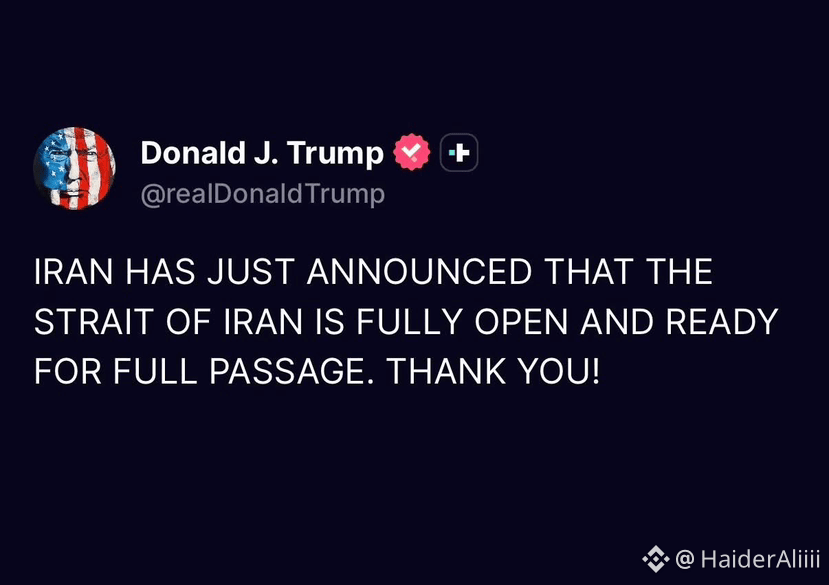
🚨 BREAKING: TRUMP THANKS IRAN AS STRAIT OF HORMUZ REOPENS
Oil drops below $100 after spiking to $130.
Israel-Lebanon ceasefire now in effect.
Peace deal potentially days away.
Markets rallying. Risk-on is back.
🚨 BREAKING: TRUMP THANKS IRAN AS STRAIT OF HORMUZ REOPENS
Oil drops below $100 after spiking to $130.
Israel-Lebanon ceasefire now in effect.
Peace deal potentially days away.
Markets rallying. Risk-on is back.
Oil drops below $100 after spiking to $130.
Israel-Lebanon ceasefire now in effect.
Peace deal potentially days away.
Markets rallying. Risk-on is back.
1
1
2
361
·
--

Article
Everyone Sees Farming in Pixels. I See Something Else.Most things in crypto begin by pretending to be simple.
A token is just a token. A game is just a game. A wallet is just a place to keep things. We keep renaming machinery so it feels harmless. We wrap friction in color, complexity in mascots, extraction in community language. The softer the surface becomes, the heavier the system beneath it often is.
I keep thinking about that when I look at Pixels.
At first glance it arrives like an answer to fatigue. Bright land. Familiar tasks. Farming, crafting, wandering, building. A world that asks very little from you at the door. No need to understand liquidity, vesting schedules, emissions curves, or why so many previous economies collapsed under their own incentives. You plant, gather, move, repeat. It feels closer to a place than a protocol.
But nothing in this industry is ever only what it feels like.
Under the soil sits a token. Under the token sits a network. Under the network sits the old question every crypto project eventually reaches, no matter how playful the art style may be. How do you make people stay once rewards become ordinary?
That question has ruined more projects than hacks ever did.
We often talk about broken tokenomics as if the numbers themselves were the problem. I have never fully believed that. Most token systems fail for a more human reason. They misunderstand behavior. They assume users can be bribed into belonging. They mistake motion for loyalty. They see daily active wallets and imagine attachment.
Pixels seems aware of this history, which already makes it more interesting than many projects that came before it. It is built on Ronin, a chain that understands game distribution better than most ecosystems understand users at all. It uses a token not only as reward, but as access point. Membership, guild entry, upgrades, future mints, governance. The token is asked to do many things because the project knows a token with one purpose is fragile.
Still, I wonder if giving a token more jobs changes its nature, or only hides it.
When a currency buys cosmetics, status, convenience, coordination, and voice, has utility deepened or has dependence widened? When governance is attached to the same asset used for progress, who is speaking and who is purchasing the right to be heard?
These are old questions in new clothing.
The cleverness of Pixels may be that it places these questions inside something gentle. A farm. A social loop. Small routines. The daily comfort of tending digital land can make larger systems feel natural. This is how most power works now. Not through force, but through ease. Not by closing doors, but by making one doorway smoother than the rest.
I do not mean this as criticism. Ease matters. Friction kills products. Simplicity is often kindness.
But simplicity also asks for trust.
The more seamless an experience becomes, the less visible its terms are. If joining a guild costs a token, it can feel like participation. If premium upgrades cost the same token, it can feel like personalization. If future governance uses that token, it can feel like voice. Yet one asset sits underneath all three experiences, tying leisure, hierarchy, and influence together.
How many players notice that while harvesting crops?
Maybe they do not need to. Most people do not inspect the plumbing of places they enjoy. They only notice systems when systems fail. When prices move too sharply. When progression slows. When status becomes expensive. When the cheerful surface no longer absorbs the weight below it.
This is why retention in web3 games has always interested me more than launch numbers. Retention is the moment illusion meets habit. A user can be acquired by incentives. They can be entertained by novelty. But staying asks something deeper. Staying asks whether the world still means something when the obvious rewards fade.
Can Pixels create that meaning?
Can a token become background infrastructure instead of the center of motivation?
Can ownership feel less like speculation and more like memory?
I do not know.
I suspect many builders still underestimate how difficult it is to create genuine attachment in systems where every object has a visible price. Price changes how people look at things. A sword can become a chart. Land can become inventory. A guild can become a funnel. Even friendships become slightly distorted when every layer has an asset beneath it.
And yet people keep trying, which tells me there is something unresolved here.
Perhaps the dream was never just to financialize games. Perhaps it was to make time spent online feel portable, recognized, accumulative. To let effort persist beyond one company’s server. To make digital life less disposable. That desire is understandable. Maybe even noble. But desires often arrive mixed with appetites they did not invite.
Pixels sits inside that tension.
It looks soft. It runs on harder logic. It invites routine while quietly teaching economics. It offers community while measuring participation through assets. None of this makes it doomed. None of it makes it safe either.
I think projects like this matter because they show where the industry is maturing. Not away from tokens, but toward subtler uses of them. Not away from extraction, but toward systems where extraction is less obvious and perhaps less central. Whether that is progress or merely refinement is harder to say.
Sometimes I think the future of crypto will not be won by the loudest protocols or the largest treasuries. It will be won by products that feel so ordinary people stop noticing what they are touching.
A farm can hide a market very well.
@pixels
$PIXEL #pixel
Everyone Sees Farming in Pixels. I See Something Else.
Most things in crypto begin by pretending to be simple.
A token is just a token. A game is just a game. A wallet is just a place to keep things. We keep renaming machinery so it feels harmless. We wrap friction in color, complexity in mascots, extraction in community language. The softer the surface becomes, the heavier the system beneath it often is.
I keep thinking about that when I look at Pixels.
At first glance it arrives like an answer to fatigue. Bright land. Familiar tasks. Farming, crafting, wandering, building. A world that asks very little from you at the door. No need to understand liquidity, vesting schedules, emissions curves, or why so many previous economies collapsed under their own incentives. You plant, gather, move, repeat. It feels closer to a place than a protocol.
But nothing in this industry is ever only what it feels like.
Under the soil sits a token. Under the token sits a network. Under the network sits the old question every crypto project eventually reaches, no matter how playful the art style may be. How do you make people stay once rewards become ordinary?
That question has ruined more projects than hacks ever did.
We often talk about broken tokenomics as if the numbers themselves were the problem. I have never fully believed that. Most token systems fail for a more human reason. They misunderstand behavior. They assume users can be bribed into belonging. They mistake motion for loyalty. They see daily active wallets and imagine attachment.
Pixels seems aware of this history, which already makes it more interesting than many projects that came before it. It is built on Ronin, a chain that understands game distribution better than most ecosystems understand users at all. It uses a token not only as reward, but as access point. Membership, guild entry, upgrades, future mints, governance. The token is asked to do many things because the project knows a token with one purpose is fragile.
Still, I wonder if giving a token more jobs changes its nature, or only hides it.
When a currency buys cosmetics, status, convenience, coordination, and voice, has utility deepened or has dependence widened? When governance is attached to the same asset used for progress, who is speaking and who is purchasing the right to be heard?
These are old questions in new clothing.
The cleverness of Pixels may be that it places these questions inside something gentle. A farm. A social loop. Small routines. The daily comfort of tending digital land can make larger systems feel natural. This is how most power works now. Not through force, but through ease. Not by closing doors, but by making one doorway smoother than the rest.
I do not mean this as criticism. Ease matters. Friction kills products. Simplicity is often kindness.
But simplicity also asks for trust.
The more seamless an experience becomes, the less visible its terms are. If joining a guild costs a token, it can feel like participation. If premium upgrades cost the same token, it can feel like personalization. If future governance uses that token, it can feel like voice. Yet one asset sits underneath all three experiences, tying leisure, hierarchy, and influence together.
How many players notice that while harvesting crops?
Maybe they do not need to. Most people do not inspect the plumbing of places they enjoy. They only notice systems when systems fail. When prices move too sharply. When progression slows. When status becomes expensive. When the cheerful surface no longer absorbs the weight below it.
This is why retention in web3 games has always interested me more than launch numbers. Retention is the moment illusion meets habit. A user can be acquired by incentives. They can be entertained by novelty. But staying asks something deeper. Staying asks whether the world still means something when the obvious rewards fade.
Can Pixels create that meaning?
Can a token become background infrastructure instead of the center of motivation?
Can ownership feel less like speculation and more like memory?
I do not know.
I suspect many builders still underestimate how difficult it is to create genuine attachment in systems where every object has a visible price. Price changes how people look at things. A sword can become a chart. Land can become inventory. A guild can become a funnel. Even friendships become slightly distorted when every layer has an asset beneath it.
And yet people keep trying, which tells me there is something unresolved here.
Perhaps the dream was never just to financialize games. Perhaps it was to make time spent online feel portable, recognized, accumulative. To let effort persist beyond one company’s server. To make digital life less disposable. That desire is understandable. Maybe even noble. But desires often arrive mixed with appetites they did not invite.
Pixels sits inside that tension.
It looks soft. It runs on harder logic. It invites routine while quietly teaching economics. It offers community while measuring participation through assets. None of this makes it doomed. None of it makes it safe either.
I think projects like this matter because they show where the industry is maturing. Not away from tokens, but toward subtler uses of them. Not away from extraction, but toward systems where extraction is less obvious and perhaps less central. Whether that is progress or merely refinement is harder to say.
Sometimes I think the future of crypto will not be won by the loudest protocols or the largest treasuries. It will be won by products that feel so ordinary people stop noticing what they are touching.
A farm can hide a market very well.
@Pixels
$PIXEL #pixel
A token is just a token. A game is just a game. A wallet is just a place to keep things. We keep renaming machinery so it feels harmless. We wrap friction in color, complexity in mascots, extraction in community language. The softer the surface becomes, the heavier the system beneath it often is.
I keep thinking about that when I look at Pixels.
At first glance it arrives like an answer to fatigue. Bright land. Familiar tasks. Farming, crafting, wandering, building. A world that asks very little from you at the door. No need to understand liquidity, vesting schedules, emissions curves, or why so many previous economies collapsed under their own incentives. You plant, gather, move, repeat. It feels closer to a place than a protocol.
But nothing in this industry is ever only what it feels like.
Under the soil sits a token. Under the token sits a network. Under the network sits the old question every crypto project eventually reaches, no matter how playful the art style may be. How do you make people stay once rewards become ordinary?
That question has ruined more projects than hacks ever did.
We often talk about broken tokenomics as if the numbers themselves were the problem. I have never fully believed that. Most token systems fail for a more human reason. They misunderstand behavior. They assume users can be bribed into belonging. They mistake motion for loyalty. They see daily active wallets and imagine attachment.
Pixels seems aware of this history, which already makes it more interesting than many projects that came before it. It is built on Ronin, a chain that understands game distribution better than most ecosystems understand users at all. It uses a token not only as reward, but as access point. Membership, guild entry, upgrades, future mints, governance. The token is asked to do many things because the project knows a token with one purpose is fragile.
Still, I wonder if giving a token more jobs changes its nature, or only hides it.
When a currency buys cosmetics, status, convenience, coordination, and voice, has utility deepened or has dependence widened? When governance is attached to the same asset used for progress, who is speaking and who is purchasing the right to be heard?
These are old questions in new clothing.
The cleverness of Pixels may be that it places these questions inside something gentle. A farm. A social loop. Small routines. The daily comfort of tending digital land can make larger systems feel natural. This is how most power works now. Not through force, but through ease. Not by closing doors, but by making one doorway smoother than the rest.
I do not mean this as criticism. Ease matters. Friction kills products. Simplicity is often kindness.
But simplicity also asks for trust.
The more seamless an experience becomes, the less visible its terms are. If joining a guild costs a token, it can feel like participation. If premium upgrades cost the same token, it can feel like personalization. If future governance uses that token, it can feel like voice. Yet one asset sits underneath all three experiences, tying leisure, hierarchy, and influence together.
How many players notice that while harvesting crops?
Maybe they do not need to. Most people do not inspect the plumbing of places they enjoy. They only notice systems when systems fail. When prices move too sharply. When progression slows. When status becomes expensive. When the cheerful surface no longer absorbs the weight below it.
This is why retention in web3 games has always interested me more than launch numbers. Retention is the moment illusion meets habit. A user can be acquired by incentives. They can be entertained by novelty. But staying asks something deeper. Staying asks whether the world still means something when the obvious rewards fade.
Can Pixels create that meaning?
Can a token become background infrastructure instead of the center of motivation?
Can ownership feel less like speculation and more like memory?
I do not know.
I suspect many builders still underestimate how difficult it is to create genuine attachment in systems where every object has a visible price. Price changes how people look at things. A sword can become a chart. Land can become inventory. A guild can become a funnel. Even friendships become slightly distorted when every layer has an asset beneath it.
And yet people keep trying, which tells me there is something unresolved here.
Perhaps the dream was never just to financialize games. Perhaps it was to make time spent online feel portable, recognized, accumulative. To let effort persist beyond one company’s server. To make digital life less disposable. That desire is understandable. Maybe even noble. But desires often arrive mixed with appetites they did not invite.
Pixels sits inside that tension.
It looks soft. It runs on harder logic. It invites routine while quietly teaching economics. It offers community while measuring participation through assets. None of this makes it doomed. None of it makes it safe either.
I think projects like this matter because they show where the industry is maturing. Not away from tokens, but toward subtler uses of them. Not away from extraction, but toward systems where extraction is less obvious and perhaps less central. Whether that is progress or merely refinement is harder to say.
Sometimes I think the future of crypto will not be won by the loudest protocols or the largest treasuries. It will be won by products that feel so ordinary people stop noticing what they are touching.
A farm can hide a market very well.
@Pixels
$PIXEL #pixel
1
19
·
--
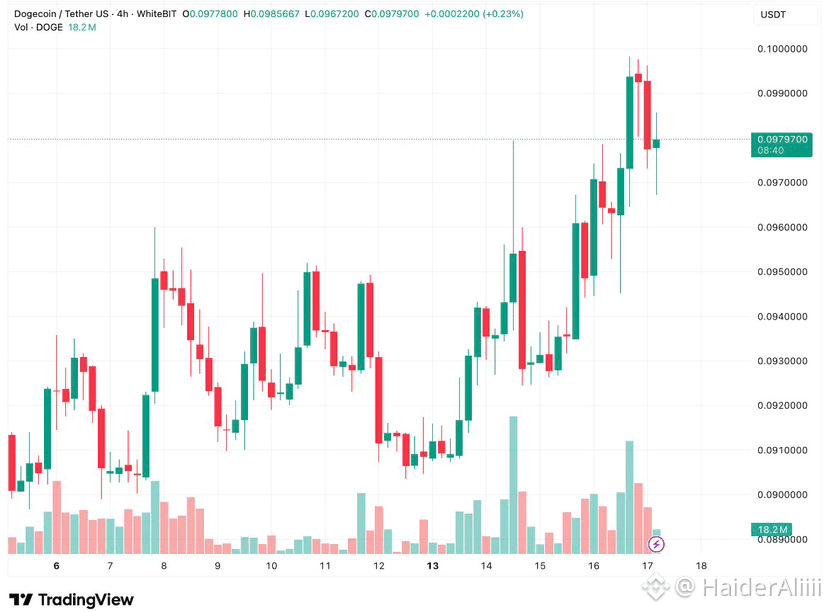
DOGE Breaks the "Bearish" Pattern... Of Course It Did $DOGE pushed above ~$0.18 after finally breaking descending triangle resistance on the 4H/Daily. Third attempt did what the first two couldn't - clean close above the level.
Here's the reality: price action wasn't explosive - it was persistent. First rejection below $0.175, second stalled at resistance, third? Full-bodied close above $0.18. That's not luck, that's pressure building.
Key levels now: $0.18 flipped to support. As long as price holds above, upside targets sit at $0.195 and $0.205. Lose $0.18, and we're back to $O.165 range. Clean levels, no guessing.
Look at volume - it expanded on the breakout candle. That's what you want. RSI on 4H pushing ~62, not overheated yet. Momentum is there, but not screaming exhaustion.
Pattern-wise: descending triangle (typically bearish) resolved upward. Nothing new. Just another day in crypto invalidating textbook setups.
Let me break down what actually happened: each rejection weakened sellers. By the third push, supply got absorbed. Classic shift in control - slow, then sudden.
Now the real test: can buyers defend $0.18?
Because breakouts are easy - holding them isn't Trend shift? Maybe. Confirmation? Only if support holds. Drawdowns are normal - don't marry the breakout.
#doge
DOGE Breaks the "Bearish" Pattern... Of Course It Did $DOGE pushed above ~$0.18 after finally breaking descending triangle resistance on the 4H/Daily. Third attempt did what the first two couldn't - clean close above the level.
Here's the reality: price action wasn't explosive - it was persistent. First rejection below $0.175, second stalled at resistance, third? Full-bodied close above $0.18. That's not luck, that's pressure building.
Key levels now: $0.18 flipped to support. As long as price holds above, upside targets sit at $0.195 and $0.205. Lose $0.18, and we're back to $O.165 range. Clean levels, no guessing.
Look at volume - it expanded on the breakout candle. That's what you want. RSI on 4H pushing ~62, not overheated yet. Momentum is there, but not screaming exhaustion.
Pattern-wise: descending triangle (typically bearish) resolved upward. Nothing new. Just another day in crypto invalidating textbook setups.
Let me break down what actually happened: each rejection weakened sellers. By the third push, supply got absorbed. Classic shift in control - slow, then sudden.
Now the real test: can buyers defend $0.18?
Because breakouts are easy - holding them isn't Trend shift? Maybe. Confirmation? Only if support holds. Drawdowns are normal - don't marry the breakout.
#doge
Here's the reality: price action wasn't explosive - it was persistent. First rejection below $0.175, second stalled at resistance, third? Full-bodied close above $0.18. That's not luck, that's pressure building.
Key levels now: $0.18 flipped to support. As long as price holds above, upside targets sit at $0.195 and $0.205. Lose $0.18, and we're back to $O.165 range. Clean levels, no guessing.
Look at volume - it expanded on the breakout candle. That's what you want. RSI on 4H pushing ~62, not overheated yet. Momentum is there, but not screaming exhaustion.
Pattern-wise: descending triangle (typically bearish) resolved upward. Nothing new. Just another day in crypto invalidating textbook setups.
Let me break down what actually happened: each rejection weakened sellers. By the third push, supply got absorbed. Classic shift in control - slow, then sudden.
Now the real test: can buyers defend $0.18?
Because breakouts are easy - holding them isn't Trend shift? Maybe. Confirmation? Only if support holds. Drawdowns are normal - don't marry the breakout.
#doge

1
2
·
--
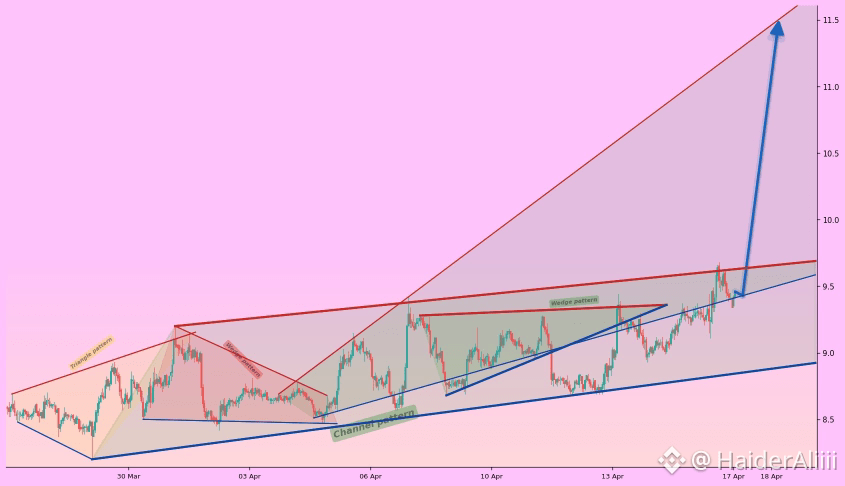
$LINK Bulls Ignite! 5% Breakouts, Hidden
Targets Emerge!
The $LINK 1-hour chart reveals explosive setups that promise quick gains. After breaking a major wedge pattern, the pair is on a tear, with buyers targeting fresh all-time highs. Here's where smart traders can lock in profits.
Magnet Alert:
Breakout above 9.50 marks the first critical level.
The prior wedge pattern (green) is now a key resistance. A confirmed breakout signals 10.20 as the next magnet.
The 10.20 level may act as a temporary
ceiling. If LINK stalls here, shorts could re-
enter the play. Watch for bearish engulfing bars or a drop below the 50-period SMA to trigger a retest.
If they run it
• 10.20 acts as a magnet
• 10.70 awaits the next wave
• 11.50 looms as the hidden target
The ascending channel (blue) supports the broader
bullish thesis. A breakout from the upper trendline could push $LINK past 11.50 in 24 hours.
A Caution: A pullback below 9.20 invalidates the bullish case and hints at a deeper correction.
Traders must monitor this level closely.
$LINK Bulls Ignite! 5% Breakouts, Hidden
Targets Emerge!
The $LINK 1-hour chart reveals explosive setups that promise quick gains. After breaking a major wedge pattern, the pair is on a tear, with buyers targeting fresh all-time highs. Here's where smart traders can lock in profits.
Magnet Alert:
Breakout above 9.50 marks the first critical level.
The prior wedge pattern (green) is now a key resistance. A confirmed breakout signals 10.20 as the next magnet.
The 10.20 level may act as a temporary
ceiling. If LINK stalls here, shorts could re-
enter the play. Watch for bearish engulfing bars or a drop below the 50-period SMA to trigger a retest.
If they run it
• 10.20 acts as a magnet
• 10.70 awaits the next wave
• 11.50 looms as the hidden target
The ascending channel (blue) supports the broader
bullish thesis. A breakout from the upper trendline could push $LINK past 11.50 in 24 hours.
A Caution: A pullback below 9.20 invalidates the bullish case and hints at a deeper correction.
Traders must monitor this level closely.
Targets Emerge!
The $LINK 1-hour chart reveals explosive setups that promise quick gains. After breaking a major wedge pattern, the pair is on a tear, with buyers targeting fresh all-time highs. Here's where smart traders can lock in profits.
Magnet Alert:
Breakout above 9.50 marks the first critical level.
The prior wedge pattern (green) is now a key resistance. A confirmed breakout signals 10.20 as the next magnet.
The 10.20 level may act as a temporary
ceiling. If LINK stalls here, shorts could re-
enter the play. Watch for bearish engulfing bars or a drop below the 50-period SMA to trigger a retest.
If they run it
• 10.20 acts as a magnet
• 10.70 awaits the next wave
• 11.50 looms as the hidden target
The ascending channel (blue) supports the broader
bullish thesis. A breakout from the upper trendline could push $LINK past 11.50 in 24 hours.
A Caution: A pullback below 9.20 invalidates the bullish case and hints at a deeper correction.
Traders must monitor this level closely.
2
26
Log in to explore more content
Join global crypto users on Binance Square
⚡️ Get latest and useful information about crypto.
💬 Trusted by the world’s largest crypto exchange.
👍 Discover real insights from verified creators.
Email / Phone number
Trending Topics
USAugustPPIRisesLessThanExpected
211 views
60 Discussing
#usaugustppiriseslessthanexpected August #PPI
moved up 0.4% seasonally adjusted. Final demand prices rose 0.1% in July and decreased 0.1% in June.
-> On an unadjusted basis, the index for final demand increased 5.4% for the 12 months ended in
August.$CYS $PUMP $PTB
Isabella-I
·0 Likes
·109 views
SECApprovesNasdaqTexasCommodityTrustRule
1,827 views
130 Discussing
ECBRaisesRatesSecondTimeTo2.5%
846 views
85 Discussing