

Crypto.Andy
514 Posts

Crypto.Andy
Report
Block User
Top #1 Community Creator on CoinMarketCap according to CoinGape | Investor and trader | Listing & Institutional Services Partner of WhiteBIT | Affiliate & Listing Partner of BitUnix | Listing Partner of BitMart & MEXC
0 Following
4 Followers
26 Liked
Posts
·
--
Two of the biggest crypto treasuries reported their weekly buys 🟠 Strategy added 334 $BTC between October 1 and 4, spending about $28.7M at an average price of ~$85,839. Total holdings are now 848,000 BTC, with an average cost of ~$75,441 per coin. The interesting part is that this was Strategy's smallest positive Bitcoin purchase of 2026. In the same week, the company spent $176.3M on buybacks of its STRC preferred shares. So for now, a big chunk of the capital is going into supporting the preferred stock rather than stacking more BTC. 🔷 BitMine kept its streak going and bought another 15,112 $ETH last week. The treasury now holds 6,016,414 ETH, about 4.9% of the total supply, which puts it at 99% of its "Alchemy of 5%" goal. And over 5 million of those ETH are already staked. Strategy is clearly managing its capital structure right now, while BitMine keeps buying every single week and is almost at its target. It'll be interesting to see what BitMine does once it hits 5% 🤔 #BTC Price Analysis# #Bitcoin Price Prediction: What is Bitcoins next move?#
Two of the biggest crypto treasuries reported their weekly buys 🟠 Strategy added 334 $BTC between October 1 and 4, spending about $28.7M at an average price of ~$85,839. Total holdings are now 848,000 BTC, with an average cost of ~$75,441 per coin. The interesting part is that this was Strategy's smallest positive Bitcoin purchase of 2026. In the same week, the company spent $176.3M on buybacks of its STRC preferred shares. So for now, a big chunk of the capital is going into supporting the preferred stock rather than stacking more BTC. 🔷 BitMine kept its streak going and bought another 15,112 $ETH last week. The treasury now holds 6,016,414 ETH, about 4.9% of the total supply, which puts it at 99% of its "Alchemy of 5%" goal. And over 5 million of those ETH are already staked. Strategy is clearly managing its capital structure right now, while BitMine keeps buying every single week and is almost at its target. It'll be interesting to see what BitMine does once it hits 5% 🤔 #BTC Price Analysis# #Bitcoin Price Prediction: What is Bitcoins next move?#

105
·
--
Michael Saylor calls the next 10 years a "gold rush" for Bitcoin 🧐⛏️ $BTC is sitting near $86K, and Saylor is already looking a decade ahead. His argument comes down to scale. The whole crypto market is about $3 trillion today 📊 The rest of the world's assets add up to roughly $1,000-1,200 trillion, across real estate, stocks, bonds and gold. So crypto is still a tiny slice of the global pie 🥧 Saylor thinks crypto has entered a phase of hypergrowth. If its share rises to just 10%, the crypto economy could reach around $120 trillion. That would be about 40x from where we are now 🚀 The logic is simple. Bitcoin doesn't need to replace everything. It only needs to take a small piece of the value already stored in traditional assets. Of course, a decade is a long time, and forecasts like this are a direction, not a timetable ⏳ Still, the gap between $3T and $1,000T+ shows how much room is left #BTC Price Analysis# #Bitcoin Price Prediction: What is Bitcoins next move?#
Michael Saylor calls the next 10 years a "gold rush" for Bitcoin 🧐⛏️ $BTC is sitting near $86K, and Saylor is already looking a decade ahead. His argument comes down to scale. The whole crypto market is about $3 trillion today 📊 The rest of the world's assets add up to roughly $1,000-1,200 trillion, across real estate, stocks, bonds and gold. So crypto is still a tiny slice of the global pie 🥧 Saylor thinks crypto has entered a phase of hypergrowth. If its share rises to just 10%, the crypto economy could reach around $120 trillion. That would be about 40x from where we are now 🚀 The logic is simple. Bitcoin doesn't need to replace everything. It only needs to take a small piece of the value already stored in traditional assets. Of course, a decade is a long time, and forecasts like this are a direction, not a timetable ⏳ Still, the gap between $3T and $1,000T+ shows how much room is left #BTC Price Analysis# #Bitcoin Price Prediction: What is Bitcoins next move?#

43
·
--
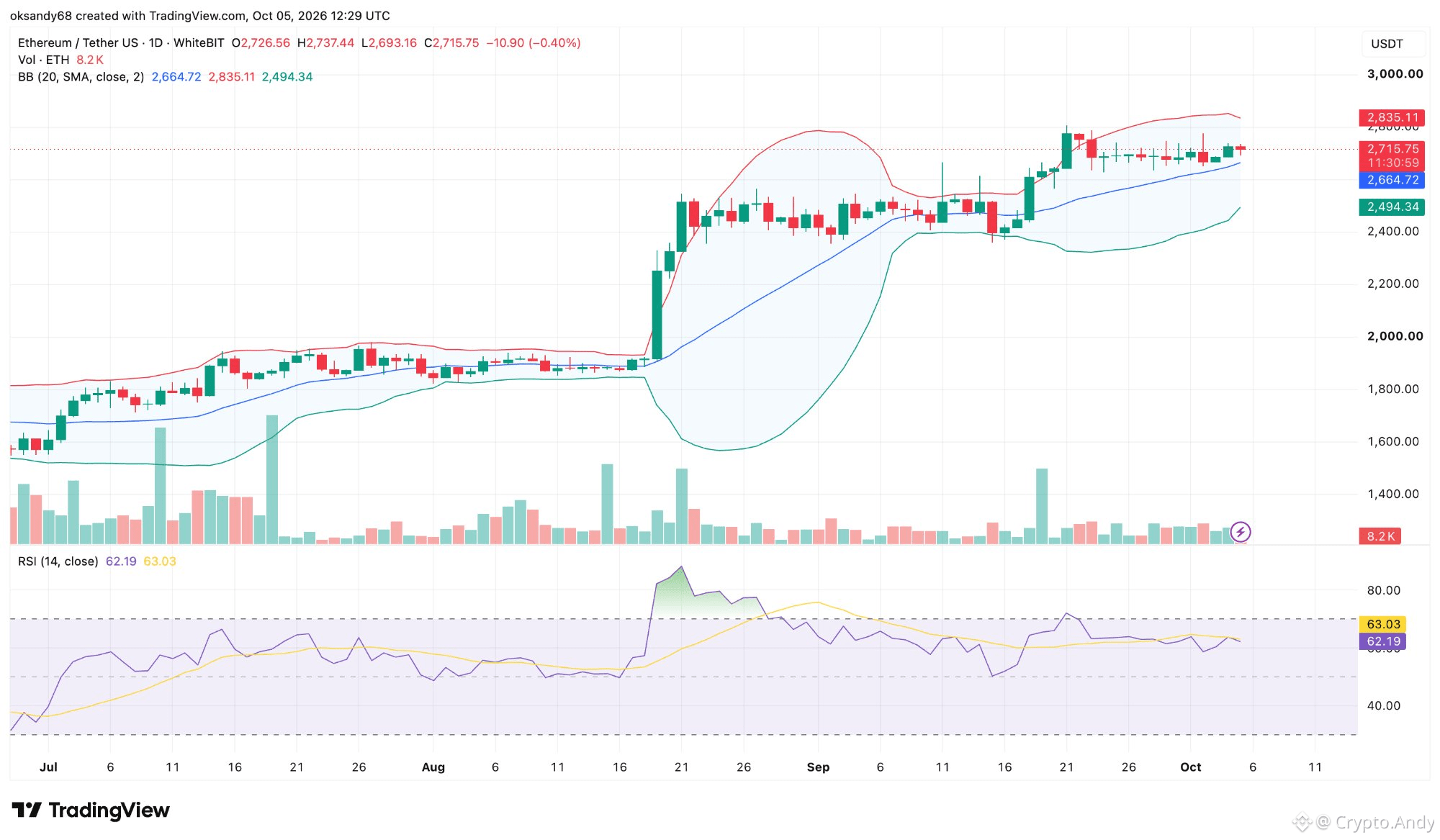
$ETH is coiling up and the chart looks ready for its next move 👀📊 Ethereum has spent the last two weeks in a tight range around $2,700 and the daily chart shows why traders are watching closely. Here's the picture on the ETH/USDT daily chart: 🔹 Price: $2,715 (−0.4% today) 🔹 Range since Sept 21: ~$2,650–$2,750 🔹 Bollinger Bands: middle $2,665, upper $2,835, lower $2,494 🔹 RSI: 62, bullish but not overheated The upper band is flattening while the lower one keeps rising, so the bands are narrowing. A squeeze like this often comes before a sharp move. The 20-day average at ~$2,665 is the level to hold, and ~$2,835 is the first resistance to break 📍 For context, ETH is up ~80% from its June low near $1,500. The fundamentals are getting louder too: 💰 US spot Ether ETFs took in $162.2M on Sept 22 alone 🎯 Tom Lee expects ETH to reclaim its ~$5,000 high by year-end and says $60K is "very possible" in the coming years One more interesting stat: a new Philadelphia Fed study found that ETH traders barely react to whale moves (just a 0.76 p.p. shift in selling activity), while small BTC wallets jump in within 15 minutes of whale alerts 🐋 So what's next: a breakout above $2,835 or one more retest of the middle band? 👇 #ETHBlockchain #ETH #Altcoin Season#
$ETH is coiling up and the chart looks ready for its next move 👀📊 Ethereum has spent the last two weeks in a tight range around $2,700 and the daily chart shows why traders are watching closely. Here's the picture on the ETH/USDT daily chart: 🔹 Price: $2,715 (−0.4% today) 🔹 Range since Sept 21: ~$2,650–$2,750 🔹 Bollinger Bands: middle $2,665, upper $2,835, lower $2,494 🔹 RSI: 62, bullish but not overheated The upper band is flattening while the lower one keeps rising, so the bands are narrowing. A squeeze like this often comes before a sharp move. The 20-day average at ~$2,665 is the level to hold, and ~$2,835 is the first resistance to break 📍 For context, ETH is up ~80% from its June low near $1,500. The fundamentals are getting louder too: 💰 US spot Ether ETFs took in $162.2M on Sept 22 alone 🎯 Tom Lee expects ETH to reclaim its ~$5,000 high by year-end and says $60K is "very possible" in the coming years One more interesting stat: a new Philadelphia Fed study found that ETH traders barely react to whale moves (just a 0.76 p.p. shift in selling activity), while small BTC wallets jump in within 15 minutes of whale alerts 🐋 So what's next: a breakout above $2,835 or one more retest of the middle band? 👇 #ETHBlockchain #ETH #Altcoin Season#
57
·
--
AI tokens are leading the day and it's not just hype 🤖📈 While the big names take it easy, AI tokens are stealing the show today. $BTC is holding around $86K (+0.9%) and $ETH sits near $2,718 (+0.6%). Calm, steady, and Bitcoin's trend indicator still points up. But look at the top gainers: 🔹 FET (Artificial Superintelligence Alliance): +14.6% 🔹 VIRTUAL (Virtual Protocol): +10.5% 🔹 Ribbita by Virtuals: +10.3% That's three of the top five gainers tied to AI, and two of them come from the Virtuals AI-agent ecosystem 🧠 What makes this interesting is that the AI-agent story isn't only on charts anymore. According to Keyrock, AI agents have already made 176M payments, mostly between 1 and 10 cents. And Visa has launched infrastructure that lets AI agents shop on behalf of users. So the market seems to be betting on a simple idea: AI agents will become real players in the economy, and they'll need crypto rails to pay 💸 Crypto stocks are in a good mood too, with Strategy +2.4%, Circle +2.5% and Coinbase +2.0%. Is the AI-agent narrative running ahead of reality, or is it just getting started? 👇 #BTC Price Analysis# #Macro Insights#
AI tokens are leading the day and it's not just hype 🤖📈 While the big names take it easy, AI tokens are stealing the show today. $BTC is holding around $86K (+0.9%) and $ETH sits near $2,718 (+0.6%). Calm, steady, and Bitcoin's trend indicator still points up. But look at the top gainers: 🔹 FET (Artificial Superintelligence Alliance): +14.6% 🔹 VIRTUAL (Virtual Protocol): +10.5% 🔹 Ribbita by Virtuals: +10.3% That's three of the top five gainers tied to AI, and two of them come from the Virtuals AI-agent ecosystem 🧠 What makes this interesting is that the AI-agent story isn't only on charts anymore. According to Keyrock, AI agents have already made 176M payments, mostly between 1 and 10 cents. And Visa has launched infrastructure that lets AI agents shop on behalf of users. So the market seems to be betting on a simple idea: AI agents will become real players in the economy, and they'll need crypto rails to pay 💸 Crypto stocks are in a good mood too, with Strategy +2.4%, Circle +2.5% and Coinbase +2.0%. Is the AI-agent narrative running ahead of reality, or is it just getting started? 👇 #BTC Price Analysis# #Macro Insights#

79
·
--
Stablecoins haven't even really started yet 🚀 Stablecoins move around $35 trillion a year, but only about 1% of that is real-world payments like sending money home or getting paid. That's according to CoinDesk's coverage of KAST's funding round earlier this year. So most stablecoin activity today is still trading and moving funds between platforms. The everyday use part has barely begun 👀 But you can already see it picking up: 🔹 Visa now settles about $20B a year in stablecoins, more than 15x what it did a year ago. 🔹 Cross-border stablecoin payments grew 64% in 2025, while traditional bank rails grew just 9% (Allium). 🔹 KAST, a stablecoin payments app, passed 1M users in its first 18 months. For regular people, this could change some pretty everyday stuff: sending money $BTC to family abroad in minutes instead of days, getting paid by a client in another country without crazy fees or one day paying for your coffee in "digital dollars" as easily as with a card ☕ If 1% looks like this, imagine what happens when it's 10% 🤯 Have you ever paid for something in stablecoins? 👇 #BTC Price Analysis# #Macro Insights#
Stablecoins haven't even really started yet 🚀 Stablecoins move around $35 trillion a year, but only about 1% of that is real-world payments like sending money home or getting paid. That's according to CoinDesk's coverage of KAST's funding round earlier this year. So most stablecoin activity today is still trading and moving funds between platforms. The everyday use part has barely begun 👀 But you can already see it picking up: 🔹 Visa now settles about $20B a year in stablecoins, more than 15x what it did a year ago. 🔹 Cross-border stablecoin payments grew 64% in 2025, while traditional bank rails grew just 9% (Allium). 🔹 KAST, a stablecoin payments app, passed 1M users in its first 18 months. For regular people, this could change some pretty everyday stuff: sending money $BTC to family abroad in minutes instead of days, getting paid by a client in another country without crazy fees or one day paying for your coffee in "digital dollars" as easily as with a card ☕ If 1% looks like this, imagine what happens when it's 10% 🤯 Have you ever paid for something in stablecoins? 👇 #BTC Price Analysis# #Macro Insights#

52
·
--
How many apps does it take to buy crypto? 📱📱📱 Remember what buying $BTC looked like a few years ago? 😅 Back then: your salary lands in your bank app. you send it to an exchange and wait a day, sometimes more. you finally pass all the checks and buy some coins. then you move them to a wallet, triple-check the network and hold your breath while copying the address. Four apps, a lot of waiting and at least one "did I just lose my money?" moment. Now: ✅ you open the same banking app you use every day. ✅ you tap "buy crypto". ✅ done. Your salary and your crypto sit side by side. And it's not just a dream. Revolut got a MiCA license covering all 30 EEA countries, so crypto lives right inside its super app. N26 lets customers in several EU countries buy 300+ coins straight from their banking app, starting from just €1. Honestly, it's kind of wild how fast this went from "you need a guide to do it" to "it's just another button" So would you buy crypto straight from your banking app, or do you still prefer a separate exchange? 👇 #BTC Price Analysis# #Bitcoin Price Prediction: What is Bitcoins next move?#
How many apps does it take to buy crypto? 📱📱📱 Remember what buying $BTC looked like a few years ago? 😅 Back then: your salary lands in your bank app. you send it to an exchange and wait a day, sometimes more. you finally pass all the checks and buy some coins. then you move them to a wallet, triple-check the network and hold your breath while copying the address. Four apps, a lot of waiting and at least one "did I just lose my money?" moment. Now: ✅ you open the same banking app you use every day. ✅ you tap "buy crypto". ✅ done. Your salary and your crypto sit side by side. And it's not just a dream. Revolut got a MiCA license covering all 30 EEA countries, so crypto lives right inside its super app. N26 lets customers in several EU countries buy 300+ coins straight from their banking app, starting from just €1. Honestly, it's kind of wild how fast this went from "you need a guide to do it" to "it's just another button" So would you buy crypto straight from your banking app, or do you still prefer a separate exchange? 👇 #BTC Price Analysis# #Bitcoin Price Prediction: What is Bitcoins next move?#

67
·
--
When the world's largest asset manager writes a whole white paper about AI agents paying with $BTC stablecoins, it's worth a look. In "The Machine-Native Economy", BlackRock describes a future where AI agents buy data, services and computing power by themselves. The payment rails they'd use are stablecoins. And the numbers aren't small: 🔹 $300B+ in stablecoins in circulation 🔹 $11T in stablecoin transaction volume in 2025 🔹 80% average annual growth from 2020 to 2025 For context, the US ACH network moved $93T last year. So stablecoins aren't there yet, but they're growing way faster. Could AI agents be the thing that finally takes stablecoins mainstream? 🤔 #BTC Price Analysis# #Macro Insights#
When the world's largest asset manager writes a whole white paper about AI agents paying with $BTC stablecoins, it's worth a look. In "The Machine-Native Economy", BlackRock describes a future where AI agents buy data, services and computing power by themselves. The payment rails they'd use are stablecoins. And the numbers aren't small: 🔹 $300B+ in stablecoins in circulation 🔹 $11T in stablecoin transaction volume in 2025 🔹 80% average annual growth from 2020 to 2025 For context, the US ACH network moved $93T last year. So stablecoins aren't there yet, but they're growing way faster. Could AI agents be the thing that finally takes stablecoins mainstream? 🤔 #BTC Price Analysis# #Macro Insights#

48
·
--
Okay, Bitcoin ETFs are back 🔥 $2.4B poured into spot $BTC ETFs in just one week, the week ending September 25. That's the biggest week we've seen since last October. And Monday alone? Almost a billion. $999M in a single day. Here's what gets me: back in July, ETFs were sitting about $5.8B in the red for the year. Now they're back in the green. Two months, full turnaround. Most of the money went into IBIT, FBTC and ARKB, which took over 90% of the week's flows. #BTC Price Analysis# #Bitcoin Price Prediction: What is Bitcoins next move?#
Okay, Bitcoin ETFs are back 🔥 $2.4B poured into spot $BTC ETFs in just one week, the week ending September 25. That's the biggest week we've seen since last October. And Monday alone? Almost a billion. $999M in a single day. Here's what gets me: back in July, ETFs were sitting about $5.8B in the red for the year. Now they're back in the green. Two months, full turnaround. Most of the money went into IBIT, FBTC and ARKB, which took over 90% of the week's flows. #BTC Price Analysis# #Bitcoin Price Prediction: What is Bitcoins next move?#

57
·
--
Your next customer might be an AI agent. And it pays in $BTC stablecoins This sounds like sci-fi but it's already happening. According to Keyrock, AI agents settled $73M across 176M transactions between May 2025 and April 2026. The fun part is how small those payments are. Most were between 1 and 10 cents. That's pocket change, repeated millions of times. And 76% of them were below the ~30-cent minimum fee cards usually charge. Paying that fee on a 5-cent payment makes no sense, which is why 98.6% of these payments went through $USDC. Sure, $73M is nothing next to Visa's $14.5T a year. But Gartner thinks AI agents could be handling $15T in purchases by 2028. That's a big jump from pocket change. #BTC Price Analysis# #Macro Insights#
Your next customer might be an AI agent. And it pays in $BTC stablecoins This sounds like sci-fi but it's already happening. According to Keyrock, AI agents settled $73M across 176M transactions between May 2025 and April 2026. The fun part is how small those payments are. Most were between 1 and 10 cents. That's pocket change, repeated millions of times. And 76% of them were below the ~30-cent minimum fee cards usually charge. Paying that fee on a 5-cent payment makes no sense, which is why 98.6% of these payments went through $USDC. Sure, $73M is nothing next to Visa's $14.5T a year. But Gartner thinks AI agents could be handling $15T in purchases by 2028. That's a big jump from pocket change. #BTC Price Analysis# #Macro Insights#

65
·
--
Building for Humans, Agents, or Both? Rethinking WaaS Architecture 🛠️ On-chain AI agents hit 250,000 daily active users in Q1 2026 - a 400% YoY jump outpacing net new human wallet growth across $ETH and Solana. A growing share of $BTC wallet creation is fully automated. This shift changes core wallet requirements. Supporting this at scale introduces three critical operational questions: Does AML trigger before funds land on every network? Does value traceability hold across network hops? Does adding networks extend compliance automatically without reopening legal reviews? Let's see how this actually gets solved on the market right now 👇 🔵 The first example is WhiteBIT's Wallet-as-a-Service.https://institutional.whitebit.com/crypto-wallets-for-business?utm_source=coinmarketcap&utm_medium=waas2_andy&utm_campaign=post It generates addresses for 340+ assets across 80+ networks with automatic AML verification built into address generation, so it makes no difference whether funds come from a person or an AI agent. Security is covered as well: WhiteBIT keeps 96% of assets in cold wallets, Fireblocks integration and WAF protection add an extra security layer. 🔵 The second example solves the same problem from the other side: Coinbase's wallet infrastructure, with Embedded Wallets for people onboarding with email or social login, and Server Wallets for agents and automated systems, keys held in a Trusted Execution Environment.https://www.coinbase.com/developer-platform/wallets?utm_source=coinmarketcap&utm_medium=waas2_andy&utm_campaign=post Neither asks a business to build custody or compliance from zero - both let it plug into something that already carries the control forward. Disclaimer: This is not financial or investment advice. Do your own research before making any decisions. Use at your own risk. #BTC Price Analysis# #Macro Insights#
Building for Humans, Agents, or Both? Rethinking WaaS Architecture 🛠️ On-chain AI agents hit 250,000 daily active users in Q1 2026 - a 400% YoY jump outpacing net new human wallet growth across $ETH and Solana. A growing share of $BTC wallet creation is fully automated. This shift changes core wallet requirements. Supporting this at scale introduces three critical operational questions: Does AML trigger before funds land on every network? Does value traceability hold across network hops? Does adding networks extend compliance automatically without reopening legal reviews? Let's see how this actually gets solved on the market right now 👇 🔵 The first example is WhiteBIT's Wallet-as-a-Service.https://institutional.whitebit.com/crypto-wallets-for-business?utm_source=coinmarketcap&utm_medium=waas2_andy&utm_campaign=post It generates addresses for 340+ assets across 80+ networks with automatic AML verification built into address generation, so it makes no difference whether funds come from a person or an AI agent. Security is covered as well: WhiteBIT keeps 96% of assets in cold wallets, Fireblocks integration and WAF protection add an extra security layer. 🔵 The second example solves the same problem from the other side: Coinbase's wallet infrastructure, with Embedded Wallets for people onboarding with email or social login, and Server Wallets for agents and automated systems, keys held in a Trusted Execution Environment.https://www.coinbase.com/developer-platform/wallets?utm_source=coinmarketcap&utm_medium=waas2_andy&utm_campaign=post Neither asks a business to build custody or compliance from zero - both let it plug into something that already carries the control forward. Disclaimer: This is not financial or investment advice. Do your own research before making any decisions. Use at your own risk. #BTC Price Analysis# #Macro Insights#
3
·
--
🌍 Where is crypto actually used the most? Chainalysis just dropped its 2026 ranking Chainalysis released its 2026 Global Crypto Adoption Index, and it doesn't just count who holds the most crypto $BTC . It looks at how people actually use it: exchanges, peer-to-peer transfers, cross-border payments and on-chain balances. Here's the top 10 👇 🇧🇷 Brazil 🇺🇸 USA 🇳🇬 Nigeria 🇯🇵 Japan 🇰🇷 South Korea 🇮🇳 India 🇺🇦 Ukraine 🇹🇭 Thailand 🇿🇦 South Africa 🇨🇦 Canada A few things that stood out to me: 🇧🇷 Brazil took №1 with a $252.5B crypto economy, ranking in the top 4 across every single category. 🇺🇸 The US owns the most but uses it the least. It's №1 for crypto balances but only №20 for peer-to-peer transfers. For Americans, crypto is mostly an investment. 🇳🇬 Nigeria is the opposite. It's №1 in the world for P2P and cross-border transfers, so there crypto works like everyday money. 🇺🇦 And Ukraine is №7, ahead of Canada, Germany and the UK 💪 The most interesting part? Even with the market down about 50% this year, on-chain activity dropped only 1.6%. People didn't stop using crypto, they just stopped panicking 😌 Did your country make the top 20? And which spot surprised you the most? 👇 #BTC Price Analysis# #Macro Insights#
🌍 Where is crypto actually used the most? Chainalysis just dropped its 2026 ranking Chainalysis released its 2026 Global Crypto Adoption Index, and it doesn't just count who holds the most crypto $BTC . It looks at how people actually use it: exchanges, peer-to-peer transfers, cross-border payments and on-chain balances. Here's the top 10 👇 🇧🇷 Brazil 🇺🇸 USA 🇳🇬 Nigeria 🇯🇵 Japan 🇰🇷 South Korea 🇮🇳 India 🇺🇦 Ukraine 🇹🇭 Thailand 🇿🇦 South Africa 🇨🇦 Canada A few things that stood out to me: 🇧🇷 Brazil took №1 with a $252.5B crypto economy, ranking in the top 4 across every single category. 🇺🇸 The US owns the most but uses it the least. It's №1 for crypto balances but only №20 for peer-to-peer transfers. For Americans, crypto is mostly an investment. 🇳🇬 Nigeria is the opposite. It's №1 in the world for P2P and cross-border transfers, so there crypto works like everyday money. 🇺🇦 And Ukraine is №7, ahead of Canada, Germany and the UK 💪 The most interesting part? Even with the market down about 50% this year, on-chain activity dropped only 1.6%. People didn't stop using crypto, they just stopped panicking 😌 Did your country make the top 20? And which spot surprised you the most? 👇 #BTC Price Analysis# #Macro Insights#

2
·
--
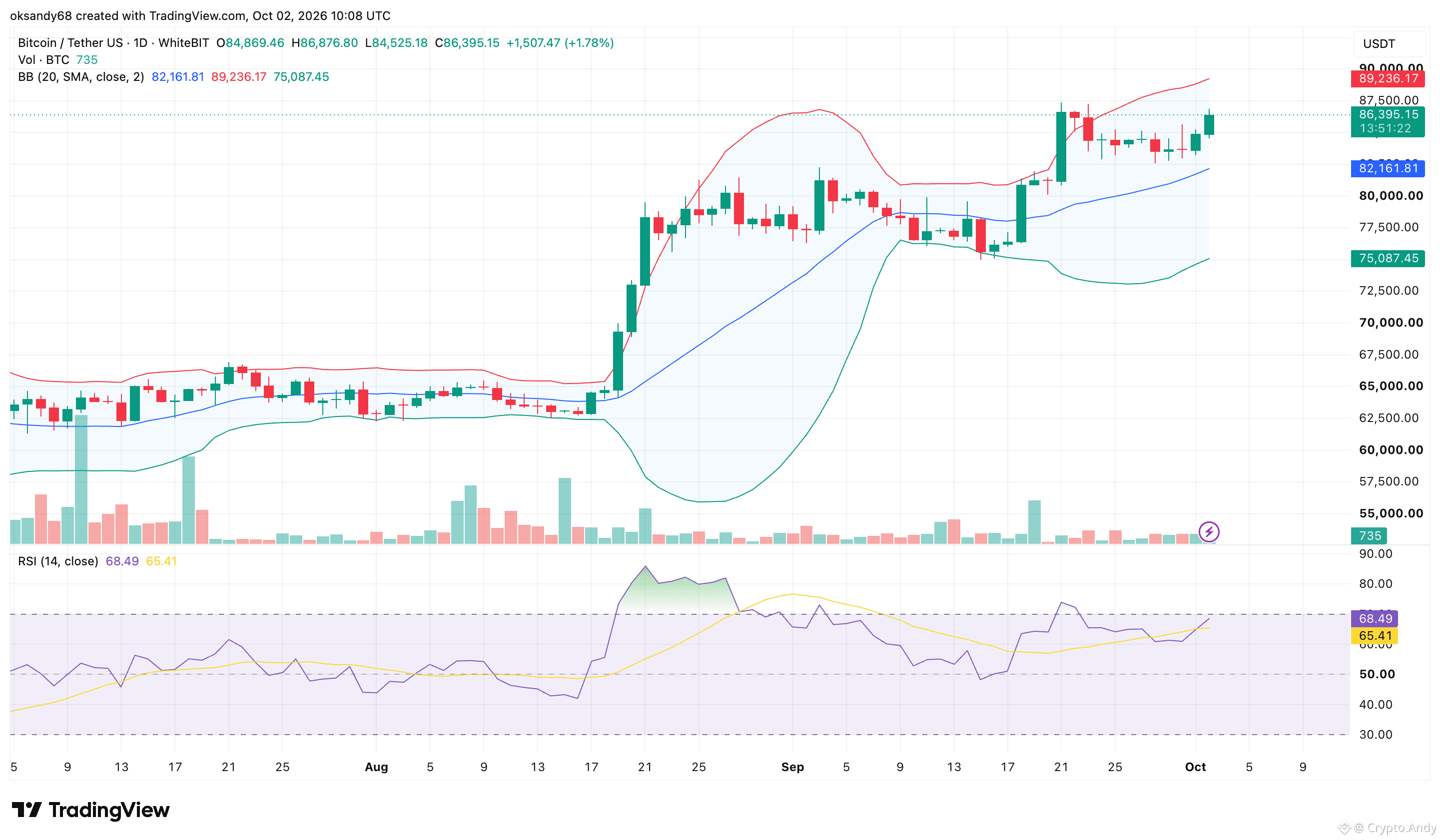
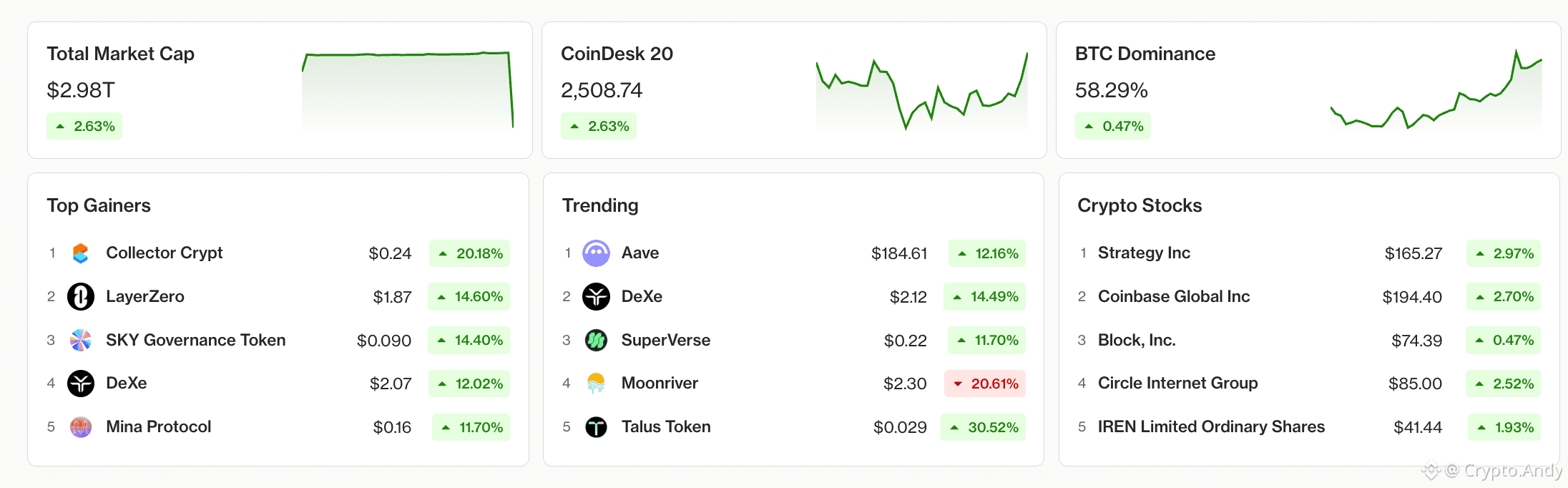
Uptober is warming up: here's your crypto digest 🎃📈 The market woke up in a good mood today. Total crypto market cap is back near $2.98T, up 2.63% in a day, and the CoinDesk 20 index climbed by the same amount to 2,508. $BTC is trading around $86.4K, up ~1.8% today on the daily chart. That's a nice push after a week of sideways trading in the low $80Ks. The next level to watch is the late-September high around $87.5K. RSI is at 68, just below the "overheated" zone of 70, so momentum is strong but things are getting a bit warm 🔥 BTC dominance also ticked up to 58.29%, so Bitcoin is still leading the way. 🚀 Top gainers today 🔹 Collector Crypt: +20.18% 🔹 LayerZero: +14.60% 🔹 SKY: +14.40% 🔹 DEXE: +12.02% 🔹 MINA: +11.70% 👀 Trending $AAVE is getting a lot of attention, up 12% to around $185. Talus Token is up 30%, while Moonriver dropped 20%, so not everything is green today. 📊 Crypto stocks are up too Strategy is up +2.97%, Coinbase +2.70% and Circle +2.52%. When crypto stocks and coins move up together, it usually means the mood is improving across the board. So, Uptober kicking in early or just a warm-up? 👇 #BTC Price Analysis# #Macro Insights#
Uptober is warming up: here's your crypto digest 🎃📈 The market woke up in a good mood today. Total crypto market cap is back near $2.98T, up 2.63% in a day, and the CoinDesk 20 index climbed by the same amount to 2,508. $BTC is trading around $86.4K, up ~1.8% today on the daily chart. That's a nice push after a week of sideways trading in the low $80Ks. The next level to watch is the late-September high around $87.5K. RSI is at 68, just below the "overheated" zone of 70, so momentum is strong but things are getting a bit warm 🔥 BTC dominance also ticked up to 58.29%, so Bitcoin is still leading the way. 🚀 Top gainers today 🔹 Collector Crypt: +20.18% 🔹 LayerZero: +14.60% 🔹 SKY: +14.40% 🔹 DEXE: +12.02% 🔹 MINA: +11.70% 👀 Trending $AAVE is getting a lot of attention, up 12% to around $185. Talus Token is up 30%, while Moonriver dropped 20%, so not everything is green today. 📊 Crypto stocks are up too Strategy is up +2.97%, Coinbase +2.70% and Circle +2.52%. When crypto stocks and coins move up together, it usually means the mood is improving across the board. So, Uptober kicking in early or just a warm-up? 👇 #BTC Price Analysis# #Macro Insights#
27
·
--
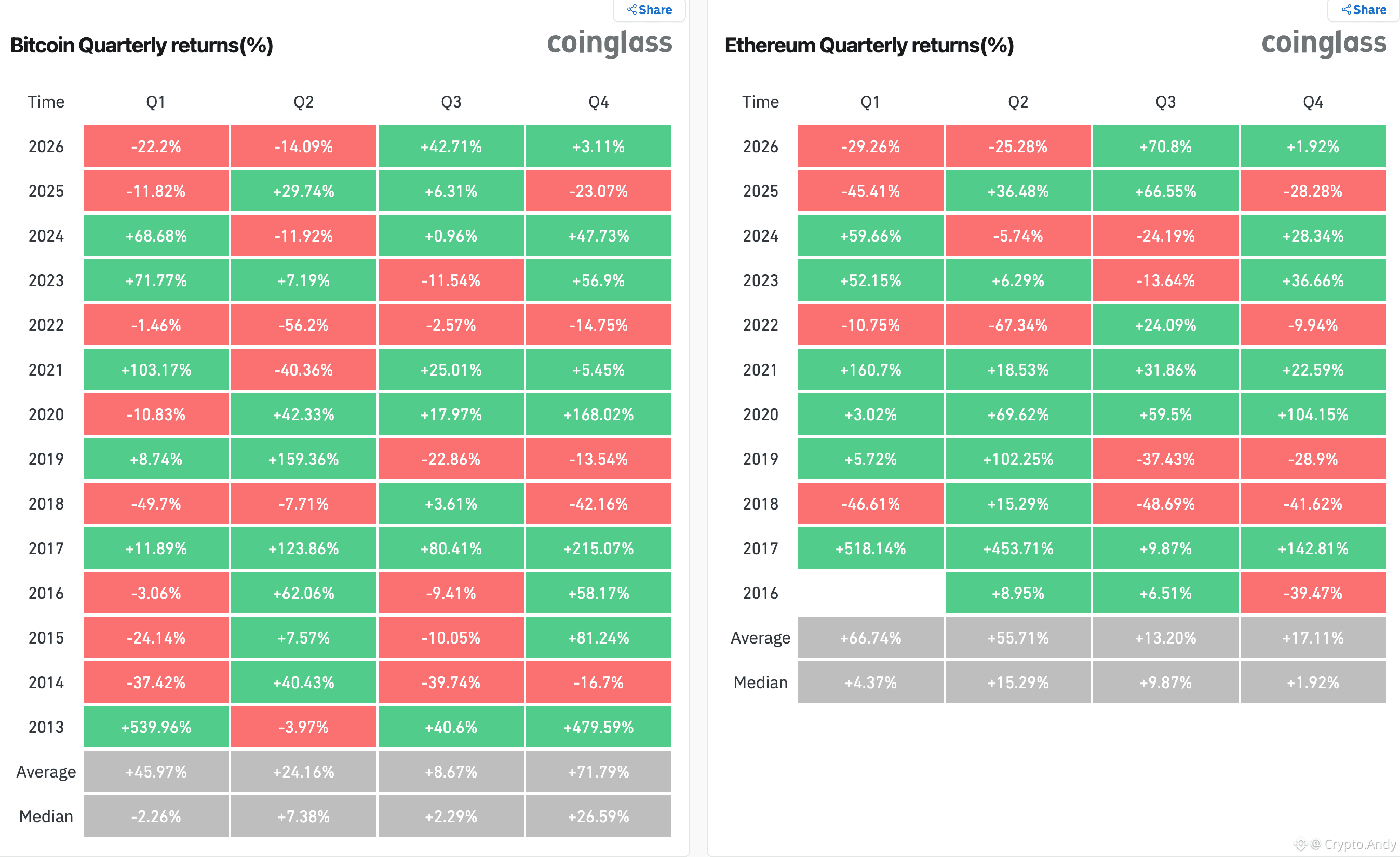
Welcome to UPtober 🚀 Q3 was a historic quarter for crypto. $BTC gained 42%, while $ETH jumped 70%, making it the strongest Q3 performance for both assets across historical bear-market periods. Both also posted their best monthly candle close of the year. 👀 And now we’re already on Day 2 of UPtober, historically Bitcoin’s strongest month. Let’s see if the pattern repeats this time. 📈 #BTC Price Analysis# #Bitcoin Price Prediction: What is Bitcoins next move?#
Welcome to UPtober 🚀 Q3 was a historic quarter for crypto. $BTC gained 42%, while $ETH jumped 70%, making it the strongest Q3 performance for both assets across historical bear-market periods. Both also posted their best monthly candle close of the year. 👀 And now we’re already on Day 2 of UPtober, historically Bitcoin’s strongest month. Let’s see if the pattern repeats this time. 📈 #BTC Price Analysis# #Bitcoin Price Prediction: What is Bitcoins next move?#
45
·
--
Human vs. Agent Wallets: Rethinking WaaS Architecture 🏗️ On-chain AI agents hit 250,000 daily active users in Q1 2026 - a 400% YoY jump outpacing net new human wallet growth across $ETH and $SOL . A growing share of wallet creation is fully automated. This shift changes core wallet requirements. Supporting this at scale introduces three critical operational questions: Does AML trigger before funds land on every network? Does value traceability hold across network hops? Does adding networks extend compliance automatically without reopening legal reviews? Let's see how this actually gets solved on the market right now 👇 🔵 The first example is WhiteBIT's Wallet-as-a-Service.https://institutional.whitebit.com/crypto-wallets-for-business?utm_source=coinmarketcap&utm_medium=waas2_andy&utm_campaign=post It generates addresses for 340+ assets across 80+ networks with automatic AML verification built into address generation, so it makes no difference whether funds come from a person or an AI agent. Security is covered as well: WhiteBIT keeps 96% of assets in cold wallets, Fireblocks integration and WAF protection add an extra security layer. 🔵 The second example solves the same problem from the other side: Coinbase's wallet infrastructure, with Embedded Wallets for people onboarding with email or social login, and Server Wallets for agents and automated systems, keys held in a Trusted Execution Environment.https://www.coinbase.com/developer-platform/wallets?utm_source=coinmarketcap&utm_medium=waas2_andy&utm_campaign=post Neither asks a business to build custody or compliance from zero - both let it plug into something that already carries the control forward. Disclaimer: This is not financial or investment advice. Do your own research before making any decisions. Use at your own risk. #ETHBlockchain #ETH #Altcoin Season#
Human vs. Agent Wallets: Rethinking WaaS Architecture 🏗️ On-chain AI agents hit 250,000 daily active users in Q1 2026 - a 400% YoY jump outpacing net new human wallet growth across $ETH and $SOL . A growing share of wallet creation is fully automated. This shift changes core wallet requirements. Supporting this at scale introduces three critical operational questions: Does AML trigger before funds land on every network? Does value traceability hold across network hops? Does adding networks extend compliance automatically without reopening legal reviews? Let's see how this actually gets solved on the market right now 👇 🔵 The first example is WhiteBIT's Wallet-as-a-Service.https://institutional.whitebit.com/crypto-wallets-for-business?utm_source=coinmarketcap&utm_medium=waas2_andy&utm_campaign=post It generates addresses for 340+ assets across 80+ networks with automatic AML verification built into address generation, so it makes no difference whether funds come from a person or an AI agent. Security is covered as well: WhiteBIT keeps 96% of assets in cold wallets, Fireblocks integration and WAF protection add an extra security layer. 🔵 The second example solves the same problem from the other side: Coinbase's wallet infrastructure, with Embedded Wallets for people onboarding with email or social login, and Server Wallets for agents and automated systems, keys held in a Trusted Execution Environment.https://www.coinbase.com/developer-platform/wallets?utm_source=coinmarketcap&utm_medium=waas2_andy&utm_campaign=post Neither asks a business to build custody or compliance from zero - both let it plug into something that already carries the control forward. Disclaimer: This is not financial or investment advice. Do your own research before making any decisions. Use at your own risk. #ETHBlockchain #ETH #Altcoin Season#

56
·
--
Building for Humans, Agents or Both? Rethinking WaaS Architecture 🛠️ On-chain AI agents hit 250,000 daily active $BTC users in Q1 2026 - a 400% YoY jump outpacing net new human wallet growth across Ethereum and Solana. A growing share of wallet creation is fully automated. This shift changes core wallet requirements. Supporting this at scale introduces three critical operational questions: 1️⃣ Does AML trigger before funds land on every network? 2️⃣ Does value traceability hold across network hops? 3️⃣ Does adding networks extend compliance automatically without reopening legal reviews? Let's see how this actually gets solved on the market right now 👇 🔵The first example is WhiteBIT's Wallet-as-a-Service. https://institutional.whitebit.com/crypto-wallets-for-business?utm_source=coinmarketcap&utm_medium=waas2_andy&utm_campaign=post It generates addresses for 340+ assets across 80+ networks with automatic AML verification built into address generation, so it makes no difference whether funds come from a person or an AI agent. Security is covered as well: WhiteBIT keeps 96% of assets in cold wallets, Fireblocks integration and WAF protection add an extra security layer. 🔵The second example solves the same problem from the other side: Coinbase's wallet infrastructure, with Embedded Wallets for people onboarding with email or social login, and Server Wallets for agents and automated systems, keys held in a Trusted Execution Environment.https://www.coinbase.com/developer-platform/wallets?utm_source=coinmarketcap&utm_medium=waas2_andy&utm_campaign=post Neither asks a business to build custody or compliance from zero - both let it plug into something that already carries the control forward. Disclaimer: This is not financial or investment advice. Do your own research before making any decisions. Use at your own risk. #BTC Price Analysis# #Bitcoin Price Prediction: What is Bitcoins next move?#
Building for Humans, Agents or Both? Rethinking WaaS Architecture 🛠️ On-chain AI agents hit 250,000 daily active $BTC users in Q1 2026 - a 400% YoY jump outpacing net new human wallet growth across Ethereum and Solana. A growing share of wallet creation is fully automated. This shift changes core wallet requirements. Supporting this at scale introduces three critical operational questions: 1️⃣ Does AML trigger before funds land on every network? 2️⃣ Does value traceability hold across network hops? 3️⃣ Does adding networks extend compliance automatically without reopening legal reviews? Let's see how this actually gets solved on the market right now 👇 🔵The first example is WhiteBIT's Wallet-as-a-Service. https://institutional.whitebit.com/crypto-wallets-for-business?utm_source=coinmarketcap&utm_medium=waas2_andy&utm_campaign=post It generates addresses for 340+ assets across 80+ networks with automatic AML verification built into address generation, so it makes no difference whether funds come from a person or an AI agent. Security is covered as well: WhiteBIT keeps 96% of assets in cold wallets, Fireblocks integration and WAF protection add an extra security layer. 🔵The second example solves the same problem from the other side: Coinbase's wallet infrastructure, with Embedded Wallets for people onboarding with email or social login, and Server Wallets for agents and automated systems, keys held in a Trusted Execution Environment.https://www.coinbase.com/developer-platform/wallets?utm_source=coinmarketcap&utm_medium=waas2_andy&utm_campaign=post Neither asks a business to build custody or compliance from zero - both let it plug into something that already carries the control forward. Disclaimer: This is not financial or investment advice. Do your own research before making any decisions. Use at your own risk. #BTC Price Analysis# #Bitcoin Price Prediction: What is Bitcoins next move?#

67
·
--
Building for Humans, Agents, or Both? Rethinking WaaS Architecture 🛠️ On-chain AI agents hit 250,000 daily active users in Q1 2026 - a 400% YoY jump outpacing net new human wallet growth across Ethereum and Solana. A growing share of $BTC wallet creation is fully automated. This shift changes core wallet requirements. Supporting this at scale introduces three critical operational questions: Does AML trigger before funds land on every network? Does value traceability hold across network hops? Does adding networks extend compliance automatically without reopening legal reviews? Let's see how this actually gets solved on the market right now 👇 🔵 The first example is WhiteBIT's Wallet-as-a-Service. https://institutional.whitebit.com/crypto-wallets-for-business?utm_source=coinmarketcap&utm_medium=waas2_andy&utm_campaign=post It generates addresses for 340+ assets across 80+ networks with automatic AML verification built into address generation, so it makes no difference whether funds come from a person or an AI agent. Security is covered as well: WhiteBIT keeps 96% of assets in cold wallets, Fireblocks integration and WAF protection add an extra security layer. 🔵 The second example solves the same problem from the other side: Coinbase's wallet infrastructure, with Embedded Wallets for people onboarding with email or social login, and Server Wallets for agents and automated systems, keys held in a Trusted Execution Environment. https://www.coinbase.com/developer-platform/wallets?utm_source=coinmarketcap&utm_medium=waas2_andy&utm_campaign=post Neither asks a business to build custody or compliance from zero - both let it plug into something that already carries the control forward. 🧩 Are you building for human users, automated systems or both? 💬 Disclaimer: This is not financial or investment advice. Do your own research before making any decisions. Use at your own risk. #BTC Price Analysis# #Macro Insights#
Building for Humans, Agents, or Both? Rethinking WaaS Architecture 🛠️ On-chain AI agents hit 250,000 daily active users in Q1 2026 - a 400% YoY jump outpacing net new human wallet growth across Ethereum and Solana. A growing share of $BTC wallet creation is fully automated. This shift changes core wallet requirements. Supporting this at scale introduces three critical operational questions: Does AML trigger before funds land on every network? Does value traceability hold across network hops? Does adding networks extend compliance automatically without reopening legal reviews? Let's see how this actually gets solved on the market right now 👇 🔵 The first example is WhiteBIT's Wallet-as-a-Service. https://institutional.whitebit.com/crypto-wallets-for-business?utm_source=coinmarketcap&utm_medium=waas2_andy&utm_campaign=post It generates addresses for 340+ assets across 80+ networks with automatic AML verification built into address generation, so it makes no difference whether funds come from a person or an AI agent. Security is covered as well: WhiteBIT keeps 96% of assets in cold wallets, Fireblocks integration and WAF protection add an extra security layer. 🔵 The second example solves the same problem from the other side: Coinbase's wallet infrastructure, with Embedded Wallets for people onboarding with email or social login, and Server Wallets for agents and automated systems, keys held in a Trusted Execution Environment. https://www.coinbase.com/developer-platform/wallets?utm_source=coinmarketcap&utm_medium=waas2_andy&utm_campaign=post Neither asks a business to build custody or compliance from zero - both let it plug into something that already carries the control forward. 🧩 Are you building for human users, automated systems or both? 💬 Disclaimer: This is not financial or investment advice. Do your own research before making any decisions. Use at your own risk. #BTC Price Analysis# #Macro Insights#

34
·
--
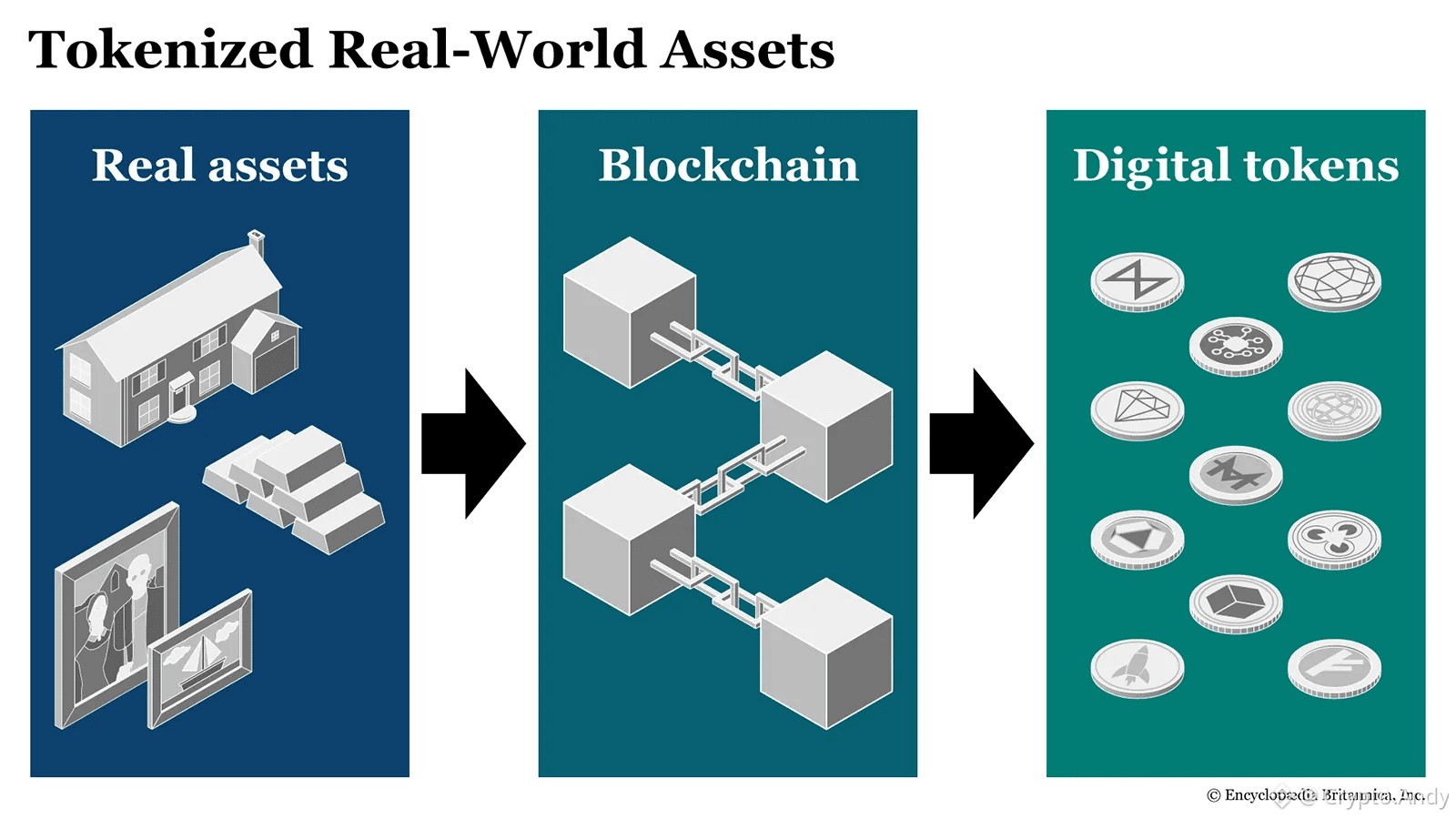
🔥 Tokenization hits $331.8B and the growth has moved beyond $BTC and stablecoins Pantera Capital's new State of Tokenization report tracks 671 tokenized assets worth $331.8B as of June 30, 2026. Between late March and the end of June: 🔹 Stablecoins fell 2.3%, from $302.4B to $295.5B 🔹 Other tokenized assets grew 13.3%, from $32B to $36.3B 🔹 Stablecoins' share of the market slipped from 90.4% to 89.1% Tokenized US Treasuries led the growth, adding about $3B in Pantera's benchmark data, followed by tokenized stocks (+$1.1B) and corporate credit (+$1.1B). Institutions are also getting more active. BlackRock's BUIDL moved $441M on-chain in June and is already accepted as collateral. J.P. Morgan, HSBC and Fidelity all launched on-chain products during the quarter. Access is widening on the retail side too. Tracked tokenized assets on Robinhood Chain grew from $5.6M to $28.4M in its first month. Derivatives are moving even faster: equity perps on Hyperliquid and Lighter did $67.8B in June, about 16x the $4.2B in on-chain spot trading of tokenized stocks. Pantera's main takeaway is that issuing a token is now the easy part. The real challenge is building liquid, regulated secondary markets. Which will drive tokenization next: treasuries, stocks or private credit? #BTC Price Analysis# #Macro Insights#
🔥 Tokenization hits $331.8B and the growth has moved beyond $BTC and stablecoins Pantera Capital's new State of Tokenization report tracks 671 tokenized assets worth $331.8B as of June 30, 2026. Between late March and the end of June: 🔹 Stablecoins fell 2.3%, from $302.4B to $295.5B 🔹 Other tokenized assets grew 13.3%, from $32B to $36.3B 🔹 Stablecoins' share of the market slipped from 90.4% to 89.1% Tokenized US Treasuries led the growth, adding about $3B in Pantera's benchmark data, followed by tokenized stocks (+$1.1B) and corporate credit (+$1.1B). Institutions are also getting more active. BlackRock's BUIDL moved $441M on-chain in June and is already accepted as collateral. J.P. Morgan, HSBC and Fidelity all launched on-chain products during the quarter. Access is widening on the retail side too. Tracked tokenized assets on Robinhood Chain grew from $5.6M to $28.4M in its first month. Derivatives are moving even faster: equity perps on Hyperliquid and Lighter did $67.8B in June, about 16x the $4.2B in on-chain spot trading of tokenized stocks. Pantera's main takeaway is that issuing a token is now the easy part. The real challenge is building liquid, regulated secondary markets. Which will drive tokenization next: treasuries, stocks or private credit? #BTC Price Analysis# #Macro Insights#
41
·
--
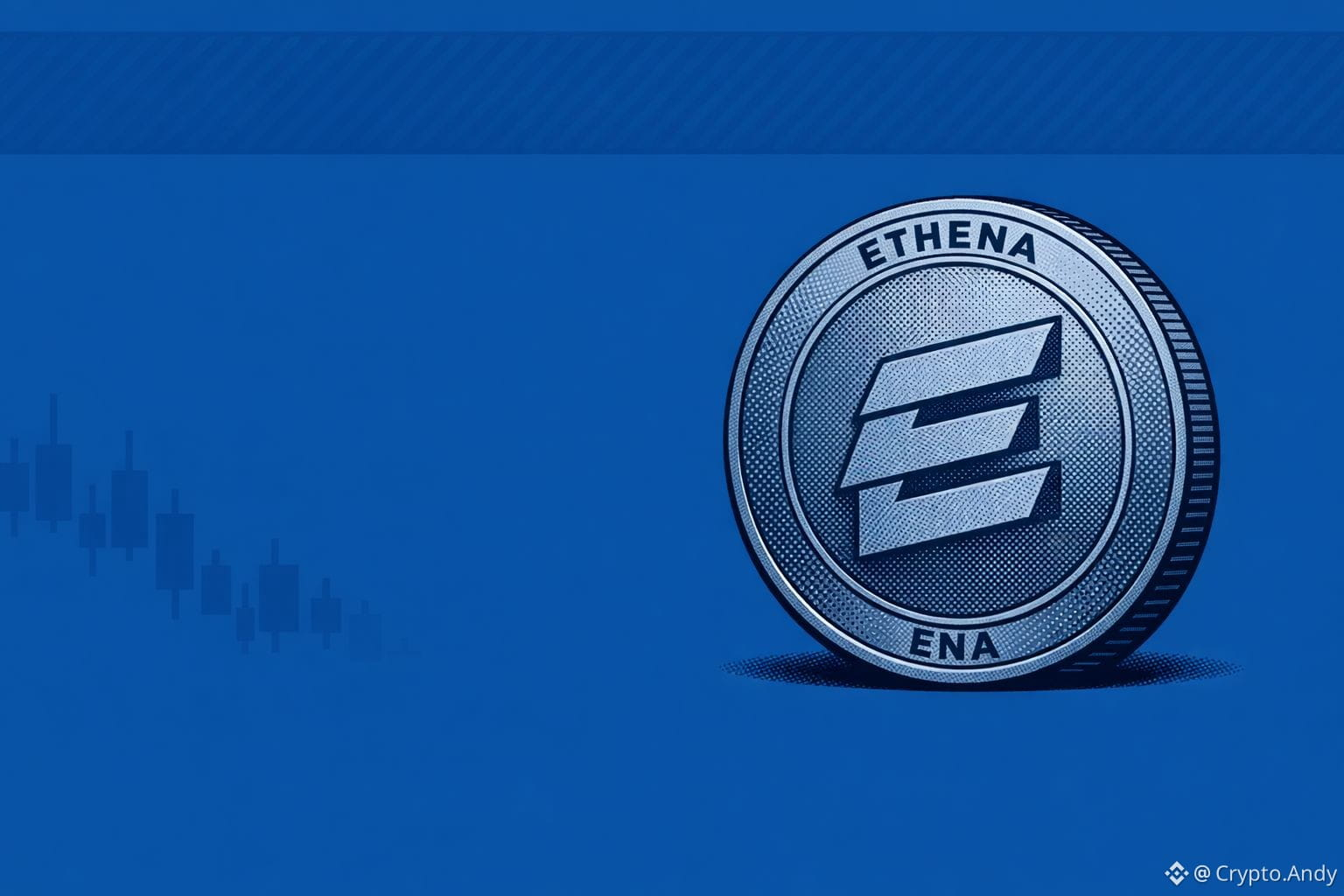
$ENA to $2? Standard Chartered sees almost 8x upside 🚀 Standard Chartered analyst Geoff Kendrick expects Ethena's token to hit $2 by the end of 2028. At the time of the forecast, $ENA was trading around $0.25. His case rests on three things: 🔹 USDe growth: Ethena's stablecoin supply is expected to rise from $4.9B to $40B, roughly 8x. 🔹 ENA buybacks: once USDe passes $7.5B, 95% of the protocol's net revenue is set to go toward buying back ENA. 🔹 New revenue streams: Ethena is expanding into institutional lending through FalconX. The logic is simple: more USDe means more revenue, and more revenue means more buybacks. The big question is whether USDe can really grow that much in two years. Do you buy the $2 target or is it too optimistic? 👇 #ENA #Altcoin Season#
$ENA to $2? Standard Chartered sees almost 8x upside 🚀 Standard Chartered analyst Geoff Kendrick expects Ethena's token to hit $2 by the end of 2028. At the time of the forecast, $ENA was trading around $0.25. His case rests on three things: 🔹 USDe growth: Ethena's stablecoin supply is expected to rise from $4.9B to $40B, roughly 8x. 🔹 ENA buybacks: once USDe passes $7.5B, 95% of the protocol's net revenue is set to go toward buying back ENA. 🔹 New revenue streams: Ethena is expanding into institutional lending through FalconX. The logic is simple: more USDe means more revenue, and more revenue means more buybacks. The big question is whether USDe can really grow that much in two years. Do you buy the $2 target or is it too optimistic? 👇 #ENA #Altcoin Season#
53
·
--
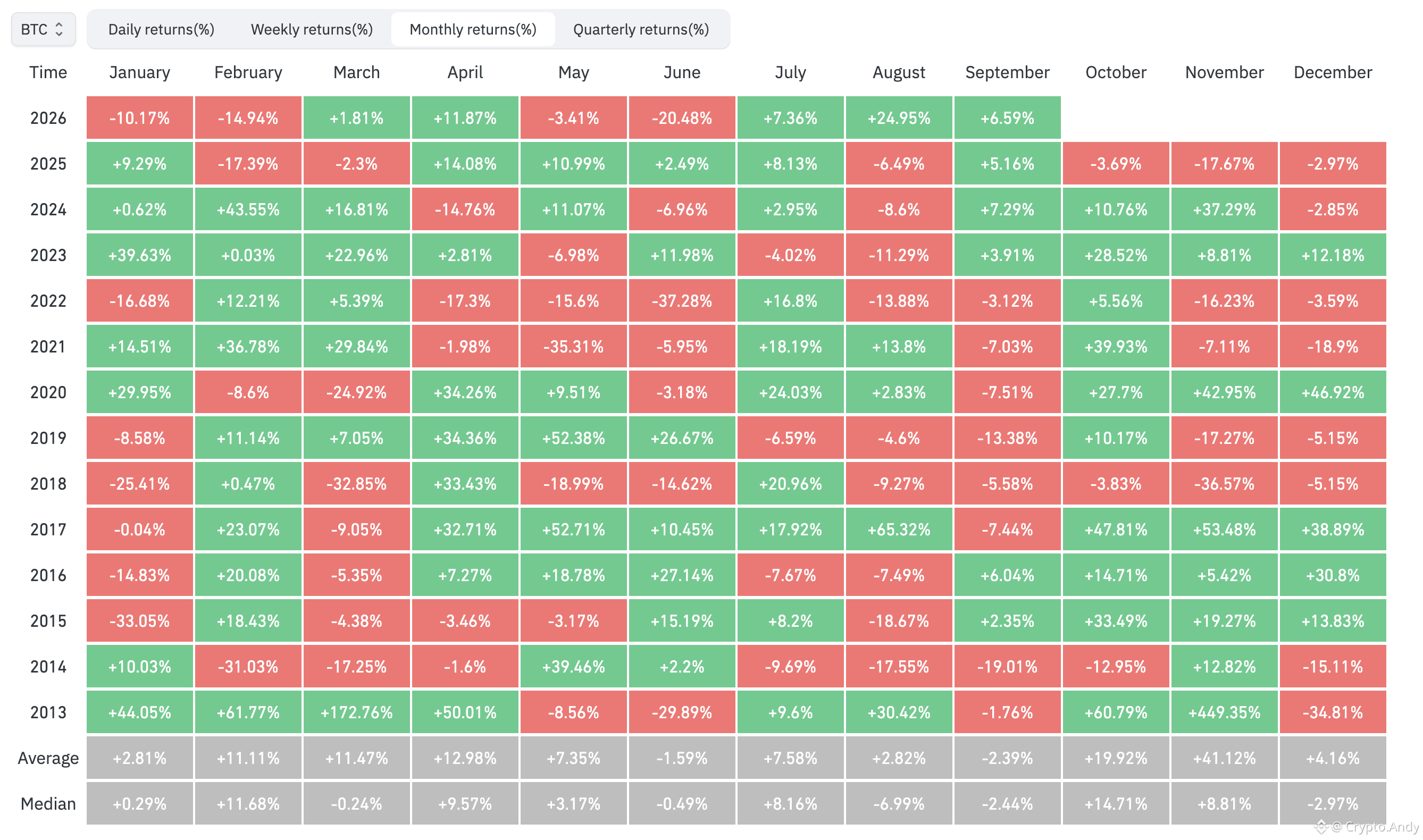
Uptober is here. Will it deliver this year? 🎃📈 October has earned its nickname. Across the last 13 years of $BTC data, it has been one of the strongest months on the calendar: 🟢 10 green Octobers out of 13 (2013–2025) 📊 Average return: +19.92% 📊 Median return: +14.71%, the highest median of any month The best runs were 2013 (+60.79%), 2017 (+47.81%) and 2021 (+39.93%). Even in the 2022 bear market, October closed green at +5.56%. But Uptober isn't guaranteed. There have been only 3 red Octobers: 2014 (-12.95%), 2018 (-3.83%) and, most recently, 2025 (-3.69%). Last year's red October was followed by a -17.67% November. This year, BTC comes into October with some momentum: July +7.36%, August +24.95% and September +6.59%. September is historically BTC's weakest month (median -2.44%), yet it closed green this time. So what's your call for October 2026? 👇 🚀 Classic Uptober 🎃 Downtober, like last year 😴 Sideways and boring #BTC Price Analysis# #Macro Insights#
Uptober is here. Will it deliver this year? 🎃📈 October has earned its nickname. Across the last 13 years of $BTC data, it has been one of the strongest months on the calendar: 🟢 10 green Octobers out of 13 (2013–2025) 📊 Average return: +19.92% 📊 Median return: +14.71%, the highest median of any month The best runs were 2013 (+60.79%), 2017 (+47.81%) and 2021 (+39.93%). Even in the 2022 bear market, October closed green at +5.56%. But Uptober isn't guaranteed. There have been only 3 red Octobers: 2014 (-12.95%), 2018 (-3.83%) and, most recently, 2025 (-3.69%). Last year's red October was followed by a -17.67% November. This year, BTC comes into October with some momentum: July +7.36%, August +24.95% and September +6.59%. September is historically BTC's weakest month (median -2.44%), yet it closed green this time. So what's your call for October 2026? 👇 🚀 Classic Uptober 🎃 Downtober, like last year 😴 Sideways and boring #BTC Price Analysis# #Macro Insights#
74
·
--
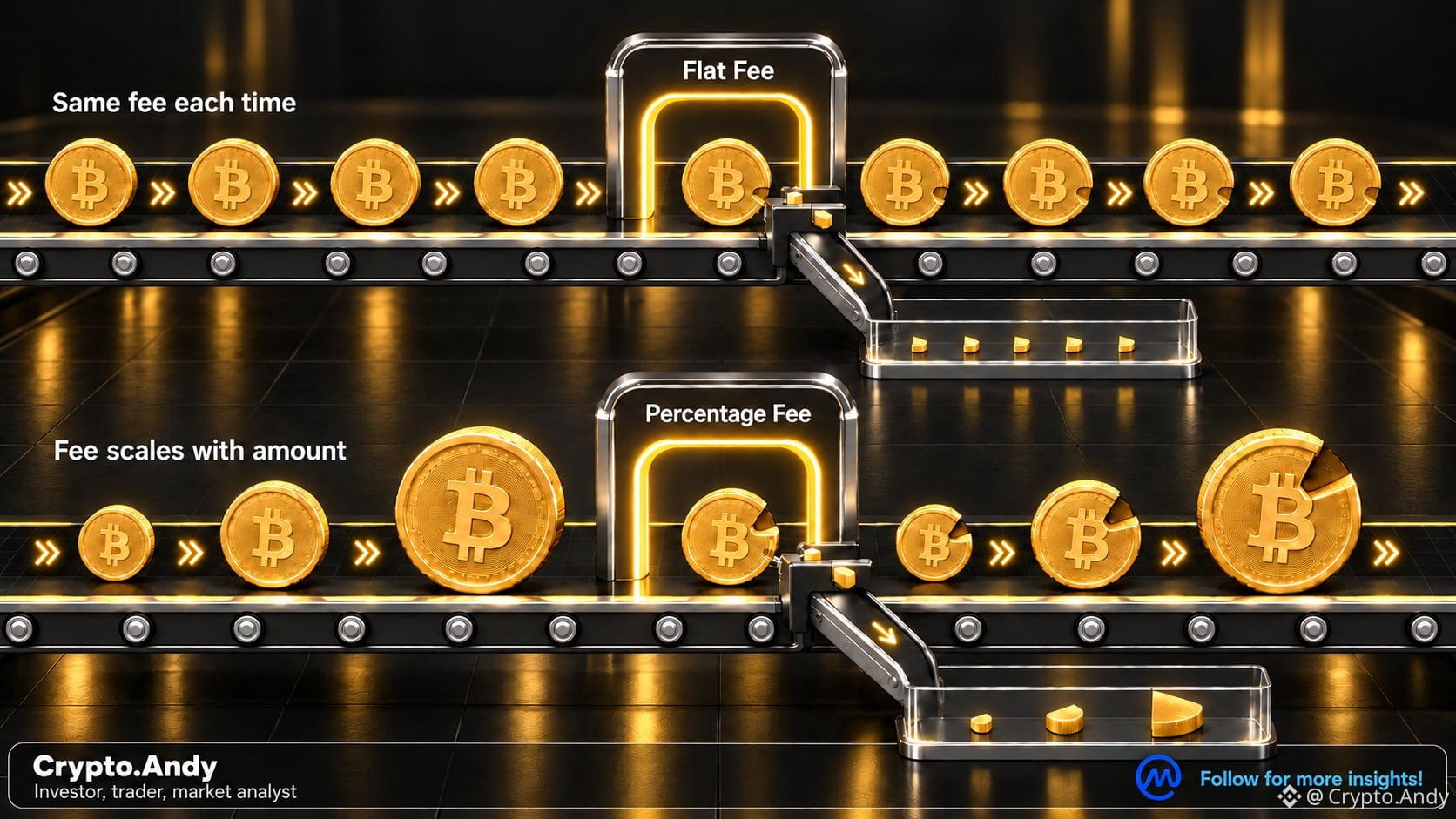
How to Stop Guessing Your Payment Fees at Month-End 🗓️ McKinsey estimates that SMEs may pay over 5% on cross-border payments. A percentage fee looks harmless on paper until your business grows and your largest $BTC transfers become your most expensive ones... simply for being large. A €5,000 and a €50,000 transfer take the exact same backend effort, yet a percentage model charges 10x more for the larger one. For treasury teams, this creates two major issues: 📍 Unpredictable costs: monthly fees swing on a few large transactions. 📍 Budgeting uncertainty: unforecastable settlement forces extra cash buffers. A flat fee could flip this logic. If moving money costs the same whether it's €500 or €500,000, costs stop scaling with size and start scaling with volume - something you could actually forecast. What does this look like in practice? WhiteBIT’s On/Off-Ramp, as an example, uses a flat €5 fee per deposit/withdrawal across SEPA, SWIFT, and fiat rails. At a standard limit of €100k/day (with custom institutional tiers), moving €100,000 could cost a flat €5 versus €5,000 under a 5% fee model. https://institutional.whitebit.com/payments-for-businesses?utm_source=coinmarketcap&utm_medium=onoff2_andy&utm_campaign=post That’s the difference between guessing your costs after the month closes and locking them in upfront. Businesses rarely ask for "flat-fee pricing" by name. Over time, finance teams simply observe a clear shift: top-tier transfers no longer eat up the largest share of the budget. 💬 Percentage vs. flat fee - which model does your finance team actually prefer to plan around? Disclaimer: This is not financial or investment advice. Do your own research before making any decisions. Use at your own risk. #BTC Price Analysis# #Bitcoin Price Prediction: What is Bitcoins next move?#
How to Stop Guessing Your Payment Fees at Month-End 🗓️ McKinsey estimates that SMEs may pay over 5% on cross-border payments. A percentage fee looks harmless on paper until your business grows and your largest $BTC transfers become your most expensive ones... simply for being large. A €5,000 and a €50,000 transfer take the exact same backend effort, yet a percentage model charges 10x more for the larger one. For treasury teams, this creates two major issues: 📍 Unpredictable costs: monthly fees swing on a few large transactions. 📍 Budgeting uncertainty: unforecastable settlement forces extra cash buffers. A flat fee could flip this logic. If moving money costs the same whether it's €500 or €500,000, costs stop scaling with size and start scaling with volume - something you could actually forecast. What does this look like in practice? WhiteBIT’s On/Off-Ramp, as an example, uses a flat €5 fee per deposit/withdrawal across SEPA, SWIFT, and fiat rails. At a standard limit of €100k/day (with custom institutional tiers), moving €100,000 could cost a flat €5 versus €5,000 under a 5% fee model. https://institutional.whitebit.com/payments-for-businesses?utm_source=coinmarketcap&utm_medium=onoff2_andy&utm_campaign=post That’s the difference between guessing your costs after the month closes and locking them in upfront. Businesses rarely ask for "flat-fee pricing" by name. Over time, finance teams simply observe a clear shift: top-tier transfers no longer eat up the largest share of the budget. 💬 Percentage vs. flat fee - which model does your finance team actually prefer to plan around? Disclaimer: This is not financial or investment advice. Do your own research before making any decisions. Use at your own risk. #BTC Price Analysis# #Bitcoin Price Prediction: What is Bitcoins next move?#
2
Log in to explore more content
Join global crypto users on Binance Square
⚡️ Get latest and useful information about crypto.
💬 Trusted by the world’s largest crypto exchange.
👍 Discover real insights from verified creators.
Email / Phone number
Trending Topics
BinanceLaunchesBinanceIntelligence
282,715 views
2,468 Discussing
#BinanceLaunchesBinanceIntelligence
⚡ AI Meets Crypto Trading: Binance Intelligence is Live! ⚡
Trading just got a massive upgrade with Binance's new AI suite:
1️⃣ Binance AI: Personalized market dashboards & 4-hour macro market audio briefings.
2️⃣ Binance AI Pro: Build and run automated strategies using simple natural language prompts.
3️⃣ Binance Agent OS: Developer framework for autonomous financial AI agents.
Describe your strategy ➔ Paper test ➔ Execute 24/7.
Are you building your next trading strategy with AI? Drop your thoughts below! 👇
#BinanceLaunchesBinanceIntelligence #BinanceSquare #CryptoAI #Trading $EDEN
Hazi BNB
·0 Likes
·245 views
BitcoinTargets2026OpenAt$87570
512 views
36 Discussing
BitcoinRejectedAt$87KThirdTime
665 views
40 Discussing