

阿尔法牛
32 Posts

阿尔法牛
Report
Block User
阿尔法牛 🐂 加密货币交易员 & 清算图分析师 📈捕捉市场趋势与阿尔法信号 🚀投资需谨慎 / 非财务建议
Open Trade
6.2 Months
4 Following
27 Followers
37 Liked
Posts
Portfolio
·
--
Bullish
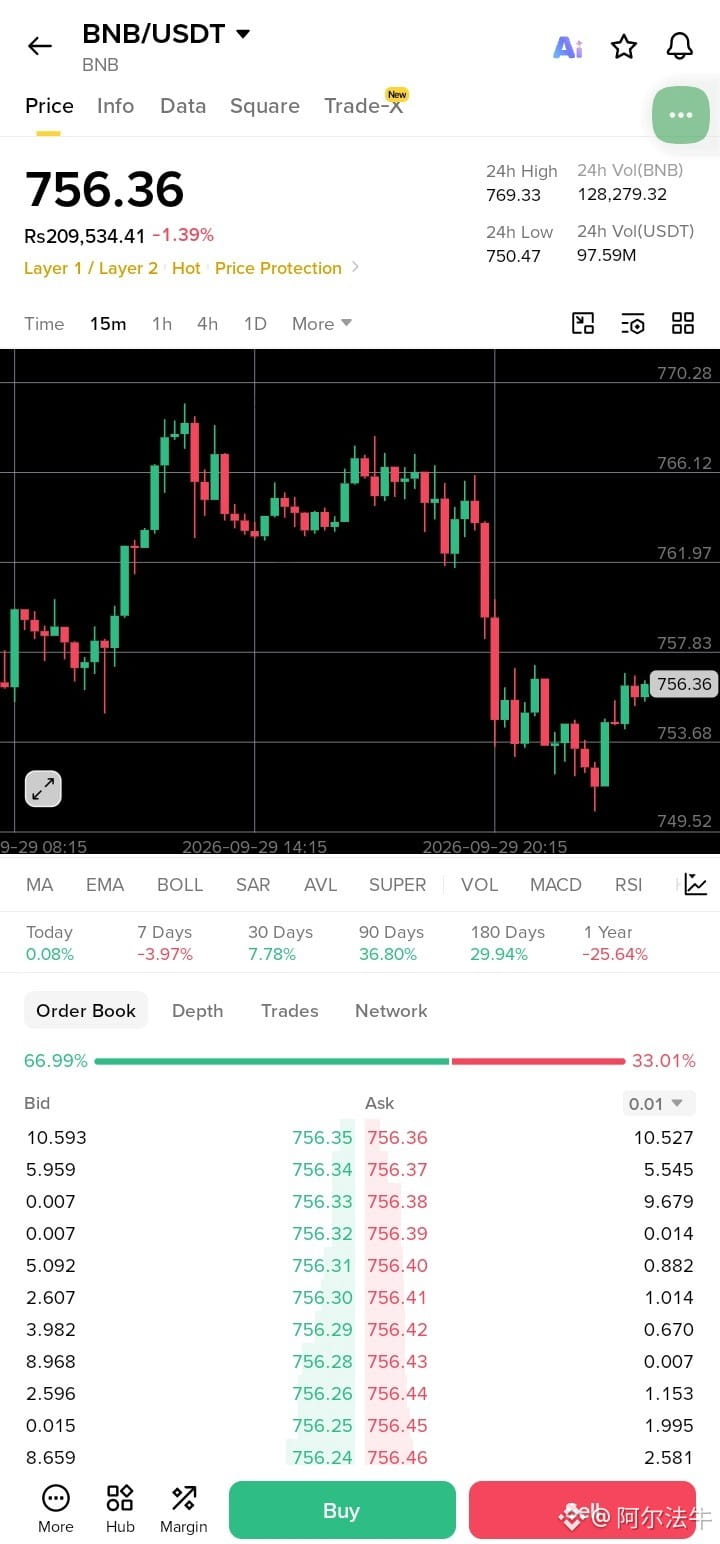
🚀 $BNB Holding Key Levels – Big Move Loading? 🟡
$BNB is currently consolidating around $756 after testing a 24-hour high of $769.33 and holding strong above the $750.47 support zone.
The order book is showing an almost 50/50 split between buyers and sellers, indicating a massive squeeze before the next decisive breakout!
📊 Key Data Points:
Current Price: $756.24 (-1.45%)
24h Range: $750.47 – $769.33
90-Day Trend: Up +36.78% 📈
Order Book Sentiment: 49.96% Bids vs 50.04% Asks (Neutral Squeeze)
⚡ Trade Setup to Watch:
🎯 Bullish Scenario: A clean break above $770 opens the doors toward $800+.
🛡️ Bearish Scenario: Losing $750 support could trigger a quick retest of lower demand zones.
👇 What's your move here? Are you Accumulating, Holding, or Waiting for $800? Drop your targets in the comments! 👇
#BNB #Binance #CryptoTrading #TechnicalAnalysis #BNBUSDT #CryptoNews
$BNB
{spot}(BNBUSDT)
🚀 $BNB Holding Key Levels – Big Move Loading? 🟡
$BNB is currently consolidating around $756 after testing a 24-hour high of $769.33 and holding strong above the $750.47 support zone.
The order book is showing an almost 50/50 split between buyers and sellers, indicating a massive squeeze before the next decisive breakout!
📊 Key Data Points:
Current Price: $756.24 (-1.45%)
24h Range: $750.47 – $769.33
90-Day Trend: Up +36.78% 📈
Order Book Sentiment: 49.96% Bids vs 50.04% Asks (Neutral Squeeze)
⚡ Trade Setup to Watch:
🎯 Bullish Scenario: A clean break above $770 opens the doors toward $800+.
🛡️ Bearish Scenario: Losing $750 support could trigger a quick retest of lower demand zones.
👇 What's your move here? Are you Accumulating, Holding, or Waiting for $800? Drop your targets in the comments! 👇
#BNB #Binance #CryptoTrading #TechnicalAnalysis #BNBUSDT #CryptoNews
$BNB
$BNB is currently consolidating around $756 after testing a 24-hour high of $769.33 and holding strong above the $750.47 support zone.
The order book is showing an almost 50/50 split between buyers and sellers, indicating a massive squeeze before the next decisive breakout!
📊 Key Data Points:
Current Price: $756.24 (-1.45%)
24h Range: $750.47 – $769.33
90-Day Trend: Up +36.78% 📈
Order Book Sentiment: 49.96% Bids vs 50.04% Asks (Neutral Squeeze)
⚡ Trade Setup to Watch:
🎯 Bullish Scenario: A clean break above $770 opens the doors toward $800+.
🛡️ Bearish Scenario: Losing $750 support could trigger a quick retest of lower demand zones.
👇 What's your move here? Are you Accumulating, Holding, or Waiting for $800? Drop your targets in the comments! 👇
#BNB #Binance #CryptoTrading #TechnicalAnalysis #BNBUSDT #CryptoNews
$BNB
1
85
·
--
#BinanceTurns9 Binance Turns 9 - Built By You
https://www.binance.com/activity/binance-turns-9?ref=1229613055
#BinanceTurns9 Binance Turns 9 - Built By You
https://www.binance.com/activity/binance-turns-9?ref=1229613055
https://www.binance.com/activity/binance-turns-9?ref=1229613055
1
1
·
--
Bearish
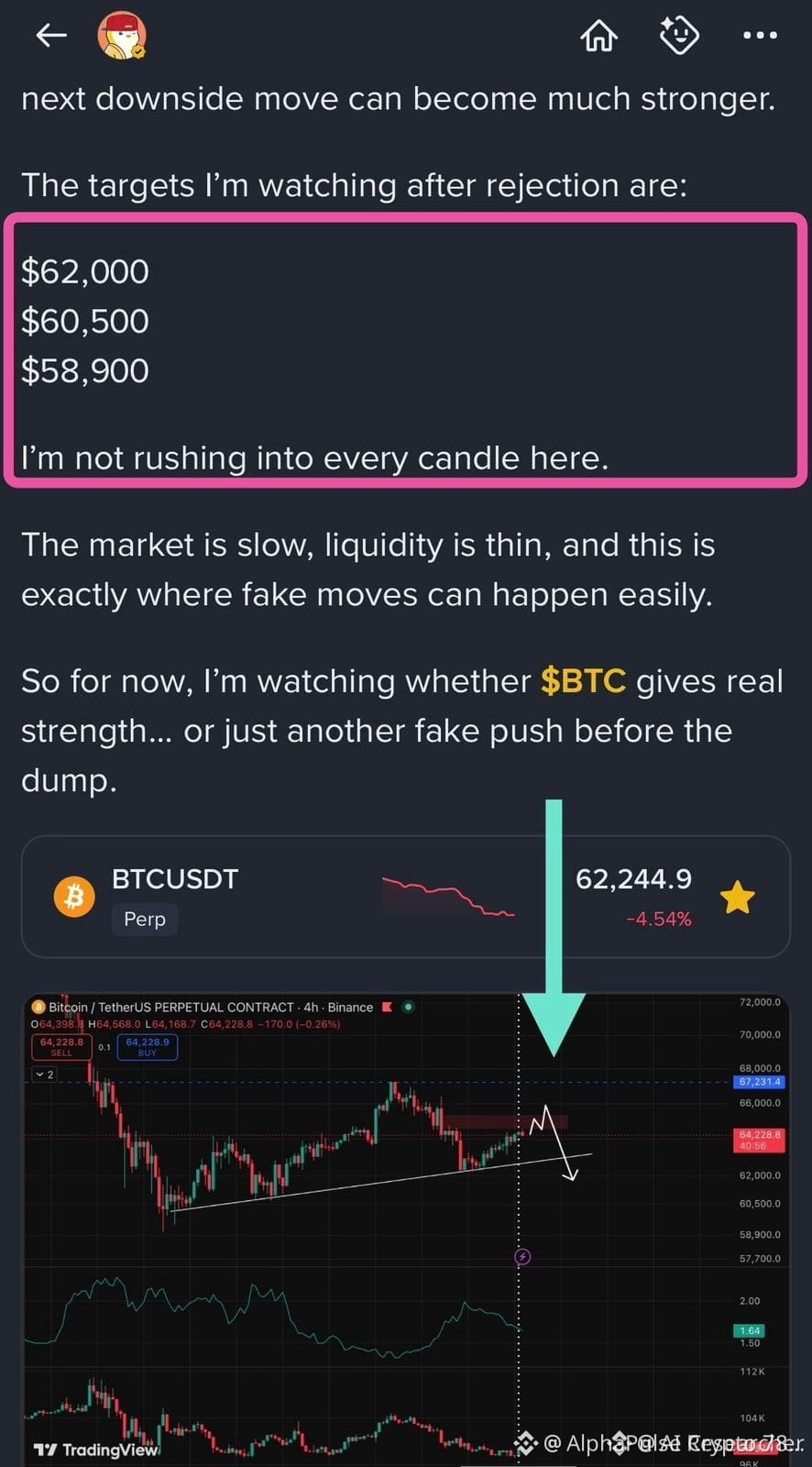
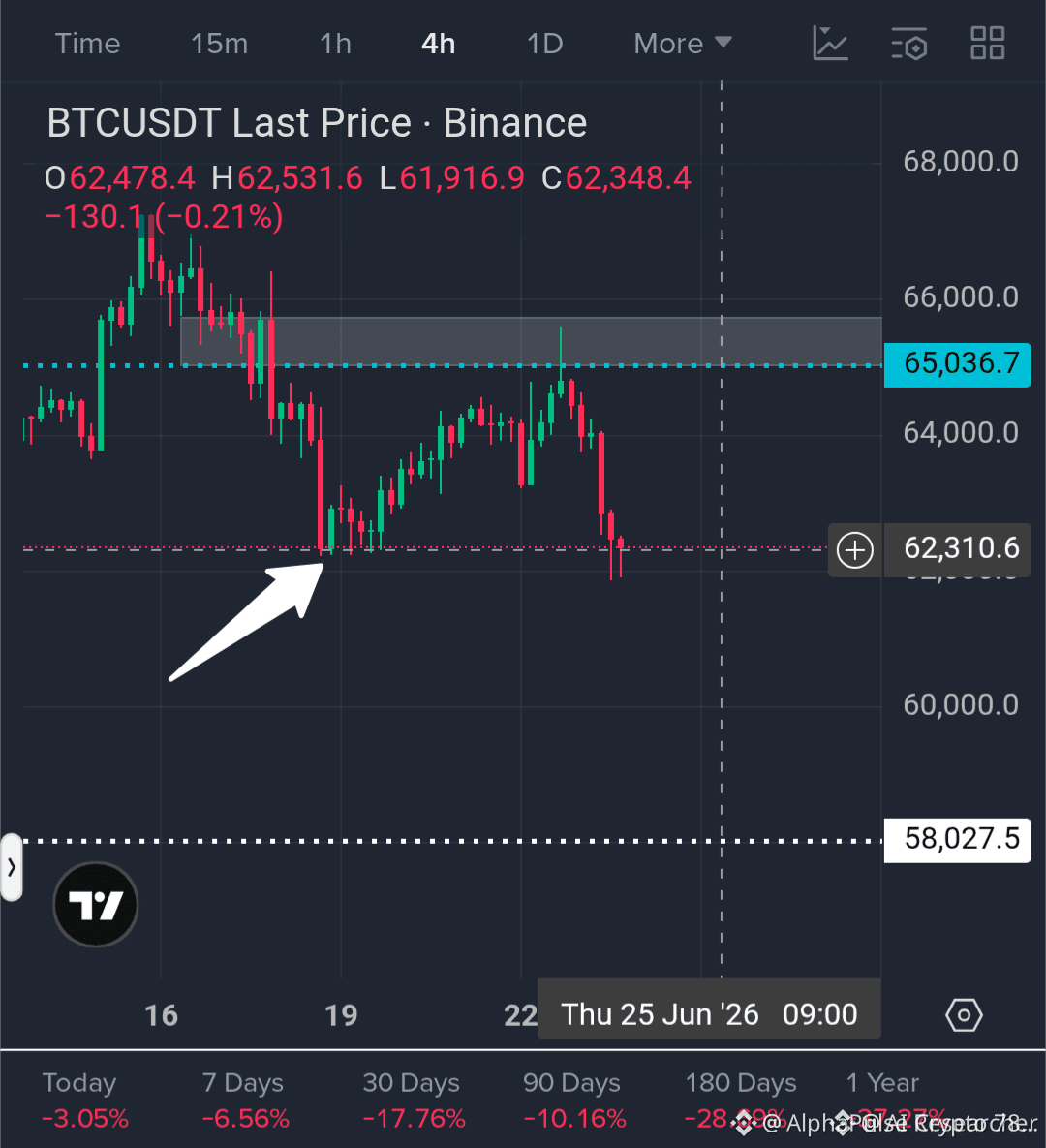
🚨 Urgent $BTC update — the move is now getting serious.
For the last 2 days, I was saying again and again that the market can move toward the $58,000 zone.
At that time, many traders were still waiting for recovery, but the chart was already showing weakness.
Price rejected from the upper area, buyers failed to hold the zone, and now the breakdown has started.
Right now, $BTC is sitting near an important support area, but the reaction is not looking strong.
If buyers fail here, then the next downside move can come faster than people expect.
My main target is still:
$58,000
I believe this level can be touched before Saturday if the same weakness continues.
The market is not giving clean bullish signs.
Volume is weak, every bounce is looking like a relief move, and buyers are getting trapped again and again.
That’s why I’m not changing my view.
$BTC already gave the dump we were waiting for.
Now the real question is simple:
Will this support hold, or will the market complete the full move toward $58K?
{future}(BTCUSDT)
#BTC #BTC走势分析 #BinanceMarginToListXLMTradingPairs
🚨 Urgent $BTC update — the move is now getting serious.
For the last 2 days, I was saying again and again that the market can move toward the $58,000 zone.
At that time, many traders were still waiting for recovery, but the chart was already showing weakness.
Price rejected from the upper area, buyers failed to hold the zone, and now the breakdown has started.
Right now, $BTC is sitting near an important support area, but the reaction is not looking strong.
If buyers fail here, then the next downside move can come faster than people expect.
My main target is still:
$58,000
I believe this level can be touched before Saturday if the same weakness continues.
The market is not giving clean bullish signs.
Volume is weak, every bounce is looking like a relief move, and buyers are getting trapped again and again.
That’s why I’m not changing my view.
$BTC already gave the dump we were waiting for.
Now the real question is simple:
Will this support hold, or will the market complete the full move toward $58K?
#BTC #BTC走势分析 #BinanceMarginToListXLMTradingPairs
For the last 2 days, I was saying again and again that the market can move toward the $58,000 zone.
At that time, many traders were still waiting for recovery, but the chart was already showing weakness.
Price rejected from the upper area, buyers failed to hold the zone, and now the breakdown has started.
Right now, $BTC is sitting near an important support area, but the reaction is not looking strong.
If buyers fail here, then the next downside move can come faster than people expect.
My main target is still:
$58,000
I believe this level can be touched before Saturday if the same weakness continues.
The market is not giving clean bullish signs.
Volume is weak, every bounce is looking like a relief move, and buyers are getting trapped again and again.
That’s why I’m not changing my view.
$BTC already gave the dump we were waiting for.
Now the real question is simple:
Will this support hold, or will the market complete the full move toward $58K?
#BTC #BTC走势分析 #BinanceMarginToListXLMTradingPairs
1
48
·
--
Bearish
By the end of this next month, $ETH will go down to one thousand, i.e., 1000.'*
*But keep in mind — this is a prediction. No one can guarantee whether ETH will actually go to $1000K-$1200K. The market depends on many factors.*
*Right now $ETH is running at ∼$1765. To reach $1000K, it would need to drop ∼37% more from here.*
$ETH
{spot}(ETHUSDT)
By the end of this next month, $ETH will go down to one thousand, i.e., 1000.'*
*But keep in mind — this is a prediction. No one can guarantee whether ETH will actually go to $1000K-$1200K. The market depends on many factors.*
*Right now $ETH is running at ∼$1765. To reach $1000K, it would need to drop ∼37% more from here.*
$ETH
*But keep in mind — this is a prediction. No one can guarantee whether ETH will actually go to $1000K-$1200K. The market depends on many factors.*
*Right now $ETH is running at ∼$1765. To reach $1000K, it would need to drop ∼37% more from here.*
$ETH
1
72
·
--
Bullish
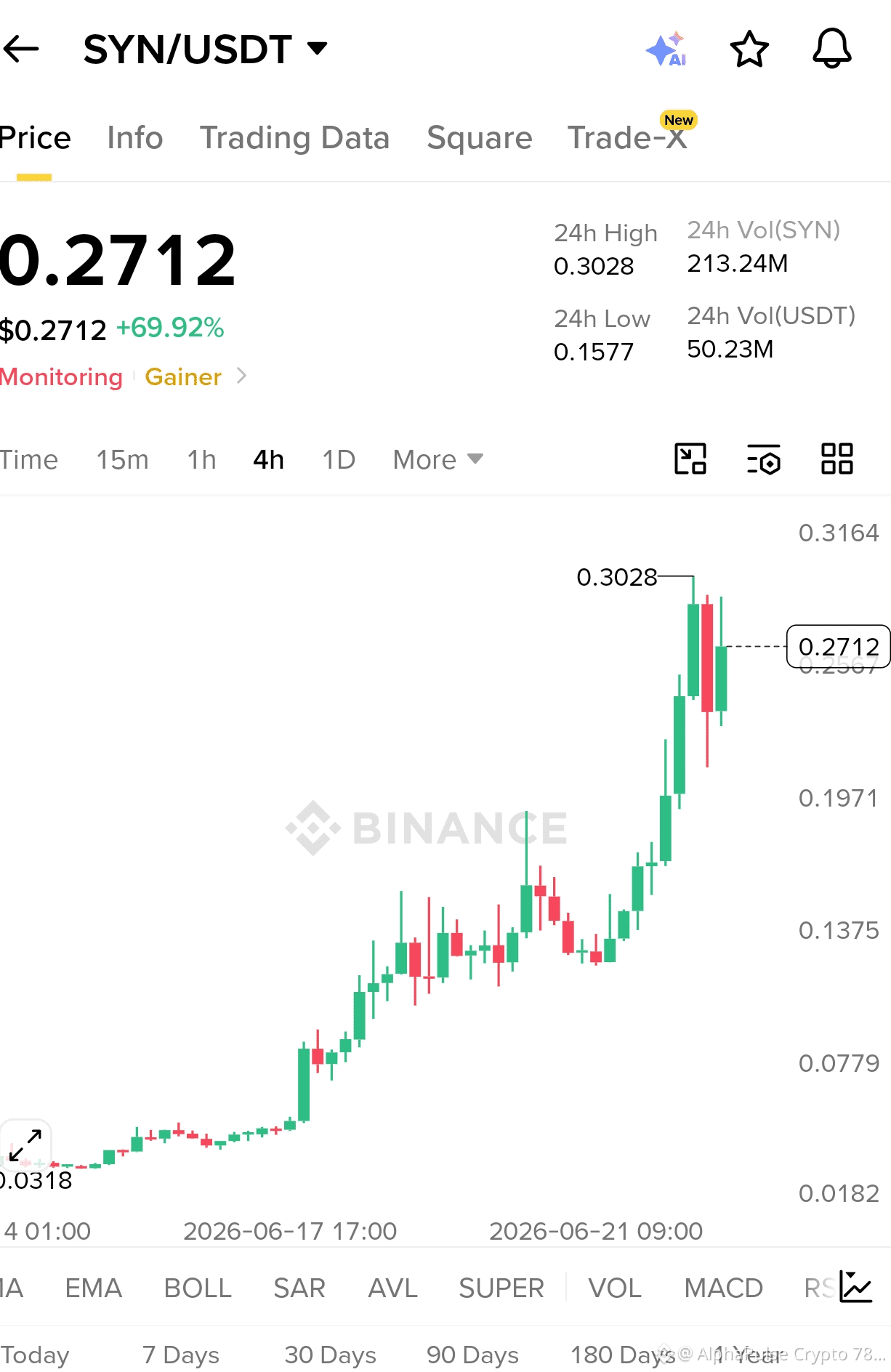
$SYN Bullish Breakout Setup
I'm seeing $SYN showing exceptional strength after a powerful breakout from its accumulation range. The 4H chart confirms strong bullish momentum with aggressive buying volume and higher highs. Despite the recent surge, price is still holding above key breakout levels, keeping the trend bullish.
Reason
Strong breakout from consolidation
Massive buying momentum
Higher highs and higher lows on 4H chart
Buyers defending the breakout zone
Volume expansion supporting the move
Trade Setup
Entry: $0.2650 - $0.2750
Target 1: $0.3000
Target 2: $0.3300
Target 3: $0.3600
Stop Loss: $0.2350
How It's Possible
I'm looking for SYN to maintain support above the $0.2500 breakout area. If buyers continue defending pullbacks and price reclaims $0.3000, momentum can drive the next leg higher toward $0.3300 and $0.3600. The trend remains bullish while price holds above the stop-loss zone.
Plan
I'm entering within the entry zone, taking partial profits at each target, and moving stop loss to breakeven after Target 1 is achieved. Due to the recent sharp rally, managing risk and avoiding oversized positions is important.
Let's go and Trade now $SYN
{spot}(SYNUSDT)
#SYN #SYNTH
$SYN Bullish Breakout Setup
I'm seeing $SYN showing exceptional strength after a powerful breakout from its accumulation range. The 4H chart confirms strong bullish momentum with aggressive buying volume and higher highs. Despite the recent surge, price is still holding above key breakout levels, keeping the trend bullish.
Reason
Strong breakout from consolidation
Massive buying momentum
Higher highs and higher lows on 4H chart
Buyers defending the breakout zone
Volume expansion supporting the move
Trade Setup
Entry: $0.2650 - $0.2750
Target 1: $0.3000
Target 2: $0.3300
Target 3: $0.3600
Stop Loss: $0.2350
How It's Possible
I'm looking for SYN to maintain support above the $0.2500 breakout area. If buyers continue defending pullbacks and price reclaims $0.3000, momentum can drive the next leg higher toward $0.3300 and $0.3600. The trend remains bullish while price holds above the stop-loss zone.
Plan
I'm entering within the entry zone, taking partial profits at each target, and moving stop loss to breakeven after Target 1 is achieved. Due to the recent sharp rally, managing risk and avoiding oversized positions is important.
Let's go and Trade now $SYN
#SYN #SYNTH
I'm seeing $SYN showing exceptional strength after a powerful breakout from its accumulation range. The 4H chart confirms strong bullish momentum with aggressive buying volume and higher highs. Despite the recent surge, price is still holding above key breakout levels, keeping the trend bullish.
Reason
Strong breakout from consolidation
Massive buying momentum
Higher highs and higher lows on 4H chart
Buyers defending the breakout zone
Volume expansion supporting the move
Trade Setup
Entry: $0.2650 - $0.2750
Target 1: $0.3000
Target 2: $0.3300
Target 3: $0.3600
Stop Loss: $0.2350
How It's Possible
I'm looking for SYN to maintain support above the $0.2500 breakout area. If buyers continue defending pullbacks and price reclaims $0.3000, momentum can drive the next leg higher toward $0.3300 and $0.3600. The trend remains bullish while price holds above the stop-loss zone.
Plan
I'm entering within the entry zone, taking partial profits at each target, and moving stop loss to breakeven after Target 1 is achieved. Due to the recent sharp rally, managing risk and avoiding oversized positions is important.
Let's go and Trade now $SYN
#SYN #SYNTH
1
72
·
--
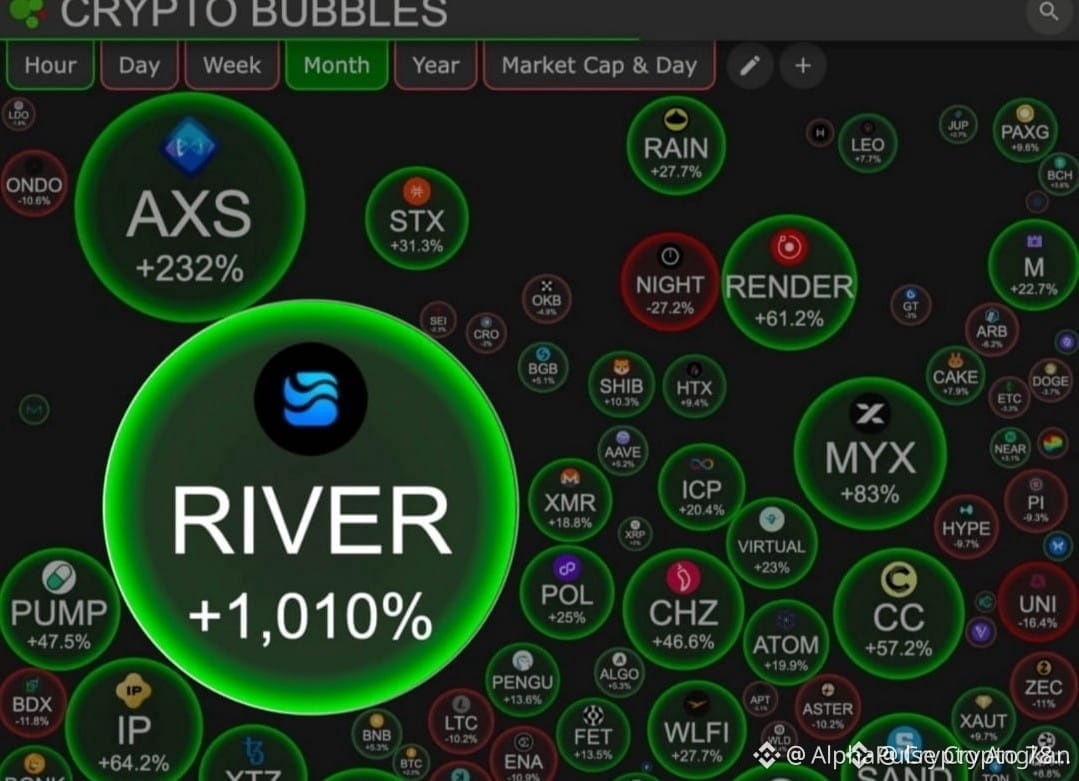
You laughed $RIVER at $1
Then it reached $10
You laughed $RIVER at $40
Then it reached $80
Now You at $4 dumped at $86
#RIVER will reach and break ATH $100 soon❤️🔥🎗️🚀 100X not a joke❤️🔥
Mark my word! Screenshots this‼️
$ID
{alpha}(560xda7ad9dea9397cffddae2f8a052b82f1484252b3)
You laughed $RIVER at $1
Then it reached $10
You laughed $RIVER at $40
Then it reached $80
Now You at $4 dumped at $86
#RIVER will reach and break ATH $100 soon❤️🔥🎗️🚀 100X not a joke❤️🔥
Mark my word! Screenshots this‼️
$ID
Then it reached $10
You laughed $RIVER at $40
Then it reached $80
Now You at $4 dumped at $86
#RIVER will reach and break ATH $100 soon❤️🔥🎗️🚀 100X not a joke❤️🔥
Mark my word! Screenshots this‼️
$ID
1
1
·
--
What are you waiting for, guys? 👀
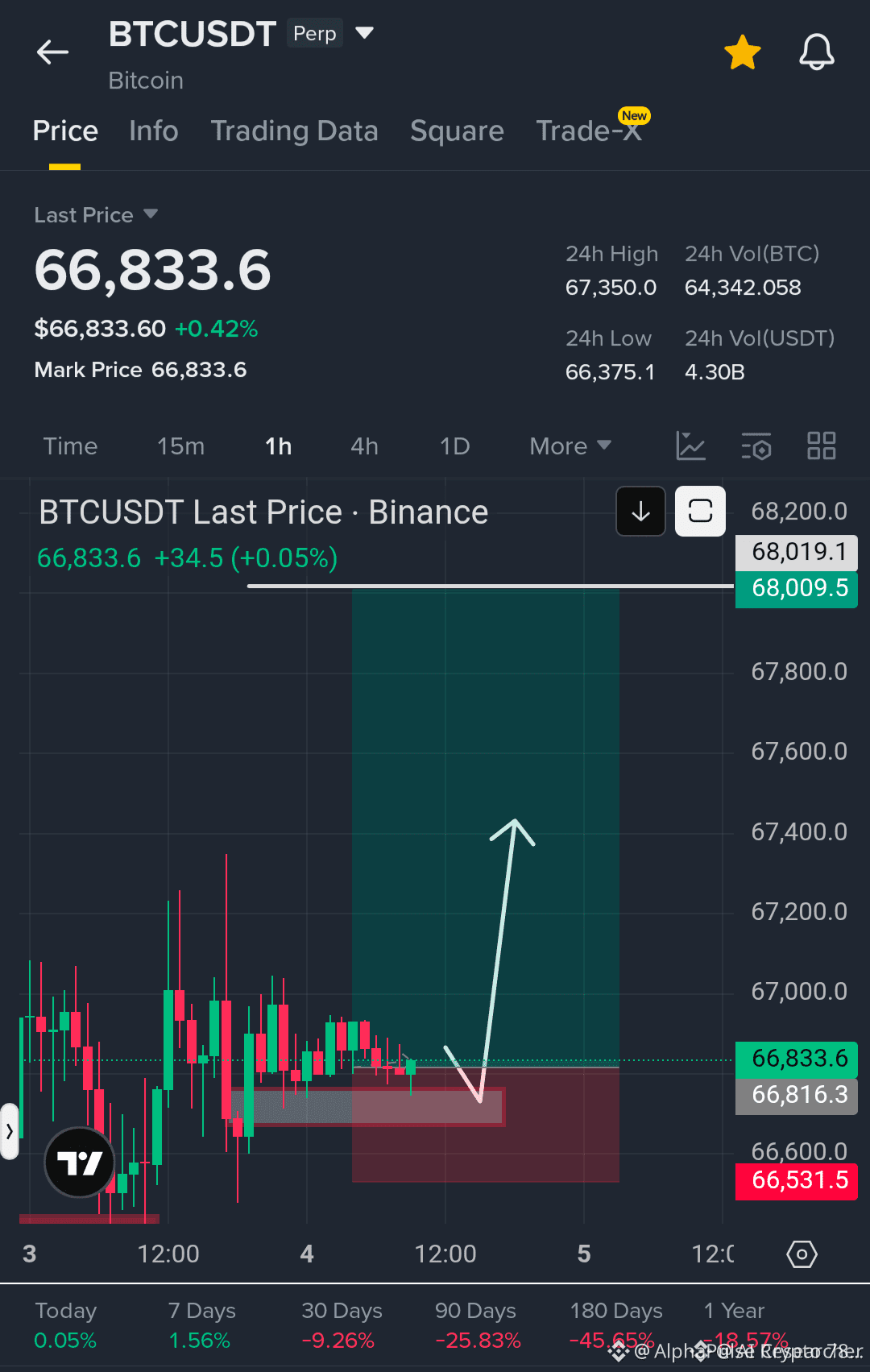
When will you buy $BTC ?
At $70K after the breakout?
At the top… like always?
Why do most people buy only when the move is already done?
Smart money doesn’t chase pumps
It enters when the market is silent 🔕 before the storm.
📈 I’m going LONG on $BTC from here:
🎯 Target: 68,000
🛑 Stop Loss: 64,200
#BTC走势分析
Trade Here 👇🏻
{spot}(BTCUSDT)
Don’t just sit and watch…
Take action before it’s too late. 👀💰
What are you waiting for, guys? 👀
When will you buy $BTC ?
At $70K after the breakout?
At the top… like always?
Why do most people buy only when the move is already done?
Smart money doesn’t chase pumps
It enters when the market is silent 🔕 before the storm.
📈 I’m going LONG on $BTC from here:
🎯 Target: 68,000
🛑 Stop Loss: 64,200
#BTC走势分析
Trade Here 👇🏻
Don’t just sit and watch…
Take action before it’s too late. 👀💰
When will you buy $BTC ?
At $70K after the breakout?
At the top… like always?
Why do most people buy only when the move is already done?
Smart money doesn’t chase pumps
It enters when the market is silent 🔕 before the storm.
📈 I’m going LONG on $BTC from here:
🎯 Target: 68,000
🛑 Stop Loss: 64,200
#BTC走势分析
Trade Here 👇🏻
Don’t just sit and watch…
Take action before it’s too late. 👀💰
11
·
--
Bullish
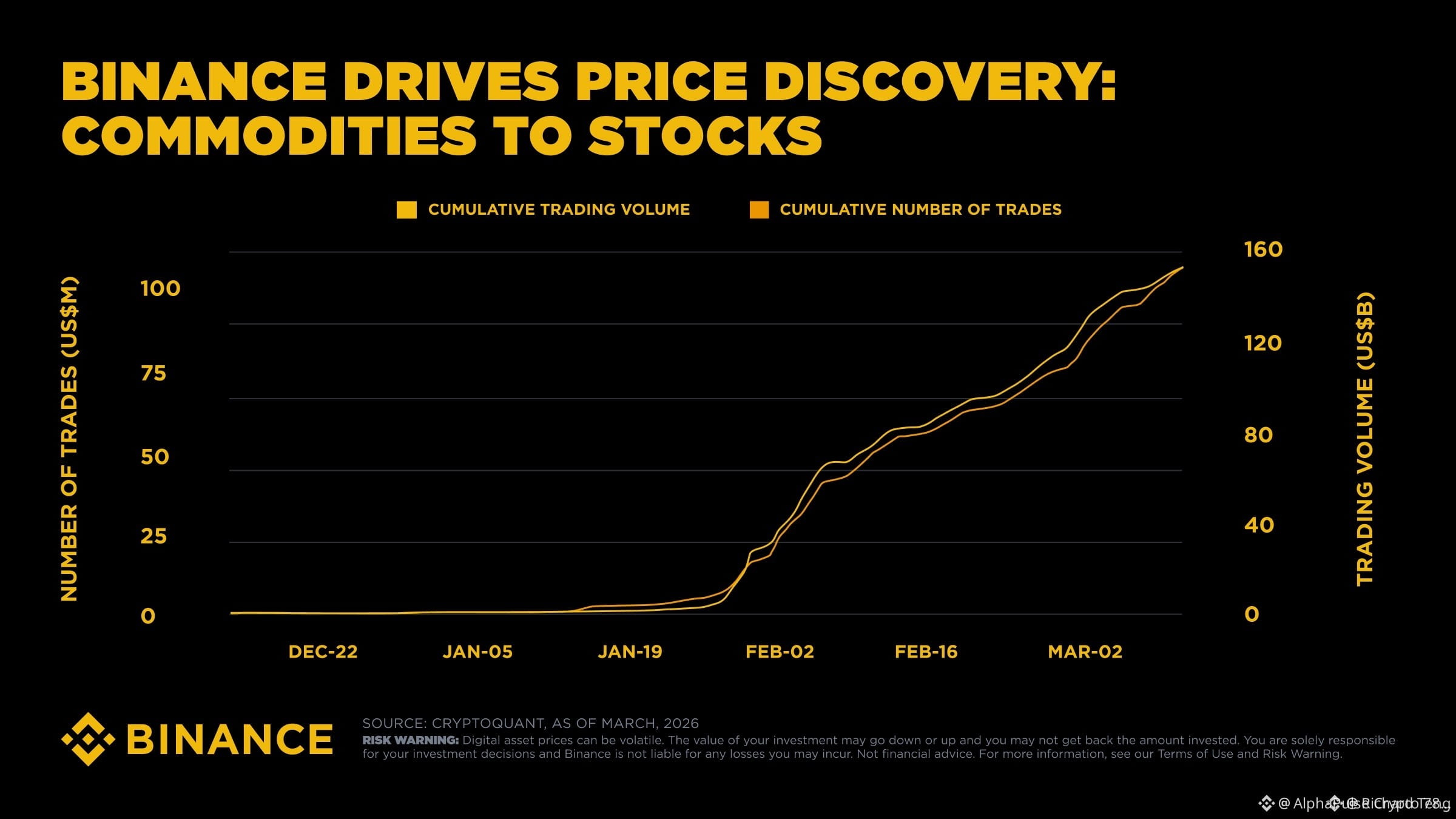
At Binance, gold and silver trade 24/7, alongside stocks like Tesla and global index ETFs. All in one place.
$153B in cumulative volume and 113M+ trades later, the demand for always-on traditional assets is clear.
At Binance, gold and silver trade 24/7, alongside stocks like Tesla and global index ETFs. All in one place.
$153B in cumulative volume and 113M+ trades later, the demand for always-on traditional assets is clear.
$153B in cumulative volume and 113M+ trades later, the demand for always-on traditional assets is clear.
116
·
--
Bullish
$PAXG $XAU $XAG
🟡 GOLD — READ THIS CAREFULLY
Zoom out.
Not days. Not weeks. Years.
In 2009, gold was around $1,096.
By 2012, it reached nearly $1,675.
Then… nothing.
From 2013 to 2018, gold moved sideways.
No hype. No headlines. No excitement.
Most people lost interest.
And that’s exactly when smart money starts paying attention.
In 2019, something shifted.
Gold began climbing again —
$1,517… then $1,898 in 2020.
It didn’t explode overnight.
It built pressure quietly.
While the crowd chased fast profits,
gold was positioning.
Then came the breakout.
2023 → above $2,000
2024 → shocked many past $2,600
2025 → surged beyond $4,300
That’s not random.
Moves like this don’t come from retail hype alone.
This is something bigger.
Central banks are increasing reserves.
Global debt is at record highs.
Currencies are being diluted.
Confidence in paper money is weakening.
Gold doesn’t move like this for no reason.
It moves like this when the system is under pressure.
At $2,000 — people said it was expensive.
At $3,000 — they laughed.
At $4,000 — they called it a bubble.
Now the conversation is changing.
Is $10,000 really impossible?
Or are we witnessing a long-term repricing in real time?
Gold isn’t suddenly “expensive.”
What’s changing is purchasing power.
Every cycle gives the same choice:
Prepare early and stay calm…
or wait — and react emotionally later.
History doesn’t reward panic.
{spot}(PAXGUSDT)
{spot}(XAUTUSDT)
{future}(XAGUSDT)
$PAXG $XAU $XAG
🟡 GOLD — READ THIS CAREFULLY
Zoom out.
Not days. Not weeks. Years.
In 2009, gold was around $1,096.
By 2012, it reached nearly $1,675.
Then… nothing.
From 2013 to 2018, gold moved sideways.
No hype. No headlines. No excitement.
Most people lost interest.
And that’s exactly when smart money starts paying attention.
In 2019, something shifted.
Gold began climbing again —
$1,517… then $1,898 in 2020.
It didn’t explode overnight.
It built pressure quietly.
While the crowd chased fast profits,
gold was positioning.
Then came the breakout.
2023 → above $2,000
2024 → shocked many past $2,600
2025 → surged beyond $4,300
That’s not random.
Moves like this don’t come from retail hype alone.
This is something bigger.
Central banks are increasing reserves.
Global debt is at record highs.
Currencies are being diluted.
Confidence in paper money is weakening.
Gold doesn’t move like this for no reason.
It moves like this when the system is under pressure.
At $2,000 — people said it was expensive.
At $3,000 — they laughed.
At $4,000 — they called it a bubble.
Now the conversation is changing.
Is $10,000 really impossible?
Or are we witnessing a long-term repricing in real time?
Gold isn’t suddenly “expensive.”
What’s changing is purchasing power.
Every cycle gives the same choice:
Prepare early and stay calm…
or wait — and react emotionally later.
History doesn’t reward panic.
🟡 GOLD — READ THIS CAREFULLY
Zoom out.
Not days. Not weeks. Years.
In 2009, gold was around $1,096.
By 2012, it reached nearly $1,675.
Then… nothing.
From 2013 to 2018, gold moved sideways.
No hype. No headlines. No excitement.
Most people lost interest.
And that’s exactly when smart money starts paying attention.
In 2019, something shifted.
Gold began climbing again —
$1,517… then $1,898 in 2020.
It didn’t explode overnight.
It built pressure quietly.
While the crowd chased fast profits,
gold was positioning.
Then came the breakout.
2023 → above $2,000
2024 → shocked many past $2,600
2025 → surged beyond $4,300
That’s not random.
Moves like this don’t come from retail hype alone.
This is something bigger.
Central banks are increasing reserves.
Global debt is at record highs.
Currencies are being diluted.
Confidence in paper money is weakening.
Gold doesn’t move like this for no reason.
It moves like this when the system is under pressure.
At $2,000 — people said it was expensive.
At $3,000 — they laughed.
At $4,000 — they called it a bubble.
Now the conversation is changing.
Is $10,000 really impossible?
Or are we witnessing a long-term repricing in real time?
Gold isn’t suddenly “expensive.”
What’s changing is purchasing power.
Every cycle gives the same choice:
Prepare early and stay calm…
or wait — and react emotionally later.
History doesn’t reward panic.

550
·
--
Attention traders,
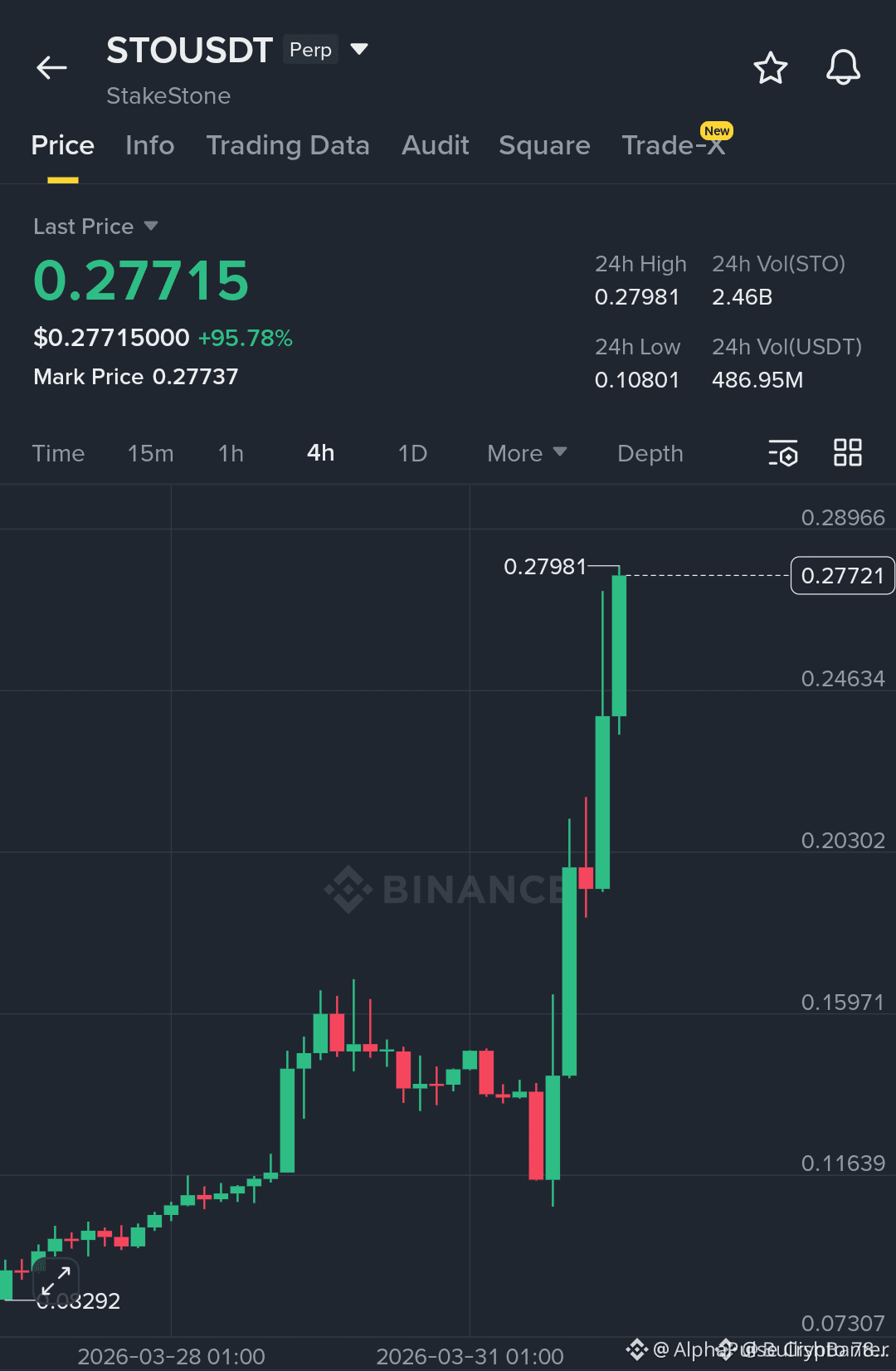
After a strong move in $STO , my focus is now fully on this pair.
Price has shown an aggressive rally, but structure is starting to look overextended with potential signs of weakness developing near the top. I am not entering immediately and waiting for a clean confirmation level before taking any position.
Once confirmation is seen, I will be looking for a short opportunity as a correction phase is likely to follow. This setup can offer a solid downside move if rejection continues from current levels.
If you want the exact entry before the move, comment “I WANT”. Otherwise, I will execute privately and share updates accordingly on $STO .
Click below to Take Trade
{spot}(STOUSDT)
#STORJ #cryptouniverseofficial
Attention traders,
After a strong move in $STO , my focus is now fully on this pair.
Price has shown an aggressive rally, but structure is starting to look overextended with potential signs of weakness developing near the top. I am not entering immediately and waiting for a clean confirmation level before taking any position.
Once confirmation is seen, I will be looking for a short opportunity as a correction phase is likely to follow. This setup can offer a solid downside move if rejection continues from current levels.
If you want the exact entry before the move, comment “I WANT”. Otherwise, I will execute privately and share updates accordingly on $STO .
Click below to Take Trade
#STORJ #cryptouniverseofficial
After a strong move in $STO , my focus is now fully on this pair.
Price has shown an aggressive rally, but structure is starting to look overextended with potential signs of weakness developing near the top. I am not entering immediately and waiting for a clean confirmation level before taking any position.
Once confirmation is seen, I will be looking for a short opportunity as a correction phase is likely to follow. This setup can offer a solid downside move if rejection continues from current levels.
If you want the exact entry before the move, comment “I WANT”. Otherwise, I will execute privately and share updates accordingly on $STO .
Click below to Take Trade
#STORJ #cryptouniverseofficial
269
·
--
Bullish
$BTC market update (as of 09:51 UTC, Apr 1, 2026)
Price: $68,564.15
24h change: +3.23%
What this suggests (neutral take)
The 24h gain indicates short-term bullish momentum and active buying interest.
Expect higher volatility than usual around key levels as traders react to breakouts/pullbacks.
Quick checklist (if you’re trading)
If you’re already long: consider setting/adjusting a stop-loss and planning partial take-profit levels.
**If you’re looking to
#BTC #BitcoinPrices #BTC走势分析
Click Here To Trade 👇
{spot}(BTCUSDT)
$BTC market update (as of 09:51 UTC, Apr 1, 2026)
Price: $68,564.15
24h change: +3.23%
What this suggests (neutral take)
The 24h gain indicates short-term bullish momentum and active buying interest.
Expect higher volatility than usual around key levels as traders react to breakouts/pullbacks.
Quick checklist (if you’re trading)
If you’re already long: consider setting/adjusting a stop-loss and planning partial take-profit levels.
**If you’re looking to
#BTC #BitcoinPrices #BTC走势分析
Click Here To Trade 👇
Price: $68,564.15
24h change: +3.23%
What this suggests (neutral take)
The 24h gain indicates short-term bullish momentum and active buying interest.
Expect higher volatility than usual around key levels as traders react to breakouts/pullbacks.
Quick checklist (if you’re trading)
If you’re already long: consider setting/adjusting a stop-loss and planning partial take-profit levels.
**If you’re looking to
#BTC #BitcoinPrices #BTC走势分析
Click Here To Trade 👇
20
·
--
🚨 MARKET ALERT: FED EMERGENCY ANNOUNCEMENT TOMORROW!🚨 MARKET ALERT: FED EMERGENCY ANNOUNCEMENT TOMORROW!
🇺🇸 Fed Chair Jerome Powell is set to speak at 10:30 AM ET in what’s being called an emergency announcement. This isn’t a routine update—traders and analysts are bracing for major market-moving news.
📉 Markets are already jittery, and any sign of aggressive action could trigger massive volatility in stocks, crypto, and bonds.
⚡ Experts warn: “If Powell drops bad news, expect a sharp sell-off. This could be historic.”
💡 What to do: Stay alert, avoid knee-jerk moves, and keep an eye on your positions. Big shifts could happen within hours.
🔥 This could be the story everyone talks about tomorrow. Don’t scroll past it.
$BIFI
{spot}(BIFIUSDT)
106
+6.74%
$OG
{future}(OGUSDT)
Perp
2.711
+2.88%
$SANTOS
{future}(SANTOSUSDT)
Perp
1.14
+2.42%
🚨 MARKET ALERT: FED EMERGENCY ANNOUNCEMENT TOMORROW!
🚨 MARKET ALERT: FED EMERGENCY ANNOUNCEMENT TOMORROW!
🇺🇸 Fed Chair Jerome Powell is set to speak at 10:30 AM ET in what’s being called an emergency announcement. This isn’t a routine update—traders and analysts are bracing for major market-moving news.
📉 Markets are already jittery, and any sign of aggressive action could trigger massive volatility in stocks, crypto, and bonds.
⚡ Experts warn: “If Powell drops bad news, expect a sharp sell-off. This could be historic.”
💡 What to do: Stay alert, avoid knee-jerk moves, and keep an eye on your positions. Big shifts could happen within hours.
🔥 This could be the story everyone talks about tomorrow. Don’t scroll past it.
$BIFI
106
+6.74%
$OG
Perp
2.711
+2.88%
$SANTOS
Perp
1.14
+2.42%
🇺🇸 Fed Chair Jerome Powell is set to speak at 10:30 AM ET in what’s being called an emergency announcement. This isn’t a routine update—traders and analysts are bracing for major market-moving news.
📉 Markets are already jittery, and any sign of aggressive action could trigger massive volatility in stocks, crypto, and bonds.
⚡ Experts warn: “If Powell drops bad news, expect a sharp sell-off. This could be historic.”
💡 What to do: Stay alert, avoid knee-jerk moves, and keep an eye on your positions. Big shifts could happen within hours.
🔥 This could be the story everyone talks about tomorrow. Don’t scroll past it.
$BIFI
106
+6.74%
$OG
Perp
2.711
+2.88%
$SANTOS
Perp
1.14
+2.42%
2
·
--
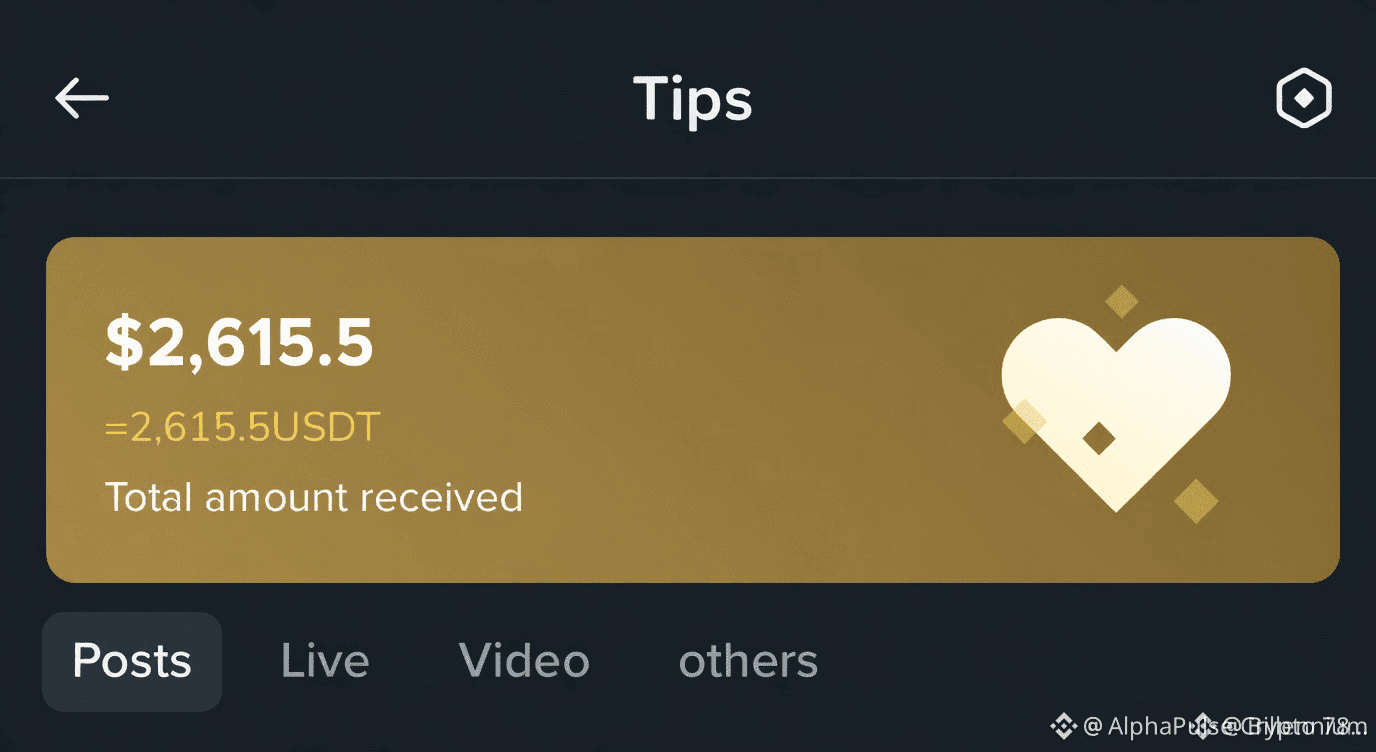
Someone just tip me $400 😳💰
That brings my total tips to $2,600 🔥
Looks like he made around $5,400 from my $TAO signal 📈 But honestly… this money should go to those who are in need and want to start trading 🤍🚀
Buy $ZEC long | $RIVER long
{future}(ONDOUSDT)
Someone just tip me $400 😳💰
That brings my total tips to $2,600 🔥
Looks like he made around $5,400 from my $TAO signal 📈 But honestly… this money should go to those who are in need and want to start trading 🤍🚀
Buy $ZEC long | $RIVER long
That brings my total tips to $2,600 🔥
Looks like he made around $5,400 from my $TAO signal 📈 But honestly… this money should go to those who are in need and want to start trading 🤍🚀
Buy $ZEC long | $RIVER long
8
·
--
Whale delta just printed its most aggressive sell reading since October 2024.That’s not noise. That’s size.
On the surface, structure still looks like it’s trying to hold. Nothing fully broken yet. Still feels stable if you just glance at it.
But underneath, it’s a different story.
Larger players are leaning into this level, selling into it harder than anything we’ve seen in the past 18 months.
That kind of pressure doesn’t show up randomly.
Doesn’t mean price has to collapse right away. Markets don’t move on command like that.
But it does shift the tone.
This is no longer passive selling. This is active distribution pressing directly into support.
When a level gets tested like this by size, it rarely holds forever.
I’m watching how price reacts here.
Either it absorbs
or it gives way quickly.
#BTC #nomaeffect #SaiREN
$BTC
{spot}(BTCUSDT)
$SIREN
{future}(SIRENUSDT)
$NOM
NOMUSDT
{spot}(NOMUSDT)
Whale delta just printed its most aggressive sell reading since October 2024.
That’s not noise. That’s size.
On the surface, structure still looks like it’s trying to hold. Nothing fully broken yet. Still feels stable if you just glance at it.
But underneath, it’s a different story.
Larger players are leaning into this level, selling into it harder than anything we’ve seen in the past 18 months.
That kind of pressure doesn’t show up randomly.
Doesn’t mean price has to collapse right away. Markets don’t move on command like that.
But it does shift the tone.
This is no longer passive selling. This is active distribution pressing directly into support.
When a level gets tested like this by size, it rarely holds forever.
I’m watching how price reacts here.
Either it absorbs
or it gives way quickly.
#BTC #nomaeffect #SaiREN
$BTC
$SIREN
$NOM
NOMUSDT
On the surface, structure still looks like it’s trying to hold. Nothing fully broken yet. Still feels stable if you just glance at it.
But underneath, it’s a different story.
Larger players are leaning into this level, selling into it harder than anything we’ve seen in the past 18 months.
That kind of pressure doesn’t show up randomly.
Doesn’t mean price has to collapse right away. Markets don’t move on command like that.
But it does shift the tone.
This is no longer passive selling. This is active distribution pressing directly into support.
When a level gets tested like this by size, it rarely holds forever.
I’m watching how price reacts here.
Either it absorbs
or it gives way quickly.
#BTC #nomaeffect #SaiREN
$BTC
$SIREN
$NOM
NOMUSDT
7
19
·
--
Bearish
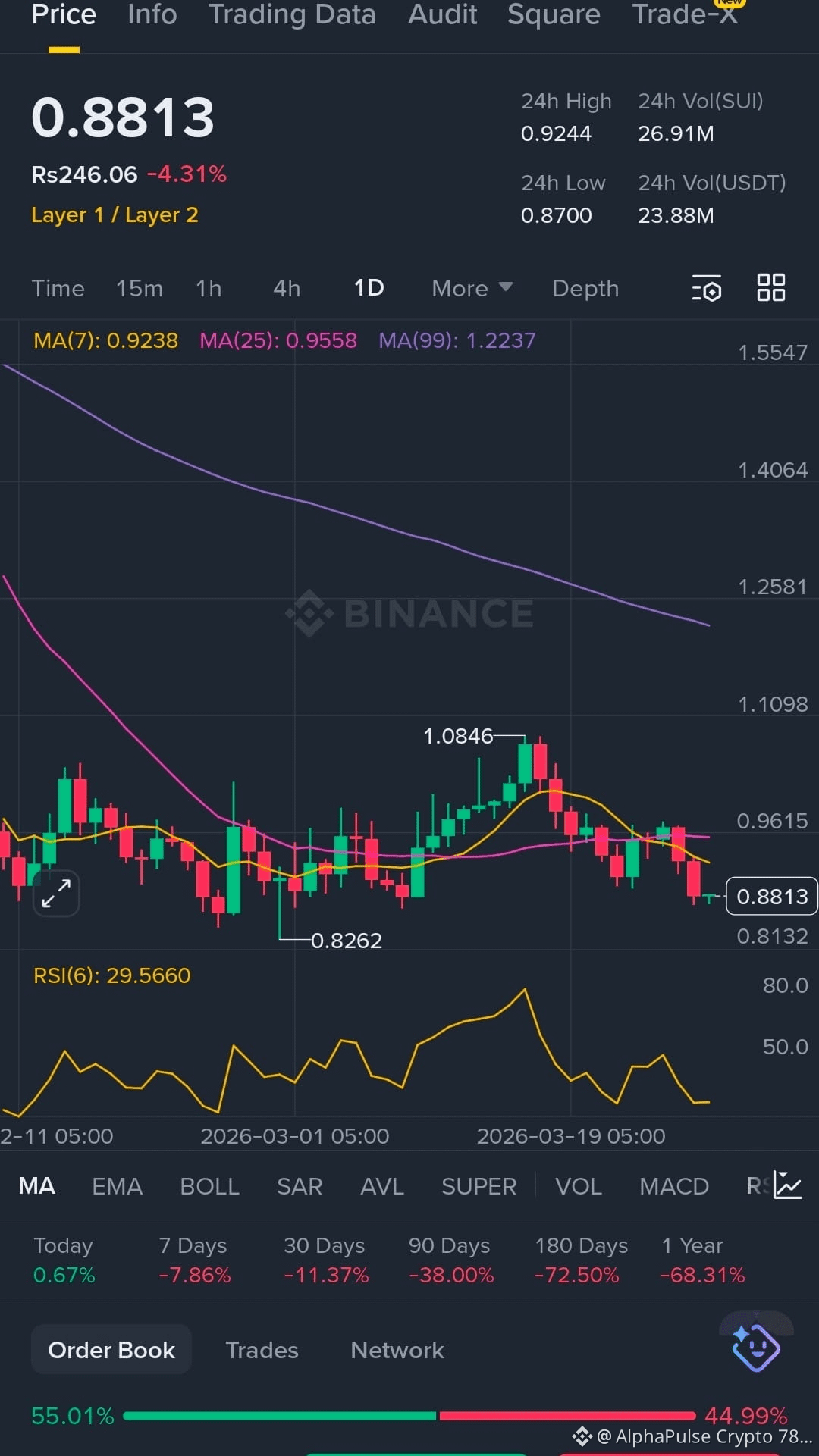
🚀$SUI Trade Setup – Breakout Coming?
SUI
0.8645
-1.58%
✅Entry: $0.85 – $0.90
🎯Target: $1.05 / $1.15 / $1.20
Stop Loss: $0.80
$SUI is trading near strong support and showing recovery signals. Volume is increasing and price is holding key levels. If SUI breaks $1.00 resistance, we can see a strong move upward.
❤️Follow for more technical trade setups and viral coins.❤️
#sui $SUI
{future}(SUIUSDT)
🚀$SUI Trade Setup – Breakout Coming?
SUI
0.8645
-1.58%
✅Entry: $0.85 – $0.90
🎯Target: $1.05 / $1.15 / $1.20
Stop Loss: $0.80
$SUI is trading near strong support and showing recovery signals. Volume is increasing and price is holding key levels. If SUI breaks $1.00 resistance, we can see a strong move upward.
❤️Follow for more technical trade setups and viral coins.❤️
#sui $SUI
SUI
0.8645
-1.58%
✅Entry: $0.85 – $0.90
🎯Target: $1.05 / $1.15 / $1.20
Stop Loss: $0.80
$SUI is trading near strong support and showing recovery signals. Volume is increasing and price is holding key levels. If SUI breaks $1.00 resistance, we can see a strong move upward.
❤️Follow for more technical trade setups and viral coins.❤️
#sui $SUI
9
9
·
--
When Truth Needs Structure, Sign Protocol Starts Feeling Bigger Than a ProtocolThe more I think about Sign Protocol, the harder it becomes to see it as just another system for recording information. At first, schemas and attestations sound like technical pieces doing technical work. A schema sets the structure, and an attestation fills that structure with a signed claim. Simple enough. But the deeper I sit with that idea, the more I feel like something much bigger is happening underneath. This is not only about storing facts in a cleaner way. It is about shaping how facts become recognizable, portable, and verifiable across digital systems. That changes the conversation completely. It turns data into something with context, intention, and proof attached to it. And that is where Sign starts to feel less like infrastructure in the background and more like a framework for how trust itself can move.
What makes schemas so powerful is that they do more than organize information. They quietly define what kind of information can exist inside the system in the first place. They decide the format, the rules, and the logic of what counts as valid. Then attestations bring those rules to life by creating signed records that follow the structure exactly. That combination matters more than most people realize. A credential is no longer just text in a database. An approval is no longer just a checkbox living on one company’s server. A distribution record is no longer just a number on a dashboard. These things become standardized proofs that machines can read, systems can verify, and people can carry across platforms without losing meaning. That shift may sound subtle on paper, but in practice it changes everything. It means trust is no longer stuck where it was first issued.
That is the part I keep coming back to. In most traditional systems, data has no real independence. You trust it because it comes from a platform you are expected to trust. The institution holds the record, controls the logic, and decides how much access or verification you get. The user is usually left depending on the gatekeeper. Sign introduces a very different model. It pushes verification closer to the data itself. The proof does not need to stay trapped inside one website, one company, or one authority. It becomes something that can stand on its own, something that travels with the record rather than being locked behind the platform that first created it. To me, that is where the real weight of the protocol begins to show. It is not just making systems more efficient. It is trying to reduce the amount of blind trust people have to place in intermediaries every single time they need something verified.
At the same time, this is exactly where the deeper tension appears. Because once you understand that schemas define what can be expressed and attestations define what gets recognized, you realize that structure itself is never neutral. The person or group designing the schema is doing more than formatting fields. They are making choices about what matters, what is acceptable, what qualifies as proof, and what falls outside the boundaries of recognition. That influence is easy to miss because it sits quietly beneath the surface, but it is real. If a system becomes widely adopted, its schemas can start to shape not just data but behavior. They can influence how identity is understood, how ownership is interpreted, and how authority is recorded across different contexts. So while the technology feels open and interoperable, there is still a serious question hiding underneath it: who decides the structure that everyone else eventually has to follow?
That is why Sign Protocol feels important in a way that goes beyond product features or blockchain vocabulary. If it grows into a widely accepted standard, then it is not only enabling attestations. It is helping create a shared language for digital trust across institutions, communities, and borders. That could be incredibly powerful. It could reduce friction, improve coordination, and make proofs reusable in ways that current systems still struggle to handle. But global standards are never purely technical. They are shaped through negotiation, influence, and power. The strongest voices often define the systems that everyone else later calls neutral. So the real challenge is not only building better infrastructure. It is making sure that the logic behind that infrastructure remains open, fair, and adaptable enough that truth does not quietly become whatever the most powerful participants say it is.
That is probably why I find myself thinking about Sign Protocol in a more serious way than I expected. What looks simple on the surface starts feeling philosophical the moment you trace its implications far enough. This is not just about issuing records more efficiently. It is about turning trust into something structured, machine-readable, and transferable without stripping it of meaning. That is a bold idea. And it is also a fragile one, because the closer you get to formalizing truth inside systems, the more important it becomes to ask who is designing the rules behind that truth. Sign may be building tools for a more interoperable future, but the real weight of that future will depend on whether the power to define proof is shared as widely as the proof itself.
#SignDigitalSovereignInfra $SIGN
{spot}(SIGNUSDT)
When Truth Needs Structure, Sign Protocol Starts Feeling Bigger Than a Protocol
The more I think about Sign Protocol, the harder it becomes to see it as just another system for recording information. At first, schemas and attestations sound like technical pieces doing technical work. A schema sets the structure, and an attestation fills that structure with a signed claim. Simple enough. But the deeper I sit with that idea, the more I feel like something much bigger is happening underneath. This is not only about storing facts in a cleaner way. It is about shaping how facts become recognizable, portable, and verifiable across digital systems. That changes the conversation completely. It turns data into something with context, intention, and proof attached to it. And that is where Sign starts to feel less like infrastructure in the background and more like a framework for how trust itself can move.
What makes schemas so powerful is that they do more than organize information. They quietly define what kind of information can exist inside the system in the first place. They decide the format, the rules, and the logic of what counts as valid. Then attestations bring those rules to life by creating signed records that follow the structure exactly. That combination matters more than most people realize. A credential is no longer just text in a database. An approval is no longer just a checkbox living on one company’s server. A distribution record is no longer just a number on a dashboard. These things become standardized proofs that machines can read, systems can verify, and people can carry across platforms without losing meaning. That shift may sound subtle on paper, but in practice it changes everything. It means trust is no longer stuck where it was first issued.
That is the part I keep coming back to. In most traditional systems, data has no real independence. You trust it because it comes from a platform you are expected to trust. The institution holds the record, controls the logic, and decides how much access or verification you get. The user is usually left depending on the gatekeeper. Sign introduces a very different model. It pushes verification closer to the data itself. The proof does not need to stay trapped inside one website, one company, or one authority. It becomes something that can stand on its own, something that travels with the record rather than being locked behind the platform that first created it. To me, that is where the real weight of the protocol begins to show. It is not just making systems more efficient. It is trying to reduce the amount of blind trust people have to place in intermediaries every single time they need something verified.
At the same time, this is exactly where the deeper tension appears. Because once you understand that schemas define what can be expressed and attestations define what gets recognized, you realize that structure itself is never neutral. The person or group designing the schema is doing more than formatting fields. They are making choices about what matters, what is acceptable, what qualifies as proof, and what falls outside the boundaries of recognition. That influence is easy to miss because it sits quietly beneath the surface, but it is real. If a system becomes widely adopted, its schemas can start to shape not just data but behavior. They can influence how identity is understood, how ownership is interpreted, and how authority is recorded across different contexts. So while the technology feels open and interoperable, there is still a serious question hiding underneath it: who decides the structure that everyone else eventually has to follow?
That is why Sign Protocol feels important in a way that goes beyond product features or blockchain vocabulary. If it grows into a widely accepted standard, then it is not only enabling attestations. It is helping create a shared language for digital trust across institutions, communities, and borders. That could be incredibly powerful. It could reduce friction, improve coordination, and make proofs reusable in ways that current systems still struggle to handle. But global standards are never purely technical. They are shaped through negotiation, influence, and power. The strongest voices often define the systems that everyone else later calls neutral. So the real challenge is not only building better infrastructure. It is making sure that the logic behind that infrastructure remains open, fair, and adaptable enough that truth does not quietly become whatever the most powerful participants say it is.
That is probably why I find myself thinking about Sign Protocol in a more serious way than I expected. What looks simple on the surface starts feeling philosophical the moment you trace its implications far enough. This is not just about issuing records more efficiently. It is about turning trust into something structured, machine-readable, and transferable without stripping it of meaning. That is a bold idea. And it is also a fragile one, because the closer you get to formalizing truth inside systems, the more important it becomes to ask who is designing the rules behind that truth. Sign may be building tools for a more interoperable future, but the real weight of that future will depend on whether the power to define proof is shared as widely as the proof itself.
#SignDigitalSovereignInfra $SIGN
What makes schemas so powerful is that they do more than organize information. They quietly define what kind of information can exist inside the system in the first place. They decide the format, the rules, and the logic of what counts as valid. Then attestations bring those rules to life by creating signed records that follow the structure exactly. That combination matters more than most people realize. A credential is no longer just text in a database. An approval is no longer just a checkbox living on one company’s server. A distribution record is no longer just a number on a dashboard. These things become standardized proofs that machines can read, systems can verify, and people can carry across platforms without losing meaning. That shift may sound subtle on paper, but in practice it changes everything. It means trust is no longer stuck where it was first issued.
That is the part I keep coming back to. In most traditional systems, data has no real independence. You trust it because it comes from a platform you are expected to trust. The institution holds the record, controls the logic, and decides how much access or verification you get. The user is usually left depending on the gatekeeper. Sign introduces a very different model. It pushes verification closer to the data itself. The proof does not need to stay trapped inside one website, one company, or one authority. It becomes something that can stand on its own, something that travels with the record rather than being locked behind the platform that first created it. To me, that is where the real weight of the protocol begins to show. It is not just making systems more efficient. It is trying to reduce the amount of blind trust people have to place in intermediaries every single time they need something verified.
At the same time, this is exactly where the deeper tension appears. Because once you understand that schemas define what can be expressed and attestations define what gets recognized, you realize that structure itself is never neutral. The person or group designing the schema is doing more than formatting fields. They are making choices about what matters, what is acceptable, what qualifies as proof, and what falls outside the boundaries of recognition. That influence is easy to miss because it sits quietly beneath the surface, but it is real. If a system becomes widely adopted, its schemas can start to shape not just data but behavior. They can influence how identity is understood, how ownership is interpreted, and how authority is recorded across different contexts. So while the technology feels open and interoperable, there is still a serious question hiding underneath it: who decides the structure that everyone else eventually has to follow?
That is why Sign Protocol feels important in a way that goes beyond product features or blockchain vocabulary. If it grows into a widely accepted standard, then it is not only enabling attestations. It is helping create a shared language for digital trust across institutions, communities, and borders. That could be incredibly powerful. It could reduce friction, improve coordination, and make proofs reusable in ways that current systems still struggle to handle. But global standards are never purely technical. They are shaped through negotiation, influence, and power. The strongest voices often define the systems that everyone else later calls neutral. So the real challenge is not only building better infrastructure. It is making sure that the logic behind that infrastructure remains open, fair, and adaptable enough that truth does not quietly become whatever the most powerful participants say it is.
That is probably why I find myself thinking about Sign Protocol in a more serious way than I expected. What looks simple on the surface starts feeling philosophical the moment you trace its implications far enough. This is not just about issuing records more efficiently. It is about turning trust into something structured, machine-readable, and transferable without stripping it of meaning. That is a bold idea. And it is also a fragile one, because the closer you get to formalizing truth inside systems, the more important it becomes to ask who is designing the rules behind that truth. Sign may be building tools for a more interoperable future, but the real weight of that future will depend on whether the power to define proof is shared as widely as the proof itself.
#SignDigitalSovereignInfra $SIGN
9
9
Log in to explore more content
Join global crypto users on Binance Square
⚡️ Get latest and useful information about crypto.
💬 Trusted by the world’s largest crypto exchange.
👍 Discover real insights from verified creators.
Email / Phone number