
BlockSavvy 1
93 Posts

BlockSavvy 1
Report
Block User
Crypto research & insights for businesses, investors, and innovators. Focused on trends, project evaluation, and strategic guidance.
0 Following
2 Followers
2 Liked
Posts
·
--
Wall Street Is Putting Treasury Bonds Onchain. Again. BNY and Citadel Securities are testing tokenized U.S. Treasuries, and this time the interesting part isn't the token itself. It's what happens after someone buys it. Traditionally, moving bonds between trading, settlement, and financing systems involves multiple steps. Putting them onchain could make it easier to move collateral between institutions without all those handoffs. And yes, this is another example of traditional finance experimenting with blockchain infrastructure rather than buying $BTC or $ETH . The big question is whether these systems actually become faster and cheaper in practice. Because tokenizing an asset is relatively easy. Making the entire financial system around it work differently? That's the hard part. #BTC Price Analysis# #Bitcoin Price Prediction: What is Bitcoins next move?# #ETHBlockchain #ETHFoundation
Wall Street Is Putting Treasury Bonds Onchain. Again. BNY and Citadel Securities are testing tokenized U.S. Treasuries, and this time the interesting part isn't the token itself. It's what happens after someone buys it. Traditionally, moving bonds between trading, settlement, and financing systems involves multiple steps. Putting them onchain could make it easier to move collateral between institutions without all those handoffs. And yes, this is another example of traditional finance experimenting with blockchain infrastructure rather than buying $BTC or $ETH . The big question is whether these systems actually become faster and cheaper in practice. Because tokenizing an asset is relatively easy. Making the entire financial system around it work differently? That's the hard part. #BTC Price Analysis# #Bitcoin Price Prediction: What is Bitcoins next move?# #ETHBlockchain #ETHFoundation

63
·
--
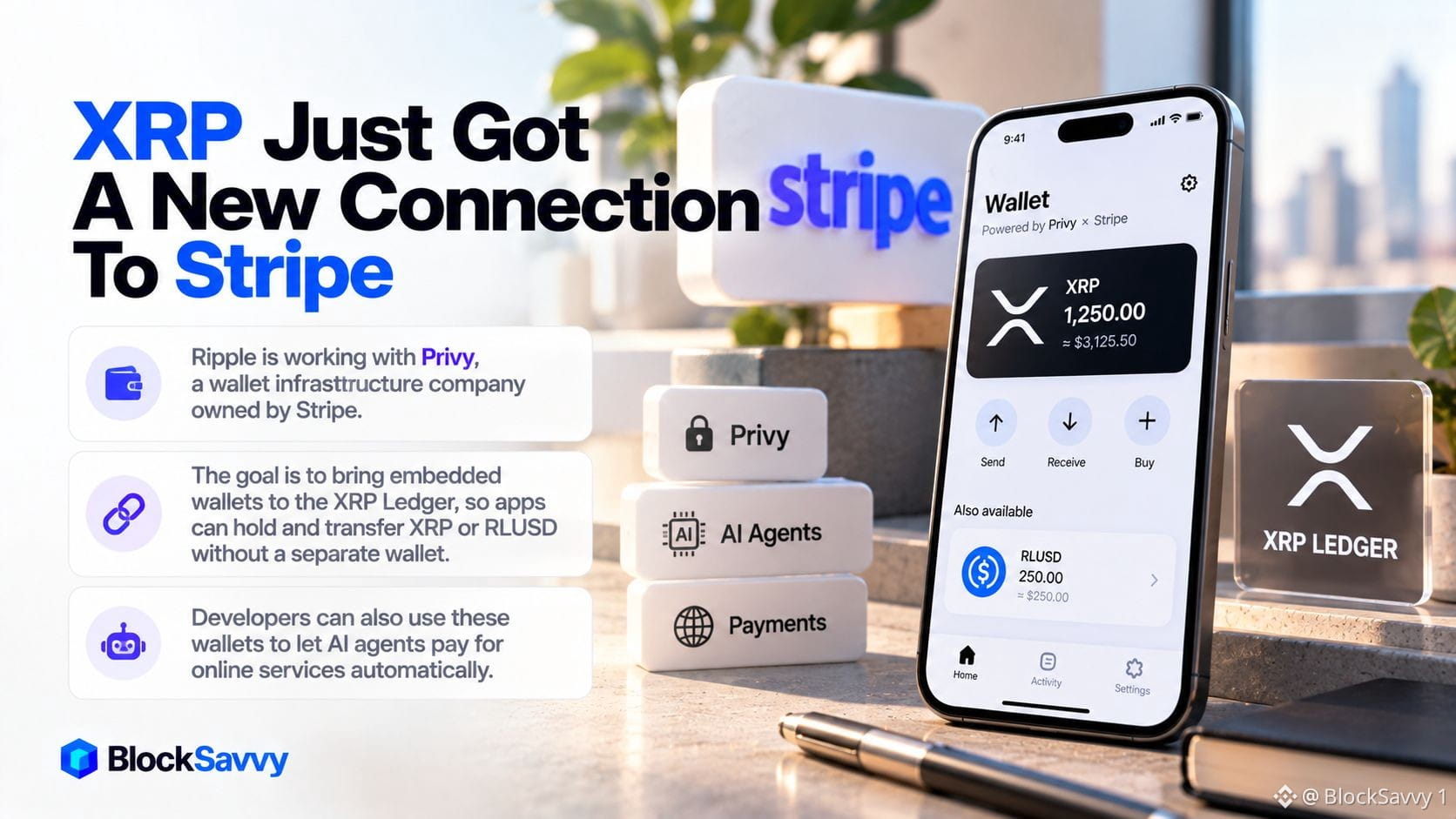
XRP Just Got A New Connection To Stripe 👀 Here's a partnership that could actually make crypto payments easier. Ripple is working with Privy, a wallet infrastructure company owned by Stripe, to bring embedded wallets to the XRP Ledger. Basically, apps could let people hold and transfer $XRP or RLUSD without downloading a separate crypto wallet. There's also an interesting AI angle. Developers could use these wallets to let AI agents pay for online services automatically. Of course, making wallets easier to create doesn't guarantee anyone will use them. But removing the annoying setup process? That's a pretty good place to start. Would you use crypto more often if you didn't have to think about wallets at all? #Macro Insights# #Altcoin Season#
XRP Just Got A New Connection To Stripe 👀 Here's a partnership that could actually make crypto payments easier. Ripple is working with Privy, a wallet infrastructure company owned by Stripe, to bring embedded wallets to the XRP Ledger. Basically, apps could let people hold and transfer $XRP or RLUSD without downloading a separate crypto wallet. There's also an interesting AI angle. Developers could use these wallets to let AI agents pay for online services automatically. Of course, making wallets easier to create doesn't guarantee anyone will use them. But removing the annoying setup process? That's a pretty good place to start. Would you use crypto more often if you didn't have to think about wallets at all? #Macro Insights# #Altcoin Season#
83
·
--
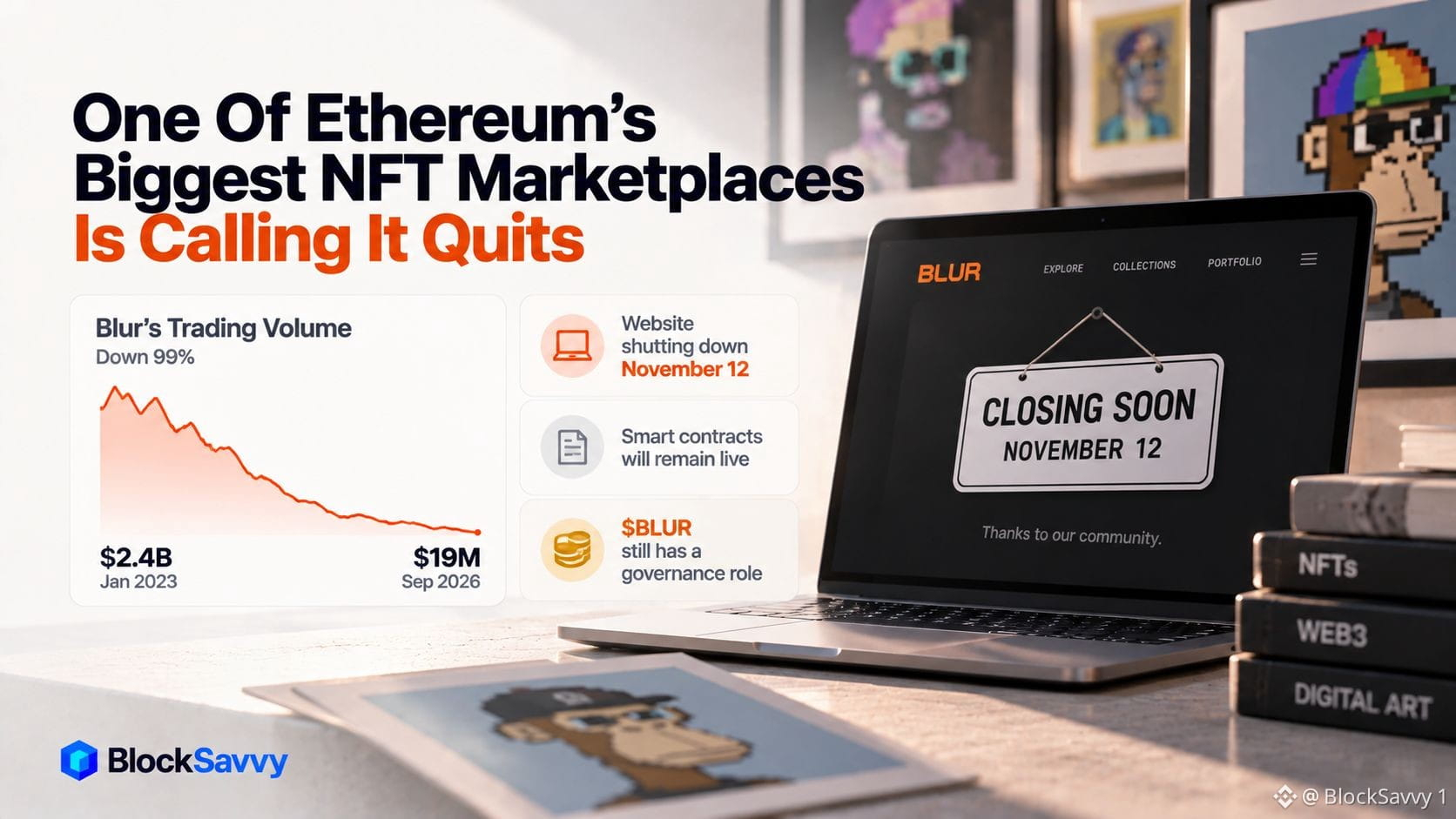
One Of Ethereum’s Biggest NFT Marketplaces Is Calling It Quits Remember when NFT marketplaces were fighting over trading volume and offering rewards just to attract users? Well, Blur is shutting down its website on November 12 after trading volume reportedly collapsed by 99%. The underlying smart contracts will remain live, and $BLUR will still have a governance role. So technically, the protocol isn't disappearing. But losing the main interface is a pretty big deal for anyone actually using it. It's a good reminder that a protocol can survive onchain long after its business model stops working. Anyone still actively trading NFTs these days? #Macro Insights# #Altcoin Season#
One Of Ethereum’s Biggest NFT Marketplaces Is Calling It Quits Remember when NFT marketplaces were fighting over trading volume and offering rewards just to attract users? Well, Blur is shutting down its website on November 12 after trading volume reportedly collapsed by 99%. The underlying smart contracts will remain live, and $BLUR will still have a governance role. So technically, the protocol isn't disappearing. But losing the main interface is a pretty big deal for anyone actually using it. It's a good reminder that a protocol can survive onchain long after its business model stops working. Anyone still actively trading NFTs these days? #Macro Insights# #Altcoin Season#
73
·
--
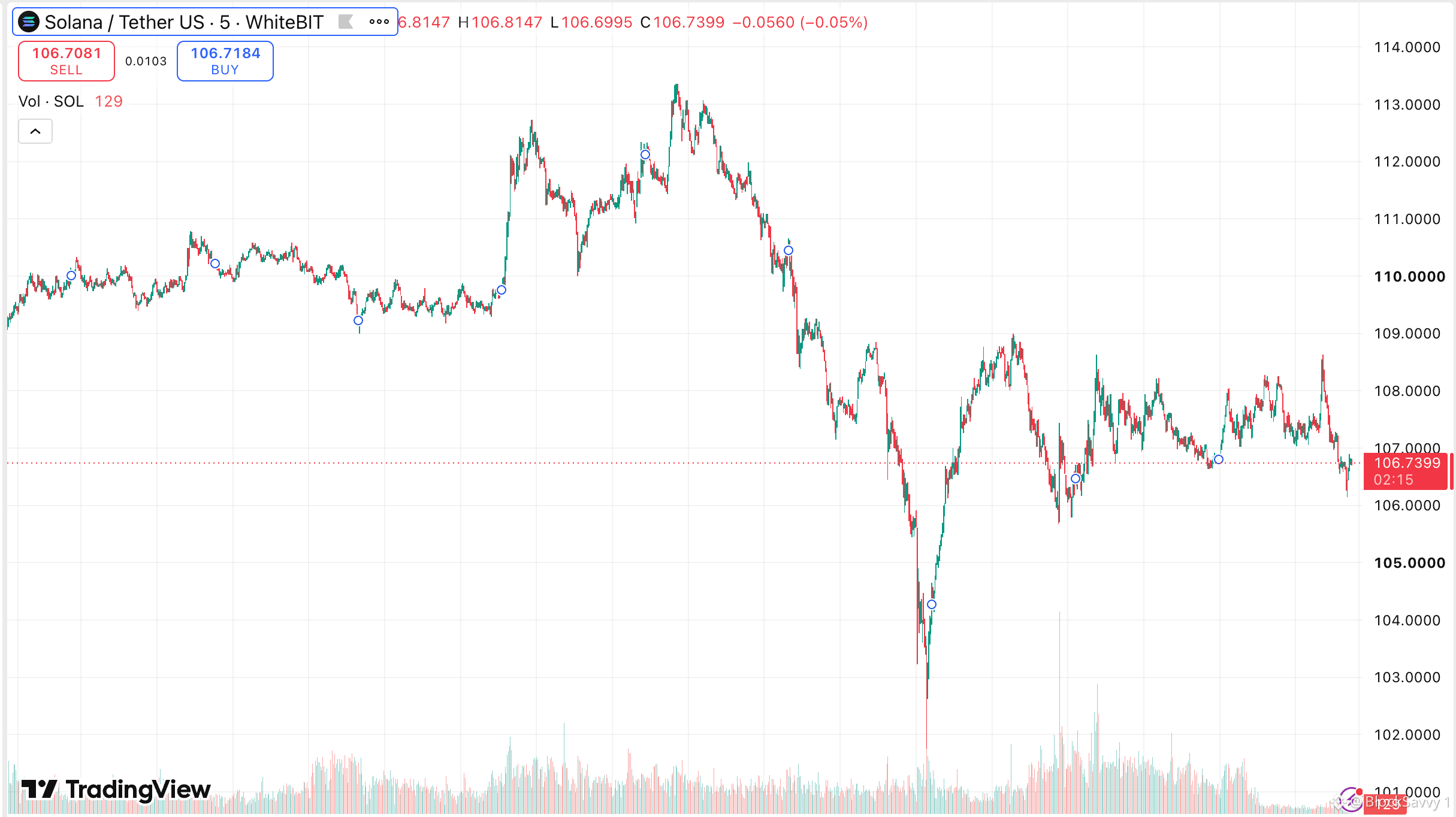
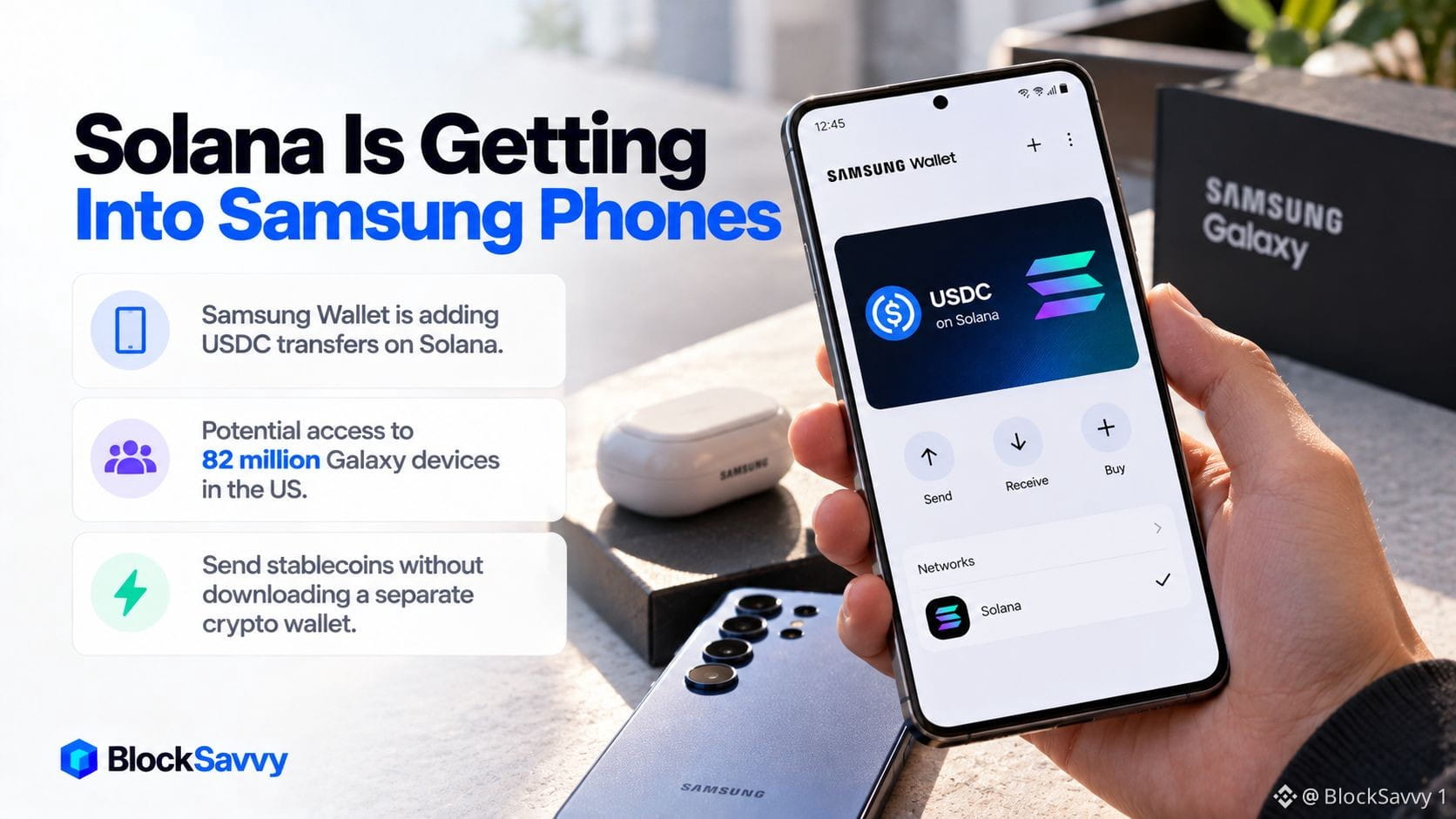
Solana Is Getting Into Samsung Phones 📱 This is actually a pretty big distribution move for $SOL . Samsung Wallet is adding USDC transfers on Solana, potentially bringing stablecoin payments to 82 million Galaxy devices in the US later this month. And here's what makes it interesting: people won't necessarily need to download a separate crypto wallet just to send digital dollars. That's been one of crypto's biggest problems for years. The technology works, but getting regular people to actually use it is another story. Of course, 82 million compatible devices doesn't mean 82 million active users. Still, getting stablecoins into an app people already have on their phones seems a lot more practical than launching another wallet and hoping everyone downloads it. Would you actually use Samsung Wallet for crypto payments? #Macro Insights# #Altcoin Season#
Solana Is Getting Into Samsung Phones 📱 This is actually a pretty big distribution move for $SOL . Samsung Wallet is adding USDC transfers on Solana, potentially bringing stablecoin payments to 82 million Galaxy devices in the US later this month. And here's what makes it interesting: people won't necessarily need to download a separate crypto wallet just to send digital dollars. That's been one of crypto's biggest problems for years. The technology works, but getting regular people to actually use it is another story. Of course, 82 million compatible devices doesn't mean 82 million active users. Still, getting stablecoins into an app people already have on their phones seems a lot more practical than launching another wallet and hoping everyone downloads it. Would you actually use Samsung Wallet for crypto payments? #Macro Insights# #Altcoin Season#
63
·
--
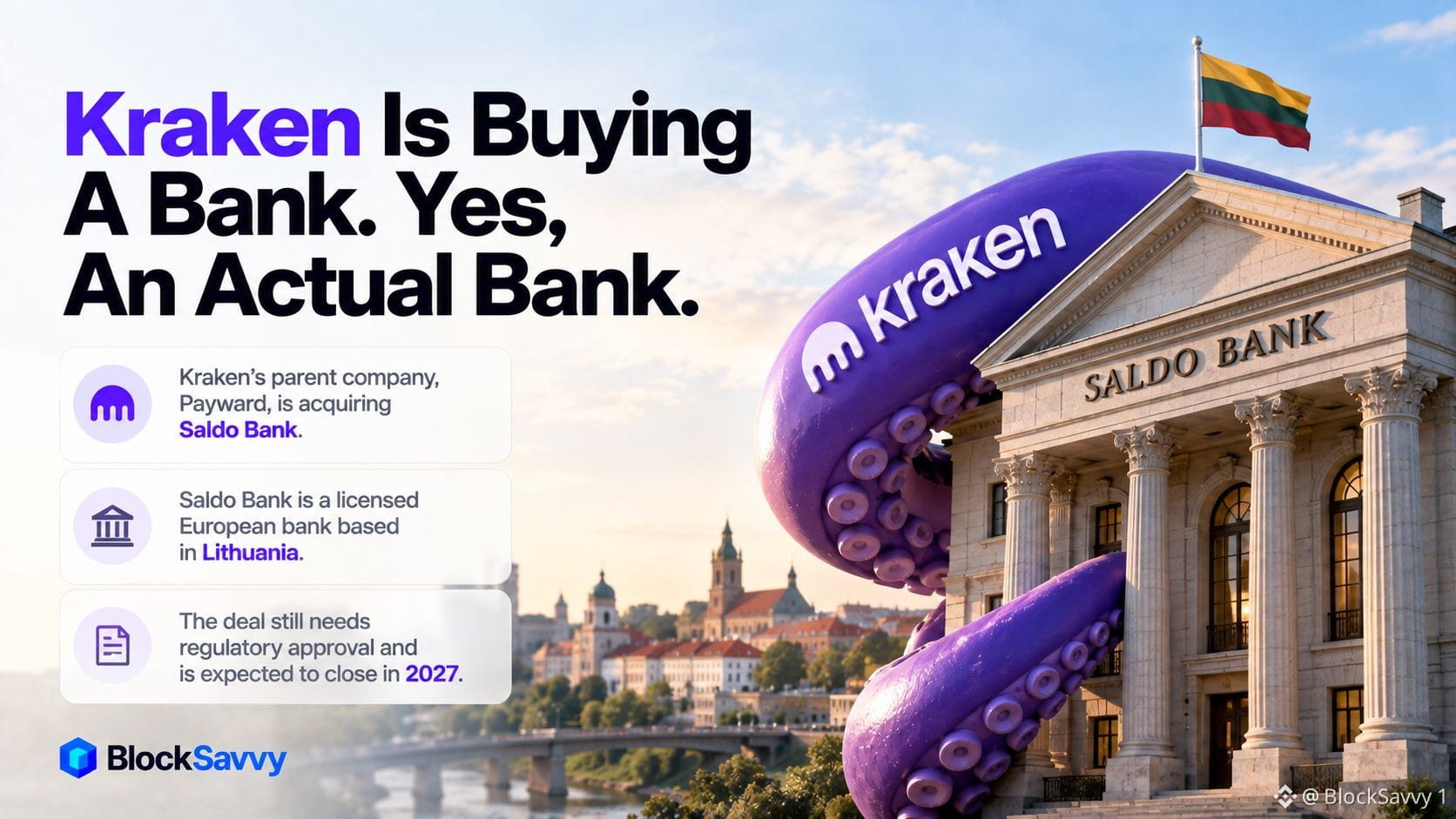
Kraken Is Buying A Bank. Yes, An Actual Bank. Remember when crypto exchanges were supposed to replace traditional banks? Well, now they're buying them. 😅 Kraken's parent company, Payward, is acquiring Saldo Bank, a licensed European bank based in Lithuania. The idea is pretty straightforward: bring crypto trading, regular banking, lending, and payment cards closer together instead of making customers jump between different providers. The deal still needs regulatory approval and is expected to close in 2027. Crypto companies spent years building alternatives to banks. Now some of them seem more interested in becoming banks themselves. And honestly, that might be a much bigger shift than another $BTC price rally. #BTC Price Analysis# #Bitcoin Price Prediction: What is Bitcoins next move?#
Kraken Is Buying A Bank. Yes, An Actual Bank. Remember when crypto exchanges were supposed to replace traditional banks? Well, now they're buying them. 😅 Kraken's parent company, Payward, is acquiring Saldo Bank, a licensed European bank based in Lithuania. The idea is pretty straightforward: bring crypto trading, regular banking, lending, and payment cards closer together instead of making customers jump between different providers. The deal still needs regulatory approval and is expected to close in 2027. Crypto companies spent years building alternatives to banks. Now some of them seem more interested in becoming banks themselves. And honestly, that might be a much bigger shift than another $BTC price rally. #BTC Price Analysis# #Bitcoin Price Prediction: What is Bitcoins next move?#
3
·
--
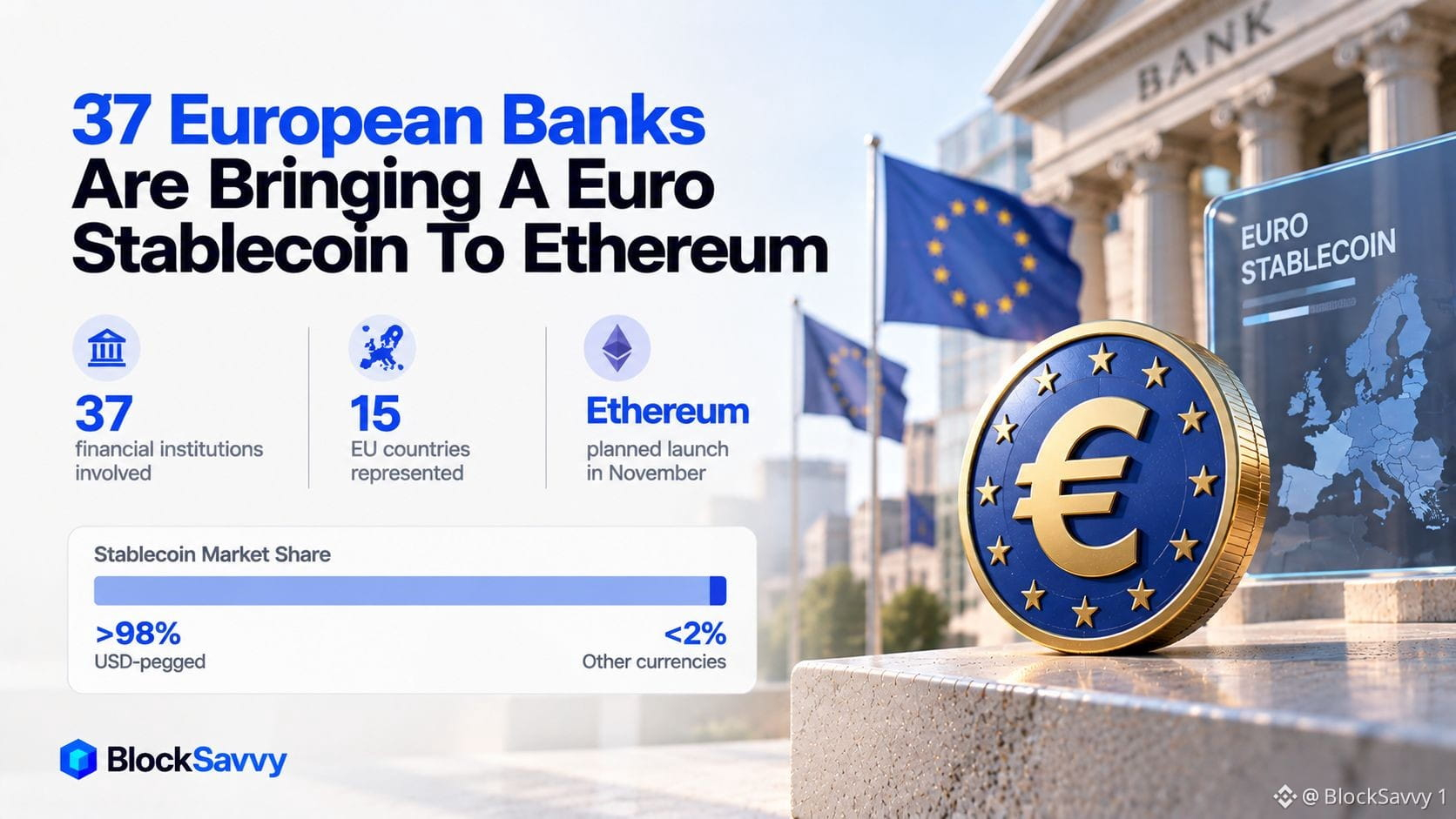
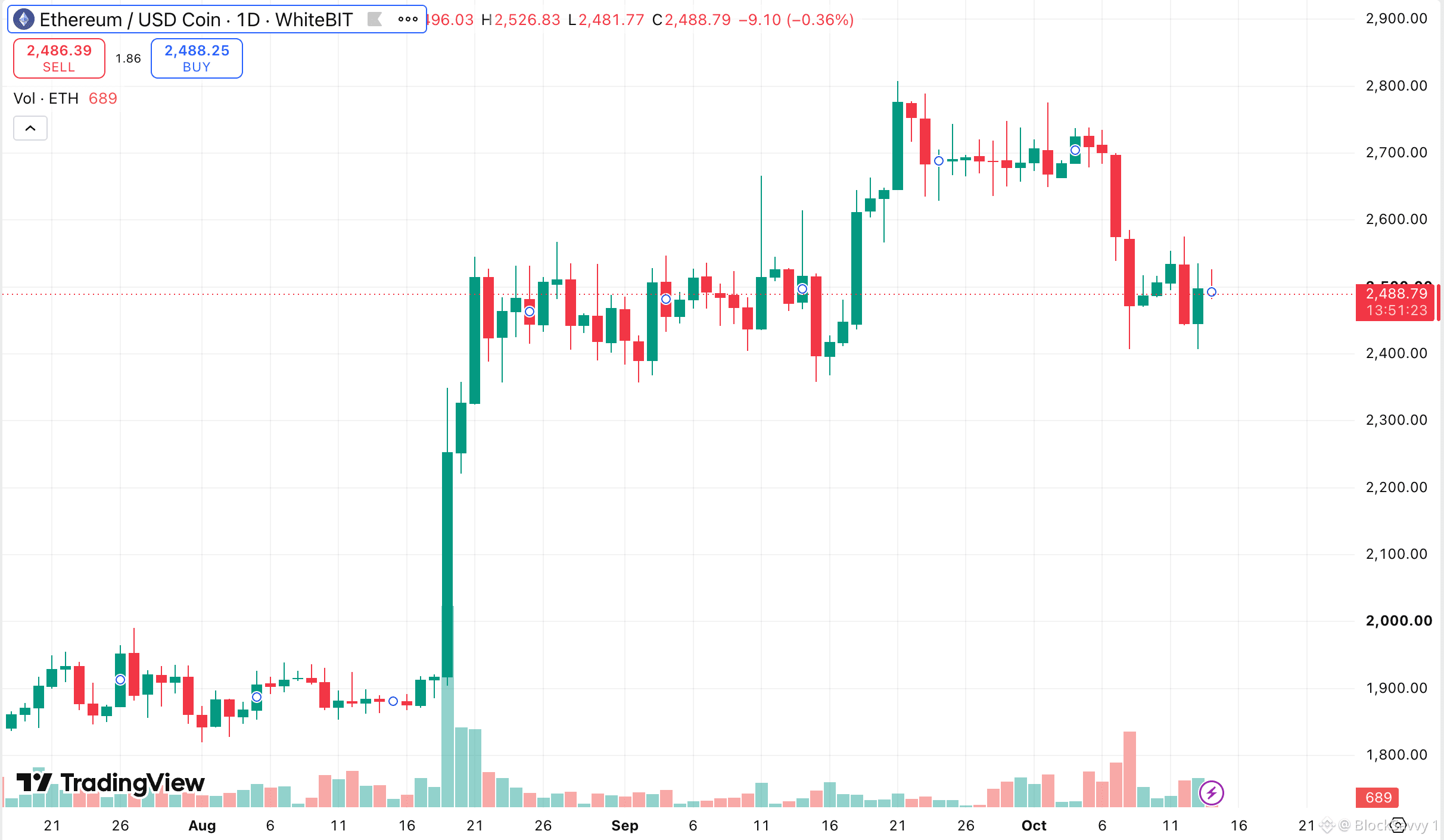
37 European Banks Are Bringing A Euro Stablecoin To Ethereum The stablecoin market is still overwhelmingly dollar-based, but Europe is trying something different. A consortium called Qivalis, backed by 37 financial institutions across 15 EU countries, just received regulatory authorization to issue a euro-pegged stablecoin. The plan is to launch on$ETH in November. Here's what caught my attention: this isn't another crypto startup trying to convince banks to use its token. It's the banks building their own onchain payment infrastructure. With dollar-denominated assets accounting for more than 98% of the stablecoin market, there's definitely room for alternatives. Whether people actually use it is another question. Getting 37 banks involved is impressive. Getting their customers to move money onchain would be the real achievement. #ETHBlockchain #ETHFoundation
37 European Banks Are Bringing A Euro Stablecoin To Ethereum The stablecoin market is still overwhelmingly dollar-based, but Europe is trying something different. A consortium called Qivalis, backed by 37 financial institutions across 15 EU countries, just received regulatory authorization to issue a euro-pegged stablecoin. The plan is to launch on$ETH in November. Here's what caught my attention: this isn't another crypto startup trying to convince banks to use its token. It's the banks building their own onchain payment infrastructure. With dollar-denominated assets accounting for more than 98% of the stablecoin market, there's definitely room for alternatives. Whether people actually use it is another question. Getting 37 banks involved is impressive. Getting their customers to move money onchain would be the real achievement. #ETHBlockchain #ETHFoundation
72
·
--
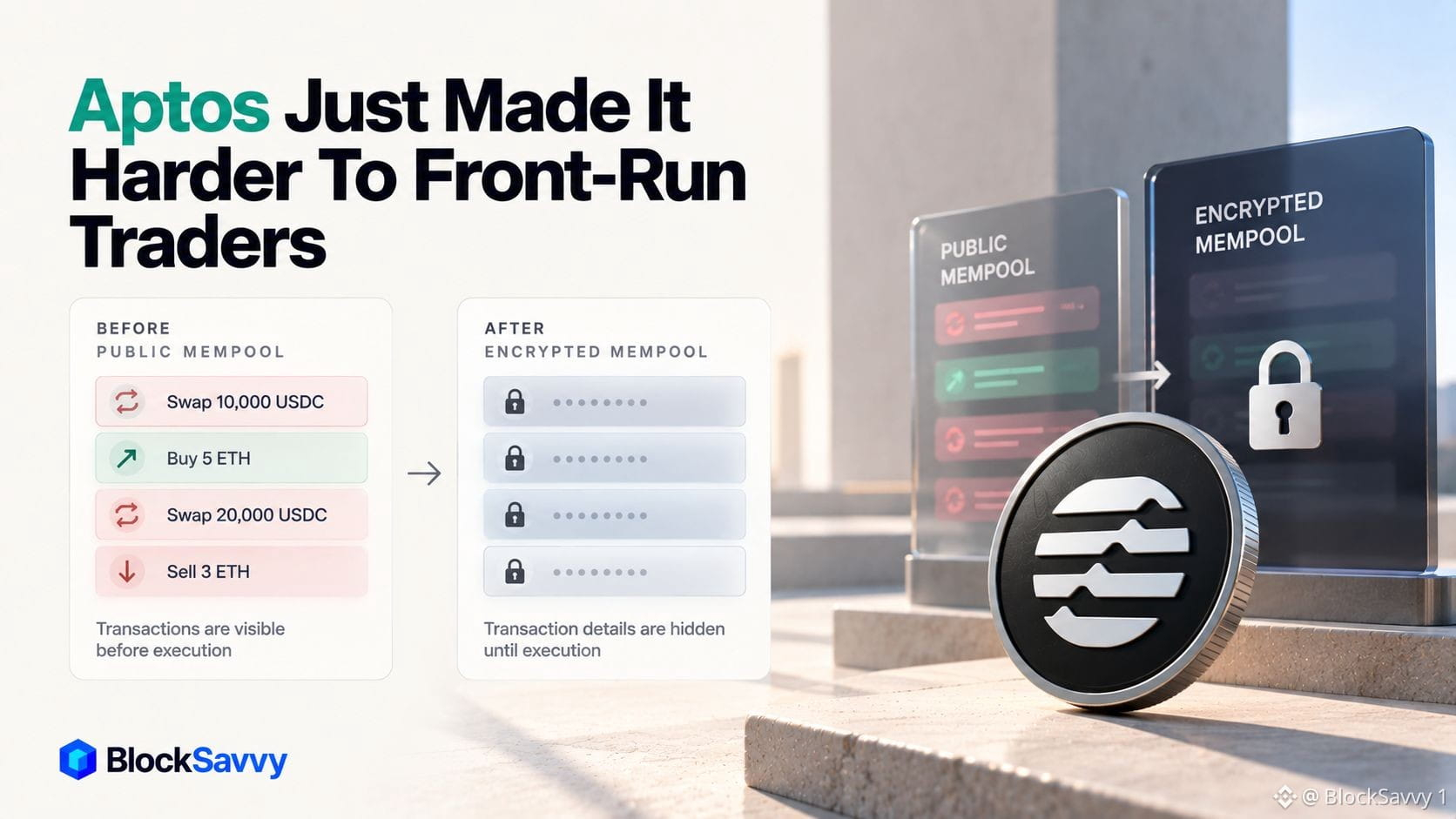
Aptos Just Made It Harder To Front-Run Traders Ever had a swap execute at a worse price than expected? Sometimes that's just volatility. Other times, someone saw your trade coming. $APT has introduced an optional encrypted mempool designed to make that second scenario harder. It hides transaction details before execution, limiting the information bots can use to front-run trades or sandwich users. The interesting part is that Aptos isn't trying to eliminate trading bots. It's trying to remove one of their advantages: seeing your order before it executes. Of course, the feature's real impact depends on adoption. But making transactions harder to exploit before confirmation sounds like a pretty useful upgrade for everyday DeFi users. #Macro Insights# #Altcoin Season#
Aptos Just Made It Harder To Front-Run Traders Ever had a swap execute at a worse price than expected? Sometimes that's just volatility. Other times, someone saw your trade coming. $APT has introduced an optional encrypted mempool designed to make that second scenario harder. It hides transaction details before execution, limiting the information bots can use to front-run trades or sandwich users. The interesting part is that Aptos isn't trying to eliminate trading bots. It's trying to remove one of their advantages: seeing your order before it executes. Of course, the feature's real impact depends on adoption. But making transactions harder to exploit before confirmation sounds like a pretty useful upgrade for everyday DeFi users. #Macro Insights# #Altcoin Season#
64
·
--
🔒 My Friend Wanted to Know the Ending Before He Even Started I have a friend who keeps his savings in one account and flinches at the word “trading,” and for years I assumed crypto had nothing for someone built like that. 😅 Every time the market moved, he’d repeat the same line: he can’t ride the rollercoaster, he needs to know exactly what he’ll have at the end, or he’s out. I used to just change the subject. 🔒 The conversation kept circling back, so I finally described a fixed-rate product instead of crypto in general.With a fixed plan in WhiteBIT Crypto Lending, you choose a term from 30 to 1080 days, and each term comes with its own predetermined rate - with $BTC plans currently offering up to 17.3%. The rate you lock in stays unchanged for that specific term, and the full interest is paid at maturity. Withdraw early and you keep the principal but lose the accrued interest. https://bit.ly/4jkQ1o7 That detail landed harder than any pitch about upside would have. He wasn’t chasing returns; he wanted a structure that behaved like something he already trusted, just in $BTC instead of fiat. It let him stop asking what “crypto” meant and start asking a narrower question: how long am I fine not touching this? He picked a short term first, mostly to test the shape of the thing, and checks it less than I check my own positions. 😄 I’d stopped trying to sell him the rollercoaster before that conversation even ended. He just needed the corner that already looked like where he stood. Disclaimer: This is not financial or investment advice. Do your own research before making any decisions. Use at your own risk. #BTC Price Analysis# #Bitcoin Price Prediction: What is Bitcoins next move?#
🔒 My Friend Wanted to Know the Ending Before He Even Started I have a friend who keeps his savings in one account and flinches at the word “trading,” and for years I assumed crypto had nothing for someone built like that. 😅 Every time the market moved, he’d repeat the same line: he can’t ride the rollercoaster, he needs to know exactly what he’ll have at the end, or he’s out. I used to just change the subject. 🔒 The conversation kept circling back, so I finally described a fixed-rate product instead of crypto in general.With a fixed plan in WhiteBIT Crypto Lending, you choose a term from 30 to 1080 days, and each term comes with its own predetermined rate - with $BTC plans currently offering up to 17.3%. The rate you lock in stays unchanged for that specific term, and the full interest is paid at maturity. Withdraw early and you keep the principal but lose the accrued interest. https://bit.ly/4jkQ1o7 That detail landed harder than any pitch about upside would have. He wasn’t chasing returns; he wanted a structure that behaved like something he already trusted, just in $BTC instead of fiat. It let him stop asking what “crypto” meant and start asking a narrower question: how long am I fine not touching this? He picked a short term first, mostly to test the shape of the thing, and checks it less than I check my own positions. 😄 I’d stopped trying to sell him the rollercoaster before that conversation even ended. He just needed the corner that already looked like where he stood. Disclaimer: This is not financial or investment advice. Do your own research before making any decisions. Use at your own risk. #BTC Price Analysis# #Bitcoin Price Prediction: What is Bitcoins next move?#
·
--
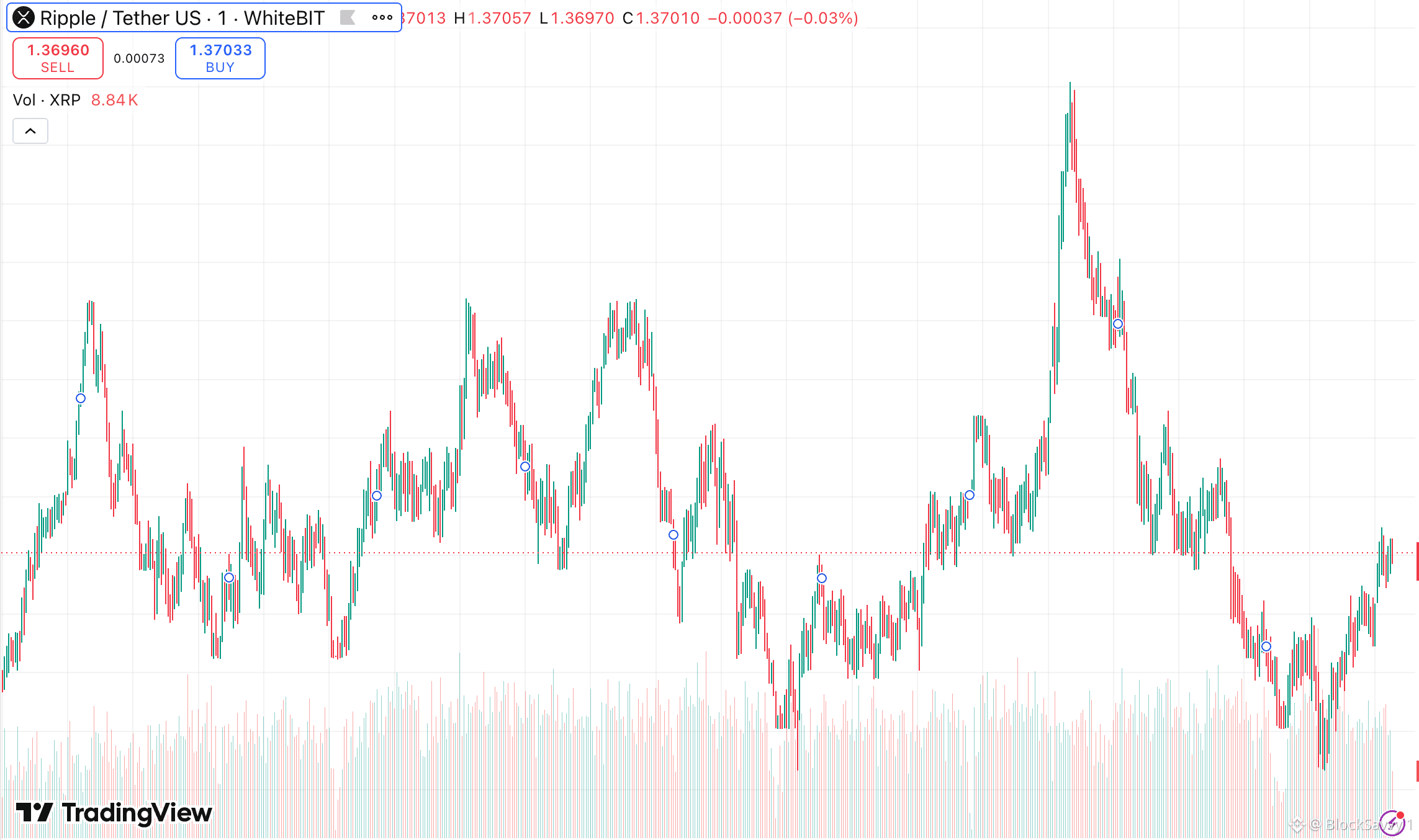
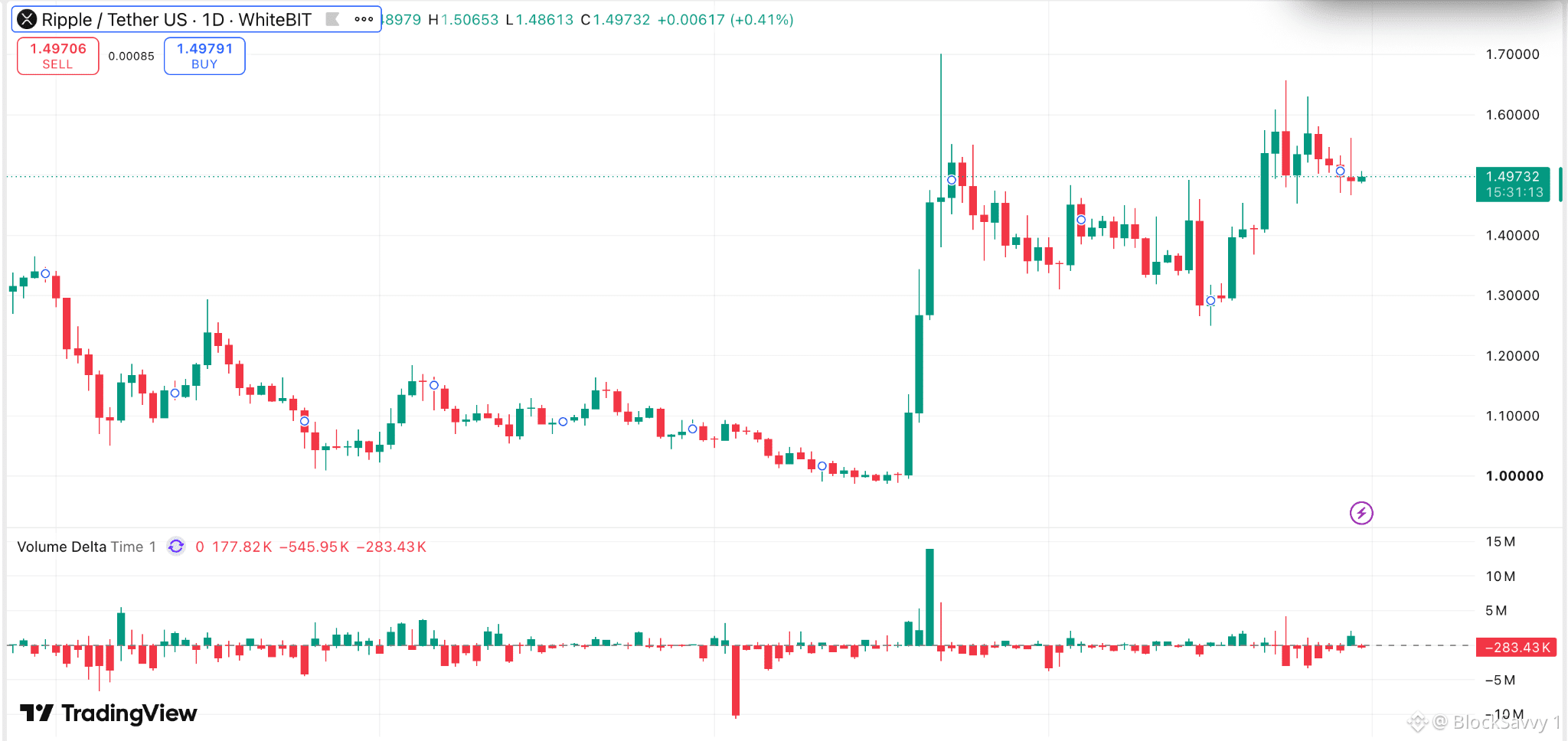
$XRP Is Back Around $1.50. Can It Stay There This Time? $XRP has had a pretty good recovery from the $1 area, but getting above $1.50 and staying there are two different things. The latest push reached roughly $1.60 before pulling back. Now it’s hovering just under $1.50, with neither side making much progress. Аfter that first sharp jump from around $1, XRP eventually slipped back toward $1.30, then recovered again. Buyers have been showing up on the dips, although those repeated pullbacks from the $1.55–$1.60 area suggest there’s still selling to work through. I’ve been using the quieter stretches to look through the rest of my TradingView watchlist too. WhiteBIT TradFi pairs are available there now, so a quick XRP check sometimes turns into checking a few stock setups as well 😅 Easy to spend longer on there than planned. For XRP, I’d like to see a few daily closes above $1.50 before getting too excited about another move higher. A brief push through it wouldn’t tell us much on its own. How price behaves afterward is what I’m watching. #Macro Insights# #Altcoin Season#
$XRP Is Back Around $1.50. Can It Stay There This Time? $XRP has had a pretty good recovery from the $1 area, but getting above $1.50 and staying there are two different things. The latest push reached roughly $1.60 before pulling back. Now it’s hovering just under $1.50, with neither side making much progress. Аfter that first sharp jump from around $1, XRP eventually slipped back toward $1.30, then recovered again. Buyers have been showing up on the dips, although those repeated pullbacks from the $1.55–$1.60 area suggest there’s still selling to work through. I’ve been using the quieter stretches to look through the rest of my TradingView watchlist too. WhiteBIT TradFi pairs are available there now, so a quick XRP check sometimes turns into checking a few stock setups as well 😅 Easy to spend longer on there than planned. For XRP, I’d like to see a few daily closes above $1.50 before getting too excited about another move higher. A brief push through it wouldn’t tell us much on its own. How price behaves afterward is what I’m watching. #Macro Insights# #Altcoin Season#
50
·
--
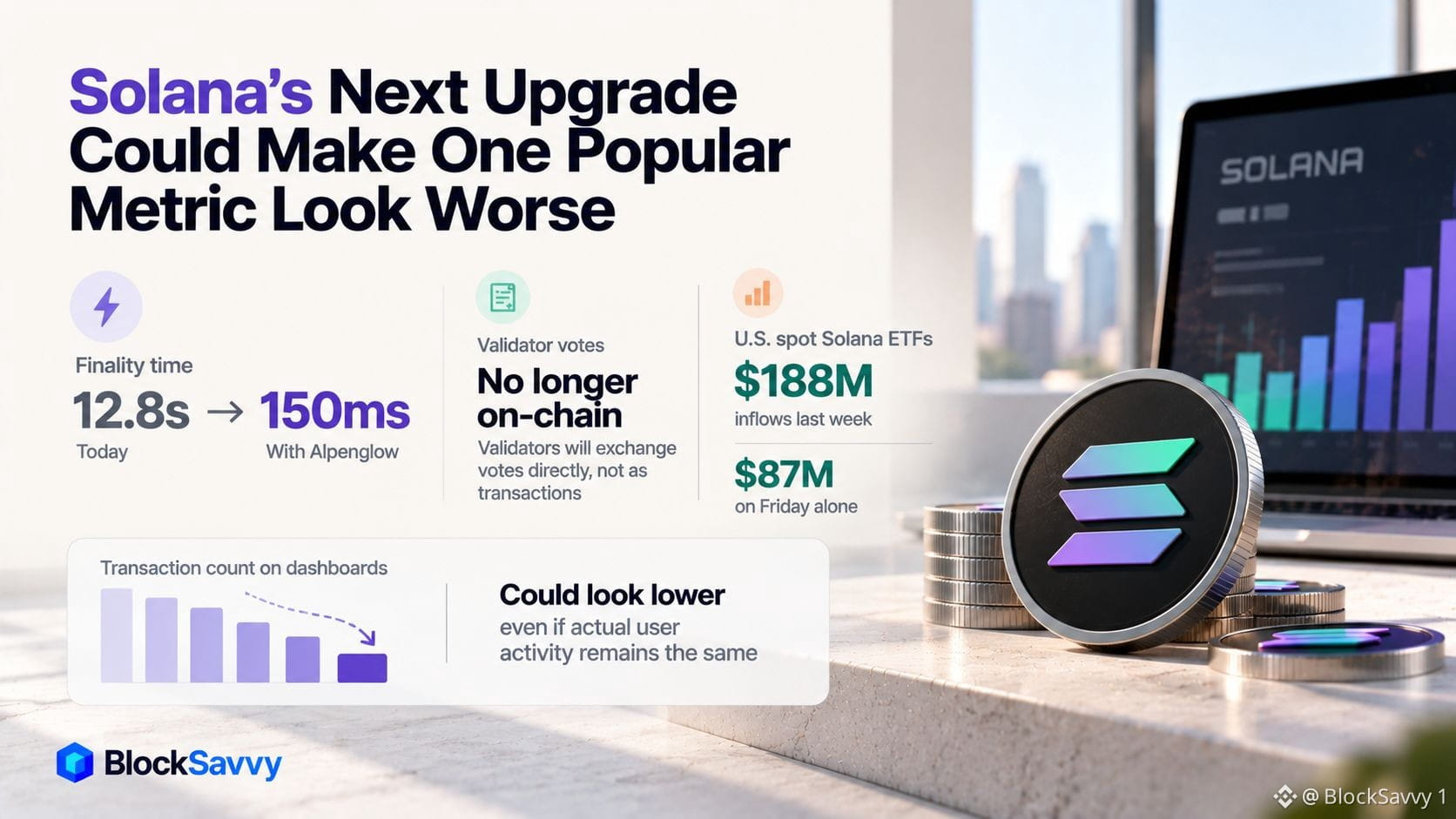
Solana’s Next Upgrade Could Make One Popular Metric Look Worse $SOL ’s Alpenglow upgrade has now reached both of Solana’s public testing networks, with developers targeting finality of roughly 150 milliseconds, down from about 12.8 seconds today. That’s the headline number, but there’s a less obvious change underneath it. Alpenglow changes how validators communicate their votes. Those votes currently appear as transactions inside Solana blocks. Under the new system, validators exchange them directly instead. So once Alpenglow eventually reaches mainnet, some dashboards could suddenly show fewer Solana transactions even if actual user activity hasn’t fallen at all. The Solana Foundation has already warned data providers that comparisons will need adjusting. Meanwhile, institutional interest has been moving the other way. U.S. spot Solana ETFs just recorded their biggest week yet, taking in $188M, including a record $87M on Friday alone. Bitwise’s BSOL accounted for about $128M of the weekly total. That creates a slightly weird setup: Solana could become substantially faster while one of the metrics people use to judge its activity moves lower. A good reminder that with blockchains, sometimes the methodology changes before the market narrative catches up. #Macro Insights# #Altcoin Season#
Solana’s Next Upgrade Could Make One Popular Metric Look Worse $SOL ’s Alpenglow upgrade has now reached both of Solana’s public testing networks, with developers targeting finality of roughly 150 milliseconds, down from about 12.8 seconds today. That’s the headline number, but there’s a less obvious change underneath it. Alpenglow changes how validators communicate their votes. Those votes currently appear as transactions inside Solana blocks. Under the new system, validators exchange them directly instead. So once Alpenglow eventually reaches mainnet, some dashboards could suddenly show fewer Solana transactions even if actual user activity hasn’t fallen at all. The Solana Foundation has already warned data providers that comparisons will need adjusting. Meanwhile, institutional interest has been moving the other way. U.S. spot Solana ETFs just recorded their biggest week yet, taking in $188M, including a record $87M on Friday alone. Bitwise’s BSOL accounted for about $128M of the weekly total. That creates a slightly weird setup: Solana could become substantially faster while one of the metrics people use to judge its activity moves lower. A good reminder that with blockchains, sometimes the methodology changes before the market narrative catches up. #Macro Insights# #Altcoin Season#
53
·
--
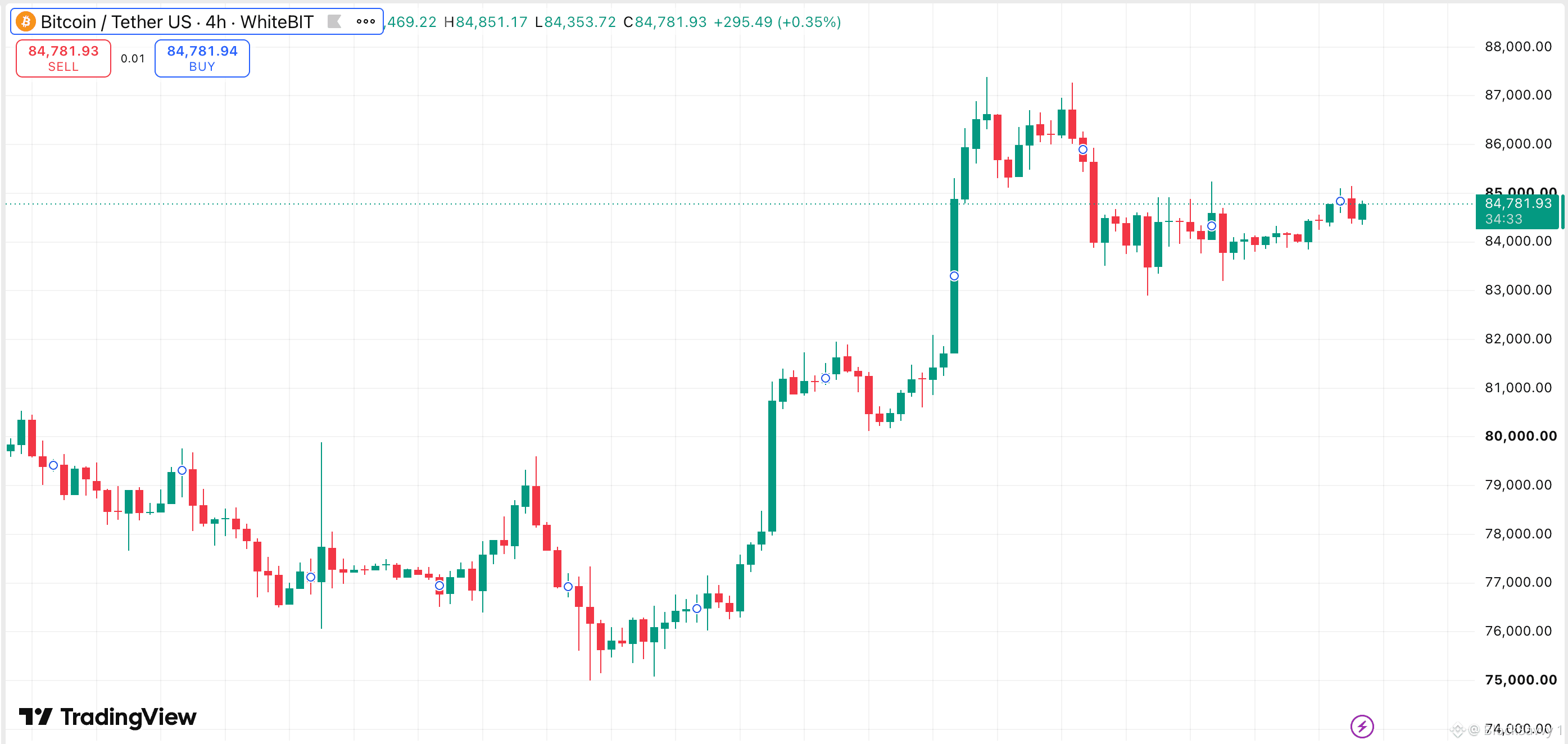
Bitcoin Is Doing Something Traders Usually Hate: Nothing After the move from roughly $75K to above $87K, $BTC has spent the last few days hanging around the $84K–$85K area: sharp repricing higher, a pullback, and then a surprisingly tight cluster of candles rather than an immediate continuation or reversal. The timing is useful context. Treasury yields recently jumped to their highest levels since 2007 and expectations for further Fed hikes increased, both of which put pressure on risk assets. Bitcoin briefly slipped toward $83K, but buyers pulled it back into the mid-$84Ks. At the same time, holders are taking profits. On-chain realized profit data shows selling after BTC's strong quarter, but the pace has been considerably slower than around previous major market peaks. So the boring part of this chart might actually be the part worth watching. $BTC absorbed a fast rally, profit-taking and a tougher rates backdrop without immediately giving the breakout back. Now it's good time to watch whether this range becomes a base for another attempt higher, or simply the place where buyers finally run out of patience. #BTC Price Analysis# #Bitcoin Price Prediction: What is Bitcoins next move?#
Bitcoin Is Doing Something Traders Usually Hate: Nothing After the move from roughly $75K to above $87K, $BTC has spent the last few days hanging around the $84K–$85K area: sharp repricing higher, a pullback, and then a surprisingly tight cluster of candles rather than an immediate continuation or reversal. The timing is useful context. Treasury yields recently jumped to their highest levels since 2007 and expectations for further Fed hikes increased, both of which put pressure on risk assets. Bitcoin briefly slipped toward $83K, but buyers pulled it back into the mid-$84Ks. At the same time, holders are taking profits. On-chain realized profit data shows selling after BTC's strong quarter, but the pace has been considerably slower than around previous major market peaks. So the boring part of this chart might actually be the part worth watching. $BTC absorbed a fast rally, profit-taking and a tougher rates backdrop without immediately giving the breakout back. Now it's good time to watch whether this range becomes a base for another attempt higher, or simply the place where buyers finally run out of patience. #BTC Price Analysis# #Bitcoin Price Prediction: What is Bitcoins next move?#
73
·
--
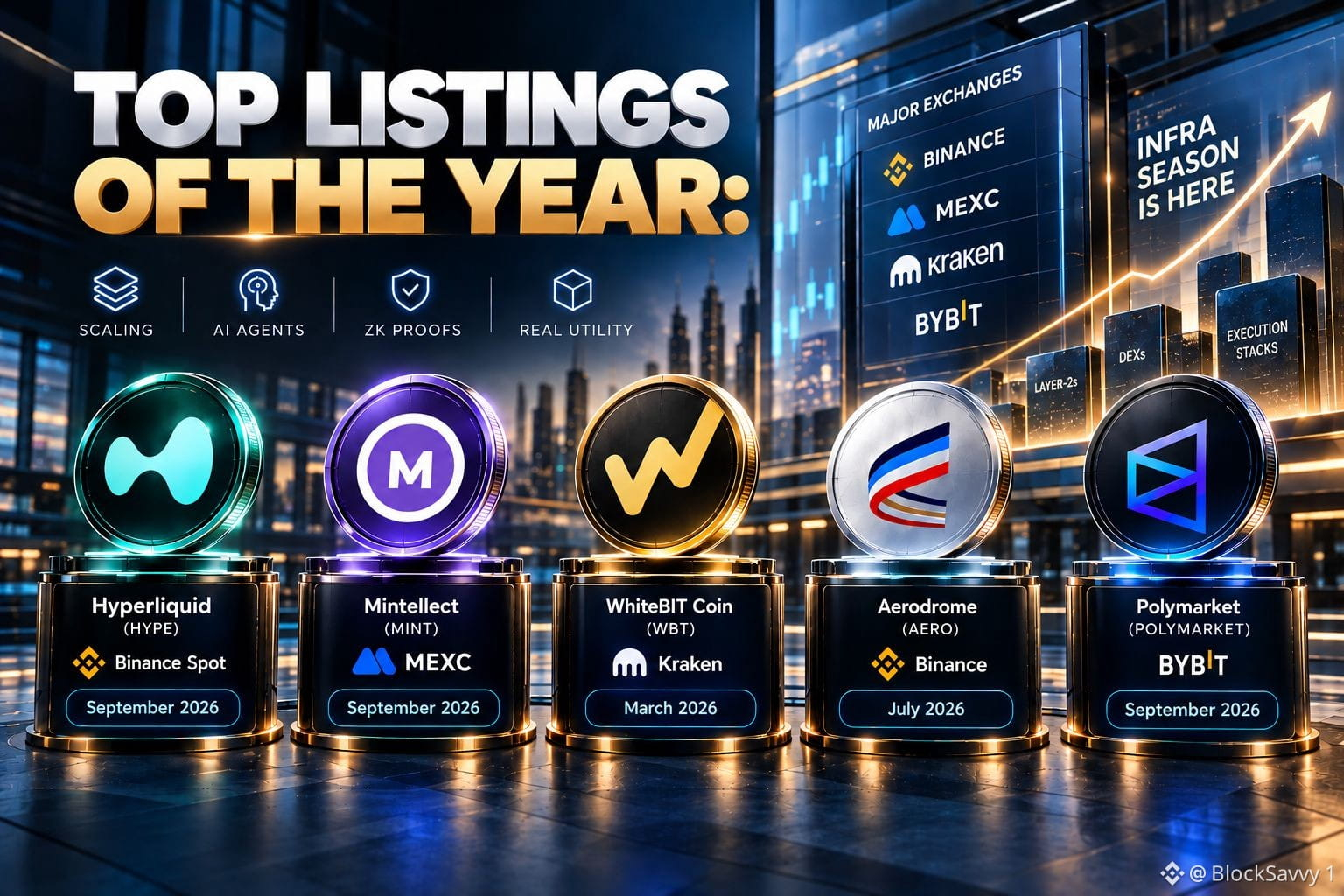
🎯 The Ultimate Top Listings Breakdown: Why Infrastructure Season Has Officially Begun I started digging into the market and noticed something: major exchanges have stopped chasing memecoins and are focusing on more serious stuff. 🤔 This year, infrastructure tokens have been getting access to major exchanges, and that’s not happening for no reason. So, I decided to put together my own list of the best listings of the year (just my two cents). I looked at institutional signals like S&P index inclusion, ICE investments, and protocol mergers. 📊 Put all of that together and you get what I’d call ‘infra season’. Money is actually flowing into projects that have real mechanics, solid protocols, and institutional trust behind them. TOP LISTINGS OF THE YEAR (in my opinion): 🔹 Hyperliquid (HYPE) Binance Spot | September 2026 🔹 Mintellect (MINT) MEXC | September 2026 🔹 WhiteBIT Coin ( $WBT) Kraken | March 2026 🔹 Aerodrome (AERO) Binance | July 2026 🔹 Polymarket (POLYMARKET) Bybit | September 2026 (Pre-market) Exchanges are listing tokens that solve real problems. Scaling, AI agents, ZK proofs - this isn’t just another bunch of $BTC copycats. The BTC-native ecosystem has grown a lot, but growth needs infrastructure. Layer-2s, decentralized exchanges, and new execution stacks - that’s where real money is going. Looks like infra season is here. Whoever controls the tools, controls the power. 🚀 Disclaimer: This is not financial or investment advice. DYOR before making any decisions. Use at your own risk. #BTC Price Analysis# #Bitcoin Price Prediction: What is Bitcoins next move?# #Altcoin Season#
🎯 The Ultimate Top Listings Breakdown: Why Infrastructure Season Has Officially Begun I started digging into the market and noticed something: major exchanges have stopped chasing memecoins and are focusing on more serious stuff. 🤔 This year, infrastructure tokens have been getting access to major exchanges, and that’s not happening for no reason. So, I decided to put together my own list of the best listings of the year (just my two cents). I looked at institutional signals like S&P index inclusion, ICE investments, and protocol mergers. 📊 Put all of that together and you get what I’d call ‘infra season’. Money is actually flowing into projects that have real mechanics, solid protocols, and institutional trust behind them. TOP LISTINGS OF THE YEAR (in my opinion): 🔹 Hyperliquid (HYPE) Binance Spot | September 2026 🔹 Mintellect (MINT) MEXC | September 2026 🔹 WhiteBIT Coin ( $WBT) Kraken | March 2026 🔹 Aerodrome (AERO) Binance | July 2026 🔹 Polymarket (POLYMARKET) Bybit | September 2026 (Pre-market) Exchanges are listing tokens that solve real problems. Scaling, AI agents, ZK proofs - this isn’t just another bunch of $BTC copycats. The BTC-native ecosystem has grown a lot, but growth needs infrastructure. Layer-2s, decentralized exchanges, and new execution stacks - that’s where real money is going. Looks like infra season is here. Whoever controls the tools, controls the power. 🚀 Disclaimer: This is not financial or investment advice. DYOR before making any decisions. Use at your own risk. #BTC Price Analysis# #Bitcoin Price Prediction: What is Bitcoins next move?# #Altcoin Season#
74
·
--
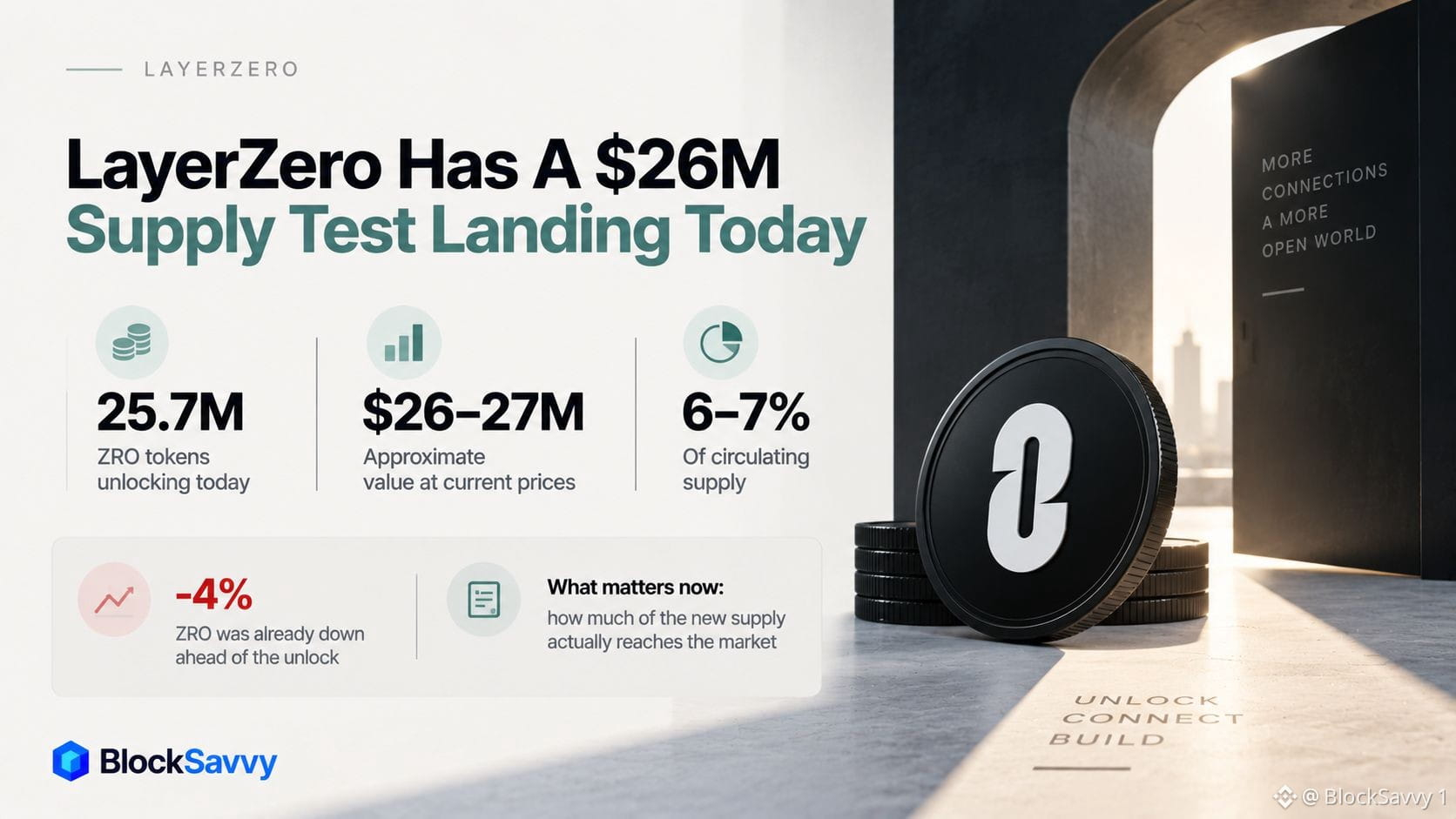
LayerZero Had A $26M Supply Test Landing $ZRO is dealing with a very visible piece of tokenomics: roughly 25.7 million tokens, worth around $26–27 million, were unlocked. Current trackers put the release at roughly 6–7% of circulating supply, making it unusually large relative to the token’s existing float. ZRO was already down roughly 4%, with the upcoming unlock cited as one of the main pieces of supply overhang traders were watching. There wasn’t an accompanying hack, delisting or obvious project-specific shock. What makes unlocks interesting is that the headline number doesn’t tell you how much actually gets sold. These releases were scheduled, everyone could see them coming. Traders could hedge beforehand, holders could decide not to sell, and some of the new supply may have never reach an exchange, so the better thing to watch after wasn't the unlock itself. It’s whether those 25.7M ZRO actually became liquid market supply, and whether exchange balances and selling activity moved with them. #Macro Insights# #Altcoin Season#
LayerZero Had A $26M Supply Test Landing $ZRO is dealing with a very visible piece of tokenomics: roughly 25.7 million tokens, worth around $26–27 million, were unlocked. Current trackers put the release at roughly 6–7% of circulating supply, making it unusually large relative to the token’s existing float. ZRO was already down roughly 4%, with the upcoming unlock cited as one of the main pieces of supply overhang traders were watching. There wasn’t an accompanying hack, delisting or obvious project-specific shock. What makes unlocks interesting is that the headline number doesn’t tell you how much actually gets sold. These releases were scheduled, everyone could see them coming. Traders could hedge beforehand, holders could decide not to sell, and some of the new supply may have never reach an exchange, so the better thing to watch after wasn't the unlock itself. It’s whether those 25.7M ZRO actually became liquid market supply, and whether exchange balances and selling activity moved with them. #Macro Insights# #Altcoin Season#
175
·
--
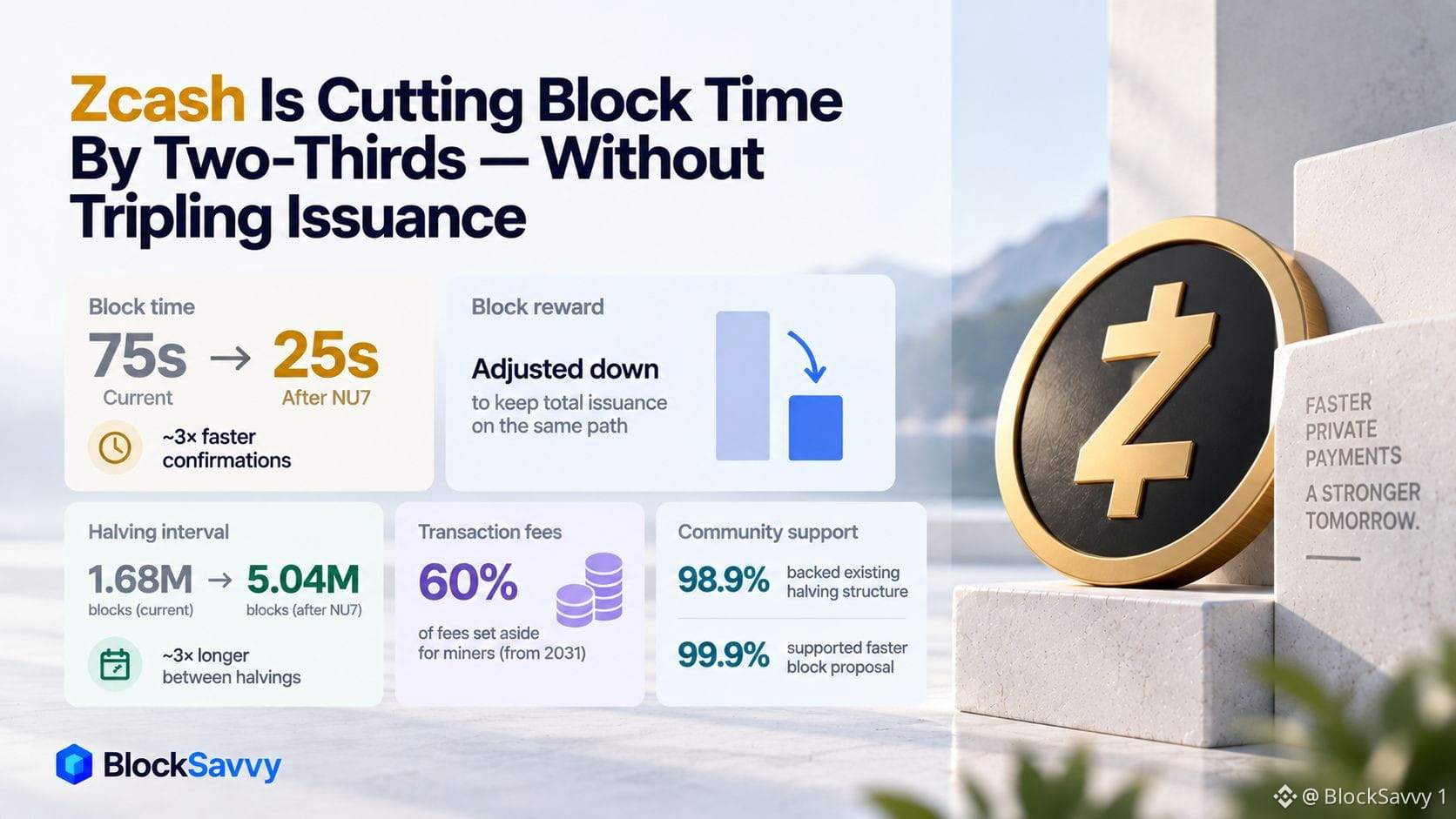
Zcash Is Cutting Block Time By Two-Thirds Without Tripling Issuance $ZEC developers are targeting November 5 for NU7, an upgrade that would cut Zcash’s block time from 75 seconds to 25 seconds. That means confirmations could arrive roughly three times faster. The interesting part is how they’re doing it without changing the long-term issuance schedule. If blocks arrive three times as often, simply keeping the same reward per block would dramatically increase new supply. Instead, NU7 reduces the reward per block by roughly the same factor and extends the halving interval from 1.68M blocks to 5.04M blocks. More blocks, same basic issuance path. There’s also a second piece that matters for miners. Roughly 60% of transaction fees would start being set aside under Zcash’s new sustainability mechanism, with those funds scheduled to flow back into mining rewards from February 2031 as regular issuance keeps declining. The community vote was unusually decisive too: 98.9% backed preserving the existing halving structure, while 99.9% of ZEC-weighted votes supported the faster block proposal. So NU7 is doing two things at once: making private payments feel much faster now, while already adjusting how network security gets paid for years later. #Macro Insights# #Altcoin Season#
Zcash Is Cutting Block Time By Two-Thirds Without Tripling Issuance $ZEC developers are targeting November 5 for NU7, an upgrade that would cut Zcash’s block time from 75 seconds to 25 seconds. That means confirmations could arrive roughly three times faster. The interesting part is how they’re doing it without changing the long-term issuance schedule. If blocks arrive three times as often, simply keeping the same reward per block would dramatically increase new supply. Instead, NU7 reduces the reward per block by roughly the same factor and extends the halving interval from 1.68M blocks to 5.04M blocks. More blocks, same basic issuance path. There’s also a second piece that matters for miners. Roughly 60% of transaction fees would start being set aside under Zcash’s new sustainability mechanism, with those funds scheduled to flow back into mining rewards from February 2031 as regular issuance keeps declining. The community vote was unusually decisive too: 98.9% backed preserving the existing halving structure, while 99.9% of ZEC-weighted votes supported the faster block proposal. So NU7 is doing two things at once: making private payments feel much faster now, while already adjusting how network security gets paid for years later. #Macro Insights# #Altcoin Season#
45
·
--
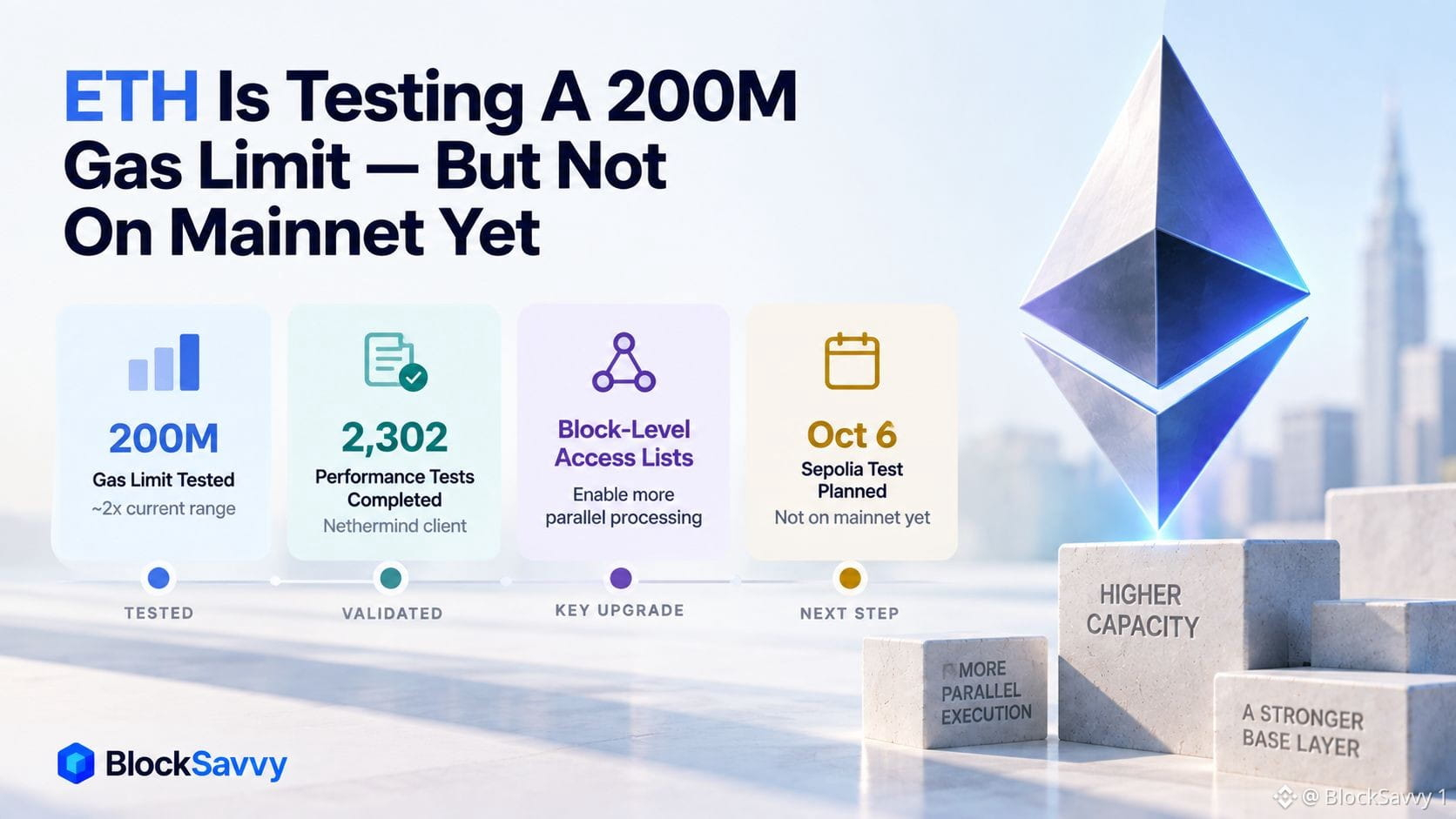
ETH Is Testing A 200M Gas Limit - But Not On Mainnet Yet Ethereum’s next big capacity experiment just cleared an important rehearsal. The upcoming Glamsterdam upgrade has successfully tested blocks at a 200 million gas limit, roughly double the kind of range Ethereum has been operating around recently. The point isn’t simply “more transactions per block.” $ETH developers are testing whether the network can process much heavier blocks without making validation unstable. One of the bigger changes is block-level access lists. Instead of execution staying mostly sequential, transactions can declare which parts of Ethereum’s state they need to touch, making more parallel processing possible. Nethermind says its client completed all 2,302 performance tests for the new setup. That matters because Ethereum’s scaling story has mostly been about pushing activity onto L2s. Glamsterdam is a different kind of scaling: increasing what the base layer itself can safely handle. The 200M setting is still experimental and isn’t currently scheduled to go straight onto mainnet. A proposed Sepolia test is set for October 6 first. So the interesting number here isn’t 200M by itself. It’s how far Ethereum can raise its execution ceiling before validator hardware becomes the bottleneck. #ETHBlockchain #ETHFoundation
ETH Is Testing A 200M Gas Limit - But Not On Mainnet Yet Ethereum’s next big capacity experiment just cleared an important rehearsal. The upcoming Glamsterdam upgrade has successfully tested blocks at a 200 million gas limit, roughly double the kind of range Ethereum has been operating around recently. The point isn’t simply “more transactions per block.” $ETH developers are testing whether the network can process much heavier blocks without making validation unstable. One of the bigger changes is block-level access lists. Instead of execution staying mostly sequential, transactions can declare which parts of Ethereum’s state they need to touch, making more parallel processing possible. Nethermind says its client completed all 2,302 performance tests for the new setup. That matters because Ethereum’s scaling story has mostly been about pushing activity onto L2s. Glamsterdam is a different kind of scaling: increasing what the base layer itself can safely handle. The 200M setting is still experimental and isn’t currently scheduled to go straight onto mainnet. A proposed Sepolia test is set for October 6 first. So the interesting number here isn’t 200M by itself. It’s how far Ethereum can raise its execution ceiling before validator hardware becomes the bottleneck. #ETHBlockchain #ETHFoundation
62
·
--
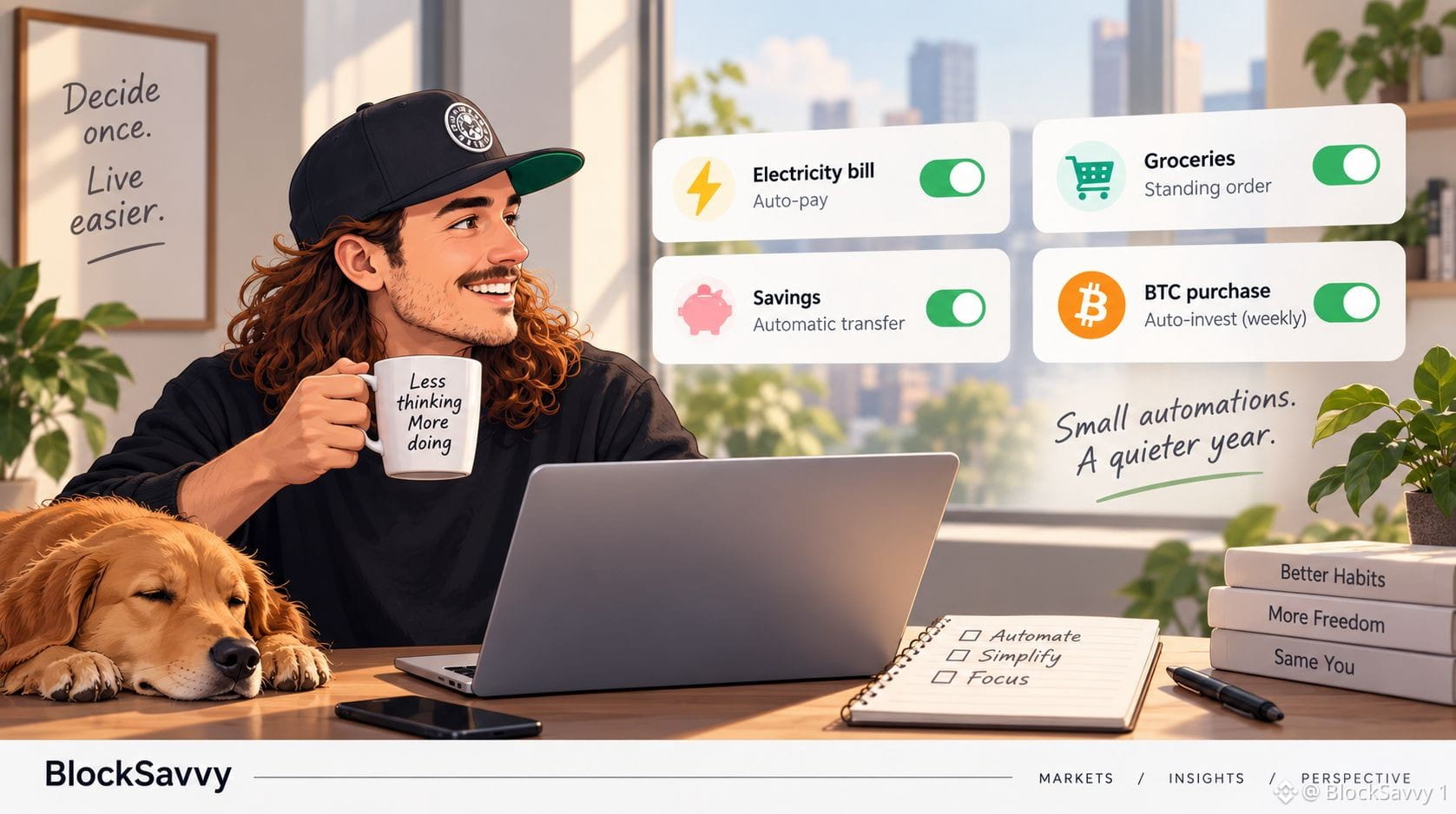
Oat Milk, Savings, and the Same Recurring Question Doing my usual end-of-year list of what actually made this year quieter, and the theme surprised me. You know why? Cause it wasn't the big stuff, it was every small thing I automated, so I'd stop arguing with myself about it on a loop. The electricity bill went on autopay, so I stopped opening the app every month just to grumble and pay it anyway. The grocery staples became a standing order, so I stopped "deciding" to buy oat milk for the fortieth time. A chunk of every paycheck now moves to savings before I can talk myself out of it. And then there was the weekly $BTC buy I kept negotiating with myself over, every single week, should I this week, should I skip it, is now a good entry or a bad one. I set up Auto-Invest on WhiteBIT to just run it weekly with no minimum amount, so I never had to save up before starting. It smooths the buy price out over time through dollar-cost averaging, and I can pause or stop the plan whenever I want, so committing to it never felt like a real decision either. https://bit.ly/3TaCjJT None of these changes saved me much time, but what they actually did was end a recurring internal debate I'd already had a hundred times and kept having again anyway. So that's the theme of my year, apparently: decide once, then stop arguing with myself about it weekly. The crypto buy was just one of the arguments I finally retired. Disclaimer: This is not financial or investment advice. Do your own research before making any decisions. Use at your own risk. #BTC Price Analysis# #Bitcoin Price Prediction: What is Bitcoins next move?#
Oat Milk, Savings, and the Same Recurring Question Doing my usual end-of-year list of what actually made this year quieter, and the theme surprised me. You know why? Cause it wasn't the big stuff, it was every small thing I automated, so I'd stop arguing with myself about it on a loop. The electricity bill went on autopay, so I stopped opening the app every month just to grumble and pay it anyway. The grocery staples became a standing order, so I stopped "deciding" to buy oat milk for the fortieth time. A chunk of every paycheck now moves to savings before I can talk myself out of it. And then there was the weekly $BTC buy I kept negotiating with myself over, every single week, should I this week, should I skip it, is now a good entry or a bad one. I set up Auto-Invest on WhiteBIT to just run it weekly with no minimum amount, so I never had to save up before starting. It smooths the buy price out over time through dollar-cost averaging, and I can pause or stop the plan whenever I want, so committing to it never felt like a real decision either. https://bit.ly/3TaCjJT None of these changes saved me much time, but what they actually did was end a recurring internal debate I'd already had a hundred times and kept having again anyway. So that's the theme of my year, apparently: decide once, then stop arguing with myself about it weekly. The crypto buy was just one of the arguments I finally retired. Disclaimer: This is not financial or investment advice. Do your own research before making any decisions. Use at your own risk. #BTC Price Analysis# #Bitcoin Price Prediction: What is Bitcoins next move?#
·
--
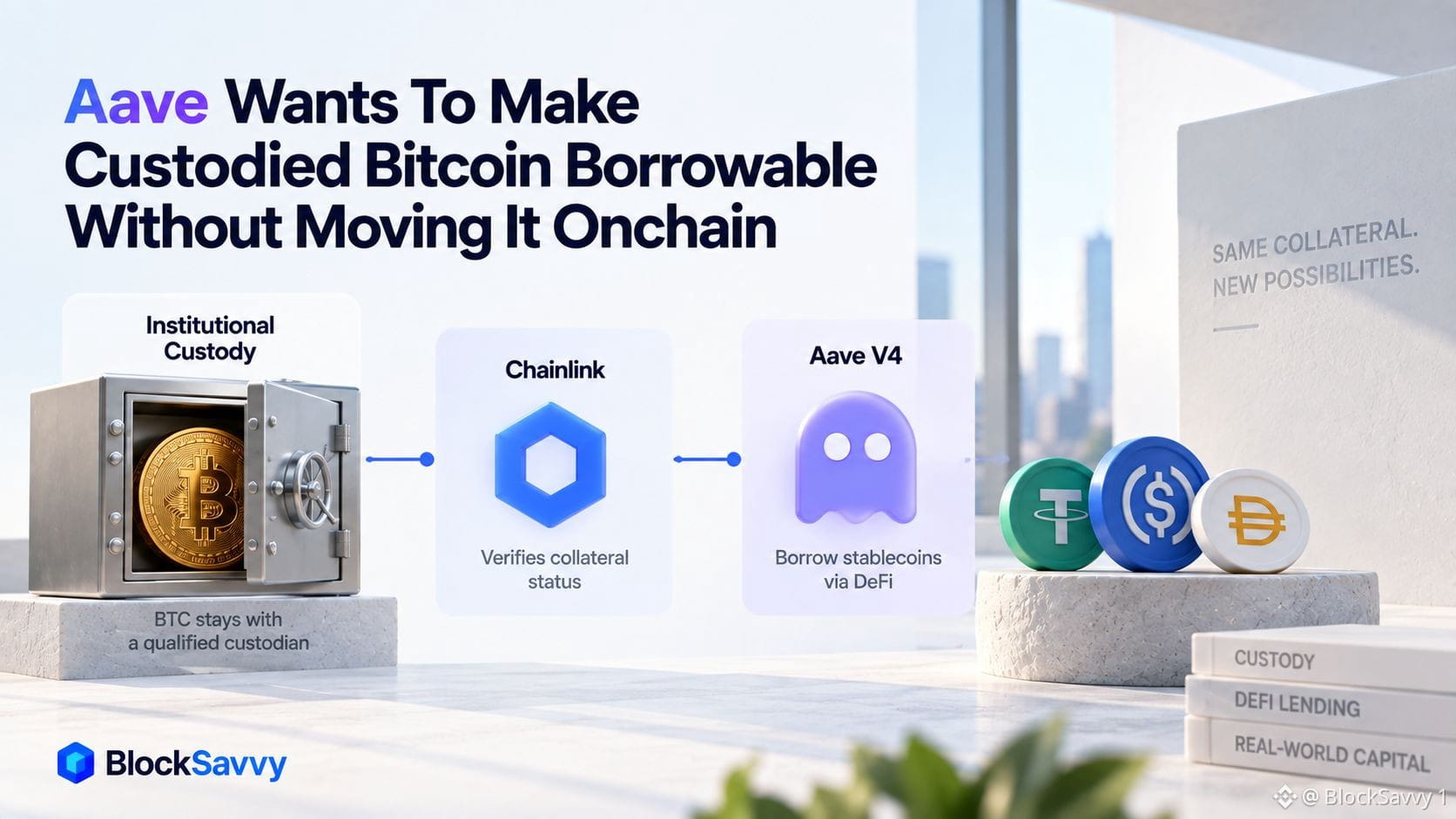
Aave Wants To Make Custodied Bitcoin Borrowable Without Moving It Onchain Aave’s latest V4 proposal is interesting because it attacks one of DeFi lending’s awkward assumptions: collateral usually has to enter DeFi before you can borrow against it. Under the proposed setup, institutions could keep $BTC with a qualified custodian while borrowing stablecoins through Aave V4. Chainlink would act as the coordination layer between the custodian and the lending market, helping verify collateral status rather than requiring the Bitcoin itself to be wrapped and deposited into the protocol. That changes the mechanics quite a bit. An institution holding native BTC may be comfortable with regulated custody but unwilling to introduce wrapped-asset, bridge or smart-contract exposure just to access liquidity. Separating where the collateral sits from where the loan originates potentially removes that step. It also creates a strange hybrid: the loan is DeFi, but an important part of its collateral system remains offchain. For $AAVE , that may be the more interesting direction for V4 than simply competing for another pool of retail deposits. DeFi lending starts looking very different once the collateral doesn't necessarily need to live inside DeFi. #Macro Insights# #Altcoin Season#
Aave Wants To Make Custodied Bitcoin Borrowable Without Moving It Onchain Aave’s latest V4 proposal is interesting because it attacks one of DeFi lending’s awkward assumptions: collateral usually has to enter DeFi before you can borrow against it. Under the proposed setup, institutions could keep $BTC with a qualified custodian while borrowing stablecoins through Aave V4. Chainlink would act as the coordination layer between the custodian and the lending market, helping verify collateral status rather than requiring the Bitcoin itself to be wrapped and deposited into the protocol. That changes the mechanics quite a bit. An institution holding native BTC may be comfortable with regulated custody but unwilling to introduce wrapped-asset, bridge or smart-contract exposure just to access liquidity. Separating where the collateral sits from where the loan originates potentially removes that step. It also creates a strange hybrid: the loan is DeFi, but an important part of its collateral system remains offchain. For $AAVE , that may be the more interesting direction for V4 than simply competing for another pool of retail deposits. DeFi lending starts looking very different once the collateral doesn't necessarily need to live inside DeFi. #Macro Insights# #Altcoin Season#
64
·
--
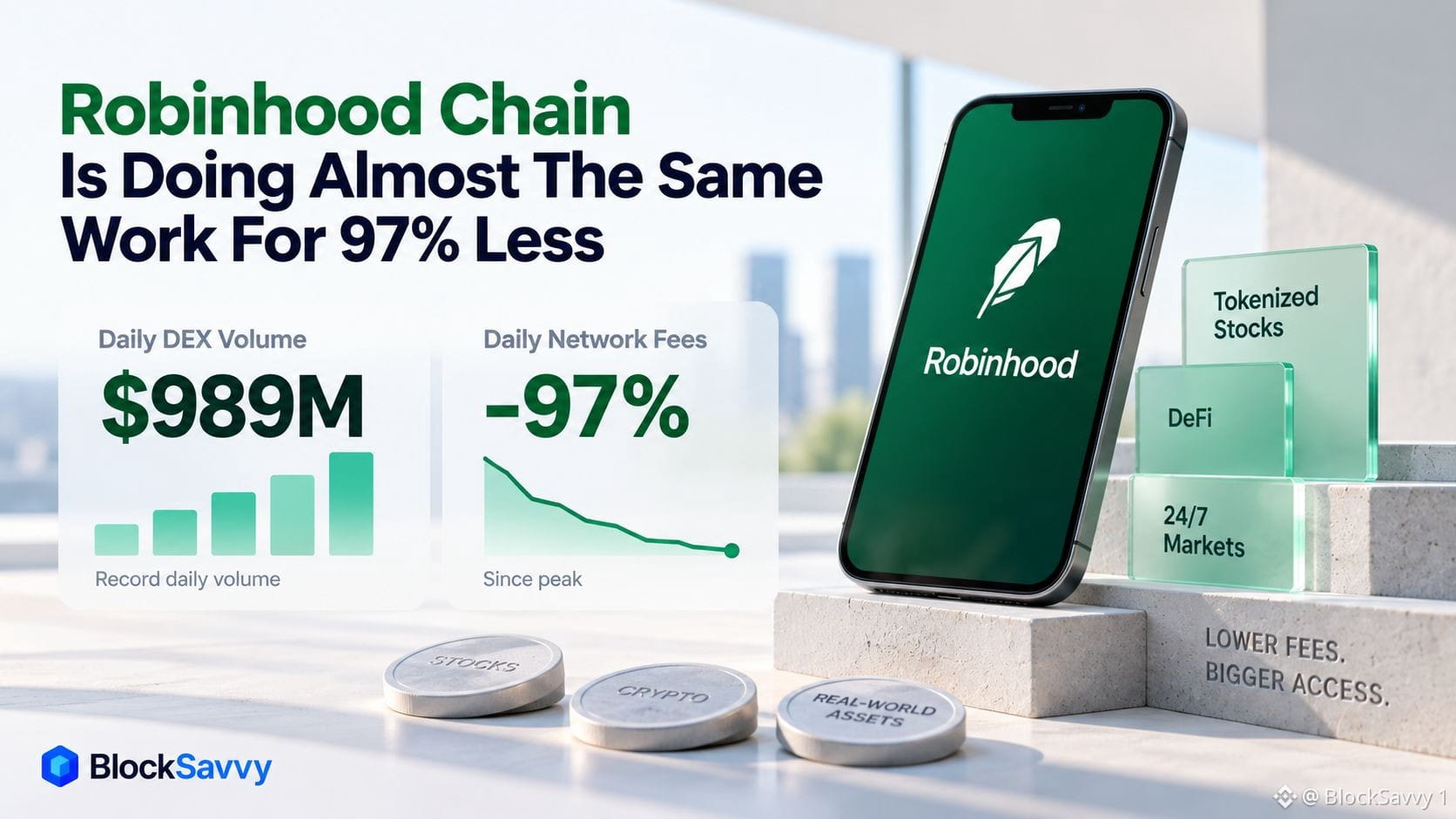
Robinhood Chain Is Doing Almost The Same Work For 97% Less Robinhood Chain is still processing transactions close to its record pace, but the amount users are paying to do it has collapsed. Daily network fees are down roughly 97% from their peak. That makes the $ETH L2 interesting for a reason that has little to do with transaction counts. Blockchains usually look healthier when activity and fees rise together. Here, activity has stayed elevated while the cost of that activity has compressed dramatically. In other words, usage hasn't disappeared — the price of blockspace has. That's good for users, but it creates a different question for the network itself. High transaction counts make a nice activity chart; fees tell you how much economic value the chain is actually capturing from that demand. And Robinhood Chain isn't exactly a quiet network. It recently recorded roughly $989M in daily DEX volume, with tokenized stocks becoming a meaningful part of its onchain activity. Cheap blockspace can scale surprisingly far. The harder part is figuring out how much that blockspace is eventually worth. #Macro Insights# #Altcoin Season#
Robinhood Chain Is Doing Almost The Same Work For 97% Less Robinhood Chain is still processing transactions close to its record pace, but the amount users are paying to do it has collapsed. Daily network fees are down roughly 97% from their peak. That makes the $ETH L2 interesting for a reason that has little to do with transaction counts. Blockchains usually look healthier when activity and fees rise together. Here, activity has stayed elevated while the cost of that activity has compressed dramatically. In other words, usage hasn't disappeared — the price of blockspace has. That's good for users, but it creates a different question for the network itself. High transaction counts make a nice activity chart; fees tell you how much economic value the chain is actually capturing from that demand. And Robinhood Chain isn't exactly a quiet network. It recently recorded roughly $989M in daily DEX volume, with tokenized stocks becoming a meaningful part of its onchain activity. Cheap blockspace can scale surprisingly far. The harder part is figuring out how much that blockspace is eventually worth. #Macro Insights# #Altcoin Season#
46
·
--
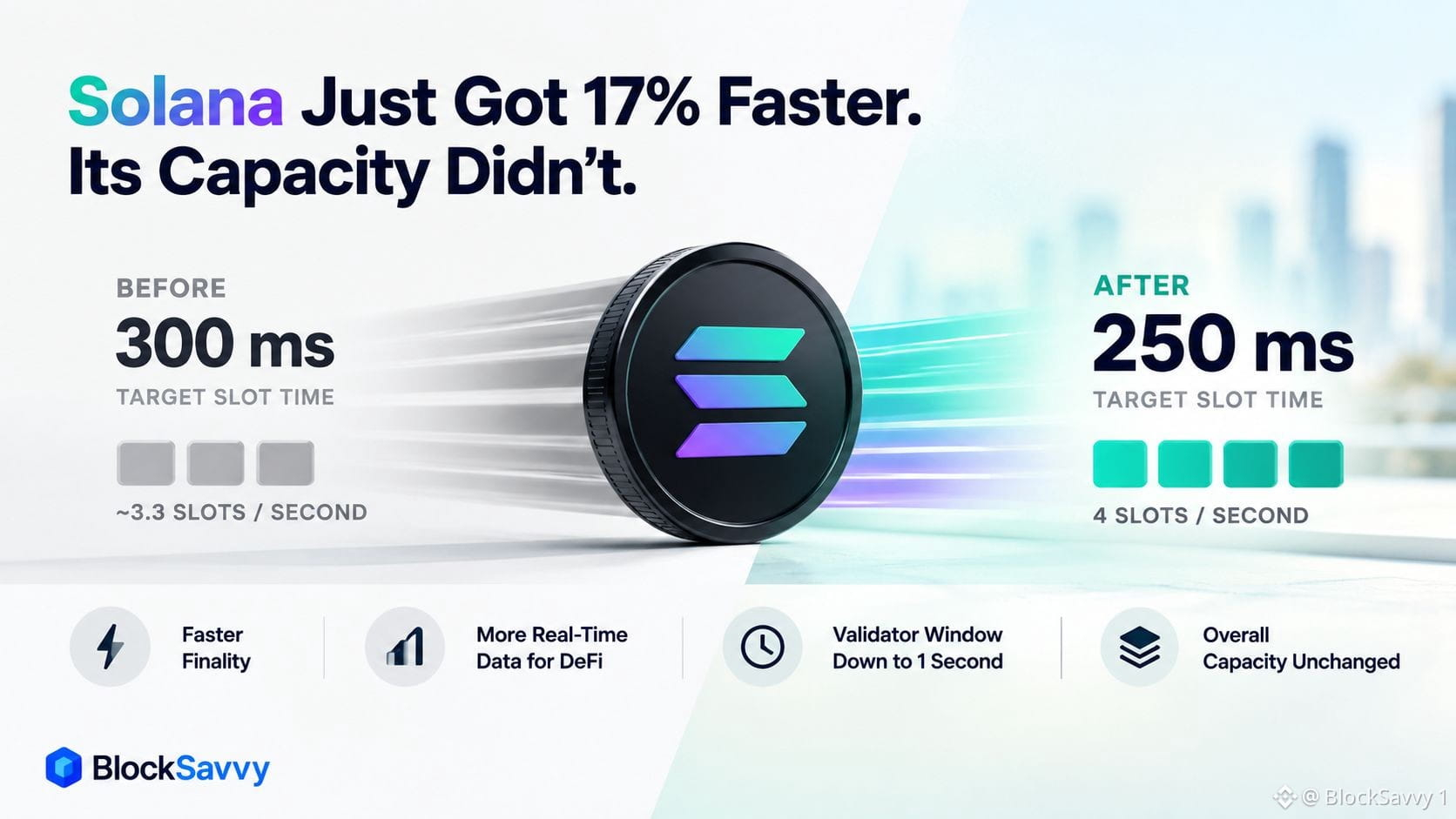
Solana Just Got 17% Faster. Its Capacity Didn't. $SOL quietly had a fairly meaningful network change this week. Solana cut its target slot time from 300ms to 250ms, meaning the chain now targets four slots every second instead of roughly 3.3. The obvious interpretation is “17% faster blocks = 17% more throughput, but that's not actually what happened. Compute and data limits per slot were reduced alongside the shorter slot time, so overall processing capacity stays roughly the same. What improves is freshness: wallets, DEXs, oracles and trading systems get a newer view of the chain more frequently. For DeFi, a 50ms difference isn't as trivial as it sounds. Automated market makers and oracle-driven markets operate in an environment where prices can change between a transaction being constructed and actually reaching the network. Shorter slots shrink that window. There's another interesting side effect: validators still lead for four consecutive slots, but their control window has fallen from 1.2 seconds to 1 second. Solana ultimately wants to push slots down again to 200ms, although that step depends on validator block-skip rates remaining acceptable. So this isn't really a TPS story, it's Solana trying to make the same capacity feel more real-time. #Macro Insights# #Altcoin Season#
Solana Just Got 17% Faster. Its Capacity Didn't. $SOL quietly had a fairly meaningful network change this week. Solana cut its target slot time from 300ms to 250ms, meaning the chain now targets four slots every second instead of roughly 3.3. The obvious interpretation is “17% faster blocks = 17% more throughput, but that's not actually what happened. Compute and data limits per slot were reduced alongside the shorter slot time, so overall processing capacity stays roughly the same. What improves is freshness: wallets, DEXs, oracles and trading systems get a newer view of the chain more frequently. For DeFi, a 50ms difference isn't as trivial as it sounds. Automated market makers and oracle-driven markets operate in an environment where prices can change between a transaction being constructed and actually reaching the network. Shorter slots shrink that window. There's another interesting side effect: validators still lead for four consecutive slots, but their control window has fallen from 1.2 seconds to 1 second. Solana ultimately wants to push slots down again to 200ms, although that step depends on validator block-skip rates remaining acceptable. So this isn't really a TPS story, it's Solana trying to make the same capacity feel more real-time. #Macro Insights# #Altcoin Season#
63
·
--
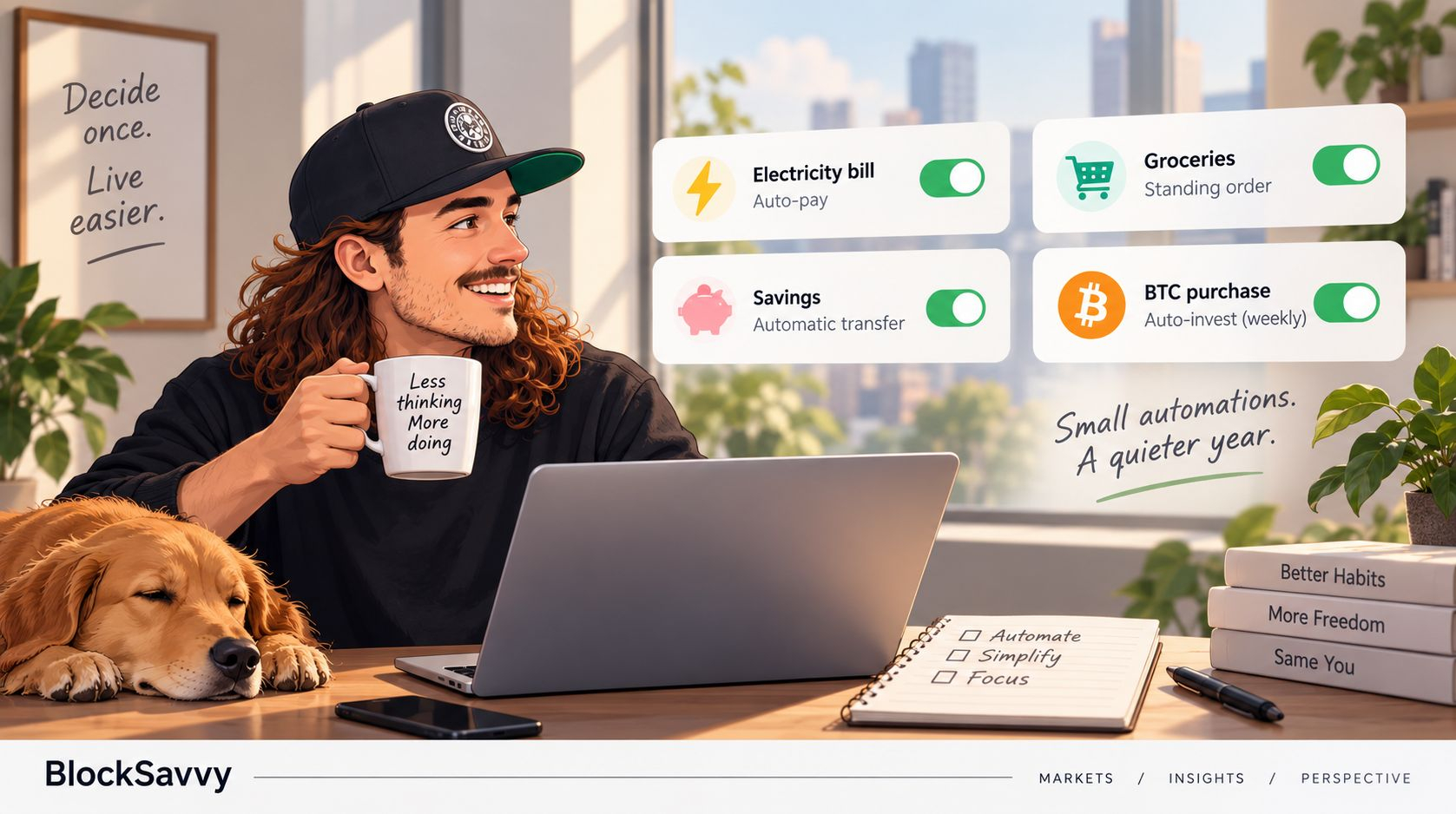
Oat Milk, Savings, and the Same Recurring Question Doing my usual end-of-year list of what actually made this year quieter, and the theme surprised me. You know why? Cause it wasn't the big stuff, it was every small thing I automated, so I'd stop arguing with myself about it on a loop. The electricity bill went on autopay, so I stopped opening the app every month just to grumble and pay it anyway. The grocery staples became a standing order, so I stopped "deciding" to buy oat milk for the fortieth time. A chunk of every paycheck now moves to savings before I can talk myself out of it. And then there was the weekly $BTC buy I kept negotiating with myself over, every single week, should I this week, should I skip it, is now a good entry or a bad one. I set up Auto-Invest on WhiteBIT to just run it weekly with no minimum amount, so I never had to save up before starting. It smooths the buy price out over time through dollar-cost averaging, and I can pause or stop the plan whenever I want, so committing to it never felt like a real decision either. https://bit.ly/3TaCjJT None of these changes saved me much time, but what they actually did was end a recurring internal debate I'd already had a hundred times and kept having again anyway. So that's the theme of my year, apparently: decide once, then stop arguing with myself about it weekly. The crypto buy was just one of the arguments I finally retired. Disclaimer: This is not financial or investment advice. Do your own research before making any decisions. Use at your own risk. #BTC Price Analysis# #Bitcoin Price Prediction: What is Bitcoins next move?#
Oat Milk, Savings, and the Same Recurring Question Doing my usual end-of-year list of what actually made this year quieter, and the theme surprised me. You know why? Cause it wasn't the big stuff, it was every small thing I automated, so I'd stop arguing with myself about it on a loop. The electricity bill went on autopay, so I stopped opening the app every month just to grumble and pay it anyway. The grocery staples became a standing order, so I stopped "deciding" to buy oat milk for the fortieth time. A chunk of every paycheck now moves to savings before I can talk myself out of it. And then there was the weekly $BTC buy I kept negotiating with myself over, every single week, should I this week, should I skip it, is now a good entry or a bad one. I set up Auto-Invest on WhiteBIT to just run it weekly with no minimum amount, so I never had to save up before starting. It smooths the buy price out over time through dollar-cost averaging, and I can pause or stop the plan whenever I want, so committing to it never felt like a real decision either. https://bit.ly/3TaCjJT None of these changes saved me much time, but what they actually did was end a recurring internal debate I'd already had a hundred times and kept having again anyway. So that's the theme of my year, apparently: decide once, then stop arguing with myself about it weekly. The crypto buy was just one of the arguments I finally retired. Disclaimer: This is not financial or investment advice. Do your own research before making any decisions. Use at your own risk. #BTC Price Analysis# #Bitcoin Price Prediction: What is Bitcoins next move?#
1
Log in to explore more content
Join global crypto users on Binance Square
⚡️ Get latest and useful information about crypto.
💬 Trusted by the world’s largest crypto exchange.
👍 Discover real insights from verified creators.
Email / Phone number
Trending Topics
BitcoinRebounds$75KAsChipsLead
3,614 views
88 Discussing
Market Watch | Bitcoin Rebounds to $75,600 After Dip Below $75,000 as Chip Stocks Lead Rally on Jobs Beat
Binance News
·8 Likes
·3.7k views
JobsReportRaisesHikeOdds
70,906 views
788 Discussing
US Data Center Rules May Constrain AI Expansion
8,406 views
89 Discussing