

Aadi33
6.4k Posts

Aadi33
Report
Block User
Observe. Adapt. Execute. KITE-717952
Open Trade
High-Frequency Trader
5.7 Years
797 Following
8.2K+ Followers
7.1K+ Liked
Posts
Portfolio
All
Quotes
Live
·
--
Bullish
THE CRYPTO FILES #002
WHY DO PEOPLE BUY WHEN THEY SHOULD BE MOST AFRAID?*
When prices rise, fear of missing out takes over.
When prices crash, suddenly everyone becomes a risk manager.
The strange part? The same asset can look like a golden opportunity at $100 and a terrible investment at $60, even when nothing fundamental has changed.
Markets don't just move on information. They move on how people react to it.
Sometimes, the biggest risk isn't missing the next rally.
It's letting the crowd decide when you should buy and when you should panic.
FILE #002 : Are you reading the market, or just reacting to it?
#TheCryptoFiles #Crypto
$JCT $BMT
{future}(BMTUSDT)
THE CRYPTO FILES #002
WHY DO PEOPLE BUY WHEN THEY SHOULD BE MOST AFRAID?*
When prices rise, fear of missing out takes over.
When prices crash, suddenly everyone becomes a risk manager.
The strange part? The same asset can look like a golden opportunity at $100 and a terrible investment at $60, even when nothing fundamental has changed.
Markets don't just move on information. They move on how people react to it.
Sometimes, the biggest risk isn't missing the next rally.
It's letting the crowd decide when you should buy and when you should panic.
FILE #002 : Are you reading the market, or just reacting to it?
#TheCryptoFiles #Crypto
$JCT $BMT
WHY DO PEOPLE BUY WHEN THEY SHOULD BE MOST AFRAID?*
When prices rise, fear of missing out takes over.
When prices crash, suddenly everyone becomes a risk manager.
The strange part? The same asset can look like a golden opportunity at $100 and a terrible investment at $60, even when nothing fundamental has changed.
Markets don't just move on information. They move on how people react to it.
Sometimes, the biggest risk isn't missing the next rally.
It's letting the crowd decide when you should buy and when you should panic.
FILE #002 : Are you reading the market, or just reacting to it?
#TheCryptoFiles #Crypto
$JCT $BMT
3
6
1.2k
·
--
THE CRYPTO FILES #001
A project can win while its token loses.
Millions of users. Billions in transactions. Growing revenue.
So why might the token still struggle?
Because product adoption doesn't automatically create token demand.
Revenue doesn't guarantee value for holders. And a successful protocol doesn't always mean a successful investment.
The market often celebrates growth without asking the most important question:
If this project succeeds, what do its token holders actually gain?
That's where our investigation begins.
Welcome to THE CRYPTO FILES.
No hype. Just evidence, overlooked details, and uncomfortable questions.
#TheCryptoFiles $ARK $SENT $PEPE
THE CRYPTO FILES #001
A project can win while its token loses.
Millions of users. Billions in transactions. Growing revenue.
So why might the token still struggle?
Because product adoption doesn't automatically create token demand.
Revenue doesn't guarantee value for holders. And a successful protocol doesn't always mean a successful investment.
The market often celebrates growth without asking the most important question:
If this project succeeds, what do its token holders actually gain?
That's where our investigation begins.
Welcome to THE CRYPTO FILES.
No hype. Just evidence, overlooked details, and uncomfortable questions.
#TheCryptoFiles $ARK $SENT $PEPE
A project can win while its token loses.
Millions of users. Billions in transactions. Growing revenue.
So why might the token still struggle?
Because product adoption doesn't automatically create token demand.
Revenue doesn't guarantee value for holders. And a successful protocol doesn't always mean a successful investment.
The market often celebrates growth without asking the most important question:
If this project succeeds, what do its token holders actually gain?
That's where our investigation begins.
Welcome to THE CRYPTO FILES.
No hype. Just evidence, overlooked details, and uncomfortable questions.
#TheCryptoFiles $ARK $SENT $PEPE
2
8
320
·
--
#blockchain100awards
Crypto creator awards are becoming popularity contests where begging for votes matters more than knowing anything about crypto.**
Some creators chase votes harder than they research projects. They recycle content, throw around crypto buzzwords, and present themselves as experts without offering meaningful analysis.
Where is the real research? The technical understanding? The original insight that actually helps people make informed decisions?
A fancy profile, thousands of followers, and an award badge do not prove crypto knowledge.
If popularity is the only qualification, stop calling it a creator award and call it a popularity contest.
Crypto needs creators who educate, investigate, challenge hype, and verify facts not people who confuse engagement with expertise.
**Reward knowledge. Recognize research. Respect credibility.
Because in crypto, influence without understanding is just noise.
What should matter more in creator awards: the votes you collect or the value you create?
#TheBlockchain100 #ContentCreation $BTC
#blockchain100awards
Crypto creator awards are becoming popularity contests where begging for votes matters more than knowing anything about crypto.**
Some creators chase votes harder than they research projects. They recycle content, throw around crypto buzzwords, and present themselves as experts without offering meaningful analysis.
Where is the real research? The technical understanding? The original insight that actually helps people make informed decisions?
A fancy profile, thousands of followers, and an award badge do not prove crypto knowledge.
If popularity is the only qualification, stop calling it a creator award and call it a popularity contest.
Crypto needs creators who educate, investigate, challenge hype, and verify facts not people who confuse engagement with expertise.
**Reward knowledge. Recognize research. Respect credibility.
Because in crypto, influence without understanding is just noise.
What should matter more in creator awards: the votes you collect or the value you create?
#TheBlockchain100 #ContentCreation $BTC
Crypto creator awards are becoming popularity contests where begging for votes matters more than knowing anything about crypto.**
Some creators chase votes harder than they research projects. They recycle content, throw around crypto buzzwords, and present themselves as experts without offering meaningful analysis.
Where is the real research? The technical understanding? The original insight that actually helps people make informed decisions?
A fancy profile, thousands of followers, and an award badge do not prove crypto knowledge.
If popularity is the only qualification, stop calling it a creator award and call it a popularity contest.
Crypto needs creators who educate, investigate, challenge hype, and verify facts not people who confuse engagement with expertise.
**Reward knowledge. Recognize research. Respect credibility.
Because in crypto, influence without understanding is just noise.
What should matter more in creator awards: the votes you collect or the value you create?
#TheBlockchain100 #ContentCreation $BTC
3
9
831
·
--
THE NEXT CRYPTO WINNERS MAY NOT BE THE COINS EVERYONE IS BUYING.
And that is exactly why most people could miss them.
Every cycle, the crowd follows the same pattern.
Bitcoin rises. Everyone becomes bullish.
Money rotates into altcoins. Everyone starts searching for 100x coins.
Prices explode. Suddenly, every project has a convincing story.
But here is the uncomfortable truth:
By the time a crypto narrative becomes obvious, the easy opportunity may already be gone.
The more interesting question is not which coin is trending today.
It is which problem the market will care about tomorrow.
I would pay attention to five things:
1. Real demand: Are people actually using the protocol?
2. Value capture: Does activity create meaningful demand for the token?
3. Supply pressure: Are unlocks and emissions quietly overwhelming buyers?
4. Capital rotation: Is money entering the sector, or are prices rising on thin liquidity?
5. Staying power: Would the project still matter if its current narrative disappeared?
A great technology does not automatically make a great investment.
A growing ecosystem does not guarantee a rising token price.
And a token pumping 100% does not mean you are early.
The next cycle may reward people who investigate what others overlook, rather than those who simply follow what is already popular.
My question is simple:
If you had to hold ONE crypto asset for the next 3 years, which would you choose, and what concrete evidence supports your conviction?
Not just a price target. Not just a bullish prediction.
Give me the ticker and the strongest reason behind your choice.
I want to see which arguments survive scrutiny.
#Bitcoin #altcoins #BinanceSquare
$XMR $NEAR
{future}(NEARUSDT)
THE NEXT CRYPTO WINNERS MAY NOT BE THE COINS EVERYONE IS BUYING.
And that is exactly why most people could miss them.
Every cycle, the crowd follows the same pattern.
Bitcoin rises. Everyone becomes bullish.
Money rotates into altcoins. Everyone starts searching for 100x coins.
Prices explode. Suddenly, every project has a convincing story.
But here is the uncomfortable truth:
By the time a crypto narrative becomes obvious, the easy opportunity may already be gone.
The more interesting question is not which coin is trending today.
It is which problem the market will care about tomorrow.
I would pay attention to five things:
1. Real demand: Are people actually using the protocol?
2. Value capture: Does activity create meaningful demand for the token?
3. Supply pressure: Are unlocks and emissions quietly overwhelming buyers?
4. Capital rotation: Is money entering the sector, or are prices rising on thin liquidity?
5. Staying power: Would the project still matter if its current narrative disappeared?
A great technology does not automatically make a great investment.
A growing ecosystem does not guarantee a rising token price.
And a token pumping 100% does not mean you are early.
The next cycle may reward people who investigate what others overlook, rather than those who simply follow what is already popular.
My question is simple:
If you had to hold ONE crypto asset for the next 3 years, which would you choose, and what concrete evidence supports your conviction?
Not just a price target. Not just a bullish prediction.
Give me the ticker and the strongest reason behind your choice.
I want to see which arguments survive scrutiny.
#Bitcoin #altcoins #BinanceSquare
$XMR $NEAR
And that is exactly why most people could miss them.
Every cycle, the crowd follows the same pattern.
Bitcoin rises. Everyone becomes bullish.
Money rotates into altcoins. Everyone starts searching for 100x coins.
Prices explode. Suddenly, every project has a convincing story.
But here is the uncomfortable truth:
By the time a crypto narrative becomes obvious, the easy opportunity may already be gone.
The more interesting question is not which coin is trending today.
It is which problem the market will care about tomorrow.
I would pay attention to five things:
1. Real demand: Are people actually using the protocol?
2. Value capture: Does activity create meaningful demand for the token?
3. Supply pressure: Are unlocks and emissions quietly overwhelming buyers?
4. Capital rotation: Is money entering the sector, or are prices rising on thin liquidity?
5. Staying power: Would the project still matter if its current narrative disappeared?
A great technology does not automatically make a great investment.
A growing ecosystem does not guarantee a rising token price.
And a token pumping 100% does not mean you are early.
The next cycle may reward people who investigate what others overlook, rather than those who simply follow what is already popular.
My question is simple:
If you had to hold ONE crypto asset for the next 3 years, which would you choose, and what concrete evidence supports your conviction?
Not just a price target. Not just a bullish prediction.
Give me the ticker and the strongest reason behind your choice.
I want to see which arguments survive scrutiny.
#Bitcoin #altcoins #BinanceSquare
$XMR $NEAR
1
5
472
·
--
Bullish
Verified
I literally thought giving an AI agent a wallet meant giving it my money and hoping it didn't do anything stupid.
turns out, the real question isn't whether an agent can spend money. it's who controls what happens before the money moves.
that's what made me look closer at Kite.
an agent isn't a person. if it makes a bad spending decision, you can't always undo the payment. so the limits need to exist before it starts working.
here's how Kite works.
you install Kite Passport into an agent you already use, like Claude Code. you fund a wallet, then approve a session with a budget, spending limits and scope.
after that, the agent operates within those rules. every payment is checked before execution, and you can revoke access if something looks wrong.
Kite Chain handles settlement in stablecoins, while Passport controls the permissions.
so the agent gets autonomy, but only within boundaries you approve.
that's the part i find interesting. more freedom isn't always better if you can't control what happens when things go wrong.
say the agent hits its spending cap halfway through a task. the payment gets rejected, and a new session needs approval.
does it resume where it stopped, or does the whole workflow break?
that detail could matter more than payment speed when autonomous agents move beyond demos.
would you trust an agent with a fixed budget today, or is reliable recovery still a dealbreaker?
$KITE #KiteBBW @GoKiteAI
{future}(KITEUSDT)
I literally thought giving an AI agent a wallet meant giving it my money and hoping it didn't do anything stupid.
turns out, the real question isn't whether an agent can spend money. it's who controls what happens before the money moves.
that's what made me look closer at Kite.
an agent isn't a person. if it makes a bad spending decision, you can't always undo the payment. so the limits need to exist before it starts working.
here's how Kite works.
you install Kite Passport into an agent you already use, like Claude Code. you fund a wallet, then approve a session with a budget, spending limits and scope.
after that, the agent operates within those rules. every payment is checked before execution, and you can revoke access if something looks wrong.
Kite Chain handles settlement in stablecoins, while Passport controls the permissions.
so the agent gets autonomy, but only within boundaries you approve.
that's the part i find interesting. more freedom isn't always better if you can't control what happens when things go wrong.
say the agent hits its spending cap halfway through a task. the payment gets rejected, and a new session needs approval.
does it resume where it stopped, or does the whole workflow break?
that detail could matter more than payment speed when autonomous agents move beyond demos.
would you trust an agent with a fixed budget today, or is reliable recovery still a dealbreaker?
$KITE #KiteBBW @KITE AI 中文
turns out, the real question isn't whether an agent can spend money. it's who controls what happens before the money moves.
that's what made me look closer at Kite.
an agent isn't a person. if it makes a bad spending decision, you can't always undo the payment. so the limits need to exist before it starts working.
here's how Kite works.
you install Kite Passport into an agent you already use, like Claude Code. you fund a wallet, then approve a session with a budget, spending limits and scope.
after that, the agent operates within those rules. every payment is checked before execution, and you can revoke access if something looks wrong.
Kite Chain handles settlement in stablecoins, while Passport controls the permissions.
so the agent gets autonomy, but only within boundaries you approve.
that's the part i find interesting. more freedom isn't always better if you can't control what happens when things go wrong.
say the agent hits its spending cap halfway through a task. the payment gets rejected, and a new session needs approval.
does it resume where it stopped, or does the whole workflow break?
that detail could matter more than payment speed when autonomous agents move beyond demos.
would you trust an agent with a fixed budget today, or is reliable recovery still a dealbreaker?
$KITE #KiteBBW @KITE AI 中文
6
1
8
700
·
--
Bullish
Verified
THE FED JUST RAISED RATES — BUT THAT’S NOT THE REAL STORY
+25 bps.
Rates are now at 3.75%–4.00%.
And honestly, the hike itself wasn’t the surprise. Markets were already expecting it.
The real signal is what the Fed says about the next move.
One more hike could still be on the table.
For Bitcoin, that creates a very different setup depending on how markets interpret the guidance.
A rate hike is bearish on the surface.
But if investors see this as the final stretch of tightening, the reaction can change quickly.
Don’t watch the headline.
Watch the path.
That’s where the real volatility could come from.
$BTC $ETH $ZEC
#Fed
THE FED JUST RAISED RATES — BUT THAT’S NOT THE REAL STORY
+25 bps.
Rates are now at 3.75%–4.00%.
And honestly, the hike itself wasn’t the surprise. Markets were already expecting it.
The real signal is what the Fed says about the next move.
One more hike could still be on the table.
For Bitcoin, that creates a very different setup depending on how markets interpret the guidance.
A rate hike is bearish on the surface.
But if investors see this as the final stretch of tightening, the reaction can change quickly.
Don’t watch the headline.
Watch the path.
That’s where the real volatility could come from.
$BTC $ETH $ZEC
#Fed
+25 bps.
Rates are now at 3.75%–4.00%.
And honestly, the hike itself wasn’t the surprise. Markets were already expecting it.
The real signal is what the Fed says about the next move.
One more hike could still be on the table.
For Bitcoin, that creates a very different setup depending on how markets interpret the guidance.
A rate hike is bearish on the surface.
But if investors see this as the final stretch of tightening, the reaction can change quickly.
Don’t watch the headline.
Watch the path.
That’s where the real volatility could come from.
$BTC $ETH $ZEC
#Fed
8
923
·
--
The CLARITY Act just failed in the US Senate.
The vote was 49–50.
The bill was supposed to make crypto rules clearer.
But lawmakers couldn’t agree on the rules, ethics concerns, and crypto interests.
The ironic part?
A bill called “CLARITY” just created more uncertainty for crypto.
What do you think happens next?
$BTC $ETH #Clarity
The CLARITY Act just failed in the US Senate.
The vote was 49–50.
The bill was supposed to make crypto rules clearer.
But lawmakers couldn’t agree on the rules, ethics concerns, and crypto interests.
The ironic part?
A bill called “CLARITY” just created more uncertainty for crypto.
What do you think happens next?
$BTC $ETH #Clarity
The vote was 49–50.
The bill was supposed to make crypto rules clearer.
But lawmakers couldn’t agree on the rules, ethics concerns, and crypto interests.
The ironic part?
A bill called “CLARITY” just created more uncertainty for crypto.
What do you think happens next?
$BTC $ETH #Clarity
3
11
3.3k
·
--
Senate's voting today but it's not the real vote. It's just a vote on whether they're allowed to start debating the bill on the floor.
This thing has been stuck for months. Passed the House back in 2025. Sat in the Senate. Got shelved in July, again in August. Now it's back because Republicans made 120+ changes over the weekend, mostly around ethics stuff tied to Trump's crypto dealings.
Even if today goes through, nothing actually changes yet. It still needs 60 votes for real, still has to match the House version, still needs a signature. And the House is leaving DC this week until after midterms. So even a win today doesn't mean much time is left to finish this in 2026.
I've seen enough of these "big news" days to know the market usually reacts to the headline, not what the headline actually means. Today passing just means they're allowed to keep talking about it. That's it.
$BTC $ETH $XRP
Senate's voting today but it's not the real vote. It's just a vote on whether they're allowed to start debating the bill on the floor.
This thing has been stuck for months. Passed the House back in 2025. Sat in the Senate. Got shelved in July, again in August. Now it's back because Republicans made 120+ changes over the weekend, mostly around ethics stuff tied to Trump's crypto dealings.
Even if today goes through, nothing actually changes yet. It still needs 60 votes for real, still has to match the House version, still needs a signature. And the House is leaving DC this week until after midterms. So even a win today doesn't mean much time is left to finish this in 2026.
I've seen enough of these "big news" days to know the market usually reacts to the headline, not what the headline actually means. Today passing just means they're allowed to keep talking about it. That's it.
$BTC $ETH $XRP
This thing has been stuck for months. Passed the House back in 2025. Sat in the Senate. Got shelved in July, again in August. Now it's back because Republicans made 120+ changes over the weekend, mostly around ethics stuff tied to Trump's crypto dealings.
Even if today goes through, nothing actually changes yet. It still needs 60 votes for real, still has to match the House version, still needs a signature. And the House is leaving DC this week until after midterms. So even a win today doesn't mean much time is left to finish this in 2026.
I've seen enough of these "big news" days to know the market usually reacts to the headline, not what the headline actually means. Today passing just means they're allowed to keep talking about it. That's it.
$BTC $ETH $XRP
2
8
476
·
--
BTC is testing the market’s patience.
Strong support + returning liquidity could set up the next big move.
I’m watching BTC closely here.
Red packet attached. Claim it if you’re early.
$BTC
BTC is testing the market’s patience.
Strong support + returning liquidity could set up the next big move.
I’m watching BTC closely here.
Red packet attached. Claim it if you’re early.
$BTC
Strong support + returning liquidity could set up the next big move.
I’m watching BTC closely here.
Red packet attached. Claim it if you’re early.
$BTC
11
7
55
·
--
#CPIWatch
Everyone's talking about whether CPI hikes rates. nobody's talking about the fact that the market already priced this in weeks ago.
That's the real part I keep coming back to. By the time the number drops, the reaction is usually smaller than people expect, because it's not new information anymore, it's confirmation.
so my read, the real move isn't in the CPI print itself. it's in the 10 minutes after, when people realize it matched expectations and just unwind their hedges.
I'd rather watch what happens after the initial spike than react to the headline number.
#CPIWatch
#CPIWatch
Everyone's talking about whether CPI hikes rates. nobody's talking about the fact that the market already priced this in weeks ago.
That's the real part I keep coming back to. By the time the number drops, the reaction is usually smaller than people expect, because it's not new information anymore, it's confirmation.
so my read, the real move isn't in the CPI print itself. it's in the 10 minutes after, when people realize it matched expectations and just unwind their hedges.
I'd rather watch what happens after the initial spike than react to the headline number.
#CPIWatch
Everyone's talking about whether CPI hikes rates. nobody's talking about the fact that the market already priced this in weeks ago.
That's the real part I keep coming back to. By the time the number drops, the reaction is usually smaller than people expect, because it's not new information anymore, it's confirmation.
so my read, the real move isn't in the CPI print itself. it's in the 10 minutes after, when people realize it matched expectations and just unwind their hedges.
I'd rather watch what happens after the initial spike than react to the headline number.
#CPIWatch
2
12
252
·
--
Bullish
BTC Just Knocked on $82K. What Happens Next Matters More.
Bitcoin just made the move everyone was waiting for.
But I would not call this a confirmed breakout yet.
On the 1H chart, BTC is around $80.8K after touching $82.3K. The structure is still constructive:
MA(7): $80.98K
MA(25): $79.86K
MA(99): $78.35K
That tells me the short term trend is bullish, but momentum has already cooled after the vertical move.
The important zone is $81K to $82.3K.
That is where sellers have already appeared. A clean 1H/4H acceptance above $82.3K would change the structure considerably and could open the path toward $90K. Reuters also identifies the area around $82.8K as major resistance.
On the other side, $79.8K is the first level I would watch.
Lose that, and BTC could easily revisit $78.3K, where the 99 MA currently sits.
There is another variable traders should not ignore today:
The latest rally has been helped by falling bond yields and softer expectations around Fed policy after Christopher Waller's comments. But today's US jobs data can quickly change that narrative.
So my BTC map is simple:
$82.3K breakout → bullish continuation
$79.8K hold → trend remains healthy
$78.3K loss → momentum weakening
$75.7K loss → much deeper correction becomes possible
The interesting part is that BTC doesn't need another massive green candle here.
It needs to prove that buyers can absorb the sellers sitting above $82K.
That is the difference between a short squeeze and a genuine trend reversal.
Would you rather see BTC break $82.3K immediately, or retest $79K first and build a stronger base?
$BTC #BTC #bitcoin #BTCanalysis
{future}(BTCUSDT)
BTC Just Knocked on $82K. What Happens Next Matters More.
Bitcoin just made the move everyone was waiting for.
But I would not call this a confirmed breakout yet.
On the 1H chart, BTC is around $80.8K after touching $82.3K. The structure is still constructive:
MA(7): $80.98K
MA(25): $79.86K
MA(99): $78.35K
That tells me the short term trend is bullish, but momentum has already cooled after the vertical move.
The important zone is $81K to $82.3K.
That is where sellers have already appeared. A clean 1H/4H acceptance above $82.3K would change the structure considerably and could open the path toward $90K. Reuters also identifies the area around $82.8K as major resistance.
On the other side, $79.8K is the first level I would watch.
Lose that, and BTC could easily revisit $78.3K, where the 99 MA currently sits.
There is another variable traders should not ignore today:
The latest rally has been helped by falling bond yields and softer expectations around Fed policy after Christopher Waller's comments. But today's US jobs data can quickly change that narrative.
So my BTC map is simple:
$82.3K breakout → bullish continuation
$79.8K hold → trend remains healthy
$78.3K loss → momentum weakening
$75.7K loss → much deeper correction becomes possible
The interesting part is that BTC doesn't need another massive green candle here.
It needs to prove that buyers can absorb the sellers sitting above $82K.
That is the difference between a short squeeze and a genuine trend reversal.
Would you rather see BTC break $82.3K immediately, or retest $79K first and build a stronger base?
$BTC #BTC #bitcoin #BTCanalysis
Bitcoin just made the move everyone was waiting for.
But I would not call this a confirmed breakout yet.
On the 1H chart, BTC is around $80.8K after touching $82.3K. The structure is still constructive:
MA(7): $80.98K
MA(25): $79.86K
MA(99): $78.35K
That tells me the short term trend is bullish, but momentum has already cooled after the vertical move.
The important zone is $81K to $82.3K.
That is where sellers have already appeared. A clean 1H/4H acceptance above $82.3K would change the structure considerably and could open the path toward $90K. Reuters also identifies the area around $82.8K as major resistance.
On the other side, $79.8K is the first level I would watch.
Lose that, and BTC could easily revisit $78.3K, where the 99 MA currently sits.
There is another variable traders should not ignore today:
The latest rally has been helped by falling bond yields and softer expectations around Fed policy after Christopher Waller's comments. But today's US jobs data can quickly change that narrative.
So my BTC map is simple:
$82.3K breakout → bullish continuation
$79.8K hold → trend remains healthy
$78.3K loss → momentum weakening
$75.7K loss → much deeper correction becomes possible
The interesting part is that BTC doesn't need another massive green candle here.
It needs to prove that buyers can absorb the sellers sitting above $82K.
That is the difference between a short squeeze and a genuine trend reversal.
Would you rather see BTC break $82.3K immediately, or retest $79K first and build a stronger base?
$BTC #BTC #bitcoin #BTCanalysis
3
124
·
--
The four most dangerous words in investing are ‘This time it’s different.’
— Sir John Templeton
That line feels particularly relevant right now.
Every market cycle creates a new explanation for why the old rules no longer apply.
This time it’s geopolitical risk.
This time it’s inflation.
This time it’s the Fed.
This time Bitcoin has matured.
This time institutions will keep buying every dip.
But markets have a habit of reminding investors that the variables change while human behaviour does not.
We have just seen Bitcoin recover strongly through August, only to enter September with renewed pressure as oil rises, bond yields climb and expectations of tighter monetary policy increase. BTC is back below $80K, while equities and other risk assets are also feeling the pressure.
The important question is not whether this is the beginning of another major correction.
Nobody knows that with certainty.
The better question is whether the market has actually changed its underlying rules, or whether investors are once again finding a new narrative to justify the prices they already want to believe in.
That distinction matters.
Because “this time it’s different” is not a thesis.
It is a warning to examine your assumptions more carefully.
Markets rarely punish people for being uncertain.
They punish people who become certain at exactly the wrong time.
$BTC $ETH $SOL #Marketpsychology
{future}(SOLUSDT)
{future}(ETHUSDT)
{future}(BTCUSDT)
The four most dangerous words in investing are ‘This time it’s different.’
— Sir John Templeton
That line feels particularly relevant right now.
Every market cycle creates a new explanation for why the old rules no longer apply.
This time it’s geopolitical risk.
This time it’s inflation.
This time it’s the Fed.
This time Bitcoin has matured.
This time institutions will keep buying every dip.
But markets have a habit of reminding investors that the variables change while human behaviour does not.
We have just seen Bitcoin recover strongly through August, only to enter September with renewed pressure as oil rises, bond yields climb and expectations of tighter monetary policy increase. BTC is back below $80K, while equities and other risk assets are also feeling the pressure.
The important question is not whether this is the beginning of another major correction.
Nobody knows that with certainty.
The better question is whether the market has actually changed its underlying rules, or whether investors are once again finding a new narrative to justify the prices they already want to believe in.
That distinction matters.
Because “this time it’s different” is not a thesis.
It is a warning to examine your assumptions more carefully.
Markets rarely punish people for being uncertain.
They punish people who become certain at exactly the wrong time.
$BTC $ETH $SOL #Marketpsychology
— Sir John Templeton
That line feels particularly relevant right now.
Every market cycle creates a new explanation for why the old rules no longer apply.
This time it’s geopolitical risk.
This time it’s inflation.
This time it’s the Fed.
This time Bitcoin has matured.
This time institutions will keep buying every dip.
But markets have a habit of reminding investors that the variables change while human behaviour does not.
We have just seen Bitcoin recover strongly through August, only to enter September with renewed pressure as oil rises, bond yields climb and expectations of tighter monetary policy increase. BTC is back below $80K, while equities and other risk assets are also feeling the pressure.
The important question is not whether this is the beginning of another major correction.
Nobody knows that with certainty.
The better question is whether the market has actually changed its underlying rules, or whether investors are once again finding a new narrative to justify the prices they already want to believe in.
That distinction matters.
Because “this time it’s different” is not a thesis.
It is a warning to examine your assumptions more carefully.
Markets rarely punish people for being uncertain.
They punish people who become certain at exactly the wrong time.
$BTC $ETH $SOL #Marketpsychology
3
5
475
·
--
The BTC Move Nobody Is Watching Yet…
Bitcoin is pushing toward $80K, but something interesting is hiding beneath the current setup.
$80K reclaim → $86K–$90K
$76K loss → recovery structure weakens
Then there’s September…
For years, BTC repeatedly struggled during this month. Then the pattern suddenly changed.
Is history quietly setting up another repeat or is 2026 about to break the pattern completely?
The real question: who gets trapped first?
$BTC #BTC80K
{future}(BTCUSDT)
The BTC Move Nobody Is Watching Yet…
Bitcoin is pushing toward $80K, but something interesting is hiding beneath the current setup.
$80K reclaim → $86K–$90K
$76K loss → recovery structure weakens
Then there’s September…
For years, BTC repeatedly struggled during this month. Then the pattern suddenly changed.
Is history quietly setting up another repeat or is 2026 about to break the pattern completely?
The real question: who gets trapped first?
$BTC #BTC80K
Bitcoin is pushing toward $80K, but something interesting is hiding beneath the current setup.
$80K reclaim → $86K–$90K
$76K loss → recovery structure weakens
Then there’s September…
For years, BTC repeatedly struggled during this month. Then the pattern suddenly changed.
Is history quietly setting up another repeat or is 2026 about to break the pattern completely?
The real question: who gets trapped first?
$BTC #BTC80K
4
125
·
--
Bullish
TRUMP is holding the bullish structure, but the next move depends on one key zone.
Price is around $2.75, with 4H MA(7) at $2.735 and MA(25) at $2.471.
The key resistance is $2.80. A strong close above it could bring $3.068 back into focus.
If $2.70 breaks, the next major support sits around $2.47.
So for me, the setup is simple:
Above $2.80 → bullish momentum
Above $3.068 → breakout confirmation
Below $2.70 → caution
The chart is bullish, but $2.80 needs to be reclaimed first.
$TRUMP #bullish #TrumpCrypto
{future}(TRUMPUSDT)
TRUMP is holding the bullish structure, but the next move depends on one key zone.
Price is around $2.75, with 4H MA(7) at $2.735 and MA(25) at $2.471.
The key resistance is $2.80. A strong close above it could bring $3.068 back into focus.
If $2.70 breaks, the next major support sits around $2.47.
So for me, the setup is simple:
Above $2.80 → bullish momentum
Above $3.068 → breakout confirmation
Below $2.70 → caution
The chart is bullish, but $2.80 needs to be reclaimed first.
$TRUMP #bullish #TrumpCrypto
Price is around $2.75, with 4H MA(7) at $2.735 and MA(25) at $2.471.
The key resistance is $2.80. A strong close above it could bring $3.068 back into focus.
If $2.70 breaks, the next major support sits around $2.47.
So for me, the setup is simple:
Above $2.80 → bullish momentum
Above $3.068 → breakout confirmation
Below $2.70 → caution
The chart is bullish, but $2.80 needs to be reclaimed first.
$TRUMP #bullish #TrumpCrypto
3
200
·
--
Bullish
SOL Is At The Decision Zone
SOL is back above $100, but the interesting part is not the 4.7% move.
On the 1H chart, the structure has improved significantly.
Price is holding above the 25 MA at $98.34 and 99 MA at $96.97, while the short term 7 MA sits around $101.23. That puts the trend firmly on the bullish side for now.
But there is a problem.
SOL is now approaching the $102.46–$103.08 resistance area. The previous rejection came almost exactly from this zone.
The current move also deserves some caution. Price has pushed higher, but volume is around 134K SOL versus roughly 170K on the 10 period volume average. So far, the breakout attempt does not have overwhelming volume confirmation.
My levels:
$103.08: major breakout level
$102.46: immediate resistance
$99.97: first support
$98.34: 25 MA and key short term support
$96.97: 99 MA and deeper trend support
If SOL closes convincingly above $103 with stronger volume, the recent range could be transitioning into a new leg higher.
If it gets rejected again, I would watch $100 first and then $98.34. Losing the latter would weaken the current structure considerably.
The setup is bullish, but $103 is where SOL needs to prove it.
Would you treat this as a breakout setup or another rejection waiting to happen?
$SOL #solonapumping
{future}(SOLUSDT)
SOL Is At The Decision Zone
SOL is back above $100, but the interesting part is not the 4.7% move.
On the 1H chart, the structure has improved significantly.
Price is holding above the 25 MA at $98.34 and 99 MA at $96.97, while the short term 7 MA sits around $101.23. That puts the trend firmly on the bullish side for now.
But there is a problem.
SOL is now approaching the $102.46–$103.08 resistance area. The previous rejection came almost exactly from this zone.
The current move also deserves some caution. Price has pushed higher, but volume is around 134K SOL versus roughly 170K on the 10 period volume average. So far, the breakout attempt does not have overwhelming volume confirmation.
My levels:
$103.08: major breakout level
$102.46: immediate resistance
$99.97: first support
$98.34: 25 MA and key short term support
$96.97: 99 MA and deeper trend support
If SOL closes convincingly above $103 with stronger volume, the recent range could be transitioning into a new leg higher.
If it gets rejected again, I would watch $100 first and then $98.34. Losing the latter would weaken the current structure considerably.
The setup is bullish, but $103 is where SOL needs to prove it.
Would you treat this as a breakout setup or another rejection waiting to happen?
$SOL #solonapumping
SOL is back above $100, but the interesting part is not the 4.7% move.
On the 1H chart, the structure has improved significantly.
Price is holding above the 25 MA at $98.34 and 99 MA at $96.97, while the short term 7 MA sits around $101.23. That puts the trend firmly on the bullish side for now.
But there is a problem.
SOL is now approaching the $102.46–$103.08 resistance area. The previous rejection came almost exactly from this zone.
The current move also deserves some caution. Price has pushed higher, but volume is around 134K SOL versus roughly 170K on the 10 period volume average. So far, the breakout attempt does not have overwhelming volume confirmation.
My levels:
$103.08: major breakout level
$102.46: immediate resistance
$99.97: first support
$98.34: 25 MA and key short term support
$96.97: 99 MA and deeper trend support
If SOL closes convincingly above $103 with stronger volume, the recent range could be transitioning into a new leg higher.
If it gets rejected again, I would watch $100 first and then $98.34. Losing the latter would weaken the current structure considerably.
The setup is bullish, but $103 is where SOL needs to prove it.
Would you treat this as a breakout setup or another rejection waiting to happen?
$SOL #solonapumping
4
246
·
--
Verified
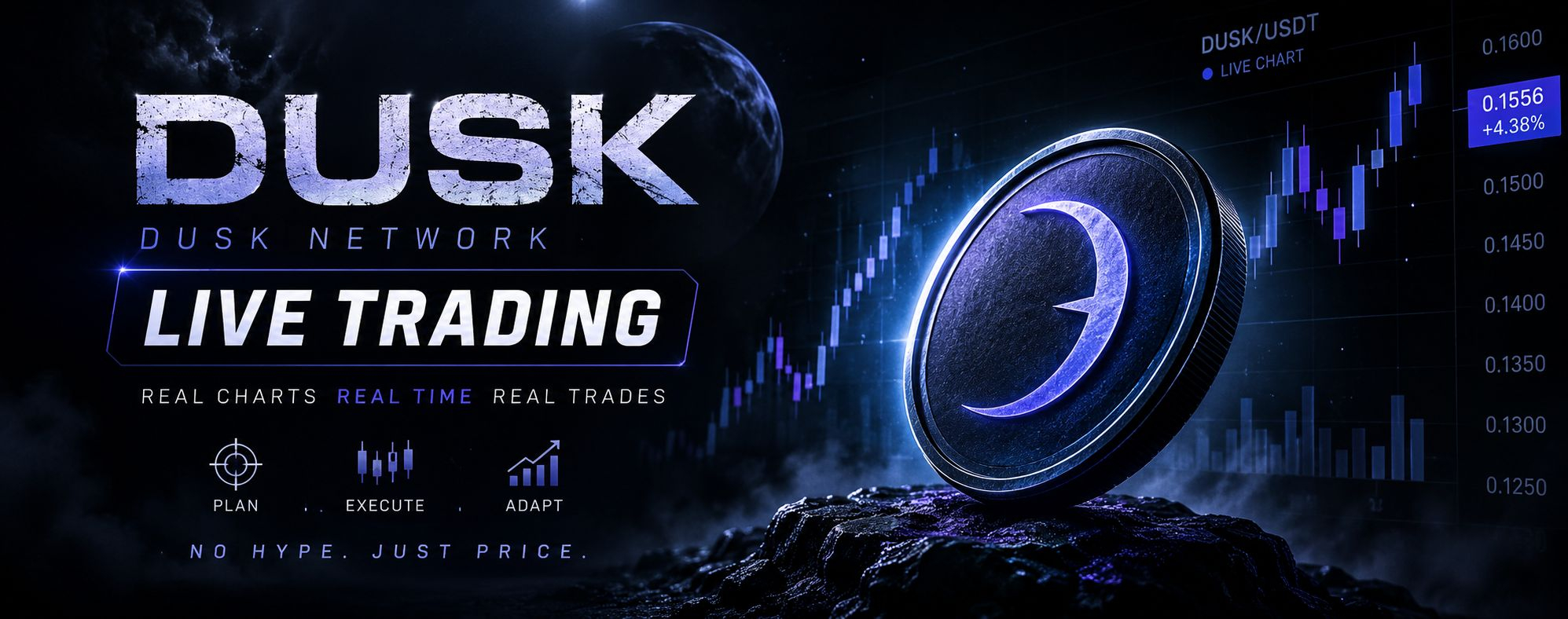
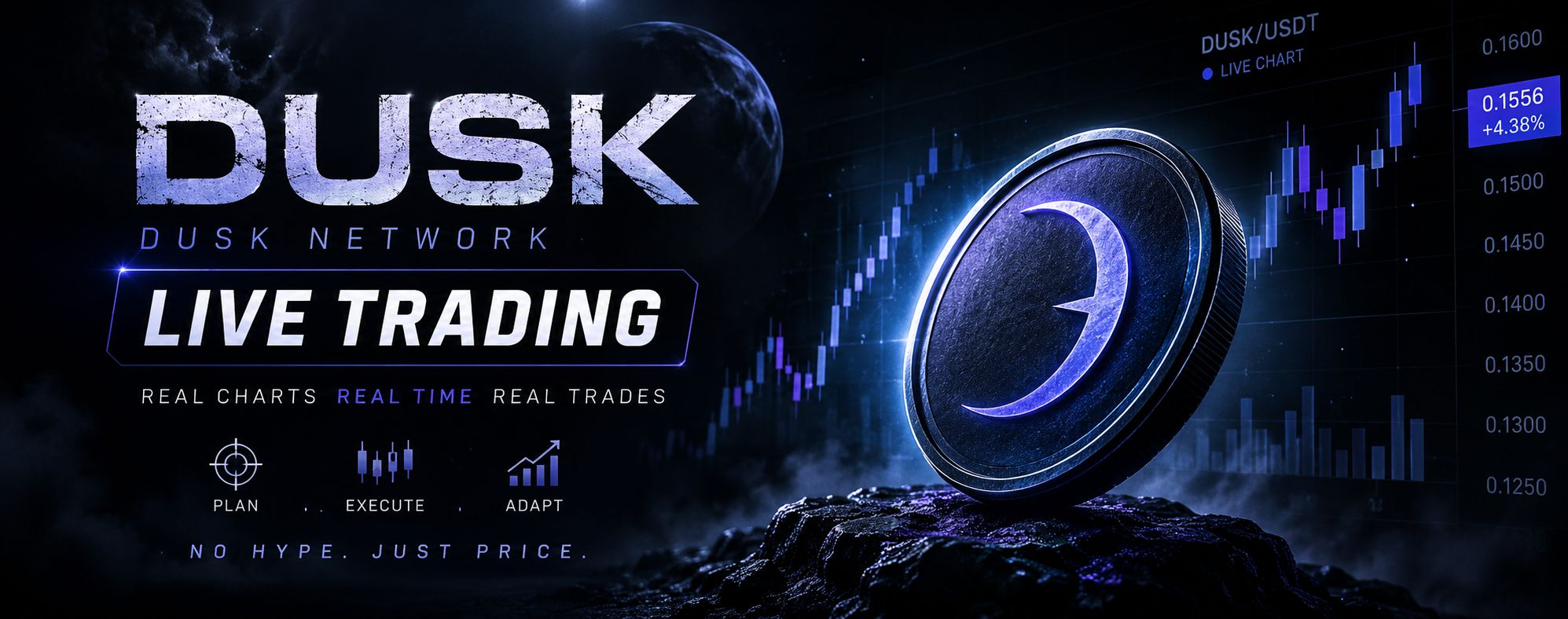
30D trade $DUSK 26.4K USDT
#dusk $DUSK @Dusk_Foundation
I figured encrypting a transaction meant hiding the whole thing, sender, receiver, amount, all of it. turns out dusk's newest privacy engine only hides one of those.
When i first looked at hedger, I literally thought homomorphic encryption sounded like the strongest privacy tool they had. what it actually leaves exposed was the more interesting part.
Here's why. hedger runs on duskevm, which is fully evm compatible so ethereum developers can bring their solidity contracts over as is. that compatibility comes from staying account based, the same model ethereum uses. every account has a visible address, which creates a different privacy model from dusk's native utxo architecture.
So hedger encrypts what happens inside that visibility. it uses homomorphic encryption built on elgamal over elliptic curves, meaning the network can compute on encrypted values without ever decrypting them, plus zero knowledge proofs to confirm those computations were done correctly. balances and transfer amounts stay encrypted end to end. proof generation happens client side, under two seconds.
What i didn't expect is that this doesn't provide full anonymity. dusk itself explains that the account based evm model limits the level of anonymity Hedger can provide, unlike its shielded phoenix model, which uses a different transaction architecture.
The same design that makes hedger fast, easy to adopt, and compatible with existing ethereum tooling is exactly what creates this privacy tradeoff.
I still don't know how developers are supposed to know which layer actually fits their use case, duskevm with hedger, or native duskvm with phoenix, when both get described under the same word, privacy, but deliver two genuinely different privacy models.
$ONG $EDEN #Dusk/usdt✅ #BinanceSquareTalks
#dusk $DUSK @Dusk
I figured encrypting a transaction meant hiding the whole thing, sender, receiver, amount, all of it. turns out dusk's newest privacy engine only hides one of those.
When i first looked at hedger, I literally thought homomorphic encryption sounded like the strongest privacy tool they had. what it actually leaves exposed was the more interesting part.
Here's why. hedger runs on duskevm, which is fully evm compatible so ethereum developers can bring their solidity contracts over as is. that compatibility comes from staying account based, the same model ethereum uses. every account has a visible address, which creates a different privacy model from dusk's native utxo architecture.
So hedger encrypts what happens inside that visibility. it uses homomorphic encryption built on elgamal over elliptic curves, meaning the network can compute on encrypted values without ever decrypting them, plus zero knowledge proofs to confirm those computations were done correctly. balances and transfer amounts stay encrypted end to end. proof generation happens client side, under two seconds.
What i didn't expect is that this doesn't provide full anonymity. dusk itself explains that the account based evm model limits the level of anonymity Hedger can provide, unlike its shielded phoenix model, which uses a different transaction architecture.
The same design that makes hedger fast, easy to adopt, and compatible with existing ethereum tooling is exactly what creates this privacy tradeoff.
I still don't know how developers are supposed to know which layer actually fits their use case, duskevm with hedger, or native duskvm with phoenix, when both get described under the same word, privacy, but deliver two genuinely different privacy models.
$ONG $EDEN #Dusk/usdt✅ #BinanceSquareTalks
I figured encrypting a transaction meant hiding the whole thing, sender, receiver, amount, all of it. turns out dusk's newest privacy engine only hides one of those.
When i first looked at hedger, I literally thought homomorphic encryption sounded like the strongest privacy tool they had. what it actually leaves exposed was the more interesting part.
Here's why. hedger runs on duskevm, which is fully evm compatible so ethereum developers can bring their solidity contracts over as is. that compatibility comes from staying account based, the same model ethereum uses. every account has a visible address, which creates a different privacy model from dusk's native utxo architecture.
So hedger encrypts what happens inside that visibility. it uses homomorphic encryption built on elgamal over elliptic curves, meaning the network can compute on encrypted values without ever decrypting them, plus zero knowledge proofs to confirm those computations were done correctly. balances and transfer amounts stay encrypted end to end. proof generation happens client side, under two seconds.
What i didn't expect is that this doesn't provide full anonymity. dusk itself explains that the account based evm model limits the level of anonymity Hedger can provide, unlike its shielded phoenix model, which uses a different transaction architecture.
The same design that makes hedger fast, easy to adopt, and compatible with existing ethereum tooling is exactly what creates this privacy tradeoff.
I still don't know how developers are supposed to know which layer actually fits their use case, duskevm with hedger, or native duskvm with phoenix, when both get described under the same word, privacy, but deliver two genuinely different privacy models.
$ONG $EDEN #Dusk/usdt✅ #BinanceSquareTalks
4
6
344
·
--
30D trade $DUSK 22.4K USDT
#dusk $DUSK @Dusk_Foundation
I figured a privacy chain's biggest strength shows up exactly when something goes wrong. dusk actually had an incident, and privacy wasn't the thing that stopped it.
When i first looked at this, I just thought the story would be about what got exploited. the more interesting part turned out to be what happened right after.
Here's why. on august 16, dusk's team spotted unusual activity on a wallet they manage for bridge operations. the response wasn't something the protocol automatically detected or handled. a person noticed, and a person acted.
So here's what actually happened. the team disabled and recycled the addresses tied to that wallet. they paused bridge services completely, not just the affected part. they rolled out a blocklist so funds couldn't move to known bad addresses. they contacted binance directly the moment they saw part of the flow touch that platform.
What stood out to me is that none of those actions came from the privacy layer itself. every one of those moves came from people with the authority to shut something off, doing it fast.
What makes dusk's privacy tech genuinely impressive is that transactions stay private from outsiders looking in. what actually protected users here was the opPosite of that, a team that could see what was happening and had the authority to intervene the moment something looked wrong.
As of now they're saying no user funds were affected, but the bridge still closed while the review continues, so that's where things stand, not where they've landed.
For a chain pushing hard into the institutional and real world asset territory, i don't know which one ends up mattering more to the people they're trying to win over, the privacy that protects transaction activity, or the centralized controls that just proved they can stop damage before it spreads.
$ONG $TMX #Dusk/usdt✅ #BullRunAhead
#dusk $DUSK @Dusk
I figured a privacy chain's biggest strength shows up exactly when something goes wrong. dusk actually had an incident, and privacy wasn't the thing that stopped it.
When i first looked at this, I just thought the story would be about what got exploited. the more interesting part turned out to be what happened right after.
Here's why. on august 16, dusk's team spotted unusual activity on a wallet they manage for bridge operations. the response wasn't something the protocol automatically detected or handled. a person noticed, and a person acted.
So here's what actually happened. the team disabled and recycled the addresses tied to that wallet. they paused bridge services completely, not just the affected part. they rolled out a blocklist so funds couldn't move to known bad addresses. they contacted binance directly the moment they saw part of the flow touch that platform.
What stood out to me is that none of those actions came from the privacy layer itself. every one of those moves came from people with the authority to shut something off, doing it fast.
What makes dusk's privacy tech genuinely impressive is that transactions stay private from outsiders looking in. what actually protected users here was the opPosite of that, a team that could see what was happening and had the authority to intervene the moment something looked wrong.
As of now they're saying no user funds were affected, but the bridge still closed while the review continues, so that's where things stand, not where they've landed.
For a chain pushing hard into the institutional and real world asset territory, i don't know which one ends up mattering more to the people they're trying to win over, the privacy that protects transaction activity, or the centralized controls that just proved they can stop damage before it spreads.
$ONG $TMX #Dusk/usdt✅ #BullRunAhead
I figured a privacy chain's biggest strength shows up exactly when something goes wrong. dusk actually had an incident, and privacy wasn't the thing that stopped it.
When i first looked at this, I just thought the story would be about what got exploited. the more interesting part turned out to be what happened right after.
Here's why. on august 16, dusk's team spotted unusual activity on a wallet they manage for bridge operations. the response wasn't something the protocol automatically detected or handled. a person noticed, and a person acted.
So here's what actually happened. the team disabled and recycled the addresses tied to that wallet. they paused bridge services completely, not just the affected part. they rolled out a blocklist so funds couldn't move to known bad addresses. they contacted binance directly the moment they saw part of the flow touch that platform.
What stood out to me is that none of those actions came from the privacy layer itself. every one of those moves came from people with the authority to shut something off, doing it fast.
What makes dusk's privacy tech genuinely impressive is that transactions stay private from outsiders looking in. what actually protected users here was the opPosite of that, a team that could see what was happening and had the authority to intervene the moment something looked wrong.
As of now they're saying no user funds were affected, but the bridge still closed while the review continues, so that's where things stand, not where they've landed.
For a chain pushing hard into the institutional and real world asset territory, i don't know which one ends up mattering more to the people they're trying to win over, the privacy that protects transaction activity, or the centralized controls that just proved they can stop damage before it spreads.
$ONG $TMX #Dusk/usdt✅ #BullRunAhead
7
14
263
Log in to explore more content
Join global crypto users on Binance Square
⚡️ Get latest and useful information about crypto.
💬 Trusted by the world’s largest crypto exchange.
👍 Discover real insights from verified creators.
Email / Phone number