

Btc simo
1.8k Posts

Btc simo
hello les traders Crypto
Open Trade

PLUME Holder
Frequent Trader
3.3 Years
1.2K+ Following
322 Followers
432 Liked
Posts
Portfolio
All
Quotes


Aevo
·
--
Bullish76M Tokens Burned & The Supply keeps Shrinking 🔥
Token buyback and burn programs have become one of the clearest signals of protocol health in DeFi. $BNB and $UNI have both used supply reduction mechanics to align token value with platform growth
.
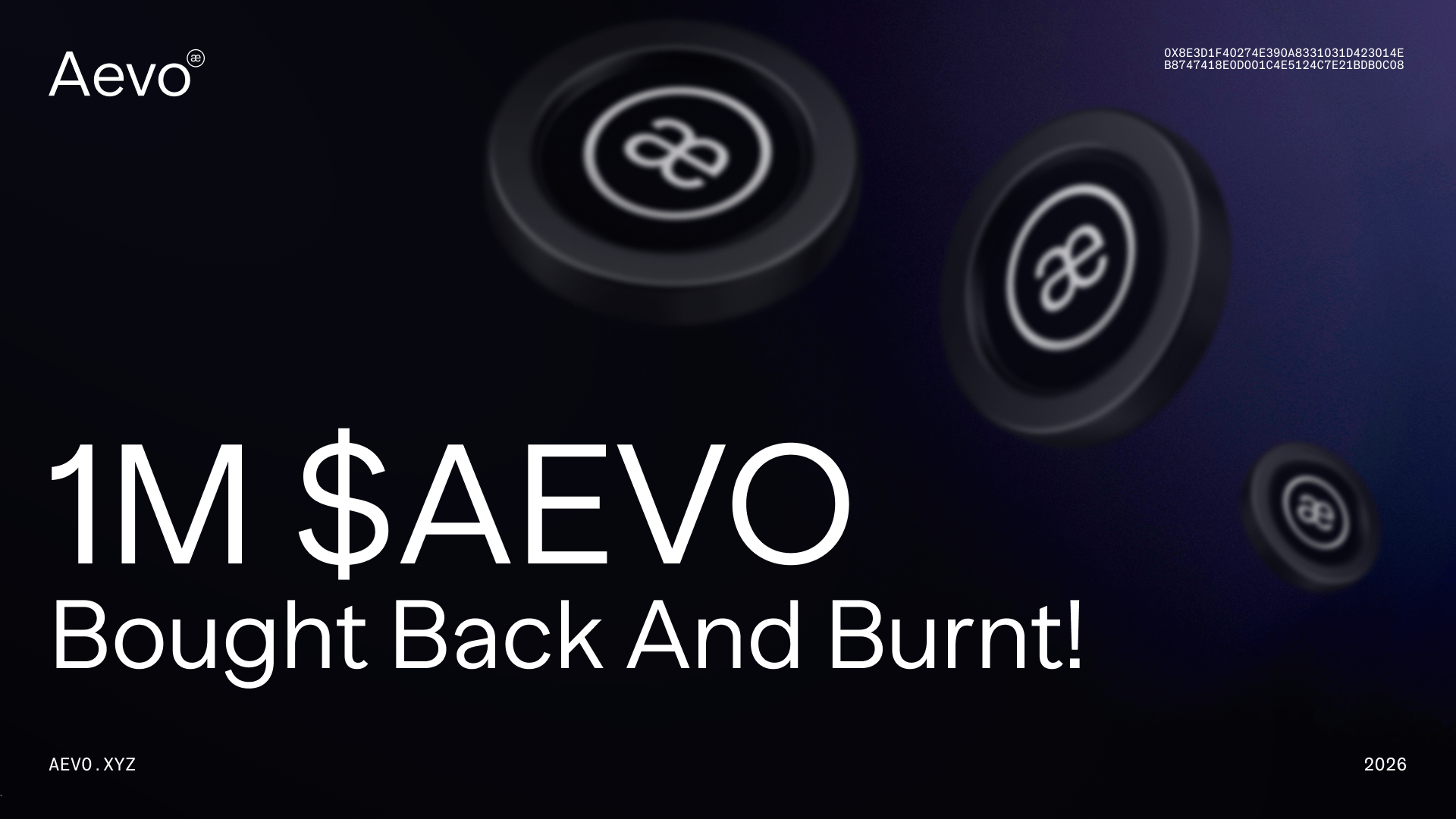
Aevo's AGP-3 buyback and burn is funded entirely by real exchange trading fees. This month, another 1,000,000 AEVO was permanently removed from circulation, bringing the total to 76M burned to date.
7.6% of the total supply gone for good.
The burn is monthly and recurring, and supply trends down as platform volume grows.
Token buyback and burn programs have become one of the clearest signals of protocol health in DeFi. $BNB and $UNI have both used supply reduction mechanics to align token value with platform growth
.
Aevo's AGP-3 buyback and burn is funded entirely by real exchange trading fees. This month, another 1,000,000 AEVO was permanently removed from circulation, bringing the total to 76M burned to date.
7.6% of the total supply gone for good.
The burn is monthly and recurring, and supply trends down as platform volume grows.

BlockchainReporter
·
--
Zypher DAO and ARO Network Unite to Power AI-Native Web4 Applications
ARO Network, a renowned decentralized AI infrastructure platform, has partnered with Zypher DAO, a popular DAO for an AI-based, Zero-Knowledge-led economy. The partnership merges the strengths of both entities to delve into unique possibilities for user-centric and intuitive blockchain applications. As ARO Network mentioned in its official X announcement, the development underscores a rising shift toward the merger of decentralized networks, cutting-edge cryptographic technologies, and AI. Thus, the move is a shared effort highlighting the rising significance of developing effective and widely accessible AI solutions to benefit digital users.
🎉 ARO Network × Zypher DAO 🎉 Thrilled to announce our partnership with @Zypher_Network — an AI and Zero-Knowledge powered Web4 ecosystem building the next generation of AI-native blockchain infrastructure and intelligent digital economies. At ARO Network, we pioneer the… pic.twitter.com/xMixd52kAh
— ARO Network (@AroNetwork) June 15, 2026
ARO Network and Zypher DAO Unveil Next-Gen Framework to Bolster AI-Led dApps
ARO Network’s partnership with Zypher DAO is set to develop an “Agentic Edge.” Agentic Edge denotes a decentralized shared ecosystem to let users own AI agents. The network attempts to redefine untapped computing resources, delivering a high-performance AI architecture to enable millisecond-scale latency. By using diverse decentralized resources, both platforms aim to provide consumers with more control over AI networks, along with decreasing reliance on conventional centrally-controlled infrastructure frameworks.
Apart from that, the partnership represents a mutual vision creating an intuitive on-chain economy that leverages Zero-Knowledge and AI technologies. The respective approach endeavors to back the development of scalable and secure decentralized applications, marked by seamless integration of AI within the blockchain networks. The combination of the Web4-focused network of Zypher DAO with the infrastructure capabilities of the ARO network seeks to develop exclusive frameworks that let users interact with different AI-led blockchain systems.
Exploring Latest Opportunities for AI-Powered Blockchain Innovation
According to ARO Network, the collaboration signals a key move toward the expansion of practical utilities of advanced decentralized technologies. While AI agents are becoming more significant in digital networks, infrastructure backing intuitive automation could be critical in revolutionizing online experiences. Ultimately, both platforms are creating unique opportunities to facilitate users, blockchain networks, and developers looking for new AI-led solutions.
🎉 ARO Network × Zypher DAO 🎉 Thrilled to announce our partnership with @Zypher_Network — an AI and Zero-Knowledge powered Web4 ecosystem building the next generation of AI-native blockchain infrastructure and intelligent digital economies. At ARO Network, we pioneer the… pic.twitter.com/xMixd52kAh
— ARO Network (@AroNetwork) June 15, 2026
ARO Network and Zypher DAO Unveil Next-Gen Framework to Bolster AI-Led dApps
ARO Network’s partnership with Zypher DAO is set to develop an “Agentic Edge.” Agentic Edge denotes a decentralized shared ecosystem to let users own AI agents. The network attempts to redefine untapped computing resources, delivering a high-performance AI architecture to enable millisecond-scale latency. By using diverse decentralized resources, both platforms aim to provide consumers with more control over AI networks, along with decreasing reliance on conventional centrally-controlled infrastructure frameworks.
Apart from that, the partnership represents a mutual vision creating an intuitive on-chain economy that leverages Zero-Knowledge and AI technologies. The respective approach endeavors to back the development of scalable and secure decentralized applications, marked by seamless integration of AI within the blockchain networks. The combination of the Web4-focused network of Zypher DAO with the infrastructure capabilities of the ARO network seeks to develop exclusive frameworks that let users interact with different AI-led blockchain systems.
Exploring Latest Opportunities for AI-Powered Blockchain Innovation
According to ARO Network, the collaboration signals a key move toward the expansion of practical utilities of advanced decentralized technologies. While AI agents are becoming more significant in digital networks, infrastructure backing intuitive automation could be critical in revolutionizing online experiences. Ultimately, both platforms are creating unique opportunities to facilitate users, blockchain networks, and developers looking for new AI-led solutions.

Log in to explore more content