
Yuki Rabbit
311 Posts

Yuki Rabbit
 Square Verified
当朋友圈分享,交易小白|推:@0xYukirabbit | Founder :@T1_labs |Champs:@Stepnofficial |Ambassador:@SeedworldMeta @the77bit
Frequent Trader
3.4 Years
76 Following
20.8K+ Followers
8.5K+ Liked
Posts
All
Quotes
Videos
Episode 3|All across the web, exchanges are competing to “play” US stocks—who actually delivered real results?
I finally finished editing the new video.
In the middle, I tried AI auto-editing. After three hours of messing around, I came to the conclusion: it can’t really work for me yet—it even needs me to work for it.
In the end, I just went back to manual editing.
In the first two episodes, we discussed why exchanges are collectively rushing into US stocks, and we compared the US stock products from different platforms.
But a product launch that happens fast and a big promotional buzz doesn’t necessarily mean the real trading data is just as impressive.
So in this episode, I went straight through TokenInsight’s latest release—the “2026 Q2 Exchange Report”—and reorganized each exchange’s performance on the TradFi track.
The results were very different from what I originally expected:
The gap between first place and the rest is even more exaggerated than I thought;
the data from the second tier is extremely tightly matched—the difference is so small it could easily reshuffle rankings at any time;
and there’s one platform that’s rarely discussed in relation to TradFi, but whose actual performance has already quietly moved it into the first tier.
Whose buzz is louder than its results?
And whose performance is clearly strong, yet the market has kept underestimating it?
The answers are all in Episode 3.
This should be the data-richest episode in the whole series. Go watch it, and then tell me: does this ranking match your expectations?
#原油一度跌破90美元 #韩国KOSPI转跌芯片股拖累 #黄金价格上涨
I finally finished editing the new video.
In the middle, I tried AI auto-editing. After three hours of messing around, I came to the conclusion: it can’t really work for me yet—it even needs me to work for it.
In the end, I just went back to manual editing.
In the first two episodes, we discussed why exchanges are collectively rushing into US stocks, and we compared the US stock products from different platforms.
But a product launch that happens fast and a big promotional buzz doesn’t necessarily mean the real trading data is just as impressive.
So in this episode, I went straight through TokenInsight’s latest release—the “2026 Q2 Exchange Report”—and reorganized each exchange’s performance on the TradFi track.
The results were very different from what I originally expected:
The gap between first place and the rest is even more exaggerated than I thought;
the data from the second tier is extremely tightly matched—the difference is so small it could easily reshuffle rankings at any time;
and there’s one platform that’s rarely discussed in relation to TradFi, but whose actual performance has already quietly moved it into the first tier.
Whose buzz is louder than its results?
And whose performance is clearly strong, yet the market has kept underestimating it?
The answers are all in Episode 3.
This should be the data-richest episode in the whole series. Go watch it, and then tell me: does this ranking match your expectations?
#原油一度跌破90美元 #韩国KOSPI转跌芯片股拖累 #黄金价格上涨
Hands are meant to support yourself, not reach out to ask for things.
I’ve found that a lot of foreigners really like reaching out and asking.
I’ve found that a lot of foreigners really like reaching out and asking.
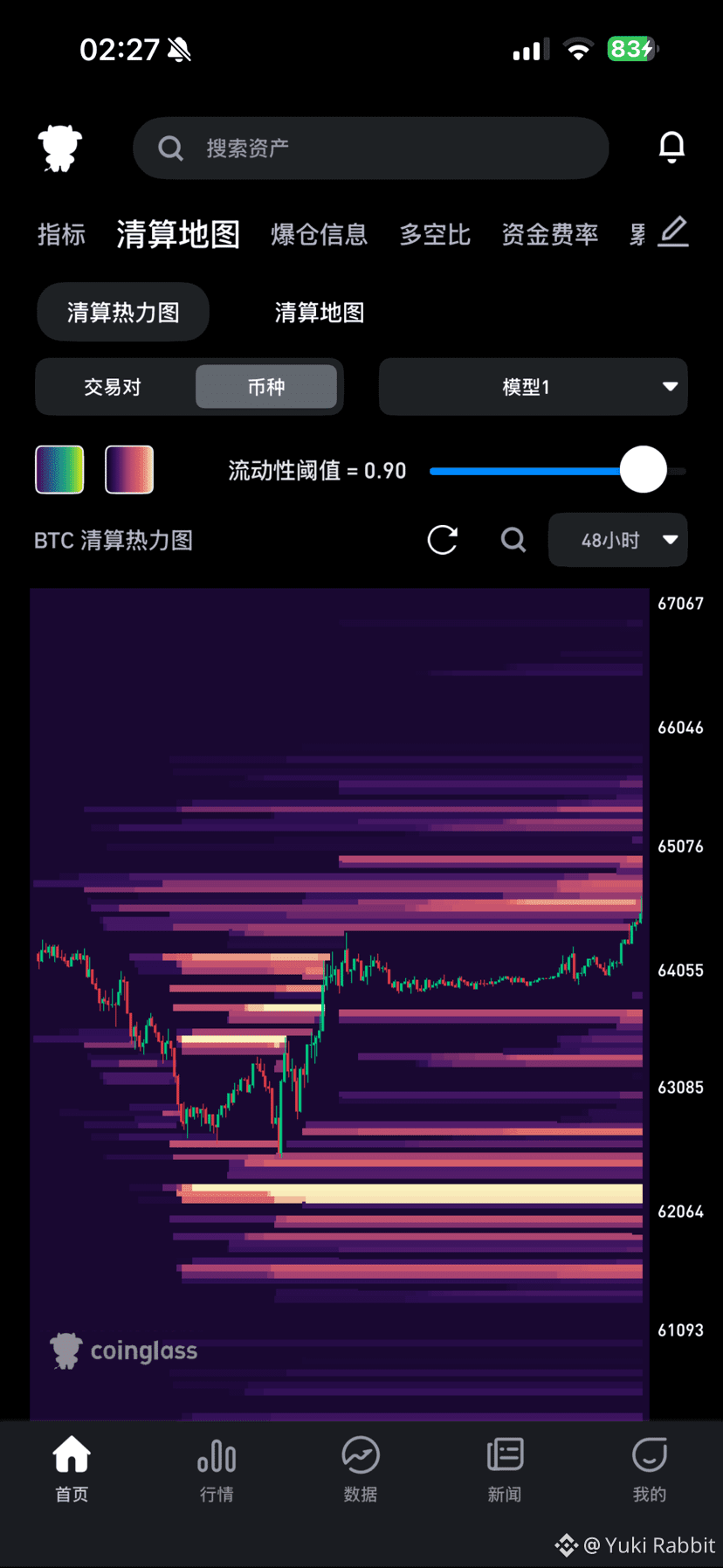
The analyst you encountered: If <a>$BTC </a> doesn't break below 6w2 and holds at 6w45, then breaking the previous high is a no-brainer. But there's also a chance it could dip further, creating a trap for shorts.
What you're really understanding: After all that talk, it's just a matter of whether it pumps or dumps.
What you're really understanding: After all that talk, it's just a matter of whether it pumps or dumps.
Happy Children's Day
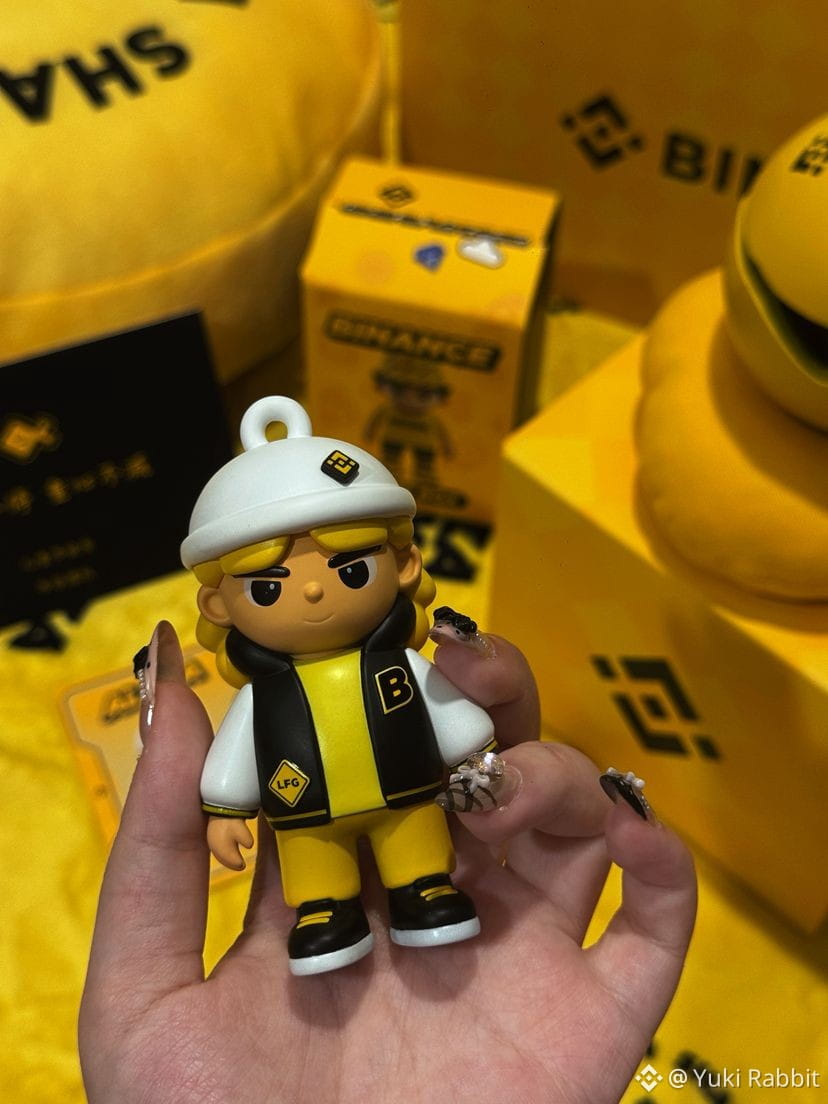
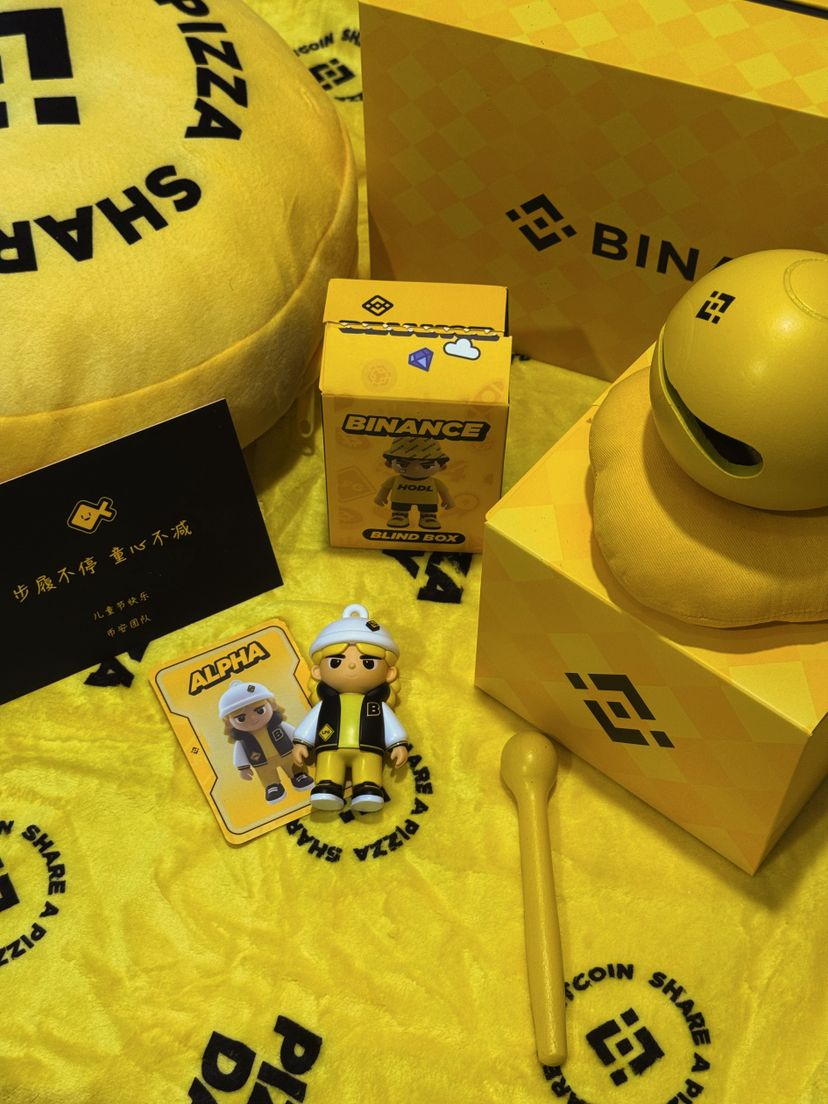
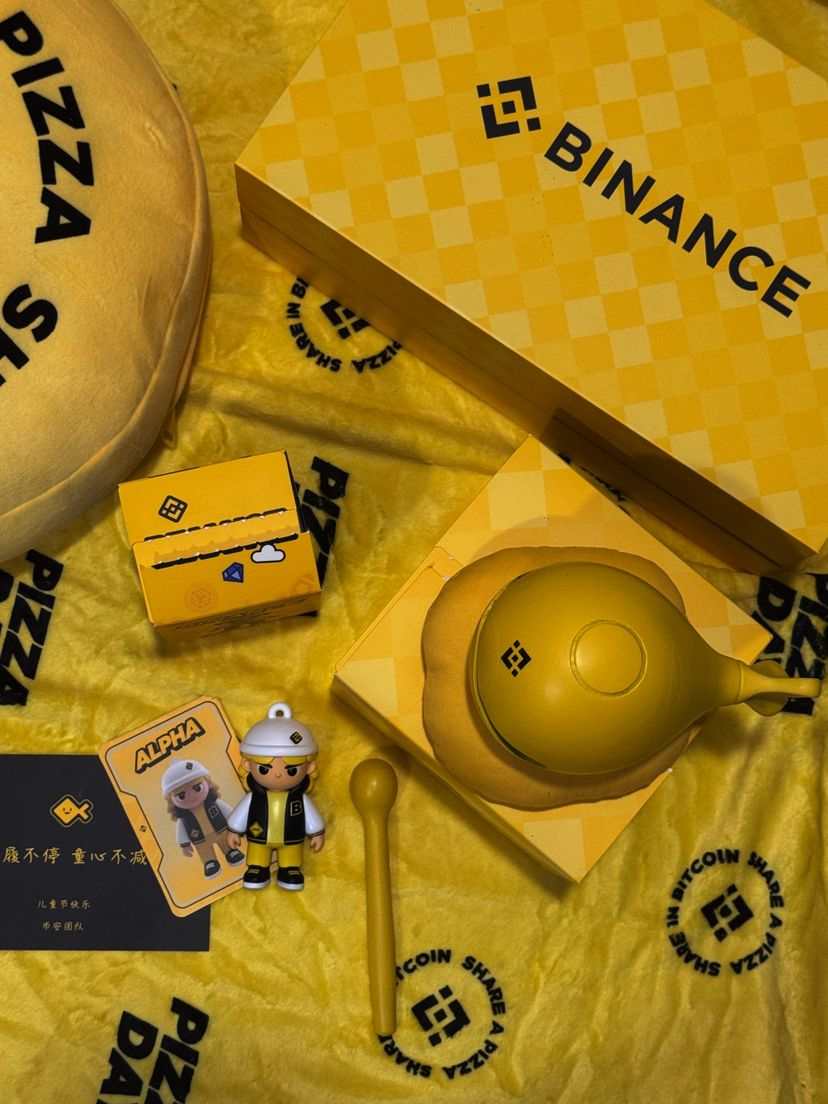
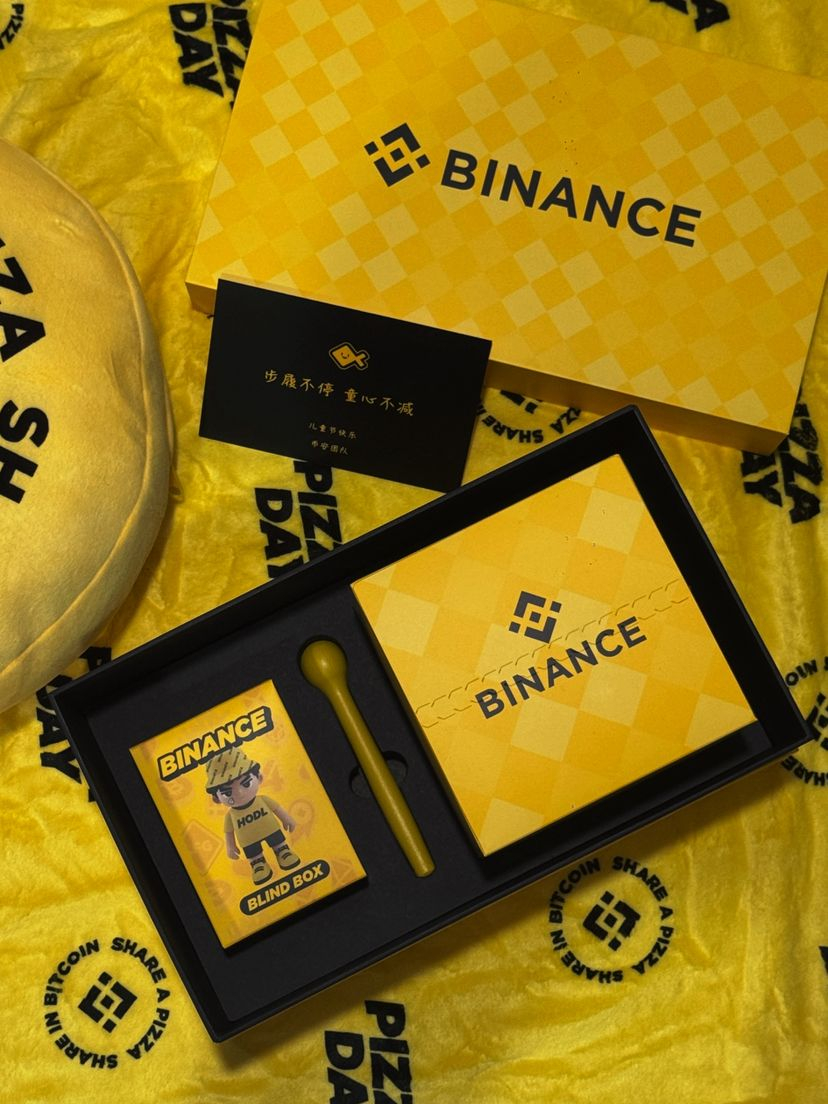
Celebrating the third birthday of web3

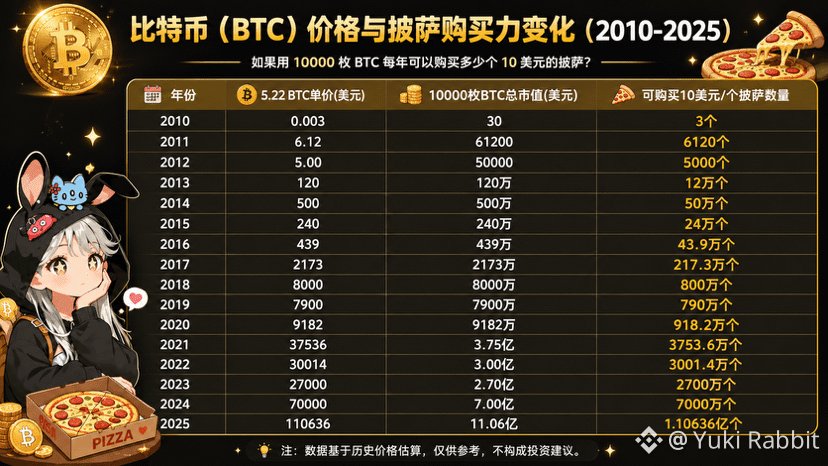
Based on the BTC price of the year, let's calculate the value of the 10,000 BTC used to buy 2 pizzas back in the day for each Bitcoin Pizza Day 🍕, and how many pizzas that could buy now.
Assumption: Average price for a regular pizza is $10 each.
In 2010, spending 10,000 BTC only got you 2 pizzas.
By 2025, the same 10,000 BTC could get you 110 million pizzas;
Every year as we approach Pizza Day, the contrast gets more outrageous, making it a nostalgic and pivotal moment for the crypto community.
Every 4 years, we experience a bull-bear cycle, and Pizza Day typically falls in the 'mid-cycle bull market post-halving.'
So, what will the price be on this day in 2026?
Assumption: Average price for a regular pizza is $10 each.
In 2010, spending 10,000 BTC only got you 2 pizzas.
By 2025, the same 10,000 BTC could get you 110 million pizzas;
Every year as we approach Pizza Day, the contrast gets more outrageous, making it a nostalgic and pivotal moment for the crypto community.
Every 4 years, we experience a bull-bear cycle, and Pizza Day typically falls in the 'mid-cycle bull market post-halving.'
So, what will the price be on this day in 2026?
Verified
Verified
Elon pulled another big move yesterday 😭
He officially announced the dissolution of xAI! It's not a shutdown; it's fully merging with SpaceX, rebranding as SpaceXAI, and from now on, Grok will be under the SpaceX banner.
Is this guy really trying to shove AI into rockets? With not enough power and cooling issues on Earth, why not just set up data centers in space? Starlink + solar power + low gravity, that's some next-level thinking.
He just fully acquired it in February, and within 3 months, he dismantled the independent company. All 11 co-founders bailed, and the 220,000 GPUs from Colossus 1 are being rented out to Anthropic to rake in profits... that’s some serious execution, wow.
For regular users, Grok will still be functional in the short term; in the long run, who knows, we might actually see something as sci-fi as 'space AI'.
Elon is really looking to streamline his empire—rockets + satellites + AI + X, all in one.
Is this integration a stroke of genius or just another pie-in-the-sky idea?
He officially announced the dissolution of xAI! It's not a shutdown; it's fully merging with SpaceX, rebranding as SpaceXAI, and from now on, Grok will be under the SpaceX banner.
Is this guy really trying to shove AI into rockets? With not enough power and cooling issues on Earth, why not just set up data centers in space? Starlink + solar power + low gravity, that's some next-level thinking.
He just fully acquired it in February, and within 3 months, he dismantled the independent company. All 11 co-founders bailed, and the 220,000 GPUs from Colossus 1 are being rented out to Anthropic to rake in profits... that’s some serious execution, wow.
For regular users, Grok will still be functional in the short term; in the long run, who knows, we might actually see something as sci-fi as 'space AI'.
Elon is really looking to streamline his empire—rockets + satellites + AI + X, all in one.
Is this integration a stroke of genius or just another pie-in-the-sky idea?
In the past few days, many people have been asking why BTC has risen?
My understanding is that this wave of increase is more like a result of technical repair, emotional recovery, and short covering rather than a sudden appearance of a super positive factor that could completely change the trend.
I mainly see these reasons:
1. There is significant support around 70k
The market sentiment was weak, and many people were waiting for further declines, but when BTC reached around 70k, it didn't lose control, indicating that there was buying interest at this level.
2. Short covering pushed it up
When the market was originally biased towards bearishness, but the price did not continue to move down, the most likely outcome is short stop-loss and covering.
This is also why the speed of this rebound has been relatively fast.
3. The market has not welcomed any new major bearish factors
Although geopolitical and macro disturbances are still present, there hasn't been a worse shock than before in the short term.
In this situation, the market can easily recover from extreme pessimism.
4. BTC itself has held its ground at a critical position
From the market perspective, this wave is not just a simple spike; it has pushed the price back up to the vicinity of the key resistance zone.
This indicates that short-term initiative has returned to the bulls.
However, my current view remains relatively restrained:
I acknowledge that this wave is strong, but I have not directly defined it as a full-on trend reversal.
Because what is truly more important is not how much it has risen, but whether it can stabilize this rise.
If it just rushes to the resistance level and then drops again, it looks more like a corrective rebound;
If it can continue to hold after a pullback, then it would be more deserving of a positive outlook.
So, regarding this wave of BTC rise, I prefer to understand it as a recovery after a deep drop, short covering, and effective key support. The short-term bias is strong, but it still needs to be observed whether it can maintain this strength.
My understanding is that this wave of increase is more like a result of technical repair, emotional recovery, and short covering rather than a sudden appearance of a super positive factor that could completely change the trend.
I mainly see these reasons:
1. There is significant support around 70k
The market sentiment was weak, and many people were waiting for further declines, but when BTC reached around 70k, it didn't lose control, indicating that there was buying interest at this level.
2. Short covering pushed it up
When the market was originally biased towards bearishness, but the price did not continue to move down, the most likely outcome is short stop-loss and covering.
This is also why the speed of this rebound has been relatively fast.
3. The market has not welcomed any new major bearish factors
Although geopolitical and macro disturbances are still present, there hasn't been a worse shock than before in the short term.
In this situation, the market can easily recover from extreme pessimism.
4. BTC itself has held its ground at a critical position
From the market perspective, this wave is not just a simple spike; it has pushed the price back up to the vicinity of the key resistance zone.
This indicates that short-term initiative has returned to the bulls.
However, my current view remains relatively restrained:
I acknowledge that this wave is strong, but I have not directly defined it as a full-on trend reversal.
Because what is truly more important is not how much it has risen, but whether it can stabilize this rise.
If it just rushes to the resistance level and then drops again, it looks more like a corrective rebound;
If it can continue to hold after a pullback, then it would be more deserving of a positive outlook.
So, regarding this wave of BTC rise, I prefer to understand it as a recovery after a deep drop, short covering, and effective key support. The short-term bias is strong, but it still needs to be observed whether it can maintain this strength.
Why has the Qingming period's crypto timeline suddenly become so 'cold that it sweats'?
This weekend, what went viral was not a new project, but a sense of 'nothing happened' emptiness—Twitter repeated existing narratives, Cryption had no decent new proposals, and the on-chain data for the main market plummeted almost in a straight line, even the usually noisy OpenClaw topic has slowed down.
1. Supply-side vacuum: Information density halved by the holiday.
2. Demand-side diversion: Friend circles have moved offline.
3. Narrative inflection point: Low heat ≠ low value.
So what should we do?
1) Take advantage of the off-season to supplement information: Organize the Reddit / Farcaster / Discord channels that we haven't had time to dig into and create a 'backup content pool'.
2) Turn experiences into content assets: Write an article titled 'What experiments I conducted on OpenClaw this week' to stake a claim for the next wave of interest.
3) Use data to record the cold scene: Create a line chart of 'daily Twitter post counts, on-chain activity, popular keywords' to distinguish between structural cooling and short-term vacuum.
The quietness of the Qingming period is not a conclusion; it only serves as a reminder: those who are prepared can accumulate advantages even during a vacuum period.
This weekend, what went viral was not a new project, but a sense of 'nothing happened' emptiness—Twitter repeated existing narratives, Cryption had no decent new proposals, and the on-chain data for the main market plummeted almost in a straight line, even the usually noisy OpenClaw topic has slowed down.
1. Supply-side vacuum: Information density halved by the holiday.
2. Demand-side diversion: Friend circles have moved offline.
3. Narrative inflection point: Low heat ≠ low value.
So what should we do?
1) Take advantage of the off-season to supplement information: Organize the Reddit / Farcaster / Discord channels that we haven't had time to dig into and create a 'backup content pool'.
2) Turn experiences into content assets: Write an article titled 'What experiments I conducted on OpenClaw this week' to stake a claim for the next wave of interest.
3) Use data to record the cold scene: Create a line chart of 'daily Twitter post counts, on-chain activity, popular keywords' to distinguish between structural cooling and short-term vacuum.
The quietness of the Qingming period is not a conclusion; it only serves as a reminder: those who are prepared can accumulate advantages even during a vacuum period.
【Why do most people miss out on the era's dividends?】
1️⃣ Insufficient information filtering ability: Truly valuable signals are often hidden in policy drafts, financial report footnotes, and overseas regulatory meeting minutes; when hot topics trend, excess returns have already been consumed by early birds.
2️⃣ Heavy path dependence: The successful formula from the previous cycle will fail in the next cycle. Those who seize the dividends are often willing to cross disciplines and industries, breaking down and reorganizing old skills.
3️⃣ Imbalanced risk budget: People say they are willing to take risks, but in reality, they are not even willing to spend 5% of their time and funds on trial and error. Without multiple small experiments, it is impossible to establish a judgment sample for new paradigms.
4️⃣ The ability stack does not compound: Focusing only on short-term performance rather than accumulating "transferable skills" (analysis, writing, resource integration). Thus, even if one occasionally rides the wave, it is impossible to sustain in the next wave.
5️⃣ Self-narrative constrains action: Either overly romantic (waiting for the perfect moment) or overly pessimistic (feeling they lack resources), thereby missing controllable variables.
**Action suggestions**: Build a layered information input system, force yourself to step out of your comfort zone once a year, set up a clear trial and error fund, treat foundational skills as a long-term investment, and record all judgment criteria. The essence of the era's dividends is not "luck" but the compounding of cognition and ability accumulated two or three cycles in advance.
1️⃣ Insufficient information filtering ability: Truly valuable signals are often hidden in policy drafts, financial report footnotes, and overseas regulatory meeting minutes; when hot topics trend, excess returns have already been consumed by early birds.
2️⃣ Heavy path dependence: The successful formula from the previous cycle will fail in the next cycle. Those who seize the dividends are often willing to cross disciplines and industries, breaking down and reorganizing old skills.
3️⃣ Imbalanced risk budget: People say they are willing to take risks, but in reality, they are not even willing to spend 5% of their time and funds on trial and error. Without multiple small experiments, it is impossible to establish a judgment sample for new paradigms.
4️⃣ The ability stack does not compound: Focusing only on short-term performance rather than accumulating "transferable skills" (analysis, writing, resource integration). Thus, even if one occasionally rides the wave, it is impossible to sustain in the next wave.
5️⃣ Self-narrative constrains action: Either overly romantic (waiting for the perfect moment) or overly pessimistic (feeling they lack resources), thereby missing controllable variables.
**Action suggestions**: Build a layered information input system, force yourself to step out of your comfort zone once a year, set up a clear trial and error fund, treat foundational skills as a long-term investment, and record all judgment criteria. The essence of the era's dividends is not "luck" but the compounding of cognition and ability accumulated two or three cycles in advance.
【AI Compliance and Dual Pressure from Capital】
1️⃣ A Los Angeles jury ruled that Meta and Google must be held accountable for “addictive” product designs that harm teenagers. Although the compensation is only $6 million, the focus has shifted from content regulation to interface/algorithm design, making Section 230 no longer an all-encompassing shield. Next, states and school districts will replicate the same approach, using the platform's infinite scrolling, push notifications, and teenage modes as part of the evidence chain.
2️⃣ The Baltimore city government sued xAI, claiming that Grok generated 3 million explicit images in 11 days, with over 23,000 involving children, and requested the court to compel xAI to modify the model's default capabilities. For the first time, local governments are bringing the “realistic deepfake” of generative AI to court, quickly expanding the regulatory boundaries.
3️⃣ Meanwhile, the capital side is still taking risks: it is reported that Reflection AI, in which Nvidia has a stake, raised $2.5 billion at a valuation of $25 billion. The high price indicates that the market still craves high-performance model infrastructure, but if it cannot provide enterprise-level cash flow within 12-18 months, such projects may also face valuation adjustments.
**My Judgment**: AI companies must now submit two reports simultaneously—products must have verifiable safety defaults and anti-addiction logic, while commercially they must prove self-sustaining cash flow. Failing to address either leg could result in lawsuits or market corrections.
1️⃣ A Los Angeles jury ruled that Meta and Google must be held accountable for “addictive” product designs that harm teenagers. Although the compensation is only $6 million, the focus has shifted from content regulation to interface/algorithm design, making Section 230 no longer an all-encompassing shield. Next, states and school districts will replicate the same approach, using the platform's infinite scrolling, push notifications, and teenage modes as part of the evidence chain.
2️⃣ The Baltimore city government sued xAI, claiming that Grok generated 3 million explicit images in 11 days, with over 23,000 involving children, and requested the court to compel xAI to modify the model's default capabilities. For the first time, local governments are bringing the “realistic deepfake” of generative AI to court, quickly expanding the regulatory boundaries.
3️⃣ Meanwhile, the capital side is still taking risks: it is reported that Reflection AI, in which Nvidia has a stake, raised $2.5 billion at a valuation of $25 billion. The high price indicates that the market still craves high-performance model infrastructure, but if it cannot provide enterprise-level cash flow within 12-18 months, such projects may also face valuation adjustments.
**My Judgment**: AI companies must now submit two reports simultaneously—products must have verifiable safety defaults and anti-addiction logic, while commercially they must prove self-sustaining cash flow. Failing to address either leg could result in lawsuits or market corrections.
【Macro Sketch】The G7 meeting is held at a monastery on the outskirts of Paris, yet it puts "anxiety over U.S. policy" on the table. Europe wants to ask two questions:
1. **Iran Line**: The Strait of Hormuz is choked, 20% of global maritime crude oil is stuck, what is the next step for the U.S., escort or escalate the conflict? If there are no answers, the EU may establish its own escort mechanism and impose a new round of sanctions against Iran, which might keep oil prices strong in the second quarter.
2. **Ukraine Line**: Allies worry that Washington, for the midterm elections, will push Kyiv towards a "bad deal." France and Germany have already stated: they would rather continue to intensify sanctions and military aid than accept a plan that exchanges time for peace.
Meanwhile, Chinese regulators are brewing plans to relax the shareholding limit for major shareholders of commercial banks, inviting long-term funds such as insurance capital and local financial holding companies to replenish regional banks. I tend to view this as a compromise that acknowledges the capital shortfall—if paired with a transparent mechanism for equity entry/exit, it might alleviate local financial pressure; if it merely allows shadow state-owned assets to increase their holdings, it will only postpone a crisis.
**Trading Strategy**: Short-term focus on the fluctuations in energy and shipping chains; medium-term attention to re-rating opportunities for onshore/offshore bank stocks, while screening for insurance capital/AMCs that truly have capital replenishment capabilities.
1. **Iran Line**: The Strait of Hormuz is choked, 20% of global maritime crude oil is stuck, what is the next step for the U.S., escort or escalate the conflict? If there are no answers, the EU may establish its own escort mechanism and impose a new round of sanctions against Iran, which might keep oil prices strong in the second quarter.
2. **Ukraine Line**: Allies worry that Washington, for the midterm elections, will push Kyiv towards a "bad deal." France and Germany have already stated: they would rather continue to intensify sanctions and military aid than accept a plan that exchanges time for peace.
Meanwhile, Chinese regulators are brewing plans to relax the shareholding limit for major shareholders of commercial banks, inviting long-term funds such as insurance capital and local financial holding companies to replenish regional banks. I tend to view this as a compromise that acknowledges the capital shortfall—if paired with a transparent mechanism for equity entry/exit, it might alleviate local financial pressure; if it merely allows shadow state-owned assets to increase their holdings, it will only postpone a crisis.
**Trading Strategy**: Short-term focus on the fluctuations in energy and shipping chains; medium-term attention to re-rating opportunities for onshore/offshore bank stocks, while screening for insurance capital/AMCs that truly have capital replenishment capabilities.
The recent drop in gold has awakened the "blind bullishness"
Today's drop in gold is truly typical.
Just a couple of days ago, everyone was saying, "Gold will only go up," and then the market suddenly turned and gave a strong pullback.
What struck me the most this time is not the magnitude of the drop, but the rhythm:
When opinions are too uniform and positions are too crowded, prices often first attack the most consensus direction.
My current thought is very simple:
Long-term logic can still be considered, but the short-term has already entered a high volatility phase.
At this time, holding on stubbornly is not called faith; many times, it's just emotions.
So today I didn't rush to catch the bottom, but waited for three signals:
1) Is there a volume increase to stop the decline?
2) Can it return to the key position?
3) Is there sustainability in the rebound?
Doing fewer emotional trades may be more important than capturing an additional profit segment.
(Only recording personal market observations, not constituting investment advice)
#Gold #Macroeconomics #MarketReview #TradingThoughts #RiskManagement
Today's drop in gold is truly typical.
Just a couple of days ago, everyone was saying, "Gold will only go up," and then the market suddenly turned and gave a strong pullback.
What struck me the most this time is not the magnitude of the drop, but the rhythm:
When opinions are too uniform and positions are too crowded, prices often first attack the most consensus direction.
My current thought is very simple:
Long-term logic can still be considered, but the short-term has already entered a high volatility phase.
At this time, holding on stubbornly is not called faith; many times, it's just emotions.
So today I didn't rush to catch the bottom, but waited for three signals:
1) Is there a volume increase to stop the decline?
2) Can it return to the key position?
3) Is there sustainability in the rebound?
Doing fewer emotional trades may be more important than capturing an additional profit segment.
(Only recording personal market observations, not constituting investment advice)
#Gold #Macroeconomics #MarketReview #TradingThoughts #RiskManagement
Log in to explore more content