


🤓Hi! Like you, when you see so many token symbols, we already know what the tokens are?? Well, what should you buy? I’ve seen posts of this and that!!! WHAT DO I DO!!!!😱. Don’t worry.!!
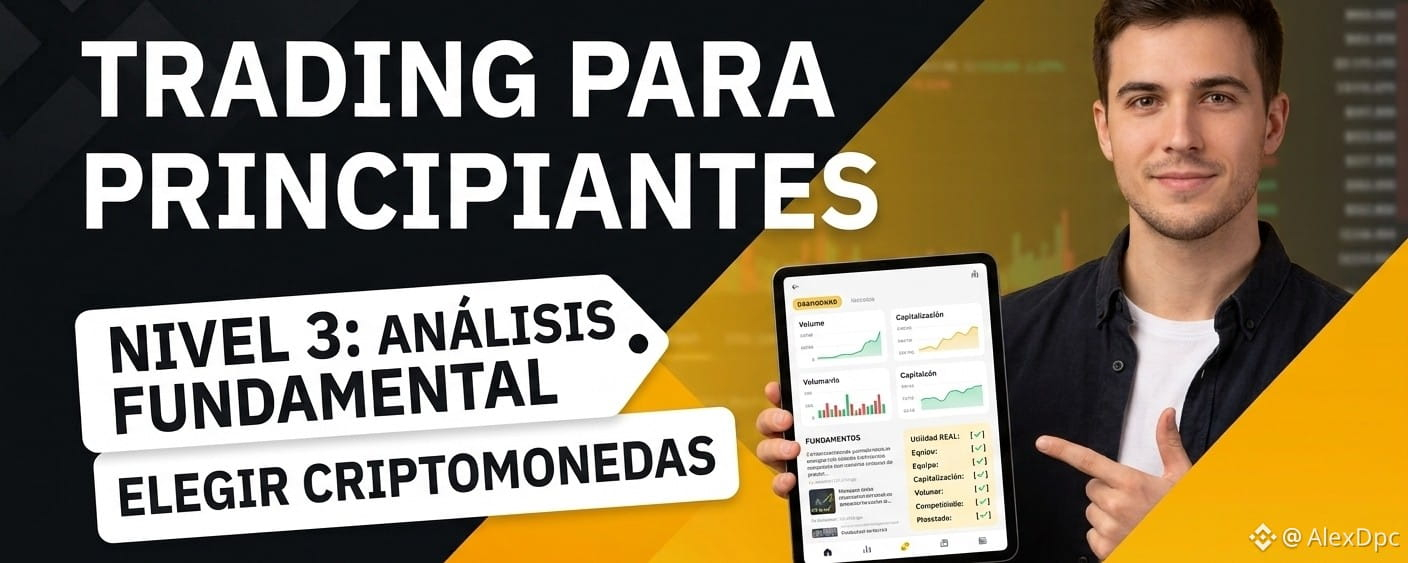
Welcome to Level 3! We already know how to interpret the candles and find the "support levels" on the chart. Now it's time to answer the big question: how do you know which asset to choose to start trading, and how are they classified?
Don’t buy just because a coin name sounds funny or is trending on social media. For beginners, the analysis is divided into two key tools:
1. Technical Analysis (What you learned in Level 2) 📊
It involves looking at the price chart to identify patterns, trends (whether the market is going up or down), and trading in the support and resistance zones you already know.
2. Fundamental Analysis (Is the project healthy?) 🔎
Before putting your money into a coin, research its basic "health" outside the chart. Make sure it meets this:
Real projects: Invest in coins with real utility (like Bitcoin or Ethereum) or projects backed by massive communities and serious companies.
High market capitalization: Look for coins that are in the Top 20 or Top 50 on Binance. They are more stable and it’s less likely that their price will be manipulated or drop to zero overnight.
3. The #1 mistake you should avoid today: FOMO ⚠️
What is FOMO? It’s the "fear of missing out" (Fear of Missing Out).
It happens when you see a coin going up with a huge green candle and you buy desperately out of fear of missing the opportunity. Golden rule: Never buy at the "top" (resistance). Wait patiently for the price to fall to a "floor" (support) before entering.
📖 Crypto Dictionary: Level 3 (How are the assets called?)
To avoid getting confused when you search for what to buy, you need to know that not everything that shines in the market is called the same:
Cryptocurrency (Native Coin): It is a digital asset that has its own independent network or blockchain. The perfect example is Bitcoin (BTC) or Ethereum (ETH). They were created to work as money or their own smart contracts.
Token: It is a digital asset that does not have its own network, but instead works "borrowed" within the blockchain of another cryptocurrency (such as the tokens that live on the Ethereum network). They usually represent a service, a game, or a voting right in a project.
Altcoin (Alternative Coin): This is a very commonly used term that defines any cryptocurrency that is not Bitcoin. Literally, it means "alternative coin" (Alternative Coin). Ethereum, Cardano, or Solana are altcoins.
Stablecoin (Stable Coin): Cryptocurrencies designed to always be worth the same as a traditional currency (like the dollar). The most famous example on Binance is USDT. They are always worth $1 and are ideal for sheltering your profits.
💡 Today’s key advice: At first, focus only on trading with major Cryptocurrencies or Top 10 Altcoins. Leave new or unknown tokens for when you have much more experience.
What did you think of this Level 3? Did you already know the difference between a coin and a token?
👇 Which cryptocurrency is your favorite to research today? I’ll read your comments!
#Write2Earn #Binance #TradingParaPrincipiantes
