

Written by: Nancy, PANews
The UAE in the desert is quietly rising to become a cryptocurrency oasis.
From ubiquitous cryptocurrency payments on the streets to the direct involvement of sovereign wealth funds, and to a clear and transparent regulatory framework, the UAE has quickly risen to become a cryptocurrency hub connecting East and West.
Especially Abu Dhabi, with recent gatherings of cryptocurrency giants like Binance, Tether, Circle, and Ripple, this thriving city is becoming a new cryptocurrency hotspot targeted by the world.
With key licenses in hand, Binance has established its governance center in Abu Dhabi.
Abu Dhabi is rapidly emerging as a global compliance hub for the cryptocurrency industry.
On December 8, shortly after the conclusion of Dubai Blockchain Week, Binance announced significant progress, having obtained comprehensive regulatory authorization from the Abu Dhabi Global Market (ADGM) Financial Services Regulatory Authority (FSRA), becoming the first crypto CEX to obtain a global license under this framework. According to the new regulations, starting from January 5, 2026, Binance will split into three independently licensed entities covering the three key businesses of exchanges, clearinghouses, and brokers.
To cope with regulatory pressure, Binance had adopted a no-headquarters strategy for a long time, seeking policy space in multiple countries. As the industry fully moves towards compliance, Binance has begun actively seeking a physical base. Abu Dhabi is the most closely watched candidate, not only because co-CEO Richard Teng comes from the ADGM regulatory system and is familiar with the local environment, but also because of the tight capital connections.
In March of this year, Binance announced it received a $2 billion investment from Abu Dhabi investment firm MGX, marking the first time it has accepted external institutional investment since its founding. Given MGX's significant ties to the Abu Dhabi royal family and government, along with widespread belief that Binance's valuation is low in this round, this investment is seen as Binance's 'letter of intent' to Abu Dhabi.
Richard Teng, in an interview with (Fortune), did not specify whether Abu Dhabi would become Binance's global headquarters, but he emphasized that regulators are more concerned about where Binance will be regulated and stated that ADGM will become the governance center for Binance's global platform.
Binance's actions themselves send a strong signal to the world, with Abu Dhabi potentially becoming a new coordinate for global crypto compliance.
Crypto institutions are flocking in
This trend goes far beyond Binance. More and more crypto giants are flocking to Abu Dhabi, expanding the ecological map.
On December 8, Tether announced that its stablecoin USDT received the 'Fiat-Referenced Token' qualification certification granted by ADGM, meaning that transactions, custody, and other services related to USDT can be conducted in compliance within the regulatory framework. Additionally, the support network for USDT has also expanded to more chains such as Aptos, Celo, Cosmos, Near, TON, and TRON.
Another stablecoin giant, Circle, has also announced that it has successfully passed approval and is officially authorized to operate as a currency service provider within ADGM. Dr. Saeeda Jaffar, the Managing Director for the Middle East and Africa, will accelerate the adoption of trusted digital dollar and on-chain payment solutions in the UAE and the Middle East and Africa markets.
Ripple is also accelerating in the UAE this year. In May, Ripple announced it received the first blockchain payment license from the Dubai Financial Services Authority (DFSA) and reached collaborations with the UAE's Zand Bank and Mamo, as well as its acquisition of Ripple Prime, which announced the opening of a new office in Abu Dhabi. Recently, Ripple's stablecoin RLUSD received local regulatory approval for compliant payment and fund management services.
Additionally, crypto institutions/projects such as Bybit, Kraken, Animoca Brands, eToro, TON Foundation, Paxos, and Aptos are continuously advancing into Abu Dhabi and have successively obtained approval to conduct various crypto businesses locally.
From policy to the streets, the UAE embraces the crypto economy
The UAE's embrace of the crypto economy is not a momentary whim, but rather a crucial piece in the post-oil era.
Facing the long-term trend of declining global demand for fossil energy, the UAE is proactively breaking away from single-resource dependence, shifting its growth focus from traditional energy infrastructure to high-tech and the digital economy. This strategy has already shown significant results, with non-oil industries accounting for over 70% of the UAE's GDP.
Today, the UAE has quietly become one of the countries with the highest crypto penetration rates in the world and is transitioning from mere investment speculation to actual scenarios such as payments and consumption, with crypto payments visible in daily life everywhere.
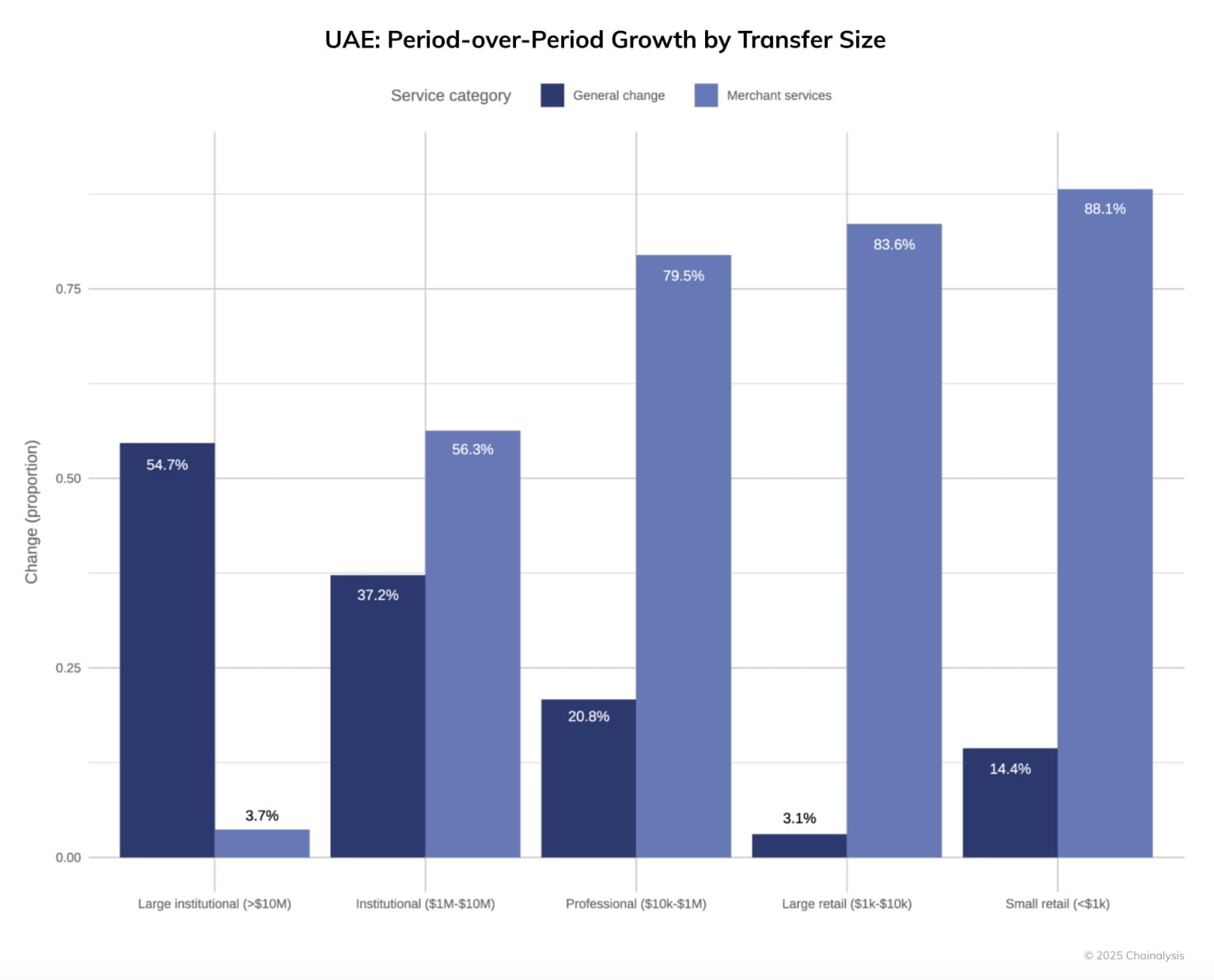
ApeX Protocol's latest research shows that 25.3% of the local population holds cryptocurrency, with an overall increase in penetration rate exceeding 210% in recent years. Chainalysis's latest (2025 Global Cryptocurrency Geography Report) shows that between 2024 and 2025, the scale of crypto inflow in the UAE will exceed $56 billion, firmly holding the position as the second-largest crypto market in the MENA (Middle East and North Africa) region. This growth is mainly driven by institutional trading, with a year-on-year increase of 54.7%. Meanwhile, small and large retail transactions in the country have also increased by 88.1% and 83.6%, respectively.
Among the seven emirates, Dubai and Abu Dhabi are the two major crypto bases in the UAE. Dubai has gained global recognition due to its keen business sense, its fame even surpassing that of the UAE itself, and it is the first to attract global institutions, with 70% of the world's top 500 companies having established regional headquarters here. As early as 2022, Dubai established the world's first independent regulatory agency specifically for virtual assets, VARA (Dubai Virtual Assets Regulatory Authority), quickly attracting global crypto companies. Although the collapse of FTX raised questions about its initial licensing system, VARA 2.0 has strengthened regulatory systems.
Abu Dhabi is known for its stability, relying on stronger government backing and financial capability, making it the preferred choice for institutions seeking long-term security. At the same time, Abu Dhabi, which contributes more than two-thirds of the national GDP and holds 94% of the oil reserves, carries the economic backbone of the UAE, needing to escape the comfort zone of oil, and possesses the 'cash capability' required for transformation.
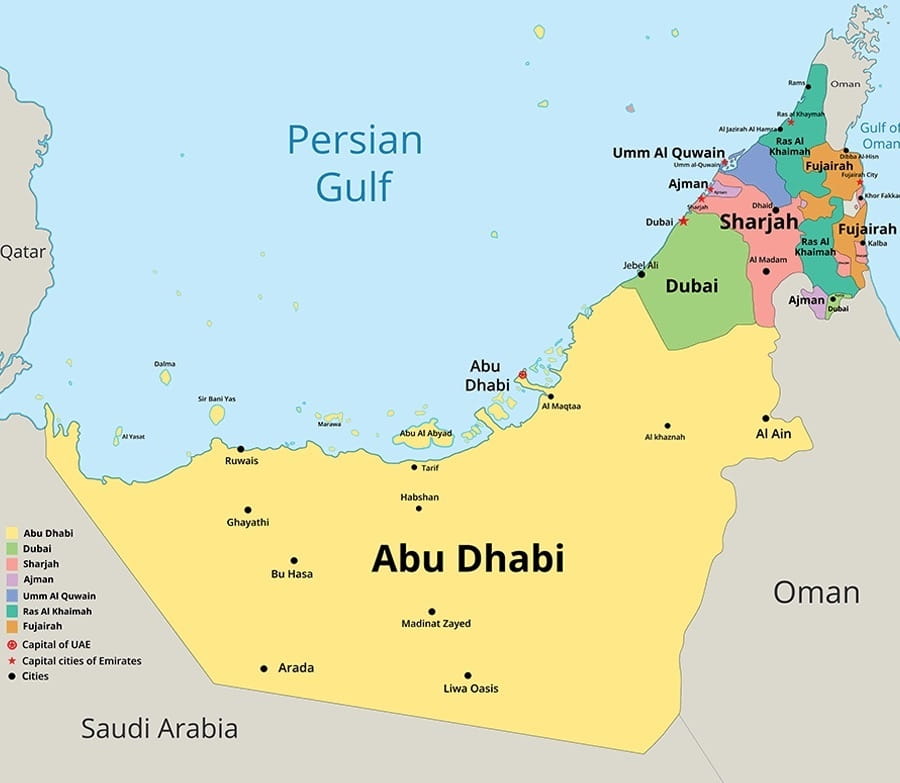
In 2018, the Abu Dhabi Global Market (ADGM) launched the world's earliest complete crypto regulatory system. ADGM has an independent court system, directly adopting the Anglo-American legal system, placing its legal enforceability and regulatory transparency among the top globally. External evaluations state that it is 'more detailed than the EU MiCA, and more coherent than that of the US.'
Abu Dhabi's competitive advantage also comes from the government's direct involvement, using national credit and capital accelerators to promote industry development. For example, the UAE National Bank, which is fully owned by the Dubai government, provides cryptocurrency services through its subsidiary banks; the Abu Dhabi Sovereign Wealth Fund ADQ and other major institutions plan to collaborate on launching a Dirham stablecoin; the Royal Group, closely related to the ruling family of Abu Dhabi, is making the UAE one of the world's major sovereign holders of Bitcoin through a state-supported Bitcoin mining program; the Mubadala Investment Company, part of the Abu Dhabi Sovereign Wealth Fund, has also allocated Bitcoin.
An excellent location connecting East and West
If taking Dubai or Abu Dhabi as the center, two-thirds of the global population can be reached within 8 hours.
At the same time, controlling the Persian Gulf's export routes and being close to the Strait of Hormuz makes the UAE a must-pass point connecting the Asia-Pacific and European economic circles. The GMT+4 time zone configuration allows local financial institutions to seamlessly connect the two major markets of Asia and Europe. For Western companies, it is a gateway to the Middle East; for Eastern companies, it is the preferred offshore headquarters with transparent laws and controllable risks.
The irreplaceable locational advantage has made the UAE a golden hub connecting the East and West, enhancing its appeal to the crypto industry.
More importantly, the UAE's crypto industry can mature quickly in a short period due to its federal government's parallel dual framework with various emirates, allowing for both unified regulation and differentiated practical experimentation. The clear trajectory of this governance approach can be seen from some of this year's crypto policies, which set boundaries while also providing space for experimentation. For instance, the Dubai Financial Services Authority launched a tokenization regulatory sandbox, opening a pathway for RWA testing; the UAE's latest Federal Decree No. 6 includes DeFi, stablecoins, DEX, cross-chain bridges, etc., into the central bank's regulatory framework. For the crypto industry, this means a clearer compliance path, while innovation still has room to grow.
It can be said that the rise of crypto in the UAE began with its geographical hub, succeeded through compliance systems, and thrived on innovative strategies.
With its strong sovereign wealth funds, lenient tax systems, long-term ample financial reserves, and friendly business tax environments, the UAE has won the favor of global capital. According to Henley & Partners data, in 2025 alone, about 9,800 millionaires migrated to the UAE, the highest net inflow in the world. Well-known figures in the crypto circle, such as CZ and Pavel Durov, are often based here.
Previously, Telegram founder Durov recommended on X that Dubai is the city he considers the most suitable for living, 'zero tax rate, pure ambition,' a dreamland for libertarians.
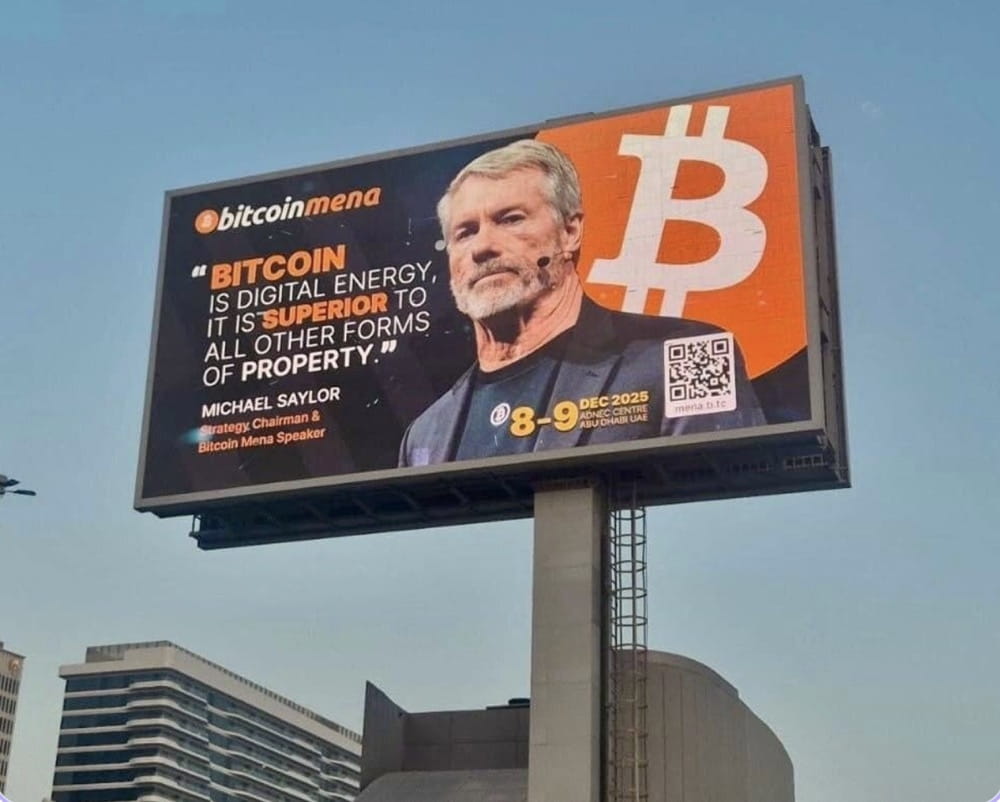
The recent Bitcoin MENA 2025 conference has also made Abu Dhabi the focus of the global crypto community. The day before the conference, a giant billboard on the streets of Abu Dhabi prominently displayed the famous quote from Bitcoin advocate Michael Saylor, 'Bitcoin is digital energy, superior to all other assets,' which may also be the attitude this city conveys to the outside world.
Currently, the narrative of crypto in the UAE is expanding from the desert to the global stage. As for whether the Middle East will embrace Bitcoin as Michael Saylor envisions, potentially becoming 'the Switzerland of the 21st century,' the UAE may provide its own answer through actions.

