

#openledger
openledger
17.3M views
202,843 Discussing
Hot
Latest

·
--
Bullish
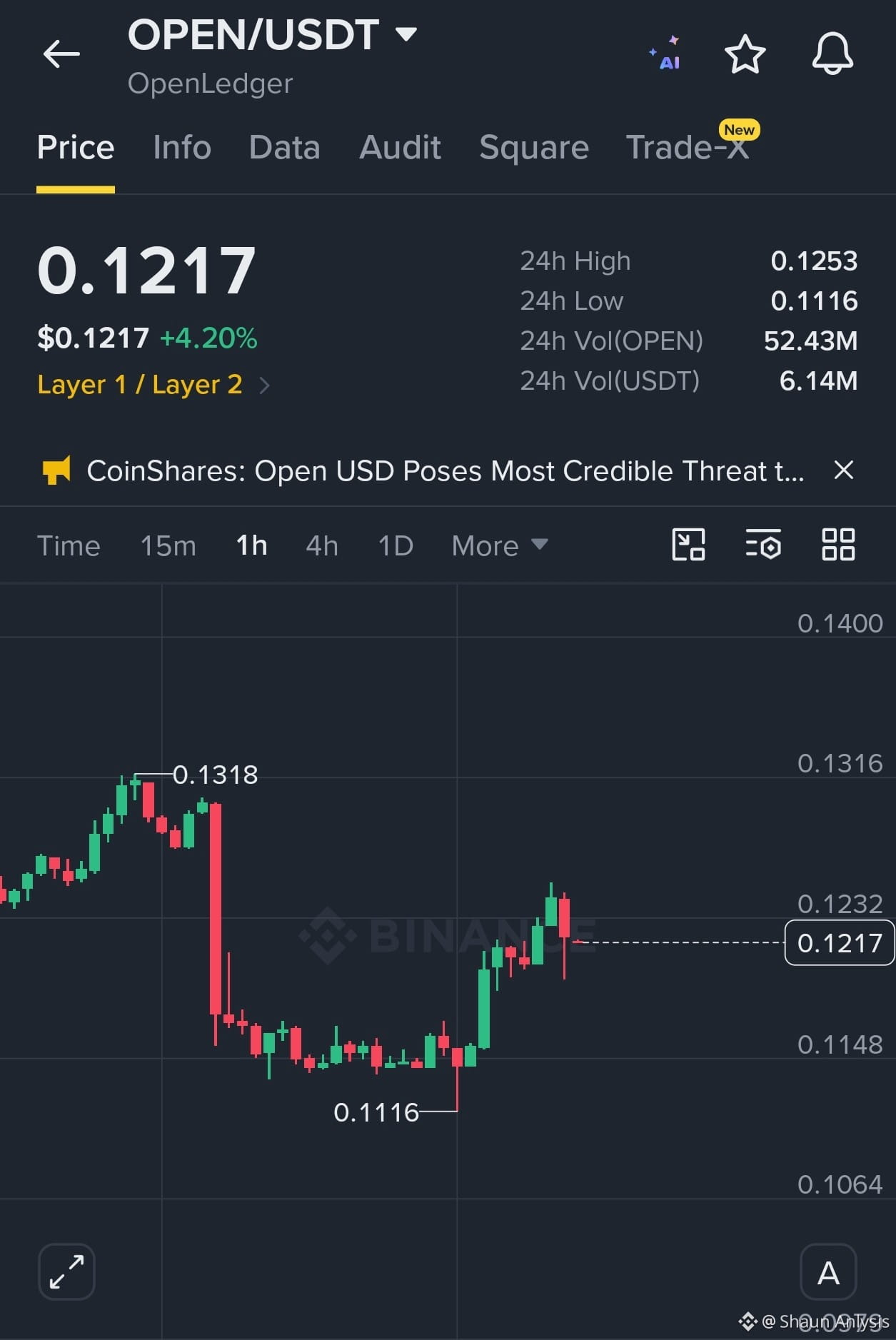
#OpenLedger just printed a textbook V-shaped recovery—don't miss the next leg up.
After a sharp flush to 0.1116, $OPEN has bounced hard, reclaiming the 0.12 handle and currently sitting at 0.1217 (+4.20% on the day). The 1H chart shows a clear shift in momentum as buyers defend the lows and push back toward the 24H high of 0.1253.
Bullish
Entry:0.1180 – 0.1220
SL:0.1100
TP1:0.1318
{future}(OPENUSDT)
#OpenLedger just printed a textbook V-shaped recovery—don't miss the next leg up.
After a sharp flush to 0.1116, $OPEN has bounced hard, reclaiming the 0.12 handle and currently sitting at 0.1217 (+4.20% on the day). The 1H chart shows a clear shift in momentum as buyers defend the lows and push back toward the 24H high of 0.1253.
Bullish
Entry:0.1180 – 0.1220
SL:0.1100
TP1:0.1318
After a sharp flush to 0.1116, $OPEN has bounced hard, reclaiming the 0.12 handle and currently sitting at 0.1217 (+4.20% on the day). The 1H chart shows a clear shift in momentum as buyers defend the lows and push back toward the 24H high of 0.1253.
Bullish
Entry:0.1180 – 0.1220
SL:0.1100
TP1:0.1318
1
94

·
--
Bullish
Partly True
*OPEN: A Quiet AI Opportunity Near The Bottom*
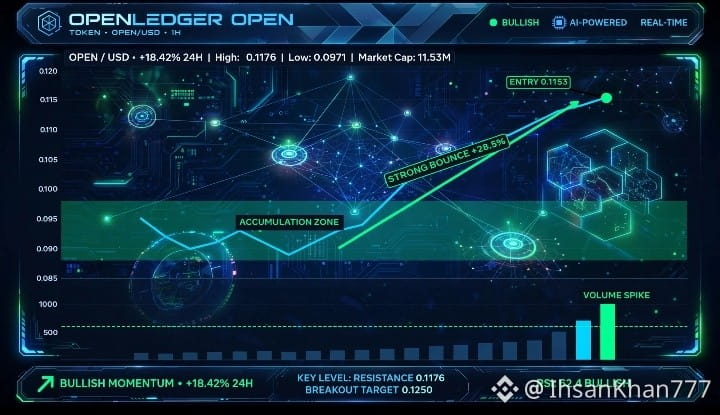
While many focus on popular AI coins, OpenLedger (OPEN) is trading near its lowest price ever.
From $1.84 to $0.11, a large correction of 94 percent. Is this a bottom?
Here is what makes OpenLedger interesting:
OpenLedger is building infrastructure for AI, where data, models, and AI agents receive payments automatically. Think of AI agents paying for verified data on-chain. This is called agentic payments, and OpenLedger aims to lead this sector.
Market cap is around $43M while volume is $31M. That is over 71 percent turnover, showing strong interest and active accumulation.
Token unlocks are happening. About 612k tokens daily around October 8th. Small unlocks create short-term pressure, but also long-term opportunity.
It is listed on major exchanges like Upbit, Bithumb, and Binance, with strong liquidity.
I bought OPEN at $0.1153 near the low range. This is not financial advice, but early infrastructure often looks quiet before growth.
#OpenLedger
#OpenAI
#BestTimeToBuy
#Market_Update
#BullRunTips
$OPEN
$BTC
$BNB
@XG297174
@dengshen
@eggtartcake_grape
@haoge666
@Square-Creator-f92ceb7e7882c
@Square-Creator-d4cc116ea2fe
@SGD852568
@Square-Creator-f0c9a305b41a7
@z12123444
@Square-Creator-9bd28167d172
@NUTS_btc
@heyi
@CZ
@Openledger
@Biswap_Dex
@MagVerse
@EASY7777
@KZG6886
@Z0628
@JavierDot
@oanicai
*OPEN: A Quiet AI Opportunity Near The Bottom*
While many focus on popular AI coins, OpenLedger (OPEN) is trading near its lowest price ever.
From $1.84 to $0.11, a large correction of 94 percent. Is this a bottom?
Here is what makes OpenLedger interesting:
OpenLedger is building infrastructure for AI, where data, models, and AI agents receive payments automatically. Think of AI agents paying for verified data on-chain. This is called agentic payments, and OpenLedger aims to lead this sector.
Market cap is around $43M while volume is $31M. That is over 71 percent turnover, showing strong interest and active accumulation.
Token unlocks are happening. About 612k tokens daily around October 8th. Small unlocks create short-term pressure, but also long-term opportunity.
It is listed on major exchanges like Upbit, Bithumb, and Binance, with strong liquidity.
I bought OPEN at $0.1153 near the low range. This is not financial advice, but early infrastructure often looks quiet before growth.
#OpenLedger
#OpenAI
#BestTimeToBuy
#Market_Update
#BullRunTips
$OPEN
$BTC
$BNB
@K线人生飞哥
@比特币预言家
@Eggtartcake夕
@交易员张张子
@华尔街倩倩子
@猩火Bro
@Flash闪光灯
@乐天eth
@加密大格格
@klxmBobo
@Nuts坚果
@Yi He
@CZ
@OpenLedger
@Qordman crypto
@MagVerse
@EASY喊單哥
@KZG Crypto 口罩哥
@Whale韭阴针鲸0628
@_WHALE_
@Oanic AI
While many focus on popular AI coins, OpenLedger (OPEN) is trading near its lowest price ever.
From $1.84 to $0.11, a large correction of 94 percent. Is this a bottom?
Here is what makes OpenLedger interesting:
OpenLedger is building infrastructure for AI, where data, models, and AI agents receive payments automatically. Think of AI agents paying for verified data on-chain. This is called agentic payments, and OpenLedger aims to lead this sector.
Market cap is around $43M while volume is $31M. That is over 71 percent turnover, showing strong interest and active accumulation.
Token unlocks are happening. About 612k tokens daily around October 8th. Small unlocks create short-term pressure, but also long-term opportunity.
It is listed on major exchanges like Upbit, Bithumb, and Binance, with strong liquidity.
I bought OPEN at $0.1153 near the low range. This is not financial advice, but early infrastructure often looks quiet before growth.
#OpenLedger
#OpenAI
#BestTimeToBuy
#Market_Update
#BullRunTips
$OPEN
$BTC
$BNB
@K线人生飞哥
@比特币预言家
@Eggtartcake夕
@交易员张张子
@华尔街倩倩子
@猩火Bro
@Flash闪光灯
@乐天eth
@加密大格格
@klxmBobo
@Nuts坚果
@Yi He
@CZ
@OpenLedger
@Qordman crypto
@MagVerse
@EASY喊單哥
@KZG Crypto 口罩哥
@Whale韭阴针鲸0628
@_WHALE_
@Oanic AI
4
863

·
--
📉 $OPEN
— OpenLedger Cooling Off
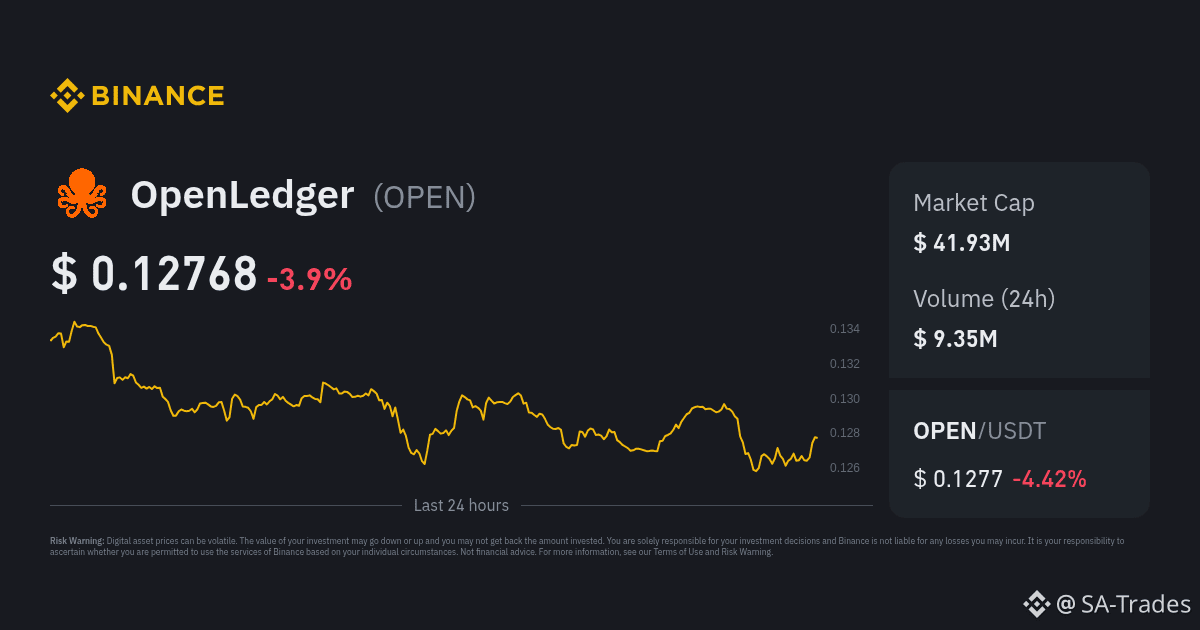
OpenLedger (OPEN) down -3.9% today, now trading at $0.1277.
📊 Market Cap: $41.93M
📊 24h Volume: $9.35M
Choppy price action over the last 24h — sellers stepping in after failing to hold higher levels.
Accumulation zone or further downside? 👀
Trade $OPEN here
{future}(OPENUSDT)
#OPEN #OpenLedger #BinanceSquare #crypto
📉 $OPEN
— OpenLedger Cooling Off
OpenLedger (OPEN) down -3.9% today, now trading at $0.1277.
📊 Market Cap: $41.93M
📊 24h Volume: $9.35M
Choppy price action over the last 24h — sellers stepping in after failing to hold higher levels.
Accumulation zone or further downside? 👀
Trade $OPEN here
#OPEN #OpenLedger #BinanceSquare #crypto
— OpenLedger Cooling Off
OpenLedger (OPEN) down -3.9% today, now trading at $0.1277.
📊 Market Cap: $41.93M
📊 24h Volume: $9.35M
Choppy price action over the last 24h — sellers stepping in after failing to hold higher levels.
Accumulation zone or further downside? 👀
Trade $OPEN here
#OPEN #OpenLedger #BinanceSquare #crypto
2
4
263

·
--
Hey youth $OPEN under pressure… Will there be a bounce?
OpenLedger (OPEN) coin is currently moving under selling pressure, and the price is around $0.1299 after a drop of nearly 6% within 24 hours.
📉 Key levels:
🟢 Support: $0.1260
🔴 Resistance: $0.1328 – $0.1330
🔴 Stronger resistance: $0.1368 – $0.1375
If the price holds at $0.126 and starts forming higher lows, we may see an attempt to rebound. But a clear break could open the way to lower levels.
👀 OPEN is worth monitoring now, not buying just because the price has fallen.
Do you expect a rebound for OPEN or the continuation of the downtrend?
⚠️ Not financial advice—just analysis and shared for discussion.
#OpenLedger #cryptouniverseofficial #BinanceSquare #trading
Hey youth $OPEN under pressure… Will there be a bounce?
OpenLedger (OPEN) coin is currently moving under selling pressure, and the price is around $0.1299 after a drop of nearly 6% within 24 hours.
📉 Key levels:
🟢 Support: $0.1260
🔴 Resistance: $0.1328 – $0.1330
🔴 Stronger resistance: $0.1368 – $0.1375
If the price holds at $0.126 and starts forming higher lows, we may see an attempt to rebound. But a clear break could open the way to lower levels.
👀 OPEN is worth monitoring now, not buying just because the price has fallen.
Do you expect a rebound for OPEN or the continuation of the downtrend?
⚠️ Not financial advice—just analysis and shared for discussion.
#OpenLedger #cryptouniverseofficial #BinanceSquare #trading
OpenLedger (OPEN) coin is currently moving under selling pressure, and the price is around $0.1299 after a drop of nearly 6% within 24 hours.
📉 Key levels:
🟢 Support: $0.1260
🔴 Resistance: $0.1328 – $0.1330
🔴 Stronger resistance: $0.1368 – $0.1375
If the price holds at $0.126 and starts forming higher lows, we may see an attempt to rebound. But a clear break could open the way to lower levels.
👀 OPEN is worth monitoring now, not buying just because the price has fallen.
Do you expect a rebound for OPEN or the continuation of the downtrend?
⚠️ Not financial advice—just analysis and shared for discussion.
#OpenLedger #cryptouniverseofficial #BinanceSquare #trading

1
1
229

·
--
This afternoon, I was in line at the mall waiting to grab some bubble tea. The two girls in front of me were stuck deciding between 'three parts sugar or five parts sugar.' I glanced down at my screen, and suddenly realized that my Agent had quietly completed two rounds of monitoring. In that moment, a particularly strange thought popped into my head: AI seems to be subtly changing everyone’s perception of 'time.' In the past, doing on-chain operations was exhausting; you'd always be waiting for news, waiting for movements, waiting for candlesticks, waiting for project teams to tweet in the middle of the night, like sitting by a pot of water waiting for it to boil—nothing happening, yet you dare not leave.
I've done my share of silly things. I remember once, to keep an eye on an on-chain opportunity, I sat on the couch with my laptop, trying to tough it out, and when the market moved at 3 AM, I was so tired that my eyes were blurry, and I ended up clicking on the wrong chain. Looking back now, that feeling is very much like waiting for a crush to text back: your phone vibrates, your heart skips a beat; it doesn’t vibrate, and you start overthinking. But after messing around with @OpenLedger's Agent, I've noticed my sense of time has changed; I can now research and keep an eye on the information flow long-term while the Automate runs in the background. Sometimes, while I’m grocery shopping, unboxing packages, or washing my hair, it’s still silently scanning the market.
What’s most unsettling is that people are gradually getting used to this feeling of 'there’s always someone watching over you.' In the past, we could still review our trades and find signals ourselves; now, more and more people just wait for system alerts. To put it bluntly, the market is slowly shifting from 'people waiting for opportunities' to 'AI waiting for opportunities on behalf of people.' Of course, I don’t fully see this as a good thing because waiting is inherently part of trading; a lot of our judgment comes from those boring, anxious, self-doubting moments.
Right then, the bubble tea shop called my number, and as I looked down, a new execution record popped up on my screen. I picked up my tea, but I couldn’t help thinking: If all this waiting time gets consumed by AI in the future, will people become more like 'just the ones who press the confirm button?' @Openledger #openledger $OPEN
This afternoon, I was in line at the mall waiting to grab some bubble tea. The two girls in front of me were stuck deciding between 'three parts sugar or five parts sugar.' I glanced down at my screen, and suddenly realized that my Agent had quietly completed two rounds of monitoring. In that moment, a particularly strange thought popped into my head: AI seems to be subtly changing everyone’s perception of 'time.' In the past, doing on-chain operations was exhausting; you'd always be waiting for news, waiting for movements, waiting for candlesticks, waiting for project teams to tweet in the middle of the night, like sitting by a pot of water waiting for it to boil—nothing happening, yet you dare not leave.
I've done my share of silly things. I remember once, to keep an eye on an on-chain opportunity, I sat on the couch with my laptop, trying to tough it out, and when the market moved at 3 AM, I was so tired that my eyes were blurry, and I ended up clicking on the wrong chain. Looking back now, that feeling is very much like waiting for a crush to text back: your phone vibrates, your heart skips a beat; it doesn’t vibrate, and you start overthinking. But after messing around with @OpenLedger's Agent, I've noticed my sense of time has changed; I can now research and keep an eye on the information flow long-term while the Automate runs in the background. Sometimes, while I’m grocery shopping, unboxing packages, or washing my hair, it’s still silently scanning the market.
What’s most unsettling is that people are gradually getting used to this feeling of 'there’s always someone watching over you.' In the past, we could still review our trades and find signals ourselves; now, more and more people just wait for system alerts. To put it bluntly, the market is slowly shifting from 'people waiting for opportunities' to 'AI waiting for opportunities on behalf of people.' Of course, I don’t fully see this as a good thing because waiting is inherently part of trading; a lot of our judgment comes from those boring, anxious, self-doubting moments.
Right then, the bubble tea shop called my number, and as I looked down, a new execution record popped up on my screen. I picked up my tea, but I couldn’t help thinking: If all this waiting time gets consumed by AI in the future, will people become more like 'just the ones who press the confirm button?' @OpenLedger #openledger $OPEN
I've done my share of silly things. I remember once, to keep an eye on an on-chain opportunity, I sat on the couch with my laptop, trying to tough it out, and when the market moved at 3 AM, I was so tired that my eyes were blurry, and I ended up clicking on the wrong chain. Looking back now, that feeling is very much like waiting for a crush to text back: your phone vibrates, your heart skips a beat; it doesn’t vibrate, and you start overthinking. But after messing around with @OpenLedger's Agent, I've noticed my sense of time has changed; I can now research and keep an eye on the information flow long-term while the Automate runs in the background. Sometimes, while I’m grocery shopping, unboxing packages, or washing my hair, it’s still silently scanning the market.
What’s most unsettling is that people are gradually getting used to this feeling of 'there’s always someone watching over you.' In the past, we could still review our trades and find signals ourselves; now, more and more people just wait for system alerts. To put it bluntly, the market is slowly shifting from 'people waiting for opportunities' to 'AI waiting for opportunities on behalf of people.' Of course, I don’t fully see this as a good thing because waiting is inherently part of trading; a lot of our judgment comes from those boring, anxious, self-doubting moments.
Right then, the bubble tea shop called my number, and as I looked down, a new execution record popped up on my screen. I picked up my tea, but I couldn’t help thinking: If all this waiting time gets consumed by AI in the future, will people become more like 'just the ones who press the confirm button?' @OpenLedger #openledger $OPEN

77

·
--
Bullish
I Think OpenLedger Is Quietly Building the Missing Economy Behind AI
The more I explore OpenLedger, the more I feel that most people are looking at it from the wrong angle.
At first, I thought it was simply another project combining AI and blockchain. But the deeper I went, the more I realized that OpenLedger seems focused on something much bigger: the economic coordination of intelligence.
I keep asking myself a simple question: when AI creates value, who actually captures that value?
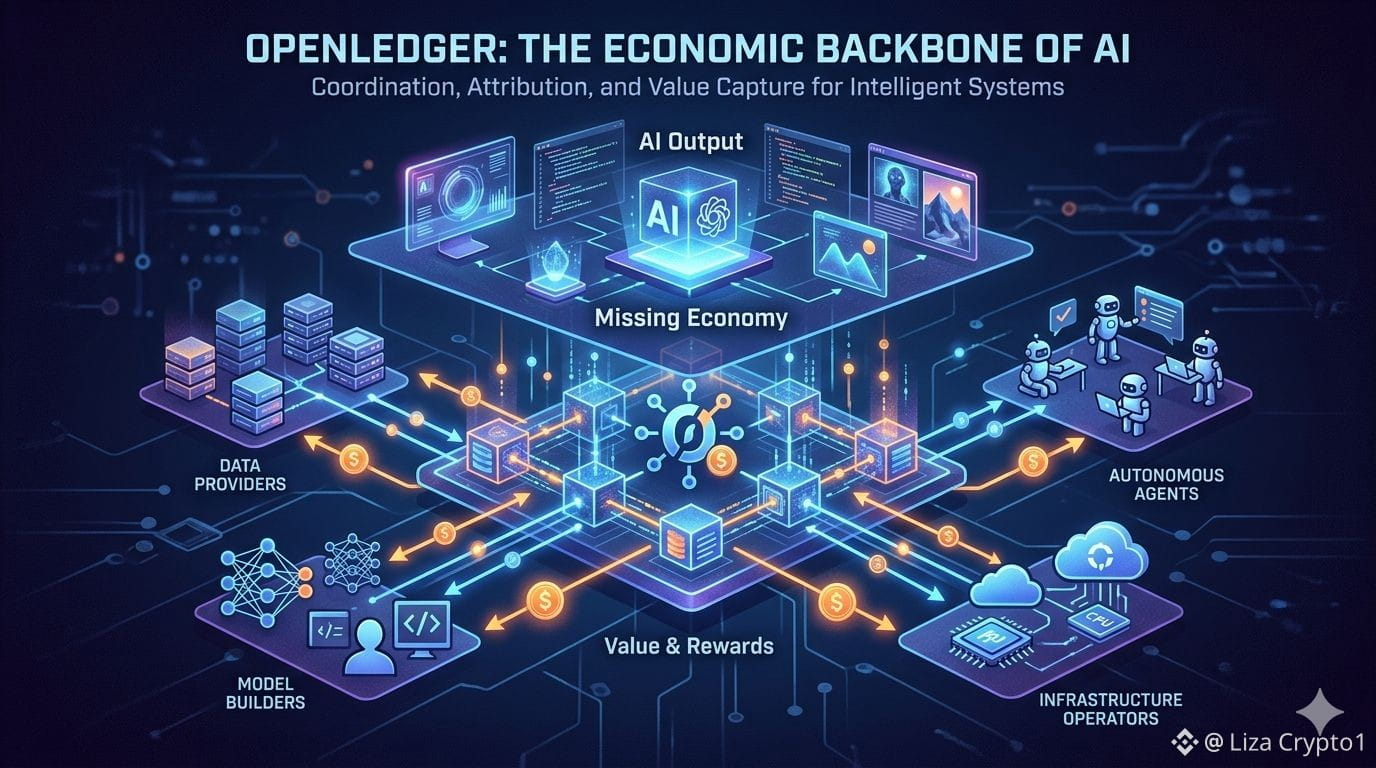
Every AI output is influenced by data providers, model builders, infrastructure operators, and increasingly autonomous agents. Yet once the final result appears, the connection between contribution and reward often disappears. I think this is where OpenLedger becomes interesting.
What stands out to me is that it isn't just trying to make AI more powerful. It appears to be creating a framework where data, models, and agents can remain connected to the value they help generate.
The OPEN token also caught my attention. I don't see it purely as a speculative asset. I see it as a coordination tool that helps align incentives across participants, creating an economic loop around AI activity.
My biggest takeaway is this: most people believe intelligence will be the most valuable resource in the AI era. I increasingly believe attribution may become just as important.
If AI becomes abundant, knowing where value came from—and who deserves to benefit from it—could become the real competitive advantage.
That's why I think OpenLedger is tackling a problem that the market hasn't fully appreciated yet.
@Openledger #OpenLedger $OPEN
{spot}(OPENUSDT)
I Think OpenLedger Is Quietly Building the Missing Economy Behind AI
The more I explore OpenLedger, the more I feel that most people are looking at it from the wrong angle.
At first, I thought it was simply another project combining AI and blockchain. But the deeper I went, the more I realized that OpenLedger seems focused on something much bigger: the economic coordination of intelligence.
I keep asking myself a simple question: when AI creates value, who actually captures that value?
Every AI output is influenced by data providers, model builders, infrastructure operators, and increasingly autonomous agents. Yet once the final result appears, the connection between contribution and reward often disappears. I think this is where OpenLedger becomes interesting.
What stands out to me is that it isn't just trying to make AI more powerful. It appears to be creating a framework where data, models, and agents can remain connected to the value they help generate.
The OPEN token also caught my attention. I don't see it purely as a speculative asset. I see it as a coordination tool that helps align incentives across participants, creating an economic loop around AI activity.
My biggest takeaway is this: most people believe intelligence will be the most valuable resource in the AI era. I increasingly believe attribution may become just as important.
If AI becomes abundant, knowing where value came from—and who deserves to benefit from it—could become the real competitive advantage.
That's why I think OpenLedger is tackling a problem that the market hasn't fully appreciated yet.
@OpenLedger #OpenLedger $OPEN
The more I explore OpenLedger, the more I feel that most people are looking at it from the wrong angle.
At first, I thought it was simply another project combining AI and blockchain. But the deeper I went, the more I realized that OpenLedger seems focused on something much bigger: the economic coordination of intelligence.
I keep asking myself a simple question: when AI creates value, who actually captures that value?
Every AI output is influenced by data providers, model builders, infrastructure operators, and increasingly autonomous agents. Yet once the final result appears, the connection between contribution and reward often disappears. I think this is where OpenLedger becomes interesting.
What stands out to me is that it isn't just trying to make AI more powerful. It appears to be creating a framework where data, models, and agents can remain connected to the value they help generate.
The OPEN token also caught my attention. I don't see it purely as a speculative asset. I see it as a coordination tool that helps align incentives across participants, creating an economic loop around AI activity.
My biggest takeaway is this: most people believe intelligence will be the most valuable resource in the AI era. I increasingly believe attribution may become just as important.
If AI becomes abundant, knowing where value came from—and who deserves to benefit from it—could become the real competitive advantage.
That's why I think OpenLedger is tackling a problem that the market hasn't fully appreciated yet.
@OpenLedger #OpenLedger $OPEN
1
131

·
--
Why OpenLedger is part of the next generation internet narrativeWasn't really planning to go deep today. Had the charts open, OPEN was doing the usual — hovering around the same range it's been stuck in for weeks, nothing dramatic. Market felt like it was waiting for something. So I closed the price tab and pulled up something I'd bookmarked a while back, just to fill the time.
Started reading through some OpenLedger, $OPEN , #OpenLedger @Openledger documentation. Had an angle in my head going in — the whole "next generation internet" pitch. Web3. Decentralization. User ownership. The kind of thing that sounds impressive at a conference and then evaporates when you try to point to something concrete.
But I sat with it longer than I expected to. And something came loose.
Here's the realization. Every generation of the internet has been defined not by what users got to do — but by who controlled the underlying infrastructure layer that everything else ran on.
Web1: whoever owned the servers had the leverage. Those were the ISPs, the hosting companies, the router infrastructure. The application layer on top was almost irrelevant — the infrastructure was the moat.
Web2: the infrastructure became the platforms. Facebook, Google, AWS. The data pipelines and distribution rails. Once they owned the pipes your content flowed through, they owned the value. And they were right — user-facing applications on top came and went, but whoever ran the infrastructure printed money.
Now look at what AI is doing to the internet. The application layer is changing constantly — new interfaces, new chatbots, new products. But underneath all of it, there is one thing that the entire AI economy depends on: training data and the models built from it. That's the new infrastructure layer.
And right now, it's entirely owned by a handful of private companies. Same structure. Different layer.
OpenLedger is trying to make that layer ownable and settleable by the network — not by a corporation. Not as a fairness gesture. As an infrastructure play. The Proof of Attribution system, the Datanets, the on-chain lineage — it's all aimed at the same thing: making intelligence infrastructure function more like a protocol than a proprietary product.
That reframe hit differently than the usual "Web3 narrative" pitch. Because Web3 often ends up being about applications — NFTs, DAO voting, token-gated communities. Interesting maybe, but not infrastructure. This is infrastructure-level positioning.
I thought "okay, this is a compelling thesis." But then I checked the actual chain data. DeFiLlama has annual protocol revenue at $693K. Fees dropped another 23% this past week. The circulating supply has expanded to over 290M tokens from 215.5M at launch — meaning a lot of tokens went out the door and relatively little revenue came back in.
And that's the quiet problem with infrastructure bets. The idea can be structurally correct and still fail. Infrastructure requires enormous network scale to generate moat value. TCP/IP is the protocol that runs the internet — but the companies that tried to own variants of TCP/IP mostly disappeared. The ones that survived were the ones that reached critical mass before competitors did.
OpenLedger has the positioning right. Whether it reaches the adoption threshold before the September 2026 investor unlocks arrive, before better-funded competitors converge on the same territory, before the window closes… that I can't tell from the current numbers.
The idea is right. The timing is the gamble.
Still watching. Nothing obvious to do right now.
Why OpenLedger is part of the next generation internet narrative
Wasn't really planning to go deep today. Had the charts open, OPEN was doing the usual — hovering around the same range it's been stuck in for weeks, nothing dramatic. Market felt like it was waiting for something. So I closed the price tab and pulled up something I'd bookmarked a while back, just to fill the time.
Started reading through some OpenLedger, $OPEN , #OpenLedger @OpenLedger documentation. Had an angle in my head going in — the whole "next generation internet" pitch. Web3. Decentralization. User ownership. The kind of thing that sounds impressive at a conference and then evaporates when you try to point to something concrete.
But I sat with it longer than I expected to. And something came loose.
Here's the realization. Every generation of the internet has been defined not by what users got to do — but by who controlled the underlying infrastructure layer that everything else ran on.
Web1: whoever owned the servers had the leverage. Those were the ISPs, the hosting companies, the router infrastructure. The application layer on top was almost irrelevant — the infrastructure was the moat.
Web2: the infrastructure became the platforms. Facebook, Google, AWS. The data pipelines and distribution rails. Once they owned the pipes your content flowed through, they owned the value. And they were right — user-facing applications on top came and went, but whoever ran the infrastructure printed money.
Now look at what AI is doing to the internet. The application layer is changing constantly — new interfaces, new chatbots, new products. But underneath all of it, there is one thing that the entire AI economy depends on: training data and the models built from it. That's the new infrastructure layer.
And right now, it's entirely owned by a handful of private companies. Same structure. Different layer.
OpenLedger is trying to make that layer ownable and settleable by the network — not by a corporation. Not as a fairness gesture. As an infrastructure play. The Proof of Attribution system, the Datanets, the on-chain lineage — it's all aimed at the same thing: making intelligence infrastructure function more like a protocol than a proprietary product.
That reframe hit differently than the usual "Web3 narrative" pitch. Because Web3 often ends up being about applications — NFTs, DAO voting, token-gated communities. Interesting maybe, but not infrastructure. This is infrastructure-level positioning.
I thought "okay, this is a compelling thesis." But then I checked the actual chain data. DeFiLlama has annual protocol revenue at $693K. Fees dropped another 23% this past week. The circulating supply has expanded to over 290M tokens from 215.5M at launch — meaning a lot of tokens went out the door and relatively little revenue came back in.
And that's the quiet problem with infrastructure bets. The idea can be structurally correct and still fail. Infrastructure requires enormous network scale to generate moat value. TCP/IP is the protocol that runs the internet — but the companies that tried to own variants of TCP/IP mostly disappeared. The ones that survived were the ones that reached critical mass before competitors did.
OpenLedger has the positioning right. Whether it reaches the adoption threshold before the September 2026 investor unlocks arrive, before better-funded competitors converge on the same territory, before the window closes… that I can't tell from the current numbers.
The idea is right. The timing is the gamble.
Still watching. Nothing obvious to do right now.
Started reading through some OpenLedger, $OPEN , #OpenLedger @OpenLedger documentation. Had an angle in my head going in — the whole "next generation internet" pitch. Web3. Decentralization. User ownership. The kind of thing that sounds impressive at a conference and then evaporates when you try to point to something concrete.
But I sat with it longer than I expected to. And something came loose.
Here's the realization. Every generation of the internet has been defined not by what users got to do — but by who controlled the underlying infrastructure layer that everything else ran on.
Web1: whoever owned the servers had the leverage. Those were the ISPs, the hosting companies, the router infrastructure. The application layer on top was almost irrelevant — the infrastructure was the moat.
Web2: the infrastructure became the platforms. Facebook, Google, AWS. The data pipelines and distribution rails. Once they owned the pipes your content flowed through, they owned the value. And they were right — user-facing applications on top came and went, but whoever ran the infrastructure printed money.
Now look at what AI is doing to the internet. The application layer is changing constantly — new interfaces, new chatbots, new products. But underneath all of it, there is one thing that the entire AI economy depends on: training data and the models built from it. That's the new infrastructure layer.
And right now, it's entirely owned by a handful of private companies. Same structure. Different layer.
OpenLedger is trying to make that layer ownable and settleable by the network — not by a corporation. Not as a fairness gesture. As an infrastructure play. The Proof of Attribution system, the Datanets, the on-chain lineage — it's all aimed at the same thing: making intelligence infrastructure function more like a protocol than a proprietary product.
That reframe hit differently than the usual "Web3 narrative" pitch. Because Web3 often ends up being about applications — NFTs, DAO voting, token-gated communities. Interesting maybe, but not infrastructure. This is infrastructure-level positioning.
I thought "okay, this is a compelling thesis." But then I checked the actual chain data. DeFiLlama has annual protocol revenue at $693K. Fees dropped another 23% this past week. The circulating supply has expanded to over 290M tokens from 215.5M at launch — meaning a lot of tokens went out the door and relatively little revenue came back in.
And that's the quiet problem with infrastructure bets. The idea can be structurally correct and still fail. Infrastructure requires enormous network scale to generate moat value. TCP/IP is the protocol that runs the internet — but the companies that tried to own variants of TCP/IP mostly disappeared. The ones that survived were the ones that reached critical mass before competitors did.
OpenLedger has the positioning right. Whether it reaches the adoption threshold before the September 2026 investor unlocks arrive, before better-funded competitors converge on the same territory, before the window closes… that I can't tell from the current numbers.
The idea is right. The timing is the gamble.
Still watching. Nothing obvious to do right now.
3
2
104

·
--
Verified
My relatives back home opened a small supermarket and tried out facial recognition payments last year, claiming it was high-tech. After two months, they scrapped it. My relative looked pained: every transaction had to verify online, and when the internet lagged, customers were left waiting at the checkout, leading to long lines during peak hours. The elderly just couldn't handle it; the cost of the equipment and fees was way more than the labor they saved. He dropped a line: "The tech is good tech, but it’s too heavy, weighing down small businesses."
That line "too heavy" hit me when I read the @Openledger whitepaper on page 10 about the inference fee formula.
One of the core selling points of the whitepaper is that everything is on-chain, traceable, and settled. Each time a model inference is called, it’s settled using $OPEN tokens. Section 2.2.4 even breaks down the costs into model fees, staking fees, and data contribution fees, with precise accounting for each link. It sounds granular enough to be reassuring.
But my relative's "too heavy" keeps echoing in my mind. AI inference is all about speed and cost-efficiency—when you ask an AI a question, it should respond in a fraction of a second. But if every call needs to be logged on-chain, attributed, and split among a bunch of addresses, who’s going to bear the costs and delays of this on-chain overhead?
The whitepaper briefly mentions optimizing with Rollup, but it doesn’t specify how fast it can really get or whether a single call will cost a few cents or a few bucks. That’s awkward: AI applications are in a high-frequency scenario that’s extremely sensitive to latency and cost, unlike financial transactions, which can afford to be "a bit slower and more expensive." $LAB #BTC
I call this the "burden of on-chain settlement." Transparency and traceability sound great, but they come with weight; every entry adds to the inference load. If this burden makes each call slow and costly, then even the fairest accounting mechanism could end up being abandoned by developers who vote with their feet. #OpenLedger
Ultimately, can a system that records everything on-chain meet the real demands of AI inference which requires high-frequency, low-latency, and low-cost operations? {spot}(OPENUSDT)
My relatives back home opened a small supermarket and tried out facial recognition payments last year, claiming it was high-tech. After two months, they scrapped it. My relative looked pained: every transaction had to verify online, and when the internet lagged, customers were left waiting at the checkout, leading to long lines during peak hours. The elderly just couldn't handle it; the cost of the equipment and fees was way more than the labor they saved. He dropped a line: "The tech is good tech, but it’s too heavy, weighing down small businesses."
That line "too heavy" hit me when I read the @OpenLedger whitepaper on page 10 about the inference fee formula.
One of the core selling points of the whitepaper is that everything is on-chain, traceable, and settled. Each time a model inference is called, it’s settled using $OPEN tokens. Section 2.2.4 even breaks down the costs into model fees, staking fees, and data contribution fees, with precise accounting for each link. It sounds granular enough to be reassuring.
But my relative's "too heavy" keeps echoing in my mind. AI inference is all about speed and cost-efficiency—when you ask an AI a question, it should respond in a fraction of a second. But if every call needs to be logged on-chain, attributed, and split among a bunch of addresses, who’s going to bear the costs and delays of this on-chain overhead?
The whitepaper briefly mentions optimizing with Rollup, but it doesn’t specify how fast it can really get or whether a single call will cost a few cents or a few bucks. That’s awkward: AI applications are in a high-frequency scenario that’s extremely sensitive to latency and cost, unlike financial transactions, which can afford to be "a bit slower and more expensive." $LAB #BTC
I call this the "burden of on-chain settlement." Transparency and traceability sound great, but they come with weight; every entry adds to the inference load. If this burden makes each call slow and costly, then even the fairest accounting mechanism could end up being abandoned by developers who vote with their feet. #OpenLedger
Ultimately, can a system that records everything on-chain meet the real demands of AI inference which requires high-frequency, low-latency, and low-cost operations?
That line "too heavy" hit me when I read the @OpenLedger whitepaper on page 10 about the inference fee formula.
One of the core selling points of the whitepaper is that everything is on-chain, traceable, and settled. Each time a model inference is called, it’s settled using $OPEN tokens. Section 2.2.4 even breaks down the costs into model fees, staking fees, and data contribution fees, with precise accounting for each link. It sounds granular enough to be reassuring.
But my relative's "too heavy" keeps echoing in my mind. AI inference is all about speed and cost-efficiency—when you ask an AI a question, it should respond in a fraction of a second. But if every call needs to be logged on-chain, attributed, and split among a bunch of addresses, who’s going to bear the costs and delays of this on-chain overhead?
The whitepaper briefly mentions optimizing with Rollup, but it doesn’t specify how fast it can really get or whether a single call will cost a few cents or a few bucks. That’s awkward: AI applications are in a high-frequency scenario that’s extremely sensitive to latency and cost, unlike financial transactions, which can afford to be "a bit slower and more expensive." $LAB #BTC
I call this the "burden of on-chain settlement." Transparency and traceability sound great, but they come with weight; every entry adds to the inference load. If this burden makes each call slow and costly, then even the fairest accounting mechanism could end up being abandoned by developers who vote with their feet. #OpenLedger
Ultimately, can a system that records everything on-chain meet the real demands of AI inference which requires high-frequency, low-latency, and low-cost operations?
上链会不会拖慢AI?
50%
每次调用要花多少钱?
0%
开发者会用脚投票吗?
50%
2 votes • Voting closed
2
1
672

·
--
#OpenLedger I was checking out the year-end recap from @Openledger , and one detail made me stick around longer.
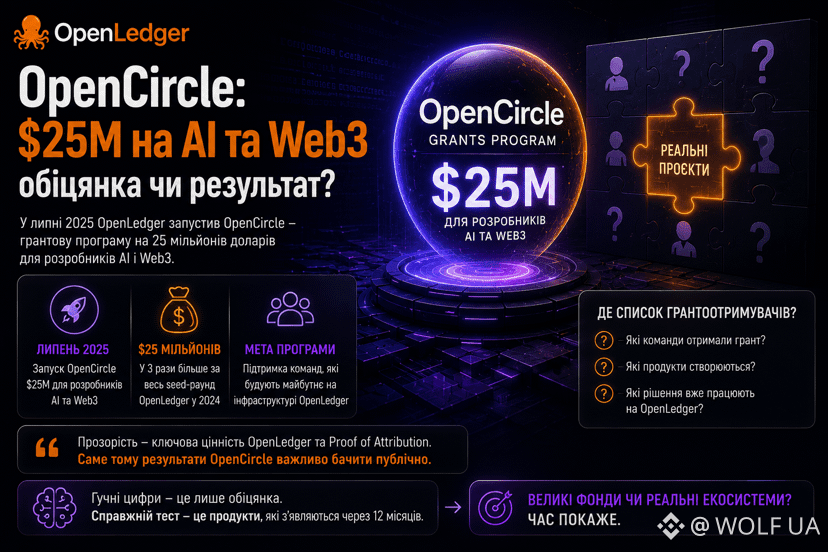
OpenCircle — a $25 million grant program for AI and Web3 developers. For a young project, this isn't just another bullet point in the roadmap; it's a pretty bold bet on the future ecosystem.
But it wasn't just the number that caught my interest.
I got curious about what happened after the announcement.
Because the real power of a grant program is measured not by the size of the fund, but by the products it spawns.
I started digging for teams that received support, ready solutions, and new projects within the OpenLedger ecosystem. I haven't seen a public picture with concrete examples yet.
Maybe everything is still in development. Maybe the results just haven't been brought to light.
But for a project that builds the idea around transparency and Proof of Attribution, this development will be interesting to track.
What do you think: do large grant funds in crypto more often create real ecosystems, or do they just pump up the hype on announcement day?
@Openledger #OpenLedger $OPEN
#OpenLedger I was checking out the year-end recap from @OpenLedger , and one detail made me stick around longer.
OpenCircle — a $25 million grant program for AI and Web3 developers. For a young project, this isn't just another bullet point in the roadmap; it's a pretty bold bet on the future ecosystem.
But it wasn't just the number that caught my interest.
I got curious about what happened after the announcement.
Because the real power of a grant program is measured not by the size of the fund, but by the products it spawns.
I started digging for teams that received support, ready solutions, and new projects within the OpenLedger ecosystem. I haven't seen a public picture with concrete examples yet.
Maybe everything is still in development. Maybe the results just haven't been brought to light.
But for a project that builds the idea around transparency and Proof of Attribution, this development will be interesting to track.
What do you think: do large grant funds in crypto more often create real ecosystems, or do they just pump up the hype on announcement day?
@OpenLedger #OpenLedger $OPEN
OpenCircle — a $25 million grant program for AI and Web3 developers. For a young project, this isn't just another bullet point in the roadmap; it's a pretty bold bet on the future ecosystem.
But it wasn't just the number that caught my interest.
I got curious about what happened after the announcement.
Because the real power of a grant program is measured not by the size of the fund, but by the products it spawns.
I started digging for teams that received support, ready solutions, and new projects within the OpenLedger ecosystem. I haven't seen a public picture with concrete examples yet.
Maybe everything is still in development. Maybe the results just haven't been brought to light.
But for a project that builds the idea around transparency and Proof of Attribution, this development will be interesting to track.
What do you think: do large grant funds in crypto more often create real ecosystems, or do they just pump up the hype on announcement day?
@OpenLedger #OpenLedger $OPEN
3
109


·
--
Verified
I used to think building in Web3 was only for people who enjoy staring at code for hours. I respect that skill, but honestly, it can make good ideas die before they even get tested.
That is why the vibecoding angle with @Openledger feels interesting to me.
The way I see it, a lot of people already have useful ideas for AI agents, data tools, trading helpers, or simple Web3 apps. The problem is not always imagination. The problem is getting from idea to first working version without feeling stuck at every technical step.
If OpenLedger can make that process easier, then more small builders may start experimenting. Not every experiment will become huge, and that is fine. Real ecosystems usually grow from messy testing, feedback, and people trying things that look small at first.
From my perspective, vibecoding is not about replacing developers. It is about giving more people the confidence to start.
That could matter a lot for $OPEN if those experiments turn into real activity inside the ecosystem.
Would you try vibecoding on OpenLedger?
#OpenLedger
$LAB
$CITY
{future}(OPENUSDT)
I used to think building in Web3 was only for people who enjoy staring at code for hours. I respect that skill, but honestly, it can make good ideas die before they even get tested.
That is why the vibecoding angle with @OpenLedger feels interesting to me.
The way I see it, a lot of people already have useful ideas for AI agents, data tools, trading helpers, or simple Web3 apps. The problem is not always imagination. The problem is getting from idea to first working version without feeling stuck at every technical step.
If OpenLedger can make that process easier, then more small builders may start experimenting. Not every experiment will become huge, and that is fine. Real ecosystems usually grow from messy testing, feedback, and people trying things that look small at first.
From my perspective, vibecoding is not about replacing developers. It is about giving more people the confidence to start.
That could matter a lot for $OPEN if those experiments turn into real activity inside the ecosystem.
Would you try vibecoding on OpenLedger?
#OpenLedger
$LAB
$CITY
That is why the vibecoding angle with @OpenLedger feels interesting to me.
The way I see it, a lot of people already have useful ideas for AI agents, data tools, trading helpers, or simple Web3 apps. The problem is not always imagination. The problem is getting from idea to first working version without feeling stuck at every technical step.
If OpenLedger can make that process easier, then more small builders may start experimenting. Not every experiment will become huge, and that is fine. Real ecosystems usually grow from messy testing, feedback, and people trying things that look small at first.
From my perspective, vibecoding is not about replacing developers. It is about giving more people the confidence to start.
That could matter a lot for $OPEN if those experiments turn into real activity inside the ecosystem.
Would you try vibecoding on OpenLedger?
#OpenLedger
$LAB
$CITY
Yes, I’d build fast
50%
Maybe for AI tools
50%
Need to learn more
0%
Not for me yet
0%
4 votes • Voting closed
13
10
966

·
--
Article
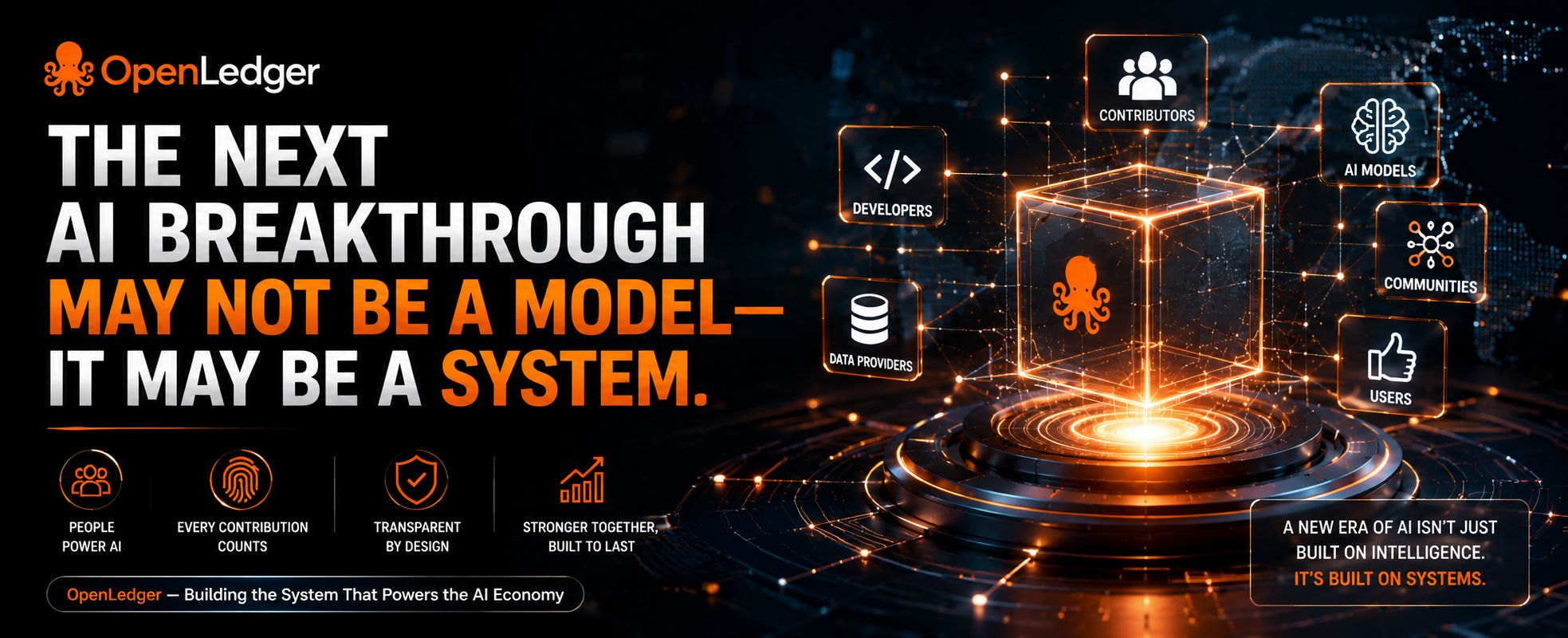
The Next AI Breakthrough May Not Be a Model — It May Be a SystemEvery day, the AI industry celebrates a new achievement.
A faster model.
A smarter assistant.
A more powerful tool.
And while those developments are exciting, I think many people are focused on only one side of the story.
The future of AI won't be determined solely by which model performs best.
It will also be determined by which systems create the strongest ecosystems around intelligence.
That is one of the reasons OpenLedger continues to stand out to me.
The project isn't only exploring how AI can become more capable. It is exploring how AI ecosystems can become more sustainable. And as artificial intelligence expands into every corner of the digital economy, that question feels increasingly important.
Today's AI networks rely on contributions from countless participants. Developers build infrastructure. Researchers improve models. Communities provide feedback. Data contributors help shape the quality of intelligence itself.
Yet in many cases, the connection between contribution and value remains unclear.
Over time, that creates a challenge.
Strong ecosystems require more than innovation. They require trust. They require participation. And they require incentives that encourage people to keep contributing over the long term.
This is where OpenLedger's vision becomes particularly interesting.
Instead of focusing exclusively on outputs, the ecosystem appears designed around transparency attribution, and measurable contribution. The idea is simple but powerful: when people can see how value is created and how participation matters they become more invested in the network's success.
That creates a different type of growth.
Not growth driven purely by attention.
But growth driven by engagement.
And historically, engagement tends to be more durable than hype.
What I find most compelling is that this approach aligns with the direction AI appears to be heading. As intelligent systems become more important questions about accountability and ownership will become harder to ignore.
People will want systems they can trust.
Builders will want ecosystems that recognize their efforts.
Communities will want transparency.
The projects that solve those challenges may end up becoming some of the most important infrastructure layers in the AI economy.
That is why OpenLedger feels increasingly relevant to me.
Not because it promises the loudest future.
But because it is asking some of the most important questions about how that future should work.
And sometimes, the systems that ask the right questions end up shaping the next era of innovation.
@Openledger |. #OpenLedger
$OPEN
{future}(OPENUSDT)
The Next AI Breakthrough May Not Be a Model — It May Be a System
Every day, the AI industry celebrates a new achievement.
A faster model.
A smarter assistant.
A more powerful tool.
And while those developments are exciting, I think many people are focused on only one side of the story.
The future of AI won't be determined solely by which model performs best.
It will also be determined by which systems create the strongest ecosystems around intelligence.
That is one of the reasons OpenLedger continues to stand out to me.
The project isn't only exploring how AI can become more capable. It is exploring how AI ecosystems can become more sustainable. And as artificial intelligence expands into every corner of the digital economy, that question feels increasingly important.
Today's AI networks rely on contributions from countless participants. Developers build infrastructure. Researchers improve models. Communities provide feedback. Data contributors help shape the quality of intelligence itself.
Yet in many cases, the connection between contribution and value remains unclear.
Over time, that creates a challenge.
Strong ecosystems require more than innovation. They require trust. They require participation. And they require incentives that encourage people to keep contributing over the long term.
This is where OpenLedger's vision becomes particularly interesting.
Instead of focusing exclusively on outputs, the ecosystem appears designed around transparency attribution, and measurable contribution. The idea is simple but powerful: when people can see how value is created and how participation matters they become more invested in the network's success.
That creates a different type of growth.
Not growth driven purely by attention.
But growth driven by engagement.
And historically, engagement tends to be more durable than hype.
What I find most compelling is that this approach aligns with the direction AI appears to be heading. As intelligent systems become more important questions about accountability and ownership will become harder to ignore.
People will want systems they can trust.
Builders will want ecosystems that recognize their efforts.
Communities will want transparency.
The projects that solve those challenges may end up becoming some of the most important infrastructure layers in the AI economy.
That is why OpenLedger feels increasingly relevant to me.
Not because it promises the loudest future.
But because it is asking some of the most important questions about how that future should work.
And sometimes, the systems that ask the right questions end up shaping the next era of innovation.
@OpenLedger |. #OpenLedger
$OPEN
A faster model.
A smarter assistant.
A more powerful tool.
And while those developments are exciting, I think many people are focused on only one side of the story.
The future of AI won't be determined solely by which model performs best.
It will also be determined by which systems create the strongest ecosystems around intelligence.
That is one of the reasons OpenLedger continues to stand out to me.
The project isn't only exploring how AI can become more capable. It is exploring how AI ecosystems can become more sustainable. And as artificial intelligence expands into every corner of the digital economy, that question feels increasingly important.
Today's AI networks rely on contributions from countless participants. Developers build infrastructure. Researchers improve models. Communities provide feedback. Data contributors help shape the quality of intelligence itself.
Yet in many cases, the connection between contribution and value remains unclear.
Over time, that creates a challenge.
Strong ecosystems require more than innovation. They require trust. They require participation. And they require incentives that encourage people to keep contributing over the long term.
This is where OpenLedger's vision becomes particularly interesting.
Instead of focusing exclusively on outputs, the ecosystem appears designed around transparency attribution, and measurable contribution. The idea is simple but powerful: when people can see how value is created and how participation matters they become more invested in the network's success.
That creates a different type of growth.
Not growth driven purely by attention.
But growth driven by engagement.
And historically, engagement tends to be more durable than hype.
What I find most compelling is that this approach aligns with the direction AI appears to be heading. As intelligent systems become more important questions about accountability and ownership will become harder to ignore.
People will want systems they can trust.
Builders will want ecosystems that recognize their efforts.
Communities will want transparency.
The projects that solve those challenges may end up becoming some of the most important infrastructure layers in the AI economy.
That is why OpenLedger feels increasingly relevant to me.
Not because it promises the loudest future.
But because it is asking some of the most important questions about how that future should work.
And sometimes, the systems that ask the right questions end up shaping the next era of innovation.
@OpenLedger |. #OpenLedger
$OPEN
3
3
138

Article
OpenLedger Made Me Question Who Actually Owns IntelligenceFor a long time, I assumed ownership was a pretty simple concept.
You can own land. you can own a business. You can own shares in a company. In crypto, you can even own digital assets that exist entirely online.
but recently I found myself thinkIng about something much stranger.
Can anyone actualLy own inTelligence?
At first, that sounds liKe a philosophical question. the more I looked at projects like OpenLedger, though, the more it started feelIng liKe an economic question.
most people looking at OpenLedger see an AI blockchain. They see data attribution, decentralized model development, token incentives, and specialized AI models.
that is the obvious story.
What caught my attentIon was something underneath all of that.
I think OpenLedger is making a much bigger bet than most people realize.
it is betting that inteLligence itself is becoming an asset class.
throughout history, economies have been buIlt around ownership.
Agricultural economies were built around land ownershIp.
Industrial economies were built around capital ownership.
Internet economies were built around platform ownership.
the AI economy may be built around intelligence ownership.
and that is where things become interesting.
Today is AI systems are trained using enormous amounts of human knowledge. Researchers contrIbute ideas. experts contribute domain expertise. Communities generate datasets. users provide feedback that improves models over time.
Yet when value is created, most contributors disappear from the economic equation.
The model earns value.
The platform earns revenue.
The intelligence improves.
but the people who helped create that intelligence often receive nothing.
What OpenLedger appears to be asking is a very different question.
what if intelligence could have an ownership history?
Not ownership of the model itself.
Ownership of the contributions that made the model useful.
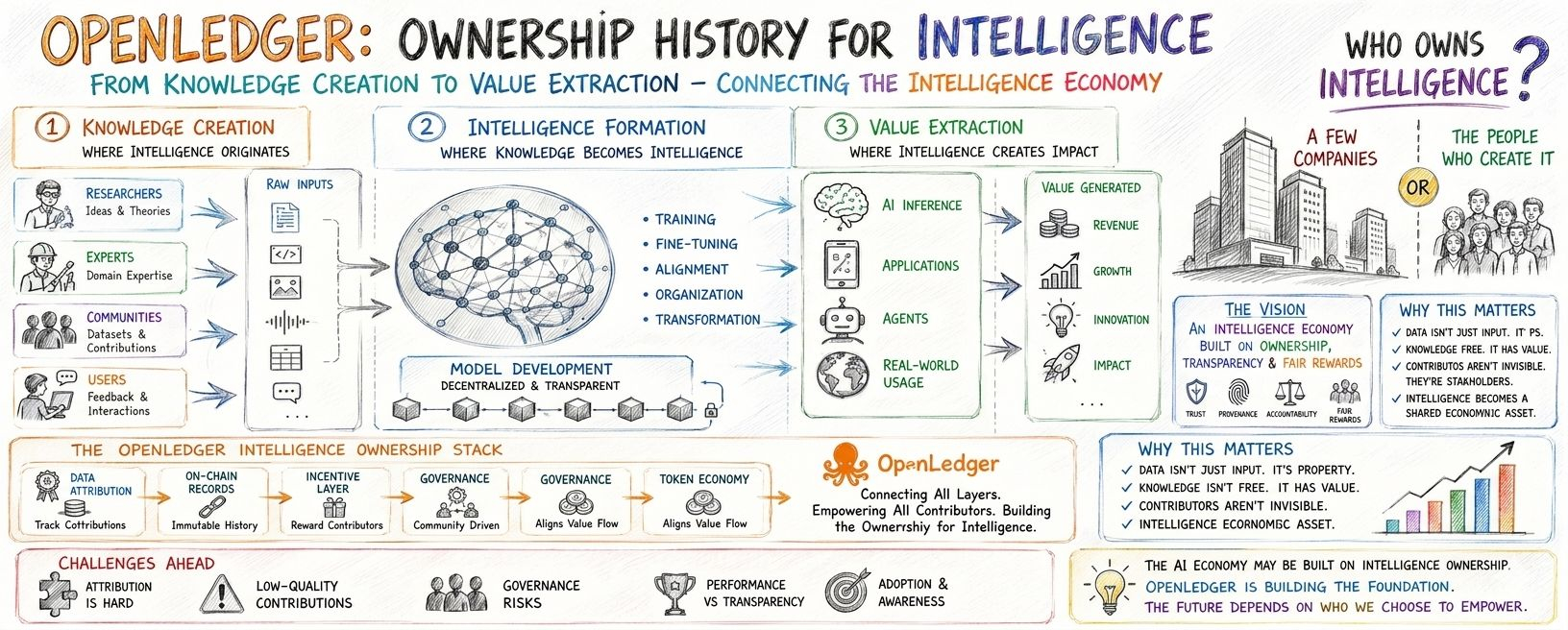
I keep coming back to what I call the Intelligence Ownership Stack.
The first layer is Knowledge Creation.
This is where data, expertise, observations, and domain-specific insights originate.
The second layer is Intelligence Formation.
This is where models absorb, organize, and transform knowledge into usable intelligence.
The third layer is Value Extraction.
This is where AI generates economic value through inference, applications, agents, and real-world usage.
Most AI companies capture value primarily at the third layer.
OpenLedger is attempting to connect all three.
If that works, the implications go far beyond one project.
Data stops being a raw input.
Knowledge stops being a free resource.
Contributors stop being invisible participants.
Instead, they become stakeholders in the intelligence economy.
That idea sounds ambitious, and there are real reasons it may fail.
Attribution is incredibly difficult to measure accurately. Incentive systems can attract low-quality contributions. Governance can become concentrated. Users may care more about performance than transparency.
Those are serious challenges.
But even if OpenLedger never achieves its full vision, I think it highlights a trend the market is underestimating.
For years, crypto has focused on ownership of assets.
Bitcoin introduced ownership of money.
Ethereum introduced ownership of programmable value.
DeFi introduced ownership of financial activity.
AI may force crypto to tackle something much harder: ownership of intelligence production.
That's a much larger market than most people are discussing.
The more AI becomes integrated into everyday decision-making, the more valuable attribution becomes. Not just for rewards, but for accountability, trust, provenance, and economic coordination.
In a strange way, OpenLedger feels less like an AI project and more like an experiment in creating property rights for intelligence.
And that leaves me with a question I can't stop thinking about.
If intelligence becomes one of the most valuable resources in the digital economy, will it be owned by a handful of companies...
Or by the people who helped create it in the first place?
@Openledger $OPEN #OpenLedger
OpenLedger Made Me Question Who Actually Owns Intelligence
For a long time, I assumed ownership was a pretty simple concept.
You can own land. you can own a business. You can own shares in a company. In crypto, you can even own digital assets that exist entirely online.
but recently I found myself thinkIng about something much stranger.
Can anyone actualLy own inTelligence?
At first, that sounds liKe a philosophical question. the more I looked at projects like OpenLedger, though, the more it started feelIng liKe an economic question.
most people looking at OpenLedger see an AI blockchain. They see data attribution, decentralized model development, token incentives, and specialized AI models.
that is the obvious story.
What caught my attentIon was something underneath all of that.
I think OpenLedger is making a much bigger bet than most people realize.
it is betting that inteLligence itself is becoming an asset class.
throughout history, economies have been buIlt around ownership.
Agricultural economies were built around land ownershIp.
Industrial economies were built around capital ownership.
Internet economies were built around platform ownership.
the AI economy may be built around intelligence ownership.
and that is where things become interesting.
Today is AI systems are trained using enormous amounts of human knowledge. Researchers contrIbute ideas. experts contribute domain expertise. Communities generate datasets. users provide feedback that improves models over time.
Yet when value is created, most contributors disappear from the economic equation.
The model earns value.
The platform earns revenue.
The intelligence improves.
but the people who helped create that intelligence often receive nothing.
What OpenLedger appears to be asking is a very different question.
what if intelligence could have an ownership history?
Not ownership of the model itself.
Ownership of the contributions that made the model useful.
I keep coming back to what I call the Intelligence Ownership Stack.
The first layer is Knowledge Creation.
This is where data, expertise, observations, and domain-specific insights originate.
The second layer is Intelligence Formation.
This is where models absorb, organize, and transform knowledge into usable intelligence.
The third layer is Value Extraction.
This is where AI generates economic value through inference, applications, agents, and real-world usage.
Most AI companies capture value primarily at the third layer.
OpenLedger is attempting to connect all three.
If that works, the implications go far beyond one project.
Data stops being a raw input.
Knowledge stops being a free resource.
Contributors stop being invisible participants.
Instead, they become stakeholders in the intelligence economy.
That idea sounds ambitious, and there are real reasons it may fail.
Attribution is incredibly difficult to measure accurately. Incentive systems can attract low-quality contributions. Governance can become concentrated. Users may care more about performance than transparency.
Those are serious challenges.
But even if OpenLedger never achieves its full vision, I think it highlights a trend the market is underestimating.
For years, crypto has focused on ownership of assets.
Bitcoin introduced ownership of money.
Ethereum introduced ownership of programmable value.
DeFi introduced ownership of financial activity.
AI may force crypto to tackle something much harder: ownership of intelligence production.
That's a much larger market than most people are discussing.
The more AI becomes integrated into everyday decision-making, the more valuable attribution becomes. Not just for rewards, but for accountability, trust, provenance, and economic coordination.
In a strange way, OpenLedger feels less like an AI project and more like an experiment in creating property rights for intelligence.
And that leaves me with a question I can't stop thinking about.
If intelligence becomes one of the most valuable resources in the digital economy, will it be owned by a handful of companies...
Or by the people who helped create it in the first place?
@OpenLedger $OPEN #OpenLedger
You can own land. you can own a business. You can own shares in a company. In crypto, you can even own digital assets that exist entirely online.
but recently I found myself thinkIng about something much stranger.
Can anyone actualLy own inTelligence?
At first, that sounds liKe a philosophical question. the more I looked at projects like OpenLedger, though, the more it started feelIng liKe an economic question.
most people looking at OpenLedger see an AI blockchain. They see data attribution, decentralized model development, token incentives, and specialized AI models.
that is the obvious story.
What caught my attentIon was something underneath all of that.
I think OpenLedger is making a much bigger bet than most people realize.
it is betting that inteLligence itself is becoming an asset class.
throughout history, economies have been buIlt around ownership.
Agricultural economies were built around land ownershIp.
Industrial economies were built around capital ownership.
Internet economies were built around platform ownership.
the AI economy may be built around intelligence ownership.
and that is where things become interesting.
Today is AI systems are trained using enormous amounts of human knowledge. Researchers contrIbute ideas. experts contribute domain expertise. Communities generate datasets. users provide feedback that improves models over time.
Yet when value is created, most contributors disappear from the economic equation.
The model earns value.
The platform earns revenue.
The intelligence improves.
but the people who helped create that intelligence often receive nothing.
What OpenLedger appears to be asking is a very different question.
what if intelligence could have an ownership history?
Not ownership of the model itself.
Ownership of the contributions that made the model useful.
I keep coming back to what I call the Intelligence Ownership Stack.
The first layer is Knowledge Creation.
This is where data, expertise, observations, and domain-specific insights originate.
The second layer is Intelligence Formation.
This is where models absorb, organize, and transform knowledge into usable intelligence.
The third layer is Value Extraction.
This is where AI generates economic value through inference, applications, agents, and real-world usage.
Most AI companies capture value primarily at the third layer.
OpenLedger is attempting to connect all three.
If that works, the implications go far beyond one project.
Data stops being a raw input.
Knowledge stops being a free resource.
Contributors stop being invisible participants.
Instead, they become stakeholders in the intelligence economy.
That idea sounds ambitious, and there are real reasons it may fail.
Attribution is incredibly difficult to measure accurately. Incentive systems can attract low-quality contributions. Governance can become concentrated. Users may care more about performance than transparency.
Those are serious challenges.
But even if OpenLedger never achieves its full vision, I think it highlights a trend the market is underestimating.
For years, crypto has focused on ownership of assets.
Bitcoin introduced ownership of money.
Ethereum introduced ownership of programmable value.
DeFi introduced ownership of financial activity.
AI may force crypto to tackle something much harder: ownership of intelligence production.
That's a much larger market than most people are discussing.
The more AI becomes integrated into everyday decision-making, the more valuable attribution becomes. Not just for rewards, but for accountability, trust, provenance, and economic coordination.
In a strange way, OpenLedger feels less like an AI project and more like an experiment in creating property rights for intelligence.
And that leaves me with a question I can't stop thinking about.
If intelligence becomes one of the most valuable resources in the digital economy, will it be owned by a handful of companies...
Or by the people who helped create it in the first place?
@OpenLedger $OPEN #OpenLedger
4
5
222

·
--
In today's crypto scene, if a project doesn't slap an "AI" label on itself, it’s almost embarrassing to even say hi. OpenLedger is a prime example of this trend—flaunting the banner of "AI blockchain" and claiming to solve data attribution and profit distribution. At first glance, it sounds impressive, but a closer look reveals enough flaws to fill an entire series.
First off, their so-called Proof of Attribution is just a fancy way of saying they want to account for AI contributions, right? But what's the reality? Current general models can’t even remember what they said a second ago, and you expect an on-chain protocol to accurately track every line of code and every token to see who contributed what? That’s like asking a nearsighted person to thread a needle while using a microscope! Do they really think algorithms are magic? Running a demo in a lab is one thing, but scaling this for real-world use? The computational costs and latency will bury you.
Now let’s talk about their token $OPEN—it’s a textbook example of wanting it all. One minute it’s gas fees, the next it’s inference fees, plus they want it to handle profit sharing and governance. Good heavens, this one token is trying to do the work of Ethereum and Bittensor combined. What’s the result? The community gets the bulk, while the team and investors lock up their tokens for a year before slowly releasing them. Isn’t that just a classic case of "initially pulling in users with airdrops, then later unlocking to harvest the retail investors"? Just wait until those early investors’ tokens are released; let’s see if the chart can still hold up under the grand narrative of "Payable AI."
And then there’s OpenLoRA, claiming to run thousands of models on a single card—it sounds like a money printer, doesn’t it? But anyone with a bit of tech knowledge knows that this extreme memory squeezing operation is just an idealized limit in real production environments. When high concurrency hits, if the performance doesn’t drop, I’d be surprised.
Ultimately, OpenLedger is just forcefully stitching a bunch of Web3 concepts into the black box of AI. The story sounds enticing, but when faced with real technical barriers, all these fancy economic models are just gilded scythes at best.
@Openledger #openledger $OPEN
In today's crypto scene, if a project doesn't slap an "AI" label on itself, it’s almost embarrassing to even say hi. OpenLedger is a prime example of this trend—flaunting the banner of "AI blockchain" and claiming to solve data attribution and profit distribution. At first glance, it sounds impressive, but a closer look reveals enough flaws to fill an entire series.
First off, their so-called Proof of Attribution is just a fancy way of saying they want to account for AI contributions, right? But what's the reality? Current general models can’t even remember what they said a second ago, and you expect an on-chain protocol to accurately track every line of code and every token to see who contributed what? That’s like asking a nearsighted person to thread a needle while using a microscope! Do they really think algorithms are magic? Running a demo in a lab is one thing, but scaling this for real-world use? The computational costs and latency will bury you.
Now let’s talk about their token $OPEN —it’s a textbook example of wanting it all. One minute it’s gas fees, the next it’s inference fees, plus they want it to handle profit sharing and governance. Good heavens, this one token is trying to do the work of Ethereum and Bittensor combined. What’s the result? The community gets the bulk, while the team and investors lock up their tokens for a year before slowly releasing them. Isn’t that just a classic case of "initially pulling in users with airdrops, then later unlocking to harvest the retail investors"? Just wait until those early investors’ tokens are released; let’s see if the chart can still hold up under the grand narrative of "Payable AI."
And then there’s OpenLoRA, claiming to run thousands of models on a single card—it sounds like a money printer, doesn’t it? But anyone with a bit of tech knowledge knows that this extreme memory squeezing operation is just an idealized limit in real production environments. When high concurrency hits, if the performance doesn’t drop, I’d be surprised.
Ultimately, OpenLedger is just forcefully stitching a bunch of Web3 concepts into the black box of AI. The story sounds enticing, but when faced with real technical barriers, all these fancy economic models are just gilded scythes at best.
@OpenLedger #openledger $OPEN
First off, their so-called Proof of Attribution is just a fancy way of saying they want to account for AI contributions, right? But what's the reality? Current general models can’t even remember what they said a second ago, and you expect an on-chain protocol to accurately track every line of code and every token to see who contributed what? That’s like asking a nearsighted person to thread a needle while using a microscope! Do they really think algorithms are magic? Running a demo in a lab is one thing, but scaling this for real-world use? The computational costs and latency will bury you.
Now let’s talk about their token $OPEN —it’s a textbook example of wanting it all. One minute it’s gas fees, the next it’s inference fees, plus they want it to handle profit sharing and governance. Good heavens, this one token is trying to do the work of Ethereum and Bittensor combined. What’s the result? The community gets the bulk, while the team and investors lock up their tokens for a year before slowly releasing them. Isn’t that just a classic case of "initially pulling in users with airdrops, then later unlocking to harvest the retail investors"? Just wait until those early investors’ tokens are released; let’s see if the chart can still hold up under the grand narrative of "Payable AI."
And then there’s OpenLoRA, claiming to run thousands of models on a single card—it sounds like a money printer, doesn’t it? But anyone with a bit of tech knowledge knows that this extreme memory squeezing operation is just an idealized limit in real production environments. When high concurrency hits, if the performance doesn’t drop, I’d be surprised.
Ultimately, OpenLedger is just forcefully stitching a bunch of Web3 concepts into the black box of AI. The story sounds enticing, but when faced with real technical barriers, all these fancy economic models are just gilded scythes at best.
@OpenLedger #openledger $OPEN
2
252

·
--
@Openledger #OpenLedger
OpenLedger's ecosystem isn't just a tech-driven platform; it's a framework where transparency, accountability, and community participation take center stage. The goal of this system is to ensure that every contribution holds proper value and that the platform's growth is beneficial for all stakeholders.
The blockchain infrastructure solidifies OpenLedger's foundation. Every transaction and contribution is securely recorded, enhancing trust and reliability within the ecosystem. Participants can verify any activity, taking transparency to a whole new level.
Governance is also a crucial part of this ecosystem. Community-backed decision-making directs resources towards projects and models that genuinely hold demand and utility. This approach minimizes unnecessary development and steers innovation in a better direction.
When models are deployed and users interact with them, network activity surges. This activity creates new opportunities for validators, who play their part in keeping the infrastructure stable and secure. Strong validator participation boosts the overall network performance and creates a better environment for developers.
OpenLedger's greatest strength lies in the connection between blockchain and the model ecosystem. On one side, a transparent infrastructure provides trust, while on the other, innovation and practical utility enhance the ecosystem's value. Together, they create a cycle where growth, participation, and development continuously support each other.
Thanks to this balanced approach, OpenLedger is crafting an ecosystem that equally values community ownership and long-term sustainability alongside technology.
$OPEN
{spot}(OPENUSDT)
@OpenLedger #OpenLedger
OpenLedger's ecosystem isn't just a tech-driven platform; it's a framework where transparency, accountability, and community participation take center stage. The goal of this system is to ensure that every contribution holds proper value and that the platform's growth is beneficial for all stakeholders.
The blockchain infrastructure solidifies OpenLedger's foundation. Every transaction and contribution is securely recorded, enhancing trust and reliability within the ecosystem. Participants can verify any activity, taking transparency to a whole new level.
Governance is also a crucial part of this ecosystem. Community-backed decision-making directs resources towards projects and models that genuinely hold demand and utility. This approach minimizes unnecessary development and steers innovation in a better direction.
When models are deployed and users interact with them, network activity surges. This activity creates new opportunities for validators, who play their part in keeping the infrastructure stable and secure. Strong validator participation boosts the overall network performance and creates a better environment for developers.
OpenLedger's greatest strength lies in the connection between blockchain and the model ecosystem. On one side, a transparent infrastructure provides trust, while on the other, innovation and practical utility enhance the ecosystem's value. Together, they create a cycle where growth, participation, and development continuously support each other.
Thanks to this balanced approach, OpenLedger is crafting an ecosystem that equally values community ownership and long-term sustainability alongside technology.
$OPEN
OpenLedger's ecosystem isn't just a tech-driven platform; it's a framework where transparency, accountability, and community participation take center stage. The goal of this system is to ensure that every contribution holds proper value and that the platform's growth is beneficial for all stakeholders.
The blockchain infrastructure solidifies OpenLedger's foundation. Every transaction and contribution is securely recorded, enhancing trust and reliability within the ecosystem. Participants can verify any activity, taking transparency to a whole new level.
Governance is also a crucial part of this ecosystem. Community-backed decision-making directs resources towards projects and models that genuinely hold demand and utility. This approach minimizes unnecessary development and steers innovation in a better direction.
When models are deployed and users interact with them, network activity surges. This activity creates new opportunities for validators, who play their part in keeping the infrastructure stable and secure. Strong validator participation boosts the overall network performance and creates a better environment for developers.
OpenLedger's greatest strength lies in the connection between blockchain and the model ecosystem. On one side, a transparent infrastructure provides trust, while on the other, innovation and practical utility enhance the ecosystem's value. Together, they create a cycle where growth, participation, and development continuously support each other.
Thanks to this balanced approach, OpenLedger is crafting an ecosystem that equally values community ownership and long-term sustainability alongside technology.
$OPEN

5
2
117

·
--
Bullish
Verified
I used to think this was a standard case: the more participants in a network like OpenLedger, the more data, models, and AI agents come into the ecosystem. The logic seems obvious — the platform's success should boost the desire to share intelligence. But over time, it became clear that things are getting trickier.
Imagine an experienced trader who once discovered a profitable strategy. While it's still unknown, it brings an edge. The more valuable the strategy becomes, the fewer reasons there are to reveal it to others. This leads to a deeper question: what happens when the most useful models and data start to concentrate with those who have already gained an advantage?
But in reality, things work differently than in traditional marketplaces. OpenLedger builds an infrastructure where intelligence can be monetized and gain liquidity, yet this is where the main risk arises — successful participants may prefer to keep their best developments within their ecosystems rather than sharing openly.
So, I view OpenLedger through the lens of long-term sustainability. The project's viability will be tested when the asset owners still find it beneficial to share it with the network.
@Openledger $OPEN #OpenLedger
I used to think this was a standard case: the more participants in a network like OpenLedger, the more data, models, and AI agents come into the ecosystem. The logic seems obvious — the platform's success should boost the desire to share intelligence. But over time, it became clear that things are getting trickier.
Imagine an experienced trader who once discovered a profitable strategy. While it's still unknown, it brings an edge. The more valuable the strategy becomes, the fewer reasons there are to reveal it to others. This leads to a deeper question: what happens when the most useful models and data start to concentrate with those who have already gained an advantage?
But in reality, things work differently than in traditional marketplaces. OpenLedger builds an infrastructure where intelligence can be monetized and gain liquidity, yet this is where the main risk arises — successful participants may prefer to keep their best developments within their ecosystems rather than sharing openly.
So, I view OpenLedger through the lens of long-term sustainability. The project's viability will be tested when the asset owners still find it beneficial to share it with the network.
@OpenLedger $OPEN #OpenLedger
Imagine an experienced trader who once discovered a profitable strategy. While it's still unknown, it brings an edge. The more valuable the strategy becomes, the fewer reasons there are to reveal it to others. This leads to a deeper question: what happens when the most useful models and data start to concentrate with those who have already gained an advantage?
But in reality, things work differently than in traditional marketplaces. OpenLedger builds an infrastructure where intelligence can be monetized and gain liquidity, yet this is where the main risk arises — successful participants may prefer to keep their best developments within their ecosystems rather than sharing openly.
So, I view OpenLedger through the lens of long-term sustainability. The project's viability will be tested when the asset owners still find it beneficial to share it with the network.
@OpenLedger $OPEN #OpenLedger

2
810

·
--
Most people think the AI race is about who can build the smartest model.
I'm starting to think that's only half the story.
The more I follow AI, the more it feels like we're watching two different competitions happen at the same time. One is obvious: bigger models, more compute, better performance. Everyone talks about that part.
The other competition is much quieter.
It's about incentives.
Every AI system depends on people somewhere in the process. People generate data, provide expertise, create content, label information, test products, and help improve outputs. Without that layer, even the most advanced model has nothing useful to learn from.
Yet once the model is deployed, most of those contributors disappear from the picture.
That's why I found OpenLedger interesting.
At first I assumed it was another project focused mainly on AI infrastructure. After spending more time looking into it, what stood out wasn't the technology itself. It was the attempt to connect contributors, builders, and users inside the same economic system.
The idea seems simple on the surface.
If data helps create value, should the people contributing that data participate in the upside?
That sounds reasonable, but it's actually a difficult problem. Measuring contribution is hard. Rewarding people fairly is even harder. And creating incentives that don't get abused is harder still.
Which is why I think the real challenge isn't building the marketplace.
It's making the marketplace work.
A lot of projects can launch a platform. Far fewer can create an ecosystem where better contributions consistently lead to better outcomes for everyone involved.
Maybe OpenLedger succeeds. Maybe it doesn't.
But I do think it's asking one of the more important questions in AI right now:
As intelligent systems become more valuable, who should own the value they create?
The answer isn't as obvious as it first seems.
@Openledger $OPEN #OpenLedger
Most people think the AI race is about who can build the smartest model.
I'm starting to think that's only half the story.
The more I follow AI, the more it feels like we're watching two different competitions happen at the same time. One is obvious: bigger models, more compute, better performance. Everyone talks about that part.
The other competition is much quieter.
It's about incentives.
Every AI system depends on people somewhere in the process. People generate data, provide expertise, create content, label information, test products, and help improve outputs. Without that layer, even the most advanced model has nothing useful to learn from.
Yet once the model is deployed, most of those contributors disappear from the picture.
That's why I found OpenLedger interesting.
At first I assumed it was another project focused mainly on AI infrastructure. After spending more time looking into it, what stood out wasn't the technology itself. It was the attempt to connect contributors, builders, and users inside the same economic system.
The idea seems simple on the surface.
If data helps create value, should the people contributing that data participate in the upside?
That sounds reasonable, but it's actually a difficult problem. Measuring contribution is hard. Rewarding people fairly is even harder. And creating incentives that don't get abused is harder still.
Which is why I think the real challenge isn't building the marketplace.
It's making the marketplace work.
A lot of projects can launch a platform. Far fewer can create an ecosystem where better contributions consistently lead to better outcomes for everyone involved.
Maybe OpenLedger succeeds. Maybe it doesn't.
But I do think it's asking one of the more important questions in AI right now:
As intelligent systems become more valuable, who should own the value they create?
The answer isn't as obvious as it first seems.
@OpenLedger $OPEN #OpenLedger
I'm starting to think that's only half the story.
The more I follow AI, the more it feels like we're watching two different competitions happen at the same time. One is obvious: bigger models, more compute, better performance. Everyone talks about that part.
The other competition is much quieter.
It's about incentives.
Every AI system depends on people somewhere in the process. People generate data, provide expertise, create content, label information, test products, and help improve outputs. Without that layer, even the most advanced model has nothing useful to learn from.
Yet once the model is deployed, most of those contributors disappear from the picture.
That's why I found OpenLedger interesting.
At first I assumed it was another project focused mainly on AI infrastructure. After spending more time looking into it, what stood out wasn't the technology itself. It was the attempt to connect contributors, builders, and users inside the same economic system.
The idea seems simple on the surface.
If data helps create value, should the people contributing that data participate in the upside?
That sounds reasonable, but it's actually a difficult problem. Measuring contribution is hard. Rewarding people fairly is even harder. And creating incentives that don't get abused is harder still.
Which is why I think the real challenge isn't building the marketplace.
It's making the marketplace work.
A lot of projects can launch a platform. Far fewer can create an ecosystem where better contributions consistently lead to better outcomes for everyone involved.
Maybe OpenLedger succeeds. Maybe it doesn't.
But I do think it's asking one of the more important questions in AI right now:
As intelligent systems become more valuable, who should own the value they create?
The answer isn't as obvious as it first seems.
@OpenLedger $OPEN #OpenLedger
22
9
377

·
--

Article
OpenLedger (OPEN) Feels Like One of Those Projects I Can't Easily DismissI've been going down a rabbit hole on OpenLedger and honestly... I'm still not completely sure what to think, which is usually a sign that a project is at least making me think instead of just selling me hype.
Most AI crypto projects lose me pretty fast. After reading enough of them, everything starts sounding the same. Decentralized AI, autonomous agents, revolutionary infrastructure, changing the future... you know the drill. But with OpenLedger, I found myself spending more time trying to understand the actual problem they're aiming at rather than immediately rolling my eyes and moving on.
The thing that caught my attention is this idea that data has value, but the people creating or contributing that data rarely capture any of it. If AI becomes one of the biggest industries in the world, then it feels weird that the value mostly flows to a handful of companies while millions of people indirectly contribute to the ecosystem every day. OpenLedger seems to be asking whether there's a better way to track contributions and distribute rewards. And honestly... that's not a crazy question.
What I keep going back and forth on is whether this is one of those ideas that sounds great in theory but becomes incredibly messy in practice.
Because when people say "reward contributors fairly," my first thought is always... okay, but how? How do you actually measure contribution? How do you know what data was valuable and what wasn't? How do you prevent people from gaming the system? Those questions feel much harder than the marketing slogans.
At the same time, maybe that's exactly why the project exists.
Crypto has always been obsessed with ownership. AI is becoming obsessed with data. OpenLedger sits right in the middle of those two trends, which makes it feel more interesting than projects that are simply throwing AI buzzwords into a blockchain pitch deck.
The bullish case is pretty easy to understand. If AI keeps growing at the pace we've seen over the last few years, then questions around attribution, ownership, incentives, and data monetization are probably going to become more important, not less. If OpenLedger manages to build real infrastructure around those problems, I can see why people are excited.
But then the skeptical side of my brain kicks in...
I've been around crypto long enough to know that having a good idea is only about 10% of the battle. The other 90% is getting real people to actually use it. That's where countless projects have failed. Not because the technology was bad. Not because the vision was wrong. Simply because adoption never arrived.
That's probably where I am with OpenLedger right now. Interested, but cautious.
I don't get the feeling that it's a pure cash-grab project. It seems like there's genuine thought behind what they're are trying to build. But crypto is full of projects that looked smart on paper. The market doesn't reward good intentions. It rewards execution.
Maybe the biggest reason I'm watching OpenLedger is because it feels connected to a real trend rather than a temporary narrative. AI isn't going away. Questions about who owns data and who gets rewarded for contributing to AI systems aren't going away either. Those are legitimate issues.
Whether OpenLedger becomes part of the solution... that's the part nobody knows yet.
For now, it sits in that category of projects that make me curious enough to keep reading. Not because I'm convinced it's going to dominate the space, but because I can actually see the problem it's trying to solve. In crypto, that's surprisingly rare.
A lot of projects promise the future.
OpenLedger feels more like it's making a bet on where the future is heading and hoping it gets there before everyone else.
Maybe that's brilliant.
Maybe it's too early.
Maybe it's both.
@Openledger #OpenLedger $OPEN
OpenLedger (OPEN) Feels Like One of Those Projects I Can't Easily Dismiss
I've been going down a rabbit hole on OpenLedger and honestly... I'm still not completely sure what to think, which is usually a sign that a project is at least making me think instead of just selling me hype.
Most AI crypto projects lose me pretty fast. After reading enough of them, everything starts sounding the same. Decentralized AI, autonomous agents, revolutionary infrastructure, changing the future... you know the drill. But with OpenLedger, I found myself spending more time trying to understand the actual problem they're aiming at rather than immediately rolling my eyes and moving on.
The thing that caught my attention is this idea that data has value, but the people creating or contributing that data rarely capture any of it. If AI becomes one of the biggest industries in the world, then it feels weird that the value mostly flows to a handful of companies while millions of people indirectly contribute to the ecosystem every day. OpenLedger seems to be asking whether there's a better way to track contributions and distribute rewards. And honestly... that's not a crazy question.
What I keep going back and forth on is whether this is one of those ideas that sounds great in theory but becomes incredibly messy in practice.
Because when people say "reward contributors fairly," my first thought is always... okay, but how? How do you actually measure contribution? How do you know what data was valuable and what wasn't? How do you prevent people from gaming the system? Those questions feel much harder than the marketing slogans.
At the same time, maybe that's exactly why the project exists.
Crypto has always been obsessed with ownership. AI is becoming obsessed with data. OpenLedger sits right in the middle of those two trends, which makes it feel more interesting than projects that are simply throwing AI buzzwords into a blockchain pitch deck.
The bullish case is pretty easy to understand. If AI keeps growing at the pace we've seen over the last few years, then questions around attribution, ownership, incentives, and data monetization are probably going to become more important, not less. If OpenLedger manages to build real infrastructure around those problems, I can see why people are excited.
But then the skeptical side of my brain kicks in...
I've been around crypto long enough to know that having a good idea is only about 10% of the battle. The other 90% is getting real people to actually use it. That's where countless projects have failed. Not because the technology was bad. Not because the vision was wrong. Simply because adoption never arrived.
That's probably where I am with OpenLedger right now. Interested, but cautious.
I don't get the feeling that it's a pure cash-grab project. It seems like there's genuine thought behind what they're are trying to build. But crypto is full of projects that looked smart on paper. The market doesn't reward good intentions. It rewards execution.
Maybe the biggest reason I'm watching OpenLedger is because it feels connected to a real trend rather than a temporary narrative. AI isn't going away. Questions about who owns data and who gets rewarded for contributing to AI systems aren't going away either. Those are legitimate issues.
Whether OpenLedger becomes part of the solution... that's the part nobody knows yet.
For now, it sits in that category of projects that make me curious enough to keep reading. Not because I'm convinced it's going to dominate the space, but because I can actually see the problem it's trying to solve. In crypto, that's surprisingly rare.
A lot of projects promise the future.
OpenLedger feels more like it's making a bet on where the future is heading and hoping it gets there before everyone else.
Maybe that's brilliant.
Maybe it's too early.
Maybe it's both.
@OpenLedger #OpenLedger $OPEN
Most AI crypto projects lose me pretty fast. After reading enough of them, everything starts sounding the same. Decentralized AI, autonomous agents, revolutionary infrastructure, changing the future... you know the drill. But with OpenLedger, I found myself spending more time trying to understand the actual problem they're aiming at rather than immediately rolling my eyes and moving on.
The thing that caught my attention is this idea that data has value, but the people creating or contributing that data rarely capture any of it. If AI becomes one of the biggest industries in the world, then it feels weird that the value mostly flows to a handful of companies while millions of people indirectly contribute to the ecosystem every day. OpenLedger seems to be asking whether there's a better way to track contributions and distribute rewards. And honestly... that's not a crazy question.
What I keep going back and forth on is whether this is one of those ideas that sounds great in theory but becomes incredibly messy in practice.
Because when people say "reward contributors fairly," my first thought is always... okay, but how? How do you actually measure contribution? How do you know what data was valuable and what wasn't? How do you prevent people from gaming the system? Those questions feel much harder than the marketing slogans.
At the same time, maybe that's exactly why the project exists.
Crypto has always been obsessed with ownership. AI is becoming obsessed with data. OpenLedger sits right in the middle of those two trends, which makes it feel more interesting than projects that are simply throwing AI buzzwords into a blockchain pitch deck.
The bullish case is pretty easy to understand. If AI keeps growing at the pace we've seen over the last few years, then questions around attribution, ownership, incentives, and data monetization are probably going to become more important, not less. If OpenLedger manages to build real infrastructure around those problems, I can see why people are excited.
But then the skeptical side of my brain kicks in...
I've been around crypto long enough to know that having a good idea is only about 10% of the battle. The other 90% is getting real people to actually use it. That's where countless projects have failed. Not because the technology was bad. Not because the vision was wrong. Simply because adoption never arrived.
That's probably where I am with OpenLedger right now. Interested, but cautious.
I don't get the feeling that it's a pure cash-grab project. It seems like there's genuine thought behind what they're are trying to build. But crypto is full of projects that looked smart on paper. The market doesn't reward good intentions. It rewards execution.
Maybe the biggest reason I'm watching OpenLedger is because it feels connected to a real trend rather than a temporary narrative. AI isn't going away. Questions about who owns data and who gets rewarded for contributing to AI systems aren't going away either. Those are legitimate issues.
Whether OpenLedger becomes part of the solution... that's the part nobody knows yet.
For now, it sits in that category of projects that make me curious enough to keep reading. Not because I'm convinced it's going to dominate the space, but because I can actually see the problem it's trying to solve. In crypto, that's surprisingly rare.
A lot of projects promise the future.
OpenLedger feels more like it's making a bet on where the future is heading and hoping it gets there before everyone else.
Maybe that's brilliant.
Maybe it's too early.
Maybe it's both.
@OpenLedger #OpenLedger $OPEN
1
1
116

·
--
Bullish
I didn’t take it seriously at first.
That’s usually where I begin now, after watching enough infrastructure cycles make the same promise in a different accent. Fix the invisible layer. Make contribution legible. Make ownership less vague. Make incentives point in the right direction.
Then people arrive.
And people always find the edges.
OpenLedger is hard to ignore because AI data already feels like a quiet extraction machine with polite language around it. Human work enters as labels, corrections, prompts, examples, feedback preferences, judgment. Small pieces, scattered everywhere. Then models absorb them, value appears somewhere higher, and the origin becomes soft enough to stop defending.
So attribution sounds necessary.
Maybe that’s why I don’t fully trust it.
That’s where things start to feel uncomfortable. Once contribution becomes financial, contribution starts performing for the system. People aim at the verifier. They learn what gets counted. They create what looks useful, original, human enough. The system wants to recognize value, but markets are very good at producing the shape of value without the substance.
It works in theory. Most things do.
The problem isn’t really the technology. Or maybe technology becomes the problem once trust gets compresed into proofs, scores, dashboards, standards, and liquidity routes. Open systems rarely recentralize loudly. They narrow through convenience, defaults, interfaces, and whoever gets to define validity under pressure.
Maybe thats too harsh.
But I keep coming back to it.
If attribution becomes infrastructure maybe the question is not who gets credit.
Maybe it is what credit slowly turns people into.
$OPEN @Openledger #openledger
{spot}(OPENUSDT)
I didn’t take it seriously at first.
That’s usually where I begin now, after watching enough infrastructure cycles make the same promise in a different accent. Fix the invisible layer. Make contribution legible. Make ownership less vague. Make incentives point in the right direction.
Then people arrive.
And people always find the edges.
OpenLedger is hard to ignore because AI data already feels like a quiet extraction machine with polite language around it. Human work enters as labels, corrections, prompts, examples, feedback preferences, judgment. Small pieces, scattered everywhere. Then models absorb them, value appears somewhere higher, and the origin becomes soft enough to stop defending.
So attribution sounds necessary.
Maybe that’s why I don’t fully trust it.
That’s where things start to feel uncomfortable. Once contribution becomes financial, contribution starts performing for the system. People aim at the verifier. They learn what gets counted. They create what looks useful, original, human enough. The system wants to recognize value, but markets are very good at producing the shape of value without the substance.
It works in theory. Most things do.
The problem isn’t really the technology. Or maybe technology becomes the problem once trust gets compresed into proofs, scores, dashboards, standards, and liquidity routes. Open systems rarely recentralize loudly. They narrow through convenience, defaults, interfaces, and whoever gets to define validity under pressure.
Maybe thats too harsh.
But I keep coming back to it.
If attribution becomes infrastructure maybe the question is not who gets credit.
Maybe it is what credit slowly turns people into.
$OPEN @OpenLedger #openledger
That’s usually where I begin now, after watching enough infrastructure cycles make the same promise in a different accent. Fix the invisible layer. Make contribution legible. Make ownership less vague. Make incentives point in the right direction.
Then people arrive.
And people always find the edges.
OpenLedger is hard to ignore because AI data already feels like a quiet extraction machine with polite language around it. Human work enters as labels, corrections, prompts, examples, feedback preferences, judgment. Small pieces, scattered everywhere. Then models absorb them, value appears somewhere higher, and the origin becomes soft enough to stop defending.
So attribution sounds necessary.
Maybe that’s why I don’t fully trust it.
That’s where things start to feel uncomfortable. Once contribution becomes financial, contribution starts performing for the system. People aim at the verifier. They learn what gets counted. They create what looks useful, original, human enough. The system wants to recognize value, but markets are very good at producing the shape of value without the substance.
It works in theory. Most things do.
The problem isn’t really the technology. Or maybe technology becomes the problem once trust gets compresed into proofs, scores, dashboards, standards, and liquidity routes. Open systems rarely recentralize loudly. They narrow through convenience, defaults, interfaces, and whoever gets to define validity under pressure.
Maybe thats too harsh.
But I keep coming back to it.
If attribution becomes infrastructure maybe the question is not who gets credit.
Maybe it is what credit slowly turns people into.
$OPEN @OpenLedger #openledger
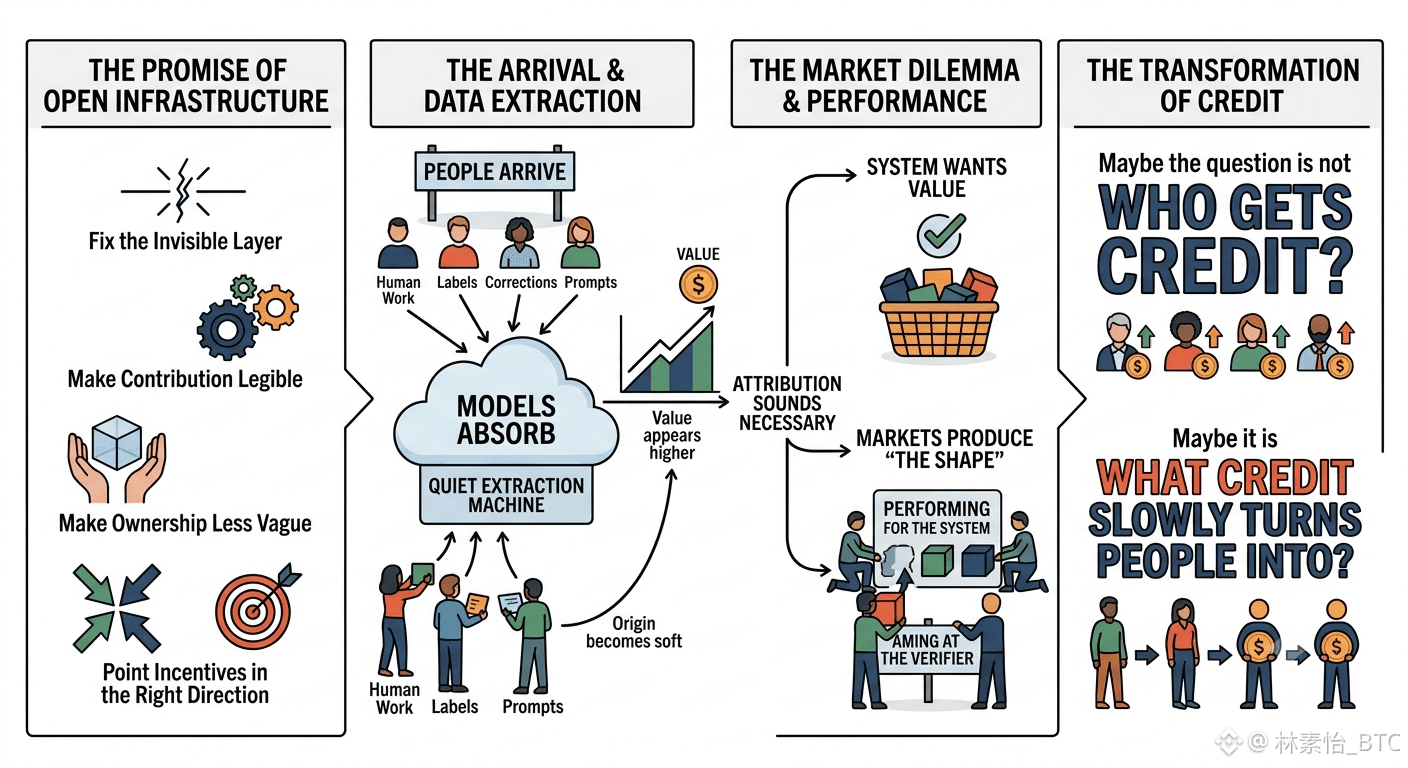
1
117

#openledger $OPEN The OpenLedger campaign is creating serious excitement across the crypto community, and for good reason. As blockchain technology continues to evolve, OpenLedger is positioning itself as a project focused on innovation, transparency, and community-driven growth.
Participating in the Binance OpenLedger campaign is more than just completing tasks and earning rewards—it's a chance to become part of a growing ecosystem before wider adoption takes place. Early supporters often gain valuable experience, build stronger connections within the community, and position themselves for future opportunities.
What makes this campaign even more attractive is the combination of learning, engagement, and rewards. Whether you're a seasoned crypto enthusiast or a newcomer exploring Web3, OpenLedger offers a great way to stay active and informed while potentially benefiting from the project's growth.
Don't just watch from the sidelines—join the conversation, complete the campaign activities, and discover why so many users are keeping a close eye on OpenLedger. The next big opportunity could be closer than you think! 🔥
#OpenLedger #BinanceSquare #Crypto #Web3 #Airdrop #Blockchain #BinanceCampaign #CryptoCommunity
#openledger $OPEN The OpenLedger campaign is creating serious excitement across the crypto community, and for good reason. As blockchain technology continues to evolve, OpenLedger is positioning itself as a project focused on innovation, transparency, and community-driven growth.
Participating in the Binance OpenLedger campaign is more than just completing tasks and earning rewards—it's a chance to become part of a growing ecosystem before wider adoption takes place. Early supporters often gain valuable experience, build stronger connections within the community, and position themselves for future opportunities.
What makes this campaign even more attractive is the combination of learning, engagement, and rewards. Whether you're a seasoned crypto enthusiast or a newcomer exploring Web3, OpenLedger offers a great way to stay active and informed while potentially benefiting from the project's growth.
Don't just watch from the sidelines—join the conversation, complete the campaign activities, and discover why so many users are keeping a close eye on OpenLedger. The next big opportunity could be closer than you think! 🔥
#OpenLedger #BinanceSquare #Crypto #Web3 #Airdrop #Blockchain #BinanceCampaign #CryptoCommunity
Participating in the Binance OpenLedger campaign is more than just completing tasks and earning rewards—it's a chance to become part of a growing ecosystem before wider adoption takes place. Early supporters often gain valuable experience, build stronger connections within the community, and position themselves for future opportunities.
What makes this campaign even more attractive is the combination of learning, engagement, and rewards. Whether you're a seasoned crypto enthusiast or a newcomer exploring Web3, OpenLedger offers a great way to stay active and informed while potentially benefiting from the project's growth.
Don't just watch from the sidelines—join the conversation, complete the campaign activities, and discover why so many users are keeping a close eye on OpenLedger. The next big opportunity could be closer than you think! 🔥
#OpenLedger #BinanceSquare #Crypto #Web3 #Airdrop #Blockchain #BinanceCampaign #CryptoCommunity
81

An open ledger is a transparent, shared record system where every transaction is publicly visible and verifiable by anyone. Unlike private databases, it removes the need for a central authority because trust comes from distributed consensus. Most famously used in blockchain technology, an open ledger records entries chronologically, making them tamper-proof once confirmed. This transparency reduces fraud, increases accountability, and allows independent auditing without permission. Businesses, governments, and financial systems use open ledgers to track assets, contracts, and payments openly. While it boosts trust, privacy must be managed carefully since data is public. Overall, open ledgers promote fairness by giving all participants equal access to the same truthful information.
#openledger $OPEN @Openledger
An open ledger is a transparent, shared record system where every transaction is publicly visible and verifiable by anyone. Unlike private databases, it removes the need for a central authority because trust comes from distributed consensus. Most famously used in blockchain technology, an open ledger records entries chronologically, making them tamper-proof once confirmed. This transparency reduces fraud, increases accountability, and allows independent auditing without permission. Businesses, governments, and financial systems use open ledgers to track assets, contracts, and payments openly. While it boosts trust, privacy must be managed carefully since data is public. Overall, open ledgers promote fairness by giving all participants equal access to the same truthful information.
#openledger $OPEN @OpenLedger
#openledger $OPEN @OpenLedger
121
Log in to explore more content
Join global crypto users on Binance Square
⚡️ Get latest and useful information about crypto.
💬 Trusted by the world’s largest crypto exchange.
👍 Discover real insights from verified creators.
Email / Phone number
Trending Topics
1
#FOMCWatch
8.9M views
26,777 Discussing
2
#EthereumDropsBelow$2300
3,413 views
92 Discussing
3
#BitcoinSlipsBelow$80KAgain
10,198 views
62 Discussing
4
#ThailandLaunchesWORPTStablecoinToQRPaymentApp
17,015 views
337 Discussing
5
#StrategySkipsBitcoinPurchasesSpends$205MOnSTRCBuybacks
5,287 views
80 Discussing
6
#BitmineAdds10452ETH
56,166 views
756 Discussing
7
#SouthKoreaConsidersEducationTaxOnCryptoExchanges
30,842 views
570 Discussing
8
#OCCUrgesCommunityBanksToEnterStablecoinPayments
24,487 views
407 Discussing
9
#RippleWinsFullApprovalAsNationalTrustBank
36,172 views
409 Discussing
10
#AkashSelectsSolanaAsMigrationTarget
13,976 views
195 Discussing