

#occ
occ
92,895 views
404 Discussing
Hot
Latest

·
--
Bullish
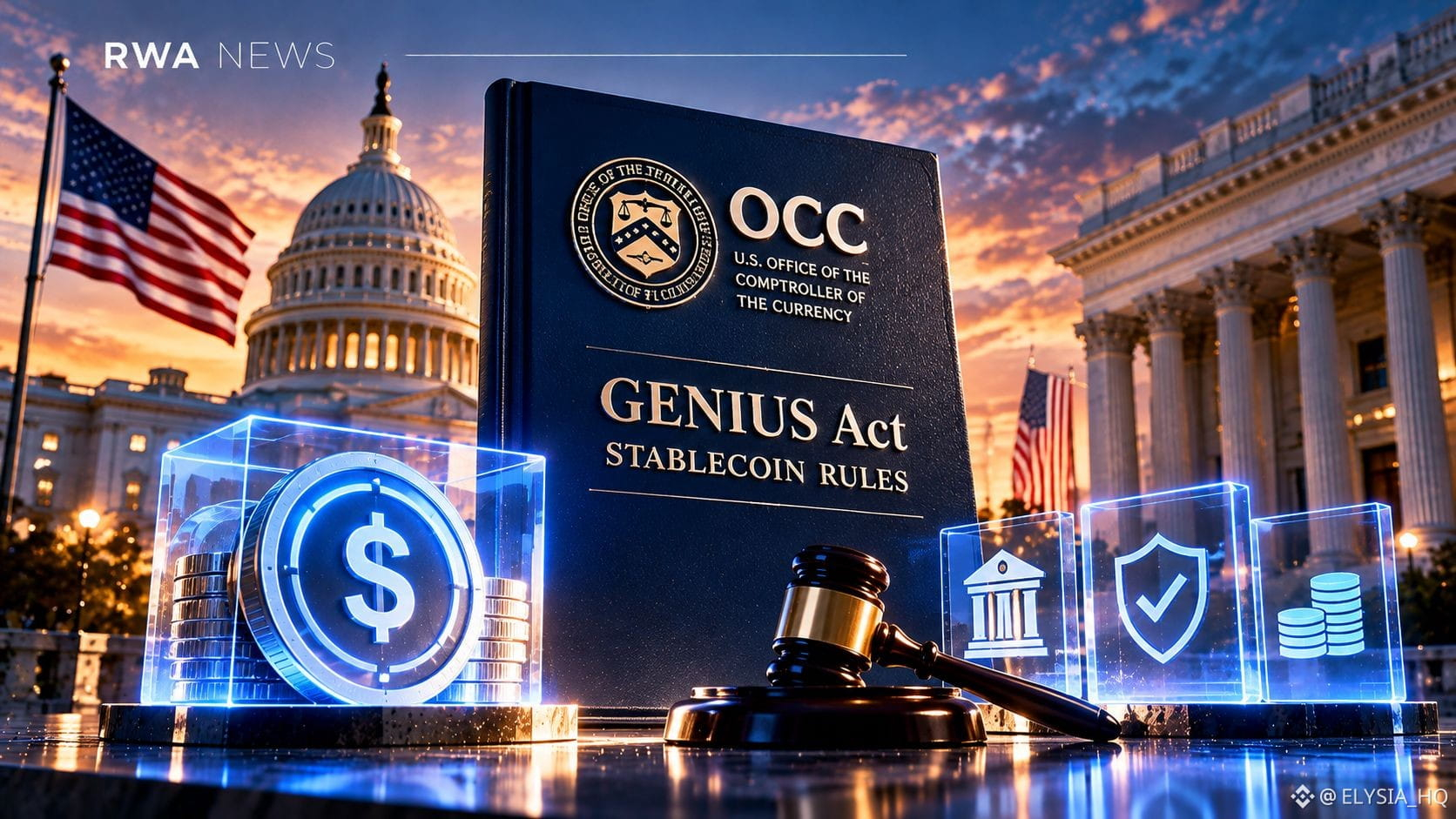
🇺🇸 U.S. OCC Finalizes GENIUS Act Stablecoin Rules — A Major Step Toward Regulated Digital Finance
The U.S. Office of the Comptroller of the Currency (OCC) has announced final rules implementing the GENIUS Act, establishing a clearer federal framework for payment stablecoin issuance and supervision.
The rules define requirements for eligible issuers and certain custodial activities, covering reserve backing, redemption, governance and risk management. The framework is scheduled to take effect on January 18, 2027, while anti-money laundering and sanctions-related requirements will be addressed separately.
The bigger picture: U.S. stablecoin regulation is moving from legislation to implementation, laying the regulatory foundation for institutional adoption, onchain payments and the broader RWA ecosystem.
#OCC
44

·
--
🎯 Ripple has secured a U.S. national trust bank charter
📰 The OCC gave final approval, allowing Ripple to establish a national trust bank in the U.S. It’s officially stepping onto traditional finance’s turf.
💬 Pretty slick move. Instead of issuing a stablecoin or hyping a concept, they got a bank charter in their pocket first. From here on, XRP’s story isn’t about ETFs—it’s about the foundations of a bank. With compliance built out to this degree, the game has completely changed.
🏷️ #Ripple #XRP #OCC #Stablecoin
27

·
--
Bullish
The Office of the Comptroller of the Currency is encouraging community banks to consider applying to become payment stablecoin issuers or participating through a bank subsidiary. The GENIUS Act’s final rule will take effect on January 18, 2027.
In the past, community banks have worried that stablecoin rewards would draw deposits away from banks and weaken their lending capacity. Now, however, regulators’ answer is: rather than resist, enter the stablecoin market yourselves. But the OCC is only encouraging community banks to participate; it is not requiring them to do so. Will stablecoins eventually replace banks, or become a new product offered by banks?
$USDT $USDC 🔸 #OCC #社区银行 #稳定币支付 #OCC敦促社区银行进军稳定币支付
{future}(ETHUSDT)
{future}(BTCUSDT)
{future}(USDCUSDT)
The Office of the Comptroller of the Currency is encouraging community banks to consider applying to become payment stablecoin issuers or participating through a bank subsidiary. The GENIUS Act’s final rule will take effect on January 18, 2027.
In the past, community banks have worried that stablecoin rewards would draw deposits away from banks and weaken their lending capacity. Now, however, regulators’ answer is: rather than resist, enter the stablecoin market yourselves. But the OCC is only encouraging community banks to participate; it is not requiring them to do so. Will stablecoins eventually replace banks, or become a new product offered by banks?
$USDT $USDC 🔸 #OCC #社区银行 #稳定币支付 #OCC敦促社区银行进军稳定币支付

21

·
--
The stablecoin licensing narrative continues to trickle down: it’s not just the giants — regulators are also calling on community banks to get involved.
According to reposts from PANews / good.box and others, the U.S. Office of the Comptroller of the Currency (OCC) is encouraging community banks to apply under the GENIUS Act to become stablecoin issuers, aiming to expand community banks’ role in digital payments.
How to read this: this is a signal of policy opening the door and granting business permission, but there are still three hurdles before “a large number of community banks really issue coins and scale up”: applications, compliance, and reserve capacity. What’s more worth watching is the first batch of approved names, reserve and disclosure standards, and the competitive/cooperative relationship with existing compliant stablecoins. For ordinary people, the more practical takeaway is: treat “encouraging applications” as a long-term infrastructure news item, and don’t misread a regulatory initiative headline as a short-term pump excuse.
#稳定币 #OCC #GENIUS法案 #regulation
24

·
--
Vote | Ripple wins final OCC approval: is this a new starting point for XRP, or has all the good news already been priced in?
The OCC has given final approval for Ripple to establish a national trust bank, giving it access to a federal regulatory platform that can support RLUSD and provide digital asset custody.
How do you read it?
A A new starting point, institutional funds to follow
B All the good news is already priced in; implementation still needs time
C This has nothing to do with me
Vote in the comments and say why: A type 1, B type 2, C type 3.
$XRP $RLUSD $BTC
#Ripple #OCC #XRP
(Source: CoinGape)
⚠️Risk warning: The above is for market information sharing only and does not constitute investment advice; investing involves risks, and you should be cautious when entering the market.

47


·
--
Ripple receives final approval from the OCC (U.S. Office of the Comptroller of the Currency) to establish a national trust bank!
According to reports from several media outlets, including WatcherGuru and Coin Bureau, Ripple has received final approval from the U.S. OCC to establish a national trust bank, completing the process that began with conditional approval last December.
1️⃣ The bank will manage RLUSD reserves and provide digital asset custody for businesses—bringing the reserve management function under Ripple’s own control.
2️⃣ This trust bank will not take deposits or make loans. Don’t mistake its charter for that of a regular commercial bank, or assume it amounts to a direct safety net.
So in the stablecoin space, the focus of competition seems to be shifting from issuance volume to where reserves are held, who oversees them, and how responsibilities are allocated.
Licensing and reserve credibility are becoming increasingly important.
$XRP
#Ripple #RLUSD #稳定币 #OCC

445

RIPPLE SECURES US NATIONAL TRUST BANK CHARTER: INSTITUTIONAL SHIFT FOR XRP
The US Office of the Comptroller of the Currency (OCC) has granted full regulatory approval for Ripple to operate as a chartered national trust bank, positioning the firm alongside institutional peers Circle, BitGo, and Fidelity Digital Assets, establishing structural tailwinds for XRP.
Securing a federal trust bank charter represents an institutional evolution, transitioning Ripple into a fully federally regulated banking entity. This designation authorizes Ripple to provide nationally chartered digital asset custody, institutional clearing, and compliant liquidity rails directly to legacy banking institutions without third-party reliance. Federal oversight eliminates compliance hesitation for institutional balance sheets seeking exposure to on-chain infrastructure. Structural demand for on-demand liquidity (ODL) utilizing XRP is poised to expand, providing durable spot market absorption. As transactional velocity transitions onto chartered federal rails, liquid floating supply across major venues becomes anchored within reserves, curtailing secondary market distribution volatility.
Moving forward, market participants will track onboarding timelines for institutional clearing and reserve custody. A durable accumulation base is established, supporting extended fundamental valuation expansion as traditional banking capital integrates.
Will Ripple's federal bank charter accelerate regulatory clarity and spot ETF approvals for XRP? If this logic makes sense, drop a follow for more market breakdowns.
Please do your own research carefully before making any transactions (DYOR). $XRP #OCC
{future}(XRPUSDT)
RIPPLE SECURES US NATIONAL TRUST BANK CHARTER: INSTITUTIONAL SHIFT FOR XRP
The US Office of the Comptroller of the Currency (OCC) has granted full regulatory approval for Ripple to operate as a chartered national trust bank, positioning the firm alongside institutional peers Circle, BitGo, and Fidelity Digital Assets, establishing structural tailwinds for XRP.
Securing a federal trust bank charter represents an institutional evolution, transitioning Ripple into a fully federally regulated banking entity. This designation authorizes Ripple to provide nationally chartered digital asset custody, institutional clearing, and compliant liquidity rails directly to legacy banking institutions without third-party reliance. Federal oversight eliminates compliance hesitation for institutional balance sheets seeking exposure to on-chain infrastructure. Structural demand for on-demand liquidity (ODL) utilizing XRP is poised to expand, providing durable spot market absorption. As transactional velocity transitions onto chartered federal rails, liquid floating supply across major venues becomes anchored within reserves, curtailing secondary market distribution volatility.
Moving forward, market participants will track onboarding timelines for institutional clearing and reserve custody. A durable accumulation base is established, supporting extended fundamental valuation expansion as traditional banking capital integrates.
Will Ripple's federal bank charter accelerate regulatory clarity and spot ETF approvals for XRP? If this logic makes sense, drop a follow for more market breakdowns.
Please do your own research carefully before making any transactions (DYOR). $XRP #OCC
247

·
--
Ripple just got final OCC approval for a U.S. national trust bank — a federal charter for RLUSD reserves and custody.
On October 26, 2026, the Office of the Comptroller of the Currency granted final approval to charter Ripple National Trust Bank (RNTB), following conditional approval in December 2025. Approved activities include managing segregated reserves that back Ripple USD (RLUSD), acting as collateral trustee for RLUSD holders, and offering fiduciary digital asset custody. RLUSD remains issued by Standard Custody & Trust Company under New York DFS rules; RNTB adds federal OCC oversight.
Ripple said RLUSD, launched in December 2024, has reached about a $2.5 billion market cap and is used in its payments stack and as collateral in Ripple Prime, with BNY as primary reserve custodian and monthly third-party attestations. The bank’s plan also covers broader fiduciary custody as institutions fold digital assets into payments, trading, and treasury. $XRP underpins Ripple’s broader infrastructure alongside RLUSD.
#Ripple #RLUSD #XRP #OCC #CryptoNews
DYOR. Not financial advice.
{spot}(XRPUSDT)
{spot}(RLUSDUSDT)
{stock_us}(OCC.US)
Ripple just got final OCC approval for a U.S. national trust bank — a federal charter for RLUSD reserves and custody.
On October 26, 2026, the Office of the Comptroller of the Currency granted final approval to charter Ripple National Trust Bank (RNTB), following conditional approval in December 2025. Approved activities include managing segregated reserves that back Ripple USD (RLUSD), acting as collateral trustee for RLUSD holders, and offering fiduciary digital asset custody. RLUSD remains issued by Standard Custody & Trust Company under New York DFS rules; RNTB adds federal OCC oversight.
Ripple said RLUSD, launched in December 2024, has reached about a $2.5 billion market cap and is used in its payments stack and as collateral in Ripple Prime, with BNY as primary reserve custodian and monthly third-party attestations. The bank’s plan also covers broader fiduciary custody as institutions fold digital assets into payments, trading, and treasury. $XRP underpins Ripple’s broader infrastructure alongside RLUSD.
#Ripple #RLUSD #XRP #OCC #CryptoNews
DYOR. Not financial advice.

2
224

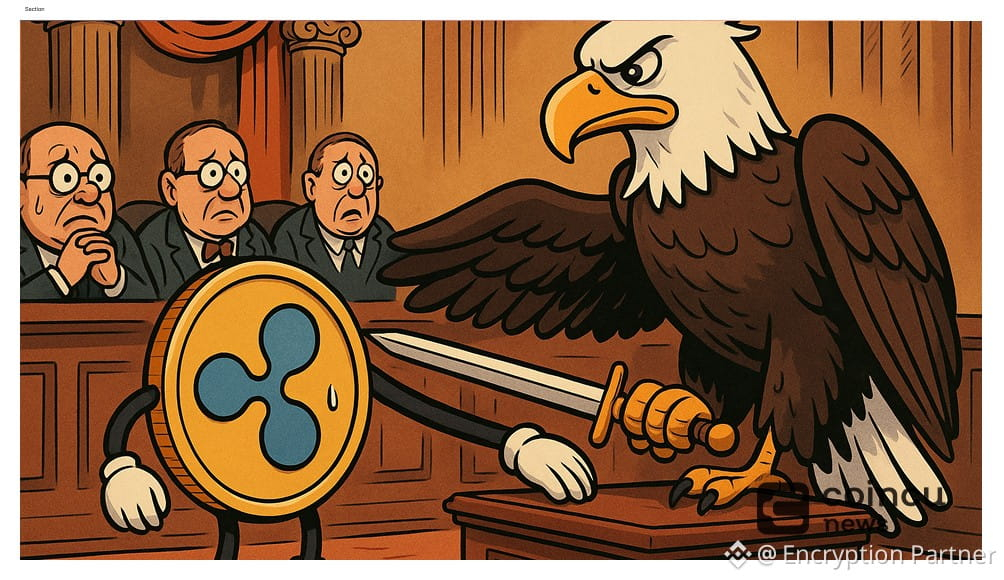
I came across a post this morning and almost thought I’d misread it: Ripple really did get final approval from the U.S. OCC for a national trust bank charter. It was only conditionally approved last December, but now it’s officially cleared—and can manage RLUSD’s reserves and provide digital asset custody for institutions. A few years ago, Garlinghouse saying on X that “crypto and banking work better together” would have had the SEC coming after him. XRP is currently around $1.30, but the price hasn’t taken off despite the charter: A: The compliance path is now clear, and institutional money will come eventually; B: A bank charter is one thing, the token price is another—don’t use a bank charter as an excuse to pump the price. Which side are you on?
$XRP $BTC $ETH
#Ripple #OCC #XRP
$XRP $BTC $ETH
#Ripple #OCC #XRP
5
·
--
【Market Flash】Ripple has completed another piece of its compliance puzzle: the OCC has granted final approval for it to establish Ripple National Trust Bank, giving it access to a federal regulatory platform. This can support the RLUSD stablecoin and enable digital asset custody services. The news broke just before the opening of Ripple Swell 2026 in New York, sending a clear signal: a license isn’t just for show—it’s a gateway to doing business. The question is, now that it has the license, will institutional capital really follow?
$XRP $RLUSD $BTC
#Ripple #OCC #RLUSD
(Source: CoinGape)
⚠️Risk warning: The above is shared for informational purposes only and does not constitute investment advice. Investing involves risk; please exercise caution.
$XRP $RLUSD $BTC
#Ripple #OCC #RLUSD
(Source: CoinGape)
⚠️Risk warning: The above is shared for informational purposes only and does not constitute investment advice. Investing involves risk; please exercise caution.

53
·
--
U.S. regulators are urging community banks to get into the payment stablecoin business.
According to reports from CoinDesk, good.box, and others, the Office of the Comptroller of the Currency (OCC) is encouraging community banks to apply to become payment stablecoin issuers under the GENIUS Act, either through subsidiaries or as eligible issuers. The related final rules are expected to take effect around January 18, 2027. Existing issuers that submit substantially complete applications before then may apply for a transition exemption of up to about 12 months.
How to read this: It shifts the question of “who can legally issue dollar stablecoins” toward licensed banks, rather than leaving it solely to big tech companies and crypto-native firms. For community banks, this is a test of product and compliance capabilities; for existing issuers, it’s about the application window and the timing of exemptions. Before the rules take effect, it remains to be seen when the OCC will formally begin accepting applications and how it will handle approvals. Don’t mistake an invitation to apply for an issued license.
#OCC #稳定币 #GENIUS #Regulation
68

The OCC is urging U.S. community banks to enter the stablecoin payments market! This is more than just an invitation—it’s a major strategy to reshape the future of finance.
The U.S. Office of the Comptroller of the Currency (OCC) wants smaller banks to be able to issue USD-pegged stablecoins under the GENIUS Act. The goal is clear: empower smaller financial institutions and help them compete on equal footing with large banks and crypto companies.
This matters a lot. When the GENIUS Act’s final rules take effect on 18/01/2027, the market will see a wave of stablecoins authorized to operate legally. Existing issuers may also apply for temporary exemptions to continue operating.
This move comes as traditional banks worry that high-yield stablecoins could draw deposits away from their systems. The battle for market share is heating up.
Could this be a turning point that makes stablecoins the backbone of the global payments system, or is it just an attempt to curb crypto’s rise? What do you think?
#Stablecoin #OCC #Crypto
1
1

·
--
OCC Calls on Community Banks to Issue Dollar Stablecoins
CoinDesk 10/26: On Monday, the U.S. Office of the Comptroller of the Currency (OCC) urged community banks to enter the stablecoin market. They can apply to become licensed issuers under the GENIUS Act, either directly or through subsidiaries. The OCC said this is consistent with its deregulatory push for a “return to community banking.”
Context from the same day: An OCC notice on 10/21 requires stablecoin issuers to comply with the final rules starting January 18, 2027. Existing issuers that submit a substantially complete application by then may apply for a temporary exemption to continue operating (the application process has not yet officially opened).
Banking groups have previously warned that interest-bearing stablecoins could drain deposits. The ICBA has sued the OCC over its approval of crypto trust bank charters, and Senator Warren has also requested explanations regarding those charters.
【Viewpoint】
On one hand, the OCC is tightening entry requirements; on the other, it is bringing smaller banks into the race. Regulators clearly do not want the dollar stablecoin payment layer to be controlled solely by big banks and crypto-native firms. For the market, this could mean that the supply of compliant stablecoins expands from a “few giants” to a “banking network,” though the pace will depend on when applications actually open.
【Opportunities/Risks】
Watch three things: ① When the OCC begins accepting applications; ② The details of temporary exemptions before 2027.1.18; ③ Whether bank lobbying or lawsuits delay the licensing process. If community banks enter the market in earnest, that would likely support on-chain dollar liquidity and the payment narrative. If lawsuits cause delays, implementation could be significantly slower than the market expects.
Would you rather see community banks enter the market and issue stablecoins, or continue using established stablecoin issuers?
#稳定币 #GENIUS #OCC #Crypto Regulation
$BTC $ETH
For reference only; not investment advice


The OCC is urging community banks to issue stablecoins, and a bunch of accounts are spamming “HUGE” and “Regulators are pushing this themselves.” I see another meaning: deposits are about to get siphoned away, so here’s a way to save yourself.
Let’s lay out the timeline. On October 24, the OCC’s official account said stablecoin adoption’s impact on community bank deposits “remains uncertain, with estimates varying widely,” and that it would take community banks’ funding concerns seriously. Two days later, on October 26, the same account changed its tune: community banks are welcome to apply, directly or through a subsidiary, to become compliant payment stablecoin issuers. The rules don’t take effect until January 18, 2027.
And this is supposed to be good news? First they admit you could bleed deposits, then tell you that you can build your own faucet.
The problem is, who’s going to use a local stablecoin issued by a small bank? Exchanges won’t list it, DeFi won’t support it, merchants won’t accept it. The network effects all belong to USDT and USDC. And, by the way, under the GENIUS framework, bank deposits can count as stablecoin reserves—the kind that can be redeemed on demand. The ones who might really benefit are banks that hold deposits by custodying reserves for large issuers, not banks issuing their own coins and competing with giants.
The ones most likely to make money are vendors selling white-label stablecoin issuance systems and compliance consultants. As for crypto folks shouting “banks entering = bull market,” not a single coin can be issued before January. Don’t rush to treat this news as a buy signal.
#稳定币 #OCC
3

·
--

Article
OCC urges U.S. banks to issue stablecoins, but banks are panicking first: Are $6 trillion in deposits about to move?OCC urges U.S. banks to issue stablecoins, but banks are panicking first: Are $6 trillion in deposits about to move?
On October 26, the Office of the Comptroller of the Currency (OCC) did something historic: it publicly encouraged community banks to consider applying to become payment stablecoin issuers, pointing to the licensing framework under the GENIUS Act. For an insured national bank, the route is to apply through a subsidiary, rather than issuing stablecoins directly through the bank itself. Less than three months remain until the January 18, 2027 deadline, after which issuing without a license will be prohibited.
But here’s the twist: regulators are encouraging banks to get involved, while the banks fear stablecoins could drain their deposits.
OCC urges U.S. banks to issue stablecoins, but banks are panicking first: Are $6 trillion in deposits about to move?
OCC urges U.S. banks to issue stablecoins, but banks are panicking first: Are $6 trillion in deposits about to move?
On October 26, the Office of the Comptroller of the Currency (OCC) did something historic: it publicly encouraged community banks to consider applying to become payment stablecoin issuers, pointing to the licensing framework under the GENIUS Act. For an insured national bank, the route is to apply through a subsidiary, rather than issuing stablecoins directly through the bank itself. Less than three months remain until the January 18, 2027 deadline, after which issuing without a license will be prohibited.
But here’s the twist: regulators are encouraging banks to get involved, while the banks fear stablecoins could drain their deposits.
193
·
--
Bearish
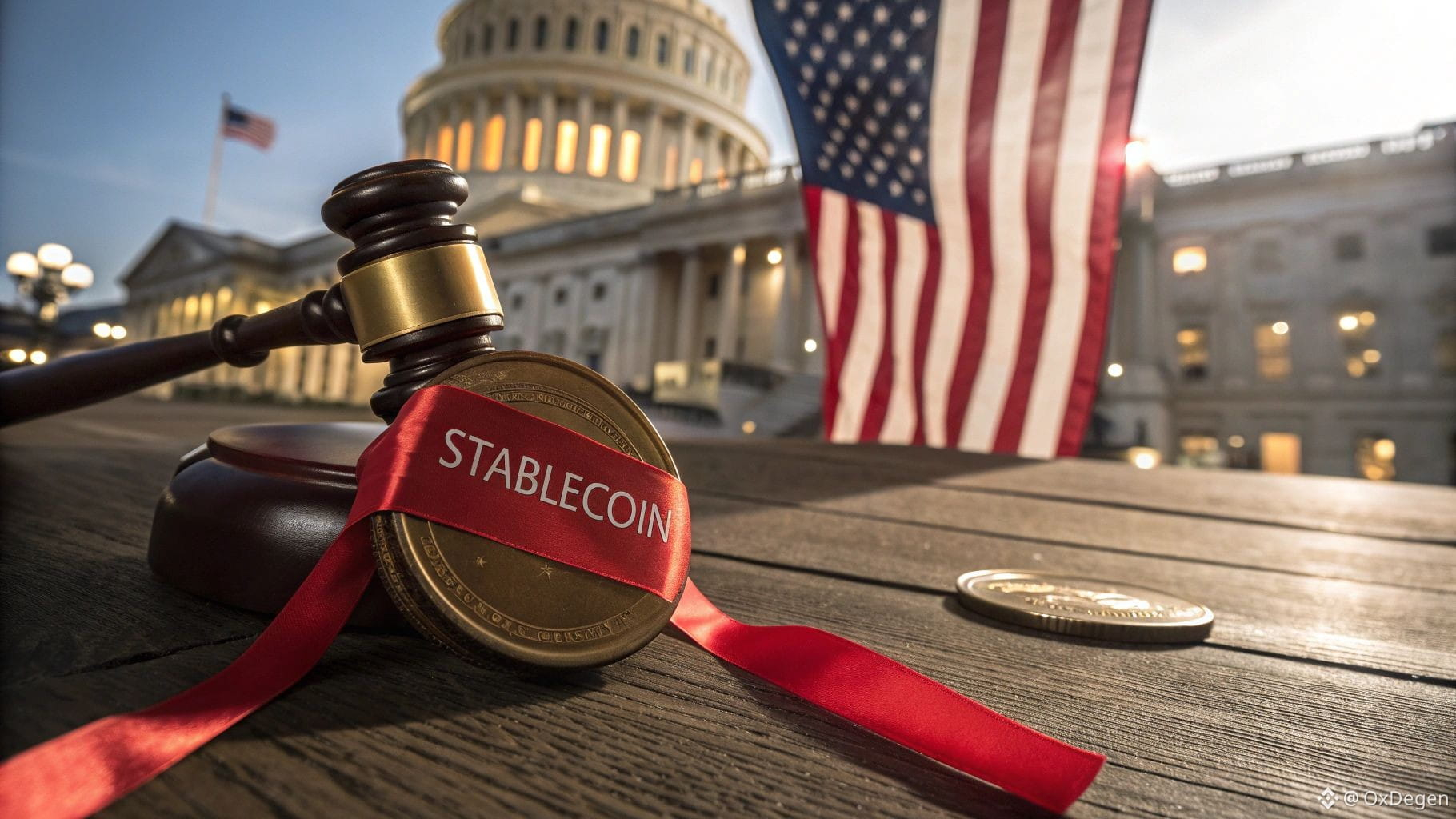
The U.S. Office of the Comptroller of the Currency removed the most controversial provision from its final rule: stablecoins will no longer automatically receive a seven-day extension in the event of large-scale redemptions.
Under the new rule, if a stablecoin receives redemption requests totaling more than 10% of its circulating supply within 24 hours, the issuer must notify the OCC within 24 hours. Supporters say this upholds the promise of “redemption at any time,” while opponents worry that losing the grace period could accelerate a run on stablecoins. What matters most for stablecoins: the safety of their reserves or the speed of redemption?
$USDT $USDC 🔸 #OCC #稳定币赎回 #GENIUS法案 #OCC取消稳定币七天赎回自动延期
{future}(USDCUSDT)
{future}(BTCUSDT)
The U.S. Office of the Comptroller of the Currency removed the most controversial provision from its final rule: stablecoins will no longer automatically receive a seven-day extension in the event of large-scale redemptions.
Under the new rule, if a stablecoin receives redemption requests totaling more than 10% of its circulating supply within 24 hours, the issuer must notify the OCC within 24 hours. Supporters say this upholds the promise of “redemption at any time,” while opponents worry that losing the grace period could accelerate a run on stablecoins. What matters most for stablecoins: the safety of their reserves or the speed of redemption?
$USDT $USDC 🔸 #OCC #稳定币赎回 #GENIUS法案 #OCC取消稳定币七天赎回自动延期
130

·
--
【Market Update】The final rules are in place, but the stablecoin rewards debate is far from over: In a letter dated October 24, BPI again challenged the OCC, focusing on how third-party arrangements that pay holders should be classified.
BPI said that case-by-case rulings have not clarified the interpretation or public process. The core issue is how to enforce the ban on issuer earnings. The GENIUS Act rules take effect on January 18, 2027. Do you think rewards should be determined by “who pays and why,” or by what they’re called? Join the discussion in the comments.
$BTC $ETH $USDC
#稳定币 #GENIUS法案 #OCC
(Source: NewsBTC)
⚠️Risk warning: The above is shared for informational purposes only and does not constitute investment advice. Investing involves risk; proceed with caution.

209

·
--
At 0.3002 USDT, $GENIUS has moved just -0.13% in the past 24 hours—the price is practically stuck in place. The OCC has finalized its implementation rules, but what stands out to me more after reading them is that they don’t take effect until January 18, 2027—not today’s tiny fluctuation. The rules cover permitted payment stablecoin issuers, foreign issuers overseen by the OCC, and certain custody activities by regulated entities. Reserve backing, redemption, and risk management are all addressed. Scott Bessent called this a watershed moment for the U.S. financial industry and even compared it to the National Currency Act of 1863. That sounds a bit grand to me. The Bank Secrecy Act, anti-money laundering, and OFAC sanctions didn’t make it into the final rule; the OCC says it will address those separately with the Treasury Department. The bill was signed in July 2025, but they missed the July 18, 2026 deadline. The Fed didn’t put out two related rules until September, and the OCC still hasn’t said when it will start accepting applications or waiver requests. The rules are here, but the window is still empty, while the price acts like it hasn’t heard a thing. Are you watching redemptions more closely, or that still-unwritten piece on anti-money laundering?
#稳定币监管 #OCC
#稳定币监管 #OCC

207

·
--
U.S. stablecoin regulation has taken a key step forward. The Office of the Comptroller of the Currency (OCC) has finalized rules implementing the GENIUS Act, clarifying requirements addressing reserve, redemption, and custody risks for payment stablecoin issuers. Notably, the rules do not yet include anti-money laundering or OFAC sanctions provisions; the Treasury Department will coordinate work on those at a later stage. The Act and final rules are scheduled to take effect on January 18, 2027. The OCC has not yet announced a timeline for accepting issuer applications or exemption requests.
#稳定币 #OCC #加密监管 #GENIUSAct
#稳定币 #OCC #加密监管 #GENIUSAct
5

BREAKING: The OCC ends the 7-day delay for stablecoin redemptions! 🚨
This is HUGE for USDT USDC holders.
The U.S. Office of the Comptroller of the Currency (OCC) has just finalized its stablecoin rules under the GENIUS Act – they will take effect on January 18, 2027.
What changed?
The OCC REMOVED the automatic 7-day extension for redemptions that was included in the initial draft.
Under the previous draft, if too many people requested a redemption, issuers could automatically take 7 days.
And now? Redemptions must be processed within 2 business days – with no automatic delay.
If redemption requests exceed 10% of a stablecoin’s circulating supply over a 24-hour period, the issuer must notify the OCC within 24 hours and request an extension. The OCC will make the decision: it will no longer be automatic.
In plain English: your stablecoins are now much safer and more liquid.
No more funds being locked up for a week during a panic.
Is this good news for stablecoin adoption in the United States? Or will these rules be too strict for issuers?
Share your opinion below 👇
#Stablecoin #OCC #GENIUSAct
$ORDER
{future}(ORDERUSDT)
$BIRB
{future}(BIRBUSDT)
$BMT
{future}(BMTUSDT)
#occremovesstablecoinsevendayredemptionextension
BREAKING: The OCC ends the 7-day delay for stablecoin redemptions! 🚨
This is HUGE for USDT USDC holders.
The U.S. Office of the Comptroller of the Currency (OCC) has just finalized its stablecoin rules under the GENIUS Act – they will take effect on January 18, 2027.
What changed?
The OCC REMOVED the automatic 7-day extension for redemptions that was included in the initial draft.
Under the previous draft, if too many people requested a redemption, issuers could automatically take 7 days.
And now? Redemptions must be processed within 2 business days – with no automatic delay.
If redemption requests exceed 10% of a stablecoin’s circulating supply over a 24-hour period, the issuer must notify the OCC within 24 hours and request an extension. The OCC will make the decision: it will no longer be automatic.
In plain English: your stablecoins are now much safer and more liquid.
No more funds being locked up for a week during a panic.
Is this good news for stablecoin adoption in the United States? Or will these rules be too strict for issuers?
Share your opinion below 👇
#Stablecoin #OCC #GENIUSAct
$ORDER
$BIRB
$BMT
#occremovesstablecoinsevendayredemptionextension

2.2k
Log in to explore more content
Join global crypto users on Binance Square
⚡️ Get latest and useful information about crypto.
💬 Trusted by the world’s largest crypto exchange.
👍 Discover real insights from verified creators.
Email / Phone number
Trending Topics
1
#CanMicrosoftDeliverOnAI
148,325 views
1,158 Discussing
2
#CanGoogleDefindItsCore
74,461 views
812 Discussing
3
#FOMCWatch
9.1M views
28,436 Discussing
4
#SKHynixUnveils$45BShareholderReturns
83 views
4 Discussing
5
#OSMOPlansToBurn100MTokensFromCommunityPool
3,099 views
109 Discussing
6
#EthereumDropsBelow$2300
12,547 views
166 Discussing
7
#BitcoinSlipsBelow$80KAgain
35,526 views
133 Discussing
8
#ThailandLaunchesWORPTStablecoinToQRPaymentApp
78,497 views
930 Discussing
9
#StrategySkipsBitcoinPurchasesSpends$205MOnSTRCBuybacks
14,114 views
101 Discussing
10
#BitmineAdds10452ETH
131,060 views
1,357 Discussing