

布萊茲的投資筆記
51 Posts

布萊茲的投資筆記
Report
Block User
Open Trade
Frequent Trader
8.8 Years
29 Following
2 Followers
48 Liked
Posts
Portfolio
·
--
The final release of Bitcoin Core 32.0, Bitcoin node software, was finalized on October 21. The change most noticeable to everyday users: compared with the old algorithm, fee estimates can only go lower, never higher.
Bitcoin Core 32.0 release notes:
1. Fee estimation now includes an algorithm that looks at the current mempool. The lower estimate from this algorithm and the original one is used, so estimated fees can only be adjusted downward. Wallets use this combined estimate by default.
2. The default maximum number of automatic node connections has increased from 125 to 200, with the additional slots reserved for block-relay-only nodes.
3. Rebuilding the transaction index now takes up less than half the space it used to. Data can also be read ahead in parallel during block validation to speed up verification.
4. Versions 29.x and older will no longer receive updates. Details of three medium- to high-severity vulnerabilities fixed in 30.0 will be disclosed in two weeks.
My take: Fees only being adjusted downward is a tangible benefit for people who make frequent transactions. Anyone still running a node on version 29 or earlier should upgrade before the vulnerability details are made public.
What to watch next: the vulnerability disclosures in two weeks, and how quickly wallets and service providers follow suit with upgrades. $BTC
81
·
--
“Hard fork” sounds like something went wrong, but it’s usually a planned upgrade.
According to ethereum.org:
1. A fork changes the rules of the protocol and is often a planned technical upgrade.
2. There’s no company that can directly push a new version to a blockchain, so each node has to update its own software. Block production and validation must follow the new rules.
3. When the rules change, the network may briefly split into old and new versions. Forks are usually announced in advance, so everyone switches together, and the upgraded chain becomes the main chain.
4. In rare cases, people disagree about a fork, and the network permanently splits into two chains.
The best-known example is the 2016 DAO incident: hackers exploited a vulnerable contract and stole over 3.6 million ETH. The community voted (with over 85% in favor) to use a hard fork to move the funds to a new contract that only allowed withdrawals. Some miners believed the issue wasn’t a flaw in the protocol itself and refused to follow the upgrade. Their chain later became Ethereum Classic (ETC).
So when you see “such-and-such chain is getting a hard fork,” first check whether it’s a scheduled upgrade, then see if anyone opposes it strongly enough to split off.
What to watch next: When you read about future upgrades, keep an eye on the activation time and whether nodes need to update. $ETH
1
284
·
--
BNB Chain’s next hard fork, Jenner, is scheduled to go live on testnet on October 29. Its main focus is to build the token standard for “compliant stablecoins” directly into the chain’s underlying layer.
According to the BSC v1.8.1 release notes published by BNB Chain on GitHub:
1. The Chapel testnet is expected to activate Jenner on October 29 at 02:30 UTC (10:30 Taiwan time). No mainnet date has been scheduled for this release yet.
2. BEP-702: Introduces CAS20, a native token standard for stablecoins and tokenized assets, with built-in blacklists and whitelists, pausing, and separate permissions for minting, burning, and seizing tokens. Creating this type of token on the network will also require activation by an administrator designated through governance.
3. BEP-703: Reserves 5% of each block’s gas by default for BNB transfers and payments made through whitelisted contracts, so payment transactions won’t be crowded out during network congestion. Governance can adjust the percentage and the whitelist.
4. BEP-706: Allows smart contracts to read block production times with millisecond precision.
All three proposals are currently in Draft status. A mainnet date will be scheduled only after the testnet rollout.
What to watch next: whether the testnet activation on October 29 goes smoothly, and the announcement of the mainnet activation date. $BNB

1
112
·
--
What is a “testnet”? It uses the same rules as the mainnet, but the coins on it have no real-world value.
According to ethereum.org:
1. Mainnet: This is where transactions with real value take place. When people talk about the price of ETH, they mean mainnet ETH.
2. Testnet: Before deploying to mainnet, developers test protocol upgrades and smart contracts in an environment that closely resembles the real thing—like a company’s “production” and “testing” systems.
3. The same wallet address can be used on different networks, but your mainnet balance and transaction history don’t carry over to a testnet.
4. Testnet ETH theoretically has no value and can usually be obtained for free from “faucet” websites.
Ethereum currently maintains two public testnets: Sepolia is for application developers to test their programs; Hoodi is for protocol developers to test network upgrades and for stakers to practice running validators.
So when you see news about an “upgrade on a testnet,” it means the upgrade is still being trialed—it doesn’t mean mainnet has changed.
What to watch next: When you see news about an upgrade, first check which network it’s on. $ETH

2
197
·
--
Ethereum’s next upgrade, Glamsterdam, was originally scheduled to go live on the Hoodi testnet on October 26. It has now been postponed, and a new date has not yet been set.
The Ethereum Foundation announced on October 22:
1. Core developers decided to postpone the upgrade at the ACDE #248 meeting, to further investigate how EIP-8037 interacts with smart contracts on mainnet.
2. The planned increase of Hoodi’s gas limit to 200 million, which was scheduled to happen at the same time, has also been canceled.
3. This only rolls back upgrade settings that have not yet taken effect; existing records on the Hoodi chain will not be changed.
4. The new activation date will be announced separately.
Upgrades generally need to be tested on a testnet before going live on mainnet. With this testnet step delayed, there is not yet a basis for discussing the mainnet timeline.
What to watch next: when the Foundation announces a new activation date for Hoodi, and the findings of the EIP-8037 investigation. $ETH

2
191
·
--
Faster block production doesn’t mean faster transaction finality. They’re two different metrics.
Take Ethereum, for example (according to ethereum.org):
1. Block production: One slot every 12 seconds, with a validator proposing a new block.
2. Finality: Every 32 slots make up an epoch, with the first block serving as a checkpoint. Once about two-thirds of staked ETH has voted in favor of two checkpoints, transactions are considered “finalized.”
3. Reversing a transaction after finality would cost an attacker at least one-third of the staked ETH.
An epoch is 32 × 12 seconds = 6.4 minutes. So while Ethereum produces a block every 12 seconds, finality takes several minutes.
Two recent developments each change one of these numbers: Solana’s Alpenglow aims to bring finality down to around 150 milliseconds, while Zcash’s NU7 changes block times from 75 seconds to 25 seconds.
What to watch next: When you see news about something getting “faster,” first check whether it’s block production or finality. $ETH

2
159
·
--
ZEC’s NU7 mainnet activation height is set: block 3,543,405.
Zcash’s ZIP 259 was updated on October 21, specifying a mainnet activation height of 3,543,405 (testnet: 4,465,026). The document’s current status is Proposed.
NU7 makes four main changes:
1. Block time is shortened from 75 seconds to 25 seconds.
2. A cap is placed on the number of privacy transactions to control verification and synchronization costs.
3. A “Network Sustainability Mechanism” (NSM) is introduced, taking 60% of transaction fees out of circulation.
4. Version 4 transactions become invalid after activation; funds still in the oldest Sprout pool will become unspendable.
The document also states that these changes will not increase ZEC’s total supply cap.
What to watch next: the release of Zebra 7.0.0, and whether funds still in the Sprout pool are moved out before activation. $ZEC
1
229
·
--
Funding rates aren’t fees collected by the exchange. They’re payments made between traders who are long and those who are short.
Perpetual contracts have no expiry date. Funding rates help keep contract prices close to spot prices:
1. If the contract price is above the spot price, the rate is positive, and longs pay shorts.
2. If the contract price is below the spot price, the rate is negative, and shorts pay longs.
3. The rate has two parts: a fixed interest component and a premium component that changes with the price difference between the contract and spot markets. To match centralized exchanges, the interest component is often set at 0.01% every 8 hours.
So a rate noticeably above 0.01% means longs have pushed the contract price higher than the spot price. I also use it as a filter for my simulated account: if the 24-hour cumulative rate is above 0.10%, I don’t enter a trade.
What to watch next: The next time you check a contract page, first see whether the funding rate is positive or negative, and how far it is from 0.01%. $BTC

1
105
·
--
This time, SOL isn’t getting a parameter change—it’s getting an entirely new consensus mechanism: Alpenglow is now live on mainnet.
According to the official Solana Foundation page, Alpenglow was activated in epoch 1064, which began around 13:36 UTC on October 21. It replaces the original TowerBFT, cutting the time it takes for transactions to become “irreversible” from around 12.8 seconds to a target of about 150 milliseconds.
Three key points:
1. Validator votes are no longer recorded as transactions in blocks.
2. Transaction execution, programs, and fees are unchanged, so wallets and apps work as usual.
3. The launch is of the first phase, Votor; there’s no date yet for the second phase, Rotor, which will replace Turbine, the system responsible for propagating block data.
What to watch next: when Rotor is scheduled, and how fast finality actually is after launch. $SOL

1
117
·
--
“Short-term holders” doesn’t mean novice retail investors; it’s a classification used in on-chain data.
Glassnode’s definition: Coins that remain untouched for more than about 155 days are increasingly unlikely to be spent and are considered long-term holdings. Coins held for less than 155 days are considered short-term holdings—the more liquid portion.
Three details:
1. It’s not a hard cutoff: 155 days is the midpoint, with a gradual transition over roughly 10 days on either side.
2. It looks at the holding time of the entire wallet, weighted by amount. Newly purchased coins bring that figure down.
3. Coins on exchanges aren’t counted: long-term holdings, short-term holdings, and exchange balances add up to the circulating supply.
So, an increase in “short-term holders” could mean new buyers are entering the market, or that older coins are changing hands. The number alone won’t tell you which.
$BTC
1
126
·
--
ZEC’s NU7 is not live on mainnet yet. It will run on testnet first, and the official mainnet date has not been set.
The release notes for Zebra 7.0.0-rc, published by the Zcash Foundation on October 2, say this version supports activating NU7 on testnet at block height 4,465,026, expected around October 6. Mainnet node operators do not need to upgrade this time.
Zcash’s official NU7 upgrade page currently says that the activation height has not yet been set.
What to watch next: the official release of Zebra 7.0.0, and when the official upgrade page lists the mainnet activation height. $ZEC
1
151
·
--
Stablecoins may look like U.S. dollars, but they aren’t bank deposits.
The difference comes down to three things:
1. Who owes you the money: A bank owes you your deposit; a stablecoin issuer promises to redeem it at a 1-to-1 rate.
2. Where the money is held: Banks are subject to financial regulation. What backs a stablecoin’s reserves and whether they’re audited regularly depend on the reports published by the issuer.
3. Whether it’s protected: In Taiwan, deposits are insured by the Central Deposit Insurance Corporation, up to NT$3 million per person at each bank. Stablecoins aren’t covered.
So I treat stablecoins as money passing through an exchange, not as deposits to keep there.

1
101
·
--
Strategy bought 267 BTC last week, spending more than 8 times as much on preferred stock repurchases as on Bitcoin purchases, and increased its repurchase authorization.
According to an 8-K filed with the SEC on October 19, Strategy bought 267 BTC from October 12 to 18 for $22.1 million, at an average price of $82,900. The purchase was funded mainly by sales of MSTR common stock. During the same week, it spent $193.1 million repurchasing STRC preferred stock.
The board increased the preferred stock repurchase authorization from $2 billion to $3 billion. As of October 18, $1.16 billion remained available.
Strategy holds a total of 848,517 BTC, acquired at a total cost of $64.02 billion and an average cost of $75,446 per BTC. It also has a $4.83 billion cash reserve to pay preferred stock dividends and interest.
What to watch next: the new filing each Monday to see which is larger—Bitcoin purchases or repurchases.
$BTC

1
127
·
--
Before I run a paper-trading account, I lock in the rules and record the date. This is called preregistration.
Why go to all that trouble? You can keep tweaking parameters in a backtest until the results look great. Try 20 combinations and pick the best one, and that result is probably just luck.
How to preregister:
1. Write down the entry, exit, stop-loss, and position-size rules;
2. Set your pass criteria, such as how long to run it, the minimum number of trades, and whether it must be profitable after costs;
3. From then on, look only at new data and don’t change the rules. If you do need to make a change, start a new version and run it again.
This doesn’t guarantee the strategy will make money. It only ensures the numbers you see haven’t been cherry-picked after the fact.

1
55
·
--
Ethereum’s next upgrade, Glamsterdam, will first go live on the Hoodi testnet on October 26.
The Ethereum Foundation announced on October 16 that Hoodi will activate at epoch 132,352, around 1:42 a.m. Taipei time on October 27. At the same time, Hoodi’s gas limit will increase to 200 million.
The upgrade has two main features: formally incorporating the division of duties between block builders into the protocol (ePBS), and introducing block-level access lists (BAL).
The mainnet date has not yet been decided. The announcement says no action is required on mainnet; only those running Hoodi testnet nodes or staking on Hoodi need to upgrade their clients in advance.
What to watch next: whether Hoodi’s activation goes smoothly, as it will affect the mainnet schedule.
$ETH

1
110
·
--
When I see “a token unlocks next week,” I check three things before trying to guess whether the price will go up or down.
1. How much of the circulating supply is being unlocked: The same $100 million means very different things for a token with a $1 billion circulating market cap versus one with a $10 billion market cap.
2. Who gets the tokens: Team and early-investor unlocks have different incentives to sell than ecosystem rewards and airdrops.
3. Is it a one-time unlock or a linear release? A large one-time unlock is more worth marking on your calendar than small daily releases.
Unlock schedules are usually listed in a project’s tokenomics documents. You can find a token’s circulating and total supply on its Binance information page.
An unlock doesn’t mean the price will definitely fall. It just tells you when the supply will increase.

1
52
·
--
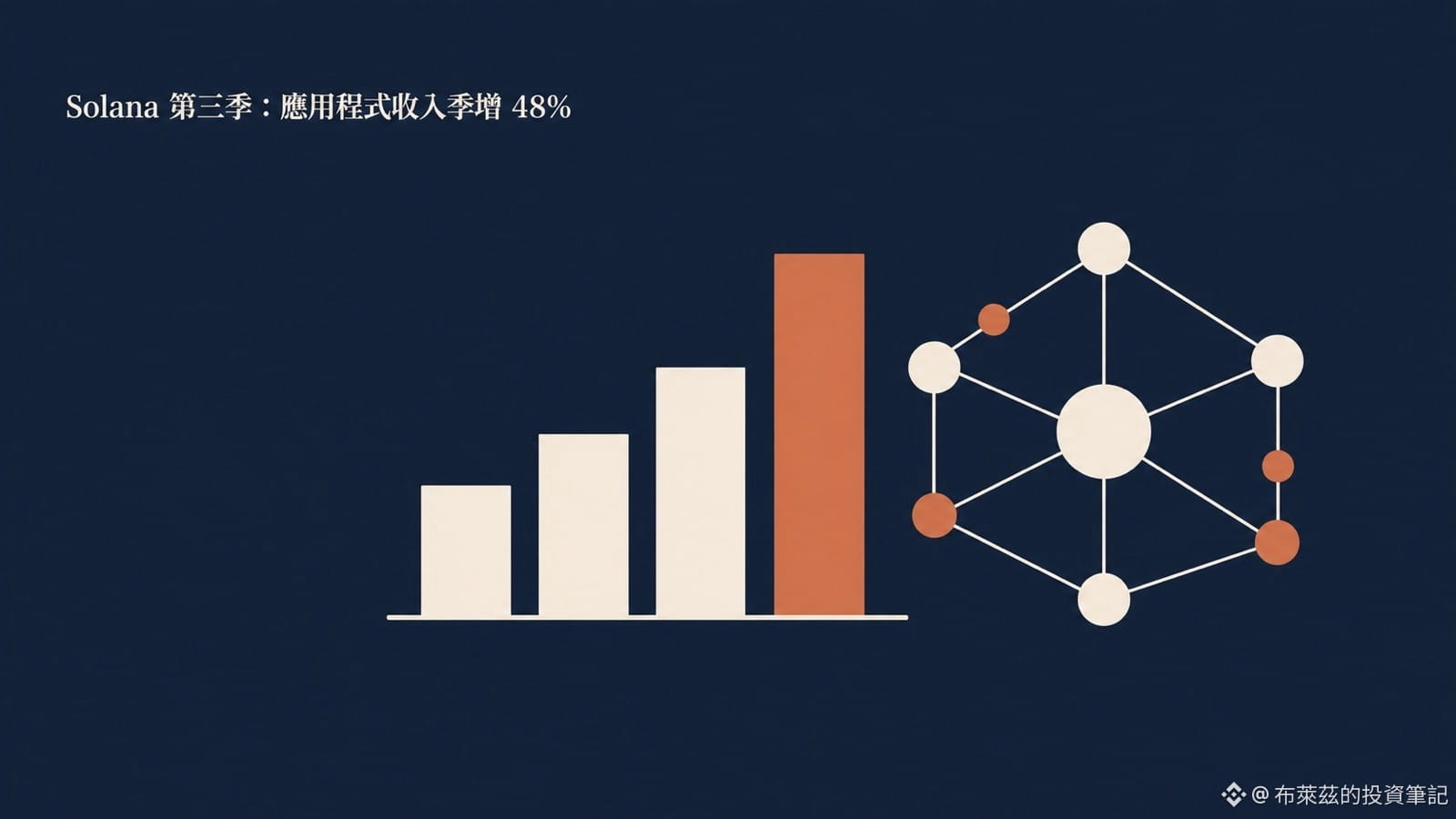
Solana application revenue reached $299 million in Q3, up 48% quarter over quarter and its highest level in a year.
Blockworks' Solana Q3 Token Holder Report shows that Pump contributed $121.5 million, or about 40%. The chain's real economic value (REV) was $75.7 million, also up 48% quarter over quarter—the first quarterly increase since Q4 2024.
In the same quarter, SOL spot ETPs saw net inflows of $492.3 million, more than four times the Q2 figure.
What's next: Alpenglow, which offers 150-millisecond finality, went live on the public testnet on September 22. A mainnet timeline has not yet been announced.
$SOL
1
155
·
--
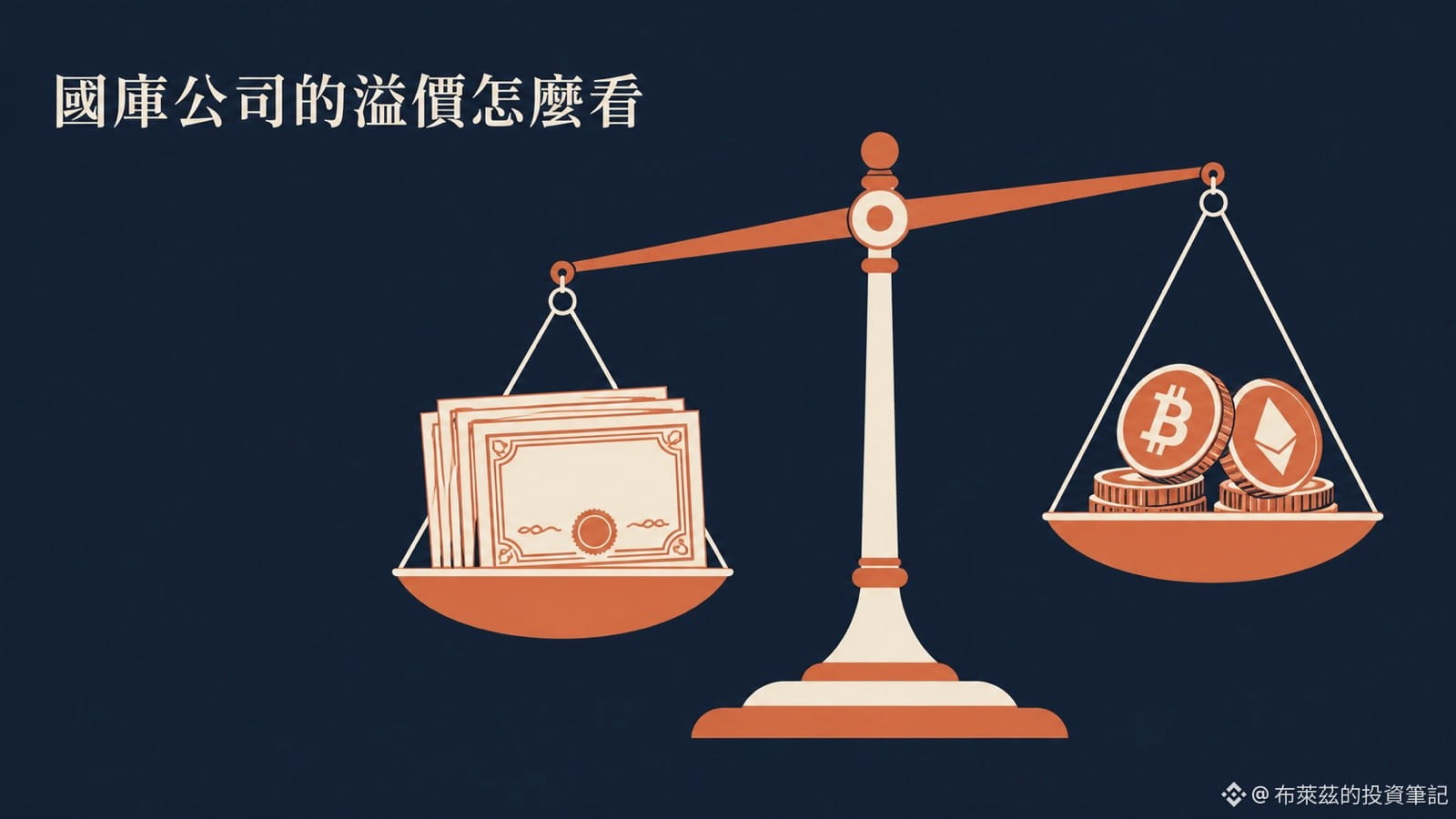
Buying shares in a crypto treasury company isn’t the same as buying coins—you’re paying an extra premium.
A crypto treasury company is a publicly listed company whose primary assets are crypto. To evaluate one, start with a simple calculation: the company’s market cap divided by the value of the coins it holds. This is called mNAV. Above 1 means a premium: you’re paying more for the same amount of coins. Below 1 means a discount.
When the premium is high, the company can issue new shares to buy coins, increasing the amount of coins backing each share. When the premium disappears, that path closes. So when I look at a crypto treasury company, I first check whether the amount of coins per share is growing, then I look at the premium.
$BTC $ETH
1
178
·
--
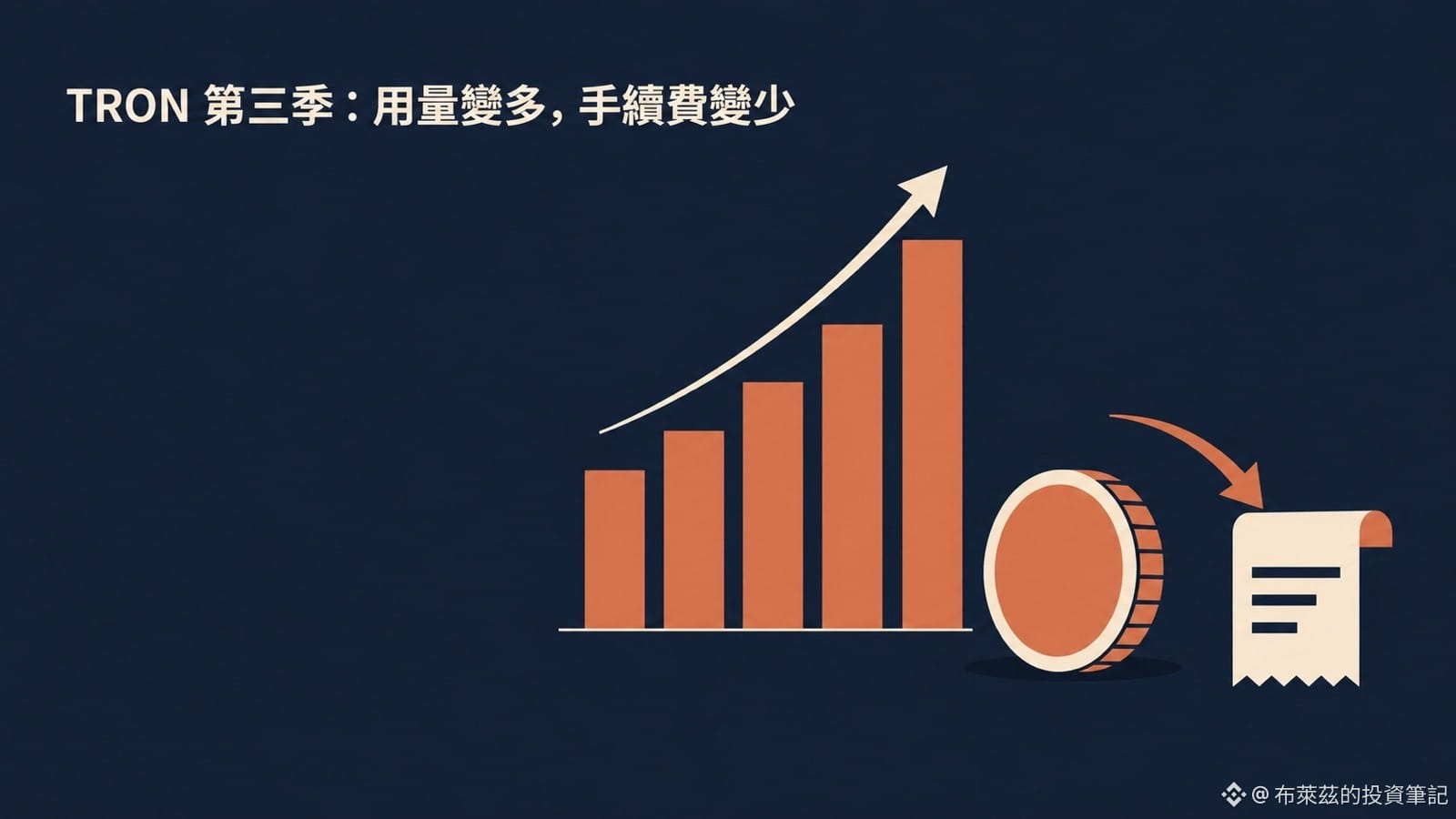
Stablecoin usage on TRON increased in Q3, while fees fell.
On October 12, TRON DAO released its Q3 report: stablecoin settlements totaled $2.21 trillion, averaging $24.05 billion per day, up 3.9% from the previous quarter. The combined supply of USDT and USDD was $93.88 billion. The same report also noted that average daily fees were $7.62 million, down 4.0% from the previous quarter.
More usage and cheaper transfers are good for users, but TRX’s value is tied to fees and burning. More usage doesn’t necessarily mean more token revenue. I’ll be watching to see whether fees catch up with settlement volume next quarter.
$TRX
1
140
·
--
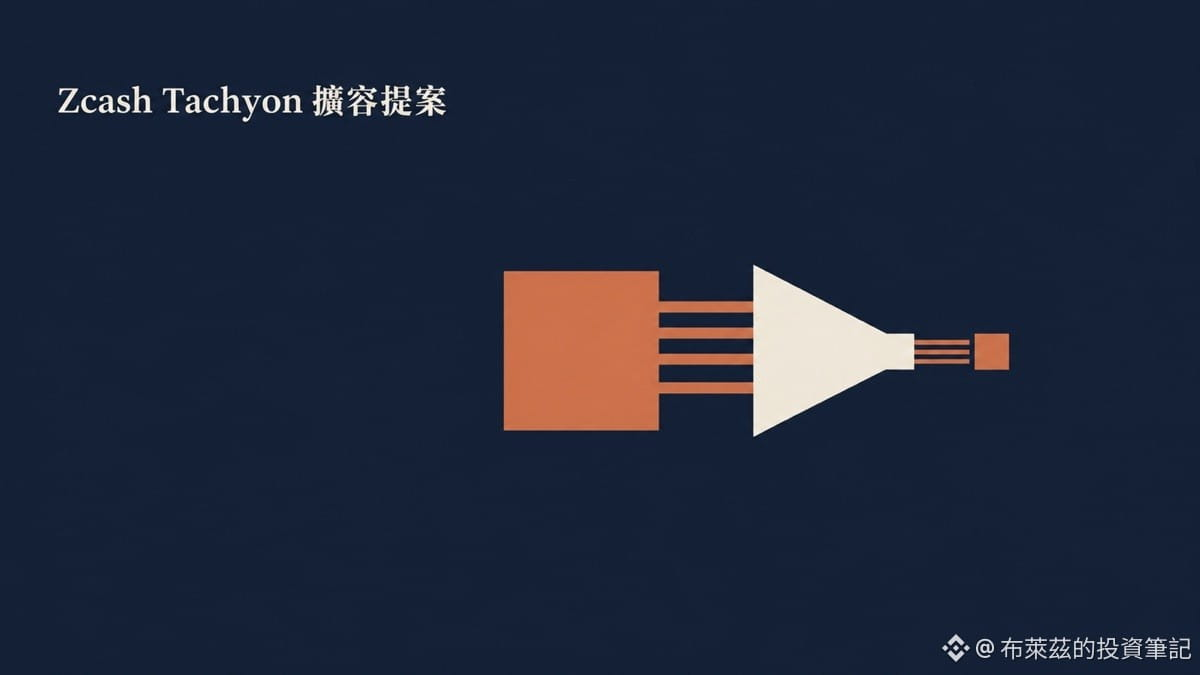
Tachyon for Zcash isn’t the next upgrade—it’s a scaling proposal still in development.
The official roadmap says the core library, Ragu, is still being built and will undergo multiple rounds of optimization and audits. The new privacy transaction protocol will first launch on testnet, operating as a standalone pool, with goals that include scaling and quantum-resistant privacy protection.
The roadmap gives no timeline and states that all network upgrades must first be approved by the community. I’m keeping it on my watchlist and will take another look when it reaches testnet.
$ZEC
1
154
Log in to explore more content
Join global crypto users on Binance Square
⚡️ Get latest and useful information about crypto.
💬 Trusted by the world’s largest crypto exchange.
👍 Discover real insights from verified creators.
Email / Phone number