Which pipeline step causes the biggest delays when demand spikes on Fogo?
Speed is not the breakthrough predictable settlement when everyone hits the same state is.Most people miss it because they measure throughput in calm conditions and ignore where contention actually forms.It changes what builders and users can rely on: less “it’s fast,” more “it behaves the same under stress.”On Fogo, the biggest spike-time delays usually come from safely serializing conflicting writes to the same hot onchain accounts, not from the network carrying packets.You tap “swap” during a sharp candle and your transaction stays pending because thousands of others are trying to touch the exact same pool state. I’ve worked around enough real systems to distrust dashboards that only show averages. I’ve also been the person who taps again because the UI feels stuck, then watches both attempts land and wonders which one I actually wanted. One small personal observation: the second tap is almost always a trust problem, not a patience problem. The concrete friction shows up when activity collapses onto one place. In a hype minute, most routing funnels into the same liquidity pool, so the same few pieces of state get hammered over and over: pool balances, a fee counter, and the bookkeeping the swap program must update to stay correct. Even if your transaction reaches validators quickly, the chain can’t apply all of those swaps at the same instant if they would each modify the same records. The delay you feel is often the protocol refusing to guess the order and instead enforcing one clean sequence for those writes.It’s like a busy restaurant where the kitchen is fast, but everyone orders at one cashier. Fogo’s way of handling this isn’t a “more features” story; it’s a strict rule about state conflicts. The state model is account-based: an account is a named chunk of onchain data, a record that holds balances and parameters. A swap transaction declares which accounts it will read and which it will write. The key constraint is a write-lock, meaning the network grants one transaction temporary exclusive permission to modify a specific account so two transactions can’t both change it at the same time and create two incompatible answers. That turns the “pipeline” into a practical sequence you can reason about. You sign and broadcast; validators verify the signature; the current block producer chooses an ordering; then the runtime tries to acquire the needed write-locks and execute. If an earlier swap is already holding the lock for the pool account, your transaction can’t safely run yet, so it waits its turn or is pushed into a later block. After it runs, validators deterministically verify the same state transition and commit it. If the wait stretches beyond the transaction’s freshness window (a recent-block requirement), it can expire and you have to resubmit.Fees pay for execution and, during spikes, become a coarse prioritization signal when many transactions compete for the same hot writes; staking aligns validators to follow the shared rules because their rewards depend on producing blocks others accept and can check; governance is where parameters around limits and prioritization can be tuned over time. What this does guarantee is consistency: if your swap executes, every validator can validate the same before-and-after result from the same inputs. What it does not guarantee is low latency during hotspots, equal access when one pool becomes the center of gravity, or that “sent” implies “will land” before your transaction’s validity window closes. Under adversarial spam or extreme single-pool concentration, write-lock contention becomes the ceiling and perceived latency will widen even if the rest of the network is healthy. Which single piece of shared state in your Fogo flow do you expect to become the hotspot first? @Fogo Official
Vanar chain goal is to adapt to billions of users.
Speed is not the breakthrough predictable finality for everyday actions under crowding is.Most people miss it because they rate chains by peak TPS, not by how often “confirmed” later needs an asterisk.It changes builders from designing around retry buttons to designing around a state they can safely treat as real.Vanar’s “billions of users” goal depends on making state transitions legible and reliably final for normal app flows. A user taps “send,” puts the phone away, and assumes the payment won’t boomerang back into “pending.”I’ve worked on enough consumer products to learn that trust usually breaks in the quiet moments. People will forgive a spinner if it’s honest, but they hate when the UI teaches them the wrong habit. A small thing I’ve noticed is that users don’t remember the average case; they remember the one time the app said “done” and then walked it back. Crypto UX amplifies this because the surface can look instant while the underlying state is still settling. Someone pays a friend, then immediately uses the remaining balance for a ride, a top-up, or a bill. If that first transfer is still in a reversible window—because the network hasn’t reached stable agreement yet—the app faces an ugly choice: block the second action (feels broken) or allow it (creates later reversals, negative balances, and support tickets that read like fraud). At small scale, teams patch around this with extra confirmations and “refresh” prompts. At mass adoption scale, that ambiguity becomes the product, and it’s the fastest way to lose non-crypto users. It’s like issuing a receipt that might get reprinted differently after the customer has already left. If Vanar is serious about adapting to billions, the most useful idea is a stronger contract between “what the chain knows” and “what the app is allowed to claim.” The chain’s state model is just the shared record of balances and actions; the hard part is defining a clear point at which a new state is no longer practically negotiable. I’m using “finality” to mean that point: the moment where the network’s agreed history is stable enough that an app can proceed without treating every screen as provisional.The transaction flow itself is simple: the user signs a transfer, validators check it against the rules, and it gets included into the ledger. The UX-critical piece is what happens after inclusion. A builder-friendly system gives apps a dependable threshold they can key status to, so “sent” has a crisp meaning: either it’s finalized, or it is explicitly not. That clarity helps apps avoid training users to spam resubmits, switch endpoints, or keep two mental balances (“real” vs “app”). It also forces healthy discipline: if the network isn’t final yet, the UI should say so plainly. Incentives are what keep that contract from collapsing under load. Fees are the mechanism that rations scarce execution when everyone rushes the door; without them, spam competes on equal footing with genuine payments. Staking is how validators credibly commit to following the rules over time, because their economic exposure depends on keeping the shared record consistent. Governance is the slow tool for tuning the parameters that shape user experience how fees respond in congestion, how conservative the finality threshold should be, and how upgrades happen without changing what “done” means for apps.In extreme congestion or coordinated adversarial pressure, time-to-final can widen enough that some apps will still need guardrails like temporary spending holds or delayed balance reuse. If Vanar made “final means final” feel boringly consistent, which everyday action would you onboard first? @Vanarchain
Fogo tries to shrink the time it takes an order to become truly dependable.You press Cancel on a limit order during a fast wick, then decide whether to hedge elsewhere. It’s like a door latch: until it clicks, you don’t lean your weight on it.Fogo focuses on quicker final confirmation. In plain terms, the chain updates very frequently and works to lock in a single agreed result quickly, so your cancel moves from “seen” to “final” without sitting in a long gray zone. I’ve noticed traders rarely rage at “slow” on its own; they rage at “it showed canceled, then it wasn’t.” When finality arrives sooner, apps can be honest about states (received vs final), and automation can wait for the click before firing follow-up actions. That doesn’t make you magically faster; it makes you calmer, because you stop guessing what the network will decide.Under congestion or adversarial bursts, the click can still take longer and edge cases appear.Builders get a clearer “done point” for risk logic, hedges, and re-quotes, which reduces accidental over-reaction.
Project related Core idea: Vanar stays secure when most staked validators value ongoing rewards more than a one-time attempt to rewrite history. You transfer a rare in-game sword to a fresh wallet, then list it for sale seconds later.Consensus is a shared ledger lock: the more hands on the key, the harder it is to twist.In plain terms, your transaction is broadcast, validators verify it follows the rules, and they agree on the order to record it. Every new block that builds on that record raises the cost of changing it, because a rewrite would require many validators to coordinate and accept losing rewards (or stake) if the network flags the behavior. My small observation: most user panic starts when an app treats “seen” as “settled.”Fees pay for execution, staking backs validator behavior, governance tunes security parameters.Under congestion or adversarial timing games, confirmations can stretch, so “final enough” arrives later than the UI hopes. Builders can give instant feedback, but delay listings, withdrawals, and credits until a clear finality threshold.
For high-value transfers on Vanar, what “safe to list” rule would you pick—5 blocks, 15 blocks, or a 90-second timer?
Building on Fogo: what stays identical to Solana, and what changes?
Speed is not the breakthrough predictable confirmation boundaries are.Most people miss it because they compare peak throughput, not the time until “this won’t change.”It changes how builders design trading UX: around a real commit point, not a long optimistic pending state.Fogo keeps Solana-style execution intact, but changes consensus participation by rotating geographically co-located validator zones.A trader cancels and replaces a limit order during a sudden wick, then hedges elsewhere assuming the cancel is already settled.I’ve watched “fast” venues create the same slow frustration: people act on a UI status that later turns out to be provisional. The fee isn’t what stings; it’s the feeling that the system implied finality before it earned it. The friction shows up in one ordinary workflow. You quote tight, volatility spikes, and you send a cancel plus a new, wider order. The screen flips to “canceled,” so you hedge elsewhere to stay neutral. If your cancel and a taker’s fill are still racing for ordering and votes, you can end up both filled and hedged the wrong way, simply because you relied on a state that wasn’t yet the network’s settled history. It’s like trading while the receipt printer sometimes stamps yesterday’s timestamp. What stays identical to Solana is the execution world and the basic state model. Programs still run in the Solana Virtual Machine (SVM), and transactions still declare which accounts they will read and write so validators can execute many things in parallel. Block production still uses Proof of History, a verifiable clock that anchors the order of events, and consensus still relies on Tower BFT voting, where validators commit to a fork with increasing lockouts as they keep voting on it. In simple terms, you sign and broadcast a transaction, the leader executes it to update accounts, and validators vote on the fork that includes it. In Fogo’s litepaper framing, a block is confirmed once 66%+ of stake has voted for it on the majority fork, and it is treated as finalized once it reaches maximum lockout, often represented as 31+ confirmed blocks built atop it. What changes is who counts toward that supermajority at any given moment. Fogo organizes validators into geographic zones and, at epoch boundaries (fixed time windows), filters stake so only the active zone can propose blocks and vote; validators outside the active zone keep syncing, but their vote accounts and delegated stake are excluded from that epoch’s consensus set. The zone list and assignments live on-chain via a dedicated Zone Program using program-derived accounts (on-chain records with deterministic addresses), and rotation can be epoch-based or “follow-the-sun”; the protocol can also require a minimum stake threshold before a zone is eligible to become active. This is the one lever behind “what changes” for builders: the quorum that must relay, verify, and vote is physically tighter, so the slow tail of network delay is less likely to sit inside your cancel/replace decision loop. If that works in practice, you can design UX rules around clearer boundaries, like “confirmed means you can hedge,” rather than “confirmed means probably.” What it does not guarantee is instant finality, perfect ordering under congestion, or equal latency for every geography at every moment; until enough confirmations accumulate, reversals are still possible and early UI states should be treated as risk, not truth.Fees pay for execution and can express urgency when blocks are full, staking determines who secures the chain and earns rewards for correct participation, and governance can adjust parameters like rotation strategy and stake thresholds.Coordinated spam, regional outages, or network routing anomalies can still break the latency assumptions that zone-based consensus is trying to exploit. If you were porting a Solana trading app, which UI state would you make more conservative first on Fogo? @Fogo Official $FOGO #fogo
Vanar isn’t chasing hype l:it’s building AI memory infrastructure for long sessions
AI memory is not the breakthrough commitment-grade continuity is.Most people miss it because they evaluate “AI + chain” by how slick the first demo feels, not by what survives a long, messy week.It changes builders from shipping helpful chats to shipping systems that can safely carry intent across time. Vanar frames long-session memory as shared state, so an agent can resume from facts, not vibes.project Present Scenario: A user comes back hours later and says “continue,” expecting the same rules, approvals, and constraints to still apply. I’ve had plenty of sessions where I set a clear boundary, got good output for a while, and then watched the assistant drift as soon as the context got crowded. It’s rarely obvious in the moment, because the next suggestion still sounds reasonable. My small observation is that “reasonable” is the most expensive failure mode: it feels like progress until you reconcile it with what you already decided. Picture a trader using an AI agent as a workflow co-pilot, not a signal oracle. They define risk rules once: max position size, no overnight exposure, and never hedge with illiquid perps. During a fast move, the trader asks the agent to place a limit, set a stop, and open a hedge elsewhere. The first hour goes fine. Then the trader steps away, returns later, and asks to “pick up from where we left off.” The agent, missing one earlier constraint, suggests a hedge venue with thin depth and unstable funding; the hedge fills late, the stop triggers first, and the trader learns the system remembered the story but not the rule. It’s like trying to run a checklist that randomly deletes one line after you look away. Vanar’s clean idea here is to separate conversation from commitment. It’s not a flashy feature; it’s plumbing for sessions that actually last. Instead of treating the past as a long text blob that might be truncated or reinterpreted, important decisions get written as state: small, explicit records such as “risk rule A approved,” “position B opened,” or “budget cap set.” State is just the current set of agreed facts the app reads before it acts. When the agent resumes, it doesn’t infer what you meant from earlier paragraphs; it queries the latest state and plans from that. The verification flow can be straightforward. When a user approves a rule or a critical action, the app packages it as a state update and submits a transaction. Validators check that the update is well-formed and consistent with prior state (for example, you can’t “close” a position that was never opened), then finalize it so other clients can rely on the same result. Finality, in plain terms, is the point where the network has agreed strongly enough that rewriting the outcome becomes impractical, so later actions can reference the same agreed fact instead of trusting a stale transcript. This doesn’t guarantee that an agent makes good calls, or that a user can’t approve the wrong constraint. If you commit the wrong rule, the network will faithfully preserve the wrong rule. If an app forgets to write the decision into state, nothing magical happens and you’re back to a fragile chat log. And when an update is still pending, the safest design is to treat it as provisional until finality, not as a promise. Incentives make this more than just storage. Fees pay for processing and persisting these state updates, which discourages endless spam writes and funds the work of validation. Staking ties validators to honest verification, because misbehavior risks penalties and loss of stake. Governance is how the system tunes the knobs that shape long-session reliability limits on state growth, prioritization rules under congestion, and what counts as a valid update without pretending one configuration fits every app. In real markets, congestion and adversarial spam can delay confirmations, so “resume exactly” can degrade into “resume after waiting for finality.” If you used Vanar for long sessions, which single rule in your process would you want the agent to never be allowed to forget? @Vanarchain
Gasless UX tends to fail on trust: you either sign too often, or you sign something too broad. Fogo Sessions keep one idea: one signature creates a short-lived permission, and a sponsor pays the fee while it’s active.Like lending a key that works for one door and expires at midnight.You approve a 15-minute session capped at 2 trades and a max spend; then in-app actions run without repeated wallet pop-ups. I’ve watched people bounce the moment a third signature shows up.Fees pay for execution, staking secures the network, governance sets session rules.Congestion or adversarial apps can still exploit bad defaults or unclear prompts.smoother flows without pretending custody disappears permission stays explicit and bounded.
Which cap would you pick, and what number minutes, actions or dollars?
Most chains feel built for moments: a spike, a screenshot, then everyone leaves. Vanar’s bet is different optimize for continuity, so a world behaves the same when you come back tomorrow. I’ve seen “slow” forgiven; broken continuity isn’t.It’s like keeping a library, not running a flash sale.You craft an item, lend it to a guildmate, log off, and return days later expecting the ledger to match the story. Vanar tries to make that kind of long-lived state the baseline, so builders spend less time reconciling edge cases and more time designing gameplay.Fees for usage, staking for security, governance for parameter changes.Heavy congestion or adversarial spam can still make updates lag and confuse what’s final.
Which record matters most for your world: ownership, identity, or reputation history?
Fee model under stress: how do priority tips shape inclusion probability on Fogo?
Raw speed is not the breakthrough predictable inclusion when the network is crowded is.Most people miss it because they measure chains in averages, not in the worst five minutes.For builders and users, it changes “is it fast?” into “what are my odds of landing right now?” I’ve been around enough volatile sessions to notice a pattern: the technical system can be “working” while the user still feels the ground moving under their feet. In calm periods, everyone believes fees are just a cost line. During a rush, fees turn into a timing tool, and timing is where wins and losses separate. One small observation from watching friends trade: frustration spikes when someone pays and still feels random, not when they simply pay. Picture one very normal situation. A retail trader is managing a small leveraged position and uses a simple rule: if the price breaks a level, close immediately and reset. A sudden move hits, the trader taps close, and the app shows “submitted.” But at the same time, thousands of other people are swapping, adjusting collateral, cancelling orders, and doing the same “save me” click. Block space becomes scarce. In that moment, if Fogo supports priority tips, the trader isn’t asking for a cheaper fee. They’re asking, “What tip makes it likely this close is included in the next block or two, instead of drifting behind the crowd?” The product problem becomes probability, not pricing. A priority tip is the express-lane toll booth: you pay to cut the queue, not to change the destination. Under stress, the chain needs a clean way to rank urgency. Think of the network state as two parts. First, the current ledger state: who owns what, and what positions or orders exist according to the apps using the chain. Second, a public waiting room of signed transactions (a “pending pool,” meaning requests that are validly signed but not yet executed). Each block takes a limited number of those pending requests, executes them, and publishes an updated state. That’s the whole machine: choose, execute, update. The transaction flow is where priority tips matter. You sign a transaction that includes (1) your intent (“close this position,” “cancel this order,” “swap this amount”), and (2) the fee terms you’re willing to pay. Validators verify your signature and basic validity (you can pay the fee; the transaction format is correct), then a block producer selects which pending transactions to include. Under congestion, selection is an economic choice: if two valid transactions compete for the same scarce space, the one offering more total value (base fee plus tip) is typically more attractive. So the tip doesn’t guarantee success, but it can measurably shift your inclusion odds upward relative to others. The subtle part is that inclusion is not the same as outcome. Even if your transaction is “high tip,” it still needs to remain valid at the moment it executes. If the market moves, the state moves with it. A close might fail if the position is already liquidated, or if risk checks no longer pass, or if the app’s instructions assume a price that no longer exists. This is why timing has teeth: earlier execution means you interact with an earlier state, and earlier states can be meaningfully different during fast moves. Priority tips, in practice, buy you a better place in line to touch the state you want, before it changes. Incentives explain both the power and the danger. A block producer is paid by fees, so it’s rational to prefer transactions that pay more per unit of block space, as long as they’re valid and follow protocol rules. That aligns with urgent users: you’re paying to be chosen. But it also creates predictable failure modes. One is fee spikes that make routine actions feel inaccessible during bursts. Another is “fee guessing,” where wallets and users overpay because they can’t see the true competitive landscape. A third is a bidding war dynamic: bots can constantly outbid to protect their strategies, turning priority into an arms race that normal users experience as chaos. And there’s a human failure mode too: if a user pays a premium and still misses the next block, they interpret it as broken, even if the system behaved exactly as designed. What is and isn’t guaranteed should be explicit. A tip can improve your relative ranking, but it cannot promise “next block” if demand exceeds capacity, if propagation is uneven (some validators see some transactions earlier than others), or if your transaction becomes invalid by the time it reaches execution. If the protocol enforces strict ordering constraints, tips may have limited influence; if ordering is more flexible, tips can dominate ordering and feel harsh during stress. Either design choice has tradeoffs, but neither one turns urgency into certainty. FOGO’s utility sits right on this mechanism. Fees are how you pay for execution and compete for scarce block space when it matters. Staking is the security bond that aligns validators to follow the rules, because misbehavior risks losing staked value and future rewards. Governance is the pressure valve: parameters around block limits, fee rules, and any constraints on tip influence can be tuned over time based on real congestion and real user pain, not just theory. If sophisticated bots capture orderflow or validators use private routing and selection quirks, the same displayed tip can translate into different inclusion outcomes across different spikes. If you were designing the wallet UX on Fogo, would you present the tip as “extra cost,” or as “extra chance of near-term execution”? @Fogo Official
Vanar’s boring reliability at scale :the underrated moat for real users
Vanar’s breakthrough is not peak speed it’s boring reliability at scale.Most people miss it because they judge chains by demos and screenshots, not by weeks of uneventful use.It changes the question for builders and users from “can it go fast?” to “can I trust it to behave the same every time?” I’ve seen crypto products succeed on features and still fail on trust. In test environments everything feels clean; in real usage, tiny surprises stack up. When a user can’t tell whether “pending” means “working” or “broken,” they stop experimenting and start avoiding. One small thing I’ve learned the hard way: people remember confusion longer than they remember speed, for a long time.
Think about a regular person moving money during a busy window salary arrives, rent is due, and they need one transfer to go through. The wallet estimates a fee, then the number changes at approval time. The confirmation takes longer than usual, so they refresh, switch apps, check an explorer, and still don’t get a clear answer. They hit send again, then panic that they may have duplicated the payment. Nothing here is “advanced,” but the feeling is: this system makes me guess, and guessing feels risky. It’s like a card machine that’s flawless on quiet afternoons and flaky on pay-day weekends. Vanar’s core idea, from an infrastructure lens, is to make outcomes predictable enough that apps can act decisively. The chain maintains a shared state model state meaning the current balances and app data everyone agrees on and advances it in ordered steps. A transaction is either not included yet, included but still settling, or finalized. Finalized means the network has agreed on the block strongly enough that apps can treat the result as done instead of provisional. The flow matters: you broadcast a transaction, validators verify basics (signature and rule checks against the current state), then include it in a proposed block. Other validators re-check that block under the same rules and attest to it; once enough attestations are gathered, the block becomes the official next step. That’s when wallets can flip from “pending” to “complete” with confidence, and builders can design UX around clear states rather than edge-case guessing. Incentives make this reliability sticky. Fees pay for execution and storage and help ration demand so the system doesn’t become a free spam queue. Staking is bonded collateral: validators lock value, and provable rule-breaking can be punished by losing stake, which is a practical deterrent. Governance is the slow control plane how the network adjusts parameters like limits or fee logic over time without pretending the first setup is perfect forever. Reliability is not the same as “always cheap” or “never slow.” Under heavy load, users may still face higher fees or longer confirmation times; the difference is that the system’s behavior stays legible and consistent. Concentrated validation can still weaken the spirit of finality, because coordination risk rises even with penalties. And the surrounding stack wallet UX and RPC endpoints (the servers wallets talk to) can still fail and create misleading status even if the chain is doing its part. Real reliability is ultimately a social outcome of validator and infrastructure behavior under stress, not a guarantee you can read off a spec sheet. If you could rely on the same predictable outcome on quiet days and busy days, what would you finally feel comfortable building for everyday users? @Vanarchain
Fogo treats latency as a base-layer property because the chain’s job is to decide fast enough that users can act, not just eventually converge.It’s like a cashier receipt: the value is knowing the sale is final before you walk away.You place an order, the price jumps, you hit cancel what matters is whether that cancel becomes “real” quickly so you don’t mash buttons or hedge in panic. I’ve learned most frustration starts with one word: pending.Fees fund execution, staking backs validators, governance tweaks parameters.In congestion or coordinated attacks, confirmations can stretch and sloppy apps can still blur pending vs final.Builders can design bots and agents around a clear commit moment, making automation feel calmer.
Which single action would you automate first cancel/replace, rebalance, or payout and why?
Most chains market peak TPS (transactions per second); Vanar’s quieter advantage is cost certainty, because users leave when the fee feels like a surprise.It’s like a menu with prices printed, not “market price” at checkout. Real scenario: you hit mint/claim, approve, and the app pops “fee changed retry.” I’ve seen users drop right there. Vanar’s single idea is predictable fees so the same action usually costs about the same, letting apps show a clear quote before you tap confirm.
Fees for execution, staking for validator security, governance for parameter changes. Congestion or spam can still raise costs and slow confirmations.Smoother onboarding and fewer abandoned transactions. Which action in your flow needs a reliable fee quote most mint, claim, or transfer?
Firedancer-style validators: how Fogo aims for reliability when demand spikes
Fogo’s breakthrough is not “more speed” it’s reliability when demand turns messy.Most people miss it because they judge chains in calm hours, not in the exact hour everyone shows up.For builders and users, it changes whether a product survives its first real spike without turning into support tickets. I’ve watched launches where the product was fine, but the chain turned the experience into guesswork. In testing, transactions feel instant; in production, a surge arrives and everything becomes “pending.” Teams stop thinking about user flows and start thinking about retries, dropped messages, and whether the same payment will land twice. Once people feel uncertainty around money or state, they assume the app is unsafe.
The friction is plain: under stress, the network must accept valid transactions, agree on an order, and finalize fast enough that the rest of the world can act. When validators can’t process consistently, the waiting pool grows, propagation slows, and nodes start disagreeing about what they have seen. That disagreement doesn’t just delay one transaction; it delays the shared reality everyone is trying to rely on. Wallets keep spinning, merchants hesitate to fulfill, and builders quietly add centralized fallbacks to protect users from the chain’s worst moments.
It’s like running an airport: the test isn’t a calm Tuesday, it’s a holiday rush when every line is full.
Fogo’s reliability story, at least in how it’s framed, starts with validator engineering. A Firedancer-style approach treats the validator as production software that must stay stable under load: fast signature checks, careful scheduling across CPU cores, predictable memory use, and networking that doesn’t collapse when traffic spikes. The goal is not to deny congestion; it’s to make congestion behave predictably, so surges clear as an orderly queue instead of turning into cascading timeouts.
Mechanically, this still comes down to the state model: the chain is a shared ledger state that updates only when validators apply the same ordered transactions and reach the same result. Transactions propagate; validators verify signatures and basic rules; then the protocol’s consensus process determines ordering and commits it. Reliability shows up in the “boring” parts of that flow: how quickly a validator can verify and replay transactions, how consistently it stays in sync with peers, and how gracefully it sheds load rather than falling behind.
Incentives are the glue that keeps engineering from being a one-off demo. Fees are basically the line-management system: when too many people want in at once, they decide who gets processed first. And the way fees are set and handled determines whether a spike clears in an orderly way, or turns into a messy scramble where everyone keeps outbidding each other just to get through.Staking ties validator influence and rewards to something at risk, pushing operators toward uptime and correct behavior instead of cutting corners. Governance is the slow control loop: parameters, limits, and incentive settings need adjustment as usage changes, and reliability is one of the few reasons governance matters.
Failure modes remain, and naming them is part of being honest. Validators can be misconfigured, run on weak hardware, or face real-world network instability; adversarial spam can probe bottlenecks; and consensus can degrade if enough stake behaves selfishly at the worst moment. What the protocol can reasonably guarantee is correctness under its rules and the assumption that enough participants follow them; what it cannot guarantee is a perfect experience in every edge case, because the environment is adversarial and messy.
Even strong validator engineering can be undercut by operator discipline and traffic patterns that evolve faster than defenses.If Fogo gets this right, the payoff isn’t bragging rights it’s that builders can make product promises that still hold on the busiest day. What would you build if you could assume the network stays boring exactly when everyone shows up? @Fogo Official
Fogo choosing the Solana Virtual Machine isn’t just about “being fast” it’s about lowering execution friction for users and builders.It’s like choosing a road network: the win is reliable lanes and exits, not a higher speedometer.In simple terms, the SVM can run many transactions at once, so activity doesn’t stack into a single long line. That can make fees feel steadier and lets projects reuse an established set of wallets, SDKs, and dev habits, which shortens the path from idea to working product.FOGO is used to pay fees, stake to help secure the network, and vote in governance on upgrades and parameters.Real performance still depends on network load and validator behavior. What would you build first if your app could plug into a familiar VM from day one?
Vanar builds Web2-grade UX directly into the base layer
Vanar’s breakthrough is not another faster chain it’s treating user experience as a security and reliability requirement.Most people miss it because they assume UX is a wallet problem, not a protocol problem.For builders and users, it changes what “safe to ship” means: fewer foot-guns, fewer abandoned flows, and fewer support tickets dressed up as decentralization. I’ve seen this play out across cycles: a dApp looks smooth in a demo, then real users arrive and everything jams at the first signature, the first gas surprise, the first “wrong network” moment. Teams don’t talk about it much, but they end up spending more time on support, refunds, and “can you help me recover this?” than on shipping features. After a while, you stop asking “How do we onboard?” and start asking “How do we stop onboarding from becoming the risk event?” The friction is simple and expensive: basic actions turn into multi-step rituals approve, switch networks, re-quote fees, retry because the transaction got stuck, then discover the recovery story only after something breaks. Every extra step is a place users mis-sign, abandon, or get nudged into a scammy “help desk.” For traders and operators, it shows up as execution risk: delays, stuck flows, and operational uncertainty right when timing matters. It’s like building a modern airport where the runway is fine, but every passenger has to assemble their own boarding pass printer. Vanar’s core idea, through an infrastructure lens, is making the account itself more capable so common safety rails can live at the base layer instead of being rebuilt inconsistently by every app. Rather than a wallet being just a key that signs raw transactions, the account can carry rules: who can authorize, what limits apply, how temporary permissions work, how recovery is triggered, and how fees get paid. If those rules are part of the chain’s state, then the “safe path” can be enforced consistently across apps, and routine UI mistakes become harder to turn into irreversible onchain mistakes. In practice, the flow becomes “authorize intent, then verify policy.” A user (or a delegated device) signs a request describing what they want to do. The network verifies the signature and then checks the account’s onchain rules spend caps, allowed targets, session permissions, recovery conditions before accepting the state change. Validators don’t need to trust an app server or a front-end message; they only need signatures plus the account rules stored onchain, so the decision is deterministic and reproducible for every node. Validators are compensated for processing valid transitions, and staking makes provable misbehavior economically painful. The failure modes don’t disappear; they get more explicit. If rules are too strict, legitimate actions fail and users blame the chain. If rules are too loose, you recreate the same phishing outcomes, just with a cleaner interface. Delegation can become the weak link if session permissions are misconfigured, and recovery can add coordination risk when key holders are offline or incentives don’t align. What’s guaranteed is only what the protocol can verify signatures, rule checks, and state updates not that users choose good policies, devices stay uncompromised, or recovery parties behave honestly under stress. VANRY fits the plumbing: fees pay for execution and verification, staking bonds validators to enforce the rules, and governance adjusts parameters and standards as real UX attack patterns and edge cases show up in the wild. The toughest exploits will keep migrating to policy choices, delegated access, and human recovery behavior, where attackers test people more than code. If Web2-grade UX is treated as a protocol constraint instead of a front-end trick, which part of your workflow becomes less risky overnight? @Vanarchain
Vanar’s moat isn’t a single feature; it’s the steady removal of small frictions so users barely notice the chain.It’s like fixing every squeaky hinge in a building: each change is minor, but the whole place starts to work smoothly.In practice, the goal is fewer steps between “I want to do X” and “done,” with clearer signing, fewer failed transactions, and a ledger that others can still verify. Fees pay for the network’s execution and security, staking rewards validators who stay honest, and governance lets the community tune parameters as real usage reveals what breaks.even good UX can degrade under traffic spikes, wallet bugs, or validator coordination failures.From a trader-investor lens, the payoff is lower operational risk fewer losses caused by process, not markets. Where do you feel the most hidden friction today? @Vanarchain $VANRY #Vanar
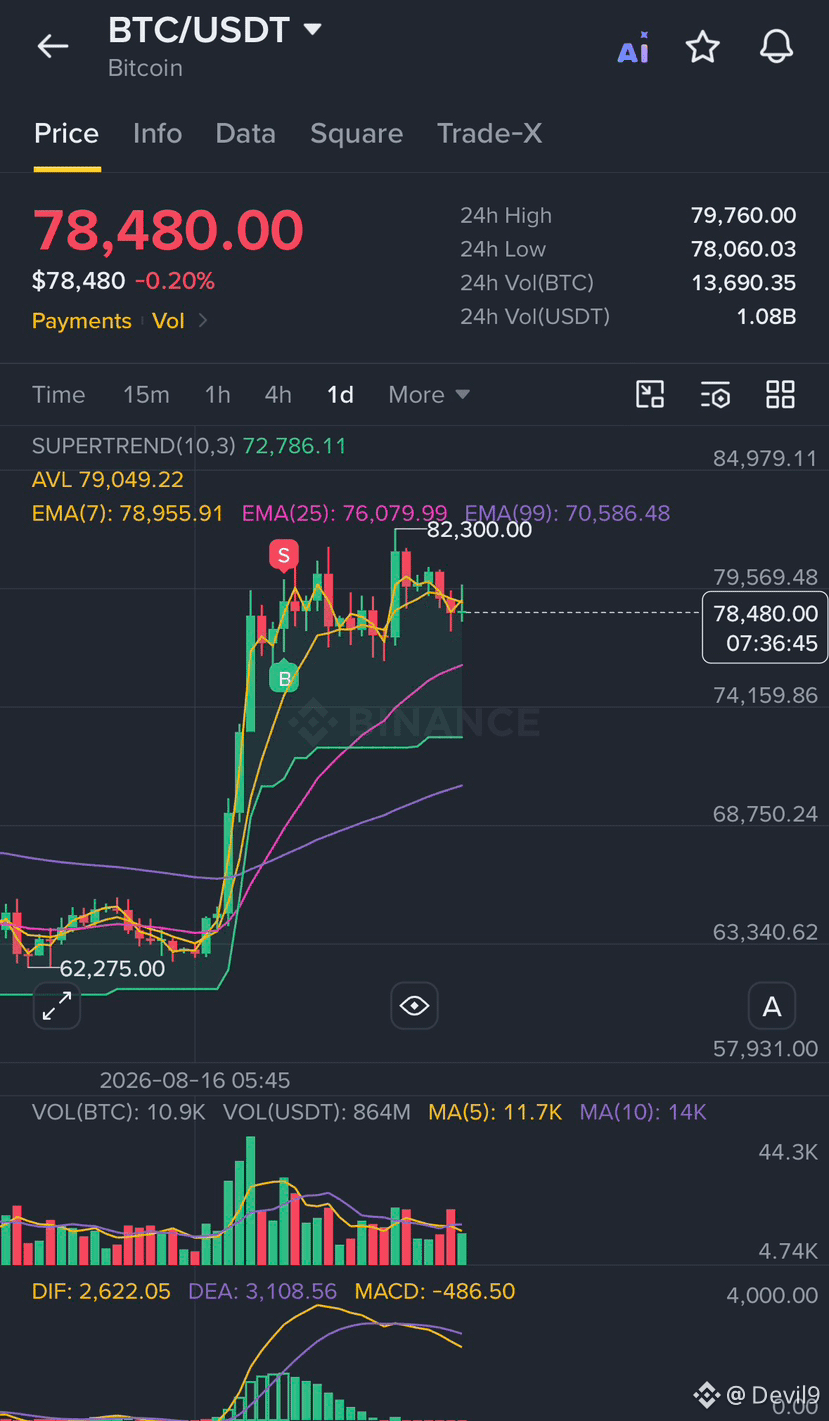
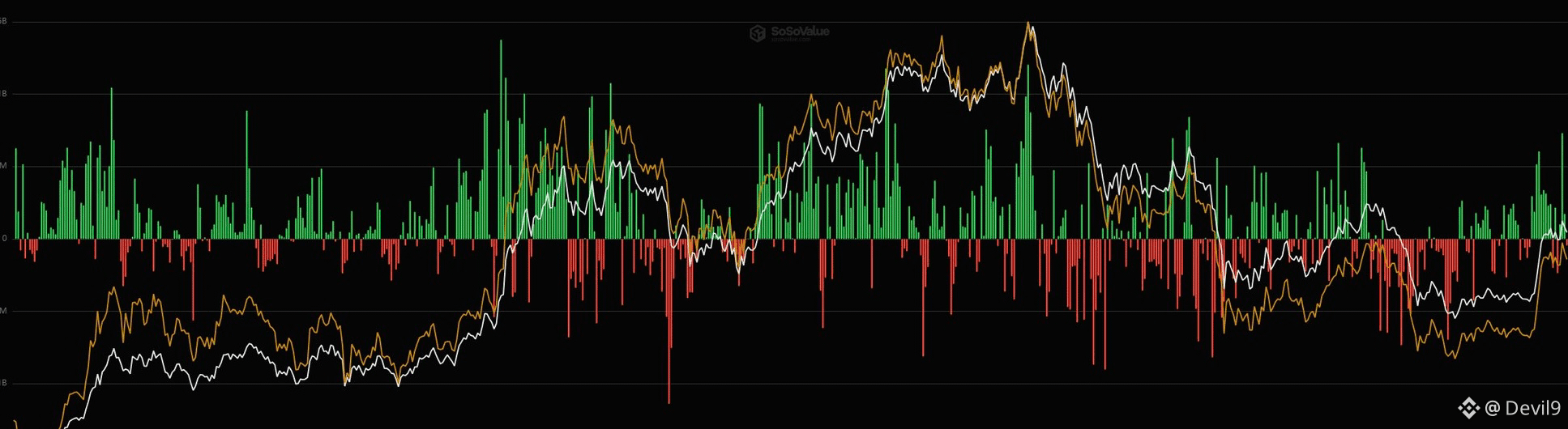
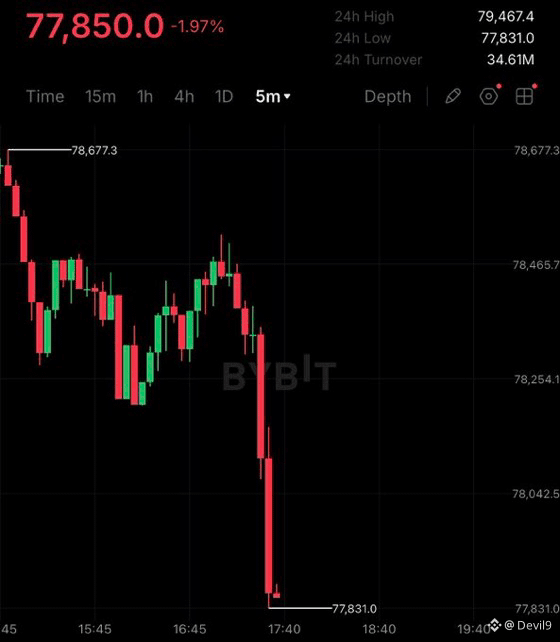
Are the biggest sellers already in the room—and is anyone quietly taking the other side?In the past two days, the cleanest signal hasn’t been a headline or a candle pattern; it’s been the tug-of-war between forced liquidity and patient liquidity. When spot ETF flows flip negative, it’s not “sentiment” in the abstract—it’s a mechanical process: shares get redeemed, coins get sourced, and someone has to absorb that supply without needing a perfect story. That’s why I’m watching flows first and feelings second. The most engagement-worthy detail right now is simple: U.S. spot Bitcoin ETFs printed net outflows of $276 million. Outflows matter because they compress time—selling that might have been spread across days gets concentrated into a window where liquidity is thinner than people assume. If you want to understand “who is forced to sell,” ETFs are one of the few places where the market shows its hand in public. And yet price didn’t collapse into a vacuum. Bitcoin spent this window hovering around $65,700. That’s the tell: if redemptions create real, non-optional supply and the market still holds a nearby level, then someone is absorbing without needing applause. It doesn’t mean bullish. It means the market is functioning—sellers are meeting buyers, and the tape is revealing whether demand is durable or just opportunistic. A micro-story in one line: It’s like watching a busy restaurant during a surprise rush—the key isn’t the line at the door, it’s whether the kitchen keeps serving without slipping. Here’s the core idea I’m trading mentally: outflows are a stress test for spot depth, and the pass/fail is whether price can stay “boringly stable” while supply is being pushed through. If absorption is real, you’ll often see volatility feel oddly contained even when the mood online is sour—because the marginal buyer isn’t emotional, they’re scheduled. If absorption is weak, you don’t need a new narrative to break the level; you just need the next wave of redemptions to land when bids are thin. What changes my mind is… if outflows continue and price stops holding that nearby support, because that would suggest bids aren’t “real,” they’re just waiting for a better discount. Uncertainty: ETF flow reporting is useful, but it can’t fully explain where the next large discretionary seller might appear. If the market is telling us anything right now, it’s that positioning is less about predicting the next rally and more about respecting who must transact today versus who can wait. Are you treating these two-day flow shocks as noiseor as the only honest stress test we get in public? #Bitcoin #Binance $BNB
VANAR’S TRUST COMES FROM CONSISTENCY NOT COMMUNITY HYPE
Vanar’s breakthrough is not community hype it’s operational consistency under boring conditions.Most people miss it because consistency doesn’t screenshot well, it only shows up when nothing breaks.For builders and users, it changes the default expectation from “hope it clears” to “it clears the same way every time.”I used to underestimate how much trust is just repetition without surprises. Not the loud kind of trust that comes from big announcements, but the quiet kind that comes from doing the same thing on a normal Tuesday. Over time, I started judging networks less by what they claim in peak moments and more by how they behave in the dull stretches. That’s where real usage lives. The main friction is simple: a user sends a transaction and the result feels probabilistic. Maybe it’s slow, maybe fees spike, maybe the wallet shows “pending” for ages, maybe the app has to add a second confirmation screen because “final” doesn’t actually feel final. For a builder, that turns into support tickets, retries, and defensive UX. You end up writing logic for edge cases instead of writing product. And for a trader or investor, uncertainty is a hidden spread: you pay it in time, slippage, and missed execution, even if the nominal fee looks small.It’s like a store that never runs out of change: you stop thinking about payment and start thinking about what you came to buy. The core idea I watch for in Vanar is consistency as a design target: keep state transitions predictable and keep verification aligned so that “submitted” reliably becomes “settled” without drama. Concretely, the chain’s state model is straightforward: accounts and contracts move from one valid state to the next through ordered transactions, and the network’s job is to agree on that order and validate the state transition rules the same way every time. A transaction is broadcast, included by block producers/validators, checked against current state (balance, nonce, contract rules), executed to produce a new state, then finalized so clients can treat it as durable. The trust isn’t “people believe,” it’s “the machine repeats the same verification outcome across many participants.” That’s where incentive design matters. Validators are rewarded for participating correctly and penalized for behavior that harms liveness or integrity. The point isn’t that bad behavior is impossible; it’s that the cost of being inconsistent is made higher than the benefit. Failure modes still exist: congestion can push inclusion time out, misconfigured nodes can create short-lived disagreement, and adversarial actors can try to spam or exploit timing. But what’s being optimized is that the protocol has a stable path back to a single agreed state, and that normal users aren’t forced to interpret ambiguous intermediate states. What is guaranteed is narrower than people assume: the protocol can guarantee that valid transactions follow deterministic rules, and that once finalized under the network’s consensus, the canonical history is treated as the source of truth. What isn’t guaranteed is that every transaction will be cheap, instant, or immune to broader ecosystem issues like wallet bugs, bridge risks, or application-layer mistakes. Consistency is not magic; it’s discipline around verification and finality, plus incentives that keep participants aligned. On token utility, I care less about narratives and more about whether it closes the loop. Fees make users internalize resource usage and prevent “free” spam from becoming everyone’s problem. Staking is the bonding mechanism that makes validators financially accountable for staying honest and available. Governance is the slow lever for adjusting parameters over time useful, but only if it’s used sparingly, because too much governance is just another source of unpredictability.Real trust still depends on how the network behaves under stress and how quickly it recovers when incentives meet messy real-world conditions. If you had to design for trust without relying on hype, which single metric of consistency would you track first? @Vanarchain
VANAR OPTIMIZES FOR RELIABLE FINALITY, NOT MAX TPS
Reliable finality is like a delivery receipt: speed is nice, but proof of arrival changes behavior.Vanar’s real optimization is reducing “did it settle or not?” moments for apps that can’t afford ambiguity. Instead of chasing the biggest TPS number, the chain focuses on making confirmations feel dependable, so a game, marketplace, or payment-like flow can move forward without waiting through multiple extra blocks “just in case.” Users experience fewer reversals and less guesswork; builders can design cleaner UX because state changes become predictable enough to trust.VANRY is used to pay fees for transactions, to stake for network security and alignment, and to participate in governance over parameters that shape how the network runs.
Reliability still depends on validator behavior and how the system handles stress, congestion, and edge-case failures in the wild.
Plasma Optimizes for Predictable Settlement, Not Viral TPS Metrics
Viral TPS is not the breakthrough predictable settlement is.Most people miss it because speed is easy to market, while reliability is quiet.It changes what builders can promise and what users can safely assume. I used to treat “fast finality” as the whole story, because as a trader you feel every second of uncertainty in slippage and canceled flows. But over time the bigger pain wasn’t waiting; it was not knowing what “done” really meant when the network got busy. The more money-like the activity becomes, the more you stop caring about peak throughput and start caring about whether outcomes stay stable under stress.
The concrete friction is simple: payments and settlements don’t fail gracefully. A retail user doesn’t understand why a transfer is “pending,” a merchant can’t deliver goods on a maybe, and an institution can’t reconcile books on probabilistic outcomes. When fees spike or confirmations become inconsistent, the cost isn’t just more expense it’s operational chaos: retries, customer support, hedging delays, and risk limits kicking in at the worst time. It’s like building a highway that looks wide on an empty day but turns into random stoplights during rush hour. Plasma’s core idea, as I read it, is to treat stablecoin settlement as a discipline: keep the chain’s “state” and rules tuned for repeatable outcomes rather than maximum expressiveness or headline numbers. The state model that matters here is account balances and transfer validity that can be checked quickly and finalized consistently. A transaction is broadcast, ordered by validators, and finalized once the network agrees on a single history; what you’re optimizing is not how many can be proposed, but how predictably they become irreversible for normal transfers. The verification flow is designed so that nodes can cheaply confirm “this transfer is valid, this balance update is correct,” without needing every block to be a playground of complex execution that makes worst-case behavior unpredictable. Incentives follow from that: validators are paid to keep liveness and consistency, not to chase exotic activity that increases variance. Staking exists to put real cost behind honest validation if you misbehave or fail your job, you risk losing stake and future rewards which is what makes “final” more than a UI label. Governance exists to adjust parameters and rules when the network learns something new about real usage, but the goal is still boring: keep settlement stable, keep operational expectations clear, and don’t let the chain’s behavior swing wildly with demand. Failure modes are also part of the story: congestion can still happen, nodes can go offline, and adversaries can try to disrupt ordering. What’s not guaranteed is infinite capacity or zero delay; what is aimed for is that the system degrades in a legible way, with finality and costs staying more predictable than a chain optimized for peak flex. XPL’s utility maps to that infrastructure posture: it’s used for fees to pay for inclusion and validation work, for staking to secure ordering/finality through economic commitment, and for governance to steer the rules that define “predictable” as conditions change. One honest uncertainty is that predictability is ultimately tested in messy real-world conditions extreme spikes, coordinated attacks, and validator concentration can still reveal gaps that only show up under pressure. If you had to choose between “fast on good days” and “boring under stress,” which one would you build around? @Plasma $XPL #plasma