
Dark_knightt
95 Posts

Dark_knightt
Report
Block User
BP-22D07576CCF9
29 Following
27 Followers
51 Liked
Posts
All
Quotes
·
--
Bullish
5 years of @Injective mainnet 🥷
Nov 8, 2021: first block produced
Nov 8, 2026: you can trade crypto, public & Pre-IPO stocks, FX and commodities on a shared onchain orderbook, settle natively in USDC, earn ecosystem revenue via the INJ Community BuyBack, and get $INJ exposure through a U.S. ETF on Nasdaq.
Year 5 was the real inflection point:
• Native EVM launched → MultiVM with shared liquidity and zero bridging
• $12.86B traded on the onchain orderbook (including ~$1.8B in RWA perps)
• $1B+ in mortgage records tokenized onchain by a public company
• First L1 to become an SEC-registered transfer agent
• INJ on Robinhood, Coinbase, Revolut + native on Solana
• Institutions (POSCO, LG CNS and others) putting real business onchain
From a front-running-resistant exchange idea to the rails for onchain finance, for traders, issuers, institutions and AI agents.
The foundation is built. The next five years scale it to billions. $INJ
196
·
--
Bullish
$INJ is now in an ETF right here in America 🇺🇸
$INJ is now in an ETF right here in America 🇺🇸
Dark_knightt
·
--
BullishA historic milestone for Injective! 🥷
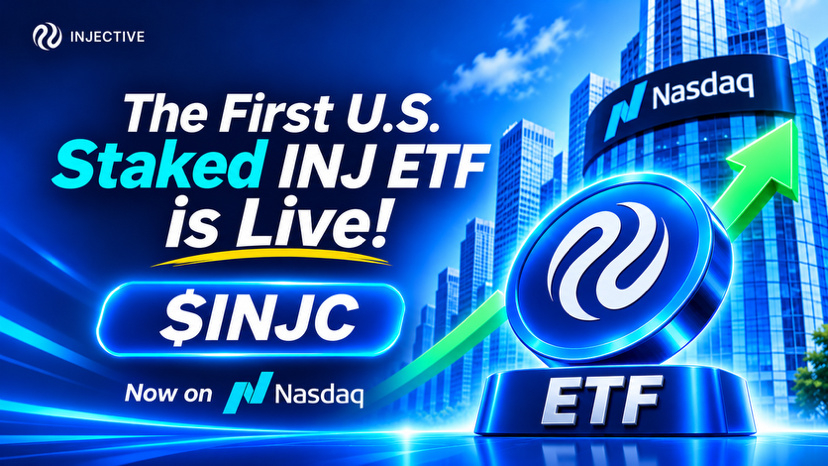
The first U.S. spot Staked $INJ ETF is officially live!
Launched by Canary Capital, $INJC is now trading on Nasdaq, giving investors:
• Direct exposure to the price of $INJ
• Potential staking rewards through Injective's Proof-of-Stake network.
• Access through traditional brokerage accounts, without managing crypto wallets.
Staking rewards are reflected in the fund's net asset value.
Another major step toward bringing Injective to institutional finance. 🚀
148
·
--
Bullish
$BTC 84K $INJ $8
BTC 80K INJ $8
BTC 77K INJ $8
BTC 74K INJ $8
$INJ unfazed 💯🔥🔥
$BTC 84K $INJ $8
BTC 80K INJ $8
BTC 77K INJ $8
BTC 74K INJ $8
$INJ unfazed 💯🔥🔥
BTC 80K INJ $8
BTC 77K INJ $8
BTC 74K INJ $8
$INJ unfazed 💯🔥🔥
55
·
--
Bullish
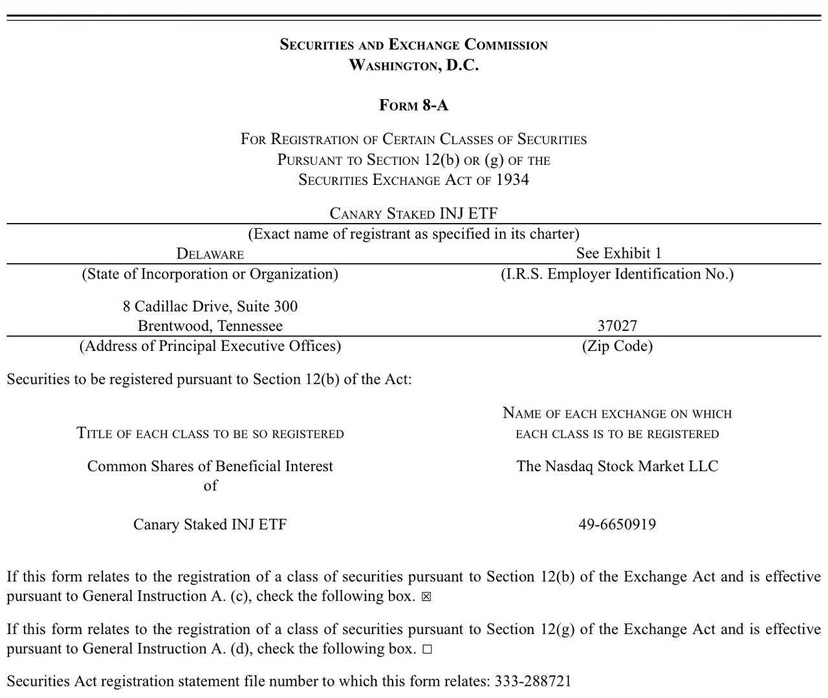
🚨𝐁𝐑𝐄𝐀𝐊𝐈𝐍𝐆: 𝐍𝐀𝐒𝐃𝐀𝐐 𝐣𝐮𝐬𝐭 𝐚𝐩𝐩𝐫𝐨𝐯𝐞𝐝 𝐭𝐡𝐞 𝐟𝐢𝐫𝐬𝐭-𝐞𝐯𝐞𝐫 $INJ 𝐒𝐭𝐚𝐤𝐞𝐝 𝐄𝐓𝐅 ($𝐈𝐍𝐉𝐂)
Most people still have to go through crypto exchanges, custody, and unbonding periods just to own and stake $INJ
That changes with $INJC
The Nasdaq-approved product is designed to hold spot INJ and stake ~90% of it, giving brokerage-account investors both the price exposure and the staking yield in one vehicle.
Different distribution channel, different capital base.
You’re not ready for $INJ 🔥
1
164

·
--
Bullish
October was a massive month for @Injective 🥷
Key milestones:
• New Whitepaper drop (first full rewrite since 2018) institutional finance + RWA + AI agents
• CEO meetings with White House, SEC & CFTC
• Canary Staked $INJ ETF (INJC) advancing toward Nasdaq
• Super Intelligence Compute Index ($SICI) live, first onchain market for NVIDIA GPU rental prices
• Injective Options testnet: USDC-backed calls/puts on gold, oil, equities & AI compute
• Community BuyBack + Stockdrop (burns + tokenized stocks)
• $10B real estate tokenization pipeline (Pentiv)
• Gulf Labs (Thailand’s $27B group) as institutional validator
• 3B+ total transactions | >$1B tokenized RWA value onchain
Built for institutions, RWAs, and the AI economy. Still early. 🔥
1
1
250
·
--
Bullish
Missed @Bitcoin ( $BTC ) at $3,000?
Missed @ethereum ( $ETH ) at $100?
Missed @solana ( $SOL ) at $8?
Missed @Zcash ( $ZEC ) at $40?
Okay, no problem. (:
Don’t miss @injective ( $INJ ) at $7.2
Very #Bullish Don’t say I didn’t warn you..👀
#INJ season is coming..✍🏻
Missed @Bitcoin ( $BTC ) at $3,000?
Missed @ethereum ( $ETH ) at $100?
Missed @solana ( $SOL ) at $8?
Missed @Zcash ( $ZEC ) at $40?
Okay, no problem. (:
Don’t miss @injective ( $INJ ) at $7.2
Very #Bullish Don’t say I didn’t warn you..👀
#INJ season is coming..✍🏻
Missed @ethereum ( $ETH ) at $100?
Missed @solana ( $SOL ) at $8?
Missed @Zcash ( $ZEC ) at $40?
Okay, no problem. (:
Don’t miss @injective ( $INJ ) at $7.2
Very #Bullish Don’t say I didn’t warn you..👀
#INJ season is coming..✍🏻

6
3.1k
·
--
Bullish
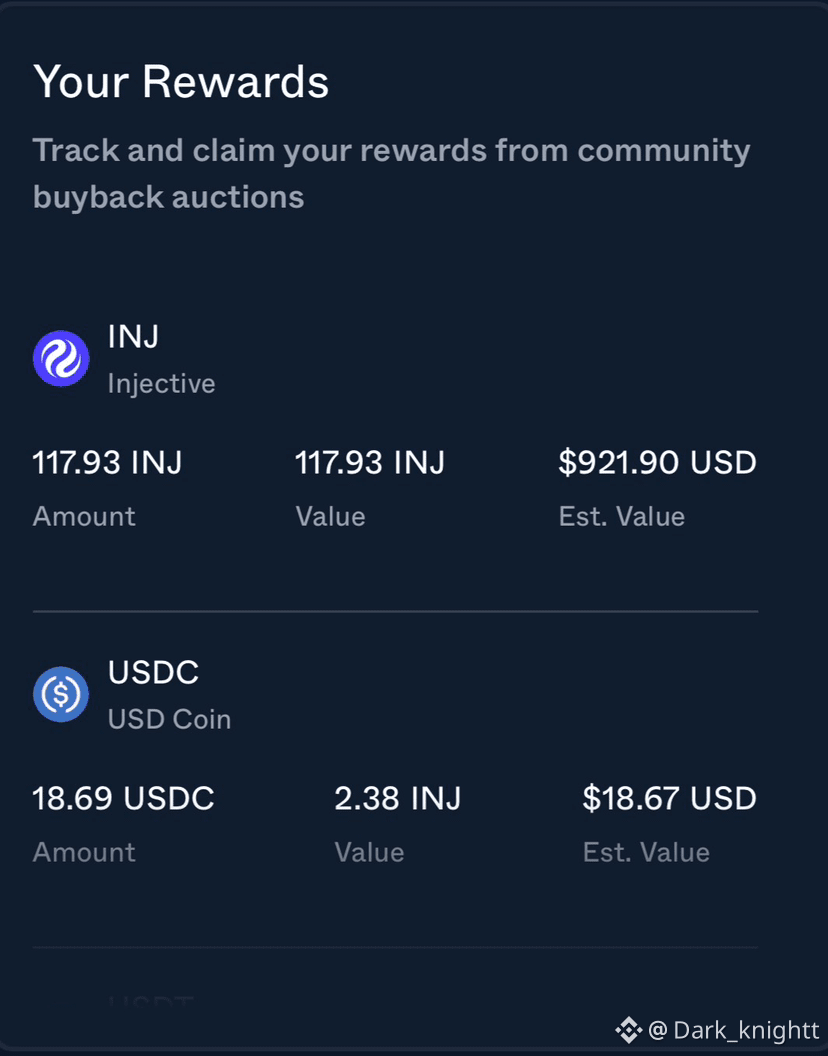
Round #235 of the $INJ community buyback just concluded and we ended the round with a whooping 20.46% ROI
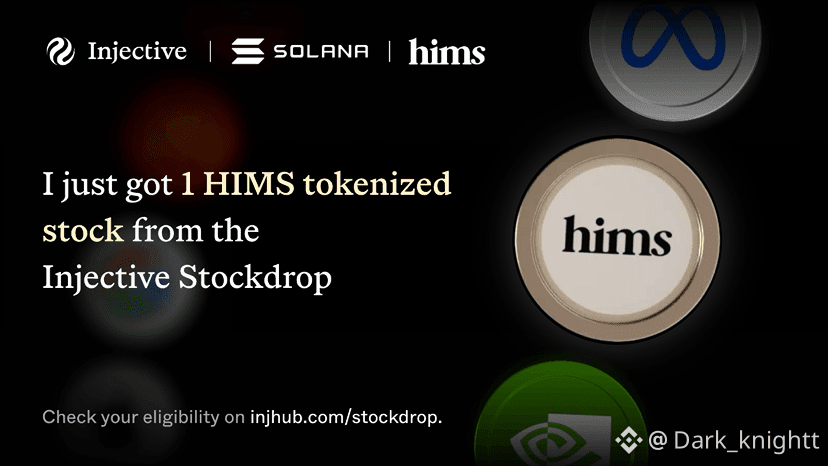
Also stacked some $HIMS along the way.
Huge congratulations to everyone who participated and crushed it with us
See you next month for another big one!
Round #235 of the $INJ community buyback just concluded and we ended the round with a whooping 20.46% ROI
Also stacked some $HIMS along the way.
Huge congratulations to everyone who participated and crushed it with us
See you next month for another big one!
Also stacked some $HIMS along the way.
Huge congratulations to everyone who participated and crushed it with us
See you next month for another big one!
463
·
--
Bullish
🚨 $INJ is quietly building the liquidity foundation for its next chapter.
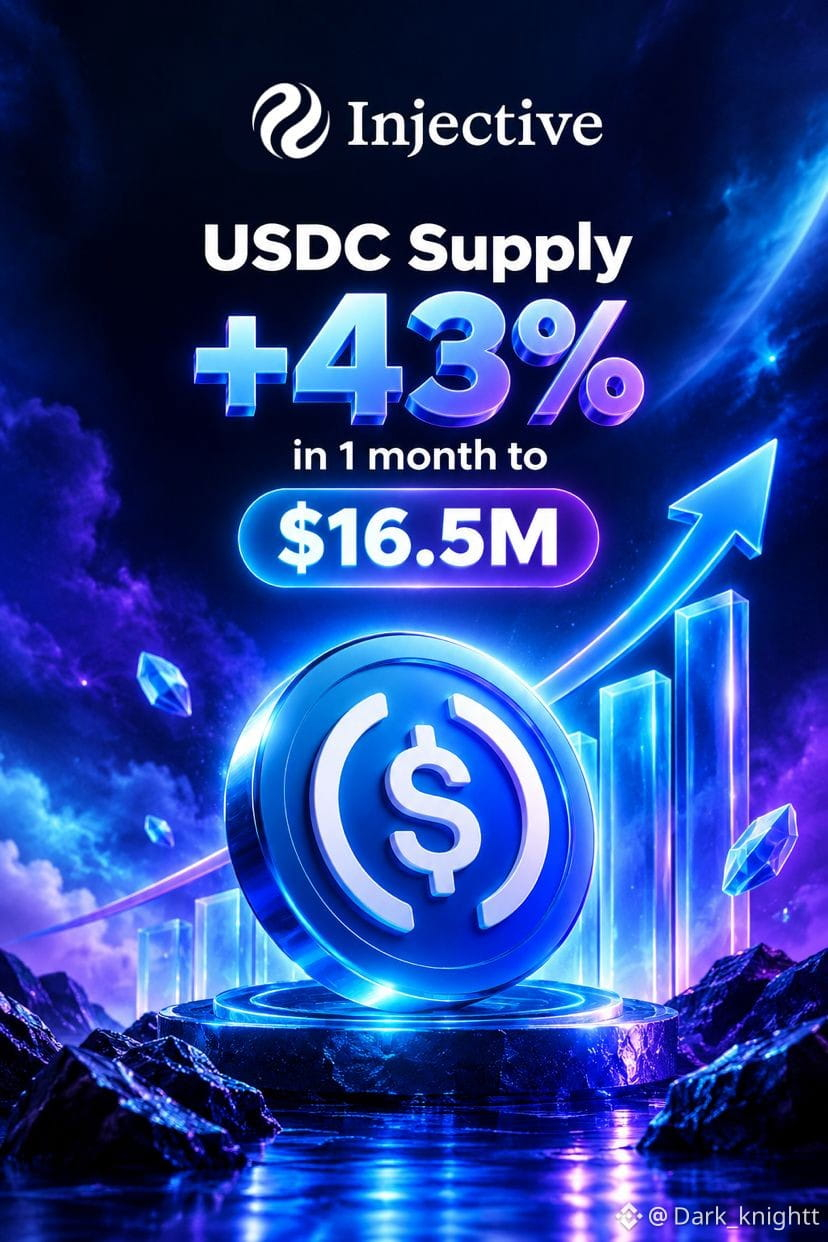
Injective’s $USDC supply just surged 𝟒𝟑% 𝐢𝐧 𝐨𝐧𝐞 𝐦𝐨𝐧𝐭𝐡 to $16.5M.
But the BIGGER story is what comes next:
🔹 $100M+ in stablecoin liquidity poised to migrate on-chain
🔹 20+ chains, including Cosmos and dYdX, in the picture as Noble winds down
🔹 More native USDC = deeper spot & perps markets
🔹 Deeper liquidity → more trading activity, fees and potential buyback and burn demand for $INJ
𝐓𝐇𝐈𝐒 𝐆𝐎𝐄𝐒 𝐖𝐀𝐘𝐘𝐘 𝐁𝐄𝐘𝐎𝐍𝐃 𝐃𝐞𝐅𝐢
Stablecoin liquidity is the foundation for RWA adoption and institutional capital, Injective isn’t just competing to be another L1.
It’s positioning itself as high-performance infrastructure for on-chain finance.
What happens to $INJ when the liquidity starts flowing?
345
·
--
Bullish
350
·
--
Bullish
GM $INJ FAM!
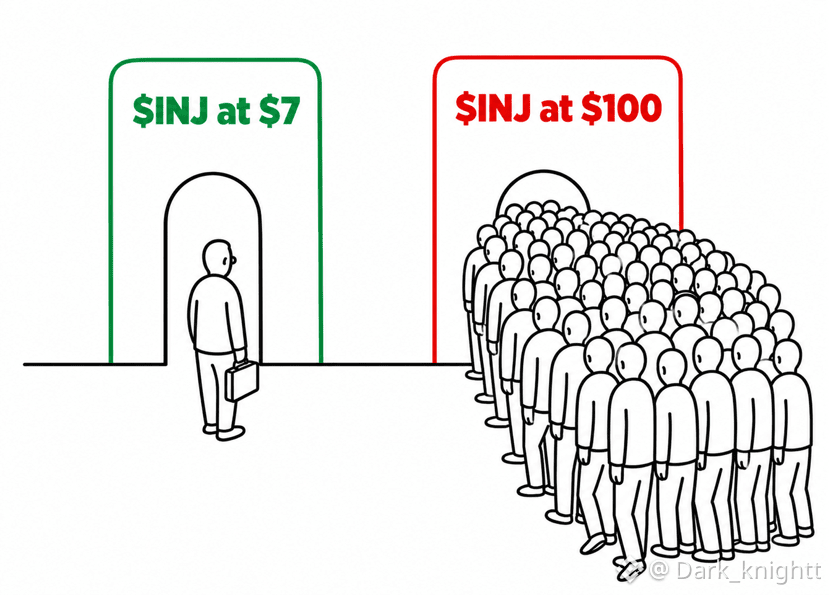
Most people only show up once the price has already done the hard work. The ones who actually make it are the ones walking through the empty door.
Still early, Still quiet, Still the better door, choose wisely💯🤞
GM $INJ FAM!
Most people only show up once the price has already done the hard work. The ones who actually make it are the ones walking through the empty door.
Still early, Still quiet, Still the better door, choose wisely💯🤞
Most people only show up once the price has already done the hard work. The ones who actually make it are the ones walking through the empty door.
Still early, Still quiet, Still the better door, choose wisely💯🤞
2
3
1.8k
·
--
Bullish
Verified
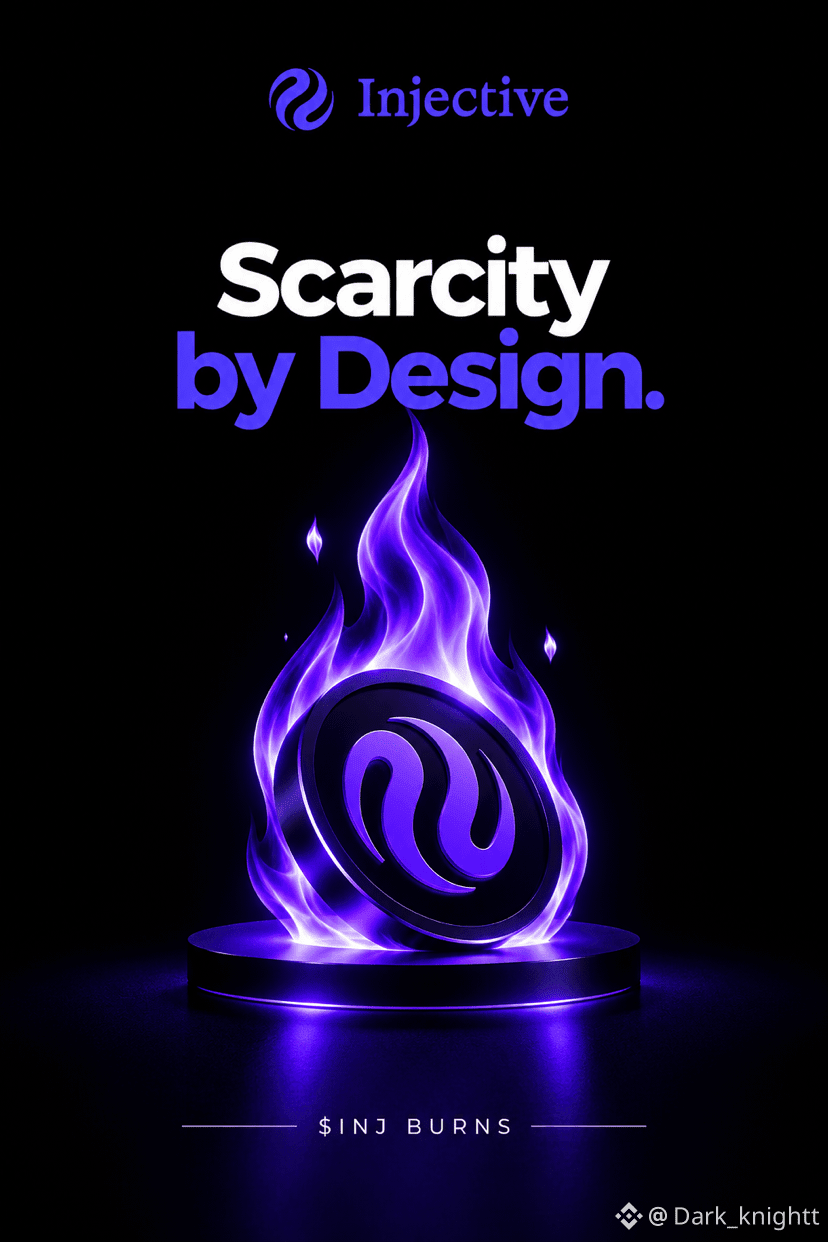
.@Injective is quietly running the cleanest tokenomics machine in crypto
7.2M+ $INJ permanently burned
Monthly Community BuyBack: you commit INJ → earn real ecosystem revenue (avg ~20%) → those tokens get deleted forever.
Supply Squeeze doubled the deflation rate.
More usage → more revenue → more burns → scarcer supply + rewards.
No unlocks, Fully circulating, Pure flywheel.
This is how you actually design scarcity🔥
4
856
·
--
Bullish
𝐓𝐇𝐄 𝐊𝐎𝐑𝐄𝐀𝐍 𝐖𝐎𝐍 𝐈𝐒 𝐂𝐎𝐌𝐈𝐍𝐆 𝐎𝐍𝐂𝐇𝐀𝐈𝐍 🇰🇷
@Injective is bringing 𝐊𝐑𝐖𝟏, Korea’s first won-backed stablecoin, into its RWA ecosystem.
Issued by BDACSKorea and backed 1:1 by reserves at a major Korean bank, KRW1 could be a big step toward bringing Korea’s financial markets onchain.
𝐇𝐞𝐫𝐞’𝐬 𝐰𝐡𝐲 𝐢𝐭 𝐦𝐚𝐭𝐭𝐞𝐫𝐬👇
For 18 straight months, South Korean exchanges saw roughly $𝟏𝟎.𝟒𝐁 in net stablecoin outflows as investors turned to dollar stablecoins to access onchain markets.
Capital was flowing out partly because there was no native won settlement option.
𝐊𝐑𝐖𝟏 𝐜𝐡𝐚𝐧𝐠𝐞𝐬 𝐭𝐡𝐚𝐭
Tokenized assets on Injective can now trade and settle directly in Korean won, reducing FX friction for local investors and institutions.
And this builds on real-world adoption already underway, with POSCO International and LG CNS settling trade receivables on Injective.
Native currency.
Tokenized real-world assets.
Institutional adoption.
Multi-currency onchain finance is becoming real. $INJ 🥷

3
444
·
--
Bullish
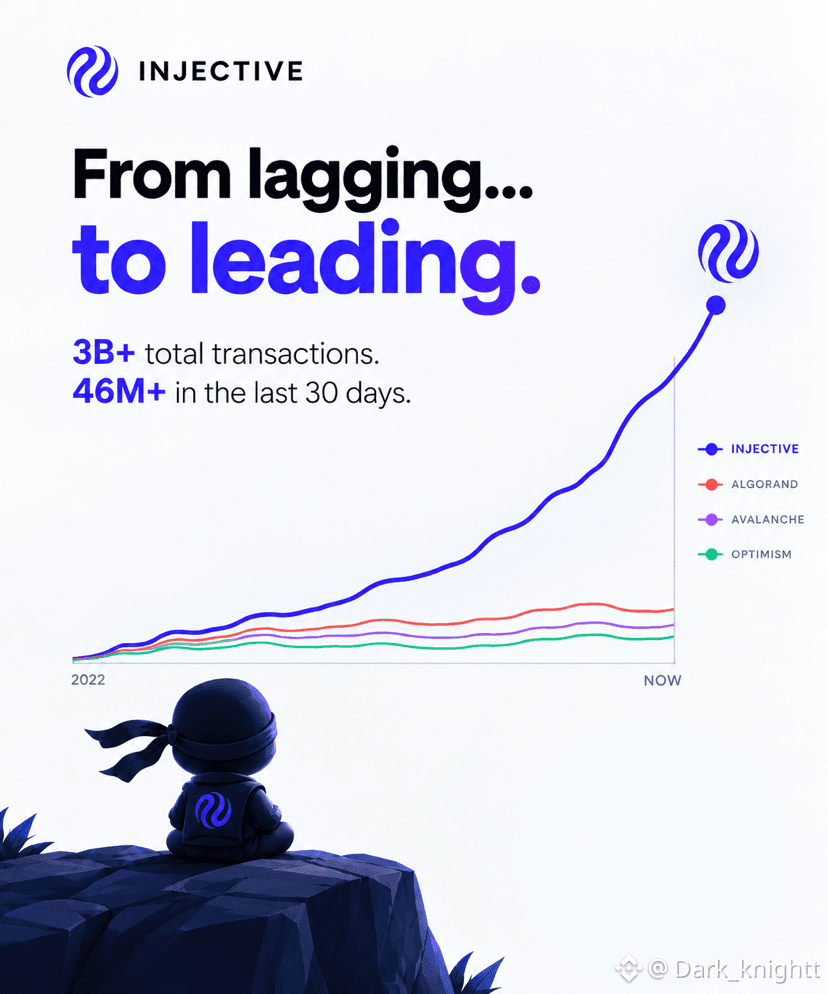
In early 2022, Injective’s transaction count was still trailing Algorand, Avalanche, and Optimism.
Then the real usage kicked in, on chain trading, perps, RWAs, and institutional flows. The blue line on the chart started bending upward, then pulling away completely.
Now past 3 billion total transactions, with 46M+ in the last 30 days alone.
Not a spike. A compounding trend.
Time to accelerate with $INJ
335
·
--
Bullish
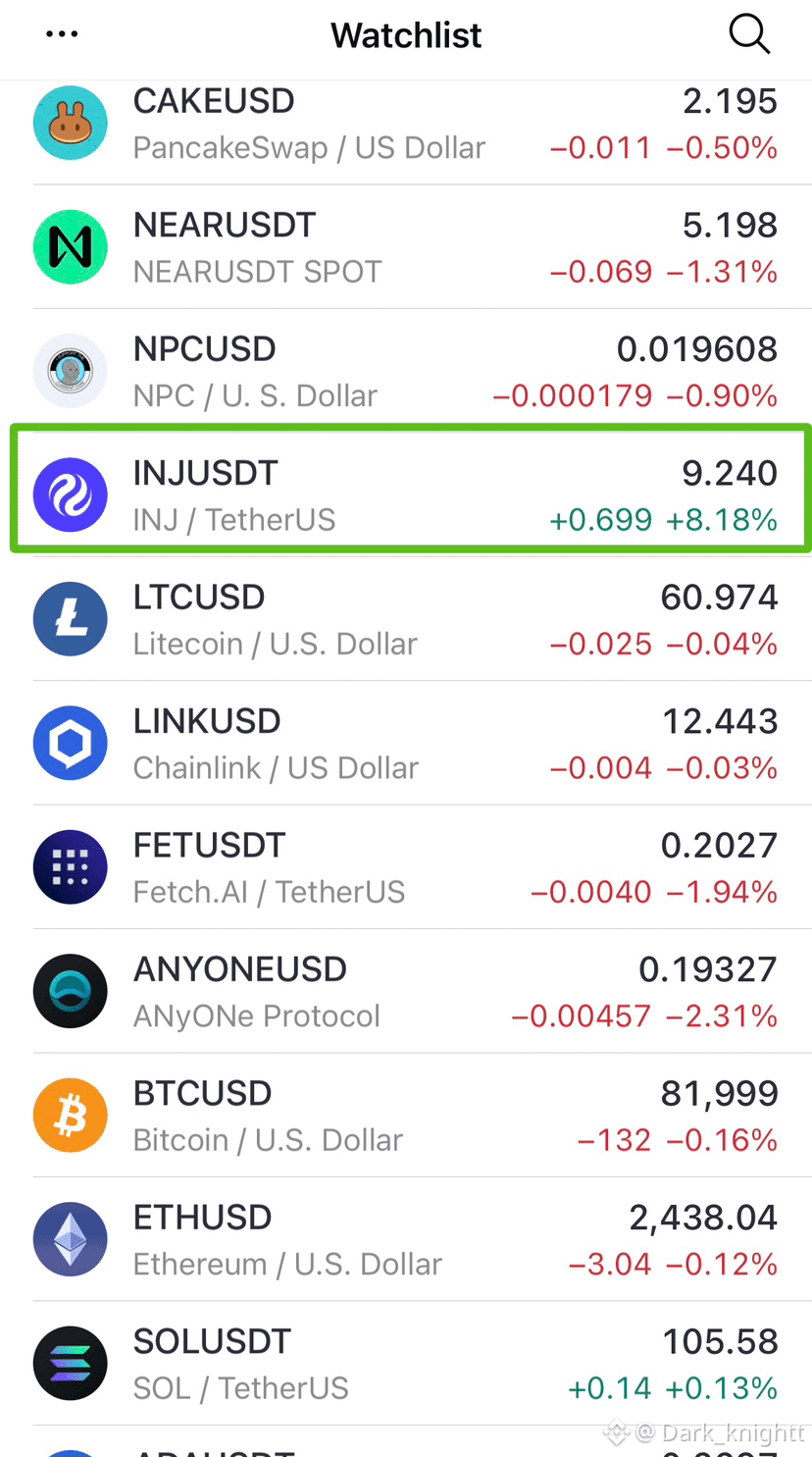
𝐒𝐓𝐔𝐃𝐘 $INJ 𝐂𝐋𝐎𝐒𝐄𝐋𝐘 👀
Last INJ run in 2023 was good, INJ had:
• Multi-VM launch (inEVM + inSVM)
• Weekly burn auctions (INJ 2.0)
• $150M ecosystem fund
• Early dApp growth (Helix volume milestones, Talis, Mito)
• AI + DeFi narrative
• Growing from a small base (wallets, activity)
And it ran from ~$2 to above $44.
Now with:
• Full finance-native L1 stack + new whitepaper rewrite
• SEC-registered transfer agent (first L1)
• $1B+ tokenized RWAs (mortgages, trade receivables)
• Enterprise partnerships (POSCO + LG CNS, Gulf Labs / $27B Thai conglomerate as validator)
• Native USDC + CCTP
• Mature MultiVM + AI agents / agentic finance
• Stronger deflation (Community BuyBack + INJ 3.0 upgrades)
• Pending staked INJ ETFs + institutional/regulatory readiness
• 135+ RWA markets (equities, pre-IPO like SpaceX/OpenAI)
Imagine how great the INJ run will be. You’re not ready⏳
424
·
--
Bullish
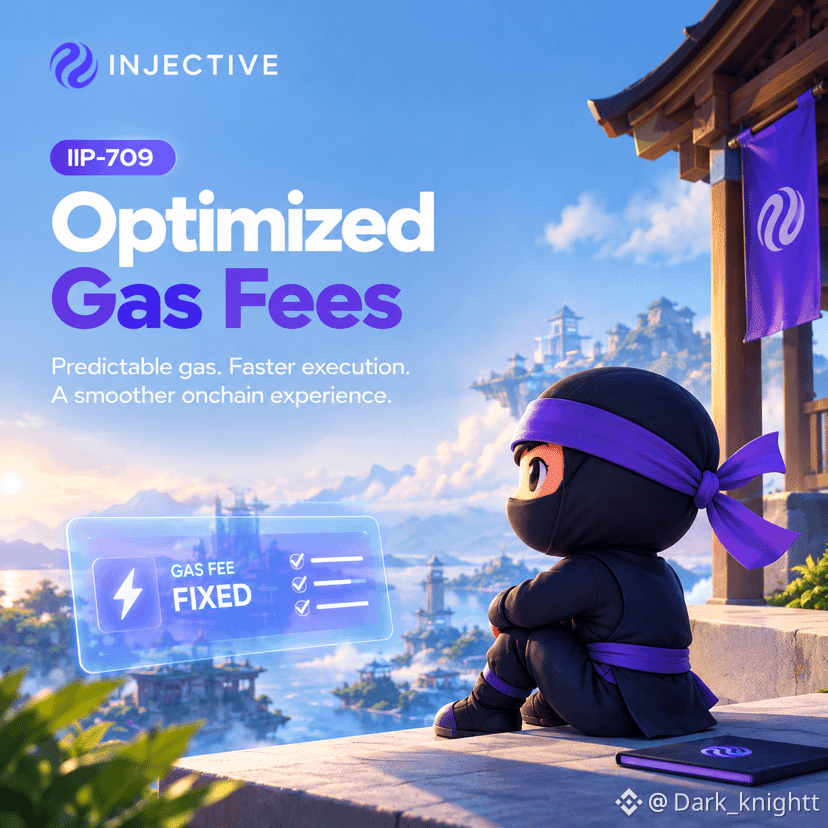
Injective is making gas fees more predictable.
𝐈𝐈𝐏-𝟕𝟎𝟗: 𝐎𝐩𝐭𝐢𝐦𝐢𝐳𝐞𝐝 𝐆𝐚𝐬 𝐅𝐞𝐞𝐬 proposes enabling fixed gas fees on mainnet.
No need to simulate every transaction to determine gas for supported exchange actions. Published gas values mean lower latency and fewer out-of-gas failures.
The result? More predictable execution for users, traders, integrators, and institutions.
Already low fees. Now, more predictability.
$INJ stakers, your vote matters. 👇
https://injhub(.)com/proposal/709/
328
·
--
Bullish
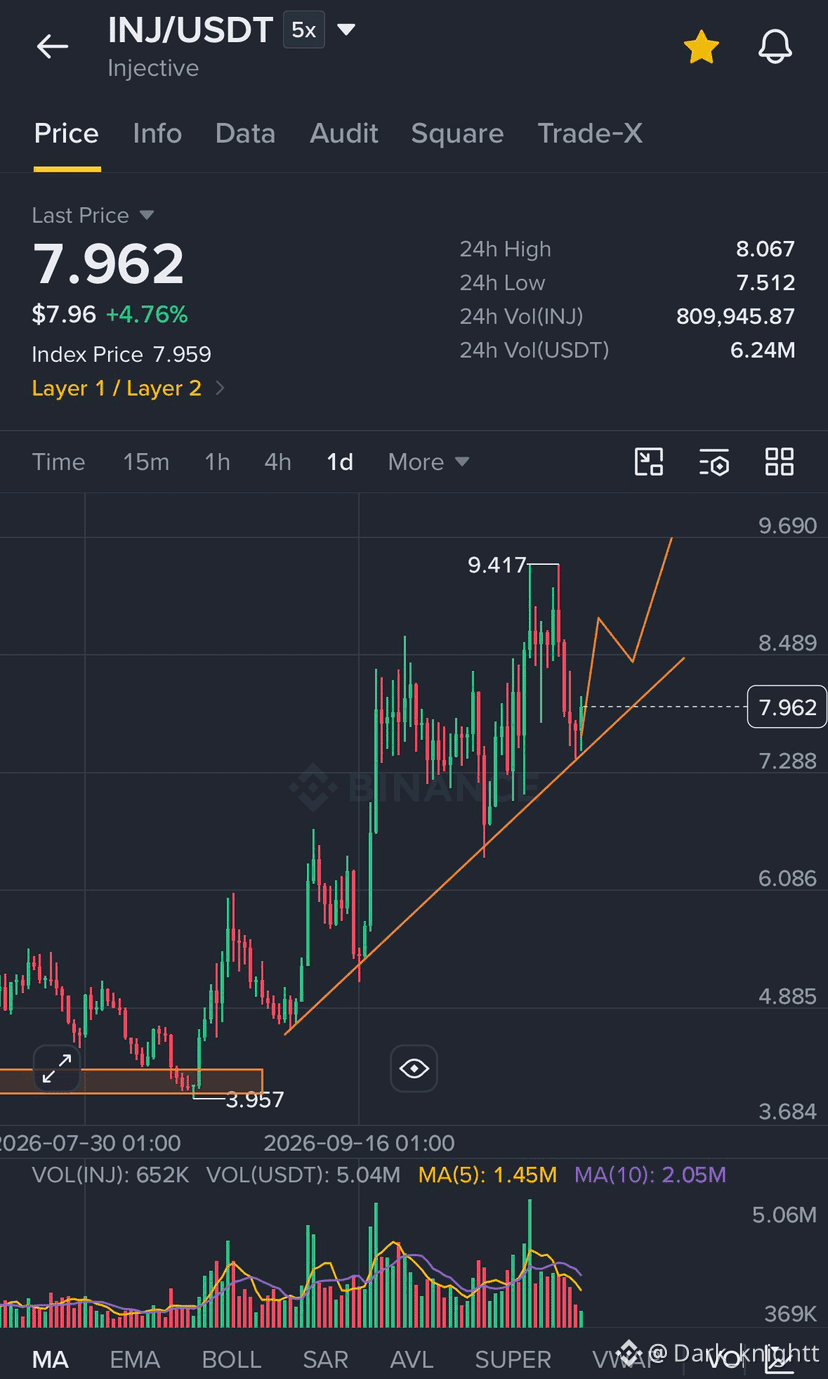
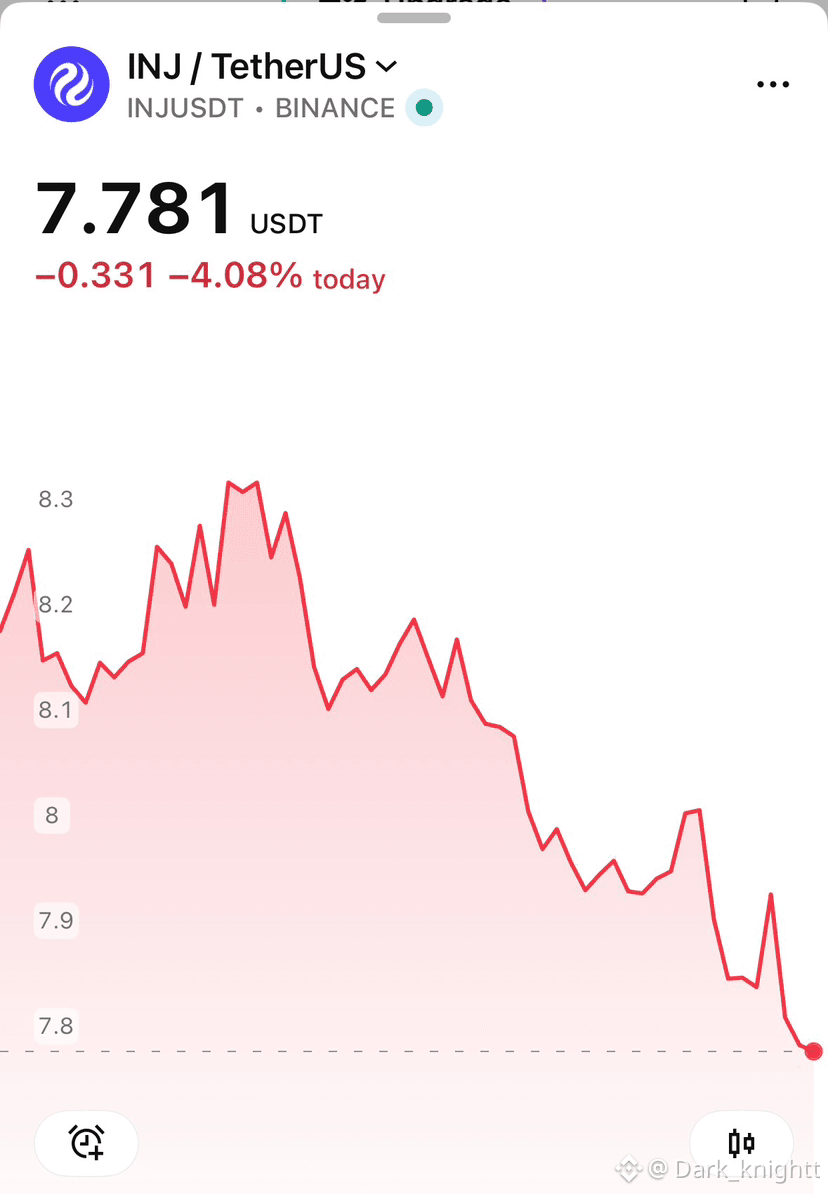
Any $INJ Dips during these times are a sweet buy opportunity
Do with this info what you wish😌
Any $INJ Dips during these times are a sweet buy opportunity
Do with this info what you wish😌
Do with this info what you wish😌
188
·
--
Bullish
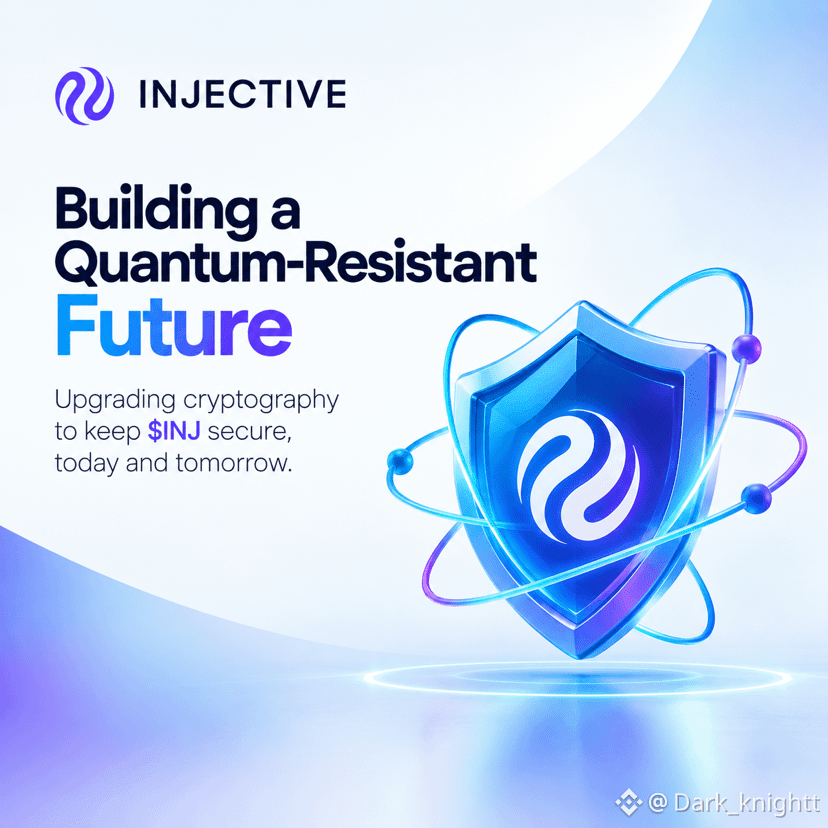
Quantum computers could one day crack the math locks (like ECDSA signatures) that protect most blockchains including your wallet and validator keys.
Injective just confirmed they’re actively building quantum-resistant infrastructure for $INJ ….. They’re upgrading the cryptography so the chain stays secure even in a post-quantum world.
Smart move for a finance-focused chain that wants institutions and long-term holders to feel safe.
Current blockchain security relies on math problems that classical computers can’t solve efficiently. A sufficiently powerful quantum computer can.
@injective is getting ahead of that risk instead of waiting.
The future of finance is ahead
461
·
--
Bullish
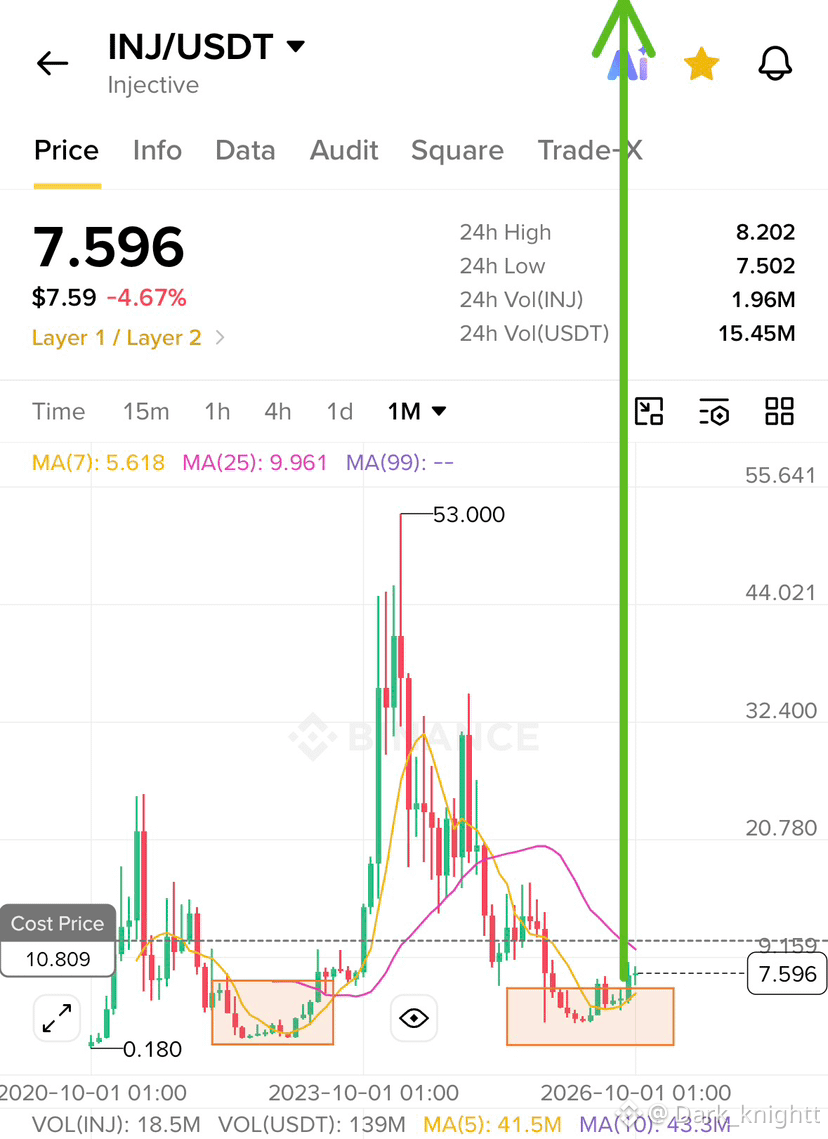
Market just tryna shake out weak hands, nevertheless INJ dips are for buys🤞
When the three INJ US ETFs happen, you’ll understand the true potential of $INJ
Market just tryna shake out weak hands, nevertheless INJ dips are for buys🤞
When the three INJ US ETFs happen, you’ll understand the true potential of $INJ
When the three INJ US ETFs happen, you’ll understand the true potential of $INJ
259
·
--
Bullish
Verified
Very Interesting times are coming for @Injective
Three US ETF applications are on the line, from canary, 21shares and REX Osprey.
Imagine these 3 getting approved.
You’re not ready for what’s to come🔥
$INJ
Very Interesting times are coming for @Injective
Three US ETF applications are on the line, from canary, 21shares and REX Osprey.
Imagine these 3 getting approved.
You’re not ready for what’s to come🔥
$INJ
Three US ETF applications are on the line, from canary, 21shares and REX Osprey.
Imagine these 3 getting approved.
You’re not ready for what’s to come🔥
$INJ

614
Log in to explore more content
Join global crypto users on Binance Square
⚡️ Get latest and useful information about crypto.
💬 Trusted by the world’s largest crypto exchange.
👍 Discover real insights from verified creators.
Email / Phone number
Trending Topics
HotCPIDecemberHikePriced
374,959 views
3,434 Discussing
CPI Market Watch | US CPI Rises 0.4% in October, Hotter Than 0.3% Forecast
Binance News
·34 Likes
·49k views
ZcashFallsBelow$1000ForFirstTimeSinceSeptember
14,317 views
78 Discussing
StrategyFaces$2.8BSelloffRiskFromMSCIRemoval
25,520 views
153 Discussing