
美股OK哥搬运号
321 Posts

美股OK哥搬运号
Report
Block User
投资丛林里的狩猎者。
0 Following
1.1K+ Followers
829 Liked
Posts
All
Videos
·
--
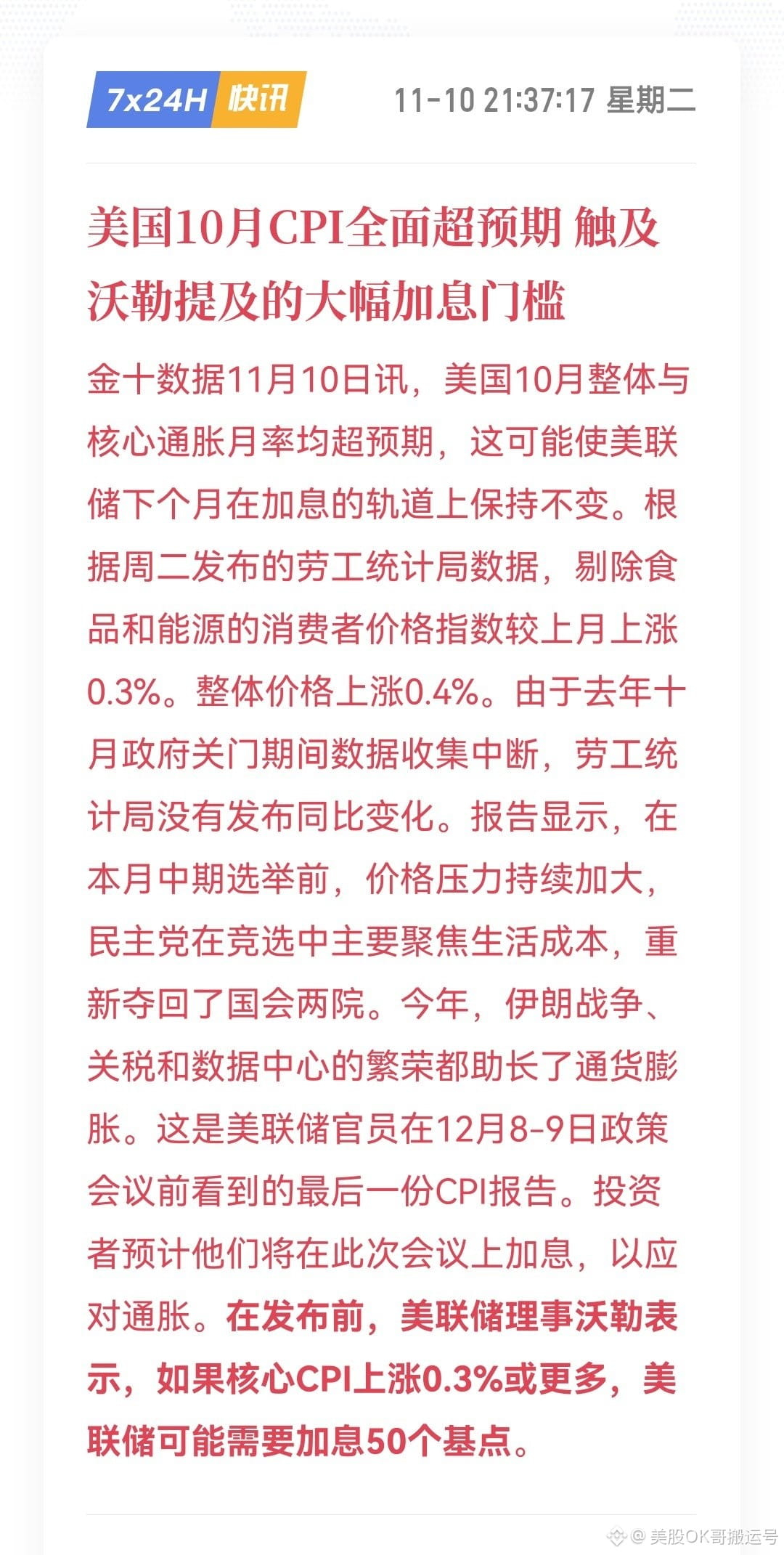
Are you planning to build positions by buying the dip tonight?
Looking ahead, which of the following do you think is most likely to help U.S. stocks turn around:
First, Anthropic moving forward with an IPO;
Second, the outcomes of the trilateral talks among the U.S., China, and Russia at APEC;
Third, the seasonal Santa Claus rally arriving as expected.
Are you planning to build positions by buying the dip tonight?
Looking ahead, which of the following do you think is most likely to help U.S. stocks turn around:
First, Anthropic moving forward with an IPO;
Second, the outcomes of the trilateral talks among the U.S., China, and Russia at APEC;
Third, the seasonal Santa Claus rally arriving as expected.
Looking ahead, which of the following do you think is most likely to help U.S. stocks turn around:
First, Anthropic moving forward with an IPO;
Second, the outcomes of the trilateral talks among the U.S., China, and Russia at APEC;
Third, the seasonal Santa Claus rally arriving as expected.
1
217
·
--
Capital flows in the U.S. stock market are undergoing a clear shift. Money is gradually moving out of AI infrastructure and into a range of AI application sectors.
The next stock with tenfold growth potential may well be among these application-focused companies.
Market attention and enthusiasm for this trend are expected to peak when Anthropic officially goes public.
Capital flows in the U.S. stock market are undergoing a clear shift. Money is gradually moving out of AI infrastructure and into a range of AI application sectors.
The next stock with tenfold growth potential may well be among these application-focused companies.
Market attention and enthusiasm for this trend are expected to peak when Anthropic officially goes public.
The next stock with tenfold growth potential may well be among these application-focused companies.
Market attention and enthusiasm for this trend are expected to peak when Anthropic officially goes public.
178
·
--
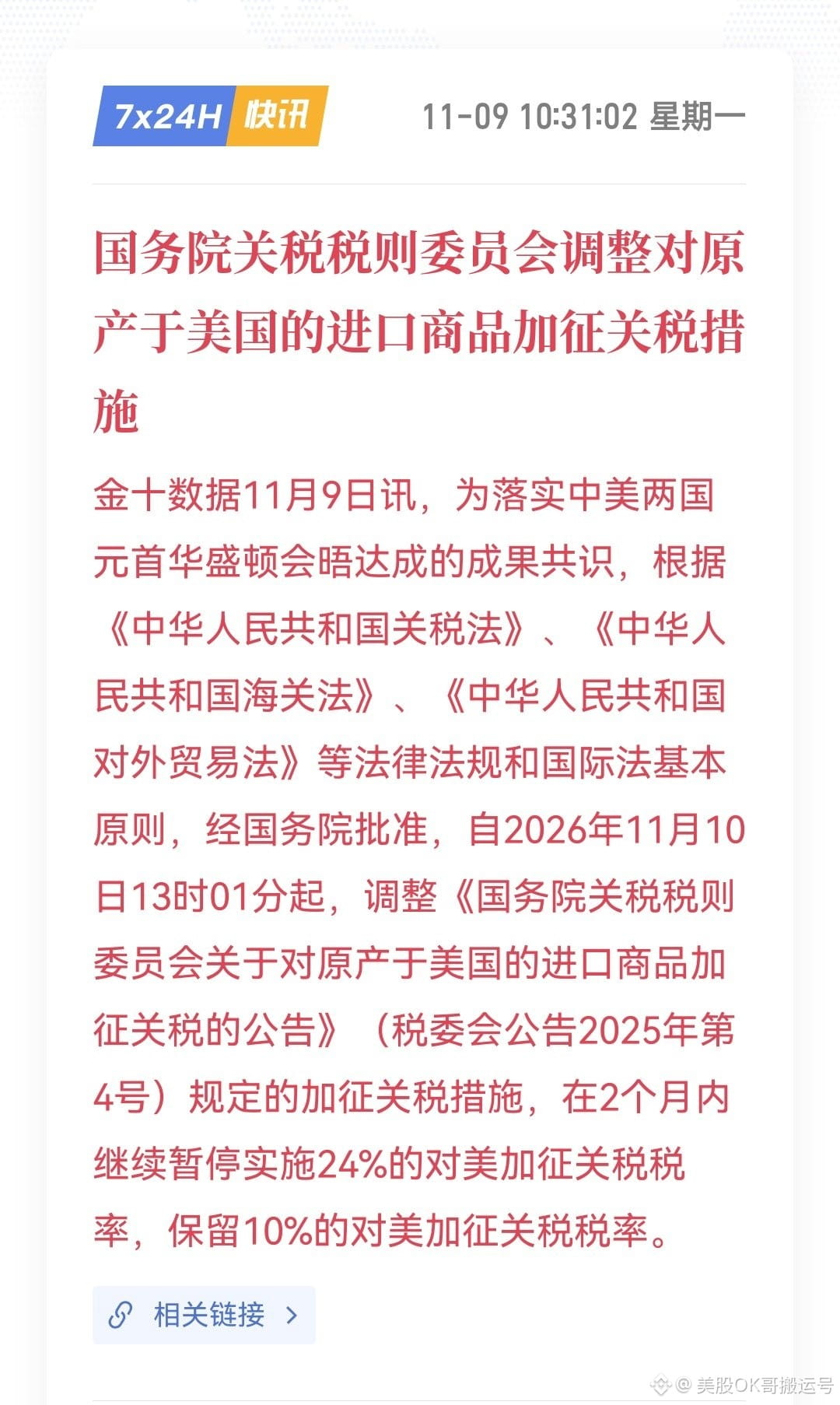
In the face of today's sharp plunge in U.S. stocks triggered by Lao Huang, the market has successfully found its footing and been pushed higher thanks to everyone's collective buying support and active efforts to prop it up.
In the face of today's sharp plunge in U.S. stocks triggered by Lao Huang, the market has successfully found its footing and been pushed higher thanks to everyone's collective buying support and active efforts to prop it up.
129
·
--
A review of historical U.S. stock market data shows that romantic scandals involving company founders or CEOs often have varying degrees of short-term impact on a company’s market value.
Let’s look back at several notable historical cases:
At Amazon ($AMZN), after news broke that Bezos had cheated on his current partner, the company’s stock fell 1.6% that day.
Former HP ($HPQ) chief Mark Hurd was found to have had an affair with a company contractor and covered it up by falsifying expense reports. The company’s stock plunged 10% in after-hours trading and was still down 8% at the close the following day.
At Intel ($INTC), Brian Krzanich’s improper relationship with a subordinate led the company’s stock to fall 2.4% on the day the news broke.
Best Buy ($BBY) executive Brian Dunn sparked public controversy after having an affair with a younger female employee. The stock rose and then fell that day, ultimately ending down 6%.
Boeing’s ($BA) Harry Stonecipher was involved in a scandal after having an affair with a female executive at the company, but the market reaction was relatively muted: the stock edged down just 0.14% that day, essentially remaining flat.
The scandal involving Microsoft ($MSFT) co-founder Bill Gates, who had an affair and subsequently divorced, did not trigger any notable negative response in the secondary market, with short-term share price movements close to 0%.
Looking across these events, we can conclude that the key factors determining the extent of a stock’s decline are whether the central figure is currently in office, how concentrated their shareholding is, and whether the incident affects the company’s actual business operations. By this logic, if a similar incident were to involve Jensen Huang, it is not entirely inconceivable that it could send the entire market tumbling for a full day in the short term.
A review of historical U.S. stock market data shows that romantic scandals involving company founders or CEOs often have varying degrees of short-term impact on a company’s market value.
Let’s look back at several notable historical cases:
At Amazon ($AMZN), after news broke that Bezos had cheated on his current partner, the company’s stock fell 1.6% that day.
Former HP ($HPQ) chief Mark Hurd was found to have had an affair with a company contractor and covered it up by falsifying expense reports. The company’s stock plunged 10% in after-hours trading and was still down 8% at the close the following day.
At Intel ($INTC), Brian Krzanich’s improper relationship with a subordinate led the company’s stock to fall 2.4% on the day the news broke.
Best Buy ($BBY) executive Brian Dunn sparked public controversy after having an affair with a younger female employee. The stock rose and then fell that day, ultimately ending down 6%.
Boeing’s ($BA) Harry Stonecipher was involved in a scandal after having an affair with a female executive at the company, but the market reaction was relatively muted: the stock edged down just 0.14% that day, essentially remaining flat.
The scandal involving Microsoft ($MSFT) co-founder Bill Gates, who had an affair and subsequently divorced, did not trigger any notable negative response in the secondary market, with short-term share price movements close to 0%.
Looking across these events, we can conclude that the key factors determining the extent of a stock’s decline are whether the central figure is currently in office, how concentrated their shareholding is, and whether the incident affects the company’s actual business operations. By this logic, if a similar incident were to involve Jensen Huang, it is not entirely inconceivable that it could send the entire market tumbling for a full day in the short term.
Let’s look back at several notable historical cases:
At Amazon ($AMZN), after news broke that Bezos had cheated on his current partner, the company’s stock fell 1.6% that day.
Former HP ($HPQ) chief Mark Hurd was found to have had an affair with a company contractor and covered it up by falsifying expense reports. The company’s stock plunged 10% in after-hours trading and was still down 8% at the close the following day.
At Intel ($INTC), Brian Krzanich’s improper relationship with a subordinate led the company’s stock to fall 2.4% on the day the news broke.
Best Buy ($BBY) executive Brian Dunn sparked public controversy after having an affair with a younger female employee. The stock rose and then fell that day, ultimately ending down 6%.
Boeing’s ($BA) Harry Stonecipher was involved in a scandal after having an affair with a female executive at the company, but the market reaction was relatively muted: the stock edged down just 0.14% that day, essentially remaining flat.
The scandal involving Microsoft ($MSFT) co-founder Bill Gates, who had an affair and subsequently divorced, did not trigger any notable negative response in the secondary market, with short-term share price movements close to 0%.
Looking across these events, we can conclude that the key factors determining the extent of a stock’s decline are whether the central figure is currently in office, how concentrated their shareholding is, and whether the incident affects the company’s actual business operations. By this logic, if a similar incident were to involve Jensen Huang, it is not entirely inconceivable that it could send the entire market tumbling for a full day in the short term.
134
·
--
Partly True
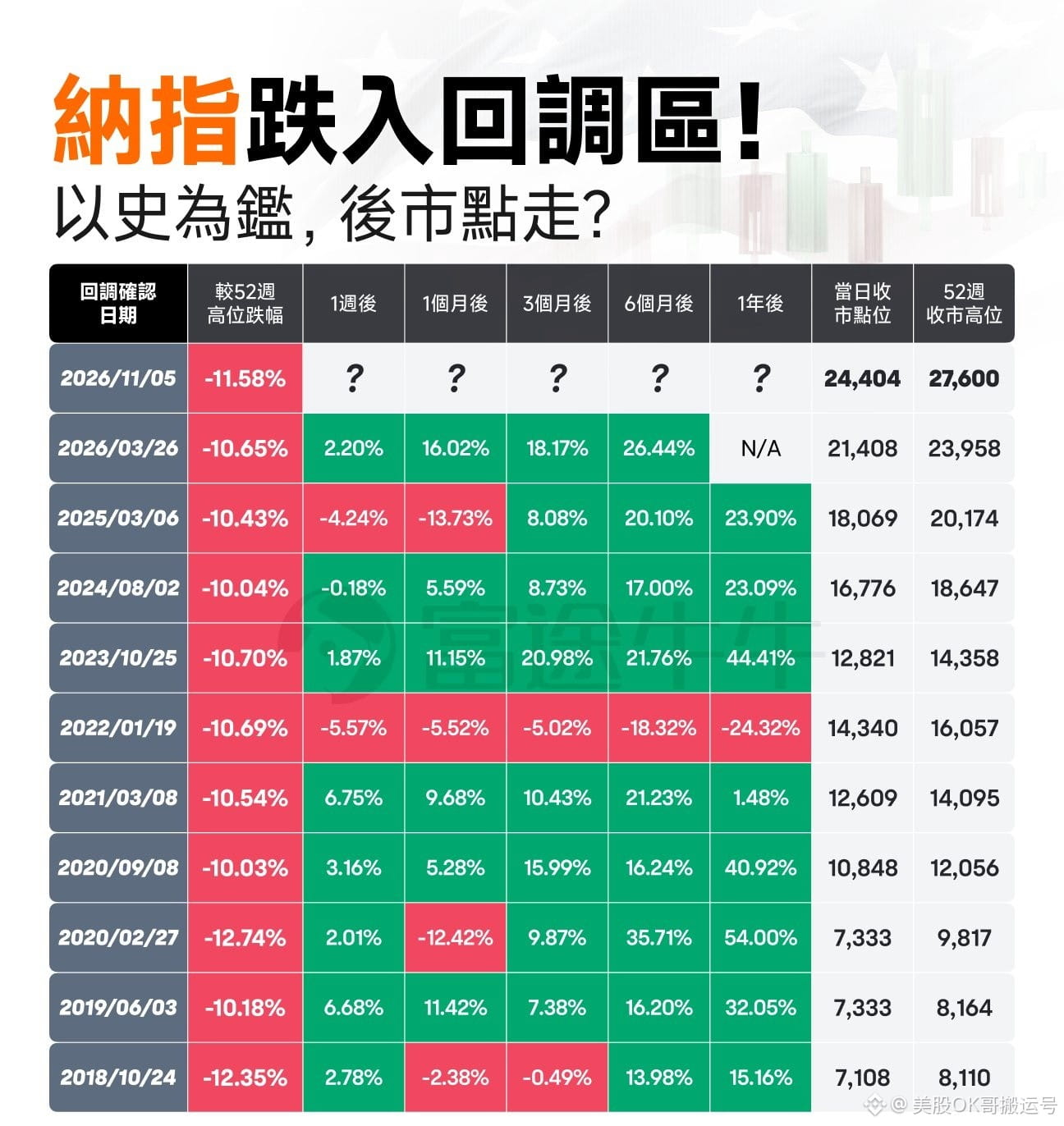
A review of recent market performance reveals a particularly interesting set of historical data on the Nasdaq Index: looking back at its 10 most recent 10% pullbacks from a peak, the time it took to recover its losses follows a striking pattern.
In the vast majority of cases, the market recovered remarkably quickly. The data show an 80% chance that the index had recovered within just one week of reaching the 10% decline threshold. Over a longer period of six months, the probability of returns turning positive rose further, to 90%.
Notably, there was only one significant exception among these 10 cases: the market downturn that began in January 2022. It took a full two years for the index to return to its previous level. The key factors will be familiar to investors: persistently high inflation led the Federal Reserve to continue raising interest rates, while a sharp surge in U.S. Treasury yields ultimately dealt a heavy blow to tech stocks’ valuations.
A review of recent market performance reveals a particularly interesting set of historical data on the Nasdaq Index: looking back at its 10 most recent 10% pullbacks from a peak, the time it took to recover its losses follows a striking pattern.
In the vast majority of cases, the market recovered remarkably quickly. The data show an 80% chance that the index had recovered within just one week of reaching the 10% decline threshold. Over a longer period of six months, the probability of returns turning positive rose further, to 90%.
Notably, there was only one significant exception among these 10 cases: the market downturn that began in January 2022. It took a full two years for the index to return to its previous level. The key factors will be familiar to investors: persistently high inflation led the Federal Reserve to continue raising interest rates, while a sharp surge in U.S. Treasury yields ultimately dealt a heavy blow to tech stocks’ valuations.
In the vast majority of cases, the market recovered remarkably quickly. The data show an 80% chance that the index had recovered within just one week of reaching the 10% decline threshold. Over a longer period of six months, the probability of returns turning positive rose further, to 90%.
Notably, there was only one significant exception among these 10 cases: the market downturn that began in January 2022. It took a full two years for the index to return to its previous level. The key factors will be familiar to investors: persistently high inflation led the Federal Reserve to continue raising interest rates, while a sharp surge in U.S. Treasury yields ultimately dealt a heavy blow to tech stocks’ valuations.
1
1.9k
·
--
Verified
$MRNA is set to report its latest quarterly results tonight. Although the stock just hit a new high a few days ago, discussions in the community are sharply divided, with expectations at the extremes ranging from a 20% gain to a 20% drop.
Typically, the third quarter is a traditional peak revenue season for the company, and the bar set by the capital markets is correspondingly high. Looking back at past results, the stock rose after just one of its last five third-quarter earnings releases.
There are three main things to watch in this earnings call: first, whether the company can maintain its full-year growth guidance of up to 10%; second, its operating cost controls and cash burn rate; and third, the pace of progress in the pipeline for intismeran in indications for other tumor types, such as kidney cancer.
A more in-depth analysis has also been posted on OKX Planet. On balance, I’m currently inclined to stay cautious and lean bearish.
$MRNA is set to report its latest quarterly results tonight. Although the stock just hit a new high a few days ago, discussions in the community are sharply divided, with expectations at the extremes ranging from a 20% gain to a 20% drop.
Typically, the third quarter is a traditional peak revenue season for the company, and the bar set by the capital markets is correspondingly high. Looking back at past results, the stock rose after just one of its last five third-quarter earnings releases.
There are three main things to watch in this earnings call: first, whether the company can maintain its full-year growth guidance of up to 10%; second, its operating cost controls and cash burn rate; and third, the pace of progress in the pipeline for intismeran in indications for other tumor types, such as kidney cancer.
A more in-depth analysis has also been posted on OKX Planet. On balance, I’m currently inclined to stay cautious and lean bearish.
Typically, the third quarter is a traditional peak revenue season for the company, and the bar set by the capital markets is correspondingly high. Looking back at past results, the stock rose after just one of its last five third-quarter earnings releases.
There are three main things to watch in this earnings call: first, whether the company can maintain its full-year growth guidance of up to 10%; second, its operating cost controls and cash burn rate; and third, the pace of progress in the pipeline for intismeran in indications for other tumor types, such as kidney cancer.
A more in-depth analysis has also been posted on OKX Planet. On balance, I’m currently inclined to stay cautious and lean bearish.
699
·
--
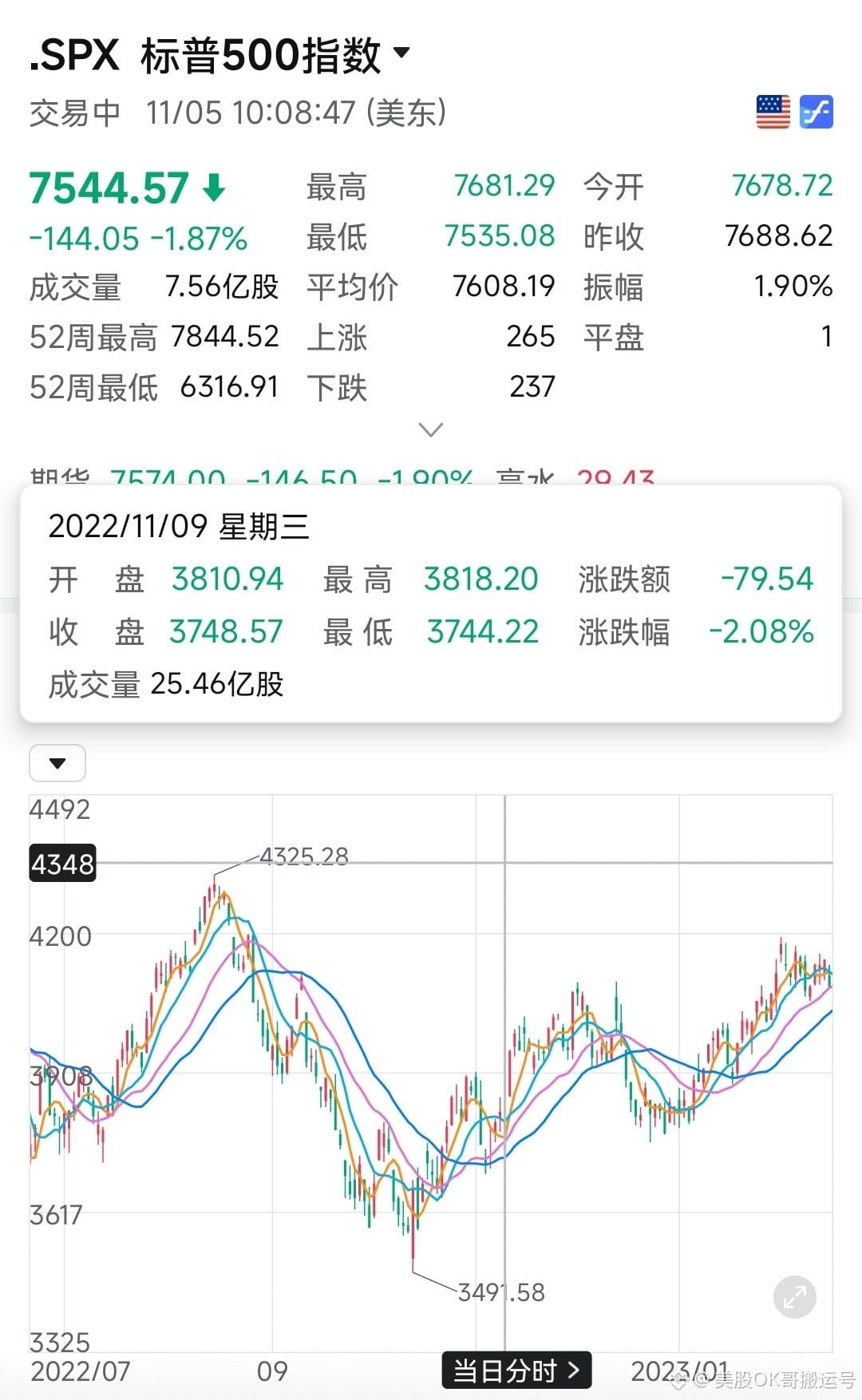
Tonight’s sharp plunge in U.S. stocks inevitably brings to mind the market action in 2022.
Looking to history for reference, on the first trading day after the midterm elections, November 9, 2022, the S&P 500 fell more than 2%. But, unexpectedly, when the CPI inflation data came out the next day, the market reversed course in an instant, surging 5.5% in a single session.
Fast-forward to today: the closely watched nonfarm payrolls report is due tomorrow, November 6, and this year’s CPI report will be released next week, on November 10. They say history has a way of rhyming. Let’s wait and see whether the market will reprise that same tune this time around.
Tonight’s sharp plunge in U.S. stocks inevitably brings to mind the market action in 2022.
Looking to history for reference, on the first trading day after the midterm elections, November 9, 2022, the S&P 500 fell more than 2%. But, unexpectedly, when the CPI inflation data came out the next day, the market reversed course in an instant, surging 5.5% in a single session.
Fast-forward to today: the closely watched nonfarm payrolls report is due tomorrow, November 6, and this year’s CPI report will be released next week, on November 10. They say history has a way of rhyming. Let’s wait and see whether the market will reprise that same tune this time around.
Looking to history for reference, on the first trading day after the midterm elections, November 9, 2022, the S&P 500 fell more than 2%. But, unexpectedly, when the CPI inflation data came out the next day, the market reversed course in an instant, surging 5.5% in a single session.
Fast-forward to today: the closely watched nonfarm payrolls report is due tomorrow, November 6, and this year’s CPI report will be released next week, on November 10. They say history has a way of rhyming. Let’s wait and see whether the market will reprise that same tune this time around.
139
·
--
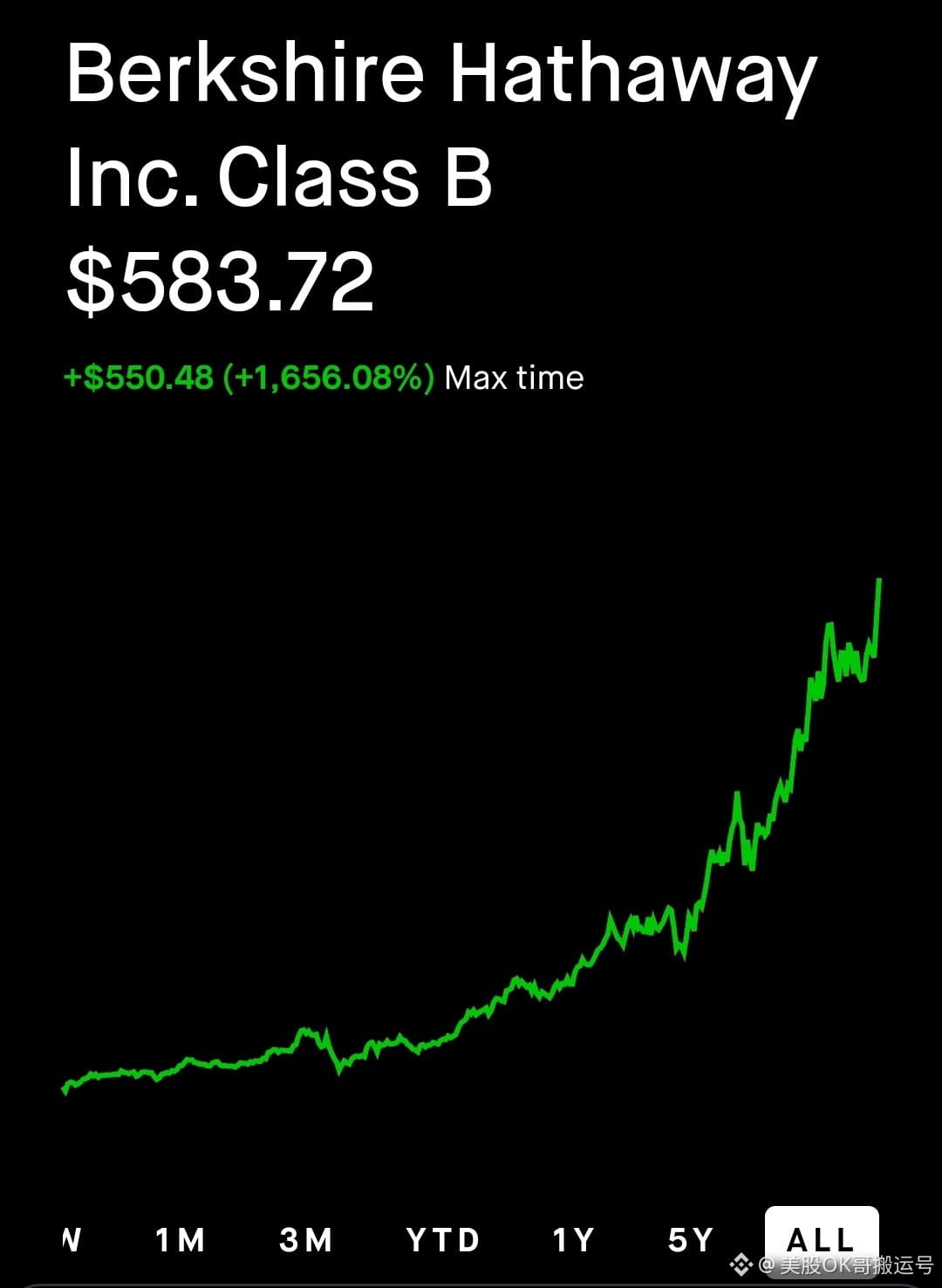
Berkshire’s stock price recently reached a new all-time high, giving Duan Yongping a rare moment to savor vindication. He once shared a widely known piece of investment advice: if you’re not very familiar with the U.S. stock market, consider investing half your money in the S&P 500 and the other half in $BRK.B. The stock’s strong performance now has once again borne out the view he has long stood by.
Berkshire’s stock price recently reached a new all-time high, giving Duan Yongping a rare moment to savor vindication. He once shared a widely known piece of investment advice: if you’re not very familiar with the U.S. stock market, consider investing half your money in the S&P 500 and the other half in $BRK.B. The stock’s strong performance now has once again borne out the view he has long stood by.

167
·
--
In November’s U.S. stock market, Anthropic’s IPO launch is undoubtedly the most closely watched major event.
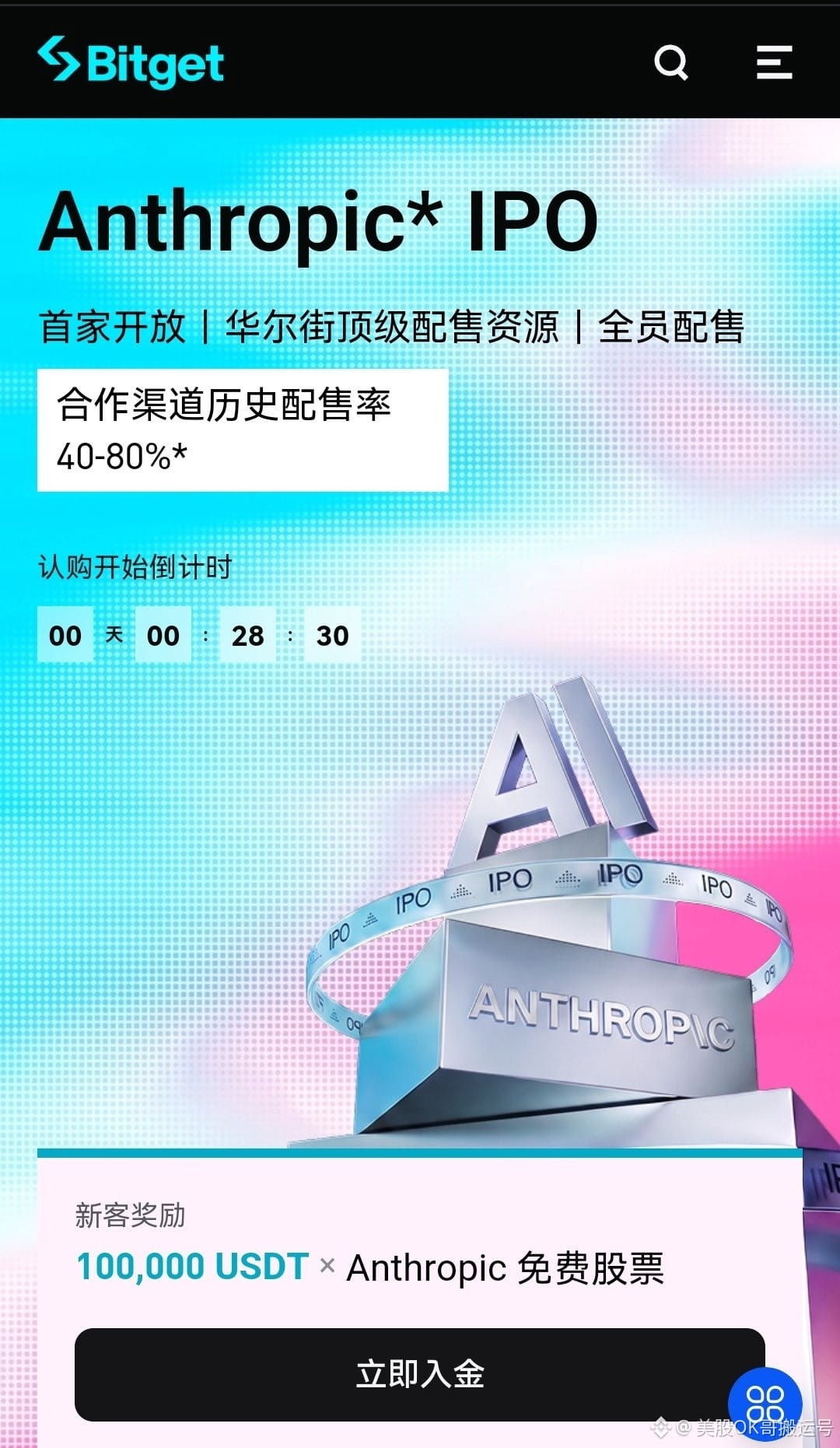
As the first platform to offer subscriptions for Anthropic shares, Bitget is about to be the first to open its VIP round. In the traditional IPO landscape, Anthropic shares are largely controlled by major Wall Street institutions such as JPMorgan Chase and Citi, while allocations for retail investors usually go first to select brokerages with close ties to the issuers. Bitget’s initiative effectively lowers the barrier to entry, opening up a new channel for retail investors to participate in IPO subscriptions.
In terms of allocation and timing, the VIP-only round launching this week will have a hard cap of 3 million. The public offering for all users is scheduled to open next Tuesday, with a hard cap of 25,000 U for regular accounts.
For the full campaign rules and details, visit the campaign page: https://www.bitget.com/zh-CN/campaigns/anthropic-ipo#4737
In November’s U.S. stock market, Anthropic’s IPO launch is undoubtedly the most closely watched major event.
As the first platform to offer subscriptions for Anthropic shares, Bitget is about to be the first to open its VIP round. In the traditional IPO landscape, Anthropic shares are largely controlled by major Wall Street institutions such as JPMorgan Chase and Citi, while allocations for retail investors usually go first to select brokerages with close ties to the issuers. Bitget’s initiative effectively lowers the barrier to entry, opening up a new channel for retail investors to participate in IPO subscriptions.
In terms of allocation and timing, the VIP-only round launching this week will have a hard cap of 3 million. The public offering for all users is scheduled to open next Tuesday, with a hard cap of 25,000 U for regular accounts.
For the full campaign rules and details, visit the campaign page: https://www.bitget.com/zh-CN/campaigns/anthropic-ipo#4737
As the first platform to offer subscriptions for Anthropic shares, Bitget is about to be the first to open its VIP round. In the traditional IPO landscape, Anthropic shares are largely controlled by major Wall Street institutions such as JPMorgan Chase and Citi, while allocations for retail investors usually go first to select brokerages with close ties to the issuers. Bitget’s initiative effectively lowers the barrier to entry, opening up a new channel for retail investors to participate in IPO subscriptions.
In terms of allocation and timing, the VIP-only round launching this week will have a hard cap of 3 million. The public offering for all users is scheduled to open next Tuesday, with a hard cap of 25,000 U for regular accounts.
For the full campaign rules and details, visit the campaign page: https://www.bitget.com/zh-CN/campaigns/anthropic-ipo#4737
29
·
--
On the strength of nothing more than a fairly decent earnings report, $DUOL surged 30%—a clear sign of just how explosive small-cap stocks can be. Early this morning, a friend happily told me that he’d made a profit on his investment in the stock. He had originally decided to buy in and build a position while learning English some time ago.
On the strength of nothing more than a fairly decent earnings report, $DUOL surged 30%—a clear sign of just how explosive small-cap stocks can be. Early this morning, a friend happily told me that he’d made a profit on his investment in the stock. He had originally decided to buy in and build a position while learning English some time ago.
DUOLUS+2.20%
154
·
--
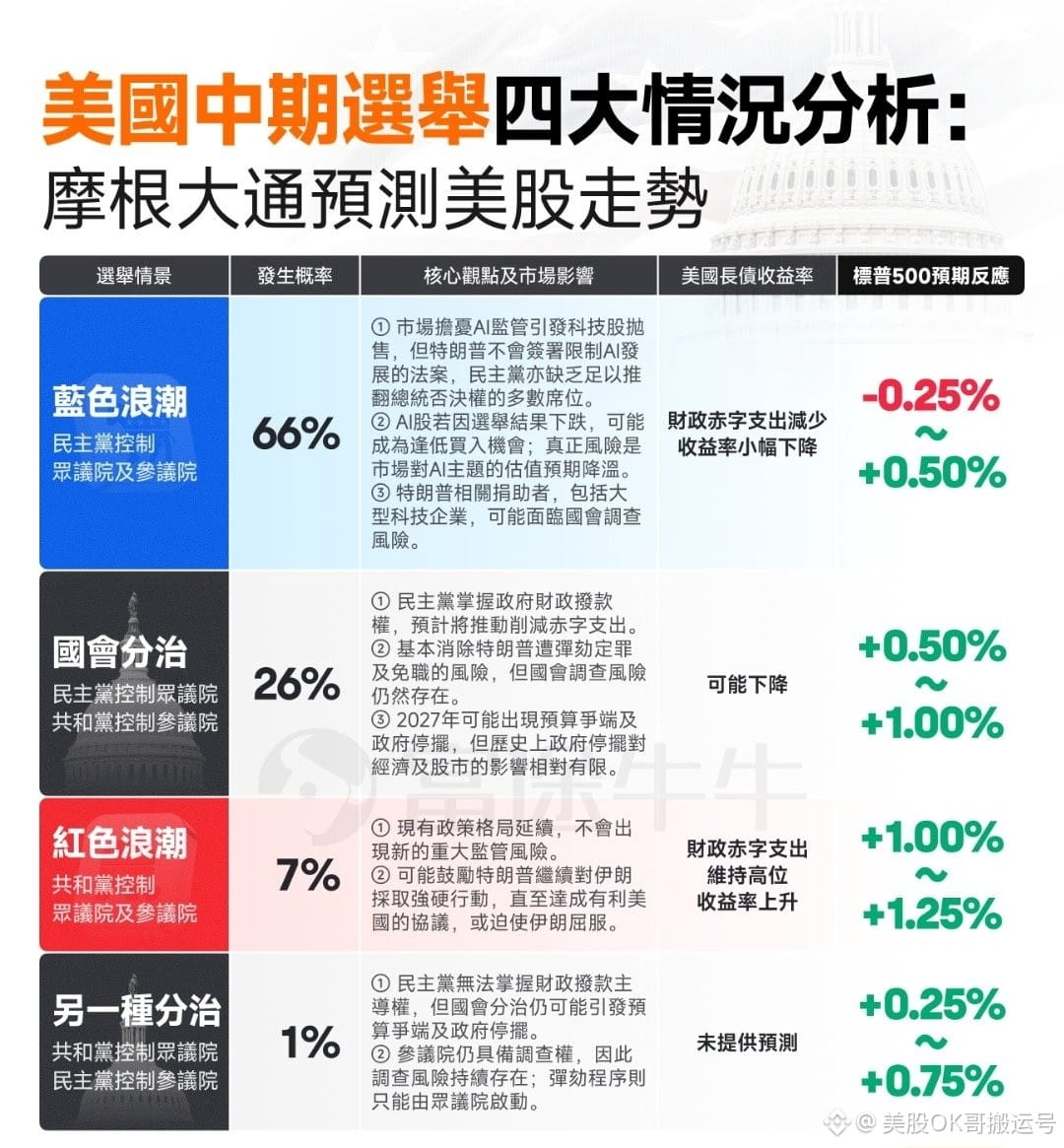
As Texas shifted its political lean, Democrats scored a decisive victory in this midterm election, closely tied to the many twists and turns triggered by Trump in the past. As the political landscape shifts, sectors in the U.S. stock market that rely heavily on government subsidies are seeing significant tailwinds.
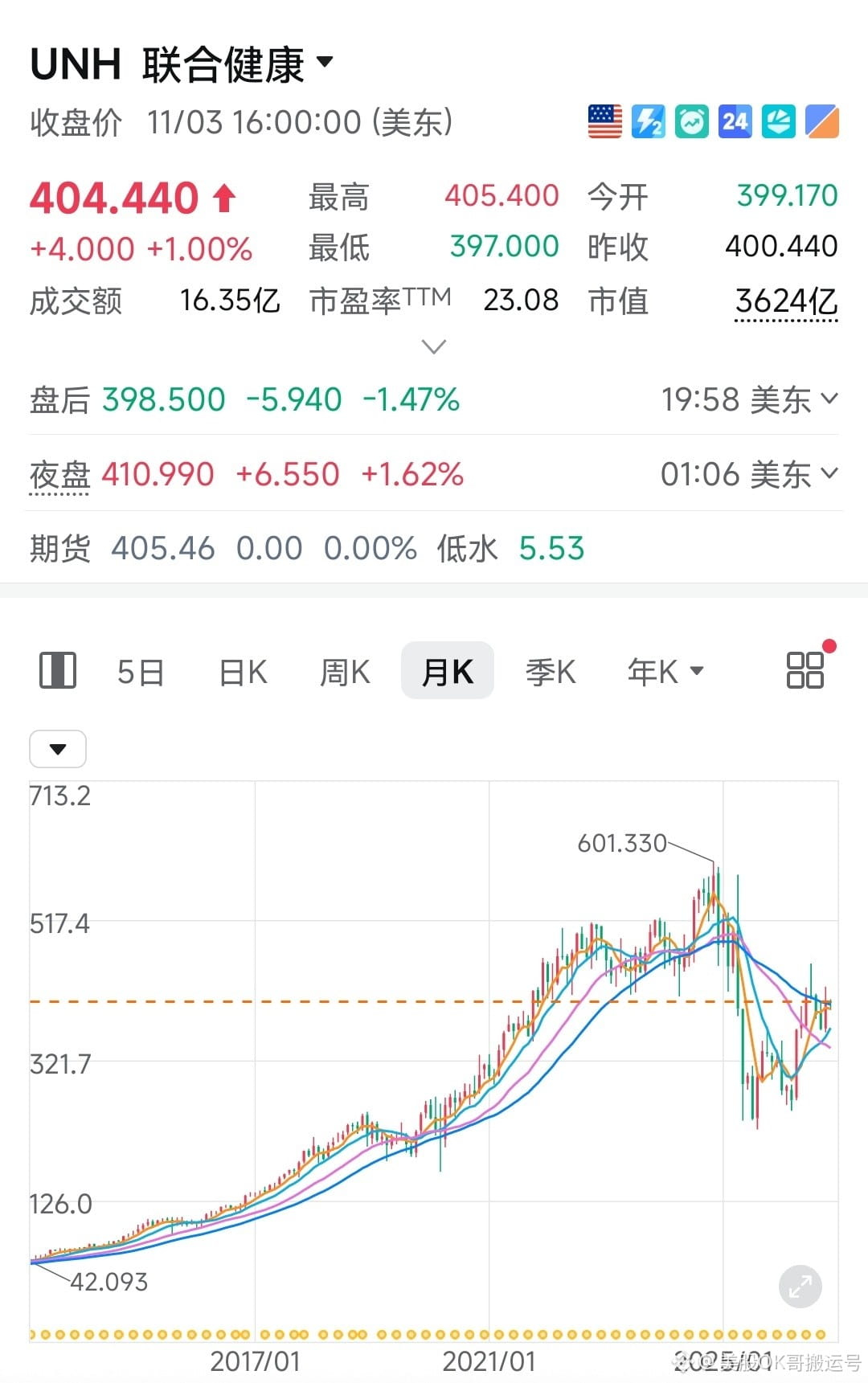
First, the healthcare sector. UnitedHealth ($UNH), once a benchmark bull stock, has been under sustained pressure since Trump took office, but now appears to be turning a corner. Meanwhile, $HCA, $ACAD, $OSCR, and $CNC all saw notable price swings in overnight trading. Clean energy stocks also stood out, with names including $NEE, $FSLR, $BEPC, and $RUN attracting investor attention.
In addition, concerns that AI infrastructure development could be affected are expected to fuel only short-lived panic, with the overall impact likely to last no more than about a week.
As Texas shifted its political lean, Democrats scored a decisive victory in this midterm election, closely tied to the many twists and turns triggered by Trump in the past. As the political landscape shifts, sectors in the U.S. stock market that rely heavily on government subsidies are seeing significant tailwinds.
First, the healthcare sector. UnitedHealth ($UNH), once a benchmark bull stock, has been under sustained pressure since Trump took office, but now appears to be turning a corner. Meanwhile, $HCA, $ACAD, $OSCR, and $CNC all saw notable price swings in overnight trading. Clean energy stocks also stood out, with names including $NEE, $FSLR, $BEPC, and $RUN attracting investor attention.
In addition, concerns that AI infrastructure development could be affected are expected to fuel only short-lived panic, with the overall impact likely to last no more than about a week.
First, the healthcare sector. UnitedHealth ($UNH), once a benchmark bull stock, has been under sustained pressure since Trump took office, but now appears to be turning a corner. Meanwhile, $HCA, $ACAD, $OSCR, and $CNC all saw notable price swings in overnight trading. Clean energy stocks also stood out, with names including $NEE, $FSLR, $BEPC, and $RUN attracting investor attention.
In addition, concerns that AI infrastructure development could be affected are expected to fuel only short-lived panic, with the overall impact likely to last no more than about a week.
260
·
--
Partly True
On November 3, Seeking Alpha published its latest list of featured stocks. To many people’s surprise, the long-established tech stock Micron $MU, which has drawn heavy market attention, was prominently included.
This company has previously generated an astonishing return of more than 350% in their recommended portfolio. As it rejoined the list this time, the SA Quant system gave Micron very strong scores: both Growth and Profitability received the highest A+ rating, while Valuation also earned an A grade.
To help everyone understand, I have briefly organized the core bullish logic from this report.
First, the supply-demand imbalance in the market fundamentals remains in effect. As the only U.S.-based HBM manufacturer, Micron has already secured future revenue through a large number of long-term customer agreements. This capacity shortage is expected to last at least through 2028. In addition, with the rapid development of AI inference technology and humanoid robots, the entire industry will also see a new wave of incremental storage demand.
Second, the company’s recently released financial statements and future guidance have been very strong. Not only have free cash flow and gross margin both remained at high levels, but expectations for next quarter’s performance also continue to show quarter-over-quarter growth momentum. Over the past 90 days, the vast majority of industry analysts have raised their earnings forecasts for the company, and the overall trend of earnings revisions remains on track.
Finally, there is the matter of valuation. Although Micron’s stock price experienced a huge run-up earlier, its current forward P/E ratio is only 5x, representing a very clear discount compared with the industry median. This shows that its valuation is not excessively inflated. After the recent pullback in the relevant sector, Micron’s various quantitative factors have once again fully met the system’s screening standards, which is also the key reason it was able to return to the recommended portfolio this time.
If you regularly use SA membership services, you can use the exclusive link below to get a 30% subscription discount:
Seeking Alpha Premium:https://link.seekingalpha.com/4CMF46B/4G6SHH/
Seeking Alpha Alpha Picks:https://link.seekingalpha.com/4CMF46B/4HKP84/
On November 3, Seeking Alpha published its latest list of featured stocks. To many people’s surprise, the long-established tech stock Micron $MU, which has drawn heavy market attention, was prominently included.
This company has previously generated an astonishing return of more than 350% in their recommended portfolio. As it rejoined the list this time, the SA Quant system gave Micron very strong scores: both Growth and Profitability received the highest A+ rating, while Valuation also earned an A grade.
To help everyone understand, I have briefly organized the core bullish logic from this report.
First, the supply-demand imbalance in the market fundamentals remains in effect. As the only U.S.-based HBM manufacturer, Micron has already secured future revenue through a large number of long-term customer agreements. This capacity shortage is expected to last at least through 2028. In addition, with the rapid development of AI inference technology and humanoid robots, the entire industry will also see a new wave of incremental storage demand.
Second, the company’s recently released financial statements and future guidance have been very strong. Not only have free cash flow and gross margin both remained at high levels, but expectations for next quarter’s performance also continue to show quarter-over-quarter growth momentum. Over the past 90 days, the vast majority of industry analysts have raised their earnings forecasts for the company, and the overall trend of earnings revisions remains on track.
Finally, there is the matter of valuation. Although Micron’s stock price experienced a huge run-up earlier, its current forward P/E ratio is only 5x, representing a very clear discount compared with the industry median. This shows that its valuation is not excessively inflated. After the recent pullback in the relevant sector, Micron’s various quantitative factors have once again fully met the system’s screening standards, which is also the key reason it was able to return to the recommended portfolio this time.
If you regularly use SA membership services, you can use the exclusive link below to get a 30% subscription discount:
Seeking Alpha Premium:https://link.seekingalpha.com/4CMF46B/4G6SHH/
Seeking Alpha Alpha Picks:https://link.seekingalpha.com/4CMF46B/4HKP84/
This company has previously generated an astonishing return of more than 350% in their recommended portfolio. As it rejoined the list this time, the SA Quant system gave Micron very strong scores: both Growth and Profitability received the highest A+ rating, while Valuation also earned an A grade.
To help everyone understand, I have briefly organized the core bullish logic from this report.
First, the supply-demand imbalance in the market fundamentals remains in effect. As the only U.S.-based HBM manufacturer, Micron has already secured future revenue through a large number of long-term customer agreements. This capacity shortage is expected to last at least through 2028. In addition, with the rapid development of AI inference technology and humanoid robots, the entire industry will also see a new wave of incremental storage demand.
Second, the company’s recently released financial statements and future guidance have been very strong. Not only have free cash flow and gross margin both remained at high levels, but expectations for next quarter’s performance also continue to show quarter-over-quarter growth momentum. Over the past 90 days, the vast majority of industry analysts have raised their earnings forecasts for the company, and the overall trend of earnings revisions remains on track.
Finally, there is the matter of valuation. Although Micron’s stock price experienced a huge run-up earlier, its current forward P/E ratio is only 5x, representing a very clear discount compared with the industry median. This shows that its valuation is not excessively inflated. After the recent pullback in the relevant sector, Micron’s various quantitative factors have once again fully met the system’s screening standards, which is also the key reason it was able to return to the recommended portfolio this time.
If you regularly use SA membership services, you can use the exclusive link below to get a 30% subscription discount:
Seeking Alpha Premium:https://link.seekingalpha.com/4CMF46B/4G6SHH/
Seeking Alpha Alpha Picks:https://link.seekingalpha.com/4CMF46B/4HKP84/
579
·
--
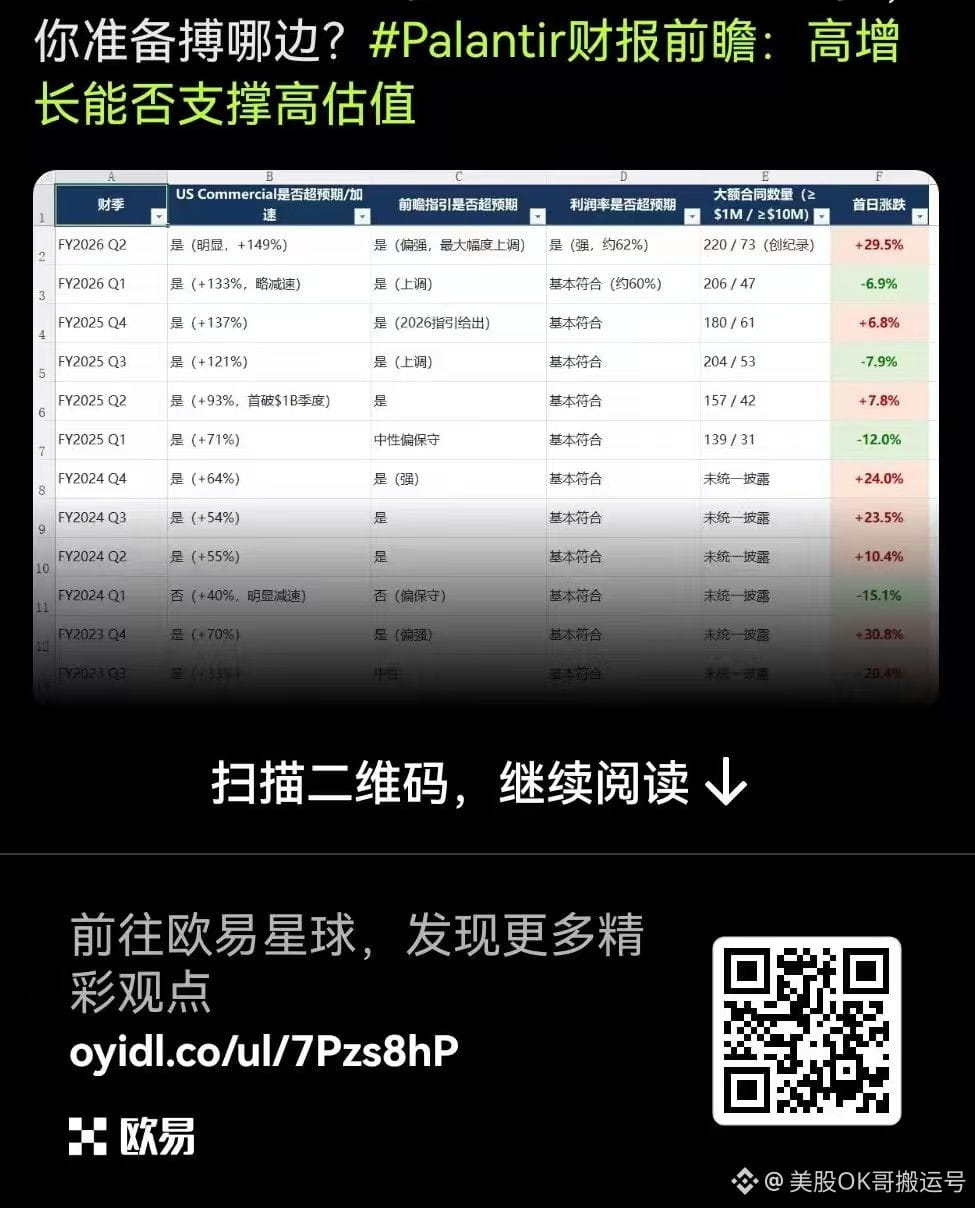
There doesn’t seem to be much analysis out there yet on $PLTR’s earnings report, due after the U.S. market closes tonight, so I’ve put together a rundown of the key factors. I’ve compiled the company’s market performance on earnings days over the past three years and summarized the data in the table below. Looking back at this history, we can identify several notable market patterns.
First, as the most important core business metric, the performance of the US Commercial segment directly shapes investor sentiment. When this business accelerates its growth, it often drives a sharp rise in the stock price. Conversely, if growth shows clear signs of slowing—as it did in Q1 2024 and Q1 2026—even strong results in other areas of the earnings report may not prevent the stock from taking a major hit. In addition, large contract wins are like icing on the cake for this stock. They tend to fuel the most optimism when they set a new record for size, at which point investors usually choose to overlook conventional financial metrics such as profit margins.
Second, from the perspective of managing expectations, raising guidance has become standard practice for the company. Investors have long grown accustomed to the “beat + raise” pattern, so if a guidance increase falls short of expectations or overall growth weakens, it can immediately trigger a “sell the news” reaction. This pattern was evident after the earnings releases in Q3 2025 and Q1 2026. It’s also important to note that this stock’s volatility during earnings season is unusually extreme. Looking back at the past 12 quarters, the average move on earnings day was around ±16%. That means trading options at this time involves substantial uncertainty and can often lead to extreme outcomes—either a huge gain or a huge loss.
Taking into account the various clues that have emerged in the market recently, I’ve published a detailed analysis in a full article on OKX Planet. Personally, I’m quite optimistic about the results due out tonight. I expect this earnings report to be a bit like opening a mystery box—and quite impressive. It may even set another all-time record, hopefully giving a much-needed boost to the somewhat sluggish U.S. stock market. With the results about to come out, which outcome are you leaning toward?
There doesn’t seem to be much analysis out there yet on $PLTR’s earnings report, due after the U.S. market closes tonight, so I’ve put together a rundown of the key factors. I’ve compiled the company’s market performance on earnings days over the past three years and summarized the data in the table below. Looking back at this history, we can identify several notable market patterns.
First, as the most important core business metric, the performance of the US Commercial segment directly shapes investor sentiment. When this business accelerates its growth, it often drives a sharp rise in the stock price. Conversely, if growth shows clear signs of slowing—as it did in Q1 2024 and Q1 2026—even strong results in other areas of the earnings report may not prevent the stock from taking a major hit. In addition, large contract wins are like icing on the cake for this stock. They tend to fuel the most optimism when they set a new record for size, at which point investors usually choose to overlook conventional financial metrics such as profit margins.
Second, from the perspective of managing expectations, raising guidance has become standard practice for the company. Investors have long grown accustomed to the “beat + raise” pattern, so if a guidance increase falls short of expectations or overall growth weakens, it can immediately trigger a “sell the news” reaction. This pattern was evident after the earnings releases in Q3 2025 and Q1 2026. It’s also important to note that this stock’s volatility during earnings season is unusually extreme. Looking back at the past 12 quarters, the average move on earnings day was around ±16%. That means trading options at this time involves substantial uncertainty and can often lead to extreme outcomes—either a huge gain or a huge loss.
Taking into account the various clues that have emerged in the market recently, I’ve published a detailed analysis in a full article on OKX Planet. Personally, I’m quite optimistic about the results due out tonight. I expect this earnings report to be a bit like opening a mystery box—and quite impressive. It may even set another all-time record, hopefully giving a much-needed boost to the somewhat sluggish U.S. stock market. With the results about to come out, which outcome are you leaning toward?
First, as the most important core business metric, the performance of the US Commercial segment directly shapes investor sentiment. When this business accelerates its growth, it often drives a sharp rise in the stock price. Conversely, if growth shows clear signs of slowing—as it did in Q1 2024 and Q1 2026—even strong results in other areas of the earnings report may not prevent the stock from taking a major hit. In addition, large contract wins are like icing on the cake for this stock. They tend to fuel the most optimism when they set a new record for size, at which point investors usually choose to overlook conventional financial metrics such as profit margins.
Second, from the perspective of managing expectations, raising guidance has become standard practice for the company. Investors have long grown accustomed to the “beat + raise” pattern, so if a guidance increase falls short of expectations or overall growth weakens, it can immediately trigger a “sell the news” reaction. This pattern was evident after the earnings releases in Q3 2025 and Q1 2026. It’s also important to note that this stock’s volatility during earnings season is unusually extreme. Looking back at the past 12 quarters, the average move on earnings day was around ±16%. That means trading options at this time involves substantial uncertainty and can often lead to extreme outcomes—either a huge gain or a huge loss.
Taking into account the various clues that have emerged in the market recently, I’ve published a detailed analysis in a full article on OKX Planet. Personally, I’m quite optimistic about the results due out tonight. I expect this earnings report to be a bit like opening a mystery box—and quite impressive. It may even set another all-time record, hopefully giving a much-needed boost to the somewhat sluggish U.S. stock market. With the results about to come out, which outcome are you leaning toward?
30
·
--
Recently, Duan Yongping has been especially active in making public statements. He has successively revealed his investment moves, saying not only that he plans to sell put options on Google, but also that he intends to use some of his Apple holdings to buy Google shares.
In an exchange with netizens, he spoke frankly, saying that when the market takes a sharp downturn, he always feels very happy, and remarked that people might find it hard to understand this mindset of his.
Somewhat regrettably, however, judging by recent events, his remarks seem to have become a contrarian indicator.
Recently, Duan Yongping has been especially active in making public statements. He has successively revealed his investment moves, saying not only that he plans to sell put options on Google, but also that he intends to use some of his Apple holdings to buy Google shares.
In an exchange with netizens, he spoke frankly, saying that when the market takes a sharp downturn, he always feels very happy, and remarked that people might find it hard to understand this mindset of his.
Somewhat regrettably, however, judging by recent events, his remarks seem to have become a contrarian indicator.
In an exchange with netizens, he spoke frankly, saying that when the market takes a sharp downturn, he always feels very happy, and remarked that people might find it hard to understand this mindset of his.
Somewhat regrettably, however, judging by recent events, his remarks seem to have become a contrarian indicator.
1
492
·
--
The upcoming week in the U.S. stock market, starting Nov. 2, will be a blockbuster week for Q3 earnings. Many industry giants—including Apple, AMD, Qualcomm, and ARM—will all take the stage. In addition, the closely watched October nonfarm payrolls report, another major market mover, will be released this Friday. This is undoubtedly a pivotal week for gauging whether AI can continue to lift the market. Here’s my list of key companies to watch:
Monday, November 2
Before the U.S. market opens, consider keeping an eye on veteran cybersecurity leader Check Point $CHKP and beauty giant Estée Lauder $EL. After the market closes, consumer electronics leader Apple $AAPL and Palantir $PLTR, a high-flying AI data play with both defense and commercial AI exposure, will report earnings.
Tuesday, November 3
The main names to watch before the market opens are Shopify $SHOP, a leading SaaS platform for online stores, and global pharmaceutical giant Pfizer $PFE. The after-hours lineup is even more exciting: AI GPU and CPU chip leader Advanced Micro Devices $AMD, popular AI server hardware and computing power play Super Micro Computer $SMCI, leading AI data center switch maker Arista Networks $ANET, and global online travel platform Booking Holdings $BKNG will all report results.
Wednesday, November 4
Before the U.S. market opens, global mobility platform Uber $UBER, pharmaceutical heavyweight and obesity drug leader Novo Nordisk $NVO, and Datadog $DDOG, which focuses on cloud observability and AI-powered operations monitoring, will report. After the market closes, results will roll in from mobile and automotive chip leader Qualcomm $QCOM, chip architecture IP leader ARM $ARM, edge cloud CDN company Fastly $FSLY, which is involved in AI networking infrastructure, optical communications and transceiver giant Coherent $COHR, and trendy fast-casual chain Cava $CAVA.
Thursday, November 5
The day’s earnings highlights are concentrated after the market closes. Edge networking and AI security infrastructure provider Cloudflare $NET, defense and aerospace satellite company Kratos $KTOS, optical transceiver and photonic chip leader Lumentum $LITE, another optical transceiver leader Applied Optoelectronics $AAOI, short-term rental platform Airbnb $ABNB, and popular computing power and AI power play IREN $IREN will report earnings.
Friday, November 6
Before the market opens, mRNA vaccine leader Moderna $MRNA and Oklo $OKLO, which focuses on nuclear fission energy and power for AI, will wrap up this week’s key earnings reports.
With so many earnings reports coming up, have you decided which company’s calls you’re going to buy?
This post is sponsored by @bitget_zh. “Buy U.S. stocks on Bitget: get in within seconds, trade seamlessly.”
The upcoming week in the U.S. stock market, starting Nov. 2, will be a blockbuster week for Q3 earnings. Many industry giants—including Apple, AMD, Qualcomm, and ARM—will all take the stage. In addition, the closely watched October nonfarm payrolls report, another major market mover, will be released this Friday. This is undoubtedly a pivotal week for gauging whether AI can continue to lift the market. Here’s my list of key companies to watch:
Monday, November 2
Before the U.S. market opens, consider keeping an eye on veteran cybersecurity leader Check Point $CHKP and beauty giant Estée Lauder $EL. After the market closes, consumer electronics leader Apple $AAPL and Palantir $PLTR, a high-flying AI data play with both defense and commercial AI exposure, will report earnings.
Tuesday, November 3
The main names to watch before the market opens are Shopify $SHOP, a leading SaaS platform for online stores, and global pharmaceutical giant Pfizer $PFE. The after-hours lineup is even more exciting: AI GPU and CPU chip leader Advanced Micro Devices $AMD, popular AI server hardware and computing power play Super Micro Computer $SMCI, leading AI data center switch maker Arista Networks $ANET, and global online travel platform Booking Holdings $BKNG will all report results.
Wednesday, November 4
Before the U.S. market opens, global mobility platform Uber $UBER, pharmaceutical heavyweight and obesity drug leader Novo Nordisk $NVO, and Datadog $DDOG, which focuses on cloud observability and AI-powered operations monitoring, will report. After the market closes, results will roll in from mobile and automotive chip leader Qualcomm $QCOM, chip architecture IP leader ARM $ARM, edge cloud CDN company Fastly $FSLY, which is involved in AI networking infrastructure, optical communications and transceiver giant Coherent $COHR, and trendy fast-casual chain Cava $CAVA.
Thursday, November 5
The day’s earnings highlights are concentrated after the market closes. Edge networking and AI security infrastructure provider Cloudflare $NET, defense and aerospace satellite company Kratos $KTOS, optical transceiver and photonic chip leader Lumentum $LITE, another optical transceiver leader Applied Optoelectronics $AAOI, short-term rental platform Airbnb $ABNB, and popular computing power and AI power play IREN $IREN will report earnings.
Friday, November 6
Before the market opens, mRNA vaccine leader Moderna $MRNA and Oklo $OKLO, which focuses on nuclear fission energy and power for AI, will wrap up this week’s key earnings reports.
With so many earnings reports coming up, have you decided which company’s calls you’re going to buy?
This post is sponsored by @bitget_zh. “Buy U.S. stocks on Bitget: get in within seconds, trade seamlessly.”
Monday, November 2
Before the U.S. market opens, consider keeping an eye on veteran cybersecurity leader Check Point $CHKP and beauty giant Estée Lauder $EL. After the market closes, consumer electronics leader Apple $AAPL and Palantir $PLTR, a high-flying AI data play with both defense and commercial AI exposure, will report earnings.
Tuesday, November 3
The main names to watch before the market opens are Shopify $SHOP, a leading SaaS platform for online stores, and global pharmaceutical giant Pfizer $PFE. The after-hours lineup is even more exciting: AI GPU and CPU chip leader Advanced Micro Devices $AMD, popular AI server hardware and computing power play Super Micro Computer $SMCI, leading AI data center switch maker Arista Networks $ANET, and global online travel platform Booking Holdings $BKNG will all report results.
Wednesday, November 4
Before the U.S. market opens, global mobility platform Uber $UBER, pharmaceutical heavyweight and obesity drug leader Novo Nordisk $NVO, and Datadog $DDOG, which focuses on cloud observability and AI-powered operations monitoring, will report. After the market closes, results will roll in from mobile and automotive chip leader Qualcomm $QCOM, chip architecture IP leader ARM $ARM, edge cloud CDN company Fastly $FSLY, which is involved in AI networking infrastructure, optical communications and transceiver giant Coherent $COHR, and trendy fast-casual chain Cava $CAVA.
Thursday, November 5
The day’s earnings highlights are concentrated after the market closes. Edge networking and AI security infrastructure provider Cloudflare $NET, defense and aerospace satellite company Kratos $KTOS, optical transceiver and photonic chip leader Lumentum $LITE, another optical transceiver leader Applied Optoelectronics $AAOI, short-term rental platform Airbnb $ABNB, and popular computing power and AI power play IREN $IREN will report earnings.
Friday, November 6
Before the market opens, mRNA vaccine leader Moderna $MRNA and Oklo $OKLO, which focuses on nuclear fission energy and power for AI, will wrap up this week’s key earnings reports.
With so many earnings reports coming up, have you decided which company’s calls you’re going to buy?
This post is sponsored by @bitget_zh. “Buy U.S. stocks on Bitget: get in within seconds, trade seamlessly.”
35
·
--
Verified
As we discuss Intel’s recent market movements, it’s worth revisiting the relevant history. The last time the company suffered a decline of more than 20% was in August 2024. Coincidentally, the market’s sharp reaction then was also triggered by weak guidance in its earnings report. After that steep drop, Intel went through a long adjustment period lasting a full year before finally recovering. However, given the current volatility, I’ll venture a bold prediction: this time, the recovery may take only a month.
As we discuss Intel’s recent market movements, it’s worth revisiting the relevant history. The last time the company suffered a decline of more than 20% was in August 2024. Coincidentally, the market’s sharp reaction then was also triggered by weak guidance in its earnings report. After that steep drop, Intel went through a long adjustment period lasting a full year before finally recovering. However, given the current volatility, I’ll venture a bold prediction: this time, the recovery may take only a month.
1
1
1.3k
·
--
Buffett has long been accustomed to being mocked by crowds. In investing, aiming for exceptionally high returns often means having to withstand deep drawdowns.
Let’s look back at some of his best-known classic trades. After buying the Washington Post, his account once suffered a maximum drawdown of 40%, but the investment eventually returned 100 times his money. American Express was much the same: after he bought in, it fell as much as 50%, yet ultimately delivered a 35-fold gain. His investments in Coca-Cola and Wells Fargo also saw maximum drawdowns of 53% and 52%, respectively, after he bought in, but eventually returned 30 times and 9 times his investment. Even his investments in BYD and Apple experienced maximum drawdowns of 50% and 38% after he built his positions, yet ultimately yielded impressive returns of 38 times and 5 times, respectively.
A long lifespan, combined with ample capital, is the key advantage that has enabled Buffett to weather market cycles. If all you care about when investing is finding stocks that barely decline after you buy them, then at this point you’ll probably have to follow Pei Nai’s lead.
Buffett has long been accustomed to being mocked by crowds. In investing, aiming for exceptionally high returns often means having to withstand deep drawdowns.
Let’s look back at some of his best-known classic trades. After buying the Washington Post, his account once suffered a maximum drawdown of 40%, but the investment eventually returned 100 times his money. American Express was much the same: after he bought in, it fell as much as 50%, yet ultimately delivered a 35-fold gain. His investments in Coca-Cola and Wells Fargo also saw maximum drawdowns of 53% and 52%, respectively, after he bought in, but eventually returned 30 times and 9 times his investment. Even his investments in BYD and Apple experienced maximum drawdowns of 50% and 38% after he built his positions, yet ultimately yielded impressive returns of 38 times and 5 times, respectively.
A long lifespan, combined with ample capital, is the key advantage that has enabled Buffett to weather market cycles. If all you care about when investing is finding stocks that barely decline after you buy them, then at this point you’ll probably have to follow Pei Nai’s lead.
Let’s look back at some of his best-known classic trades. After buying the Washington Post, his account once suffered a maximum drawdown of 40%, but the investment eventually returned 100 times his money. American Express was much the same: after he bought in, it fell as much as 50%, yet ultimately delivered a 35-fold gain. His investments in Coca-Cola and Wells Fargo also saw maximum drawdowns of 53% and 52%, respectively, after he bought in, but eventually returned 30 times and 9 times his investment. Even his investments in BYD and Apple experienced maximum drawdowns of 50% and 38% after he built his positions, yet ultimately yielded impressive returns of 38 times and 5 times, respectively.
A long lifespan, combined with ample capital, is the key advantage that has enabled Buffett to weather market cycles. If all you care about when investing is finding stocks that barely decline after you buy them, then at this point you’ll probably have to follow Pei Nai’s lead.

1
592
·
--
Looking at the prevailing market views over the past three days, most people believe that Anthropic may struggle to surpass a $2 trillion valuation after going public, but that reaching $1.75 trillion is well within reach.
Using a $1.75 trillion valuation as a benchmark, the returns for the investors involved would be nothing short of staggering. Leopold, once a much-admired darling of the U.S. stock market, is expected to see the value of his private shares reach around $10 billion. That would mean a 28-fold return on his investment in just a year and a half.
Meanwhile, the UAE sovereign wealth fund that acquired Anthropic shares sold off during SBF’s bankruptcy proceedings has emerged as the clear winner. In just over two years, the investment grew 97-fold, generating a handsome $48.6 billion in profit for the fund.
Remarkably, if SBF had never gone through bankruptcy proceedings, the Anthropic shares he retained alone would now be worth a staggering $137 billion. That enormous sum would not only have been enough to cover his funding shortfall, but would have allowed him to repay his outstanding debts 12 times over.
Looking at the prevailing market views over the past three days, most people believe that Anthropic may struggle to surpass a $2 trillion valuation after going public, but that reaching $1.75 trillion is well within reach.
Using a $1.75 trillion valuation as a benchmark, the returns for the investors involved would be nothing short of staggering. Leopold, once a much-admired darling of the U.S. stock market, is expected to see the value of his private shares reach around $10 billion. That would mean a 28-fold return on his investment in just a year and a half.
Meanwhile, the UAE sovereign wealth fund that acquired Anthropic shares sold off during SBF’s bankruptcy proceedings has emerged as the clear winner. In just over two years, the investment grew 97-fold, generating a handsome $48.6 billion in profit for the fund.
Remarkably, if SBF had never gone through bankruptcy proceedings, the Anthropic shares he retained alone would now be worth a staggering $137 billion. That enormous sum would not only have been enough to cover his funding shortfall, but would have allowed him to repay his outstanding debts 12 times over.
Using a $1.75 trillion valuation as a benchmark, the returns for the investors involved would be nothing short of staggering. Leopold, once a much-admired darling of the U.S. stock market, is expected to see the value of his private shares reach around $10 billion. That would mean a 28-fold return on his investment in just a year and a half.
Meanwhile, the UAE sovereign wealth fund that acquired Anthropic shares sold off during SBF’s bankruptcy proceedings has emerged as the clear winner. In just over two years, the investment grew 97-fold, generating a handsome $48.6 billion in profit for the fund.
Remarkably, if SBF had never gone through bankruptcy proceedings, the Anthropic shares he retained alone would now be worth a staggering $137 billion. That enormous sum would not only have been enough to cover his funding shortfall, but would have allowed him to repay his outstanding debts 12 times over.
221
·
--
Based on the prevailing market forecasts over the past three days, Anthropic’s market capitalization after its IPO is unlikely to exceed $2 trillion, and is more likely to reach around $1.75 trillion.
At a valuation of $1.75 trillion, the personal stake held by Leopold, once a high-profile figure in the U.S. stock market, would be worth approximately $10 billion. That would mean a 97-fold return on his investment in just a year and a half.
Meanwhile, the UAE sovereign wealth fund took over Anthropic shares that were liquidated as part of SBF’s bankruptcy. In just over two years, the deal has generated an enormous 274-fold return, yielding a profit of $48.6 billion.
For the sake of argument, had SBF not gone through bankruptcy liquidation, his Anthropic stake alone would now be worth as much as $137 billion. That staggering sum would be enough to repay all his debts up to 12 times over.
Based on the prevailing market forecasts over the past three days, Anthropic’s market capitalization after its IPO is unlikely to exceed $2 trillion, and is more likely to reach around $1.75 trillion.
At a valuation of $1.75 trillion, the personal stake held by Leopold, once a high-profile figure in the U.S. stock market, would be worth approximately $10 billion. That would mean a 97-fold return on his investment in just a year and a half.
Meanwhile, the UAE sovereign wealth fund took over Anthropic shares that were liquidated as part of SBF’s bankruptcy. In just over two years, the deal has generated an enormous 274-fold return, yielding a profit of $48.6 billion.
For the sake of argument, had SBF not gone through bankruptcy liquidation, his Anthropic stake alone would now be worth as much as $137 billion. That staggering sum would be enough to repay all his debts up to 12 times over.
At a valuation of $1.75 trillion, the personal stake held by Leopold, once a high-profile figure in the U.S. stock market, would be worth approximately $10 billion. That would mean a 97-fold return on his investment in just a year and a half.
Meanwhile, the UAE sovereign wealth fund took over Anthropic shares that were liquidated as part of SBF’s bankruptcy. In just over two years, the deal has generated an enormous 274-fold return, yielding a profit of $48.6 billion.
For the sake of argument, had SBF not gone through bankruptcy liquidation, his Anthropic stake alone would now be worth as much as $137 billion. That staggering sum would be enough to repay all his debts up to 12 times over.
127
·
--
Microsoft $MSFT will report its latest financial results after market close today, October 28. Unlike other companies, interpreting the tech giant’s performance follows its own unique logic. As a side note, the company’s fiscal year is structured differently: while most companies are currently in Q3 earnings season, Microsoft is in its Q1 fiscal quarter.
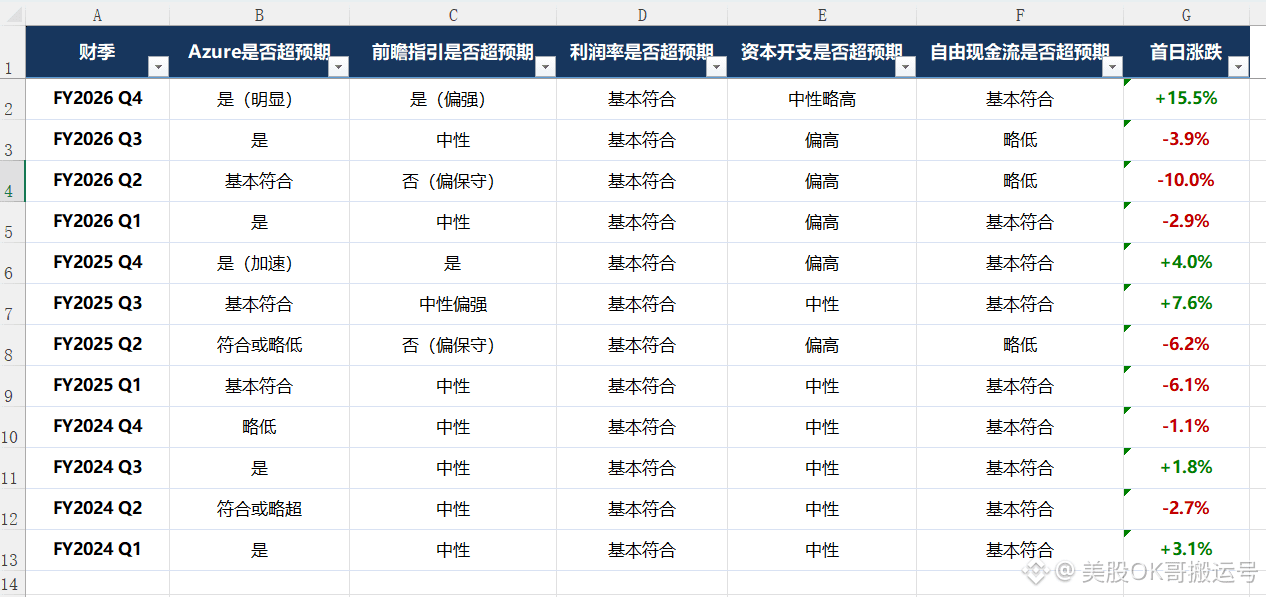
When reviewing these results, the main focus is undoubtedly Azure’s growth rate and the forward guidance from management. The next key area to watch is margin performance, particularly gross margins in the cloud business. This will help determine whether the massive investments currently being made in AI are squeezing overall profitability. Capital expenditures (Capex) are especially important this year, and free cash flow (FCF) has also become just as important as Capex. Interestingly, earnings per share (EPS), which many companies place great emphasis on, are hardly in doubt here, as Microsoft has consistently beaten market expectations.
For an easy-to-follow reference, I’ve put together a data table below. It provides a detailed summary of whether the company beat expectations on each key metric in its earnings reports over the past three years, as well as how its stock actually performed on the first trading day after each report.
For more in-depth analysis, including patterns in the stock’s movements after earnings and Microsoft’s historical October win rate, visit the @okxchinese planet. Here’s the direct link to the full version: https://oyidl.co/ul/oWckBfN
Microsoft $MSFT will report its latest financial results after market close today, October 28. Unlike other companies, interpreting the tech giant’s performance follows its own unique logic. As a side note, the company’s fiscal year is structured differently: while most companies are currently in Q3 earnings season, Microsoft is in its Q1 fiscal quarter.
When reviewing these results, the main focus is undoubtedly Azure’s growth rate and the forward guidance from management. The next key area to watch is margin performance, particularly gross margins in the cloud business. This will help determine whether the massive investments currently being made in AI are squeezing overall profitability. Capital expenditures (Capex) are especially important this year, and free cash flow (FCF) has also become just as important as Capex. Interestingly, earnings per share (EPS), which many companies place great emphasis on, are hardly in doubt here, as Microsoft has consistently beaten market expectations.
For an easy-to-follow reference, I’ve put together a data table below. It provides a detailed summary of whether the company beat expectations on each key metric in its earnings reports over the past three years, as well as how its stock actually performed on the first trading day after each report.
For more in-depth analysis, including patterns in the stock’s movements after earnings and Microsoft’s historical October win rate, visit the @okxchinese planet. Here’s the direct link to the full version: https://oyidl.co/ul/oWckBfN
When reviewing these results, the main focus is undoubtedly Azure’s growth rate and the forward guidance from management. The next key area to watch is margin performance, particularly gross margins in the cloud business. This will help determine whether the massive investments currently being made in AI are squeezing overall profitability. Capital expenditures (Capex) are especially important this year, and free cash flow (FCF) has also become just as important as Capex. Interestingly, earnings per share (EPS), which many companies place great emphasis on, are hardly in doubt here, as Microsoft has consistently beaten market expectations.
For an easy-to-follow reference, I’ve put together a data table below. It provides a detailed summary of whether the company beat expectations on each key metric in its earnings reports over the past three years, as well as how its stock actually performed on the first trading day after each report.
For more in-depth analysis, including patterns in the stock’s movements after earnings and Microsoft’s historical October win rate, visit the @okxchinese planet. Here’s the direct link to the full version: https://oyidl.co/ul/oWckBfN
20
Log in to explore more content
Join global crypto users on Binance Square
⚡️ Get latest and useful information about crypto.
💬 Trusted by the world’s largest crypto exchange.
👍 Discover real insights from verified creators.
Email / Phone number
Trending Topics
AnthropicRejectsIPODelayValuationinQuestion
216,699 views
1,819 Discussing
Share Your Takes: Can Anthropic Hold a $1 Trillion+ Valuation?
Binance Square Official
·76 Likes
·26.6k views
HotCPIDecemberHikePriced
91,162 views
1,089 Discussing
TrumpMediaAdds1510BTCInQ3
2,554 views
84 Discussing