

Tech666
597 Posts

Tech666
Report
Block User
"Welcome to tech666! Your go-to source for the latest in tech, crypto insights, and trading strategies. Join us to stay ahead in the digital world!"
10 Following
1.8K+ Followers
2.7K+ Liked
Posts
All
Quotes
Videos
·
--
Article
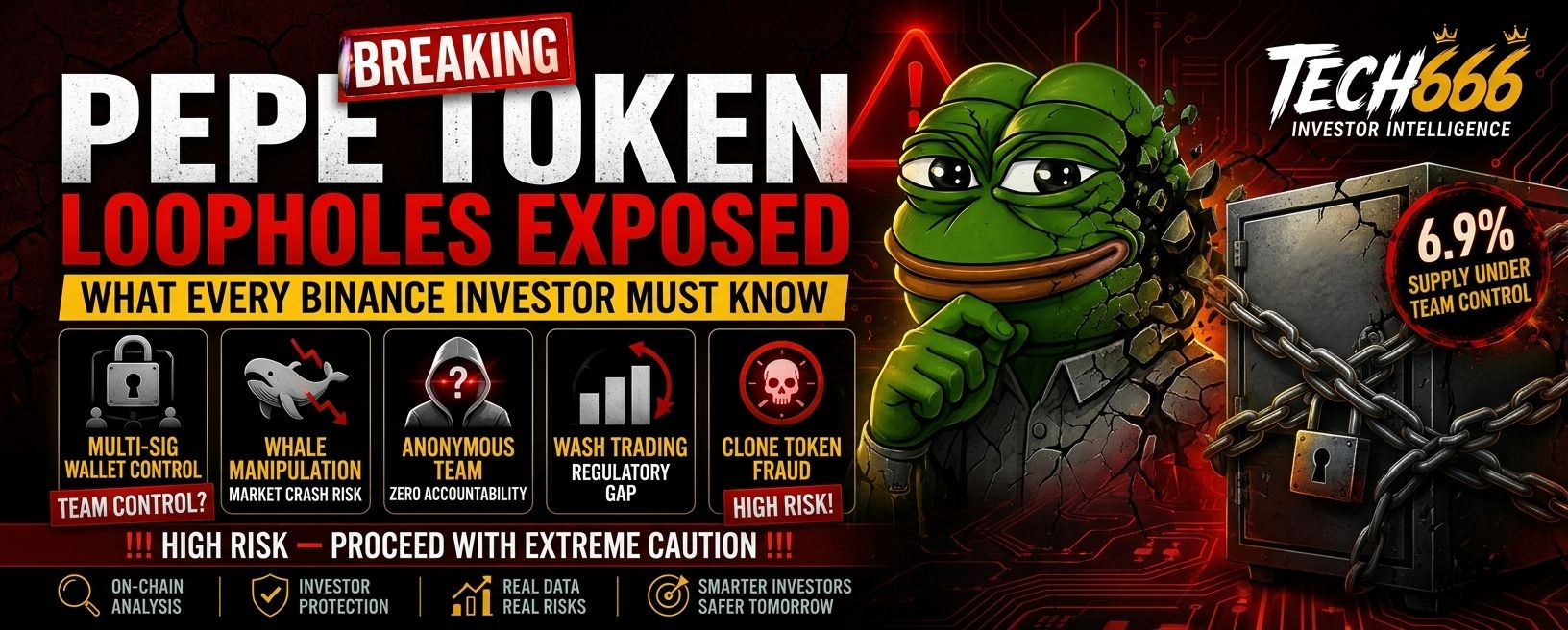
BREAKING: PEPE Token Loopholes Exposed — What Every Binance Investor Must KnowInvestor Intelligence | June 13, 2026 | On-Chain Analysis
---
INVESTOR ALERT: A deep on-chain investigation into PEPE coin — one of Binance's most actively traded meme tokens — has uncovered five critical structural loopholes that put retail investors at serious risk. While the token's smart contract passed its security audit, what lies beneath tells a very different story.
---
LOOPHOLE 1 — The Multi-Sig Wallet: Hidden Control After "Renouncement"
PEPE built its reputation on one key promise: the contract is renounced, the developers have no control, and the token belongs to the community. That claim is only partially true.
A closer look at the on-chain data reveals that 6.9% of the total PEPE supply — roughly 29 trillion tokens — remains sitting inside a multi-sig wallet that is still controlled by the founding team. For a token that markets itself as fully decentralized, this is a significant red flag.
The real danger of this loophole became clear in August 2023, when approximately 16 trillion PEPE were quietly moved from this exact wallet to centralized exchanges and sold — all without any prior community announcement. The team had silently lowered the multi-sig approval thresholds during an internal conflict, and by the time the public found out, the damage was already done.
A renounced contract means nothing if a multi-sig wallet still holds billions of dollars worth of tokens with no governance checks in place.
---
LOOPHOLE 2 — Whale Manipulation: One Sell-Off Can Crash the Entire Market
PEPE ownership is dangerously concentrated. A small number of wallets — known as whales — hold enough tokens to move the market single-handedly, and the data proves they have done exactly that.
In one documented incident, a single whale sold just 430 billion PEPE tokens and caused a 14.14% price crash in a matter of hours. In 2026, the situation escalated further when one whale transferred 1 trillion PEPE — worth approximately $11.65 million — directly to Binance, triggering immediate panic selling across the market.
Historically, PEPE has averaged a 64% drawdown from every major price peak. Whale concentration is the structural root cause of this pattern. Large holders accumulate quietly, ride the retail hype upward, and exit their positions at the top — leaving ordinary investors to absorb the losses.
---
LOOPHOLE 3 — Anonymous Team: Zero Legal Accountability
The entire PEPE development team is completely anonymous. There are no verified names, no public faces, and no registered legal entity attached to the project. This means that if a rug pull, team exit, or fund misuse were to occur, investors would have absolutely no legal recourse.
No KYC has been completed. No team member has been publicly doxxed. There is no accountability structure of any kind. In traditional finance, this level of opacity would disqualify a project from any serious institutional consideration. In the meme coin world, it is treated as normal — but that does not make it safe.
---
LOOPHOLE 4 — Wash Trading and the Regulatory Gap
PEPE's fixed supply, extreme price volatility, and concentrated ownership combine to create ideal conditions for coordinated market manipulation. The mechanism is straightforward: large holders can create artificial trading volume between their own wallets to simulate demand, attract retail buyers, and then exit their positions into the inflated liquidity.
Wash trading detection on major exchanges, including Binance, remains weak. Position concentration monitoring is largely under-enforced. In one observed instance, PEPE's 24-hour trading volume surged by 53% with no corresponding news catalyst — a pattern consistent with manufactured activity.
Retail investors cannot reliably assess true price discovery or genuine market demand under these conditions. What looks like organic momentum may be engineered by a handful of coordinated wallets.
---
LOOPHOLE 5 — Clone Token Fraud: Are You Buying the Real PEPE?
PEPE is the most cloned name and ticker in all of cryptocurrency. Pepe 2.0, Pepe Chain, Pepe Palm Beach, and hundreds of additional lookalike tokens are actively circulating across exchanges and decentralized platforms. Each one is designed to catch investors who move too quickly without verifying what they are actually buying.
Investing in the wrong contract address results in a permanent, unrecoverable loss. Even on Binance, multiple PEPE variants are listed, requiring careful verification before every single transaction.
The only verified, legitimate PEPE contract on Ethereum is:
0x6982508145454ce325ddbe47a25d4ec3d2311933
If the address does not match this exactly, you are looking at a different token entirely.
---
RISK SUMMARY
Multi-Sig Wallet Control — Critical Risk — Active
Whale Market Manipulation — Critical Risk — Active
Anonymous Team — High Risk — Active
Wash Trading Vulnerability — High Risk — Unverified
Clone Token Scams — High Risk — Active
Smart Contract Security — Low Risk — Renounced and Audited
Utility and Real-World Use — Medium Risk — None
---
WHAT INVESTORS SHOULD DO RIGHT NOW
Always verify the official Ethereum contract address before any transaction. Never rely on links shared on social media, Telegram groups, or third-party websites.
Monitor whale wallet activity using tools like Lookonchain, Nansen, or Santiment. If large wallets are moving significant volumes to exchanges, treat it as a potential exit signal.
Set up on-chain alerts for the PEPE multi-sig wallet through Etherscan or Nansen. Any movement from that wallet is a serious red flag that warrants immediate attention.
Never invest more in a pure meme coin than you can afford to lose entirely. PEPE has no underlying product, no utility, and no cash flow. Its price is driven entirely by attention and sentiment — both of which can disappear overnight.
---
FINAL VERDICT: HIGH RISK — PROCEED WITH EXTREME CAUTION
PEPE's smart contract passed its security audit and is technically renounced. On that narrow measure, it is cleaner than many meme tokens. But the multi-sig wallet holding 6.9% of supply, the extreme whale concentration, the fully anonymous team, the wash trading vulnerabilities, and the widespread clone token fraud create serious structural risks that no audit report can fix.
A Binance listing does not equal safety. It means the token has sufficient liquidity and trading volume to meet exchange requirements — nothing more. The responsibility for understanding what you are buying remains entirely with the investor.
Do your own research. Verify everything. And never let hype replace due diligence.
---
Disclaimer: This article is published for educational and investor awareness purposes only. It does not constitute financial advice. Investing in cryptocurrency carries a significant risk of total loss. Always conduct independent research before making any investment decision.
---
BREAKING: PEPE Token Loopholes Exposed — What Every Binance Investor Must Know
Investor Intelligence | June 13, 2026 | On-Chain Analysis
---
INVESTOR ALERT: A deep on-chain investigation into PEPE coin — one of Binance's most actively traded meme tokens — has uncovered five critical structural loopholes that put retail investors at serious risk. While the token's smart contract passed its security audit, what lies beneath tells a very different story.
---
LOOPHOLE 1 — The Multi-Sig Wallet: Hidden Control After "Renouncement"
PEPE built its reputation on one key promise: the contract is renounced, the developers have no control, and the token belongs to the community. That claim is only partially true.
A closer look at the on-chain data reveals that 6.9% of the total PEPE supply — roughly 29 trillion tokens — remains sitting inside a multi-sig wallet that is still controlled by the founding team. For a token that markets itself as fully decentralized, this is a significant red flag.
The real danger of this loophole became clear in August 2023, when approximately 16 trillion PEPE were quietly moved from this exact wallet to centralized exchanges and sold — all without any prior community announcement. The team had silently lowered the multi-sig approval thresholds during an internal conflict, and by the time the public found out, the damage was already done.
A renounced contract means nothing if a multi-sig wallet still holds billions of dollars worth of tokens with no governance checks in place.
---
LOOPHOLE 2 — Whale Manipulation: One Sell-Off Can Crash the Entire Market
PEPE ownership is dangerously concentrated. A small number of wallets — known as whales — hold enough tokens to move the market single-handedly, and the data proves they have done exactly that.
In one documented incident, a single whale sold just 430 billion PEPE tokens and caused a 14.14% price crash in a matter of hours. In 2026, the situation escalated further when one whale transferred 1 trillion PEPE — worth approximately $11.65 million — directly to Binance, triggering immediate panic selling across the market.
Historically, PEPE has averaged a 64% drawdown from every major price peak. Whale concentration is the structural root cause of this pattern. Large holders accumulate quietly, ride the retail hype upward, and exit their positions at the top — leaving ordinary investors to absorb the losses.
---
LOOPHOLE 3 — Anonymous Team: Zero Legal Accountability
The entire PEPE development team is completely anonymous. There are no verified names, no public faces, and no registered legal entity attached to the project. This means that if a rug pull, team exit, or fund misuse were to occur, investors would have absolutely no legal recourse.
No KYC has been completed. No team member has been publicly doxxed. There is no accountability structure of any kind. In traditional finance, this level of opacity would disqualify a project from any serious institutional consideration. In the meme coin world, it is treated as normal — but that does not make it safe.
---
LOOPHOLE 4 — Wash Trading and the Regulatory Gap
PEPE's fixed supply, extreme price volatility, and concentrated ownership combine to create ideal conditions for coordinated market manipulation. The mechanism is straightforward: large holders can create artificial trading volume between their own wallets to simulate demand, attract retail buyers, and then exit their positions into the inflated liquidity.
Wash trading detection on major exchanges, including Binance, remains weak. Position concentration monitoring is largely under-enforced. In one observed instance, PEPE's 24-hour trading volume surged by 53% with no corresponding news catalyst — a pattern consistent with manufactured activity.
Retail investors cannot reliably assess true price discovery or genuine market demand under these conditions. What looks like organic momentum may be engineered by a handful of coordinated wallets.
---
LOOPHOLE 5 — Clone Token Fraud: Are You Buying the Real PEPE?
PEPE is the most cloned name and ticker in all of cryptocurrency. Pepe 2.0, Pepe Chain, Pepe Palm Beach, and hundreds of additional lookalike tokens are actively circulating across exchanges and decentralized platforms. Each one is designed to catch investors who move too quickly without verifying what they are actually buying.
Investing in the wrong contract address results in a permanent, unrecoverable loss. Even on Binance, multiple PEPE variants are listed, requiring careful verification before every single transaction.
The only verified, legitimate PEPE contract on Ethereum is:
0x6982508145454ce325ddbe47a25d4ec3d2311933
If the address does not match this exactly, you are looking at a different token entirely.
---
RISK SUMMARY
Multi-Sig Wallet Control — Critical Risk — Active
Whale Market Manipulation — Critical Risk — Active
Anonymous Team — High Risk — Active
Wash Trading Vulnerability — High Risk — Unverified
Clone Token Scams — High Risk — Active
Smart Contract Security — Low Risk — Renounced and Audited
Utility and Real-World Use — Medium Risk — None
---
WHAT INVESTORS SHOULD DO RIGHT NOW
Always verify the official Ethereum contract address before any transaction. Never rely on links shared on social media, Telegram groups, or third-party websites.
Monitor whale wallet activity using tools like Lookonchain, Nansen, or Santiment. If large wallets are moving significant volumes to exchanges, treat it as a potential exit signal.
Set up on-chain alerts for the PEPE multi-sig wallet through Etherscan or Nansen. Any movement from that wallet is a serious red flag that warrants immediate attention.
Never invest more in a pure meme coin than you can afford to lose entirely. PEPE has no underlying product, no utility, and no cash flow. Its price is driven entirely by attention and sentiment — both of which can disappear overnight.
---
FINAL VERDICT: HIGH RISK — PROCEED WITH EXTREME CAUTION
PEPE's smart contract passed its security audit and is technically renounced. On that narrow measure, it is cleaner than many meme tokens. But the multi-sig wallet holding 6.9% of supply, the extreme whale concentration, the fully anonymous team, the wash trading vulnerabilities, and the widespread clone token fraud create serious structural risks that no audit report can fix.
A Binance listing does not equal safety. It means the token has sufficient liquidity and trading volume to meet exchange requirements — nothing more. The responsibility for understanding what you are buying remains entirely with the investor.
Do your own research. Verify everything. And never let hype replace due diligence.
---
Disclaimer: This article is published for educational and investor awareness purposes only. It does not constitute financial advice. Investing in cryptocurrency carries a significant risk of total loss. Always conduct independent research before making any investment decision.
---
---
INVESTOR ALERT: A deep on-chain investigation into PEPE coin — one of Binance's most actively traded meme tokens — has uncovered five critical structural loopholes that put retail investors at serious risk. While the token's smart contract passed its security audit, what lies beneath tells a very different story.
---
LOOPHOLE 1 — The Multi-Sig Wallet: Hidden Control After "Renouncement"
PEPE built its reputation on one key promise: the contract is renounced, the developers have no control, and the token belongs to the community. That claim is only partially true.
A closer look at the on-chain data reveals that 6.9% of the total PEPE supply — roughly 29 trillion tokens — remains sitting inside a multi-sig wallet that is still controlled by the founding team. For a token that markets itself as fully decentralized, this is a significant red flag.
The real danger of this loophole became clear in August 2023, when approximately 16 trillion PEPE were quietly moved from this exact wallet to centralized exchanges and sold — all without any prior community announcement. The team had silently lowered the multi-sig approval thresholds during an internal conflict, and by the time the public found out, the damage was already done.
A renounced contract means nothing if a multi-sig wallet still holds billions of dollars worth of tokens with no governance checks in place.
---
LOOPHOLE 2 — Whale Manipulation: One Sell-Off Can Crash the Entire Market
PEPE ownership is dangerously concentrated. A small number of wallets — known as whales — hold enough tokens to move the market single-handedly, and the data proves they have done exactly that.
In one documented incident, a single whale sold just 430 billion PEPE tokens and caused a 14.14% price crash in a matter of hours. In 2026, the situation escalated further when one whale transferred 1 trillion PEPE — worth approximately $11.65 million — directly to Binance, triggering immediate panic selling across the market.
Historically, PEPE has averaged a 64% drawdown from every major price peak. Whale concentration is the structural root cause of this pattern. Large holders accumulate quietly, ride the retail hype upward, and exit their positions at the top — leaving ordinary investors to absorb the losses.
---
LOOPHOLE 3 — Anonymous Team: Zero Legal Accountability
The entire PEPE development team is completely anonymous. There are no verified names, no public faces, and no registered legal entity attached to the project. This means that if a rug pull, team exit, or fund misuse were to occur, investors would have absolutely no legal recourse.
No KYC has been completed. No team member has been publicly doxxed. There is no accountability structure of any kind. In traditional finance, this level of opacity would disqualify a project from any serious institutional consideration. In the meme coin world, it is treated as normal — but that does not make it safe.
---
LOOPHOLE 4 — Wash Trading and the Regulatory Gap
PEPE's fixed supply, extreme price volatility, and concentrated ownership combine to create ideal conditions for coordinated market manipulation. The mechanism is straightforward: large holders can create artificial trading volume between their own wallets to simulate demand, attract retail buyers, and then exit their positions into the inflated liquidity.
Wash trading detection on major exchanges, including Binance, remains weak. Position concentration monitoring is largely under-enforced. In one observed instance, PEPE's 24-hour trading volume surged by 53% with no corresponding news catalyst — a pattern consistent with manufactured activity.
Retail investors cannot reliably assess true price discovery or genuine market demand under these conditions. What looks like organic momentum may be engineered by a handful of coordinated wallets.
---
LOOPHOLE 5 — Clone Token Fraud: Are You Buying the Real PEPE?
PEPE is the most cloned name and ticker in all of cryptocurrency. Pepe 2.0, Pepe Chain, Pepe Palm Beach, and hundreds of additional lookalike tokens are actively circulating across exchanges and decentralized platforms. Each one is designed to catch investors who move too quickly without verifying what they are actually buying.
Investing in the wrong contract address results in a permanent, unrecoverable loss. Even on Binance, multiple PEPE variants are listed, requiring careful verification before every single transaction.
The only verified, legitimate PEPE contract on Ethereum is:
0x6982508145454ce325ddbe47a25d4ec3d2311933
If the address does not match this exactly, you are looking at a different token entirely.
---
RISK SUMMARY
Multi-Sig Wallet Control — Critical Risk — Active
Whale Market Manipulation — Critical Risk — Active
Anonymous Team — High Risk — Active
Wash Trading Vulnerability — High Risk — Unverified
Clone Token Scams — High Risk — Active
Smart Contract Security — Low Risk — Renounced and Audited
Utility and Real-World Use — Medium Risk — None
---
WHAT INVESTORS SHOULD DO RIGHT NOW
Always verify the official Ethereum contract address before any transaction. Never rely on links shared on social media, Telegram groups, or third-party websites.
Monitor whale wallet activity using tools like Lookonchain, Nansen, or Santiment. If large wallets are moving significant volumes to exchanges, treat it as a potential exit signal.
Set up on-chain alerts for the PEPE multi-sig wallet through Etherscan or Nansen. Any movement from that wallet is a serious red flag that warrants immediate attention.
Never invest more in a pure meme coin than you can afford to lose entirely. PEPE has no underlying product, no utility, and no cash flow. Its price is driven entirely by attention and sentiment — both of which can disappear overnight.
---
FINAL VERDICT: HIGH RISK — PROCEED WITH EXTREME CAUTION
PEPE's smart contract passed its security audit and is technically renounced. On that narrow measure, it is cleaner than many meme tokens. But the multi-sig wallet holding 6.9% of supply, the extreme whale concentration, the fully anonymous team, the wash trading vulnerabilities, and the widespread clone token fraud create serious structural risks that no audit report can fix.
A Binance listing does not equal safety. It means the token has sufficient liquidity and trading volume to meet exchange requirements — nothing more. The responsibility for understanding what you are buying remains entirely with the investor.
Do your own research. Verify everything. And never let hype replace due diligence.
---
Disclaimer: This article is published for educational and investor awareness purposes only. It does not constitute financial advice. Investing in cryptocurrency carries a significant risk of total loss. Always conduct independent research before making any investment decision.
---
68
·
--
Article
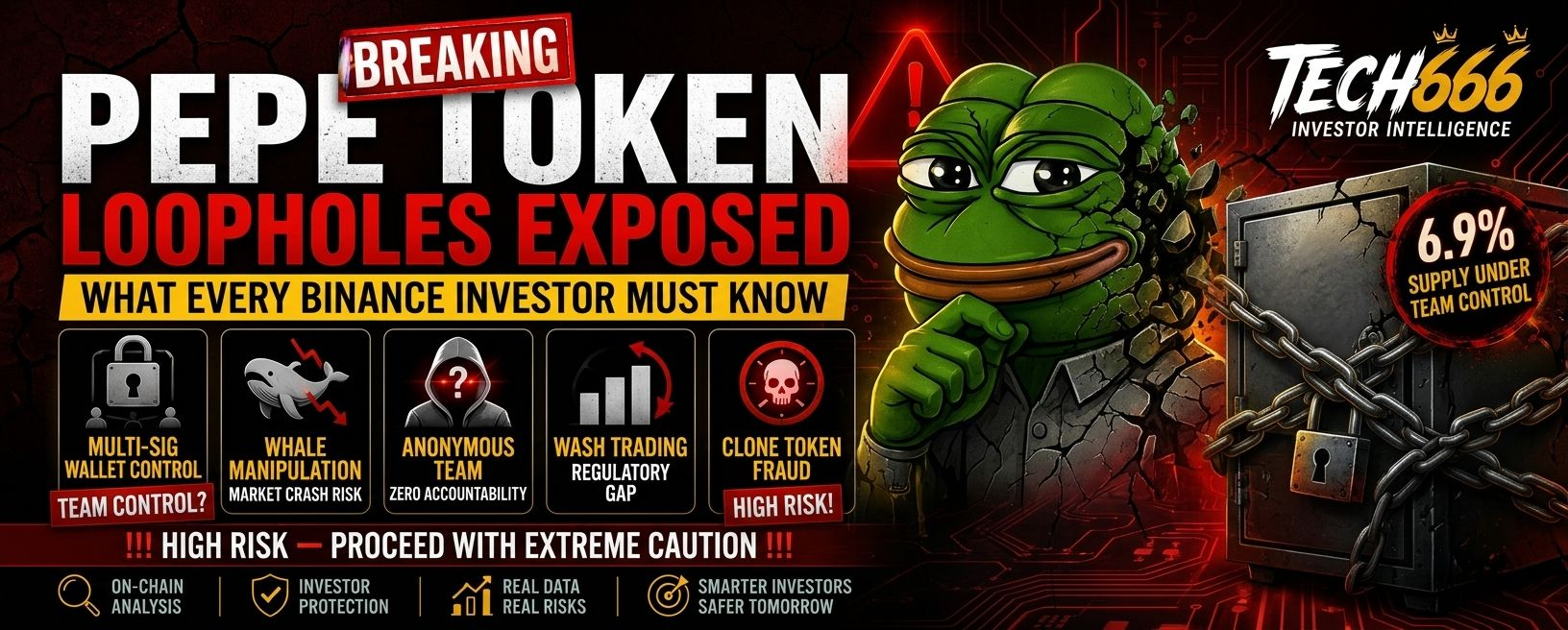
BREAKING Cloude AI: PEPE Token Loopholes Exposed — What Every Every Investor Must KnowInvestor Intelligence | June 13, 2026 | On-Chain Analysis
INVESTOR ALERT: A deep on-chain investigation into PEPE coin — one of Binance's most actively traded meme tokens — has uncovered five critical structural loopholes that put retail investors at serious risk. While the token's smart contract passed its security audit, what lies beneath tells a very different story.
LOOPHOLE 1 — The Multi-Sig Wallet: Hidden Control After "Renouncement"
PEPE built its reputation on one key promise: the contract is renounced, the developers have no control, and the token belongs to the community. That claim is only partially true.
A closer look at the on-chain data reveals that 6.9% of the total PEPE supply — roughly 29 trillion tokens — remains sitting inside a multi-sig wallet that is still controlled by the founding team. For a token that markets itself as fully decentralized, this is a significant red flag.
The real danger of this loophole became clear in August 2023, when approximately 16 trillion PEPE were quietly moved from this exact wallet to centralized exchanges and sold — all without any prior community announcement. The team had silently lowered the multi-sig approval thresholds during an internal conflict, and by the time the public found out, the damage was already done.
A renounced contract means nothing if a multi-sig wallet still holds billions of dollars worth of tokens with no governance checks in place.
LOOPHOLE 2 — Whale Manipulation: One Sell-Off Can Crash the Entire Market
PEPE ownership is dangerously concentrated. A small number of wallets — known as whales — hold enough tokens to move the market single-handedly, and the data proves they have done exactly that.
In one documented incident, a single whale sold just 430 billion PEPE tokens and caused a 14.14% price crash in a matter of hours. In 2026, the situation escalated further when one whale transferred 1 trillion PEPE — worth approximately $11.65 million — directly to Binance, triggering immediate panic selling across the market.
Historically, PEPE has averaged a 64% drawdown from every major price peak. Whale concentration is the structural root cause of this pattern. Large holders accumulate quietly, ride the retail hype upward, and exit their positions at the top — leaving ordinary investors to absorb the losses.
LOOPHOLE 3 — Anonymous Team: Zero Legal Accountability
The entire PEPE development team is completely anonymous. There are no verified names, no public faces, and no registered legal entity attached to the project. This means that if a rug pull, team exit, or fund misuse were to occur, investors would have absolutely no legal recourse.
No KYC has been completed. No team member has been publicly doxxed. There is no accountability structure of any kind. In traditional finance, this level of opacity would disqualify a project from any serious institutional consideration. In the meme coin world, it is treated as normal — but that does not make it safe.
LOOPHOLE 4 — Wash Trading and the Regulatory Gap
PEPE's fixed supply, extreme price volatility, and concentrated ownership combine to create ideal conditions for coordinated market manipulation. The mechanism is straightforward: large holders can create artificial trading volume between their own wallets to simulate demand, attract retail buyers, and then exit their positions into the inflated liquidity.
Wash trading detection on major exchanges, including Binance, remains weak. Position concentration monitoring is largely under-enforced. In one observed instance, PEPE's 24-hour trading volume surged by 53% with no corresponding news catalyst — a pattern consistent with manufactured activity.
Retail investors cannot reliably assess true price discovery or genuine market demand under these conditions. What looks like organic momentum may be engineered by a handful of coordinated wallets.
LOOPHOLE 5 — Clone Token Fraud: Are You Buying the Real PEPE?
PEPE is the most cloned name and ticker in all of cryptocurrency. Pepe 2.0, Pepe Chain, Pepe Palm Beach, and hundreds of additional lookalike tokens are actively circulating across exchanges and decentralized platforms. Each one is designed to catch investors who move too quickly without verifying what they are actually buying.
Investing in the wrong contract address results in a permanent, unrecoverable loss. Even on Binance, multiple PEPE variants are listed, requiring careful verification before every single transaction.
The only verified, legitimate PEPE contract on Ethereum is:
0x6982508145454ce325ddbe47a25d4ec3d2311933
If the address does not match this exactly, you are looking at a different token entirely.
RISK SUMMARY
Multi-Sig Wallet Control — Critical Risk — Active
Whale Market Manipulation — Critical Risk — Active
Anonymous Team — High Risk — Active
Wash Trading Vulnerability — High Risk — Unverified
Clone Token Scams — High Risk — Active
Smart Contract Security — Low Risk — Renounced and Audited
Utility and Real-World Use — Medium Risk — None
WHAT INVESTORS SHOULD DO RIGHT NOW
Always verify the official Ethereum contract address before any transaction. Never rely on links shared on social media, Telegram groups, or third-party websites.
Monitor whale wallet activity using tools like Lookonchain, Nansen, or Santiment. If large wallets are moving significant volumes to exchanges, treat it as a potential exit signal.
Set up on-chain alerts for the PEPE multi-sig wallet through Etherscan or Nansen. Any movement from that wallet is a serious red flag that warrants immediate attention.
Never invest more in a pure meme coin than you can afford to lose entirely. PEPE has no underlying product, no utility, and no cash flow. Its price is driven entirely by attention and sentiment — both of which can disappear overnight.
FINAL VERDICT: HIGH RISK — PROCEED WITH EXTREME CAUTION
PEPE's smart contract passed its security audit and is technically renounced. On that narrow measure, it is cleaner than many meme tokens. But the multi-sig wallet holding 6.9% of supply, the extreme whale concentration, the fully anonymous team, the wash trading vulnerabilities, and the widespread clone token fraud create serious structural risks that no audit report can fix.
A Binance listing does not equal safety. It means the token has sufficient liquidity and trading volume to meet exchange requirements — nothing more. The responsibility for understanding what you are buying remains entirely with the investor.
Do your own research. Verify everything. And never let hype replace due diligence.
Disclaimer: This article is published for educational and investor awareness purposes only. It does not constitute financial advice. Investing in cryptocurrency carries a significant risk of total loss. Always conduct independent research before making any investment decision.
#cloudeai
#loophole
#pepe
#Binance
$PEPE
BREAKING Cloude AI: PEPE Token Loopholes Exposed — What Every Every Investor Must Know
Investor Intelligence | June 13, 2026 | On-Chain Analysis
INVESTOR ALERT: A deep on-chain investigation into PEPE coin — one of Binance's most actively traded meme tokens — has uncovered five critical structural loopholes that put retail investors at serious risk. While the token's smart contract passed its security audit, what lies beneath tells a very different story.
LOOPHOLE 1 — The Multi-Sig Wallet: Hidden Control After "Renouncement"
PEPE built its reputation on one key promise: the contract is renounced, the developers have no control, and the token belongs to the community. That claim is only partially true.
A closer look at the on-chain data reveals that 6.9% of the total PEPE supply — roughly 29 trillion tokens — remains sitting inside a multi-sig wallet that is still controlled by the founding team. For a token that markets itself as fully decentralized, this is a significant red flag.
The real danger of this loophole became clear in August 2023, when approximately 16 trillion PEPE were quietly moved from this exact wallet to centralized exchanges and sold — all without any prior community announcement. The team had silently lowered the multi-sig approval thresholds during an internal conflict, and by the time the public found out, the damage was already done.
A renounced contract means nothing if a multi-sig wallet still holds billions of dollars worth of tokens with no governance checks in place.
LOOPHOLE 2 — Whale Manipulation: One Sell-Off Can Crash the Entire Market
PEPE ownership is dangerously concentrated. A small number of wallets — known as whales — hold enough tokens to move the market single-handedly, and the data proves they have done exactly that.
In one documented incident, a single whale sold just 430 billion PEPE tokens and caused a 14.14% price crash in a matter of hours. In 2026, the situation escalated further when one whale transferred 1 trillion PEPE — worth approximately $11.65 million — directly to Binance, triggering immediate panic selling across the market.
Historically, PEPE has averaged a 64% drawdown from every major price peak. Whale concentration is the structural root cause of this pattern. Large holders accumulate quietly, ride the retail hype upward, and exit their positions at the top — leaving ordinary investors to absorb the losses.
LOOPHOLE 3 — Anonymous Team: Zero Legal Accountability
The entire PEPE development team is completely anonymous. There are no verified names, no public faces, and no registered legal entity attached to the project. This means that if a rug pull, team exit, or fund misuse were to occur, investors would have absolutely no legal recourse.
No KYC has been completed. No team member has been publicly doxxed. There is no accountability structure of any kind. In traditional finance, this level of opacity would disqualify a project from any serious institutional consideration. In the meme coin world, it is treated as normal — but that does not make it safe.
LOOPHOLE 4 — Wash Trading and the Regulatory Gap
PEPE's fixed supply, extreme price volatility, and concentrated ownership combine to create ideal conditions for coordinated market manipulation. The mechanism is straightforward: large holders can create artificial trading volume between their own wallets to simulate demand, attract retail buyers, and then exit their positions into the inflated liquidity.
Wash trading detection on major exchanges, including Binance, remains weak. Position concentration monitoring is largely under-enforced. In one observed instance, PEPE's 24-hour trading volume surged by 53% with no corresponding news catalyst — a pattern consistent with manufactured activity.
Retail investors cannot reliably assess true price discovery or genuine market demand under these conditions. What looks like organic momentum may be engineered by a handful of coordinated wallets.
LOOPHOLE 5 — Clone Token Fraud: Are You Buying the Real PEPE?
PEPE is the most cloned name and ticker in all of cryptocurrency. Pepe 2.0, Pepe Chain, Pepe Palm Beach, and hundreds of additional lookalike tokens are actively circulating across exchanges and decentralized platforms. Each one is designed to catch investors who move too quickly without verifying what they are actually buying.
Investing in the wrong contract address results in a permanent, unrecoverable loss. Even on Binance, multiple PEPE variants are listed, requiring careful verification before every single transaction.
The only verified, legitimate PEPE contract on Ethereum is:
0x6982508145454ce325ddbe47a25d4ec3d2311933
If the address does not match this exactly, you are looking at a different token entirely.
RISK SUMMARY
Multi-Sig Wallet Control — Critical Risk — Active
Whale Market Manipulation — Critical Risk — Active
Anonymous Team — High Risk — Active
Wash Trading Vulnerability — High Risk — Unverified
Clone Token Scams — High Risk — Active
Smart Contract Security — Low Risk — Renounced and Audited
Utility and Real-World Use — Medium Risk — None
WHAT INVESTORS SHOULD DO RIGHT NOW
Always verify the official Ethereum contract address before any transaction. Never rely on links shared on social media, Telegram groups, or third-party websites.
Monitor whale wallet activity using tools like Lookonchain, Nansen, or Santiment. If large wallets are moving significant volumes to exchanges, treat it as a potential exit signal.
Set up on-chain alerts for the PEPE multi-sig wallet through Etherscan or Nansen. Any movement from that wallet is a serious red flag that warrants immediate attention.
Never invest more in a pure meme coin than you can afford to lose entirely. PEPE has no underlying product, no utility, and no cash flow. Its price is driven entirely by attention and sentiment — both of which can disappear overnight.
FINAL VERDICT: HIGH RISK — PROCEED WITH EXTREME CAUTION
PEPE's smart contract passed its security audit and is technically renounced. On that narrow measure, it is cleaner than many meme tokens. But the multi-sig wallet holding 6.9% of supply, the extreme whale concentration, the fully anonymous team, the wash trading vulnerabilities, and the widespread clone token fraud create serious structural risks that no audit report can fix.
A Binance listing does not equal safety. It means the token has sufficient liquidity and trading volume to meet exchange requirements — nothing more. The responsibility for understanding what you are buying remains entirely with the investor.
Do your own research. Verify everything. And never let hype replace due diligence.
Disclaimer: This article is published for educational and investor awareness purposes only. It does not constitute financial advice. Investing in cryptocurrency carries a significant risk of total loss. Always conduct independent research before making any investment decision.
#cloudeai
#loophole
#pepe
#Binance
$PEPE
INVESTOR ALERT: A deep on-chain investigation into PEPE coin — one of Binance's most actively traded meme tokens — has uncovered five critical structural loopholes that put retail investors at serious risk. While the token's smart contract passed its security audit, what lies beneath tells a very different story.
LOOPHOLE 1 — The Multi-Sig Wallet: Hidden Control After "Renouncement"
PEPE built its reputation on one key promise: the contract is renounced, the developers have no control, and the token belongs to the community. That claim is only partially true.
A closer look at the on-chain data reveals that 6.9% of the total PEPE supply — roughly 29 trillion tokens — remains sitting inside a multi-sig wallet that is still controlled by the founding team. For a token that markets itself as fully decentralized, this is a significant red flag.
The real danger of this loophole became clear in August 2023, when approximately 16 trillion PEPE were quietly moved from this exact wallet to centralized exchanges and sold — all without any prior community announcement. The team had silently lowered the multi-sig approval thresholds during an internal conflict, and by the time the public found out, the damage was already done.
A renounced contract means nothing if a multi-sig wallet still holds billions of dollars worth of tokens with no governance checks in place.
LOOPHOLE 2 — Whale Manipulation: One Sell-Off Can Crash the Entire Market
PEPE ownership is dangerously concentrated. A small number of wallets — known as whales — hold enough tokens to move the market single-handedly, and the data proves they have done exactly that.
In one documented incident, a single whale sold just 430 billion PEPE tokens and caused a 14.14% price crash in a matter of hours. In 2026, the situation escalated further when one whale transferred 1 trillion PEPE — worth approximately $11.65 million — directly to Binance, triggering immediate panic selling across the market.
Historically, PEPE has averaged a 64% drawdown from every major price peak. Whale concentration is the structural root cause of this pattern. Large holders accumulate quietly, ride the retail hype upward, and exit their positions at the top — leaving ordinary investors to absorb the losses.
LOOPHOLE 3 — Anonymous Team: Zero Legal Accountability
The entire PEPE development team is completely anonymous. There are no verified names, no public faces, and no registered legal entity attached to the project. This means that if a rug pull, team exit, or fund misuse were to occur, investors would have absolutely no legal recourse.
No KYC has been completed. No team member has been publicly doxxed. There is no accountability structure of any kind. In traditional finance, this level of opacity would disqualify a project from any serious institutional consideration. In the meme coin world, it is treated as normal — but that does not make it safe.
LOOPHOLE 4 — Wash Trading and the Regulatory Gap
PEPE's fixed supply, extreme price volatility, and concentrated ownership combine to create ideal conditions for coordinated market manipulation. The mechanism is straightforward: large holders can create artificial trading volume between their own wallets to simulate demand, attract retail buyers, and then exit their positions into the inflated liquidity.
Wash trading detection on major exchanges, including Binance, remains weak. Position concentration monitoring is largely under-enforced. In one observed instance, PEPE's 24-hour trading volume surged by 53% with no corresponding news catalyst — a pattern consistent with manufactured activity.
Retail investors cannot reliably assess true price discovery or genuine market demand under these conditions. What looks like organic momentum may be engineered by a handful of coordinated wallets.
LOOPHOLE 5 — Clone Token Fraud: Are You Buying the Real PEPE?
PEPE is the most cloned name and ticker in all of cryptocurrency. Pepe 2.0, Pepe Chain, Pepe Palm Beach, and hundreds of additional lookalike tokens are actively circulating across exchanges and decentralized platforms. Each one is designed to catch investors who move too quickly without verifying what they are actually buying.
Investing in the wrong contract address results in a permanent, unrecoverable loss. Even on Binance, multiple PEPE variants are listed, requiring careful verification before every single transaction.
The only verified, legitimate PEPE contract on Ethereum is:
0x6982508145454ce325ddbe47a25d4ec3d2311933
If the address does not match this exactly, you are looking at a different token entirely.
RISK SUMMARY
Multi-Sig Wallet Control — Critical Risk — Active
Whale Market Manipulation — Critical Risk — Active
Anonymous Team — High Risk — Active
Wash Trading Vulnerability — High Risk — Unverified
Clone Token Scams — High Risk — Active
Smart Contract Security — Low Risk — Renounced and Audited
Utility and Real-World Use — Medium Risk — None
WHAT INVESTORS SHOULD DO RIGHT NOW
Always verify the official Ethereum contract address before any transaction. Never rely on links shared on social media, Telegram groups, or third-party websites.
Monitor whale wallet activity using tools like Lookonchain, Nansen, or Santiment. If large wallets are moving significant volumes to exchanges, treat it as a potential exit signal.
Set up on-chain alerts for the PEPE multi-sig wallet through Etherscan or Nansen. Any movement from that wallet is a serious red flag that warrants immediate attention.
Never invest more in a pure meme coin than you can afford to lose entirely. PEPE has no underlying product, no utility, and no cash flow. Its price is driven entirely by attention and sentiment — both of which can disappear overnight.
FINAL VERDICT: HIGH RISK — PROCEED WITH EXTREME CAUTION
PEPE's smart contract passed its security audit and is technically renounced. On that narrow measure, it is cleaner than many meme tokens. But the multi-sig wallet holding 6.9% of supply, the extreme whale concentration, the fully anonymous team, the wash trading vulnerabilities, and the widespread clone token fraud create serious structural risks that no audit report can fix.
A Binance listing does not equal safety. It means the token has sufficient liquidity and trading volume to meet exchange requirements — nothing more. The responsibility for understanding what you are buying remains entirely with the investor.
Do your own research. Verify everything. And never let hype replace due diligence.
Disclaimer: This article is published for educational and investor awareness purposes only. It does not constitute financial advice. Investing in cryptocurrency carries a significant risk of total loss. Always conduct independent research before making any investment decision.
#cloudeai
#loophole
#pepe
#Binance
$PEPE
49
·
--
Bearish
Trump every week:
Monday: "Strike Iran!" 💥
Tuesday: "Maybe one more strike." 💥
Wednesday: "Nobody wants peace more than me." 🕊️
Thursday: "This war has gone too far." 🤔
Friday: "We must end this conflict immediately." 😂
The plot changes faster than a Netflix series.
#DonaldTrumpstrickiran
Trump every week:
Monday: "Strike Iran!" 💥
Tuesday: "Maybe one more strike." 💥
Wednesday: "Nobody wants peace more than me." 🕊️
Thursday: "This war has gone too far." 🤔
Friday: "We must end this conflict immediately." 😂
The plot changes faster than a Netflix series.
#DonaldTrumpstrickiran
Monday: "Strike Iran!" 💥
Tuesday: "Maybe one more strike." 💥
Wednesday: "Nobody wants peace more than me." 🕊️
Thursday: "This war has gone too far." 🤔
Friday: "We must end this conflict immediately." 😂
The plot changes faster than a Netflix series.
#DonaldTrumpstrickiran
1
246
·
--
Bearish
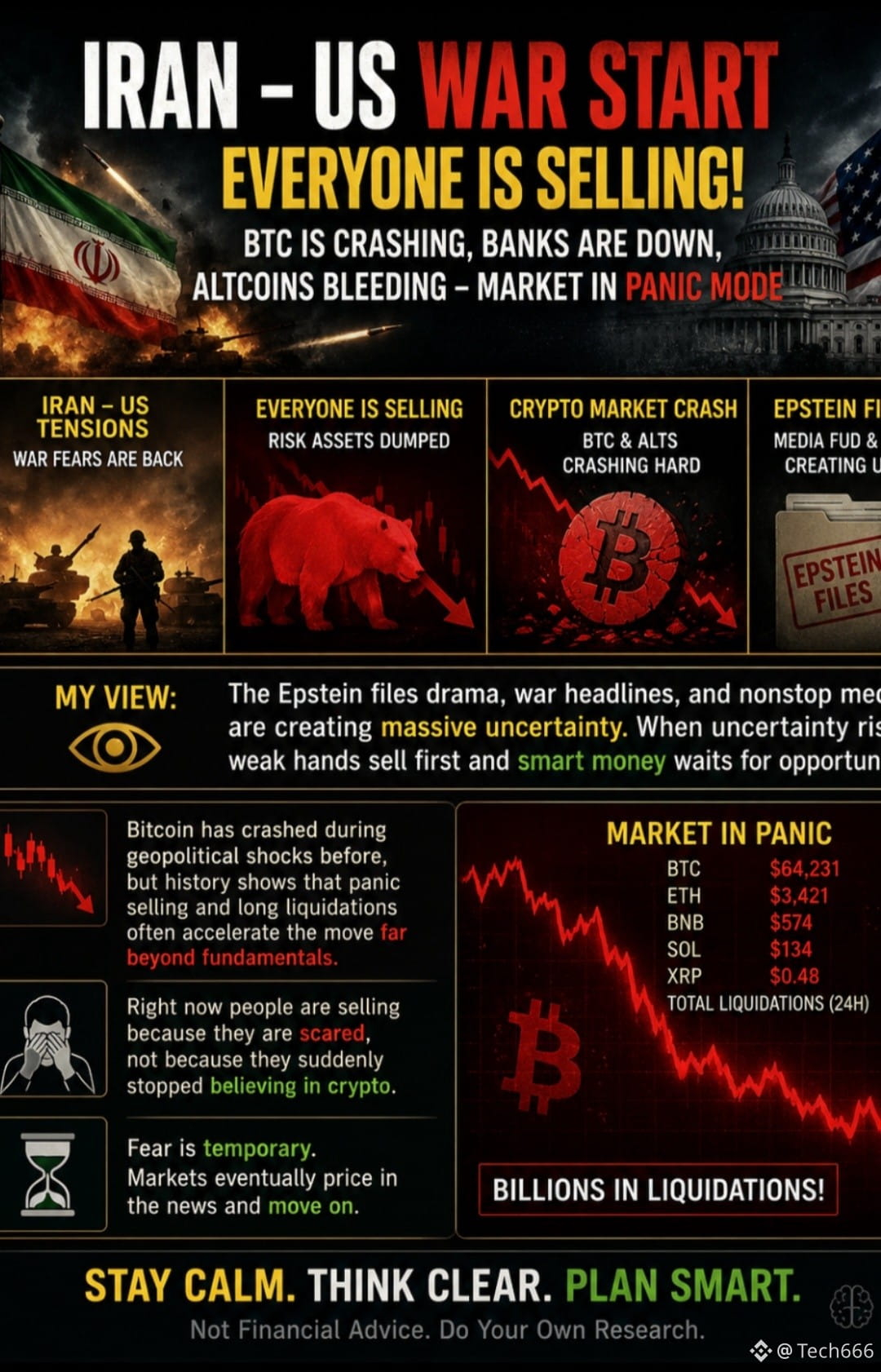
Iran war fears are back. Markets are in panic mode.
Everyone is dumping risk assets. Bitcoin, altcoins, stocks — everything is getting sold as traders rush for safety. Billions in crypto liquidations have already hit the market and fear is spreading fast.
My view:
The Epstein files drama, war headlines, and nonstop media fear are creating massive uncertainty. When uncertainty rises, weak hands sell first and smart money waits for opportunities.
Bitcoin has crashed during geopolitical shocks before, but history shows that panic selling and long liquidations often accelerate the move far beyond fundamentals.
Right now people are selling because they are scared, not because they suddenly stopped believing in crypto.
Fear is temporary. Markets eventually price in the news and move on.
Not financial advice. Do your own research.
#IranStrikesKuwaitAirport
#SpaceXInitiatesIPORoadshowWith555MShares
#MarketMeltdown
#Tech666
$BTC
$ETH
$BNB
Iran war fears are back. Markets are in panic mode.
Everyone is dumping risk assets. Bitcoin, altcoins, stocks — everything is getting sold as traders rush for safety. Billions in crypto liquidations have already hit the market and fear is spreading fast.
My view:
The Epstein files drama, war headlines, and nonstop media fear are creating massive uncertainty. When uncertainty rises, weak hands sell first and smart money waits for opportunities.
Bitcoin has crashed during geopolitical shocks before, but history shows that panic selling and long liquidations often accelerate the move far beyond fundamentals.
Right now people are selling because they are scared, not because they suddenly stopped believing in crypto.
Fear is temporary. Markets eventually price in the news and move on.
Not financial advice. Do your own research.
#IranStrikesKuwaitAirport
#SpaceXInitiatesIPORoadshowWith555MShares
#MarketMeltdown
#Tech666
$BTC
$ETH
$BNB
Everyone is dumping risk assets. Bitcoin, altcoins, stocks — everything is getting sold as traders rush for safety. Billions in crypto liquidations have already hit the market and fear is spreading fast.
My view:
The Epstein files drama, war headlines, and nonstop media fear are creating massive uncertainty. When uncertainty rises, weak hands sell first and smart money waits for opportunities.
Bitcoin has crashed during geopolitical shocks before, but history shows that panic selling and long liquidations often accelerate the move far beyond fundamentals.
Right now people are selling because they are scared, not because they suddenly stopped believing in crypto.
Fear is temporary. Markets eventually price in the news and move on.
Not financial advice. Do your own research.
#IranStrikesKuwaitAirport
#SpaceXInitiatesIPORoadshowWith555MShares
#MarketMeltdown
#Tech666
$BTC
$ETH
$BNB
171
·
--
Bearish
old Prediction but you are genious 😅😂🔥
old Prediction but you are genious 😅😂🔥
Tech666
·
--
BearishBTC will Crash to 30k Soon!
$BTC
$BTC
36
·
--
Bearish
UAE Attacked Iran Naval Bases.
Bitcoin to Zero 38k Soon.
UAE Attacked Iran Naval Bases.
Bitcoin to Zero 38k Soon.
Bitcoin to Zero 38k Soon.
73
·
--
Bullish
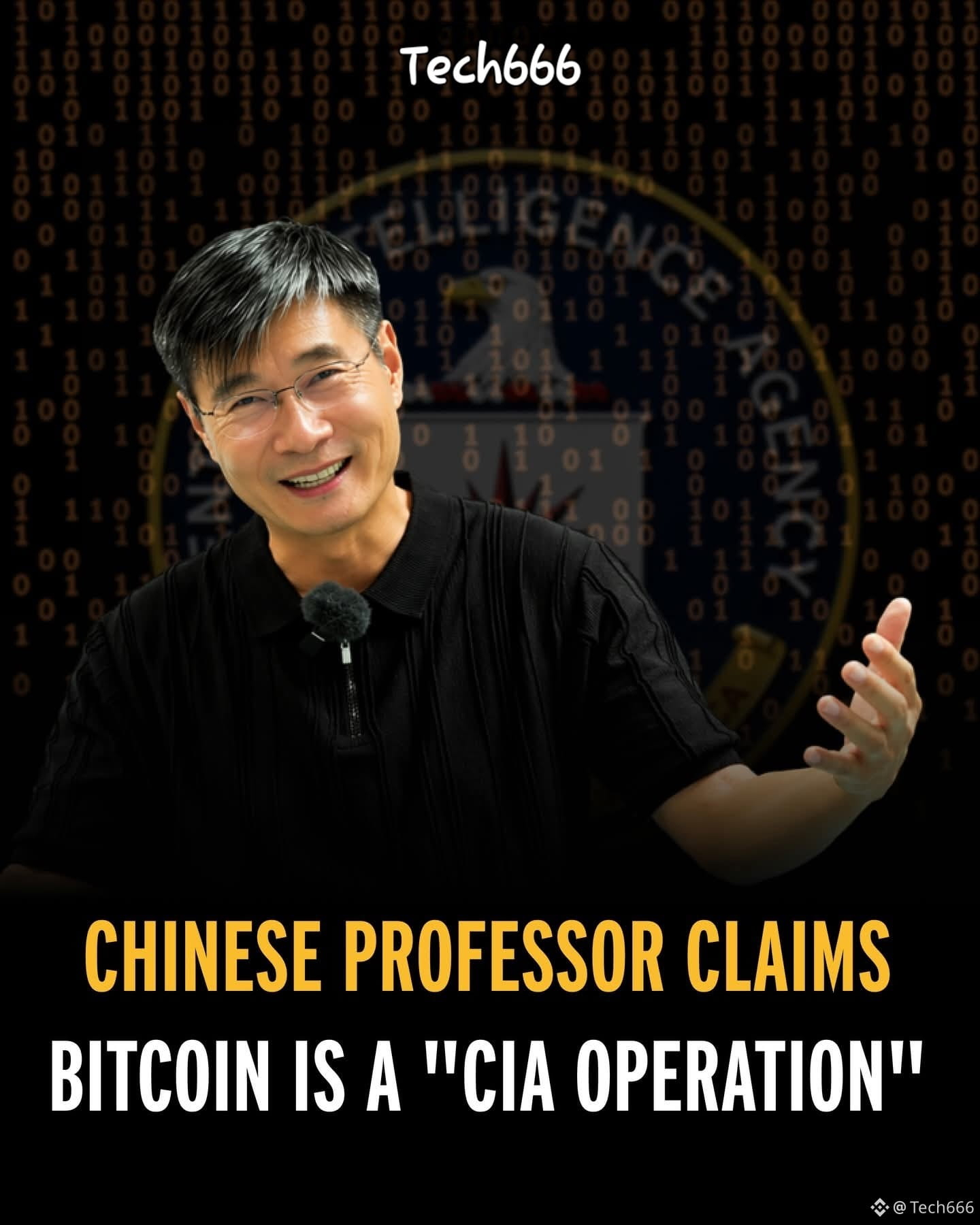
Chinese professor Jiang Xueqin is stirring up debate, claiming Bitcoin is a “CIA operation” and questioning where the blockchain servers are actually located.
What do you think? Drop your thoughts below 👇
Follow Tech666 for the latest in crypto!
$BTC
#bitcoin
#CIA
#TrendingTopic
Chinese professor Jiang Xueqin is stirring up debate, claiming Bitcoin is a “CIA operation” and questioning where the blockchain servers are actually located.
What do you think? Drop your thoughts below 👇
Follow Tech666 for the latest in crypto!
$BTC
#bitcoin
#CIA
#TrendingTopic
What do you think? Drop your thoughts below 👇
Follow Tech666 for the latest in crypto!
$BTC
#bitcoin
#CIA
#TrendingTopic
68
·
--
Bearish
⚠️ Bitcoin at Risk? Breaking News
Again Strait of Hormuz tensions = rising oil + global fear.
Short term → BTC under pressure 📉
Long term → could turn bullish as a hedge 📈
Stay sharp. Market is shifting.
#Bitcoin #Crypto #BreakingNews #Geopolitics
⚠️ Bitcoin at Risk? Breaking News
Again Strait of Hormuz tensions = rising oil + global fear.
Short term → BTC under pressure 📉
Long term → could turn bullish as a hedge 📈
Stay sharp. Market is shifting.
#Bitcoin #Crypto #BreakingNews #Geopolitics
Again Strait of Hormuz tensions = rising oil + global fear.
Short term → BTC under pressure 📉
Long term → could turn bullish as a hedge 📈
Stay sharp. Market is shifting.
#Bitcoin #Crypto #BreakingNews #Geopolitics
1
94

·
--
Bullish
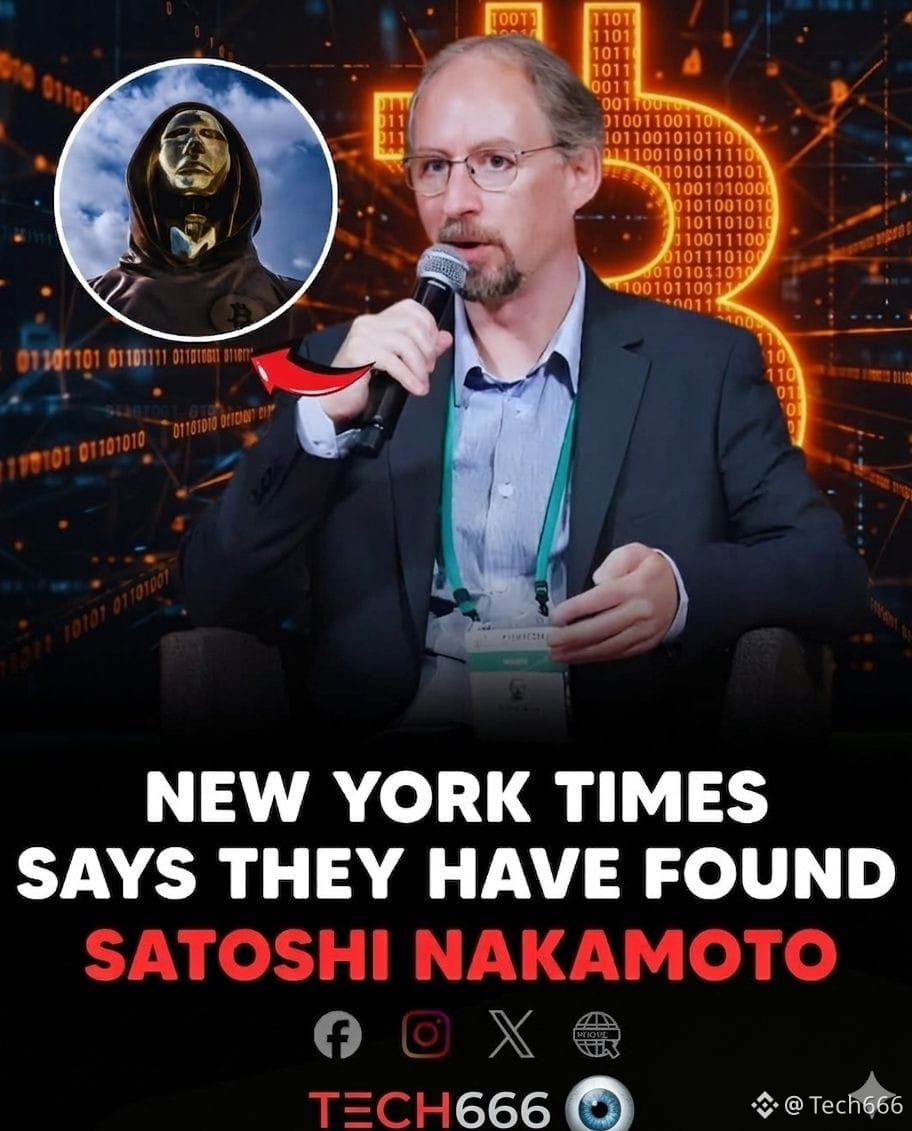
BREAKING: The New York Times claims to have identified the person behind Bitcoin creator Satoshi Nakamoto.
However, Adam Back has denied the claim in a statement to BBC, saying he is not the mysterious inventor of Bitcoin.
The report suggested that Back’s online activity aligns with Satoshi’s disappearance shortly after the Bitcoin white paper was published. Back rejected the investigation, calling it a case of “confirmation bias” and reiterating that he is not Satoshi Nakamoto.
#CZReleasedMemeoir
#MorganStanley'sBTCETFSetToLaunch
#MarketRebound
#satoshiNakamato
$BTC
$ETH
$BNB
BREAKING: The New York Times claims to have identified the person behind Bitcoin creator Satoshi Nakamoto.
However, Adam Back has denied the claim in a statement to BBC, saying he is not the mysterious inventor of Bitcoin.
The report suggested that Back’s online activity aligns with Satoshi’s disappearance shortly after the Bitcoin white paper was published. Back rejected the investigation, calling it a case of “confirmation bias” and reiterating that he is not Satoshi Nakamoto.
#CZReleasedMemeoir
#MorganStanley'sBTCETFSetToLaunch
#MarketRebound
#satoshiNakamato
$BTC
$ETH
$BNB
However, Adam Back has denied the claim in a statement to BBC, saying he is not the mysterious inventor of Bitcoin.
The report suggested that Back’s online activity aligns with Satoshi’s disappearance shortly after the Bitcoin white paper was published. Back rejected the investigation, calling it a case of “confirmation bias” and reiterating that he is not Satoshi Nakamoto.
#CZReleasedMemeoir
#MorganStanley'sBTCETFSetToLaunch
#MarketRebound
#satoshiNakamato
$BTC
$ETH
$BNB
117
·
--
Bullish
Quantum computers are a long‑term, not near‑term risk to Bitcoin—mainly to wallet cryptography, not to SHA‑256 mining.
What could be at risk (in theory)
Stealing coins via private‑key recovery (biggest concern)
Bitcoin uses ECDSA (secp256k1). A sufficiently powerful, fault‑tolerant quantum computer running Shor’s algorithm could theoretically derive a private key from a public key.
The main exposure is for coins sitting in outputs where the public key is already revealed on-chain (e.g., older “pay‑to‑pubkey” outputs, or addresses after you’ve spent from them—because spending reveals a public key in the script).
Mining is less of a “break tomorrow” issue
Quantum speedups for brute-force hashing are limited (often discussed via Grover’s algorithm), and Bitcoin can also adjust difficulty. So “quantum instantly wins mining” is generally not the primary fear.
What’s realistic today
Current quantum computers are nowhere near the scale/error-correction needed to break Bitcoin keys in practice. Headlines often overstate readiness.
Practical steps you can take now (no panic)
Avoid reusing addresses (use a new receiving address each time).
If you hold long term, prefer moving funds to modern address types (e.g., SegWit/native SegWit) and don’t leave coins in very old script types.
Keep your security basics tight (this matters far more today):
On Binance: 2FA + anti‑phishing code + withdrawal allowlist.
For self-custody: hardware wallet, secure backups, no leaked seed phrase.
What to watch (signals that risk is moving from “theoretical”)
Serious announcements about fault‑tolerant quantum systems with large logical qubit counts.
Concrete proposals for post‑quantum signature migration paths in Bitcoin (BIPs, wallet support).
If you tell me whether your BTC is mostly on Binance (spot) or self-custody, I can give a tighter checklist for your setup.#GoogleStudyOnCryptoSecurityChallenges
#BitmineIncreasesETHStake
$BTC
#NomuraHoldings
$NOM
$KERNEL
Quantum computers are a long‑term, not near‑term risk to Bitcoin—mainly to wallet cryptography, not to SHA‑256 mining.
What could be at risk (in theory)
Stealing coins via private‑key recovery (biggest concern)
Bitcoin uses ECDSA (secp256k1). A sufficiently powerful, fault‑tolerant quantum computer running Shor’s algorithm could theoretically derive a private key from a public key.
The main exposure is for coins sitting in outputs where the public key is already revealed on-chain (e.g., older “pay‑to‑pubkey” outputs, or addresses after you’ve spent from them—because spending reveals a public key in the script).
Mining is less of a “break tomorrow” issue
Quantum speedups for brute-force hashing are limited (often discussed via Grover’s algorithm), and Bitcoin can also adjust difficulty. So “quantum instantly wins mining” is generally not the primary fear.
What’s realistic today
Current quantum computers are nowhere near the scale/error-correction needed to break Bitcoin keys in practice. Headlines often overstate readiness.
Practical steps you can take now (no panic)
Avoid reusing addresses (use a new receiving address each time).
If you hold long term, prefer moving funds to modern address types (e.g., SegWit/native SegWit) and don’t leave coins in very old script types.
Keep your security basics tight (this matters far more today):
On Binance: 2FA + anti‑phishing code + withdrawal allowlist.
For self-custody: hardware wallet, secure backups, no leaked seed phrase.
What to watch (signals that risk is moving from “theoretical”)
Serious announcements about fault‑tolerant quantum systems with large logical qubit counts.
Concrete proposals for post‑quantum signature migration paths in Bitcoin (BIPs, wallet support).
If you tell me whether your BTC is mostly on Binance (spot) or self-custody, I can give a tighter checklist for your setup.#GoogleStudyOnCryptoSecurityChallenges
#BitmineIncreasesETHStake
$BTC
#NomuraHoldings
$NOM
$KERNEL
What could be at risk (in theory)
Stealing coins via private‑key recovery (biggest concern)
Bitcoin uses ECDSA (secp256k1). A sufficiently powerful, fault‑tolerant quantum computer running Shor’s algorithm could theoretically derive a private key from a public key.
The main exposure is for coins sitting in outputs where the public key is already revealed on-chain (e.g., older “pay‑to‑pubkey” outputs, or addresses after you’ve spent from them—because spending reveals a public key in the script).
Mining is less of a “break tomorrow” issue
Quantum speedups for brute-force hashing are limited (often discussed via Grover’s algorithm), and Bitcoin can also adjust difficulty. So “quantum instantly wins mining” is generally not the primary fear.
What’s realistic today
Current quantum computers are nowhere near the scale/error-correction needed to break Bitcoin keys in practice. Headlines often overstate readiness.
Practical steps you can take now (no panic)
Avoid reusing addresses (use a new receiving address each time).
If you hold long term, prefer moving funds to modern address types (e.g., SegWit/native SegWit) and don’t leave coins in very old script types.
Keep your security basics tight (this matters far more today):
On Binance: 2FA + anti‑phishing code + withdrawal allowlist.
For self-custody: hardware wallet, secure backups, no leaked seed phrase.
What to watch (signals that risk is moving from “theoretical”)
Serious announcements about fault‑tolerant quantum systems with large logical qubit counts.
Concrete proposals for post‑quantum signature migration paths in Bitcoin (BIPs, wallet support).
If you tell me whether your BTC is mostly on Binance (spot) or self-custody, I can give a tighter checklist for your setup.#GoogleStudyOnCryptoSecurityChallenges
#BitmineIncreasesETHStake
$BTC
#NomuraHoldings
$NOM
$KERNEL

146
·
--
🚨 BREAKING: Quantum Risk to Bitcoin Moves Closer
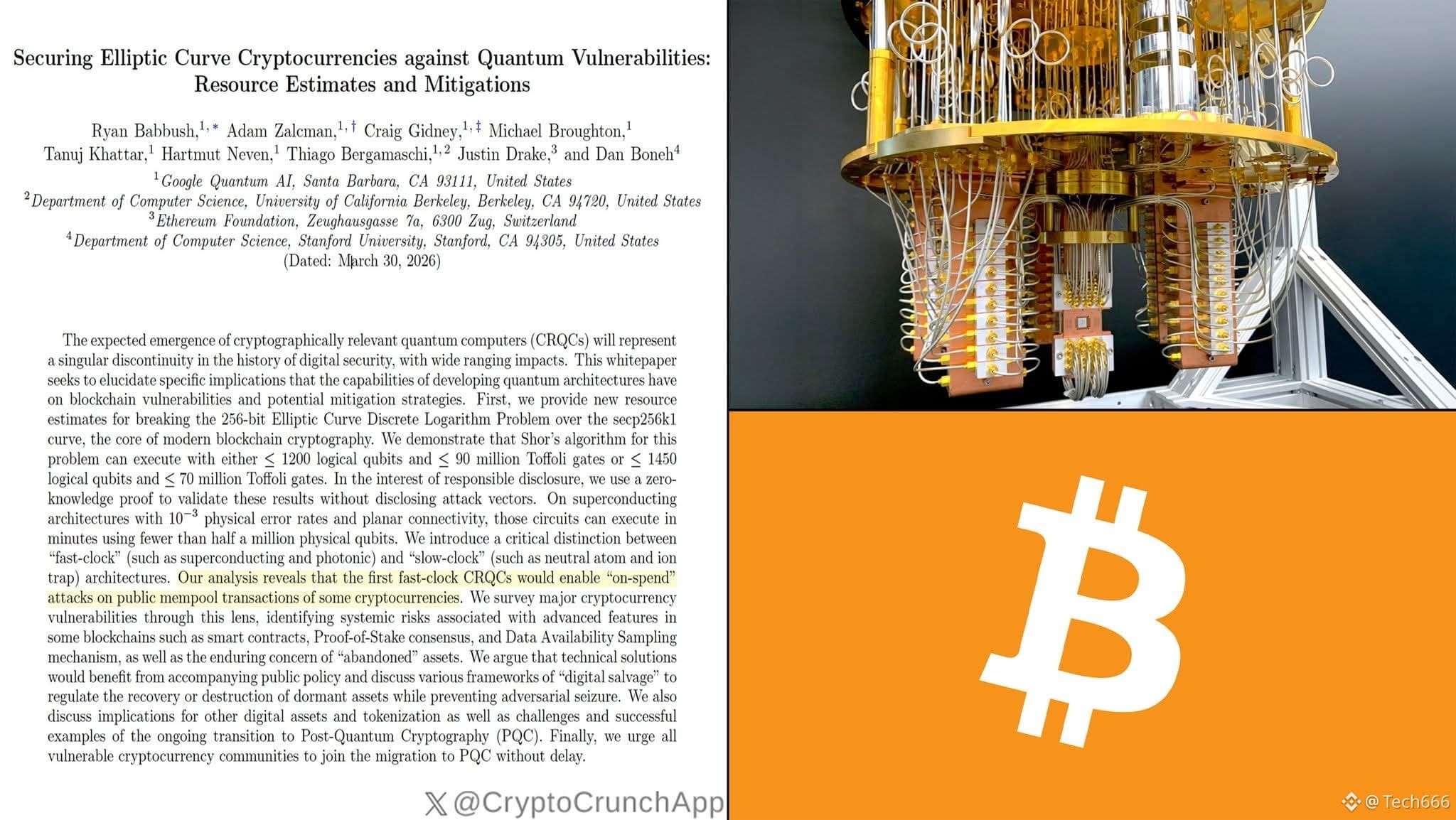
Google Quantum AI has released new research showing a major leap in the potential to break ECDSA private keys.
Here’s what changed:
Previous estimates required far more resources. Now, researchers suggest it may take only ~1,200–1,450 logical qubits—around a 10x improvement.
A sufficiently advanced quantum computer could complete the attack in as little as 9 minutes.
What this means for Bitcoin
Bitcoin relies on ECDSA for securing wallets. If a quantum machine reaches this level:
Mempool attacks become realistic
Transactions waiting to be confirmed (before entering a block) could be intercepted and exploited within the ~10-minute block window.
Millions of BTC could be exposed
Around 6.7 million BTC are considered at risk:
~1.7 million BTC in older P2PK addresses (early mining era)
Other addresses where public keys are already visible on-chain
Newer upgrades like Taproot may still introduce exposure in certain scenarios.
Important reality check
This is not an immediate threat
No current quantum computer can perform this attack
Experts still estimate years (possibly longer) before such machines exist
Bigger picture
Bitcoin’s mining algorithm SHA-256 is less vulnerable (only partial speedups via Grover’s algorithm)
The real risk is to wallet security, not mining
What researchers recommend
Start transitioning toward post-quantum cryptography
Aim for readiness by ~2029
Identify vulnerable holdings early and prepare migration paths
Bottom line
Quantum computing isn’t breaking Bitcoin today—but the trajectory is accelerating. The window for preparation is still open, but it’s no longer theoretical.
#GoogleStudyOnCryptoSecurityChallenges
#BitmineIncreasesETHStake
#quantumcomputers
🚨 BREAKING: Quantum Risk to Bitcoin Moves Closer
Google Quantum AI has released new research showing a major leap in the potential to break ECDSA private keys.
Here’s what changed:
Previous estimates required far more resources. Now, researchers suggest it may take only ~1,200–1,450 logical qubits—around a 10x improvement.
A sufficiently advanced quantum computer could complete the attack in as little as 9 minutes.
What this means for Bitcoin
Bitcoin relies on ECDSA for securing wallets. If a quantum machine reaches this level:
Mempool attacks become realistic
Transactions waiting to be confirmed (before entering a block) could be intercepted and exploited within the ~10-minute block window.
Millions of BTC could be exposed
Around 6.7 million BTC are considered at risk:
~1.7 million BTC in older P2PK addresses (early mining era)
Other addresses where public keys are already visible on-chain
Newer upgrades like Taproot may still introduce exposure in certain scenarios.
Important reality check
This is not an immediate threat
No current quantum computer can perform this attack
Experts still estimate years (possibly longer) before such machines exist
Bigger picture
Bitcoin’s mining algorithm SHA-256 is less vulnerable (only partial speedups via Grover’s algorithm)
The real risk is to wallet security, not mining
What researchers recommend
Start transitioning toward post-quantum cryptography
Aim for readiness by ~2029
Identify vulnerable holdings early and prepare migration paths
Bottom line
Quantum computing isn’t breaking Bitcoin today—but the trajectory is accelerating. The window for preparation is still open, but it’s no longer theoretical.
#GoogleStudyOnCryptoSecurityChallenges
#BitmineIncreasesETHStake
#quantumcomputers
Google Quantum AI has released new research showing a major leap in the potential to break ECDSA private keys.
Here’s what changed:
Previous estimates required far more resources. Now, researchers suggest it may take only ~1,200–1,450 logical qubits—around a 10x improvement.
A sufficiently advanced quantum computer could complete the attack in as little as 9 minutes.
What this means for Bitcoin
Bitcoin relies on ECDSA for securing wallets. If a quantum machine reaches this level:
Mempool attacks become realistic
Transactions waiting to be confirmed (before entering a block) could be intercepted and exploited within the ~10-minute block window.
Millions of BTC could be exposed
Around 6.7 million BTC are considered at risk:
~1.7 million BTC in older P2PK addresses (early mining era)
Other addresses where public keys are already visible on-chain
Newer upgrades like Taproot may still introduce exposure in certain scenarios.
Important reality check
This is not an immediate threat
No current quantum computer can perform this attack
Experts still estimate years (possibly longer) before such machines exist
Bigger picture
Bitcoin’s mining algorithm SHA-256 is less vulnerable (only partial speedups via Grover’s algorithm)
The real risk is to wallet security, not mining
What researchers recommend
Start transitioning toward post-quantum cryptography
Aim for readiness by ~2029
Identify vulnerable holdings early and prepare migration paths
Bottom line
Quantum computing isn’t breaking Bitcoin today—but the trajectory is accelerating. The window for preparation is still open, but it’s no longer theoretical.
#GoogleStudyOnCryptoSecurityChallenges
#BitmineIncreasesETHStake
#quantumcomputers
130
·
--
Bullish
The Crypto Trader Who Never Panicked
There was a crypto trader who followed a very simple rule.
He was not rich. He didn’t start with huge capital. But he had discipline.
Every day he made a small profit from trading.
And instead of spending it… he used that profit to buy crypto.
When the market went up, people were excited.
When the market crashed, people panicked and sold everything.
But he didn’t panic.
Whenever people said,
“Crypto is finished… the market is dead…”
He would quietly open his phone, look at the charts, and do the same thing he always did:
Buy.
No noise.
No fear.
No rushing to become rich overnight.
Just small daily profits…
and slowly buying more crypto.
Months passed.
Then a year passed.
The people who panic-sold were full of regret.
The people who kept saying “I’ll start tomorrow” were still standing in the same place.
But that trader had moved forward.
His portfolio kept growing, little by little, because he understood one powerful truth:
The market rewards patience.
If you feel disappointed today…
If you think you are too late…
Remember this:
Wealth is not built by big money.
It’s built by consistency.
A little every day.
No panic.
No noise.
And one day you will look back and realize that small steps created a big fortune.
#TrumpSaysIranWarWillEndVerySoon
#OilPricesSlide
#bitcoin
#Smarttrader
The Crypto Trader Who Never Panicked
There was a crypto trader who followed a very simple rule.
He was not rich. He didn’t start with huge capital. But he had discipline.
Every day he made a small profit from trading.
And instead of spending it… he used that profit to buy crypto.
When the market went up, people were excited.
When the market crashed, people panicked and sold everything.
But he didn’t panic.
Whenever people said,
“Crypto is finished… the market is dead…”
He would quietly open his phone, look at the charts, and do the same thing he always did:
Buy.
No noise.
No fear.
No rushing to become rich overnight.
Just small daily profits…
and slowly buying more crypto.
Months passed.
Then a year passed.
The people who panic-sold were full of regret.
The people who kept saying “I’ll start tomorrow” were still standing in the same place.
But that trader had moved forward.
His portfolio kept growing, little by little, because he understood one powerful truth:
The market rewards patience.
If you feel disappointed today…
If you think you are too late…
Remember this:
Wealth is not built by big money.
It’s built by consistency.
A little every day.
No panic.
No noise.
And one day you will look back and realize that small steps created a big fortune.
#TrumpSaysIranWarWillEndVerySoon
#OilPricesSlide
#bitcoin
#Smarttrader
There was a crypto trader who followed a very simple rule.
He was not rich. He didn’t start with huge capital. But he had discipline.
Every day he made a small profit from trading.
And instead of spending it… he used that profit to buy crypto.
When the market went up, people were excited.
When the market crashed, people panicked and sold everything.
But he didn’t panic.
Whenever people said,
“Crypto is finished… the market is dead…”
He would quietly open his phone, look at the charts, and do the same thing he always did:
Buy.
No noise.
No fear.
No rushing to become rich overnight.
Just small daily profits…
and slowly buying more crypto.
Months passed.
Then a year passed.
The people who panic-sold were full of regret.
The people who kept saying “I’ll start tomorrow” were still standing in the same place.
But that trader had moved forward.
His portfolio kept growing, little by little, because he understood one powerful truth:
The market rewards patience.
If you feel disappointed today…
If you think you are too late…
Remember this:
Wealth is not built by big money.
It’s built by consistency.
A little every day.
No panic.
No noise.
And one day you will look back and realize that small steps created a big fortune.
#TrumpSaysIranWarWillEndVerySoon
#OilPricesSlide
#bitcoin
#Smarttrader
71
·
--
Bearish
Open your eyes.
Some believe that Japanese Joi Alto is the real creator of Bitcoin — the person known to the world as Satoshi Nakamoto.
According to this theory, after the Atomic bombings of Hiroshima and Nagasaki, Japan shifted its strategy from military power to financial innovation.
In this view, Bitcoin is not just a digital currency — it is Japan’s greatest financial weapon.
#bitcoin
#IranConfirmsKhameneiIsDead
#satoshiNakamato
Open your eyes.
Some believe that Japanese Joi Alto is the real creator of Bitcoin — the person known to the world as Satoshi Nakamoto.
According to this theory, after the Atomic bombings of Hiroshima and Nagasaki, Japan shifted its strategy from military power to financial innovation.
In this view, Bitcoin is not just a digital currency — it is Japan’s greatest financial weapon.
#bitcoin
#IranConfirmsKhameneiIsDead
#satoshiNakamato
Some believe that Japanese Joi Alto is the real creator of Bitcoin — the person known to the world as Satoshi Nakamoto.
According to this theory, after the Atomic bombings of Hiroshima and Nagasaki, Japan shifted its strategy from military power to financial innovation.
In this view, Bitcoin is not just a digital currency — it is Japan’s greatest financial weapon.
#bitcoin
#IranConfirmsKhameneiIsDead
#satoshiNakamato

1
377
Log in to explore more content
Join global crypto users on Binance Square
⚡️ Get latest and useful information about crypto.
💬 Trusted by the world’s largest crypto exchange.
👍 Discover real insights from verified creators.
Email / Phone number