
阿Bob波哥说币
432 Posts
阿Bob波哥说币
公众号:《恋上波哥》 关注我,多交流,祝各位钱包越来越鼓!多年交易经验,走过多轮牛熊,对市场节奏和资金动向有成熟判断。依靠稳定的信息源和实战策略做交易,不空谈理论。长期用同一套逻辑操作,胜率保持在 80%–85%。分享真实思路,追求稳健、长期收益。
7 Following
39 Followers
252 Liked
Posts
Behind the rise and fall are capital, sentiment, and trends. If you only stare at the candlestick chart, you can’t see through it.
To survive, first avoid three things:
First, don’t chase when you see things going up. A continuous rally is the easiest to get carried away. Worried about missing out, people rush in and often buy at the peak of a phase. Opportunities aren’t chased out—they’re found when the market cools down and gives you a position. When you’re anxious, the market isn’t. When you’re calm, opportunities come.
Second, don’t concentrate everything into a single asset. Even the best projects can have unexpected events. If you put too much in one place, one mistake can be hard to bear. Diversifying isn’t meant to make you earn more—it’s to leave yourself a way out. When you have cards in hand, you don’t panic.
Third, don’t stay fully invested for the long term. Holding cash isn’t a waste—it’s what gives you ammunition when a big opportunity finally arrives. People who are fully invested get greedy when it rises and panic when it falls. They’re always passive.
Don’t chase during high-level consolidation. Don’t cut during low-level consolidation. If the direction is unclear, wait. The most grinding thing about trading sideways isn’t the technique—it’s patience.
It’s easy for one person to go off-balance. If you keep your rhythm steady, the ones who follow will have a chance. Those who understand are already on the train. If you haven’t boarded yet, come chat with Bo-ge.
#SideSwap暂停Liquid服务
#IMF称萨尔瓦多购币未用公共资金
To survive, first avoid three things:
First, don’t chase when you see things going up. A continuous rally is the easiest to get carried away. Worried about missing out, people rush in and often buy at the peak of a phase. Opportunities aren’t chased out—they’re found when the market cools down and gives you a position. When you’re anxious, the market isn’t. When you’re calm, opportunities come.
Second, don’t concentrate everything into a single asset. Even the best projects can have unexpected events. If you put too much in one place, one mistake can be hard to bear. Diversifying isn’t meant to make you earn more—it’s to leave yourself a way out. When you have cards in hand, you don’t panic.
Third, don’t stay fully invested for the long term. Holding cash isn’t a waste—it’s what gives you ammunition when a big opportunity finally arrives. People who are fully invested get greedy when it rises and panic when it falls. They’re always passive.
Don’t chase during high-level consolidation. Don’t cut during low-level consolidation. If the direction is unclear, wait. The most grinding thing about trading sideways isn’t the technique—it’s patience.
It’s easy for one person to go off-balance. If you keep your rhythm steady, the ones who follow will have a chance. Those who understand are already on the train. If you haven’t boarded yet, come chat with Bo-ge.
#SideSwap暂停Liquid服务
#IMF称萨尔瓦多购币未用公共资金
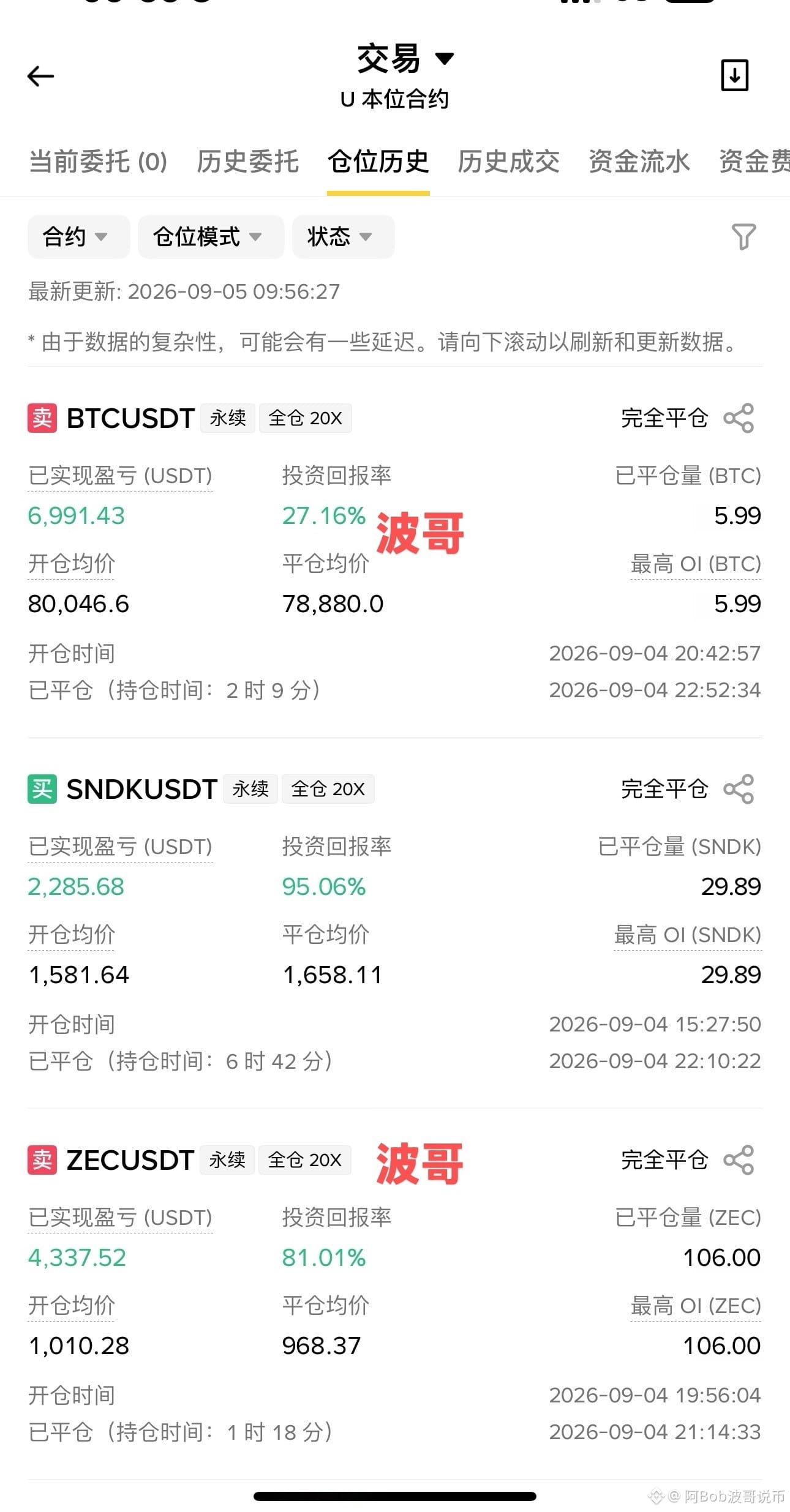
Short-term trading isn’t based on instinct—it’s built on accumulation.
The real short-term trading is established on extensive observation, reflection, and validation. By studying enough candlestick charts and researching how price behaves across different timeframes, you can form a set of judgment rules with a probability edge.
What people call “patterns” can only indicate a probabilistic direction. Behind the market are emotions, news, and multi-party game play—no one can be 100% accurate.
So what exactly should you do? Keep reviewing past trades. Identify under what conditions similar price action occurred, and after which signals the move is more likely to continue. Candlesticks don’t only reflect volatility; they also reveal traces of fund flow.
Some products slide steadily from the upper range with very little fluctuation—classic cases of “nobody manages it, and there’s no资金 lifting it.” Retail investors are still stuck in it, holding on to the end: turning a short-term position into a medium-term one, and then into something that gets carried on for years—don’t even touch such targets.
Newcomers, remember a few things: before entering, look at the win rate—prefer doing less over doing things randomly. Be content with profits; stay calm when you lose; don’t argue with the trades or fight the market. Having someone guide you can make it faster, but the key is whether you can stop and summarize on your own.
Turning over your account isn’t something you can “scroll” your way into. If you really want to change, decide on your method early. Only when your pace is stable can you talk about returns.
The real short-term trading is established on extensive observation, reflection, and validation. By studying enough candlestick charts and researching how price behaves across different timeframes, you can form a set of judgment rules with a probability edge.
What people call “patterns” can only indicate a probabilistic direction. Behind the market are emotions, news, and multi-party game play—no one can be 100% accurate.
So what exactly should you do? Keep reviewing past trades. Identify under what conditions similar price action occurred, and after which signals the move is more likely to continue. Candlesticks don’t only reflect volatility; they also reveal traces of fund flow.
Some products slide steadily from the upper range with very little fluctuation—classic cases of “nobody manages it, and there’s no资金 lifting it.” Retail investors are still stuck in it, holding on to the end: turning a short-term position into a medium-term one, and then into something that gets carried on for years—don’t even touch such targets.
Newcomers, remember a few things: before entering, look at the win rate—prefer doing less over doing things randomly. Be content with profits; stay calm when you lose; don’t argue with the trades or fight the market. Having someone guide you can make it faster, but the key is whether you can stop and summarize on your own.
Turning over your account isn’t something you can “scroll” your way into. If you really want to change, decide on your method early. Only when your pace is stable can you talk about returns.
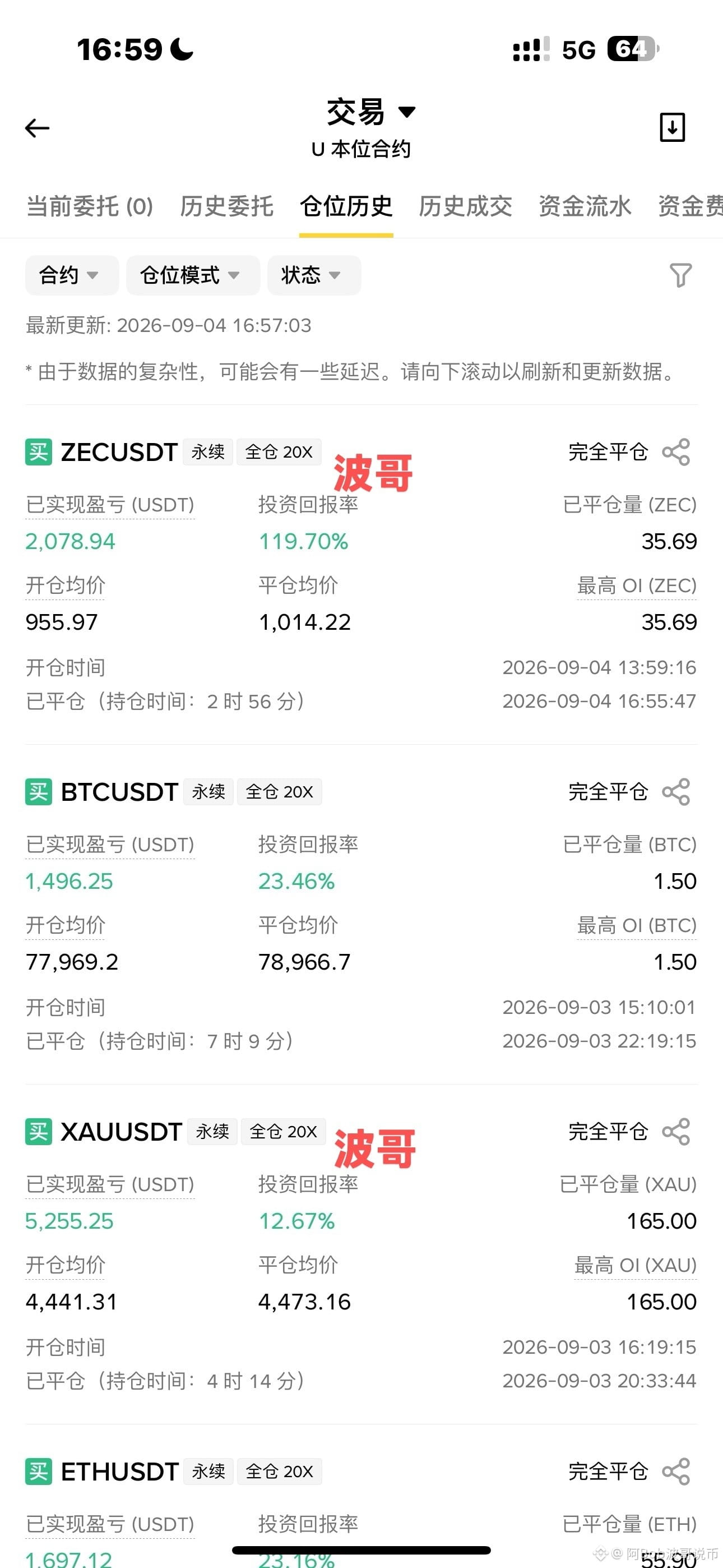
Just a few thousand U and you want to flip it up—this is exactly the kind of thing the market loves to “cut” with a blade. The money isn’t much, but the ego is pretty big. If the market wiggles even a little, you don’t even get a chance to look back.
Before, I brought along a brother. With a starting capital of a little over 20k U, in just over 40 days he reached more than 100k U. It has nothing to do with luck—it's all about holding the rhythm down. Break the money up: move only when there’s a signal. If you’re not sure, leave it alone. Don’t touch the chop—only do structures where the direction is crystal clear at a glance. When you profit, don’t get carried away. After the first trade paid off, only then did he dare to slightly scale up on the second.
What’s most brutal is execution. When it’s time to leave, don’t hesitate. When it’s time to take profit, don’t get greedy for higher. For small capital to turn things around, it’s not about a one or two trades making a fortune—it’s about keeping a stable rhythm over a period of time, without making any major mistakes.
First learn how to survive, then talk about making money. Money drips into your pocket slowly—you can’t rush it. We’re currently laying the groundwork. If you want to get on board, come chat with Boss Bo.
#IMF称萨尔瓦多购币未用公共资金
Before, I brought along a brother. With a starting capital of a little over 20k U, in just over 40 days he reached more than 100k U. It has nothing to do with luck—it's all about holding the rhythm down. Break the money up: move only when there’s a signal. If you’re not sure, leave it alone. Don’t touch the chop—only do structures where the direction is crystal clear at a glance. When you profit, don’t get carried away. After the first trade paid off, only then did he dare to slightly scale up on the second.
What’s most brutal is execution. When it’s time to leave, don’t hesitate. When it’s time to take profit, don’t get greedy for higher. For small capital to turn things around, it’s not about a one or two trades making a fortune—it’s about keeping a stable rhythm over a period of time, without making any major mistakes.
First learn how to survive, then talk about making money. Money drips into your pocket slowly—you can’t rush it. We’re currently laying the groundwork. If you want to get on board, come chat with Boss Bo.
#IMF称萨尔瓦多购币未用公共资金
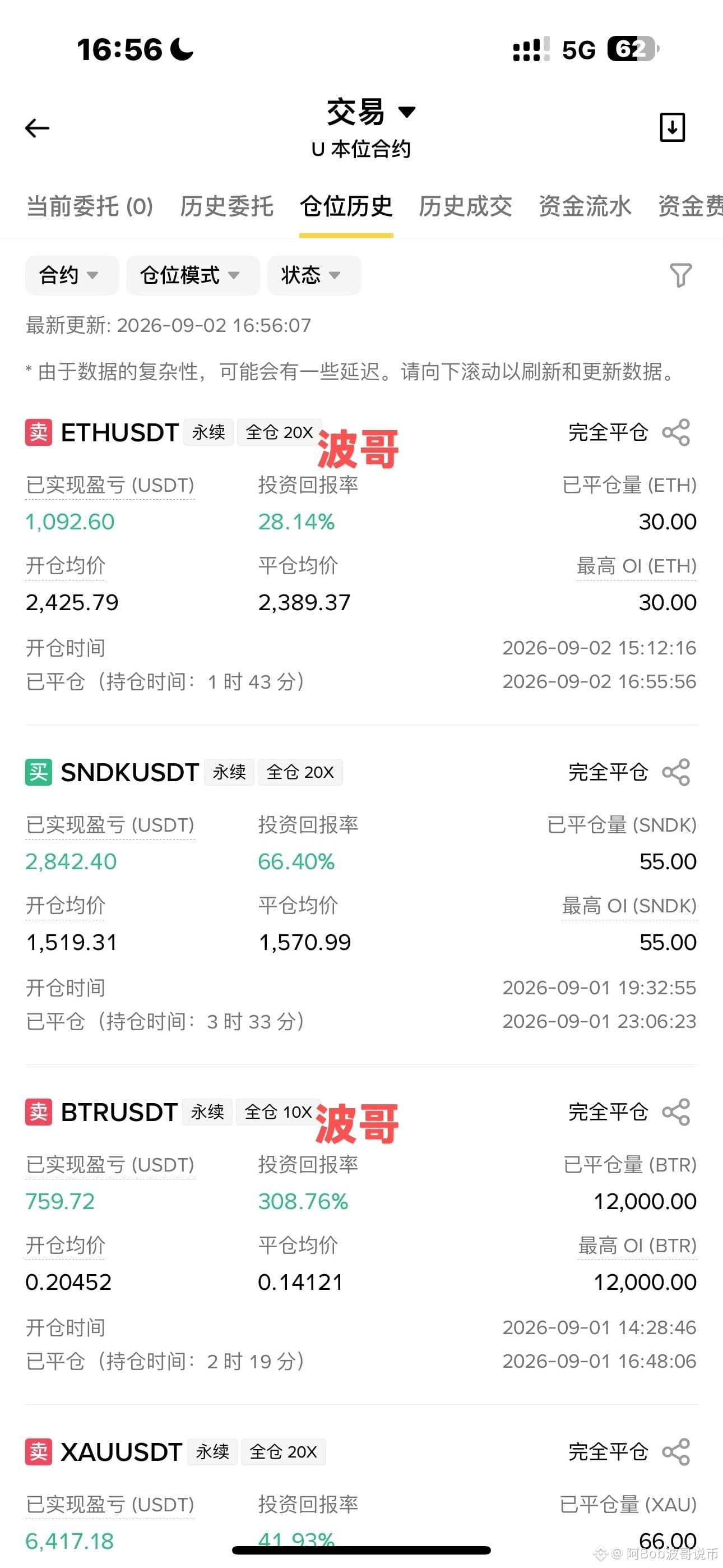
Coming in with a few hundred or a few thousand bucks, the biggest problem is one thing—thinking it’s too slow.
Always hoping that one wave will double, or that one trade will turn things around. Once the mindset shifts, your position sizing gets out of control, your stop-losses get distorted, and you still won’t exit when you should.
Compounding isn’t built on one-shot windfalls—it’s built by time and win rate. After a single huge gain, there’s often a single catastrophic loss right behind it. I’ve seen this loop too many times.
Now I’m used to setting each round’s target at a modest profit: when it hits, I lock in part of it, and roll the rest forward. After getting a few wins in a row, returns naturally climb. Everything stays controllable, and I have confidence the whole way.
Slower is fine. Die once, and everything’s gone. Control your trade frequency—only act when there’s a clear reason—so you can last.
If you want to catch this market move, stay in sync with my pace—don’t get off track. Rebuilding your equity and getting back to full margin is no big deal. If you want to learn a steady approach, come chat with Boss Bo.
#IMF称萨尔瓦多购币未用公共资金
Always hoping that one wave will double, or that one trade will turn things around. Once the mindset shifts, your position sizing gets out of control, your stop-losses get distorted, and you still won’t exit when you should.
Compounding isn’t built on one-shot windfalls—it’s built by time and win rate. After a single huge gain, there’s often a single catastrophic loss right behind it. I’ve seen this loop too many times.
Now I’m used to setting each round’s target at a modest profit: when it hits, I lock in part of it, and roll the rest forward. After getting a few wins in a row, returns naturally climb. Everything stays controllable, and I have confidence the whole way.
Slower is fine. Die once, and everything’s gone. Control your trade frequency—only act when there’s a clear reason—so you can last.
If you want to catch this market move, stay in sync with my pace—don’t get off track. Rebuilding your equity and getting back to full margin is no big deal. If you want to learn a steady approach, come chat with Boss Bo.
#IMF称萨尔瓦多购币未用公共资金
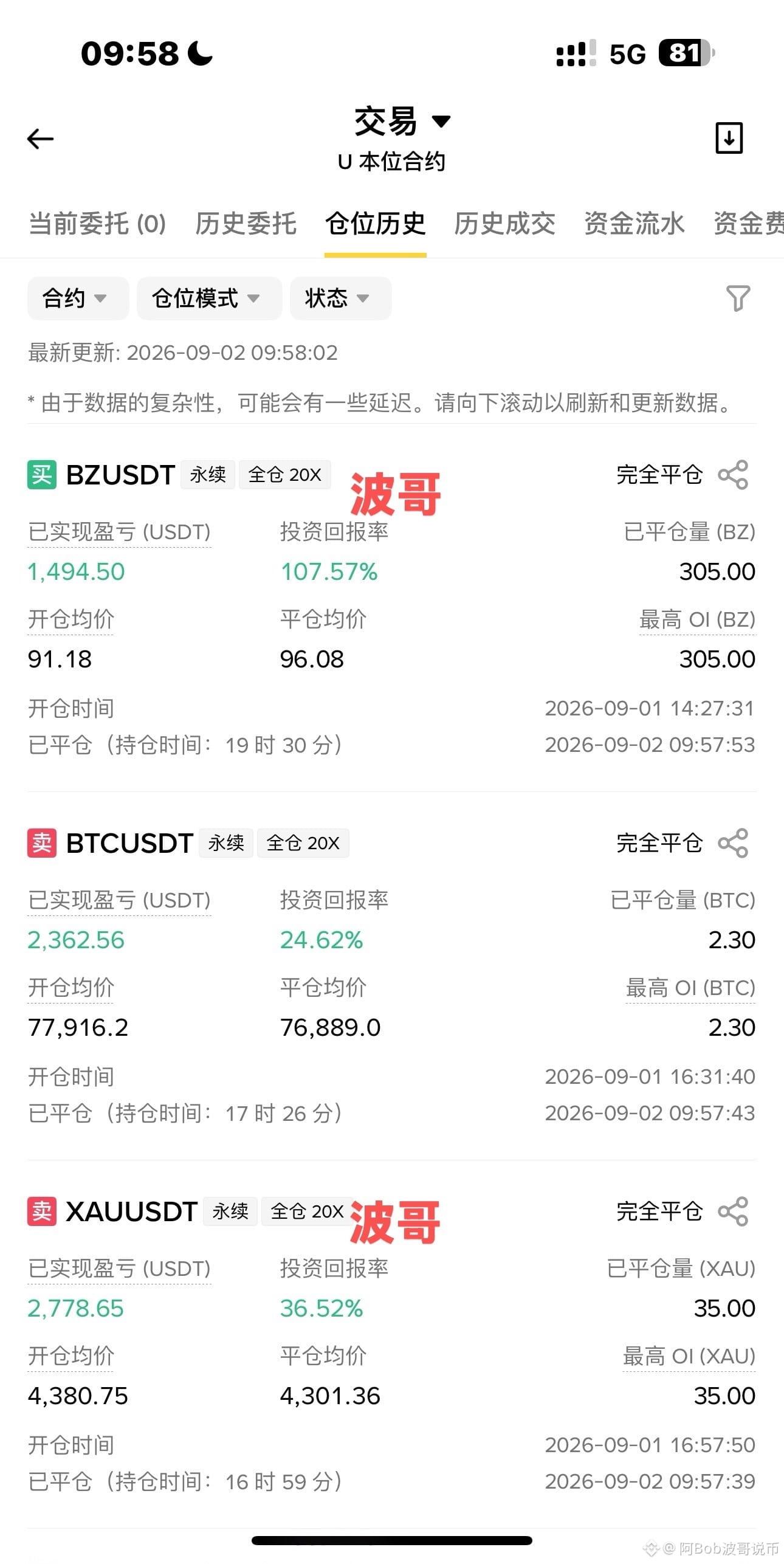
Trading until the end is about subtraction.
Which coins you ignore, which setups you don’t touch, and when to go to cash—those matter far more than technical analysis.
Right now I’m watching BTC’s daily structure; I only act when the moving averages are in a bullish alignment. In every other situation, I’m just waiting.
After confirming the direction, I enter in two batches: the first batch for a test entry, and the second batch on a pullback. Take-profit is also in two parts: once the first target is reached, I exit; the second target uses a trailing stop by moving the stop-loss along with price.
Per-trade loss is capped at no more than 2% of total capital. Once it hits, I withdraw—no hesitation.
Being right on direction isn’t as good as being right on timing. Frequent switching trades is worse than holding patiently. Want to learn how to take the subtraction approach all the way through? Come chat with Boss Bo.
#俄乌交火库什纳维特科夫赴基辅
Which coins you ignore, which setups you don’t touch, and when to go to cash—those matter far more than technical analysis.
Right now I’m watching BTC’s daily structure; I only act when the moving averages are in a bullish alignment. In every other situation, I’m just waiting.
After confirming the direction, I enter in two batches: the first batch for a test entry, and the second batch on a pullback. Take-profit is also in two parts: once the first target is reached, I exit; the second target uses a trailing stop by moving the stop-loss along with price.
Per-trade loss is capped at no more than 2% of total capital. Once it hits, I withdraw—no hesitation.
Being right on direction isn’t as good as being right on timing. Frequent switching trades is worse than holding patiently. Want to learn how to take the subtraction approach all the way through? Come chat with Boss Bo.
#俄乌交火库什纳维特科夫赴基辅
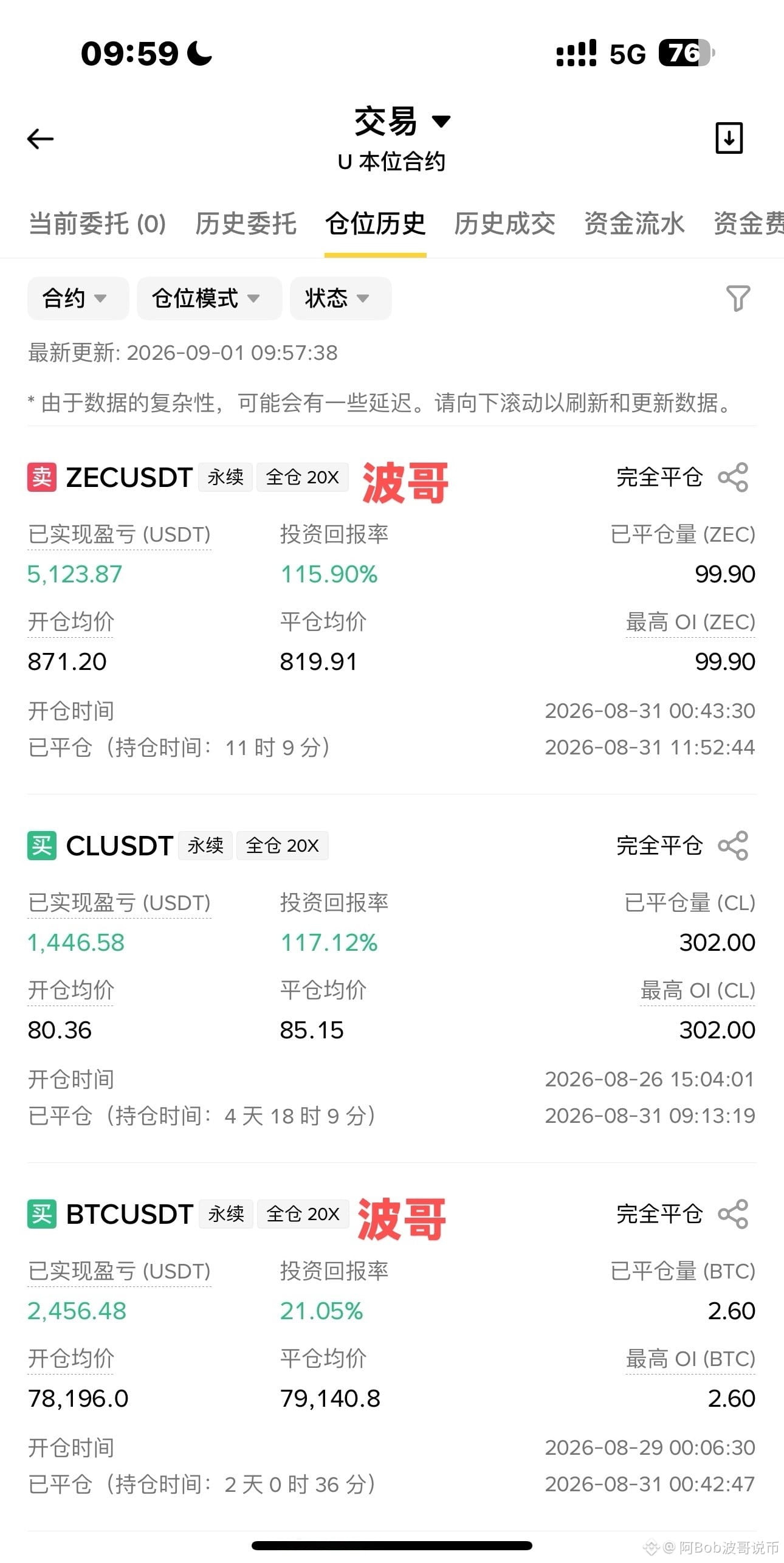
When beginners enter the market, the first reaction is always, “How do I make money?” But honestly, what you should think about is, “How do I not lose everything.”
If you can’t even stay alive, making money is just a joke.
Remember these five survival rules:
Only trade Bitcoin. Don’t touch altcoins. Don’t touch new coins. Even if BTC is bad, it won’t go to zero in a single day.
Keep each trade position capped at within 10%, and your 1.5% stop-loss is fixed in place. If losses don’t hurt, you won’t panic; if it hurts, don’t act recklessly.
Leverage no more than 5x. Beginners shouldn’t touch high leverage—under 5x is your buffer zone.
At most three trades per week. If there’s no signal, go flat—don’t force trades. If you can’t control your hands, you can’t control your account.
When your account doubles, withdraw half immediately. Lock in profits—then it truly counts as yours.
If you can do these five, chances are you’ll still be here after three months. As long as you’re still alive, the market owes you a big one. Then we can talk about making money—it’s not too late.
Survive first, then you earn the right to talk about profits. Want to avoid detours? Come chat with Boge.
#中国八大金融机构注资3600亿元
#三星SK海力士领涨韩股走高
If you can’t even stay alive, making money is just a joke.
Remember these five survival rules:
Only trade Bitcoin. Don’t touch altcoins. Don’t touch new coins. Even if BTC is bad, it won’t go to zero in a single day.
Keep each trade position capped at within 10%, and your 1.5% stop-loss is fixed in place. If losses don’t hurt, you won’t panic; if it hurts, don’t act recklessly.
Leverage no more than 5x. Beginners shouldn’t touch high leverage—under 5x is your buffer zone.
At most three trades per week. If there’s no signal, go flat—don’t force trades. If you can’t control your hands, you can’t control your account.
When your account doubles, withdraw half immediately. Lock in profits—then it truly counts as yours.
If you can do these five, chances are you’ll still be here after three months. As long as you’re still alive, the market owes you a big one. Then we can talk about making money—it’s not too late.
Survive first, then you earn the right to talk about profits. Want to avoid detours? Come chat with Boge.
#中国八大金融机构注资3600亿元
#三星SK海力士领涨韩股走高
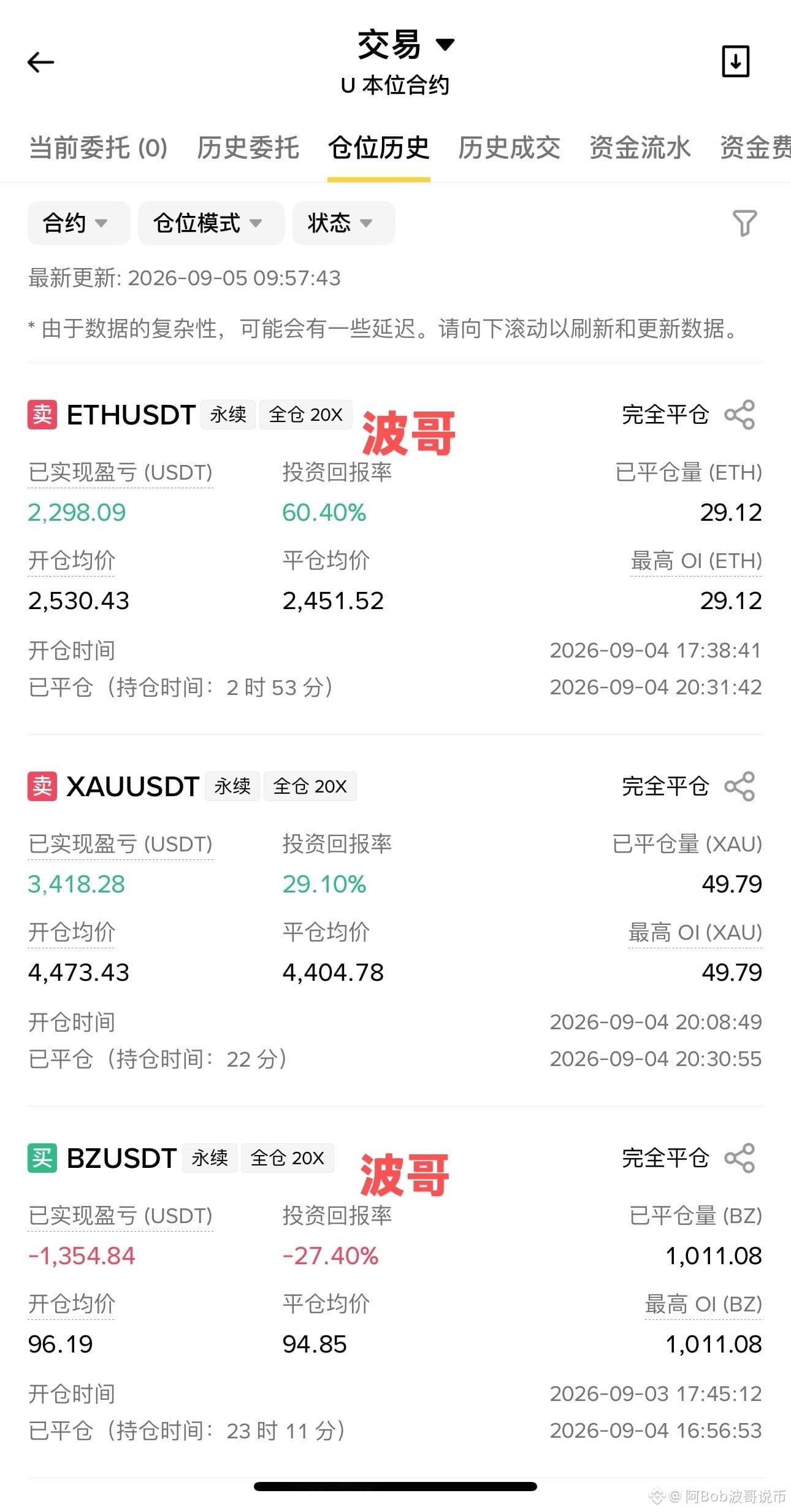
Newcomers just entering the market are the most likely to turn the crypto world into a casino. Seeing one bullish candle and you rush in; hearing a piece of news and you go all-in; once your emotions flare up, you go full position. So what happens? Prices rise and you chase the top and get trapped; the news turns out to be fake and you’re buried; and then a pullback wipes you out in one wave.
In the end, you lose so much that you start questioning your life, leaving behind a line like “Crypto is just a casino,” and walking away.
But in other words—if you treat the crypto world like a casino, that’s exactly what it becomes for you. Candlesticks are meant for you to observe, not to charge in; news is meant to be referenced, not to go all-in on; emotions are meant to keep you calm, not to push you into full positions.
If you want not to lose, replace “chasing” with “waiting,” replace “going all-in” with “testing,” and replace “full position” with “light position.” At the beginning, don’t think about making money—think about how to avoid losing until the very end. Survive first, and only then do you have the资格 to talk about profits.
If you want to learn how to switch casino-style play into trading, come chat with Brother Bo.@阿Bob波哥说币
#IMF称萨尔瓦多购币未用公共资金
In the end, you lose so much that you start questioning your life, leaving behind a line like “Crypto is just a casino,” and walking away.
But in other words—if you treat the crypto world like a casino, that’s exactly what it becomes for you. Candlesticks are meant for you to observe, not to charge in; news is meant to be referenced, not to go all-in on; emotions are meant to keep you calm, not to push you into full positions.
If you want not to lose, replace “chasing” with “waiting,” replace “going all-in” with “testing,” and replace “full position” with “light position.” At the beginning, don’t think about making money—think about how to avoid losing until the very end. Survive first, and only then do you have the资格 to talk about profits.
If you want to learn how to switch casino-style play into trading, come chat with Brother Bo.@阿Bob波哥说币
#IMF称萨尔瓦多购币未用公共资金
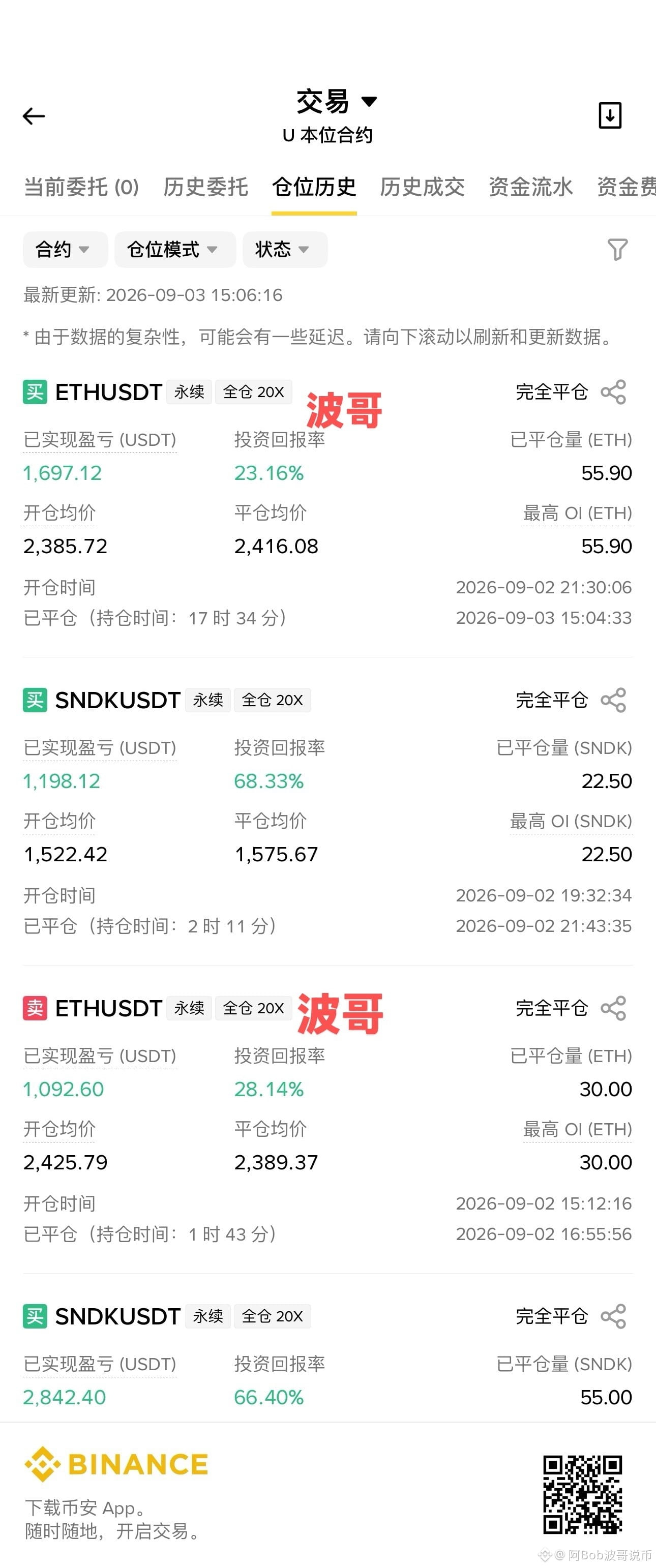
Most people never really understand the whole “rolling the warehouse” thing.
You have the right direction—and it still explodes in the end. Why? You fill the initial position to the max, then hold on no matter what. A normal pullback wipes you out and you’re forced out.
People who know how to roll do it differently. The first entry is only 10%. Once you have enough unrealized profit, you add the second tranche. The new position uses break-even stops to control downside. As price moves, you lock in profits step by step. You take out the original principal first when you’ve doubled, so whatever happens, you only risk profit—at any pullback, you’re merely giving back gains. Your principal is left completely unharmed.
What about those who don’t know how to roll? They accumulate a lot of unrealized profit, but don’t reduce positions or withdraw funds. Then when a pullback comes, they give back all the profit. If they stubbornly hold on with the principal as well, they end up losing it too.
Direction determines whether you can stay alive. Rolling determines how much you can take away. Even if you’re right about direction, if you don’t know how to roll, profit is just a number. People who know how to roll can eat a whole move when they’re right; when they’re wrong, they only lose a little.
If you’ve been blown out of a position, don’t blame luck. What you’re missing is a set of rules for rolling.
Want to learn how to roll and how to guard your gains? Come chat with Bo.
@阿Bob波哥说币
#美伊互袭油轮冲突升级
You have the right direction—and it still explodes in the end. Why? You fill the initial position to the max, then hold on no matter what. A normal pullback wipes you out and you’re forced out.
People who know how to roll do it differently. The first entry is only 10%. Once you have enough unrealized profit, you add the second tranche. The new position uses break-even stops to control downside. As price moves, you lock in profits step by step. You take out the original principal first when you’ve doubled, so whatever happens, you only risk profit—at any pullback, you’re merely giving back gains. Your principal is left completely unharmed.
What about those who don’t know how to roll? They accumulate a lot of unrealized profit, but don’t reduce positions or withdraw funds. Then when a pullback comes, they give back all the profit. If they stubbornly hold on with the principal as well, they end up losing it too.
Direction determines whether you can stay alive. Rolling determines how much you can take away. Even if you’re right about direction, if you don’t know how to roll, profit is just a number. People who know how to roll can eat a whole move when they’re right; when they’re wrong, they only lose a little.
If you’ve been blown out of a position, don’t blame luck. What you’re missing is a set of rules for rolling.
Want to learn how to roll and how to guard your gains? Come chat with Bo.
@阿Bob波哥说币
#美伊互袭油轮冲突升级
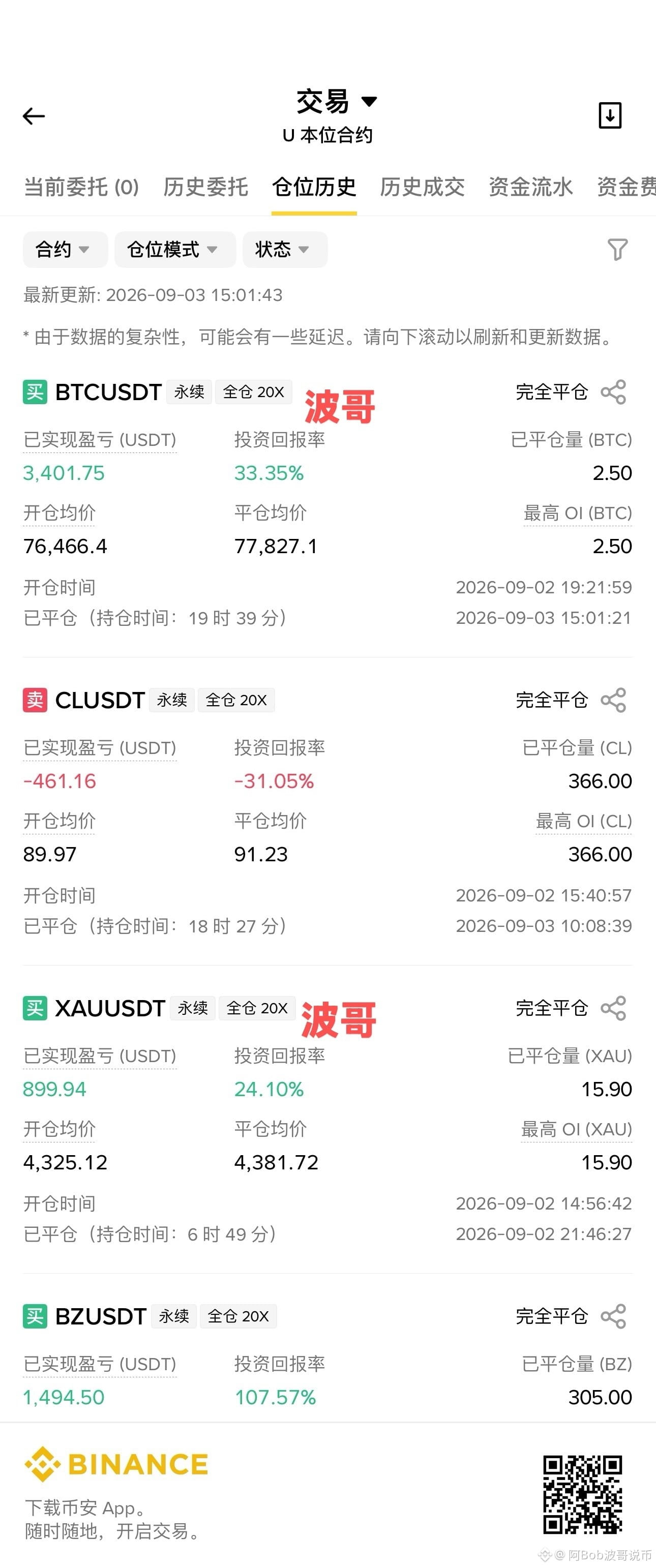
It took me a long time to figure out something: technology can only help you determine a direction—it can’t control your actions. No matter how good your judgment is, it won’t help if you can’t manage your hands.
In the past, I was very superstitious about technology. My computer was packed with all kinds of indicators—MACD, KDJ, Bollinger Bands, trend lines. Every chart was so crowded it looked like a mess. I always thought the more indicators I had, the clearer I could see, and the easier it would be to make money. Later, I realized that the time when I lost the most was exactly when I was studying technical analysis the hardest.
I stared at the market for a dozen hours a day, afraid of missing even one opportunity. In the end, the opportunities didn’t get captured, and the losses didn’t miss me. After several consecutive big losses, I started to doubt myself—was the market just too difficult, or had I gone off course?
Later, a trader who had been in the business for many years told me: Most people lose money not because they can’t understand the market, but because they can’t control themselves. I remembered that line for years.
Since then, I’ve been doing “subtraction” in trading. I removed a bunch of useless indicators. I don’t guess tops and bottoms every day anymore. I don’t fantasize about buying at the absolute low or selling at the absolute high. Before price actually moves, I don’t guess. Before the trend is confirmed, I don’t bet. Only when a key level is truly broken do I consider following. If the direction is right, I hold. If the direction is wrong, I admit it.
I used to always think about making a comeback in one shot. Now I care more about how much I can lose on each trade, at most. To stay alive in the market for the long term, it’s not about making money fast—it’s about keeping losses small enough. As long as the principal is still there, opportunities will always be there.
Being in cash is also part of trading. When I can’t make sense of the market, I don’t trade. When there’s no opportunity, I wait. The people who can truly make money in the market often use the simplest methods—complexity is easy to get carried away with, but simplicity is what makes long-term execution practical.
In the end, trading is won not by who understands more, but by who can execute simple rules for one year, three years, or even five years.
#美伊互袭油轮冲突升级
In the past, I was very superstitious about technology. My computer was packed with all kinds of indicators—MACD, KDJ, Bollinger Bands, trend lines. Every chart was so crowded it looked like a mess. I always thought the more indicators I had, the clearer I could see, and the easier it would be to make money. Later, I realized that the time when I lost the most was exactly when I was studying technical analysis the hardest.
I stared at the market for a dozen hours a day, afraid of missing even one opportunity. In the end, the opportunities didn’t get captured, and the losses didn’t miss me. After several consecutive big losses, I started to doubt myself—was the market just too difficult, or had I gone off course?
Later, a trader who had been in the business for many years told me: Most people lose money not because they can’t understand the market, but because they can’t control themselves. I remembered that line for years.
Since then, I’ve been doing “subtraction” in trading. I removed a bunch of useless indicators. I don’t guess tops and bottoms every day anymore. I don’t fantasize about buying at the absolute low or selling at the absolute high. Before price actually moves, I don’t guess. Before the trend is confirmed, I don’t bet. Only when a key level is truly broken do I consider following. If the direction is right, I hold. If the direction is wrong, I admit it.
I used to always think about making a comeback in one shot. Now I care more about how much I can lose on each trade, at most. To stay alive in the market for the long term, it’s not about making money fast—it’s about keeping losses small enough. As long as the principal is still there, opportunities will always be there.
Being in cash is also part of trading. When I can’t make sense of the market, I don’t trade. When there’s no opportunity, I wait. The people who can truly make money in the market often use the simplest methods—complexity is easy to get carried away with, but simplicity is what makes long-term execution practical.
In the end, trading is won not by who understands more, but by who can execute simple rules for one year, three years, or even five years.
#美伊互袭油轮冲突升级
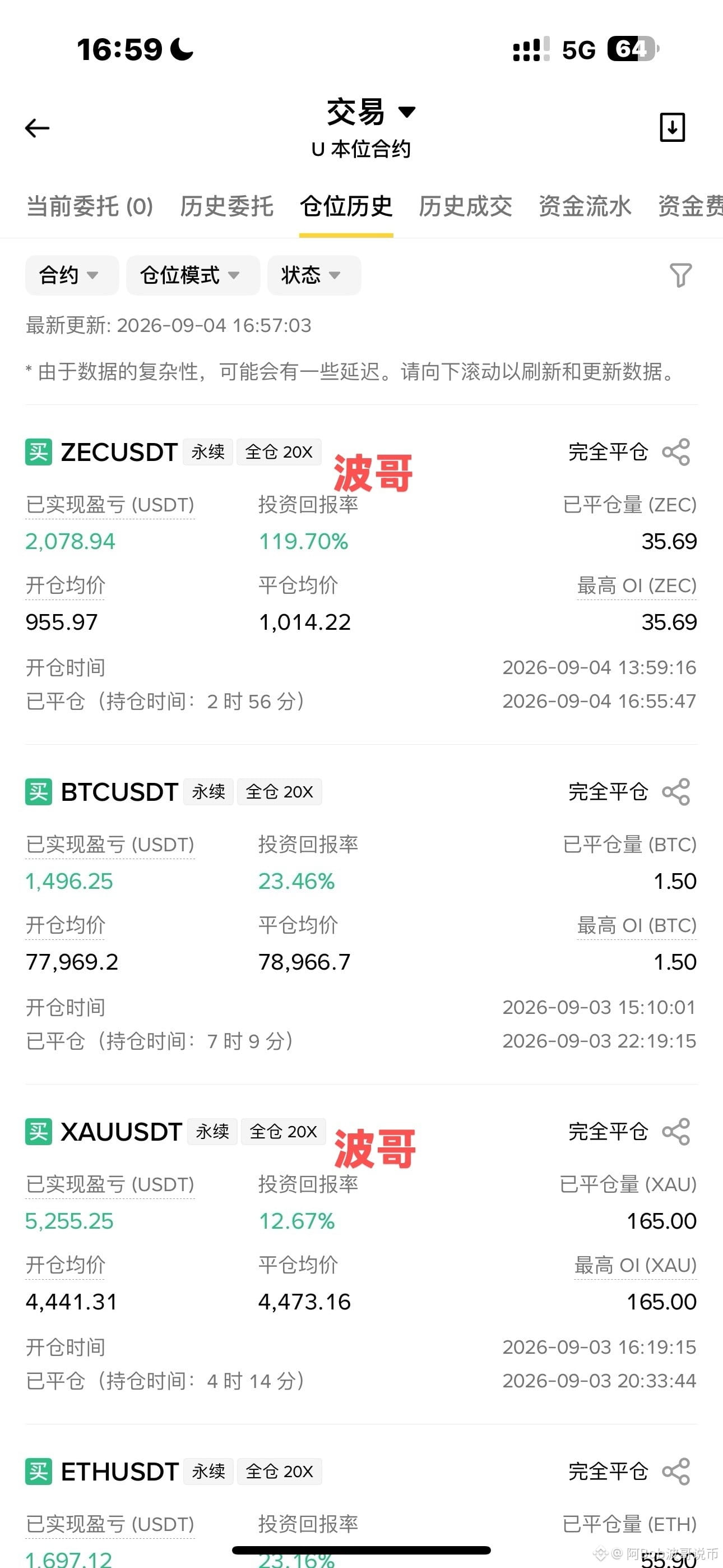
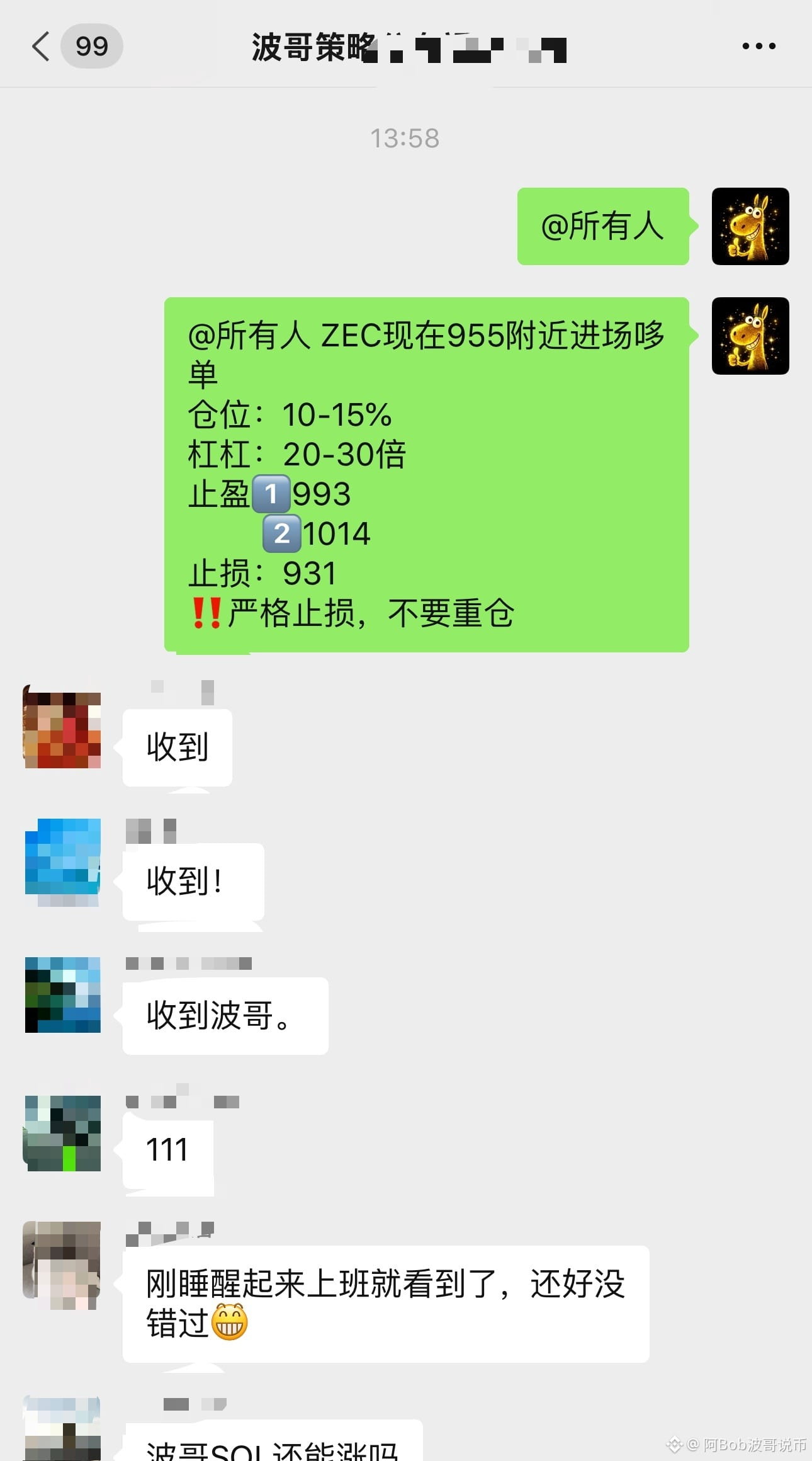
Your account hasn’t reached 10,000 U yet—don’t spend all day thinking about a 10x return. First, protect your account; that matters more than anything.
Over the years, I’ve noticed that when small accounts go to zero, it’s often not because the principal is too small—it’s because people are too impatient. They have a few thousand U and want to gamble on obscure coins, max out leverage, and bet on one-direction moves. By the time the opportunity arrives, the principal has already been wiped out by their own actions.
The reason small funds can grow isn’t luck—it’s discipline over the long term. Only trade trends you understand. Only make money within your knowledge range. When the market starts moving, then follow. When volume and momentum line up, then act. If the signal disappears, get out. Take profits in batches. Cut losses decisively. Do fewer impulsive trades, and your account has an extra bit of confidence to stay alive.
The biggest advantage of small capital is never the prospect of instant wealth—it’s the chance to make mistakes and start over. Get to 10,000 U first, then 20,000, then 50,000. Step by step, compounding is the real underlying logic. In the end, the people who can consistently make money are often not the ones who shout the loudest with trade calls—they’re the ones who stick to the rules the most.
Since your capital isn’t large yet, don’t rush into it. Learn positions, stop-losses, and timing first—then the road will become steadier the further you go.
#俄乌同时宣布停火3天
Over the years, I’ve noticed that when small accounts go to zero, it’s often not because the principal is too small—it’s because people are too impatient. They have a few thousand U and want to gamble on obscure coins, max out leverage, and bet on one-direction moves. By the time the opportunity arrives, the principal has already been wiped out by their own actions.
The reason small funds can grow isn’t luck—it’s discipline over the long term. Only trade trends you understand. Only make money within your knowledge range. When the market starts moving, then follow. When volume and momentum line up, then act. If the signal disappears, get out. Take profits in batches. Cut losses decisively. Do fewer impulsive trades, and your account has an extra bit of confidence to stay alive.
The biggest advantage of small capital is never the prospect of instant wealth—it’s the chance to make mistakes and start over. Get to 10,000 U first, then 20,000, then 50,000. Step by step, compounding is the real underlying logic. In the end, the people who can consistently make money are often not the ones who shout the loudest with trade calls—they’re the ones who stick to the rules the most.
Since your capital isn’t large yet, don’t rush into it. Learn positions, stop-losses, and timing first—then the road will become steadier the further you go.
#俄乌同时宣布停火3天
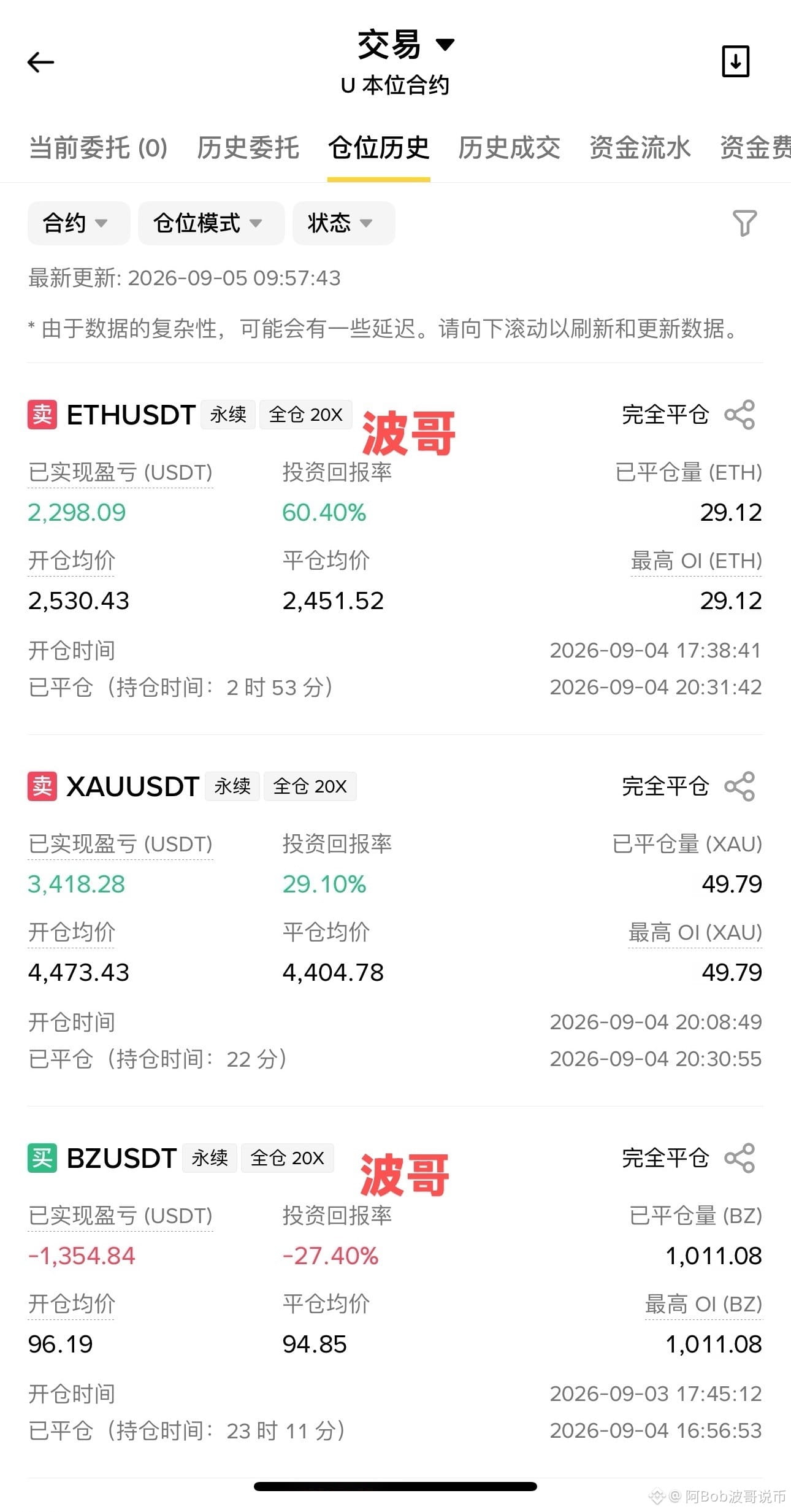
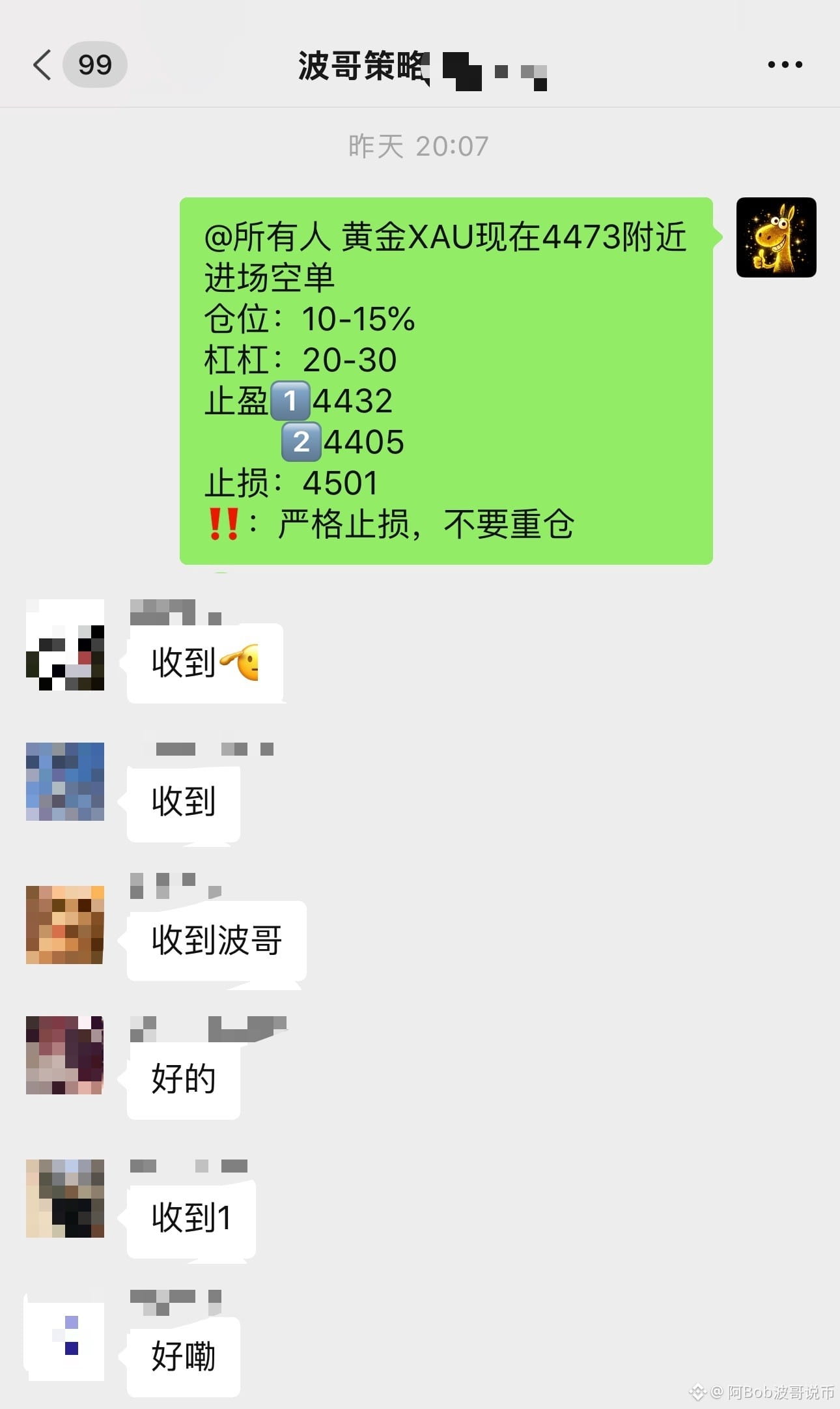
Why is it that things seem fine in the judgment, but the money is gone? Because you care about whether it’s “right,” while the market cares about “when.”
Many people think entering the trade is the beginning of making money, but in the eyes of those who know how to do it, entering is only the first step—locking risk into a controllable range. If the direction is correct, what then? Enter too early, and a normal pullback will shake you out; enter too late, chase at the peak of emotion, and when the price turns, you’re back to losing. Even if the direction is right, if the timing is wrong, you still won’t make money.
I used to be like that too—seeing the direction correctly, but each entry happened at the wrong point. Either I got swept out by the stop-loss, or I couldn’t hold on. Later I finally understood that that single moment of entry matters far more than what direction you think is right.
So now I don’t guess direction or bet on news. I just wait for signals. When the signal arrives, I act; when it doesn’t, I just watch. When the market hasn’t responded, doing nothing is the best move. A lot of the time, when you lose money, it’s not because your judgment is wrong—it’s because you acted too early.
Is technical analysis useful? It is. But technicals can only help you avoid fewer traps. What truly makes you money is something else: when the market is ready to move, do you dare to get in? When the setup looks tempting, can you restrain yourself? Most people can’t do these two things because they can’t hold back impulsiveness, and they can’t make decisive moves.
I used to draw lines every day, copy strategies, and chase the news—the account kept getting thinner. Then someone pointed it out to me, and only after that did I slowly train my sense of timing. Now when I trade, it’s based on timing—not on feelings.
If you’re still trading based on emotions, sooner or later you’ll have to pay tuition. If you truly want to turn things around, you’ll find your way yourself.
#伊朗将设霍尔木兹海峡限制区
Many people think entering the trade is the beginning of making money, but in the eyes of those who know how to do it, entering is only the first step—locking risk into a controllable range. If the direction is correct, what then? Enter too early, and a normal pullback will shake you out; enter too late, chase at the peak of emotion, and when the price turns, you’re back to losing. Even if the direction is right, if the timing is wrong, you still won’t make money.
I used to be like that too—seeing the direction correctly, but each entry happened at the wrong point. Either I got swept out by the stop-loss, or I couldn’t hold on. Later I finally understood that that single moment of entry matters far more than what direction you think is right.
So now I don’t guess direction or bet on news. I just wait for signals. When the signal arrives, I act; when it doesn’t, I just watch. When the market hasn’t responded, doing nothing is the best move. A lot of the time, when you lose money, it’s not because your judgment is wrong—it’s because you acted too early.
Is technical analysis useful? It is. But technicals can only help you avoid fewer traps. What truly makes you money is something else: when the market is ready to move, do you dare to get in? When the setup looks tempting, can you restrain yourself? Most people can’t do these two things because they can’t hold back impulsiveness, and they can’t make decisive moves.
I used to draw lines every day, copy strategies, and chase the news—the account kept getting thinner. Then someone pointed it out to me, and only after that did I slowly train my sense of timing. Now when I trade, it’s based on timing—not on feelings.
If you’re still trading based on emotions, sooner or later you’ll have to pay tuition. If you truly want to turn things around, you’ll find your way yourself.
#伊朗将设霍尔木兹海峡限制区
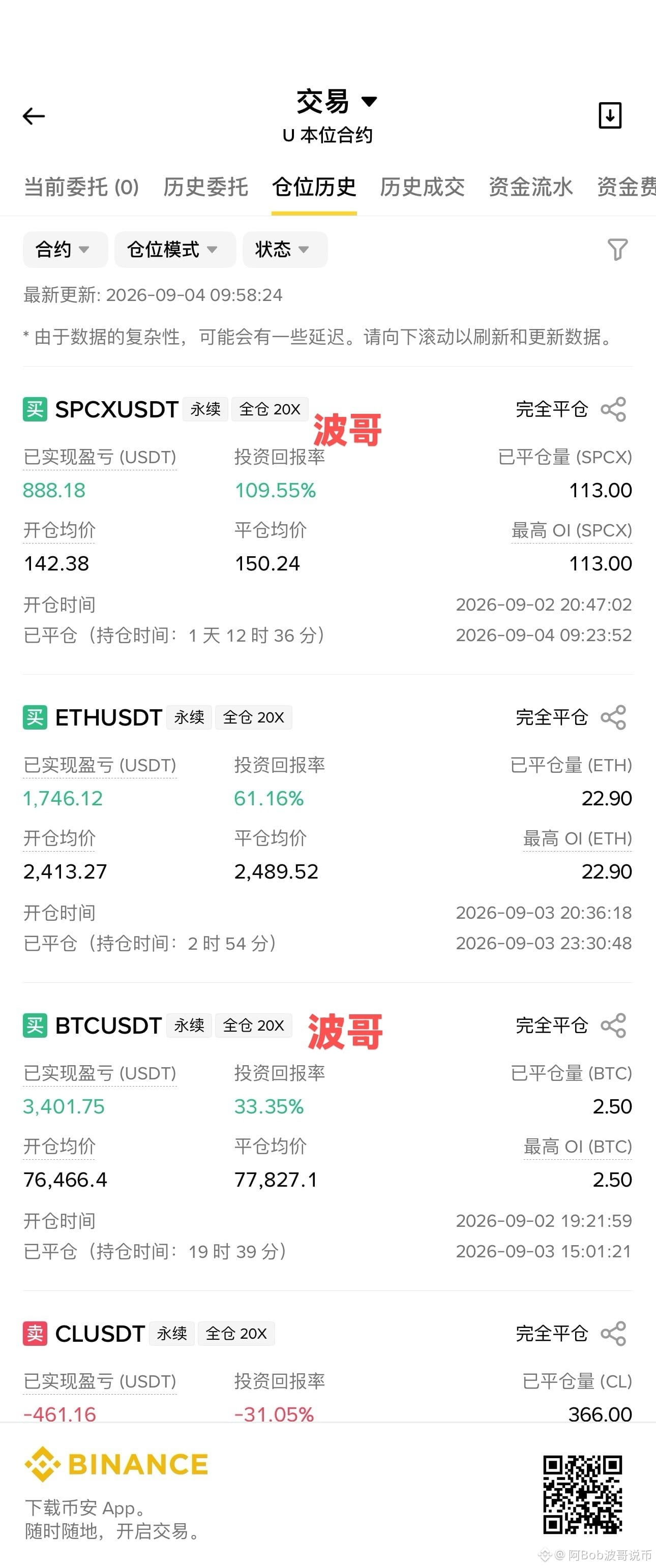
850U to 210k (not talent—it's execution).
With only 850U left in his account, he came to find me: “Is there still a chance?” I’ve heard too many people ask that, but the tone of his voice was different from everyone else—not pleading for help, but unwilling to accept defeat.
I only replied with one question: “Do you have execution?” He said: “As long as there’s one way forward, I dare to take it.” That was enough. No gambling, no going all-in, no chasing overnight wealth—just doing trades steadily, bite by bite.
The first trade started with 850U. He ate the profits steadily, then began to compound. He did have some losses in the middle, but he could control them and carry the weight. He doubled in one month; the second month he cleared over 20k; by the fourth month he told me: “Bro, I’m not in a rush now. I know how to take profits.” By the sixth month, his account broke 210k.
He wasn’t a chosen one, and there was no inside information. It was all done with execution and a sense of timing. I don’t teach people to predict market ups and downs—I teach them how to survive in the market. How small capital can be rolled into bigger capital, and how you can go from being the one being cut to the one who controls the rhythm.
Many people look down on 850U, but I know this is the real starting point for most. If you truly have the will, you’ll come find me yourself.
#美国空袭伊朗油轮德黑兰限制霍尔木兹海峡
With only 850U left in his account, he came to find me: “Is there still a chance?” I’ve heard too many people ask that, but the tone of his voice was different from everyone else—not pleading for help, but unwilling to accept defeat.
I only replied with one question: “Do you have execution?” He said: “As long as there’s one way forward, I dare to take it.” That was enough. No gambling, no going all-in, no chasing overnight wealth—just doing trades steadily, bite by bite.
The first trade started with 850U. He ate the profits steadily, then began to compound. He did have some losses in the middle, but he could control them and carry the weight. He doubled in one month; the second month he cleared over 20k; by the fourth month he told me: “Bro, I’m not in a rush now. I know how to take profits.” By the sixth month, his account broke 210k.
He wasn’t a chosen one, and there was no inside information. It was all done with execution and a sense of timing. I don’t teach people to predict market ups and downs—I teach them how to survive in the market. How small capital can be rolled into bigger capital, and how you can go from being the one being cut to the one who controls the rhythm.
Many people look down on 850U, but I know this is the real starting point for most. If you truly have the will, you’ll come find me yourself.
#美国空袭伊朗油轮德黑兰限制霍尔木兹海峡
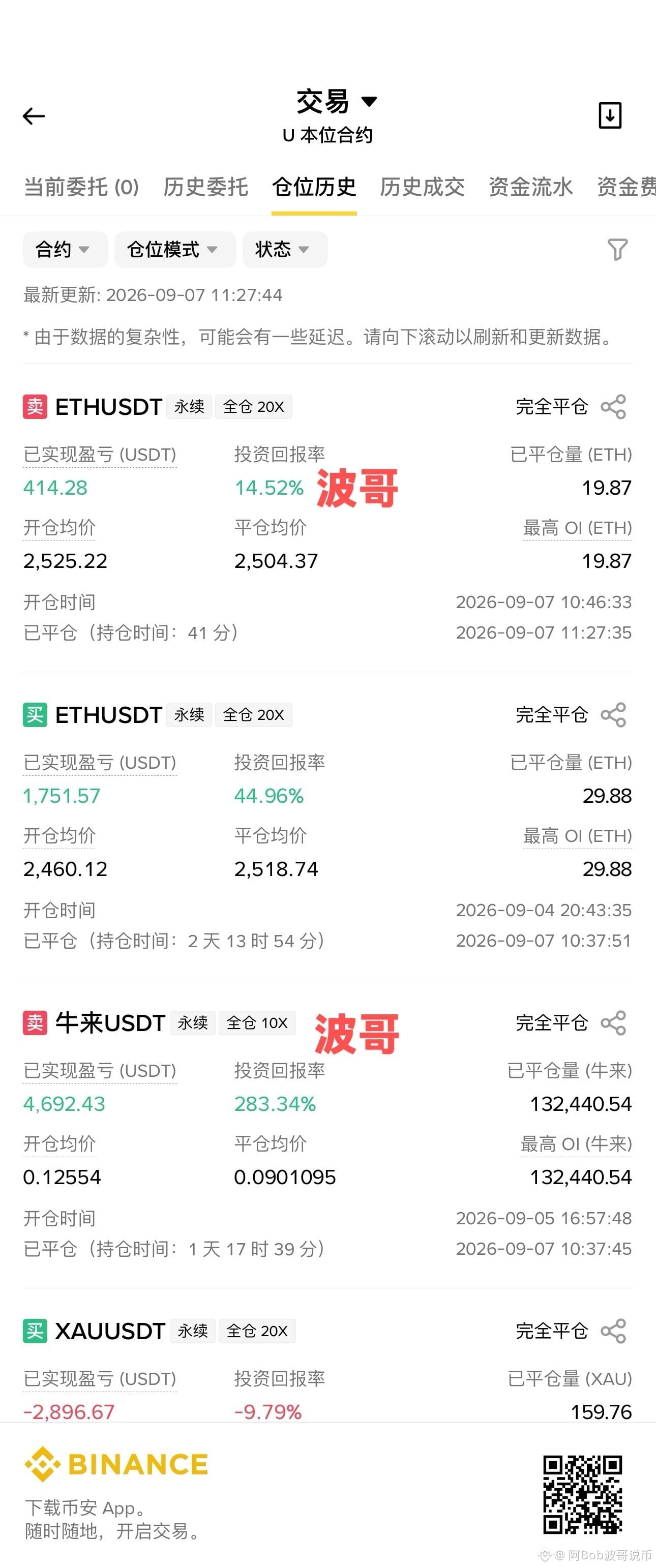
The same problem keeps happening—those who get liquidated are gone, and new ones step in.
The difference is that some people are trading, while others are buying lessons. Every position that gets wiped out is accurately turned into numbers in someone else’s account. That is the underlying structure of the derivatives market.
But why can some people stay in this market for a long time? Because their approach is different. They treat contracts as a tool, not a casino. Most people are in cash 70% of the time, waiting only for market sentiment to reach extremes—buying when panic hits, leaving when frenzy peaks.
Their core comes down to three things: first, stop-loss is not optional; it is mandatory, and a single trade loss is locked within a tolerable range. If they are wrong, they admit it immediately. Second, once the profit is enough, they exit—they do not aim to sell at the highest point, only to take the most certain middle part. Third, they do not act on feeling; they execute only according to signals.
Some ask whether contracts are gambling. In fact, they are not. Those who gamble get liquidated because they are gambling; those who know how to play may still get liquidated, but that is just a normal cost within overall profitability.
If you are still making decisions based on feelings and news, it is better to stop and think about who you are playing against. If you want to change your way of living and learn how to think like a hunter, start by learning how not to let yourself get eliminated so easily.
#俄乌同时宣布停火3天
The difference is that some people are trading, while others are buying lessons. Every position that gets wiped out is accurately turned into numbers in someone else’s account. That is the underlying structure of the derivatives market.
But why can some people stay in this market for a long time? Because their approach is different. They treat contracts as a tool, not a casino. Most people are in cash 70% of the time, waiting only for market sentiment to reach extremes—buying when panic hits, leaving when frenzy peaks.
Their core comes down to three things: first, stop-loss is not optional; it is mandatory, and a single trade loss is locked within a tolerable range. If they are wrong, they admit it immediately. Second, once the profit is enough, they exit—they do not aim to sell at the highest point, only to take the most certain middle part. Third, they do not act on feeling; they execute only according to signals.
Some ask whether contracts are gambling. In fact, they are not. Those who gamble get liquidated because they are gambling; those who know how to play may still get liquidated, but that is just a normal cost within overall profitability.
If you are still making decisions based on feelings and news, it is better to stop and think about who you are playing against. If you want to change your way of living and learn how to think like a hunter, start by learning how not to let yourself get eliminated so easily.
#俄乌同时宣布停火3天
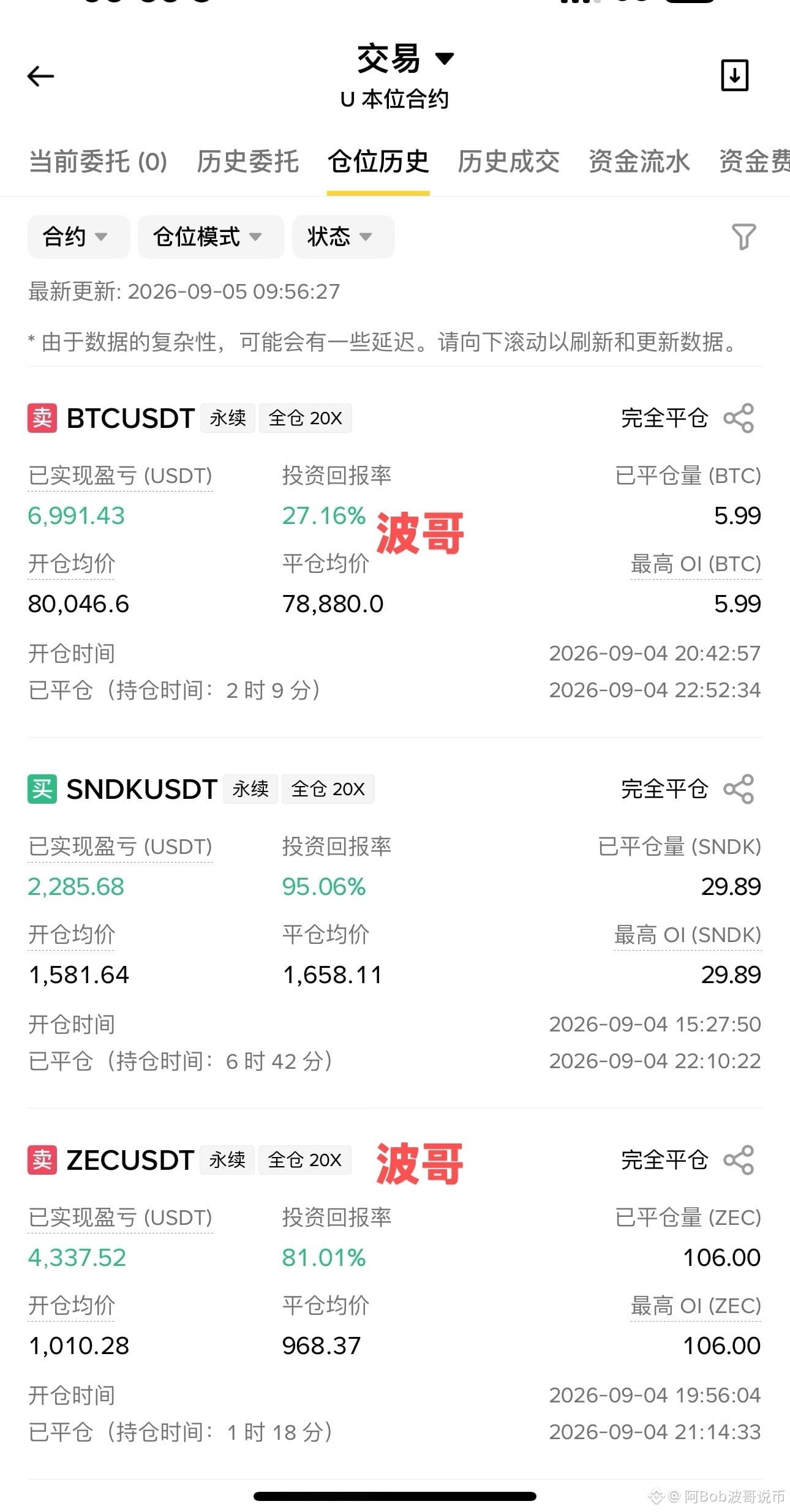
From 1000U to 10k, it relies on rhythm, not mysticism.
It’s a matter of a few days: keep the pace steady, take what should be taken, run when you should run. When the market moves, I get in. While others are still hesitating, I’m already thinking about taking profits.
Every day people DM me asking, “Can you still play with only 800 left?” and “How did you do it?” Brother, it’s not luck—it’s using rhythm to hold the situation down. You think I’m lucky, but you’re still gambling, while I’ve already started controlling it.
You don’t make money because you’re stupid; it’s because no one is guiding you onto the right path. I only help those who are willing to change, willing to fight, and truly want to turn things around. Those who keep doing the opposite while acting tough should go rest early and stop staying up late.
Doubling isn’t the problem; the key is whether you want to change. You spend every day looking at other people’s results, while I’m doubling my own positions every day. Some people make ten times in five days, some blow up ten times in a year. Which kind of person you want to be, I don’t need to say it for you.
#伊朗称袭击3艘美舰3艘油轮
It’s a matter of a few days: keep the pace steady, take what should be taken, run when you should run. When the market moves, I get in. While others are still hesitating, I’m already thinking about taking profits.
Every day people DM me asking, “Can you still play with only 800 left?” and “How did you do it?” Brother, it’s not luck—it’s using rhythm to hold the situation down. You think I’m lucky, but you’re still gambling, while I’ve already started controlling it.
You don’t make money because you’re stupid; it’s because no one is guiding you onto the right path. I only help those who are willing to change, willing to fight, and truly want to turn things around. Those who keep doing the opposite while acting tough should go rest early and stop staying up late.
Doubling isn’t the problem; the key is whether you want to change. You spend every day looking at other people’s results, while I’m doubling my own positions every day. Some people make ten times in five days, some blow up ten times in a year. Which kind of person you want to be, I don’t need to say it for you.
#伊朗称袭击3艘美舰3艘油轮
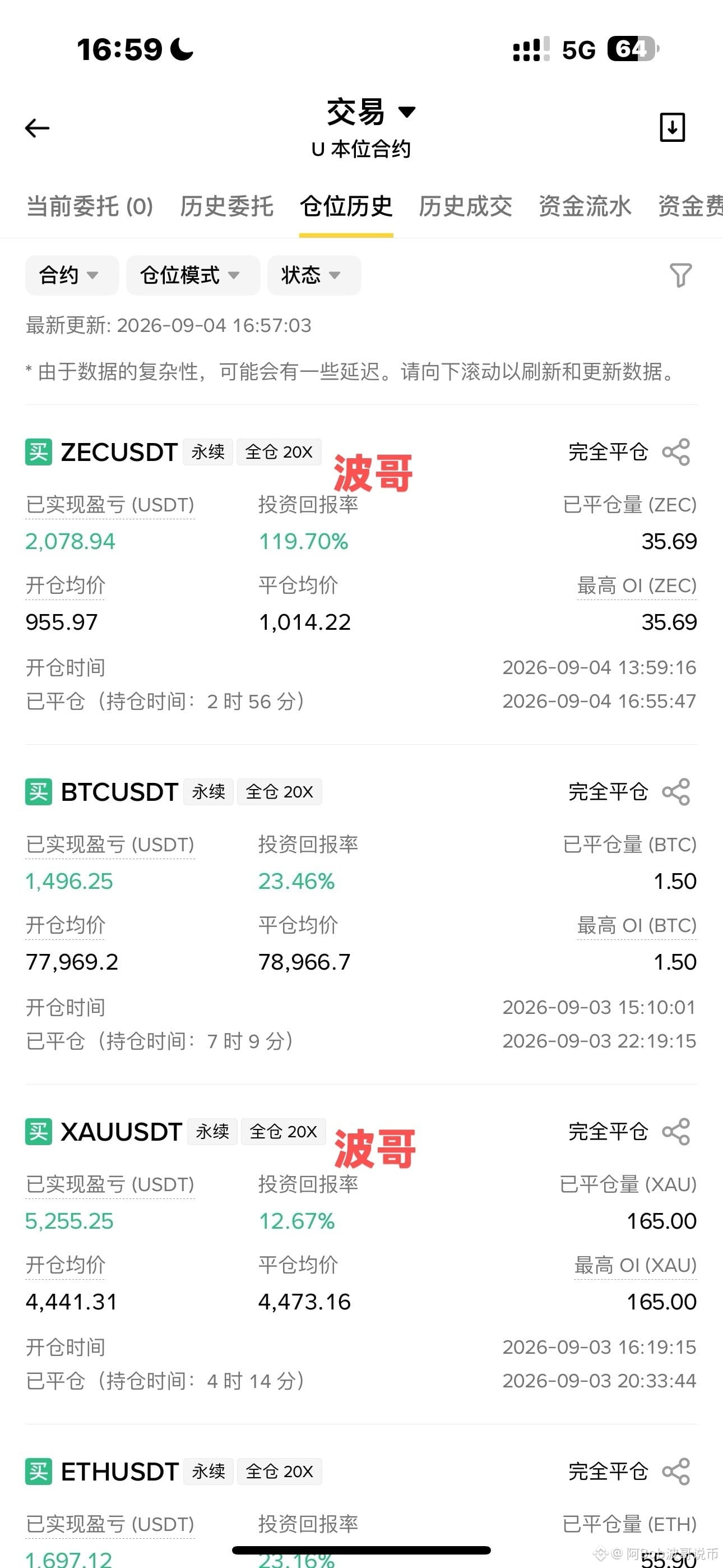
Blew up three times, lost 700,000, and won it all back plus more in three days.
Last week, the market was extremely volatile and whipsawing. One of my followers blew up three trades in a row and lost everything, which was not a good situation at all. He contacted me overnight and asked bluntly whether he could turn it around. I directly told him to go long ETH, got the entry point right, and took profit after a few dozen points over three days. The account recovered, and he even made a small profit.
He said: “If I had met you earlier, I wouldn’t have ended up so miserable.”
This is the reality of this market—when you lose money, no one cares about you; when you make money, people always say it was luck. I never believe in luck. What I rely on is position control, rhythm, market feel, and the judgment I’ve honed through years of real experience.
I only take on people who truly want to turn things around and are willing to change. The market changes fast; I speak up as soon as there’s movement, act when it’s time to act, and stop when it’s not.
It’s hard to keep going in this market alone.
#美伊互袭油轮冲突升级
Last week, the market was extremely volatile and whipsawing. One of my followers blew up three trades in a row and lost everything, which was not a good situation at all. He contacted me overnight and asked bluntly whether he could turn it around. I directly told him to go long ETH, got the entry point right, and took profit after a few dozen points over three days. The account recovered, and he even made a small profit.
He said: “If I had met you earlier, I wouldn’t have ended up so miserable.”
This is the reality of this market—when you lose money, no one cares about you; when you make money, people always say it was luck. I never believe in luck. What I rely on is position control, rhythm, market feel, and the judgment I’ve honed through years of real experience.
I only take on people who truly want to turn things around and are willing to change. The market changes fast; I speak up as soon as there’s movement, act when it’s time to act, and stop when it’s not.
It’s hard to keep going in this market alone.
#美伊互袭油轮冲突升级
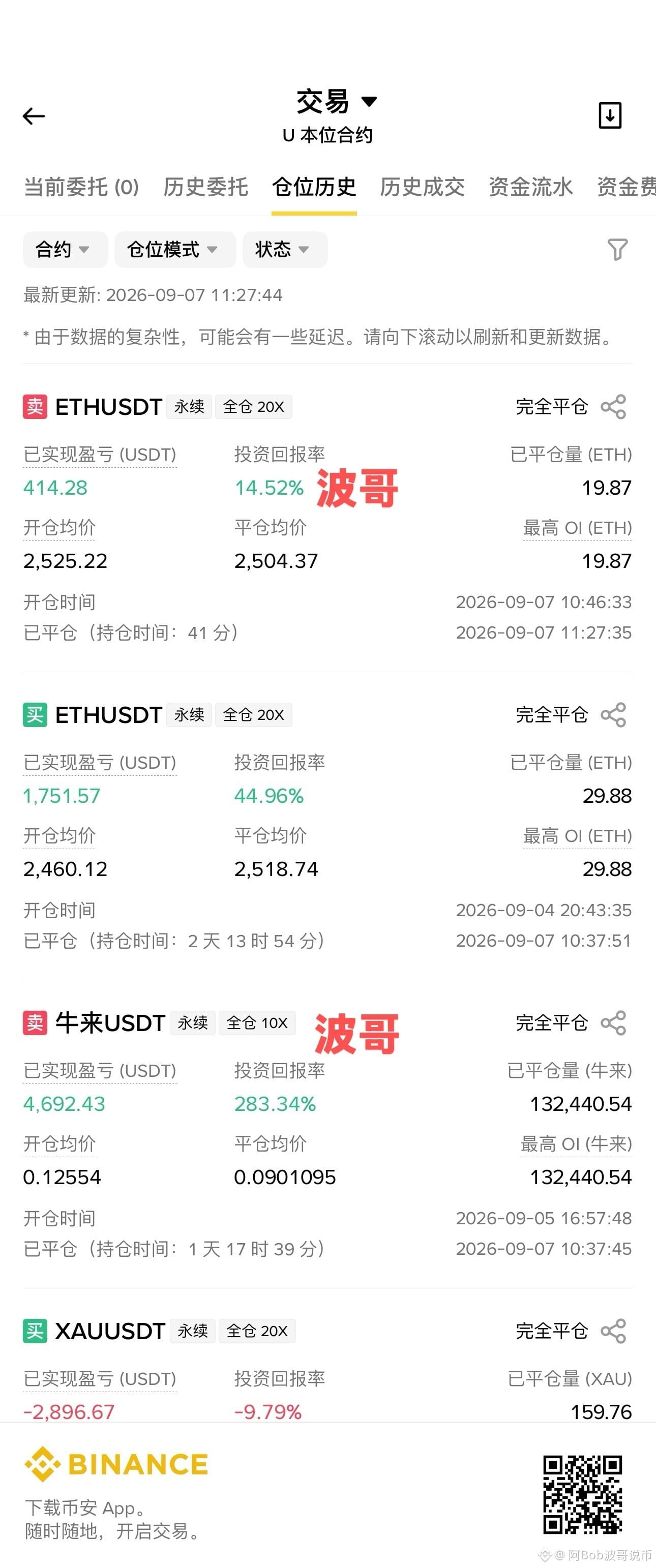
A friend once asked me: “I still have 10,000 U on hand. How can I turn it back around?” I didn’t give him a method. I only asked him one question: “Do you dare to only make 5 trades?”
Don’t think I’m joking. That 10,000 U, I later used it to make 78,000. It wasn’t by watching the market all day and trading in and out constantly, but by only taking those opportunities that were truly ready to be acted on.
I used to be greedy too, losing a few hundred here and a few hundred there, thinking it was no big deal. By the time the account had shrunk to just a skeleton, I was numb. Later, I set a rule for myself: at most only a few trades a month, if I was wrong I would only lose a small portion, and if I was right I had to make at least several times more. If I didn’t see a clear signal, I wouldn’t move, wouldn’t gamble, and wouldn’t follow the crowd.
The first time, I went heavy long on ETH at a key structural level and took a solid profit within a few hours. Later, during that BTC rally, I got in ahead of time and directly punched through the position. I got one trade wrong out of several, but every other one paid through; after a few months, the account grew from 10,000 to 78,000. This wasn’t luck. It was putting all my energy into “rhythm” and “certainty.”
Many people can’t turn things around, not because they lack skill, but because they can’t control themselves. If you really want to turn it around, ask yourself one question: do you dare to stay steady after one mistake, and explode after one win?
It’s really hard for one person to go far alone. Finding the right direction matters much more than just forcing yourself to keep going alone.
#伊朗将设霍尔木兹海峡限制区
Don’t think I’m joking. That 10,000 U, I later used it to make 78,000. It wasn’t by watching the market all day and trading in and out constantly, but by only taking those opportunities that were truly ready to be acted on.
I used to be greedy too, losing a few hundred here and a few hundred there, thinking it was no big deal. By the time the account had shrunk to just a skeleton, I was numb. Later, I set a rule for myself: at most only a few trades a month, if I was wrong I would only lose a small portion, and if I was right I had to make at least several times more. If I didn’t see a clear signal, I wouldn’t move, wouldn’t gamble, and wouldn’t follow the crowd.
The first time, I went heavy long on ETH at a key structural level and took a solid profit within a few hours. Later, during that BTC rally, I got in ahead of time and directly punched through the position. I got one trade wrong out of several, but every other one paid through; after a few months, the account grew from 10,000 to 78,000. This wasn’t luck. It was putting all my energy into “rhythm” and “certainty.”
Many people can’t turn things around, not because they lack skill, but because they can’t control themselves. If you really want to turn it around, ask yourself one question: do you dare to stay steady after one mistake, and explode after one win?
It’s really hard for one person to go far alone. Finding the right direction matters much more than just forcing yourself to keep going alone.
#伊朗将设霍尔木兹海峡限制区
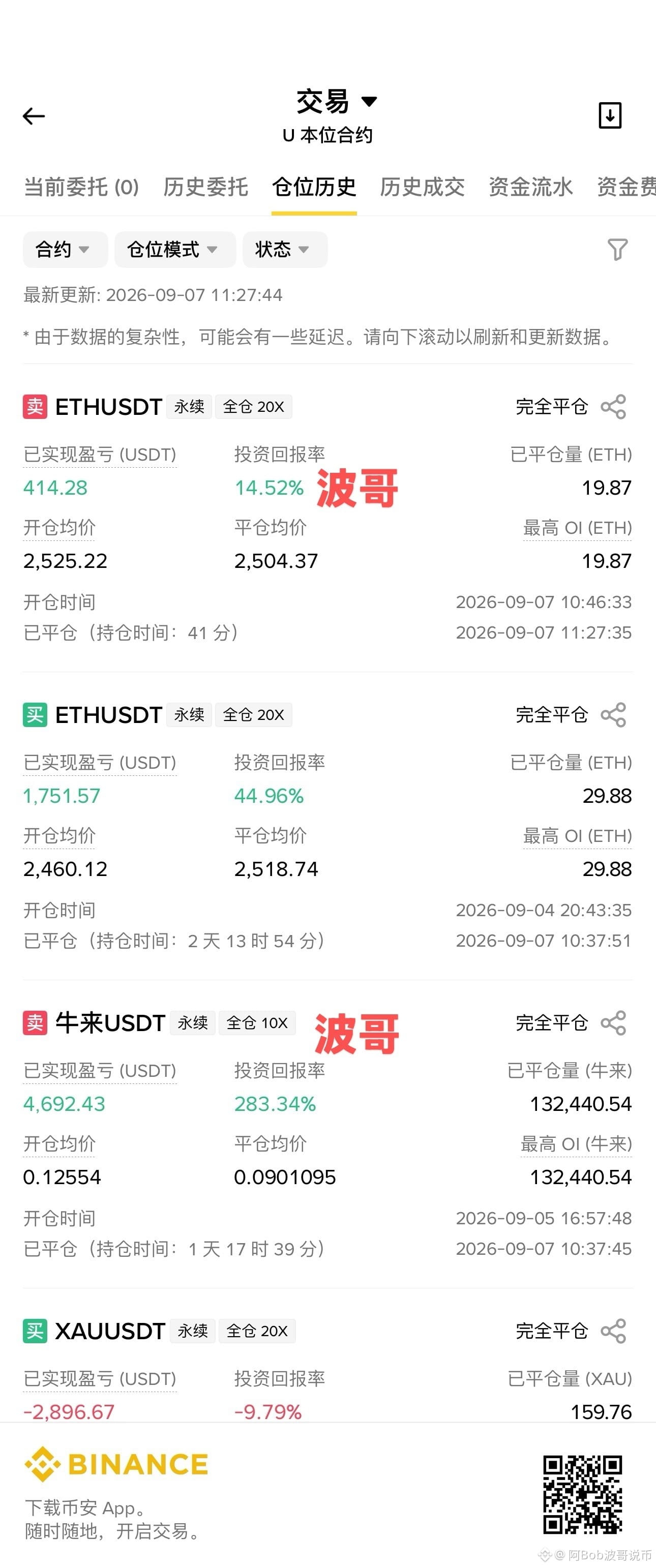
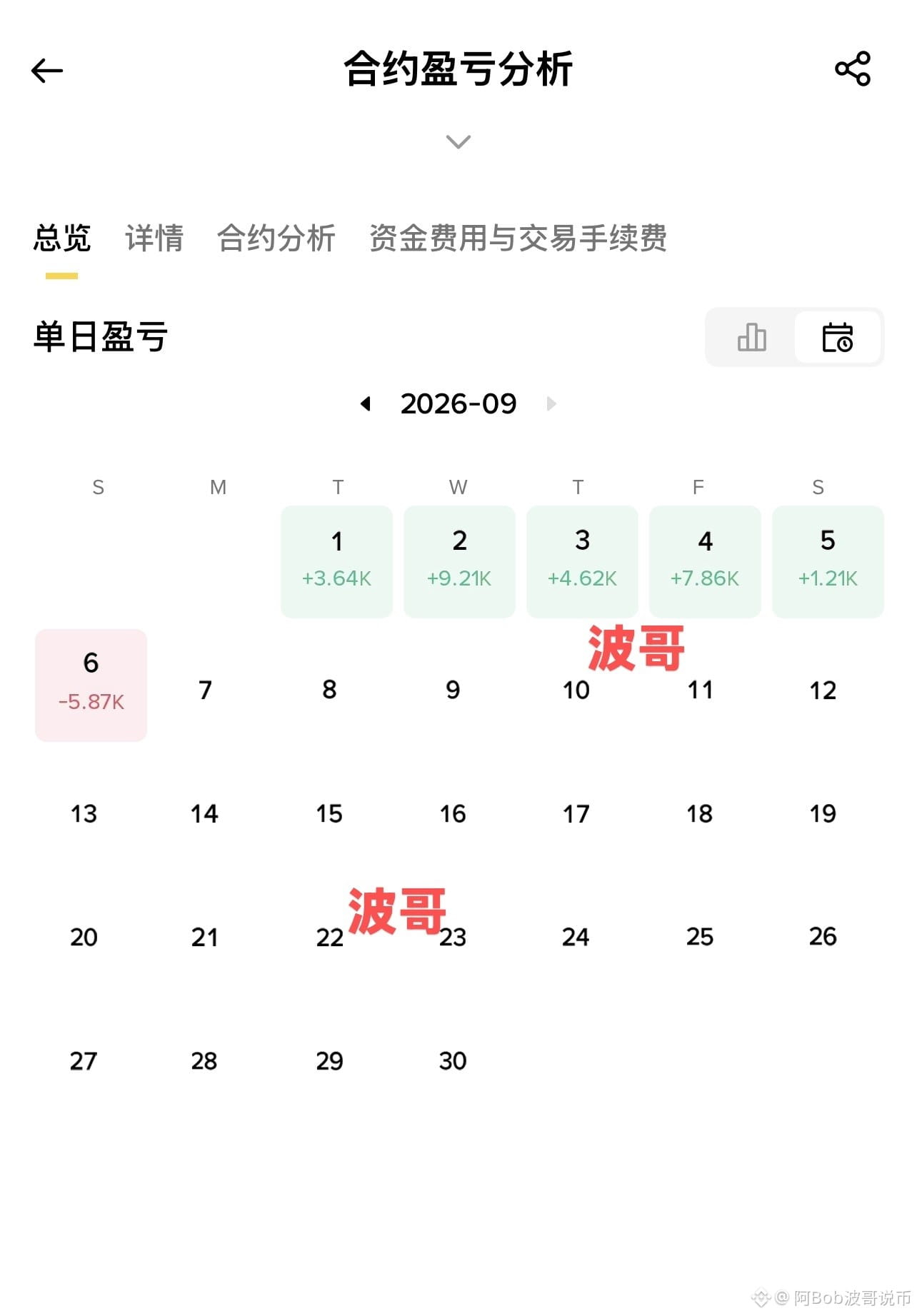
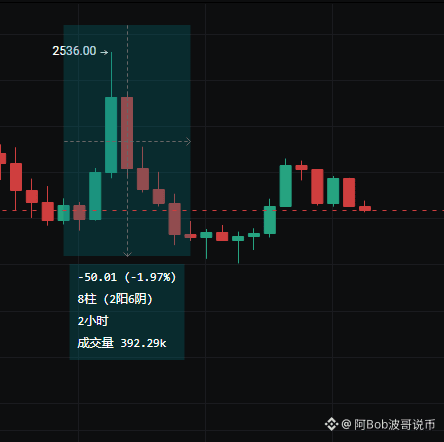
This approach is something I’ve used for a long time—the core is just one sentence: do less, do it slower, and go with the trend.
First, there are three things to avoid as much as possible. When prices are rising, don’t rush to chase; real opportunities are often not when sentiment is at its highest, but after the market has cooled down. Don’t go all in on a position; being fully invested is like tying yourself down, and with even a slight market swing you’ll have no room to adjust. Also, don’t trade too frequently. When the market is moving sideways, random actions consume not only fees, but also your judgment.
The rhythm of short-term trading is also worth noting: after consolidation, a direction usually emerges, but don’t act before that direction is confirmed. Most actions during a sideways phase are unnecessary; patience matters more than entering the market. Candlesticks can provide a reference for timing, but don’t let emotions run opposite to them. After trend acceleration, the market often enters consolidation, and during that period it’s best to reduce activity. Build positions in batches; don’t deploy everything at once. The market can change at any time—don’t be greedy when it rises, and don’t panic when it falls. The key is to adjust with the structure, not guess tops and bottoms.
In the end, what trading competes on is not technique, but restraint, patience, and execution. Only those who can control their hands are qualified to stay in the market.
ZEC market cap surpasses DOGE
#伊朗将设霍尔木兹海峡限制区
First, there are three things to avoid as much as possible. When prices are rising, don’t rush to chase; real opportunities are often not when sentiment is at its highest, but after the market has cooled down. Don’t go all in on a position; being fully invested is like tying yourself down, and with even a slight market swing you’ll have no room to adjust. Also, don’t trade too frequently. When the market is moving sideways, random actions consume not only fees, but also your judgment.
The rhythm of short-term trading is also worth noting: after consolidation, a direction usually emerges, but don’t act before that direction is confirmed. Most actions during a sideways phase are unnecessary; patience matters more than entering the market. Candlesticks can provide a reference for timing, but don’t let emotions run opposite to them. After trend acceleration, the market often enters consolidation, and during that period it’s best to reduce activity. Build positions in batches; don’t deploy everything at once. The market can change at any time—don’t be greedy when it rises, and don’t panic when it falls. The key is to adjust with the structure, not guess tops and bottoms.
In the end, what trading competes on is not technique, but restraint, patience, and execution. Only those who can control their hands are qualified to stay in the market.
ZEC market cap surpasses DOGE
#伊朗将设霍尔木兹海峡限制区
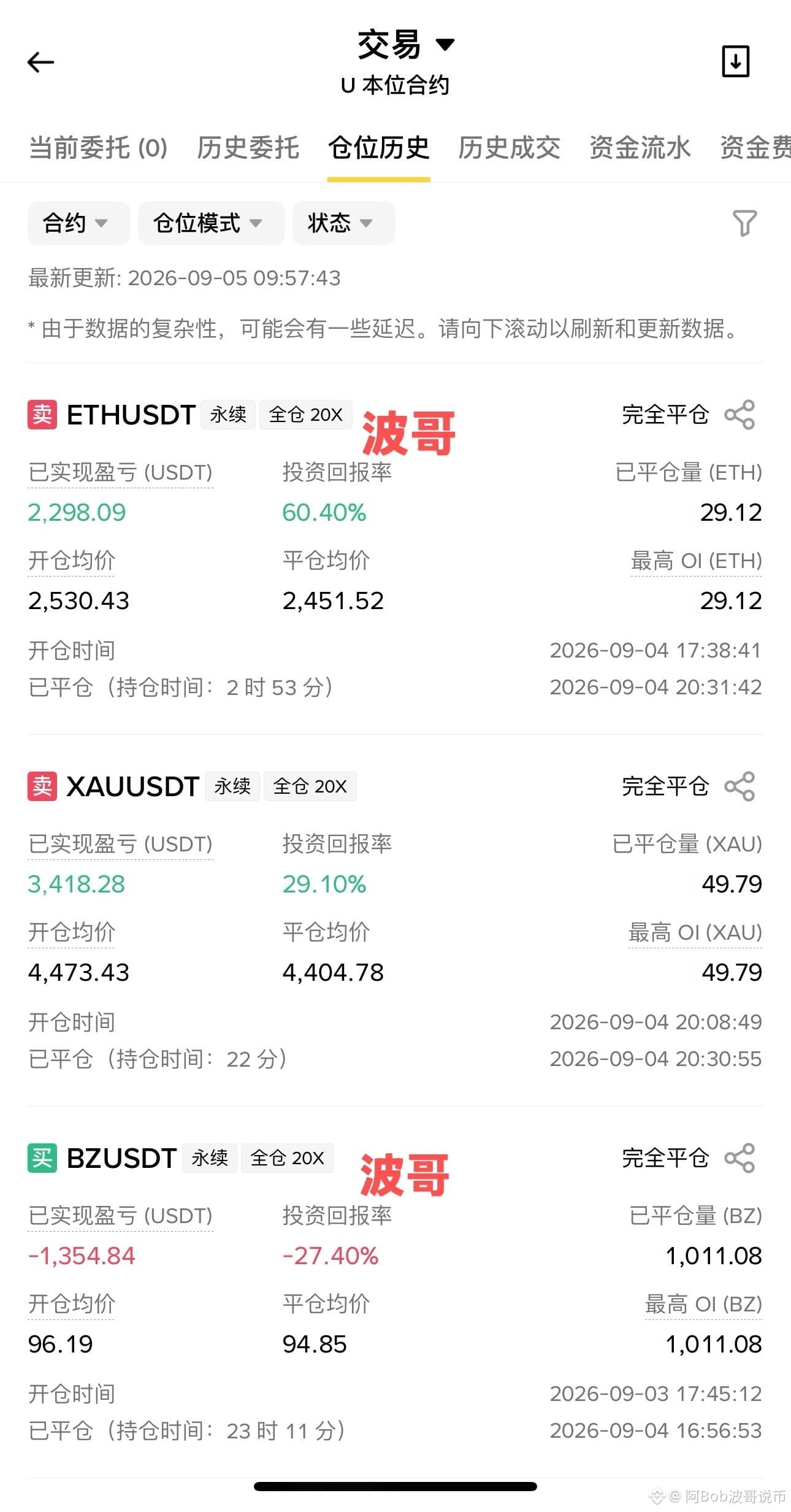
To be honest, making money in the crypto world isn’t as complicated as people imagine—just don’t be greedy. From last year to now, some followers have turned 10,000 U into over 1 million U. That wasn’t luck; it was a system at work. To make money steadily in crypto, the core is not prediction, but a process that can be executed repeatedly.
Step 1: Build a watchlist. Filter out coins that have appeared on the gainers list within the past 11 days, and eliminate those that have fallen for more than 3 consecutive days. Don’t touch assets that are still dropping.
Step 2: Check the monthly trend. Only trade coins whose monthly MACD has already formed a golden cross. Don’t look at anything with a weak overall direction, and don’t stubbornly hold in a downtrend.
Step 3: Look for daily entry signals. Focus on the 60-day moving average. Only act when the price pulls back to the moving average while volume increases. If there’s no volume, don’t enter; if volume doesn’t expand, don’t confirm.
Step 4: Position rules. Hold when the price is above the 60-day moving average, and exit once it breaks below it—without hesitation. Stay or go, you should be able to tell at a glance, without overthinking.
Three execution details:
When the price rises to a certain level, reduce positions in batches. Lock in the profits that have already run, and let the remaining position ride the trend. The most important rule—if the price directly falls below the 60-day moving average the next day, you must close all positions. Don’t wait, don’t hold, and don’t fantasize about a rebound. Following this one rule can already help you avoid 90% of unnecessary losses.
The method isn’t hard; what’s hard is sticking to it.
Step 1: Build a watchlist. Filter out coins that have appeared on the gainers list within the past 11 days, and eliminate those that have fallen for more than 3 consecutive days. Don’t touch assets that are still dropping.
Step 2: Check the monthly trend. Only trade coins whose monthly MACD has already formed a golden cross. Don’t look at anything with a weak overall direction, and don’t stubbornly hold in a downtrend.
Step 3: Look for daily entry signals. Focus on the 60-day moving average. Only act when the price pulls back to the moving average while volume increases. If there’s no volume, don’t enter; if volume doesn’t expand, don’t confirm.
Step 4: Position rules. Hold when the price is above the 60-day moving average, and exit once it breaks below it—without hesitation. Stay or go, you should be able to tell at a glance, without overthinking.
Three execution details:
When the price rises to a certain level, reduce positions in batches. Lock in the profits that have already run, and let the remaining position ride the trend. The most important rule—if the price directly falls below the 60-day moving average the next day, you must close all positions. Don’t wait, don’t hold, and don’t fantasize about a rebound. Following this one rule can already help you avoid 90% of unnecessary losses.
The method isn’t hard; what’s hard is sticking to it.
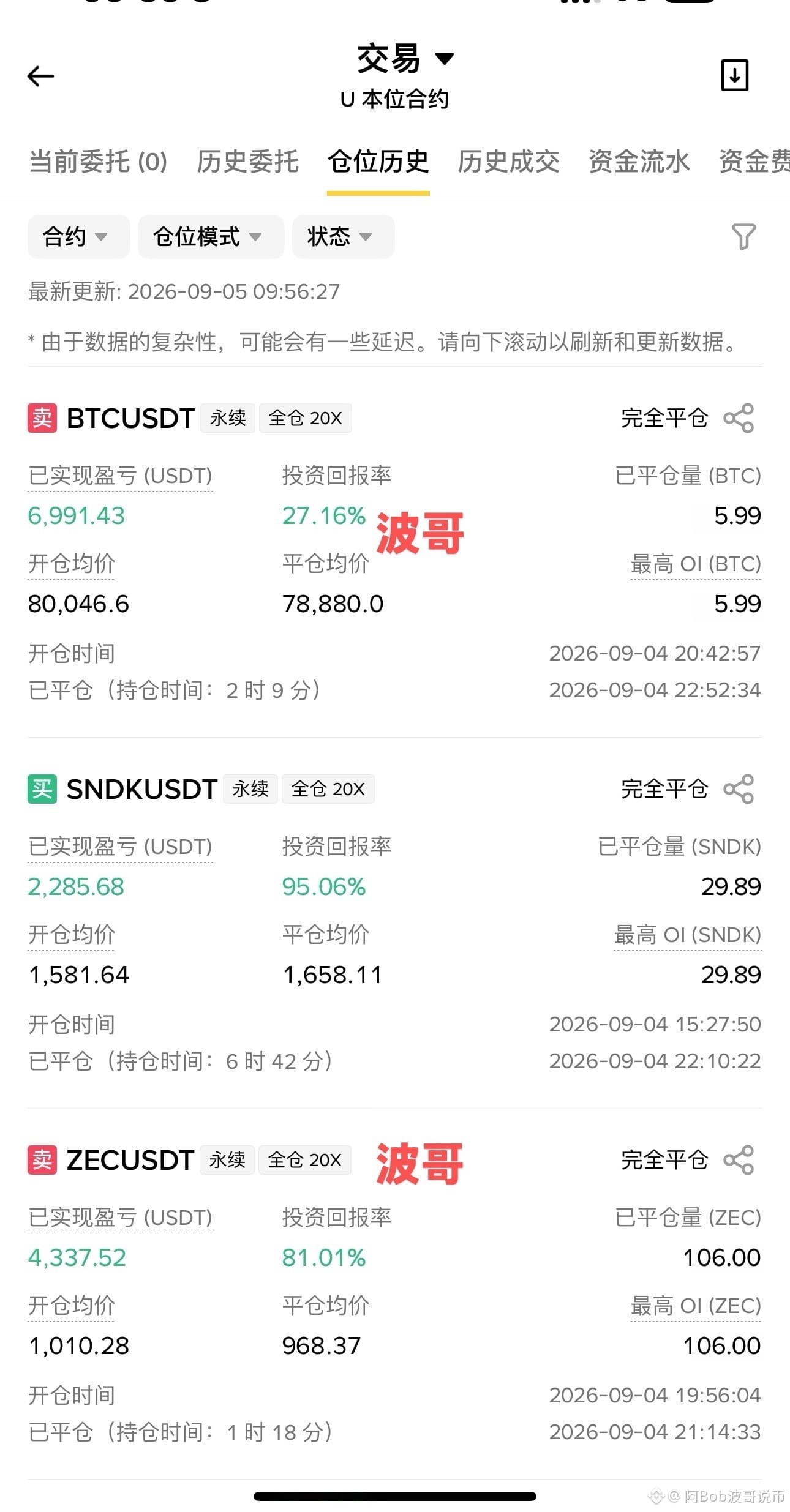
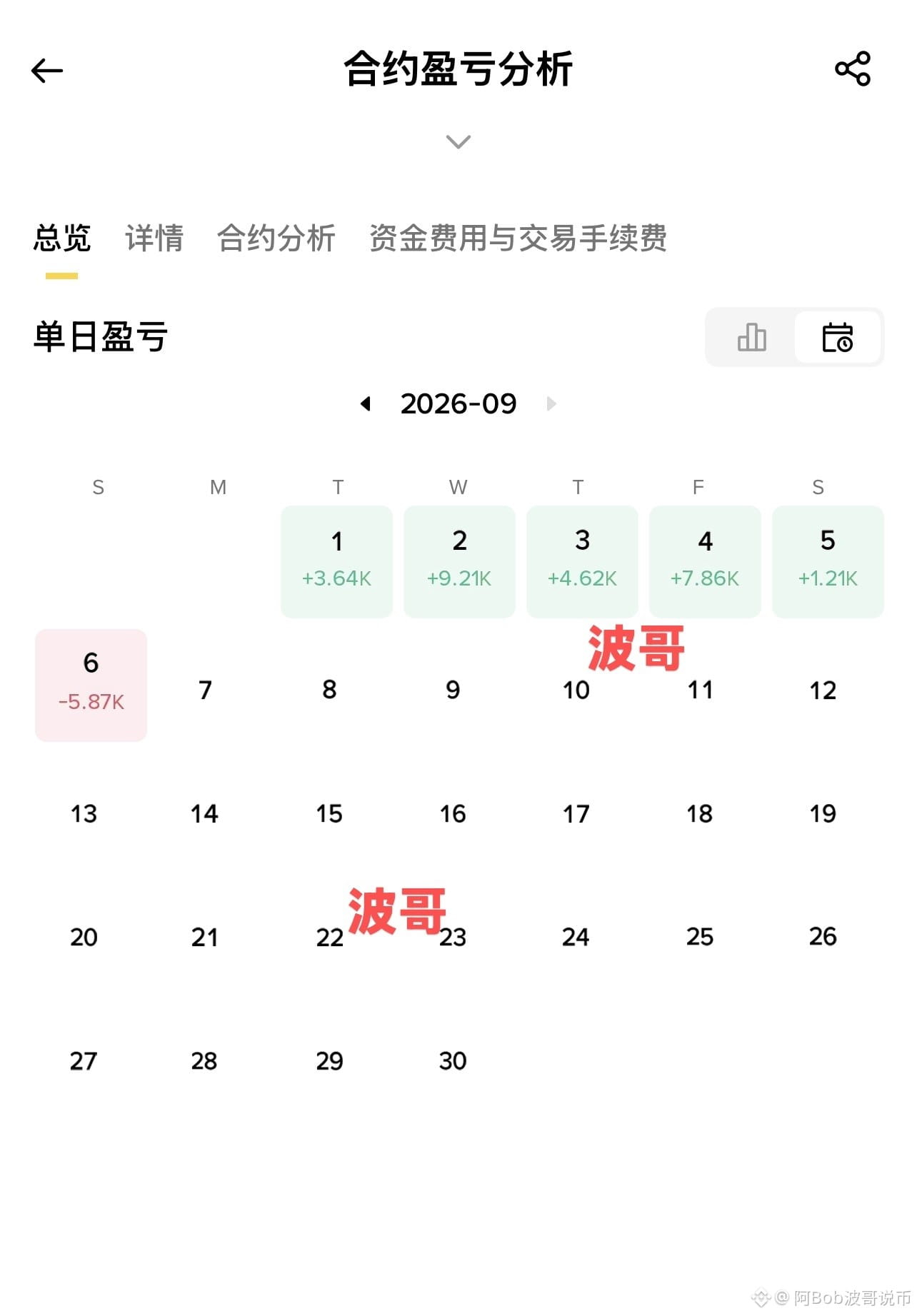

For accounts under 8000U, the easiest mistake is not being unable to read the market, but always wanting to win it back in one shot. I recently worked with a guy who started with 8000U. He didn’t go all-in or use heavy leverage; he simply controlled position sizing and pacing, pushing forward little by little.
First, split your money up; don’t bet it all at once. 8000U should be divided into several parts: one for short-term trades, one for trends, and one as a reserve. Never let a single trade decide whether you can keep going. People who go all in get greedy when it rises and panic when it falls—no exceptions.
Second, when you can’t understand the market, treat it as if you didn’t see it. If it’s moving sideways and the trend is unclear, do nothing. Wait until an opportunity appears before making a move, and once you’re in profit, take it in batches. Don’t always try to eat the whole move from beginning to end. The part of the profit you can actually keep is what’s yours.
Third, feelings can’t be trusted; you need rules. Before opening a position, write down your stop-loss and take-profit, and exit when they’re hit. If you’re in profit, protect part of it first. If you’re losing, don’t add to the position, and never increase size just to recover losses. An account is not a tool for venting your temper.
For small capital to grow, it doesn’t depend on making a big win in one trade. It depends on making fewer mistakes, controlling drawdowns, and letting the account climb slowly. 8000U is not the limit; it’s the starting point. What truly determines how far you can go is whether you can control your position size and emotions.
If one person charges in recklessly, they’ll crash sooner or later; with someone guiding the way, you can walk more steadily.
#美国空袭伊朗油轮德黑兰限制霍尔木兹海峡
#三星SK海力士领涨韩股走高
First, split your money up; don’t bet it all at once. 8000U should be divided into several parts: one for short-term trades, one for trends, and one as a reserve. Never let a single trade decide whether you can keep going. People who go all in get greedy when it rises and panic when it falls—no exceptions.
Second, when you can’t understand the market, treat it as if you didn’t see it. If it’s moving sideways and the trend is unclear, do nothing. Wait until an opportunity appears before making a move, and once you’re in profit, take it in batches. Don’t always try to eat the whole move from beginning to end. The part of the profit you can actually keep is what’s yours.
Third, feelings can’t be trusted; you need rules. Before opening a position, write down your stop-loss and take-profit, and exit when they’re hit. If you’re in profit, protect part of it first. If you’re losing, don’t add to the position, and never increase size just to recover losses. An account is not a tool for venting your temper.
For small capital to grow, it doesn’t depend on making a big win in one trade. It depends on making fewer mistakes, controlling drawdowns, and letting the account climb slowly. 8000U is not the limit; it’s the starting point. What truly determines how far you can go is whether you can control your position size and emotions.
If one person charges in recklessly, they’ll crash sooner or later; with someone guiding the way, you can walk more steadily.
#美国空袭伊朗油轮德黑兰限制霍尔木兹海峡
#三星SK海力士领涨韩股走高
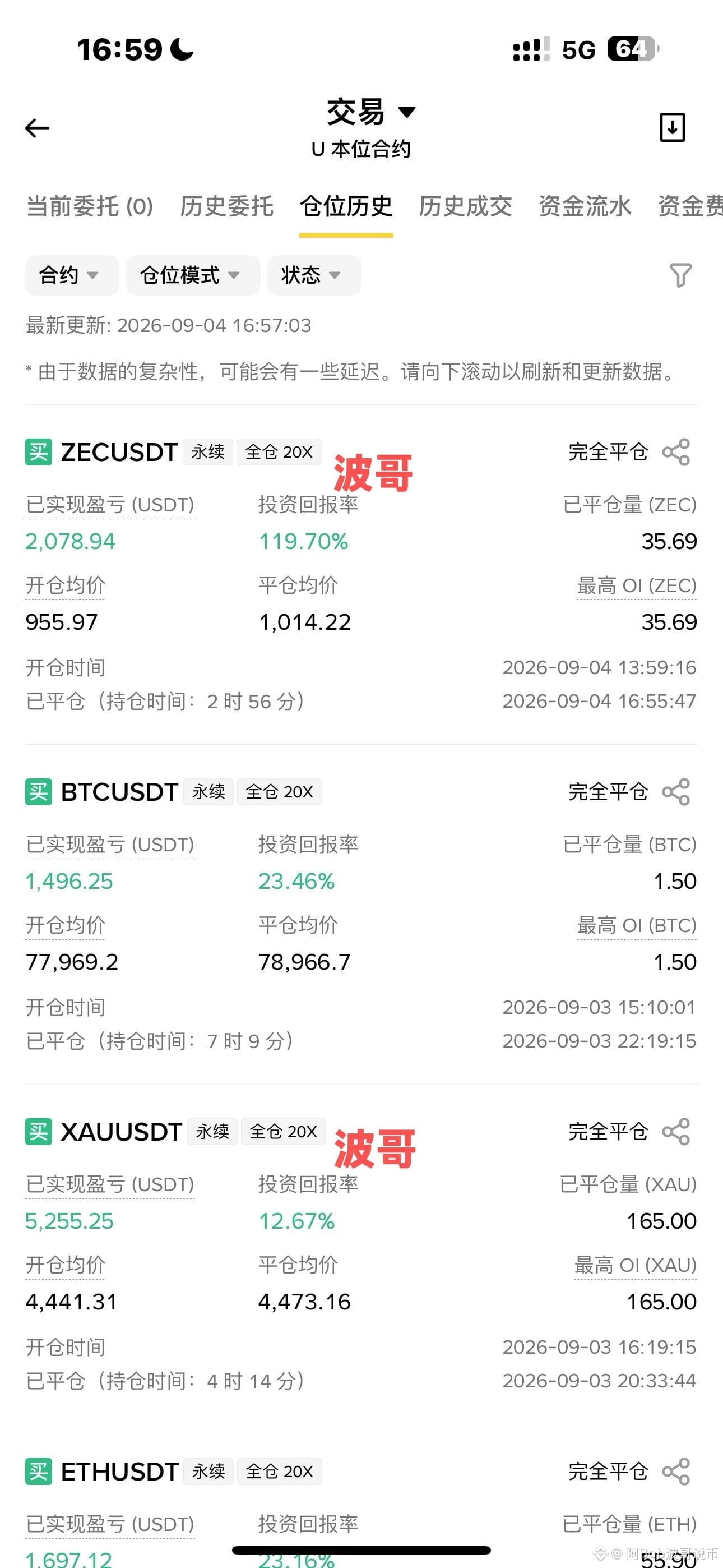
That line, “nailing one move doesn’t mean long-term profits,” is where many people start losing money.
After making a few quick gains, they start chasing hot topics, opening trades frequently, and increasing position sizes. When the market changes, the profits from before are quickly given back.
People who can truly keep trading long term have surprisingly simple trading logic. I’m more willing now to wait and only trade setups I can understand. If there’s no clear opportunity, I stay flat and don’t force an entry out of fear of missing out. When choosing coins, I first look at the trend and where the money is paying attention, and I don’t chase coins that have already surged for several straight sessions with clearly increased risk.
Once the direction is clear, I wait for a suitable entry and scale in gradually, instead of jumping in after seeing one big bullish candle. After entering, I also don’t get greedy and try to catch the entire move; once the target is reached, I gradually lock in profits and let the remaining position follow the trend.
The hardest part of trading has never been finding a method, but executing it all the way through. When it’s time to cut losses, people hate to leave; after a loss, they add to the position; when the market is wrong, they still want to hold on and recover it; in the end, a small loss turns into a big one. The market is never short of opportunities; what is truly scarce is discipline.
In the end, trading is not about who can predict best, but about who can control emotions, stick to the rules, and keep to their own rhythm.
#美伊互袭油轮冲突升级
#美国空袭伊朗油轮德黑兰限制霍尔木兹海峡
After making a few quick gains, they start chasing hot topics, opening trades frequently, and increasing position sizes. When the market changes, the profits from before are quickly given back.
People who can truly keep trading long term have surprisingly simple trading logic. I’m more willing now to wait and only trade setups I can understand. If there’s no clear opportunity, I stay flat and don’t force an entry out of fear of missing out. When choosing coins, I first look at the trend and where the money is paying attention, and I don’t chase coins that have already surged for several straight sessions with clearly increased risk.
Once the direction is clear, I wait for a suitable entry and scale in gradually, instead of jumping in after seeing one big bullish candle. After entering, I also don’t get greedy and try to catch the entire move; once the target is reached, I gradually lock in profits and let the remaining position follow the trend.
The hardest part of trading has never been finding a method, but executing it all the way through. When it’s time to cut losses, people hate to leave; after a loss, they add to the position; when the market is wrong, they still want to hold on and recover it; in the end, a small loss turns into a big one. The market is never short of opportunities; what is truly scarce is discipline.
In the end, trading is not about who can predict best, but about who can control emotions, stick to the rules, and keep to their own rhythm.
#美伊互袭油轮冲突升级
#美国空袭伊朗油轮德黑兰限制霍尔木兹海峡
Log in to explore more content