
老腊肉-kevin
4.9k Posts

老腊肉-kevin
 Square Verified+
Report
Block User
红薯🍠和X:@cryptokevin1688|邀请码|Bind invite code :KEVIN1688|关注我的都暴富了
Open Trade
High-Frequency Trader
10.5 Months
329 Following
46.5K+ Followers
24.8K+ Liked
Posts
Portfolio
All
Quotes
Videos
PINNED
·
--
Binance Wb3 Wallet Benefits
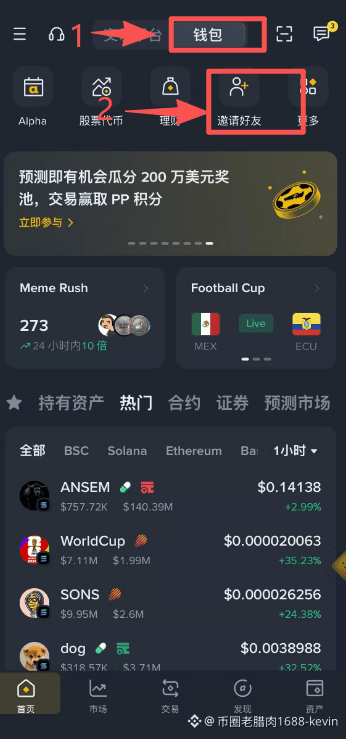
Brothers, let me tell you a great way to save 30% on trading fees (operate as shown in the picture)
In the Binance app, go to the home page. At the top, you’ll see two options: Trading Platform and Wallet.
Step 1: Select Wallet to switch to the wallet;
Step 2: Select Invite Friends;
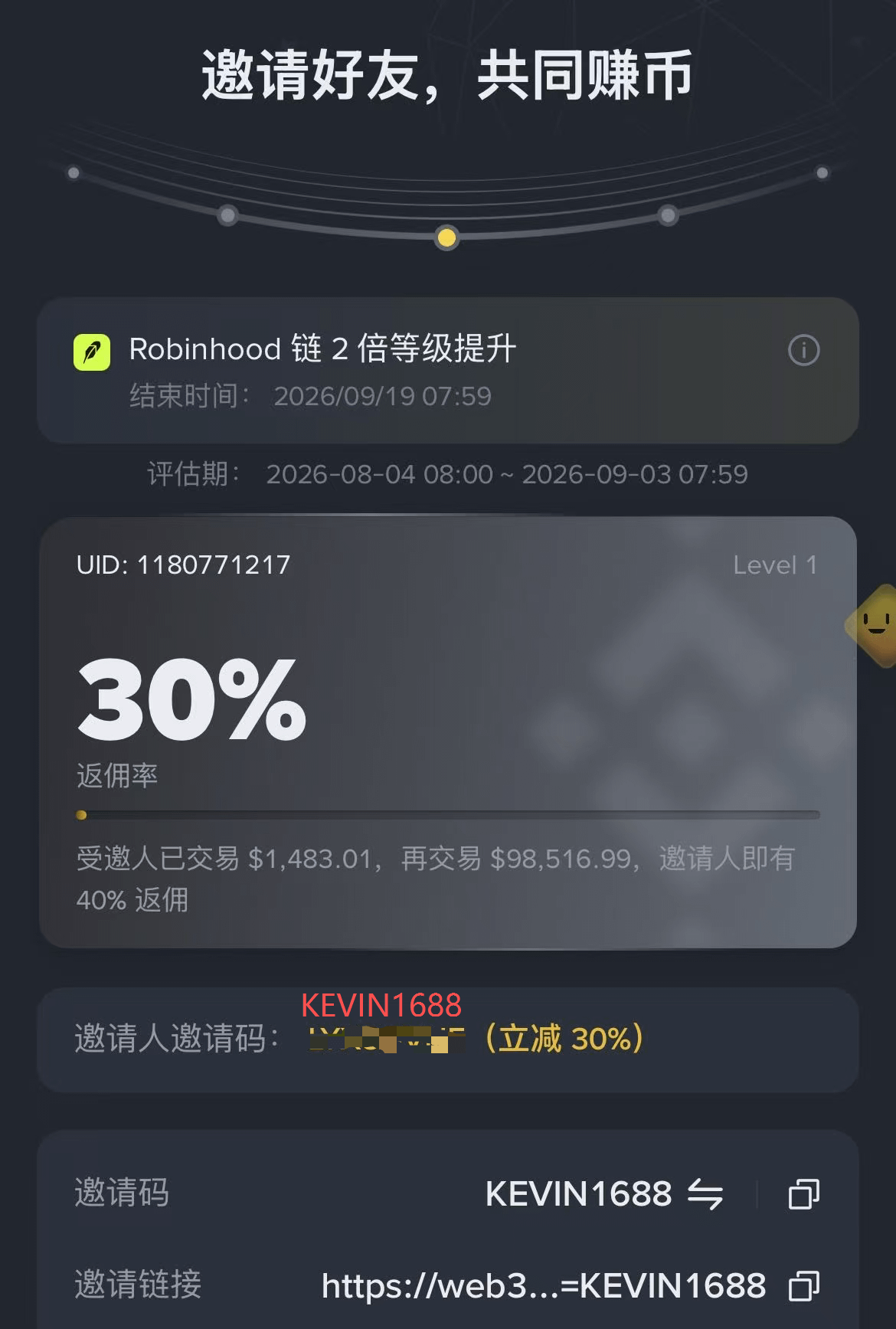
Step 3: Enter the invitation code: KEVIN1688 (copy it to the position shown in the picture);
Step 4: Claim the reward below.
Especially for brothers who like to farm on-chain low-cap “scam/dog” coins and do high-frequency trading—remember to bind the invitation code: KEVIN1688 to get a 30% reward. If you trade less, you can receive 5U or 10U; if you trade more, you can receive dozens of U, or even 100U.
[点击钱包,赶紧去绑定邀请码:KEVIN1688 ,领取奖励吧!](https://web3.binance.com/referral?ref=EHJSNS5W)
Binance Wb3 Wallet Benefits
Brothers, let me tell you a great way to save 30% on trading fees (operate as shown in the picture)
In the Binance app, go to the home page. At the top, you’ll see two options: Trading Platform and Wallet.
Step 1: Select Wallet to switch to the wallet;
Step 2: Select Invite Friends;
Step 3: Enter the invitation code: KEVIN1688 (copy it to the position shown in the picture);
Step 4: Claim the reward below.
Especially for brothers who like to farm on-chain low-cap “scam/dog” coins and do high-frequency trading—remember to bind the invitation code: KEVIN1688 to get a 30% reward. If you trade less, you can receive 5U or 10U; if you trade more, you can receive dozens of U, or even 100U.
点击钱包,赶紧去绑定邀请码:KEVIN1688 ,领取奖励吧!
Brothers, let me tell you a great way to save 30% on trading fees (operate as shown in the picture)
In the Binance app, go to the home page. At the top, you’ll see two options: Trading Platform and Wallet.
Step 1: Select Wallet to switch to the wallet;
Step 2: Select Invite Friends;
Step 3: Enter the invitation code: KEVIN1688 (copy it to the position shown in the picture);
Step 4: Claim the reward below.
Especially for brothers who like to farm on-chain low-cap “scam/dog” coins and do high-frequency trading—remember to bind the invitation code: KEVIN1688 to get a 30% reward. If you trade less, you can receive 5U or 10U; if you trade more, you can receive dozens of U, or even 100U.
点击钱包,赶紧去绑定邀请码:KEVIN1688 ,领取奖励吧!
6
4
23
896
·
--
Is the SOL on-chain cooled down? Can a Useless pullback still get you on board?
First, let’s look at sentiment on the SOL chain. Honestly, it’s a bit cold. On social media, bearish sentiment toward SOL has just surged to the highest level since 2026. Trading volume has also shrunk to low levels. Price dropped from 110 back to around 95–97. RSI has fallen to just above 40—it's not oversold, but it doesn’t look great. Still, there’s one detail worth noting: ETFs have seen net inflows for nine straight weeks. In one month alone, they pulled in over $200 million. Meanwhile, exchanges are net withdrawing about 3 million SOL. In plain terms—retail is panicking, while institutions are picking up the pieces.
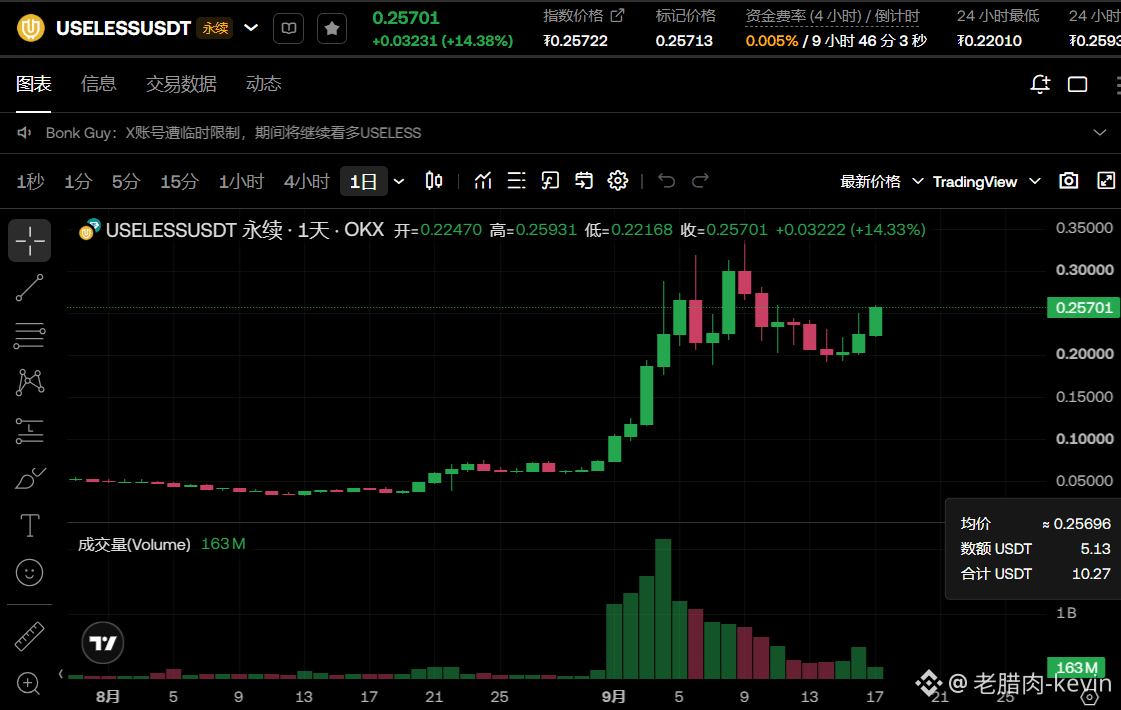
Now let’s talk about Useless. This thing started around 0.04 in late August, then in early September it shot straight to 0.26—up more than 6x. After that, it pulled back to around 0.20 to test support. The real issue isn’t “whether it has utility”—it doesn’t. Buying it is basically buying into the meme’s spread power. The key is two things: whether 0.20 can hold, and whether there’s enough volume to push through the resistance level around 0.33. The futures data is interesting: large holders’ positions are slightly net long, but small retail accounts are net short. That suggests the “smart money” is still betting on a rebound.
Sentiment on the SOL chain is somewhat chilly, but institutions are propping it up. Useless’ pullback to 0.20 is a short-term make-or-break line. If you’re going long, set your stop-loss at below 0.19—if it breaks, don’t hold on.
Memecoin trading is basically timing it right—leave before the beat drops. $USELESS
{future}(USELESSUSDT)
Is the SOL on-chain cooled down? Can a Useless pullback still get you on board?
First, let’s look at sentiment on the SOL chain. Honestly, it’s a bit cold. On social media, bearish sentiment toward SOL has just surged to the highest level since 2026. Trading volume has also shrunk to low levels. Price dropped from 110 back to around 95–97. RSI has fallen to just above 40—it's not oversold, but it doesn’t look great. Still, there’s one detail worth noting: ETFs have seen net inflows for nine straight weeks. In one month alone, they pulled in over $200 million. Meanwhile, exchanges are net withdrawing about 3 million SOL. In plain terms—retail is panicking, while institutions are picking up the pieces.
Now let’s talk about Useless. This thing started around 0.04 in late August, then in early September it shot straight to 0.26—up more than 6x. After that, it pulled back to around 0.20 to test support. The real issue isn’t “whether it has utility”—it doesn’t. Buying it is basically buying into the meme’s spread power. The key is two things: whether 0.20 can hold, and whether there’s enough volume to push through the resistance level around 0.33. The futures data is interesting: large holders’ positions are slightly net long, but small retail accounts are net short. That suggests the “smart money” is still betting on a rebound.
Sentiment on the SOL chain is somewhat chilly, but institutions are propping it up. Useless’ pullback to 0.20 is a short-term make-or-break line. If you’re going long, set your stop-loss at below 0.19—if it breaks, don’t hold on.
Memecoin trading is basically timing it right—leave before the beat drops. $USELESS
First, let’s look at sentiment on the SOL chain. Honestly, it’s a bit cold. On social media, bearish sentiment toward SOL has just surged to the highest level since 2026. Trading volume has also shrunk to low levels. Price dropped from 110 back to around 95–97. RSI has fallen to just above 40—it's not oversold, but it doesn’t look great. Still, there’s one detail worth noting: ETFs have seen net inflows for nine straight weeks. In one month alone, they pulled in over $200 million. Meanwhile, exchanges are net withdrawing about 3 million SOL. In plain terms—retail is panicking, while institutions are picking up the pieces.
Now let’s talk about Useless. This thing started around 0.04 in late August, then in early September it shot straight to 0.26—up more than 6x. After that, it pulled back to around 0.20 to test support. The real issue isn’t “whether it has utility”—it doesn’t. Buying it is basically buying into the meme’s spread power. The key is two things: whether 0.20 can hold, and whether there’s enough volume to push through the resistance level around 0.33. The futures data is interesting: large holders’ positions are slightly net long, but small retail accounts are net short. That suggests the “smart money” is still betting on a rebound.
Sentiment on the SOL chain is somewhat chilly, but institutions are propping it up. Useless’ pullback to 0.20 is a short-term make-or-break line. If you’re going long, set your stop-loss at below 0.19—if it breaks, don’t hold on.
Memecoin trading is basically timing it right—leave before the beat drops. $USELESS
783
·
--
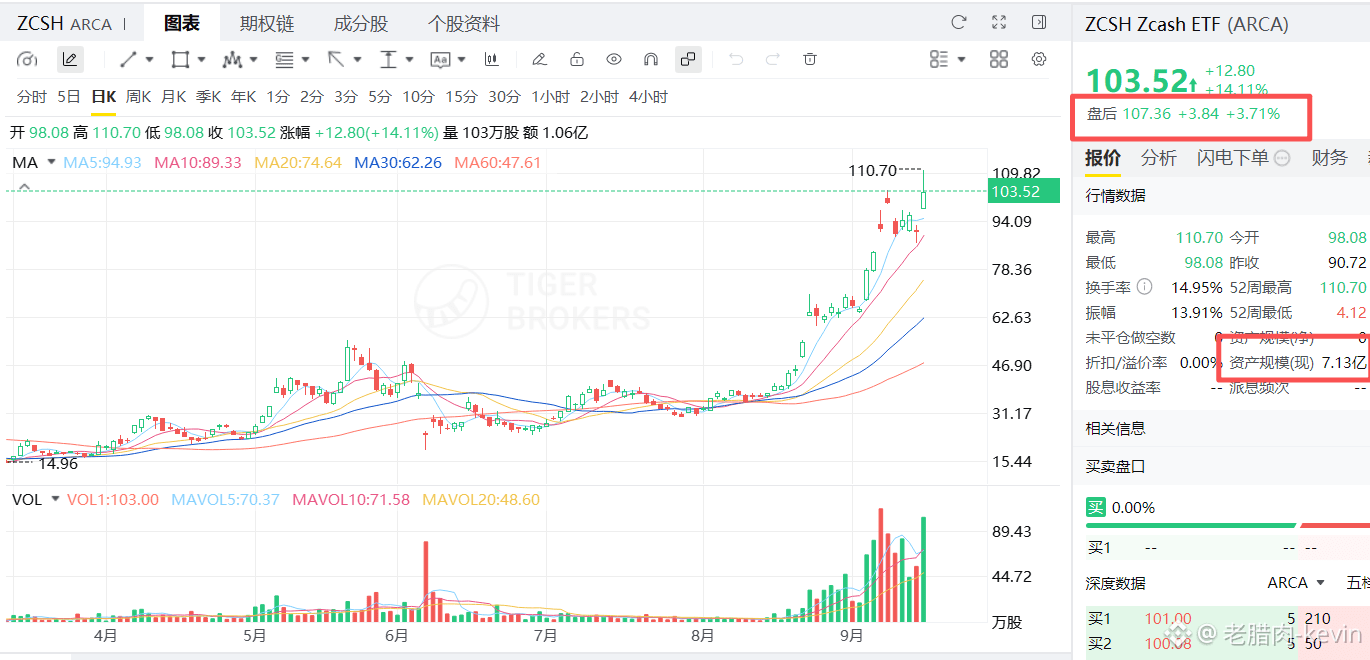
#zcash上涨6% ZECThis surge has my scalp tingling—so when will it break?
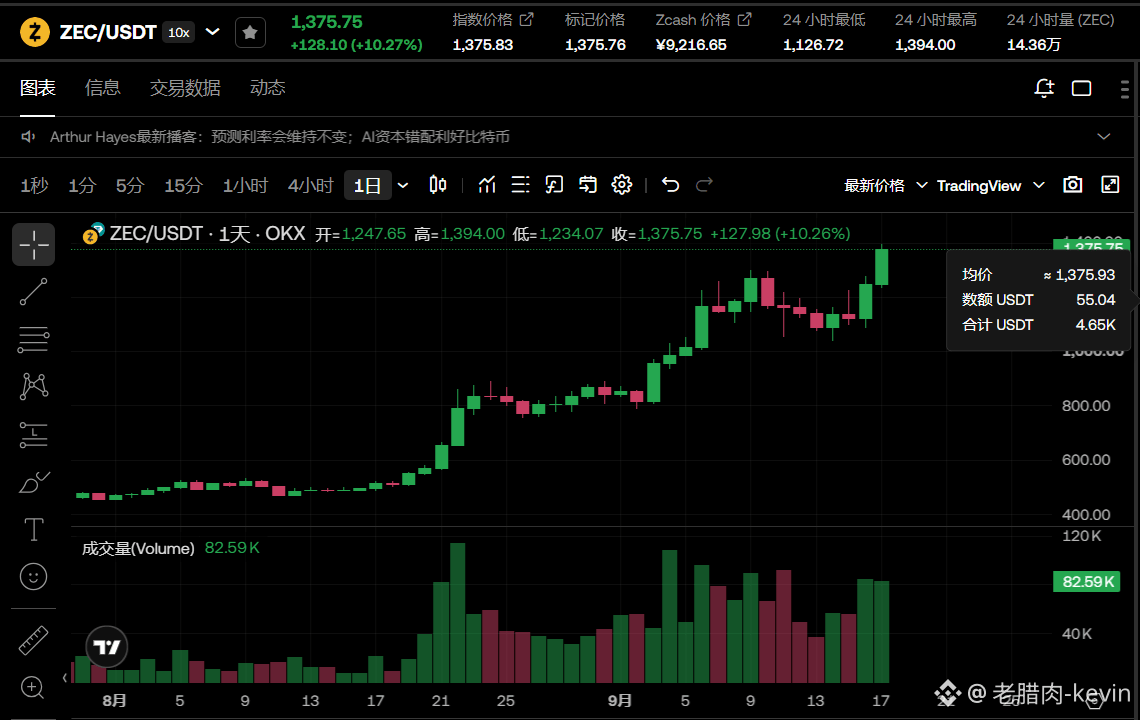
Right now, ZEC is a runaway wild horse. This quarter’s ETF is about to triple, and Grayscale’s fund size is nearing $1 billion. Market sentiment? Four words: FOMO, out of its mind.
But bro, the crazier it pumps, the more I have to ask: if this thing crashes, how will it crash?
Let’s lay out the core conditions for a drop.
First, leverage gets wrecked. ZEC futures open interest once spiked to $2.3 billion, about 14% of its market value. Previously, in a single 24-hour liquidation, $17.2 million was wiped out, and open interest then dropped directly by 20%. What does that mean? The longs are squeezed way too full—one slight tremor and it turns into a chain reaction of liquidations.
Second, the EMA50 breaks. The $1,110 level is the key watershed. If it breaks, the next stop is directly at $1,059. Then below that is the EMA200 at $872—about 20+ points away from the current price. In crypto, that kind of drawdown is just a few candles.
Third, the narrative collapses. Wang Chun directly blasted ZEC as a “narrative buy,” saying market cap rankings don’t equal real-world usage demand. Ouch, but it’s true—are you buying privacy, or are you buying candles?
ZEC is being held up by emotion and leverage right now. Once EMA50 can’t hold, or ETF inflows slow down, long liquidation and stampede can happen in minutes. For the bros chasing price, set your stop-loss: $ZEC $DASH
{future}(DASHUSDT)
{future}(ZECUSDT)
#zcash上涨6% ZECThis surge has my scalp tingling—so when will it break?
Right now, ZEC is a runaway wild horse. This quarter’s ETF is about to triple, and Grayscale’s fund size is nearing $1 billion. Market sentiment? Four words: FOMO, out of its mind.
But bro, the crazier it pumps, the more I have to ask: if this thing crashes, how will it crash?
Let’s lay out the core conditions for a drop.
First, leverage gets wrecked. ZEC futures open interest once spiked to $2.3 billion, about 14% of its market value. Previously, in a single 24-hour liquidation, $17.2 million was wiped out, and open interest then dropped directly by 20%. What does that mean? The longs are squeezed way too full—one slight tremor and it turns into a chain reaction of liquidations.
Second, the EMA50 breaks. The $1,110 level is the key watershed. If it breaks, the next stop is directly at $1,059. Then below that is the EMA200 at $872—about 20+ points away from the current price. In crypto, that kind of drawdown is just a few candles.
Third, the narrative collapses. Wang Chun directly blasted ZEC as a “narrative buy,” saying market cap rankings don’t equal real-world usage demand. Ouch, but it’s true—are you buying privacy, or are you buying candles?
ZEC is being held up by emotion and leverage right now. Once EMA50 can’t hold, or ETF inflows slow down, long liquidation and stampede can happen in minutes. For the bros chasing price, set your stop-loss: $ZEC $DASH
Right now, ZEC is a runaway wild horse. This quarter’s ETF is about to triple, and Grayscale’s fund size is nearing $1 billion. Market sentiment? Four words: FOMO, out of its mind.
But bro, the crazier it pumps, the more I have to ask: if this thing crashes, how will it crash?
Let’s lay out the core conditions for a drop.
First, leverage gets wrecked. ZEC futures open interest once spiked to $2.3 billion, about 14% of its market value. Previously, in a single 24-hour liquidation, $17.2 million was wiped out, and open interest then dropped directly by 20%. What does that mean? The longs are squeezed way too full—one slight tremor and it turns into a chain reaction of liquidations.
Second, the EMA50 breaks. The $1,110 level is the key watershed. If it breaks, the next stop is directly at $1,059. Then below that is the EMA200 at $872—about 20+ points away from the current price. In crypto, that kind of drawdown is just a few candles.
Third, the narrative collapses. Wang Chun directly blasted ZEC as a “narrative buy,” saying market cap rankings don’t equal real-world usage demand. Ouch, but it’s true—are you buying privacy, or are you buying candles?
ZEC is being held up by emotion and leverage right now. Once EMA50 can’t hold, or ETF inflows slow down, long liquidation and stampede can happen in minutes. For the bros chasing price, set your stop-loss: $ZEC $DASH
1
1
669
·
--
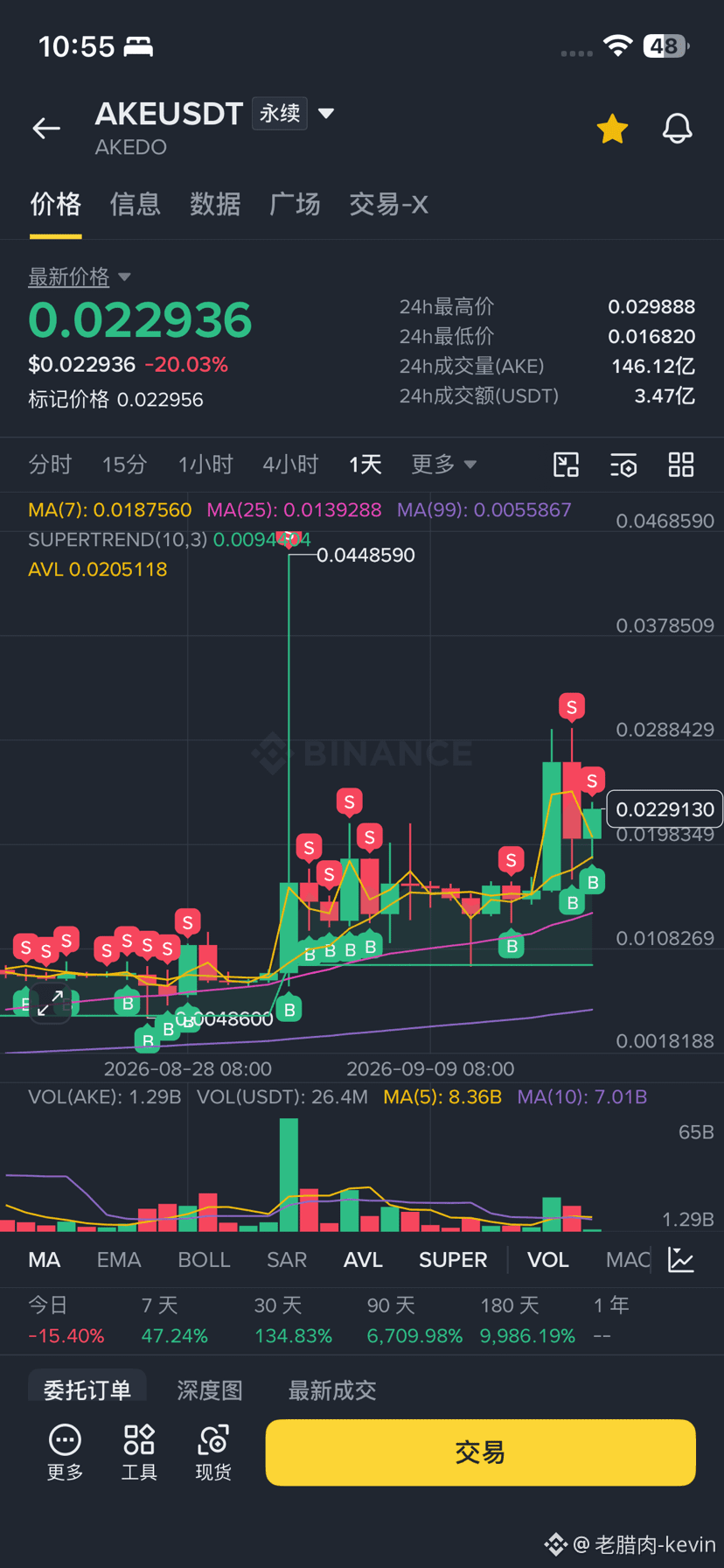
$AKE ake妖气横生
I don't know whether to leave it blank or add more
{future}(AKEUSDT)
$AKE ake妖气横生
I don't know whether to leave it blank or add more
I don't know whether to leave it blank or add more
4
1
908
·
--
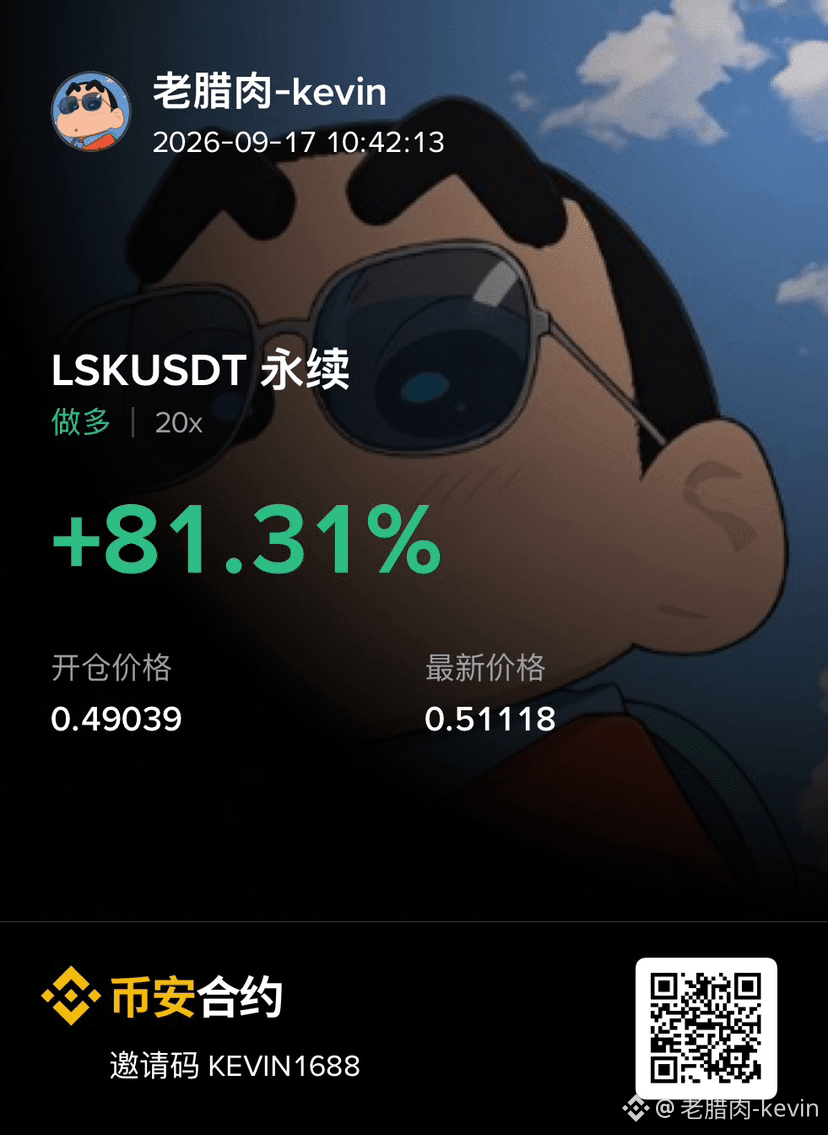
$LSK big pancake is still very hard
It feels like LSK’s market momentum hasn’t finished yet
Especially after the pullback
{future}(LSKUSDT)
$LSK big pancake is still very hard
It feels like LSK’s market momentum hasn’t finished yet
Especially after the pullback
It feels like LSK’s market momentum hasn’t finished yet
Especially after the pullback
2
731
·
--
Verified
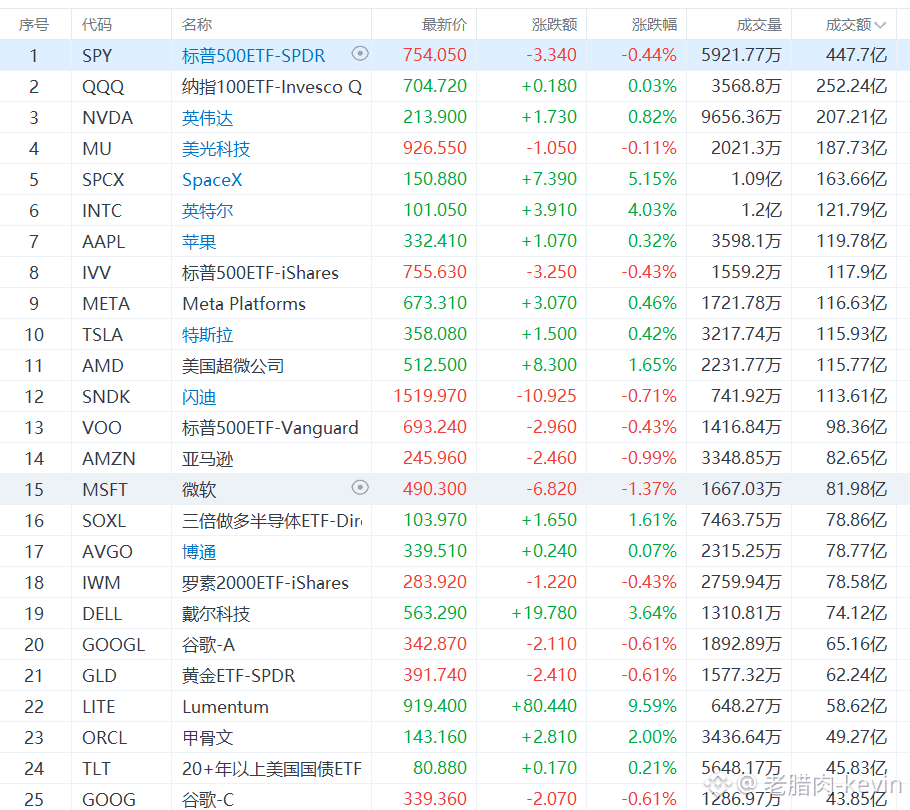
US Stock Close Summary: Intel leads gains as SpaceX Starship test flight sparks space concept
On Wednesday, US stocks saw AI and space concepts dominate the market. Nvidia led trading with $20.5 billion in turnover. Intel jumped more than 4% to place near the top of the gainers list. SpaceX surged 5%—the biggest standout. Optical communications and memory chips all strengthened collectively.
Top 5 by trading value:
Nvidia: $20.5B turnover, up 0.82%, taking the lead in establishing an AI energy alliance
Micron Technology: $18.5B turnover, down slightly 0.11%, warning of a memory shortage until 2028
SpaceX: $16.3B turnover, up 5.15%, 9.22 Starship—14th test flight
Intel: $12.0B turnover, up 4.03%, plans to work with SK hynix to build a factory
Apple: $11.9B turnover, up 0.32%, possibly returning to the server market
Key news highlights:
Intel and SK hynix are in talks on producing memory chips in the US; Apple is developing the M8 Ultra enterprise-grade AI server and is considering adopting Nvidia’s NVLink technology; Zuckerberg opposes the “AI slowdown” theory, saying there’s no need to slow down development.
The market was clearly split. AI compute power and the space track continue to attract capital, and most semiconductor stocks closed higher. In the near term, watch the Starship test-flight catalyst. For trading, you may consider rotation opportunities in optical communications and memory chips.#美联储加息25基点美股收跌 #点阵图预示2026年再加息一次 #美联储加息是否已成定局 $SPCX $INTC $SKHYNIX
{future}(SKHYNIXUSDT)
{future}(INTCUSDT)
{future}(SPCXUSDT)
US Stock Close Summary: Intel leads gains as SpaceX Starship test flight sparks space concept
On Wednesday, US stocks saw AI and space concepts dominate the market. Nvidia led trading with $20.5 billion in turnover. Intel jumped more than 4% to place near the top of the gainers list. SpaceX surged 5%—the biggest standout. Optical communications and memory chips all strengthened collectively.
Top 5 by trading value:
Nvidia: $20.5B turnover, up 0.82%, taking the lead in establishing an AI energy alliance
Micron Technology: $18.5B turnover, down slightly 0.11%, warning of a memory shortage until 2028
SpaceX: $16.3B turnover, up 5.15%, 9.22 Starship—14th test flight
Intel: $12.0B turnover, up 4.03%, plans to work with SK hynix to build a factory
Apple: $11.9B turnover, up 0.32%, possibly returning to the server market
Key news highlights:
Intel and SK hynix are in talks on producing memory chips in the US; Apple is developing the M8 Ultra enterprise-grade AI server and is considering adopting Nvidia’s NVLink technology; Zuckerberg opposes the “AI slowdown” theory, saying there’s no need to slow down development.
The market was clearly split. AI compute power and the space track continue to attract capital, and most semiconductor stocks closed higher. In the near term, watch the Starship test-flight catalyst. For trading, you may consider rotation opportunities in optical communications and memory chips.#美联储加息25基点美股收跌 #点阵图预示2026年再加息一次 #美联储加息是否已成定局 $SPCX $INTC $SKHYNIX
On Wednesday, US stocks saw AI and space concepts dominate the market. Nvidia led trading with $20.5 billion in turnover. Intel jumped more than 4% to place near the top of the gainers list. SpaceX surged 5%—the biggest standout. Optical communications and memory chips all strengthened collectively.
Top 5 by trading value:
Nvidia: $20.5B turnover, up 0.82%, taking the lead in establishing an AI energy alliance
Micron Technology: $18.5B turnover, down slightly 0.11%, warning of a memory shortage until 2028
SpaceX: $16.3B turnover, up 5.15%, 9.22 Starship—14th test flight
Intel: $12.0B turnover, up 4.03%, plans to work with SK hynix to build a factory
Apple: $11.9B turnover, up 0.32%, possibly returning to the server market
Key news highlights:
Intel and SK hynix are in talks on producing memory chips in the US; Apple is developing the M8 Ultra enterprise-grade AI server and is considering adopting Nvidia’s NVLink technology; Zuckerberg opposes the “AI slowdown” theory, saying there’s no need to slow down development.
The market was clearly split. AI compute power and the space track continue to attract capital, and most semiconductor stocks closed higher. In the near term, watch the Starship test-flight catalyst. For trading, you may consider rotation opportunities in optical communications and memory chips.#美联储加息25基点美股收跌 #点阵图预示2026年再加息一次 #美联储加息是否已成定局 $SPCX $INTC $SKHYNIX
1
774
·
--
Verified
US Stock Market Wrap: Hawkish dot plot crushes the market, stock-bond-gold “triple kill,” and the U.S. dollar surges
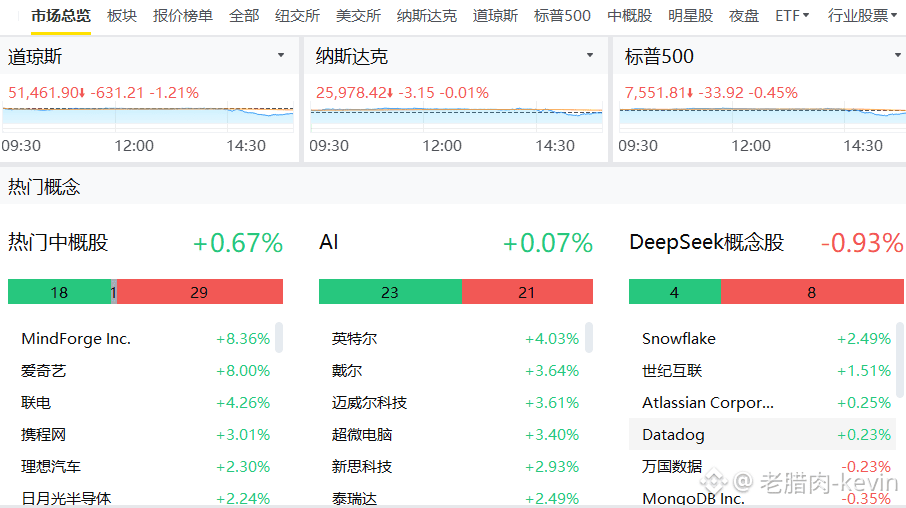
The Federal Reserve’s first rate hike in three years, with the dot plot implying another hike later in the year. A fully hawkish statement from the Fed chairman shattered any hopes for rate cuts. All three major U.S. stock indexes fell for a third straight session: the Dow tumbled 1.21%, hitting a three-month low; the S&P 500 dropped 0.44%, while the Nasdaq managed to hold roughly flat, supported by AI. Energy and financials led the decline, while optical communications bucked the trend and gained.
Asset impact snapshot:
US stocks: Near-term pressure builds. The S&P 7550 key support level is under threat; a break would trigger accelerated downside from negative gamma.
US Treasuries: The 2-year yield jumped to 4.74%, the highest in two years; the yield curve quickly flattened further in a bear steepening pattern.
Dollar: The index returned to 100; the day’s gain is the largest since December 2024.
Gold: Slumped 3%, falling below $4,240 and hitting a new low since early in the month.
Crude oil: Down 3.6%; Middle East supply eases, but risks have not disappeared.
The Fed has made it clear it will keep rates “higher for longer,” forcing the market to reprice the tightening path. Stocks, bonds, and gold all face near-term pressure, and the dollar’s strength is hard to reverse. Focus on the S&P 7550 “life-or-death line”; if it breaks, risk-off is the better choice. AI and optical communications, which are holding up relatively better, can be considered defensive areas of attention.#点阵图预示2026年再加息一次 #美联储加息25基点美股收跌 #比特币ETF净流出4.5亿美元
$XAU $CL $KORU
{future}(KORUUSDT)
{future}(CLUSDT)
{future}(XAUUSDT)
US Stock Market Wrap: Hawkish dot plot crushes the market, stock-bond-gold “triple kill,” and the U.S. dollar surges
The Federal Reserve’s first rate hike in three years, with the dot plot implying another hike later in the year. A fully hawkish statement from the Fed chairman shattered any hopes for rate cuts. All three major U.S. stock indexes fell for a third straight session: the Dow tumbled 1.21%, hitting a three-month low; the S&P 500 dropped 0.44%, while the Nasdaq managed to hold roughly flat, supported by AI. Energy and financials led the decline, while optical communications bucked the trend and gained.
Asset impact snapshot:
US stocks: Near-term pressure builds. The S&P 7550 key support level is under threat; a break would trigger accelerated downside from negative gamma.
US Treasuries: The 2-year yield jumped to 4.74%, the highest in two years; the yield curve quickly flattened further in a bear steepening pattern.
Dollar: The index returned to 100; the day’s gain is the largest since December 2024.
Gold: Slumped 3%, falling below $4,240 and hitting a new low since early in the month.
Crude oil: Down 3.6%; Middle East supply eases, but risks have not disappeared.
The Fed has made it clear it will keep rates “higher for longer,” forcing the market to reprice the tightening path. Stocks, bonds, and gold all face near-term pressure, and the dollar’s strength is hard to reverse. Focus on the S&P 7550 “life-or-death line”; if it breaks, risk-off is the better choice. AI and optical communications, which are holding up relatively better, can be considered defensive areas of attention.#点阵图预示2026年再加息一次 #美联储加息25基点美股收跌 #比特币ETF净流出4.5亿美元
$XAU $CL $KORU
The Federal Reserve’s first rate hike in three years, with the dot plot implying another hike later in the year. A fully hawkish statement from the Fed chairman shattered any hopes for rate cuts. All three major U.S. stock indexes fell for a third straight session: the Dow tumbled 1.21%, hitting a three-month low; the S&P 500 dropped 0.44%, while the Nasdaq managed to hold roughly flat, supported by AI. Energy and financials led the decline, while optical communications bucked the trend and gained.
Asset impact snapshot:
US stocks: Near-term pressure builds. The S&P 7550 key support level is under threat; a break would trigger accelerated downside from negative gamma.
US Treasuries: The 2-year yield jumped to 4.74%, the highest in two years; the yield curve quickly flattened further in a bear steepening pattern.
Dollar: The index returned to 100; the day’s gain is the largest since December 2024.
Gold: Slumped 3%, falling below $4,240 and hitting a new low since early in the month.
Crude oil: Down 3.6%; Middle East supply eases, but risks have not disappeared.
The Fed has made it clear it will keep rates “higher for longer,” forcing the market to reprice the tightening path. Stocks, bonds, and gold all face near-term pressure, and the dollar’s strength is hard to reverse. Focus on the S&P 7550 “life-or-death line”; if it breaks, risk-off is the better choice. AI and optical communications, which are holding up relatively better, can be considered defensive areas of attention.#点阵图预示2026年再加息一次 #美联储加息25基点美股收跌 #比特币ETF净流出4.5亿美元
$XAU $CL $KORU
1
4.2k
·
--
Verified
#美联储加息是否已成定局 Wosh dawn releases eagles! But don’t rush to shout “it’s over”?
This guy’s message is basically one thing: inflation hasn’t been cured, so don’t expect me to loosen my grip. The core logic is simple—he said himself that “financial conditions are difficult to call restrictive,” which is essentially telling the market outright: the rate hike is an active move, not something he’s forced into.
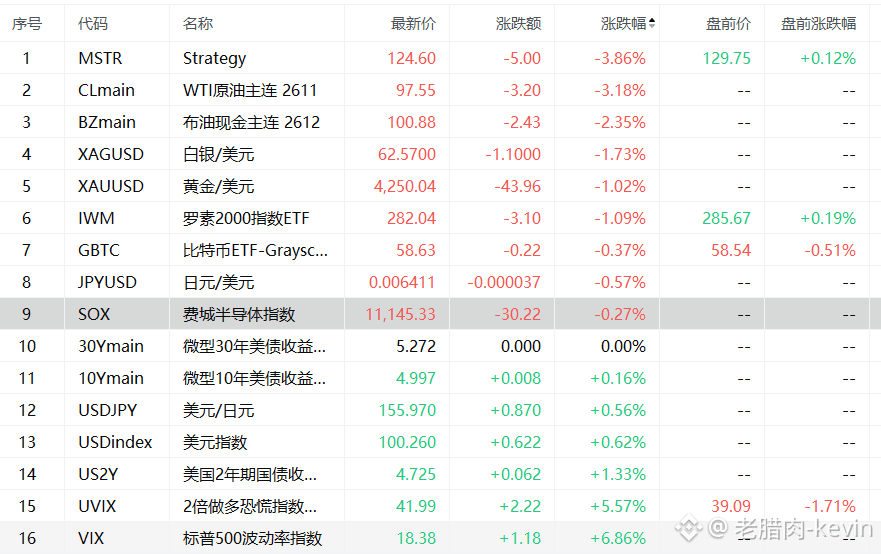
So will there be another hike? Look at the two numbers. In the dot-plot chart, 16 people think there’ll be another round within the year, and the odds in December aren’t low. But the folks at Banque de France trade bank are betting it’s “a one-off,” and they’ll stop in October.
In plain terms, Wosh doesn’t want to provide forward guidance—it’s so you have to guess, and if you guess wrong, he won’t be responsible.
For US stock AI and the crypto space, the short term will definitely be pressure. Treasury yields are holding the line, overpriced growth stocks are the first ones to get hit, and crypto follows as risk appetite wobbles.
But the key isn’t whether he hikes this time—it’s that he nailed down the “inflation comes first” framework. Don’t use the past two years’ inertia of “rate hikes = the last drop” to bet; this guy doesn’t play by that logic.
The eagle is real, but the path is blurry. And blur itself is the biggest risk.$BTC $ZEC $SOXL #点阵图预示2026年再加息一次 #美联储加息25基点美股收跌
{future}(SOXLUSDT)
{future}(ZECUSDT)
{future}(BTCUSDT)
#美联储加息是否已成定局 Wosh dawn releases eagles! But don’t rush to shout “it’s over”?
This guy’s message is basically one thing: inflation hasn’t been cured, so don’t expect me to loosen my grip. The core logic is simple—he said himself that “financial conditions are difficult to call restrictive,” which is essentially telling the market outright: the rate hike is an active move, not something he’s forced into.
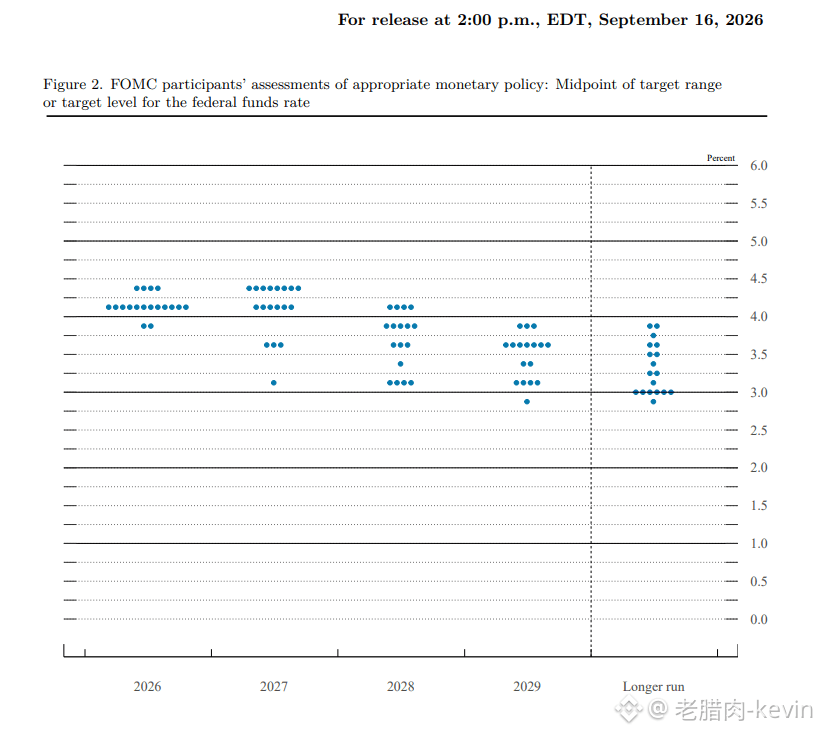
So will there be another hike? Look at the two numbers. In the dot-plot chart, 16 people think there’ll be another round within the year, and the odds in December aren’t low. But the folks at Banque de France trade bank are betting it’s “a one-off,” and they’ll stop in October.
In plain terms, Wosh doesn’t want to provide forward guidance—it’s so you have to guess, and if you guess wrong, he won’t be responsible.
For US stock AI and the crypto space, the short term will definitely be pressure. Treasury yields are holding the line, overpriced growth stocks are the first ones to get hit, and crypto follows as risk appetite wobbles.
But the key isn’t whether he hikes this time—it’s that he nailed down the “inflation comes first” framework. Don’t use the past two years’ inertia of “rate hikes = the last drop” to bet; this guy doesn’t play by that logic.
The eagle is real, but the path is blurry. And blur itself is the biggest risk.$BTC $ZEC $SOXL #点阵图预示2026年再加息一次 #美联储加息25基点美股收跌
This guy’s message is basically one thing: inflation hasn’t been cured, so don’t expect me to loosen my grip. The core logic is simple—he said himself that “financial conditions are difficult to call restrictive,” which is essentially telling the market outright: the rate hike is an active move, not something he’s forced into.
So will there be another hike? Look at the two numbers. In the dot-plot chart, 16 people think there’ll be another round within the year, and the odds in December aren’t low. But the folks at Banque de France trade bank are betting it’s “a one-off,” and they’ll stop in October.
In plain terms, Wosh doesn’t want to provide forward guidance—it’s so you have to guess, and if you guess wrong, he won’t be responsible.
For US stock AI and the crypto space, the short term will definitely be pressure. Treasury yields are holding the line, overpriced growth stocks are the first ones to get hit, and crypto follows as risk appetite wobbles.
But the key isn’t whether he hikes this time—it’s that he nailed down the “inflation comes first” framework. Don’t use the past two years’ inertia of “rate hikes = the last drop” to bet; this guy doesn’t play by that logic.
The eagle is real, but the path is blurry. And blur itself is the biggest risk.$BTC $ZEC $SOXL #点阵图预示2026年再加息一次 #美联储加息25基点美股收跌
2
3
6.3k
·
--
Partly True
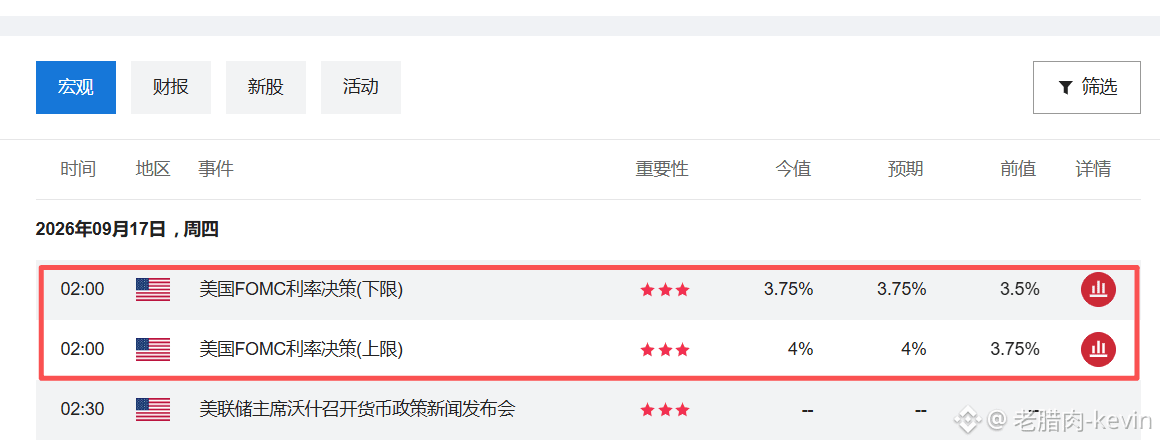
The Federal Reserve raised interest rates by 25 basis points, lifting the benchmark rate to 3.75%-4.00%. This was the first rate hike since July 2023 and met market expectations. Previously, the Fed had kept rates unchanged for five consecutive meetings.
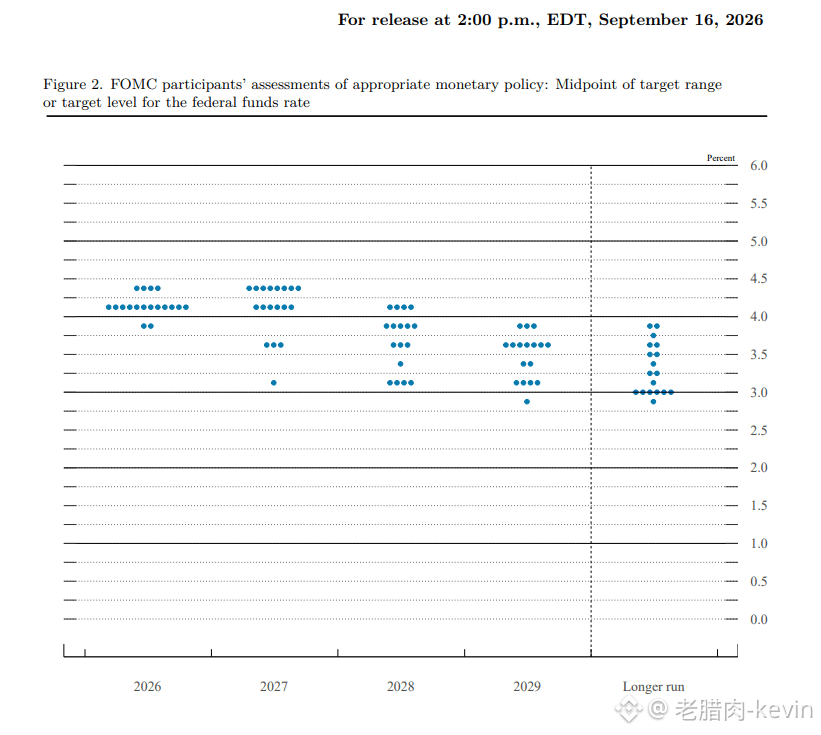
The Fed’s latest dot plot shows that among 19 officials, 18 submitted dot-plot forecasts (the same as in June). Of these, 16 officials believe rates should be raised again this year.
Specifically, 4 officials think there should be a cumulative 75-basis-point rate hike in 2026 (down from 1 in June), 12 officials believe there should be a cumulative 50-basis-point hike (up from 5 in June), and 2 officials think there should be a cumulative 25-basis-point hike (down from 3 in June). There were 0 officials who think the rate should remain unchanged at 3.5%-3.75% this year (from 8 in June), and 0 officials who think there should be a cumulative 25-basis-point rate cut (from 1 in June).#美联储加息是否已成定局 $BTC $SOXL $KORU #点阵图预示2026年再加息一次 #美联储加息25基点美股收跌
{future}(KORUUSDT)
{future}(SOXLUSDT)
{future}(BTCUSDT)
The Federal Reserve raised interest rates by 25 basis points, lifting the benchmark rate to 3.75%-4.00%. This was the first rate hike since July 2023 and met market expectations. Previously, the Fed had kept rates unchanged for five consecutive meetings.
The Fed’s latest dot plot shows that among 19 officials, 18 submitted dot-plot forecasts (the same as in June). Of these, 16 officials believe rates should be raised again this year.
Specifically, 4 officials think there should be a cumulative 75-basis-point rate hike in 2026 (down from 1 in June), 12 officials believe there should be a cumulative 50-basis-point hike (up from 5 in June), and 2 officials think there should be a cumulative 25-basis-point hike (down from 3 in June). There were 0 officials who think the rate should remain unchanged at 3.5%-3.75% this year (from 8 in June), and 0 officials who think there should be a cumulative 25-basis-point rate cut (from 1 in June).#美联储加息是否已成定局 $BTC $SOXL $KORU #点阵图预示2026年再加息一次 #美联储加息25基点美股收跌
The Fed’s latest dot plot shows that among 19 officials, 18 submitted dot-plot forecasts (the same as in June). Of these, 16 officials believe rates should be raised again this year.
Specifically, 4 officials think there should be a cumulative 75-basis-point rate hike in 2026 (down from 1 in June), 12 officials believe there should be a cumulative 50-basis-point hike (up from 5 in June), and 2 officials think there should be a cumulative 25-basis-point hike (down from 3 in June). There were 0 officials who think the rate should remain unchanged at 3.5%-3.75% this year (from 8 in June), and 0 officials who think there should be a cumulative 25-basis-point rate cut (from 1 in June).#美联储加息是否已成定局 $BTC $SOXL $KORU #点阵图预示2026年再加息一次 #美联储加息25基点美股收跌
763
·
--
Partly True
Federal Reserve Dot Plot: The expectation is that there will be one more rate hike in 2026
Federal Reserve: The forecast for the U.S. 2026 core PCE inflation rate is 3.4%, and it is expected to be 3.3% in June.
The forecast for 2027 is 2.5%, the same as the previous estimate (2.5%).
The forecast for 2028 is 2.2%, up from the prior estimate (2.1%).
The forecast for 2029 is 2.0%.
Market reaction: The two-year U.S. Treasury yield rebounded from near the day’s low of 4.5975%, rising to around the 4.65% level after the Fed decision statement.
After the interest rate decision was released, the three major U.S. stock indexes edged higher: the Nasdaq rose to 0.9%, Bitcoin’s gains widened to above $76,000, and gold traded with slight fluctuations.
#美联储加息是否已成定局 $XAU $BTC $ZEC #点阵图预示2026年再加息一次 #美联储加息25基点美股收跌
{future}(ZECUSDT)
{future}(BTCUSDT)
{future}(XAUUSDT)
Federal Reserve Dot Plot: The expectation is that there will be one more rate hike in 2026
Federal Reserve: The forecast for the U.S. 2026 core PCE inflation rate is 3.4%, and it is expected to be 3.3% in June.
The forecast for 2027 is 2.5%, the same as the previous estimate (2.5%).
The forecast for 2028 is 2.2%, up from the prior estimate (2.1%).
The forecast for 2029 is 2.0%.
Market reaction: The two-year U.S. Treasury yield rebounded from near the day’s low of 4.5975%, rising to around the 4.65% level after the Fed decision statement.
After the interest rate decision was released, the three major U.S. stock indexes edged higher: the Nasdaq rose to 0.9%, Bitcoin’s gains widened to above $76,000, and gold traded with slight fluctuations.
#美联储加息是否已成定局 $XAU $BTC $ZEC #点阵图预示2026年再加息一次 #美联储加息25基点美股收跌
Federal Reserve: The forecast for the U.S. 2026 core PCE inflation rate is 3.4%, and it is expected to be 3.3% in June.
The forecast for 2027 is 2.5%, the same as the previous estimate (2.5%).
The forecast for 2028 is 2.2%, up from the prior estimate (2.1%).
The forecast for 2029 is 2.0%.
Market reaction: The two-year U.S. Treasury yield rebounded from near the day’s low of 4.5975%, rising to around the 4.65% level after the Fed decision statement.
After the interest rate decision was released, the three major U.S. stock indexes edged higher: the Nasdaq rose to 0.9%, Bitcoin’s gains widened to above $76,000, and gold traded with slight fluctuations.
#美联储加息是否已成定局 $XAU $BTC $ZEC #点阵图预示2026年再加息一次 #美联储加息25基点美股收跌
1
2
1.6k
·
--
Verified
The Federal Reserve raised interest rates by 25 basis points, lifting the benchmark rate to 3.75%-4.00%.
The Fed’s dot plot median suggests there will be one more rate hike in 2026.
The three major US stock indexes have been relatively steady in their fluctuations. As of now, the Dow Jones Industrial Average is up 0.01%, the S&P 500 is up 0.32%, and the Nasdaq Composite is up 0.67%. Previously, the Federal Reserve raised interest rates by 25 basis points, lifting the benchmark rate to 3.75%-4.00%. $BTC $SOXL $ZEC #比特币下跌4% #美联储加息是否已成定局 #点阵图预示2026年再加息一次 #美联储加息25基点美股收跌
{future}(ZECUSDT)
{future}(SOXLUSDT)
{future}(BTCUSDT)
The Federal Reserve raised interest rates by 25 basis points, lifting the benchmark rate to 3.75%-4.00%.
The Fed’s dot plot median suggests there will be one more rate hike in 2026.
The three major US stock indexes have been relatively steady in their fluctuations. As of now, the Dow Jones Industrial Average is up 0.01%, the S&P 500 is up 0.32%, and the Nasdaq Composite is up 0.67%. Previously, the Federal Reserve raised interest rates by 25 basis points, lifting the benchmark rate to 3.75%-4.00%. $BTC $SOXL $ZEC #比特币下跌4% #美联储加息是否已成定局 #点阵图预示2026年再加息一次 #美联储加息25基点美股收跌
The Fed’s dot plot median suggests there will be one more rate hike in 2026.
The three major US stock indexes have been relatively steady in their fluctuations. As of now, the Dow Jones Industrial Average is up 0.01%, the S&P 500 is up 0.32%, and the Nasdaq Composite is up 0.67%. Previously, the Federal Reserve raised interest rates by 25 basis points, lifting the benchmark rate to 3.75%-4.00%. $BTC $SOXL $ZEC #比特币下跌4% #美联储加息是否已成定局 #点阵图预示2026年再加息一次 #美联储加息25基点美股收跌

1
2.2k
·
--
Disputed
US and Brent crude oil continue to decline; WTI crude oil fell 4% during the day and is now at $96.88 per barrel. Brent crude oil fell 3% during the day and is now at $100.2 per barrel.$CL $BZ
{future}(BZUSDT)
{future}(CLUSDT)
US and Brent crude oil continue to decline; WTI crude oil fell 4% during the day and is now at $96.88 per barrel. Brent crude oil fell 3% during the day and is now at $100.2 per barrel.$CL $BZ
944
·
--
#比特币etf净流出4.5亿美元 4.5 billion US dollars ran away—don’t rush to bottom-fish; first, see what these people are panicking about
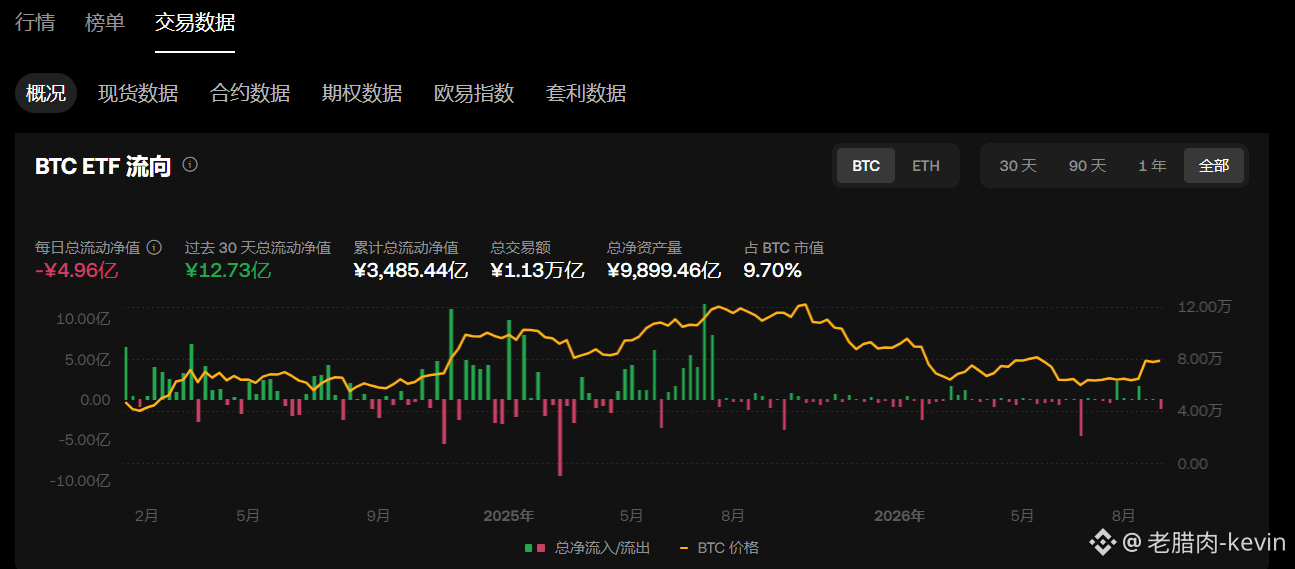
Yesterday, Bitcoin ETF net outflows hit 450 million, Fidelity pulled out 215 million, and BlackRock outflow was 160 million; together they accounted for more than 80%. This isn’t retail investors cutting losses—it’s institutions withdrawing.
Why are they pulling out? Two things happened at the same time. First, the Clear Act didn’t pass the Senate; the vote was 49 to 50—off by 11 votes. The odds of legislation dropped straight from 30% to 5%. Second, the Federal Reserve’s FOMC meeting is just these two days away, with a nearly 90% chance of rate hikes. Meanwhile, oil prices have also spiked above 98, and inflation pressure is rising again.
So is this bearish news being realized and people fleeing, or just a temporary sell-off?
My take leans toward the latter. The reason is simple: these outflows have only been going on for a few days. The previous day’s net inflow of 159 million was wiped out in one day—fast in pace, but not catastrophic in scale. And during the June sell-off of 469 million, the market V-rebounded within two weeks. What you really need to watch isn’t these two days—it’s the Fed press conference during that half-hour of “the mouth.” #比特币下跌4% $MSTR $BTC
{future}(BTCUSDT)
{future}(MSTRUSDT)
#比特币etf净流出4.5亿美元 4.5 billion US dollars ran away—don’t rush to bottom-fish; first, see what these people are panicking about
Yesterday, Bitcoin ETF net outflows hit 450 million, Fidelity pulled out 215 million, and BlackRock outflow was 160 million; together they accounted for more than 80%. This isn’t retail investors cutting losses—it’s institutions withdrawing.
Why are they pulling out? Two things happened at the same time. First, the Clear Act didn’t pass the Senate; the vote was 49 to 50—off by 11 votes. The odds of legislation dropped straight from 30% to 5%. Second, the Federal Reserve’s FOMC meeting is just these two days away, with a nearly 90% chance of rate hikes. Meanwhile, oil prices have also spiked above 98, and inflation pressure is rising again.
So is this bearish news being realized and people fleeing, or just a temporary sell-off?
My take leans toward the latter. The reason is simple: these outflows have only been going on for a few days. The previous day’s net inflow of 159 million was wiped out in one day—fast in pace, but not catastrophic in scale. And during the June sell-off of 469 million, the market V-rebounded within two weeks. What you really need to watch isn’t these two days—it’s the Fed press conference during that half-hour of “the mouth.” #比特币下跌4% $MSTR $BTC
Yesterday, Bitcoin ETF net outflows hit 450 million, Fidelity pulled out 215 million, and BlackRock outflow was 160 million; together they accounted for more than 80%. This isn’t retail investors cutting losses—it’s institutions withdrawing.
Why are they pulling out? Two things happened at the same time. First, the Clear Act didn’t pass the Senate; the vote was 49 to 50—off by 11 votes. The odds of legislation dropped straight from 30% to 5%. Second, the Federal Reserve’s FOMC meeting is just these two days away, with a nearly 90% chance of rate hikes. Meanwhile, oil prices have also spiked above 98, and inflation pressure is rising again.
So is this bearish news being realized and people fleeing, or just a temporary sell-off?
My take leans toward the latter. The reason is simple: these outflows have only been going on for a few days. The previous day’s net inflow of 159 million was wiped out in one day—fast in pace, but not catastrophic in scale. And during the June sell-off of 469 million, the market V-rebounded within two weeks. What you really need to watch isn’t these two days—it’s the Fed press conference during that half-hour of “the mouth.” #比特币下跌4% $MSTR $BTC
1
11
44.8k
·
--
Before $IOST , a wave was shaken up by re-shuffling
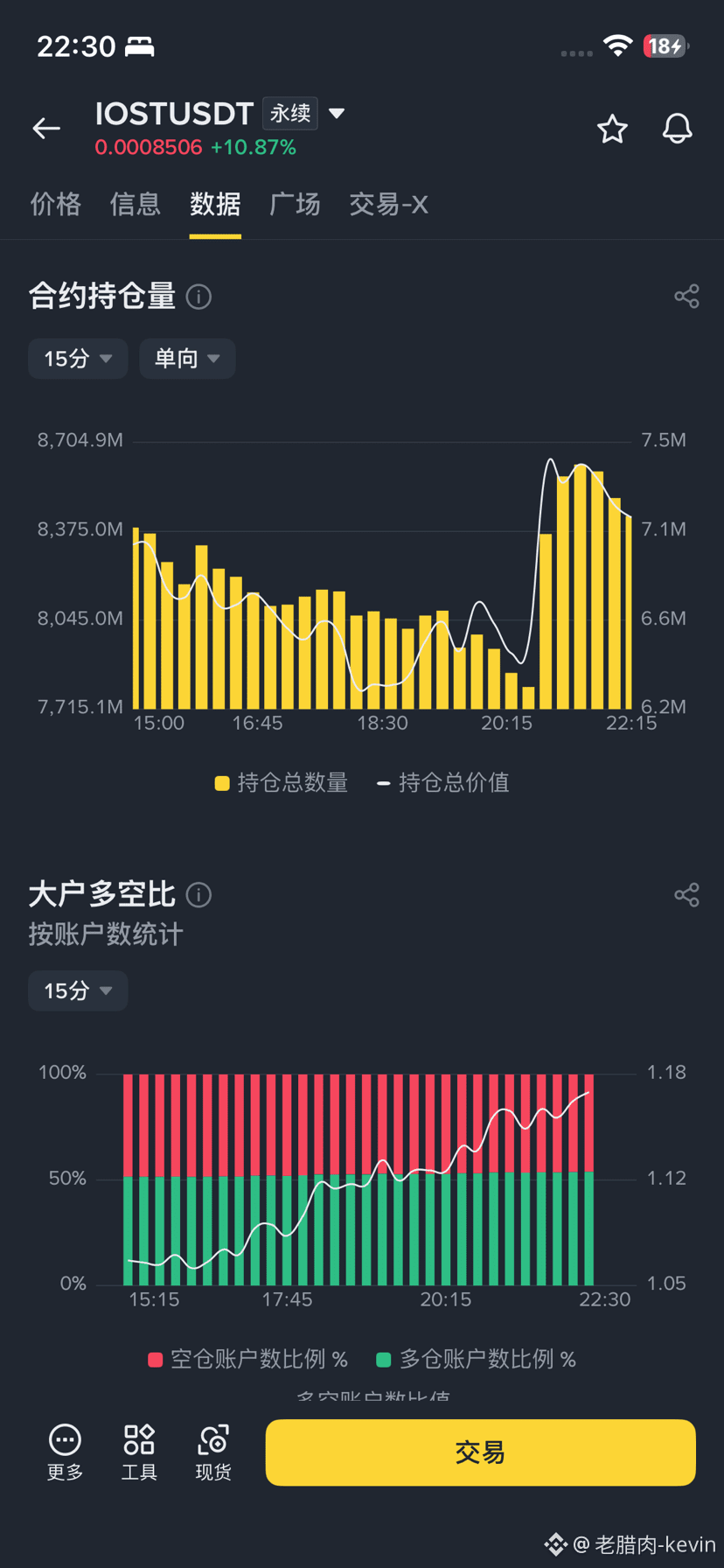
Now, the contract open interest has surged
Big players are all going long—let’s see if they can pull a second wave
{future}(IOSTUSDT)
Before $IOST , a wave was shaken up by re-shuffling
Now, the contract open interest has surged
Big players are all going long—let’s see if they can pull a second wave
Now, the contract open interest has surged
Big players are all going long—let’s see if they can pull a second wave
957
·
--
#zcash上涨6% BTC gets beaten, ZEC profits—what on earth is this “independent行情” all about?
The market’s been acting up the past two days; plain and simple, there’s one reason: macro money is running. Oil prices have surged to 105, the probability of the Fed hiking has climbed to over 90%, and that broken regulatory bill was voted down. Assets like BTC and ETH, which move with liquidity, were drained directly. Continuous net outflows from ETFs, withdrawals from Ethereum staking—this is the standard risk-off pattern.
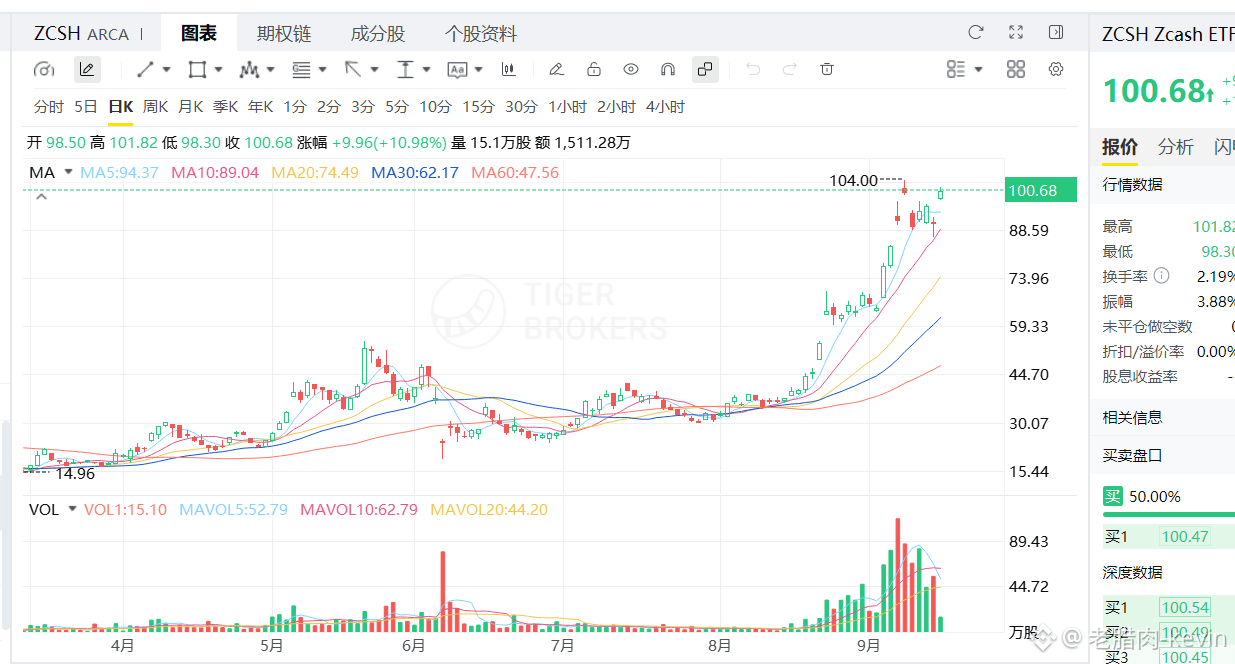
So why is ZEC rising against the tide? The Grayscale spot ETF is the hard catalyst: it was launched at the end of August, giving institutions an opening. But an ETF alone isn’t enough—the key is that the shorts were bloodily wiped out. ZEC rallied more than 20x from the lows; everyone who was short got killed along the way. Once a short-squeeze spiral starts, it cranks up—so much so that the price moves become unrecognizable.
But to be fair, in terms of this ZEC rally, on-chain analysts have already pointed it out: it’s narrative-driven, not fundamentals-driven. The usage of censorship-resistant transactions hasn’t kept up with the price—daily transaction volume of over 3 billion is disconnected from real demand. In other words, when capital was idling in BTC, it found a niche narrative and formed a tight group to go hard.
$ZEC $BTC $ETH #Zcash持币者投票支持NU7升级
{future}(ETHUSDT)
{future}(BTCUSDT)
{future}(ZECUSDT)
#zcash上涨6% BTC gets beaten, ZEC profits—what on earth is this “independent行情” all about?
The market’s been acting up the past two days; plain and simple, there’s one reason: macro money is running. Oil prices have surged to 105, the probability of the Fed hiking has climbed to over 90%, and that broken regulatory bill was voted down. Assets like BTC and ETH, which move with liquidity, were drained directly. Continuous net outflows from ETFs, withdrawals from Ethereum staking—this is the standard risk-off pattern.
So why is ZEC rising against the tide? The Grayscale spot ETF is the hard catalyst: it was launched at the end of August, giving institutions an opening. But an ETF alone isn’t enough—the key is that the shorts were bloodily wiped out. ZEC rallied more than 20x from the lows; everyone who was short got killed along the way. Once a short-squeeze spiral starts, it cranks up—so much so that the price moves become unrecognizable.
But to be fair, in terms of this ZEC rally, on-chain analysts have already pointed it out: it’s narrative-driven, not fundamentals-driven. The usage of censorship-resistant transactions hasn’t kept up with the price—daily transaction volume of over 3 billion is disconnected from real demand. In other words, when capital was idling in BTC, it found a niche narrative and formed a tight group to go hard.
$ZEC $BTC $ETH #Zcash持币者投票支持NU7升级
The market’s been acting up the past two days; plain and simple, there’s one reason: macro money is running. Oil prices have surged to 105, the probability of the Fed hiking has climbed to over 90%, and that broken regulatory bill was voted down. Assets like BTC and ETH, which move with liquidity, were drained directly. Continuous net outflows from ETFs, withdrawals from Ethereum staking—this is the standard risk-off pattern.
So why is ZEC rising against the tide? The Grayscale spot ETF is the hard catalyst: it was launched at the end of August, giving institutions an opening. But an ETF alone isn’t enough—the key is that the shorts were bloodily wiped out. ZEC rallied more than 20x from the lows; everyone who was short got killed along the way. Once a short-squeeze spiral starts, it cranks up—so much so that the price moves become unrecognizable.
But to be fair, in terms of this ZEC rally, on-chain analysts have already pointed it out: it’s narrative-driven, not fundamentals-driven. The usage of censorship-resistant transactions hasn’t kept up with the price—daily transaction volume of over 3 billion is disconnected from real demand. In other words, when capital was idling in BTC, it found a niche narrative and formed a tight group to go hard.
$ZEC $BTC $ETH #Zcash持币者投票支持NU7升级
4
22.1k
·
--
Take a look
Take a look
老腊肉-kevin
·
--
Arc’s mainnet just launched—can you still catch these coins now?
Brothers, Arc chain just opened mainnet yesterday. Circle built a stablecoin-only chain, and all the hype is concentrated on platform coin launches. Let me get straight to the point:
ARGUS (0xece5ca8bf9220718e5727754026757512212cb3c) ArgusPad platform coin—its peak market cap hit $35 million, now it’s $23 million. The mechanism is the toughest: 80% of platform revenue is used to buy back and burn, and 4.3% has already been burned. It also offers USDC dividends—so it’s solid.
TOLLY (0xbc43ce8dec648ea298c4275559b81d6261c90b67) Tolly platform coin—peak $25 million, now $15 million. No Bonding Curve; it launched by creating the liquidity pool and locking it. Buy tax is 64% paid to creators, and the entire sell amount is burned, so it’s strongly deflationary.
LONG (0x2164bb17a2d38c1b5170e987b2c0416df1efc752) Long.supply platform coin—peak $17 million, now $12 million. It’s playing the Robinhood chain stock-mapping theme. It’s interesting, but the custodial bridge depends entirely on the project’s credibility—so weigh it yourself.
COOL (0xeb64987643db71c76b2a2be7e723decc995e5b37) Native USDC cultural Meme—peak $7.9 million, now $6.5 million. The narrative ties to that Circle CEO blue-mouthed goggle character image; the community recognizes it.
ARCAT (0x07704b06981ea962b87296362a1281484d160000) Cat Meme—peak $5 million, now $3.5 million. Zero tax, LP burned, no-vote abstention. Circle’s marketing lead even liked it, but there’s no official endorsement.
Now the market caps have all fallen back—if there’s a second chance to board, you decide for yourself. DYOR—don’t get carried away. (On Binance wb3 wallet, if you don’t bind the commission-rebate invite code—see the pinned post on my profile.) #Circle开放Arc主网 $CRCL
Brothers, Arc chain just opened mainnet yesterday. Circle built a stablecoin-only chain, and all the hype is concentrated on platform coin launches. Let me get straight to the point:
ARGUS (0xece5ca8bf9220718e5727754026757512212cb3c) ArgusPad platform coin—its peak market cap hit $35 million, now it’s $23 million. The mechanism is the toughest: 80% of platform revenue is used to buy back and burn, and 4.3% has already been burned. It also offers USDC dividends—so it’s solid.
TOLLY (0xbc43ce8dec648ea298c4275559b81d6261c90b67) Tolly platform coin—peak $25 million, now $15 million. No Bonding Curve; it launched by creating the liquidity pool and locking it. Buy tax is 64% paid to creators, and the entire sell amount is burned, so it’s strongly deflationary.
LONG (0x2164bb17a2d38c1b5170e987b2c0416df1efc752) Long.supply platform coin—peak $17 million, now $12 million. It’s playing the Robinhood chain stock-mapping theme. It’s interesting, but the custodial bridge depends entirely on the project’s credibility—so weigh it yourself.
COOL (0xeb64987643db71c76b2a2be7e723decc995e5b37) Native USDC cultural Meme—peak $7.9 million, now $6.5 million. The narrative ties to that Circle CEO blue-mouthed goggle character image; the community recognizes it.
ARCAT (0x07704b06981ea962b87296362a1281484d160000) Cat Meme—peak $5 million, now $3.5 million. Zero tax, LP burned, no-vote abstention. Circle’s marketing lead even liked it, but there’s no official endorsement.
Now the market caps have all fallen back—if there’s a second chance to board, you decide for yourself. DYOR—don’t get carried away. (On Binance wb3 wallet, if you don’t bind the commission-rebate invite code—see the pinned post on my profile.) #Circle开放Arc主网 $CRCL

1
240
·
--
Partly True
Arc’s mainnet just launched—can you still catch these coins now?
Brothers, Arc chain just opened mainnet yesterday. Circle built a stablecoin-only chain, and all the hype is concentrated on platform coin launches. Let me get straight to the point:
ARGUS (0xece5ca8bf9220718e5727754026757512212cb3c) ArgusPad platform coin—its peak market cap hit $35 million, now it’s $23 million. The mechanism is the toughest: 80% of platform revenue is used to buy back and burn, and 4.3% has already been burned. It also offers USDC dividends—so it’s solid.
TOLLY (0xbc43ce8dec648ea298c4275559b81d6261c90b67) Tolly platform coin—peak $25 million, now $15 million. No Bonding Curve; it launched by creating the liquidity pool and locking it. Buy tax is 64% paid to creators, and the entire sell amount is burned, so it’s strongly deflationary.
LONG (0x2164bb17a2d38c1b5170e987b2c0416df1efc752) Long.supply platform coin—peak $17 million, now $12 million. It’s playing the Robinhood chain stock-mapping theme. It’s interesting, but the custodial bridge depends entirely on the project’s credibility—so weigh it yourself.
COOL (0xeb64987643db71c76b2a2be7e723decc995e5b37) Native USDC cultural Meme—peak $7.9 million, now $6.5 million. The narrative ties to that Circle CEO blue-mouthed goggle character image; the community recognizes it.
ARCAT (0x07704b06981ea962b87296362a1281484d160000) Cat Meme—peak $5 million, now $3.5 million. Zero tax, LP burned, no-vote abstention. Circle’s marketing lead even liked it, but there’s no official endorsement.
Now the market caps have all fallen back—if there’s a second chance to board, you decide for yourself. DYOR—don’t get carried away. (On Binance wb3 wallet, if you don’t bind the commission-rebate invite code—see the pinned post on my profile.) #Circle开放Arc主网 $CRCL
{future}(CRCLUSDT)
Arc’s mainnet just launched—can you still catch these coins now?
Brothers, Arc chain just opened mainnet yesterday. Circle built a stablecoin-only chain, and all the hype is concentrated on platform coin launches. Let me get straight to the point:
ARGUS (0xece5ca8bf9220718e5727754026757512212cb3c) ArgusPad platform coin—its peak market cap hit $35 million, now it’s $23 million. The mechanism is the toughest: 80% of platform revenue is used to buy back and burn, and 4.3% has already been burned. It also offers USDC dividends—so it’s solid.
TOLLY (0xbc43ce8dec648ea298c4275559b81d6261c90b67) Tolly platform coin—peak $25 million, now $15 million. No Bonding Curve; it launched by creating the liquidity pool and locking it. Buy tax is 64% paid to creators, and the entire sell amount is burned, so it’s strongly deflationary.
LONG (0x2164bb17a2d38c1b5170e987b2c0416df1efc752) Long.supply platform coin—peak $17 million, now $12 million. It’s playing the Robinhood chain stock-mapping theme. It’s interesting, but the custodial bridge depends entirely on the project’s credibility—so weigh it yourself.
COOL (0xeb64987643db71c76b2a2be7e723decc995e5b37) Native USDC cultural Meme—peak $7.9 million, now $6.5 million. The narrative ties to that Circle CEO blue-mouthed goggle character image; the community recognizes it.
ARCAT (0x07704b06981ea962b87296362a1281484d160000) Cat Meme—peak $5 million, now $3.5 million. Zero tax, LP burned, no-vote abstention. Circle’s marketing lead even liked it, but there’s no official endorsement.
Now the market caps have all fallen back—if there’s a second chance to board, you decide for yourself. DYOR—don’t get carried away. (On Binance wb3 wallet, if you don’t bind the commission-rebate invite code—see the pinned post on my profile.) #Circle开放Arc主网 $CRCL
Brothers, Arc chain just opened mainnet yesterday. Circle built a stablecoin-only chain, and all the hype is concentrated on platform coin launches. Let me get straight to the point:
ARGUS (0xece5ca8bf9220718e5727754026757512212cb3c) ArgusPad platform coin—its peak market cap hit $35 million, now it’s $23 million. The mechanism is the toughest: 80% of platform revenue is used to buy back and burn, and 4.3% has already been burned. It also offers USDC dividends—so it’s solid.
TOLLY (0xbc43ce8dec648ea298c4275559b81d6261c90b67) Tolly platform coin—peak $25 million, now $15 million. No Bonding Curve; it launched by creating the liquidity pool and locking it. Buy tax is 64% paid to creators, and the entire sell amount is burned, so it’s strongly deflationary.
LONG (0x2164bb17a2d38c1b5170e987b2c0416df1efc752) Long.supply platform coin—peak $17 million, now $12 million. It’s playing the Robinhood chain stock-mapping theme. It’s interesting, but the custodial bridge depends entirely on the project’s credibility—so weigh it yourself.
COOL (0xeb64987643db71c76b2a2be7e723decc995e5b37) Native USDC cultural Meme—peak $7.9 million, now $6.5 million. The narrative ties to that Circle CEO blue-mouthed goggle character image; the community recognizes it.
ARCAT (0x07704b06981ea962b87296362a1281484d160000) Cat Meme—peak $5 million, now $3.5 million. Zero tax, LP burned, no-vote abstention. Circle’s marketing lead even liked it, but there’s no official endorsement.
Now the market caps have all fallen back—if there’s a second chance to board, you decide for yourself. DYOR—don’t get carried away. (On Binance wb3 wallet, if you don’t bind the commission-rebate invite code—see the pinned post on my profile.) #Circle开放Arc主网 $CRCL

1
1
2
1.2k
·
--
Verified
#sk海力士洽谈首次在美产存储芯片 U.S. stocks pre-market news: Storage chips surge; Intel rises more than 5%, SK Hynix nearly 3%, ASML more than 2%; optical communications rise
Big tech stocks are mixed in pre-market trading. Nvidia up 0.6%, Tesla up 0.3%, Meta up 0.2%, Amazon down 0.03%, Apple down 0.11%, Google down 0.06%, Microsoft down 0.3%.
Storage chip stocks surge in pre-market trading. Intel rises more than 5%, SK Hynix up 2.95%, ASML up more than 2%, SanDisk up 0.88%, Micron Technology up 0.84%, and Western Digital up 1.34%.
Optical communications stocks edge higher in pre-market trading. Lumentum up 1.92%, Corning up 1.71%, Coherent up 2.52%, Broadcom up 0.67%, and Mevion? (MKS?)/迈威尔科技 up 1.74%.
International oil prices fall
On the 16th, international oil prices fell. U.S. WTI crude futures fell 1.57% to $104.18 per barrel; Brent crude futures fell 1.04% to $107.63 per barrel.
Gold and silver prices rise
On the 16th, gold and silver prices rose. London spot gold rose 0.78% to $4,326.35 per ounce; London spot silver rose 1.19% to $64.42 per ounce.
U.S. Congressional Budget Office report: Iran conflict is costly—burning money, depleting munitions, and hurting the economy
The U.S. Congressional Budget Office released a report on the 15th estimating that, as of August 1, the U.S. Department of Defense would spend about $38 billion on the Iran conflict over the next five months; if the fighting continues at the low-intensity levels seen in May and June this year, the “burn rate” is expected to be about $2 billion per month; if it reaches the higher intensity level seen in July, the “burn rate” would be $3 billion per month.
Iranian Revolutionary Guard downs a U.S. MQ-9 drone
The Iranian Islamic Revolutionary Guard said in a statement on the 16th that early that morning its aerospace forces shot down a U.S. MQ-9 drone over Geshm Island, Iran. The statement also said this is the 52nd such U.S. drone of this model that the Revolutionary Guard has shot down.$INTC $SOXL $CL
{future}(CLUSDT)
{future}(SOXLUSDT)
{future}(INTCUSDT)
#sk海力士洽谈首次在美产存储芯片 U.S. stocks pre-market news: Storage chips surge; Intel rises more than 5%, SK Hynix nearly 3%, ASML more than 2%; optical communications rise
Big tech stocks are mixed in pre-market trading. Nvidia up 0.6%, Tesla up 0.3%, Meta up 0.2%, Amazon down 0.03%, Apple down 0.11%, Google down 0.06%, Microsoft down 0.3%.
Storage chip stocks surge in pre-market trading. Intel rises more than 5%, SK Hynix up 2.95%, ASML up more than 2%, SanDisk up 0.88%, Micron Technology up 0.84%, and Western Digital up 1.34%.
Optical communications stocks edge higher in pre-market trading. Lumentum up 1.92%, Corning up 1.71%, Coherent up 2.52%, Broadcom up 0.67%, and Mevion? (MKS?)/迈威尔科技 up 1.74%.
International oil prices fall
On the 16th, international oil prices fell. U.S. WTI crude futures fell 1.57% to $104.18 per barrel; Brent crude futures fell 1.04% to $107.63 per barrel.
Gold and silver prices rise
On the 16th, gold and silver prices rose. London spot gold rose 0.78% to $4,326.35 per ounce; London spot silver rose 1.19% to $64.42 per ounce.
U.S. Congressional Budget Office report: Iran conflict is costly—burning money, depleting munitions, and hurting the economy
The U.S. Congressional Budget Office released a report on the 15th estimating that, as of August 1, the U.S. Department of Defense would spend about $38 billion on the Iran conflict over the next five months; if the fighting continues at the low-intensity levels seen in May and June this year, the “burn rate” is expected to be about $2 billion per month; if it reaches the higher intensity level seen in July, the “burn rate” would be $3 billion per month.
Iranian Revolutionary Guard downs a U.S. MQ-9 drone
The Iranian Islamic Revolutionary Guard said in a statement on the 16th that early that morning its aerospace forces shot down a U.S. MQ-9 drone over Geshm Island, Iran. The statement also said this is the 52nd such U.S. drone of this model that the Revolutionary Guard has shot down.$INTC $SOXL $CL
Big tech stocks are mixed in pre-market trading. Nvidia up 0.6%, Tesla up 0.3%, Meta up 0.2%, Amazon down 0.03%, Apple down 0.11%, Google down 0.06%, Microsoft down 0.3%.
Storage chip stocks surge in pre-market trading. Intel rises more than 5%, SK Hynix up 2.95%, ASML up more than 2%, SanDisk up 0.88%, Micron Technology up 0.84%, and Western Digital up 1.34%.
Optical communications stocks edge higher in pre-market trading. Lumentum up 1.92%, Corning up 1.71%, Coherent up 2.52%, Broadcom up 0.67%, and Mevion? (MKS?)/迈威尔科技 up 1.74%.
International oil prices fall
On the 16th, international oil prices fell. U.S. WTI crude futures fell 1.57% to $104.18 per barrel; Brent crude futures fell 1.04% to $107.63 per barrel.
Gold and silver prices rise
On the 16th, gold and silver prices rose. London spot gold rose 0.78% to $4,326.35 per ounce; London spot silver rose 1.19% to $64.42 per ounce.
U.S. Congressional Budget Office report: Iran conflict is costly—burning money, depleting munitions, and hurting the economy
The U.S. Congressional Budget Office released a report on the 15th estimating that, as of August 1, the U.S. Department of Defense would spend about $38 billion on the Iran conflict over the next five months; if the fighting continues at the low-intensity levels seen in May and June this year, the “burn rate” is expected to be about $2 billion per month; if it reaches the higher intensity level seen in July, the “burn rate” would be $3 billion per month.
Iranian Revolutionary Guard downs a U.S. MQ-9 drone
The Iranian Islamic Revolutionary Guard said in a statement on the 16th that early that morning its aerospace forces shot down a U.S. MQ-9 drone over Geshm Island, Iran. The statement also said this is the 52nd such U.S. drone of this model that the Revolutionary Guard has shot down.$INTC $SOXL $CL
820
·
--
Verified
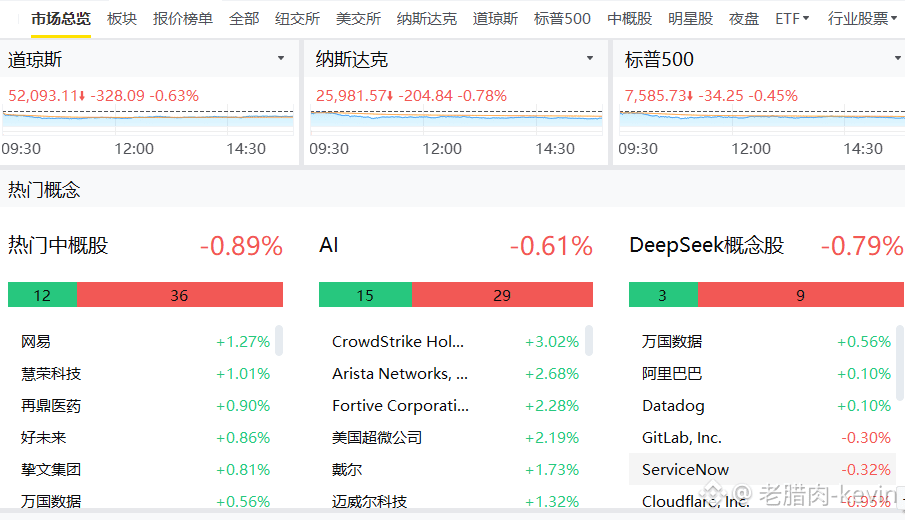
#美国30年期国债收益率升破5.40% U.S. Stock Market Wrap: Oil Breaks 106, U.S. Treasuries Surge 5%, and the Market Only Has One Sector Left to Play
On Tuesday, the three major U.S. stock indexes fell for the second straight day. The Dow dropped 0.63%, the S&P 500 fell 0.45%, and the Nasdaq slid 0.78%. Of the 11 sectors, only Energy ended in the green, up 2.3%; the rest were all down.
Two macro “killers”: WTI crude jumped 4.4% to break above $106. Brent is approaching $109. Diesel retail prices have hit a historic high of $6.26 per gallon—up more than 80% over nine months. Inflation pressure is directly pushing up toward the CPI. The 10-year U.S. Treasury yield briefly touched 5.04%, the highest since 2007. Meanwhile, offshore demand for the 20-year issue set a record low.
Asset performance: The U.S. dollar is the safe-haven winner. Bitcoin has fully given back the prior day’s gains and slipped back to a one-month low. Gold is hovering around 4,300—neither breaking down nor rising.
Sector moves: Crypto stocks are the worst off. The Clarity Act failed to pass by one vote in the Senate procedural vote. Circle is down more than 11%, and Coinbase is down more than 10%. Large tech mostly traded lower: SpaceX fell 3.15%, Amazon dropped 2.02%, and Microsoft slid 1.64%. Cybersecurity-related names like CRWD rose more than 3% and extended to new highs. Among Chinese concept stocks, XPeng fell 4.5% and Li Auto dropped 3.3%.
With oil prices and U.S. Treasuries hitting the market hard at the same time, Energy is the only sector that can still perform. Tonight, the odds of a Fed rate hike have surged to 95%$CL $XAU $BTC #比特币跌至7.6万美元
{future}(BTCUSDT)
{future}(XAUUSDT)
{future}(CLUSDT)
#美国30年期国债收益率升破5.40% U.S. Stock Market Wrap: Oil Breaks 106, U.S. Treasuries Surge 5%, and the Market Only Has One Sector Left to Play
On Tuesday, the three major U.S. stock indexes fell for the second straight day. The Dow dropped 0.63%, the S&P 500 fell 0.45%, and the Nasdaq slid 0.78%. Of the 11 sectors, only Energy ended in the green, up 2.3%; the rest were all down.
Two macro “killers”: WTI crude jumped 4.4% to break above $106. Brent is approaching $109. Diesel retail prices have hit a historic high of $6.26 per gallon—up more than 80% over nine months. Inflation pressure is directly pushing up toward the CPI. The 10-year U.S. Treasury yield briefly touched 5.04%, the highest since 2007. Meanwhile, offshore demand for the 20-year issue set a record low.
Asset performance: The U.S. dollar is the safe-haven winner. Bitcoin has fully given back the prior day’s gains and slipped back to a one-month low. Gold is hovering around 4,300—neither breaking down nor rising.
Sector moves: Crypto stocks are the worst off. The Clarity Act failed to pass by one vote in the Senate procedural vote. Circle is down more than 11%, and Coinbase is down more than 10%. Large tech mostly traded lower: SpaceX fell 3.15%, Amazon dropped 2.02%, and Microsoft slid 1.64%. Cybersecurity-related names like CRWD rose more than 3% and extended to new highs. Among Chinese concept stocks, XPeng fell 4.5% and Li Auto dropped 3.3%.
With oil prices and U.S. Treasuries hitting the market hard at the same time, Energy is the only sector that can still perform. Tonight, the odds of a Fed rate hike have surged to 95%$CL $XAU $BTC #比特币跌至7.6万美元
On Tuesday, the three major U.S. stock indexes fell for the second straight day. The Dow dropped 0.63%, the S&P 500 fell 0.45%, and the Nasdaq slid 0.78%. Of the 11 sectors, only Energy ended in the green, up 2.3%; the rest were all down.
Two macro “killers”: WTI crude jumped 4.4% to break above $106. Brent is approaching $109. Diesel retail prices have hit a historic high of $6.26 per gallon—up more than 80% over nine months. Inflation pressure is directly pushing up toward the CPI. The 10-year U.S. Treasury yield briefly touched 5.04%, the highest since 2007. Meanwhile, offshore demand for the 20-year issue set a record low.
Asset performance: The U.S. dollar is the safe-haven winner. Bitcoin has fully given back the prior day’s gains and slipped back to a one-month low. Gold is hovering around 4,300—neither breaking down nor rising.
Sector moves: Crypto stocks are the worst off. The Clarity Act failed to pass by one vote in the Senate procedural vote. Circle is down more than 11%, and Coinbase is down more than 10%. Large tech mostly traded lower: SpaceX fell 3.15%, Amazon dropped 2.02%, and Microsoft slid 1.64%. Cybersecurity-related names like CRWD rose more than 3% and extended to new highs. Among Chinese concept stocks, XPeng fell 4.5% and Li Auto dropped 3.3%.
With oil prices and U.S. Treasuries hitting the market hard at the same time, Energy is the only sector that can still perform. Tonight, the odds of a Fed rate hike have surged to 95%$CL $XAU $BTC #比特币跌至7.6万美元
556
·
--
Verified
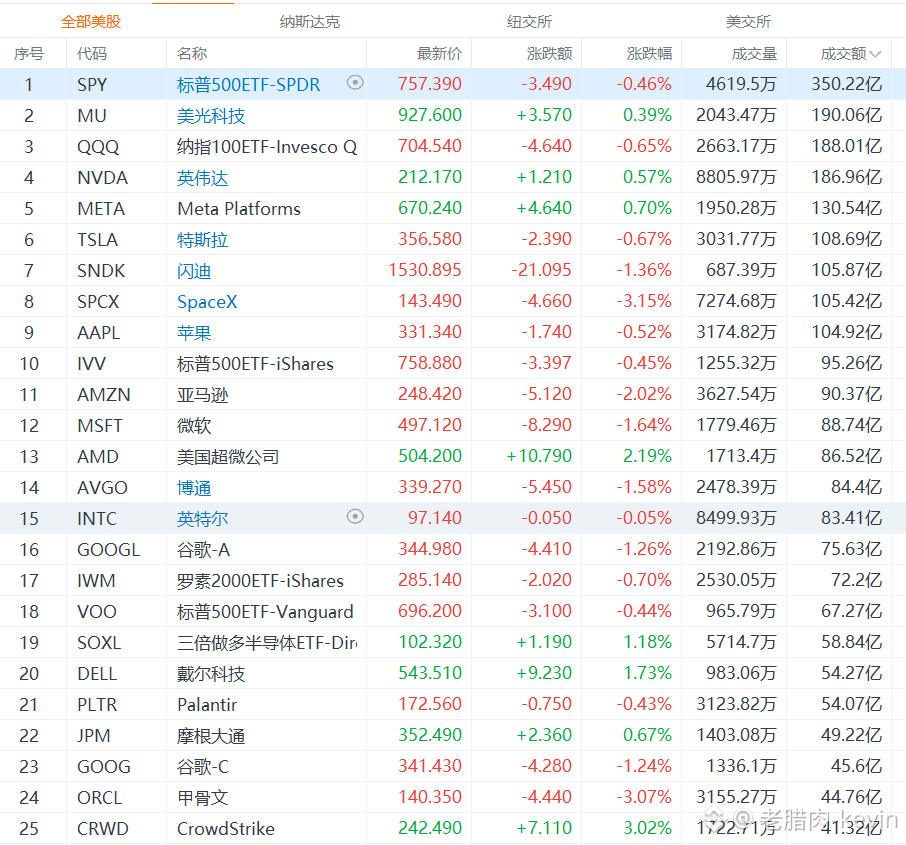
#美联储加息是否已成定局 #美国30年期国债收益率升破5.40% US Stock Close Summary: Dell Hits a New High Against the Trend, Oracle Gets Abandoned
On Tuesday, the leaderboard for US stock trading value was released, showing clear market divergence. Micron Technology topped the list with a trading value of $18.89 billion, up 0.39%; Nvidia followed closely with $18.336 billion in trading value, closing up 0.57%. Tech giants generally faced pressure—Tesla fell 0.67%, Apple dropped 0.52%, Amazon slid 2.02%, and Microsoft declined 1.64%. Google, after releasing its Gemini 3.8 Live audio model, still closed down 1.26%.
Key movers:
Dell Technologies rose 1.73% to refresh its high again, with trading value of $5.302 billion, but executives at high levels cashed out more than $130 million—an ambiguous signal. AMD gained 2.19%, and CrowdStrike jumped 3.02%, becoming a couple of the few bright spots on the list. Oracle plunged 3.07%, kicking off another round of layoffs that reduced total headcount by 13%. The market appears to be voting with distrust regarding the return on its AI infrastructure investment. SpaceX fell 3.15%; although Morgan Stanley set a $300 target price, near-term pressure remains.
News highlights:
Micron completed validation of the world’s first 512GB DDR5 memory module, with a single server capacity exceeding 12TB; Google rolled out its most advanced real-time audio model; and Jensen Huang said AI safety does not require new legislation—market mechanisms are sufficient.
While the trading-value leaderboard looks lively, there are undertows beneath the surface—high-level divergence in AI hardware is intensifying, while software and cloud giants collectively pull back. Dell’s new high may be fueled by lingering momentum, but Oracle’s sharp drop is the real signal: the market is beginning to cast doubt on the “AI money-burning” business model.$DELL $KORU $SOXL
{future}(SOXLUSDT)
{future}(KORUUSDT)
{future}(DELLUSDT)
#美联储加息是否已成定局 #美国30年期国债收益率升破5.40% US Stock Close Summary: Dell Hits a New High Against the Trend, Oracle Gets Abandoned
On Tuesday, the leaderboard for US stock trading value was released, showing clear market divergence. Micron Technology topped the list with a trading value of $18.89 billion, up 0.39%; Nvidia followed closely with $18.336 billion in trading value, closing up 0.57%. Tech giants generally faced pressure—Tesla fell 0.67%, Apple dropped 0.52%, Amazon slid 2.02%, and Microsoft declined 1.64%. Google, after releasing its Gemini 3.8 Live audio model, still closed down 1.26%.
Key movers:
Dell Technologies rose 1.73% to refresh its high again, with trading value of $5.302 billion, but executives at high levels cashed out more than $130 million—an ambiguous signal. AMD gained 2.19%, and CrowdStrike jumped 3.02%, becoming a couple of the few bright spots on the list. Oracle plunged 3.07%, kicking off another round of layoffs that reduced total headcount by 13%. The market appears to be voting with distrust regarding the return on its AI infrastructure investment. SpaceX fell 3.15%; although Morgan Stanley set a $300 target price, near-term pressure remains.
News highlights:
Micron completed validation of the world’s first 512GB DDR5 memory module, with a single server capacity exceeding 12TB; Google rolled out its most advanced real-time audio model; and Jensen Huang said AI safety does not require new legislation—market mechanisms are sufficient.
While the trading-value leaderboard looks lively, there are undertows beneath the surface—high-level divergence in AI hardware is intensifying, while software and cloud giants collectively pull back. Dell’s new high may be fueled by lingering momentum, but Oracle’s sharp drop is the real signal: the market is beginning to cast doubt on the “AI money-burning” business model.$DELL $KORU $SOXL
On Tuesday, the leaderboard for US stock trading value was released, showing clear market divergence. Micron Technology topped the list with a trading value of $18.89 billion, up 0.39%; Nvidia followed closely with $18.336 billion in trading value, closing up 0.57%. Tech giants generally faced pressure—Tesla fell 0.67%, Apple dropped 0.52%, Amazon slid 2.02%, and Microsoft declined 1.64%. Google, after releasing its Gemini 3.8 Live audio model, still closed down 1.26%.
Key movers:
Dell Technologies rose 1.73% to refresh its high again, with trading value of $5.302 billion, but executives at high levels cashed out more than $130 million—an ambiguous signal. AMD gained 2.19%, and CrowdStrike jumped 3.02%, becoming a couple of the few bright spots on the list. Oracle plunged 3.07%, kicking off another round of layoffs that reduced total headcount by 13%. The market appears to be voting with distrust regarding the return on its AI infrastructure investment. SpaceX fell 3.15%; although Morgan Stanley set a $300 target price, near-term pressure remains.
News highlights:
Micron completed validation of the world’s first 512GB DDR5 memory module, with a single server capacity exceeding 12TB; Google rolled out its most advanced real-time audio model; and Jensen Huang said AI safety does not require new legislation—market mechanisms are sufficient.
While the trading-value leaderboard looks lively, there are undertows beneath the surface—high-level divergence in AI hardware is intensifying, while software and cloud giants collectively pull back. Dell’s new high may be fueled by lingering momentum, but Oracle’s sharp drop is the real signal: the market is beginning to cast doubt on the “AI money-burning” business model.$DELL $KORU $SOXL
1
1.2k
Log in to explore more content
Join global crypto users on Binance Square
⚡️ Get latest and useful information about crypto.
💬 Trusted by the world’s largest crypto exchange.
👍 Discover real insights from verified creators.
Email / Phone number