
投机实验室
583 Posts

投机实验室
 Square Verified
Report
Block User
你们似乎根本不懂,如果实现目标,SpaceX的价值将超过地球上其他一切的总和。
41 Following
11.3K+ Followers
10.1K+ Liked
Posts
All
Quotes
Videos
·
--
Article
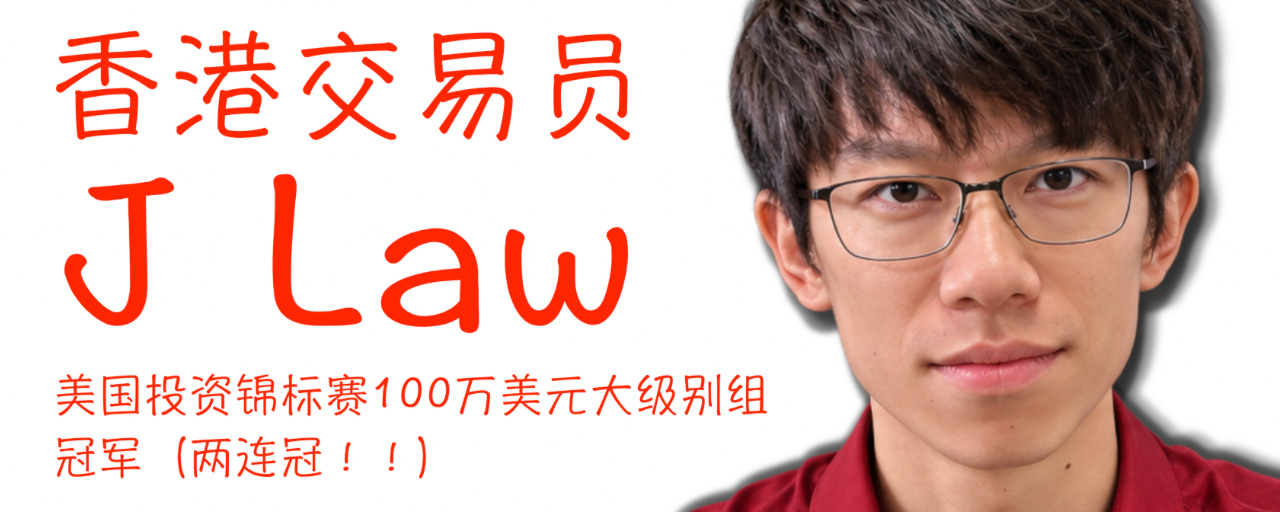
Two-time Champion of the $1 Million Trading Division!! Hong Kong Teacher J Law Turned $1 Million into $16 Million in Two Years and Won the U.S. Investing Championship’s $1 Million Division!J Law was a secondary school teacher in Hong Kong. He began trading Hong Kong and U.S. stocks while teaching, then became a full-time trader. His returns over two years competing in the U.S. Investing Championship compounded to approximately +1,499%. At that rate of return, $1 million would grow to about $16 million in two years. Over the same period, the S&P 500 rose by approximately 47%.
Image
In 2024, he won the live stock division for accounts over $1 million with a return of +353.9%, breaking Mark Minervini’s division record. In 2025, he defended his title in the same division with a return of +252.3%. In 2024, his wife, Judy Lai, used the same system to take second place in the division.
Two-time Champion of the $1 Million Trading Division!! Hong Kong Teacher J Law Turned $1 Million into $16 Million in Two Years and Won the U.S. Investing Championship’s $1 Million Division!
J Law was a secondary school teacher in Hong Kong. He began trading Hong Kong and U.S. stocks while teaching, then became a full-time trader. His returns over two years competing in the U.S. Investing Championship compounded to approximately +1,499%. At that rate of return, $1 million would grow to about $16 million in two years. Over the same period, the S&P 500 rose by approximately 47%.
Image
In 2024, he won the live stock division for accounts over $1 million with a return of +353.9%, breaking Mark Minervini’s division record. In 2025, he defended his title in the same division with a return of +252.3%. In 2024, his wife, Judy Lai, used the same system to take second place in the division.
2
1
3
2.4k
·
--
The two-time champion of the $1 million trading division is none other than him.
Hong Kong teacher J Law’s talent really came out after he switched careers to become a trader. He turned $1 million into $16 million in two years, won back-to-back titles in the $1 million division of the U.S. Investing Championship, and even broke Mark Minervini’s profit record 🥸🫡
Absolutely incredible!!
He used the VCP strategy developed by Minervini and even took Minervini’s course—truly a star student of a great teacher. During those two years of competition, he added a few more conditions to his VCP approach. His wife used the same strategy and came second in the same division. Can you believe it? Next, I’ll explain his VCP strategy.
His trading logic is to wait until most of the people who want to sell have sold, then buy.
After a stock has risen a long way, people who bought at lower prices want to take profits, while those who bought near the top and got stuck want to get out as soon as they break even. So the stock price pulls back in waves. But with each pullback, fewer people want to sell, so the pullbacks get shallower and trading volume gets smaller and smaller.
Once hardly anyone is selling, even a little buying pressure can easily push the price higher. VCP stands for Volatility Contraction Pattern—it looks for exactly this moment. Watch the video; it explains everything really well!!
5
4.3k
·
--
Verified
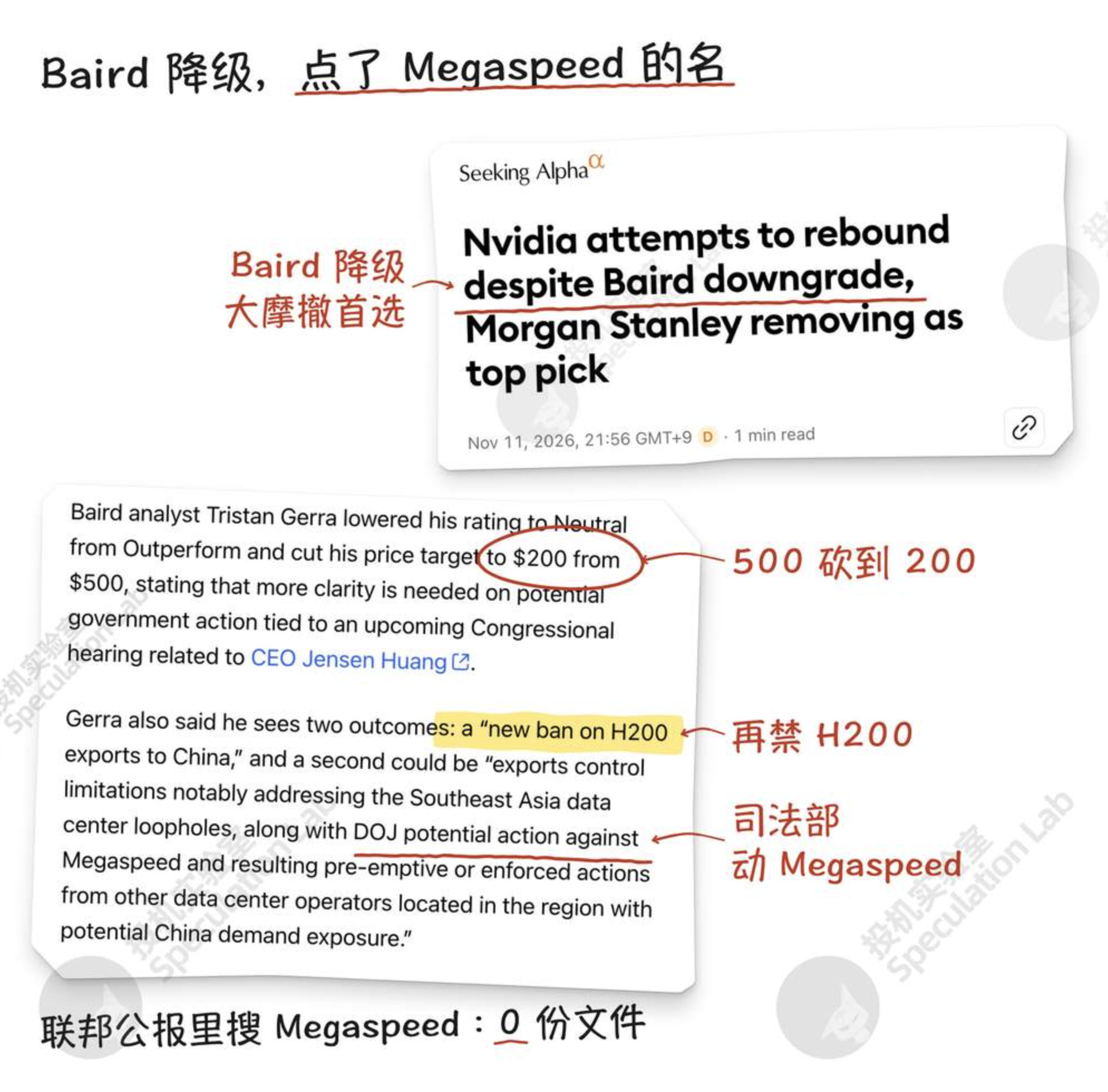
Baird slashed its price target on Nvidia from $500 to $200, naming Megaspeed in its downgrade report. It also said 10% to 30% of channel orders could be cut early 😮💨
Analyst Tristan Gerra’s point was that it’s unclear what the government will do after the congressional hearing, so he downgraded the rating from Outperform to Neutral.
He outlined two possible outcomes.
One is that the U.S. bans sales of the H200 to China again.
The other is that export controls are used to close loopholes involving data centers in Southeast Asia, and the Justice Department takes action against Megaspeed. Data centers in the region serving Chinese demand might either cut orders preemptively or be forced to do so.
Megaspeed is the Singapore company once run by Huang Le, which bought $4.8 billion worth of Nvidia chips over two years.
Yesterday I checked the Federal Register: the Commerce Department hadn’t added a single company to the Entity List in 13 months. I couldn’t find a single document on Megaspeed. I searched again today, and still got zero results.
Baird also brought up Huang himself, saying it’s uncertain whether he can stay on through 2027.
Nvidia reports earnings on the 17th, and the House has scheduled a closed-door briefing with Huang on the 18th.
8.5k
·
--
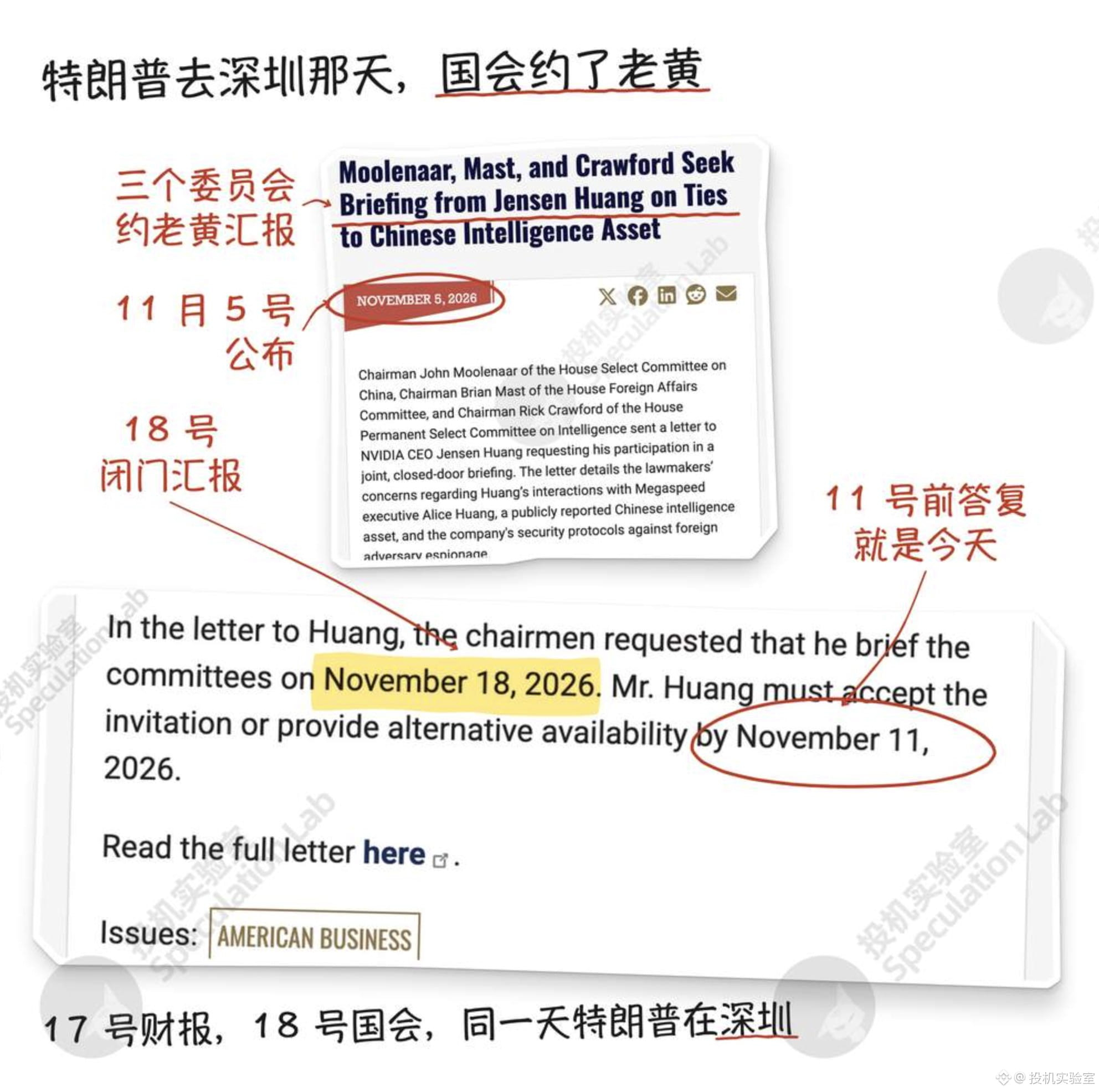
Trump is going to Shenzhen next week for APEC, but isn’t taking Huang along. On the 18th, Congress has scheduled a closed-door briefing with Huang in Washington about the Huang Le matter 🧐
On Sunday, a reporter asked whether he’d be taking Huang along. Trump said, “I don’t know, but I certainly will take him.” By Tuesday, the New York Times was reporting that Huang wouldn’t be going this time.
Huang wasn’t on the list for the trip to Beijing in May either. But after seeing the news, Trump personally called him and invited him. Huang flew to Alaska and boarded Air Force One there.
What the New York Times revealed this time was what happened on that trip: Rubio told Trump about the intelligence on Huang Le aboard Air Force One on the way to China.
On Monday, Trump was asked about it at a press conference. His answer: “I hadn’t heard about it at the time.”
On the congressional side, the chairmen of the House China Committee, Foreign Affairs Committee, and Intelligence Committee jointly wrote to invite Huang to brief them behind closed doors on the 18th, and asked him to respond by the 11th—that is, today.
Nvidia reports its earnings on the 17th, Congress has scheduled Huang for the 18th, and Trump will be in Shenzhen that same day.
Today is the deadline. The Foreign Affairs Committee chairman said on Tuesday that he didn’t know whether Huang had written back.
1
1
6.7k
·
--
One of America’s top traders, Umar, is best known for this strategy: he only trades the first hour after the market opens. He waits for the price to spike upward, then shorts it when the rally runs out of steam 🤓
I watched both videos where he publicly explained this strategy. He first shared it on his own channel in 2023, then went over it again from scratch on another show in 2025.
He looks for just three things before entering a trade.
First, a gap at the open—ideally, a gap down.
Second, after the open, the price initially spikes upward, but trading volume gets lower with each candle. Nobody is rushing in to buy.
Third, the price gets rejected at a key level above, and aggressive selling starts to show up.
If he can’t clearly see even one of the three, he stays out.
He once made $5.54 million in a year in one account—that’s what he showed after logging into his brokerage account on camera. On October 9, 2023, he followed those three rules and made over $20,000 on two short trades in the first hour after the open.
5
3.8k
·
--
Verified
What should we make of claims that weight-loss shots can cause blindness?
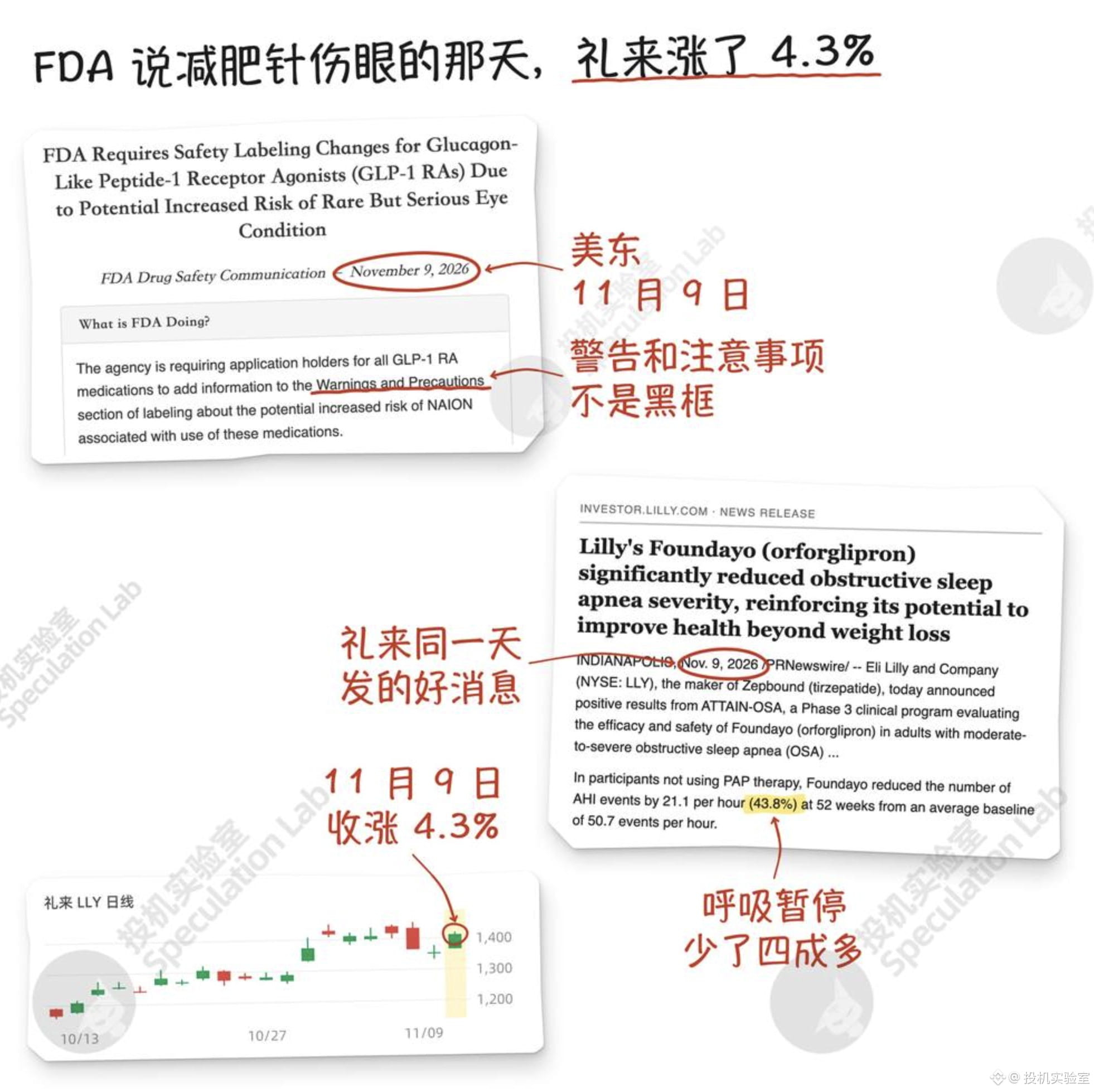
On the same day the FDA said weight-loss shots could harm your eyes, Eli Lilly closed up 4.3%. Looks like the market didn’t take the warning seriously at all 😂
On November 9, the FDA required all GLP-1 drugs to update their prescribing information. That includes semaglutide, tirzepatide, and the weight-loss pill Lilly just got approved this year. The update adds a risk of the rare eye condition NAION, which can cause permanent vision loss in one eye in severe cases.
That same day, Lilly put out a press release saying that in a Phase 3 trial, its weight-loss pill Foundayo reduced the number of sleep apnea episodes by more than 40%. The company plans to ask the FDA to approve this new use before the end of the year.
Novo Nordisk was also up 2.7% that day.
The FDA added this warning to the Warnings and Precautions section of the prescribing information. It is not the highest-level, boxed warning.
I translated the original FDA notice. The FDA’s own data show 10 cases among 78,000 people who received injections. That figure is based on its review of 126 clinical trials.
The European Medicines Agency added this condition to semaglutide’s prescribing information last June, classifying it as very rare—affecting at most one in 10,000 people.
The FDA’s advice for people receiving injections is still that anyone who has had this condition before should talk to their doctor about whether to continue treatment.
LLY-1.09%
NVOUS-0.08%
2
1.9k
·
--

Article
He’s crushing it in his early twenties!! University of Washington finance grad JJ Simon started trading with $5,000 he won playing poker and made over $1.8 million in just over a year—that’s more than 10 million yuan. I’m revealing his strategy!!American trader JJ Simon was just in his early twenties when he made over $1.8 million—more than 12 million yuan—in just over a year.
According to him, all that money came from his profit splits with proprietary trading firms. He started with just $5,000, which he won playing poker while he was in college.
He’s made a lot of money, but he’s also spent a lot. He spent over $500,000 just on evaluations to get trading accounts, so the risks are still pretty high.
He graduated from the University of Washington in 2025 with a degree in computational finance, and he graduated with honors. He says he trades using the same methods he learned at university, so he’s formally trained in the field. Put simply, he applies them mechanically to candlestick charts.
He’s crushing it in his early twenties!! University of Washington finance grad JJ Simon started trading with $5,000 he won playing poker and made over $1.8 million in just over a year—that’s more than 10 million yuan. I’m revealing his strategy!!
American trader JJ Simon was just in his early twenties when he made over $1.8 million—more than 12 million yuan—in just over a year.
According to him, all that money came from his profit splits with proprietary trading firms. He started with just $5,000, which he won playing poker while he was in college.
He’s made a lot of money, but he’s also spent a lot. He spent over $500,000 just on evaluations to get trading accounts, so the risks are still pretty high.
He graduated from the University of Washington in 2025 with a degree in computational finance, and he graduated with honors. He says he trades using the same methods he learned at university, so he’s formally trained in the field. Put simply, he applies them mechanically to candlestick charts.
3
2
10
7.4k
·
--
He's already this good in his early 20s...
JJ Simon, a computer finance student at the University of Washington, started trading with the $5,000 he won playing poker. In a little over a year, he made more than $1.8 million—equivalent to over 10 million RMB. I’m revealing his strategy 😘🤑
He says he uses the same things he learned in college to trade.
His trading logic is that after a wave of buy or sell orders pushes the price away, it will eventually return to a fair price. For example, when the New York market opens at 9:30 a.m., orders that have accumulated overnight pour in alongside orders from large institutions. The price often overshoots on its first move. He calls the price at the moment the market opens the “fair value”—in other words, a fair price.
The farther the price moves away, the more you can make by trading back toward it.
So he follows the same approach in every session: first set the fair value, then take one trade in the direction of the opening move, and after that, wait for a signal to trade back toward fair value.
First, here’s how he sets fair value. On a typical day, he uses the 9:30 opening price. He marks the 9:29 candle—the final one-minute candle before the open—and extends it to the right, using that horizontal line as a reference throughout the day. If, after the open, the price immediately surges back to a level where it had been consolidating for a while beforehand, he switches to using that level instead.
On some days, important data is released at 8:30 a.m., such as inflation figures like CPI or PPI. The release times are scheduled in advance. On those days, he uses the price from the minute before the data comes out as fair value. Everyone is already expecting the data, so the price has already priced it in. The big candle that forms when the data is released is an overshoot.
At 9:30, if the price immediately returns to where it was before the data release, he ignores the opening price and looks only at the pre-release price.
Once fair value is set, he takes one trade in the direction of the opening move. After that trade, he spends the rest of the session trading only back toward fair value.
2
6
68
36.7k
·
--
Verified
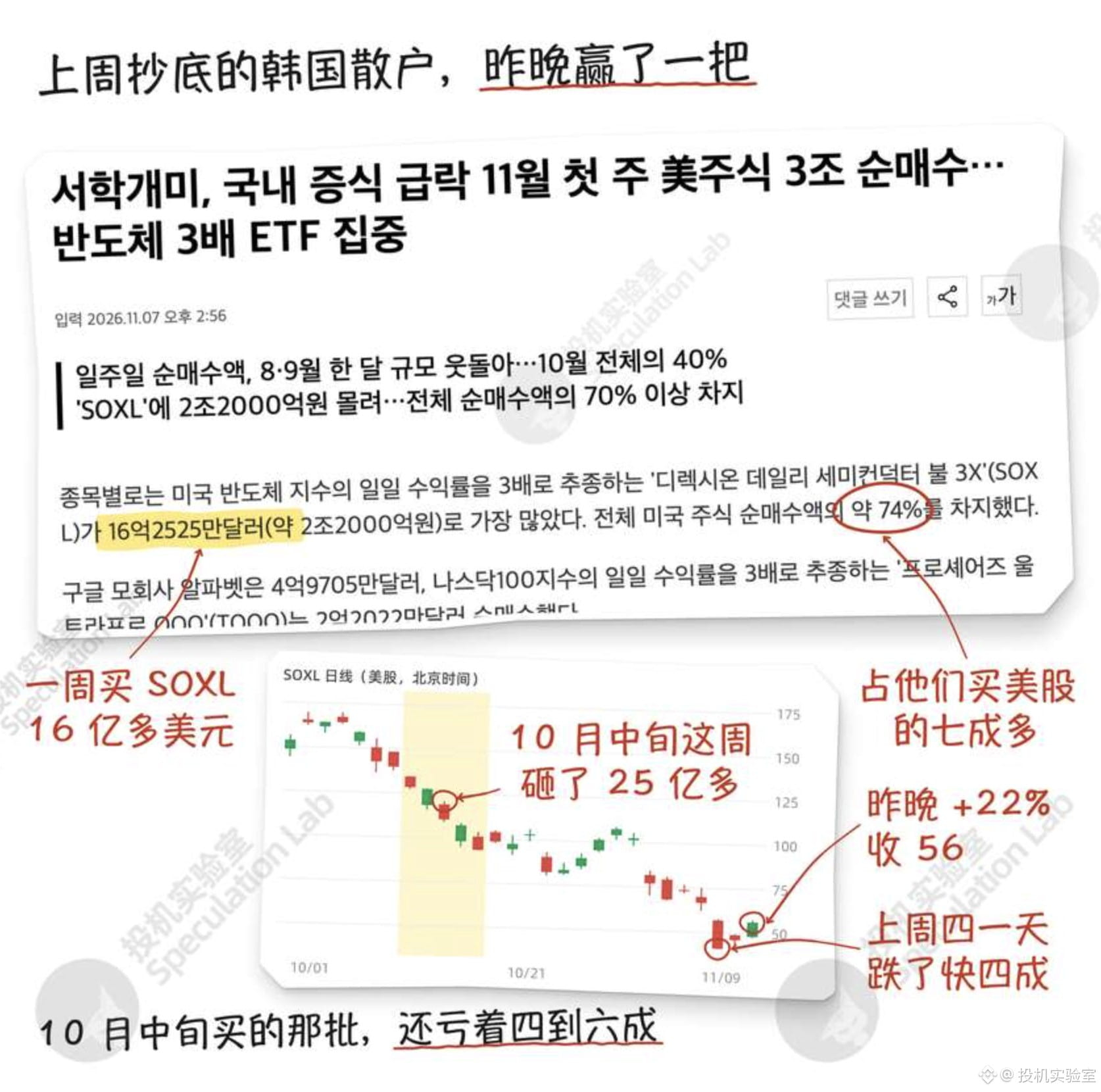
Last week, everyone was laughing at Korean retail investors. They came out on top last night, so no more trips to the rooftop.
The SOXL they spent $1.6 billion buying the dip on in a single week surged 22% in one day last night 🤑
SOXL is a 3x leveraged ETF that bets on chip stocks going up. It plunged nearly 40% in a single day last Thursday, and Korean retail investors piled in that week. Last night, the Philadelphia Semiconductor Index rose nearly 7%, and SOXL closed at $56. From Thursday’s close last week, that’s nearly a 40% rebound in two days.
South Korean stocks also jumped at the open this morning, with the KOSPI up 4.5% right out of the gate.
But this rally only bailed out the people who bought the dip last week.
During the week in mid-October, Korean retail investors poured more than $2.5 billion into SOXL. That week, SOXL fluctuated between the $90s and the $130s. Based on last night’s closing price, those investors are still down somewhere between 40% and nearly 60%.
From the $150-plus level in early October, SOXL would need to rise another 170% just to get back there...
5
11.6k
·
--
Verified
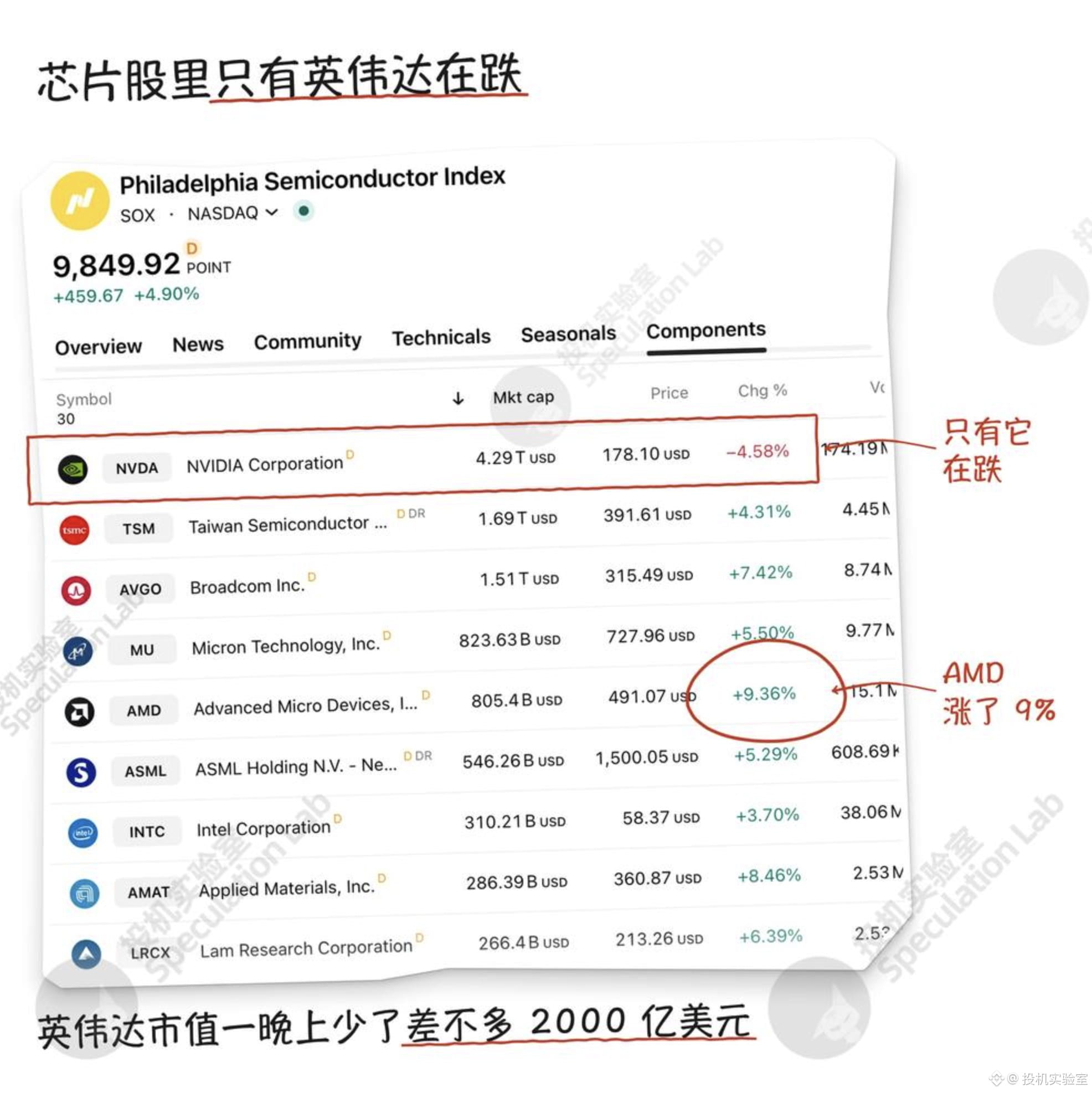
Of the 30 stocks in U.S. chip ETFs, 29 rose tonight. Nvidia was the only one that fell 😂
Astera Labs was the biggest gainer, up 12%, while AMD rose 9%.
Nvidia fell more than 4%, losing nearly $200 billion in market value overnight, while AMD added almost $70 billion.
The Nasdaq was also up 2.7%. Looks like money hasn’t left chips—it’s just moved from Nvidia to other companies.
Astera Labs was the biggest gainer, up 12%, while AMD rose 9%.
Nvidia fell more than 4%, losing nearly $200 billion in market value overnight, while AMD added almost $70 billion.
The Nasdaq was also up 2.7%. Looks like money hasn’t left chips—it’s just moved from Nvidia to other companies.
1
2
5.6k
·
--
Verified
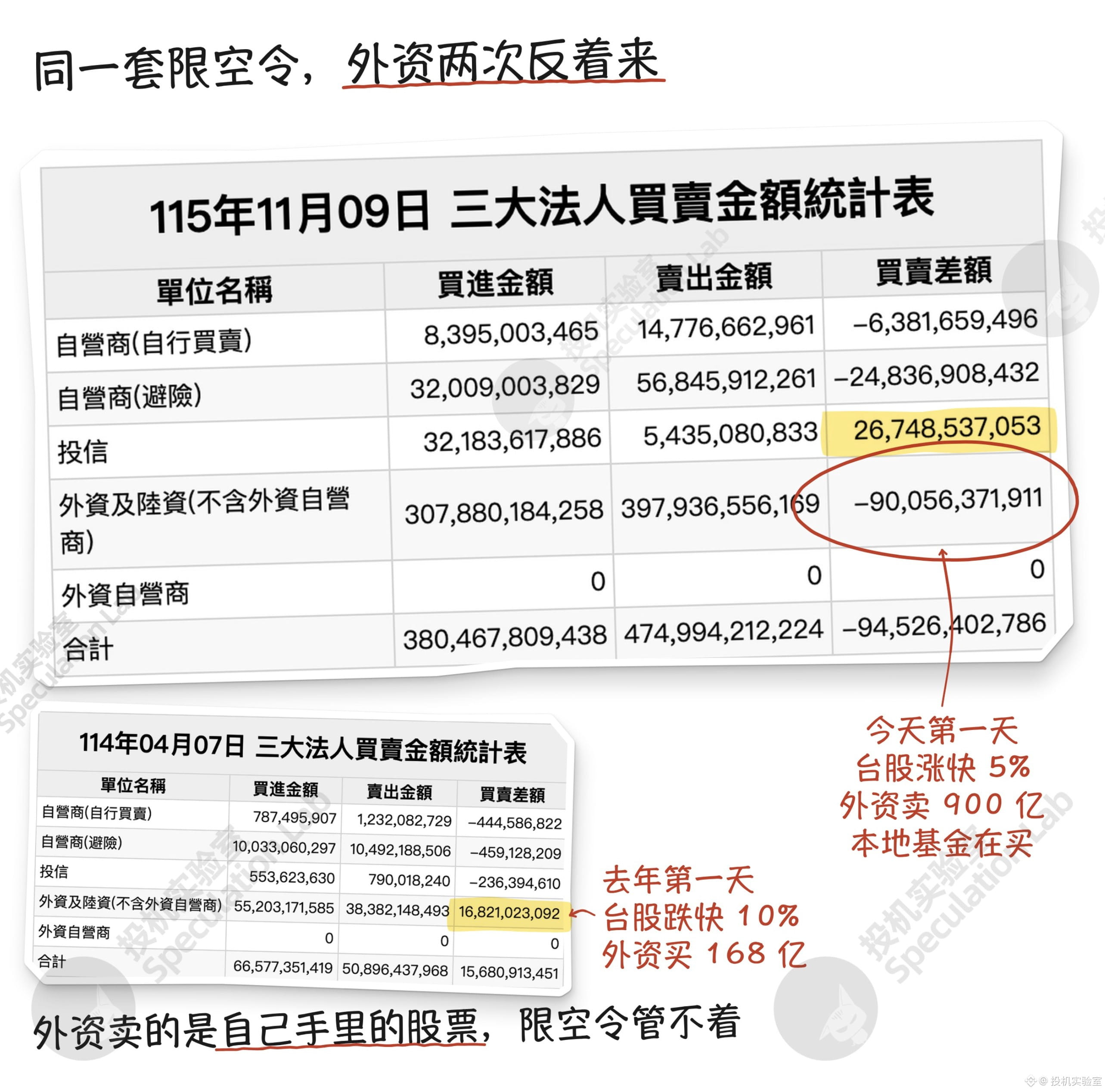
On the first day of the short-selling restrictions, Taiwan’s stock market jumped nearly 5%, while foreign investors sold NT$90 billion worth of shares 😂
When the same restrictions took effect last April, Taiwan’s market fell nearly 10% on the first day—and foreign investors bought NT$16.8 billion that day.
I took a look at the latest figures from the Taiwan Stock Exchange for the three major institutional investors. The only net buyers today were local Taiwanese investment funds, at NT$26.7 billion. Securities dealers were selling too, and the three groups together were net sellers of NT$94.5 billion.
The restrictions apply to borrowed shares: the quota for short selling borrowed shares was cut by 90%, and the margin requirement for short selling was raised to 130%. Foreign investors can sell shares they already own without borrowing, so the restrictions don’t apply to that.
Including last week, foreign investors have sold more than NT$610 billion worth of Taiwan stocks over six trading days.
All NT$94.5 billion worth of shares were absorbed by retail investors and money from outside the three major institutional investor groups.
Would you dare chase this bullish candle? 🥲
2
4.5k
·
--
I'd rather be an idiot for a day than lose money.
A month earlier, he’d made $940,000. The next month, he lost $1.39 million. Top American trader Umar really hit a rough patch last September 😮💨
On September 18, the Fed had just cut rates, and SPY opened higher. Just minutes after the opening bell, he bought nearly 1,000 put options. But the price kept climbing, and he didn’t cut his losses—he held on until 10:30. That trade cost him $179,000.
He said that if he’d stopped out at the day’s high, he would’ve lost only around $60,000–$70,000 at most.
Looking back, most of his trades that month were bad ones. He entered with a bias, didn’t stick to his plan, and failed to cut his losses.
After that, he set himself a few hard-and-fast rules: be at the computer with a written plan half an hour before the market opens; if he wants to go short, first force himself to write down a reason to go long; don’t place another trade within ten minutes of closing one; and after two bad trades, step away from the computer.
His exact words were, “I'd rather be an idiot for the day than lose money.” Better to be an idiot for a day than lose money 🫡
2
5
7.6k
·
--
Verified
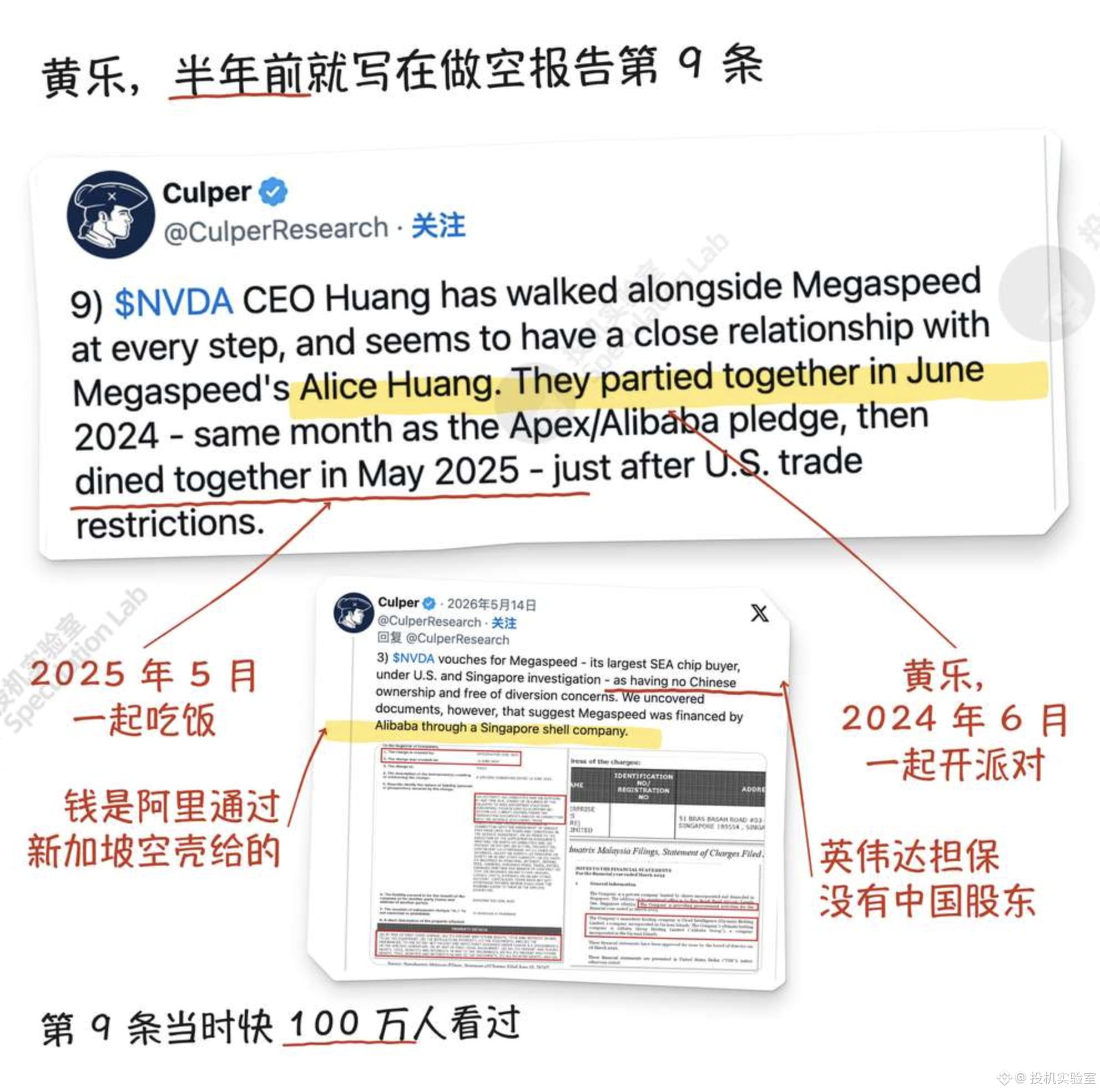
Huang Le’s name appeared six months ago in a report shorting Nvidia, in entry No. 9. Nearly a million people have viewed that post by now, and Nvidia still rose 4% the next day 😂
In the early hours of May 14, short-selling firm Culper posted 17 times in a row on X, saying Nvidia’s business with China was nowhere near zero: more than 20% of its computing revenue still came from China, routed through intermediaries in Southeast Asia.
Entry No. 3 said Nvidia had assured Megaspeed that it had no Chinese shareholders and no transshipments. Documents dug up by Culper showed that Megaspeed’s funding came from Alibaba through a Singapore shell company.
Entry No. 4 covered Megaspeed’s books: its assets grew from $33 million to $3 billion in a year.
Entry No. 9 named Huang Le: Huang and she partied together in June 2024, then had dinner together again in May 2025, just after the U.S. tightened export controls.
Entry No. 10 went into more detail. Megaspeed employees said that whenever Huang visited them, people from Alibaba came along too.
The night before the report came out, Huang boarded Air Force One in Alaska to fly to Beijing with Trump.
Six months later, Nvidia’s board launched its own independent investigation..
1
4.1k
·
--
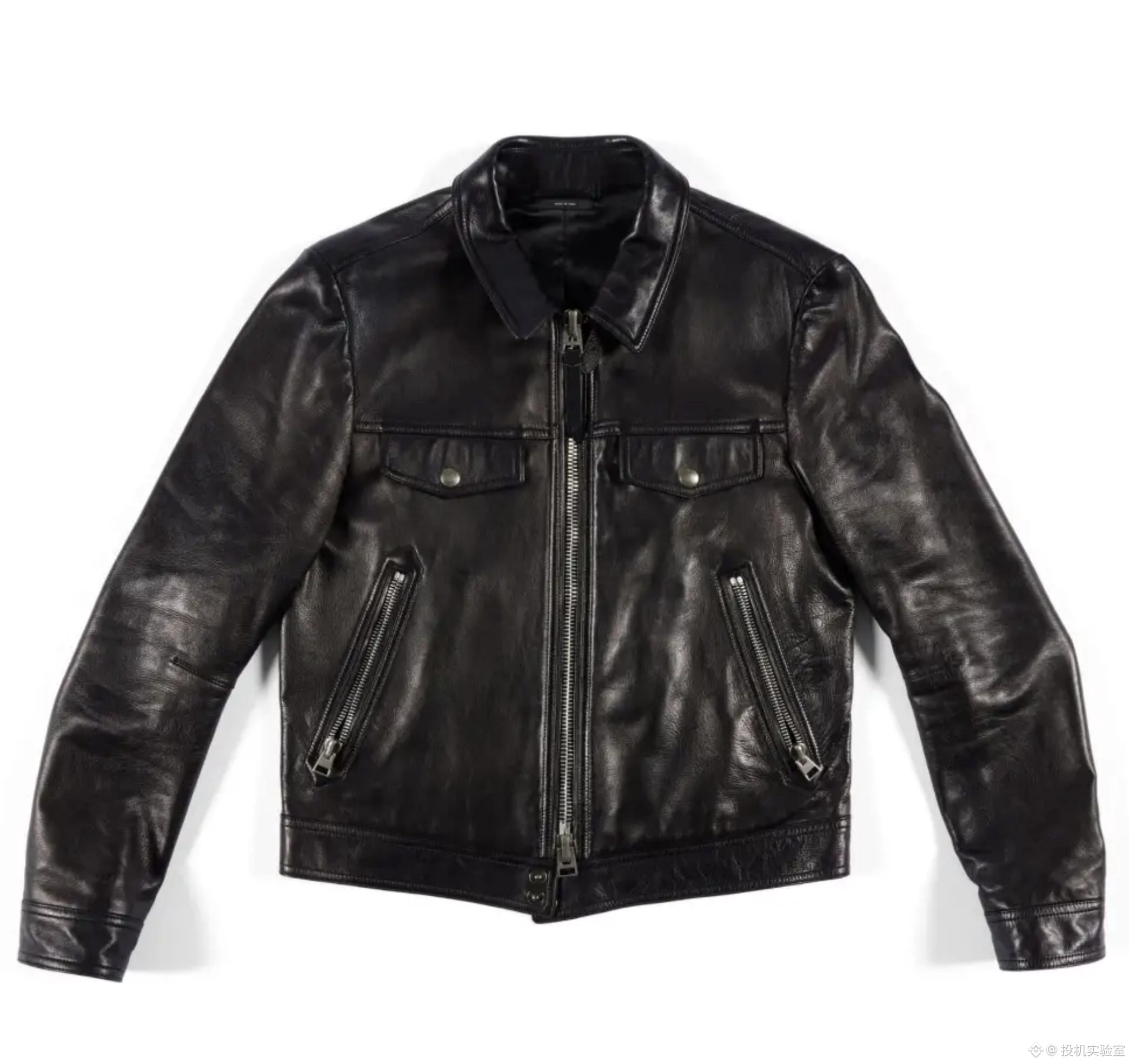
Women should be careful around men wearing black leather jackets, especially those who wear long-sleeved black leather jackets all year round, even in summer.
It doesn’t matter how honest they look.
Women should be careful around men wearing black leather jackets, especially those who wear long-sleeved black leather jackets all year round, even in summer.
It doesn’t matter how honest they look.
It doesn’t matter how honest they look.
4
2
2.2k
·
--
Verified
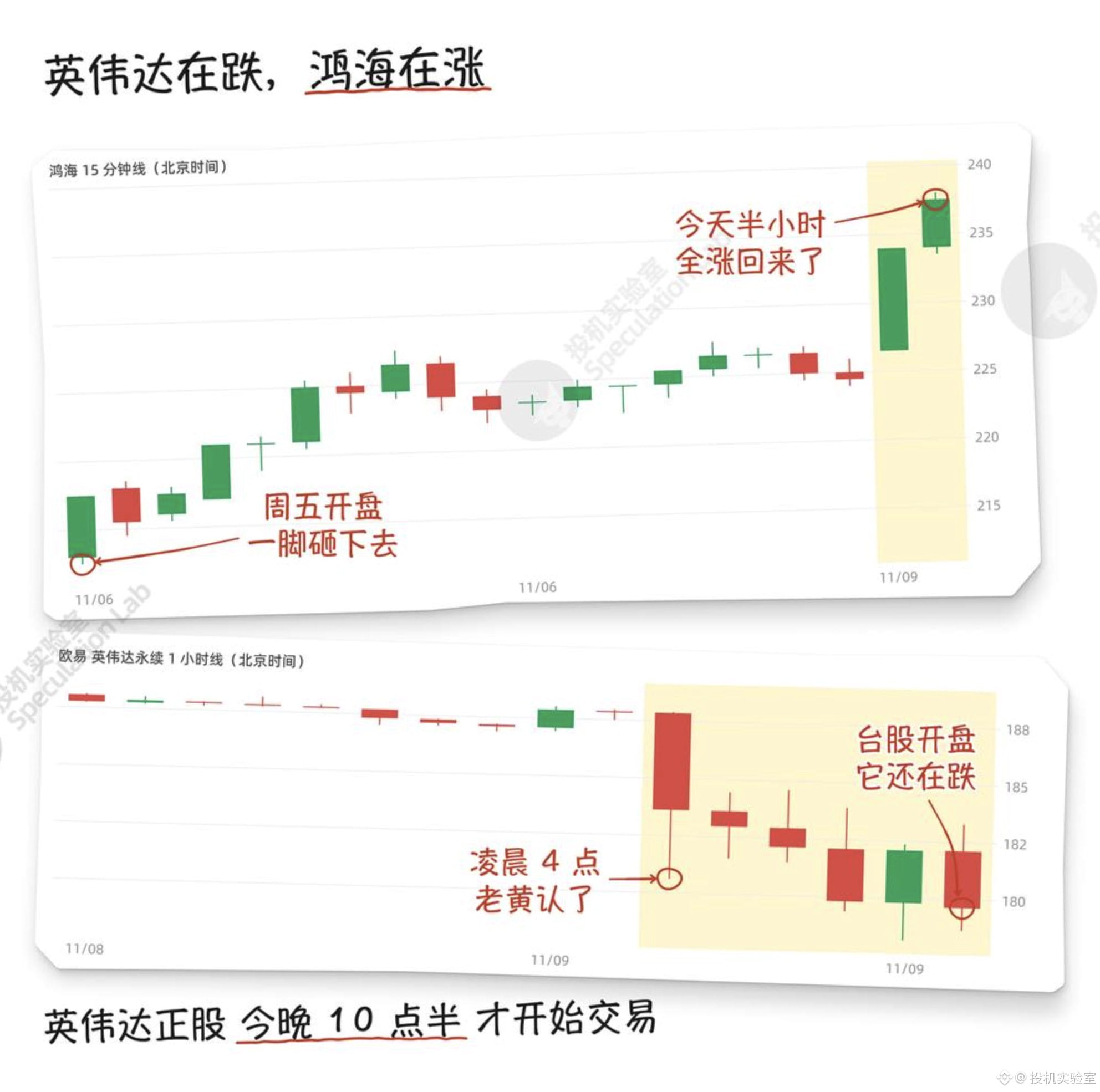
Huang admitted to having an affair, and Nvidia perpetuals on OKX fell nearly 4%. But when Taiwan’s market opened today, Foxconn, which assembles AI servers for Nvidia, jumped nearly 6% 🧐
Within half an hour of the open, Foxconn had made back all of Friday’s losses, and the entire Taiwan market was up more than 1,200 points.
Everyone overseas was saying Asia would get crushed by Huang on Monday. But while Nvidia itself was falling, its Taiwanese suppliers were rising.
Just look at the timing and it makes sense.
Taiwan’s market closed at 1:30 p.m. on Friday. That night, the Philadelphia Semiconductor Index rose 4.2% and TSMC’s ADR rose 6.3%. Taiwan’s market is catching up with those gains today.
Huang admitting fault and the board launching an investigation both happened at 4 a.m. today. Nvidia’s stock hasn’t even traded for a single minute since then.
Nvidia perpetuals on OKX are now around 180, and the funding rate has turned negative, meaning short sellers are paying long holders.
U.S. stocks open at 10:30 tonight. If Nvidia really opens down 4%, how much of Taiwan’s 1,200-point gain will be left tomorrow...
1
1
3.6k
·
--
Kimchi, the crypto influencer rumored to have made $40 million on a single trade, was signed by the token-launch platform Pump.fun as its public face—and things went wrong just two days later.
His account posted a poster on a New York street. The coin featured on it hit a $15 million market cap in six and a half minutes, then plunged 96% in less than two minutes. 🥸🧐
After digging into Kimchi, I saw through the shady playbook of the meme-coin world. It’s the same old scheme!!
Even stranger, 40 minutes before the poster went up, 30 wallets had already bought the coin. As soon as the poster appeared, they started selling, pocketing more than $300,000.
The first to claim his account had been hacked was the very show that had originally spun stories about him. Nobody ever saw the supposed $40 million profit in a live trade from start to finish; on-chain records only trace $6 million. An alleged trading star whose claims were never verified was signed by the platform, then used by others to launch several coins. To this day, nobody knows whose pockets the money ended up in.
1
7
18.9k
·
--
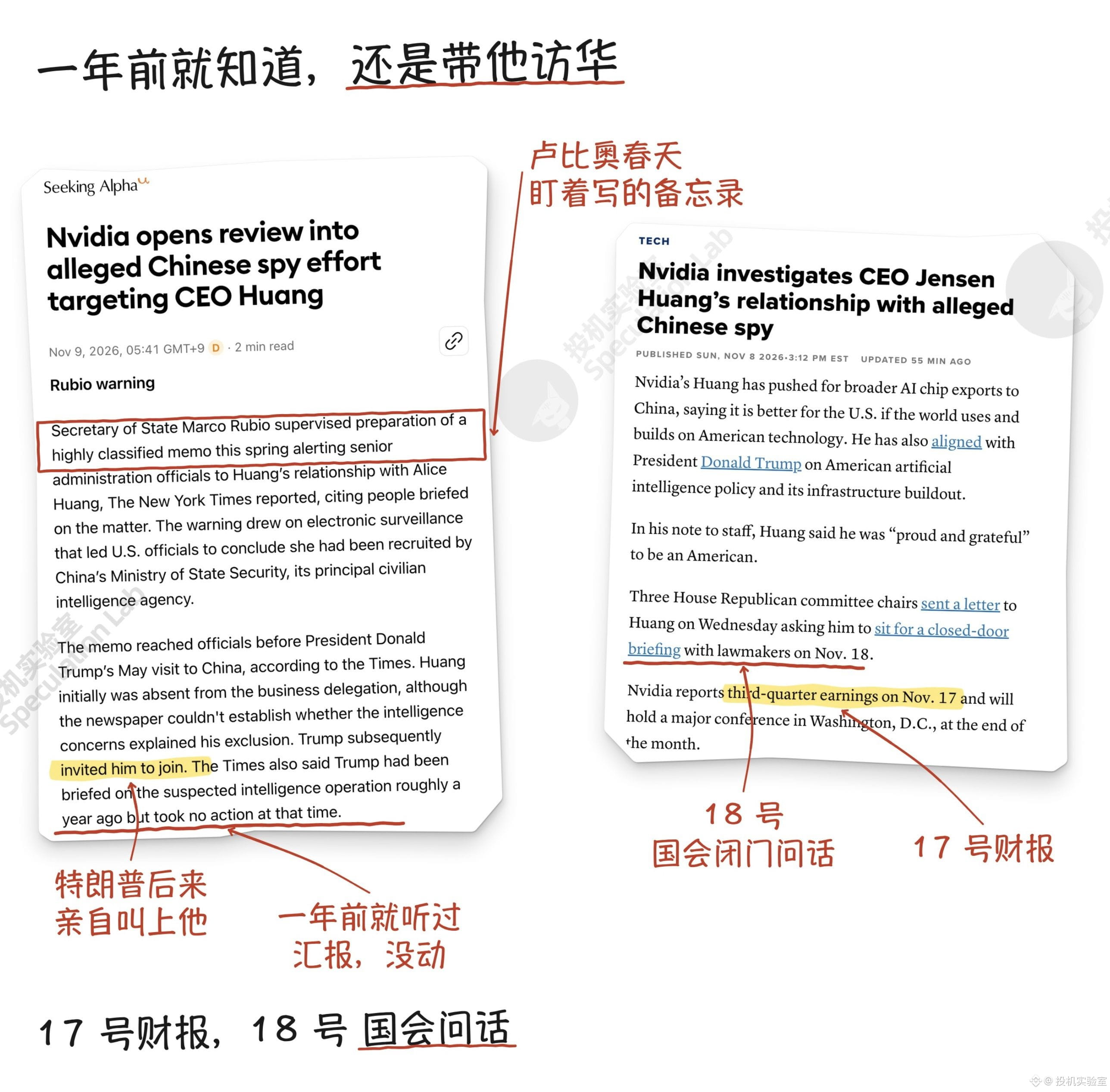
The U.S. knew a year ago that there was a problem with this woman close to Huang. This spring, Secretary of State Rubio personally oversaw the drafting of a confidential memo about it. Yet when Trump visited China in May, he still personally added Huang to the travel delegation 🥸
According to The New York Times, Huang wasn’t on the business delegation list for the China visit at first. Trump later invited him himself.
The memo had reached senior officials before the visit. Trump had probably been briefed about it about a year earlier, but did nothing at the time.
Now Huang himself has admitted to having an affair, and he has two hurdles to clear over the next 10 days.
On the 17th, Nvidia releases its third-quarter earnings.
On the 18th, the Republican chairs of three House committees want him to explain himself in a closed-door session on Capitol Hill.
The board’s independent investigation doesn’t even have a deadline.
I’m really curious to see whether analysts dare to ask about this on the earnings call 😂
1
1
6.4k
·
--
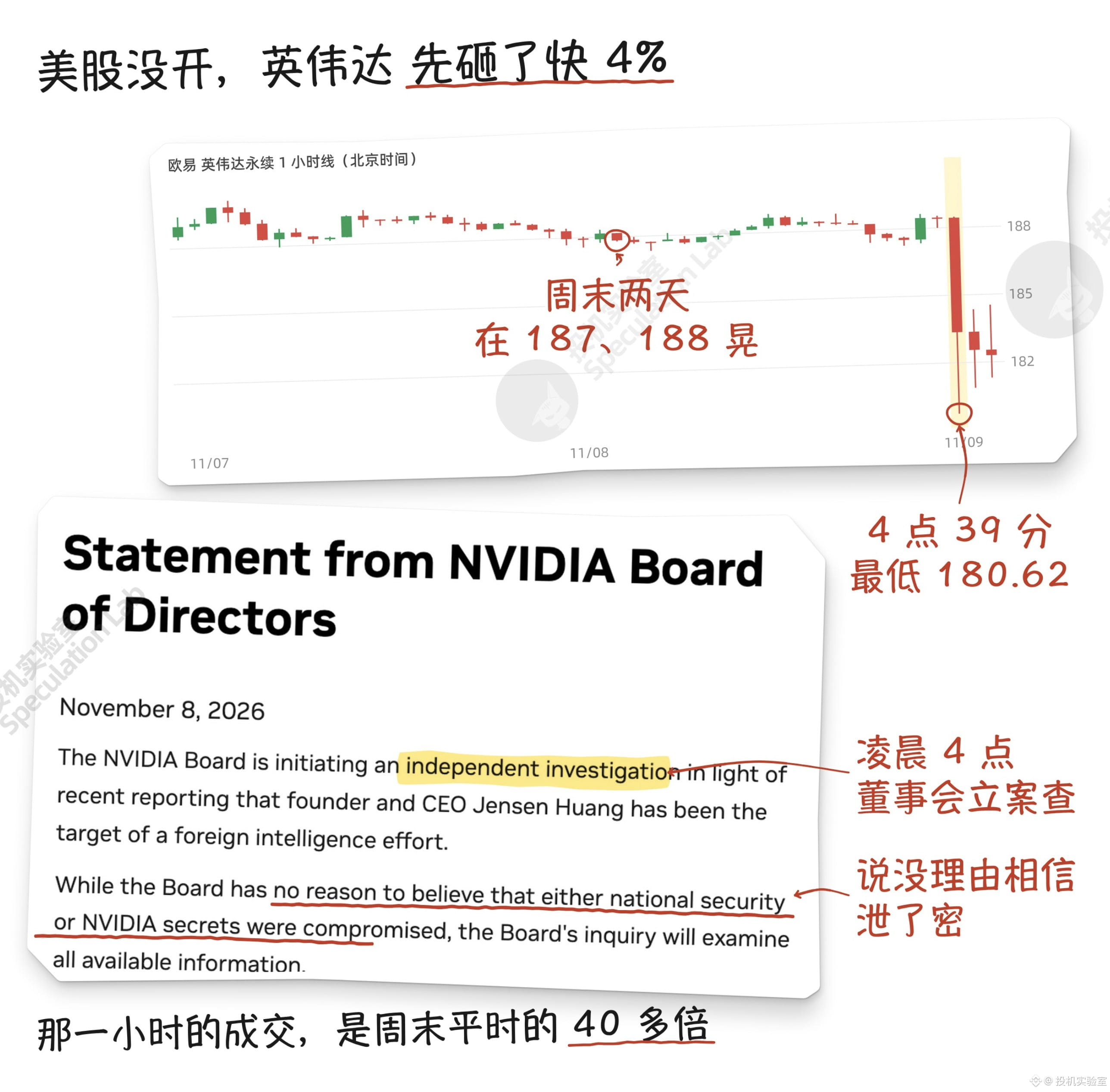
The woman Jensen Huang admitted having an affair with works at a Singapore company that bought $4.8 billion worth of Nvidia chips over two years. The U.S. Commerce Department is still investigating whether it funneled the chips into China 🥲
The company is called Megaspeed. It operates computing data centers. The woman, Alice Huang, is an executive there and is not related to Jensen Huang.
The New York Times reported that she used to work as a TV journalist in China, and U.S. officials believe she was recruited by China’s Ministry of State Security.
I read the employee letter posted on Nvidia’s website from beginning to end. Jensen admitted to having an affair and said there was no excuse. The letter didn’t name her or mention China.
It did, however, end with a line saying he was proud and grateful to be an American.
The board issued a statement the same day, saying independent directors, together with outside lawyers, were investigating. They said there was currently no reason to believe that national security or company secrets had been compromised.
But the most damning detail was also in the New York Times: even after the Commerce Department began its investigation, Nvidia kept selling chips to Megaspeed.
1
1
5
22.5k
·
--

Article
Exposing Kimchi, Who Made $40 Million!! A Poster Sent the Coin Price Plunging 96% in 6 Minutes—He Was Signed as the Face of a Token Launch Platform, and It All Went Wrong Just Two Days Later!Crypto influencer Kimchi, who reportedly made $40 million on a single trade, was signed by the token launch platform Pump.fun as its public face—but ran into trouble just two days later.
His account posted a poster on a New York street. The coin featured on it soared to a $15 million market cap in six and a half minutes, then plunged 96% in less than two minutes.
Even stranger, a wallet had bought the coin 40 minutes before the poster was posted. In total, 30 wallets began selling as soon as the poster went up. They had sold almost everything within 20 minutes, making more than $300,000.
Less than a minute after the poster was posted, the token creator transferred all 500 million coins—half of the total supply—into Kimchi’s wallet on Pump.
Exposing Kimchi, Who Made $40 Million!! A Poster Sent the Coin Price Plunging 96% in 6 Minutes—He Was Signed as the Face of a Token Launch Platform, and It All Went Wrong Just Two Days Later!
Crypto influencer Kimchi, who reportedly made $40 million on a single trade, was signed by the token launch platform Pump.fun as its public face—but ran into trouble just two days later.
His account posted a poster on a New York street. The coin featured on it soared to a $15 million market cap in six and a half minutes, then plunged 96% in less than two minutes.
Even stranger, a wallet had bought the coin 40 minutes before the poster was posted. In total, 30 wallets began selling as soon as the poster went up. They had sold almost everything within 20 minutes, making more than $300,000.
Less than a minute after the poster was posted, the token creator transferred all 500 million coins—half of the total supply—into Kimchi’s wallet on Pump.
2
1
8
18k
·
--
After digging into how Kimchi made $40 million, I saw through the shady playbook of the meme coin world. It’s the same old playbook 😮💨😡
Kimchi was signed by the token launch platform Pump.fun to be its poster boy, and things went wrong just two days later. His account posted a poster from the streets of New York. The coin featured on it hit a $15 million market cap in six and a half minutes, then crashed 96% in less than two minutes!!
Even stranger, a wallet had bought the coin 40 minutes before the poster went up.
Thirty wallets in total started selling as soon as the poster was posted. They’d mostly sold out within 20 minutes, pocketing over $300,000.
I matched up the on-chain records minute by minute. Less than a minute after the poster went up, the person who launched the coin transferred 500 million tokens into Kimchi’s wallet on Pump. And the first ones to claim his account had been hacked were from the very show that had once made up a story about him...
The video also explains how the $40 million story got around, why Bubblemaps only traced $6 million, why Pump.fun signed him, what happened to the KIMCHI coin on the day he signed, whether his account was actually hacked, and whose pocket the money ended up in. Watch the video—it’s only 11 minutes!!
1
7
15.2k
Log in to explore more content
Join global crypto users on Binance Square
⚡️ Get latest and useful information about crypto.
💬 Trusted by the world’s largest crypto exchange.
👍 Discover real insights from verified creators.
Email / Phone number
Trending Topics
HuangExitNvidiaStrategyInFocus
82,053 views
929 Discussing
STOCKS | Nvidia’s Jensen Huang Resigns, Colette Kress Named as Interim CEO
Binance News
·22 Likes
·33.8k views
AnthropicRejectsIPODelayValuationinQuestion
680,198 views
5,208 Discussing
BitMineReports$6.3BNetLossForFiscal2026
10,320 views
115 Discussing