

طريق السلامة
508 Posts

طريق السلامة
Report
Block User
Open Trade
Frequent Trader
4 Years
2.2K+ Following
1.0K+ Followers
1.1K+ Liked
Posts
Portfolio
All
Quotes
Videos
PINNED
·
--

Article
Step by step to become a professional content creator🌐Introduction :- Dear new content creator on Binance Square, start right from your first post.
🔹️Entering the world of Binance Square means you are now at the heart of global crypto discussions, but how can you ensure your content stands out and generates profits? ❓️
👇🔴Here are the most important tips to ensure that 🔴👇
1️⃣-📌The title of the content is the key 🔑:-
Step by step to become a professional content creator
🌐Introduction :- Dear new content creator on Binance Square, start right from your first post.
🔹️Entering the world of Binance Square means you are now at the heart of global crypto discussions, but how can you ensure your content stands out and generates profits? ❓️
👇🔴Here are the most important tips to ensure that 🔴👇
1️⃣-📌The title of the content is the key 🔑:-
🔹️Entering the world of Binance Square means you are now at the heart of global crypto discussions, but how can you ensure your content stands out and generates profits? ❓️
👇🔴Here are the most important tips to ensure that 🔴👇
1️⃣-📌The title of the content is the key 🔑:-
8
3
23
1.1k
·
--
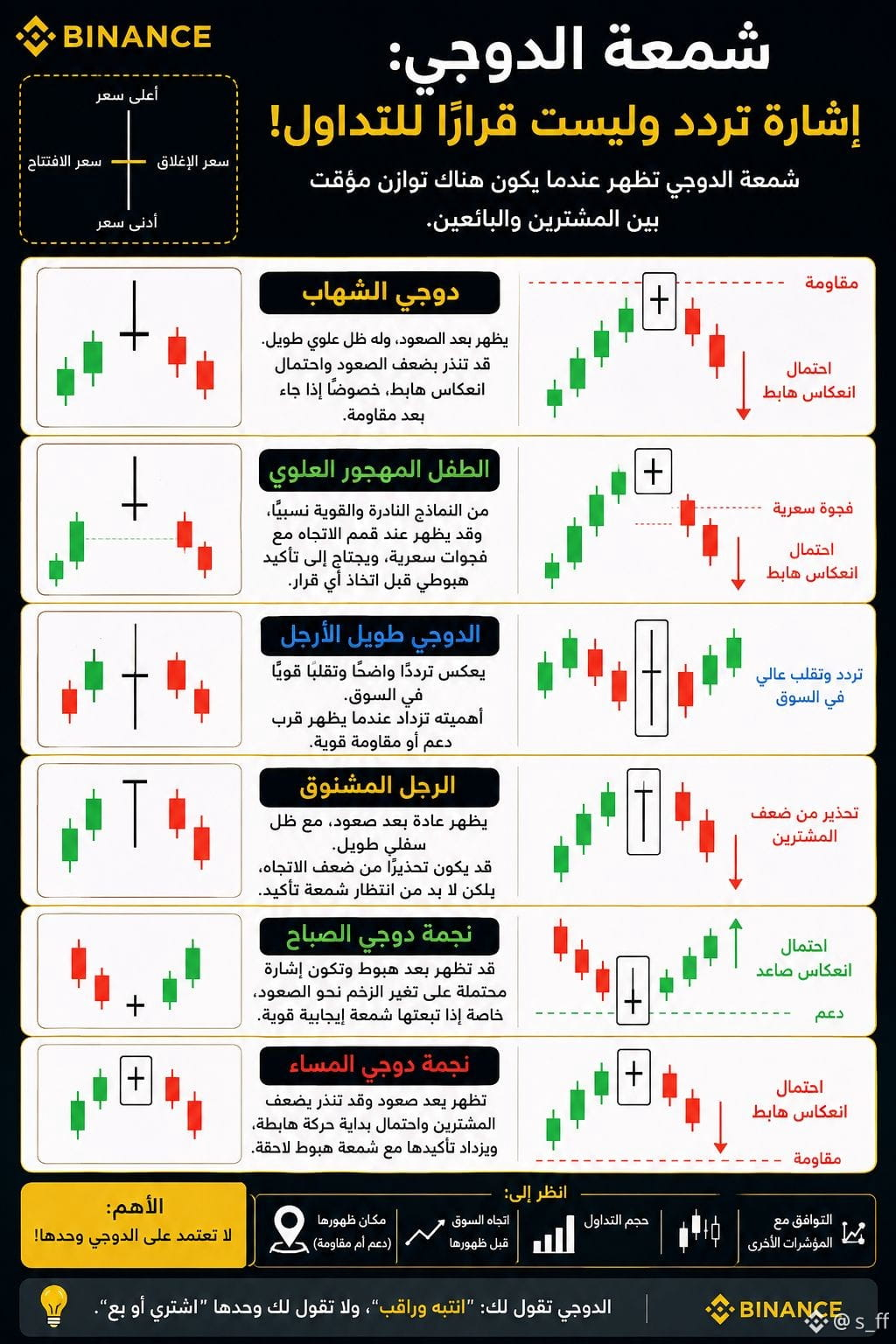
📊 Doji Candle: a signal of indecision, not a trading decision!
A doji candle appears when there is a temporary balance between buyers and sellers, which is why it can be very important at support and resistance zones.
🔹 Shooting Star Doji: may warn of weakening upward momentum and the possibility of a bearish reversal.
🔹 Long-Legged Doji: indicates strong indecision and volatility in the market.
🔹 Morning Doji Star: may indicate the start of a bullish reversal after a decline.
🔹 Evening Doji Star: may indicate weakness in the uptrend and the possibility of a drop.
🔹 Hanging Man: a possible warning of weakness in buyers after an upwave.
⚠️ Most important: don’t rely on the doji alone!
Look at where it appears, the market direction, trading volume, and the next confirmation candle before making any decision.
💡 Remember: the doji tells you “pay attention and monitor,” and it doesn’t tell you on its own “buy” or “sell.”
📌 Save the image, as you may need it when reading Japanese candlesticks.
#Write2Earn #Squar2earn #Binance #BTC #BNBToken
$BNB $BTC $ETH
📊 Doji Candle: a signal of indecision, not a trading decision!
A doji candle appears when there is a temporary balance between buyers and sellers, which is why it can be very important at support and resistance zones.
🔹 Shooting Star Doji: may warn of weakening upward momentum and the possibility of a bearish reversal.
🔹 Long-Legged Doji: indicates strong indecision and volatility in the market.
🔹 Morning Doji Star: may indicate the start of a bullish reversal after a decline.
🔹 Evening Doji Star: may indicate weakness in the uptrend and the possibility of a drop.
🔹 Hanging Man: a possible warning of weakness in buyers after an upwave.
⚠️ Most important: don’t rely on the doji alone!
Look at where it appears, the market direction, trading volume, and the next confirmation candle before making any decision.
💡 Remember: the doji tells you “pay attention and monitor,” and it doesn’t tell you on its own “buy” or “sell.”
📌 Save the image, as you may need it when reading Japanese candlesticks.
#Write2Earn #Squar2earn #Binance #BTC #BNBToken
$BNB $BTC $ETH
A doji candle appears when there is a temporary balance between buyers and sellers, which is why it can be very important at support and resistance zones.
🔹 Shooting Star Doji: may warn of weakening upward momentum and the possibility of a bearish reversal.
🔹 Long-Legged Doji: indicates strong indecision and volatility in the market.
🔹 Morning Doji Star: may indicate the start of a bullish reversal after a decline.
🔹 Evening Doji Star: may indicate weakness in the uptrend and the possibility of a drop.
🔹 Hanging Man: a possible warning of weakness in buyers after an upwave.
⚠️ Most important: don’t rely on the doji alone!
Look at where it appears, the market direction, trading volume, and the next confirmation candle before making any decision.
💡 Remember: the doji tells you “pay attention and monitor,” and it doesn’t tell you on its own “buy” or “sell.”
📌 Save the image, as you may need it when reading Japanese candlesticks.
#Write2Earn #Squar2earn #Binance #BTC #BNBToken
$BNB $BTC $ETH
138
·
--
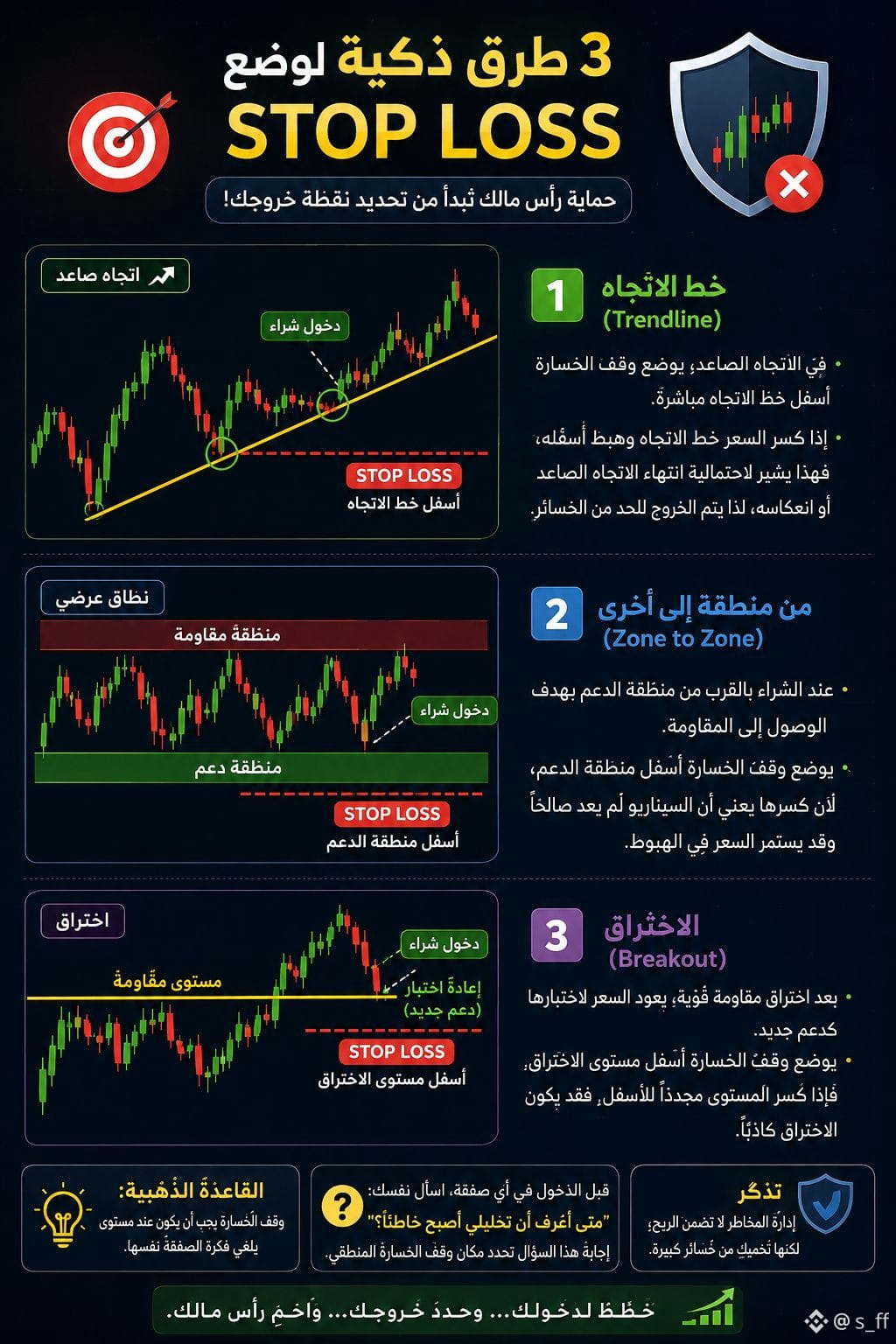
🎯 3 smart ways to set a Stop Loss in trading
Do you set a stop loss randomly? 🤔
Choosing the Stop Loss location is just as important as choosing the entry point, because it should be at a level that invalidates the trade idea if the price reaches it.
1️⃣ Trendline 📈
In an uptrend, you can place the stop loss directly below the trendline.
If the price breaks the trendline, it may be a sign of trend weakness or a possible reversal—this is where exiting is better than letting the loss grow.
2️⃣ Zone to Zone 🔄
When trading within a range between support and resistance, entries are usually near support with the goal of reaching resistance.
So, the Stop Loss is placed below the support zone, because if it breaks, it means the expected trade scenario is no longer valid.
3️⃣ Breakout 🚀
After a strong resistance breakout, the price may return to retest it as new support.
When entering after confirming the pullback, you can set the Stop Loss below this level. If the price breaks it again, the breakout may be false.
💡 Golden rule:
Don’t only ask: “Where do I want to enter?”
Also ask: "How will I know when my analysis is wrong?"
Answering this helps you determine a logical place for your stop loss.
⚠️ Risk management doesn’t guarantee profit, but it helps you limit losses and protect your capital.
#TrendingTopic #Write2Earn! #Squar2earn #Write2Earn #BTC
$BTC $BNB $SOL
🎯 3 smart ways to set a Stop Loss in trading
Do you set a stop loss randomly? 🤔
Choosing the Stop Loss location is just as important as choosing the entry point, because it should be at a level that invalidates the trade idea if the price reaches it.
1️⃣ Trendline 📈
In an uptrend, you can place the stop loss directly below the trendline.
If the price breaks the trendline, it may be a sign of trend weakness or a possible reversal—this is where exiting is better than letting the loss grow.
2️⃣ Zone to Zone 🔄
When trading within a range between support and resistance, entries are usually near support with the goal of reaching resistance.
So, the Stop Loss is placed below the support zone, because if it breaks, it means the expected trade scenario is no longer valid.
3️⃣ Breakout 🚀
After a strong resistance breakout, the price may return to retest it as new support.
When entering after confirming the pullback, you can set the Stop Loss below this level. If the price breaks it again, the breakout may be false.
💡 Golden rule:
Don’t only ask: “Where do I want to enter?”
Also ask: "How will I know when my analysis is wrong?"
Answering this helps you determine a logical place for your stop loss.
⚠️ Risk management doesn’t guarantee profit, but it helps you limit losses and protect your capital.
#TrendingTopic #Write2Earn! #Squar2earn #Write2Earn #BTC
$BTC $BNB $SOL
Do you set a stop loss randomly? 🤔
Choosing the Stop Loss location is just as important as choosing the entry point, because it should be at a level that invalidates the trade idea if the price reaches it.
1️⃣ Trendline 📈
In an uptrend, you can place the stop loss directly below the trendline.
If the price breaks the trendline, it may be a sign of trend weakness or a possible reversal—this is where exiting is better than letting the loss grow.
2️⃣ Zone to Zone 🔄
When trading within a range between support and resistance, entries are usually near support with the goal of reaching resistance.
So, the Stop Loss is placed below the support zone, because if it breaks, it means the expected trade scenario is no longer valid.
3️⃣ Breakout 🚀
After a strong resistance breakout, the price may return to retest it as new support.
When entering after confirming the pullback, you can set the Stop Loss below this level. If the price breaks it again, the breakout may be false.
💡 Golden rule:
Don’t only ask: “Where do I want to enter?”
Also ask: "How will I know when my analysis is wrong?"
Answering this helps you determine a logical place for your stop loss.
⚠️ Risk management doesn’t guarantee profit, but it helps you limit losses and protect your capital.
#TrendingTopic #Write2Earn! #Squar2earn #Write2Earn #BTC
$BTC $BNB $SOL
180
·
--
The Global Race for Bitcoin Reserves 🌍₿
The world is witnessing growing interest in Bitcoin as a strategic asset, with some countries focusing on buying it, mining it, or holding it within their reserves.
Binance plays a prominent role in supporting the digital asset ecosystem, alongside increasing government interest in Bitcoin and blockchain technology.
Why Bitcoin?
🔹 Diversifying reserves
🔹 Limited supply at 21 million BTC
🔹 Shift toward the digital economy
🔹 An attempt to benefit from the future growth of digital assets
However, price volatility, regulatory risks, and security concerns make adopting Bitcoin a decision that requires careful study.
So, are we going to see the start of a new global race to build Bitcoin reserves? ₿🌍
#BTC #BinanceSquareTalks #Write2Earn! #Write2Earn #Square
$BTC $BNB $ETH
The Global Race for Bitcoin Reserves 🌍₿
The world is witnessing growing interest in Bitcoin as a strategic asset, with some countries focusing on buying it, mining it, or holding it within their reserves.
Binance plays a prominent role in supporting the digital asset ecosystem, alongside increasing government interest in Bitcoin and blockchain technology.
Why Bitcoin?
🔹 Diversifying reserves
🔹 Limited supply at 21 million BTC
🔹 Shift toward the digital economy
🔹 An attempt to benefit from the future growth of digital assets
However, price volatility, regulatory risks, and security concerns make adopting Bitcoin a decision that requires careful study.
So, are we going to see the start of a new global race to build Bitcoin reserves? ₿🌍
#BTC #BinanceSquareTalks #Write2Earn! #Write2Earn #Square
$BTC $BNB $ETH
The world is witnessing growing interest in Bitcoin as a strategic asset, with some countries focusing on buying it, mining it, or holding it within their reserves.
Binance plays a prominent role in supporting the digital asset ecosystem, alongside increasing government interest in Bitcoin and blockchain technology.
Why Bitcoin?
🔹 Diversifying reserves
🔹 Limited supply at 21 million BTC
🔹 Shift toward the digital economy
🔹 An attempt to benefit from the future growth of digital assets
However, price volatility, regulatory risks, and security concerns make adopting Bitcoin a decision that requires careful study.
So, are we going to see the start of a new global race to build Bitcoin reserves? ₿🌍
#BTC #BinanceSquareTalks #Write2Earn! #Write2Earn #Square
$BTC $BNB $ETH

133
·
--
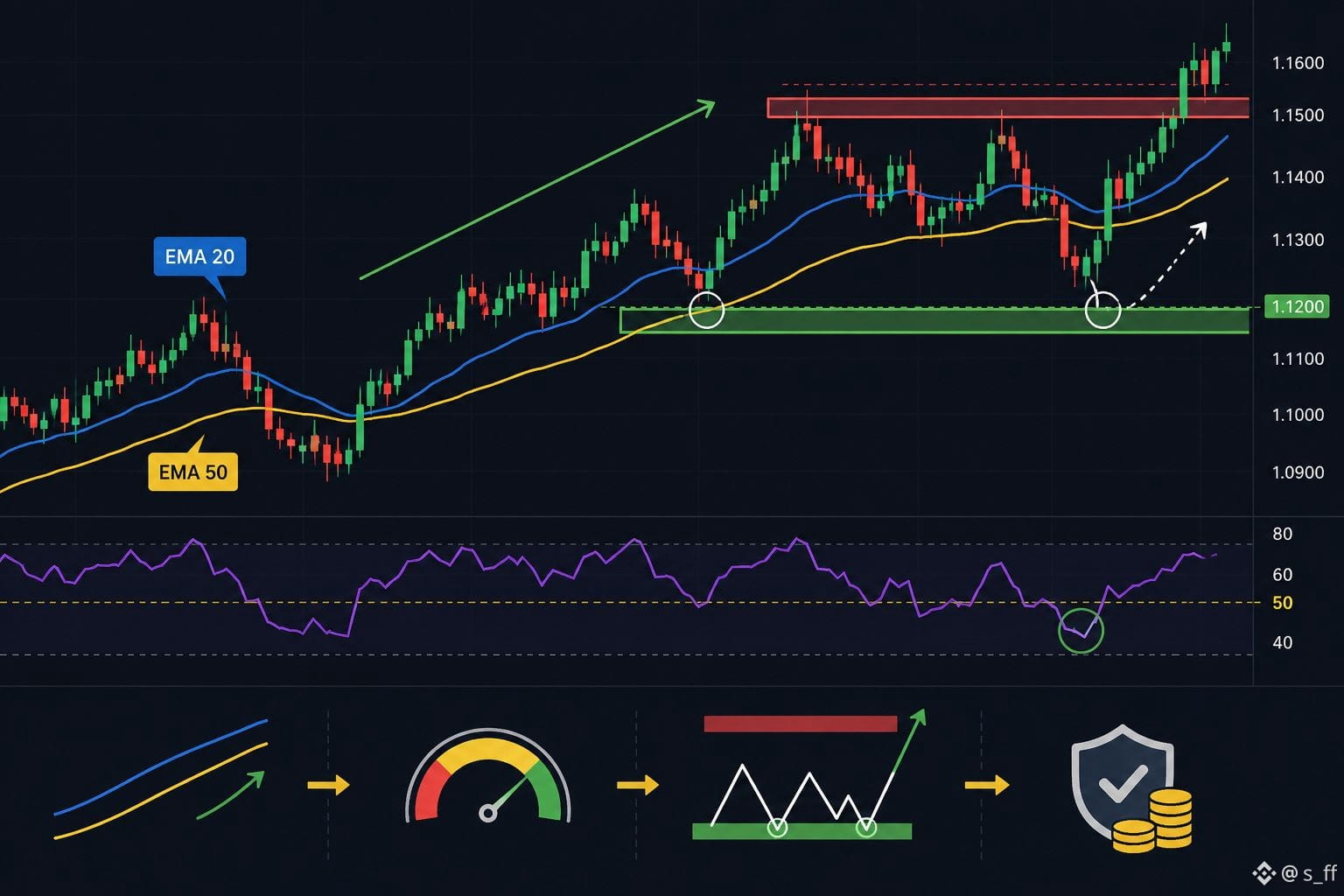
📊 A simple… but powerful strategy for reading the market!
If you’re looking for a structured way to analyze trading opportunities without relying on just one indicator, this setup is worth trying:
🔹 EMA 20 + EMA 50 to identify the trend
When the price is above both moving averages, and EMA 20 is higher than EMA 50, it generally reflects an upward bias.
🔹 RSI to confirm momentum
Above the 50 level suggests a relative advantage for buyers, while approaching 60 and above may indicate stronger bullish momentum.
🔹 Support and resistance to choose an entry point
Instead of chasing the price after it rises, wait for the price to pull back to a support area or retest it, then look for confirmation from price action and the RSI.
🔹 Risk management first
You can place the stop-loss below the important support zone, and adjust the position size according to the risk percentage you can tolerate.
🎯 Core idea:
It’s not about having many indicators—it’s about alignment between trend + momentum + price action + a key technical level.
⚠️ There is no strategy that guarantees profits. Test the idea historically and first on a demo account, and don’t risk more than you can afford.
Do you use EMA + RSI in your analysis? Share your thoughts 👇
#BTC #ema25 #Write2Earrn #Write2Earn! #Square
$WCT $BNB
📊 A simple… but powerful strategy for reading the market!
If you’re looking for a structured way to analyze trading opportunities without relying on just one indicator, this setup is worth trying:
🔹 EMA 20 + EMA 50 to identify the trend
When the price is above both moving averages, and EMA 20 is higher than EMA 50, it generally reflects an upward bias.
🔹 RSI to confirm momentum
Above the 50 level suggests a relative advantage for buyers, while approaching 60 and above may indicate stronger bullish momentum.
🔹 Support and resistance to choose an entry point
Instead of chasing the price after it rises, wait for the price to pull back to a support area or retest it, then look for confirmation from price action and the RSI.
🔹 Risk management first
You can place the stop-loss below the important support zone, and adjust the position size according to the risk percentage you can tolerate.
🎯 Core idea:
It’s not about having many indicators—it’s about alignment between trend + momentum + price action + a key technical level.
⚠️ There is no strategy that guarantees profits. Test the idea historically and first on a demo account, and don’t risk more than you can afford.
Do you use EMA + RSI in your analysis? Share your thoughts 👇
#BTC #ema25 #Write2Earrn #Write2Earn! #Square
$WCT $BNB
If you’re looking for a structured way to analyze trading opportunities without relying on just one indicator, this setup is worth trying:
🔹 EMA 20 + EMA 50 to identify the trend
When the price is above both moving averages, and EMA 20 is higher than EMA 50, it generally reflects an upward bias.
🔹 RSI to confirm momentum
Above the 50 level suggests a relative advantage for buyers, while approaching 60 and above may indicate stronger bullish momentum.
🔹 Support and resistance to choose an entry point
Instead of chasing the price after it rises, wait for the price to pull back to a support area or retest it, then look for confirmation from price action and the RSI.
🔹 Risk management first
You can place the stop-loss below the important support zone, and adjust the position size according to the risk percentage you can tolerate.
🎯 Core idea:
It’s not about having many indicators—it’s about alignment between trend + momentum + price action + a key technical level.
⚠️ There is no strategy that guarantees profits. Test the idea historically and first on a demo account, and don’t risk more than you can afford.
Do you use EMA + RSI in your analysis? Share your thoughts 👇
#BTC #ema25 #Write2Earrn #Write2Earn! #Square
$WCT $BNB
208
·
--
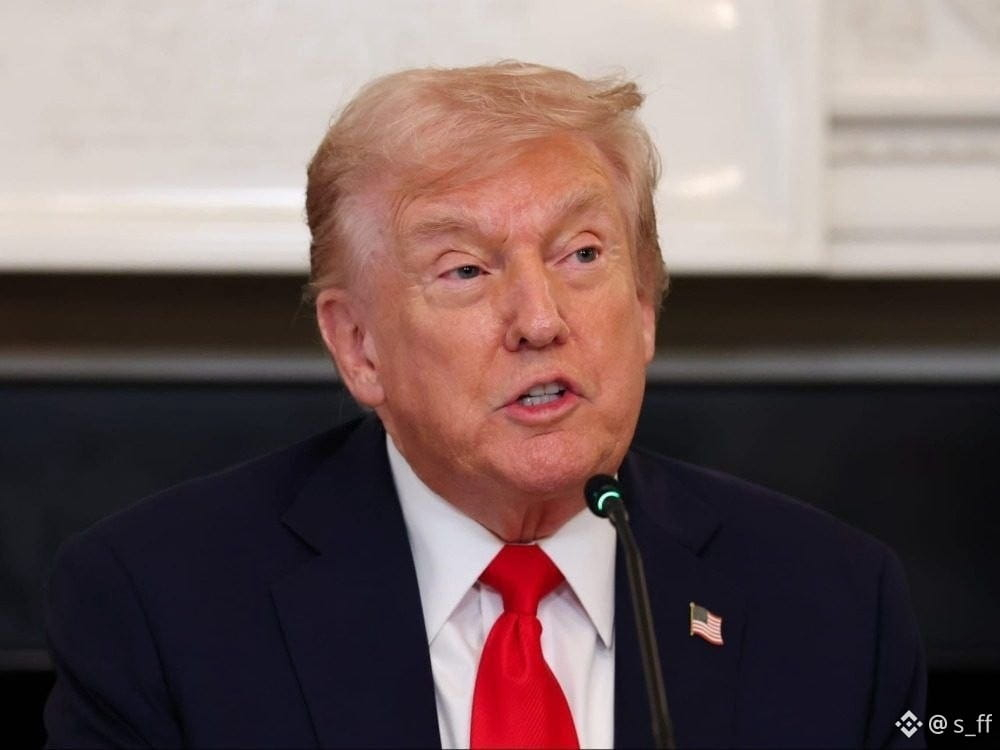
🔥 Are we facing a historic liquidity wave in the crypto market?
Recent statements and moves by the Trump administration have reignited the debate about the future of digital currencies in the United States 🇺🇸🚀
Trump is pushing for a clearer regulatory framework for digital currencies, and with talk of the digital asset market expanding to enormous levels reaching $30 trillion, a question has started to impose itself:
💰 Are major institutions preparing to inject new liquidity into crypto?
📈 Bitcoin
📈 Ethereum
📈 Altcoins
📈 The Stablecoins sector
You may be entering a new phase of adoption of digital assets, especially as institutional interest grows and U.S. regulatory developments progress. Recent reports also point to a strong return of momentum in the Bitcoin market and major coins.
⚠️ But be careful: the $30 trillion figure is an estimate/projection of the possible market size, not a confirmed amount that will enter the market all at once.
🔥 The real question now:
Are we at the beginning of a new crypto bull cycle… or is the market overpricing these expectations?
👇 What do you think? Could the digital assets market reach $30 trillion?
$BTC $TRUMP $ETH
#BTC #TrumpNFT #Write2Earn! #Squar2earn #BNB走势
🔥 Are we facing a historic liquidity wave in the crypto market?
Recent statements and moves by the Trump administration have reignited the debate about the future of digital currencies in the United States 🇺🇸🚀
Trump is pushing for a clearer regulatory framework for digital currencies, and with talk of the digital asset market expanding to enormous levels reaching $30 trillion, a question has started to impose itself:
💰 Are major institutions preparing to inject new liquidity into crypto?
📈 Bitcoin
📈 Ethereum
📈 Altcoins
📈 The Stablecoins sector
You may be entering a new phase of adoption of digital assets, especially as institutional interest grows and U.S. regulatory developments progress. Recent reports also point to a strong return of momentum in the Bitcoin market and major coins.
⚠️ But be careful: the $30 trillion figure is an estimate/projection of the possible market size, not a confirmed amount that will enter the market all at once.
🔥 The real question now:
Are we at the beginning of a new crypto bull cycle… or is the market overpricing these expectations?
👇 What do you think? Could the digital assets market reach $30 trillion?
$BTC $TRUMP $ETH
#BTC #TrumpNFT #Write2Earn! #Squar2earn #BNB走势
Recent statements and moves by the Trump administration have reignited the debate about the future of digital currencies in the United States 🇺🇸🚀
Trump is pushing for a clearer regulatory framework for digital currencies, and with talk of the digital asset market expanding to enormous levels reaching $30 trillion, a question has started to impose itself:
💰 Are major institutions preparing to inject new liquidity into crypto?
📈 Bitcoin
📈 Ethereum
📈 Altcoins
📈 The Stablecoins sector
You may be entering a new phase of adoption of digital assets, especially as institutional interest grows and U.S. regulatory developments progress. Recent reports also point to a strong return of momentum in the Bitcoin market and major coins.
⚠️ But be careful: the $30 trillion figure is an estimate/projection of the possible market size, not a confirmed amount that will enter the market all at once.
🔥 The real question now:
Are we at the beginning of a new crypto bull cycle… or is the market overpricing these expectations?
👇 What do you think? Could the digital assets market reach $30 trillion?
$BTC $TRUMP $ETH
#BTC #TrumpNFT #Write2Earn! #Squar2earn #BNB走势
426
·
--
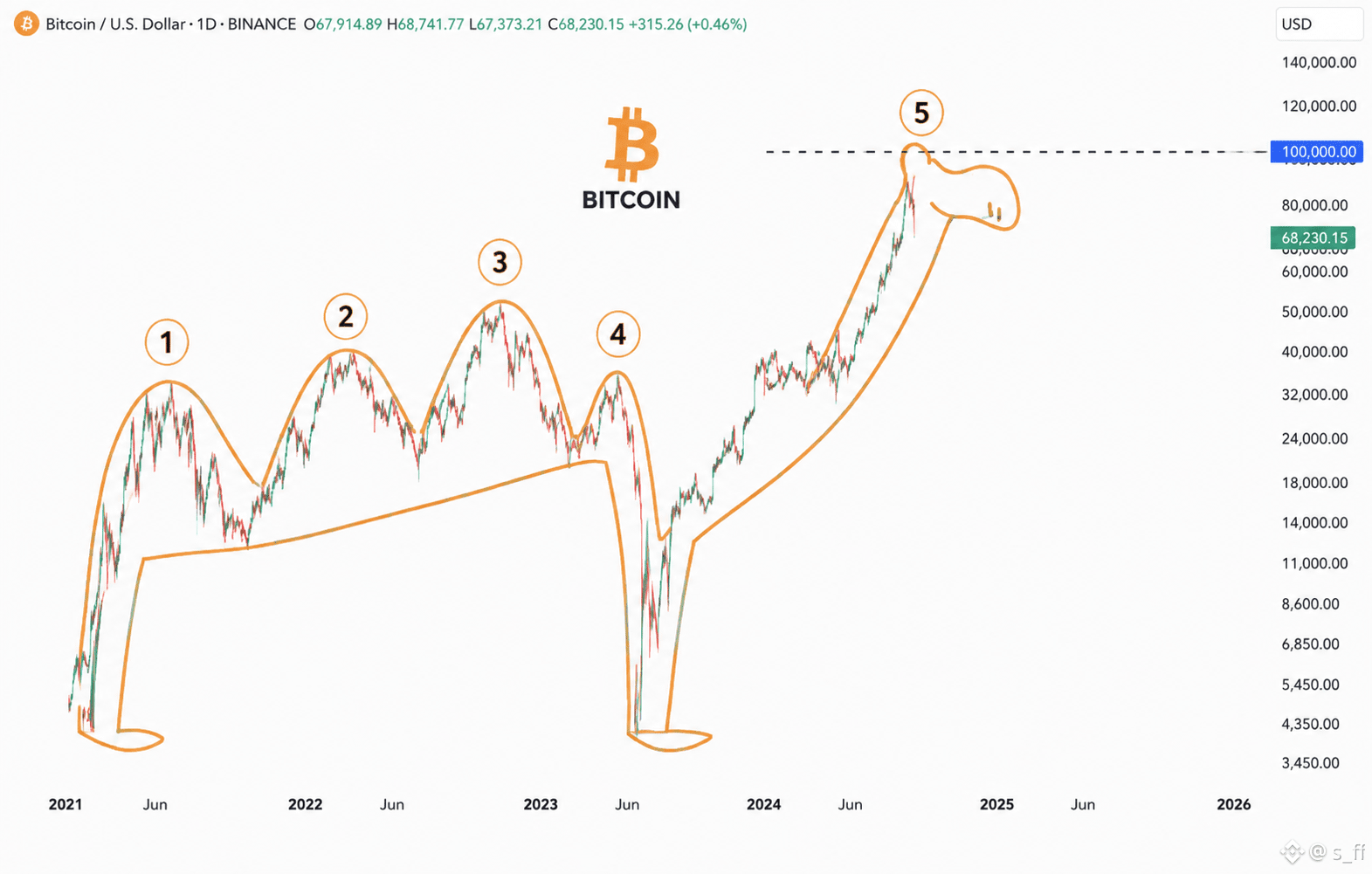
One of the strongest artistic models I've seen... If it comes down to drink water, it will set your money on fire 🤣🤣
#BTC #Write2Earn! #Squar2earn #solana #Binance
$BNB $SHIB $BTC
One of the strongest artistic models I've seen... If it comes down to drink water, it will set your money on fire 🤣🤣
#BTC #Write2Earn! #Squar2earn #solana #Binance
$BNB $SHIB $BTC
#BTC #Write2Earn! #Squar2earn #solana #Binance
$BNB $SHIB $BTC
3
2
463
·
--
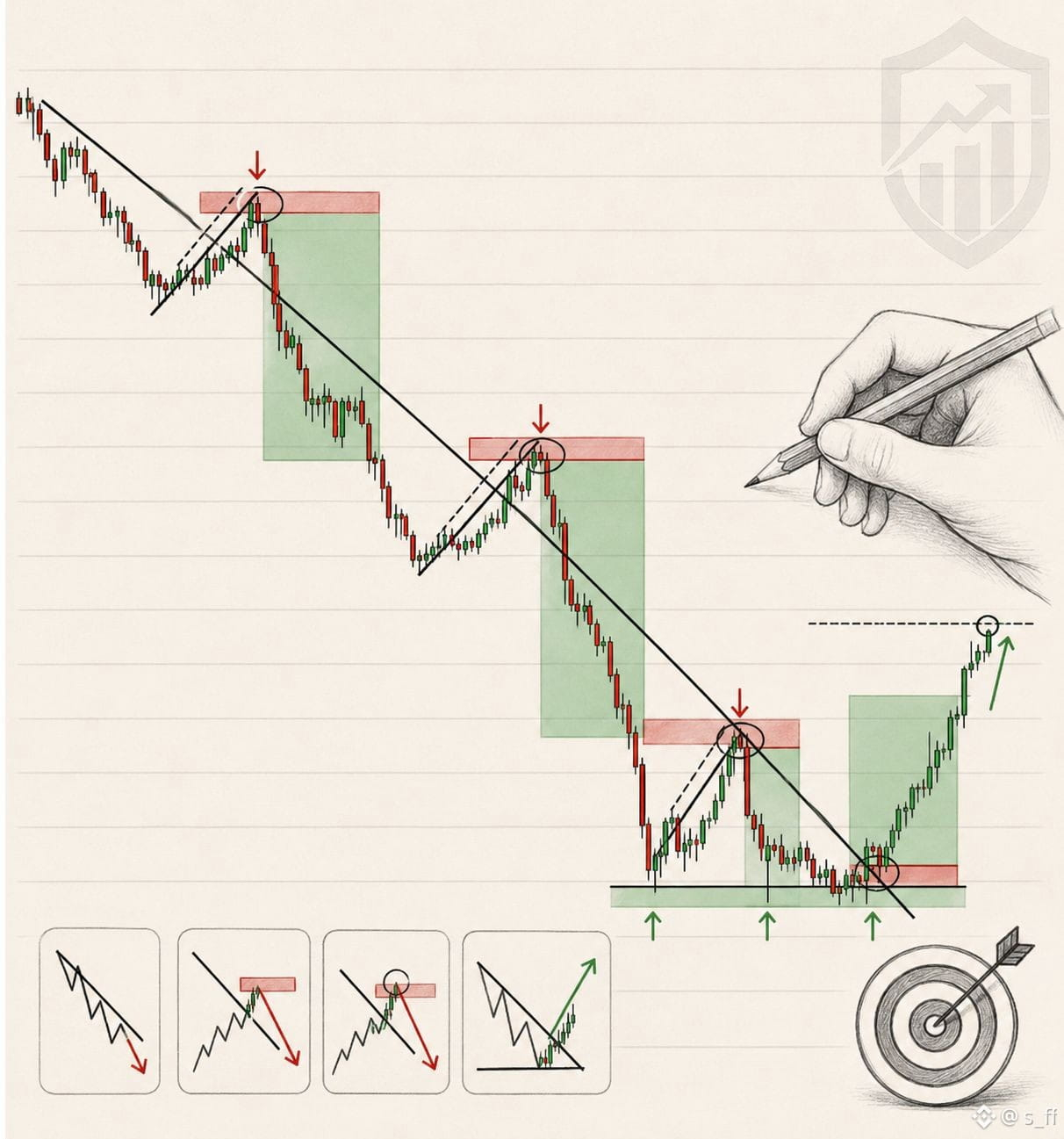
The trend doesn’t end because you’re tired of waiting. 💬
The biggest mistake in trading?
Trying to catch the bottom before the market gives you a real reason to buy.
If the market is forming lower highs and lower lows, the bearish trend is still in place.
Don’t sell just because the price went up a little, and don’t buy just because it dropped a lot.
The simplest scenario:
Bullish correction → resistance / retest → break of the correction structure → bearish confirmation = a better selling opportunity.
Most importantly:
Don’t get attached to the trend.
When the market starts forming a higher low + breaks an important high + shows a clear structural change—this is when the idea that the trend might have changed begins.
Don’t try to be smarter than the market.
Ride the trend… and let the market tell you when to exit. 📉
Capital management matters more than any entry: don’t risk a large percentage of your account in a single trade.
Please, and if you’ve finished reading, don’t be stingy—hit that like 👍 and leave a comment 💬 so the benefit can reach more people.
#تداول_العملات_المشفرة #TrendingPredictions #Write2Earn! #Squar2earn #BTC
$SOL $BNB $BTC
The trend doesn’t end because you’re tired of waiting. 💬
The biggest mistake in trading?
Trying to catch the bottom before the market gives you a real reason to buy.
If the market is forming lower highs and lower lows, the bearish trend is still in place.
Don’t sell just because the price went up a little, and don’t buy just because it dropped a lot.
The simplest scenario:
Bullish correction → resistance / retest → break of the correction structure → bearish confirmation = a better selling opportunity.
Most importantly:
Don’t get attached to the trend.
When the market starts forming a higher low + breaks an important high + shows a clear structural change—this is when the idea that the trend might have changed begins.
Don’t try to be smarter than the market.
Ride the trend… and let the market tell you when to exit. 📉
Capital management matters more than any entry: don’t risk a large percentage of your account in a single trade.
Please, and if you’ve finished reading, don’t be stingy—hit that like 👍 and leave a comment 💬 so the benefit can reach more people.
#تداول_العملات_المشفرة #TrendingPredictions #Write2Earn! #Squar2earn #BTC
$SOL $BNB $BTC
The biggest mistake in trading?
Trying to catch the bottom before the market gives you a real reason to buy.
If the market is forming lower highs and lower lows, the bearish trend is still in place.
Don’t sell just because the price went up a little, and don’t buy just because it dropped a lot.
The simplest scenario:
Bullish correction → resistance / retest → break of the correction structure → bearish confirmation = a better selling opportunity.
Most importantly:
Don’t get attached to the trend.
When the market starts forming a higher low + breaks an important high + shows a clear structural change—this is when the idea that the trend might have changed begins.
Don’t try to be smarter than the market.
Ride the trend… and let the market tell you when to exit. 📉
Capital management matters more than any entry: don’t risk a large percentage of your account in a single trade.
Please, and if you’ve finished reading, don’t be stingy—hit that like 👍 and leave a comment 💬 so the benefit can reach more people.
#تداول_العملات_المشفرة #TrendingPredictions #Write2Earn! #Squar2earn #BTC
$SOL $BNB $BTC
151
·
--
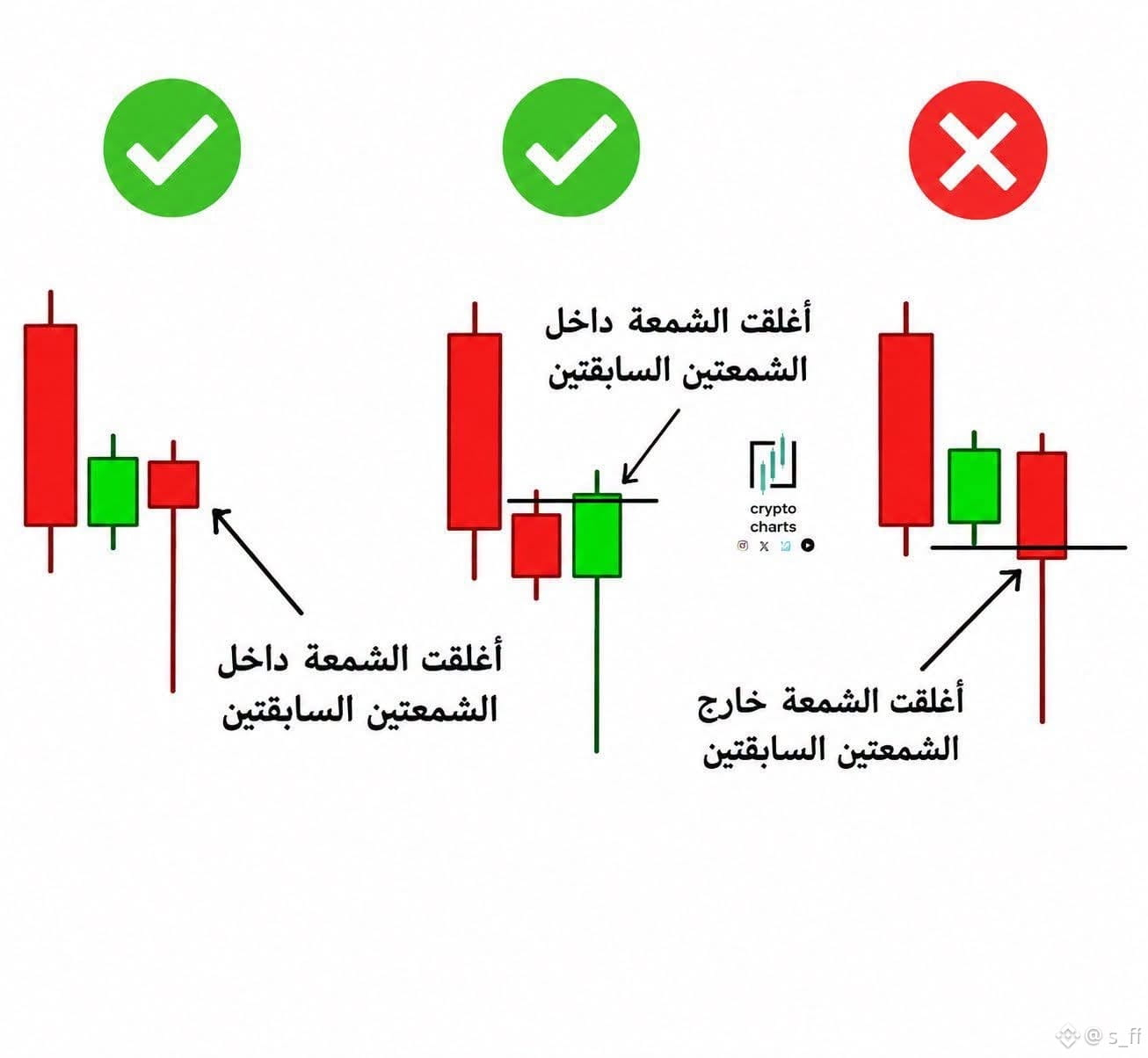
📊 How to read a candlestick close compared to the previous two candles?
In technical analysis, the candlestick’s closing location can give you an important clue about who is in control of the market 👇
🟢 First case:
If the candlestick closes within the range of the previous two candles, this may indicate weakening selling pressure and a possible rebound upward.
🚀 Second case:
If the candlestick closes within the range while breaking above the upper level, this reflects clearer strength from buyers and may be a signal of continued bullish movement.
🔴 Third case:
If the candlestick closes outside the range of the previous two candles, especially below the range, this indicates increased selling power and may support the continuation of a bearish trend.
⚠️ Important: These signals are not used alone to make a trading decision—it's best to confirm them with trading volume, the overall trend, and support and resistance levels.
💬 Question: Which scenario do you find stronger when trading: breaking the top, or breaking the bottom?
#تحليل_العملات_الرقمية #تعلم #Write2Earn #Square #Binance
$XRP $BTC $MSFTB
📊 How to read a candlestick close compared to the previous two candles?
In technical analysis, the candlestick’s closing location can give you an important clue about who is in control of the market 👇
🟢 First case:
If the candlestick closes within the range of the previous two candles, this may indicate weakening selling pressure and a possible rebound upward.
🚀 Second case:
If the candlestick closes within the range while breaking above the upper level, this reflects clearer strength from buyers and may be a signal of continued bullish movement.
🔴 Third case:
If the candlestick closes outside the range of the previous two candles, especially below the range, this indicates increased selling power and may support the continuation of a bearish trend.
⚠️ Important: These signals are not used alone to make a trading decision—it's best to confirm them with trading volume, the overall trend, and support and resistance levels.
💬 Question: Which scenario do you find stronger when trading: breaking the top, or breaking the bottom?
#تحليل_العملات_الرقمية #تعلم #Write2Earn #Square #Binance
$XRP $BTC $MSFTB
In technical analysis, the candlestick’s closing location can give you an important clue about who is in control of the market 👇
🟢 First case:
If the candlestick closes within the range of the previous two candles, this may indicate weakening selling pressure and a possible rebound upward.
🚀 Second case:
If the candlestick closes within the range while breaking above the upper level, this reflects clearer strength from buyers and may be a signal of continued bullish movement.
🔴 Third case:
If the candlestick closes outside the range of the previous two candles, especially below the range, this indicates increased selling power and may support the continuation of a bearish trend.
⚠️ Important: These signals are not used alone to make a trading decision—it's best to confirm them with trading volume, the overall trend, and support and resistance levels.
💬 Question: Which scenario do you find stronger when trading: breaking the top, or breaking the bottom?
#تحليل_العملات_الرقمية #تعلم #Write2Earn #Square #Binance
$XRP $BTC $MSFTB
297
·
--
#termmax @termmax
I follow the Termax project with great interest, especially its focus on developing more flexible and efficient financial solutions for decentralization. I believe that innovation in liquidity management and financing tools can be an important factor in the development of the DeFi sector. Therefore, Termax is worth following and understanding its mechanisms in greater depth.
#termmax @TermMax
I follow the Termax project with great interest, especially its focus on developing more flexible and efficient financial solutions for decentralization. I believe that innovation in liquidity management and financing tools can be an important factor in the development of the DeFi sector. Therefore, Termax is worth following and understanding its mechanisms in greater depth.
I follow the Termax project with great interest, especially its focus on developing more flexible and efficient financial solutions for decentralization. I believe that innovation in liquidity management and financing tools can be an important factor in the development of the DeFi sector. Therefore, Termax is worth following and understanding its mechanisms in greater depth.
84
·
--
🚨 Standard Chartered raises the level of optimism for Bitcoin!
The bank has started to question whether the $100,000 target for Bitcoin by the end of 2026 might be too low, with the possibility of BTC returning toward its previous peak near $126,000.
📌 What lies behind this optimism?
• Improvement in Bitcoin’s price momentum
• Continued interest and institutional inflows
• Better liquidity conditions
• Indicators that the bear-market low may already be behind us
But ⚠️ this is not a guarantee that Bitcoin will reach $126,000; the market remains highly volatile.
Conclusion: If institutional inflows continue and liquidity improves, the $100,000 barrier could become just a stop along the way rather than a ceiling.
Are we witnessing the start of a new uptrend wave? 👀
$BTC $ETH $XRP
#BTC #BTC☀️ #Write2Earrn #Square #BTC☀
🚨 Standard Chartered raises the level of optimism for Bitcoin!
The bank has started to question whether the $100,000 target for Bitcoin by the end of 2026 might be too low, with the possibility of BTC returning toward its previous peak near $126,000.
📌 What lies behind this optimism?
• Improvement in Bitcoin’s price momentum
• Continued interest and institutional inflows
• Better liquidity conditions
• Indicators that the bear-market low may already be behind us
But ⚠️ this is not a guarantee that Bitcoin will reach $126,000; the market remains highly volatile.
Conclusion: If institutional inflows continue and liquidity improves, the $100,000 barrier could become just a stop along the way rather than a ceiling.
Are we witnessing the start of a new uptrend wave? 👀
$BTC $ETH $XRP
#BTC #BTC☀️ #Write2Earrn #Square #BTC☀
The bank has started to question whether the $100,000 target for Bitcoin by the end of 2026 might be too low, with the possibility of BTC returning toward its previous peak near $126,000.
📌 What lies behind this optimism?
• Improvement in Bitcoin’s price momentum
• Continued interest and institutional inflows
• Better liquidity conditions
• Indicators that the bear-market low may already be behind us
But ⚠️ this is not a guarantee that Bitcoin will reach $126,000; the market remains highly volatile.
Conclusion: If institutional inflows continue and liquidity improves, the $100,000 barrier could become just a stop along the way rather than a ceiling.
Are we witnessing the start of a new uptrend wave? 👀
$BTC $ETH $XRP
#BTC #BTC☀️ #Write2Earrn #Square #BTC☀

1
316
·
--
Does institutional buying of Bitcoin with this strength mean deep confidence in the future? 🟠
According to circulated data, Fidelity, Bitwise, and ARK Invest together have purchased approximately $175.71 million worth of Bitcoin.
Away from the hype, what can we understand from that?
🔹 Institutional entry is not just a fleeting move: the presence of major investment firms in the Bitcoin market reflects continued institutional interest in the digital asset.
🔹 Bitcoin has become closer to an institutional investment asset: the existence of spot funds such as FBTC from Fidelity, BITB from Bitwise, and ARKB tied to ARK reflects the evolution of the investment infrastructure around Bitcoin.
🔹 But does that necessarily mean the price will rise? No. Institutional buying is a positive signal in terms of demand and confidence, but it does not eliminate volatility risk, nor does it mean the market won’t see corrections or declines.
Conclusion:
If institutional capital inflows to Bitcoin continue, it could be a supportive factor for the idea that BTC is gradually shifting from a high-risk asset to a more established component in investment portfolios.
However, in markets, capital inflows alone are not enough to create a trend; we also need to monitor flow size, price movement, liquidity, and economic conditions.
Do you think institutions are preparing for a new Bitcoin bull cycle, or are these purchases still part of a long-term strategy? 👇
#BTC #Bitwise #Write2Earrn #Square #Bitcoin❗
$BTC $WCT
Does institutional buying of Bitcoin with this strength mean deep confidence in the future? 🟠
According to circulated data, Fidelity, Bitwise, and ARK Invest together have purchased approximately $175.71 million worth of Bitcoin.
Away from the hype, what can we understand from that?
🔹 Institutional entry is not just a fleeting move: the presence of major investment firms in the Bitcoin market reflects continued institutional interest in the digital asset.
🔹 Bitcoin has become closer to an institutional investment asset: the existence of spot funds such as FBTC from Fidelity, BITB from Bitwise, and ARKB tied to ARK reflects the evolution of the investment infrastructure around Bitcoin.
🔹 But does that necessarily mean the price will rise? No. Institutional buying is a positive signal in terms of demand and confidence, but it does not eliminate volatility risk, nor does it mean the market won’t see corrections or declines.
Conclusion:
If institutional capital inflows to Bitcoin continue, it could be a supportive factor for the idea that BTC is gradually shifting from a high-risk asset to a more established component in investment portfolios.
However, in markets, capital inflows alone are not enough to create a trend; we also need to monitor flow size, price movement, liquidity, and economic conditions.
Do you think institutions are preparing for a new Bitcoin bull cycle, or are these purchases still part of a long-term strategy? 👇
#BTC #Bitwise #Write2Earrn #Square #Bitcoin❗
$BTC $WCT
According to circulated data, Fidelity, Bitwise, and ARK Invest together have purchased approximately $175.71 million worth of Bitcoin.
Away from the hype, what can we understand from that?
🔹 Institutional entry is not just a fleeting move: the presence of major investment firms in the Bitcoin market reflects continued institutional interest in the digital asset.
🔹 Bitcoin has become closer to an institutional investment asset: the existence of spot funds such as FBTC from Fidelity, BITB from Bitwise, and ARKB tied to ARK reflects the evolution of the investment infrastructure around Bitcoin.
🔹 But does that necessarily mean the price will rise? No. Institutional buying is a positive signal in terms of demand and confidence, but it does not eliminate volatility risk, nor does it mean the market won’t see corrections or declines.
Conclusion:
If institutional capital inflows to Bitcoin continue, it could be a supportive factor for the idea that BTC is gradually shifting from a high-risk asset to a more established component in investment portfolios.
However, in markets, capital inflows alone are not enough to create a trend; we also need to monitor flow size, price movement, liquidity, and economic conditions.
Do you think institutions are preparing for a new Bitcoin bull cycle, or are these purchases still part of a long-term strategy? 👇
#BTC #Bitwise #Write2Earrn #Square #Bitcoin❗
$BTC $WCT

1
162
·
--
Article
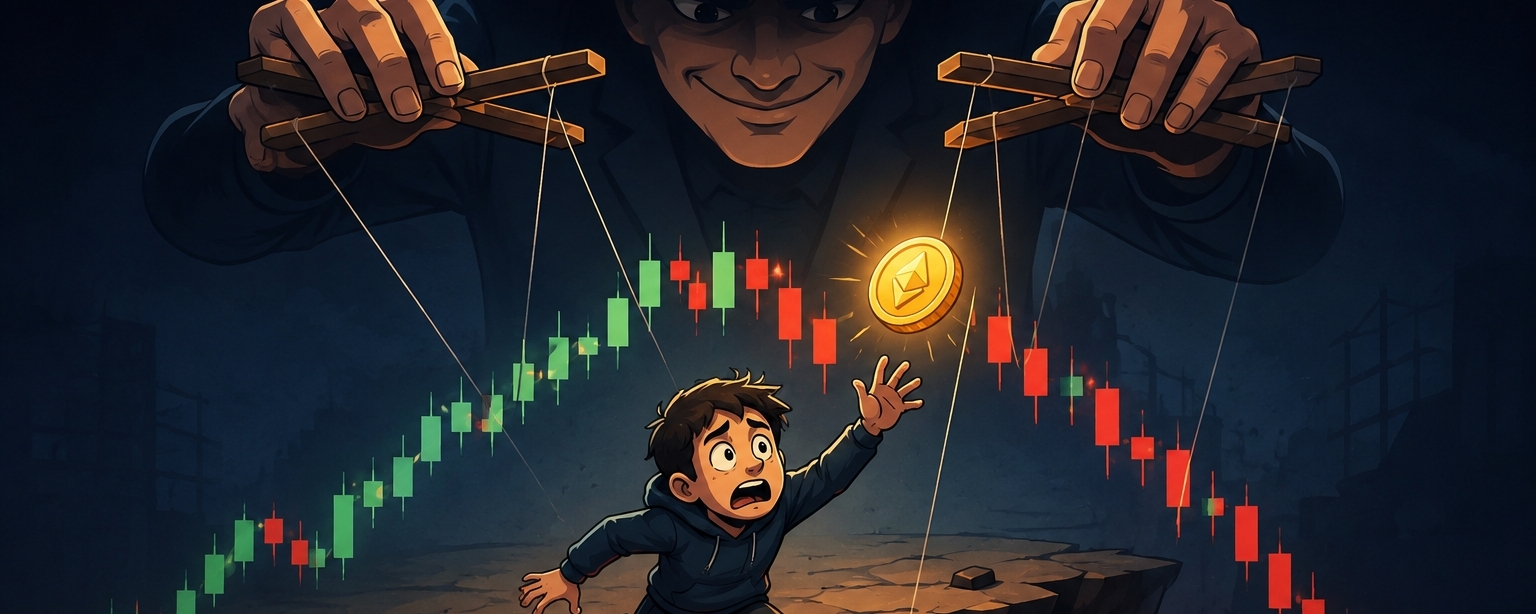
“Market Maker” trap… or a trap set by the trader themselves? 🎯Have you noticed this scenario before?
📈 The price starts rising strongly, and you feel like the train will leave without you… so you decide to buy.
You enter at a high price, and almost immediately afterward the price starts to fall.
You tell yourself: “I’ll wait a bit; maybe it’ll return to uptrend.”
But the drop keeps going… 📉
Fear reaches its peak, and you decide to sell to stop the loss.
“Market Maker” trap… or a trap set by the trader themselves? 🎯
Have you noticed this scenario before?
📈 The price starts rising strongly, and you feel like the train will leave without you… so you decide to buy.
You enter at a high price, and almost immediately afterward the price starts to fall.
You tell yourself: “I’ll wait a bit; maybe it’ll return to uptrend.”
But the drop keeps going… 📉
Fear reaches its peak, and you decide to sell to stop the loss.
📈 The price starts rising strongly, and you feel like the train will leave without you… so you decide to buy.
You enter at a high price, and almost immediately afterward the price starts to fall.
You tell yourself: “I’ll wait a bit; maybe it’ll return to uptrend.”
But the drop keeps going… 📉
Fear reaches its peak, and you decide to sell to stop the loss.
1
165
·
--
For everyone’s benefit, please share and make good use of it
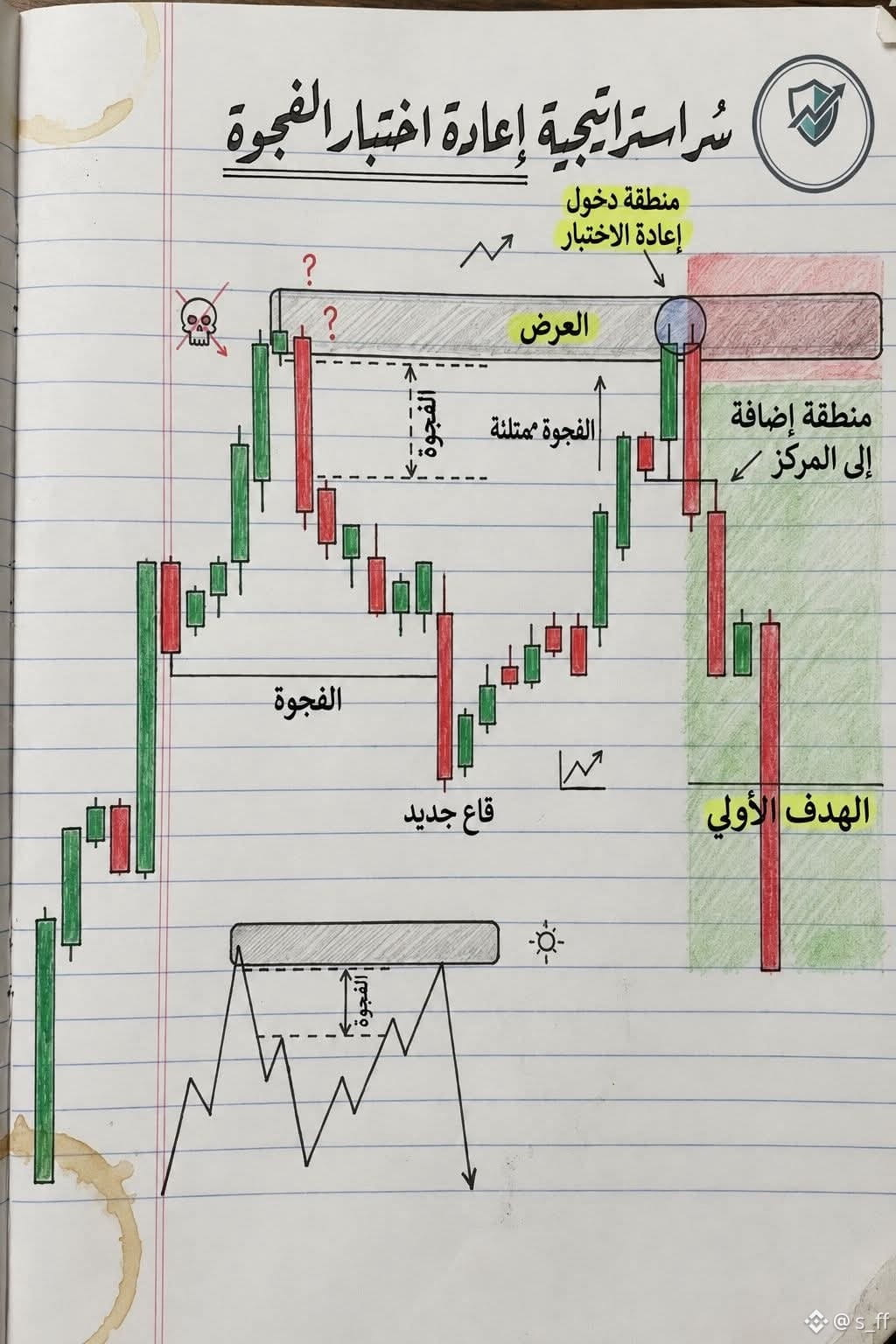
How to trade the Price Gap FVG professionally?
Always start by determining the market direction, then look for a clear price gap that resulted from a strong move. Don’t rush to enter; instead, wait for the price to return to the gap and retest it.
Monitor how the price reacts to the zone; if a clear rejection appears or confirmation of the trend’s continuation, you can consider entering. It’s recommended to place the stop-loss behind the zone or behind the last important high/low, while the target should be at liquidity areas or at previous highs and lows.
The most important thing is risk management; even the strongest gaps may fail, so don’t risk a large percentage of your capital in a single trade.
#BTC #Squar2earn #Binance #Write2Earn
#Square
$BNB $ETH $BNB
For everyone’s benefit, please share and make good use of it
How to trade the Price Gap FVG professionally?
Always start by determining the market direction, then look for a clear price gap that resulted from a strong move. Don’t rush to enter; instead, wait for the price to return to the gap and retest it.
Monitor how the price reacts to the zone; if a clear rejection appears or confirmation of the trend’s continuation, you can consider entering. It’s recommended to place the stop-loss behind the zone or behind the last important high/low, while the target should be at liquidity areas or at previous highs and lows.
The most important thing is risk management; even the strongest gaps may fail, so don’t risk a large percentage of your capital in a single trade.
#BTC #Squar2earn #Binance #Write2Earn
#Square
$BNB $ETH $BNB
How to trade the Price Gap FVG professionally?
Always start by determining the market direction, then look for a clear price gap that resulted from a strong move. Don’t rush to enter; instead, wait for the price to return to the gap and retest it.
Monitor how the price reacts to the zone; if a clear rejection appears or confirmation of the trend’s continuation, you can consider entering. It’s recommended to place the stop-loss behind the zone or behind the last important high/low, while the target should be at liquidity areas or at previous highs and lows.
The most important thing is risk management; even the strongest gaps may fail, so don’t risk a large percentage of your capital in a single trade.
#BTC #Squar2earn #Binance #Write2Earn
#Square
$BNB $ETH $BNB
1
122
·
--
Article
🚨
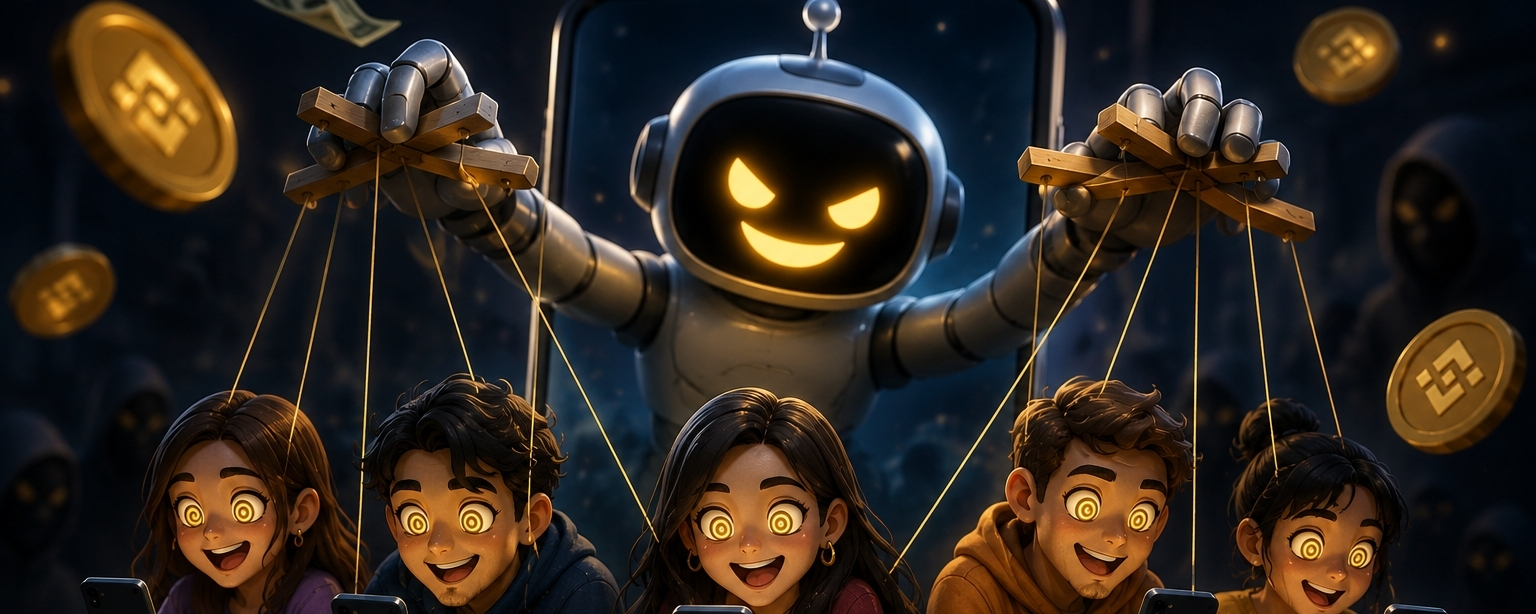
Press to earn? Or press… until you lose your money? 🎯💸🚨
Have you ever entered a bot on Telegram and it told you:
👆 Press here
❤️ Hit like
📱 Complete this task
💰 Collect your commissions
🔥 Complete the level to get bigger profits!
At first, it seems very simple… and maybe you see inside the bot that your balance goes up from $1 to $5, then $20, then $100.
And this is where the trick begins.
⚠️ The number you see in front of you may not be real money at all.
🚨 Press to earn? Or press… until you lose your money? 🎯💸
🚨
Have you ever entered a bot on Telegram and it told you:
👆 Press here
❤️ Hit like
📱 Complete this task
💰 Collect your commissions
🔥 Complete the level to get bigger profits!
At first, it seems very simple… and maybe you see inside the bot that your balance goes up from $1 to $5, then $20, then $100.
And this is where the trick begins.
⚠️ The number you see in front of you may not be real money at all.
Have you ever entered a bot on Telegram and it told you:
👆 Press here
❤️ Hit like
📱 Complete this task
💰 Collect your commissions
🔥 Complete the level to get bigger profits!
At first, it seems very simple… and maybe you see inside the bot that your balance goes up from $1 to $5, then $20, then $100.
And this is where the trick begins.
⚠️ The number you see in front of you may not be real money at all.
1
96
·
--
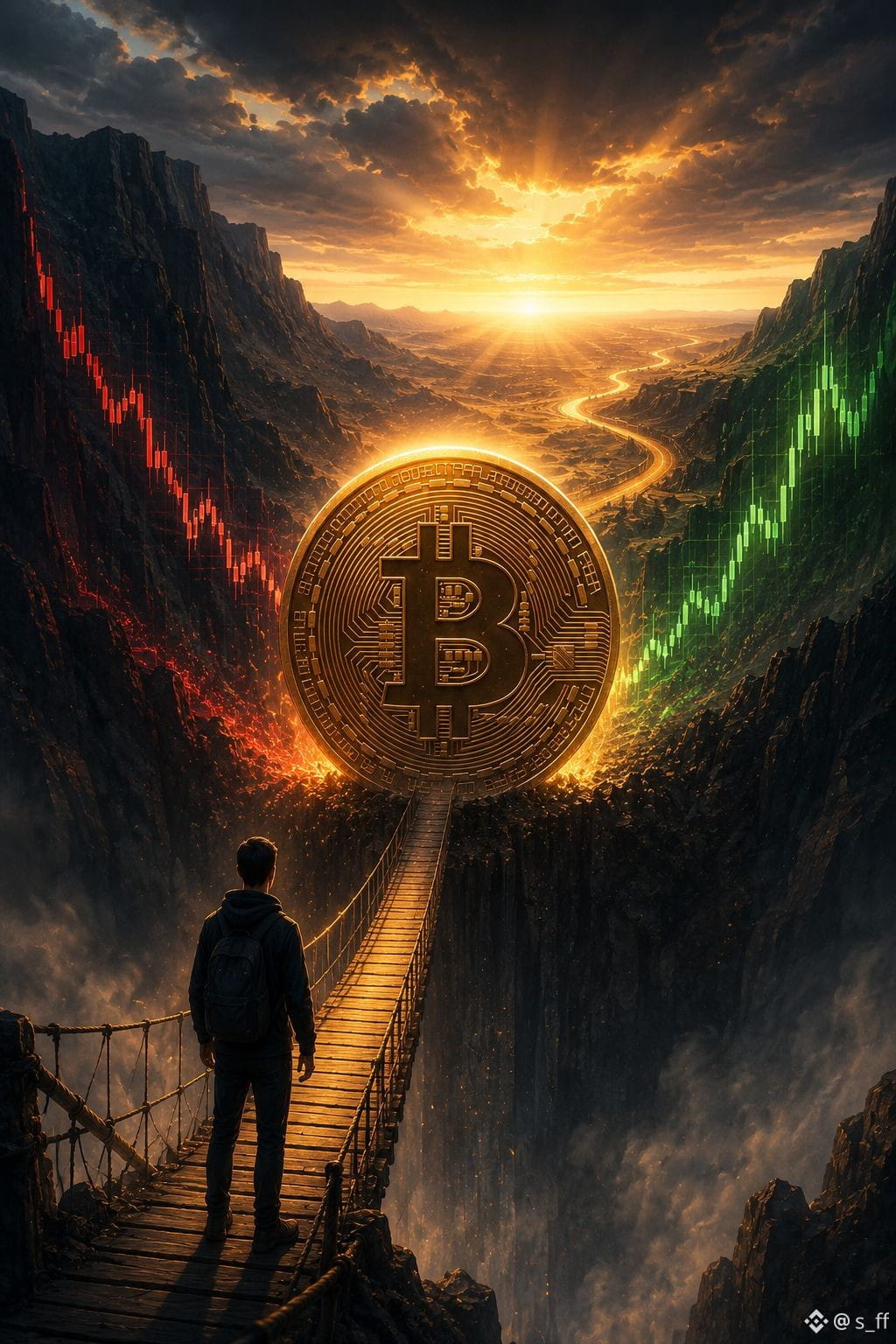
🚨 Has the countdown to Bitcoin’s “zero hour” approached?
Analyst Benjamin Cowen believes Bitcoin could be only 69–73 days away from the cycle bottom, placing October 2026 roughly under the spotlight. 📉👀
But that’s where the exciting part begins…
🔄 Previous cycles reached the bottom around Day 1432 and 1436, while we are currently at Day 1363 according to Cowen’s calculations.
And the big question:
Is the four-year cycle still what governs Bitcoin? Or have ETF funds and institutions changed the rules of the game?
Cowen says the cycle isn’t dead…
But institutions like Fidelity and Bitwise believe that ETF inflows and the shift in demand characteristics may have broken the old pattern.
🔥 If Cowen is right, the coming months could be the market’s final test phase before a new cycle.
But if this time is truly different… we may be looking at an entirely new model for Bitcoin.
The question worth following:
Will October be the bottom… or will the market write a different piece of history this time?
⚠️ This is analysis, not financial advice.
#BTC #Write2Earn #Squar2earn #Binance #HotTrends $BTC $XRP
🚨 Has the countdown to Bitcoin’s “zero hour” approached?
Analyst Benjamin Cowen believes Bitcoin could be only 69–73 days away from the cycle bottom, placing October 2026 roughly under the spotlight. 📉👀
But that’s where the exciting part begins…
🔄 Previous cycles reached the bottom around Day 1432 and 1436, while we are currently at Day 1363 according to Cowen’s calculations.
And the big question:
Is the four-year cycle still what governs Bitcoin? Or have ETF funds and institutions changed the rules of the game?
Cowen says the cycle isn’t dead…
But institutions like Fidelity and Bitwise believe that ETF inflows and the shift in demand characteristics may have broken the old pattern.
🔥 If Cowen is right, the coming months could be the market’s final test phase before a new cycle.
But if this time is truly different… we may be looking at an entirely new model for Bitcoin.
The question worth following:
Will October be the bottom… or will the market write a different piece of history this time?
⚠️ This is analysis, not financial advice.
#BTC #Write2Earn #Squar2earn #Binance #HotTrends $BTC $XRP
Analyst Benjamin Cowen believes Bitcoin could be only 69–73 days away from the cycle bottom, placing October 2026 roughly under the spotlight. 📉👀
But that’s where the exciting part begins…
🔄 Previous cycles reached the bottom around Day 1432 and 1436, while we are currently at Day 1363 according to Cowen’s calculations.
And the big question:
Is the four-year cycle still what governs Bitcoin? Or have ETF funds and institutions changed the rules of the game?
Cowen says the cycle isn’t dead…
But institutions like Fidelity and Bitwise believe that ETF inflows and the shift in demand characteristics may have broken the old pattern.
🔥 If Cowen is right, the coming months could be the market’s final test phase before a new cycle.
But if this time is truly different… we may be looking at an entirely new model for Bitcoin.
The question worth following:
Will October be the bottom… or will the market write a different piece of history this time?
⚠️ This is analysis, not financial advice.
#BTC #Write2Earn #Squar2earn #Binance #HotTrends $BTC $XRP
1
155
·
--
Vitalik Buterin, the creator of the Ethereum idea and author of the original white paper, wants to learn from Bitcoin to scale Ethereum 🚀
What’s exciting about the news isn’t that Ethereum «copies Bitcoin», but that its developers are studying how to use ideas like UTXO and Utreexo to reduce the State size and make running nodes more efficient.
The concept could be in building a hybrid model that combines:
🔹 UTXO efficiency in payments
🔹 smart contract flexibility in Ethereum
🔹 STARKs for compression and proving operations
🔹 lighter nodes with more decentralization
The ultimate goal? Scale Ethereum massively without sacrificing decentralization.
But important: this is currently about research and designs in development, not a confirmed upgrade or an immediate 1000x.
In my opinion, this is one of the most important directions worth following; because the future of blockchain may not be only about increasing speed, but about reducing what each node needs to store and verify.
#ETH #Write2Earn #BTC #Square #Crypto_Jobs🎯
$ETH $BTC
Vitalik Buterin, the creator of the Ethereum idea and author of the original white paper, wants to learn from Bitcoin to scale Ethereum 🚀
What’s exciting about the news isn’t that Ethereum «copies Bitcoin», but that its developers are studying how to use ideas like UTXO and Utreexo to reduce the State size and make running nodes more efficient.
The concept could be in building a hybrid model that combines:
🔹 UTXO efficiency in payments
🔹 smart contract flexibility in Ethereum
🔹 STARKs for compression and proving operations
🔹 lighter nodes with more decentralization
The ultimate goal? Scale Ethereum massively without sacrificing decentralization.
But important: this is currently about research and designs in development, not a confirmed upgrade or an immediate 1000x.
In my opinion, this is one of the most important directions worth following; because the future of blockchain may not be only about increasing speed, but about reducing what each node needs to store and verify.
#ETH #Write2Earn #BTC #Square #Crypto_Jobs🎯
$ETH $BTC
What’s exciting about the news isn’t that Ethereum «copies Bitcoin», but that its developers are studying how to use ideas like UTXO and Utreexo to reduce the State size and make running nodes more efficient.
The concept could be in building a hybrid model that combines:
🔹 UTXO efficiency in payments
🔹 smart contract flexibility in Ethereum
🔹 STARKs for compression and proving operations
🔹 lighter nodes with more decentralization
The ultimate goal? Scale Ethereum massively without sacrificing decentralization.
But important: this is currently about research and designs in development, not a confirmed upgrade or an immediate 1000x.
In my opinion, this is one of the most important directions worth following; because the future of blockchain may not be only about increasing speed, but about reducing what each node needs to store and verify.
#ETH #Write2Earn #BTC #Square #Crypto_Jobs🎯
$ETH $BTC

111
·
--
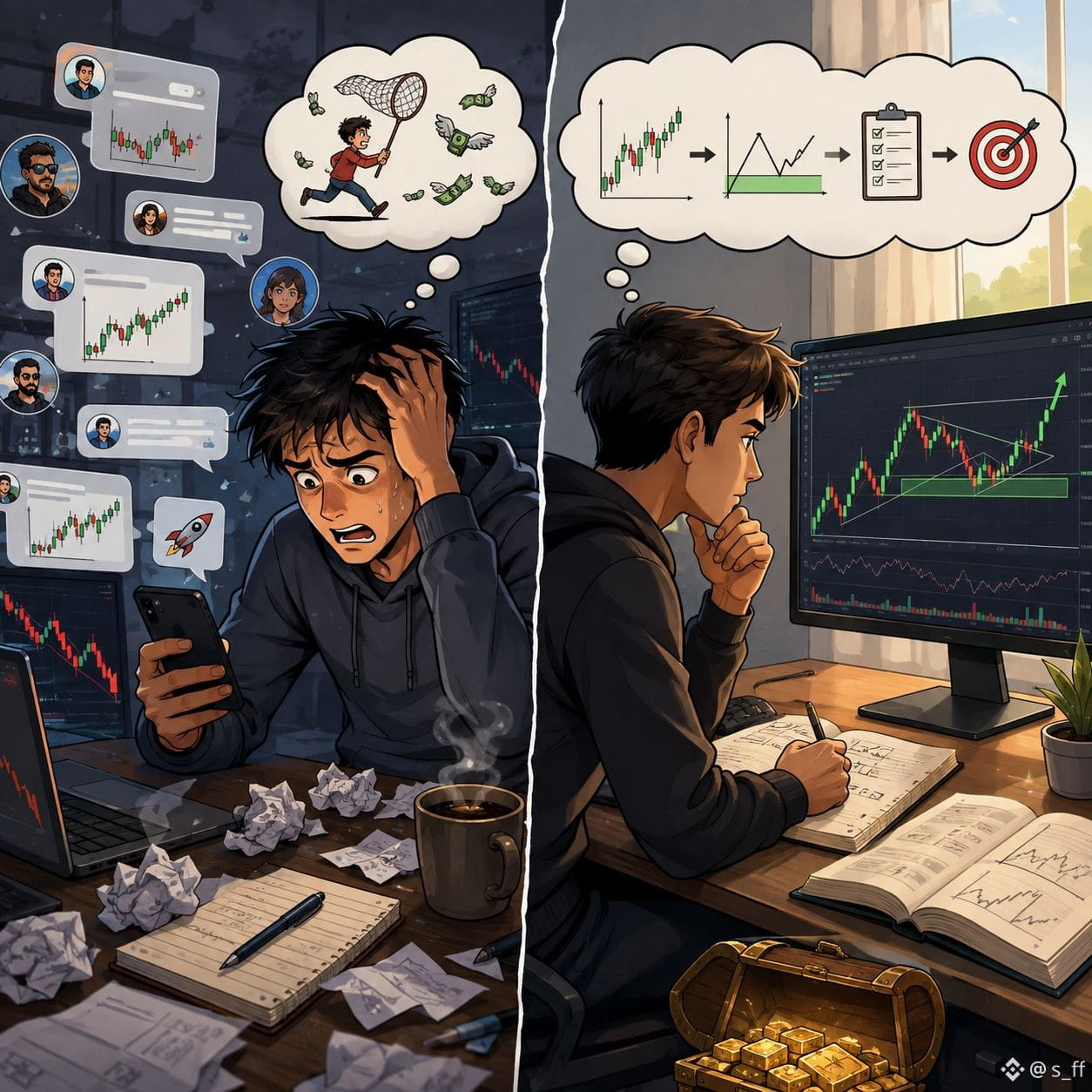
The market doesn’t lose your money… you lose it when you enter without knowing why you entered.
You miss a trade, so you look for a new recommendation.
You trip over a strategy, so you move to another.
You see a successful trade, and you say: “I wish I had entered!”
But the most important question isn’t: Where was the entry point?
Instead: What made you enter in the first place?
Real trading isn’t memorizing an entry point or copying someone else’s trade.
Real trading is learning how to:
• read price action.
• build a clear scenario before entering.
• determine when entry is logical.
• know when to exit without hesitation.
• and most importantly… recognize when your scenario becomes wrong.
Don’t copy the trade… copy the way of thinking.
Don’t chase the signal… chase understanding.
And don’t let others’ success be your proof… let it be a chance for you to learn.
And the next time you see a successful trade, don’t ask:
“How much did I make?”
Ask yourself:
“Do I understand why this trade succeeded?”
If you agree, write in the comments: “Understanding first” 👇
And share the post with someone who chases recommendations more than they learn the market.
❤️I wish you profit and goodness ❤️
#تداول #Write2Earn #Squar2earn #cryptouniverseofficial #USDT
$BTC $P $BNB
The market doesn’t lose your money… you lose it when you enter without knowing why you entered.
You miss a trade, so you look for a new recommendation.
You trip over a strategy, so you move to another.
You see a successful trade, and you say: “I wish I had entered!”
But the most important question isn’t: Where was the entry point?
Instead: What made you enter in the first place?
Real trading isn’t memorizing an entry point or copying someone else’s trade.
Real trading is learning how to:
• read price action.
• build a clear scenario before entering.
• determine when entry is logical.
• know when to exit without hesitation.
• and most importantly… recognize when your scenario becomes wrong.
Don’t copy the trade… copy the way of thinking.
Don’t chase the signal… chase understanding.
And don’t let others’ success be your proof… let it be a chance for you to learn.
And the next time you see a successful trade, don’t ask:
“How much did I make?”
Ask yourself:
“Do I understand why this trade succeeded?”
If you agree, write in the comments: “Understanding first” 👇
And share the post with someone who chases recommendations more than they learn the market.
❤️I wish you profit and goodness ❤️
#تداول #Write2Earn #Squar2earn #cryptouniverseofficial #USDT
$BTC $P $BNB
You miss a trade, so you look for a new recommendation.
You trip over a strategy, so you move to another.
You see a successful trade, and you say: “I wish I had entered!”
But the most important question isn’t: Where was the entry point?
Instead: What made you enter in the first place?
Real trading isn’t memorizing an entry point or copying someone else’s trade.
Real trading is learning how to:
• read price action.
• build a clear scenario before entering.
• determine when entry is logical.
• know when to exit without hesitation.
• and most importantly… recognize when your scenario becomes wrong.
Don’t copy the trade… copy the way of thinking.
Don’t chase the signal… chase understanding.
And don’t let others’ success be your proof… let it be a chance for you to learn.
And the next time you see a successful trade, don’t ask:
“How much did I make?”
Ask yourself:
“Do I understand why this trade succeeded?”
If you agree, write in the comments: “Understanding first” 👇
And share the post with someone who chases recommendations more than they learn the market.
❤️I wish you profit and goodness ❤️
#تداول #Write2Earn #Squar2earn #cryptouniverseofficial #USDT
$BTC $P $BNB
105
·
--
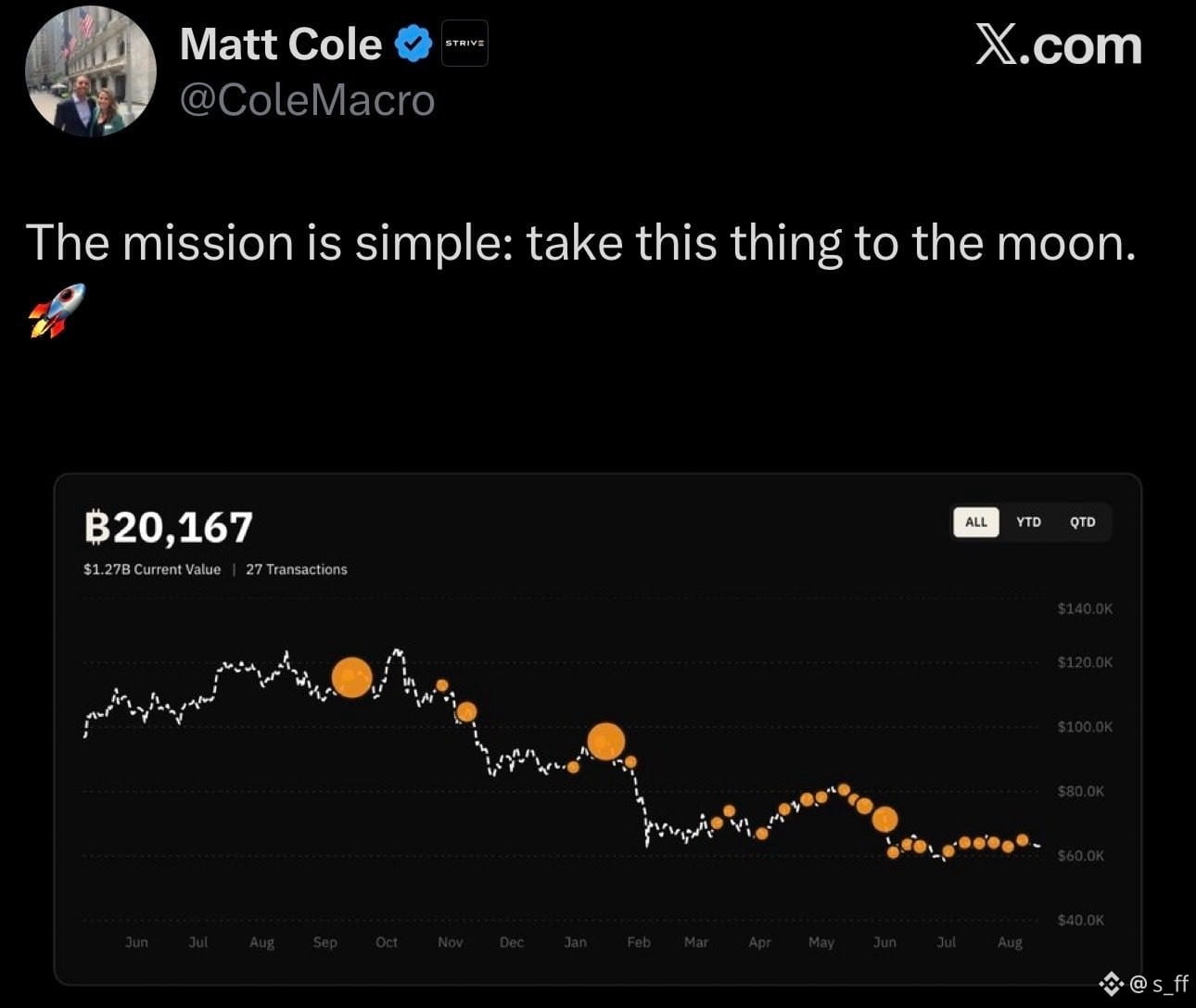
The CEO of Strive Public Company hints at buying more Bitcoin
"The goal is simple: to raise the value of this coin to very high levels."
#StrategicTrading #BTC #Write2Earn #Write2Earn! #Squar2earn
$BTC
The CEO of Strive Public Company hints at buying more Bitcoin
"The goal is simple: to raise the value of this coin to very high levels."
#StrategicTrading #BTC #Write2Earn #Write2Earn! #Squar2earn
$BTC
"The goal is simple: to raise the value of this coin to very high levels."
#StrategicTrading #BTC #Write2Earn #Write2Earn! #Squar2earn
$BTC
180
·
--
If you woke up tomorrow and found Bitcoin at $200,000… what would you do? 🚀
Imagine this scenario for a moment…
You unlock your phone in the morning ☀️
You open your Binance account…
And you find that the price of Bitcoin has reached $200,000.
The real question here isn’t:
"Will Bitcoin reach 200k?"
The question is:
Will you be mentally prepared when it happens? 👀
A lot of people say today:
"If Bitcoin hits 100k, I’ll sell!"
But when the price actually rises, emotions take over:
📈 "Maybe it’ll reach 150k!"
📈 "No, I’ll wait for 200k!"
📈 "Maybe it’ll reach a million!"
That’s where the problem lies…
In the crypto market, it’s not that hard to know when to buy—
But it’s harder to know when to stop greed and when to protect your profits.
And when the market drops, it’s exactly the opposite:
📉 Fear starts.
📉 Negative news spreads.
📉 Everyone says the market is over.
Then some people sell out of fear…
And after the market starts climbing again, they jump back in at a higher price!
So I think the most important thing in crypto isn’t predicting the future.
It’s having a plan before the market reaches its madness stage. 🧠
So if Bitcoin reaches $200,000 tomorrow…
Will you sell?
Will you hold?
Or will you wait for a higher price?
#BTC #Binance #Squar2earn #Write2Earn #btc70k
$BTC
If you woke up tomorrow and found Bitcoin at $200,000… what would you do? 🚀
Imagine this scenario for a moment…
You unlock your phone in the morning ☀️
You open your Binance account…
And you find that the price of Bitcoin has reached $200,000.
The real question here isn’t:
"Will Bitcoin reach 200k?"
The question is:
Will you be mentally prepared when it happens? 👀
A lot of people say today:
"If Bitcoin hits 100k, I’ll sell!"
But when the price actually rises, emotions take over:
📈 "Maybe it’ll reach 150k!"
📈 "No, I’ll wait for 200k!"
📈 "Maybe it’ll reach a million!"
That’s where the problem lies…
In the crypto market, it’s not that hard to know when to buy—
But it’s harder to know when to stop greed and when to protect your profits.
And when the market drops, it’s exactly the opposite:
📉 Fear starts.
📉 Negative news spreads.
📉 Everyone says the market is over.
Then some people sell out of fear…
And after the market starts climbing again, they jump back in at a higher price!
So I think the most important thing in crypto isn’t predicting the future.
It’s having a plan before the market reaches its madness stage. 🧠
So if Bitcoin reaches $200,000 tomorrow…
Will you sell?
Will you hold?
Or will you wait for a higher price?
#BTC #Binance #Squar2earn #Write2Earn #btc70k
$BTC
Imagine this scenario for a moment…
You unlock your phone in the morning ☀️
You open your Binance account…
And you find that the price of Bitcoin has reached $200,000.
The real question here isn’t:
"Will Bitcoin reach 200k?"
The question is:
Will you be mentally prepared when it happens? 👀
A lot of people say today:
"If Bitcoin hits 100k, I’ll sell!"
But when the price actually rises, emotions take over:
📈 "Maybe it’ll reach 150k!"
📈 "No, I’ll wait for 200k!"
📈 "Maybe it’ll reach a million!"
That’s where the problem lies…
In the crypto market, it’s not that hard to know when to buy—
But it’s harder to know when to stop greed and when to protect your profits.
And when the market drops, it’s exactly the opposite:
📉 Fear starts.
📉 Negative news spreads.
📉 Everyone says the market is over.
Then some people sell out of fear…
And after the market starts climbing again, they jump back in at a higher price!
So I think the most important thing in crypto isn’t predicting the future.
It’s having a plan before the market reaches its madness stage. 🧠
So if Bitcoin reaches $200,000 tomorrow…
Will you sell?
Will you hold?
Or will you wait for a higher price?
#BTC #Binance #Squar2earn #Write2Earn #btc70k
$BTC
1
1.2k
Log in to explore more content
Join global crypto users on Binance Square
⚡️ Get latest and useful information about crypto.
💬 Trusted by the world’s largest crypto exchange.
👍 Discover real insights from verified creators.
Email / Phone number
Trending Topics
BinancePick
3.4M views
166,077 Discussing
Join #EarningsSeason: Predict Earnings on Binance Pick, Share Your Take on Binance Square!
Binance Square Official
·420 Likes
·345.8k views
EarningsSeason
5.5M views
27,034 Discussing
StrategySkipsBitcoinPurchasesSpends$205MOnSTRCBuybacks
1,222 views
40 Discussing