
沧楠晟
4.8k Posts

沧楠晟
 Square Verified+
Report
Block User
公众号:@LF327369 加密飞龙 微博:加密飞龙 :推特 加密飞龙:全网同名 加密飞龙:手续费8折 LN5ZYWQB 邀请码 Web3领域研究,Crypto热点推介,土狗爱好者,一二级市场分析

Traders League Badge Beginner

PENGU Holder
Frequent Trader
5.7 Years
177 Following
31.3K+ Followers
46.4K+ Liked
1 Badges
Posts
All
Quotes
Videos
Live
PINNED
·
--
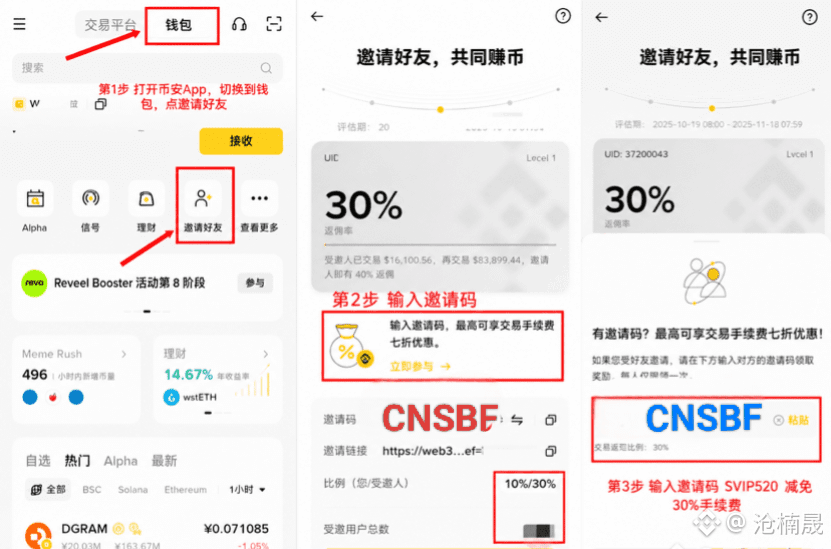
The meme market is hot right now. With tens of thousands of U trading hands frequently, just the fees alone can burn through several thousand U in a single day. This is absolutely a big problem! Money is money, no matter how little it is, so don’t ever treat it like it doesn’t matter. I strongly recommend everyone try Binance Wallet — the fee rates are really great!
First, as long as it’s an Alpha-listed coin (such as Flork, Niu Lai, etc.), the fee is always 0! The standard fee for ordinary memes is 0.5%, but if you use my referral link, you can enjoy a 30% cashback discount, which works out to only 0.35%. Recently, they also launched a 20% off promotion for the Robinhood chain. Combined with cashback, the fee is as low as 0.28%, absolutely the lowest on the entire web, and extremely friendly for large holders!
Here I’m sharing a “level-one wallet money-making idea”: everyone can register with a wallet, use an invite code to join the community, and discover the next cash cow together as early as possible!
Hurry and register with my invite code [CNSBF],
link: https://web3.binance.com/referral?ref=CNSBF.
[币安ALPHA](https://web3.binance.com/referral?ref=CNSBF) Saving money is making money, come join me and chase the next coin at low cost! $FLOCK
{future}(FLOCKUSDT)
$牛来
{future}(牛来USDT)
#美国8月新增就业16.2万近预期三倍
The meme market is hot right now. With tens of thousands of U trading hands frequently, just the fees alone can burn through several thousand U in a single day. This is absolutely a big problem! Money is money, no matter how little it is, so don’t ever treat it like it doesn’t matter. I strongly recommend everyone try Binance Wallet — the fee rates are really great!
First, as long as it’s an Alpha-listed coin (such as Flork, Niu Lai, etc.), the fee is always 0! The standard fee for ordinary memes is 0.5%, but if you use my referral link, you can enjoy a 30% cashback discount, which works out to only 0.35%. Recently, they also launched a 20% off promotion for the Robinhood chain. Combined with cashback, the fee is as low as 0.28%, absolutely the lowest on the entire web, and extremely friendly for large holders!
Here I’m sharing a “level-one wallet money-making idea”: everyone can register with a wallet, use an invite code to join the community, and discover the next cash cow together as early as possible!
Hurry and register with my invite code [CNSBF],
link: https://web3.binance.com/referral?ref=CNSBF.
币安ALPHA Saving money is making money, come join me and chase the next coin at low cost! $FLOCK
$牛来
#美国8月新增就业16.2万近预期三倍
First, as long as it’s an Alpha-listed coin (such as Flork, Niu Lai, etc.), the fee is always 0! The standard fee for ordinary memes is 0.5%, but if you use my referral link, you can enjoy a 30% cashback discount, which works out to only 0.35%. Recently, they also launched a 20% off promotion for the Robinhood chain. Combined with cashback, the fee is as low as 0.28%, absolutely the lowest on the entire web, and extremely friendly for large holders!
Here I’m sharing a “level-one wallet money-making idea”: everyone can register with a wallet, use an invite code to join the community, and discover the next cash cow together as early as possible!
Hurry and register with my invite code [CNSBF],
link: https://web3.binance.com/referral?ref=CNSBF.
币安ALPHA Saving money is making money, come join me and chase the next coin at low cost! $FLOCK
$牛来
#美国8月新增就业16.2万近预期三倍
1
1.9k
PINNED
·
--
The market is heating up, and your trading fees are turning into someone else’s “post-sleep income”
With this recent rally, I’m sure everyone has felt it too—BTC once pushed close to $78,000, the altcoin season has fully ignited, and trading volume has visibly surged. But there’s one question worth thinking about:
Where exactly does the trading fee you pay every day end up?
Referral commissions are not just about “saving on fees”
Let’s do some quick math. Binance’s spot and futures base fee rates are relatively low, but if you’re a high-frequency trader or have a certain trading volume, these small amounts add up to an eye-opening figure.
Binance Super Referral Program is designed to return part of the fees you were going to pay anyway back to your own pocket.
According to Binance’s official rules, the referrer can receive up to 40% of the commission rate, while the referred user can receive up to 20% cashback. The combined percentage for the referrer and referred user must not exceed 45%.
The market won’t always be this good, but once the referral commission pipeline is set up, it’s permanent.
When a bull market comes, trading volume grows and referral income rises with it; when a bear market comes, as long as the users you referred are still trading, the referral commissions won’t stop.
Enabling referral commissions is essentially installing a “market amplifier” for yourself—when the market is good, it helps you earn more; when the market is bad, it gives you a baseline income.
If you’re interested, just contact me directly. I’ll help you set up as a referrer and get back the fees that should rightfully belong to you.
If you need the referral commission and the referral commission enabling feature, contact me. Join the chat room to learn the specific setup process.
Click to join the referral program
[CNSBF](https://www.bsmkweb.cc/register?ref=CNSBF)
$TRUMP
{future}(TRUMPUSDT)
$ETH
{future}(ETHUSDT)
$PEPE
{spot}(PEPEUSDT)
#TRUMP突破3.4美元创3月21日以来新高 #美元跌至三个月低点
The market is heating up, and your trading fees are turning into someone else’s “post-sleep income”
With this recent rally, I’m sure everyone has felt it too—BTC once pushed close to $78,000, the altcoin season has fully ignited, and trading volume has visibly surged. But there’s one question worth thinking about:
Where exactly does the trading fee you pay every day end up?
Referral commissions are not just about “saving on fees”
Let’s do some quick math. Binance’s spot and futures base fee rates are relatively low, but if you’re a high-frequency trader or have a certain trading volume, these small amounts add up to an eye-opening figure.
Binance Super Referral Program is designed to return part of the fees you were going to pay anyway back to your own pocket.
According to Binance’s official rules, the referrer can receive up to 40% of the commission rate, while the referred user can receive up to 20% cashback. The combined percentage for the referrer and referred user must not exceed 45%.
The market won’t always be this good, but once the referral commission pipeline is set up, it’s permanent.
When a bull market comes, trading volume grows and referral income rises with it; when a bear market comes, as long as the users you referred are still trading, the referral commissions won’t stop.
Enabling referral commissions is essentially installing a “market amplifier” for yourself—when the market is good, it helps you earn more; when the market is bad, it gives you a baseline income.
If you’re interested, just contact me directly. I’ll help you set up as a referrer and get back the fees that should rightfully belong to you.
If you need the referral commission and the referral commission enabling feature, contact me. Join the chat room to learn the specific setup process.
Click to join the referral program
CNSBF
$TRUMP
$ETH
$PEPE
#TRUMP突破3.4美元创3月21日以来新高 #美元跌至三个月低点
With this recent rally, I’m sure everyone has felt it too—BTC once pushed close to $78,000, the altcoin season has fully ignited, and trading volume has visibly surged. But there’s one question worth thinking about:
Where exactly does the trading fee you pay every day end up?
Referral commissions are not just about “saving on fees”
Let’s do some quick math. Binance’s spot and futures base fee rates are relatively low, but if you’re a high-frequency trader or have a certain trading volume, these small amounts add up to an eye-opening figure.
Binance Super Referral Program is designed to return part of the fees you were going to pay anyway back to your own pocket.
According to Binance’s official rules, the referrer can receive up to 40% of the commission rate, while the referred user can receive up to 20% cashback. The combined percentage for the referrer and referred user must not exceed 45%.
The market won’t always be this good, but once the referral commission pipeline is set up, it’s permanent.
When a bull market comes, trading volume grows and referral income rises with it; when a bear market comes, as long as the users you referred are still trading, the referral commissions won’t stop.
Enabling referral commissions is essentially installing a “market amplifier” for yourself—when the market is good, it helps you earn more; when the market is bad, it gives you a baseline income.
If you’re interested, just contact me directly. I’ll help you set up as a referrer and get back the fees that should rightfully belong to you.
If you need the referral commission and the referral commission enabling feature, contact me. Join the chat room to learn the specific setup process.
Click to join the referral program
CNSBF
$TRUMP
$ETH
$PEPE
#TRUMP突破3.4美元创3月21日以来新高 #美元跌至三个月低点
1
631
·
--
Bullish
$ZEC This is a typical “short squeeze” prelude. Although the price is only slightly up, the big players are shorting. Once the main force lifts the price, these short positions will become fuel.
🔥 ZEC is building momentum and is ready to break out! Big investors heavily short have been trapped, and a short-squeeze move is about to ignite! 🚀
Recently, market hotspots have been rotating among established layer-1 chains and the privacy sector. As the leading privacy coin, ZEC has been stuck at low levels for a long time and has very strong potential for a rebound explosion.
{future}(ZECUSDT)
$ZEC This is a typical “short squeeze” prelude. Although the price is only slightly up, the big players are shorting. Once the main force lifts the price, these short positions will become fuel.
🔥 ZEC is building momentum and is ready to break out! Big investors heavily short have been trapped, and a short-squeeze move is about to ignite! 🚀
Recently, market hotspots have been rotating among established layer-1 chains and the privacy sector. As the leading privacy coin, ZEC has been stuck at low levels for a long time and has very strong potential for a rebound explosion.
🔥 ZEC is building momentum and is ready to break out! Big investors heavily short have been trapped, and a short-squeeze move is about to ignite! 🚀
Recently, market hotspots have been rotating among established layer-1 chains and the privacy sector. As the leading privacy coin, ZEC has been stuck at low levels for a long time and has very strong potential for a rebound explosion.
221
·
--
$BR Act according to the trend—game the short side, and liquidation will blow up! Don’t be afraid of heights; pullbacks to the moving averages are opportunities. Focus on whether the previous high is broken. Once it breaks, it will trigger a chain-reaction surge with shorts getting liquidated!$BR
{future}(BRUSDT)
$BR Act according to the trend—game the short side, and liquidation will blow up! Don’t be afraid of heights; pullbacks to the moving averages are opportunities. Focus on whether the previous high is broken. Once it breaks, it will trigger a chain-reaction surge with shorts getting liquidated!$BR
196
·
--
Bullish
$KOMA 势如破竹!单日暴涨26%!
✅ Bulls dominate: The large-holder long/short ratio is 2.03, with institutional funds overwhelmingly bullish.
✅ Funds have not retreated: Open interest remains high, and institutional players are strongly committed.
✅ Technical breakout: Breaks out of the consolidation range on increased volume, opening up further upside.
{future}(KOMAUSDT)
$KOMA 势如破竹!单日暴涨26%!
✅ Bulls dominate: The large-holder long/short ratio is 2.03, with institutional funds overwhelmingly bullish.
✅ Funds have not retreated: Open interest remains high, and institutional players are strongly committed.
✅ Technical breakout: Breaks out of the consolidation range on increased volume, opening up further upside.
✅ Bulls dominate: The large-holder long/short ratio is 2.03, with institutional funds overwhelmingly bullish.
✅ Funds have not retreated: Open interest remains high, and institutional players are strongly committed.
✅ Technical breakout: Breaks out of the consolidation range on increased volume, opening up further upside.
259
·
--
Bullish
$牛来
✅ High-level position lock-in: 30 million USDT funds are in the market with ongoing competition; the main forces have not retreated.
✅ Large holders remain bullish: The long/short ratio stays positive, and share transfers are sufficient.
✅ Technical oversold: The short-term pullback is sizable, and a strong rebound could trigger at any moment.
{future}(牛来USDT)
$牛来
✅ High-level position lock-in: 30 million USDT funds are in the market with ongoing competition; the main forces have not retreated.
✅ Large holders remain bullish: The long/short ratio stays positive, and share transfers are sufficient.
✅ Technical oversold: The short-term pullback is sizable, and a strong rebound could trigger at any moment.
✅ High-level position lock-in: 30 million USDT funds are in the market with ongoing competition; the main forces have not retreated.
✅ Large holders remain bullish: The long/short ratio stays positive, and share transfers are sufficient.
✅ Technical oversold: The short-term pullback is sizable, and a strong rebound could trigger at any moment.
1k
·
--
Bullish
Partly True
$FIL Filecoin has recently rolled out multiple upgrades to its FVM (Filecoin Virtual Machine). Ecosystem applications—especially data DAO and RWA projects—are growing rapidly. This improvement in fundamentals is the core driving force supporting a reversal in the coin price from the bottom.
Clearly higher than the empty positions in the red bars. In an uptrend, a high long-to-short ratio often implies “the strong keep getting stronger,” but you also need to be cautious: if the price goes sideways and the long-to-short ratio continues to rise, it could mean retail investors are chasing the price. At present, it appears that the main force is in control, which is relatively healthy.
{future}(FILUSDT)
$FIL Filecoin has recently rolled out multiple upgrades to its FVM (Filecoin Virtual Machine). Ecosystem applications—especially data DAO and RWA projects—are growing rapidly. This improvement in fundamentals is the core driving force supporting a reversal in the coin price from the bottom.
Clearly higher than the empty positions in the red bars. In an uptrend, a high long-to-short ratio often implies “the strong keep getting stronger,” but you also need to be cautious: if the price goes sideways and the long-to-short ratio continues to rise, it could mean retail investors are chasing the price. At present, it appears that the main force is in control, which is relatively healthy.
Clearly higher than the empty positions in the red bars. In an uptrend, a high long-to-short ratio often implies “the strong keep getting stronger,” but you also need to be cautious: if the price goes sideways and the long-to-short ratio continues to rise, it could mean retail investors are chasing the price. At present, it appears that the main force is in control, which is relatively healthy.
583
·
--
Bullish
$CVC The trend has formed—go long in line with it! Focus on the breakout near the prior high. As long as the position volume doesn’t drop sharply, pullbacks are an opportunity to get in. Betting on the continuation of the main upswing!
With the DID sector recovering, Civic—an established leader in decentralized identity verification—has recently benefited from Web3 security and privacy compliance hot topics, driving strong catch-up demand.
Old coins in a new wave—after a long period of bottom consolidation, today saw massive turnover (trading volume over 300 million). The main players aim high.
{future}(CVCUSDT)
$CVC The trend has formed—go long in line with it! Focus on the breakout near the prior high. As long as the position volume doesn’t drop sharply, pullbacks are an opportunity to get in. Betting on the continuation of the main upswing!
With the DID sector recovering, Civic—an established leader in decentralized identity verification—has recently benefited from Web3 security and privacy compliance hot topics, driving strong catch-up demand.
Old coins in a new wave—after a long period of bottom consolidation, today saw massive turnover (trading volume over 300 million). The main players aim high.
With the DID sector recovering, Civic—an established leader in decentralized identity verification—has recently benefited from Web3 security and privacy compliance hot topics, driving strong catch-up demand.
Old coins in a new wave—after a long period of bottom consolidation, today saw massive turnover (trading volume over 300 million). The main players aim high.
333
·
--
Bullish
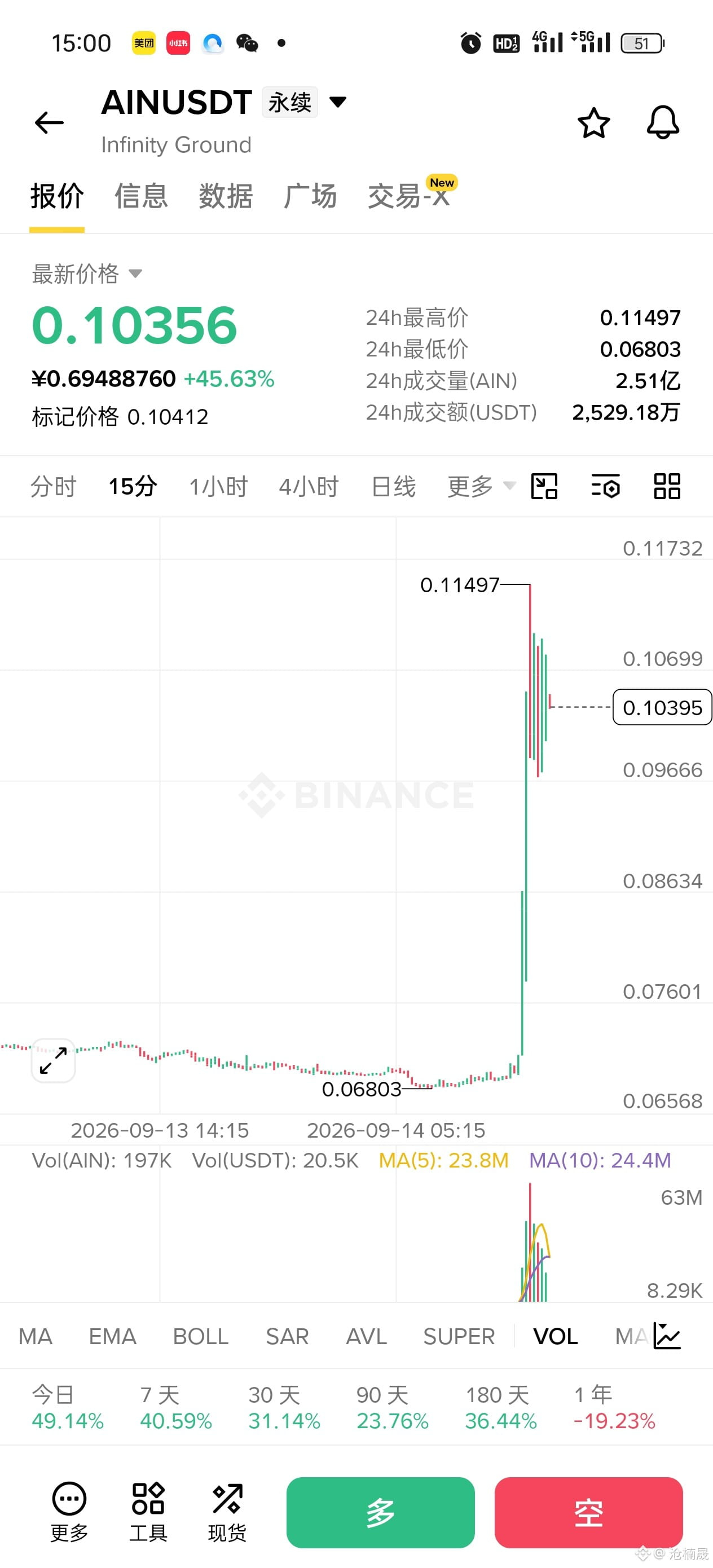
$AIN Open Interest (OI) climbs in a stair-step pattern. As the price rises, the total value of open positions steadily increases to over 8 million U. This indicates it’s not just short-sellers getting stopped out—there is a continuous inflow of fresh capital actively entering the market. Large-holder sentiment has flipped: the large-holder long/short ratio completed a great “V-shaped” reversal intraday. Currently, the proportion of long accounts has recovered to 53.92%, and the smart money is moving back to the long side. As a new benchmark in the AI sector, AIN perfectly absorbs the recent market enthusiasm for “AI + Crypto” speculation. A breakout on strong volume has pushed through the long-term consolidation range at the bottom, and upside potential has now been opened.
{future}(AINUSDT)
$AIN Open Interest (OI) climbs in a stair-step pattern. As the price rises, the total value of open positions steadily increases to over 8 million U. This indicates it’s not just short-sellers getting stopped out—there is a continuous inflow of fresh capital actively entering the market. Large-holder sentiment has flipped: the large-holder long/short ratio completed a great “V-shaped” reversal intraday. Currently, the proportion of long accounts has recovered to 53.92%, and the smart money is moving back to the long side. As a new benchmark in the AI sector, AIN perfectly absorbs the recent market enthusiasm for “AI + Crypto” speculation. A breakout on strong volume has pushed through the long-term consolidation range at the bottom, and upside potential has now been opened.
366
·
--
Bullish
$BR The strong are always stronger! Data suggests there’s still room ahead!
✅ After a 53% rise, it remains solid
✅ Position size is locked in at high levels—funds haven’t withdrawn
✅ Big players short against the trend; a sudden surge and liquidation could happen at any time
This is the typical “monster stock” pattern! Market attention is focused on the BTC ecosystem—funds have a long memory.
Pullbacks are opportunities—follow the trend and don’t be afraid of heights!
{future}(BRUSDT)
$BR The strong are always stronger! Data suggests there’s still room ahead!
✅ After a 53% rise, it remains solid
✅ Position size is locked in at high levels—funds haven’t withdrawn
✅ Big players short against the trend; a sudden surge and liquidation could happen at any time
This is the typical “monster stock” pattern! Market attention is focused on the BTC ecosystem—funds have a long memory.
Pullbacks are opportunities—follow the trend and don’t be afraid of heights!
✅ After a 53% rise, it remains solid
✅ Position size is locked in at high levels—funds haven’t withdrawn
✅ Big players short against the trend; a sudden surge and liquidation could happen at any time
This is the typical “monster stock” pattern! Market attention is focused on the BTC ecosystem—funds have a long memory.
Pullbacks are opportunities—follow the trend and don’t be afraid of heights!
331
·
--
Bullish
$BR As long as holdings don’t see a major outflow, the trend is still there. Buy on dips and bet on the main force’s rally after liquidating the short sellers to capture the big upward move!
A single-day surge of 53%!Beware of a second rally after the “short-fuel” runs out!
At high prices, it keeps consolidating without falling. The contract open interest (OI) is stubbornly maintained at a high level of 17 million U!The most critical data is: the large-accounts-to-empty rate is as high as 59.68%!
A typical squeeze-surge precursor: nearly 60% of large accounts are shorting near the top, yet the price can’t drop. This shows the main force has extremely strong control, using sideways movement to digest selling pressure. Once it breaks above the previous high, the huge short positions will be forced to close, triggering a fierce “short squeeze”!”
As Bedrock, a core asset in the Bitcoin ecosystem, recent capital has flowed back into the BTC ecosystem. With BR as the leader, it enjoys a premium.
{future}(BRUSDT)
$BR As long as holdings don’t see a major outflow, the trend is still there. Buy on dips and bet on the main force’s rally after liquidating the short sellers to capture the big upward move!
A single-day surge of 53%!Beware of a second rally after the “short-fuel” runs out!
At high prices, it keeps consolidating without falling. The contract open interest (OI) is stubbornly maintained at a high level of 17 million U!The most critical data is: the large-accounts-to-empty rate is as high as 59.68%!
A typical squeeze-surge precursor: nearly 60% of large accounts are shorting near the top, yet the price can’t drop. This shows the main force has extremely strong control, using sideways movement to digest selling pressure. Once it breaks above the previous high, the huge short positions will be forced to close, triggering a fierce “short squeeze”!”
As Bedrock, a core asset in the Bitcoin ecosystem, recent capital has flowed back into the BTC ecosystem. With BR as the leader, it enjoys a premium.
A single-day surge of 53%!Beware of a second rally after the “short-fuel” runs out!
At high prices, it keeps consolidating without falling. The contract open interest (OI) is stubbornly maintained at a high level of 17 million U!The most critical data is: the large-accounts-to-empty rate is as high as 59.68%!
A typical squeeze-surge precursor: nearly 60% of large accounts are shorting near the top, yet the price can’t drop. This shows the main force has extremely strong control, using sideways movement to digest selling pressure. Once it breaks above the previous high, the huge short positions will be forced to close, triggering a fierce “short squeeze”!”
As Bedrock, a core asset in the Bitcoin ecosystem, recent capital has flowed back into the BTC ecosystem. With BR as the leader, it enjoys a premium.
1
475
·
--
Bullish
$BTW Data anomaly! Beware of a high-position “short squeeze” surge!
After a 36% jump, open interest actually increases instead of falling! Most startling of all: the proportion of large investors’ short positions is as high as 63%! This means the vast majority are guessing the top and going short, while the main funds are quietly accumulating shares to push the price higher.
A typical “bait short” structure. As long as the price doesn’t break the support level, these massive short orders are fuel for the future. Once it breaks above the previous high, a short squeeze cascade will trigger a second surge!
Go long in line with the trend and bet on forcing the shorts to cover! Don’t panic from the height—focus on changes in open interest. If the price goes sideways without dropping, it’s likely digesting the short positions, so be ready for liftoff at any moment!
High volatility at elevated levels—set a strict stop-loss and be wary of sudden wick spikes
{future}(BTWUSDT)
$BTW Data anomaly! Beware of a high-position “short squeeze” surge!
After a 36% jump, open interest actually increases instead of falling! Most startling of all: the proportion of large investors’ short positions is as high as 63%! This means the vast majority are guessing the top and going short, while the main funds are quietly accumulating shares to push the price higher.
A typical “bait short” structure. As long as the price doesn’t break the support level, these massive short orders are fuel for the future. Once it breaks above the previous high, a short squeeze cascade will trigger a second surge!
Go long in line with the trend and bet on forcing the shorts to cover! Don’t panic from the height—focus on changes in open interest. If the price goes sideways without dropping, it’s likely digesting the short positions, so be ready for liftoff at any moment!
High volatility at elevated levels—set a strict stop-loss and be wary of sudden wick spikes
After a 36% jump, open interest actually increases instead of falling! Most startling of all: the proportion of large investors’ short positions is as high as 63%! This means the vast majority are guessing the top and going short, while the main funds are quietly accumulating shares to push the price higher.
A typical “bait short” structure. As long as the price doesn’t break the support level, these massive short orders are fuel for the future. Once it breaks above the previous high, a short squeeze cascade will trigger a second surge!
Go long in line with the trend and bet on forcing the shorts to cover! Don’t panic from the height—focus on changes in open interest. If the price goes sideways without dropping, it’s likely digesting the short positions, so be ready for liftoff at any moment!
High volatility at elevated levels—set a strict stop-loss and be wary of sudden wick spikes
2
1.5k
·
--
Bullish
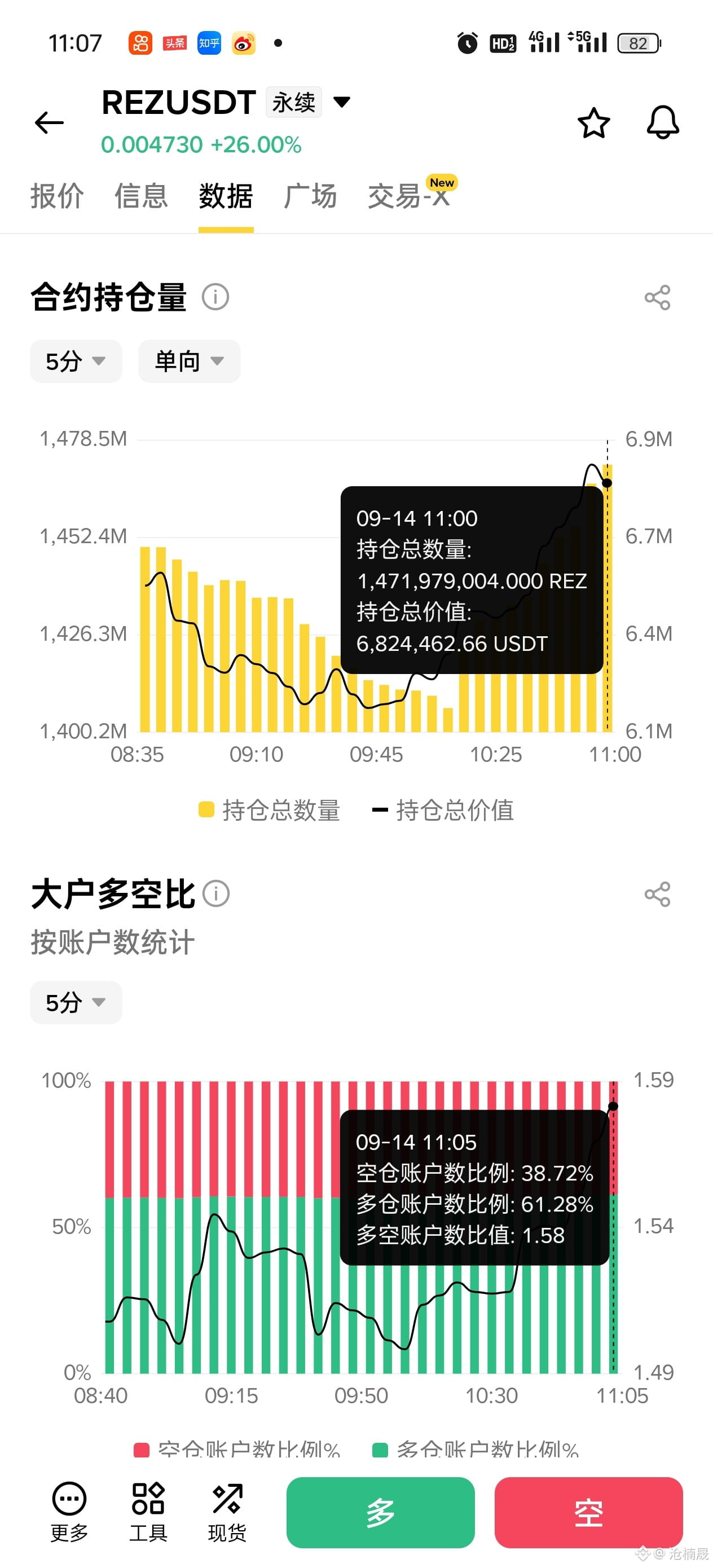
$REZ ✅ Daily chart major breakout + ✅ position volume surges + ✅ big players going all-in on longs
This is the classic breakout-and-rally launch signal!
Whether it’s the project team’s actions or the market’s catch-up logic, the money has already voted.
Buy the pullback, hold your position tight, and let your profits run!
{future}(REZUSDT)
$REZ ✅ Daily chart major breakout + ✅ position volume surges + ✅ big players going all-in on longs
This is the classic breakout-and-rally launch signal!
Whether it’s the project team’s actions or the market’s catch-up logic, the money has already voted.
Buy the pullback, hold your position tight, and let your profits run!
This is the classic breakout-and-rally launch signal!
Whether it’s the project team’s actions or the market’s catch-up logic, the money has already voted.
Buy the pullback, hold your position tight, and let your profits run!
1
714
·
--
Right now there’s only one core thing: understand what the market is expecting.
The fact is, the market’s bets on rate hikes have already exceeded 80%, and next week’s hike is essentially a sure thing.
Rate hikes are bad news for the stock market—everyone knows that.
But when this bad news is almost certain, should you still act on it as bad news?
Remember this principle: buy the expectation, sell the fact.
So the answer isn’t to act as soon as you hear about the rate hike, because the market has very likely priced it in already.
When the rate hike truly happens, what gets sold isn’t the stocks—it’s “the rate hike” itself.
When the “rate hike” is sold off and the bad news has played out, bad turns into good.
That means what you should pay attention to now is the repair/recovery expectations after the rate hike lands.
If you’ve got the main thread, step aside from the noise. $ETH
{future}(ETHUSDT)
$牛来
{future}(牛来USDT)
$FIL
{future}(FILUSDT)
#AnthropicCEO呼吁放缓AI发展 #全网爆仓6.74亿美元
Right now there’s only one core thing: understand what the market is expecting.
The fact is, the market’s bets on rate hikes have already exceeded 80%, and next week’s hike is essentially a sure thing.
Rate hikes are bad news for the stock market—everyone knows that.
But when this bad news is almost certain, should you still act on it as bad news?
Remember this principle: buy the expectation, sell the fact.
So the answer isn’t to act as soon as you hear about the rate hike, because the market has very likely priced it in already.
When the rate hike truly happens, what gets sold isn’t the stocks—it’s “the rate hike” itself.
When the “rate hike” is sold off and the bad news has played out, bad turns into good.
That means what you should pay attention to now is the repair/recovery expectations after the rate hike lands.
If you’ve got the main thread, step aside from the noise. $ETH
$牛来
$FIL
#AnthropicCEO呼吁放缓AI发展 #全网爆仓6.74亿美元
The fact is, the market’s bets on rate hikes have already exceeded 80%, and next week’s hike is essentially a sure thing.
Rate hikes are bad news for the stock market—everyone knows that.
But when this bad news is almost certain, should you still act on it as bad news?
Remember this principle: buy the expectation, sell the fact.
So the answer isn’t to act as soon as you hear about the rate hike, because the market has very likely priced it in already.
When the rate hike truly happens, what gets sold isn’t the stocks—it’s “the rate hike” itself.
When the “rate hike” is sold off and the bad news has played out, bad turns into good.
That means what you should pay attention to now is the repair/recovery expectations after the rate hike lands.
If you’ve got the main thread, step aside from the noise. $ETH
$牛来
$FIL
#AnthropicCEO呼吁放缓AI发展 #全网爆仓6.74亿美元
1
1.2k
·
--
On the weekend I took a look at the funding rates and Hyperliquid’s “whale” positions.
Overall, bearish sentiment remains strong, especially toward Ether.
That’s why there’s been high-volatility, wide-range consolidation near the highs.
Looking back at this week, even though August CPI increased and September rate-hike expectations went soaring, gold and Bitcoin still flashed signals of a two-way reversal—and the U.S. stock market also closed higher on Friday.
The main driver is still the credit problem in U.S. Treasuries; the gold and foreign-exchange reserves have already surpassed U.S. Treasuries.
With the rate-hike “shoe” not yet fully settled, the market is rapidly digesting it, and outlook confidence remains strong.
At this point, you can’t be too aggressively bearish on a pullback. In the short term, you can only go along with the trend $HYPE
{future}(HYPEUSDT)
$ETH
{future}(ETHUSDT)
#美国10年期国债收益率逼近5% #代币化股票持有者增长619.1%
On the weekend I took a look at the funding rates and Hyperliquid’s “whale” positions.
Overall, bearish sentiment remains strong, especially toward Ether.
That’s why there’s been high-volatility, wide-range consolidation near the highs.
Looking back at this week, even though August CPI increased and September rate-hike expectations went soaring, gold and Bitcoin still flashed signals of a two-way reversal—and the U.S. stock market also closed higher on Friday.
The main driver is still the credit problem in U.S. Treasuries; the gold and foreign-exchange reserves have already surpassed U.S. Treasuries.
With the rate-hike “shoe” not yet fully settled, the market is rapidly digesting it, and outlook confidence remains strong.
At this point, you can’t be too aggressively bearish on a pullback. In the short term, you can only go along with the trend $HYPE
$ETH
#美国10年期国债收益率逼近5% #代币化股票持有者增长619.1%
Overall, bearish sentiment remains strong, especially toward Ether.
That’s why there’s been high-volatility, wide-range consolidation near the highs.
Looking back at this week, even though August CPI increased and September rate-hike expectations went soaring, gold and Bitcoin still flashed signals of a two-way reversal—and the U.S. stock market also closed higher on Friday.
The main driver is still the credit problem in U.S. Treasuries; the gold and foreign-exchange reserves have already surpassed U.S. Treasuries.
With the rate-hike “shoe” not yet fully settled, the market is rapidly digesting it, and outlook confidence remains strong.
At this point, you can’t be too aggressively bearish on a pullback. In the short term, you can only go along with the trend $HYPE
$ETH
#美国10年期国债收益率逼近5% #代币化股票持有者增长619.1%
225
·
--
Bearish
$MarsCoin as a subject coin, recently there has been a lack of substantive positive catalysts from the project team. Against the backdrop of Bitcoin consolidating and adjusting, this kind of small-cap altcoin with limited market cap experiences liquidity depletion the fastest, making it extremely easy for a gradual downward move with low volume.
MARS has extremely high volatility, and it is currently in a downward channel—catching a falling knife carries very high risk. If the project team suddenly releases a positive news announcement, it could cause shorts to be squeezed instantly. Be sure to set and strictly follow your stop-loss. {future}(MARSCOINUSDT)
$MarsCoin as a subject coin, recently there has been a lack of substantive positive catalysts from the project team. Against the backdrop of Bitcoin consolidating and adjusting, this kind of small-cap altcoin with limited market cap experiences liquidity depletion the fastest, making it extremely easy for a gradual downward move with low volume.
MARS has extremely high volatility, and it is currently in a downward channel—catching a falling knife carries very high risk. If the project team suddenly releases a positive news announcement, it could cause shorts to be squeezed instantly. Be sure to set and strictly follow your stop-loss.
MARS has extremely high volatility, and it is currently in a downward channel—catching a falling knife carries very high risk. If the project team suddenly releases a positive news announcement, it could cause shorts to be squeezed instantly. Be sure to set and strictly follow your stop-loss.
2
1.4k
·
--
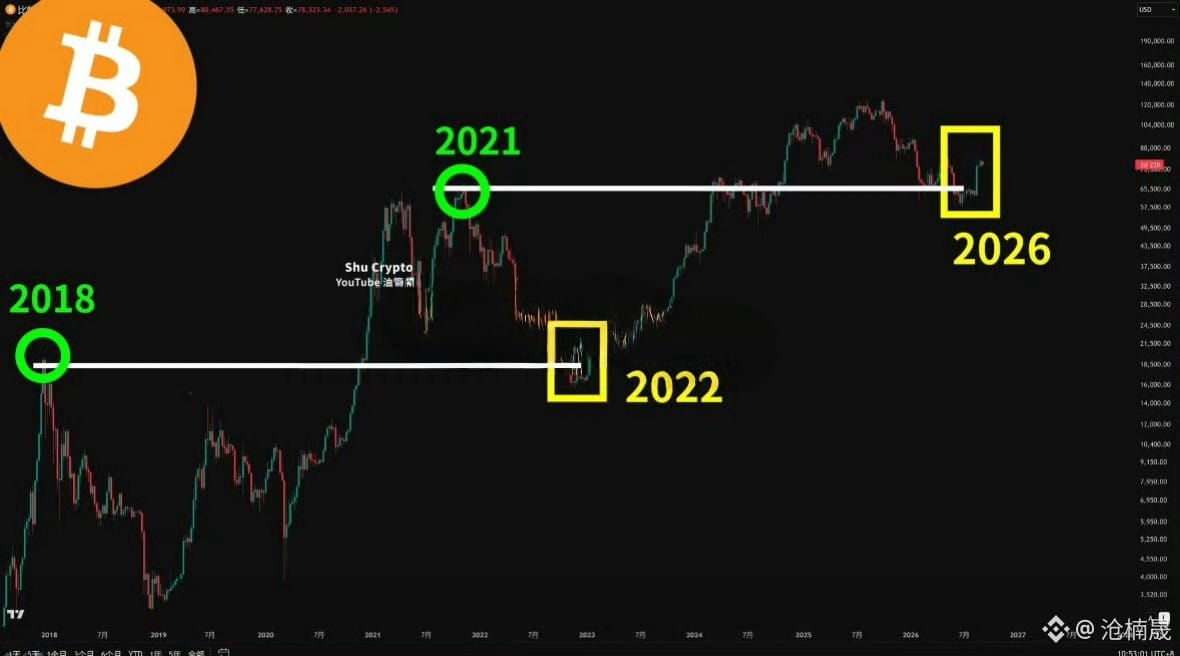
Textbook-level support at the bottom!
In 2026, support around $60,000 lines up perfectly with the historical high in 2021 from four years earlier.
What’s interesting is, looking back at 2022:
A $16,000 bottom → support the 2018 highs
After that, the $20,000 in the yellow box looks like it has already risen quite a bit, but if you look back now—
That was actually just the start of a major bull market.
In the end, the “pie” kept rising all the way to over $120,000.
And now, in 2026, the yellow box is still only around $80,000.
Will history repeat itself once again?
If this time the $80,000 is only the beginning…
Where will it go next?👀$BTC
{future}(BTCUSDT)
$ETH
{future}(ETHUSDT)
$SNDKB
{spot}(SNDKBUSDT)
#全网爆仓6.74亿美元
Textbook-level support at the bottom!
In 2026, support around $60,000 lines up perfectly with the historical high in 2021 from four years earlier.
What’s interesting is, looking back at 2022:
A $16,000 bottom → support the 2018 highs
After that, the $20,000 in the yellow box looks like it has already risen quite a bit, but if you look back now—
That was actually just the start of a major bull market.
In the end, the “pie” kept rising all the way to over $120,000.
And now, in 2026, the yellow box is still only around $80,000.
Will history repeat itself once again?
If this time the $80,000 is only the beginning…
Where will it go next?👀$BTC
$ETH
$SNDKB
#全网爆仓6.74亿美元
In 2026, support around $60,000 lines up perfectly with the historical high in 2021 from four years earlier.
What’s interesting is, looking back at 2022:
A $16,000 bottom → support the 2018 highs
After that, the $20,000 in the yellow box looks like it has already risen quite a bit, but if you look back now—
That was actually just the start of a major bull market.
In the end, the “pie” kept rising all the way to over $120,000.
And now, in 2026, the yellow box is still only around $80,000.
Will history repeat itself once again?
If this time the $80,000 is only the beginning…
Where will it go next?👀$BTC
$ETH
$SNDKB
#全网爆仓6.74亿美元
793
·
--
Bullish
$ZEC Privacy leading stock: oversold rebound opportunity is clear
Sector tailwinds keep delivering, the Grayscale ETF continues to lock up and accumulate, circulating shares keep tightening, and the privacy narrative remains strong in the long term.
Short-term pullbacks are part of a washout; contract positions are still at high levels and have not broken down. Major funds are continuously stepping in to absorb.
Large-speculator shorts are extremely crowded, the data is badly diverging, and there is a strong expectation of short covering and squeeze repair.
Technical support is solid and the need for oversold repair is strong. Multiple favorable catalysts converge, making the near-term long setup the best value.
There is regulatory uncertainty in this sector—keep positions light, enter in batches, and set strict stop-losses!
{future}(ZECUSDT)
$ZEC Privacy leading stock: oversold rebound opportunity is clear
Sector tailwinds keep delivering, the Grayscale ETF continues to lock up and accumulate, circulating shares keep tightening, and the privacy narrative remains strong in the long term.
Short-term pullbacks are part of a washout; contract positions are still at high levels and have not broken down. Major funds are continuously stepping in to absorb.
Large-speculator shorts are extremely crowded, the data is badly diverging, and there is a strong expectation of short covering and squeeze repair.
Technical support is solid and the need for oversold repair is strong. Multiple favorable catalysts converge, making the near-term long setup the best value.
There is regulatory uncertainty in this sector—keep positions light, enter in batches, and set strict stop-losses!
Sector tailwinds keep delivering, the Grayscale ETF continues to lock up and accumulate, circulating shares keep tightening, and the privacy narrative remains strong in the long term.
Short-term pullbacks are part of a washout; contract positions are still at high levels and have not broken down. Major funds are continuously stepping in to absorb.
Large-speculator shorts are extremely crowded, the data is badly diverging, and there is a strong expectation of short covering and squeeze repair.
Technical support is solid and the need for oversold repair is strong. Multiple favorable catalysts converge, making the near-term long setup the best value.
There is regulatory uncertainty in this sector—keep positions light, enter in batches, and set strict stop-losses!
1.1k
·
--
Bearish
$POWR price-violence rally phase; open interest does not increase but declines instead—this is the standard pattern of “push up while withdrawing,” followed by distribution at the highs.
Long accounts remain heavily crowded, mostly retail investors chasing the price and taking the bag driven by sentiment; meanwhile, the smart money quietly sets up short positions at the high level, completely reversing the market’s long/short balance.
The price surges and then falls back, printing a standard gravestone doji; in the short term, the top formation structure is fully established, and the long-side momentum is completely exhausted.
{future}(POWRUSDT)
$POWR price-violence rally phase; open interest does not increase but declines instead—this is the standard pattern of “push up while withdrawing,” followed by distribution at the highs.
Long accounts remain heavily crowded, mostly retail investors chasing the price and taking the bag driven by sentiment; meanwhile, the smart money quietly sets up short positions at the high level, completely reversing the market’s long/short balance.
The price surges and then falls back, printing a standard gravestone doji; in the short term, the top formation structure is fully established, and the long-side momentum is completely exhausted.
Long accounts remain heavily crowded, mostly retail investors chasing the price and taking the bag driven by sentiment; meanwhile, the smart money quietly sets up short positions at the high level, completely reversing the market’s long/short balance.
The price surges and then falls back, printing a standard gravestone doji; in the short term, the top formation structure is fully established, and the long-side momentum is completely exhausted.
475
·
--
Bearish
$ARK 55% rebounds are purely emotional hype to lure in buyers; the positive news has been fully priced in
The project has no incremental progress whatsoever, and this round of rally lacks substantive catalysts to support it. Expectations for further macro interest-rate hikes are heating up; liquidity continues to tighten, putting heavy pressure on speculative altcoin positions.
Big gains come alongside a drop in open positions: the main players are withdrawing while moving higher, and retail longs are crowded in to take the deal. The market is sluggish at high levels with thin liquidity—once sentiment cools, it falls rapidly.
{future}(ARKUSDT)
$ARK 55% rebounds are purely emotional hype to lure in buyers; the positive news has been fully priced in
The project has no incremental progress whatsoever, and this round of rally lacks substantive catalysts to support it. Expectations for further macro interest-rate hikes are heating up; liquidity continues to tighten, putting heavy pressure on speculative altcoin positions.
Big gains come alongside a drop in open positions: the main players are withdrawing while moving higher, and retail longs are crowded in to take the deal. The market is sluggish at high levels with thin liquidity—once sentiment cools, it falls rapidly.
The project has no incremental progress whatsoever, and this round of rally lacks substantive catalysts to support it. Expectations for further macro interest-rate hikes are heating up; liquidity continues to tighten, putting heavy pressure on speculative altcoin positions.
Big gains come alongside a drop in open positions: the main players are withdrawing while moving higher, and retail longs are crowded in to take the deal. The market is sluggish at high levels with thin liquidity—once sentiment cools, it falls rapidly.
2
395
Log in to explore more content
Join global crypto users on Binance Square
⚡️ Get latest and useful information about crypto.
💬 Trusted by the world’s largest crypto exchange.
👍 Discover real insights from verified creators.
Email / Phone number
Trending Topics
BitcoinCrosses$78000
1,318 views
79 Discussing
$BTC urgent Update 🚨 Big Opportunity ‼️Get Ready for Short 📉
BTC is bouncing as expected .Now you can scale your entry upto 78000 because this bounce can extend upto 78,000 ..
Stop-loss: 79,200
Targets 🎯
TP1: 77,150
TP2: 76,450
TP3: 75,750
TP4: 75,000
$SOL and $ETH will follow Bitcoin..And then dump as predicted 🔥
Always DYOR and never invest all in one trade
short here 👇
#SECReceivesGrayscaleLitecoinTrustETFFiling #ClarityActFacesProceduralVoteSept15 #US10YearTreasuryYieldNears5%
Panda Traders
·14 Likes
·5.9k views
AvalancheIntegratesIntoUAEPassDigitalVault
3,434 views
137 Discussing
UKSeeksViewsOnTokenizingGold
1,786 views
96 Discussing