

Namtaba
53 Posts

Namtaba
Report
Block User
2.2K+ Following
946 Followers
146 Liked
Posts
All
Quotes
·
--
Bullish
JUSTIN SUN: WHERE IS @TRONDAO HEADING?
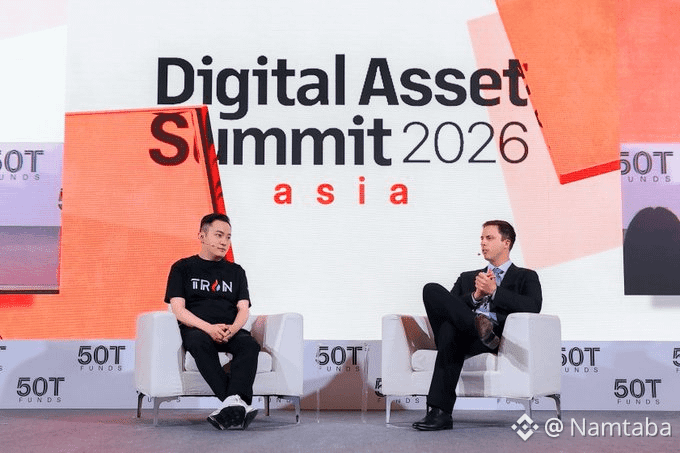
I just watched three short clips from @justinsuntron’s conversation with Mike Ippolito at Digital Asset Summit Asia.
Three points stood out to me:
1. Stablecoins remain TRON’s core advantage
Justin emphasized that TRON is focused on making USD move faster and more cheaply.
It’s not just about low fees, but also the ability to transfer stablecoins almost instantly between users across different markets.
2. From AI → tokenized equities
One quote from Justin caught my attention:
“If you want to get rich, you probably need to own some AI assets.”
According to him, the growth of AI is also driving demand for tokenized financial assets.
If stablecoins are the first step, tokenized equities could be the next direction TRON is looking toward.
3. Stablecoins could become a new form of “bank account”
Justin raised a simple but very practical question:
“If they don’t have a bank account, how do they store the value of their money?”
In countries where local currencies are weak or access to traditional banking is limited, USD stablecoins could become a way to store value and receive payments.
A TRON account could potentially give users access to USD without requiring a traditional bank account.
For me, this is the most interesting part.
Looking at it this way, TRON may not just be trying to become a network for stablecoin transfers.
Stablecoins could be the starting point. Tokenized equities could be the next step.
The question is: can TRON evolve into a broader onchain financial infrastructure layer rather than simply being seen as a “stablecoin transfer network”?
I think this is a direction worth watching.
JUSTIN SUN: WHERE IS @TRON DAO HEADING?
I just watched three short clips from @justinsuntron’s conversation with Mike Ippolito at Digital Asset Summit Asia.
Three points stood out to me:
1. Stablecoins remain TRON’s core advantage
Justin emphasized that TRON is focused on making USD move faster and more cheaply.
It’s not just about low fees, but also the ability to transfer stablecoins almost instantly between users across different markets.
2. From AI → tokenized equities
One quote from Justin caught my attention:
“If you want to get rich, you probably need to own some AI assets.”
According to him, the growth of AI is also driving demand for tokenized financial assets.
If stablecoins are the first step, tokenized equities could be the next direction TRON is looking toward.
3. Stablecoins could become a new form of “bank account”
Justin raised a simple but very practical question:
“If they don’t have a bank account, how do they store the value of their money?”
In countries where local currencies are weak or access to traditional banking is limited, USD stablecoins could become a way to store value and receive payments.
A TRON account could potentially give users access to USD without requiring a traditional bank account.
For me, this is the most interesting part.
Looking at it this way, TRON may not just be trying to become a network for stablecoin transfers.
Stablecoins could be the starting point. Tokenized equities could be the next step.
The question is: can TRON evolve into a broader onchain financial infrastructure layer rather than simply being seen as a “stablecoin transfer network”?
I think this is a direction worth watching.
I just watched three short clips from @justinsuntron’s conversation with Mike Ippolito at Digital Asset Summit Asia.
Three points stood out to me:
1. Stablecoins remain TRON’s core advantage
Justin emphasized that TRON is focused on making USD move faster and more cheaply.
It’s not just about low fees, but also the ability to transfer stablecoins almost instantly between users across different markets.
2. From AI → tokenized equities
One quote from Justin caught my attention:
“If you want to get rich, you probably need to own some AI assets.”
According to him, the growth of AI is also driving demand for tokenized financial assets.
If stablecoins are the first step, tokenized equities could be the next direction TRON is looking toward.
3. Stablecoins could become a new form of “bank account”
Justin raised a simple but very practical question:
“If they don’t have a bank account, how do they store the value of their money?”
In countries where local currencies are weak or access to traditional banking is limited, USD stablecoins could become a way to store value and receive payments.
A TRON account could potentially give users access to USD without requiring a traditional bank account.
For me, this is the most interesting part.
Looking at it this way, TRON may not just be trying to become a network for stablecoin transfers.
Stablecoins could be the starting point. Tokenized equities could be the next step.
The question is: can TRON evolve into a broader onchain financial infrastructure layer rather than simply being seen as a “stablecoin transfer network”?
I think this is a direction worth watching.
105
·
--
Something new is taking shape inside the Injective ecosystem.
The Injective Foundation has introduced Trench Treasury, an initiative designed to support builders who are creating with $INJ and recognize the communities that have been contributing along the way.
What I find interesting is the criteria.
This is not simply about picking projects with the biggest numbers. Injective is looking at things like organic holder distribution, real liquidity, sustained community activity, fair launches, and whether a project is actually creating value for the ecosystem.
That matters.
A strong ecosystem is not built only by funding new products. It also needs to support the users, communities, and builders who make the ecosystem grow from the ground up.
The Trench is where many of those people start.
Now the interesting part is seeing how Trench Treasury turns that idea into action.
This is information, not investment advice.
Something new is taking shape inside the Injective ecosystem.
The Injective Foundation has introduced Trench Treasury, an initiative designed to support builders who are creating with $INJ and recognize the communities that have been contributing along the way.
What I find interesting is the criteria.
This is not simply about picking projects with the biggest numbers. Injective is looking at things like organic holder distribution, real liquidity, sustained community activity, fair launches, and whether a project is actually creating value for the ecosystem.
That matters.
A strong ecosystem is not built only by funding new products. It also needs to support the users, communities, and builders who make the ecosystem grow from the ground up.
The Trench is where many of those people start.
Now the interesting part is seeing how Trench Treasury turns that idea into action.
This is information, not investment advice.
The Injective Foundation has introduced Trench Treasury, an initiative designed to support builders who are creating with $INJ and recognize the communities that have been contributing along the way.
What I find interesting is the criteria.
This is not simply about picking projects with the biggest numbers. Injective is looking at things like organic holder distribution, real liquidity, sustained community activity, fair launches, and whether a project is actually creating value for the ecosystem.
That matters.
A strong ecosystem is not built only by funding new products. It also needs to support the users, communities, and builders who make the ecosystem grow from the ground up.
The Trench is where many of those people start.
Now the interesting part is seeing how Trench Treasury turns that idea into action.
This is information, not investment advice.

198
·
--
One thing I find pretty interesting when looking at Injective:
If you only look at the price of $INJ
{spot}(INJUSDT)
, it’s easy to overlook what’s actually being built underneath.
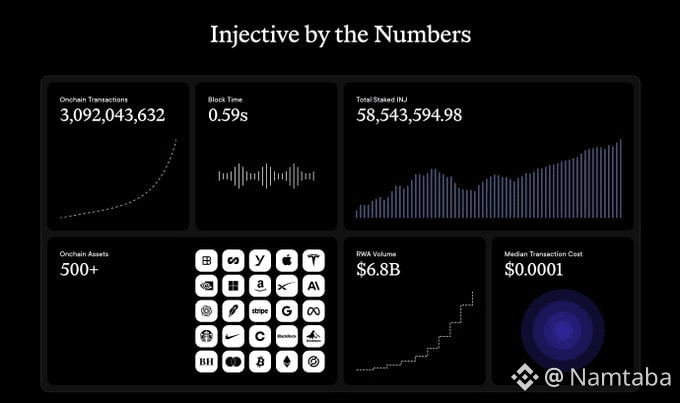
Injective has now processed 3B+ onchain transactions, with around 58.5M $INJ staked and more than 500 onchain assets.
But the part that catches my attention the most is the $6.8B+ in RWA volume.
From derivatives and tokenized stocks to FX and real estate, Injective is building infrastructure for financial activity to move directly onchain.
I don’t know how the market will ultimately value this narrative.
But if tokenization continues to grow, this is definitely an area worth watching.
This is information, not investment advice.
#Injective🔥 @Injective
One thing I find pretty interesting when looking at Injective:
If you only look at the price of $INJ
, it’s easy to overlook what’s actually being built underneath.
Injective has now processed 3B+ onchain transactions, with around 58.5M $INJ staked and more than 500 onchain assets.
But the part that catches my attention the most is the $6.8B+ in RWA volume.
From derivatives and tokenized stocks to FX and real estate, Injective is building infrastructure for financial activity to move directly onchain.
I don’t know how the market will ultimately value this narrative.
But if tokenization continues to grow, this is definitely an area worth watching.
This is information, not investment advice.
#Injective🔥 @Injective
If you only look at the price of $INJ
, it’s easy to overlook what’s actually being built underneath.
Injective has now processed 3B+ onchain transactions, with around 58.5M $INJ staked and more than 500 onchain assets.
But the part that catches my attention the most is the $6.8B+ in RWA volume.
From derivatives and tokenized stocks to FX and real estate, Injective is building infrastructure for financial activity to move directly onchain.
I don’t know how the market will ultimately value this narrative.
But if tokenization continues to grow, this is definitely an area worth watching.
This is information, not investment advice.
#Injective🔥 @Injective
680
·
--
Bullish
There’s one change I think is pretty easy to overlook with @Injective
It’s not a new TVL figure or another volume milestone
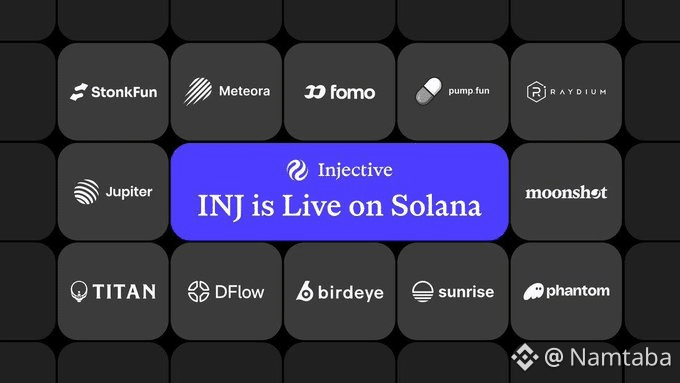
It’s that $INJ is starting to show up in places I would normally associate with Solana
Open Jupiter → Injective is there
Check Birdeye → Injective is there
Use Phantom → Injective is there
Look across DeFi and trading platforms → Injective keeps showing up
This kind of expansion is more interesting to me than simply adding another chain
Because adoption doesn’t always start with users actively seeking out a particular chain
Sometimes it starts with that chain becoming part of the workflow users are already using
And with Solana, Injective seems to be moving in that direction pretty clearly
Still waiting to see what’s behind the remaining REDACTED names 👀
$INJ
This is information, not investment advice
There’s one change I think is pretty easy to overlook with @Injective
It’s not a new TVL figure or another volume milestone
It’s that $INJ is starting to show up in places I would normally associate with Solana
Open Jupiter → Injective is there
Check Birdeye → Injective is there
Use Phantom → Injective is there
Look across DeFi and trading platforms → Injective keeps showing up
This kind of expansion is more interesting to me than simply adding another chain
Because adoption doesn’t always start with users actively seeking out a particular chain
Sometimes it starts with that chain becoming part of the workflow users are already using
And with Solana, Injective seems to be moving in that direction pretty clearly
Still waiting to see what’s behind the remaining REDACTED names 👀
$INJ
This is information, not investment advice
It’s not a new TVL figure or another volume milestone
It’s that $INJ is starting to show up in places I would normally associate with Solana
Open Jupiter → Injective is there
Check Birdeye → Injective is there
Use Phantom → Injective is there
Look across DeFi and trading platforms → Injective keeps showing up
This kind of expansion is more interesting to me than simply adding another chain
Because adoption doesn’t always start with users actively seeking out a particular chain
Sometimes it starts with that chain becoming part of the workflow users are already using
And with Solana, Injective seems to be moving in that direction pretty clearly
Still waiting to see what’s behind the remaining REDACTED names 👀
$INJ
This is information, not investment advice
2
286
·
--
Verified
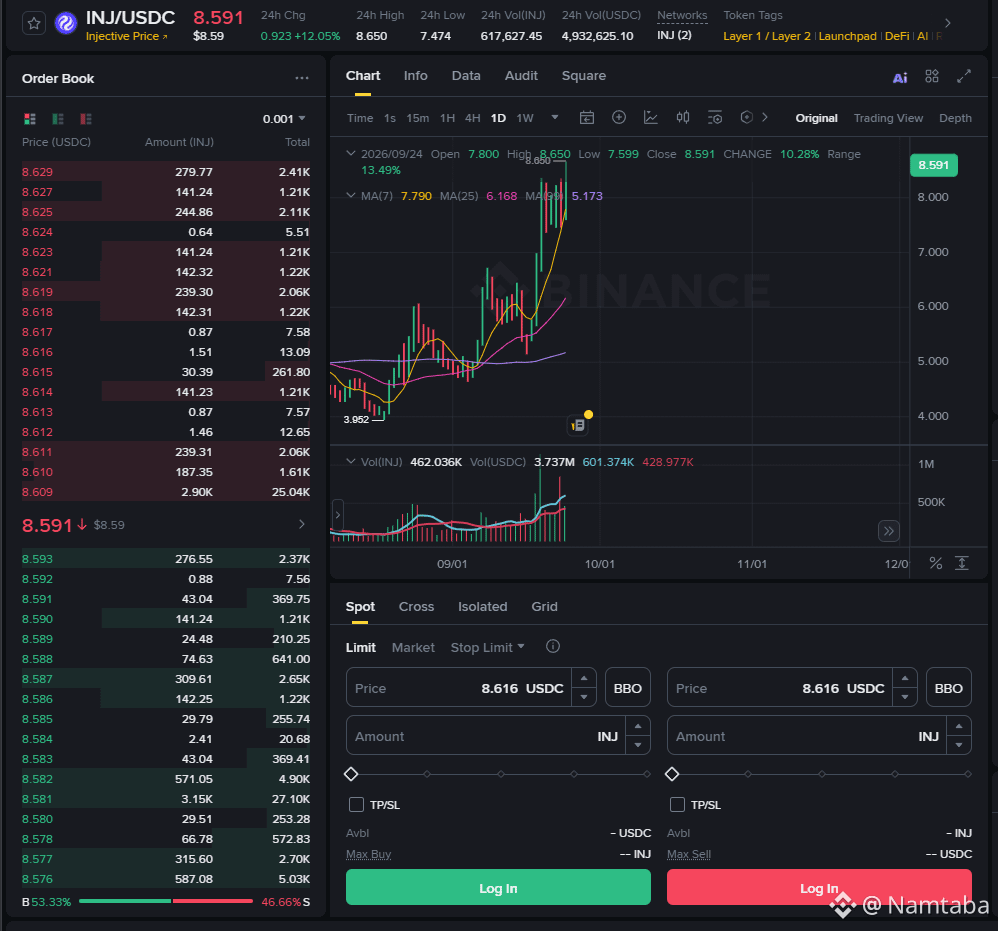
$INJ is trading around $8.5, with 24h trading volume reaching roughly $194M.
The number I’m paying the most attention to is actually the volume.
With a market cap of around $853M, 24h trading volume is equivalent to more than 22% of its market cap.
At the same time, Injective has just completed the Meridian upgrade, expanded INJ to Solana, and continues to push deeper into RWA.
I think this is a good time to look at the data rather than just the chart.
Will the volume continue to hold?
Will RWA generate real activity?
And will the new liquidity coming from Solana stay within the ecosystem?
These are the things that will show how much the current $INJ move is actually backed by real activity.
This is information, not investment advice.
@Injective
$INJ is trading around $8.5, with 24h trading volume reaching roughly $194M.
The number I’m paying the most attention to is actually the volume.
With a market cap of around $853M, 24h trading volume is equivalent to more than 22% of its market cap.
At the same time, Injective has just completed the Meridian upgrade, expanded INJ to Solana, and continues to push deeper into RWA.
I think this is a good time to look at the data rather than just the chart.
Will the volume continue to hold?
Will RWA generate real activity?
And will the new liquidity coming from Solana stay within the ecosystem?
These are the things that will show how much the current $INJ move is actually backed by real activity.
This is information, not investment advice.
@Injective
The number I’m paying the most attention to is actually the volume.
With a market cap of around $853M, 24h trading volume is equivalent to more than 22% of its market cap.
At the same time, Injective has just completed the Meridian upgrade, expanded INJ to Solana, and continues to push deeper into RWA.
I think this is a good time to look at the data rather than just the chart.
Will the volume continue to hold?
Will RWA generate real activity?
And will the new liquidity coming from Solana stay within the ecosystem?
These are the things that will show how much the current $INJ move is actually backed by real activity.
This is information, not investment advice.
@Injective
1
785
·
--
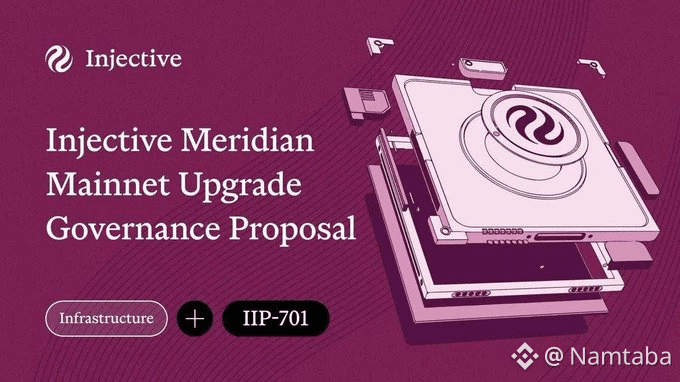
Just came across this update about @Injective 🥷
Meridian is now up for a governance vote, with quite a few changes happening under the hood:
RWA → tokenization → perp markets → private RFQ.
What stands out to me is that Injective isn’t just adding a few new features. It’s bringing multiple pieces of onchain financial infrastructure together within the same ecosystem.
Especially if tokenized assets and RWA start seeing real usage, upgrades like this could matter much more than just another announcement.
The vote is expected to end on September 22, with the upgrade planned for September 24 if approved.
I’ll be watching how much real usage Meridian brings once it goes live.
This is for informational purposes only and should not be considered investment advice.
Just came across this update about @Injective 🥷
Meridian is now up for a governance vote, with quite a few changes happening under the hood:
RWA → tokenization → perp markets → private RFQ.
What stands out to me is that Injective isn’t just adding a few new features. It’s bringing multiple pieces of onchain financial infrastructure together within the same ecosystem.
Especially if tokenized assets and RWA start seeing real usage, upgrades like this could matter much more than just another announcement.
The vote is expected to end on September 22, with the upgrade planned for September 24 if approved.
I’ll be watching how much real usage Meridian brings once it goes live.
This is for informational purposes only and should not be considered investment advice.
Meridian is now up for a governance vote, with quite a few changes happening under the hood:
RWA → tokenization → perp markets → private RFQ.
What stands out to me is that Injective isn’t just adding a few new features. It’s bringing multiple pieces of onchain financial infrastructure together within the same ecosystem.
Especially if tokenized assets and RWA start seeing real usage, upgrades like this could matter much more than just another announcement.
The vote is expected to end on September 22, with the upgrade planned for September 24 if approved.
I’ll be watching how much real usage Meridian brings once it goes live.
This is for informational purposes only and should not be considered investment advice.
475
·
--
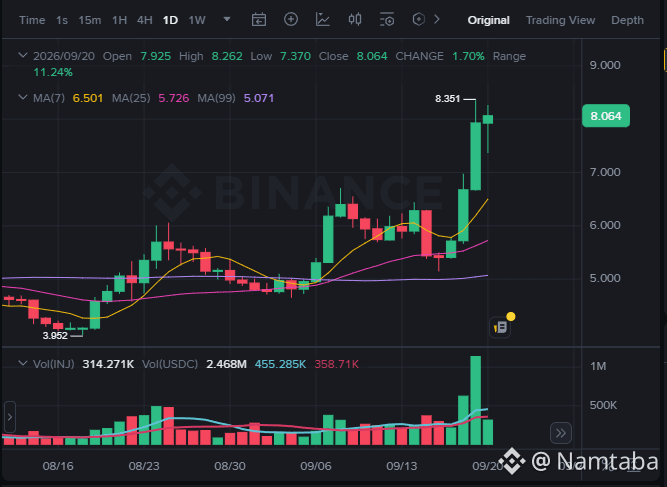
Something feels different around INJ lately.
Not because $INJ
{spot}(INJUSDT)
touched $8 again.
It’s because the token is starting to have more reasons to exist outside of the Injective ecosystem itself.
Solana is becoming a bigger part of that picture:
Stonk → launches
Jupiter → swaps
Phantom → wallet access
Meteora → liquidity
Sunrise → connectivity
That’s a pretty different setup from simply saying “@Injective is expanding to Solana.”
Now the question becomes:
Can these new distribution points turn into real usage for INJ?
The price move is easy to see.
The adoption data is what I’ll be watching next.
This is information, not financial advice. DYOR.
Something feels different around INJ lately.
Not because $INJ
touched $8 again.
It’s because the token is starting to have more reasons to exist outside of the Injective ecosystem itself.
Solana is becoming a bigger part of that picture:
Stonk → launches
Jupiter → swaps
Phantom → wallet access
Meteora → liquidity
Sunrise → connectivity
That’s a pretty different setup from simply saying “@Injective is expanding to Solana.”
Now the question becomes:
Can these new distribution points turn into real usage for INJ?
The price move is easy to see.
The adoption data is what I’ll be watching next.
This is information, not financial advice. DYOR.
Not because $INJ
touched $8 again.
It’s because the token is starting to have more reasons to exist outside of the Injective ecosystem itself.
Solana is becoming a bigger part of that picture:
Stonk → launches
Jupiter → swaps
Phantom → wallet access
Meteora → liquidity
Sunrise → connectivity
That’s a pretty different setup from simply saying “@Injective is expanding to Solana.”
Now the question becomes:
Can these new distribution points turn into real usage for INJ?
The price move is easy to see.
The adoption data is what I’ll be watching next.
This is information, not financial advice. DYOR.
1
609
·
--
I’ve been paying more attention to what @Injective is doing beyond crypto-native markets.
Perpetuals started with assets like BTC and ETH, but the same market structure can also be used for equities, commodities, FX, indices and even pre-IPO references.
@Injective currently has 135 active RWA perpetual markets:
→ 111 equities
→ 11 FX
→ 9 commodities
→ 2 indices
→ 2 pre-IPO references
What makes this interesting to me is that these markets are quoted against native USDC and use Injective’s existing onchain infrastructure for orderbooks, oracle pricing, margin, liquidation and settlement.
The numbers are also starting to show actual activity.
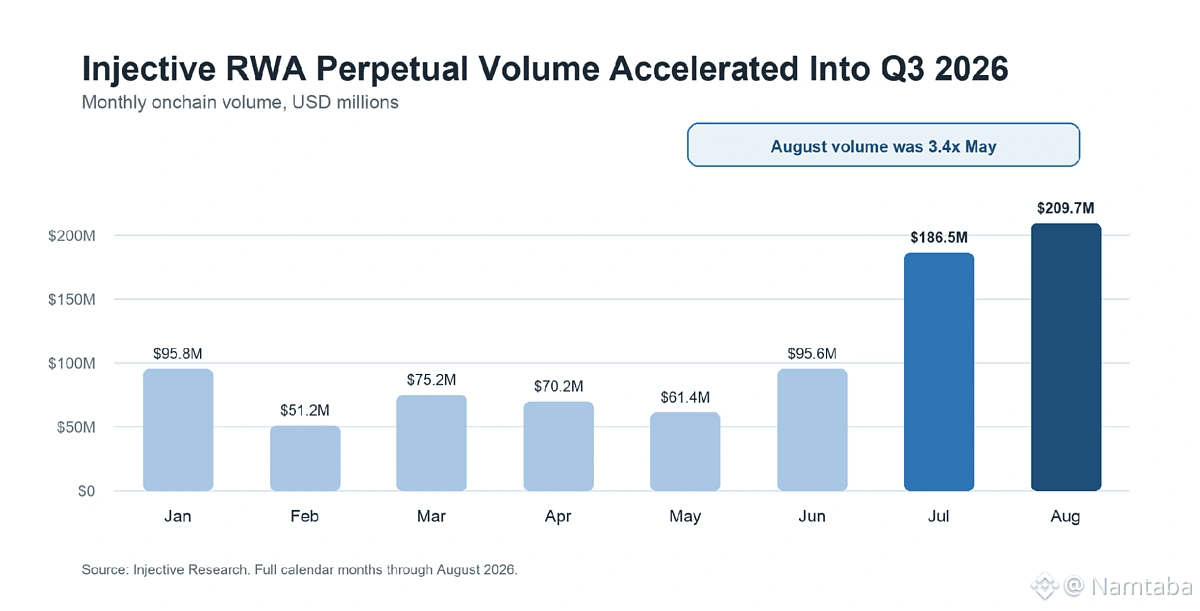
Injective’s RWA perpetuals have processed more than $5.3B in cumulative volume since early 2025, with $186.5M in July and $209.7M in August 2026.
So the bigger story here isn’t simply “RWAs onchain.”
It’s whether onchain infrastructure can become a practical way to access global market exposure without needing to put the underlying asset itself onchain.
I’ll be watching how this market develops from here.
$INJ
This is information, not investment advice.
I’ve been paying more attention to what @Injective is doing beyond crypto-native markets.
Perpetuals started with assets like BTC and ETH, but the same market structure can also be used for equities, commodities, FX, indices and even pre-IPO references.
@Injective currently has 135 active RWA perpetual markets:
→ 111 equities
→ 11 FX
→ 9 commodities
→ 2 indices
→ 2 pre-IPO references
What makes this interesting to me is that these markets are quoted against native USDC and use Injective’s existing onchain infrastructure for orderbooks, oracle pricing, margin, liquidation and settlement.
The numbers are also starting to show actual activity.
Injective’s RWA perpetuals have processed more than $5.3B in cumulative volume since early 2025, with $186.5M in July and $209.7M in August 2026.
So the bigger story here isn’t simply “RWAs onchain.”
It’s whether onchain infrastructure can become a practical way to access global market exposure without needing to put the underlying asset itself onchain.
I’ll be watching how this market develops from here.
$INJ
This is information, not investment advice.
Perpetuals started with assets like BTC and ETH, but the same market structure can also be used for equities, commodities, FX, indices and even pre-IPO references.
@Injective currently has 135 active RWA perpetual markets:
→ 111 equities
→ 11 FX
→ 9 commodities
→ 2 indices
→ 2 pre-IPO references
What makes this interesting to me is that these markets are quoted against native USDC and use Injective’s existing onchain infrastructure for orderbooks, oracle pricing, margin, liquidation and settlement.
The numbers are also starting to show actual activity.
Injective’s RWA perpetuals have processed more than $5.3B in cumulative volume since early 2025, with $186.5M in July and $209.7M in August 2026.
So the bigger story here isn’t simply “RWAs onchain.”
It’s whether onchain infrastructure can become a practical way to access global market exposure without needing to put the underlying asset itself onchain.
I’ll be watching how this market develops from here.
$INJ
This is information, not investment advice.
379
·
--
I've been looking at the RWA narrative on Injective from a slightly different angle.
It's easy to focus on how many assets are being brought onchain.
What interests me more is whether people are actually using the financial infrastructure.
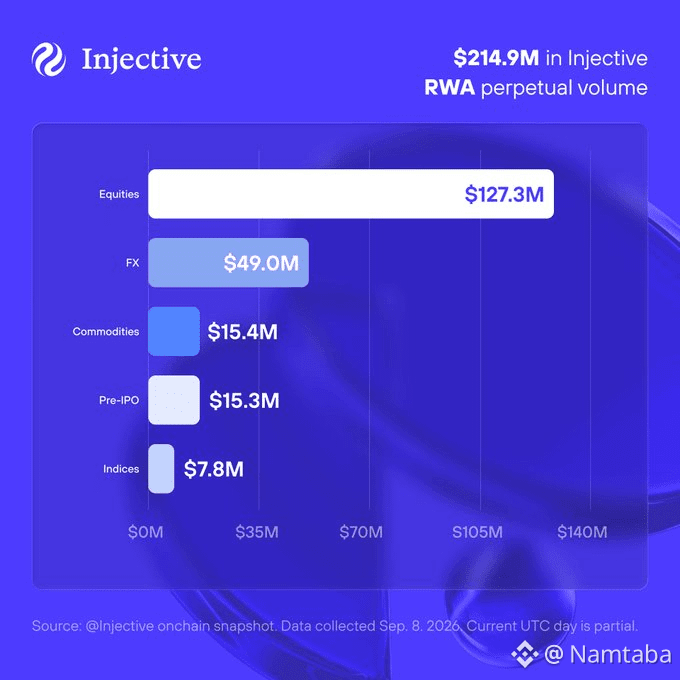
Injective's RWA Perpetual markets recorded $214.9M in volume over the past 30 days, covering equities, FX, commodities, indices and pre-IPO markets.
To me, this is where Injective's thesis around onchain finance starts to become more tangible.
The goal isn't just to tokenize an asset and leave it there.
It's to build infrastructure where people can actually trade and interact with different financial markets onchain, 24/7.
And that's also why I keep paying attention to $INJ.
If Injective continues expanding its financial markets and attracting real activity, the network itself becomes more important to the thesis behind the token.
Still early, and volume alone doesn't guarantee anything.
But personally, I'd rather watch actual usage than just another RWA headline.
This is information, not investment advice
I've been looking at the RWA narrative on Injective from a slightly different angle.
It's easy to focus on how many assets are being brought onchain.
What interests me more is whether people are actually using the financial infrastructure.
Injective's RWA Perpetual markets recorded $214.9M in volume over the past 30 days, covering equities, FX, commodities, indices and pre-IPO markets.
To me, this is where Injective's thesis around onchain finance starts to become more tangible.
The goal isn't just to tokenize an asset and leave it there.
It's to build infrastructure where people can actually trade and interact with different financial markets onchain, 24/7.
And that's also why I keep paying attention to $INJ.
If Injective continues expanding its financial markets and attracting real activity, the network itself becomes more important to the thesis behind the token.
Still early, and volume alone doesn't guarantee anything.
But personally, I'd rather watch actual usage than just another RWA headline.
This is information, not investment advice
It's easy to focus on how many assets are being brought onchain.
What interests me more is whether people are actually using the financial infrastructure.
Injective's RWA Perpetual markets recorded $214.9M in volume over the past 30 days, covering equities, FX, commodities, indices and pre-IPO markets.
To me, this is where Injective's thesis around onchain finance starts to become more tangible.
The goal isn't just to tokenize an asset and leave it there.
It's to build infrastructure where people can actually trade and interact with different financial markets onchain, 24/7.
And that's also why I keep paying attention to $INJ.
If Injective continues expanding its financial markets and attracting real activity, the network itself becomes more important to the thesis behind the token.
Still early, and volume alone doesn't guarantee anything.
But personally, I'd rather watch actual usage than just another RWA headline.
This is information, not investment advice
370
·
--
Bullish
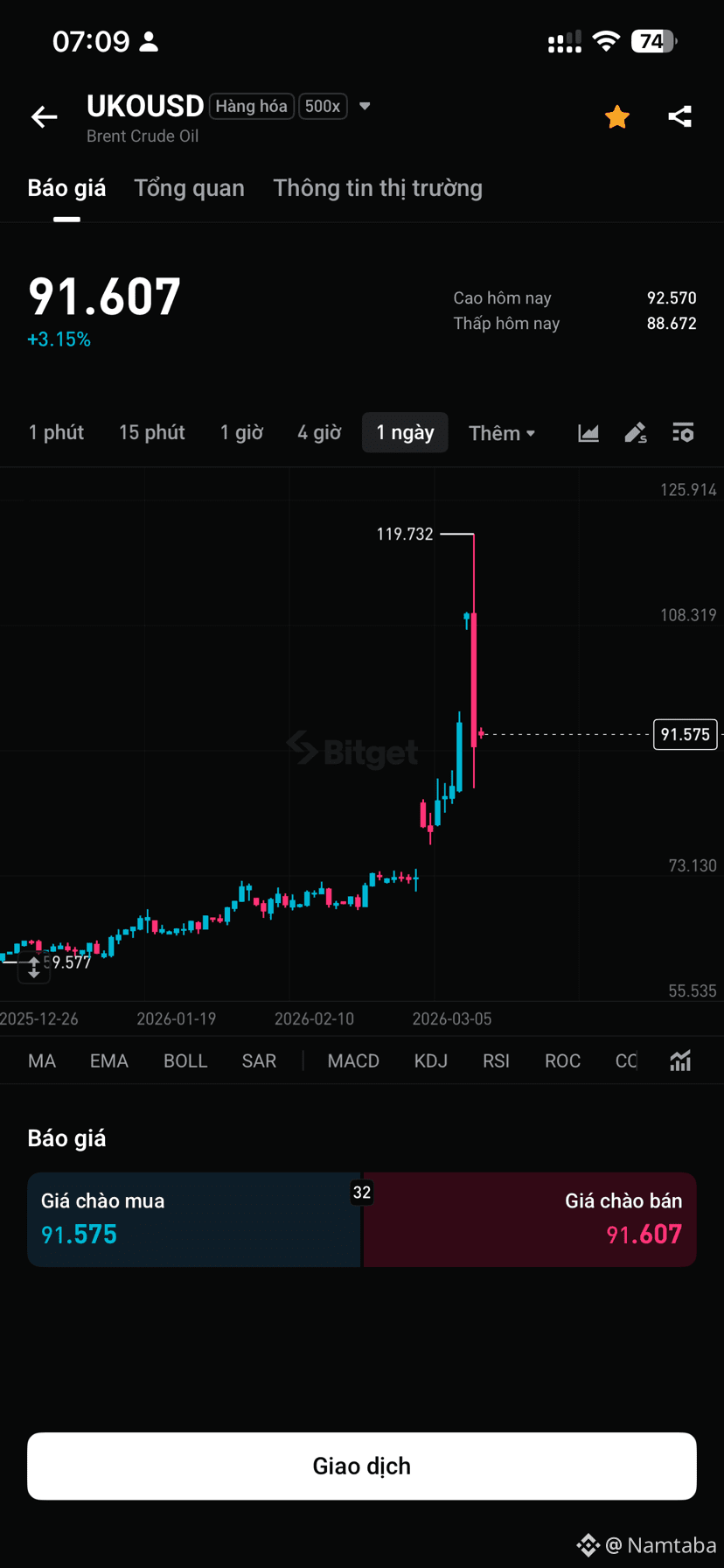
What's happening with the oil prices, guys :))
Oil jumped from $90 straight up to $120 in just one day… then dropped back down to $91, a 32% dump 😀
Yesterday, I saw the price of $UKO 115$ in the TradeFi section on @bitget and was scared it would go up more, so I didn't dare to short; if I had shorted, I would have profited big today 🤣
The drop in oil prices is also good for the overall economy. If energy pressure eases, the economy might stabilize a bit soon.
Oil has dropped, so let’s go $BTC moon 🤣
#BTC
What's happening with the oil prices, guys :))
Oil jumped from $90 straight up to $120 in just one day… then dropped back down to $91, a 32% dump 😀
Yesterday, I saw the price of $UKO 115$ in the TradeFi section on @bitget and was scared it would go up more, so I didn't dare to short; if I had shorted, I would have profited big today 🤣
The drop in oil prices is also good for the overall economy. If energy pressure eases, the economy might stabilize a bit soon.
Oil has dropped, so let’s go $BTC moon 🤣
#BTC
Oil jumped from $90 straight up to $120 in just one day… then dropped back down to $91, a 32% dump 😀
Yesterday, I saw the price of $UKO 115$ in the TradeFi section on @bitget and was scared it would go up more, so I didn't dare to short; if I had shorted, I would have profited big today 🤣
The drop in oil prices is also good for the overall economy. If energy pressure eases, the economy might stabilize a bit soon.
Oil has dropped, so let’s go $BTC moon 🤣
#BTC
4
14
·
--
Many people only see $ROBO as a new token list, but the story behind @FabricFND is quite remarkable. Fabric is building infrastructure for robots and AI agents to have on-chain identities, enabling them to interact and make direct payments within a machine economy. If the robot economy model develops, $ROBO will play a central role in staking, governance, and operating the entire network. #ROBO
Many people only see $ROBO as a new token list, but the story behind @FabricFND is quite remarkable. Fabric is building infrastructure for robots and AI agents to have on-chain identities, enabling them to interact and make direct payments within a machine economy. If the robot economy model develops, $ROBO will play a central role in staking, governance, and operating the entire network. #ROBO
7
90
·
--

Article
$ROBO – When Robots Start Having Crypto Wallets and Participating in the On-chain EconomyRecently, I've noticed quite a few people only looking at $ROBO as a new token that just got listed. But if you look deeper into what @FabricFND is building, the story is much more interesting.
Fabric Foundation is pursuing a rather distinct idea: robots and AI agents in the future will not just be tools, but economic entities that can interact autonomously with the on-chain financial system.
Currently, most robots operate within closed systems, controlled by individual companies or platforms. This makes coordination between multiple robots or different systems very challenging. Fabric Protocol aims to address this issue by creating a common coordination layer, where robots can have on-chain identities, access rights, and the ability to make direct payments through blockchain.
$ROBO – When Robots Start Having Crypto Wallets and Participating in the On-chain Economy
Recently, I've noticed quite a few people only looking at $ROBO as a new token that just got listed. But if you look deeper into what @Fabric Foundation is building, the story is much more interesting.
Fabric Foundation is pursuing a rather distinct idea: robots and AI agents in the future will not just be tools, but economic entities that can interact autonomously with the on-chain financial system.
Currently, most robots operate within closed systems, controlled by individual companies or platforms. This makes coordination between multiple robots or different systems very challenging. Fabric Protocol aims to address this issue by creating a common coordination layer, where robots can have on-chain identities, access rights, and the ability to make direct payments through blockchain.
Fabric Foundation is pursuing a rather distinct idea: robots and AI agents in the future will not just be tools, but economic entities that can interact autonomously with the on-chain financial system.
Currently, most robots operate within closed systems, controlled by individual companies or platforms. This makes coordination between multiple robots or different systems very challenging. Fabric Protocol aims to address this issue by creating a common coordination layer, where robots can have on-chain identities, access rights, and the ability to make direct payments through blockchain.
7
99
·
--
🛑#Update $ROBO
After the airdrop and listing on multiple CEX, $ROBO is currently fluctuating around the 0.042 range. The interesting story behind @FabricFND is building infrastructure for robots and AI agents with on-chain identities, capable of self-interaction and creating value in the digital economy. If this robot economy model develops, $ROBO will play a central role in the coordination and staking of the entire ecosystem. #ROBO
🛑#Update $ROBO
After the airdrop and listing on multiple CEX, $ROBO is currently fluctuating around the 0.042 range. The interesting story behind @FabricFND is building infrastructure for robots and AI agents with on-chain identities, capable of self-interaction and creating value in the digital economy. If this robot economy model develops, $ROBO will play a central role in the coordination and staking of the entire ecosystem. #ROBO
After the airdrop and listing on multiple CEX, $ROBO is currently fluctuating around the 0.042 range. The interesting story behind @FabricFND is building infrastructure for robots and AI agents with on-chain identities, capable of self-interaction and creating value in the digital economy. If this robot economy model develops, $ROBO will play a central role in the coordination and staking of the entire ecosystem. #ROBO
3
209
·
--
Article
Update ROBOYou guys have probably seen this one a lot because of the airdrop + listing on CEX quite quickly. Currently, the price is around 0.042, after the hype from the listing, the market is starting to go sideways and accumulate.
The project behind is @FabricFND, doing quite an interesting area: robot economy + AI agents.
Simply put, they are building infrastructure for robots and autonomous agents to have an on-chain identity, have a wallet, and can interact economically like an independent entity.
Token $ROBO plays the role of:
• Network fees for robot interaction
Update ROBO
You guys have probably seen this one a lot because of the airdrop + listing on CEX quite quickly. Currently, the price is around 0.042, after the hype from the listing, the market is starting to go sideways and accumulate.
The project behind is @FabricFND, doing quite an interesting area: robot economy + AI agents.
Simply put, they are building infrastructure for robots and autonomous agents to have an on-chain identity, have a wallet, and can interact economically like an independent entity.
Token $ROBO plays the role of:
• Network fees for robot interaction
The project behind is @FabricFND, doing quite an interesting area: robot economy + AI agents.
Simply put, they are building infrastructure for robots and autonomous agents to have an on-chain identity, have a wallet, and can interact economically like an independent entity.
Token $ROBO plays the role of:
• Network fees for robot interaction
2
115
·
--
Bullish
Do a little long $ASTER đi guys, Don't forget that Cz is still holding Aster and the perpdex trend will not stop
{future}(ASTERUSDT)
Do a little long $ASTER đi guys, Don't forget that Cz is still holding Aster and the perpdex trend will not stop
3
3
236
·
--
$ORCA market comback ecosystem $SUI also comback strongly, gamble a bit, right everyone?
{spot}(SUIUSDT)
{spot}(ORCAUSDT)
$ORCA market comback ecosystem $SUI also comback strongly, gamble a bit, right everyone?
6
234
·
--
$BARD Is it a bit pushy, guys? Just a short one, everyone
{spot}(BARDUSDT)
$BARD Is it a bit pushy, guys? Just a short one, everyone
4
9
399
·
--
Article
$ROBO AT 0.041 – Smart Accumulation Zone Before the Robot Economy Awakens?$ROBO is currently trading around 0.041. For many, this is just a fluctuating number in the short-term range. But looking deeper, this could be a phase where the market is 'revaluing' the entire story behind @FabricFND .
Fabric Foundation does not follow the direction of building a simple AI token just to catch trends. They are developing a coordination protocol for robots and autonomous agents – where each machine entity has an on-chain identity, a mechanism for verifying actions, and a clear incentive system. When robots are not just hardware but become economic agents, they need a neutral infrastructure layer to coordinate and record value. That is the role of the Fabric Protocol.
$ROBO AT 0.041 – Smart Accumulation Zone Before the Robot Economy Awakens?
$ROBO is currently trading around 0.041. For many, this is just a fluctuating number in the short-term range. But looking deeper, this could be a phase where the market is 'revaluing' the entire story behind @Fabric Foundation .
Fabric Foundation does not follow the direction of building a simple AI token just to catch trends. They are developing a coordination protocol for robots and autonomous agents – where each machine entity has an on-chain identity, a mechanism for verifying actions, and a clear incentive system. When robots are not just hardware but become economic agents, they need a neutral infrastructure layer to coordinate and record value. That is the role of the Fabric Protocol.
Fabric Foundation does not follow the direction of building a simple AI token just to catch trends. They are developing a coordination protocol for robots and autonomous agents – where each machine entity has an on-chain identity, a mechanism for verifying actions, and a clear incentive system. When robots are not just hardware but become economic agents, they need a neutral infrastructure layer to coordinate and record value. That is the role of the Fabric Protocol.
7
359
·
--
$ROBO today around 0.043 – the interesting thing is that the price is stabilizing instead of breaking out strongly. For me, this is not necessarily a bad signal. After a period of volatility, the market often needs time to absorb supply and re-accumulate.
A point to watch is how @FabricFND builds the foundation of the economy robot: on-chain identity, staking mechanism, and verification for AI agents. If adoption gradually increases, $ROBO not only reflects short-term sentiment but also represents the demand for infrastructure usage. A price of 0.041 could be the trust-checking zone before the market re-evaluates the long-term story. #ROBO
{spot}(ROBOUSDT)
$ROBO today around 0.043 – the interesting thing is that the price is stabilizing instead of breaking out strongly. For me, this is not necessarily a bad signal. After a period of volatility, the market often needs time to absorb supply and re-accumulate.
A point to watch is how @Fabric Foundation builds the foundation of the economy robot: on-chain identity, staking mechanism, and verification for AI agents. If adoption gradually increases, $ROBO not only reflects short-term sentiment but also represents the demand for infrastructure usage. A price of 0.041 could be the trust-checking zone before the market re-evaluates the long-term story. #ROBO
A point to watch is how @Fabric Foundation builds the foundation of the economy robot: on-chain identity, staking mechanism, and verification for AI agents. If adoption gradually increases, $ROBO not only reflects short-term sentiment but also represents the demand for infrastructure usage. A price of 0.041 could be the trust-checking zone before the market re-evaluates the long-term story. #ROBO
5
158
Log in to explore more content
Join global crypto users on Binance Square
⚡️ Get latest and useful information about crypto.
💬 Trusted by the world’s largest crypto exchange.
👍 Discover real insights from verified creators.
Email / Phone number
Trending Topics
FedMinutesFocusOnOctoberPause
165,868 views
1,299 Discussing
🚨 HIGH ALERT ‼️ PLEASE DON’T TRADE BLINDLY FOR THE NEXT HOUR 🚨
Guys, we have FOMC Minutes coming in less than 1 hour.
And after the kind of volatility we already saw today, I really don’t want anyone opening random high-leverage positions just before this release.
The biggest reaction I’m watching will be in Gold (XAU), Silver (XAG), BTC and ETH. Then coins like SOL and other highly leveraged mid/low-cap alts can exaggerate whatever move BTC makes.
Gold and Silver are especially sensitive tonight because the market is already reacting to the US dollar + Treasury yields, and both metals have been under heavy pressure ahead of the Fed minutes.
Briefly speaking
📉Hawkish Fed Minutes → Dollar/yields can push higher → pressure on BTC, crypto, Gold & silver
📈Dovish Fed Minutes → Dollar/yields can cool → BTC, Gold, Silver and risk assets can bounce hard.
And please remember the first candle can be a trap. We can get a pump, immediate dump, liquidations on both sides, and then the real direction.
So for now, protect your positions, reduce unnecessary leverage and don’t FOMO into the first move.
Tonight I’m watching $XAU , $XAG and $BTC first. These will tell us very quickly how the market is reading the Fed.
I will Update you guys on time
Follow @Panda Traders and Turn on Your notifications right now
#FedMinutesFocusOnOctoberPause
Panda Traders
·19 Likes
·3.9k views
BinanceLaunchesBinanceIntelligence
1.1M views
6,504 Discussing
EvernorthDelaysNasdaqDebutToOct12
13,672 views
299 Discussing