
BlueTokenCapital
14.8k Posts

BlueTokenCapital
Report
Block User
Less hype. More research. Hunting alpha through data, narratives, and on-chain signals.
Open Trade

BTC Holder
High-Frequency Trader
5.4 Years
182 Following
5.5K+ Followers
29.9K+ Liked
Posts
Portfolio
All
Quotes
Videos
Live
🚨 VITALIK IS PUSHING ETHEREUM INTO A NEW PHASE.
EIP-8288 aims for: ⚡ Reducing computation costs
🔐 Privacy + quantum safety
🚀 Scaling Ethereum with recursive STARK
This is not an official upgrade yet — but if it gets approved, this could be a major turning point.
🔥 IS ETHEREUM PREPARING FOR a “TRANSFORMATION”?
Follow to not miss the big narrative. 🔎$ETH $XAU
🚨 VITALIK IS PUSHING ETHEREUM INTO A NEW PHASE.
EIP-8288 aims for: ⚡ Reducing computation costs
🔐 Privacy + quantum safety
🚀 Scaling Ethereum with recursive STARK
This is not an official upgrade yet — but if it gets approved, this could be a major turning point.
🔥 IS ETHEREUM PREPARING FOR a “TRANSFORMATION”?
Follow to not miss the big narrative. 🔎$ETH $XAU
EIP-8288 aims for: ⚡ Reducing computation costs
🔐 Privacy + quantum safety
🚀 Scaling Ethereum with recursive STARK
This is not an official upgrade yet — but if it gets approved, this could be a major turning point.
🔥 IS ETHEREUM PREPARING FOR a “TRANSFORMATION”?
Follow to not miss the big narrative. 🔎$ETH $XAU
1
198
🚨 IS TRUMP “BUYING SEATS” WITH PEOPLE’S MONEY?
Donald Trump promises that each adult in America will receive $5,000 if the Republican Party wins both the House and the Senate.
💰 Cost: potentially over $1 TRILLION.
💸 Where does the money come from? NOT CLEAR YET.
If the budget isn’t enough → the government has to borrow more.
Let’s be blunt:
Is this economic stimulus…
or a massive “vote-buying machine”?
🔥 $5,000 FOR YOUR VOTE?
WHO REALLY PAYS?
Source: Reuters, AP
Follow to not miss the big market twists. 🔎$BTC $TRUMP $WLFI
🚨 IS TRUMP “BUYING SEATS” WITH PEOPLE’S MONEY?
Donald Trump promises that each adult in America will receive $5,000 if the Republican Party wins both the House and the Senate.
💰 Cost: potentially over $1 TRILLION.
💸 Where does the money come from? NOT CLEAR YET.
If the budget isn’t enough → the government has to borrow more.
Let’s be blunt:
Is this economic stimulus…
or a massive “vote-buying machine”?
🔥 $5,000 FOR YOUR VOTE?
WHO REALLY PAYS?
Source: Reuters, AP
Follow to not miss the big market twists. 🔎$BTC $TRUMP $WLFI
Donald Trump promises that each adult in America will receive $5,000 if the Republican Party wins both the House and the Senate.
💰 Cost: potentially over $1 TRILLION.
💸 Where does the money come from? NOT CLEAR YET.
If the budget isn’t enough → the government has to borrow more.
Let’s be blunt:
Is this economic stimulus…
or a massive “vote-buying machine”?
🔥 $5,000 FOR YOUR VOTE?
WHO REALLY PAYS?
Source: Reuters, AP
Follow to not miss the big market twists. 🔎$BTC $TRUMP $WLFI
1
617
·
--
Bullish
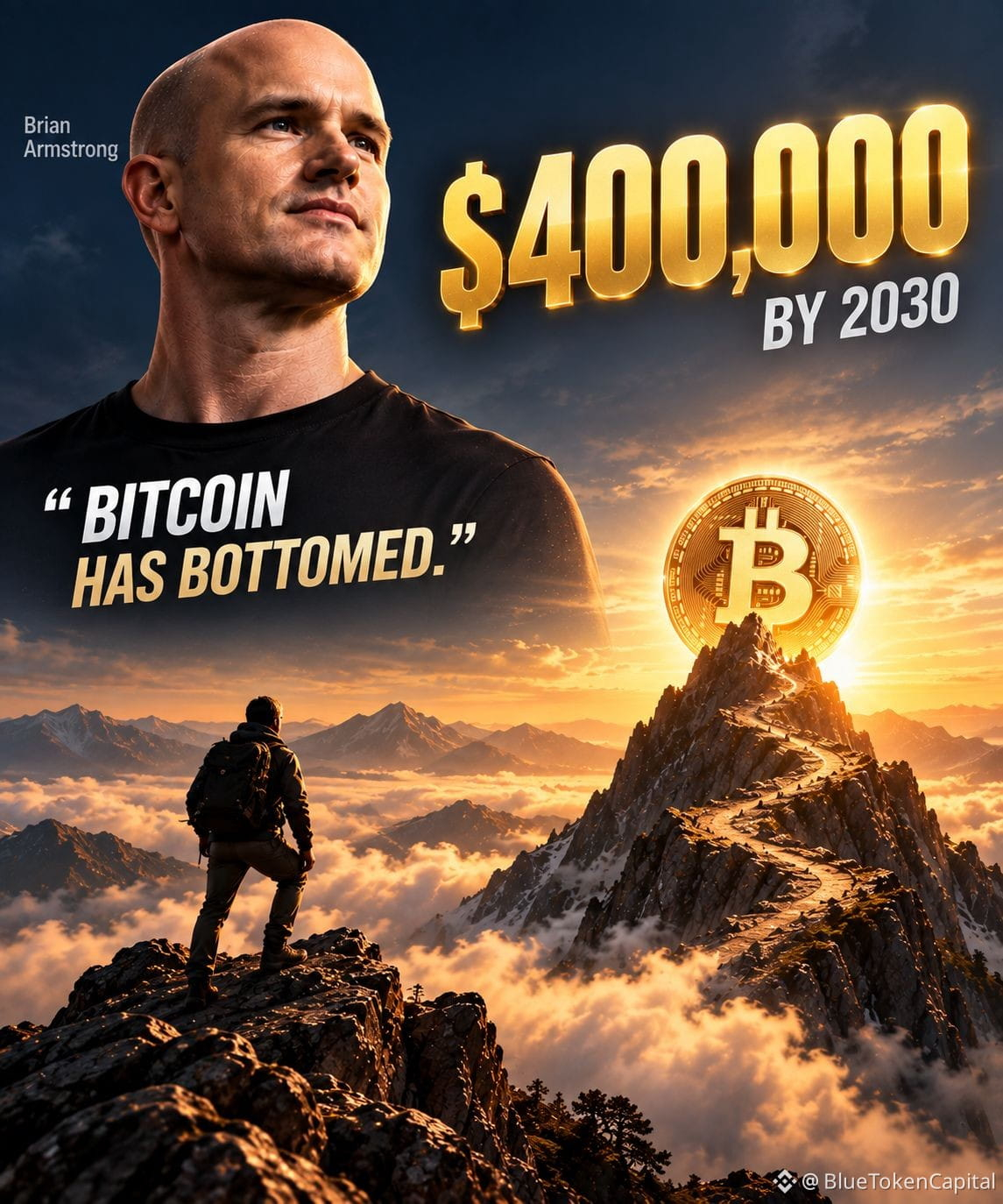
🚨 BRIAN ARMSTRONG: DID BTC CREATE A BOTTOM?
Brian Armstrong believes Bitcoin has created the cycle’s bottom.
🎯 Goal: $400K/BTC by 2030.
From ~$78K → $400K = more than 5X. 👀
⚠️ This is a forecast, not confirmation of the bottom.
🔥 IS $400K ACTUALLY REAL?
Follow to not miss the big narrative. 🔎
🚨 BRIAN ARMSTRONG: DID BTC CREATE A BOTTOM?
Brian Armstrong believes Bitcoin has created the cycle’s bottom.
🎯 Goal: $400K/BTC by 2030.
From ~$78K → $400K = more than 5X. 👀
⚠️ This is a forecast, not confirmation of the bottom.
🔥 IS $400K ACTUALLY REAL?
Follow to not miss the big narrative. 🔎
Brian Armstrong believes Bitcoin has created the cycle’s bottom.
🎯 Goal: $400K/BTC by 2030.
From ~$78K → $400K = more than 5X. 👀
⚠️ This is a forecast, not confirmation of the bottom.
🔥 IS $400K ACTUALLY REAL?
Follow to not miss the big narrative. 🔎
My Futures Portfolio
4 / 200
Minimum 10USDT
7D PNL
53.91
USDT
7D ROI
+7.55%
AUM
$828.00
Win Rate
84.00%
1
299
🚨 CRYPTO CAN’T HIDE ANYWHERE ANYMORE
$52 million in crypto was confiscated by the U.S. in just 1 day.
The Xinbi Guarantee case has brought the total assets frozen to about $938 million.
What’s noteworthy isn’t just the numbers.
Blockchain is turning transaction footprints into evidence.
Wallet → transaction → money flow → cash-out point — all of it can be traced.
When on-chain analysis is combined with KYC and coordination between stablecoin issuers and law enforcement agencies, using crypto to conceal illegal money is becoming increasingly difficult.
Crypto is no longer an easy place to hide.
Blockchain is making criminals… no longer have a place to hide. 🔎
🚨 CRYPTO CAN’T HIDE ANYWHERE ANYMORE
$52 million in crypto was confiscated by the U.S. in just 1 day.
The Xinbi Guarantee case has brought the total assets frozen to about $938 million.
What’s noteworthy isn’t just the numbers.
Blockchain is turning transaction footprints into evidence.
Wallet → transaction → money flow → cash-out point — all of it can be traced.
When on-chain analysis is combined with KYC and coordination between stablecoin issuers and law enforcement agencies, using crypto to conceal illegal money is becoming increasingly difficult.
Crypto is no longer an easy place to hide.
Blockchain is making criminals… no longer have a place to hide. 🔎
$52 million in crypto was confiscated by the U.S. in just 1 day.
The Xinbi Guarantee case has brought the total assets frozen to about $938 million.
What’s noteworthy isn’t just the numbers.
Blockchain is turning transaction footprints into evidence.
Wallet → transaction → money flow → cash-out point — all of it can be traced.
When on-chain analysis is combined with KYC and coordination between stablecoin issuers and law enforcement agencies, using crypto to conceal illegal money is becoming increasingly difficult.
Crypto is no longer an easy place to hide.
Blockchain is making criminals… no longer have a place to hide. 🔎
4
2.5k
🔥 A MEMECOIN CRASHED 99% — NOW THE TEAM IS ADDING LIQUIDITY.
This is a “rescue operation” — or just prolonging the lifespan of a celebrity token? 👀
Watch next: How much liquidity 4M tokens can actually generate, whether the $LAPTOP price can hold after incentives begin, and whether the founder allocation will continue to remain unchanged.
🔥 A MEMECOIN CRASHED 99% — NOW THE TEAM IS ADDING LIQUIDITY.
This is a “rescue operation” — or just prolonging the lifespan of a celebrity token? 👀
Watch next: How much liquidity 4M tokens can actually generate, whether the $LAPTOP price can hold after incentives begin, and whether the founder allocation will continue to remain unchanged.
This is a “rescue operation” — or just prolonging the lifespan of a celebrity token? 👀
Watch next: How much liquidity 4M tokens can actually generate, whether the $LAPTOP price can hold after incentives begin, and whether the founder allocation will continue to remain unchanged.
1
77
·
--
Bullish
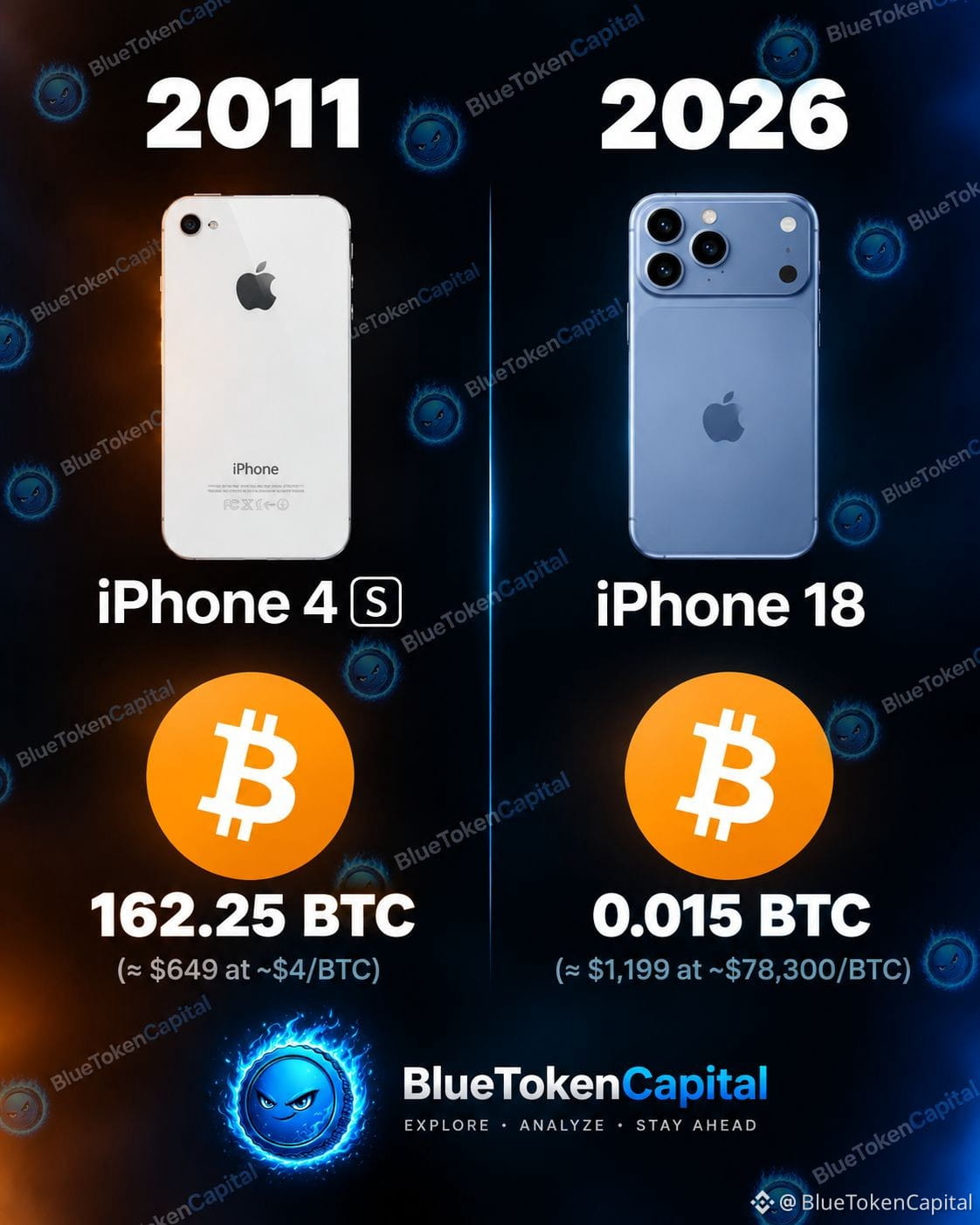
₿ 2011 → 2026: THIS IS THE TRUE POWER OF BITCOIN
In 2011, the iPhone 4S was priced at $649.
Back then, BTC was around $4.
→ 1 iPhone ≈ 162.25 BTC.
Today, the iPhone 18 Pro starts at $1,199.
BTC is hovering around $78.3K.
→ 1 iPhone ≈ 0.0153 BTC.
162 BTC → 0.015 BTC.
It’s the same iPhone.
But the amount of BTC needed to buy it has dropped by about 99.99%.
Bitcoin doesn’t need words to prove it.
Just look at how it has repriced fiat money. 🧨
Follow if you want to dig deeper into facts that the market often overlooks.
₿ 2011 → 2026: THIS IS THE TRUE POWER OF BITCOIN
In 2011, the iPhone 4S was priced at $649.
Back then, BTC was around $4.
→ 1 iPhone ≈ 162.25 BTC.
Today, the iPhone 18 Pro starts at $1,199.
BTC is hovering around $78.3K.
→ 1 iPhone ≈ 0.0153 BTC.
162 BTC → 0.015 BTC.
It’s the same iPhone.
But the amount of BTC needed to buy it has dropped by about 99.99%.
Bitcoin doesn’t need words to prove it.
Just look at how it has repriced fiat money. 🧨
Follow if you want to dig deeper into facts that the market often overlooks.
In 2011, the iPhone 4S was priced at $649.
Back then, BTC was around $4.
→ 1 iPhone ≈ 162.25 BTC.
Today, the iPhone 18 Pro starts at $1,199.
BTC is hovering around $78.3K.
→ 1 iPhone ≈ 0.0153 BTC.
162 BTC → 0.015 BTC.
It’s the same iPhone.
But the amount of BTC needed to buy it has dropped by about 99.99%.
Bitcoin doesn’t need words to prove it.
Just look at how it has repriced fiat money. 🧨
Follow if you want to dig deeper into facts that the market often overlooks.
My Futures Portfolio
4 / 200
Minimum 10USDT
7D PNL
53.91
USDT
7D ROI
+7.55%
AUM
$828.00
Win Rate
84.00%
1
2
388
·
--
Bearish
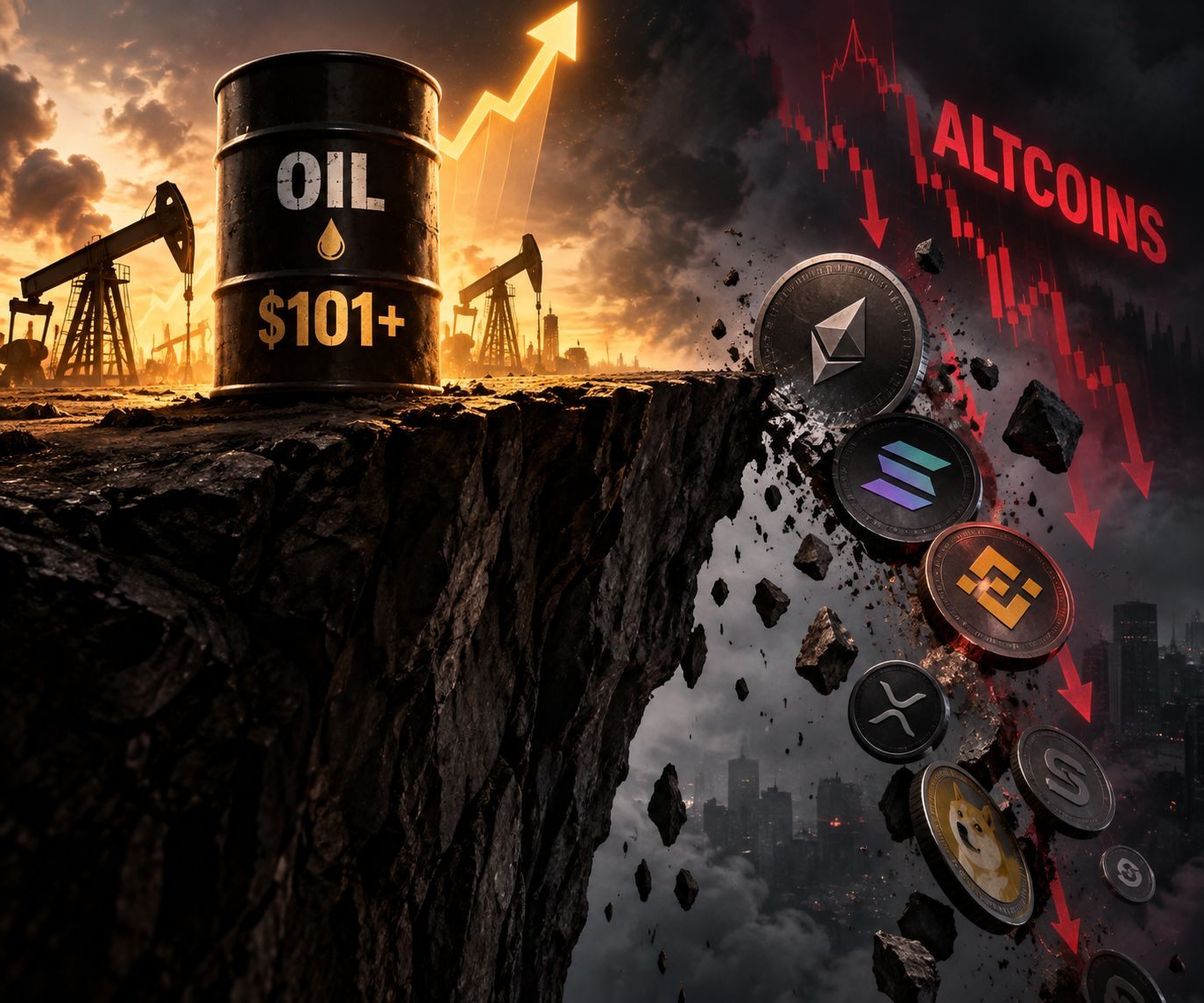
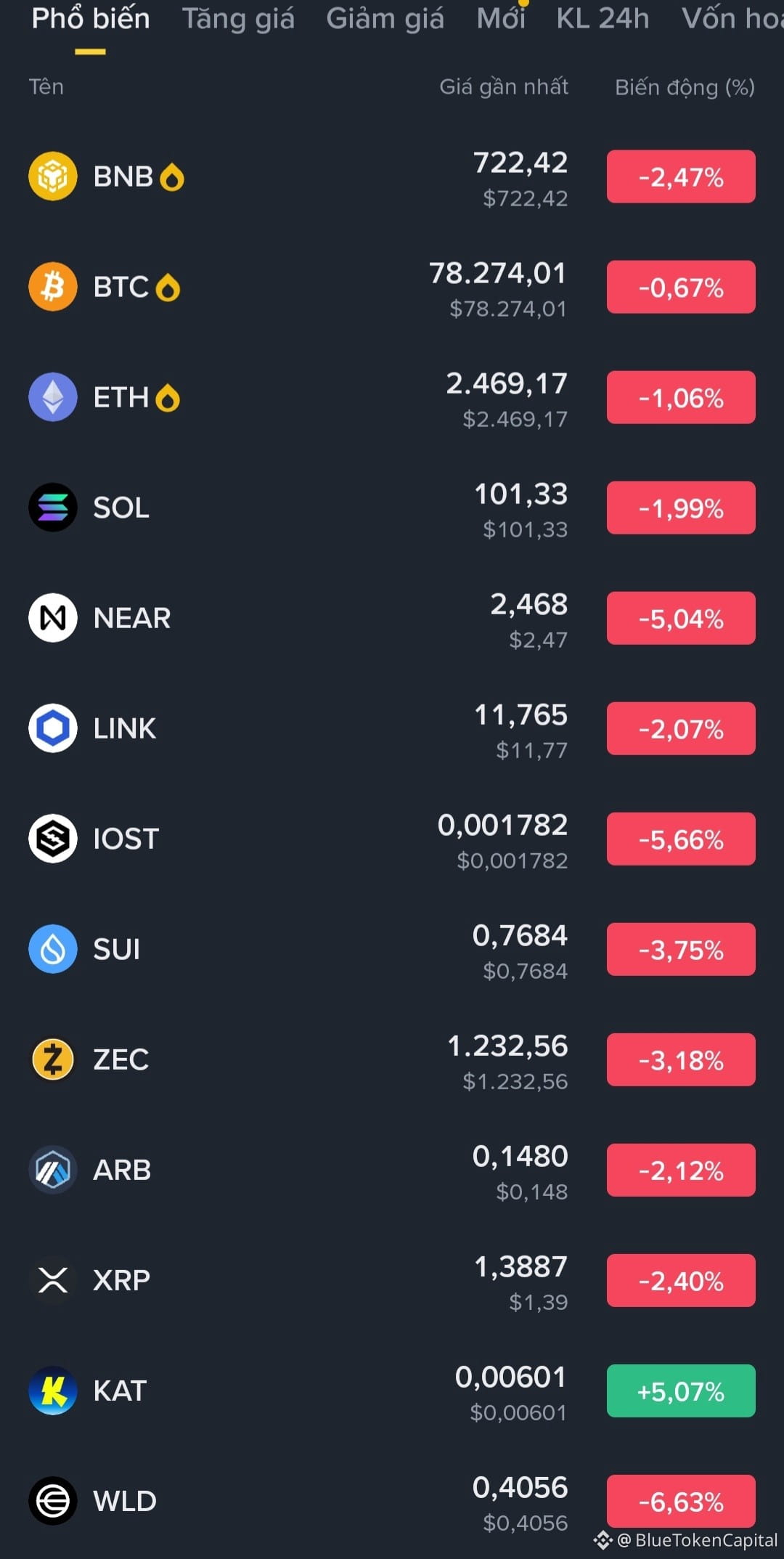
☠️ BTC $78.5K. OIL $101.8.
DON’T FALL ASLEEP.
Brent has just broken above $100 as the conflict in the Middle East escalates.
And tomorrow is US CPI.
Dangerous combo:
WAR → OIL ↑ → CPI ↑ → YIELDS ↑ → FED HAWKISH → LIQUIDITY ↓ → BTC ↓
BTC not dumping doesn’t mean the risk is gone.
It may only mean:
THE MARKET HASN’T PRICED IN THE SHOCK.
If Brent keeps running:
$105 → $110 → $120
then altcoins could be the first place to get crushed. ☠️
Don’t look at BTC.
Look at OIL.
Follow to see the macro before it shows up on the chart.
☠️ BTC $78.5K. OIL $101.8.
DON’T FALL ASLEEP.
Brent has just broken above $100 as the conflict in the Middle East escalates.
And tomorrow is US CPI.
Dangerous combo:
WAR → OIL ↑ → CPI ↑ → YIELDS ↑ → FED HAWKISH → LIQUIDITY ↓ → BTC ↓
BTC not dumping doesn’t mean the risk is gone.
It may only mean:
THE MARKET HASN’T PRICED IN THE SHOCK.
If Brent keeps running:
$105 → $110 → $120
then altcoins could be the first place to get crushed. ☠️
Don’t look at BTC.
Look at OIL.
Follow to see the macro before it shows up on the chart.
DON’T FALL ASLEEP.
Brent has just broken above $100 as the conflict in the Middle East escalates.
And tomorrow is US CPI.
Dangerous combo:
WAR → OIL ↑ → CPI ↑ → YIELDS ↑ → FED HAWKISH → LIQUIDITY ↓ → BTC ↓
BTC not dumping doesn’t mean the risk is gone.
It may only mean:
THE MARKET HASN’T PRICED IN THE SHOCK.
If Brent keeps running:
$105 → $110 → $120
then altcoins could be the first place to get crushed. ☠️
Don’t look at BTC.
Look at OIL.
Follow to see the macro before it shows up on the chart.
2
642
Request to always award the top 1 prize to PNL. Such a huge volume—who could possibly compete with that? #Copytrading
Request to always award the top 1 prize to PNL. Such a huge volume—who could possibly compete with that? #Copytrading
Spin-zk
·
--
A lot of people ask why I’m not taking profit.
1. I still have another $400K to deploy, which can push my liquidation price down to $300+. The market can beat me up as much as it wants.
2. I’ve been holding and trading crypto for 7.5 years.
3. ICOs in 2017, Uniswap token, sol meme, nft, Luna… I’ve been through every major wave so far
1. I still have another $400K to deploy, which can push my liquidation price down to $300+. The market can beat me up as much as it wants.
2. I’ve been holding and trading crypto for 7.5 years.
3. ICOs in 2017, Uniswap token, sol meme, nft, Luna… I’ve been through every major wave so far
92
·
--
Bullish
AMAZON × QUALCOMM: AI ALLIANCE IS FORMING. ⚠️
Amazon AWS + Qualcomm are joining forces to build next-gen AI chips — with potential purchases reaching $60B.
But look at the bigger picture:
Amazon. Meta. Microsoft. HUMAIN.
Qualcomm is building an AI infrastructure coalition.
The target?
Challenge Nvidia’s grip on AI compute.
GPU dominance is one battlefield.
Custom silicon + AI inference economics could be the next.
This isn’t just a chip deal.
It’s an alliance forming. 🔥
Follow for more signals behind the AI & infrastructure war.
AMAZON × QUALCOMM: AI ALLIANCE IS FORMING. ⚠️
Amazon AWS + Qualcomm are joining forces to build next-gen AI chips — with potential purchases reaching $60B.
But look at the bigger picture:
Amazon. Meta. Microsoft. HUMAIN.
Qualcomm is building an AI infrastructure coalition.
The target?
Challenge Nvidia’s grip on AI compute.
GPU dominance is one battlefield.
Custom silicon + AI inference economics could be the next.
This isn’t just a chip deal.
It’s an alliance forming. 🔥
Follow for more signals behind the AI & infrastructure war.
Amazon AWS + Qualcomm are joining forces to build next-gen AI chips — with potential purchases reaching $60B.
But look at the bigger picture:
Amazon. Meta. Microsoft. HUMAIN.
Qualcomm is building an AI infrastructure coalition.
The target?
Challenge Nvidia’s grip on AI compute.
GPU dominance is one battlefield.
Custom silicon + AI inference economics could be the next.
This isn’t just a chip deal.
It’s an alliance forming. 🔥
Follow for more signals behind the AI & infrastructure war.

2
2
257
·
--
Bearish
Holding $BNB 4.4K USDT
Thank you so much Binance Vietnam for always creating fun and beneficial playgrounds for Vietnamese brothers and sisters 🇻🇳🔥
Not only are there events to connect and mingle, but it also brings back a lot of exciting prizes for the community. 🏆💰
Hope Binance Vietnam will continue to have more tournaments and high-quality events for us to join! ❤️💛
See you at the next event! 🚀
$BNB @Binance_Vietnam
$BTC $DUSK
Thank you so much Binance Vietnam for always creating fun and beneficial playgrounds for Vietnamese brothers and sisters 🇻🇳🔥
Not only are there events to connect and mingle, but it also brings back a lot of exciting prizes for the community. 🏆💰
Hope Binance Vietnam will continue to have more tournaments and high-quality events for us to join! ❤️💛
See you at the next event! 🚀
$BNB @Binance Vietnam
$BTC $DUSK
Not only are there events to connect and mingle, but it also brings back a lot of exciting prizes for the community. 🏆💰
Hope Binance Vietnam will continue to have more tournaments and high-quality events for us to join! ❤️💛
See you at the next event! 🚀
$BNB @Binance Vietnam
$BTC $DUSK

1
3
990
·
--
Bearish
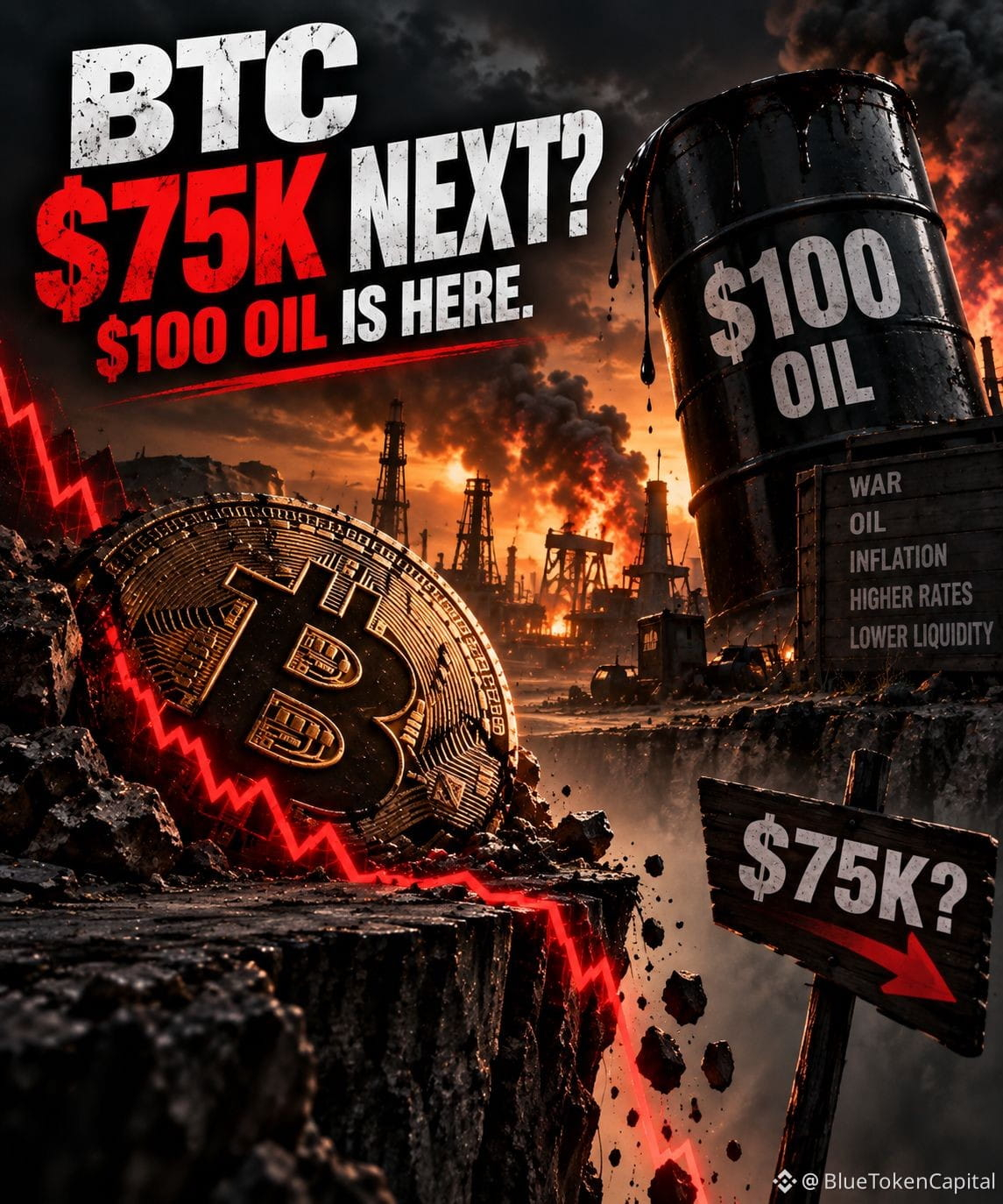
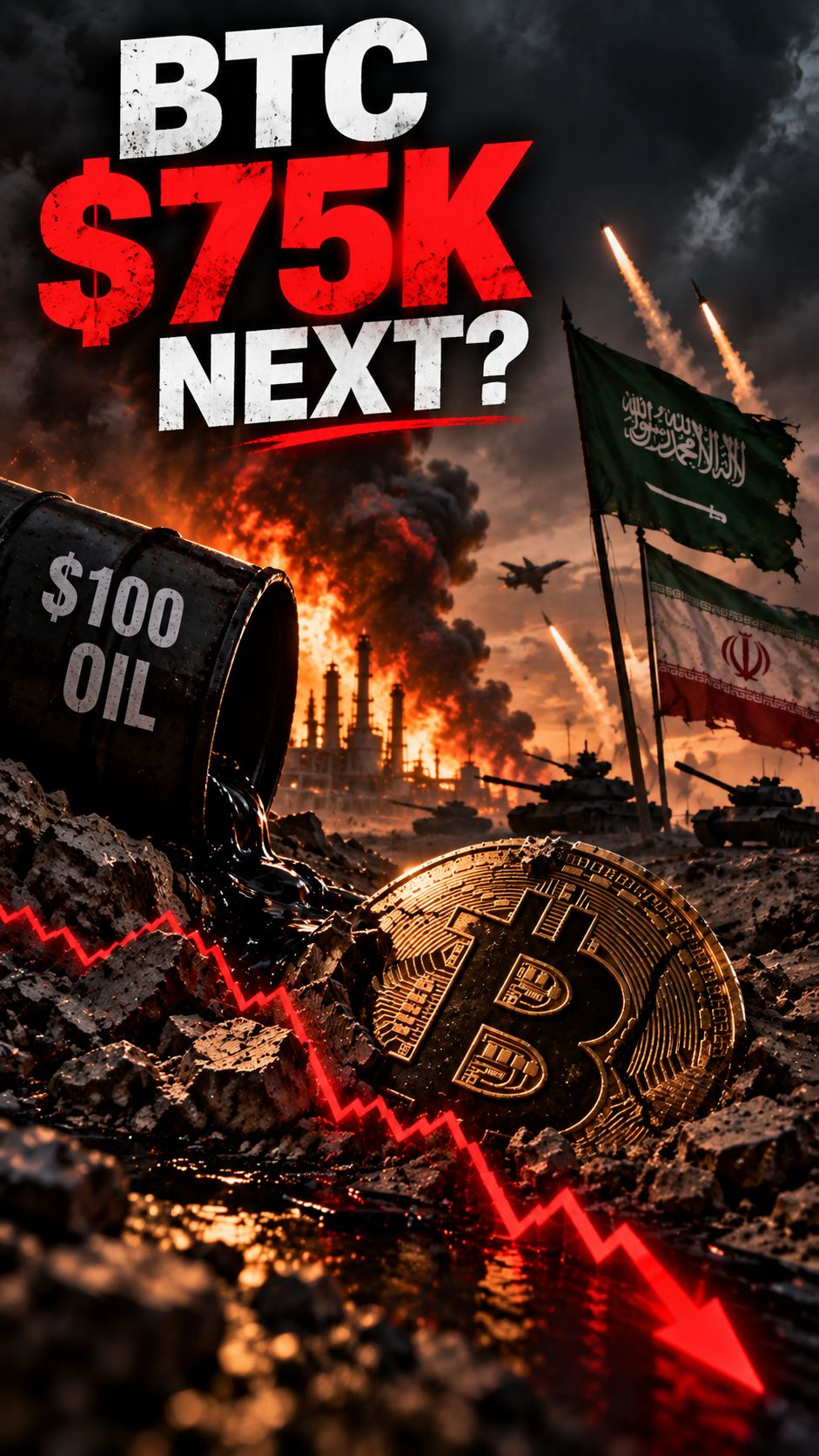
☠️ BTC $75K NEXT? $100 OIL IS HERE.
Brent just broke above $100.
And BTC?
Around $79K — still struggling to reclaim $80K.
The macro setup is getting ugly:
🛢️ Oil ↑
🔥 War escalates
📈 Inflation risk ↑
🏦 Fed stays hawkish
💧 Liquidity ↓
₿️ BTC gets squeezed
BTC is holding for now.
But if oil stays above $100 and macro pressure intensifies…
$75K could come FAST. 🐻
Temporary fear — or the start of a deeper BTC correction?
WHERE DO YOU THINK BTC BOTTOMS? 👇
Follow for real-time BTC, macro & on-chain signals.
Don’t chase narratives. Dig into the infrastructure. 🔎
Crypto • Macro • On-chain Markets
☠️ BTC $75K NEXT? $100 OIL IS HERE.
Brent just broke above $100.
And BTC?
Around $79K — still struggling to reclaim $80K.
The macro setup is getting ugly:
🛢️ Oil ↑
🔥 War escalates
📈 Inflation risk ↑
🏦 Fed stays hawkish
💧 Liquidity ↓
₿️ BTC gets squeezed
BTC is holding for now.
But if oil stays above $100 and macro pressure intensifies…
$75K could come FAST. 🐻
Temporary fear — or the start of a deeper BTC correction?
WHERE DO YOU THINK BTC BOTTOMS? 👇
Follow for real-time BTC, macro & on-chain signals.
Don’t chase narratives. Dig into the infrastructure. 🔎
Crypto • Macro • On-chain Markets
Brent just broke above $100.
And BTC?
Around $79K — still struggling to reclaim $80K.
The macro setup is getting ugly:
🛢️ Oil ↑
🔥 War escalates
📈 Inflation risk ↑
🏦 Fed stays hawkish
💧 Liquidity ↓
₿️ BTC gets squeezed
BTC is holding for now.
But if oil stays above $100 and macro pressure intensifies…
$75K could come FAST. 🐻
Temporary fear — or the start of a deeper BTC correction?
WHERE DO YOU THINK BTC BOTTOMS? 👇
Follow for real-time BTC, macro & on-chain signals.
Don’t chase narratives. Dig into the infrastructure. 🔎
Crypto • Macro • On-chain Markets
1
320
·
--
Bullish
Verified
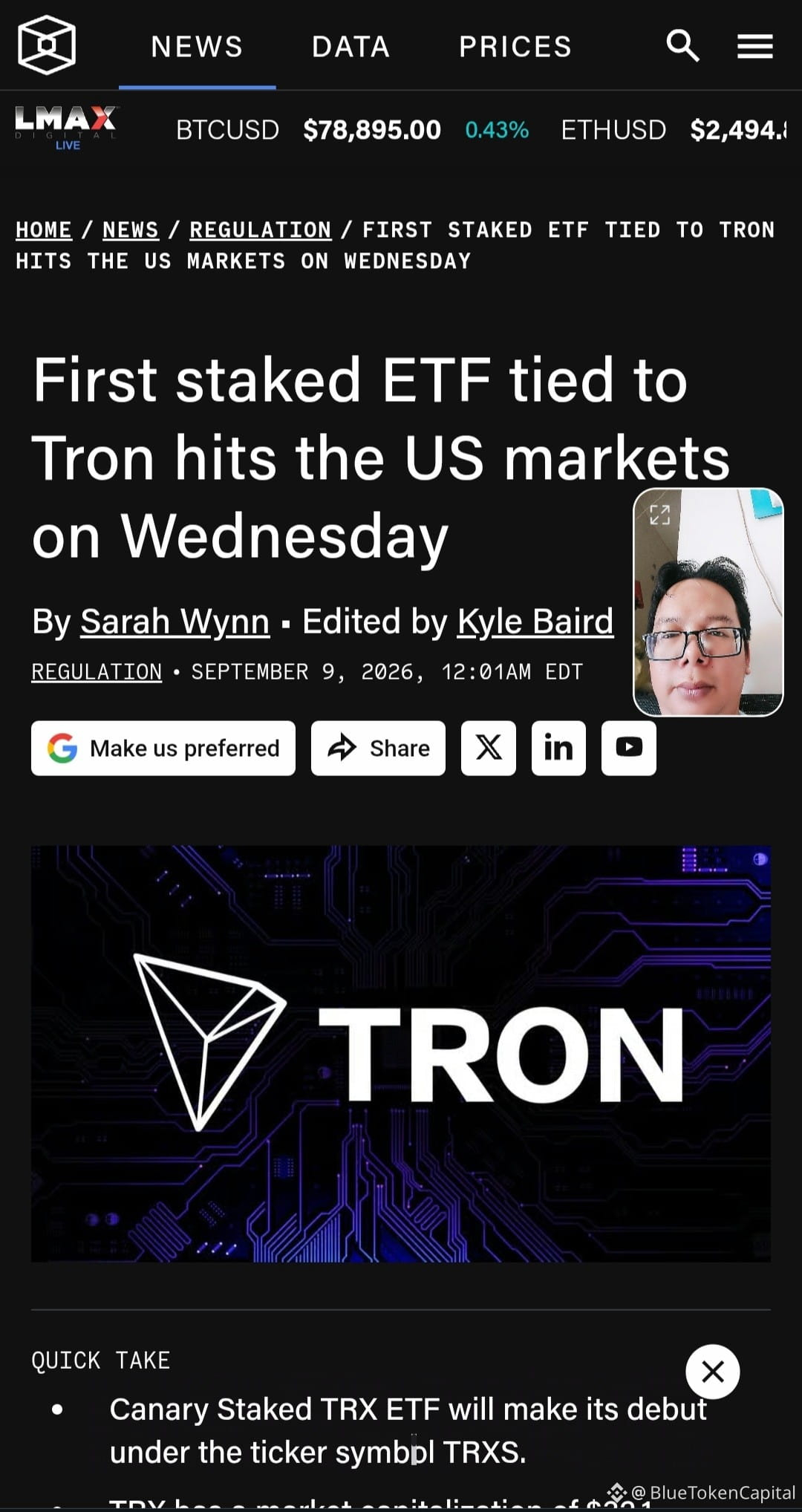
🚨 TRON JUST OPENED A “DOOR” TO WALL STREET 🇺🇸
Today, the Canary Staked TRX ETF officially enters the U.S. market with ticker **$TRXS** on Cboe BZX.
And this is not a normal TRX ETF.
🔥 The fund is expected to stake at least **90% of its TRX**
💰 Staking rewards will be reflected in the NAV
🏦 U.S. investors can access TRX through traditional brokerage accounts
Justin Sun calls this a major step bringing TRON closer to the traditional financial system.
But the most interesting thing right now isn’t the headline.
**IT’S THE FLOW OF MONEY.** 👀
If TRXS starts pulling in strong capital → the ETF must buy TRX → spot demand could rise.
What if the capital flow is weak?
Maybe the market has already “bought the rumor” ahead of launch.
🔥 **TRX ETF JUST OPENED THE DOOR TO WALL STREET.
WILL THE MONEY ACTUALLY COME IN?**
Are you bullish on TRX after this ETF — or “sell the news”? 👇
Source: The Block, Binance News. 0
Follow so you don’t miss the real money behind the headline.
🚨 TRON JUST OPENED A “DOOR” TO WALL STREET 🇺🇸
Today, the Canary Staked TRX ETF officially enters the U.S. market with ticker **$TRXS** on Cboe BZX.
And this is not a normal TRX ETF.
🔥 The fund is expected to stake at least **90% of its TRX**
💰 Staking rewards will be reflected in the NAV
🏦 U.S. investors can access TRX through traditional brokerage accounts
Justin Sun calls this a major step bringing TRON closer to the traditional financial system.
But the most interesting thing right now isn’t the headline.
**IT’S THE FLOW OF MONEY.** 👀
If TRXS starts pulling in strong capital → the ETF must buy TRX → spot demand could rise.
What if the capital flow is weak?
Maybe the market has already “bought the rumor” ahead of launch.
🔥 **TRX ETF JUST OPENED THE DOOR TO WALL STREET.
WILL THE MONEY ACTUALLY COME IN?**
Are you bullish on TRX after this ETF — or “sell the news”? 👇
Source: The Block, Binance News. 0
Follow so you don’t miss the real money behind the headline.
Today, the Canary Staked TRX ETF officially enters the U.S. market with ticker **$TRXS** on Cboe BZX.
And this is not a normal TRX ETF.
🔥 The fund is expected to stake at least **90% of its TRX**
💰 Staking rewards will be reflected in the NAV
🏦 U.S. investors can access TRX through traditional brokerage accounts
Justin Sun calls this a major step bringing TRON closer to the traditional financial system.
But the most interesting thing right now isn’t the headline.
**IT’S THE FLOW OF MONEY.** 👀
If TRXS starts pulling in strong capital → the ETF must buy TRX → spot demand could rise.
What if the capital flow is weak?
Maybe the market has already “bought the rumor” ahead of launch.
🔥 **TRX ETF JUST OPENED THE DOOR TO WALL STREET.
WILL THE MONEY ACTUALLY COME IN?**
Are you bullish on TRX after this ETF — or “sell the news”? 👇
Source: The Block, Binance News. 0
Follow so you don’t miss the real money behind the headline.
4
600
·
--
Bullish
🇯🇵 JAPAN IS STARTING TO “TIE UP” CARRY TRADE
The yen is strengthening at the exact moment the market is betting that the BOJ will keep raising interest rates.
And here’s the real issue:
Cheap JPY borrowing → buy risk assets → JPY rises → the carry trade begins to unwind.
Once positions get closed: JPY ↑ → leverage ↓ → liquidity ↓ → risk assets come under pressure.
Crypto is especially sensitive to this kind of pivot.
This doesn’t mean BTC is going to crash. But if the yen keeps rising + the BOJ stays hawkish + carry unwind accelerates, this could be a notable liquidity squeeze.
Don’t just look at BTC.
Look at USD/JPY. 👀🇯🇵
Don’t chase the narrative. Dig down to the infrastructure. 🔎
Crypto • Macro • On-chain Markets
$BTC $BNB $ZEC
🇯🇵 JAPAN IS STARTING TO “TIE UP” CARRY TRADE
The yen is strengthening at the exact moment the market is betting that the BOJ will keep raising interest rates.
And here’s the real issue:
Cheap JPY borrowing → buy risk assets → JPY rises → the carry trade begins to unwind.
Once positions get closed: JPY ↑ → leverage ↓ → liquidity ↓ → risk assets come under pressure.
Crypto is especially sensitive to this kind of pivot.
This doesn’t mean BTC is going to crash. But if the yen keeps rising + the BOJ stays hawkish + carry unwind accelerates, this could be a notable liquidity squeeze.
Don’t just look at BTC.
Look at USD/JPY. 👀🇯🇵
Don’t chase the narrative. Dig down to the infrastructure. 🔎
Crypto • Macro • On-chain Markets
$BTC $BNB $ZEC
The yen is strengthening at the exact moment the market is betting that the BOJ will keep raising interest rates.
And here’s the real issue:
Cheap JPY borrowing → buy risk assets → JPY rises → the carry trade begins to unwind.
Once positions get closed: JPY ↑ → leverage ↓ → liquidity ↓ → risk assets come under pressure.
Crypto is especially sensitive to this kind of pivot.
This doesn’t mean BTC is going to crash. But if the yen keeps rising + the BOJ stays hawkish + carry unwind accelerates, this could be a notable liquidity squeeze.
Don’t just look at BTC.
Look at USD/JPY. 👀🇯🇵
Don’t chase the narrative. Dig down to the infrastructure. 🔎
Crypto • Macro • On-chain Markets
$BTC $BNB $ZEC

1
626
·
--
Bullish
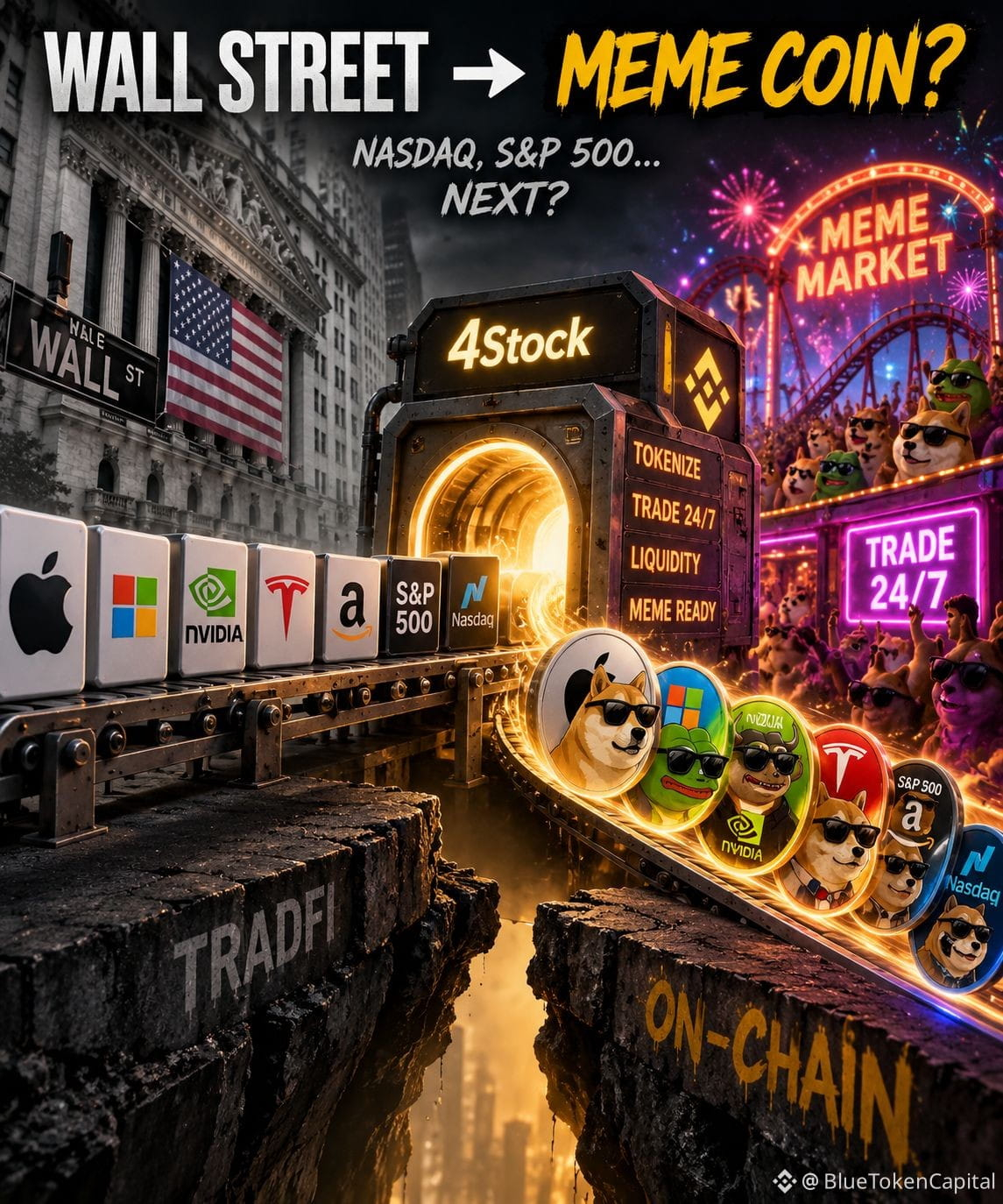
Nasdaq, S&P 500… about to become a meme on BNB Chain? 👀
Sounds insane, but 4Stock is opening the right door to exactly that.
BNC4 is the first experiment: take a U.S. stock on-chain, turn it into an asset that can be traded 24/7, and use it as the foundation for Stock Memes.
What’s notable here:
Stock → 4Stock → Meme → DEX
If this model scales, imagine stocks from Nasdaq or the S&P 500 becoming “raw material” for the meme market.
🔥 Strengths
TradFi brought into the crypto world:
• On-chain trading
• 24/7
• Composable with DeFi
• Arbitrage between the token and the underlying
• Opens a brand-new speculation market
⚠️ Weaknesses
This is also a double-edged sword.
Thin liquidity can send the token price far away from the underlying. When FOMO fades, the premium could evaporate extremely fast.
Especially:
Stocks have market close hours. Crypto doesn’t.
That gap can create extremely large price dislocations.
So the question isn’t:
“How much does 4Stock go up by X?”
But:
> Is 4Stock tokenizing TradFi… or meme-coin-ing all of TradFi?
If they can solve liquidity + price discovery, this could be a very noteworthy primitive.
If not, it’s just a FOMO rush wearing a Wall Street costume.
Don’t chase narratives. Dig into the infrastructure. 🔎
Crypto • Macro • On-chain Markets
Nasdaq, S&P 500… about to become a meme on BNB Chain? 👀
Sounds insane, but 4Stock is opening the right door to exactly that.
BNC4 is the first experiment: take a U.S. stock on-chain, turn it into an asset that can be traded 24/7, and use it as the foundation for Stock Memes.
What’s notable here:
Stock → 4Stock → Meme → DEX
If this model scales, imagine stocks from Nasdaq or the S&P 500 becoming “raw material” for the meme market.
🔥 Strengths
TradFi brought into the crypto world:
• On-chain trading
• 24/7
• Composable with DeFi
• Arbitrage between the token and the underlying
• Opens a brand-new speculation market
⚠️ Weaknesses
This is also a double-edged sword.
Thin liquidity can send the token price far away from the underlying. When FOMO fades, the premium could evaporate extremely fast.
Especially:
Stocks have market close hours. Crypto doesn’t.
That gap can create extremely large price dislocations.
So the question isn’t:
“How much does 4Stock go up by X?”
But:
> Is 4Stock tokenizing TradFi… or meme-coin-ing all of TradFi?
If they can solve liquidity + price discovery, this could be a very noteworthy primitive.
If not, it’s just a FOMO rush wearing a Wall Street costume.
Don’t chase narratives. Dig into the infrastructure. 🔎
Crypto • Macro • On-chain Markets
Sounds insane, but 4Stock is opening the right door to exactly that.
BNC4 is the first experiment: take a U.S. stock on-chain, turn it into an asset that can be traded 24/7, and use it as the foundation for Stock Memes.
What’s notable here:
Stock → 4Stock → Meme → DEX
If this model scales, imagine stocks from Nasdaq or the S&P 500 becoming “raw material” for the meme market.
🔥 Strengths
TradFi brought into the crypto world:
• On-chain trading
• 24/7
• Composable with DeFi
• Arbitrage between the token and the underlying
• Opens a brand-new speculation market
⚠️ Weaknesses
This is also a double-edged sword.
Thin liquidity can send the token price far away from the underlying. When FOMO fades, the premium could evaporate extremely fast.
Especially:
Stocks have market close hours. Crypto doesn’t.
That gap can create extremely large price dislocations.
So the question isn’t:
“How much does 4Stock go up by X?”
But:
> Is 4Stock tokenizing TradFi… or meme-coin-ing all of TradFi?
If they can solve liquidity + price discovery, this could be a very noteworthy primitive.
If not, it’s just a FOMO rush wearing a Wall Street costume.
Don’t chase narratives. Dig into the infrastructure. 🔎
Crypto • Macro • On-chain Markets
2
324
🎙️ Just $10 to make profit from copy trading
End
02 h 33 m 57 s
446
1
0
☠️ BTC IS WALKING INTO A MACRO NIGHTMARE.
Saudi Arabia just vowed to RETALIATE after Houthi attacks hit energy facilities.
73 people injured.
Energy operations disrupted.
Brent: $99.46.
And BTC?
Still fighting below $80K.
The setup is brutal:
WAR → OIL $100+ → INFLATION ↑ → FED HAWKISH → LIQUIDITY ↓ → BTC ↓
Bulls keep calling $80K “support.”
But what if it’s actually EXIT LIQUIDITY? 👀
If this conflict spreads and oil breaks $100…
Does BTC see $75K next? 🐻
Follow me for real-time BTC, macro & on-chain signals.
Don’t chase narratives. Dig into the infrastructure. 🔎
Crypto • Macro • On-chain Markets
☠️ BTC IS WALKING INTO A MACRO NIGHTMARE.
Saudi Arabia just vowed to RETALIATE after Houthi attacks hit energy facilities.
73 people injured.
Energy operations disrupted.
Brent: $99.46.
And BTC?
Still fighting below $80K.
The setup is brutal:
WAR → OIL $100+ → INFLATION ↑ → FED HAWKISH → LIQUIDITY ↓ → BTC ↓
Bulls keep calling $80K “support.”
But what if it’s actually EXIT LIQUIDITY? 👀
If this conflict spreads and oil breaks $100…
Does BTC see $75K next? 🐻
Follow me for real-time BTC, macro & on-chain signals.
Don’t chase narratives. Dig into the infrastructure. 🔎
Crypto • Macro • On-chain Markets
Saudi Arabia just vowed to RETALIATE after Houthi attacks hit energy facilities.
73 people injured.
Energy operations disrupted.
Brent: $99.46.
And BTC?
Still fighting below $80K.
The setup is brutal:
WAR → OIL $100+ → INFLATION ↑ → FED HAWKISH → LIQUIDITY ↓ → BTC ↓
Bulls keep calling $80K “support.”
But what if it’s actually EXIT LIQUIDITY? 👀
If this conflict spreads and oil breaks $100…
Does BTC see $75K next? 🐻
Follow me for real-time BTC, macro & on-chain signals.
Don’t chase narratives. Dig into the infrastructure. 🔎
Crypto • Macro • On-chain Markets
1
164
·
--
Bullish
🚨 THE $320M BTC NIGHTMARE JUST FLIPPED.
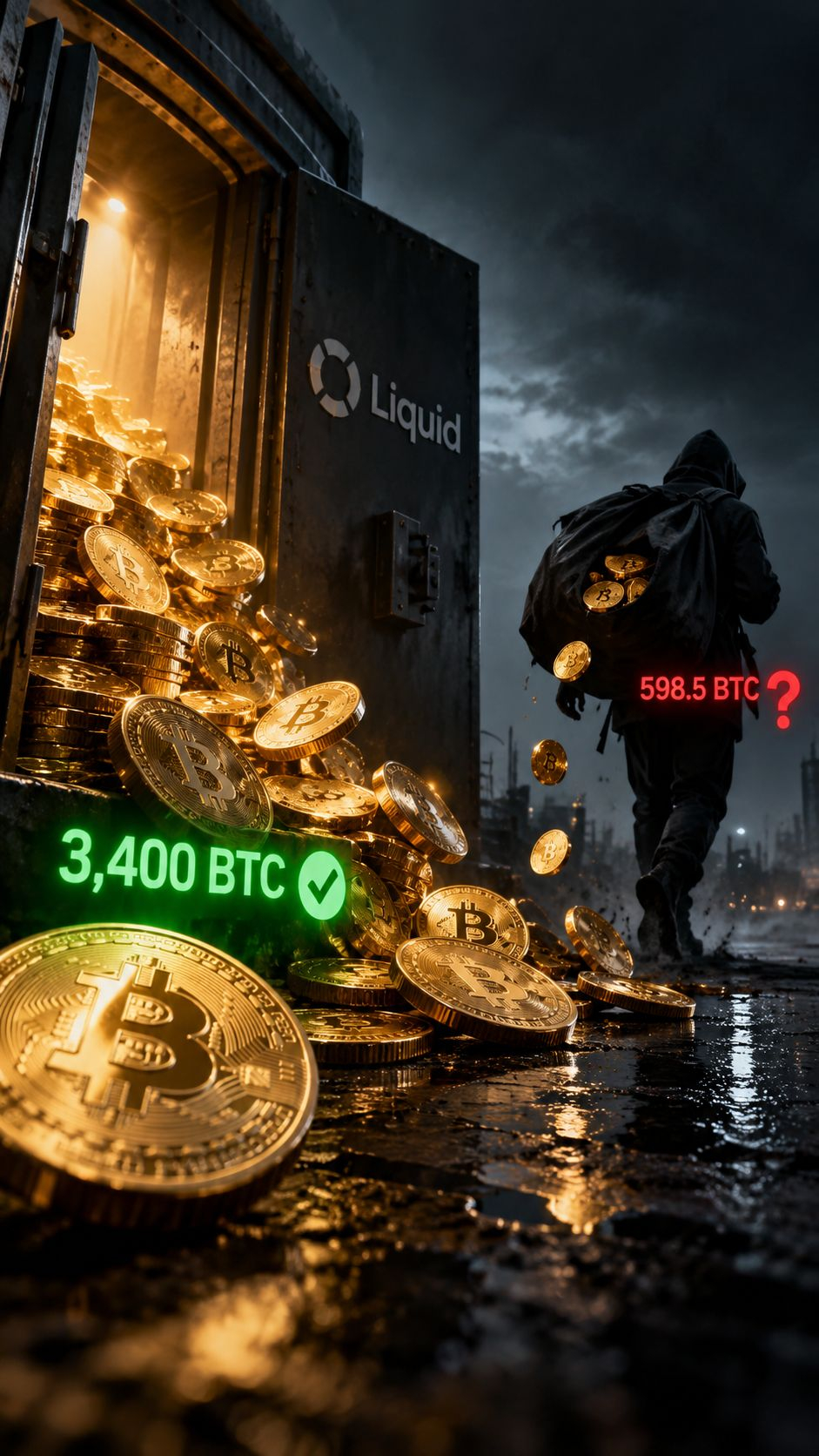
3,400 BTC is BACK. 👀
That’s roughly 85% of the BTC withdrawn from Liquid after the security incident.
But here’s the part nobody should ignore:
598.5 BTC is STILL OUT.
≈ $47M at current prices.
The vulnerability was patched.
Bitcoin mainnet was NOT hacked.
But until those remaining coins are dealt with, the story isn’t completely over.
And if that BTC ever hits the market…
💀 WHO BECOMES THE EXIT LIQUIDITY?
BTC is fighting to hold $80K.
Bullish recovery — or the calm before another dump? 🐻
Follow for more BTC, macro & on-chain signals.
🚨 THE $320M BTC NIGHTMARE JUST FLIPPED.
3,400 BTC is BACK. 👀
That’s roughly 85% of the BTC withdrawn from Liquid after the security incident.
But here’s the part nobody should ignore:
598.5 BTC is STILL OUT.
≈ $47M at current prices.
The vulnerability was patched.
Bitcoin mainnet was NOT hacked.
But until those remaining coins are dealt with, the story isn’t completely over.
And if that BTC ever hits the market…
💀 WHO BECOMES THE EXIT LIQUIDITY?
BTC is fighting to hold $80K.
Bullish recovery — or the calm before another dump? 🐻
Follow for more BTC, macro & on-chain signals.
3,400 BTC is BACK. 👀
That’s roughly 85% of the BTC withdrawn from Liquid after the security incident.
But here’s the part nobody should ignore:
598.5 BTC is STILL OUT.
≈ $47M at current prices.
The vulnerability was patched.
Bitcoin mainnet was NOT hacked.
But until those remaining coins are dealt with, the story isn’t completely over.
And if that BTC ever hits the market…
💀 WHO BECOMES THE EXIT LIQUIDITY?
BTC is fighting to hold $80K.
Bullish recovery — or the calm before another dump? 🐻
Follow for more BTC, macro & on-chain signals.
2
1.2k
·
--
Bullish
🚨 CZ just said 5 words: “IPOs will move on chain.”
Don’t mistake this for just another bullish RWA narrative.
Tokenized stocks are only the beginning.
The bigger shift is the possibility of IPOs being built on-chain from day one.
From:
Issuer → Broker → Custody → Clearing → Settlement
to infrastructure increasingly handled directly on-chain.
If that happens, blockchain is no longer just a place to trade assets.
It becomes capital-market infrastructure.
But there’s a catch:
24/7 trading ≠ 24/7 liquidity.
The real battle will be over issuers + liquidity + compliance + settlement.
Wall Street may not disappear.
But the infrastructure underneath it could change. 👀
The big question:
Who will be the first to take a major IPO fully on-chain?
---
Don’t chase narratives. Dig into the infrastructure. 🔎
Crypto • Macro • On-chain Markets
👉 Follow to spot the narrative before it becomes consensus.
$BTC $BNB $ZEC
🚨 CZ just said 5 words: “IPOs will move on chain.”
Don’t mistake this for just another bullish RWA narrative.
Tokenized stocks are only the beginning.
The bigger shift is the possibility of IPOs being built on-chain from day one.
From:
Issuer → Broker → Custody → Clearing → Settlement
to infrastructure increasingly handled directly on-chain.
If that happens, blockchain is no longer just a place to trade assets.
It becomes capital-market infrastructure.
But there’s a catch:
24/7 trading ≠ 24/7 liquidity.
The real battle will be over issuers + liquidity + compliance + settlement.
Wall Street may not disappear.
But the infrastructure underneath it could change. 👀
The big question:
Who will be the first to take a major IPO fully on-chain?
---
Don’t chase narratives. Dig into the infrastructure. 🔎
Crypto • Macro • On-chain Markets
👉 Follow to spot the narrative before it becomes consensus.
$BTC $BNB $ZEC
Don’t mistake this for just another bullish RWA narrative.
Tokenized stocks are only the beginning.
The bigger shift is the possibility of IPOs being built on-chain from day one.
From:
Issuer → Broker → Custody → Clearing → Settlement
to infrastructure increasingly handled directly on-chain.
If that happens, blockchain is no longer just a place to trade assets.
It becomes capital-market infrastructure.
But there’s a catch:
24/7 trading ≠ 24/7 liquidity.
The real battle will be over issuers + liquidity + compliance + settlement.
Wall Street may not disappear.
But the infrastructure underneath it could change. 👀
The big question:
Who will be the first to take a major IPO fully on-chain?
---
Don’t chase narratives. Dig into the infrastructure. 🔎
Crypto • Macro • On-chain Markets
👉 Follow to spot the narrative before it becomes consensus.
$BTC $BNB $ZEC

3
376
Log in to explore more content
Join global crypto users on Binance Square
⚡️ Get latest and useful information about crypto.
💬 Trusted by the world’s largest crypto exchange.
👍 Discover real insights from verified creators.
Email / Phone number
Trending Topics
USAugustPPIRisesLessThanExpected
50,510 views
817 Discussing
🚨 US AUG PPI: Rises LESS Than Expected! Bullish for Crypto? 🚀
PPI +0.4% MoM as expected, but CORE PPI only +0.2% vs +0.3% expected - cooling!
What it means:
• Wholesale inflation softer than feared
• Fed rate hike chance now 62% - but dovish signals coming
• Core PCE revisions expected downward - bullish
• BTC usually pumps on softer PPI
Fed meeting Sep 15-16 - Market now expects pause, not hike?
Is this the green light for Q4 rally?
#Bitcoin #PPI #Fed #CryptoNews #BTC#usaugustppiriseslessthanexpected
True News
·1 Likes
·1.4k views
SECApprovesNasdaqTexasCommodityTrustRule
27,718 views
597 Discussing
ECBRaisesRatesSecondTimeTo2.5%
25,370 views
427 Discussing