
SviatoslavGusev
2.3k Posts
SviatoslavGusev
 Square Verified
Report
Block User
Deeply immersed in the IT world, exploring with passion and gaining insights. Actively investing in blockchain ventures at the very nexus of Web3 innovations.
Open Trade
Occasional Trader
4.7 Years
60 Following
3.1K+ Followers
3.3K+ Liked
Posts
Portfolio
All
Quotes
Videos
Elvira Nabiullina, head of the Bank of Russia, called the rapid rise in prices in the country the most unfair kind of tax. According to her, inflation hits the least protected groups of the population hardest.
"That is why we are firmly determined to bring inflation down and end the period of high inflation," the head of the Central Bank said.
"That is why we are firmly determined to bring inflation down and end the period of high inflation," the head of the Central Bank said.
98
The number of cyberattacks on Russia’s financial sector increased by 20%. According to Kommersant, market participants faced 4,200 attacks in the third quarter. Experts explain the rise in incidents by the fact that organizing cyberattacks is becoming cheaper and easier.
The number of cyberattacks on Russia’s financial sector increased by 20%. According to Kommersant, market participants faced 4,200 attacks in the third quarter. Experts explain the rise in incidents by the fact that organizing cyberattacks is becoming cheaper and easier.
66
The humanoid robot market is shifting to a rental model. In 2026, androids are actively entering the commercial market through RaaS—robot as a service.
Agility Robotics, which went public on Nasdaq at a valuation of $2.5 billion, has revealed for the first time the rental price of its Digit robot: $8,500 per month.
These machines are already deployed at GXO, Amazon, Toyota, and BMW facilities, where they have accumulated tens of thousands of hours of real-world operation.
Insurance companies are still struggling to assess the risks associated with autonomous devices, but the first steps in this direction are already being taken: China Pacific Insurance is beginning to offer specialized insurance policies for robots.
One key question remains unresolved: who owns the data and experience accumulated by robots and used to train artificial intelligence.
90
A Londoner fraudulently arranged a fake £154 million takeover bid for oil and gas company Touchstone Exploration, hoping to make £70,000 from the company’s subsequent share price rise. ChatGPT helped him develop the scheme.
Christopher Woolcott, 44, invented fictitious characters and used a neural network to forge documents purportedly from HSBC. He also met personally with Touchstone’s CEO in London’s Mayfair district, putting on an American accent.
The company’s management noticed inconsistencies in the documents provided and contacted the UK Financial Conduct Authority (FCA).
The regulator’s specialists identified the fraudster by analysing SIM card data, CCTV footage and information about a transaction made through a parking payment app.
A court found Woolcott guilty and sentenced him to two years in prison, suspended for two years, as well as 200 hours of community service.
148
Advice for anyone who, like me, spends a lot of time at home and works constantly. How do you stop burning out?
Around 90% of the serotonin in the body is produced in the gut. That said, it doesn’t go straight to the brain or make us happy at the push of a button. But the connection between diet, gut microbiota, stress, and mental health is real.
And here’s the interesting part: we spend hours talking about motivation, discipline, and making the right choices, but at the same time we can go weeks without getting enough sleep, eating all kinds of crap, and wondering why we have no energy.
A healthy body is no guarantee of success. But without one, even your mind starts working differently.
730
Russian credit institutions recorded a sharp spike in fines imposed by the Federal Tax Service, linked to delays in providing information about clients’ accounts.
From January to August, banks paid 553 million rubles solely for submitting such information late—29 times more than during the same period last year.
In addition, credit institutions paid another 33 million rubles for violating orders to restrict transactions, as well as 19 million rubles for delays in collecting tax payments.
121
Former Family Minister Fatma Betül Sayan Kaya has been detained in Turkey. Her arrest is part of a major investigation into alleged stock market manipulation and possible violations of laws governing the capital markets.
Law enforcement officials focused on stock transactions carried out by the former minister and her spouse shortly before the shares’ value plunged sharply.
Investigators are considering whether insider information may have been improperly used and financial misconduct committed, leading to significant turmoil in the country’s investment sector.

1
1.4k
Verified
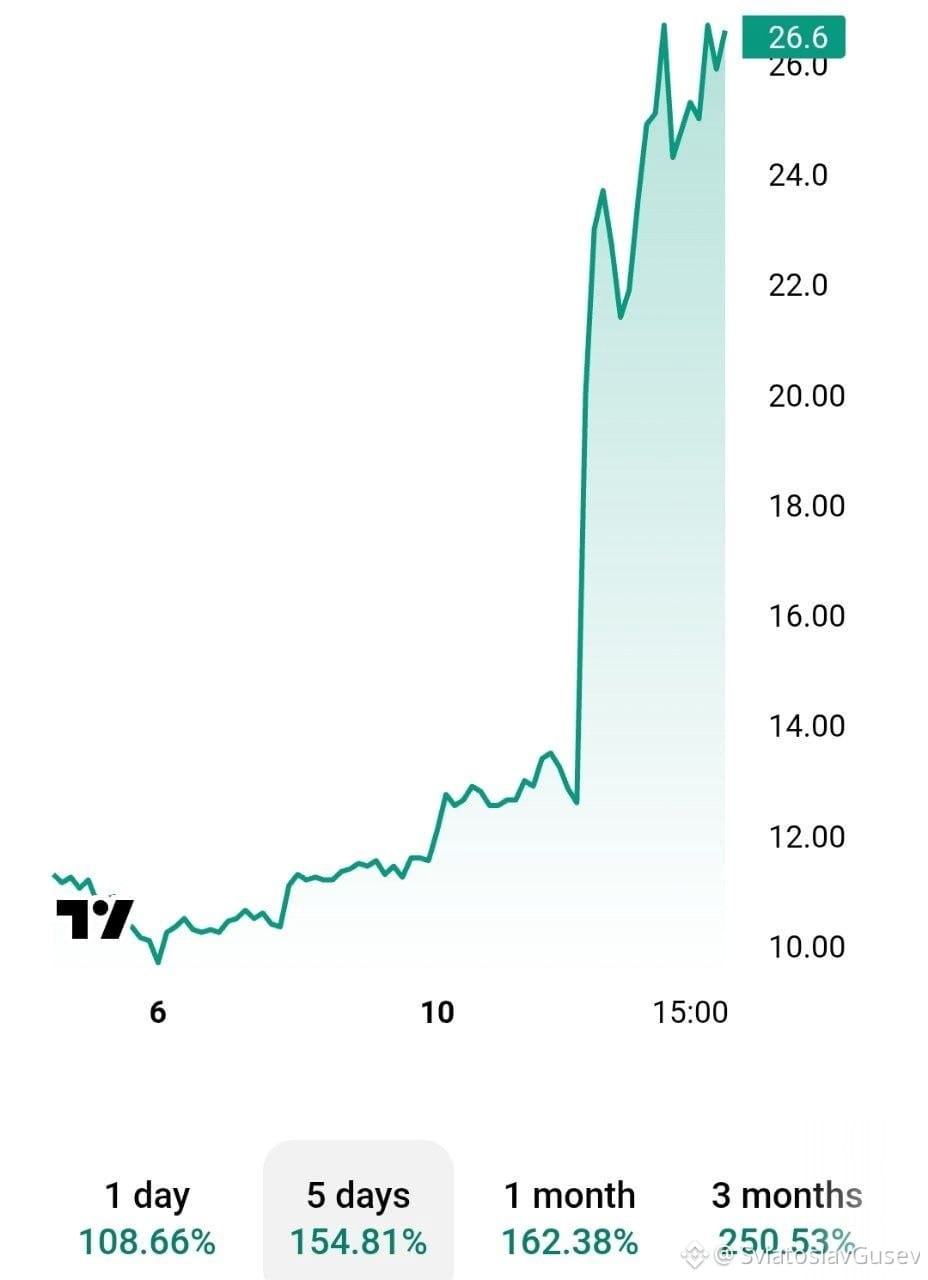
Shares in German industrial equipment manufacturer Singulus briefly surged by around 100% on news of a major order from Elon Musk’s space company SpaceX.
The order is for a production line to manufacture highly efficient solar cells for satellites. It is worth more than €60 million, and the first system is scheduled to be delivered to the customer in the first half of 2027.
The deal’s value exceeded Singulus’s entire annual revenue for 2025, which was €48.3 million. Following the news, the company’s market capitalization temporarily increased by around €73 million.
Singulus was founded in 1996 and has been working with SpaceX since March 2026.
2
1k
North Korean authorities denied accusations that they hacked the Binance exchange and stole $6.3 billion. The statement was released by North Korea’s state news agency.
North Korean authorities denied accusations that they hacked the Binance exchange and stole $6.3 billion. The statement was released by North Korea’s state news agency.
141
Anthropic has introduced a new feature for U.S. Claude users: a “financial assistant” that analyzes personal spending but cannot manage their money.
The chatbot tool lets users break down expenses by category, identify unnecessary subscriptions, and clearly track where their budget is going.
The updated service can also create financial charts and personalized spending calendars.
The chatbot tool lets users break down expenses by category, identify unnecessary subscriptions, and clearly track where their budget is going.
The updated service can also create financial charts and personalized spending calendars.
116
Binance has warned that iPhone owners could lose their crypto assets due to a vulnerability in iOS. According to the company, malicious apps can steal users’ seed phrases, passwords, and crypto wallet keys.
Devices running iOS versions 26.7.1, 27.0.1, and 27.2 are at risk. Binance strongly advises updating the system to the latest version as soon as possible.
Devices running iOS versions 26.7.1, 27.0.1, and 27.2 are at risk. Binance strongly advises updating the system to the latest version as soon as possible.
1.6k
The largest heist in history, worth more than six billion dollars, began with an ordinary job interview.
The Binance report reads like a spy novel: an engineer with an infected AI tool, a dream job at a company that doesn’t exist, and a test assignment on a work laptop. Then came twenty minutes in which 6.3 billion dollars disappeared from hot wallets.
The FBI believes North Korean hackers were behind the attack. Around three billion dollars have been frozen; the rest was scattered across twelve thousand wallets. Binance promises to cover all customer losses.
Do you think they’ll find the money?
2
1.2k
NOVIKOM Bank published its financial results for the first nine months of 2026: net profit reached 22.6 billion rubles, of which the bank earned 11.4 billion in the third quarter. According to the lender’s press service, this was the highest quarterly result in the bank’s 33-year history.
The report also shows that the loan portfolio grew by 25.5% to 929 billion rubles, while the bank’s total assets increased by 10.5% to 1.62 trillion rubles. Corporate customer funds grew by 23% to 1.16 trillion rubles, and the bank’s capital increased by 6% to 137.1 billion rubles. At the end of 2025, shareholders approved dividend payments of 10.1 billion rubles. These results put NOVIKOM among the country’s 15 largest banks. The document states that these results were driven by the implementation of the bank’s long-term strategy and the expansion of its corporate customer base.
NOVIKOM Chair of the Management Board Elena Georgieva commented on the results: “We are growing faster than the market while maintaining a high-quality loan portfolio and a stable capital adequacy ratio.” The bank attributes its results to its new development strategy through 2036, which aims to turn NOVIKOM into a universal financial partner for Russian businesses and to attract more corporate customers beyond the Rostec group.
76
I’ve never understood people who don’t think ahead, who don’t consider the consequences of their actions and decisions, which can lead to all sorts of mishaps and repercussions. Because whether in business, trading, relationships, or your personal life, if you don’t try to anticipate the future, like in chess, things may not turn out well for you.
So, friends, think ahead about the consequences. Even though reputation may not matter as much in our world as you think, some actions can still have consequences that are irreversible.
So, friends, think ahead about the consequences. Even though reputation may not matter as much in our world as you think, some actions can still have consequences that are irreversible.
6
6
9.8k
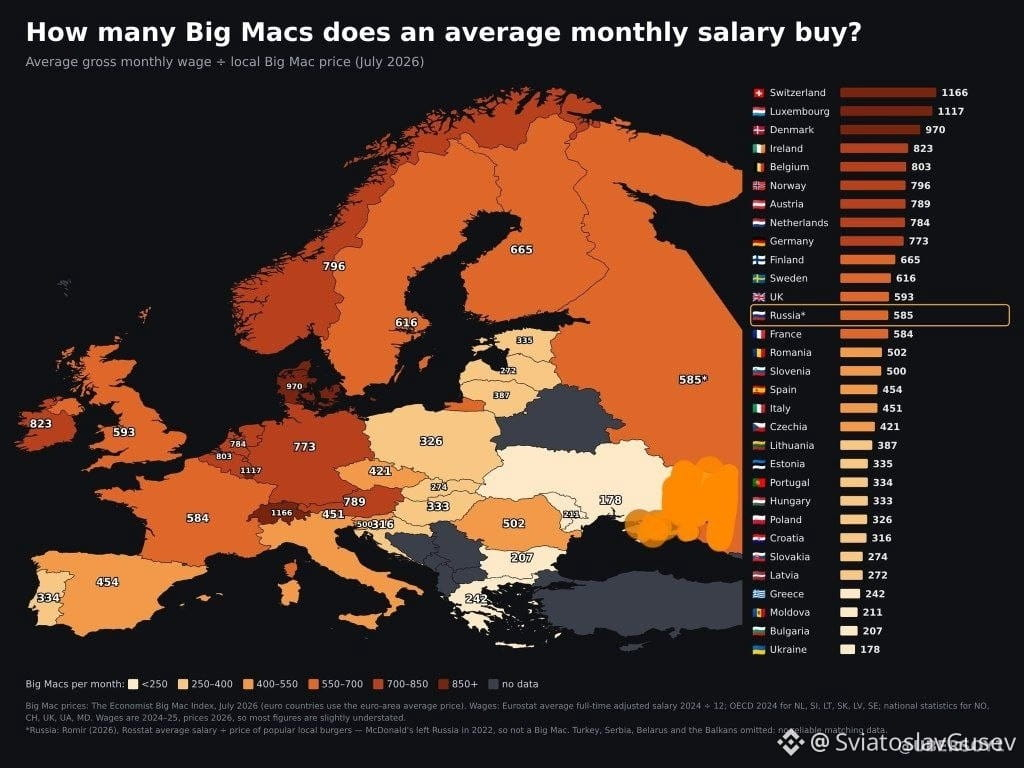
How many Big Macs can you buy with the average salary?
How many Big Macs can you buy with the average salary?
4
2
2.7k
Bank of Russia Governor Elvira Nabiullina said that the regulator’s key interest rate will remain in double digits throughout 2027.
Bank of Russia Governor Elvira Nabiullina said that the regulator’s key interest rate will remain in double digits throughout 2027.
39
Russia handed over to China a citizen who was wanted through Interpol. Law enforcement officers established that from 2018 to 2024, while serving as a company founder, he promoted and sold financial products without the required license, promising investors returns of up to 11.5% per year.
According to investigators, he misappropriated deposits totaling several billion yuan, causing investors significant losses. After a criminal case was opened against him, the suspect left China and was placed on an international wanted list. He was detained in Tatarstan.
According to investigators, he misappropriated deposits totaling several billion yuan, causing investors significant losses. After a criminal case was opened against him, the suspect left China and was placed on an international wanted list. He was detained in Tatarstan.
1.3k
London continues to lose ground as a global financial center. Venture capital firm Sequoia has announced that it is closing its London office, saying it no longer needs a local presence — as a result, some employees are leaving the company.
Over the course of its history, the firm has raised more than $85 billion to invest in technology companies and startups.
Sequoia said it intends to continue supporting promising European startups and their founders, but will now do so from its headquarters in San Francisco.
The decision echoes the move by a16z, which left London several years ago, closing its office in the British capital. This coincidence raises questions about whether other American venture capital firms might also leave London.
247
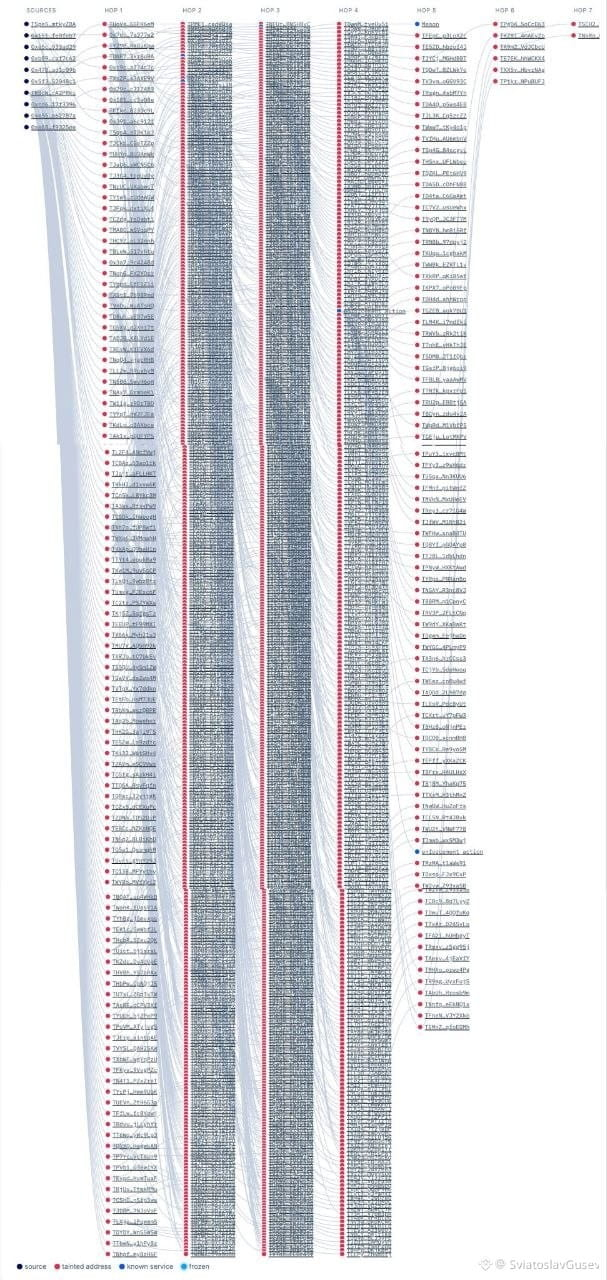
According to Chainalysis, the hackers who attacked Binance are using highly convoluted schemes to launder the stolen funds—the money passes through thousands of transactions. North Korean operators move cryptocurrency between wallets, sometimes returning it to addresses they have used before. The speed and repetitive nature of these operations point to an automated process designed to cover their tracks.
Preliminary data from Elliptic shows that the attackers urgently exchanged the frozen stablecoins for Ether and began moving assets between addresses before those addresses were blacklisted. To do this, they used a DeFi project: they deposited 60 million USDT as collateral on the Aave platform and borrowed 19,762 ETH against it, equivalent to approximately $44.6 million. Meanwhile, Tether blocked 1.77 billion USDT, and Circle blocked 825 million USDC. As a result, the funds pledged on Aave remained frozen, while the hackers managed to withdraw the borrowed Ether, albeit at a loss due to an unfavorable exchange rate.
Preliminary data from Elliptic shows that the attackers urgently exchanged the frozen stablecoins for Ether and began moving assets between addresses before those addresses were blacklisted. To do this, they used a DeFi project: they deposited 60 million USDT as collateral on the Aave platform and borrowed 19,762 ETH against it, equivalent to approximately $44.6 million. Meanwhile, Tether blocked 1.77 billion USDT, and Circle blocked 825 million USDC. As a result, the funds pledged on Aave remained frozen, while the hackers managed to withdraw the borrowed Ether, albeit at a loss due to an unfavorable exchange rate.
1.2k
The banking community has proposed postponing the introduction of progressive taxation on citizens’ bank deposits by one year, until January 1, 2028. According to Kommersant, the National Council of the Financial Market made this proposal to the State Duma last week.
Credit institutions explain their position by saying they may not have enough time to update their software and integrate it with the Federal Tax Service database. They also note that the vast majority of wealthy depositors, for whom the progressive tax scale is intended, are customers of the largest banks, while all market participants will have to update their IT systems, regardless of their size.
Credit institutions explain their position by saying they may not have enough time to update their software and integrate it with the Federal Tax Service database. They also note that the vast majority of wealthy depositors, for whom the progressive tax scale is intended, are customers of the largest banks, while all market participants will have to update their IT systems, regardless of their size.
62
Log in to explore more content
Join global crypto users on Binance Square
⚡️ Get latest and useful information about crypto.
💬 Trusted by the world’s largest crypto exchange.
👍 Discover real insights from verified creators.
Email / Phone number
Trending Topics
HuangExitNvidiaStrategyInFocus
326 views
80 Discussing
STOCKS | Nvidia’s Jensen Huang Resigns, Colette Kress Named as Interim CEO
Binance News
·0 Likes
·3.2k views
ChipStocksExtendLossesAfterNvidiaCEOChange
0 views
29 Discussing
AnthropicRejectsIPODelayValuationinQuestion
551,167 views
4,540 Discussing