
方鸣kaw
833 Posts

方鸣kaw
Crypto x AI x 美股,趋势判断,科普逻辑,链上金狗官,一切分析都是个人观点,无关行情都是娱乐!(公众号:鸣鸣币院)
Frequent Trader
5.6 Years
41 Following
1.0K+ Followers
3.8K+ Liked
Posts
All
Quotes
Videos
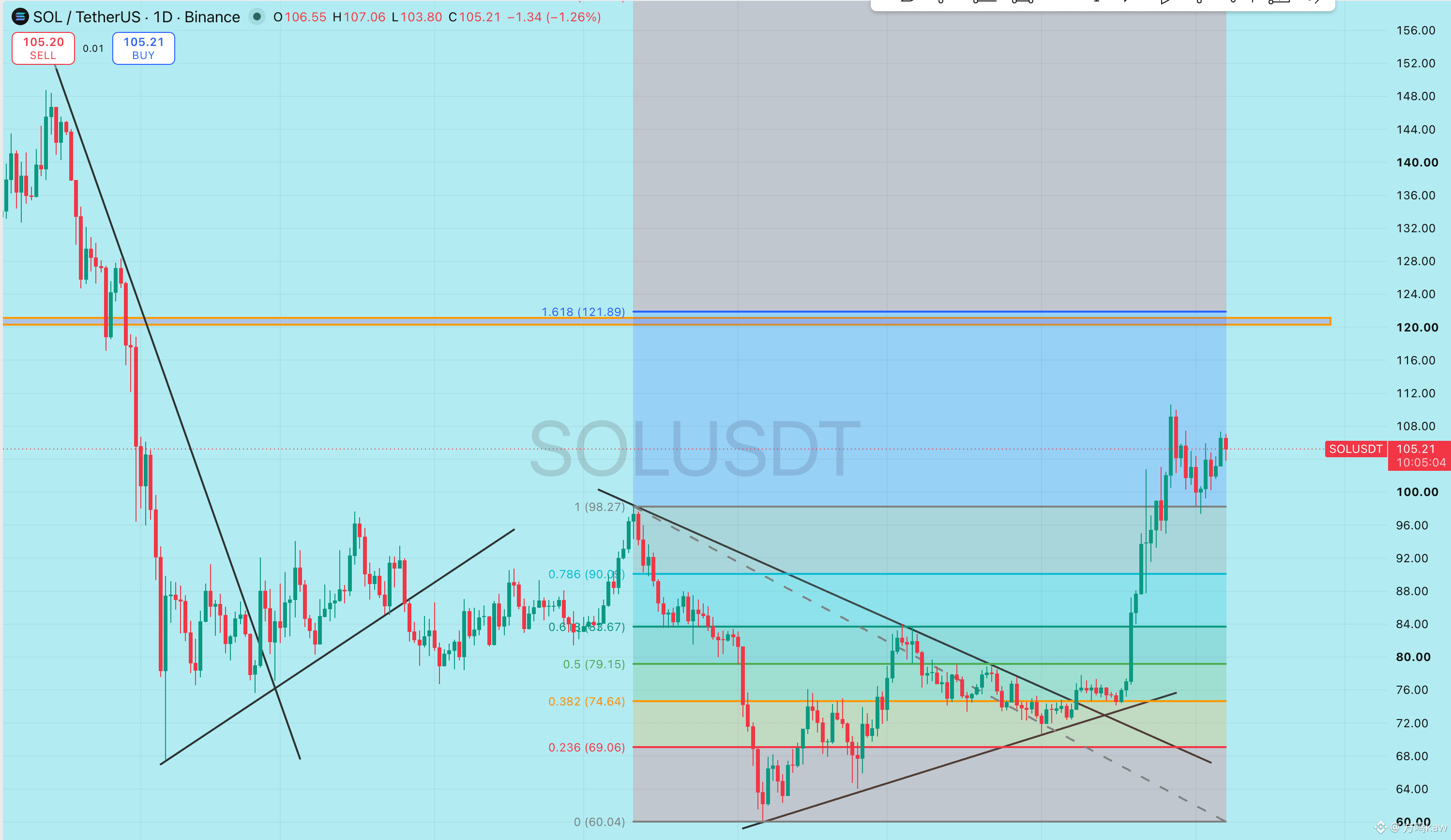
SOL pulled itself out of the 29.0 million “pit” that was uncovered in early September. That round of settlement cleaned the leverage out thoroughly. Now, the chip (position) structure is actually healthier. The signal that a large holder moved 281,000 SOL at dawn is still there. The institutional logic behind the firms that got listed by C(ey) - ??? (please confirm) hasn’t changed. The boarding zone from 103 to 105 is still valid. If it drops below 100, you leave and look for 95. Only when it reclaims 108 can it be considered to have regained strength. SOL is one of the most stable majors in this round of repairs—slow is fast.
After breaking 1.4 last week, XRP has been criticized ever since. This week, it has been slowly climbing back. The market has already digested the news that Ripple will unlock 1.0 billion XRP, and it didn’t smash new lows, which suggests the bottom is being firmly built. The Sharpe ratio’s fundamental backdrop that hit a one-year high is still intact. After reclaiming 1.4, watch for 1.45 to 1.5; only standing above 1.5 counts as a full turnaround. Below that, 1.38 is the new line of defense. What it lacks now is a catalyst—just wait for BTC to give direction.
After breaking 1.4 last week, XRP has been criticized ever since. This week, it has been slowly climbing back. The market has already digested the news that Ripple will unlock 1.0 billion XRP, and it didn’t smash new lows, which suggests the bottom is being firmly built. The Sharpe ratio’s fundamental backdrop that hit a one-year high is still intact. After reclaiming 1.4, watch for 1.45 to 1.5; only standing above 1.5 counts as a full turnaround. Below that, 1.38 is the new line of defense. What it lacks now is a catalyst—just wait for BTC to give direction.
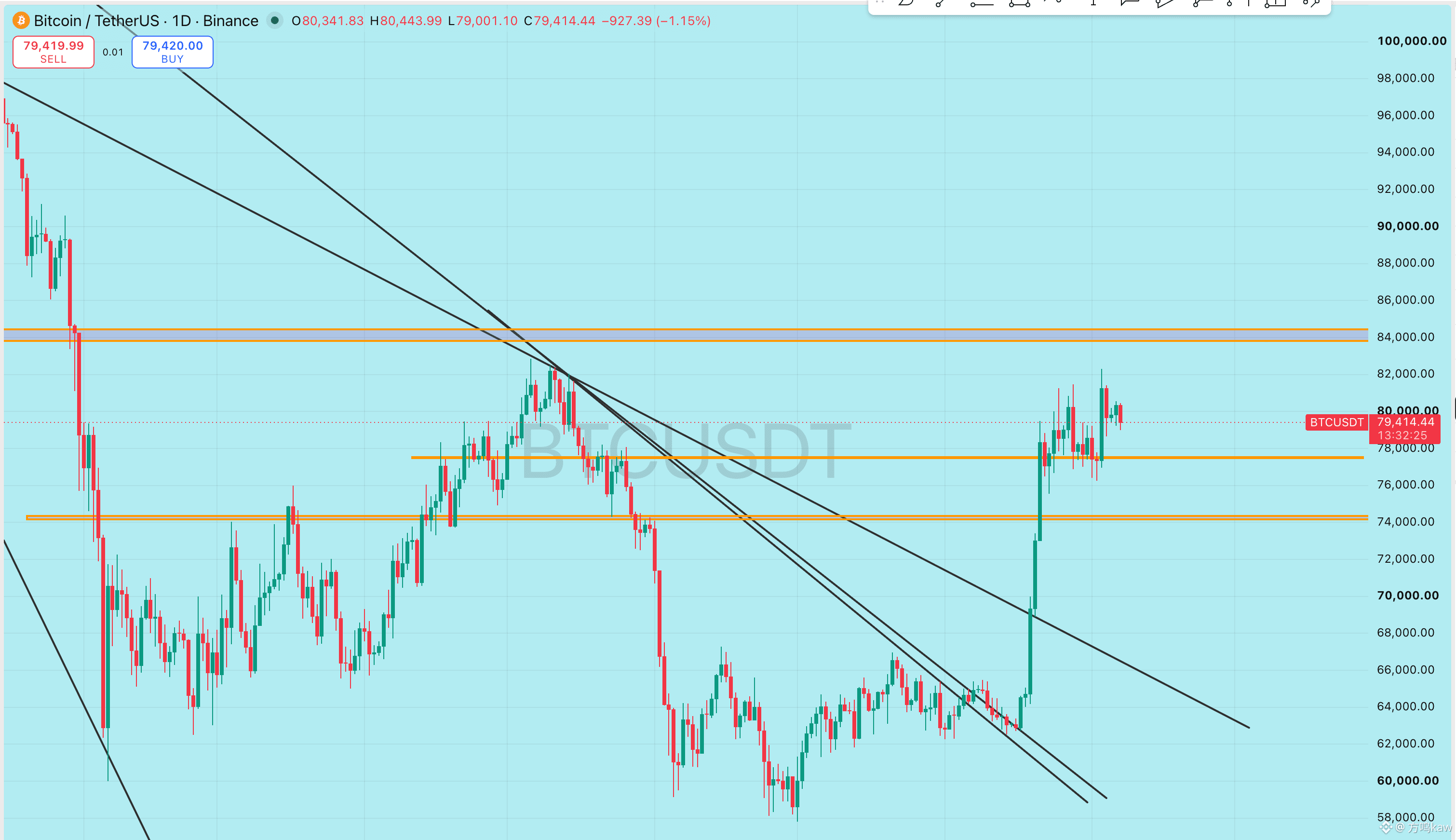
Near the big pancake around 79,400, hovering in front of the 80,000 gate. Last week it was smashed down to 77k at the low, and now it has rebounded to 79.4k. The repair strength isn’t weak, but that 80k gate still hasn’t been crossed. The overhead zone from 79,500 to 80k is a pressure area—only when it stands above 80k can we talk about a reversal. Hold 80,500 and you can look at 81,500; below, 78k is the first support. If it breaks down, watch the liquidation-dense zone from 77,600 to 76,200. Today is Monday—U.S. Labor Day holiday, so trading may be relatively quiet. The real show is on Wednesday and Thursday’s PPI, and Friday’s CPI. In one sentence: August is a month to fatten up, and September is when they come to harvest. Historically, September is the weakest month for the big pancake. Don’t put all of August’s winning fruits on September.
As for ETH today around 2,492, it has climbed back out of the pit at 2,400. But in the past 24 hours, the liquidation volume is the highest in the entire market—$52.9 million—so longs and shorts are locked in a tough standoff at this level. The news that Bitmine bought 53,501 ETH is still being digested, and ETF inflows are ongoing as well. The fundamentals haven’t worsened. But the 2,500 level is still a hurdle. Only when it gets back above 2,500 can we talk about 2,550; a break above 2,550 would then accelerate. Below, 2,450 is the new support. ETH’s current position is quite delicate—there’s a catch-up logic, but it’s just missing that last push. Wait for the big pancake to first give its signal.
As for ETH today around 2,492, it has climbed back out of the pit at 2,400. But in the past 24 hours, the liquidation volume is the highest in the entire market—$52.9 million—so longs and shorts are locked in a tough standoff at this level. The news that Bitmine bought 53,501 ETH is still being digested, and ETF inflows are ongoing as well. The fundamentals haven’t worsened. But the 2,500 level is still a hurdle. Only when it gets back above 2,500 can we talk about 2,550; a break above 2,550 would then accelerate. Below, 2,450 is the new support. ETH’s current position is quite delicate—there’s a catch-up logic, but it’s just missing that last push. Wait for the big pancake to first give its signal.
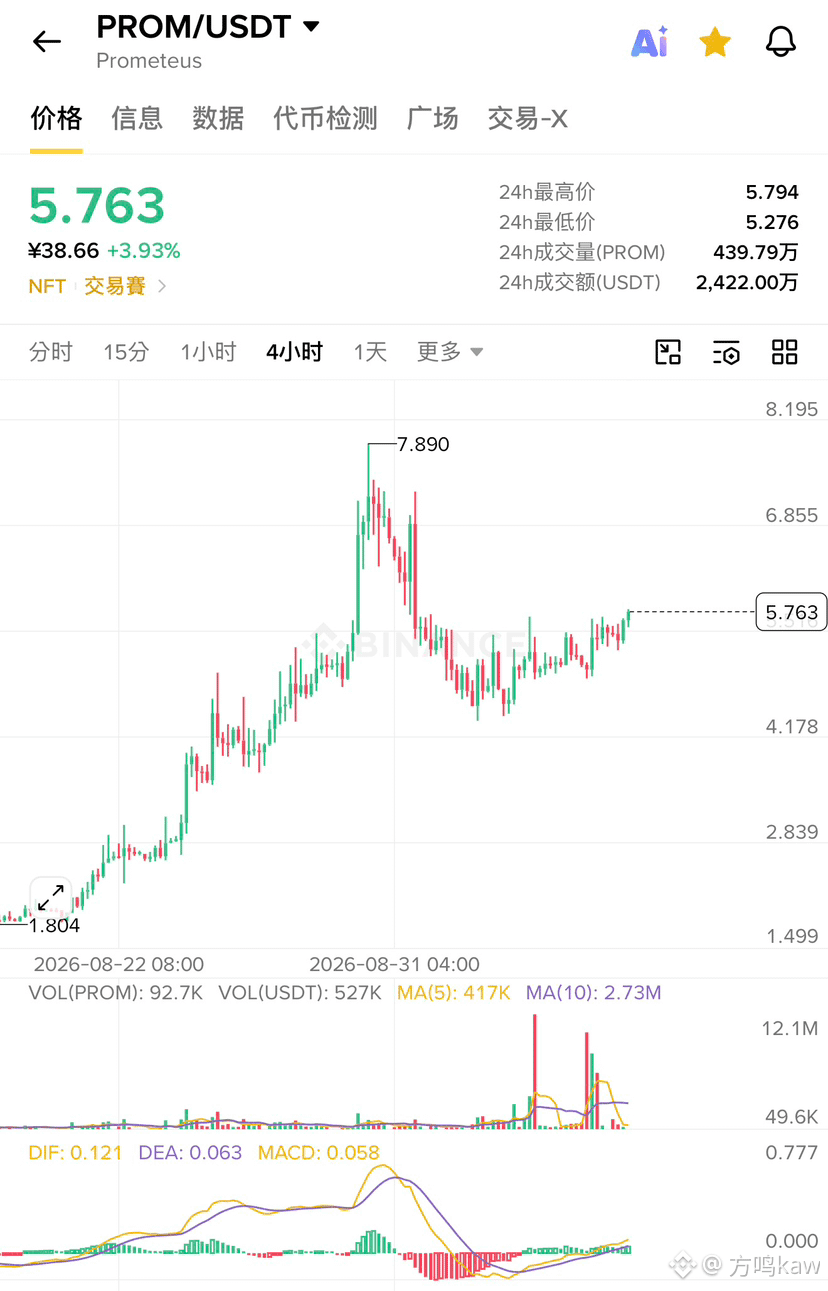
Today, now, directly, immediately, get on the car right away!!
$PROM Get on the car directly!
After the PROM callback, both the four-hour chart and the daily chart have stabilized, and combined with funds flowing in from a group of speculators, this indicates that the next move is likely to keep rising 📈
At this level, you can take action boldly. I started notifying in advance at 5.5 in my community group.
This is the key speculative coin for today that you can directly trade.
The current price is fine to enter. I estimate the price will be pushed into the $7–$8 range.
Once the price reaches the level, you can run directly. Trading this coin is purely speculative, not a value coin—so you can’t hold it long-term. After reaching the target, set a strict take-profit.
$PROM Get on the car directly!
After the PROM callback, both the four-hour chart and the daily chart have stabilized, and combined with funds flowing in from a group of speculators, this indicates that the next move is likely to keep rising 📈
At this level, you can take action boldly. I started notifying in advance at 5.5 in my community group.
This is the key speculative coin for today that you can directly trade.
The current price is fine to enter. I estimate the price will be pushed into the $7–$8 range.
Once the price reaches the level, you can run directly. Trading this coin is purely speculative, not a value coin—so you can’t hold it long-term. After reaching the target, set a strict take-profit.
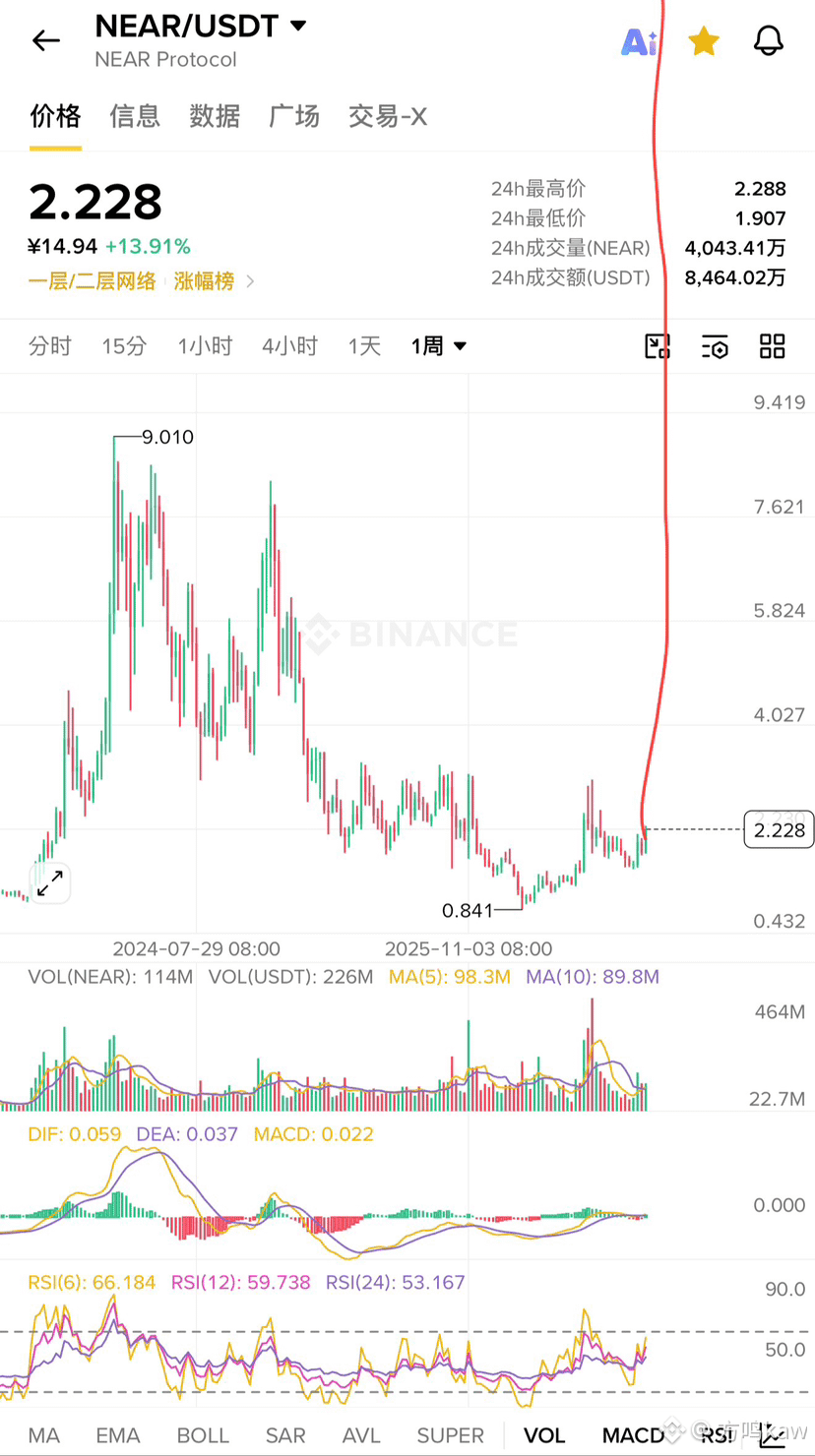
$NEAR coin, must buy, immediately, now, get on board right away!!!!!
If you missed ZEC and then missed DASH, then you absolutely cannot miss NEAR. This is the coin I’m focusing on getting into over the next few days, with a long-term target of 30-60x.
Let me briefly sort out the logic behind this coin!
NEAR has been helping ZEC with privacy all along, and at the same time it is also one of the major public chains for AI agents.
People overseas are also quite bullish on this coin, and the target they give is $120. From the current price, there is still nearly 60x upside room above.
So today you can directly position yourself and get on board. A coin that is helping ZEC with projects—how could it underperform? It has to pump!
And right now the price is around 2.2, which is still low. You can go in after a small pullback!!!
Also, I estimate $NEAR won’t take more than a few days—maybe around next week it can rise by more than 30%.
Before getting in, just manage your position size properly. Take out your principal first when it doubles, and let the profits run!
If you missed ZEC and then missed DASH, then you absolutely cannot miss NEAR. This is the coin I’m focusing on getting into over the next few days, with a long-term target of 30-60x.
Let me briefly sort out the logic behind this coin!
NEAR has been helping ZEC with privacy all along, and at the same time it is also one of the major public chains for AI agents.
People overseas are also quite bullish on this coin, and the target they give is $120. From the current price, there is still nearly 60x upside room above.
So today you can directly position yourself and get on board. A coin that is helping ZEC with projects—how could it underperform? It has to pump!
And right now the price is around 2.2, which is still low. You can go in after a small pullback!!!
Also, I estimate $NEAR won’t take more than a few days—maybe around next week it can rise by more than 30%.
Before getting in, just manage your position size properly. Take out your principal first when it doubles, and let the profits run!
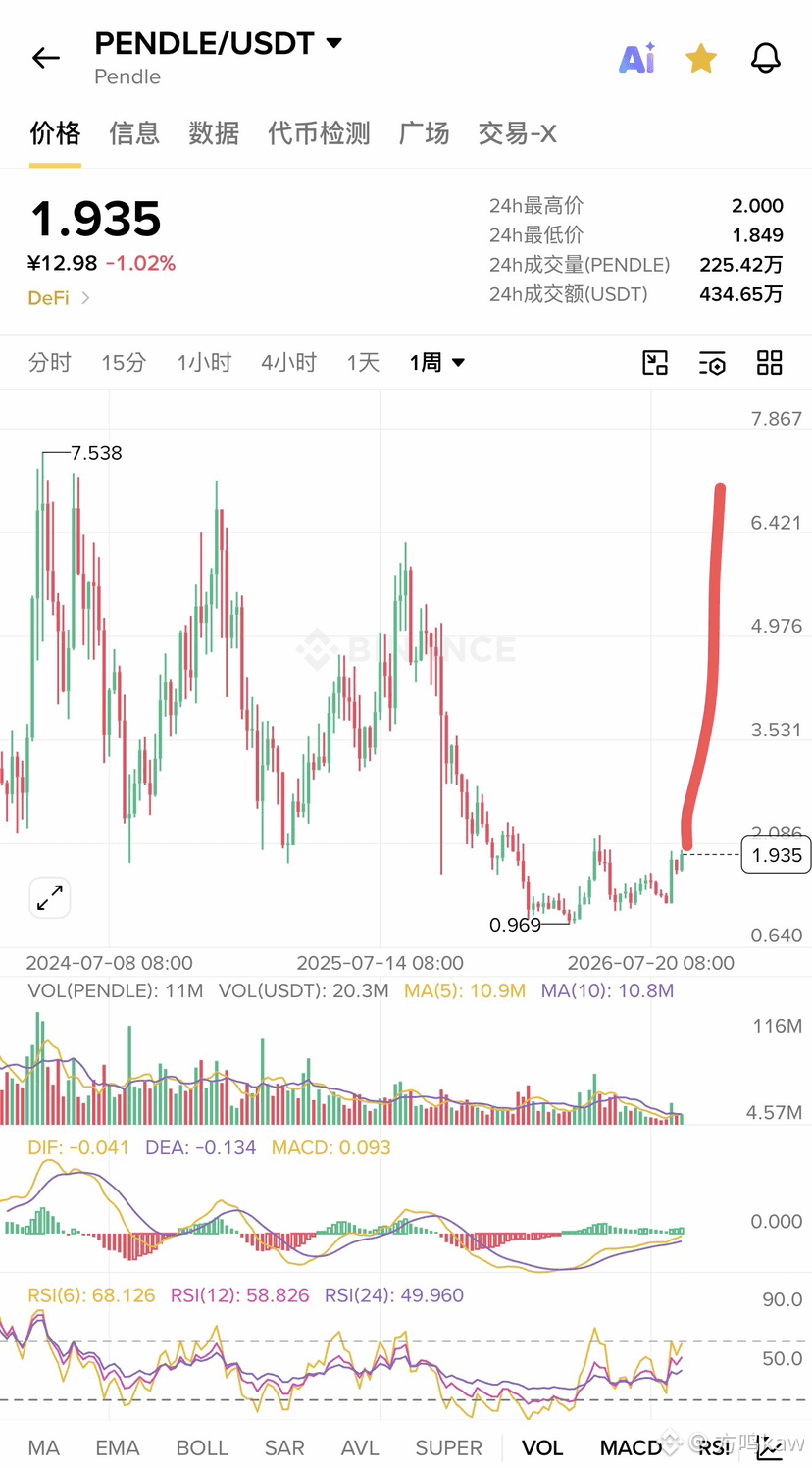
Pendle is the leading DeFi project in the yield category, and it is unmatched—there is no competitor. It is monopolistic. Such a monopolistic coin is very rare.
At present, the weekly MACD is close to the zero line, like an alligator approaching the water’s surface, and it may easily surge with a strong bullish candle. Right now, this coin is only temporarily constrained by the Bollinger Bands.
I mentioned Pendle very early on as well, and the long-term target I laid out was 60x.
Its level is no less than my view on UNI. UNI has competitors like AERO, CAKE, and JUP. But Pendle has no competitors; the older-generation YFI is already dead.
For a monopolistic coin like Pendle, you can directly enter and accumulate positions in advance over the next few days. Just remember to take your principal out at a suitable price, and you can let the profits run for the long term, with a target of 40x to 60x.
At present, the weekly MACD is close to the zero line, like an alligator approaching the water’s surface, and it may easily surge with a strong bullish candle. Right now, this coin is only temporarily constrained by the Bollinger Bands.
I mentioned Pendle very early on as well, and the long-term target I laid out was 60x.
Its level is no less than my view on UNI. UNI has competitors like AERO, CAKE, and JUP. But Pendle has no competitors; the older-generation YFI is already dead.
For a monopolistic coin like Pendle, you can directly enter and accumulate positions in advance over the next few days. Just remember to take your principal out at a suitable price, and you can let the profits run for the long term, with a target of 40x to 60x.
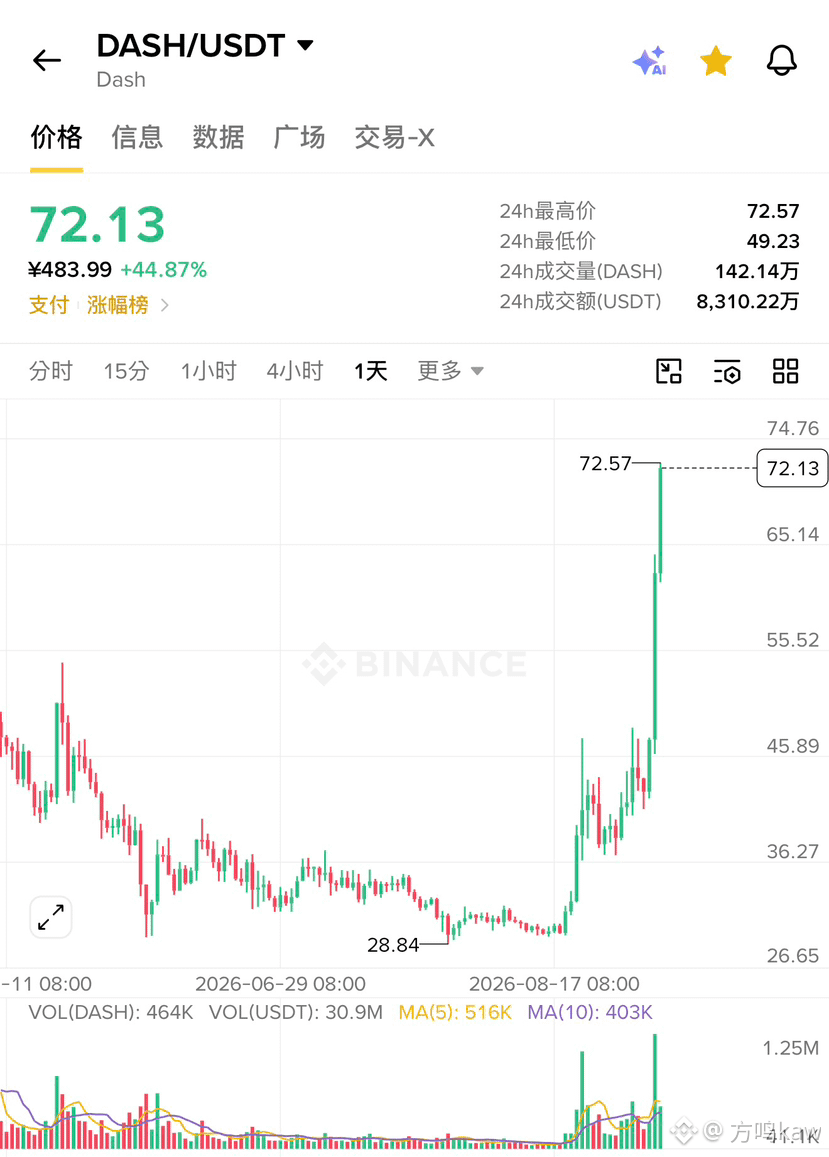
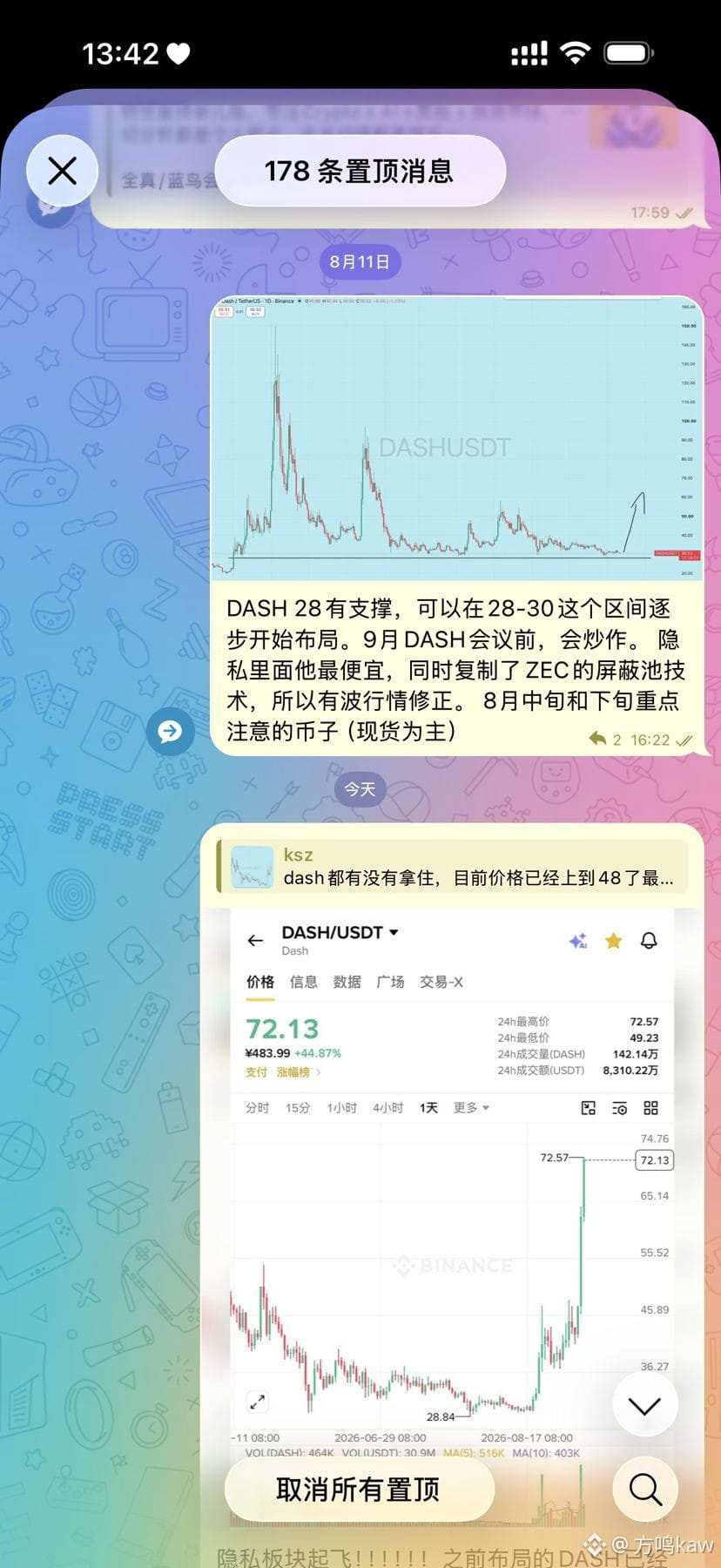
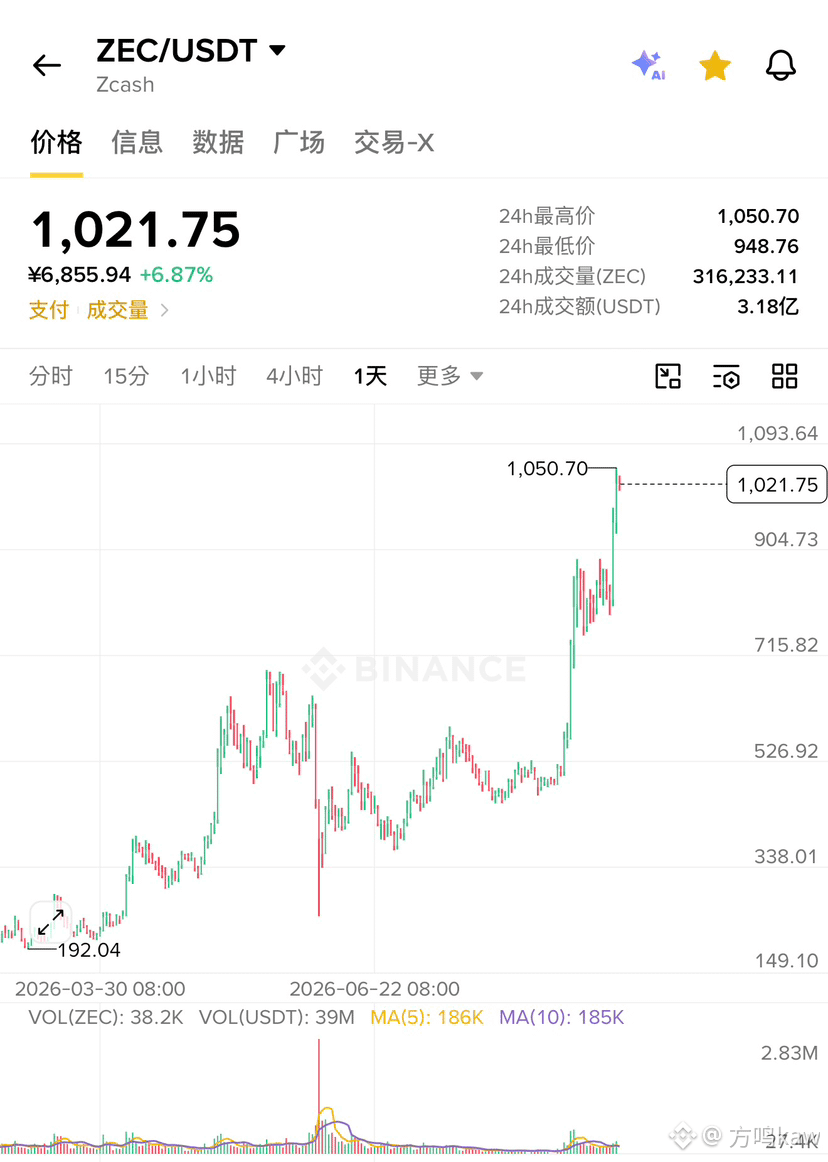
ZEC has broken through a new high and reached a price of 1,000, and DASH, which I positioned on August 11 from the lowest range of 28-30, has now reached a high of 72.
The privacy sector is taking off!!!!
Recently, whether in the secondary market or the primary market, there has been a lot to look forward to. The secondary market has been driven up by the R chain and the BSC chain, and on the R chain, almost every day there is a big golden dog.
In the secondary market, sectors like privacy have been pumping, and other altcoins are also not weak. Looking at it now, both the primary and secondary markets have created profit opportunities. After more than half a year of declines, too many people have gone too long without making money.
Now that the market is improving, the coins previously accumulated in the secondary market are also recovering somewhat, and moreover, in the Meme sector, people are getting results every day. The market has already become excited. When people can make money, it means they are willing to spend more.
So from the current DASH price, the upside is not limited to here, and it will continue to move up. At least in September, it should be pushed into the 90-100 range. So for those who followed me in, hold on well and continue to hold. At this point, you can truly sell part of the profit, prioritizing recovering your principal first!
Looking at ZEC breaking through 1,000, it will continue to rise, with the upper limit probably in the 1,200-1,500 range. For now, I do not recommend chasing it at a high price, as there are still risks after all.
The privacy sector is taking off!!!!
Recently, whether in the secondary market or the primary market, there has been a lot to look forward to. The secondary market has been driven up by the R chain and the BSC chain, and on the R chain, almost every day there is a big golden dog.
In the secondary market, sectors like privacy have been pumping, and other altcoins are also not weak. Looking at it now, both the primary and secondary markets have created profit opportunities. After more than half a year of declines, too many people have gone too long without making money.
Now that the market is improving, the coins previously accumulated in the secondary market are also recovering somewhat, and moreover, in the Meme sector, people are getting results every day. The market has already become excited. When people can make money, it means they are willing to spend more.
So from the current DASH price, the upside is not limited to here, and it will continue to move up. At least in September, it should be pushed into the 90-100 range. So for those who followed me in, hold on well and continue to hold. At this point, you can truly sell part of the profit, prioritizing recovering your principal first!
Looking at ZEC breaking through 1,000, it will continue to rise, with the upper limit probably in the 1,200-1,500 range. For now, I do not recommend chasing it at a high price, as there are still risks after all.
The big cake is now around 77,700. The intraday high is capped at 77,900, and the most recent valid low was tapped at 76,264. After it pushed up to 81,478 earlier at around 80,000, it failed to hold—so what was once a breakout has turned into resistance from above. Right now, 77,000 is the nearest threshold. As long as it holds, it’s still consolidation in a high range; once it breaks down, the next more substantial zone is 76,264 down to 76,000. To the upside, it first needs to reclaim 78,500, and then we can look at the 80,000 level. Good news came on the 15th, yet price is still searching below the 80,000 mark—this is not a place to assume expectations will automatically become the trend. For now, stay on the sidelines.
For Ethereum: the intraday high is 2,429. Yesterday’s low at 2,356 already pierced the 2,400 integer level once. The band from 2,350 to 2,370 is the short-term must-hold area. If it holds, it can still retest 2,430 and 2,490. If 2,350 is lost, then 2,300 will become the pricing center again. The ETH ETF turning into net outflows suggests it is currently moving more in sync with the broader market’s breathing, rather than running an independent trend.
For SOL today, the low was 99. The high of this rebound is still at 105. The range from 99 to 100 is the current dividing line. If it holds, it can still attempt 103 and 105. If it breaks below 99 again, the first downside target is 97. At the project level, I haven’t found any new catalyst strong enough to pull it out of broader-market pricing into its own independent valuation. Above 100, it looks more like turnover and risk-appetite repair than the opening leg of a new trend.
$BTC $ETH $SOL
For Ethereum: the intraday high is 2,429. Yesterday’s low at 2,356 already pierced the 2,400 integer level once. The band from 2,350 to 2,370 is the short-term must-hold area. If it holds, it can still retest 2,430 and 2,490. If 2,350 is lost, then 2,300 will become the pricing center again. The ETH ETF turning into net outflows suggests it is currently moving more in sync with the broader market’s breathing, rather than running an independent trend.
For SOL today, the low was 99. The high of this rebound is still at 105. The range from 99 to 100 is the current dividing line. If it holds, it can still attempt 103 and 105. If it breaks below 99 again, the first downside target is 97. At the project level, I haven’t found any new catalyst strong enough to pull it out of broader-market pricing into its own independent valuation. Above 100, it looks more like turnover and risk-appetite repair than the opening leg of a new trend.
$BTC $ETH $SOL
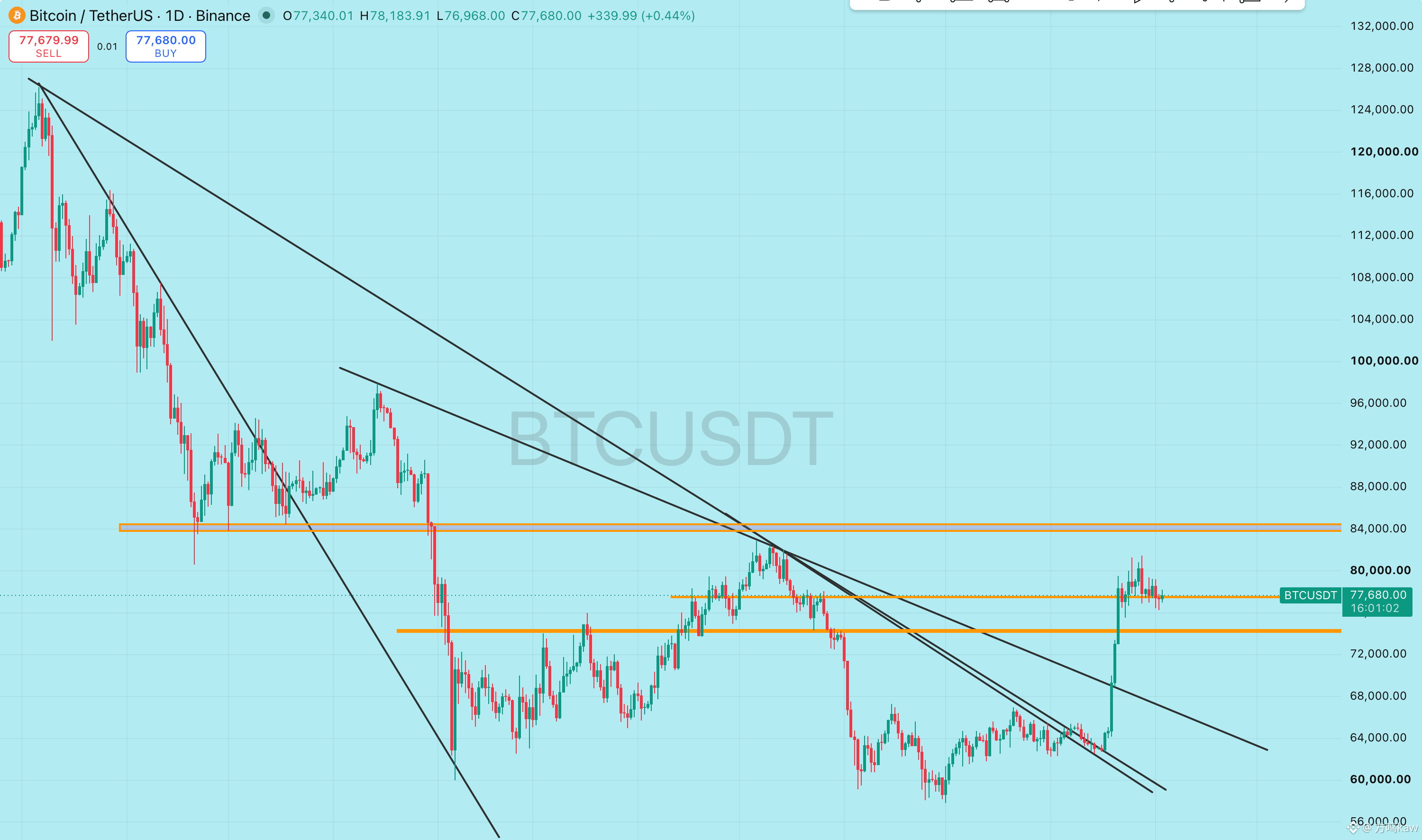
The latest full yield curve published by the U.S. Department of the Treasury shows that the 10-year Treasury note closed at 4.79% and the 30-year at 5.27%. During the previous trading day, the 10-year yield even touched around 4.82%, the highest level since November 2023. The pullback in oil prices has only slightly eased yields, but it hasn’t changed the fact that “high interest rates are still in play.”
More importantly, the timing stacks up. The Federal Reserve will meet September 15–16, and the market has already priced in a 25-basis-point hike at around the 60% range. Within the same window, the Senate scheduled a procedural vote for the CLARITY Act for the afternoon of September 15. This is not a regulation newly put in place today—it merely pins “regulatory expectations” and “rate-hike risk” to the same week. The bill needs 60 votes to advance to debate; even if it passes, that doesn’t mean it becomes law immediately. If it fails, the policy premium has to give back. Long-distance factors can help, but they can’t resolve today’s positioning.
Liquidity conditions have also not provided a one-sided answer. U.S. spot Bitcoin ETFs saw net inflows of $101.1 million on September 2, but the prior day had recorded net outflows of $236.5 million. Spot Ethereum ETFs had net outflows of $48.2 million on the same day. Money is still moving in and out; it isn’t the kind of continuous large-scale absorption seen in mid-to-late August.
On long/short positioning, the Binance BTCUSDT perpetual funding rate remains around 0.0067%. Longs are still paying, but not so crowded that it’s out of control. Binance’s contract account long/short ratio and open interest this time couldn’t be directly read from official interfaces, so I won’t force estimated figures into the analysis. Based on the current funding rate, the leverage “temperature” looks close to the state after the late-August pullback—i.e., “slightly net long, but not extreme.”
More importantly, the timing stacks up. The Federal Reserve will meet September 15–16, and the market has already priced in a 25-basis-point hike at around the 60% range. Within the same window, the Senate scheduled a procedural vote for the CLARITY Act for the afternoon of September 15. This is not a regulation newly put in place today—it merely pins “regulatory expectations” and “rate-hike risk” to the same week. The bill needs 60 votes to advance to debate; even if it passes, that doesn’t mean it becomes law immediately. If it fails, the policy premium has to give back. Long-distance factors can help, but they can’t resolve today’s positioning.
Liquidity conditions have also not provided a one-sided answer. U.S. spot Bitcoin ETFs saw net inflows of $101.1 million on September 2, but the prior day had recorded net outflows of $236.5 million. Spot Ethereum ETFs had net outflows of $48.2 million on the same day. Money is still moving in and out; it isn’t the kind of continuous large-scale absorption seen in mid-to-late August.
On long/short positioning, the Binance BTCUSDT perpetual funding rate remains around 0.0067%. Longs are still paying, but not so crowded that it’s out of control. Binance’s contract account long/short ratio and open interest this time couldn’t be directly read from official interfaces, so I won’t force estimated figures into the analysis. Based on the current funding rate, the leverage “temperature” looks close to the state after the late-August pullback—i.e., “slightly net long, but not extreme.”
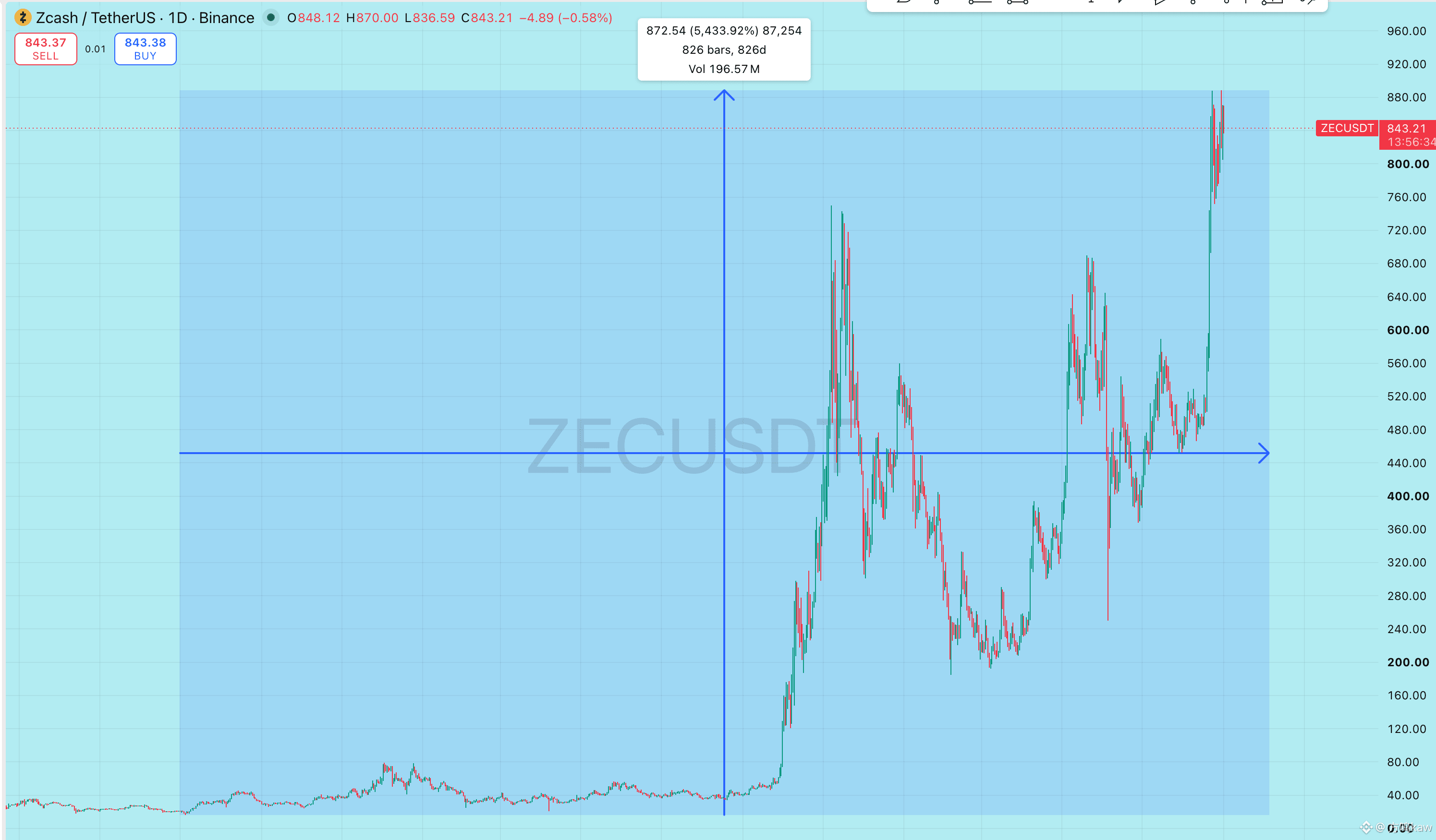
$ZEC Coins surged from the lowest 15u to the current 888u, setting a historical high—this is already an extremely crazy increase. Almost no one managed to catch this round of gains.
From the lowest 15u, it rose within a year, reaching a 5433% increase. Basically, only a few retail traders could smoothly go from catching the “head” to reaping the “tail.”
If you missed out on ZEC, what should you do? At this point, we should spend more time researching and observing, and抓住 other breakout coins. The market is never short of opportunities.
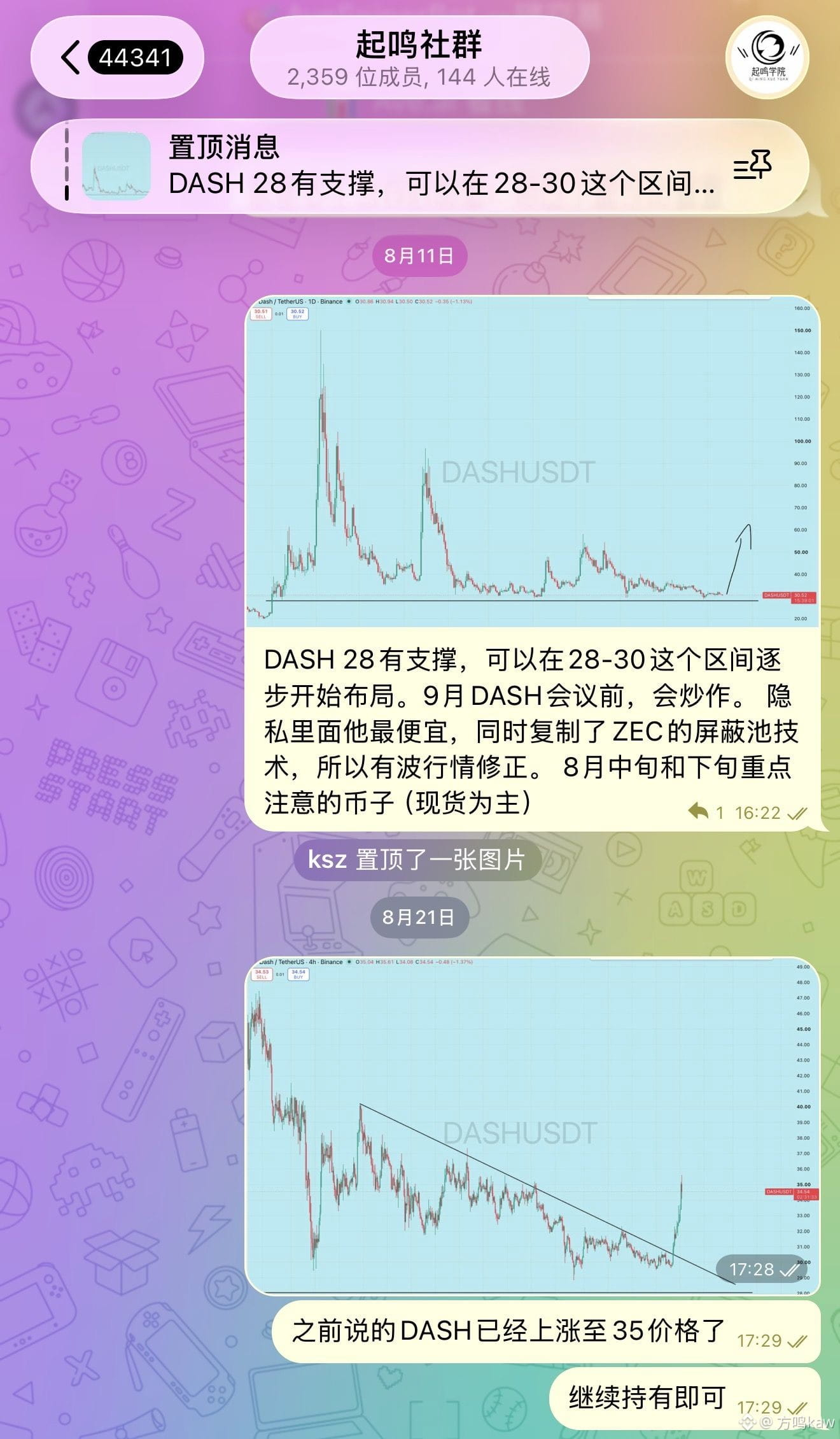
For example, the $DASH that I埋伏 on August 11: back then, the price of BTC still hadn’t really started moving, and DASH was also in a low position. After I saw that something might happen in September, I immediately notified everyone in the community group and arranged a staggered entry.
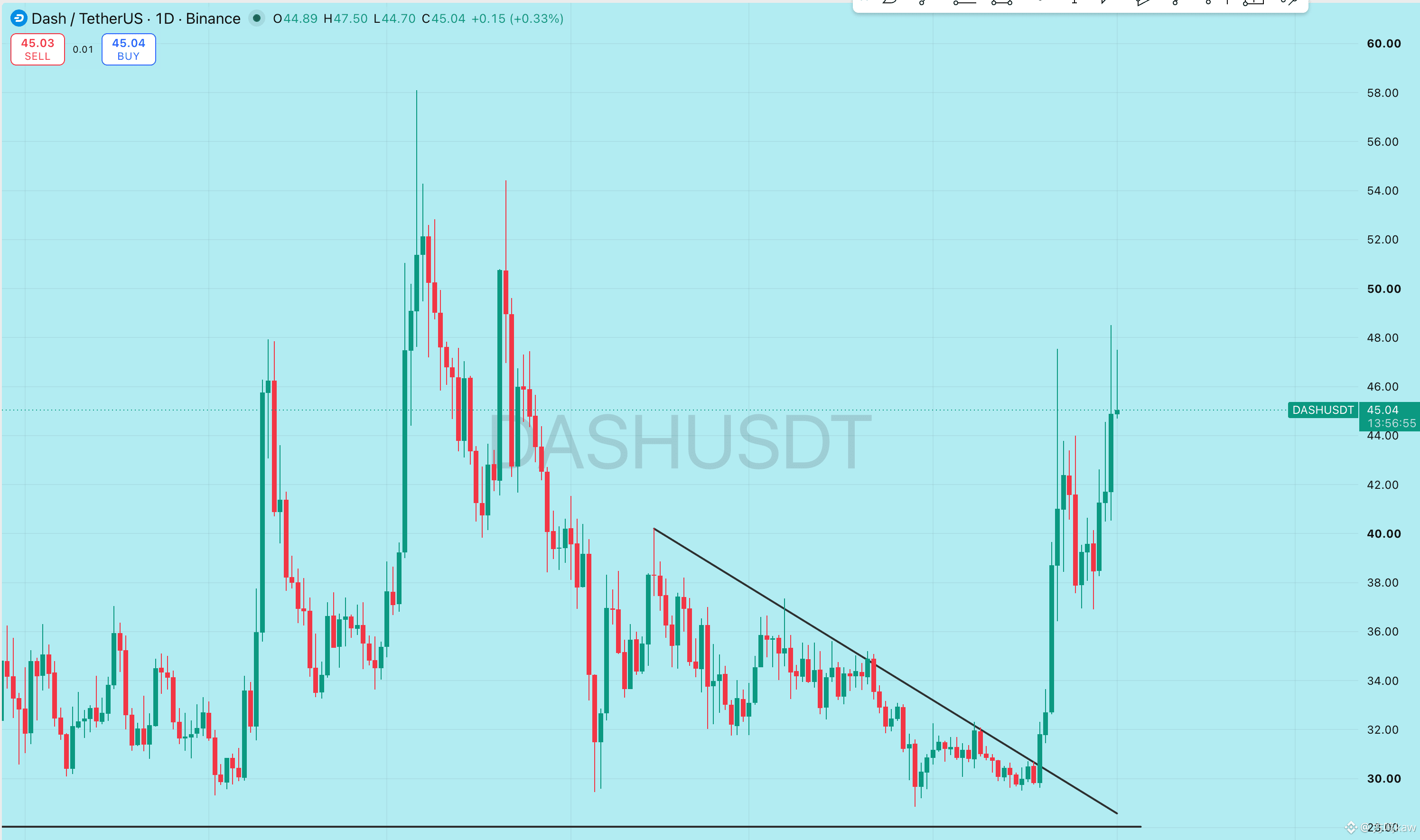
Up to now, the returns are very substantial. As I expected, it keeps rebounding continuously to the current highest price of 48. This price still isn’t anywhere near the limit—there’s still room to rise above.
If you’re already holding, then just hold firmly on the bus, and wait until the 55–90 price range shows up. That’s when we can fully exit and take all profits. For the more conservative crowd, you can first take out your principal, then keep the remaining profits rolling forward—it works the same.
Aggressive traders can continue holding without changing anything, waiting for the 55–70–90 target zone to appear.
September has only just begun, and DASH is also a privacy-sector coin. So before the meeting, it may still get pumped once more—let’s see if this wave can push the price to our target levels.
For now, just hold steadily and keep it. Conservative investors can move in batches and lock in take-profit!
From the lowest 15u, it rose within a year, reaching a 5433% increase. Basically, only a few retail traders could smoothly go from catching the “head” to reaping the “tail.”
If you missed out on ZEC, what should you do? At this point, we should spend more time researching and observing, and抓住 other breakout coins. The market is never short of opportunities.
For example, the $DASH that I埋伏 on August 11: back then, the price of BTC still hadn’t really started moving, and DASH was also in a low position. After I saw that something might happen in September, I immediately notified everyone in the community group and arranged a staggered entry.
Up to now, the returns are very substantial. As I expected, it keeps rebounding continuously to the current highest price of 48. This price still isn’t anywhere near the limit—there’s still room to rise above.
If you’re already holding, then just hold firmly on the bus, and wait until the 55–90 price range shows up. That’s when we can fully exit and take all profits. For the more conservative crowd, you can first take out your principal, then keep the remaining profits rolling forward—it works the same.
Aggressive traders can continue holding without changing anything, waiting for the 55–70–90 target zone to appear.
September has only just begun, and DASH is also a privacy-sector coin. So before the meeting, it may still get pumped once more—let’s see if this wave can push the price to our target levels.
For now, just hold steadily and keep it. Conservative investors can move in batches and lock in take-profit!
Around the 78,700 area of the big coin, the support below is in the 77,600 to 77,800 range. A lot of people are watching this level—if 77,600 breaks, then attention turns to 76,200. Above, 79.5k to 80k is the supply wall on the order book, and 80k has become a short-term ceiling. Today, if the ISM comes in better than expected and employment data is strong, the bullish interpretation is that the economy is resilient; the bearish interpretation is that there will be even greater pressure for rate hikes, and the market cares more about the negative view. Before Friday’s Non-Farm Payrolls, it will most likely range and grind between 77,600 and 79,500 while waiting for the data—only then will the direction become clear. An old saying: train soldiers a thousand days for one time to use them. The first four days were about conserving strength and building up energy—only on Friday does the real fight begin.
As for ETH, around the current price of 2,474: after Bitmine sold $131 million worth, it bought another 53,501 ETH. This “buy high, sell low” move may be hard to understand, but the fact is that whales are adding to positions. Last week, ETH ETFs saw net inflows of $824 million; BlackRock accounted for $567 million. Institutional money has been coming in. But on the staking side, there’s still a bottleneck: with a 36-day waiting period, a single day’s loss amounts to $350,000. Until that issue is resolved, it will be difficult for ETH to break out of an independent trend. 2,450 held the rebound. The first resistance to clear above is 2,500. Only if 2,550 holds will an accelerated move likely appear. Right now, ETH is basically waiting for the big coin to lift it.
As for ETH, around the current price of 2,474: after Bitmine sold $131 million worth, it bought another 53,501 ETH. This “buy high, sell low” move may be hard to understand, but the fact is that whales are adding to positions. Last week, ETH ETFs saw net inflows of $824 million; BlackRock accounted for $567 million. Institutional money has been coming in. But on the staking side, there’s still a bottleneck: with a 36-day waiting period, a single day’s loss amounts to $350,000. Until that issue is resolved, it will be difficult for ETH to break out of an independent trend. 2,450 held the rebound. The first resistance to clear above is 2,500. Only if 2,550 holds will an accelerated move likely appear. Right now, ETH is basically waiting for the big coin to lift it.
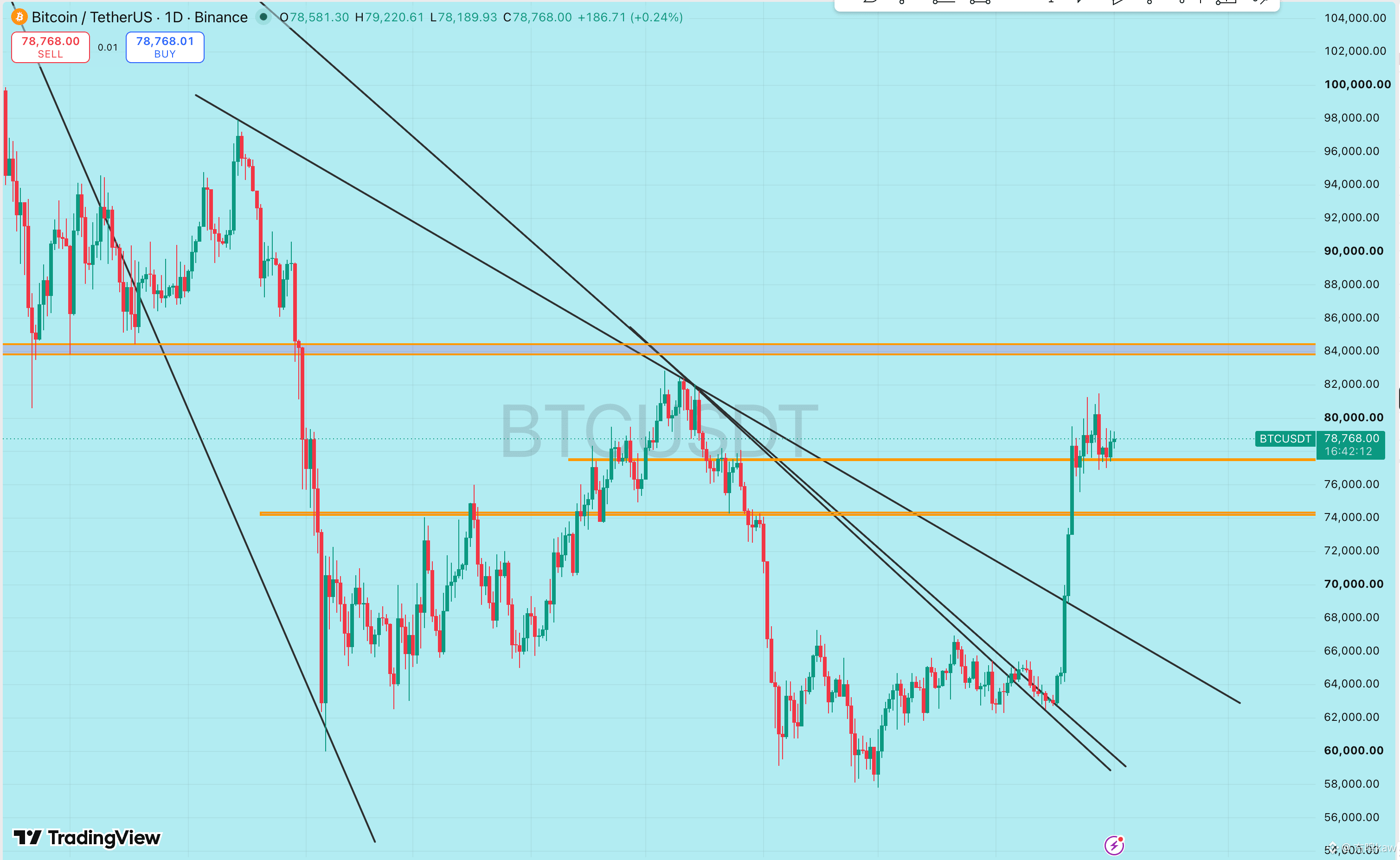
SOL around 103 today; after August’s monthly gain of nearly 50%, it’s now starting to “catch up” with a pullback and retest. There’s a signal on the chart worth watching: early this morning, 281,000 SOL were withdrawn from Binance to a certain address, worth about $29.68 million. Big players are accumulating at low levels—not distributing. That’s a good sign. The institutional logic behind the firm that launched SOL on its platform is still intact; this pullback hasn’t damaged it. From 103 to 105 is the “boarding zone” I’ve been repeating—right now it’s landing right in there. If it breaks below 100, the structure is considered damaged; then watch for 95. It only counts as regaining strength once it stands back above 108. If you want to get in, you can enter in batches at this level.
Ironically, XRP’s Sharpe ratio has just hit a one-year high, with a big improvement in risk-adjusted returns and excellent fundamentals—but the money hasn’t followed. The market now only pays attention to the mood of the broader market (WALSH), not your Sharpe. 1.4 has flipped from support to resistance. Only reclaiming 1.4 counts as a repair. Below that, 1.35 is the first line of defense; if it breaks, look at 1.3. Its narrative thickness hasn’t changed—it's just that at this time, even strong coins need to take a breather alongside the broader market.
Ironically, XRP’s Sharpe ratio has just hit a one-year high, with a big improvement in risk-adjusted returns and excellent fundamentals—but the money hasn’t followed. The market now only pays attention to the mood of the broader market (WALSH), not your Sharpe. 1.4 has flipped from support to resistance. Only reclaiming 1.4 counts as a repair. Below that, 1.35 is the first line of defense; if it breaks, look at 1.3. Its narrative thickness hasn’t changed—it's just that at this time, even strong coins need to take a breather alongside the broader market.
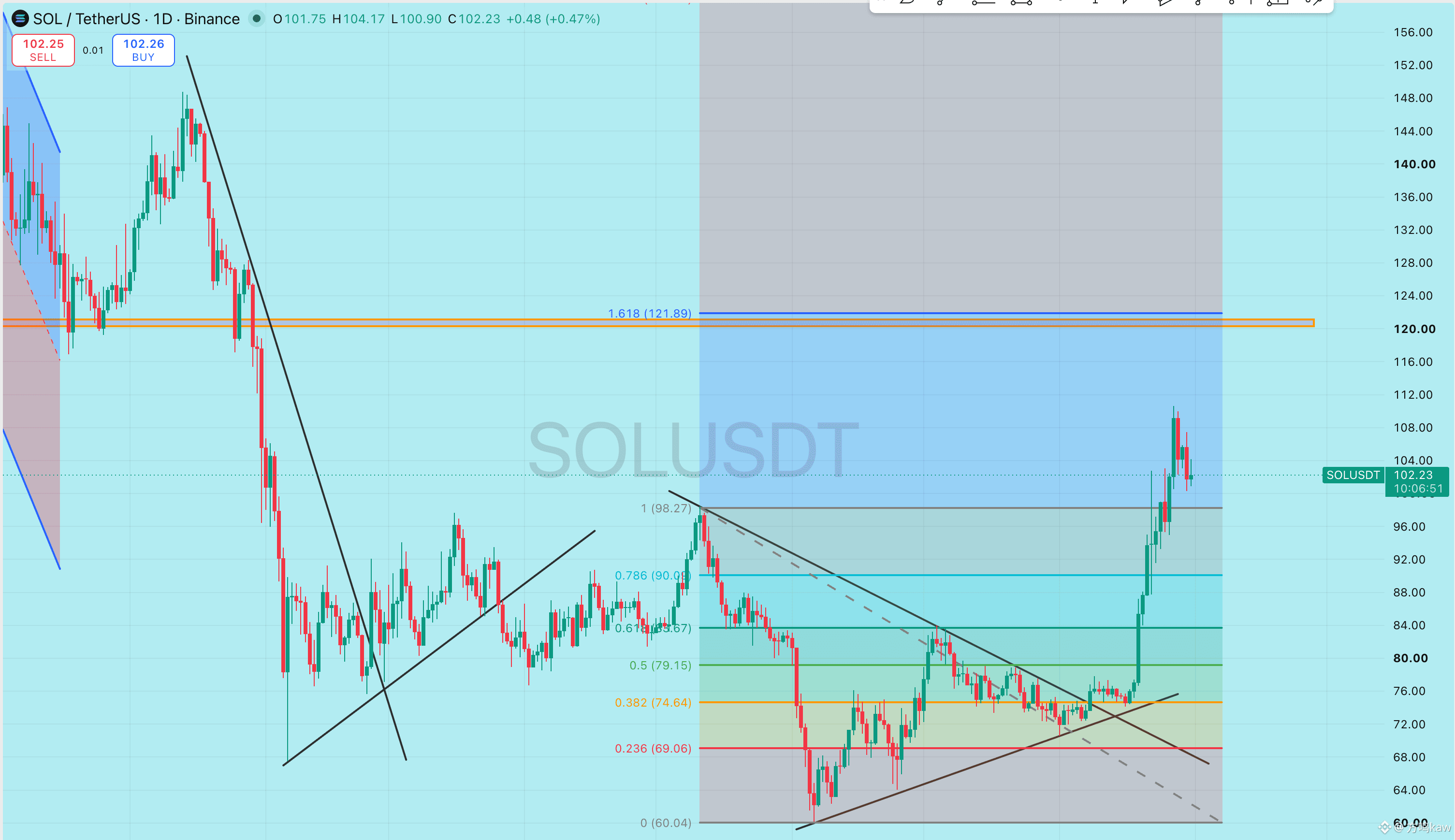
Near the 78,520 area, this 80,000-level door is now a longing that’s essentially out of reach. For the short term, first look at 80,000 to 80,500—this was the spot where people chased longs and got trapped last week. Below that, 78,000 is the first support; further down, 77,000. The real watershed is around 75,500. Yi Li Hua says a Bitcoin pullback to 75,500 is an opportunity. Jiang Zhuo Er says BTC is facing its first test since the uptrend began, and he has already cut his ETH position by 50%. These two old hands—one more, one short—are basically saying this level is a place where both bulls and bears need to take it seriously.
In the short term, the large cake has tried the 50-week moving average twice in a row and failed, with the bears holding the initiative. But last week’s ETF net inflows still didn’t flee—they kept a base position. Before next week’s Non-Farm Payrolls, it’s likely to churn between 77,000 and 80,000.
Both ETH’s key levels at 2,500 and 2,450 have been lost. The staking side is still stuck at the throat: Ethereum staking has a waiting period over 36 days, with daily rewards lost exceeding $350,000, and the capital entry efficiency is low. This is an invisible negative in terms of sentiment. Jiang Zhuo Er cutting his ETH position by 50% is also adding fuel to the fire.
On the other hand, Tom Lee just said ETH has four major catalysts this year. Last week, ETH’s ETF net inflows were 824 million, even stronger than BTC’s. BlackRock’s ETHA had 567 million at the top. This “capital base” tone isn’t fake. If 2,450 breaks, look for 2,380; if 2,380 breaks, then 2,300. Only when 2,500 is reclaimed can it be considered a stop to the down move. Right now, ETH is basically looking at the BTC “face”—BTC stabilizes and only then will ETH dare to rebound.
In the short term, the large cake has tried the 50-week moving average twice in a row and failed, with the bears holding the initiative. But last week’s ETF net inflows still didn’t flee—they kept a base position. Before next week’s Non-Farm Payrolls, it’s likely to churn between 77,000 and 80,000.
Both ETH’s key levels at 2,500 and 2,450 have been lost. The staking side is still stuck at the throat: Ethereum staking has a waiting period over 36 days, with daily rewards lost exceeding $350,000, and the capital entry efficiency is low. This is an invisible negative in terms of sentiment. Jiang Zhuo Er cutting his ETH position by 50% is also adding fuel to the fire.
On the other hand, Tom Lee just said ETH has four major catalysts this year. Last week, ETH’s ETF net inflows were 824 million, even stronger than BTC’s. BlackRock’s ETHA had 567 million at the top. This “capital base” tone isn’t fake. If 2,450 breaks, look for 2,380; if 2,380 breaks, then 2,300. Only when 2,500 is reclaimed can it be considered a stop to the down move. Right now, ETH is basically looking at the BTC “face”—BTC stabilizes and only then will ETH dare to rebound.
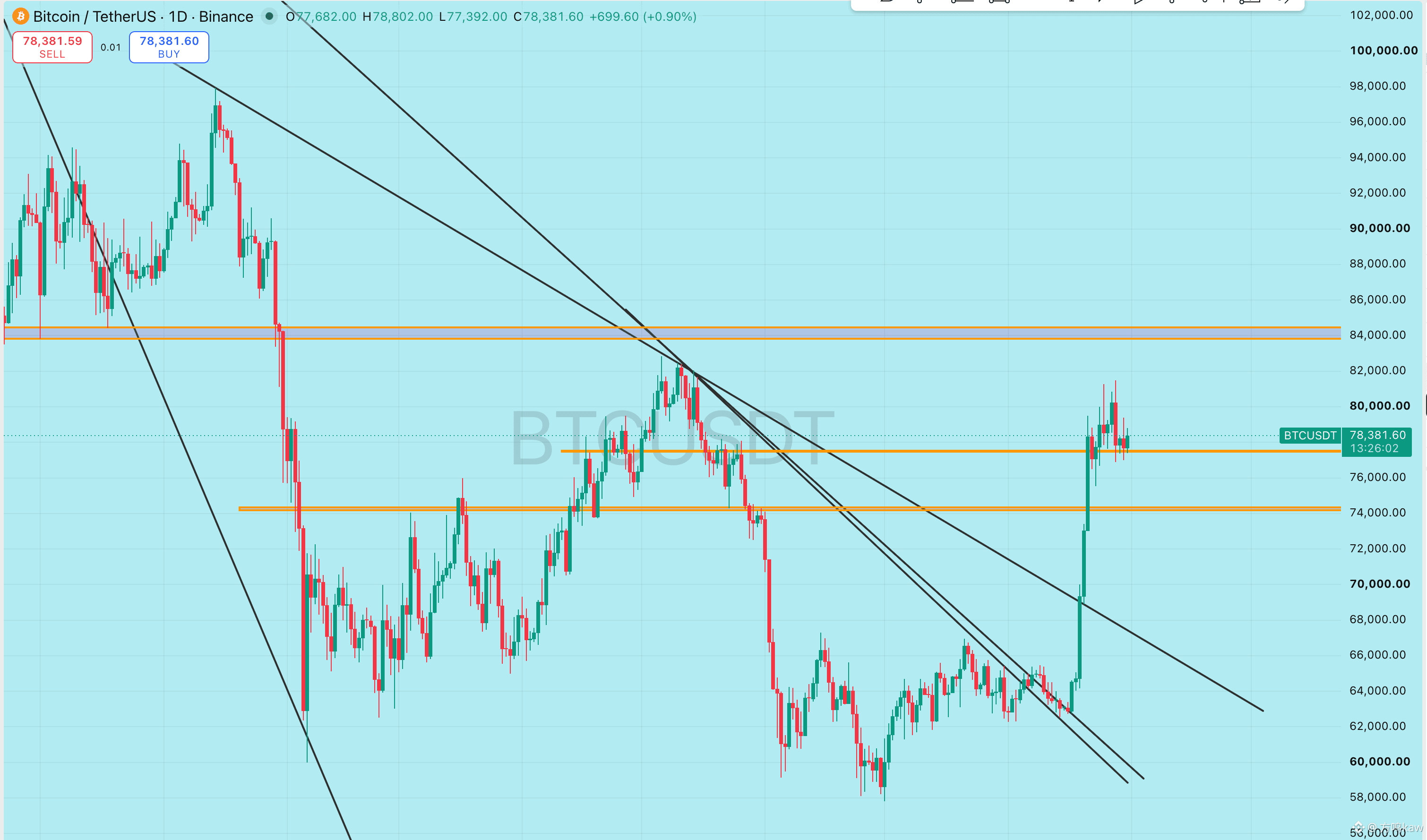
Today’s key driver in the market is Waller. The Jackson Hole symposium has wrapped up, and the new chair’s opening remarks immediately set a hawkish tone. The original wording was: inflation is still above target, and the Fed has more work to do. The responsibility for the persistently high inflation over the past roughly 65 months rests entirely with the central bank. As soon as he said that, the market priced it in right away. Spot gold fell by more than $120 in a day. Rate-hike expectations were reignited. Goldman Sachs said it doesn’t believe in a September hike, while JPMorgan added that they still need to look at the August jobs report and CPI, leaving the suspense for next week.
A more direct blow to crypto came from Bitcoin spot ETF flows. The streak of 9 consecutive days of net inflows was broken. Yesterday saw net outflows of $202 million; the momentum that had been built up over those nine days immediately deflated. On one side, hawkish pressure from the Fed; on the other, ETF fund flows shifting. BTC’s price slipped from above 80,000 all the way back to 78,520. That level happens to line up with the technical zone where BTC twice tested the 50-week moving average and retreated. Despite August delivering the strongest single-month performance in nine years, the result is an opening exam for the first week of September. This script is all too similar to that saying: when the moon is full, it leads to loss; when the water is full, it overflows.
But this pullback isn’t without support logic. The underlying foundation from last week is still there. Bitcoin spot ETFs recorded total net inflows of $924 million last week. BlackRock’s IBIT led with $938 million. Ethereum spot ETFs also saw net inflows of $824 million last week, with BlackRock’s ETHA topping at $567 million. Institutional money isn’t withdrawing—it’s taking profits and waiting on the sidelines.
A more direct blow to crypto came from Bitcoin spot ETF flows. The streak of 9 consecutive days of net inflows was broken. Yesterday saw net outflows of $202 million; the momentum that had been built up over those nine days immediately deflated. On one side, hawkish pressure from the Fed; on the other, ETF fund flows shifting. BTC’s price slipped from above 80,000 all the way back to 78,520. That level happens to line up with the technical zone where BTC twice tested the 50-week moving average and retreated. Despite August delivering the strongest single-month performance in nine years, the result is an opening exam for the first week of September. This script is all too similar to that saying: when the moon is full, it leads to loss; when the water is full, it overflows.
But this pullback isn’t without support logic. The underlying foundation from last week is still there. Bitcoin spot ETFs recorded total net inflows of $924 million last week. BlackRock’s IBIT led with $938 million. Ethereum spot ETFs also saw net inflows of $824 million last week, with BlackRock’s ETHA topping at $567 million. Institutional money isn’t withdrawing—it’s taking profits and waiting on the sidelines.
On-chain anomalies! Large-lot holders of the Lobster token saw a surge in accumulation, accounting for over 14%
According to on-chain monitoring data,
Lobster token
(Contract address: 0xeccbb861c0dda7efd964010085488b69317e4444)
Recently, notable large-transaction activity has emerged that has drawn widespread attention.
Monitoring shows that approximately 144,452,986 tokens have been transferred to addresses associated with Aster. The amount is roughly 14.4453% of the token’s total circulating supply—an undeniably significant share.
Such a large-scale transfer of holdings often leads the market to speculate that the project team or other related parties may have subsequent moves planned.
However, as of now, regardless of whether the intent is internal rebalancing, ecosystem cooperation, or other arrangements, the official has not provided any explanation or confirmation.
⚠️ Given the increased scale of tokens involved, if these lots are later followed by concentrated selling, secondary circulation, or other on-chain actions, they may likely impact the token’s market liquidity and price trajectory. It is recommended to closely watch the subsequent activity of the related addresses, stay alert to potential short-term price swings, and prepare for risk management.
CA: 0xeccbb861c0dda7efd964010085488b69317e4444
According to on-chain monitoring data,
Lobster token
(Contract address: 0xeccbb861c0dda7efd964010085488b69317e4444)
Recently, notable large-transaction activity has emerged that has drawn widespread attention.
Monitoring shows that approximately 144,452,986 tokens have been transferred to addresses associated with Aster. The amount is roughly 14.4453% of the token’s total circulating supply—an undeniably significant share.
Such a large-scale transfer of holdings often leads the market to speculate that the project team or other related parties may have subsequent moves planned.
However, as of now, regardless of whether the intent is internal rebalancing, ecosystem cooperation, or other arrangements, the official has not provided any explanation or confirmation.
⚠️ Given the increased scale of tokens involved, if these lots are later followed by concentrated selling, secondary circulation, or other on-chain actions, they may likely impact the token’s market liquidity and price trajectory. It is recommended to closely watch the subsequent activity of the related addresses, stay alert to potential short-term price swings, and prepare for risk management.
CA: 0xeccbb861c0dda7efd964010085488b69317e4444
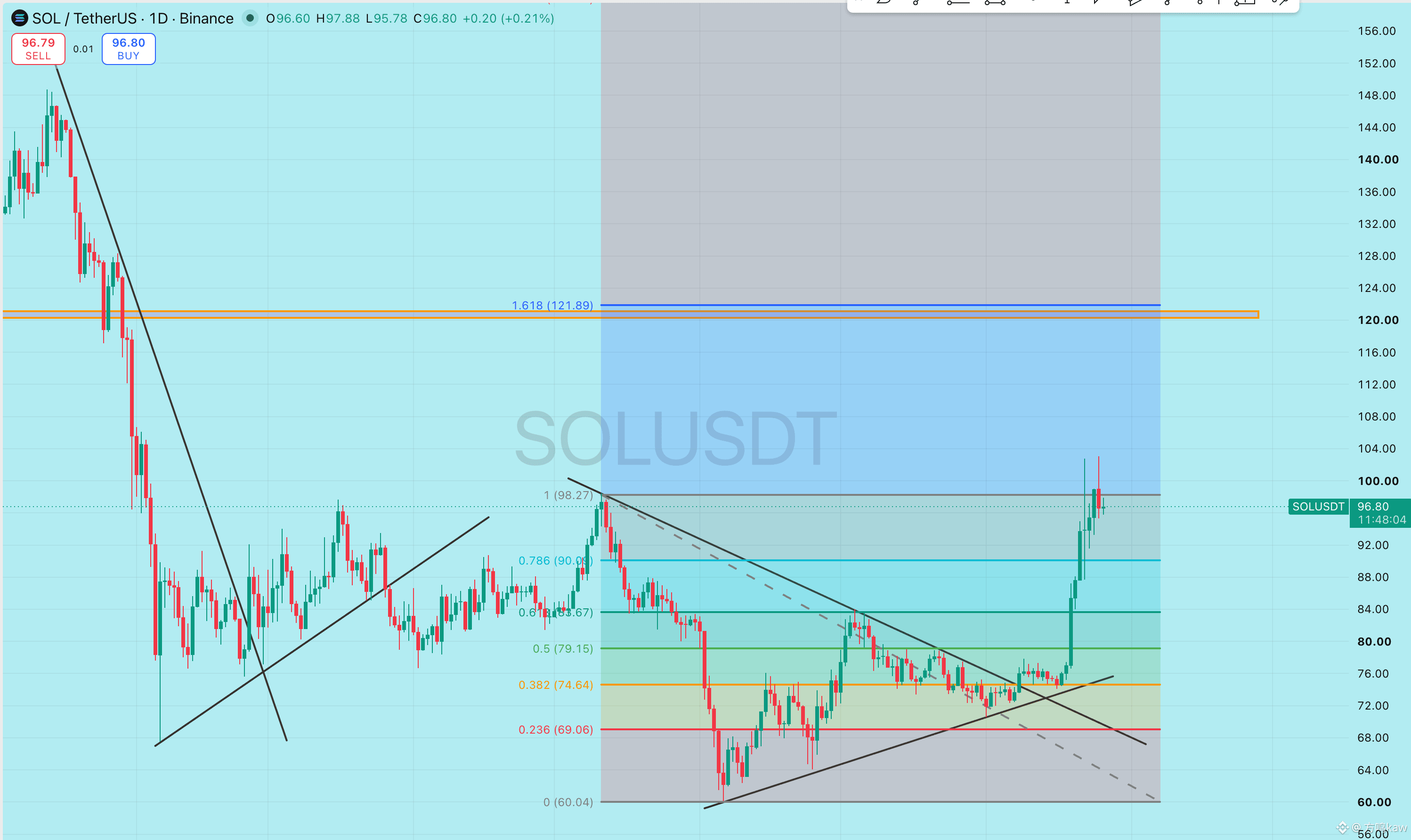
SOL100 integer gate failed to hold; during the session the low dipped to 95. 96 is the current first support. After it breaks, watch 95; below that, pay attention to the area around 92. On the upside, it needs to first reclaim 99, regain it firmly at 100, and only then will there be a chance to test 101 to 103. SOL ETF inflows are still net positive, which supports its relative strength as a fundamental factor. However, the price has already fallen back below 100, indicating that the capital tailwind has not fully offset profit-taking for now. For the short term, it’s better to wait for support to confirm rather than bet on a rebound early.
XRP 1.40 is the most important near-term support today. If it breaks, we’ll look again at 1.35. On the upside, it needs to reclaim 1.46 and then 1.50 in sequence. I didn’t find any new regulatory actions, partnerships, or product events today that would be sufficient on their own to change XRP’s pricing. Therefore, for now we treat it as tracking the broader market, and we can’t keep forcing an explanation of the current price using the earlier policy narrative.
XRP 1.40 is the most important near-term support today. If it breaks, we’ll look again at 1.35. On the upside, it needs to reclaim 1.46 and then 1.50 in sequence. I didn’t find any new regulatory actions, partnerships, or product events today that would be sufficient on their own to change XRP’s pricing. Therefore, for now we treat it as tracking the broader market, and we can’t keep forcing an explanation of the current price using the earlier policy narrative.
The big pancake is currently hovering around 78,700. The 80,000 level was not successfully defended today, and during the session the low reached 77,851. The 78,500 area is the nearest support/consolidation zone right now; if it breaks, we need to watch the 77,850 to 77,000 range. If this area can still hold, the current upswing is still likely to be a high-level consolidation. On the upside, price first needs to reclaim 80,000, then break above 80,124 in order to test around 81,200 again.
ETF inflows are still coming in, which means you shouldn’t directly interpret this pullback as a trend reversal. However, before 80,000 is regained, it’s also not appropriate to treat every rebound as a breakout.
As for Ethereum, the intraday low at 2415 has already provided a short-term support level. If 2415 to 2400 holds, there may still be an opportunity to retest 2490 and 2500 later. If 2400 breaks, the market will re-evaluate the strength of this rebound/repair. ETH’s ETF inflow is higher than the previous day—liquidity conditions haven’t worsened—but price is still being influenced by the big pancake’s pullback. So the short-term focus is not chasing gains; it’s about observing whether an effective turnover (sustained trading/rotation) can form above 2400.
ETF inflows are still coming in, which means you shouldn’t directly interpret this pullback as a trend reversal. However, before 80,000 is regained, it’s also not appropriate to treat every rebound as a breakout.
As for Ethereum, the intraday low at 2415 has already provided a short-term support level. If 2415 to 2400 holds, there may still be an opportunity to retest 2490 and 2500 later. If 2400 breaks, the market will re-evaluate the strength of this rebound/repair. ETH’s ETF inflow is higher than the previous day—liquidity conditions haven’t worsened—but price is still being influenced by the big pancake’s pullback. So the short-term focus is not chasing gains; it’s about observing whether an effective turnover (sustained trading/rotation) can form above 2400.
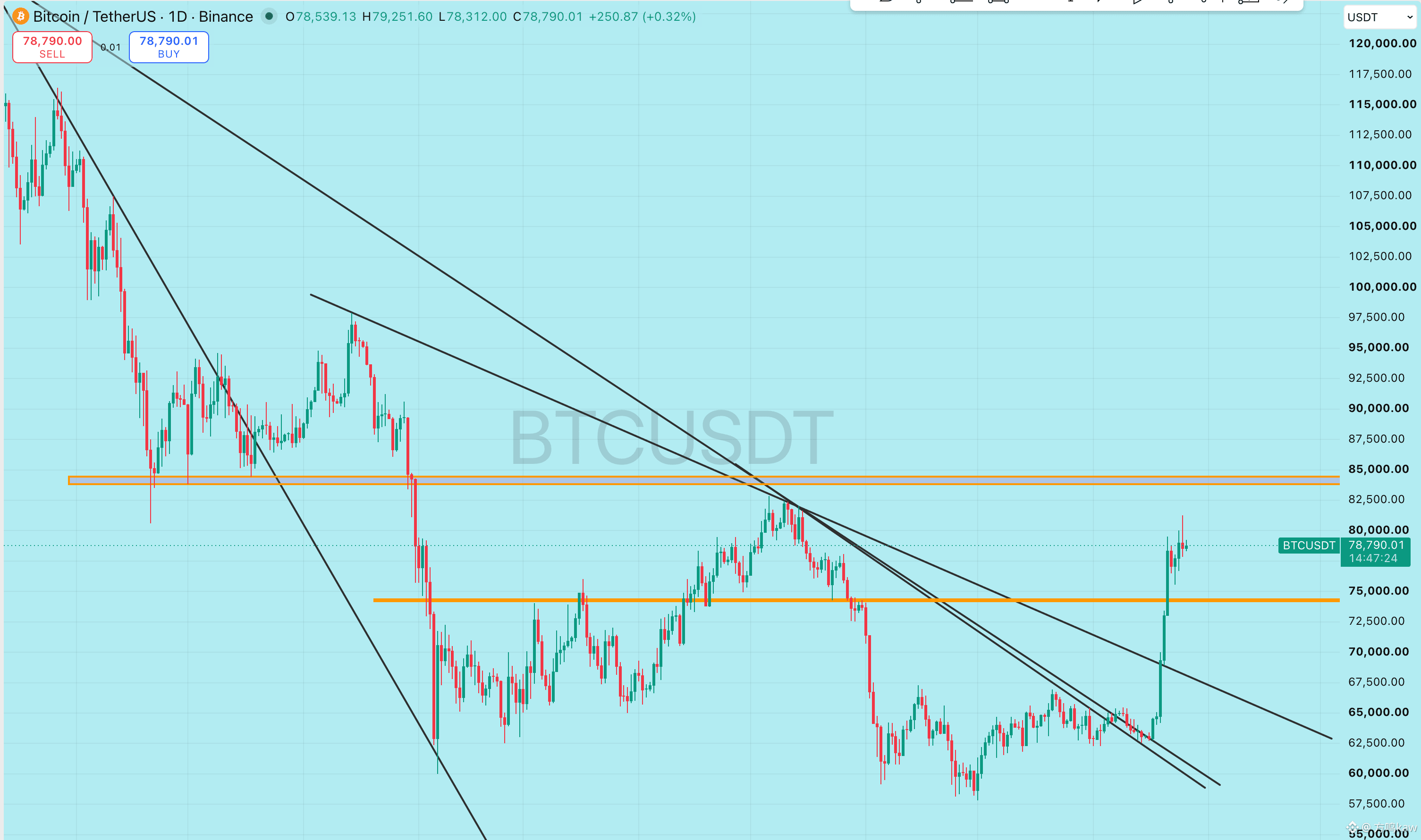
BGB has reached a high of 1.97; the trading pattern is steadier than the past few days, but it still needs one final step to truly turn stronger. The 1.90 to 1.88 zone is the support/continuation area below—if it breaks down, this round of correction is likely to wind down. To the upside, only a breakout above 1.97 gives a chance to retest 2.00. Regarding Bitget, today there were no new platform-coin-level positive catalysts found; for now, BGB is still following overall market sentiment in its rebound. If its independence isn’t strong enough, the key is to watch whether BTC can maintain strength.
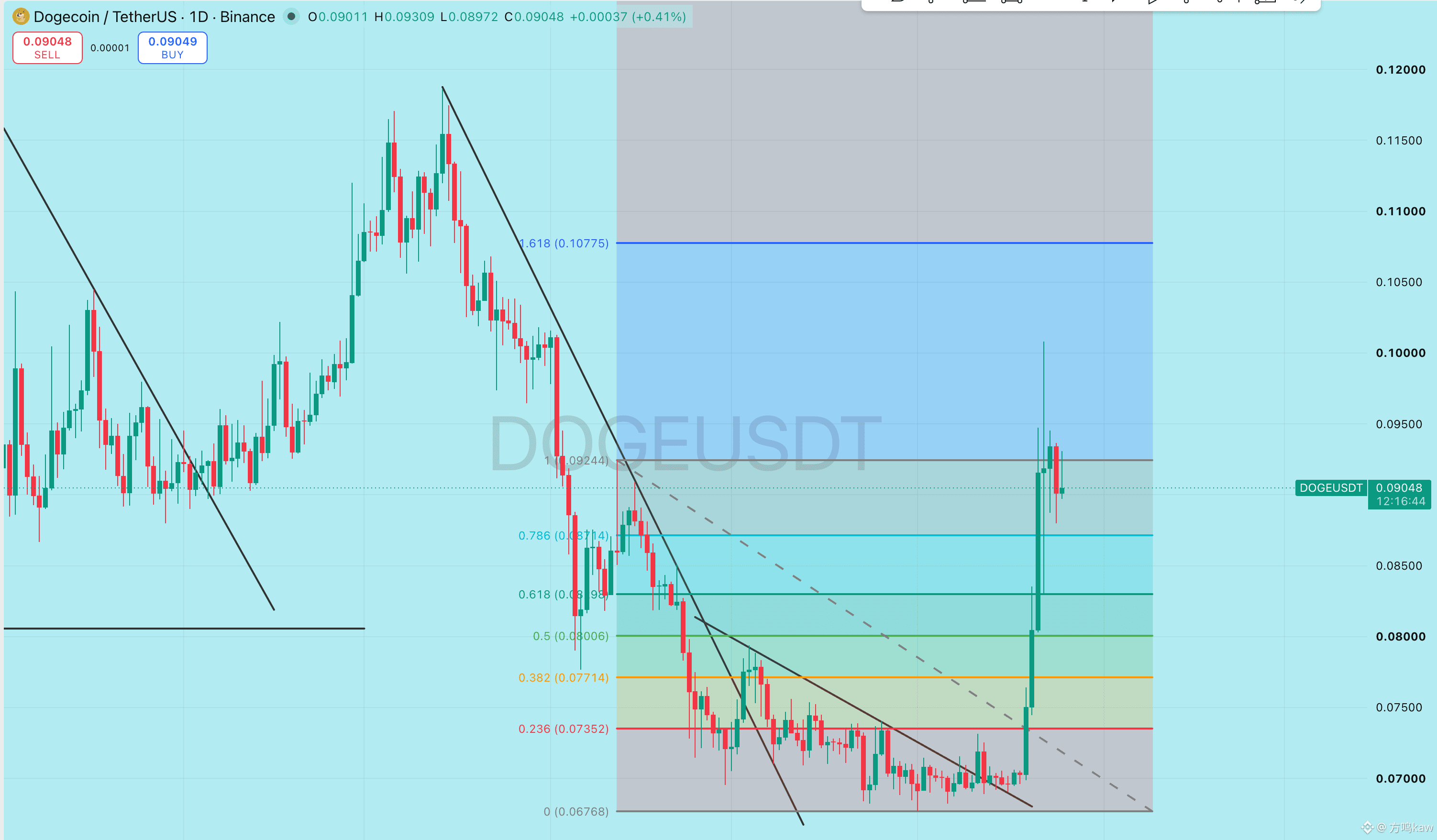
For DOGE, it spiked intraday to 0.093 and then pulled back; 0.090 is still the most direct boundary between long and short. Holding above 0.090 keeps the outlook aimed at 0.093 and 0.095; if it breaks below, then pay attention to support around 0.088. If 0.088 can’t be held either, the rebound structure will clearly weaken. DOGE has no new payment, Musk, or ecosystem-related news to support today’s move; the volatility mainly comes from a rebound in risk appetite—when risk-on, the upside has more elasticity, and when the tide turns, it’s also easiest to be the first to pull back.
For DOGE, it spiked intraday to 0.093 and then pulled back; 0.090 is still the most direct boundary between long and short. Holding above 0.090 keeps the outlook aimed at 0.093 and 0.095; if it breaks below, then pay attention to support around 0.088. If 0.088 can’t be held either, the rebound structure will clearly weaken. DOGE has no new payment, Musk, or ecosystem-related news to support today’s move; the volatility mainly comes from a rebound in risk appetite—when risk-on, the upside has more elasticity, and when the tide turns, it’s also easiest to be the first to pull back.
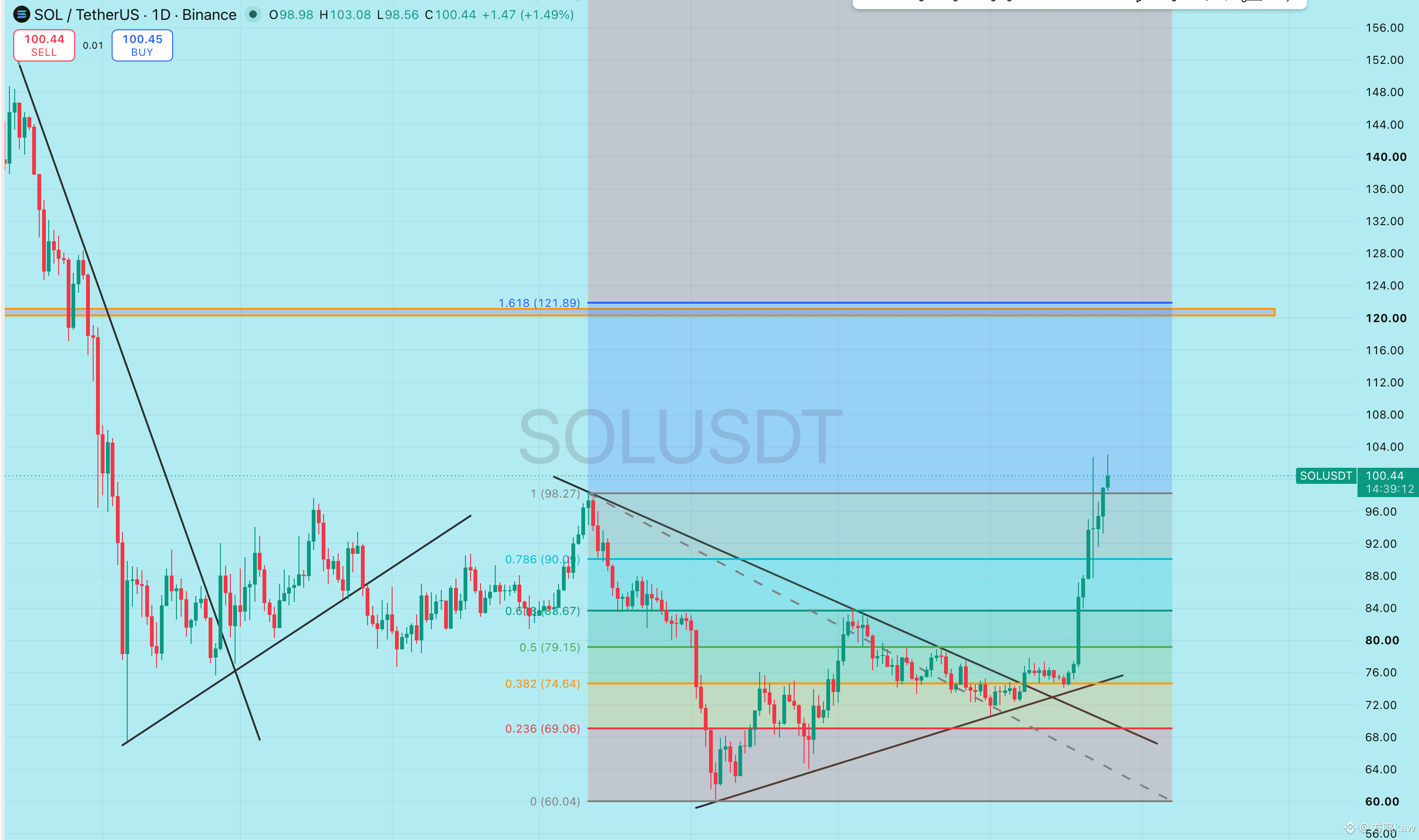
SOL is trading near 100; during the session, the intraday high reached 103, and the capital elasticity is clearly stronger than most mainstream altcoins. 99 is today’s nearest support—if it holds, there is still room to test 103 and 105 again. If price falls back below 99, it is likely to retrace toward 96, and 94 is the level that this round of rebound should not easily lose. SOL ETF single-day inflows have increased noticeably, which has indeed brought fresh attention to the market. However, at the project level, no sudden catalyst was found that would be sufficient on its own to change the pricing dynamics. So this upward move still has the component of risk-on sentiment pushed by the broader market; being above 100 does not mean pullbacks can be ignored.
XRP is consolidating around 1.49. Earlier it surged to 1.55, but it failed to expand further, suggesting that there is still sell pressure above 1.50. 1.46 is short-term support—if it breaks, look for 1.40. To the upside, XRP needs to first reclaim 1.50 and then break above 1.55 before there’s a chance to open up room toward around 1.60. Today there was no confirmation of any new regulatory or project-related news that could change XRP’s independent pricing. For now, XRP is mainly benefiting from the overall market recovery and high-volatility rotation, and you cannot directly treat the broader market’s rise as XRP-specific good news.
XRP is consolidating around 1.49. Earlier it surged to 1.55, but it failed to expand further, suggesting that there is still sell pressure above 1.50. 1.46 is short-term support—if it breaks, look for 1.40. To the upside, XRP needs to first reclaim 1.50 and then break above 1.55 before there’s a chance to open up room toward around 1.60. Today there was no confirmation of any new regulatory or project-related news that could change XRP’s independent pricing. For now, XRP is mainly benefiting from the overall market recovery and high-volatility rotation, and you cannot directly treat the broader market’s rise as XRP-specific good news.
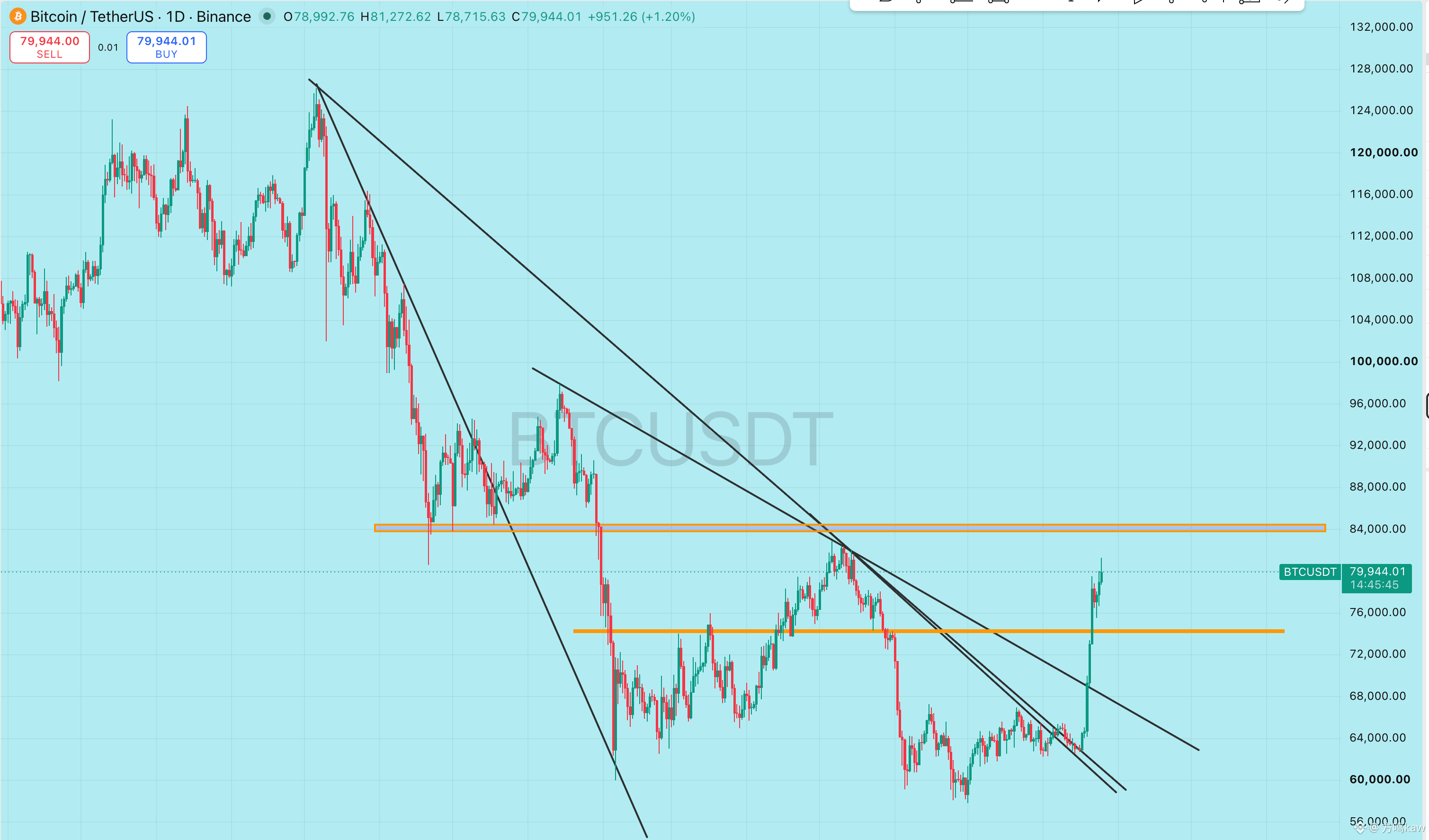
The big pancake is currently consolidating. The intraday high reached 81,273, and the 80,000 integer level has shifted from being a pressure point to becoming a tug-of-war zone for both bulls and bears. If the price can reclaim and hold above 80,000, then later it can continue to be watched toward 81,200 to 82,000. If it still can’t recapture 80,000, then the downside first to watch is 79,000; after a break, the key levels to focus on are 78,500 and 77,000. ETF inflows for spot remain supportive of the trend, but high-level inflows shouldn’t be interpreted as meaning you can chase every bullish candle. Real strength should show up as shallow pullbacks with support holding intact—not being pushed higher nonstop purely on sentiment.
Ethereum is trading around 2,480. The intraday high was 2,533, and the price still hasn’t fully escaped the repeated back-and-forth around the 2,500 area. 2,450 is the most recent consolidation/absorption level. As long as it holds, the price can continue to test 2,530; only with a true breakout above 2,530 is there a chance to look toward 2,600. If 2,450 breaks, then 2,400 will become the next key support level. ETH ETF capital has continued to see net inflows, indicating that spot buying hasn’t withdrawn, but it currently looks more like a steady repair rather than a one-way acceleration. In the short term, it still depends on whether BTC can hold above 80,000.
Ethereum is trading around 2,480. The intraday high was 2,533, and the price still hasn’t fully escaped the repeated back-and-forth around the 2,500 area. 2,450 is the most recent consolidation/absorption level. As long as it holds, the price can continue to test 2,530; only with a true breakout above 2,530 is there a chance to look toward 2,600. If 2,450 breaks, then 2,400 will become the next key support level. ETH ETF capital has continued to see net inflows, indicating that spot buying hasn’t withdrawn, but it currently looks more like a steady repair rather than a one-way acceleration. In the short term, it still depends on whether BTC can hold above 80,000.
Today, this macro storyline has not provided the market with any new rationale for additional easing. The United States has continued to escalate sanctions against Iran; oil prices are temporarily steady, but geopolitical risks have not truly receded. The yield on 10-year U.S. Treasuries remains above 4.7%, and the pressure from high interest rates on risk assets is still in place. What we really need to watch this week are the PCE data, the GDP revised figures, and the Federal Reserve Chair’s comments at the Jackson Hole meeting. The market is currently betting on capital inflows rather than the macro backdrop having already turned warmer.
That said, spot capital is indeed continuing to move in. In the last U.S. stock trading day, BTC spot ETFs recorded net inflows of $337.6 million, ETH net inflows of $115.6 million, and SOL products also logged net inflows of $33.5 million. Sustained capital absorption is the most solid “underpinning” of this rebound. However, the market has already been trending higher for a while, and while the positives are not absent, it is becoming harder to justify chasing higher at elevated levels with the simple explanation of “just had good news.”
On positioning between longs and shorts: for BTC, large-holder accounts are 46.7% long versus 53.3% short—shorts still hold a slight edge. The funding rate remains positive, indicating that long-side willingness to pay has not disappeared. BTC holdings rose intraday to around 108.5k coins before falling back to near 107k. When the price pushed higher, new leverage was added; when it pulled back, some leverage was also reduced. This structure is not extremely crowded, but above 80,000, each push higher must guard against the risk of longs chasing, shorts covering at the same time, and then a rapid retracement right after that imbalance ends.
That said, spot capital is indeed continuing to move in. In the last U.S. stock trading day, BTC spot ETFs recorded net inflows of $337.6 million, ETH net inflows of $115.6 million, and SOL products also logged net inflows of $33.5 million. Sustained capital absorption is the most solid “underpinning” of this rebound. However, the market has already been trending higher for a while, and while the positives are not absent, it is becoming harder to justify chasing higher at elevated levels with the simple explanation of “just had good news.”
On positioning between longs and shorts: for BTC, large-holder accounts are 46.7% long versus 53.3% short—shorts still hold a slight edge. The funding rate remains positive, indicating that long-side willingness to pay has not disappeared. BTC holdings rose intraday to around 108.5k coins before falling back to near 107k. When the price pushed higher, new leverage was added; when it pulled back, some leverage was also reduced. This structure is not extremely crowded, but above 80,000, each push higher must guard against the risk of longs chasing, shorts covering at the same time, and then a rapid retracement right after that imbalance ends.
Log in to explore more content