
DMAcosta
18 Posts
DMAcosta
Report
Block User
Aprendiendo paso a paso, con la ciencia de la mano y el temple de hielo (aún intentando enfriarlo jaja)
16 Following
6 Followers
17 Liked
Posts
·
--
How do they manage risk before entering the market?
We can analyze structure, trends, indicators, and news for hours, but poor risk management can destroy a good strategy.
Over time, I understood something: risk is not managed once the trade is already open. It is managed before entering.
There are a few basic measures I try to respect:
- Define how much I’m willing to lose before opening the trade. Not after.
- Set the Stop Loss based on structure and adjust the position size according to that distance—not the other way around.
- Evaluate the risk/reward ratio. A 2:1 can be interesting, but it doesn’t make sense to force it if the market structure doesn’t justify it.
- Avoid increasing exposure to “recover” a loss. A new trade should have a new justification.
- Control total accumulated exposure. Having multiple open positions doesn’t necessarily mean you’re diversified if they all depend on practically the same move.
- Know when not to trade. Important news, volatility outside expected parameters, lack of structure, or simply not finding an entry that meets the plan are all valid reasons to stay out.
And I’d add one that, for me, is fundamental:
#Don’t change the rules just because a trade is currently losing.#
The goal of risk management isn’t to avoid losses. That’s impossible.
It’s to make sure no single loss has the power to take us out of the game.
We can be wrong about the direction of the market and still have managed the trade correctly.
I’m interested in knowing how you handle it:
What is that risk-management rule you don’t negotiate under any circumstances?
Max risk per trade? Stop Loss? Daily limit? Minimum R:R? Maximum number of trades?
I’m reading your responses.
#Trading #RiskManagement #XAUUSD #Forex #TradingPsychology
How do they manage risk before entering the market?
We can analyze structure, trends, indicators, and news for hours, but poor risk management can destroy a good strategy.
Over time, I understood something: risk is not managed once the trade is already open. It is managed before entering.
There are a few basic measures I try to respect:
- Define how much I’m willing to lose before opening the trade. Not after.
- Set the Stop Loss based on structure and adjust the position size according to that distance—not the other way around.
- Evaluate the risk/reward ratio. A 2:1 can be interesting, but it doesn’t make sense to force it if the market structure doesn’t justify it.
- Avoid increasing exposure to “recover” a loss. A new trade should have a new justification.
- Control total accumulated exposure. Having multiple open positions doesn’t necessarily mean you’re diversified if they all depend on practically the same move.
- Know when not to trade. Important news, volatility outside expected parameters, lack of structure, or simply not finding an entry that meets the plan are all valid reasons to stay out.
And I’d add one that, for me, is fundamental:
#Don’t change the rules just because a trade is currently losing.#
The goal of risk management isn’t to avoid losses. That’s impossible.
It’s to make sure no single loss has the power to take us out of the game.
We can be wrong about the direction of the market and still have managed the trade correctly.
I’m interested in knowing how you handle it:
What is that risk-management rule you don’t negotiate under any circumstances?
Max risk per trade? Stop Loss? Daily limit? Minimum R:R? Maximum number of trades?
I’m reading your responses.
#Trading #RiskManagement #XAUUSD #Forex #TradingPsychology
We can analyze structure, trends, indicators, and news for hours, but poor risk management can destroy a good strategy.
Over time, I understood something: risk is not managed once the trade is already open. It is managed before entering.
There are a few basic measures I try to respect:
- Define how much I’m willing to lose before opening the trade. Not after.
- Set the Stop Loss based on structure and adjust the position size according to that distance—not the other way around.
- Evaluate the risk/reward ratio. A 2:1 can be interesting, but it doesn’t make sense to force it if the market structure doesn’t justify it.
- Avoid increasing exposure to “recover” a loss. A new trade should have a new justification.
- Control total accumulated exposure. Having multiple open positions doesn’t necessarily mean you’re diversified if they all depend on practically the same move.
- Know when not to trade. Important news, volatility outside expected parameters, lack of structure, or simply not finding an entry that meets the plan are all valid reasons to stay out.
And I’d add one that, for me, is fundamental:
#Don’t change the rules just because a trade is currently losing.#
The goal of risk management isn’t to avoid losses. That’s impossible.
It’s to make sure no single loss has the power to take us out of the game.
We can be wrong about the direction of the market and still have managed the trade correctly.
I’m interested in knowing how you handle it:
What is that risk-management rule you don’t negotiate under any circumstances?
Max risk per trade? Stop Loss? Daily limit? Minimum R:R? Maximum number of trades?
I’m reading your responses.
#Trading #RiskManagement #XAUUSD #Forex #TradingPsychology
96
·
--
Article
The Importance of the Statistical Filter in Gold (XAU/USD): Patience over Intuition.Trading Gold requires discipline. It’s a market with high volatility, fast price moves, and areas where liquidity can be swept away in minutes.
One of the biggest mistakes I see is trading in the “middle ground”: zones where price hasn’t reached a major support or resistance yet, but some candles already give the impression of a clear direction.
Well, for me, patience becomes part of risk management.
When price is in intermediate zones, we often don’t have a clear statistical edge. I’d rather wait for important structural levels and only then look for confirmations.
The Importance of the Statistical Filter in Gold (XAU/USD): Patience over Intuition.
Trading Gold requires discipline. It’s a market with high volatility, fast price moves, and areas where liquidity can be swept away in minutes.
One of the biggest mistakes I see is trading in the “middle ground”: zones where price hasn’t reached a major support or resistance yet, but some candles already give the impression of a clear direction.
Well, for me, patience becomes part of risk management.
When price is in intermediate zones, we often don’t have a clear statistical edge. I’d rather wait for important structural levels and only then look for confirmations.
One of the biggest mistakes I see is trading in the “middle ground”: zones where price hasn’t reached a major support or resistance yet, but some candles already give the impression of a clear direction.
Well, for me, patience becomes part of risk management.
When price is in intermediate zones, we often don’t have a clear statistical edge. I’d rather wait for important structural levels and only then look for confirmations.
2
459
·
--
In this profession, being right is secondary; what truly pays is mastering risk and protecting capital.
In this profession, being right is secondary; what truly pays is mastering risk and protecting capital.
98
·
--
While learning in my trading operations, I discovered the profitability ratio—something I hadn’t mapped out much until now, and which ended up being quite interesting.
Basically, it has to do with how much I’m willing to risk in each trade and what I expect to get in return. It sounds silly, but understanding it better changed the way I work quite a bit.
I started paying a lot more attention to where to place my SL and TP, how to calculate lots, the trading ranges, and, above all, to working with relationships like 1:2 or 1:3.
I also understood something important: it’s not enough for a trade to “look good.” Every step I take needs to be supported by analysis and, whenever possible, by statistical data that backs up the decision.
I’m still learning, and I’m sure I still have a lot to improve, but little by little I’m understanding my own system better.
We’re moving forward along this learning curve. One step at a time. 📈
#XAUUSD #CFD
While learning in my trading operations, I discovered the profitability ratio—something I hadn’t mapped out much until now, and which ended up being quite interesting.
Basically, it has to do with how much I’m willing to risk in each trade and what I expect to get in return. It sounds silly, but understanding it better changed the way I work quite a bit.
I started paying a lot more attention to where to place my SL and TP, how to calculate lots, the trading ranges, and, above all, to working with relationships like 1:2 or 1:3.
I also understood something important: it’s not enough for a trade to “look good.” Every step I take needs to be supported by analysis and, whenever possible, by statistical data that backs up the decision.
I’m still learning, and I’m sure I still have a lot to improve, but little by little I’m understanding my own system better.
We’re moving forward along this learning curve. One step at a time. 📈
#XAUUSD #CFD
Basically, it has to do with how much I’m willing to risk in each trade and what I expect to get in return. It sounds silly, but understanding it better changed the way I work quite a bit.
I started paying a lot more attention to where to place my SL and TP, how to calculate lots, the trading ranges, and, above all, to working with relationships like 1:2 or 1:3.
I also understood something important: it’s not enough for a trade to “look good.” Every step I take needs to be supported by analysis and, whenever possible, by statistical data that backs up the decision.
I’m still learning, and I’m sure I still have a lot to improve, but little by little I’m understanding my own system better.
We’re moving forward along this learning curve. One step at a time. 📈
#XAUUSD #CFD
144
·
--
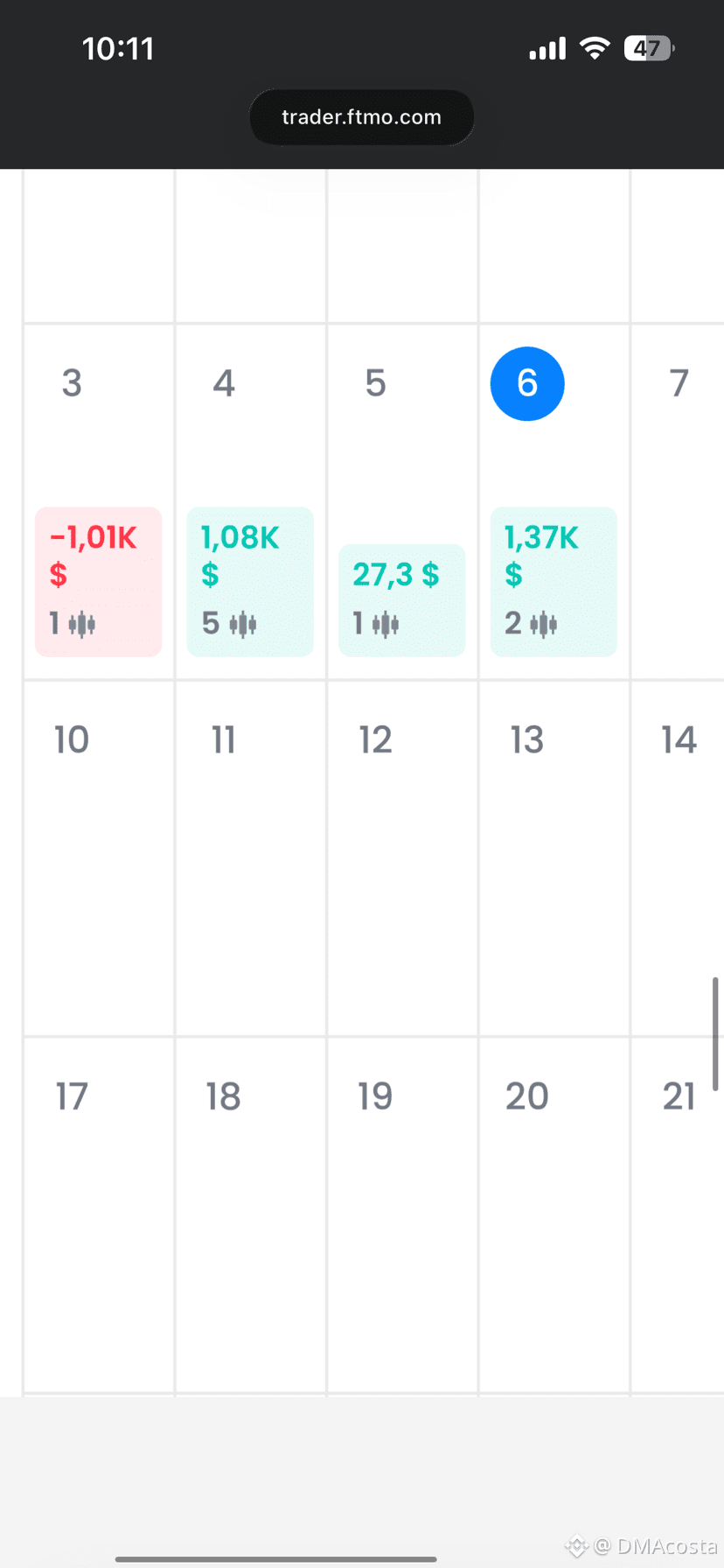
Sharing learnings, today I learned to read Bollinger Bands, EMA 20 and EMA 200 and the follow-ups on M30, H1 and H4.
Taking the time to understand how these statistical indicators behave is very important to achieve positive results. $XAU #indicadores #statistics
Sharing learnings, today I learned to read Bollinger Bands, EMA 20 and EMA 200 and the follow-ups on M30, H1 and H4.
Taking the time to understand how these statistical indicators behave is very important to achieve positive results. $XAU #indicadores #statistics
Taking the time to understand how these statistical indicators behave is very important to achieve positive results. $XAU #indicadores #statistics
1
1
319
·
--
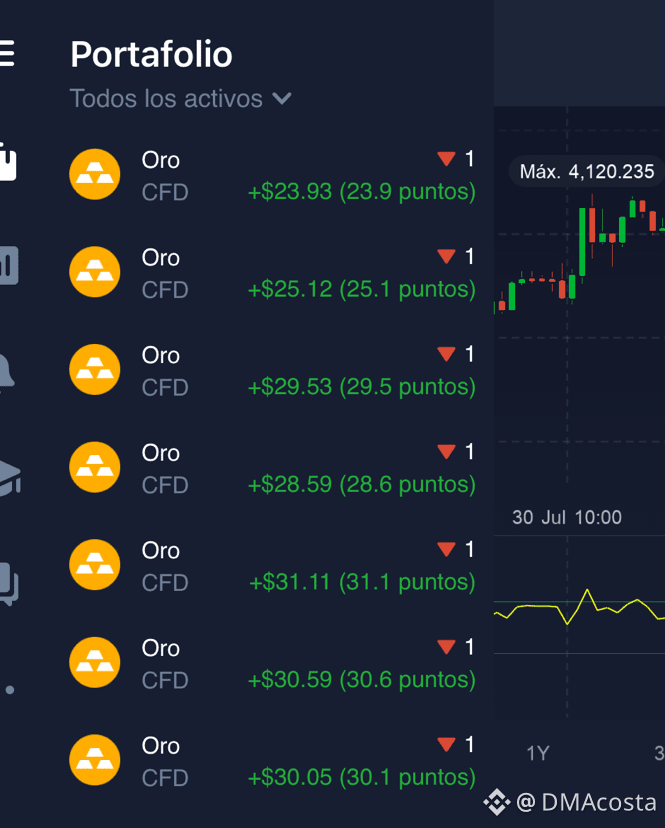
$XAU This week I learned a lot, and I want to share it in case it helps someone, from beginner to beginner, of course. RSI 30 min, 1 hour, and 4 hours—controlling overbought and oversold trends, and taking into account the resistance points above and below as control points to place trades and go short—were strategies that worked well for me.
One of my personal rules is not to invest more than 3% of my capital; once I go beyond that, the risk is higher than the benefit.
Always setting the SL slightly below the sell resistance floor and/or slightly above the buy resistance ceiling is also a good method to protect capital.
Lots of analysis, every 30~60 minutes, due to the high volatility of gold.
It works really well for me! Training for futures funding 🙌🏼
$XAU This week I learned a lot, and I want to share it in case it helps someone, from beginner to beginner, of course. RSI 30 min, 1 hour, and 4 hours—controlling overbought and oversold trends, and taking into account the resistance points above and below as control points to place trades and go short—were strategies that worked well for me.
One of my personal rules is not to invest more than 3% of my capital; once I go beyond that, the risk is higher than the benefit.
Always setting the SL slightly below the sell resistance floor and/or slightly above the buy resistance ceiling is also a good method to protect capital.
Lots of analysis, every 30~60 minutes, due to the high volatility of gold.
It works really well for me! Training for futures funding 🙌🏼
One of my personal rules is not to invest more than 3% of my capital; once I go beyond that, the risk is higher than the benefit.
Always setting the SL slightly below the sell resistance floor and/or slightly above the buy resistance ceiling is also a good method to protect capital.
Lots of analysis, every 30~60 minutes, due to the high volatility of gold.
It works really well for me! Training for futures funding 🙌🏼
2
3
1.2k
·
--
I lost 1500 USD, not due to a bad transaction—I lost it in P2P.
Apparent modus operandi:
They attack your bank account with repeated login attempts, the account gets locked, and then they send you a transfer receipt that’s fake.
Never trust a profile even if it’s verified—it’s not enough.
I’m afraid I won’t get my money back, but I’ll take the lesson.
#LeccionesAprendidas #p2p
I lost 1500 USD, not due to a bad transaction—I lost it in P2P.
Apparent modus operandi:
They attack your bank account with repeated login attempts, the account gets locked, and then they send you a transfer receipt that’s fake.
Never trust a profile even if it’s verified—it’s not enough.
I’m afraid I won’t get my money back, but I’ll take the lesson.
#LeccionesAprendidas #p2p
Apparent modus operandi:
They attack your bank account with repeated login attempts, the account gets locked, and then they send you a transfer receipt that’s fake.
Never trust a profile even if it’s verified—it’s not enough.
I’m afraid I won’t get my money back, but I’ll take the lesson.
#LeccionesAprendidas #p2p
4
2
278
·
--
This week I managed to increase my invested capital by 25%, it feels good to learn how to read the indicators and understand the influence of geopolitics. We’re learning little by little, with risk management and self-control, lots of Zen and analysis in decision-making!! XAUUSD was very interesting!
#fed #GOLD
This week I managed to increase my invested capital by 25%, it feels good to learn how to read the indicators and understand the influence of geopolitics. We’re learning little by little, with risk management and self-control, lots of Zen and analysis in decision-making!! XAUUSD was very interesting!
#fed #GOLD
#fed #GOLD
289
·
--
To read slowlyFrom my amateur perspective, I’ve learned that overconfidence can be a silent enemy.
In the world of trading, we must live by a code of honor: let’s respect agreements, we must fulfill what we agreed to, but above all, we must never forget that we may be dealing with an unfair or unscrupulous person on the other side.
Let’s take care of our interests and be careful in every operation; that is my sound advice.
#LeccionesAprendidas
To read slowly
From my amateur perspective, I’ve learned that overconfidence can be a silent enemy.
In the world of trading, we must live by a code of honor: let’s respect agreements, we must fulfill what we agreed to, but above all, we must never forget that we may be dealing with an unfair or unscrupulous person on the other side.
Let’s take care of our interests and be careful in every operation; that is my sound advice.
#LeccionesAprendidas
In the world of trading, we must live by a code of honor: let’s respect agreements, we must fulfill what we agreed to, but above all, we must never forget that we may be dealing with an unfair or unscrupulous person on the other side.
Let’s take care of our interests and be careful in every operation; that is my sound advice.
#LeccionesAprendidas
174
Log in to explore more content
Join global crypto users on Binance Square
⚡️ Get latest and useful information about crypto.
💬 Trusted by the world’s largest crypto exchange.
👍 Discover real insights from verified creators.
Email / Phone number
Trending Topics
BOJRaisesRatesTo31YearHigh
123,293 views
1,909 Discussing
#BOJRaisesRatesTo31YearHigh
#BOJRaisesRatesTo31YearHigh 🇯🇵📈
The Bank of Japan has taken another major step by raising interest rates to their highest level in 31 years, putting global markets on alert. The move signals a continued shift away from Japan’s long-standing ultra-loose monetary policy. Higher Japanese rates could strengthen the yen, influence global bond yields, and potentially impact capital flows across financial markets. Crypto and risk assets may also react as investors reassess liquidity and risk exposure. Traders are now watching the BOJ’s next statements closely for clues about future rate decisions. Volatility could increase as markets digest the policy change and its potential global impact. #BOJ #Japan #Crypto #Markets #InterestRates $NVDAB
maqsoodahmed1
·1 Likes
·92 views
BuffettStepsDownAsBerkshireChairman
58,067 views
935 Discussing
XRPExchangeReservesHitSevenYearLow
61,799 views
881 Discussing