
cryptodaddy07
678 Posts

cryptodaddy07
Report
Block User
Full Time Trader BTC/USD ETH/USD XRP/USD - Web3/ - Here To educate and supppot You, Follow me on X @cryptodaddy75

GALA Holder
High-Frequency Trader
7.4 Years
66 Following
630 Followers
660 Liked
Posts
All
Quotes
Videos
Live
PINNED

Article
Bitcoin’s Next Move Will Shock Everyone – Read Before It’s Too Late!🚨 Bitcoin’s Next Move Will Shock Everyone – Read Before It’s Too Late!
#Bitcoin isn’t in a quick dip. It’s in a silent 12–14 month bear cycle, and 99% of traders still don’t understand what is happening. Since September, nothing has changed: liquidity is dying, psychology is breaking, and the market is preparing to punish anyone expecting a “fast bottom.”
Here’s the brutal truth:
$BTC is not going to magically bottom in weeks. It needs a full year of liquidity bleed, targeting the $60K region. Yet before that final collapse, Bitcoin could explode into a shocking $97K–$107K bull trap.
Yes—up first, pain later.
Most people cannot accept slow markets. They want instant profits, vertical moves, TikTok speed charts. But Bitcoin is entering a liquidity-harvesting phase built to destroy patience, confidence and portfolios. Expect months of sideways grind, manipulation, exhaustion, and emotional breakdown.
This is why I’m short AND buying—short stays open (perfect hedge), while spot bags ride the $100K push for a clean 20% profit.
The game isn’t about direction anymore.
It’s about survival.
Now here’s the scary part no one is talking about ⬇️
The US Federal Reserve just changed the Standing Repo Facility from a $500B TOTAL limit… to $240B per bank. PER DAY.
Translation:
The financial system needs so much emergency cash that the Fed basically turned into a 24/7 liquidity hospital.
This isn’t bullish.
It’s a warning siren.
Every time banks needed this level of help—2008, Credit Suisse, Lehman—the market didn’t moon…
It crashed into a bear market.
The world is sleepwalking straight into a 2026 crisis, followed by money-printing chaos, collapsing currencies, and a repeat of 2020—but bigger. Real estate, metals, Bitcoin… everything explodes UP while purchasing power dies.
Most will sell bottoms.
Most will FOMO tops.
Most will fail.
Only a few will understand what this means today.
So sit tight, zoom out, stop over-trading, and remember:
Bitcoin is about to fool both bulls and bears before delivering the real move
Bitcoin’s Next Move Will Shock Everyone – Read Before It’s Too Late!
🚨 Bitcoin’s Next Move Will Shock Everyone – Read Before It’s Too Late!
#Bitcoin isn’t in a quick dip. It’s in a silent 12–14 month bear cycle, and 99% of traders still don’t understand what is happening. Since September, nothing has changed: liquidity is dying, psychology is breaking, and the market is preparing to punish anyone expecting a “fast bottom.”
Here’s the brutal truth:
$BTC is not going to magically bottom in weeks. It needs a full year of liquidity bleed, targeting the $60K region. Yet before that final collapse, Bitcoin could explode into a shocking $97K–$107K bull trap.
Yes—up first, pain later.
Most people cannot accept slow markets. They want instant profits, vertical moves, TikTok speed charts. But Bitcoin is entering a liquidity-harvesting phase built to destroy patience, confidence and portfolios. Expect months of sideways grind, manipulation, exhaustion, and emotional breakdown.
This is why I’m short AND buying—short stays open (perfect hedge), while spot bags ride the $100K push for a clean 20% profit.
The game isn’t about direction anymore.
It’s about survival.
Now here’s the scary part no one is talking about ⬇️
The US Federal Reserve just changed the Standing Repo Facility from a $500B TOTAL limit… to $240B per bank. PER DAY.
Translation:
The financial system needs so much emergency cash that the Fed basically turned into a 24/7 liquidity hospital.
This isn’t bullish.
It’s a warning siren.
Every time banks needed this level of help—2008, Credit Suisse, Lehman—the market didn’t moon…
It crashed into a bear market.
The world is sleepwalking straight into a 2026 crisis, followed by money-printing chaos, collapsing currencies, and a repeat of 2020—but bigger. Real estate, metals, Bitcoin… everything explodes UP while purchasing power dies.
Most will sell bottoms.
Most will FOMO tops.
Most will fail.
Only a few will understand what this means today.
So sit tight, zoom out, stop over-trading, and remember:
Bitcoin is about to fool both bulls and bears before delivering the real move
12
7
21
8k
57
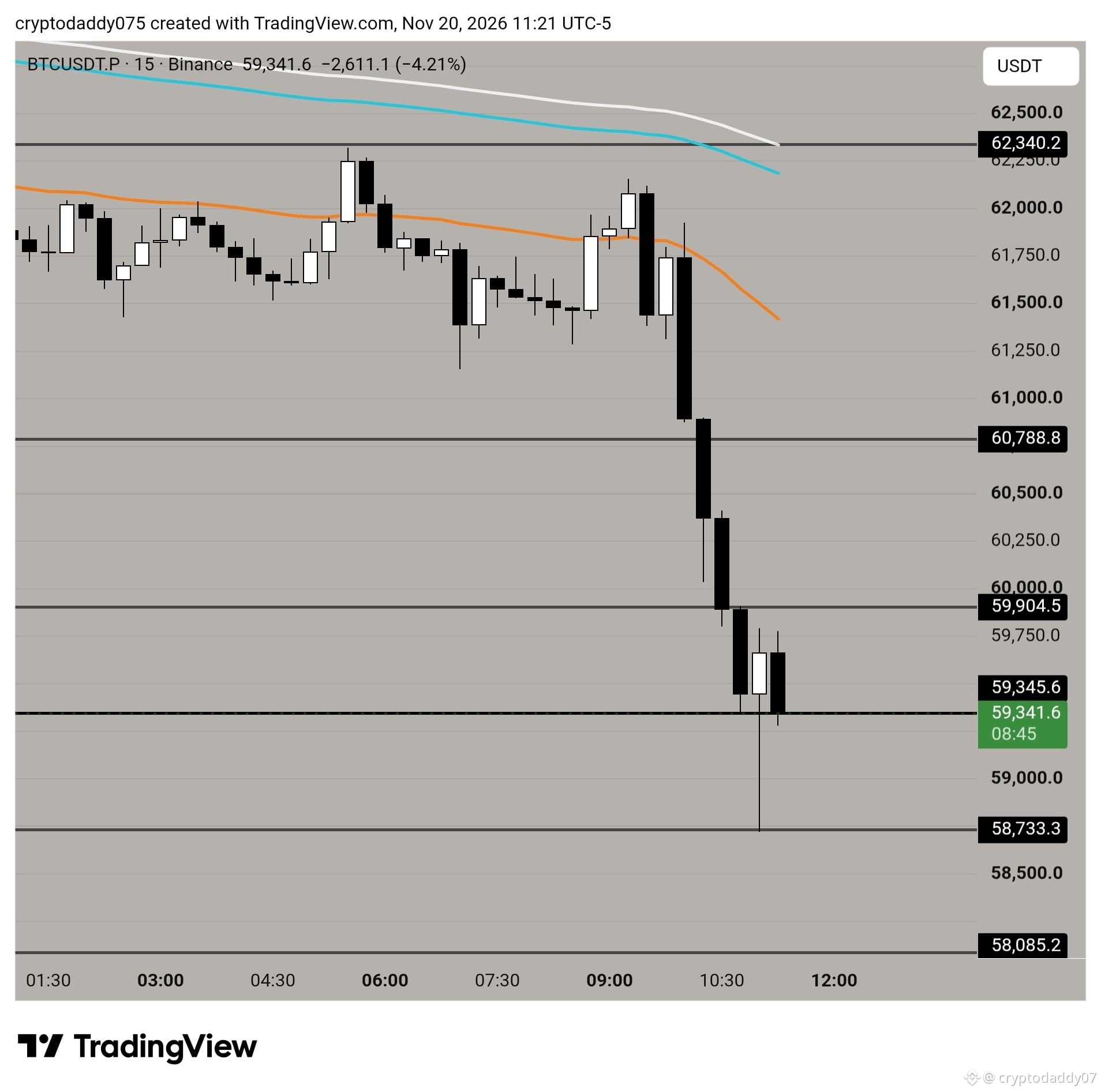
$BTC — We could see another 3–4% drop from here. In other words, that 4% dip is our planned entry zone, and we've already placed our Buy Limit.
Now we wait for the market to come to us. No FOMO. 🎯
$BTC — We could see another 3–4% drop from here. In other words, that 4% dip is our planned entry zone, and we've already placed our Buy Limit.
Now we wait for the market to come to us. No FOMO. 🎯
Now we wait for the market to come to us. No FOMO. 🎯
80
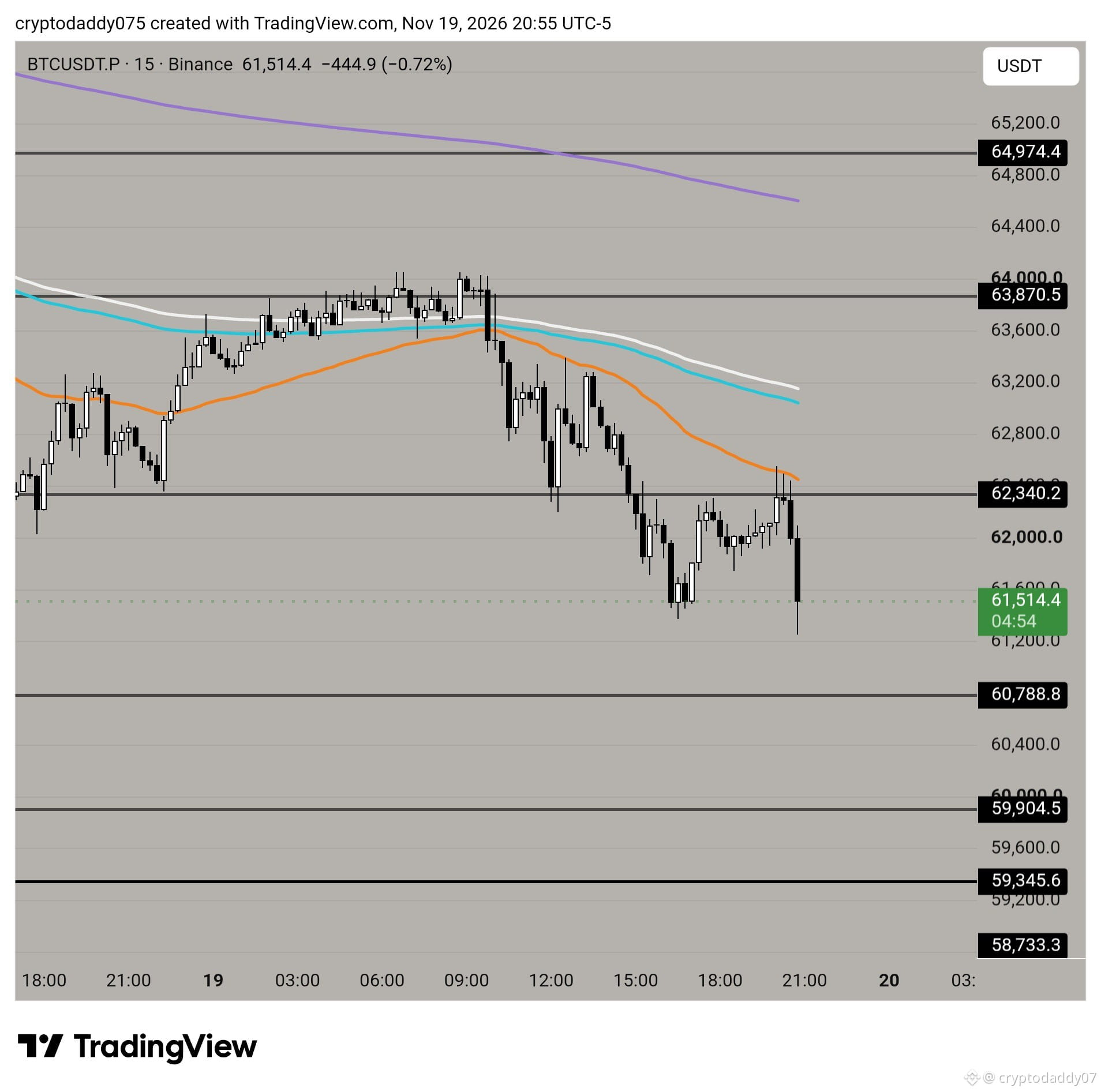
$BTC — Two moves captured, level by level. From $64,000 to $62,300, then another move from $62,300 to $61,400. Mapping every level as we work our way towards the final target. 🎯📊
As for the swing trade, I'm holding that in another account, with a higher entry.
$BTC — Two moves captured, level by level. From $64,000 to $62,300, then another move from $62,300 to $61,400. Mapping every level as we work our way towards the final target. 🎯📊
As for the swing trade, I'm holding that in another account, with a higher entry.
As for the swing trade, I'm holding that in another account, with a higher entry.
123
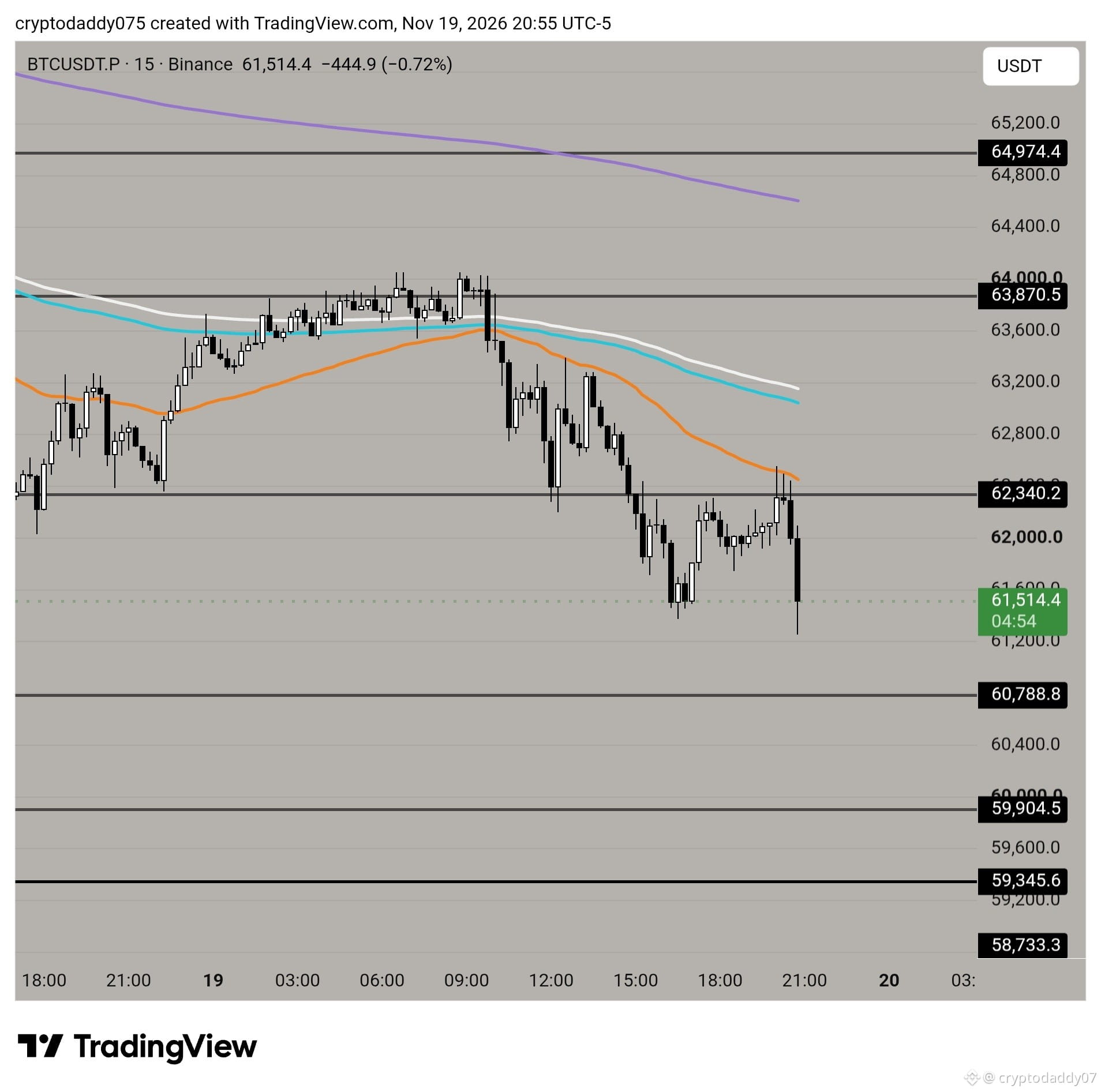
$BTC Another breakout and retest! 📊
You had another opportunity to enter the trade if you missed our initial entry at $64,000. Break the level, wait for the retest, confirm, and take the trade! 🎯
$BTC Another breakout and retest! 📊
You had another opportunity to enter the trade if you missed our initial entry at $64,000. Break the level, wait for the retest, confirm, and take the trade! 🎯
You had another opportunity to enter the trade if you missed our initial entry at $64,000. Break the level, wait for the retest, confirm, and take the trade! 🎯
122
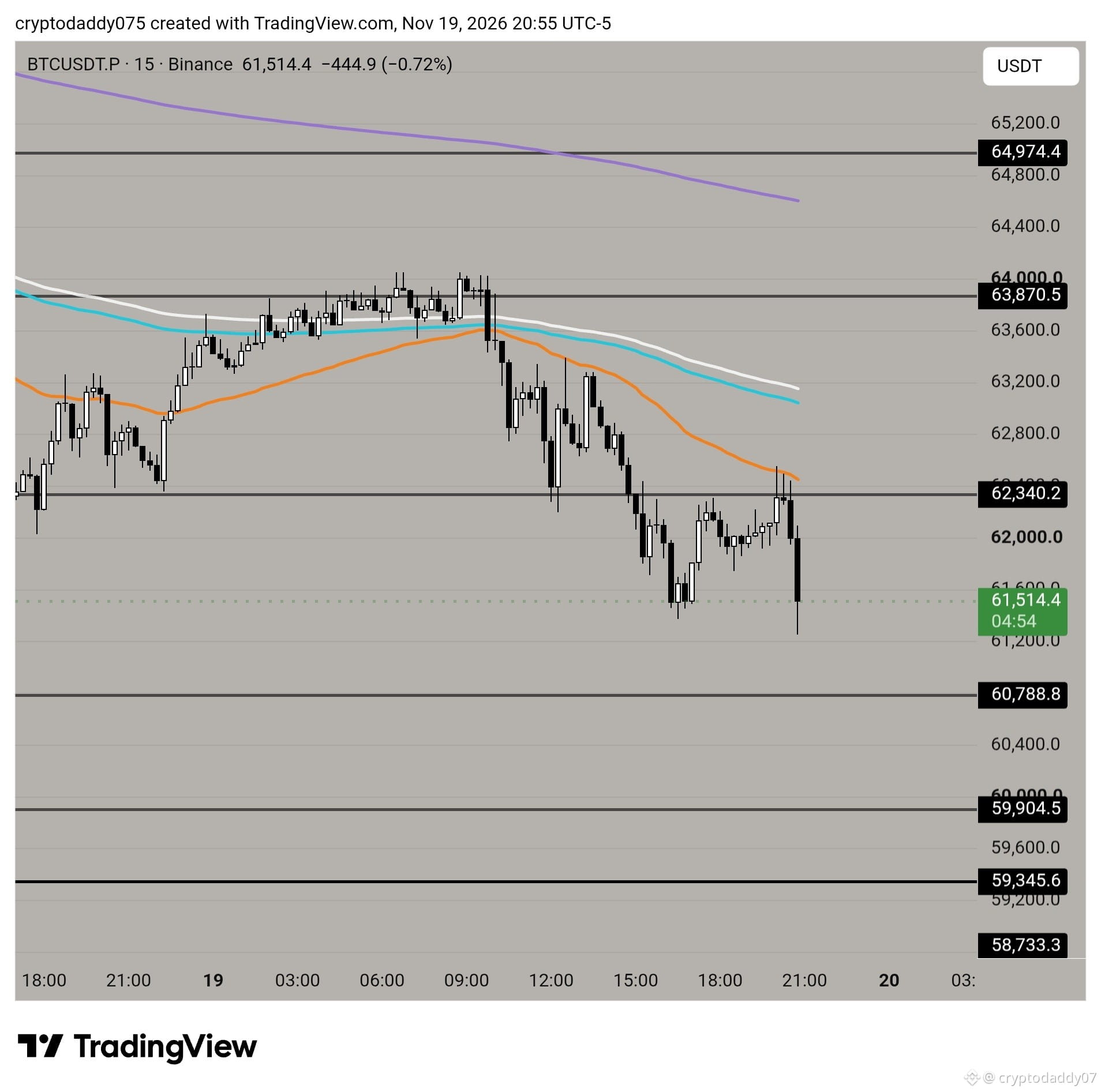
And finally, $BTC broke below support as expected. Place your buy limit and let the market come to us. Now we wait for execution and confirmation. No FOMO, level to level. 🔥
And finally, $BTC broke below support as expected. Place your buy limit and let the market come to us. Now we wait for execution and confirmation. No FOMO, level to level. 🔥
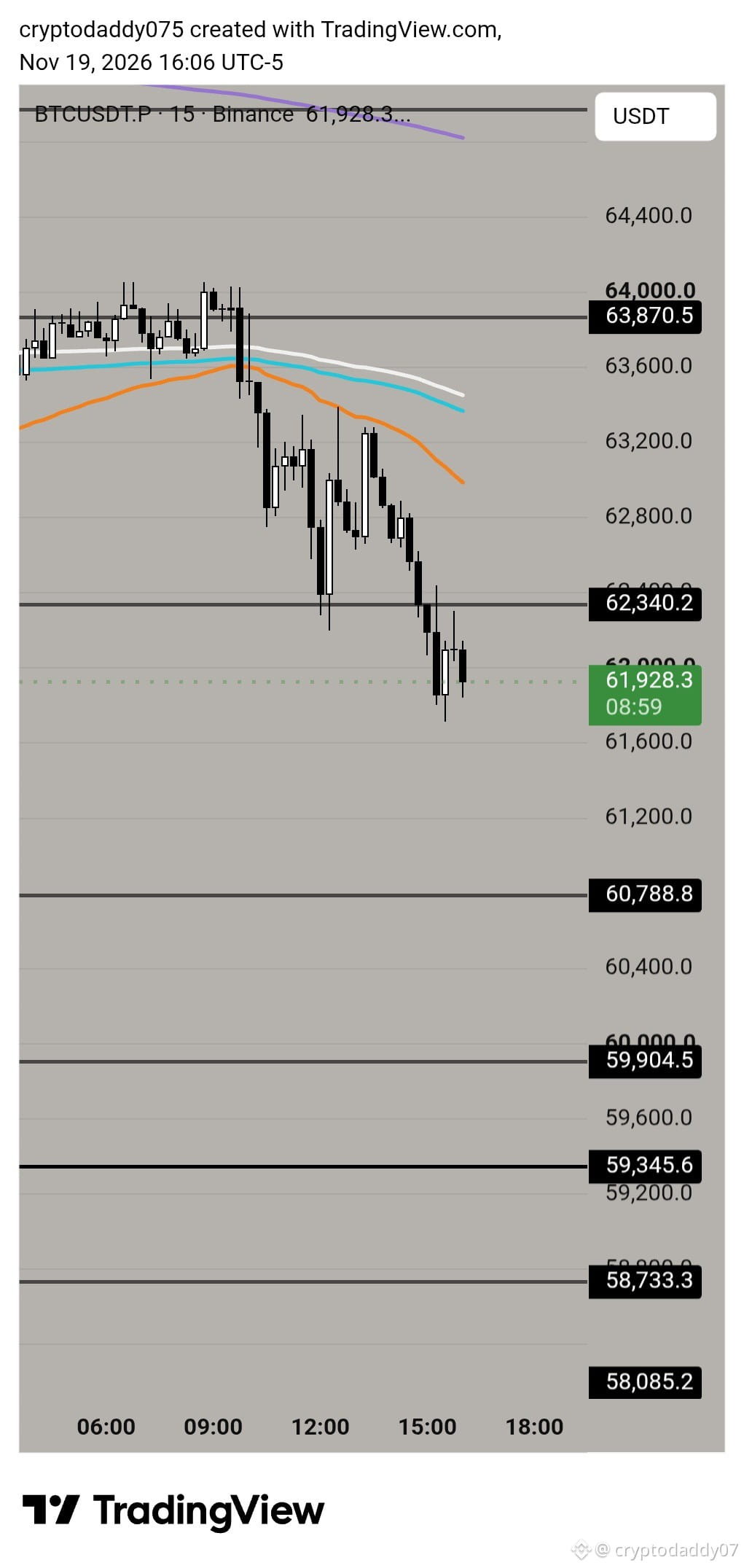
124
🎮 GTA mission update: SHORT SUCCESSFULLY ACTIVATED!
BTC our first entry: $63,950 Current price: $63,200
We're already in profit! 💰 Mission is going according to plan. Stay sharp, manage risk and don't get busted! 😂🐺
🎮 GTA mission update: SHORT SUCCESSFULLY ACTIVATED!
BTC our first entry: $63,950 Current price: $63,200
We're already in profit! 💰 Mission is going according to plan. Stay sharp, manage risk and don't get busted! 😂🐺
BTC our first entry: $63,950 Current price: $63,200
We're already in profit! 💰 Mission is going according to plan. Stay sharp, manage risk and don't get busted! 😂🐺
21
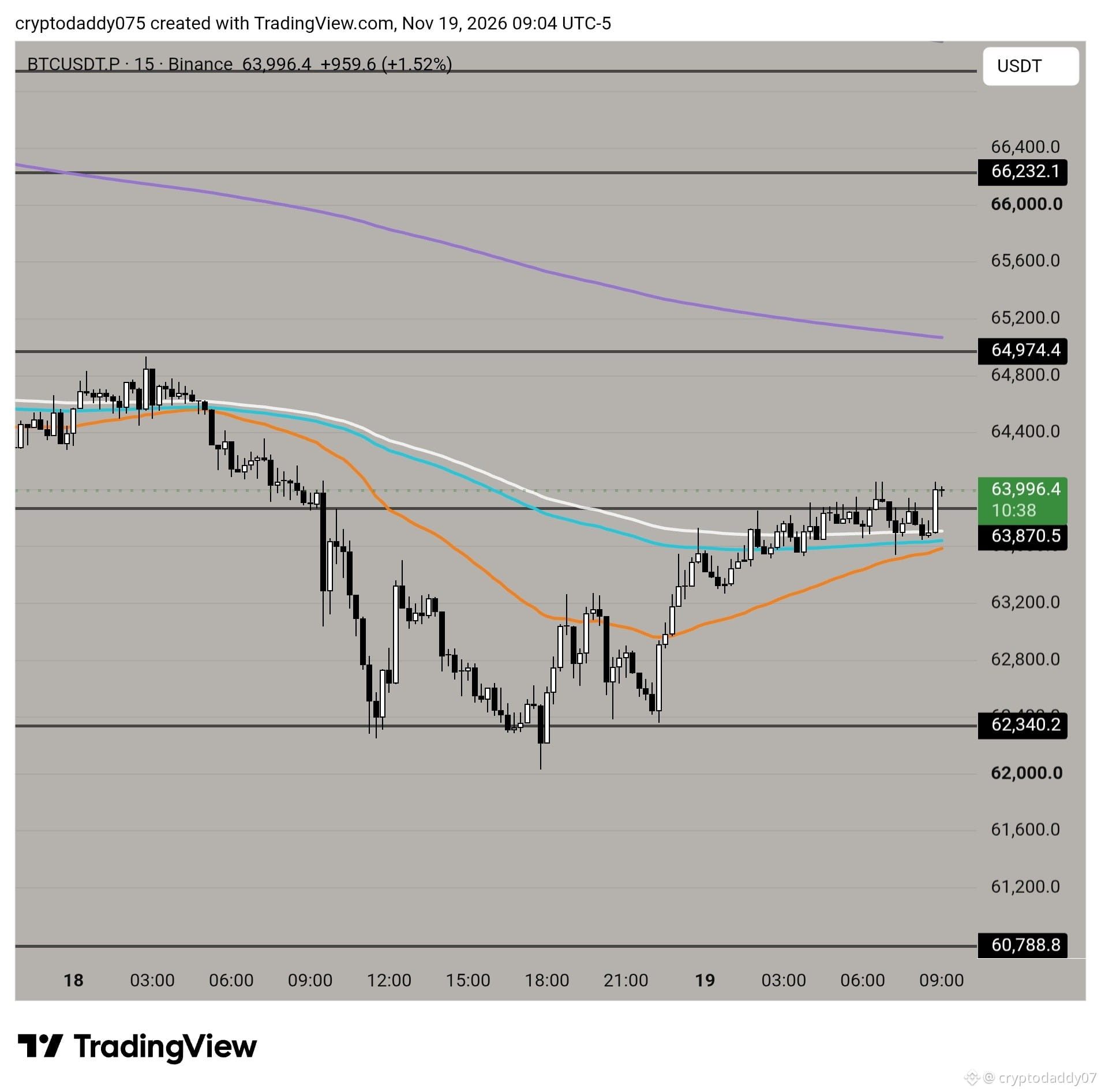
🚨 BTC/USDT — SHORT SETUP ON WATCH! 🔴
Bitcoin is approaching a key resistance zone. I'm watching for another rejection before the next potential move down.
🎯 The Plan:
🔹 First Entry: CMP (Current Market Price) 🔹 Second Entry: $64,974 🛑 Stop Loss: $66,400 💰 Take Profit: $58,017
No FOMO. No blind entries. Waiting for confirmation and executing level to level.
Let's see if BTC gives us the move! 🐺📉
#BTC
1
357
BTC short opportunity
long scalp closed! ✅
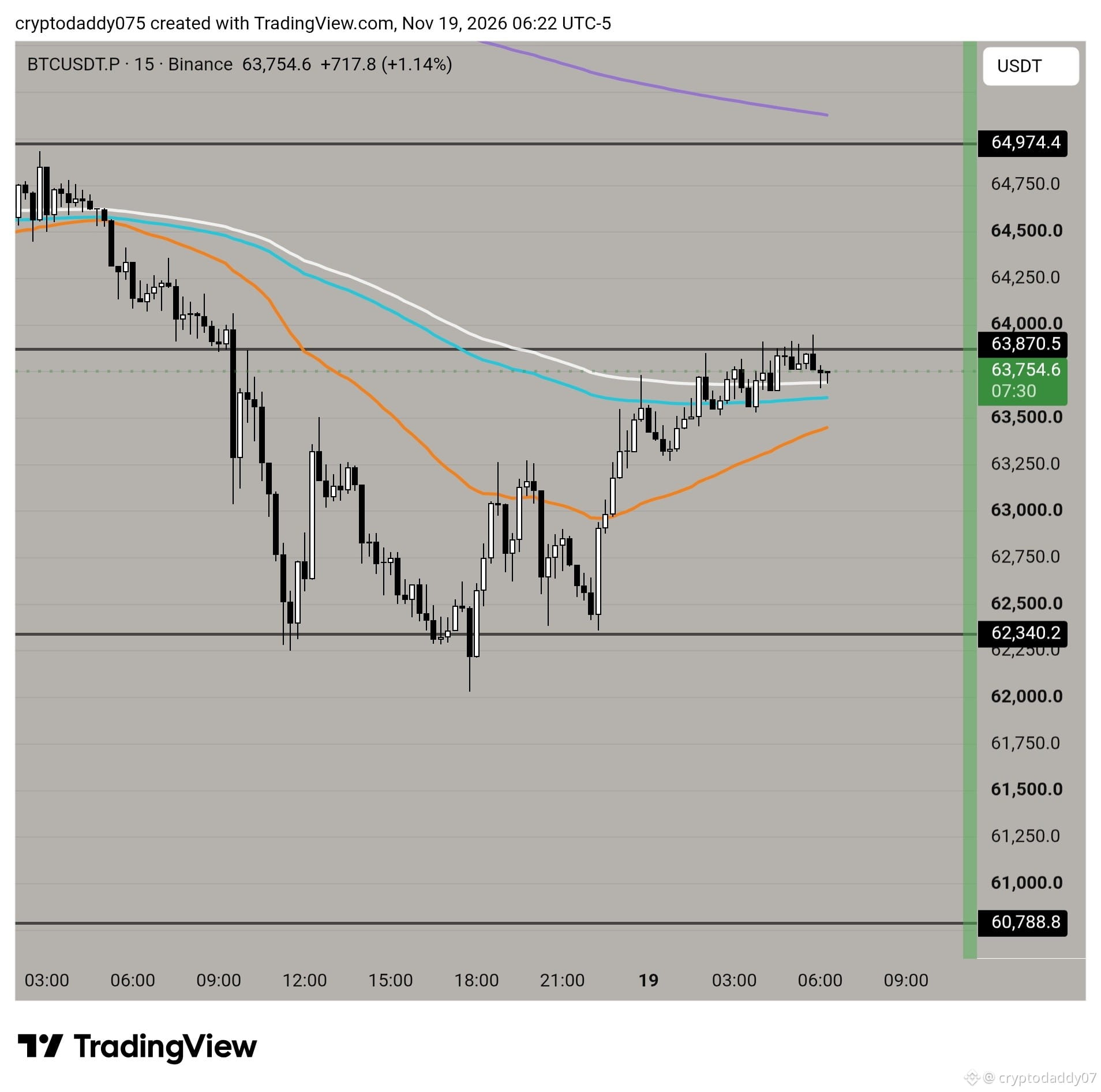
Caught the move from $62,350 to $63,750. No breakout above resistance so far, so we're waiting for another retest and confirmation before considering a short.
No FOMO, no guessing. Level to level. 🎯
What's next? Confirmation first, then action.
BTC short opportunity
long scalp closed! ✅
Caught the move from $62,350 to $63,750. No breakout above resistance so far, so we're waiting for another retest and confirmation before considering a short.
No FOMO, no guessing. Level to level. 🎯
What's next? Confirmation first, then action.
long scalp closed! ✅
Caught the move from $62,350 to $63,750. No breakout above resistance so far, so we're waiting for another retest and confirmation before considering a short.
No FOMO, no guessing. Level to level. 🎯
What's next? Confirmation first, then action.
115
🎮 GTA 6 or More Time on the Charts? 😂
With GTA 6 coming, I'm seriously thinking about buying it and taking a break from trading...
But then I thought: What if I just stay on the charts and add GTA 6 to my watchlist? 🤣
$BTC , $ETH , $XRP … and now GTA 6? 📈
🐺 Be honest:
What should Crypto Daddy do?
1️⃣ Buy GTA 6 and enjoy the game 🎮
2️⃣ Stay focused on BTC, ETH & XRP 📊
3️⃣ Do both and trade between missions 😂
Let's vote! 👇
No FOMO. No FUD. Trust the Lines.

47

Article
Global Markets Under Pressure: Bitcoin Struggles, Gold Slides and Fed Signals More Rate HikesGlobal financial markets are facing another challenging session as investors assess rising interest-rate expectations, geopolitical tensions, weakening precious metals and continued uncertainty across the cryptocurrency market.
#Bitcoin remains under pressure, gold has extended its decline to its lowest levels in more than a year, and oil markets are balancing geopolitical risks against concerns about increasing supply.
Meanwhile, the Federal Reserve has delivered another important message: the fight against inflation may require further monetary tightening.
With several major developments unfolding simultaneously, November 18 is becoming an important day for traders across crypto, forex, commodities and traditional financial markets.
Bitcoin Struggles Near $63,000 as Crypto Sentiment Remains Weak
Bitcoin continues to struggle to establish a convincing recovery after its recent correction.
$BTC traded broadly in the $62,000–$65,000 region during Wednesday's trading, with investors closely watching whether buyers can defend recent lows and prevent another wave of selling.
Institutional investment flows remain a concern.
U.S. spot Bitcoin ETFs recorded approximately $239.9 million in net outflows on Tuesday, reversing the modest recovery seen in the previous session. BlackRock's IBIT accounted for a significant portion of those withdrawals.
Ethereum-$ETH related investment products have also experienced continued outflows, adding further pressure to the broader digital asset market.
Market sentiment remains extremely weak, with the Crypto Fear & Greed Index recently reading around 11, indicating extreme fear.
Bitcoin's market dominance remains elevated, suggesting that capital is still concentrated in BTC rather than flowing aggressively into smaller cryptocurrencies.
For traders, the key question is whether Bitcoin can establish a stable base or whether the current market conditions will lead to another test of lower support zones.
At this stage, volatility and liquidity remain important factors. A recovery in price alone will not necessarily confirm that market sentiment has changed.
Federal Reserve Signals More Interest Rate Hikes
The Federal Reserve is once again at the centre of global market attention.
Minutes from the October 27–28 FOMC meeting, released on November 18, revealed that nearly all participating policymakers expected another quarter-point interest rate increase in December.
More importantly, some officials supported raising rates even earlier, while two policymakers indicated that a larger 0.50 percentage-point increase could be considered.
The main concern remains persistent inflation.
According to the meeting minutes, a vast majority of policymakers expressed concerns that inflation could remain elevated even as certain temporary price pressures begin to fade.
Federal Reserve Governor Michael Barr also indicated that additional monetary tightening could be appropriate if the economy develops in line with his current expectations.
Markets had already been pricing in a high probability of another December rate increase, and the latest minutes reinforce those expectations.
Why does this matter for crypto?
Higher interest rates generally increase the attractiveness of traditional interest-bearing assets while making borrowing more expensive.
This can reduce appetite for riskier investments, including Bitcoin, Ethereum and technology stocks.
If the Federal Reserve maintains a hawkish position, cryptocurrency markets could continue facing pressure from tighter financial conditions.
However, markets react not only to interest rate decisions but also to how those decisions compare with existing expectations.
Gold Extends Its Decline as the Dollar Strengthens
Gold is experiencing one of its most challenging trading sessions in recent months.
The precious metal dropped more than 1% during Wednesday's trading, briefly falling below $3,810 per ounce and reaching its lowest level since September 2025.
The decline has been driven primarily by expectations of additional Federal Reserve rate increases, alongside a stronger U.S. dollar and elevated Treasury yields.
A stronger dollar generally makes gold more expensive for international buyers, while higher interest rates increase the opportunity cost of holding an asset that does not generate interest.
Silver has also experienced significant selling pressure, declining alongside other precious metals.
However, traders should remain cautious.
After an extended decline, gold could experience sharp corrective movements as short positions are covered and investors reassess their exposure.
The next direction will depend heavily on dollar strength, Treasury yields and incoming economic data.
Oil Markets Watch Middle East Tensions and Supply Risks
Oil prices remain volatile as traders balance geopolitical developments against concerns about supply and inventories.
Brent crude has been trading around the $90–$93 region, while West Texas Intermediate has remained in the low-to-mid $80s during recent market snapshots.
Developments in the Middle East are adding another layer of uncertainty.
Reports of expanding Iranian attacks targeting locations in Kuwait and Bahrain have raised concerns about regional security and potential disruptions to energy transportation.
The Strait of Hormuz remains particularly important because of its role in global oil shipments.
At the same time, signs of recovering supply and rising U.S. crude inventories are limiting the upside in oil prices.
This creates two competing forces:
- Escalating geopolitical tensions could increase supply concerns and push oil prices higher.
- Rising inventories and stronger supply could limit gains and increase selling pressure.
For global markets, higher oil prices could also create additional inflationary pressure, making the Federal Reserve's job even more difficult.
Wall Street Faces Pressure as Nvidia Earnings Bring Some Relief
U.S. equity markets experienced another difficult session on Tuesday.
The Dow Jones Industrial Average declined approximately 1.64%, while the S&P 500 lost around 1.03%. The Nasdaq Composite also finished lower, falling approximately 0.74%.
Technology stocks remain sensitive to concerns surrounding high valuations, artificial intelligence investment and the broader economic outlook.
However, #NVIDIA delivered a positive development after the U.S. market close.
The semiconductor giant reported quarterly revenue of approximately $115.8 billion and provided forward revenue guidance of around $130 billion, supporting an initial recovery in U.S. stock futures.
Nvidia's performance remains important for the wider technology sector because investors continue to view AI-related spending as a major driver of future corporate growth.
Nevertheless, strong corporate earnings do not automatically eliminate broader macroeconomic risks.
Investors are still dealing with elevated interest rates, inflation concerns and uncertainty surrounding future monetary policy.
Crypto Regulation: CFTC Looks at 24/7 Trading
Another development worth watching comes from the U.S. Commodity Futures Trading Commission.
The CFTC has published plans for a December roundtable examining issues surrounding round-the-clock trading.
This is particularly relevant for cryptocurrency markets, which already operate 24 hours a day, seven days a week.
The discussion is expected to examine important market infrastructure questions involving clearing, collateral and the operational challenges of continuous trading.
As traditional financial markets increasingly explore digital asset infrastructure, regulatory decisions could have long-term implications for the development of crypto derivatives and institutional participation.
What Traders Should Watch Next
With several important developments happening simultaneously, traders should pay attention to the following:
- Bitcoin: Whether BTC can stabilize around recent support zones or faces another breakdown.
- Federal Reserve: The implications of the latest FOMC minutes and expectations for December.
- U.S. Dollar: Whether continued strength puts additional pressure on gold and other risk assets.
- $XAUT Gold: Whether selling pressure continues or a corrective recovery develops.
- Oil: Further developments in the Middle East and the latest U.S. inventory figures.
- U.S. Stocks: Whether Nvidia's earnings can support a broader technology-sector recovery.
- Crypto Regulation: The CFTC's upcoming discussion about continuous trading.
Final Thoughts: A Market That Requires Patience
November 18 highlights how interconnected global financial markets have become.
Bitcoin, gold, oil, stocks and forex are all reacting to a combination of monetary policy expectations, geopolitical developments and changing investor sentiment.
The Federal Reserve remains one of the biggest drivers of market direction, while geopolitical risks continue adding uncertainty to commodities and global risk appetite.
For cryptocurrency investors, the current environment requires patience and disciplined risk management.
A strong move in either direction does not automatically mean a new trend has started. Confirmation, liquidity and important support and resistance levels remain essential.
At Crypto Daddy Insights, we continue to follow the market level to level.
No FOMO. No FUD. Trust the lines. 🐺
Disclaimer: This article is for informational and educational purposes only. It does not constitute financial or investment advice. Market conditions can change rapidly, and traders should always manage risk appropriately.
cryptodaddy.com | November 18, 2026
Global Markets Under Pressure: Bitcoin Struggles, Gold Slides and Fed Signals More Rate Hikes
Global financial markets are facing another challenging session as investors assess rising interest-rate expectations, geopolitical tensions, weakening precious metals and continued uncertainty across the cryptocurrency market.
#Bitcoin remains under pressure, gold has extended its decline to its lowest levels in more than a year, and oil markets are balancing geopolitical risks against concerns about increasing supply.
Meanwhile, the Federal Reserve has delivered another important message: the fight against inflation may require further monetary tightening.
With several major developments unfolding simultaneously, November 18 is becoming an important day for traders across crypto, forex, commodities and traditional financial markets.
Bitcoin Struggles Near $63,000 as Crypto Sentiment Remains Weak
Bitcoin continues to struggle to establish a convincing recovery after its recent correction.
$BTC traded broadly in the $62,000–$65,000 region during Wednesday's trading, with investors closely watching whether buyers can defend recent lows and prevent another wave of selling.
Institutional investment flows remain a concern.
U.S. spot Bitcoin ETFs recorded approximately $239.9 million in net outflows on Tuesday, reversing the modest recovery seen in the previous session. BlackRock's IBIT accounted for a significant portion of those withdrawals.
Ethereum-$ETH related investment products have also experienced continued outflows, adding further pressure to the broader digital asset market.
Market sentiment remains extremely weak, with the Crypto Fear & Greed Index recently reading around 11, indicating extreme fear.
Bitcoin's market dominance remains elevated, suggesting that capital is still concentrated in BTC rather than flowing aggressively into smaller cryptocurrencies.
For traders, the key question is whether Bitcoin can establish a stable base or whether the current market conditions will lead to another test of lower support zones.
At this stage, volatility and liquidity remain important factors. A recovery in price alone will not necessarily confirm that market sentiment has changed.
Federal Reserve Signals More Interest Rate Hikes
The Federal Reserve is once again at the centre of global market attention.
Minutes from the October 27–28 FOMC meeting, released on November 18, revealed that nearly all participating policymakers expected another quarter-point interest rate increase in December.
More importantly, some officials supported raising rates even earlier, while two policymakers indicated that a larger 0.50 percentage-point increase could be considered.
The main concern remains persistent inflation.
According to the meeting minutes, a vast majority of policymakers expressed concerns that inflation could remain elevated even as certain temporary price pressures begin to fade.
Federal Reserve Governor Michael Barr also indicated that additional monetary tightening could be appropriate if the economy develops in line with his current expectations.
Markets had already been pricing in a high probability of another December rate increase, and the latest minutes reinforce those expectations.
Why does this matter for crypto?
Higher interest rates generally increase the attractiveness of traditional interest-bearing assets while making borrowing more expensive.
This can reduce appetite for riskier investments, including Bitcoin, Ethereum and technology stocks.
If the Federal Reserve maintains a hawkish position, cryptocurrency markets could continue facing pressure from tighter financial conditions.
However, markets react not only to interest rate decisions but also to how those decisions compare with existing expectations.
Gold Extends Its Decline as the Dollar Strengthens
Gold is experiencing one of its most challenging trading sessions in recent months.
The precious metal dropped more than 1% during Wednesday's trading, briefly falling below $3,810 per ounce and reaching its lowest level since September 2025.
The decline has been driven primarily by expectations of additional Federal Reserve rate increases, alongside a stronger U.S. dollar and elevated Treasury yields.
A stronger dollar generally makes gold more expensive for international buyers, while higher interest rates increase the opportunity cost of holding an asset that does not generate interest.
Silver has also experienced significant selling pressure, declining alongside other precious metals.
However, traders should remain cautious.
After an extended decline, gold could experience sharp corrective movements as short positions are covered and investors reassess their exposure.
The next direction will depend heavily on dollar strength, Treasury yields and incoming economic data.
Oil Markets Watch Middle East Tensions and Supply Risks
Oil prices remain volatile as traders balance geopolitical developments against concerns about supply and inventories.
Brent crude has been trading around the $90–$93 region, while West Texas Intermediate has remained in the low-to-mid $80s during recent market snapshots.
Developments in the Middle East are adding another layer of uncertainty.
Reports of expanding Iranian attacks targeting locations in Kuwait and Bahrain have raised concerns about regional security and potential disruptions to energy transportation.
The Strait of Hormuz remains particularly important because of its role in global oil shipments.
At the same time, signs of recovering supply and rising U.S. crude inventories are limiting the upside in oil prices.
This creates two competing forces:
- Escalating geopolitical tensions could increase supply concerns and push oil prices higher.
- Rising inventories and stronger supply could limit gains and increase selling pressure.
For global markets, higher oil prices could also create additional inflationary pressure, making the Federal Reserve's job even more difficult.
Wall Street Faces Pressure as Nvidia Earnings Bring Some Relief
U.S. equity markets experienced another difficult session on Tuesday.
The Dow Jones Industrial Average declined approximately 1.64%, while the S&P 500 lost around 1.03%. The Nasdaq Composite also finished lower, falling approximately 0.74%.
Technology stocks remain sensitive to concerns surrounding high valuations, artificial intelligence investment and the broader economic outlook.
However, #NVIDIA delivered a positive development after the U.S. market close.
The semiconductor giant reported quarterly revenue of approximately $115.8 billion and provided forward revenue guidance of around $130 billion, supporting an initial recovery in U.S. stock futures.
Nvidia's performance remains important for the wider technology sector because investors continue to view AI-related spending as a major driver of future corporate growth.
Nevertheless, strong corporate earnings do not automatically eliminate broader macroeconomic risks.
Investors are still dealing with elevated interest rates, inflation concerns and uncertainty surrounding future monetary policy.
Crypto Regulation: CFTC Looks at 24/7 Trading
Another development worth watching comes from the U.S. Commodity Futures Trading Commission.
The CFTC has published plans for a December roundtable examining issues surrounding round-the-clock trading.
This is particularly relevant for cryptocurrency markets, which already operate 24 hours a day, seven days a week.
The discussion is expected to examine important market infrastructure questions involving clearing, collateral and the operational challenges of continuous trading.
As traditional financial markets increasingly explore digital asset infrastructure, regulatory decisions could have long-term implications for the development of crypto derivatives and institutional participation.
What Traders Should Watch Next
With several important developments happening simultaneously, traders should pay attention to the following:
- Bitcoin: Whether BTC can stabilize around recent support zones or faces another breakdown.
- Federal Reserve: The implications of the latest FOMC minutes and expectations for December.
- U.S. Dollar: Whether continued strength puts additional pressure on gold and other risk assets.
- $XAUT Gold: Whether selling pressure continues or a corrective recovery develops.
- Oil: Further developments in the Middle East and the latest U.S. inventory figures.
- U.S. Stocks: Whether Nvidia's earnings can support a broader technology-sector recovery.
- Crypto Regulation: The CFTC's upcoming discussion about continuous trading.
Final Thoughts: A Market That Requires Patience
November 18 highlights how interconnected global financial markets have become.
Bitcoin, gold, oil, stocks and forex are all reacting to a combination of monetary policy expectations, geopolitical developments and changing investor sentiment.
The Federal Reserve remains one of the biggest drivers of market direction, while geopolitical risks continue adding uncertainty to commodities and global risk appetite.
For cryptocurrency investors, the current environment requires patience and disciplined risk management.
A strong move in either direction does not automatically mean a new trend has started. Confirmation, liquidity and important support and resistance levels remain essential.
At Crypto Daddy Insights, we continue to follow the market level to level.
No FOMO. No FUD. Trust the lines. 🐺
Disclaimer: This article is for informational and educational purposes only. It does not constitute financial or investment advice. Market conditions can change rapidly, and traders should always manage risk appropriately.
cryptodaddy.com | November 18, 2026
1
491
$BTC /USDT
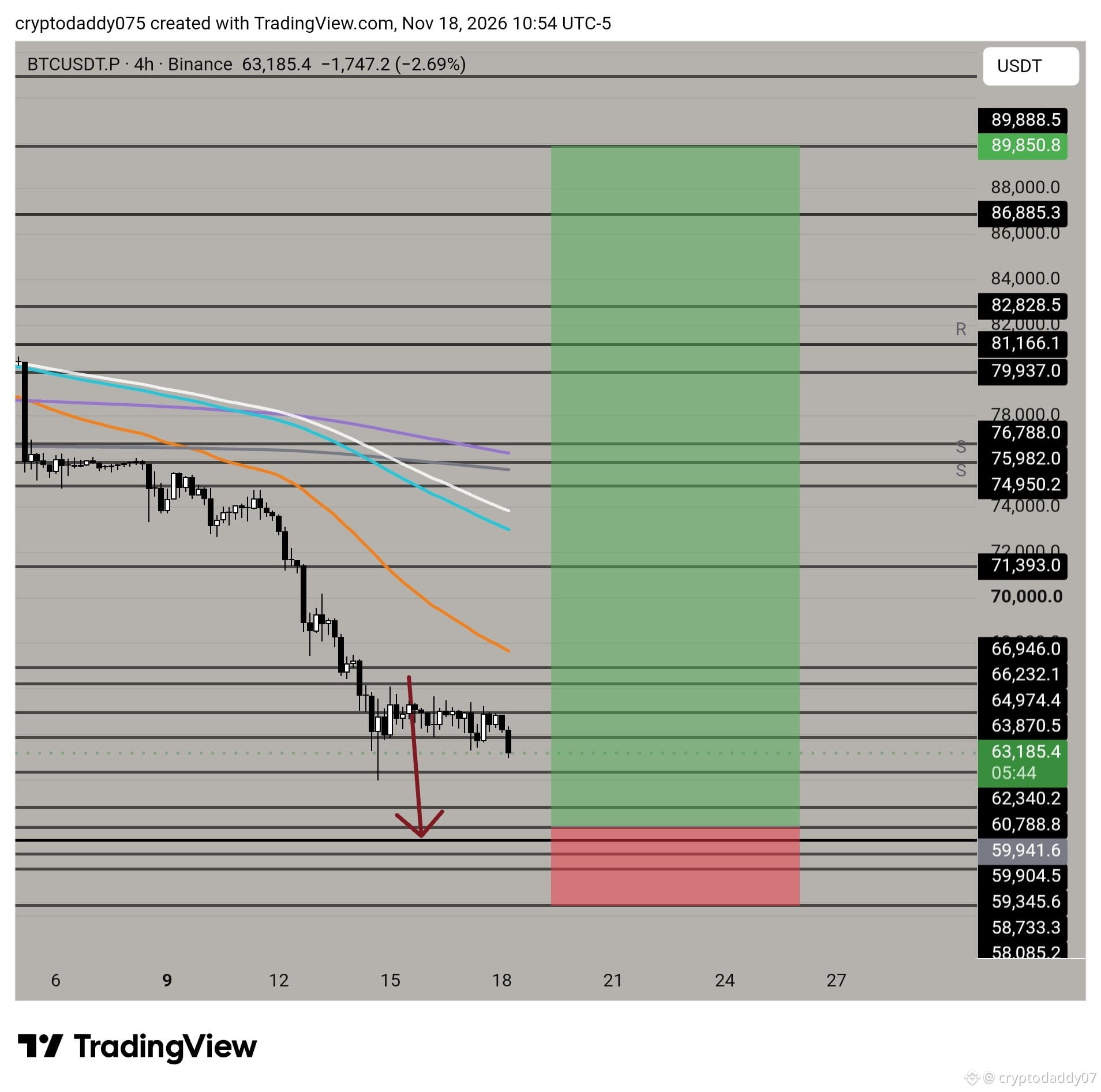
BTC LONG PLAN UPDATE
After catching the move from $62,300 to $65,000, BTC rejected the resistance zone. I decided to close the trade and secure the profits rather than risk giving them back.
Now we wait patiently for our second setup — a strong swing long with a bigger target.
📍 My planned entries:
First entry: $59,934
Second entry: $58,976 (I'll add more if price reaches this level).
No FOMO. No forced entries. We wait for the right levels and confirmation.
Level to level. 🐺
215

Article
BITCOIN MARKET CYCLES: FOUR CRASHES, FOUR COMEBACKS — IS HISTORY REPEATING ITSELF?Bitcoin has been declared dead more times than most financial assets have even existed.
Every major crash brings the same headlines. Every prolonged bear market creates the same fear. Investors begin questioning whether Bitcoin's best days are behind it, while others abandon the market completely.
But when we step back and examine Bitcoin's history, something interesting appears.
Across multiple market cycles, Bitcoin has repeatedly followed a familiar pattern: a powerful rally, an explosive peak, a brutal correction, a long period of uncertainty, and eventually another major recovery.
From its early trading days, when Bitcoin was worth only a fraction of today's price, to its historic peak near $126,000 in October 2025, the journey has been anything but smooth.
The question is not whether Bitcoin has experienced major crashes. It has.
The bigger question is whether the market is once again following a pattern that has appeared throughout its history.
2011–2013: THE FIRST MAJOR CRASH — WHEN BITCOIN WAS STILL AN EXPERIMENT
Bitcoin's early years were defined by extreme volatility and uncertainty.
During 2011, Bitcoin experienced its first major speculative rally, climbing toward approximately $32 before suffering a dramatic collapse toward $2.
At that time, the market was still small, liquidity was limited, and confidence in Bitcoin was far from established.
For many investors, the crash looked like the end of the experiment.
But Bitcoin survived.
Over the following years, interest gradually returned. Adoption expanded, more exchanges appeared, and the market began attracting attention beyond its earliest supporters.
By late 2013, Bitcoin had climbed above $1,000.
The first major lesson was already visible: a dramatic correction did not necessarily mean the end of Bitcoin.
2014–2015: THE MT. GOX COLLAPSE AND ANOTHER TEST OF CONFIDENCE
The next major crisis arrived with the collapse of Mt. Gox, one of the most important Bitcoin exchanges at the time.
The incident severely damaged confidence in the cryptocurrency market.
Bitcoin entered a prolonged bear market, eventually trading around the $150–$200 area during the 2015 lows.
The sentiment was negative. Investors questioned the security of exchanges, the future of cryptocurrency infrastructure, and whether Bitcoin could ever regain its previous momentum.
Yet the market continued developing.
Infrastructure improved, new participants entered, and Bitcoin slowly began recovering.
By December 2017, Bitcoin had reached approximately $20,000.
Once again, the market had moved from widespread fear to extraordinary optimism.
2018: THE $20,000 PEAK BECOMES A $3,100 LOW
The excitement of 2017 did not last forever.
After reaching approximately $20,000, Bitcoin entered another major correction.
Throughout 2018, prices continued falling, eventually reaching approximately $3,100.
The decline was painful for investors who had entered near the top.
Market enthusiasm disappeared, trading activity weakened, and discussions about Bitcoin's long-term future returned.
But the next recovery would become one of the most important chapters in Bitcoin's history.
In 2020 and 2021, a combination of growing institutional interest, expanding market participation, and changing macroeconomic conditions helped drive another major rally.
Bitcoin eventually reached approximately $69,000 in November 2021.
The pattern looked familiar: a powerful bull market followed by a devastating correction, then another recovery.
2022: FTX, MARKET FEAR AND THE FALL TOWARD $15,500
The 2022 bear market brought another major shock.
The collapse of #FTX accelerated the decline in confidence across the cryptocurrency industry.
$BTC , already under pressure, fell toward approximately $15,500.
For many market participants, this was another moment when the future looked uncertain.
The crisis also reminded investors of an important distinction: Bitcoin itself and the centralized companies operating around it are not the same thing.
Failures of exchanges, lenders, and other market participants can have serious consequences for investors and prices, but they do not automatically determine Bitcoin's long-term future.
The market eventually recovered.
Bitcoin went on to reach a new all-time high near $126,000 in October 2025.
Another cycle had unfolded, although the market was now much larger and more mature than it had been in its early years.
WHAT HAS CHANGED WITH EACH BITCOIN CYCLE?
One of the most interesting details in Bitcoin's history is that percentage returns have generally become smaller as the asset has grown.
In its early years, Bitcoin was a relatively small market. Even a comparatively limited amount of new demand could produce extraordinary percentage gains.
Today, Bitcoin has a much larger market capitalization, deeper liquidity, broader institutional participation, and a more developed financial ecosystem.
This does not mean volatility has disappeared.
Bitcoin remains capable of significant corrections, and investor sentiment can change quickly.
However, comparing every new cycle directly with the earliest cycles can be misleading.
A move from $2 to $20 represents a tenfold increase. A move from $20,000 to $200,000 would also represent a tenfold increase, but the amount of capital required is dramatically different.
The market has changed, and expectations should change with it.
IS BITCOIN HISTORY REPEATING ITSELF?
Historical cycles provide valuable context, but they are not a guaranteed roadmap.
The fact that Bitcoin recovered after previous crashes does not prove that every future correction will produce the same result.
Macroeconomic conditions, interest rates, institutional flows, regulation, liquidity, investor positioning, and broader risk appetite can all influence the next market move.
This is why blindly buying every dip can be dangerous.
A historical pattern should be studied, not treated as a promise.
The important question is whether current market conditions are showing signs of stabilization, whether important levels are holding, and whether buyers are actually returning.
Price confirmation matters more than emotions.
THE CRYPTO DADDY PERSPECTIVE
Bitcoin has survived exchange failures, major corrections, market panic, and repeated predictions of its disappearance.
Its history demonstrates remarkable resilience, but resilience does not eliminate risk.
I prefer to approach the market level to level.
No blind predictions. No chasing candles. No emotional decisions.
Watch the important levels. Wait for confirmation. Respect invalidation. Manage risk.
The next major Bitcoin move will not be decided by historical charts alone. Traders still need to understand what the market is doing right now.
Four major crashes. Four powerful recoveries. One market that continues to evolve.
Is history repeating itself, or is Bitcoin entering a completely different phase?
Share your view.
🐺 CRYPTO DADDY - More on my website: cryptodaddyss.com
NO FOMO. NO FUD. TRUST THE LINES.
Disclaimer: This article is for educational and informational purposes only. It does not constitute financial or investment advice. Cryptocurrency markets are highly volatile, and historical performance does not guarantee future results.
BITCOIN MARKET CYCLES: FOUR CRASHES, FOUR COMEBACKS — IS HISTORY REPEATING ITSELF?
Bitcoin has been declared dead more times than most financial assets have even existed.
Every major crash brings the same headlines. Every prolonged bear market creates the same fear. Investors begin questioning whether Bitcoin's best days are behind it, while others abandon the market completely.
But when we step back and examine Bitcoin's history, something interesting appears.
Across multiple market cycles, Bitcoin has repeatedly followed a familiar pattern: a powerful rally, an explosive peak, a brutal correction, a long period of uncertainty, and eventually another major recovery.
From its early trading days, when Bitcoin was worth only a fraction of today's price, to its historic peak near $126,000 in October 2025, the journey has been anything but smooth.
The question is not whether Bitcoin has experienced major crashes. It has.
The bigger question is whether the market is once again following a pattern that has appeared throughout its history.
2011–2013: THE FIRST MAJOR CRASH — WHEN BITCOIN WAS STILL AN EXPERIMENT
Bitcoin's early years were defined by extreme volatility and uncertainty.
During 2011, Bitcoin experienced its first major speculative rally, climbing toward approximately $32 before suffering a dramatic collapse toward $2.
At that time, the market was still small, liquidity was limited, and confidence in Bitcoin was far from established.
For many investors, the crash looked like the end of the experiment.
But Bitcoin survived.
Over the following years, interest gradually returned. Adoption expanded, more exchanges appeared, and the market began attracting attention beyond its earliest supporters.
By late 2013, Bitcoin had climbed above $1,000.
The first major lesson was already visible: a dramatic correction did not necessarily mean the end of Bitcoin.
2014–2015: THE MT. GOX COLLAPSE AND ANOTHER TEST OF CONFIDENCE
The next major crisis arrived with the collapse of Mt. Gox, one of the most important Bitcoin exchanges at the time.
The incident severely damaged confidence in the cryptocurrency market.
Bitcoin entered a prolonged bear market, eventually trading around the $150–$200 area during the 2015 lows.
The sentiment was negative. Investors questioned the security of exchanges, the future of cryptocurrency infrastructure, and whether Bitcoin could ever regain its previous momentum.
Yet the market continued developing.
Infrastructure improved, new participants entered, and Bitcoin slowly began recovering.
By December 2017, Bitcoin had reached approximately $20,000.
Once again, the market had moved from widespread fear to extraordinary optimism.
2018: THE $20,000 PEAK BECOMES A $3,100 LOW
The excitement of 2017 did not last forever.
After reaching approximately $20,000, Bitcoin entered another major correction.
Throughout 2018, prices continued falling, eventually reaching approximately $3,100.
The decline was painful for investors who had entered near the top.
Market enthusiasm disappeared, trading activity weakened, and discussions about Bitcoin's long-term future returned.
But the next recovery would become one of the most important chapters in Bitcoin's history.
In 2020 and 2021, a combination of growing institutional interest, expanding market participation, and changing macroeconomic conditions helped drive another major rally.
Bitcoin eventually reached approximately $69,000 in November 2021.
The pattern looked familiar: a powerful bull market followed by a devastating correction, then another recovery.
2022: FTX, MARKET FEAR AND THE FALL TOWARD $15,500
The 2022 bear market brought another major shock.
The collapse of #FTX accelerated the decline in confidence across the cryptocurrency industry.
$BTC , already under pressure, fell toward approximately $15,500.
For many market participants, this was another moment when the future looked uncertain.
The crisis also reminded investors of an important distinction: Bitcoin itself and the centralized companies operating around it are not the same thing.
Failures of exchanges, lenders, and other market participants can have serious consequences for investors and prices, but they do not automatically determine Bitcoin's long-term future.
The market eventually recovered.
Bitcoin went on to reach a new all-time high near $126,000 in October 2025.
Another cycle had unfolded, although the market was now much larger and more mature than it had been in its early years.
WHAT HAS CHANGED WITH EACH BITCOIN CYCLE?
One of the most interesting details in Bitcoin's history is that percentage returns have generally become smaller as the asset has grown.
In its early years, Bitcoin was a relatively small market. Even a comparatively limited amount of new demand could produce extraordinary percentage gains.
Today, Bitcoin has a much larger market capitalization, deeper liquidity, broader institutional participation, and a more developed financial ecosystem.
This does not mean volatility has disappeared.
Bitcoin remains capable of significant corrections, and investor sentiment can change quickly.
However, comparing every new cycle directly with the earliest cycles can be misleading.
A move from $2 to $20 represents a tenfold increase. A move from $20,000 to $200,000 would also represent a tenfold increase, but the amount of capital required is dramatically different.
The market has changed, and expectations should change with it.
IS BITCOIN HISTORY REPEATING ITSELF?
Historical cycles provide valuable context, but they are not a guaranteed roadmap.
The fact that Bitcoin recovered after previous crashes does not prove that every future correction will produce the same result.
Macroeconomic conditions, interest rates, institutional flows, regulation, liquidity, investor positioning, and broader risk appetite can all influence the next market move.
This is why blindly buying every dip can be dangerous.
A historical pattern should be studied, not treated as a promise.
The important question is whether current market conditions are showing signs of stabilization, whether important levels are holding, and whether buyers are actually returning.
Price confirmation matters more than emotions.
THE CRYPTO DADDY PERSPECTIVE
Bitcoin has survived exchange failures, major corrections, market panic, and repeated predictions of its disappearance.
Its history demonstrates remarkable resilience, but resilience does not eliminate risk.
I prefer to approach the market level to level.
No blind predictions. No chasing candles. No emotional decisions.
Watch the important levels. Wait for confirmation. Respect invalidation. Manage risk.
The next major Bitcoin move will not be decided by historical charts alone. Traders still need to understand what the market is doing right now.
Four major crashes. Four powerful recoveries. One market that continues to evolve.
Is history repeating itself, or is Bitcoin entering a completely different phase?
Share your view.
🐺 CRYPTO DADDY - More on my website: cryptodaddyss.com
NO FOMO. NO FUD. TRUST THE LINES.
Disclaimer: This article is for educational and informational purposes only. It does not constitute financial or investment advice. Cryptocurrency markets are highly volatile, and historical performance does not guarantee future results.
3
210
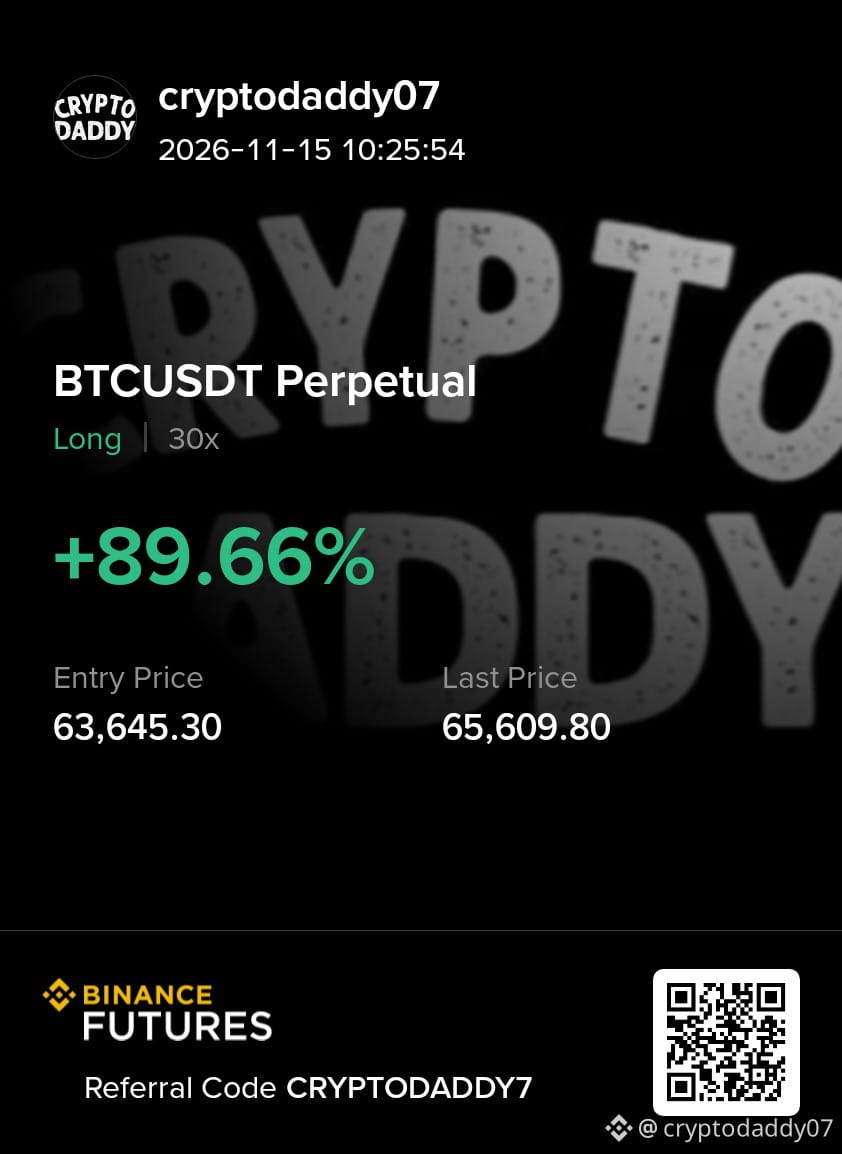
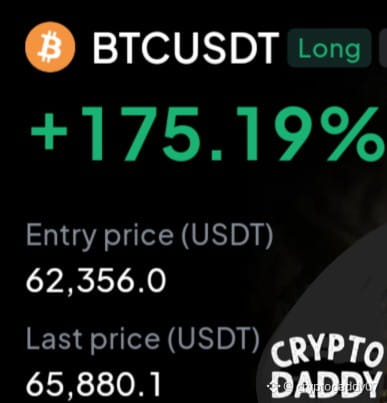
🐺 $BTC LONG UPDATE
Our BTC long has now reached 1R -2R
We didn't chase the move. We waited for our level, executed the plan, and let price come to us.
Now protect your position, manage your risk, and don't let a winning trade turn into a losing one.
Discipline first. Profits second. 🫡❤️
Trust the levels. Level to level.
1
67
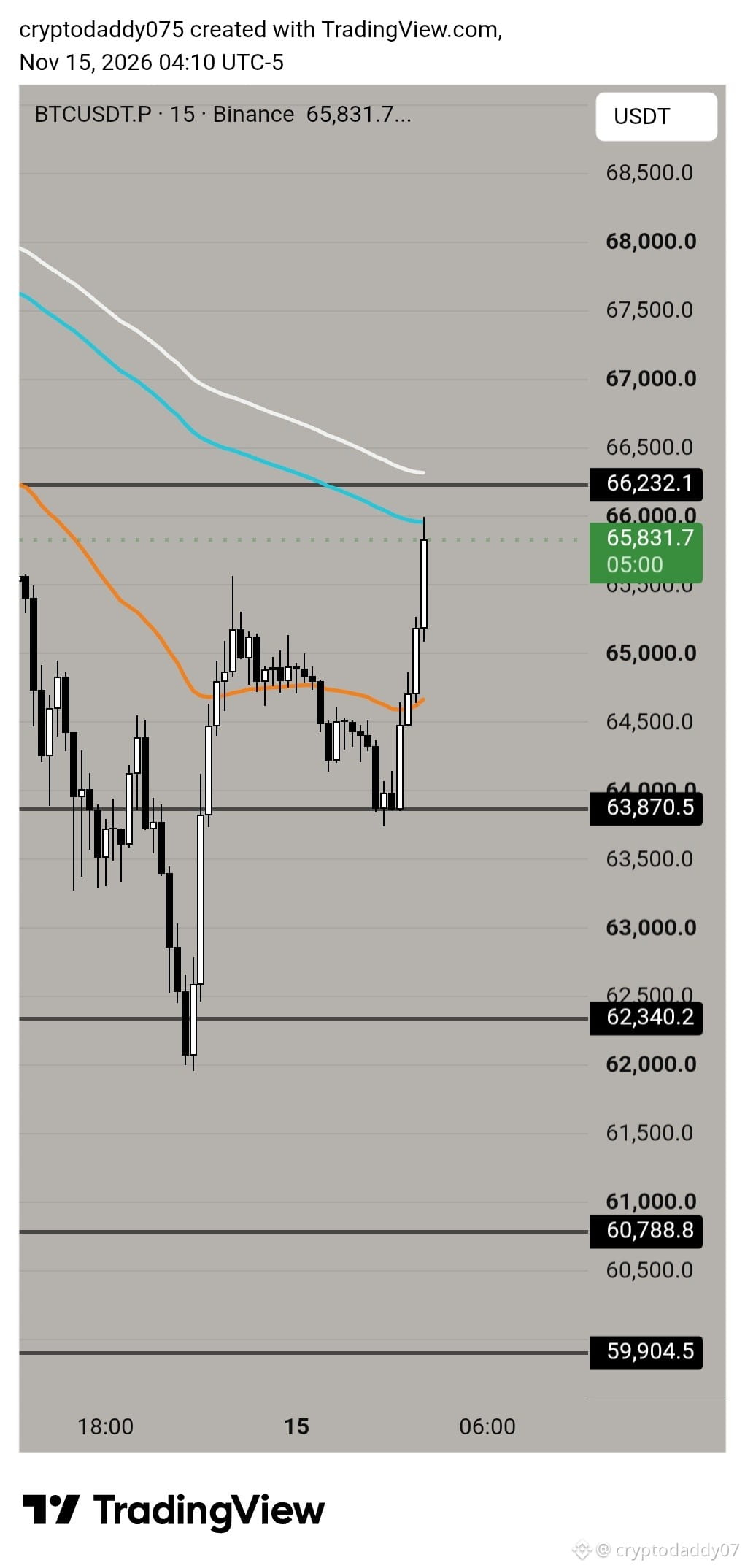
🔥 $BTC is pushing towards $66,000!
Remember our LONG setup around $62,300?
That's why patience matters. We identified the level, waited for price to come to us, and executed the plan. Now the position is comfortably in profit.
The market doesn't reward impatience. It rewards discipline and preparation.
Let's see how BTC reacts around $66K. One level at a time.
🐺 Crypto Daddy No FOMO. No FUD. Trust the levels.
59
That's how you manage a trade! 🐺🔥
Our $BTC SL is now moved to $62,300 — back to entry. Risk secured!
We followed the plan, respected our levels, and didn't panic when the market moved against us.
Now it's time to get some sleep and hopefully wake up to a beautiful green PNL.
Tomorrow, I'll share the results. 👀
Discipline pays. No FOMO. No FUD. Trust the levels.
Good night, Crypto family! 🚀
103
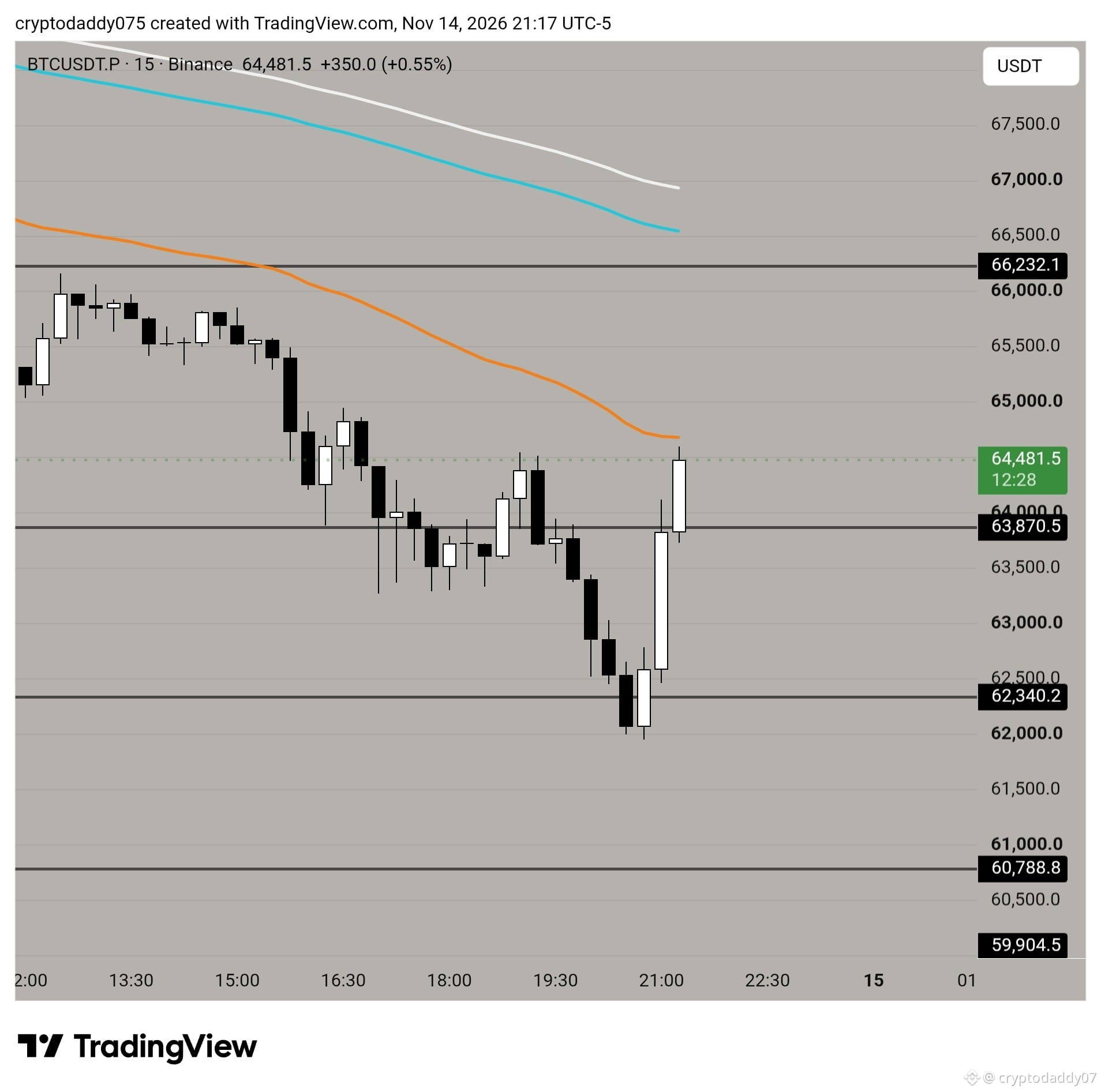
$BTC Second buy limit activated at $62,300 on my other account.
On Binance, I added more margin at $62,300, bringing my average entry down to $63,100.
No panic. No emotional decisions. Just a plan.
We always have a backup setup, defined risk, and a stop-loss. If the first setup fails, we know what comes next.
But remember: entering with full margin and no risk management is not trading. It's gambling.
Discipline comes first. Risk management always. Profit comes second.
No FOMO. No FUD. Trust the levels. 🐺
122
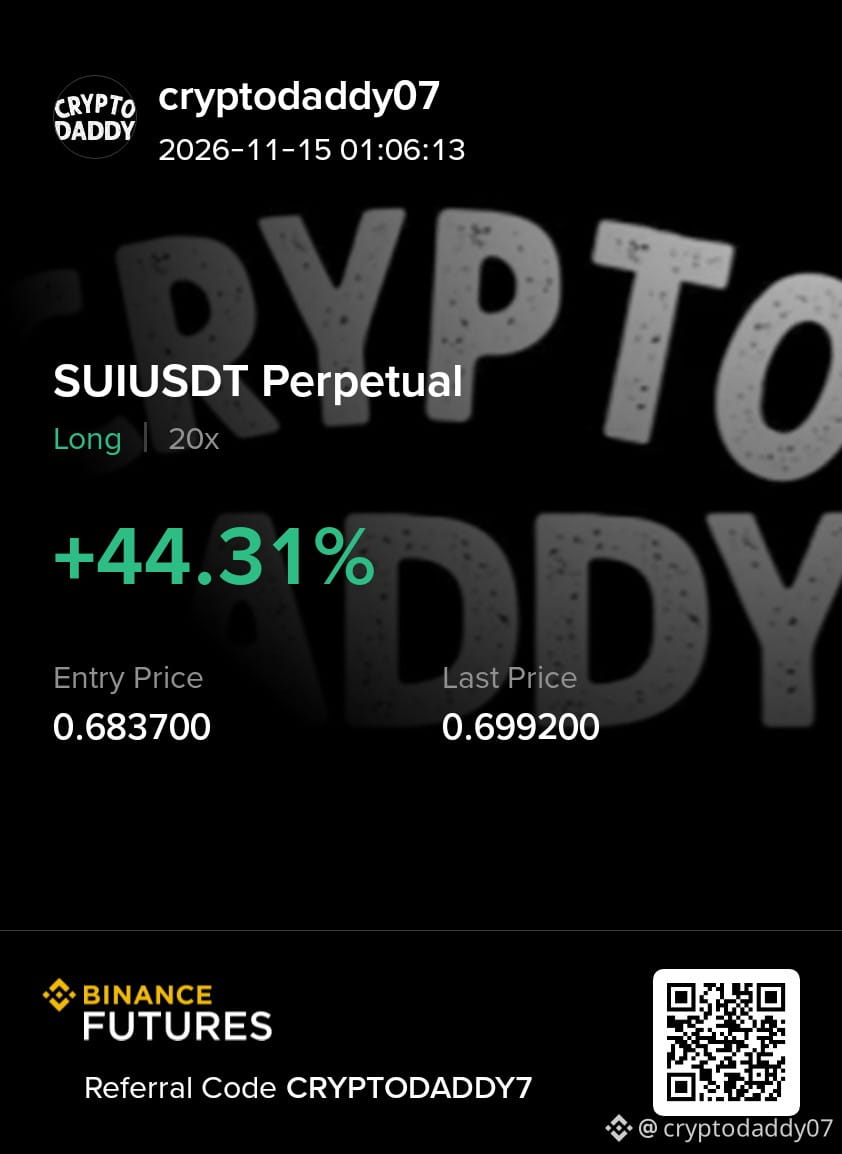
🚀 $SUI – LONG RE-ENTRY! 🐺
SUI has finally retested the last key level we had marked back on June 3–4.
After seeing the retest and a positive reaction, I've entered LONG again! 🔥
This is exactly why we mark our levels and stay patient. We don't chase price — we wait for the setup to come to us.
Level to level. Trust the lines. 🎯
— Crypto Daddy
404
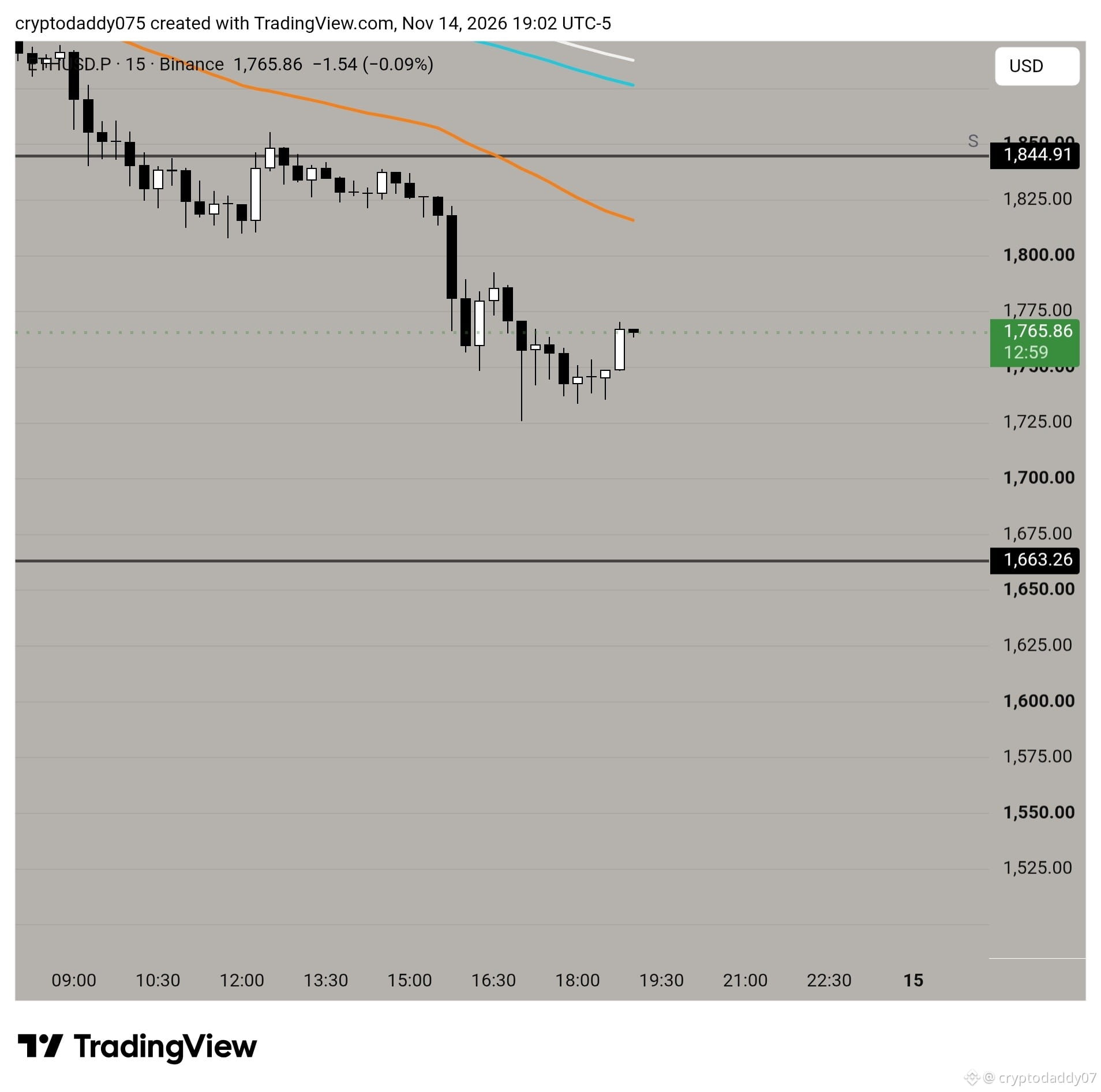
🐺 $ETH – LONG WATCH 👀
$1,663 is the next zone I'm keeping an eye on for a potential LONG.
I'll set an alert and wait to see how price reacts. If we get a good setup, I'll share it. No entry call for now.
One thing to keep in mind: if $BTC loses our SL level, ETH could see another move down, potentially sweeping below $1,400, with $1,200 as the next major area to watch.
For now, patience. Let the levels come to us.
No FOMO. No chasing. Trust the levels. 🎯
— Crypto Daddy
62
I'm not panicking. I've been patient, waiting for the right levels, and now it's time to execute the plan.
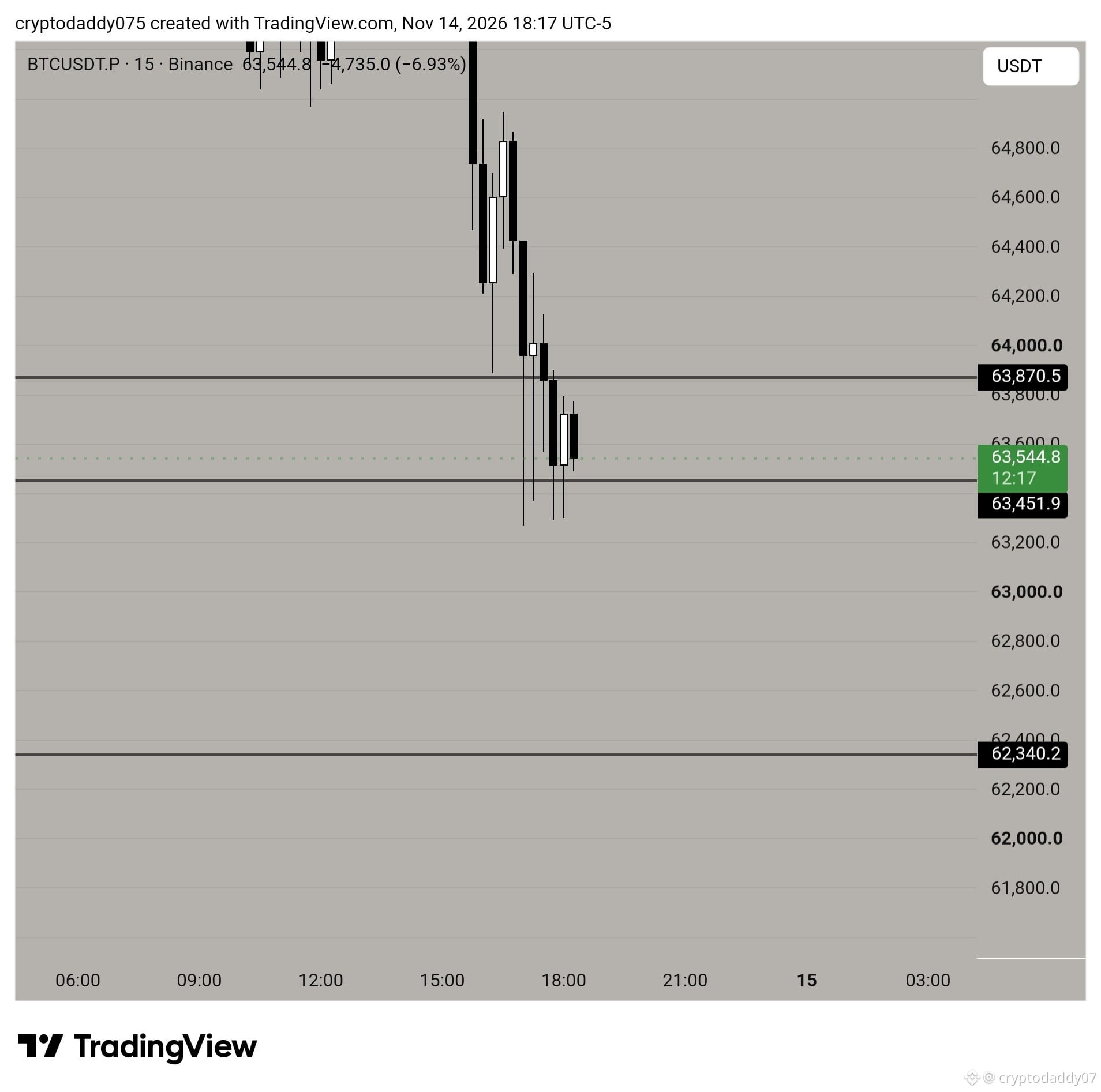
$BTC TRADING UPDATE
Our first entry is filled! I've also added more margin around $63,455.
Current Trading Plan:
- First entry: FILLED ✅
- Additional margin: $63,455
- Next buy limit: $62,350 (waiting for a possible fill)
- Stop-Loss: $60,850
- Target: $88,830 🎯
I'm sticking to the plan and letting the market come to my levels. No chasing, no panic, just patience and execution.
I hope this recent market drop has reminded everyone of three important things: patience, proper risk management, and protecting your capital.
We don't chase the market. We wait for our levels and let the market come to us.
Trust the levels. Level to level.
No FOMO. No FUD. 🔥
— Crypto Daddy
1
97
Log in to explore more content
Join global crypto users on Binance Square
⚡️ Get latest and useful information about crypto.
💬 Trusted by the world’s largest crypto exchange.
👍 Discover real insights from verified creators.
Email / Phone number
Trending Topics
CanBTCReboundAfterFallingBelow60K?
0 views
217 Discussing
Bitcoin News | Bitcoin Falls Below $60,000 for the First Time Since July as IBIT Posts Record $541 Million Outflow
Binance News
·21 Likes
·26.8k views
GlobalStocksFaceLongestLosingStreakSince2023
0 views
326 Discussing
AnthropicPlungesTowardIPOPriceonDay2
0 views
71 Discussing