
加密城市 Crypto City
9.7k Posts

加密城市 Crypto City
 Square Verified+
Report
Block User
0 Following
5.9K+ Followers
6.1K+ Liked
Posts
Article
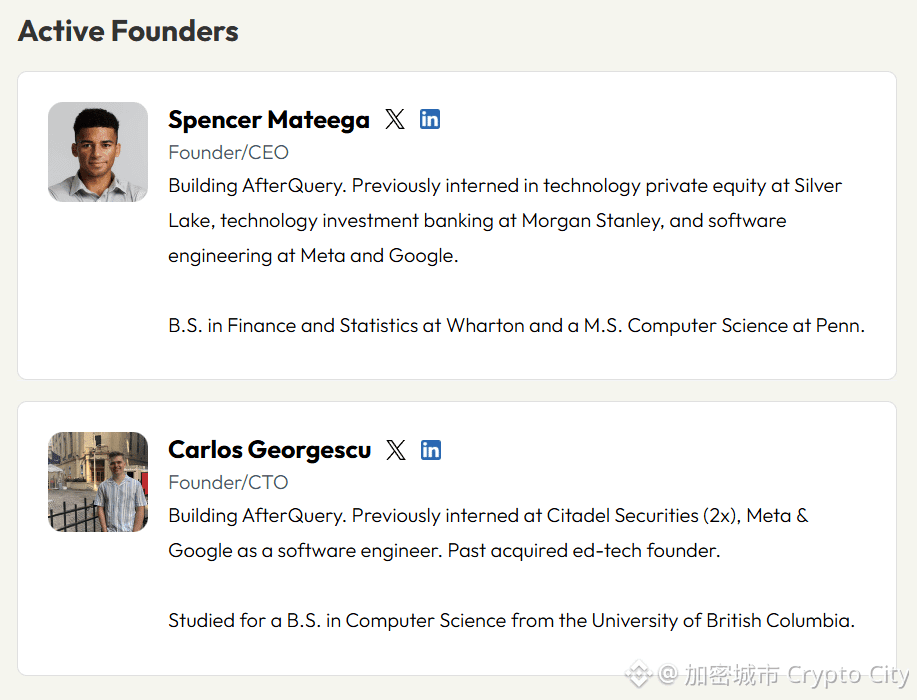
The fastest unicorn in YC history! AI startup AfterQuery reaches a $3.2 billion valuation in five months, backed by a bet on expert data scarcityAfterQuery valuation increases 10x in five months, setting a new YC record
A startup founded in 2025 by two high school classmates is rewriting history amid the AI boom, becoming the fastest company to turn into a unicorn among a well-known accelerator’s graduates.
According to Forbes, AI training data startup AfterQuery has completed its latest funding round, reaching a valuation of $3.2 billion. In April this year, AfterQuery raised a $30 million Series A at a $300 million valuation. Compared with five months earlier, the company’s valuation has grown by more than 10 times.
Gustaf Alströmer, a partner at the well-known venture capital firm Y Combinator (YC), said that this is the fastest time it has ever taken for a startup to go from founding to becoming a unicorn valued at over $1 billion since the accelerator was established.
The fastest unicorn in YC history! AI startup AfterQuery reaches a $3.2 billion valuation in five months, backed by a bet on expert data scarcity
AfterQuery valuation increases 10x in five months, setting a new YC record
A startup founded in 2025 by two high school classmates is rewriting history amid the AI boom, becoming the fastest company to turn into a unicorn among a well-known accelerator’s graduates.
According to Forbes, AI training data startup AfterQuery has completed its latest funding round, reaching a valuation of $3.2 billion. In April this year, AfterQuery raised a $30 million Series A at a $300 million valuation. Compared with five months earlier, the company’s valuation has grown by more than 10 times.
Gustaf Alströmer, a partner at the well-known venture capital firm Y Combinator (YC), said that this is the fastest time it has ever taken for a startup to go from founding to becoming a unicorn valued at over $1 billion since the accelerator was established.
A startup founded in 2025 by two high school classmates is rewriting history amid the AI boom, becoming the fastest company to turn into a unicorn among a well-known accelerator’s graduates.
According to Forbes, AI training data startup AfterQuery has completed its latest funding round, reaching a valuation of $3.2 billion. In April this year, AfterQuery raised a $30 million Series A at a $300 million valuation. Compared with five months earlier, the company’s valuation has grown by more than 10 times.
Gustaf Alströmer, a partner at the well-known venture capital firm Y Combinator (YC), said that this is the fastest time it has ever taken for a startup to go from founding to becoming a unicorn valued at over $1 billion since the accelerator was established.
50
Can an Idle Mac Make Money Too? Darkbloom Decentralized AI Inference Guide + Earnings AnalysisYour Mac sitting there gathering dust may be missing out on hundreds of dollars in monthly income. Darkbloom, built by the team behind EigenLayer, Eigen Labs, turns idle Apple Silicon Macs into compute nodes for a “decentralized AI inference network” — others pay to call AI models, your Mac helps do the work, and you get paid. The project was recently upgraded to become a paid provider on OpenRouter, an AI model gateway. According to the official X post, there are currently 250 Macs online and a cumulative 4.5 billion tokens served; node operators can earn $120 to $200 per Mac per month. This article explains what it is, how to join, how much you can really earn, and what risks you should watch out for.
Can an Idle Mac Make Money Too? Darkbloom Decentralized AI Inference Guide + Earnings Analysis
Your Mac sitting there gathering dust may be missing out on hundreds of dollars in monthly income. Darkbloom, built by the team behind EigenLayer, Eigen Labs, turns idle Apple Silicon Macs into compute nodes for a “decentralized AI inference network” — others pay to call AI models, your Mac helps do the work, and you get paid. The project was recently upgraded to become a paid provider on OpenRouter, an AI model gateway. According to the official X post, there are currently 250 Macs online and a cumulative 4.5 billion tokens served; node operators can earn $120 to $200 per Mac per month. This article explains what it is, how to join, how much you can really earn, and what risks you should watch out for.
382
What is the on-chain gacha FWA? It surpassed 17,000 ETH in trading volume in its first month, reigniting the NFT market!Fake World Assets (FWA) is an on-chain random NFT acquisition protocol launched by TokenWorks. Depositors place NFTs together with a certain amount of ETH into a liquidity pool, and buyers randomly receive 1 NFT position based on the pool’s price, then choose whether to keep the NFT or accept the original depositor’s buyback offer. The author of this article reveals that they are both an FWA user and a $FWA holder, so the conclusion carries an explicit supporter’s perspective.
Skeptics once viewed Fake World Assets, launched by TokenWorks, as a product that could only be popular for a short time: yet another on-chain app that attracts users through random draws and token rewards, and that would fade once the initial $FWA reward period ended.
What is the on-chain gacha FWA? It surpassed 17,000 ETH in trading volume in its first month, reigniting the NFT market!
Fake World Assets (FWA) is an on-chain random NFT acquisition protocol launched by TokenWorks. Depositors place NFTs together with a certain amount of ETH into a liquidity pool, and buyers randomly receive 1 NFT position based on the pool’s price, then choose whether to keep the NFT or accept the original depositor’s buyback offer. The author of this article reveals that they are both an FWA user and a $FWA holder, so the conclusion carries an explicit supporter’s perspective.
Skeptics once viewed Fake World Assets, launched by TokenWorks, as a product that could only be popular for a short time: yet another on-chain app that attracts users through random draws and token rewards, and that would fade once the initial $FWA reward period ended.
Skeptics once viewed Fake World Assets, launched by TokenWorks, as a product that could only be popular for a short time: yet another on-chain app that attracts users through random draws and token rewards, and that would fade once the initial $FWA reward period ended.
307
Article
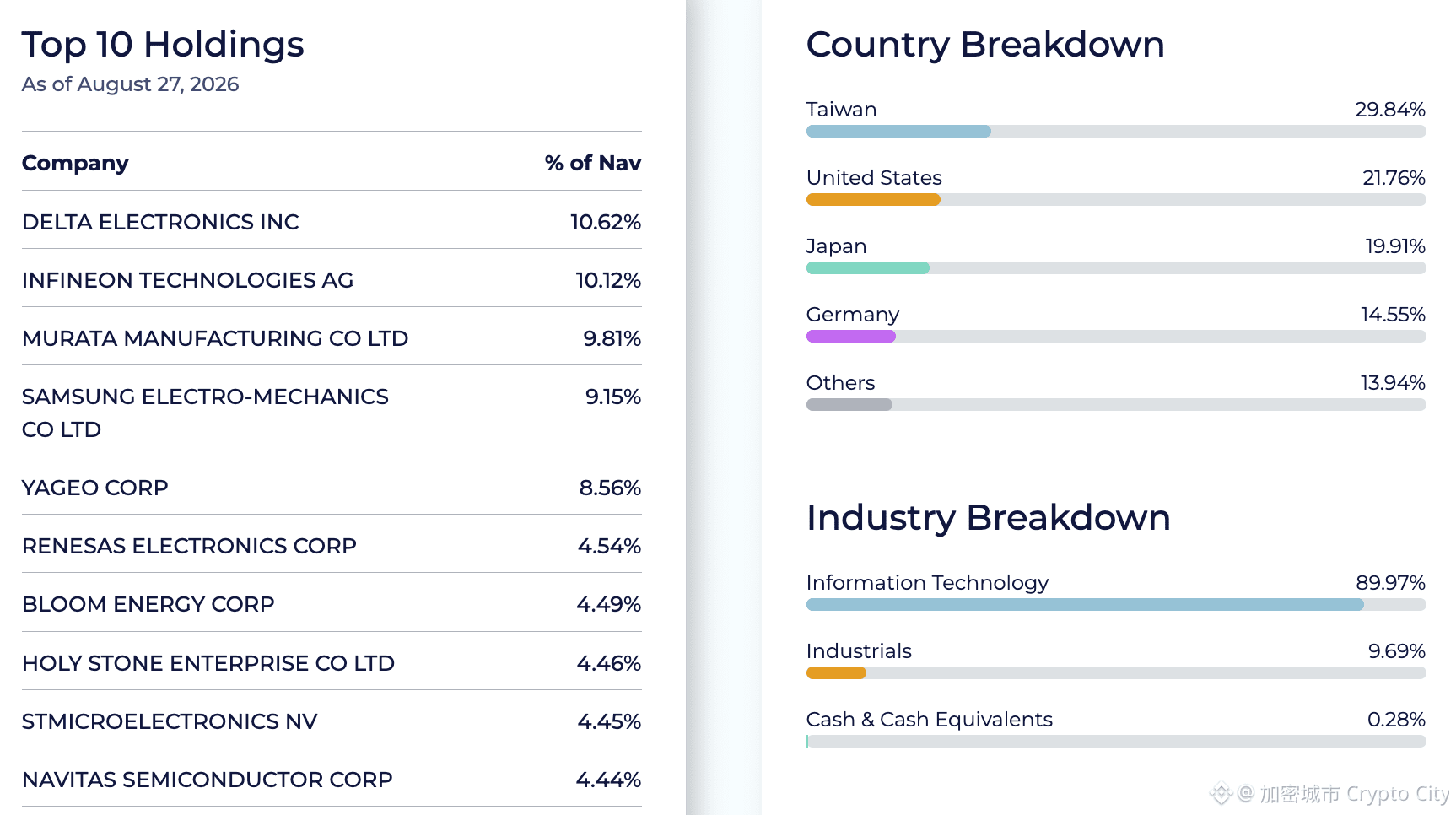
Delta Electronics and Yageo included! U.S. PSOX ETF targets MLCC and power semiconductors, with full breakdown of holdings and feesU.S. ETF issuer Tema ETFs launched a brand-new ETF, the "Tema MLCC & PowerSemi ETF," in August 2026. Ticker PSOX, it is listed on the CBOE BZX Exchange. This actively managed fund targets two key components in AI server power supply systems: multilayer ceramic capacitors (MLCCs) and power semiconductors. This article will analyze PSOX's portfolio allocation, fee structure, and investment logic.
ETF focused on AI power supply components: PSOX fee rate 0.75%
The Tema MLCC & PowerSemi ETF, traded under the ticker PSOX, was established on August 17, 2026, and listed on the CBOE BZX Exchange. It is an actively managed ETF with a total expense ratio of 0.75%. Since it has only recently been listed, its assets under management are just $868,000, so volatility and liquidity risks are relatively high.
Delta Electronics and Yageo included! U.S. PSOX ETF targets MLCC and power semiconductors, with full breakdown of holdings and fees
U.S. ETF issuer Tema ETFs launched a brand-new ETF, the "Tema MLCC & PowerSemi ETF," in August 2026. Ticker PSOX, it is listed on the CBOE BZX Exchange. This actively managed fund targets two key components in AI server power supply systems: multilayer ceramic capacitors (MLCCs) and power semiconductors. This article will analyze PSOX's portfolio allocation, fee structure, and investment logic.
ETF focused on AI power supply components: PSOX fee rate 0.75%
The Tema MLCC & PowerSemi ETF, traded under the ticker PSOX, was established on August 17, 2026, and listed on the CBOE BZX Exchange. It is an actively managed ETF with a total expense ratio of 0.75%. Since it has only recently been listed, its assets under management are just $868,000, so volatility and liquidity risks are relatively high.
ETF focused on AI power supply components: PSOX fee rate 0.75%
The Tema MLCC & PowerSemi ETF, traded under the ticker PSOX, was established on August 17, 2026, and listed on the CBOE BZX Exchange. It is an actively managed ETF with a total expense ratio of 0.75%. Since it has only recently been listed, its assets under management are just $868,000, so volatility and liquidity risks are relatively high.
114
Article
The SEC is reopening the ICO fundraising door! But venture capital firms aren’t interested—so where are the buyers?Better than nothing
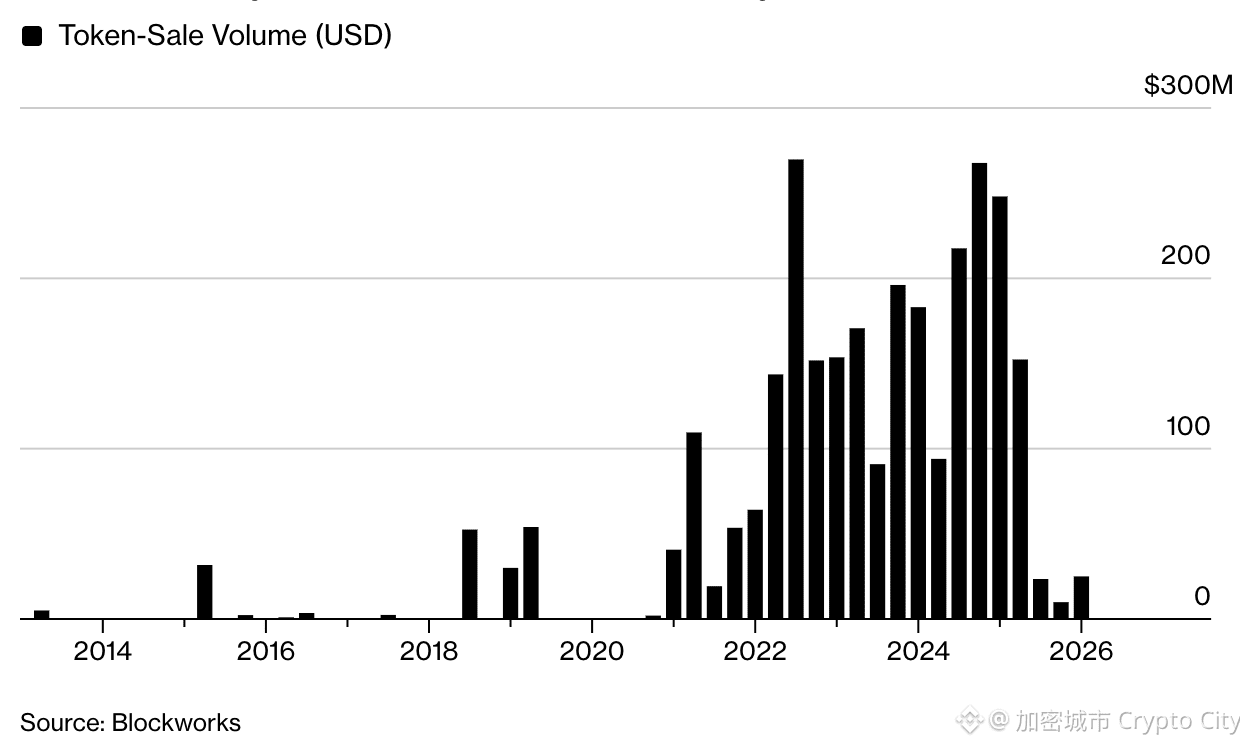
The U.S. Securities and Exchange Commission (SEC) is trying to revive the once-booming initial coin offering (ICO) business. But the bigger challenge is finding someone willing to take over a product that investors have long since abandoned.
This proposal, announced earlier this month, would reopen public token sales to U.S. investors. Crypto startups would not need to complete full SEC registration, and could raise up to $5 million per year, while larger projects could raise up to $75 million annually. Compared with the regulatory crackdown that followed the 2017 ICO boom, the proposal marks a major policy shift.
The SEC is reopening the ICO fundraising door! But venture capital firms aren’t interested—so where are the buyers?
Better than nothing
The U.S. Securities and Exchange Commission (SEC) is trying to revive the once-booming initial coin offering (ICO) business. But the bigger challenge is finding someone willing to take over a product that investors have long since abandoned.
This proposal, announced earlier this month, would reopen public token sales to U.S. investors. Crypto startups would not need to complete full SEC registration, and could raise up to $5 million per year, while larger projects could raise up to $75 million annually. Compared with the regulatory crackdown that followed the 2017 ICO boom, the proposal marks a major policy shift.
The U.S. Securities and Exchange Commission (SEC) is trying to revive the once-booming initial coin offering (ICO) business. But the bigger challenge is finding someone willing to take over a product that investors have long since abandoned.
This proposal, announced earlier this month, would reopen public token sales to U.S. investors. Crypto startups would not need to complete full SEC registration, and could raise up to $5 million per year, while larger projects could raise up to $75 million annually. Compared with the regulatory crackdown that followed the 2017 ICO boom, the proposal marks a major policy shift.
469
Running for 23 years! The Sality botnet was dismantled by a joint effort of multiple countries, and once infected over 15,000 devicesThe U.S. Department of Justice announced that a U.S.-led multinational cyber law enforcement operation involving Bulgaria, Hungary, and Romania successfully disrupted the long-running Sality botnet. The operation involved the U.S. Department of Justice, the Federal Bureau of Investigation, and the Defense Criminal Investigative Service, and was supported by organizations such as Europol, Eurojust, CrowdStrike, and the Shadowserver Foundation.
From file infections to a P2P network
Sality first appeared in 2003. It was initially a type of malware capable of infecting Windows executables, and later gradually evolved into a decentralized peer-to-peer, or P2P, botnet. The virus can attach itself to executable files on a computer and continue spreading through shared folders, USB storage devices, and file-sharing networks.
Running for 23 years! The Sality botnet was dismantled by a joint effort of multiple countries, and once infected over 15,000 devices
The U.S. Department of Justice announced that a U.S.-led multinational cyber law enforcement operation involving Bulgaria, Hungary, and Romania successfully disrupted the long-running Sality botnet. The operation involved the U.S. Department of Justice, the Federal Bureau of Investigation, and the Defense Criminal Investigative Service, and was supported by organizations such as Europol, Eurojust, CrowdStrike, and the Shadowserver Foundation.
From file infections to a P2P network
Sality first appeared in 2003. It was initially a type of malware capable of infecting Windows executables, and later gradually evolved into a decentralized peer-to-peer, or P2P, botnet. The virus can attach itself to executable files on a computer and continue spreading through shared folders, USB storage devices, and file-sharing networks.
From file infections to a P2P network
Sality first appeared in 2003. It was initially a type of malware capable of infecting Windows executables, and later gradually evolved into a decentralized peer-to-peer, or P2P, botnet. The virus can attach itself to executable files on a computer and continue spreading through shared folders, USB storage devices, and file-sharing networks.
118
Article
Do Cross-Border Payments Really Need Stablecoins? When Fintech Companies Can Already Offer Low-Cost, High-Efficiency Services, What Is the Advantage of Stablecoins?Everyone says stablecoins are better suited for cross-border payments. Is that really true?
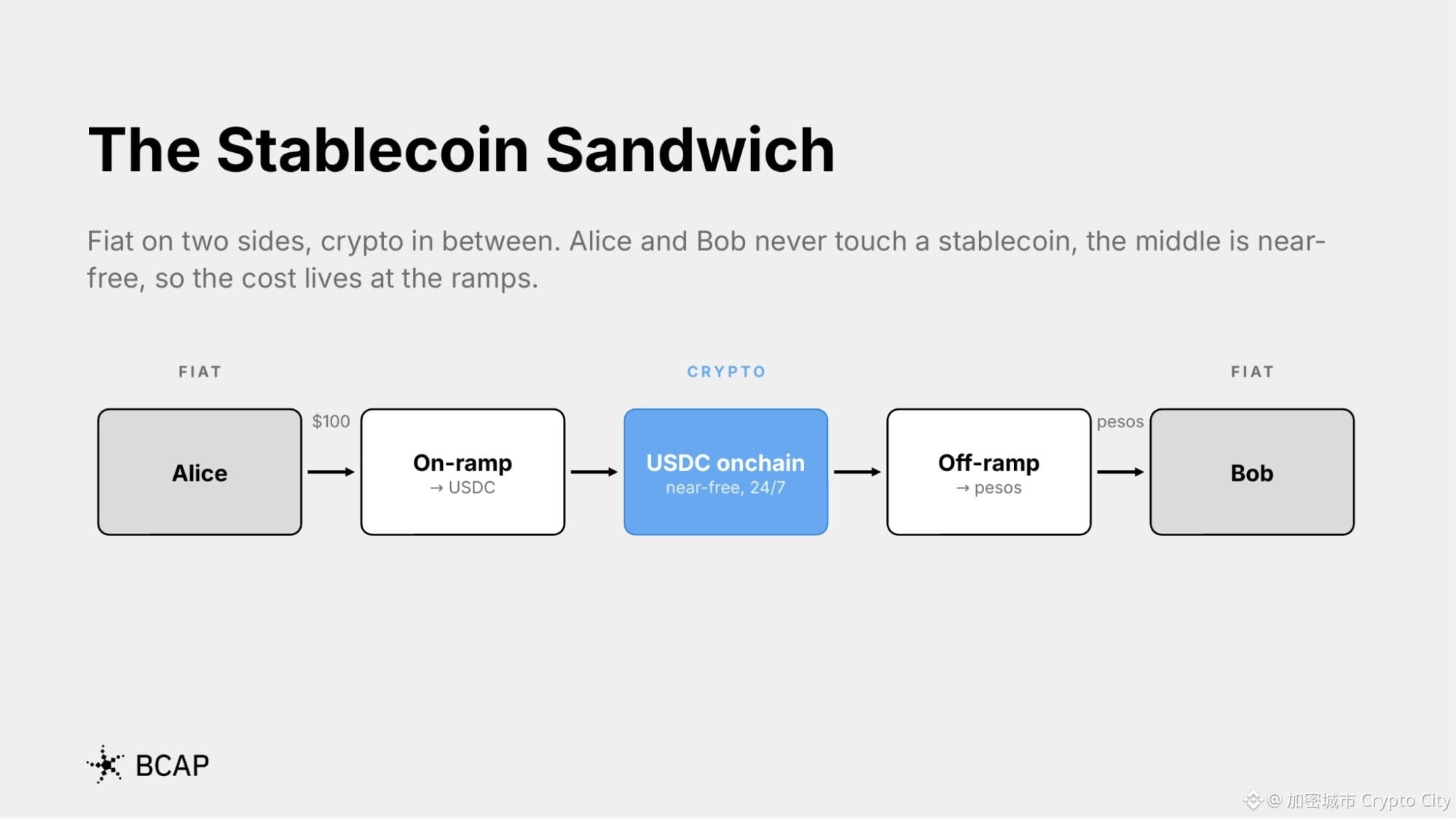
If the recipient you are transferring to already wants stablecoins, then stablecoins are indeed an excellent cross-border solution. You can transfer funds around the clock, at almost zero cost, and settle instantly.
But the trickier question, and the one this article focuses on, is the cross-currency scenario: what happens when one side inputs US dollars and the other side outputs a foreign currency (for example, Mexican pesos). Most crypto industry thought leaders would claim that stablecoins can fundamentally reduce the speed and cost of transfers in this scenario. But supporters of stablecoins deliberately avoid one fact: fintech companies have already achieved low-cost, high-efficiency businesses of this kind, and they do not need stablecoins at all. So what problem do stablecoins actually solve?
Do Cross-Border Payments Really Need Stablecoins? When Fintech Companies Can Already Offer Low-Cost, High-Efficiency Services, What Is the Advantage of Stablecoins?
Everyone says stablecoins are better suited for cross-border payments. Is that really true?
If the recipient you are transferring to already wants stablecoins, then stablecoins are indeed an excellent cross-border solution. You can transfer funds around the clock, at almost zero cost, and settle instantly.
But the trickier question, and the one this article focuses on, is the cross-currency scenario: what happens when one side inputs US dollars and the other side outputs a foreign currency (for example, Mexican pesos). Most crypto industry thought leaders would claim that stablecoins can fundamentally reduce the speed and cost of transfers in this scenario. But supporters of stablecoins deliberately avoid one fact: fintech companies have already achieved low-cost, high-efficiency businesses of this kind, and they do not need stablecoins at all. So what problem do stablecoins actually solve?
If the recipient you are transferring to already wants stablecoins, then stablecoins are indeed an excellent cross-border solution. You can transfer funds around the clock, at almost zero cost, and settle instantly.
But the trickier question, and the one this article focuses on, is the cross-currency scenario: what happens when one side inputs US dollars and the other side outputs a foreign currency (for example, Mexican pesos). Most crypto industry thought leaders would claim that stablecoins can fundamentally reduce the speed and cost of transfers in this scenario. But supporters of stablecoins deliberately avoid one fact: fintech companies have already achieved low-cost, high-efficiency businesses of this kind, and they do not need stablecoins at all. So what problem do stablecoins actually solve?
193
What is microchannel? TSMC leads AI cooling’s “cool revolution,” with Jentech and I-Chiun moving firstThe AI computing power arms race continues to heat up, and cooling technology is also facing an upgrade. TSMC (2330) has already included “microchannel” cooling technology in its R&D roadmap. In step with major customer NVIDIA’s technology upgrade pace for its next-generation Feynman platform, this is sparking Taiwan’s cooling supply chain into a “cool revolution.” Taiwanese companies such as Jentech (3653), I-Chiun (2486), Auras (3017), and Twinhead (3324) are actively investing in R&D and moving early to secure sample supplies and position themselves.
Single-chip power consumption skyrockets, exposing the bottleneck of traditional liquid cooling plates
The computing power of AI accelerators is growing exponentially, and along with it, power consumption is surging in tandem. As the number of transistors on chips doubles and computing performance rises sharply, the thermal design power (TDP) of a single chip is expected to break through the 4,000W mark.
What is microchannel? TSMC leads AI cooling’s “cool revolution,” with Jentech and I-Chiun moving first
The AI computing power arms race continues to heat up, and cooling technology is also facing an upgrade. TSMC (2330) has already included “microchannel” cooling technology in its R&D roadmap. In step with major customer NVIDIA’s technology upgrade pace for its next-generation Feynman platform, this is sparking Taiwan’s cooling supply chain into a “cool revolution.” Taiwanese companies such as Jentech (3653), I-Chiun (2486), Auras (3017), and Twinhead (3324) are actively investing in R&D and moving early to secure sample supplies and position themselves.
Single-chip power consumption skyrockets, exposing the bottleneck of traditional liquid cooling plates
The computing power of AI accelerators is growing exponentially, and along with it, power consumption is surging in tandem. As the number of transistors on chips doubles and computing performance rises sharply, the thermal design power (TDP) of a single chip is expected to break through the 4,000W mark.
Single-chip power consumption skyrockets, exposing the bottleneck of traditional liquid cooling plates
The computing power of AI accelerators is growing exponentially, and along with it, power consumption is surging in tandem. As the number of transistors on chips doubles and computing performance rises sharply, the thermal design power (TDP) of a single chip is expected to break through the 4,000W mark.
118

Article
NVIDIA Announces Acquisition of Hugging Face! Sinks NT$400 Billion Deep into Open Source, but Experts Are Concerned About Chip Lock-InNVIDIA announces the acquisition of Hugging Face for more than NT$400 billion
Chip giant NVIDIA announced last night (9/3) that it has agreed to acquire the world’s largest open-source AI platform Hugging Face for $12.93 billion (about NT$413 billion), confirming earlier reports by foreign media. After the news was released, NVIDIA’s stock surged 1.8% at the close last night.
In this deal, NVIDIA will pay about $11.9 billion in cash to Hugging Face investors, and will also provide up to $1 billion in an equity retention plan for key employees who are willing to join NVIDIA.
This is NVIDIA’s second-largest acquisition deal in history, following its acquisition of chip startup Groq assets for $20 billion last December, surpassing the record set in 2019 when it bought Israeli chipmaker Mellanox for nearly $7 billion.
NVIDIA Announces Acquisition of Hugging Face! Sinks NT$400 Billion Deep into Open Source, but Experts Are Concerned About Chip Lock-In
NVIDIA announces the acquisition of Hugging Face for more than NT$400 billion
Chip giant NVIDIA announced last night (9/3) that it has agreed to acquire the world’s largest open-source AI platform Hugging Face for $12.93 billion (about NT$413 billion), confirming earlier reports by foreign media. After the news was released, NVIDIA’s stock surged 1.8% at the close last night.
In this deal, NVIDIA will pay about $11.9 billion in cash to Hugging Face investors, and will also provide up to $1 billion in an equity retention plan for key employees who are willing to join NVIDIA.
This is NVIDIA’s second-largest acquisition deal in history, following its acquisition of chip startup Groq assets for $20 billion last December, surpassing the record set in 2019 when it bought Israeli chipmaker Mellanox for nearly $7 billion.
Chip giant NVIDIA announced last night (9/3) that it has agreed to acquire the world’s largest open-source AI platform Hugging Face for $12.93 billion (about NT$413 billion), confirming earlier reports by foreign media. After the news was released, NVIDIA’s stock surged 1.8% at the close last night.
In this deal, NVIDIA will pay about $11.9 billion in cash to Hugging Face investors, and will also provide up to $1 billion in an equity retention plan for key employees who are willing to join NVIDIA.
This is NVIDIA’s second-largest acquisition deal in history, following its acquisition of chip startup Groq assets for $20 billion last December, surpassing the record set in 2019 when it bought Israeli chipmaker Mellanox for nearly $7 billion.
90
FUTUREMODE 2026» How Does GPT-6 Astra Get Used? An OpenAI Executive Explains Firsthand — AI Engineering Moves into the Delegable StageOpenAI Derrick Choi: AI Engineering Enters the “Delegable” Stage
FUTUREMODE 2026 Opening Day: Invitation and Online Talk by OpenAI Head of Applied AI, Codex (APAC) Derrick Choi — delivered a featured presentation titled “AI Engineering with Codex,” sharing how OpenAI uses Codex to change the software development workflow and how AI Agents are gradually evolving from helping write code to becoming engineering partners that can independently take on tasks.
Derrick Choi said that AI is rapidly changing the way people work and create, and one of the major changes brought by Codex is that users can now directly “delegate” tasks to AI.
FUTUREMODE 2026» How Does GPT-6 Astra Get Used? An OpenAI Executive Explains Firsthand — AI Engineering Moves into the Delegable Stage
OpenAI Derrick Choi: AI Engineering Enters the “Delegable” Stage
FUTUREMODE 2026 Opening Day: Invitation and Online Talk by OpenAI Head of Applied AI, Codex (APAC) Derrick Choi — delivered a featured presentation titled “AI Engineering with Codex,” sharing how OpenAI uses Codex to change the software development workflow and how AI Agents are gradually evolving from helping write code to becoming engineering partners that can independently take on tasks.
Derrick Choi said that AI is rapidly changing the way people work and create, and one of the major changes brought by Codex is that users can now directly “delegate” tasks to AI.
FUTUREMODE 2026 Opening Day: Invitation and Online Talk by OpenAI Head of Applied AI, Codex (APAC) Derrick Choi — delivered a featured presentation titled “AI Engineering with Codex,” sharing how OpenAI uses Codex to change the software development workflow and how AI Agents are gradually evolving from helping write code to becoming engineering partners that can independently take on tasks.
Derrick Choi said that AI is rapidly changing the way people work and create, and one of the major changes brought by Codex is that users can now directly “delegate” tasks to AI.
51
NYSE’s parent company invests in tZERO! Builds infrastructure for tokenized securities and introduces 103 blockchain patentsThe New York Stock Exchange (NYSE) parent company, Intercontinental Exchange (ICE), has officially bet on the tokenization of securities. According to an official press release issued by tZERO on August 31, ICE and the blockchain securities platform tZERO reached a series of agreements to jointly build market infrastructure for tokenized securities. ICE will also invest in tZERO and license its blockchain patent portfolio.
tZERO is appointed as the design partner; ICE licenses its 103 patents
According to the press release, the two sides signed a memorandum of understanding (MoU) for cooperation. tZERO will serve as the lead design partner, developing infrastructure for a “digital transfer agent” and “broker-dealer,” to support the on-chain settlement of the tokenized securities platform that ICE is set to launch and that will be affiliated with the NYSE. ICE will invest in tZERO’s latest funding round and authorize the use of tZERO’s blockchain patent portfolio covering 23 patent families—103 patents in total. The scope spans tools for compliance-aware transfer logic, an upgradable smart contract framework, and capabilities for company action processing and interoperability of broker identities. The two sides will also evaluate whether tokenized assets can serve as collateral for ICE’s clearinghouse, although the investment amount has not been disclosed.
NYSE’s parent company invests in tZERO! Builds infrastructure for tokenized securities and introduces 103 blockchain patents
The New York Stock Exchange (NYSE) parent company, Intercontinental Exchange (ICE), has officially bet on the tokenization of securities. According to an official press release issued by tZERO on August 31, ICE and the blockchain securities platform tZERO reached a series of agreements to jointly build market infrastructure for tokenized securities. ICE will also invest in tZERO and license its blockchain patent portfolio.
tZERO is appointed as the design partner; ICE licenses its 103 patents
According to the press release, the two sides signed a memorandum of understanding (MoU) for cooperation. tZERO will serve as the lead design partner, developing infrastructure for a “digital transfer agent” and “broker-dealer,” to support the on-chain settlement of the tokenized securities platform that ICE is set to launch and that will be affiliated with the NYSE. ICE will invest in tZERO’s latest funding round and authorize the use of tZERO’s blockchain patent portfolio covering 23 patent families—103 patents in total. The scope spans tools for compliance-aware transfer logic, an upgradable smart contract framework, and capabilities for company action processing and interoperability of broker identities. The two sides will also evaluate whether tokenized assets can serve as collateral for ICE’s clearinghouse, although the investment amount has not been disclosed.
tZERO is appointed as the design partner; ICE licenses its 103 patents
According to the press release, the two sides signed a memorandum of understanding (MoU) for cooperation. tZERO will serve as the lead design partner, developing infrastructure for a “digital transfer agent” and “broker-dealer,” to support the on-chain settlement of the tokenized securities platform that ICE is set to launch and that will be affiliated with the NYSE. ICE will invest in tZERO’s latest funding round and authorize the use of tZERO’s blockchain patent portfolio covering 23 patent families—103 patents in total. The scope spans tools for compliance-aware transfer logic, an upgradable smart contract framework, and capabilities for company action processing and interoperability of broker identities. The two sides will also evaluate whether tokenized assets can serve as collateral for ICE’s clearinghouse, although the investment amount has not been disclosed.
ICEUS-2.02%
149
Machi Big Brother Launches Meme Coin TAIWAN! First-Ever Trading Pair Using TSM Stock Tokens, But It’s Already Crashed 88%Machi Big Brother, Huang Licheng, recently issued a Taiwan Coin (TAIWAN) on the Robinhood Chain.
The most special part of this token launch isn’t actually a “Taiwan” theme. Instead of having TAIWAN’s main trading pairs be ETH or stablecoins, it’s traded against TSM—a stock token representing the economic exposure of TSM (TSMC) on the Robinhood Chain.
In other words, traders can directly trade meme coins using the TSM stock token, making TAIWAN/TSM the latest experiment in “tokenization that makes markets programmable.”
TAIWAN surged within 5 minutes after launch, then once fell back by nearly 90%
According to on-chain data, Huang Licheng minted TAIWAN via machibigbrother.eth at 1:46 a.m. on September 1 (Taiwan time).
Machi Big Brother Launches Meme Coin TAIWAN! First-Ever Trading Pair Using TSM Stock Tokens, But It’s Already Crashed 88%
Machi Big Brother, Huang Licheng, recently issued a Taiwan Coin (TAIWAN) on the Robinhood Chain.
The most special part of this token launch isn’t actually a “Taiwan” theme. Instead of having TAIWAN’s main trading pairs be ETH or stablecoins, it’s traded against TSM—a stock token representing the economic exposure of TSM (TSMC) on the Robinhood Chain.
In other words, traders can directly trade meme coins using the TSM stock token, making TAIWAN/TSM the latest experiment in “tokenization that makes markets programmable.”
TAIWAN surged within 5 minutes after launch, then once fell back by nearly 90%
According to on-chain data, Huang Licheng minted TAIWAN via machibigbrother.eth at 1:46 a.m. on September 1 (Taiwan time).
The most special part of this token launch isn’t actually a “Taiwan” theme. Instead of having TAIWAN’s main trading pairs be ETH or stablecoins, it’s traded against TSM—a stock token representing the economic exposure of TSM (TSMC) on the Robinhood Chain.
In other words, traders can directly trade meme coins using the TSM stock token, making TAIWAN/TSM the latest experiment in “tokenization that makes markets programmable.”
TAIWAN surged within 5 minutes after launch, then once fell back by nearly 90%
According to on-chain data, Huang Licheng minted TAIWAN via machibigbrother.eth at 1:46 a.m. on September 1 (Taiwan time).
46

Article
No need for a taxi driver! Tesla Cybercab autonomous vehicle opens for rides, with Musk backing the hypeTesla Cybercab in Austin opens for paid passenger service!
Tesla (NASDAQ: TSLA) held a Cybercab presentation in the early hours of 9/4 Taiwan time, and announced that in the United States—part of Austin, Texas—Cybercab paid ride services are already open.
According to Reuters, this two-seat vehicle with a striking golden exterior has no steering wheel or pedals. Tesla has not explained whether it will charge for the service to the public, nor whether simply logging into the app from the Austin area will allow riders to request a car.
Source: Tesla YouTube
According to information on Tesla’s official website, passengers can enter their destination in the Robotaxi app and confirm the fare. After the vehicle arrives, the red tail light strip will light up. The color of the front light strip will correspond to what’s shown on the app screen. The doors will automatically open after detecting the passenger’s phone, and luggage can be placed in the trunk area in advance. Throughout the entire ride, no human driving intervention is required.
No need for a taxi driver! Tesla Cybercab autonomous vehicle opens for rides, with Musk backing the hype
Tesla Cybercab in Austin opens for paid passenger service!
Tesla (NASDAQ: TSLA) held a Cybercab presentation in the early hours of 9/4 Taiwan time, and announced that in the United States—part of Austin, Texas—Cybercab paid ride services are already open.
According to Reuters, this two-seat vehicle with a striking golden exterior has no steering wheel or pedals. Tesla has not explained whether it will charge for the service to the public, nor whether simply logging into the app from the Austin area will allow riders to request a car.
Source: Tesla YouTube
According to information on Tesla’s official website, passengers can enter their destination in the Robotaxi app and confirm the fare. After the vehicle arrives, the red tail light strip will light up. The color of the front light strip will correspond to what’s shown on the app screen. The doors will automatically open after detecting the passenger’s phone, and luggage can be placed in the trunk area in advance. Throughout the entire ride, no human driving intervention is required.
Tesla (NASDAQ: TSLA) held a Cybercab presentation in the early hours of 9/4 Taiwan time, and announced that in the United States—part of Austin, Texas—Cybercab paid ride services are already open.
According to Reuters, this two-seat vehicle with a striking golden exterior has no steering wheel or pedals. Tesla has not explained whether it will charge for the service to the public, nor whether simply logging into the app from the Austin area will allow riders to request a car.
Source: Tesla YouTube
According to information on Tesla’s official website, passengers can enter their destination in the Robotaxi app and confirm the fare. After the vehicle arrives, the red tail light strip will light up. The color of the front light strip will correspond to what’s shown on the app screen. The doors will automatically open after detecting the passenger’s phone, and luggage can be placed in the trunk area in advance. Throughout the entire ride, no human driving intervention is required.
61
Article
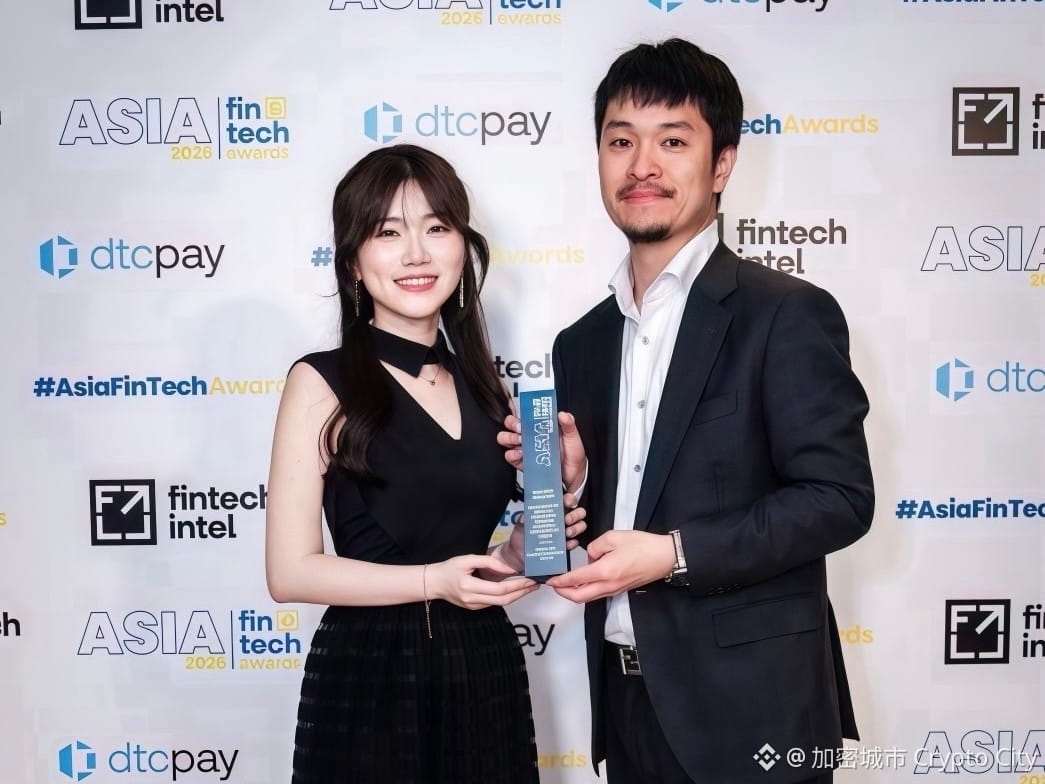
First Taiwanese crypto exchange to win! HOYA BIT wins AFA Awards’ Best ESG Company AwardThe following content is provided by HOYA BIT.
Taiwan’s cryptocurrency exchange HOYA BIT participated in the Asia FinTech Awards for the first time. It advanced to three finals at once and won the “Best ESG Campaign” award. According to the publicly available list of past winners on the official Asia FinTech Awards website, HOYA BIT became the first Taiwan cryptocurrency exchange to receive recognition for this award.
The Asia FinTech Awards are hosted by FinTech Intel and have been held since 2021. Past award-winning companies include Asia’s representative fintech firms such as Airwallex, FWDl, and Nium. The awards cover a wide range of fintech areas, including payments, banking technology, digital assets, RegTech, Web3, wealth management, and ESG. This year, Holly Fang, Chair of the Singapore FinTech Association, serves as the Chair of the independent judging panel.
First Taiwanese crypto exchange to win! HOYA BIT wins AFA Awards’ Best ESG Company Award
The following content is provided by HOYA BIT.
Taiwan’s cryptocurrency exchange HOYA BIT participated in the Asia FinTech Awards for the first time. It advanced to three finals at once and won the “Best ESG Campaign” award. According to the publicly available list of past winners on the official Asia FinTech Awards website, HOYA BIT became the first Taiwan cryptocurrency exchange to receive recognition for this award.
The Asia FinTech Awards are hosted by FinTech Intel and have been held since 2021. Past award-winning companies include Asia’s representative fintech firms such as Airwallex, FWDl, and Nium. The awards cover a wide range of fintech areas, including payments, banking technology, digital assets, RegTech, Web3, wealth management, and ESG. This year, Holly Fang, Chair of the Singapore FinTech Association, serves as the Chair of the independent judging panel.
Taiwan’s cryptocurrency exchange HOYA BIT participated in the Asia FinTech Awards for the first time. It advanced to three finals at once and won the “Best ESG Campaign” award. According to the publicly available list of past winners on the official Asia FinTech Awards website, HOYA BIT became the first Taiwan cryptocurrency exchange to receive recognition for this award.
The Asia FinTech Awards are hosted by FinTech Intel and have been held since 2021. Past award-winning companies include Asia’s representative fintech firms such as Airwallex, FWDl, and Nium. The awards cover a wide range of fintech areas, including payments, banking technology, digital assets, RegTech, Web3, wealth management, and ESG. This year, Holly Fang, Chair of the Singapore FinTech Association, serves as the Chair of the independent judging panel.
46

Article
FUTUREMODE 2026》Lin Zhichen: AI promotes reverse specialization in the workplace, revealing the key to one person creating one million USD in revenueLina Zhichen: AI is driving “reverse specialization,” allowing one person to create more value
On the opening day of FUTUREMODE 2026, a dialogue titled “Facing the Future” was held, hosted by Jenny Ting-yi Chan, Chair of the Taiwan Foundation for Artificial Intelligence and Technology. Invited speakers included Lin Zhichen (Jamie Lin), General Manager of Taiwan Mobile and Chairman and Partner of AppWorks, who shared potential industry and societal changes that may emerge over the next 10 years amid the rapid development of AI, blockchain, and digital assets in Taiwan.
Lin Zhichen pointed out that one of the most important changes brought by AI is that human work patterns may gradually shift from the past, where work was continuously broken down into “specialization,” toward “reverse specialization.” In the past, companies improved efficiency through high levels of specialization, with each person responsible for an ever narrower scope of work—leading to increased costs for communication, understanding, and collaboration between departments. After generative AI took off, one person began to be able to coordinate with multiple AI tools, spanning tasks such as market research, user experience, product development, and data analysis.
FUTUREMODE 2026》Lin Zhichen: AI promotes reverse specialization in the workplace, revealing the key to one person creating one million USD in revenue
Lina Zhichen: AI is driving “reverse specialization,” allowing one person to create more value
On the opening day of FUTUREMODE 2026, a dialogue titled “Facing the Future” was held, hosted by Jenny Ting-yi Chan, Chair of the Taiwan Foundation for Artificial Intelligence and Technology. Invited speakers included Lin Zhichen (Jamie Lin), General Manager of Taiwan Mobile and Chairman and Partner of AppWorks, who shared potential industry and societal changes that may emerge over the next 10 years amid the rapid development of AI, blockchain, and digital assets in Taiwan.
Lin Zhichen pointed out that one of the most important changes brought by AI is that human work patterns may gradually shift from the past, where work was continuously broken down into “specialization,” toward “reverse specialization.” In the past, companies improved efficiency through high levels of specialization, with each person responsible for an ever narrower scope of work—leading to increased costs for communication, understanding, and collaboration between departments. After generative AI took off, one person began to be able to coordinate with multiple AI tools, spanning tasks such as market research, user experience, product development, and data analysis.
On the opening day of FUTUREMODE 2026, a dialogue titled “Facing the Future” was held, hosted by Jenny Ting-yi Chan, Chair of the Taiwan Foundation for Artificial Intelligence and Technology. Invited speakers included Lin Zhichen (Jamie Lin), General Manager of Taiwan Mobile and Chairman and Partner of AppWorks, who shared potential industry and societal changes that may emerge over the next 10 years amid the rapid development of AI, blockchain, and digital assets in Taiwan.
Lin Zhichen pointed out that one of the most important changes brought by AI is that human work patterns may gradually shift from the past, where work was continuously broken down into “specialization,” toward “reverse specialization.” In the past, companies improved efficiency through high levels of specialization, with each person responsible for an ever narrower scope of work—leading to increased costs for communication, understanding, and collaboration between departments. After generative AI took off, one person began to be able to coordinate with multiple AI tools, spanning tasks such as market research, user experience, product development, and data analysis.
42
Robinhood’s Meme Coin Double-Edged Sword: Credit Card Checkout Without KYC Sparks Controversy, Plus a Staggering $20 Million SlippageRobinhood’s ecosystem has recently sparked a meme coin trading craze, but behind the high trading volume, there have also been controversies over credit card transaction categorization, extreme slippage, and massive unrealized gains—prompting the market to refocus on the compliance arrangements for self-custody wallets and the trading risks associated with low-liquidity tokens.
Buy meme coins with a credit card—checkout did not require additional KYC
External media (The Block) testing found that users can, within the Robinhood Wallet and the social trading app Fomo, use the checkout service provided by Crossmint to buy certain specified meme coins using a credit card together with Apple Pay or Google Pay, with no additional full KYC identity verification forms appearing during the process. The test transactions involved tokens such as WIF, and users also received standard credit card transaction points.
Robinhood’s Meme Coin Double-Edged Sword: Credit Card Checkout Without KYC Sparks Controversy, Plus a Staggering $20 Million Slippage
Robinhood’s ecosystem has recently sparked a meme coin trading craze, but behind the high trading volume, there have also been controversies over credit card transaction categorization, extreme slippage, and massive unrealized gains—prompting the market to refocus on the compliance arrangements for self-custody wallets and the trading risks associated with low-liquidity tokens.
Buy meme coins with a credit card—checkout did not require additional KYC
External media (The Block) testing found that users can, within the Robinhood Wallet and the social trading app Fomo, use the checkout service provided by Crossmint to buy certain specified meme coins using a credit card together with Apple Pay or Google Pay, with no additional full KYC identity verification forms appearing during the process. The test transactions involved tokens such as WIF, and users also received standard credit card transaction points.
Buy meme coins with a credit card—checkout did not require additional KYC
External media (The Block) testing found that users can, within the Robinhood Wallet and the social trading app Fomo, use the checkout service provided by Crossmint to buy certain specified meme coins using a credit card together with Apple Pay or Google Pay, with no additional full KYC identity verification forms appearing during the process. The test transactions involved tokens such as WIF, and users also received standard credit card transaction points.
13
Article
Chainlink partners with the U.S. Department of Commerce! Bringing U.S. GDP and inflation data to 10 major public chainsU.S. official economic data is put on-chain—Chainlink connects 10 public chains
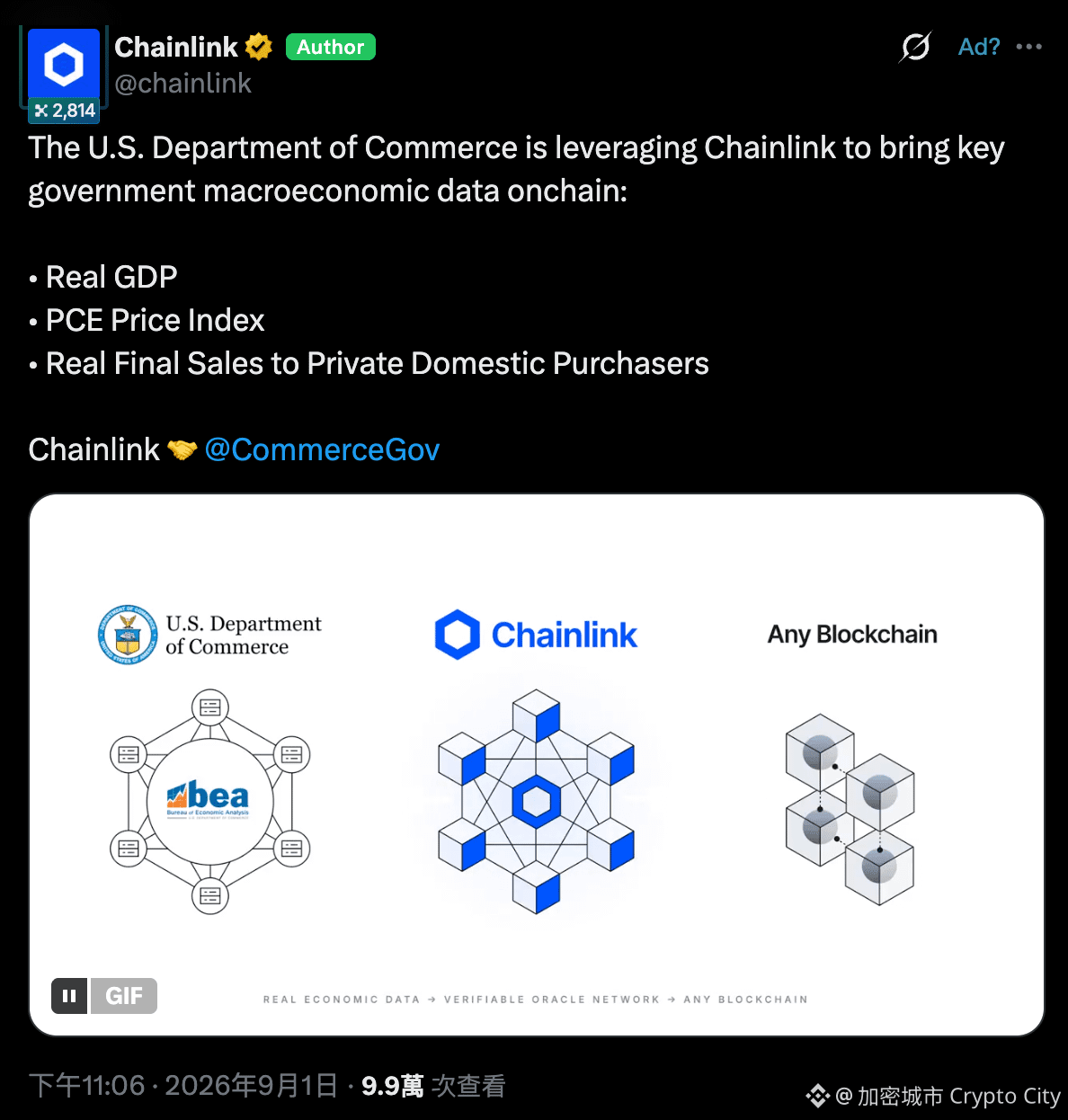
The U.S. government continues to expand blockchain applications. Decentralized oracle network Chainlink recently announced that the U.S. Department of Commerce, through Chainlink infrastructure, has brought the Bureau of Economic Analysis (BEA)’s official macroeconomic data onto a public blockchain, enabling smart contracts and on-chain applications to directly access economic data published by the U.S. government.
Image source: X/@chainlink Decentralized oracle network Chainlink announced that the U.S. Department of Commerce, via Chainlink infrastructure, has brought the Bureau of Economic Analysis’s official macroeconomic data onto a public blockchain
Chainlink partners with the U.S. Department of Commerce! Bringing U.S. GDP and inflation data to 10 major public chains
U.S. official economic data is put on-chain—Chainlink connects 10 public chains
The U.S. government continues to expand blockchain applications. Decentralized oracle network Chainlink recently announced that the U.S. Department of Commerce, through Chainlink infrastructure, has brought the Bureau of Economic Analysis (BEA)’s official macroeconomic data onto a public blockchain, enabling smart contracts and on-chain applications to directly access economic data published by the U.S. government.
Image source: X/@chainlink Decentralized oracle network Chainlink announced that the U.S. Department of Commerce, via Chainlink infrastructure, has brought the Bureau of Economic Analysis’s official macroeconomic data onto a public blockchain
The U.S. government continues to expand blockchain applications. Decentralized oracle network Chainlink recently announced that the U.S. Department of Commerce, through Chainlink infrastructure, has brought the Bureau of Economic Analysis (BEA)’s official macroeconomic data onto a public blockchain, enabling smart contracts and on-chain applications to directly access economic data published by the U.S. government.
Image source: X/@chainlink Decentralized oracle network Chainlink announced that the U.S. Department of Commerce, via Chainlink infrastructure, has brought the Bureau of Economic Analysis’s official macroeconomic data onto a public blockchain
206
FUTUREMODE 2026》Over 600 AI Companies Already in Taipei! Digital Assets + Culture Come Together HereTaipei Blockchain Week Upgrade FUTUREMODE: 600 Developers Gather at Expo
On September 4, 2026, FUTUREMODE (Taiwan’s Future Festival), which was upgraded from Taipei Blockchain Week (Taipei Blockchain Week), officially kicked off at the Changyanyan Pavilion at the Taipei World Expo. The event will run for three days. This year’s theme further extends beyond Web3, focusing on AI x Brands x Culture x Digital Assets x Emerging Tech, in an effort to bring the tech industry, brands, culture, and everyday experience into a single venue.
In opening remarks, the FUTUREMODE organizing team—Tiffany Lai and Eason Hu—said the event has grown from a small community and ideas from five years ago to what it is today. With rapid advances in technologies such as AI, robotics, and blockchain, this year it also adjusted its focus, aiming to help participants move from learning and hands-on practice to real-world experiences, with more direct exposure to emerging technologies.
FUTUREMODE 2026》Over 600 AI Companies Already in Taipei! Digital Assets + Culture Come Together Here
Taipei Blockchain Week Upgrade FUTUREMODE: 600 Developers Gather at Expo
On September 4, 2026, FUTUREMODE (Taiwan’s Future Festival), which was upgraded from Taipei Blockchain Week (Taipei Blockchain Week), officially kicked off at the Changyanyan Pavilion at the Taipei World Expo. The event will run for three days. This year’s theme further extends beyond Web3, focusing on AI x Brands x Culture x Digital Assets x Emerging Tech, in an effort to bring the tech industry, brands, culture, and everyday experience into a single venue.
In opening remarks, the FUTUREMODE organizing team—Tiffany Lai and Eason Hu—said the event has grown from a small community and ideas from five years ago to what it is today. With rapid advances in technologies such as AI, robotics, and blockchain, this year it also adjusted its focus, aiming to help participants move from learning and hands-on practice to real-world experiences, with more direct exposure to emerging technologies.
On September 4, 2026, FUTUREMODE (Taiwan’s Future Festival), which was upgraded from Taipei Blockchain Week (Taipei Blockchain Week), officially kicked off at the Changyanyan Pavilion at the Taipei World Expo. The event will run for three days. This year’s theme further extends beyond Web3, focusing on AI x Brands x Culture x Digital Assets x Emerging Tech, in an effort to bring the tech industry, brands, culture, and everyday experience into a single venue.
In opening remarks, the FUTUREMODE organizing team—Tiffany Lai and Eason Hu—said the event has grown from a small community and ideas from five years ago to what it is today. With rapid advances in technologies such as AI, robotics, and blockchain, this year it also adjusted its focus, aiming to help participants move from learning and hands-on practice to real-world experiences, with more direct exposure to emerging technologies.
89
Arthur makes the call: Bitcoin could hit $1 million by 2030! But why choose Ether right now?BitMEX co-founder Arthur Hayes once again put forward an extremely bullish long-term Bitcoin forecast, saying that as the AI investment bubble ultimately evolves into a credit crisis, governments and central banks may use larger-scale money expansion to stabilize the financial system, driving Bitcoin to reach $1 million by 2030.
However, Hayes said that if there is a new tranche of funds that needs to be allocated to the crypto market at present, his top choice at this stage is not Bitcoin or the HYPE that has been trending in the market recently, but rather Ether. He believes that ETH’s long-term performance has lagged, market attention is relatively low, and, combined with its foundational infrastructure role in decentralized finance and asset tokenization, it offers a more attractive risk-reward profile.
Arthur makes the call: Bitcoin could hit $1 million by 2030! But why choose Ether right now?
BitMEX co-founder Arthur Hayes once again put forward an extremely bullish long-term Bitcoin forecast, saying that as the AI investment bubble ultimately evolves into a credit crisis, governments and central banks may use larger-scale money expansion to stabilize the financial system, driving Bitcoin to reach $1 million by 2030.
However, Hayes said that if there is a new tranche of funds that needs to be allocated to the crypto market at present, his top choice at this stage is not Bitcoin or the HYPE that has been trending in the market recently, but rather Ether. He believes that ETH’s long-term performance has lagged, market attention is relatively low, and, combined with its foundational infrastructure role in decentralized finance and asset tokenization, it offers a more attractive risk-reward profile.
However, Hayes said that if there is a new tranche of funds that needs to be allocated to the crypto market at present, his top choice at this stage is not Bitcoin or the HYPE that has been trending in the market recently, but rather Ether. He believes that ETH’s long-term performance has lagged, market attention is relatively low, and, combined with its foundational infrastructure role in decentralized finance and asset tokenization, it offers a more attractive risk-reward profile.
91
SBI Unveils Its Blockchain-Based Financial Plan: How a “Five-Layer Architecture” Makes Stablecoins Zero-Cost InfrastructureAt the 2026 FinTechOn 2026 & AFA Summit, SBI Holdings’ CTO Kefei Lin publicly shared how the SBI Group systematically migrated traditional financial infrastructure to the blockchain. He emphasized that the core isn’t a technological breakthrough, but the sequence: first establish a regulatory framework, then build market infrastructure in layers, and finally make stablecoins and tokenized assets become everyday tools like the internet.
The Zero-Commission Revolution: a replicable “ready first, then execute” logic
Kefei Lin, using SBI Group’s “Zero-Commission Revolution,” which it began driving in 2019, as a methodology: at the time, the company planned to bring online brokerage commissions down to zero and spent four years rebuilding its revenue base, covering margin businesses, proprietary trading, and wholesale finance. Ultimately, in 2023, it officially eliminated fees for domestic stock trading.
SBI Unveils Its Blockchain-Based Financial Plan: How a “Five-Layer Architecture” Makes Stablecoins Zero-Cost Infrastructure
At the 2026 FinTechOn 2026 & AFA Summit, SBI Holdings’ CTO Kefei Lin publicly shared how the SBI Group systematically migrated traditional financial infrastructure to the blockchain. He emphasized that the core isn’t a technological breakthrough, but the sequence: first establish a regulatory framework, then build market infrastructure in layers, and finally make stablecoins and tokenized assets become everyday tools like the internet.
The Zero-Commission Revolution: a replicable “ready first, then execute” logic
Kefei Lin, using SBI Group’s “Zero-Commission Revolution,” which it began driving in 2019, as a methodology: at the time, the company planned to bring online brokerage commissions down to zero and spent four years rebuilding its revenue base, covering margin businesses, proprietary trading, and wholesale finance. Ultimately, in 2023, it officially eliminated fees for domestic stock trading.
The Zero-Commission Revolution: a replicable “ready first, then execute” logic
Kefei Lin, using SBI Group’s “Zero-Commission Revolution,” which it began driving in 2019, as a methodology: at the time, the company planned to bring online brokerage commissions down to zero and spent four years rebuilding its revenue base, covering margin businesses, proprietary trading, and wholesale finance. Ultimately, in 2023, it officially eliminated fees for domestic stock trading.
94
Log in to explore more content
Join global crypto users on Binance Square
⚡️ Get latest and useful information about crypto.
💬 Trusted by the world’s largest crypto exchange.
👍 Discover real insights from verified creators.
Email / Phone number
Trending Topics
RussiaUkraine72-hourCeasefire
170,544 views
2,226 Discussing
#russiaukraine72-hourceasefire
Ceasefire Declared: How Will Global Markets & Crypto React in the Next 72 Hours?
A dramatic 72-hour ceasefire has just been announced between Russia and Ukraine, offering a potential—if brief—break in hostilities. For global markets and the cryptocurrency sector, this news is a massive shift in sentiment.
How will investors react in the next 72 hours? Here are the key narratives playing out right now:
Risk-On Bounce: Will the sudden easing of geopolitical tension drive a rotation back into "risk-on" assets like growth stocks and high-beta altcoins? We often see markets rally on news of peace, even if it's temporary.
The Safe-Haven Dilemma: Paradoxically, Bitcoin ($BTC) and Gold ($GLD) often act as safe-haven assets during crises. While peace is good, will it dampen the "crisis hedging" demand for Bitcoin in the immediate term?
Oil and Commodities: Energy prices are likely to experience high volatility. A cooling of tensions could mean a reduction in supply fears.
My Take: While this is a temporary window, expect extreme volatility in both directions. Traders will be highly reactive to any news indicating whether the ceasefire is holding. I anticipate a short-term rally in crypto, but sustainable momentum depends on longer-term outcomes.
What are your predictions for the next 72 hours? Is this the start of a broader de-escalation, or just a temporary pause before more chaos?
👇 Let’s discuss in the comments below! 👇
$BTC
#RussiaUkraineWar #CryptoNews #bitcoin
Lily星星
·6 Likes
·2k views
CNPYAirdropOnBinanceAlpha
43,391 views
704 Discussing
ZEC'sMarketCapSurpassedDOGE
106,685 views
808 Discussing