Binance Square
10年老韭加密研究中心
319 Posts

10年老韭加密研究中心

金融市场策略|数字资产研究 全球宏观|流动性|政策周期|数字资产 聚焦市场变化与资金行为 用数据看市场,用事实拆叙事 不是天天幻想抓10倍,要持续从市场里拿到小利润。
Occasional Trader
9.1 Years
10 Following
99 Followers
431 Liked
Posts
PINNED
·
--
Article
How does the 10-year US Treasury yield connect to the crypto market?The US 10-year Treasury yield has already moved close to 5.3%. On the surface, this news is about bonds, but what really matters is: The US dollar, global liquidity, BTC, and the development of RWA next. First, look at the data. #美国10年期美债收益率逼近5.3% As of October 1, the US 10-year Treasury yield once climbed to 5.31%–5.34%, the highest level since 2002. In September, the one-month rise was about 87 basis points, one of the most intense quarterly increases since 1994. The 30-year Treasury yield has also exceeded 5.6%, similarly approaching the highest levels since 2002. This is no longer ordinary volatility.

How does the 10-year US Treasury yield connect to the crypto market?

The US 10-year Treasury yield has already moved close to 5.3%.
On the surface, this news is about bonds, but what really matters is:
The US dollar, global liquidity, BTC, and the development of RWA next.
First, look at the data. #美国10年期美债收益率逼近5.3%
As of October 1, the US 10-year Treasury yield once climbed to 5.31%–5.34%, the highest level since 2002.
In September, the one-month rise was about 87 basis points, one of the most intense quarterly increases since 1994.
The 30-year Treasury yield has also exceeded 5.6%, similarly approaching the highest levels since 2002.
This is no longer ordinary volatility.
PINNED
Article
RWA is moving from “on-chain assets” to “on-chain finance”【Old-Crop Observation】 Recently, this RWA track has begun to show a fairly noticeable change. When people talked about RWA before, it was basically just one sentence: Move traditional assets like stocks, bonds, and funds onto the blockchain. But moving assets onto the chain is actually just the first step. What’s really interesting is that recently, people have started connecting these assets further into DeFi. And this pathway has gradually been connected together. First, look at the asset side. What $ONDO is doing is to turn traditional financial assets like stocks and ETFs into on-chain assets. This year in February, Ondo's SPYon and QQQon have already entered the Morpho lending market and can be used as collateral to borrow other assets.

RWA is moving from “on-chain assets” to “on-chain finance”

【Old-Crop Observation】
Recently, this RWA track has begun to show a fairly noticeable change.
When people talked about RWA before, it was basically just one sentence:
Move traditional assets like stocks, bonds, and funds onto the blockchain.
But moving assets onto the chain is actually just the first step.
What’s really interesting is that recently, people have started connecting these assets further into DeFi.
And this pathway has gradually been connected together.
First, look at the asset side.
What $ONDO is doing is to turn traditional financial assets like stocks and ETFs into on-chain assets.
This year in February, Ondo's SPYon and QQQon have already entered the Morpho lending market and can be used as collateral to borrow other assets.
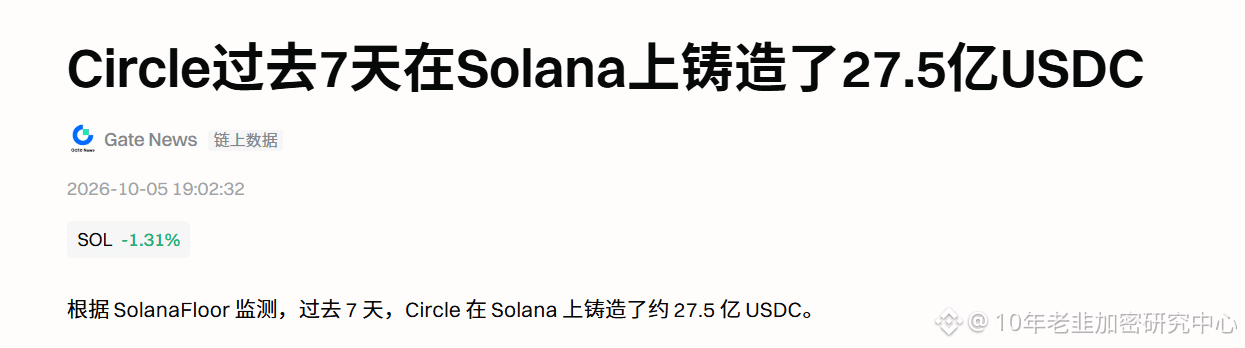
#circle7天在solana铸造27.5亿美元usdc 【Old Leek Watch】 $SOL Solana has seen a major signal of capital flows over the past few days. Circle minted approximately $2.75 billion worth of USDC on Solana over the past 7 days. What does $2.75 billion mean? That works out to nearly $390 million in new issuance per day, on average. This doesn’t mean that all $2.75 billion has already flowed into SOL and altcoins. To determine the actual net inflow, we need to subtract redemptions and burns during the same period from the amount minted. But one thing is clear: A significant amount of dollar liquidity has indeed been prepared for the Solana ecosystem recently. What I’m more interested in watching next isn’t USDC itself, but where this liquidity ultimately goes. If it starts flowing into DEXs, DeFi, and Solana ecosystem assets, we could see a round of capital rotation. {future}(SOLUSDT) {spot}(SOLUSDT)
#circle7天在solana铸造27.5亿美元usdc
【Old Leek Watch】 $SOL
Solana has seen a major signal of capital flows over the past few days. Circle minted approximately $2.75 billion worth of USDC on Solana over the past 7 days.
What does $2.75 billion mean? That works out to nearly $390 million in new issuance per day, on average.
This doesn’t mean that all $2.75 billion has already flowed into SOL and altcoins. To determine the actual net inflow, we need to subtract redemptions and burns during the same period from the amount minted.
But one thing is clear:
A significant amount of dollar liquidity has indeed been prepared for the Solana ecosystem recently. What I’m more interested in watching next isn’t USDC itself, but where this liquidity ultimately goes.
If it starts flowing into DEXs, DeFi, and Solana ecosystem assets, we could see a round of capital rotation.
#日经225涨2.5%创三月新高 【Old Leek Watch】 There was a clear signal in Asian markets today: the Nikkei 225 briefly broke above 70,000. It closed at 69,946, up 2.40% for the day, after reaching an intraday high of 70,072. This rally wasn't just Japanese stocks getting carried away. U.S. employment data for September came in significantly weaker than expected, easing concerns about further Fed rate hikes. Money also started flowing back into AI and semiconductor stocks. More interestingly: $BTC also briefly climbed to around $86,950 today. Japanese stocks, AI and semiconductors, and BTC all strengthened at the same time. Underlying it all is the same story— capital is starting to price in “easing rate pressure.” BTC is now very close to its previous high of $87,400. If Treasury yields keep falling, whether BTC can truly break through this resistance level may be more worth watching than the Nikkei's 2% gain. {future}(BTCUSDT) {spot}(BTCUSDT)
#日经225涨2.5%创三月新高
【Old Leek Watch】
There was a clear signal in Asian markets today: the Nikkei 225 briefly broke above 70,000. It closed at 69,946, up 2.40% for the day, after reaching an intraday high of 70,072.
This rally wasn't just Japanese stocks getting carried away.
U.S. employment data for September came in significantly weaker than expected, easing concerns about further Fed rate hikes. Money also started flowing back into AI and semiconductor stocks.
More interestingly:
$BTC also briefly climbed to around $86,950 today.
Japanese stocks, AI and semiconductors, and BTC all strengthened at the same time. Underlying it all is the same story—
capital is starting to price in “easing rate pressure.”
BTC is now very close to its previous high of $87,400.
If Treasury yields keep falling, whether BTC can truly break through this resistance level may be more worth watching than the Nikkei's 2% gain.
【Old Leek Watch】 $FET FET is worth taking another look at in this rally. It rose 12% on October 4 alone, and trading volume today has already exceeded $200 million. More importantly, look at the price structure: in mid-September, FET was still at $0.15–$0.18; now it has surged to around $0.26. This isn't just a sudden spike on a single candlestick—money has been flowing into the AI sector for several days in a row. If it can hold above $0.245 after a pullback, while volume picks up again, the AI theme may have another leg to run. On the other hand, if it breaks below $0.225, treat this rally as short-term capital rotation for now. Wait for a pullback to $0.245–$0.255. Entry: $0.245–$0.255 Take profit: $0.275 / $0.300 / $0.330 / $0.370 / $0.420 Stop loss: $0.225 If it can hold above $0.245 after a pullback, while volume picks up again, the AI theme may have another leg to run. On the other hand, if it breaks below $0.225, treat this rally as short-term capital rotation for now. {future}(FETUSDT) {spot}(FETUSDT)
【Old Leek Watch】 $FET
FET is worth taking another look at in this rally. It rose 12% on October 4 alone, and trading volume today has already exceeded $200 million.
More importantly, look at the price structure: in mid-September, FET was still at $0.15–$0.18; now it has surged to around $0.26. This isn't just a sudden spike on a single candlestick—money has been flowing into the AI sector for several days in a row. If it can hold above $0.245 after a pullback, while volume picks up again, the AI theme may have another leg to run.
On the other hand, if it breaks below $0.225, treat this rally as short-term capital rotation for now.
Wait for a pullback to $0.245–$0.255.
Entry: $0.245–$0.255
Take profit: $0.275 / $0.300 / $0.330 / $0.370 / $0.420
Stop loss: $0.225
If it can hold above $0.245 after a pullback, while volume picks up again, the AI theme may have another leg to run.
On the other hand, if it breaks below $0.225, treat this rally as short-term capital rotation for now.
·
--
Bullish
【Veteran Trader Watch】 $AKT AKT suddenly saw a surge in trading volume today. Its price briefly climbed to around $0.80, up nearly 20% in 24 hours. But what really caught my attention wasn’t the price increase—it was the volume. Over the past day, AKT’s trading volume surged to over $33M, roughly 6 times higher than the day before. So far, I haven’t seen any solid official news that could explain this move. So don’t rush to label this an “AI-related catalyst.” It looks more like funds are suddenly concentrating in decentralized computing power. Entry: $0.74–$0.78 Take profit: $0.84 / $0.90 / $0.98 / $1.08 / $1.20 Stop loss: $0.69 It has already made a run near $0.80, so don’t chase it. If it pulls back to $0.74–$0.78 and holds steady, while volume doesn’t shrink significantly, this move may have room to continue. When a price surges without any news, it’s even more important to see whether funds are still there the next day. {future}(AKTUSDT)
【Veteran Trader Watch】 $AKT
AKT suddenly saw a surge in trading volume today. Its price briefly climbed to around $0.80, up nearly 20% in 24 hours.
But what really caught my attention wasn’t the price increase—it was the volume. Over the past day, AKT’s trading volume surged to over $33M, roughly 6 times higher than the day before. So far, I haven’t seen any solid official news that could explain this move.
So don’t rush to label this an “AI-related catalyst.” It looks more like funds are suddenly concentrating in decentralized computing power.
Entry: $0.74–$0.78
Take profit: $0.84 / $0.90 / $0.98 / $1.08 / $1.20
Stop loss: $0.69
It has already made a run near $0.80, so don’t chase it.
If it pulls back to $0.74–$0.78 and holds steady, while volume doesn’t shrink significantly, this move may have room to continue. When a price surges without any news, it’s even more important to see whether funds are still there the next day.
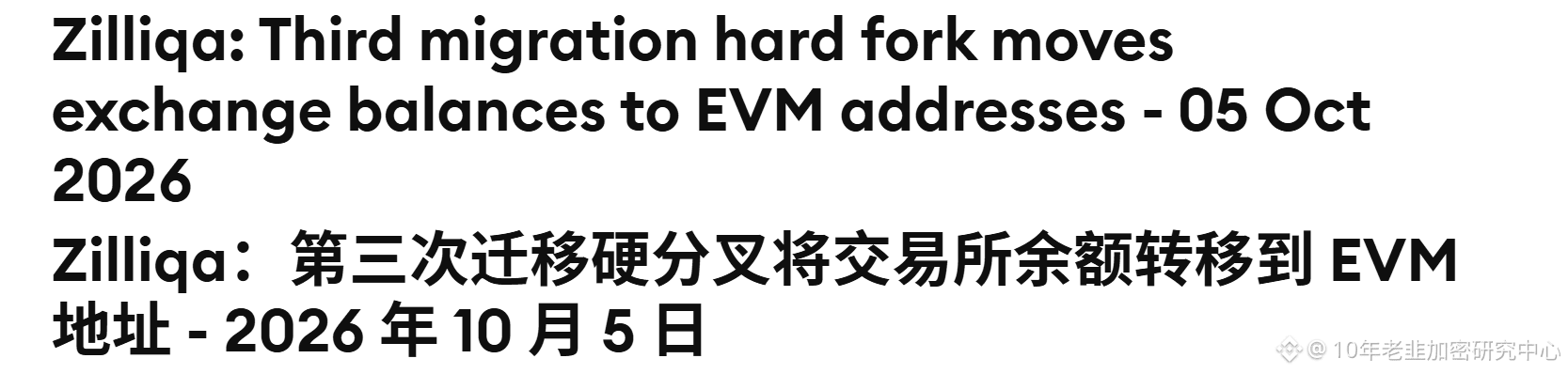
【Old Leek Watch】 $ZIL ZIL is starting to show some movement today. It’s not a sudden price surge; today just happens to mark the third migration hard fork for Zilliqa. Some ZIL held by exchanges will be migrated from old Legacy addresses to new Zilliqa EVM addresses. Binance has already confirmed that ZIL will be migrated to ZILEVM at a 1:1 ratio, with no impact on spot trading. What’s more noteworthy is the trading volume. It was around 48 million tokens on October 4, and has expanded to nearly 300 million today. The price is currently only around $0.0036, with no particularly dramatic rally so far. If trading volume continues to grow after the migration is complete, ZIL may be able to turn this technical migration into a real market rally. Entry: $0.00350–$0.00362 Take profit: $0.00385 / $0.00410 / $0.00440 / $0.00480 / $0.00530 Stop loss: $0.00330 {spot}(ZILUSDT)
【Old Leek Watch】 $ZIL
ZIL is starting to show some movement today.
It’s not a sudden price surge; today just happens to mark the third migration hard fork for Zilliqa.
Some ZIL held by exchanges will be migrated from old Legacy addresses to new Zilliqa EVM addresses.
Binance has already confirmed that ZIL will be migrated to ZILEVM at a 1:1 ratio, with no impact on spot trading.
What’s more noteworthy is the trading volume.
It was around 48 million tokens on October 4, and has expanded to nearly 300 million today.
The price is currently only around $0.0036, with no particularly dramatic rally so far.
If trading volume continues to grow after the migration is complete, ZIL may be able to turn this technical migration into a real market rally.
Entry: $0.00350–$0.00362
Take profit: $0.00385 / $0.00410 / $0.00440 / $0.00480 / $0.00530
Stop loss: $0.00330
【Veteran Crypto Watch】 $AVAX There’s a recent data point about AVAX worth paying attention to. In September, the market cap of tokenized stocks on the Avalanche chain grew by $245.5M—the largest increase among all public blockchains. Securitize was the main driver. Even more striking, Securitize brought around $132M worth of equity assets on-chain in the past week, most of which went to Avalanche. Today, OKX and ICE, the parent company of the New York Stock Exchange, announced an even bigger plan: they’re preparing to build a 24/7 tokenized U.S. stock trading platform, expected to cover more than 60 companies. RWA is no longer just “a story.” Stocks are actually moving on-chain, and Avalanche happens to be right in the path of that capital flow. {future}(AVAXUSDT) {spot}(AVAXUSDT)
【Veteran Crypto Watch】 $AVAX
There’s a recent data point about AVAX worth paying attention to.
In September, the market cap of tokenized stocks on the Avalanche chain grew by $245.5M—the largest increase among all public blockchains.
Securitize was the main driver.
Even more striking, Securitize brought around $132M worth of equity assets on-chain in the past week, most of which went to Avalanche.
Today, OKX and ICE, the parent company of the New York Stock Exchange, announced an even bigger plan: they’re preparing to build a 24/7 tokenized U.S. stock trading platform, expected to cover more than 60 companies.
RWA is no longer just “a story.”
Stocks are actually moving on-chain, and Avalanche happens to be right in the path of that capital flow.
10年老韭加密研究中心
·
--
Bullish
[Old Wheat Watch]
$AVAX Today’s move is backed by a pretty solid piece of institutional news.
Goldman Sachs has about a $100 billion–scale U.S. Treasury money market fund, FTIXX, and now it’s being made available via Lynq to qualified U.S. crypto institutions.
The key point isn’t that Goldman “moved the fund on-chain.” FTIXX itself is not tokenized.
Instead, Lynq’s institutional settlement network runs on a permissioned L1 on Avalanche, allowing crypto trading institutions to put idle cash between trades into the Treasury fund to earn yield, then redeem when they need liquidity.
This is actually another kind of RWA: not turning assets into tokens, but connecting traditional financial assets into a crypto institutions’ cash settlement system.
AVAX has already been up for a round today, and the market is trading the story ahead of time.
Entry: $10.50–$10.80
Take profit: $11.30 / $12.00 / $12.80 / $13.80 / $15.00
Stop loss: $10.10

·
--
Bearish
【Old Leek Watch】 $GTC The Koreans really know how to bring it GTC suddenly doubled over the past few days, and now there’s finally something behind the move that makes sense. On October 1, Gitcoin announced the latest Reboot plan, officially naming its new direction Techne. Its first product, Beacon, is already on the App Store, and a second pilot is underway, with an official launch targeted for mid-December. Meanwhile, a large amount of capital suddenly flowed into GTC on Korean exchanges. On October 5, Bithumb was up 52.6% at one point, while trading volumes also surged across several local exchanges. So on one side, Gitcoin has retold its own story; on the other, the Korean market has suddenly driven up trading volume. The problem is obvious, too: Techne won’t actually launch until December, and a lot of expectations have already been priced in. {future}(GTCUSDT) {spot}(GTCUSDT)
【Old Leek Watch】 $GTC The Koreans really know how to bring it
GTC suddenly doubled over the past few days, and now there’s finally something behind the move that makes sense.
On October 1, Gitcoin announced the latest Reboot plan, officially naming its new direction Techne. Its first product, Beacon, is already on the App Store, and a second pilot is underway, with an official launch targeted for mid-December.
Meanwhile, a large amount of capital suddenly flowed into GTC on Korean exchanges. On October 5, Bithumb was up 52.6% at one point, while trading volumes also surged across several local exchanges. So on one side, Gitcoin has retold its own story; on the other, the Korean market has suddenly driven up trading volume.
The problem is obvious, too: Techne won’t actually launch until December, and a lot of expectations have already been priced in.
$ADA Break the first take-profit point RealFi officially launched on the Cardano mainnet on October 1, and the Dijkstra upgrade is also ongoing. More importantly, Fireblocks has announced that it will fully support Cardano native tokens. Fireblocks serves banks, exchanges, and payment companies, and this news is even more meaningful for Cardano’s institutional on-ramps. {spot}(ADAUSDT)
$ADA Break the first take-profit point
RealFi officially launched on the Cardano mainnet on October 1, and the Dijkstra upgrade is also ongoing.
More importantly, Fireblocks has announced that it will fully support Cardano native tokens. Fireblocks serves banks, exchanges, and payment companies, and this news is even more meaningful for Cardano’s institutional on-ramps.
10年老韭加密研究中心
·
--
Bullish
【Old Wheat Observation】$ADA
Over the past two days, Cardano has come out with a rather interesting piece of news.
Brazil’s national oil company, Petrobras, has started testing the Cardano blockchain. And it isn’t for trading crypto.
Petrobras is currently running two projects:
One is tracking the environmental attributes of Sustainable Aviation Fuel (SAF).
The other is recording Renewable Diesel (Diesel R) across the entire lifecycle—from production, transportation, to usage.
Put simply, it’s: real-world energy assets → data on-chain → public verification → end-to-end traceability.
Among them, the SAF project is even more interesting.
It turns the environmental attributes of sustainable aviation fuel into on-chain Tokens, and each Token has a corresponding source and data.
In the future, once airlines or passengers claim the environmental benefits represented by those Tokens, the Tokens can be burned, preventing the same emissions-reduction credit from being counted multiple times.
This is essentially another way to play RWA. Previously, when people talked about RWA, the usual images were: U.S. Treasuries, stocks, funds, gold.
Now another kind of asset is emerging: real-world “environmental rights” and industrial data.
And this time, it’s not just a small project team running tests. Petrobras is one of Brazil’s largest energy companies.
However, there’s one point that must be made clear: both projects are still in the R&D stage right now.
No timeline for large-scale commercial deployment has been announced, and no specifics have been shared about how much fuel will be covered.
So for now, we can’t directly say: “Petrobras adopts Cardano → ADA is going to take off.”
What’s truly worth watching is whether these R&D efforts evolve into real production systems.
If, in the future, more and more energy, supply-chain, and carbon-emissions data move onto public blockchains, Cardano will have an application path entirely different from DeFi.
ADA is currently around $0.25.
In other words: the news is there. Real-world companies are there. But the market hasn’t yet shown any particularly strong chase.
Entry: $0.242–$0.255
Take profit: $0.275 / $0.290 / $0.310 / $0.335 / $0.380
Stop loss: $0.232
If there’s a breakout with volume above around $0.2568, it suggests the market is starting to price in this news; if it can’t break through, then we’ll continue to watch support around $0.24.
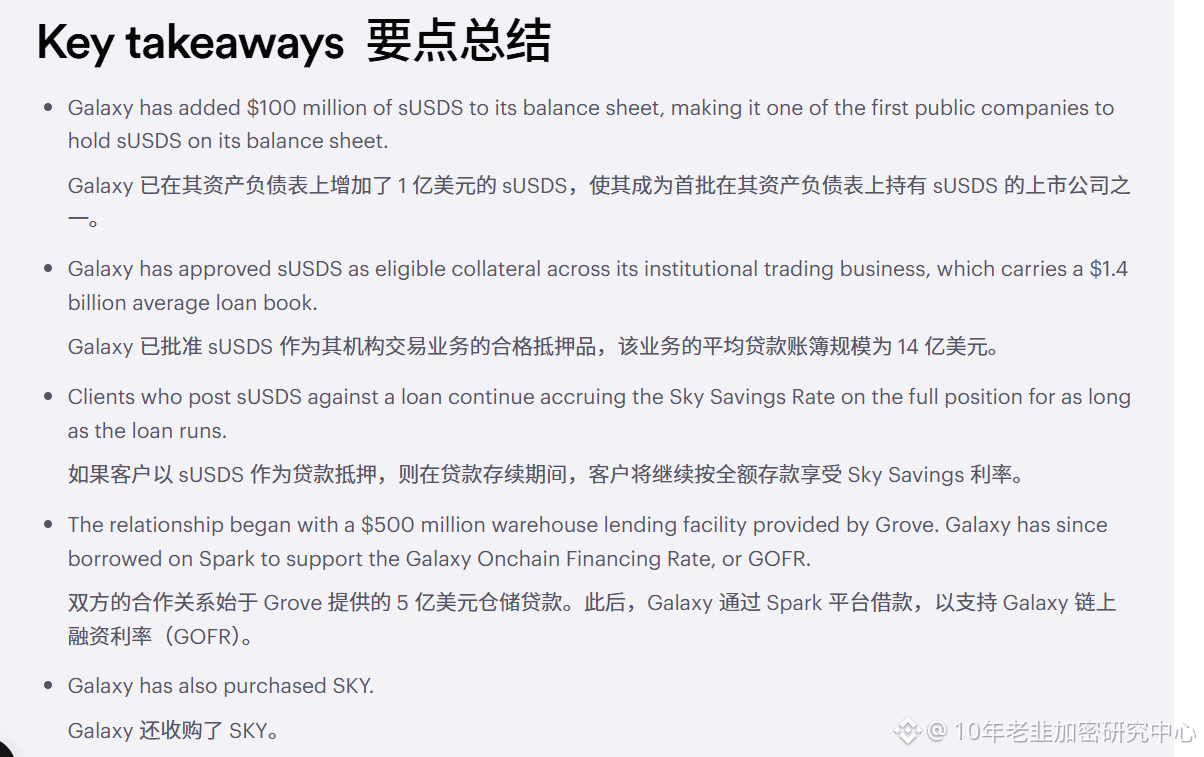

【Old Leek Watch】 $SKY These past few days have been brutal. It’s already hovering near $0.10; in a week it’s up about 26%, and only about 4% remains until the all-time high. At the end of September, Galaxy Digital transferred $100 million worth of sUSDS onto the company’s balance sheet, while also buying SKY. What’s more, Galaxy allows institutional clients to use sUSDS as loan collateral—backed by an institutional lending business with an average size of $1.4 billion. On the other side, Sky’s sUSDS supply has reached $5.52 billion, up 149% year over year. So what SKY is facing right now isn’t just simple speculation. It’s moving toward its all-time peak, and institutional capital has started treating Sky’s yield-bearing USD assets as real financial assets. {future}(SKYUSDT) {spot}(SKYUSDT)
【Old Leek Watch】
$SKY These past few days have been brutal.
It’s already hovering near $0.10; in a week it’s up about 26%, and only about 4% remains until the all-time high.
At the end of September, Galaxy Digital transferred $100 million worth of sUSDS onto the company’s balance sheet, while also buying SKY.
What’s more, Galaxy allows institutional clients to use sUSDS as loan collateral—backed by an institutional lending business with an average size of $1.4 billion.
On the other side, Sky’s sUSDS supply has reached $5.52 billion, up 149% year over year.
So what SKY is facing right now isn’t just simple speculation.
It’s moving toward its all-time peak, and institutional capital has started treating Sky’s yield-bearing USD assets as real financial assets.
【Old Cudgel Watch】 $ETH Take the beating and stand at attention Someone is currently holding up a short position of ETH worth $213 million. Approximate position: 78,000 ETH Average opening price: $2,340. But this short is now floating at a loss: $30.29M. Even more exciting is that on-chain data shows its liquidation price is $4,291. That means this whale isn’t really a question of whether they’re making money anymore. They’ve already lost $30 million, yet they’re still holding onto a short position of more than $200 million. What’s truly worth watching now is: If ETH keeps moving upward, will this person acknowledge the loss and exit first? Once a short at this level begins to cut losses, the market’s buy-side demand could suddenly get very interesting. {spot}(ETHUSDT)
【Old Cudgel Watch】 $ETH Take the beating and stand at attention
Someone is currently holding up a short position of ETH worth $213 million.
Approximate position: 78,000 ETH
Average opening price: $2,340. But this short is now floating at a loss: $30.29M.
Even more exciting is that on-chain data shows its liquidation price is $4,291.
That means this whale isn’t really a question of whether they’re making money anymore.
They’ve already lost $30 million, yet they’re still holding onto a short position of more than $200 million.
What’s truly worth watching now is:
If ETH keeps moving upward, will this person acknowledge the loss and exit first?
Once a short at this level begins to cut losses, the market’s buy-side demand could suddenly get very interesting.
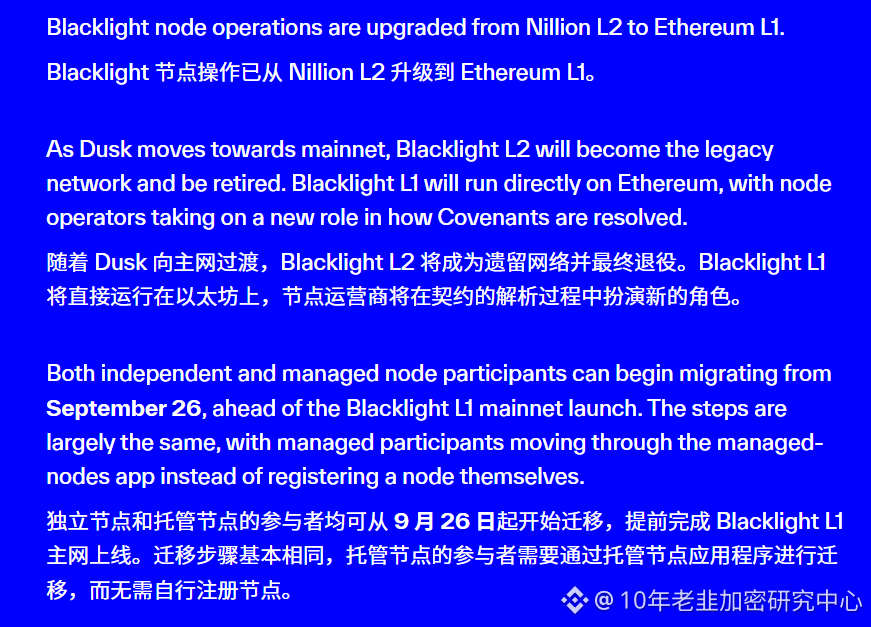
【Old Leek Observation】 $NIL Today it suddenly surged by nearly 20%, but this time it’s not just a simple pump on the upside. Because today happens to be the launch of the Nillion Blacklight L1 mainnet. After the mainnet goes live, node operators are required to stake at least: 70,000 NIL. Now the price of NIL is about $0.10, meaning that for a single node, you have to lock up roughly $7,000 worth of NIL at the minimum. More importantly, Nillion’s previous privacy computing products have already been live, and today marks the official transition into the L1 node, staking, and network operation phase. At the moment, NIL’s market cap is only about $50 million. So what’s really worth paying attention to today is not “up 20%.” But rather: A privacy computing project with a $50 million market cap—its mainnet just launched, and real token staking demand is starting to show up. {spot}(NILUSDT)
【Old Leek Observation】
$NIL Today it suddenly surged by nearly 20%, but this time it’s not just a simple pump on the upside.
Because today happens to be the launch of the Nillion Blacklight L1 mainnet.
After the mainnet goes live, node operators are required to stake at least:
70,000 NIL.
Now the price of NIL is about $0.10, meaning that for a single node, you have to lock up roughly $7,000 worth of NIL at the minimum.
More importantly, Nillion’s previous privacy computing products have already been live, and today marks the official transition into the L1 node, staking, and network operation phase.
At the moment, NIL’s market cap is only about $50 million.
So what’s really worth paying attention to today is not “up 20%.”
But rather:
A privacy computing project with a $50 million market cap—its mainnet just launched, and real token staking demand is starting to show up.
[Old Wheat Observations] Binance will force the liquidation of 3 contracts today: $PROMPT , $PUMPBTC , $1000000BOB . Automatic settlement at 17:00 Beijing time; after 16:30, you can’t open any new non-Reduce-Only positions. The normal interpretation should be: They’re being delisted—everyone should hurry and get out. But the most outrageous part right now is PUMPBTC. As it approached forced liquidation, its 24H trading volume briefly reached $34.59 million, while the price actually rose by about 55%. At this point, the real danger isn’t whether it “will go up.” It’s this: A contract is about to lose liquidity—so why do people still dare to push the price upward? Binance itself has also warned that in the final hour, there may be a drop in liquidity and violent volatility. In this kind of market, it’s easiest to mistake the “last wave of pumping” for genuine buying pressure.
[Old Wheat Observations]
Binance will force the liquidation of 3 contracts today:
$PROMPT , $PUMPBTC , $1000000BOB .
Automatic settlement at 17:00 Beijing time; after 16:30, you can’t open any new non-Reduce-Only positions.
The normal interpretation should be:
They’re being delisted—everyone should hurry and get out. But the most outrageous part right now is PUMPBTC.
As it approached forced liquidation, its 24H trading volume briefly reached $34.59 million, while the price actually rose by about 55%.
At this point, the real danger isn’t whether it “will go up.”
It’s this:
A contract is about to lose liquidity—so why do people still dare to push the price upward?
Binance itself has also warned that in the final hour, there may be a drop in liquidity and violent volatility.
In this kind of market, it’s easiest to mistake the “last wave of pumping” for genuine buying pressure.
$VIRTUAL break the first take-profit point {spot}(VIRTUALUSDT)
$VIRTUAL break the first take-profit point
10年老韭加密研究中心
·
--
Bullish
【Old Cabbage Observer】
$VIRTUAL

In mid-September it was still around $0.60. A few days ago it surged to around $0.85, and now it has returned to the $0.80 range.
Today the Base network still needs an upgrade, and VIRTUAL itself is one of the core AI Agent projects in the Base ecosystem. Coincidentally, Binance has also been continuously pushing AI Agent-related content recently, and the market’s attention on this direction hasn’t faded.
However, on September 28, about 2.9 million VIRTUAL tokens were just released—so in the short term there is indeed sell-side supply pressure.
Entry: $0.74–$0.79
Take profit: $0.86 / $0.95 / $1.08 / $1.25 / $1.50
Stop loss: $0.68
$ORCA Whale accumulates and makes a move, breaking the third to take profit {spot}(ORCAUSDT)
$ORCA Whale accumulates and makes a move, breaking the third to take profit
10年老韭加密研究中心
·
--
Bullish
【Old Leek Watch】
$ORCA
In the past few days, ORCA hasn’t suddenly surged like QNT or PUMP. Instead, it has been pulling back from a high level. But the interesting part is that when the price drops, the whales didn’t follow along.
Among the 10 whale addresses being tracked recently, ORCA’s holdings increased from about 160,300 to 201,100, up roughly 25.4%. At the same time, the exchanges also saw about $264,000 in net outflows.
So what we’re seeing now is a noticeable discrepancy worth observing:
As the price pulls back, the whales are actually adding to their positions.
Of course, this still can’t directly prove that ORCA is definitely going to rise. Whales might keep buying at the “mid-slope,” and for this kind of small- to mid-cap coin, volatility can be much higher than BTC or ETH.
But if afterward the price continues to retest around $1.50, without clearly seeing heavy sell-volume break through, while on-chain large addresses are still adding to their positions, then the odds at this level start to get interesting.
On the other hand, if $1.40 breaks down, it means this so-called “whale accumulation” hasn’t played out yet—for now—so cut the loss and don’t waste time waiting.
Entry: $1.50 – $1.60
Take profit: $1.70 / $1.82 / $1.95 / $2.10 / $2.30
Stop loss: $1.40
$ORCA #ORCA #Solana #defi

$ORCA broke second take profit close to third take profit {spot}(ORCAUSDT)
$ORCA broke second take profit close to third take profit
10年老韭加密研究中心
·
--
Bullish
【Old Leek Watch】
$ORCA
In the past few days, ORCA hasn’t suddenly surged like QNT or PUMP. Instead, it has been pulling back from a high level. But the interesting part is that when the price drops, the whales didn’t follow along.
Among the 10 whale addresses being tracked recently, ORCA’s holdings increased from about 160,300 to 201,100, up roughly 25.4%. At the same time, the exchanges also saw about $264,000 in net outflows.
So what we’re seeing now is a noticeable discrepancy worth observing:
As the price pulls back, the whales are actually adding to their positions.
Of course, this still can’t directly prove that ORCA is definitely going to rise. Whales might keep buying at the “mid-slope,” and for this kind of small- to mid-cap coin, volatility can be much higher than BTC or ETH.
But if afterward the price continues to retest around $1.50, without clearly seeing heavy sell-volume break through, while on-chain large addresses are still adding to their positions, then the odds at this level start to get interesting.
On the other hand, if $1.40 breaks down, it means this so-called “whale accumulation” hasn’t played out yet—for now—so cut the loss and don’t waste time waiting.
Entry: $1.50 – $1.60
Take profit: $1.70 / $1.82 / $1.95 / $2.10 / $2.30
Stop loss: $1.40
$ORCA #ORCA #Solana #defi

10年老韭加密研究中心
·
--
Bullish
【Old Reed Watch】
$CPOOL Today there was no such extreme surge of 20% or 30%; the current price is around $0.0365.
But today there is a clear event milestone:
CPOOL → CLEAR governance vote deadline. This is not a routine parameter adjustment.
According to the proposal, after CPOOL, it will be migrated to CLEAR in a 1:1 ratio, along with a redesign of the tokenomics model. One key point is that the plan is to use part of the protocol fees for:
buybacks + token burning
In addition, Clearpool has also been pushing forward recently:
institutional credit + XRP Ledger + RLUSD
So what the market is truly waiting for now isn’t how much CPOOL is up today, but two outcomes:
First, whether the migration plan from CPOOL to CLEAR can be approved.
Second, whether the institutional credit line and RLUSD can genuinely be implemented.
CPOOL right now is more like:
event is approaching, but the price has not fully broken out of the previous trading range.
Of course, it’s not at an absolute low either. CPOOL rallied somewhat in September, so this can’t be understood as a risk-free setup.
After the governance vote ends, if the results don’t meet expectations, or if the migration details don’t bring any new incremental upside, there could also be a short-term profit-taking move.
Entry: $0.0340–$0.0371
Take Profit: $0.039 / $0.043 / $0.048 / $0.054 / $0.062
Stop Loss: $0.031
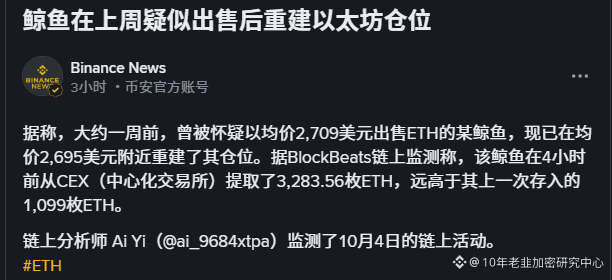
【Old Coin Observation】 $ETH Everyone, don’t blame yourselves for the little trading mistakes you make in your day-to-day. Just look at what other people do. When you get hit, stand up straight. This whale’s ETH move is kind of interesting. Last week, it averaged $2,709 and sold 1,099 ETH. But today, it suddenly withdrew from the exchange: 3,283.56 ETH, worth about $8.85 million. And the price at the time of the withdrawal was actually only around $2,695. In other words: Right after it sold, the price dropped a bit—yet it not only bought back, it also increased its position to three times the amount it previously sold. What we see on-chain is that it’s withdrawing from a CEX, so we can’t directly equate it with “already bought.” However, this action at least shows: This whale didn’t choose to keep waiting in cash for the price to fall. Instead, at a lower level, it took away a large amount of ETH again. {spot}(ETHUSDT)
【Old Coin Observation】 $ETH Everyone, don’t blame yourselves for the little trading mistakes you make in your day-to-day. Just look at what other people do.
When you get hit, stand up straight.
This whale’s ETH move is kind of interesting.
Last week, it averaged $2,709 and sold 1,099 ETH.
But today, it suddenly withdrew from the exchange:
3,283.56 ETH, worth about $8.85 million.
And the price at the time of the withdrawal was actually only around $2,695.
In other words:
Right after it sold, the price dropped a bit—yet it not only bought back, it also increased its position to three times the amount it previously sold.
What we see on-chain is that it’s withdrawing from a CEX, so we can’t directly equate it with “already bought.”
However, this action at least shows:
This whale didn’t choose to keep waiting in cash for the price to fall. Instead, at a lower level, it took away a large amount of ETH again.
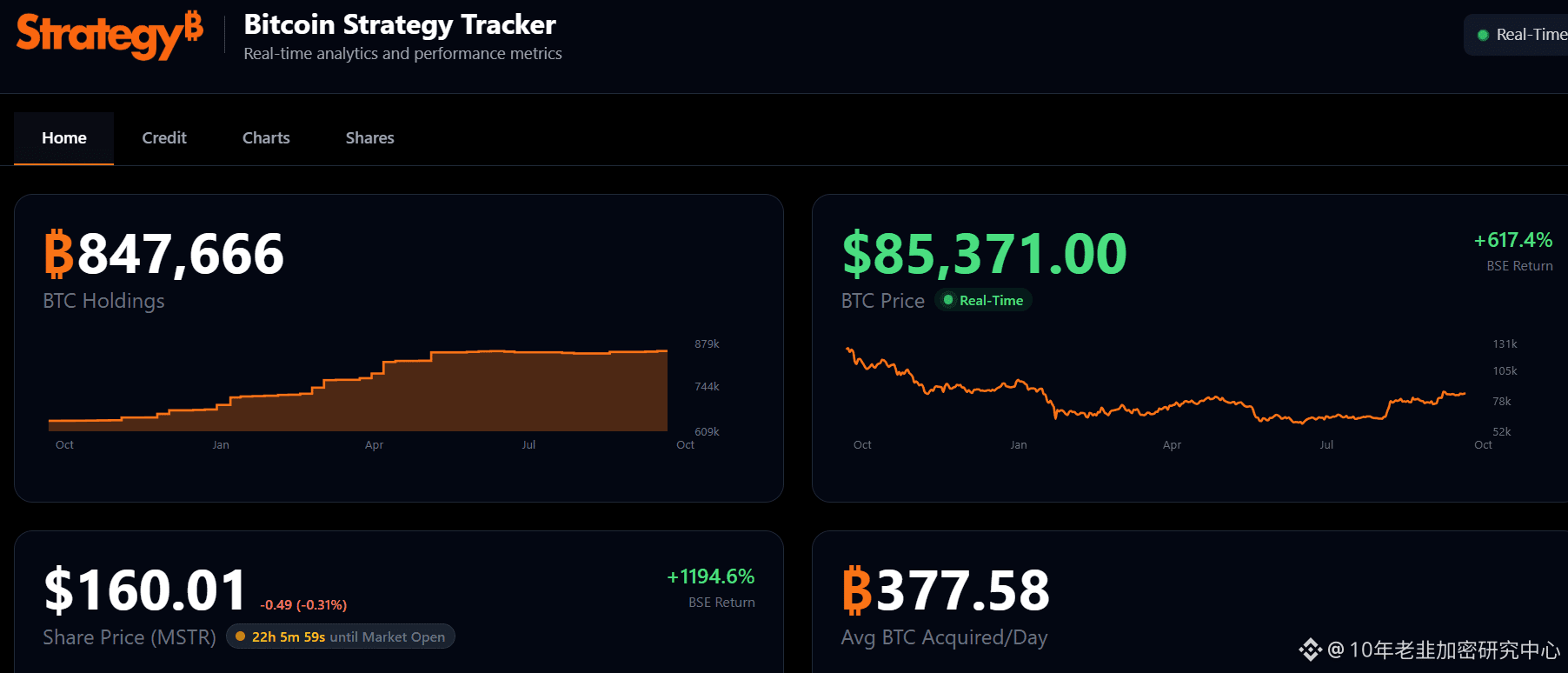
【Old Rye Observation】 #MichaelSaylor暗示增持BTC Michael Saylor has just sent another signal. He shared Strategy’s BTC Tracker, with only one line: “More orange than ever.” Currently, Strategy holds 847,666 BTC at an average cost of about $75,437/BTC. More importantly, the last time Strategy disclosed similar Tracker updates after Saylor’s release of one, it also disclosed an increase in holdings: On September 28, it bought 1,665 BTC, spending about $143 million. So what the market is waiting for now is not a single “bullish on BTC” statement. Rather, it’s whether tomorrow will bring another new BTC buy order. There’s still no confirmation that Strategy has already bought yet. But if this signal plays out, the next day would see another buy order worth hundreds of millions of dollars. $BTC {spot}(BTCUSDT)
【Old Rye Observation】 #MichaelSaylor暗示增持BTC
Michael Saylor has just sent another signal.
He shared Strategy’s BTC Tracker, with only one line:
“More orange than ever.”
Currently, Strategy holds 847,666 BTC at an average cost of about $75,437/BTC.
More importantly, the last time Strategy disclosed similar Tracker updates after Saylor’s release of one, it also disclosed an increase in holdings:
On September 28, it bought 1,665 BTC, spending about $143 million. So what the market is waiting for now is not a single “bullish on BTC” statement. Rather, it’s whether tomorrow will bring another new BTC buy order. There’s still no confirmation that Strategy has already bought yet. But if this signal plays out, the next day would see another buy order worth hundreds of millions of dollars. $BTC
Log in to explore more content
Join global crypto users on Binance Square
⚡️ Get latest and useful information about crypto.
💬 Trusted by the world’s largest crypto exchange.
👍 Discover real insights from verified creators.
Email / Phone number
Sitemap
Cookie Preferences
Platform T&Cs