
CoinPhoton
7.8k Posts
CoinPhoton
 Square Verified+
Report
Block User

Creator of the Year

Level 2 Creator
Open Trade
Occasional Trader
7.5 Years
15 Following
146.5K+ Followers
146.6K+ Liked
2 Badges
Posts
Portfolio
All
Quotes
Videos
Live
·
--
StoneX has initiated coverage of Robinhood with a Buy rating and a $170 price target, implying roughly 45% upside from Tuesday’s close.
Analyst Mark Palmer said nearly every major operating metric at Robinhood is accelerating, highlighting Robinhood Chain and prediction markets as key new growth engines.
StoneX estimates Robinhood Chain could generate as much as $980 million in annual revenue by fiscal 2029, with an 85% margin. The Layer 2 network has recently ranked among the highest-fee-generating Ethereum chains.
Prediction markets are another major driver. Robinhood recorded 13.6 billion event contracts traded in Q2, generating about $156 million in revenue, up 50% quarter over quarter.
The bullish call follows Bernstein’s recent $160 price target, reinforcing growing Wall Street optimism around Robinhood’s expansion beyond traditional retail trading.
StoneX has initiated coverage of Robinhood with a Buy rating and a $170 price target, implying roughly 45% upside from Tuesday’s close.
Analyst Mark Palmer said nearly every major operating metric at Robinhood is accelerating, highlighting Robinhood Chain and prediction markets as key new growth engines.
StoneX estimates Robinhood Chain could generate as much as $980 million in annual revenue by fiscal 2029, with an 85% margin. The Layer 2 network has recently ranked among the highest-fee-generating Ethereum chains.
Prediction markets are another major driver. Robinhood recorded 13.6 billion event contracts traded in Q2, generating about $156 million in revenue, up 50% quarter over quarter.
The bullish call follows Bernstein’s recent $160 price target, reinforcing growing Wall Street optimism around Robinhood’s expansion beyond traditional retail trading.
Analyst Mark Palmer said nearly every major operating metric at Robinhood is accelerating, highlighting Robinhood Chain and prediction markets as key new growth engines.
StoneX estimates Robinhood Chain could generate as much as $980 million in annual revenue by fiscal 2029, with an 85% margin. The Layer 2 network has recently ranked among the highest-fee-generating Ethereum chains.
Prediction markets are another major driver. Robinhood recorded 13.6 billion event contracts traded in Q2, generating about $156 million in revenue, up 50% quarter over quarter.
The bullish call follows Bernstein’s recent $160 price target, reinforcing growing Wall Street optimism around Robinhood’s expansion beyond traditional retail trading.
163
·
--
Verified
The first U.S.-listed staked ETF tied to Tron is set to launch Wednesday under the ticker TRXS, giving investors exposure to TRX through traditional markets.
The Canary Staked TRX ETF will also capture staking rewards generated through Tron’s proof-of-stake network, with those rewards reflected in the fund’s net asset value.
TRX currently has a market capitalization of about $32.1 billion, making it the eighth-largest cryptocurrency.
Canary Capital said the product is aimed at investors seeking exposure not only to TRX itself, but also to the broader growth of the Tron network, which is widely used for stablecoin payments and settlement. $TRX
{future}(TRXUSDT)
The first U.S.-listed staked ETF tied to Tron is set to launch Wednesday under the ticker TRXS, giving investors exposure to TRX through traditional markets.
The Canary Staked TRX ETF will also capture staking rewards generated through Tron’s proof-of-stake network, with those rewards reflected in the fund’s net asset value.
TRX currently has a market capitalization of about $32.1 billion, making it the eighth-largest cryptocurrency.
Canary Capital said the product is aimed at investors seeking exposure not only to TRX itself, but also to the broader growth of the Tron network, which is widely used for stablecoin payments and settlement. $TRX
The Canary Staked TRX ETF will also capture staking rewards generated through Tron’s proof-of-stake network, with those rewards reflected in the fund’s net asset value.
TRX currently has a market capitalization of about $32.1 billion, making it the eighth-largest cryptocurrency.
Canary Capital said the product is aimed at investors seeking exposure not only to TRX itself, but also to the broader growth of the Tron network, which is widely used for stablecoin payments and settlement. $TRX
1.4k
·
--
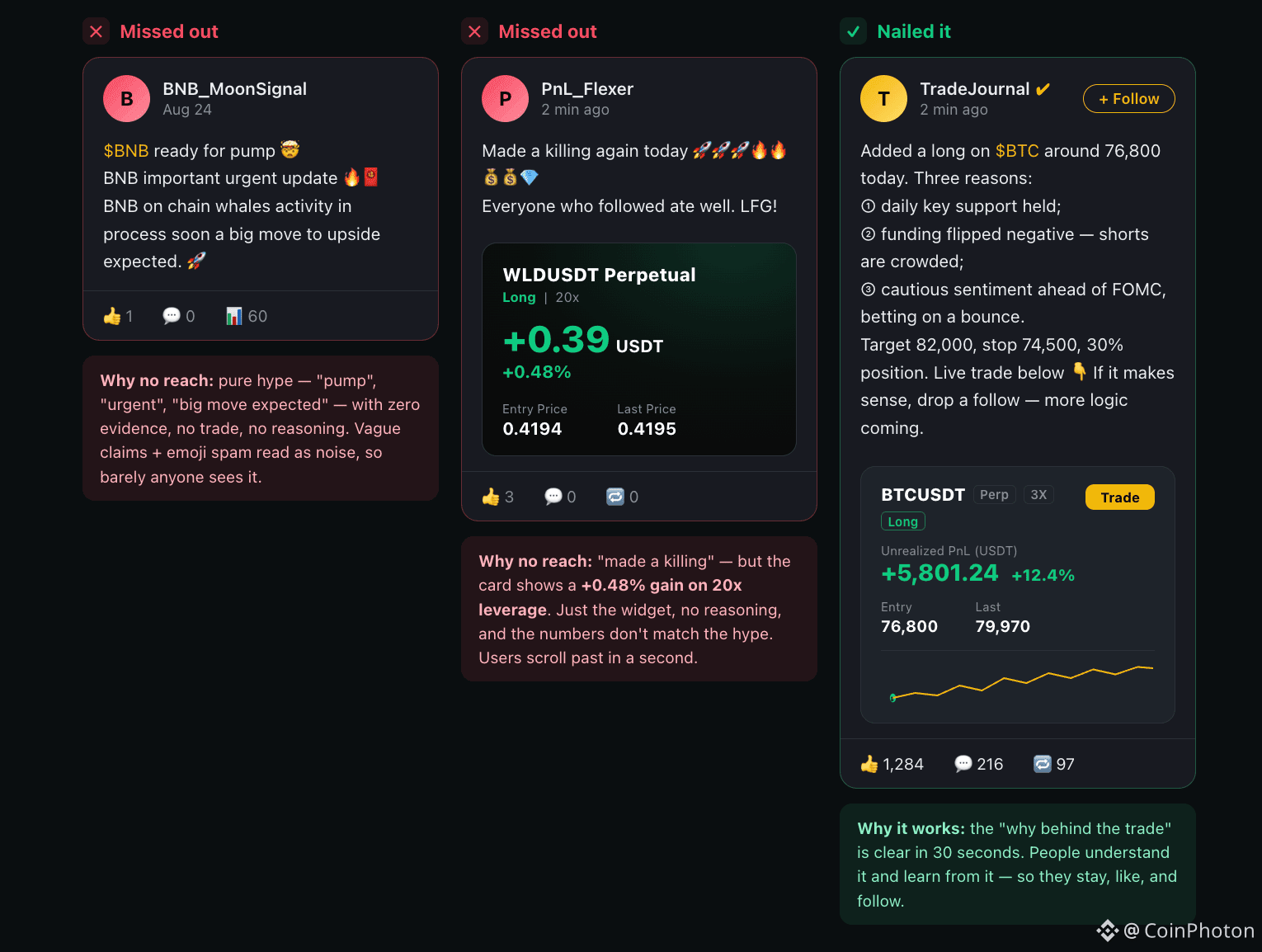
Posting a lot on Binance Square but still getting low views? You may be missing the one thing the platform clearly wants: your own opinion.
Binance Square’s Creator Academy shared a useful playbook for getting more reach. The biggest takeaway is simple: posting news or hot tickers alone is not enough.
For better performance:
Trading posts: Call the move → explain your view → show what you did → add a CTA.
If you share trades, keep them real. Fake screenshots, mismatched positions, or artificial activity can hurt your account’s reach.
For news posts, don’t just repost the headline. Add at least 50 words of your own analysis: Why does it matter? Which token or sector could benefit? What are you watching or doing next?
The first 3 seconds matter most. A weak hook can kill an otherwise strong post.
Avoid ticker spam, repetitive news, excessive emojis, and forced “BREAKING” clickbait.
End naturally with a follow CTA if you want to build an audience over time.
My biggest takeaway: Binance Square appears to reward creators who add judgment and action, not accounts that simply recycle news.
Two people can post the same story, but the one who explains why it matters and what they plan to do about it is far more likely to keep readers engaged and turn views into followers.
I’ll be focusing more on news + market impact + personal take, instead of just posting headlines.
Follow for more crypto news, market insights, and trading-focused updates.
#CreatorAcademy #BinanceSquare #crypto #bitcoin #trading $BNB
{future}(BNBUSDT)
Posting a lot on Binance Square but still getting low views? You may be missing the one thing the platform clearly wants: your own opinion.
Binance Square’s Creator Academy shared a useful playbook for getting more reach. The biggest takeaway is simple: posting news or hot tickers alone is not enough.
For better performance:
Trading posts: Call the move → explain your view → show what you did → add a CTA.
If you share trades, keep them real. Fake screenshots, mismatched positions, or artificial activity can hurt your account’s reach.
For news posts, don’t just repost the headline. Add at least 50 words of your own analysis: Why does it matter? Which token or sector could benefit? What are you watching or doing next?
The first 3 seconds matter most. A weak hook can kill an otherwise strong post.
Avoid ticker spam, repetitive news, excessive emojis, and forced “BREAKING” clickbait.
End naturally with a follow CTA if you want to build an audience over time.
My biggest takeaway: Binance Square appears to reward creators who add judgment and action, not accounts that simply recycle news.
Two people can post the same story, but the one who explains why it matters and what they plan to do about it is far more likely to keep readers engaged and turn views into followers.
I’ll be focusing more on news + market impact + personal take, instead of just posting headlines.
Follow for more crypto news, market insights, and trading-focused updates.
#CreatorAcademy #BinanceSquare #crypto #bitcoin #trading $BNB
Binance Square’s Creator Academy shared a useful playbook for getting more reach. The biggest takeaway is simple: posting news or hot tickers alone is not enough.
For better performance:
Trading posts: Call the move → explain your view → show what you did → add a CTA.
If you share trades, keep them real. Fake screenshots, mismatched positions, or artificial activity can hurt your account’s reach.
For news posts, don’t just repost the headline. Add at least 50 words of your own analysis: Why does it matter? Which token or sector could benefit? What are you watching or doing next?
The first 3 seconds matter most. A weak hook can kill an otherwise strong post.
Avoid ticker spam, repetitive news, excessive emojis, and forced “BREAKING” clickbait.
End naturally with a follow CTA if you want to build an audience over time.
My biggest takeaway: Binance Square appears to reward creators who add judgment and action, not accounts that simply recycle news.
Two people can post the same story, but the one who explains why it matters and what they plan to do about it is far more likely to keep readers engaged and turn views into followers.
I’ll be focusing more on news + market impact + personal take, instead of just posting headlines.
Follow for more crypto news, market insights, and trading-focused updates.
#CreatorAcademy #BinanceSquare #crypto #bitcoin #trading $BNB
2
1.3k
·
--
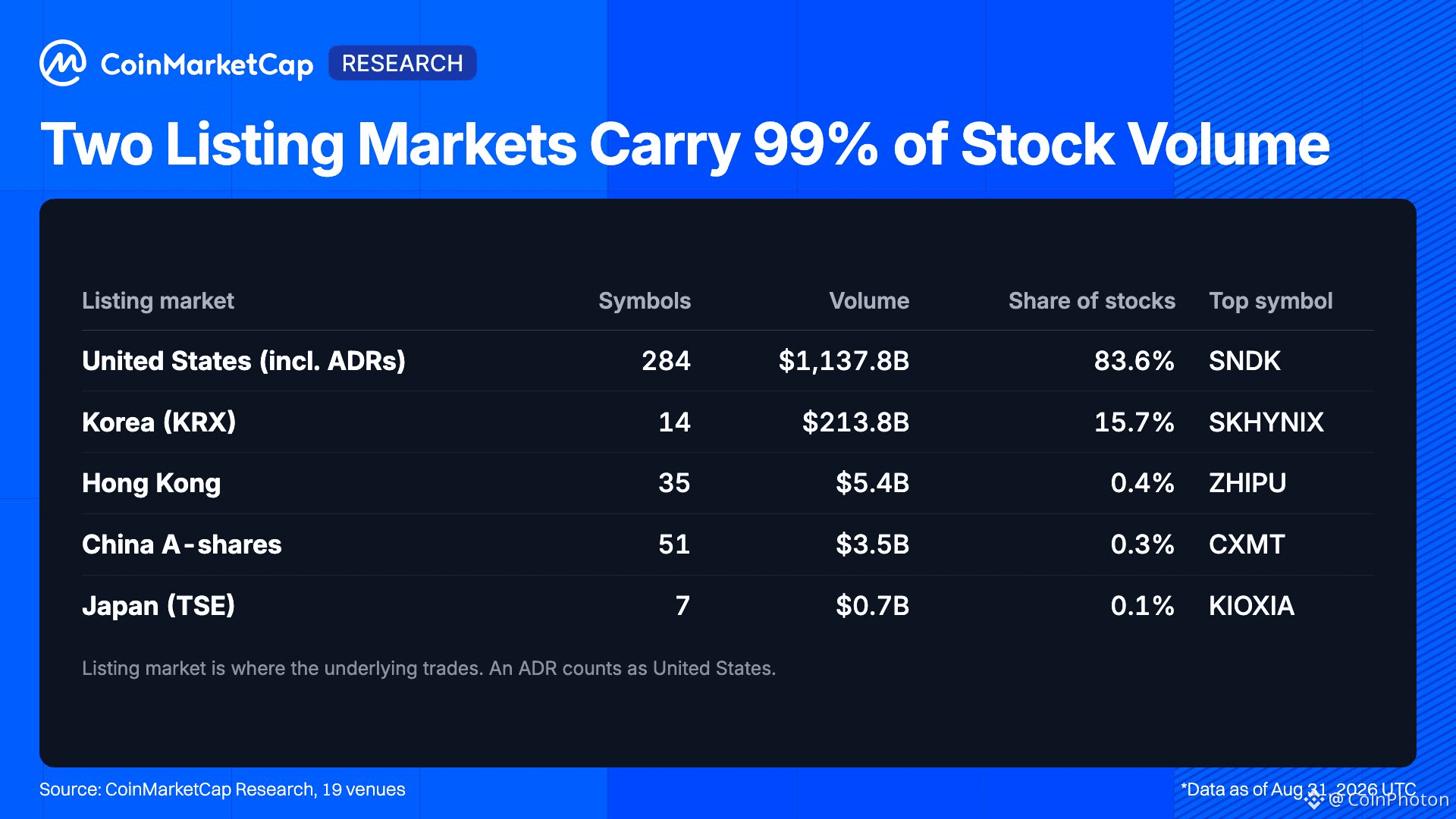
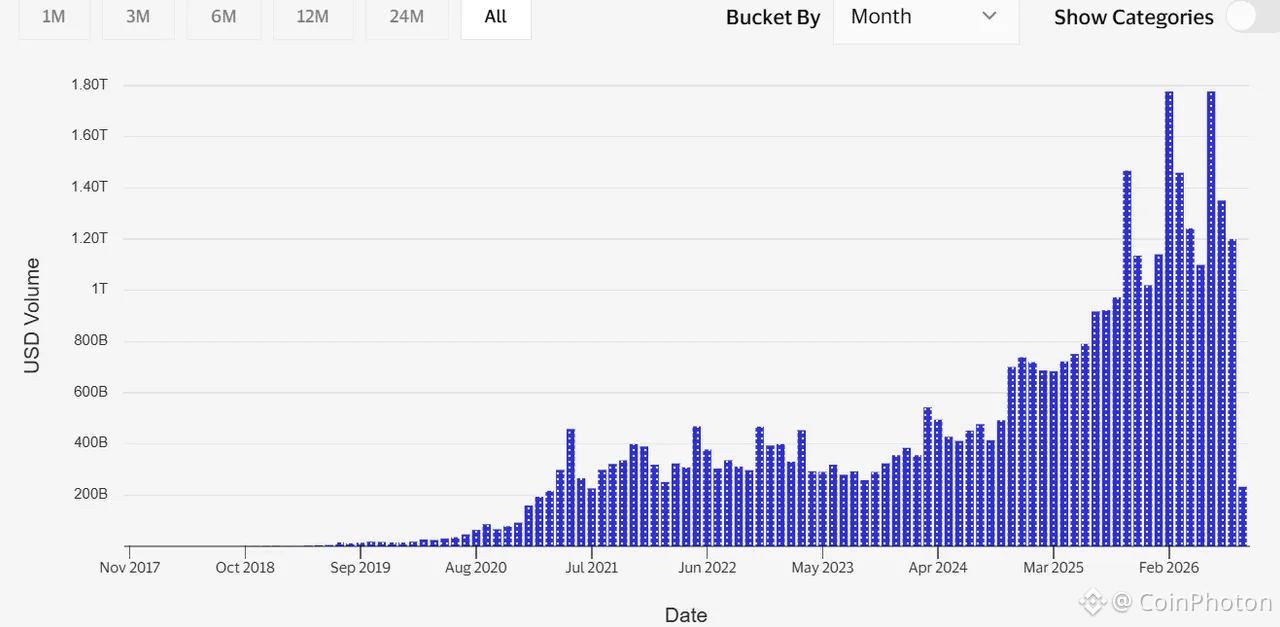
U.S. and Korean equities account for more than 99% of total RWA stock-perpetual trading volume, highlighting the extreme concentration of the emerging market.
U.S.-listed stocks, including ADRs, generated about $1.14 trillion across 284 symbols, representing 83.6% of total stock-perp volume. Korea ranked second with $213.8 billion, despite activity being concentrated in just 14 tickers.
Together, the U.S. and Korea make up 99.3% of the market, while Hong Kong, China A-shares and Tokyo collectively account for less than 1%, even though they contribute 93 additional symbols.
Korean activity is particularly concentrated, with most volume driven by the memory-chip trade rather than broad exposure to the country’s equity market.
U.S. and Korean equities account for more than 99% of total RWA stock-perpetual trading volume, highlighting the extreme concentration of the emerging market.
U.S.-listed stocks, including ADRs, generated about $1.14 trillion across 284 symbols, representing 83.6% of total stock-perp volume. Korea ranked second with $213.8 billion, despite activity being concentrated in just 14 tickers.
Together, the U.S. and Korea make up 99.3% of the market, while Hong Kong, China A-shares and Tokyo collectively account for less than 1%, even though they contribute 93 additional symbols.
Korean activity is particularly concentrated, with most volume driven by the memory-chip trade rather than broad exposure to the country’s equity market.
U.S.-listed stocks, including ADRs, generated about $1.14 trillion across 284 symbols, representing 83.6% of total stock-perp volume. Korea ranked second with $213.8 billion, despite activity being concentrated in just 14 tickers.
Together, the U.S. and Korea make up 99.3% of the market, while Hong Kong, China A-shares and Tokyo collectively account for less than 1%, even though they contribute 93 additional symbols.
Korean activity is particularly concentrated, with most volume driven by the memory-chip trade rather than broad exposure to the country’s equity market.
1
396
·
--
Hyperliquid’s total open interest has climbed back to $14.3 billion, within 3% of levels seen just before the historic Oct. 10, 2025 crash.
During that crash, Hyperliquid’s OI plunged roughly 56% in a single day, from $14.7 billion to $6.5 billion. The recovery was initially driven by HIP-3 markets, which accounted for about 30% of the platform’s OI growth over the past six months.
More recently, however, growth has shifted back toward Hyperliquid’s core crypto perpetual markets. Potential catalysts include Coinbase routing Base App users to Hyperliquid and expectations that U.S. regulators could eventually enable compliant onshore access.
That shift is especially important for HYPE because roughly 97% of fees generated by Hyperliquid’s core crypto perps are directed toward HYPE buybacks, making core-market growth more valuable to the token than HIP-3 activity.
HYPE has surged more than 50% this month, reaching an all-time high near $88 and a market capitalization of almost $20 billion. $HYPE
{future}(HYPEUSDT)
Hyperliquid’s total open interest has climbed back to $14.3 billion, within 3% of levels seen just before the historic Oct. 10, 2025 crash.
During that crash, Hyperliquid’s OI plunged roughly 56% in a single day, from $14.7 billion to $6.5 billion. The recovery was initially driven by HIP-3 markets, which accounted for about 30% of the platform’s OI growth over the past six months.
More recently, however, growth has shifted back toward Hyperliquid’s core crypto perpetual markets. Potential catalysts include Coinbase routing Base App users to Hyperliquid and expectations that U.S. regulators could eventually enable compliant onshore access.
That shift is especially important for HYPE because roughly 97% of fees generated by Hyperliquid’s core crypto perps are directed toward HYPE buybacks, making core-market growth more valuable to the token than HIP-3 activity.
HYPE has surged more than 50% this month, reaching an all-time high near $88 and a market capitalization of almost $20 billion. $HYPE
During that crash, Hyperliquid’s OI plunged roughly 56% in a single day, from $14.7 billion to $6.5 billion. The recovery was initially driven by HIP-3 markets, which accounted for about 30% of the platform’s OI growth over the past six months.
More recently, however, growth has shifted back toward Hyperliquid’s core crypto perpetual markets. Potential catalysts include Coinbase routing Base App users to Hyperliquid and expectations that U.S. regulators could eventually enable compliant onshore access.
That shift is especially important for HYPE because roughly 97% of fees generated by Hyperliquid’s core crypto perps are directed toward HYPE buybacks, making core-market growth more valuable to the token than HIP-3 activity.
HYPE has surged more than 50% this month, reaching an all-time high near $88 and a market capitalization of almost $20 billion. $HYPE
270
·
--
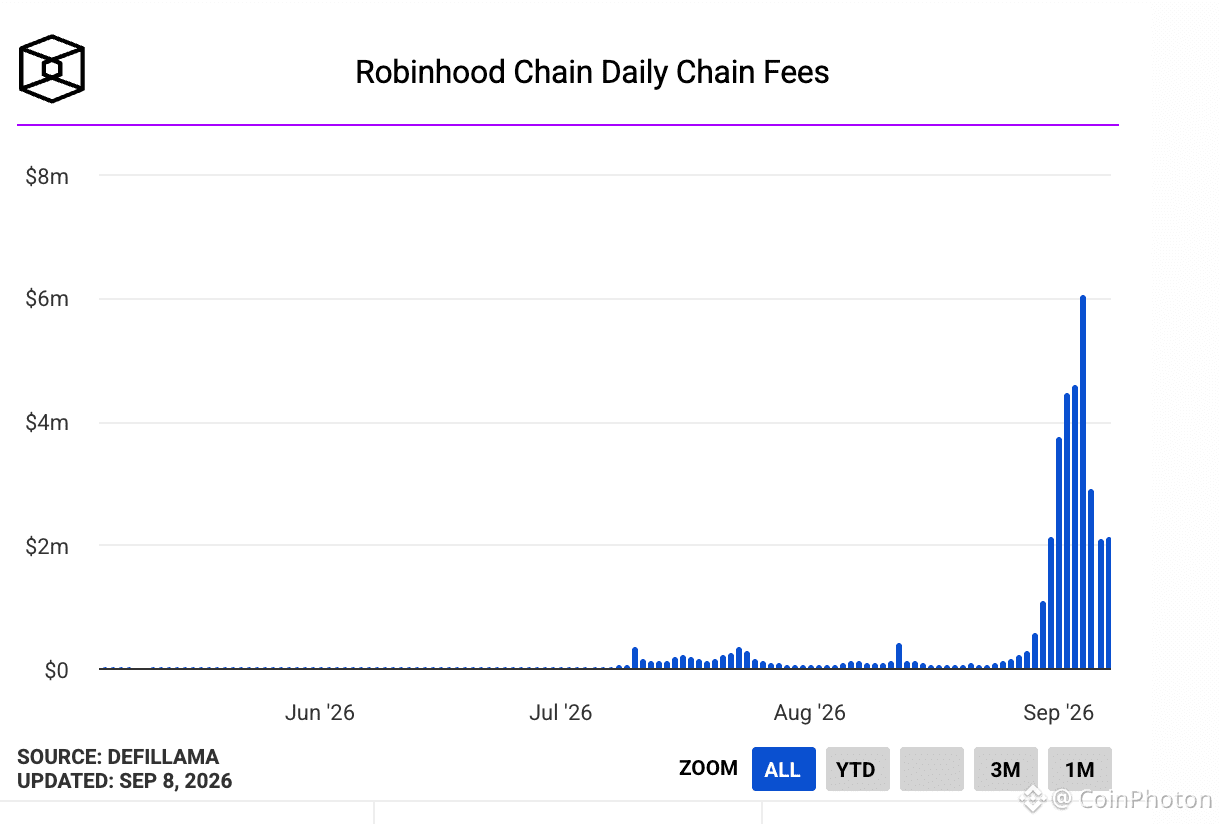
PONS surged to an all-time high valuation above $970 million as activity on Robinhood Chain exploded, pushing weekly network fees up 17-fold.
Robinhood Chain generated a record $6 million in fees on Sept. 4, while seven-day fees reached roughly $25 million, compared with just $1.4 million the previous week. Weekly DEX volume also more than doubled to $12.4 billion.
The surge was driven largely by Pons, now Robinhood Chain’s leading token launchpad. On Sept. 3 alone, Pons generated nearly $6 million in fees, exceeding both Pump.fun and Hyperliquid that day.
PONS has gained more than 200% in one week. Around 80% of Pons’ revenue is used for token buybacks, while more than 28% of the token supply has already been burned, creating a strong buyback-and-burn mechanism tied directly to platform activity.
PONS surged to an all-time high valuation above $970 million as activity on Robinhood Chain exploded, pushing weekly network fees up 17-fold.
Robinhood Chain generated a record $6 million in fees on Sept. 4, while seven-day fees reached roughly $25 million, compared with just $1.4 million the previous week. Weekly DEX volume also more than doubled to $12.4 billion.
The surge was driven largely by Pons, now Robinhood Chain’s leading token launchpad. On Sept. 3 alone, Pons generated nearly $6 million in fees, exceeding both Pump.fun and Hyperliquid that day.
PONS has gained more than 200% in one week. Around 80% of Pons’ revenue is used for token buybacks, while more than 28% of the token supply has already been burned, creating a strong buyback-and-burn mechanism tied directly to platform activity.
Robinhood Chain generated a record $6 million in fees on Sept. 4, while seven-day fees reached roughly $25 million, compared with just $1.4 million the previous week. Weekly DEX volume also more than doubled to $12.4 billion.
The surge was driven largely by Pons, now Robinhood Chain’s leading token launchpad. On Sept. 3 alone, Pons generated nearly $6 million in fees, exceeding both Pump.fun and Hyperliquid that day.
PONS has gained more than 200% in one week. Around 80% of Pons’ revenue is used for token buybacks, while more than 28% of the token supply has already been burned, creating a strong buyback-and-burn mechanism tied directly to platform activity.
440
·
--
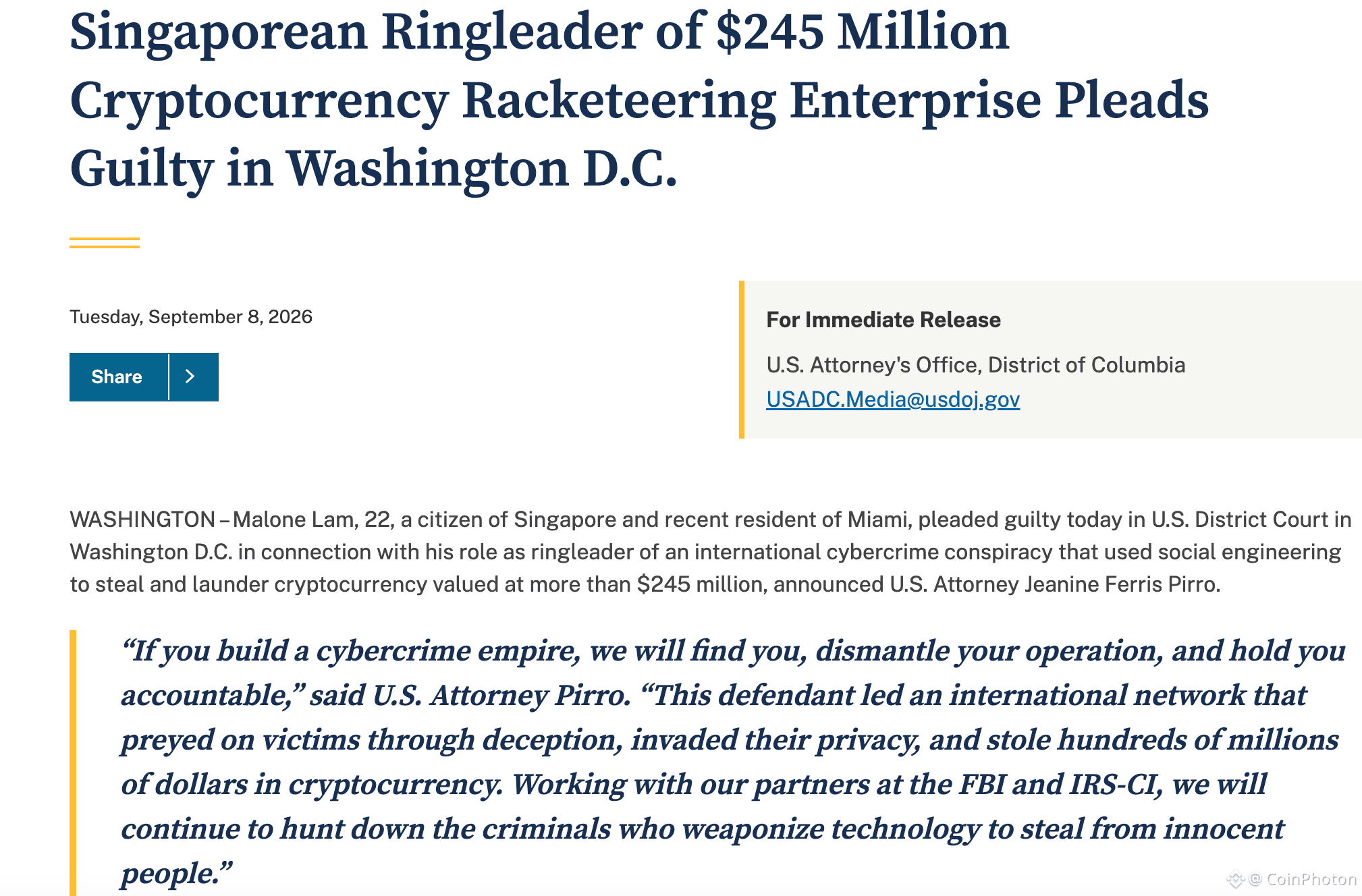
A 22-year-old Singaporean man has pleaded guilty to leading an international social-engineering operation that stole and laundered more than $245 million in cryptocurrency.
Malone Lam, who used aliases including “Anne Hathaway,” “$$$” and “King Greavy,” pleaded guilty to one count of federal racketeering conspiracy, according to the U.S. Attorney’s Office for the District of Columbia.
Prosecutors said Lam identified victims and coordinated members of the scheme. The stolen funds were allegedly spent on luxury cars, watches, handbags, high-end rental properties and nightclub bills approaching $500,000 per night.
Lam faces up to 20 years in prison, with a status hearing scheduled for Dec. 8.
A 22-year-old Singaporean man has pleaded guilty to leading an international social-engineering operation that stole and laundered more than $245 million in cryptocurrency.
Malone Lam, who used aliases including “Anne Hathaway,” “$$$” and “King Greavy,” pleaded guilty to one count of federal racketeering conspiracy, according to the U.S. Attorney’s Office for the District of Columbia.
Prosecutors said Lam identified victims and coordinated members of the scheme. The stolen funds were allegedly spent on luxury cars, watches, handbags, high-end rental properties and nightclub bills approaching $500,000 per night.
Lam faces up to 20 years in prison, with a status hearing scheduled for Dec. 8.
Malone Lam, who used aliases including “Anne Hathaway,” “$$$” and “King Greavy,” pleaded guilty to one count of federal racketeering conspiracy, according to the U.S. Attorney’s Office for the District of Columbia.
Prosecutors said Lam identified victims and coordinated members of the scheme. The stolen funds were allegedly spent on luxury cars, watches, handbags, high-end rental properties and nightclub bills approaching $500,000 per night.
Lam faces up to 20 years in prison, with a status hearing scheduled for Dec. 8.
385
·
--
Jack Dorsey-founded Block, Inc. has applied to establish a federally regulated national trust bank called Builders Bank & Trust, N.A.
The payments company filed its application with the Office of the Comptroller of the Currency (OCC). If approved, the uninsured national trust bank would provide custody and fiduciary services, including support for Bitcoin and stablecoins.
Block said a federal charter would give the company a clearer nationwide framework for digital asset custody and related activities it already offers.
The move comes as more fintech and crypto companies seek federal banking charters. Firms including Coinbase, Paxos, BitGo, Ripple, Circle and Revolut have also pursued or received approvals as the OCC expands its engagement with the digital asset sector. $BTC
{future}(BTCUSDT)
Jack Dorsey-founded Block, Inc. has applied to establish a federally regulated national trust bank called Builders Bank & Trust, N.A.
The payments company filed its application with the Office of the Comptroller of the Currency (OCC). If approved, the uninsured national trust bank would provide custody and fiduciary services, including support for Bitcoin and stablecoins.
Block said a federal charter would give the company a clearer nationwide framework for digital asset custody and related activities it already offers.
The move comes as more fintech and crypto companies seek federal banking charters. Firms including Coinbase, Paxos, BitGo, Ripple, Circle and Revolut have also pursued or received approvals as the OCC expands its engagement with the digital asset sector. $BTC
The payments company filed its application with the Office of the Comptroller of the Currency (OCC). If approved, the uninsured national trust bank would provide custody and fiduciary services, including support for Bitcoin and stablecoins.
Block said a federal charter would give the company a clearer nationwide framework for digital asset custody and related activities it already offers.
The move comes as more fintech and crypto companies seek federal banking charters. Firms including Coinbase, Paxos, BitGo, Ripple, Circle and Revolut have also pursued or received approvals as the OCC expands its engagement with the digital asset sector. $BTC
337
·
--
Visa is integrating onchain lending with its settlement network, giving stablecoin-linked card programs a new way to access working capital.
The payments giant said data from VisaNet will be combined with blockchain-based lending infrastructure, allowing lenders to assess borrowers using both Visa settlement records and onchain transaction data, then finance their payment obligations.
Visa highlighted Credit Coop as an early example. The blockchain lending protocol has financed more than $2.5 billion in cumulative settlement volume since 2023 across over 3,000 borrowing events.
The move comes as Visa’s stablecoin business accelerates. More than 160 stablecoin-linked card programs now operate on its network, with payment volume up nearly 200% year over year, while stablecoin settlement volume has surpassed a $20 billion annualized run rate.
Visa is integrating onchain lending with its settlement network, giving stablecoin-linked card programs a new way to access working capital.
The payments giant said data from VisaNet will be combined with blockchain-based lending infrastructure, allowing lenders to assess borrowers using both Visa settlement records and onchain transaction data, then finance their payment obligations.
Visa highlighted Credit Coop as an early example. The blockchain lending protocol has financed more than $2.5 billion in cumulative settlement volume since 2023 across over 3,000 borrowing events.
The move comes as Visa’s stablecoin business accelerates. More than 160 stablecoin-linked card programs now operate on its network, with payment volume up nearly 200% year over year, while stablecoin settlement volume has surpassed a $20 billion annualized run rate.
The payments giant said data from VisaNet will be combined with blockchain-based lending infrastructure, allowing lenders to assess borrowers using both Visa settlement records and onchain transaction data, then finance their payment obligations.
Visa highlighted Credit Coop as an early example. The blockchain lending protocol has financed more than $2.5 billion in cumulative settlement volume since 2023 across over 3,000 borrowing events.
The move comes as Visa’s stablecoin business accelerates. More than 160 stablecoin-linked card programs now operate on its network, with payment volume up nearly 200% year over year, while stablecoin settlement volume has surpassed a $20 billion annualized run rate.
122
·
--
Two suspects in the killing of four people in Mexico allegedly carried out the attack while searching for a cold wallet they believed contained millions of dollars in Bitcoin.
Prosecutors say the victims included Camilo Séptimo keyboardist Jonathan Meléndez, his pregnant wife, his daughter and an employee at their home in Atizapán de Zaragoza. The family’s dog was also killed.
One suspect was reportedly a business associate of one of the victims and allegedly used that relationship to gain access to the property.
The case comes amid a sharp rise in so-called crypto wrench attacks, where criminals use physical violence or threats to steal digital assets. CertiK recorded 52 such attacks worldwide in the first half of 2026, up 33% year over year, while Chainalysis estimates more than $30 million in crypto was stolen through these incidents during the period. $BTC
{future}(BTCUSDT)
Two suspects in the killing of four people in Mexico allegedly carried out the attack while searching for a cold wallet they believed contained millions of dollars in Bitcoin.
Prosecutors say the victims included Camilo Séptimo keyboardist Jonathan Meléndez, his pregnant wife, his daughter and an employee at their home in Atizapán de Zaragoza. The family’s dog was also killed.
One suspect was reportedly a business associate of one of the victims and allegedly used that relationship to gain access to the property.
The case comes amid a sharp rise in so-called crypto wrench attacks, where criminals use physical violence or threats to steal digital assets. CertiK recorded 52 such attacks worldwide in the first half of 2026, up 33% year over year, while Chainalysis estimates more than $30 million in crypto was stolen through these incidents during the period. $BTC
Prosecutors say the victims included Camilo Séptimo keyboardist Jonathan Meléndez, his pregnant wife, his daughter and an employee at their home in Atizapán de Zaragoza. The family’s dog was also killed.
One suspect was reportedly a business associate of one of the victims and allegedly used that relationship to gain access to the property.
The case comes amid a sharp rise in so-called crypto wrench attacks, where criminals use physical violence or threats to steal digital assets. CertiK recorded 52 such attacks worldwide in the first half of 2026, up 33% year over year, while Chainalysis estimates more than $30 million in crypto was stolen through these incidents during the period. $BTC
59
·
--
Verified
StablecoinX has appointed former Franklin Templeton digital asset executive Christopher Jensen as CEO, placing him in charge of the largest corporate holder of Ethena’s ENA token.
Jensen succeeds Ted Chen, who led StablecoinX through its Nasdaq listing in June and will remain chairman of the board.
StablecoinX, which trades under the ticker $USDE
{spot}(USDEUSDT)
, holds approximately 3.03 billion $ENA
{future}(ENAUSDT)
tokens, equivalent to around 20% of ENA’s total supply.
Jensen previously served as a portfolio manager and director of digital asset research at Franklin Templeton, where he helped develop the firm’s digital asset business and gained early exposure to Ethena through its seed investment.
The appointment comes as Ethena expands its ecosystem with Ethena Pay, while ENA has surged more than 80% over the past month to around $0.16, despite remaining down roughly 20% year to date.
StablecoinX has appointed former Franklin Templeton digital asset executive Christopher Jensen as CEO, placing him in charge of the largest corporate holder of Ethena’s ENA token.
Jensen succeeds Ted Chen, who led StablecoinX through its Nasdaq listing in June and will remain chairman of the board.
StablecoinX, which trades under the ticker $USDE
, holds approximately 3.03 billion $ENA
tokens, equivalent to around 20% of ENA’s total supply.
Jensen previously served as a portfolio manager and director of digital asset research at Franklin Templeton, where he helped develop the firm’s digital asset business and gained early exposure to Ethena through its seed investment.
The appointment comes as Ethena expands its ecosystem with Ethena Pay, while ENA has surged more than 80% over the past month to around $0.16, despite remaining down roughly 20% year to date.
Jensen succeeds Ted Chen, who led StablecoinX through its Nasdaq listing in June and will remain chairman of the board.
StablecoinX, which trades under the ticker $USDE
, holds approximately 3.03 billion $ENA
tokens, equivalent to around 20% of ENA’s total supply.
Jensen previously served as a portfolio manager and director of digital asset research at Franklin Templeton, where he helped develop the firm’s digital asset business and gained early exposure to Ethena through its seed investment.
The appointment comes as Ethena expands its ecosystem with Ethena Pay, while ENA has surged more than 80% over the past month to around $0.16, despite remaining down roughly 20% year to date.
620
·
--
Bitcoin briefly fell below $78,000 on Tuesday as renewed Middle East tensions pressured global risk assets and sent oil prices sharply higher.
BTC dropped as low as $77,600, its weakest level since Sept. 3, while the S&P 500 and Nasdaq also declined following reports of Houthi strikes on Saudi Arabian cities and oil infrastructure.
Oil markets reacted strongly, with WTI crude approaching $95 per barrel, a three-month high, while Brent moved toward $100. Rising energy prices are adding to inflation concerns ahead of Friday’s U.S. CPI report.
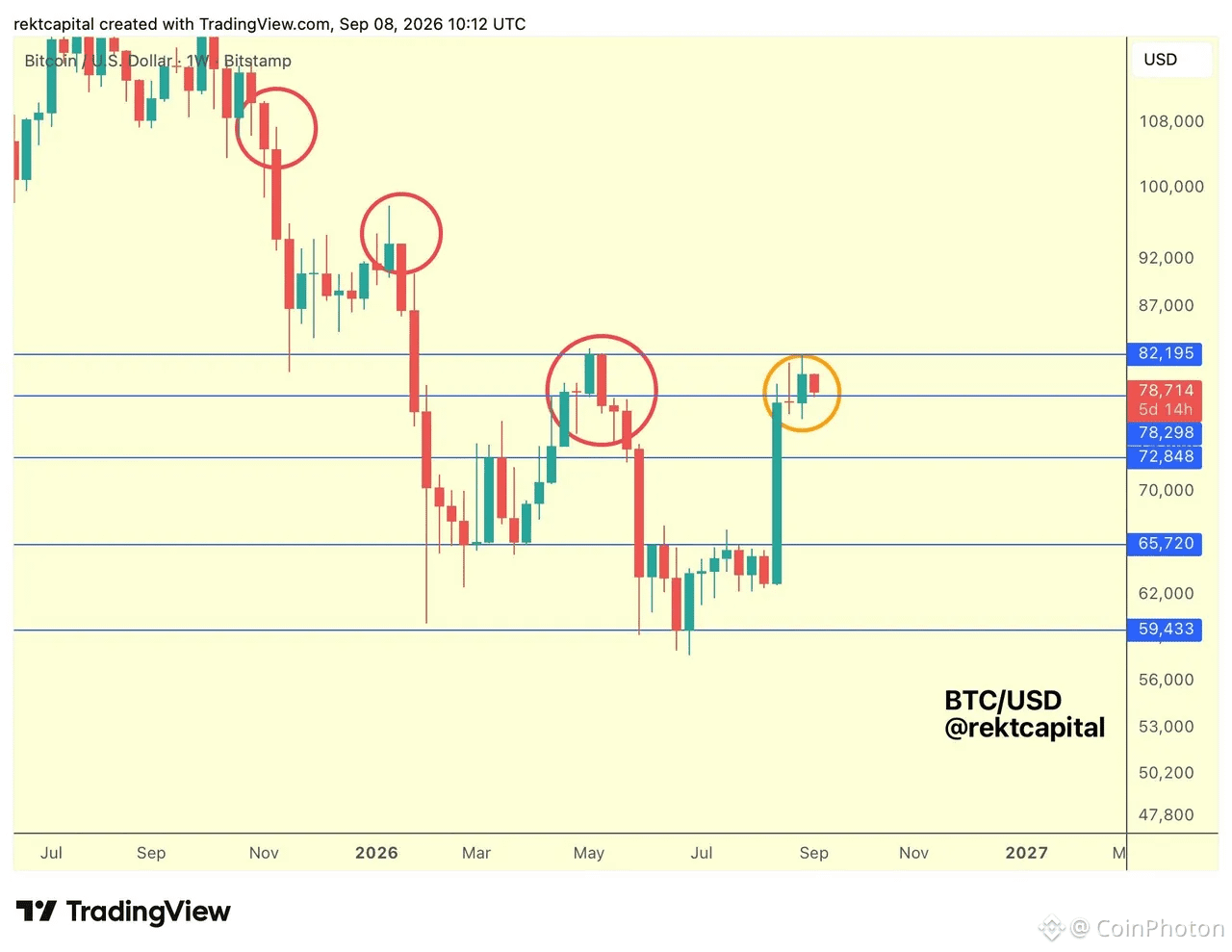
Bitcoin is now testing a key support area around $78,300. Analyst Rekt Capital warned that a weekly close below this level, followed by a failed retest, could confirm another breakdown similar to May, when BTC eventually fell toward $57,000. $BTC
{future}(BTCUSDT)
Bitcoin briefly fell below $78,000 on Tuesday as renewed Middle East tensions pressured global risk assets and sent oil prices sharply higher.
BTC dropped as low as $77,600, its weakest level since Sept. 3, while the S&P 500 and Nasdaq also declined following reports of Houthi strikes on Saudi Arabian cities and oil infrastructure.
Oil markets reacted strongly, with WTI crude approaching $95 per barrel, a three-month high, while Brent moved toward $100. Rising energy prices are adding to inflation concerns ahead of Friday’s U.S. CPI report.
Bitcoin is now testing a key support area around $78,300. Analyst Rekt Capital warned that a weekly close below this level, followed by a failed retest, could confirm another breakdown similar to May, when BTC eventually fell toward $57,000. $BTC
BTC dropped as low as $77,600, its weakest level since Sept. 3, while the S&P 500 and Nasdaq also declined following reports of Houthi strikes on Saudi Arabian cities and oil infrastructure.
Oil markets reacted strongly, with WTI crude approaching $95 per barrel, a three-month high, while Brent moved toward $100. Rising energy prices are adding to inflation concerns ahead of Friday’s U.S. CPI report.
Bitcoin is now testing a key support area around $78,300. Analyst Rekt Capital warned that a weekly close below this level, followed by a failed retest, could confirm another breakdown similar to May, when BTC eventually fell toward $57,000. $BTC
3
3
556
·
--
Uzbekistan has launched a pilot to test payments using HUMO, a stablecoin pegged 1:1 to the Uzbek som and backed by government securities.
The National Agency for Prospective Projects registered Humo Digital under a special regulatory regime jointly overseen with the central bank. The pilot will test HUMO’s issuance, circulation and redemption, with more than 20 merchants prepared to accept the token for goods and services.
Participating banks will integrate their payment-processing systems with blockchain infrastructure, while licensed crypto exchange Asterium will serve as a project partner.
The initial trial will run for 12 months, with the overall project capped at three years. Regulators will assess collateral safeguards, cybersecurity, consumer protection, AML controls and potential risks to financial and price stability.
Uzbekistan has launched a pilot to test payments using HUMO, a stablecoin pegged 1:1 to the Uzbek som and backed by government securities.
The National Agency for Prospective Projects registered Humo Digital under a special regulatory regime jointly overseen with the central bank. The pilot will test HUMO’s issuance, circulation and redemption, with more than 20 merchants prepared to accept the token for goods and services.
Participating banks will integrate their payment-processing systems with blockchain infrastructure, while licensed crypto exchange Asterium will serve as a project partner.
The initial trial will run for 12 months, with the overall project capped at three years. Regulators will assess collateral safeguards, cybersecurity, consumer protection, AML controls and potential risks to financial and price stability.
The National Agency for Prospective Projects registered Humo Digital under a special regulatory regime jointly overseen with the central bank. The pilot will test HUMO’s issuance, circulation and redemption, with more than 20 merchants prepared to accept the token for goods and services.
Participating banks will integrate their payment-processing systems with blockchain infrastructure, while licensed crypto exchange Asterium will serve as a project partner.
The initial trial will run for 12 months, with the overall project capped at three years. Regulators will assess collateral safeguards, cybersecurity, consumer protection, AML controls and potential risks to financial and price stability.
83
·
--
Michael Saylor’s Strategy paused its weekly Bitcoin purchases and instead spent $176.3 million repurchasing its STRC preferred stock.
Between Aug. 31 and Sept. 7, Strategy bought back 1.8 million STRC shares and doubled its Digital Credit Securities Repurchase Program to $2 billion.
With no new Bitcoin acquisition, Strategy continues to hold 845,050 BTC, purchased for about $63.6 billion at an average price of $75,412 per BTC.
The move comes as STRC trades below its $100 par value, limiting Strategy’s ability to raise fresh capital through preferred-share sales. STRC is one of the company’s key funding vehicles for its long-term Bitcoin accumulation strategy.
Michael Saylor’s Strategy paused its weekly Bitcoin purchases and instead spent $176.3 million repurchasing its STRC preferred stock.
Between Aug. 31 and Sept. 7, Strategy bought back 1.8 million STRC shares and doubled its Digital Credit Securities Repurchase Program to $2 billion.
With no new Bitcoin acquisition, Strategy continues to hold 845,050 BTC, purchased for about $63.6 billion at an average price of $75,412 per BTC.
The move comes as STRC trades below its $100 par value, limiting Strategy’s ability to raise fresh capital through preferred-share sales. STRC is one of the company’s key funding vehicles for its long-term Bitcoin accumulation strategy.
Between Aug. 31 and Sept. 7, Strategy bought back 1.8 million STRC shares and doubled its Digital Credit Securities Repurchase Program to $2 billion.
With no new Bitcoin acquisition, Strategy continues to hold 845,050 BTC, purchased for about $63.6 billion at an average price of $75,412 per BTC.
The move comes as STRC trades below its $100 par value, limiting Strategy’s ability to raise fresh capital through preferred-share sales. STRC is one of the company’s key funding vehicles for its long-term Bitcoin accumulation strategy.
1
190
·
--
Nine Swiss companies have started sandbox testing of CHFD, a Swiss franc stablecoin designed for programmable payments and digital asset settlement.
The pilot will explore whether programmable payments can help reduce fraud in online marketplaces, improve fair access to event tickets, and make public-sector payments more efficient.
Financial market infrastructure operator SIX and payments app TWINT have joined the initiative, which was first launched in April.
The project adds to Switzerland’s broader push to test tokenized money and blockchain-based payment infrastructure in real-world financial applications.
Nine Swiss companies have started sandbox testing of CHFD, a Swiss franc stablecoin designed for programmable payments and digital asset settlement.
The pilot will explore whether programmable payments can help reduce fraud in online marketplaces, improve fair access to event tickets, and make public-sector payments more efficient.
Financial market infrastructure operator SIX and payments app TWINT have joined the initiative, which was first launched in April.
The project adds to Switzerland’s broader push to test tokenized money and blockchain-based payment infrastructure in real-world financial applications.
The pilot will explore whether programmable payments can help reduce fraud in online marketplaces, improve fair access to event tickets, and make public-sector payments more efficient.
Financial market infrastructure operator SIX and payments app TWINT have joined the initiative, which was first launched in April.
The project adds to Switzerland’s broader push to test tokenized money and blockchain-based payment infrastructure in real-world financial applications.
109
·
--
DBS and Citi have completed the first weekend USD payment between Singapore and the United States using tokenized deposits through Swift’s Digital Ledger.
The Sept. 5 transaction between DBS and Citi’s New York office settled in minutes, compared with as long as two business days for conventional cross-border payments.
The system enables institutions to move USD 24/7, bypassing delays caused by weekends, banking hours and time-zone differences. DBS said the technology could be particularly useful for global businesses such as e-commerce and digital service companies.
Citi joined Swift’s tokenized-deposit pilot in July, while DBS has been expanding its blockchain-based banking infrastructure since launching DBS Treasury Tokens in 2024.
The milestone highlights how tokenized bank deposits are moving beyond testing toward real-world use in always-on global payments.
DBS and Citi have completed the first weekend USD payment between Singapore and the United States using tokenized deposits through Swift’s Digital Ledger.
The Sept. 5 transaction between DBS and Citi’s New York office settled in minutes, compared with as long as two business days for conventional cross-border payments.
The system enables institutions to move USD 24/7, bypassing delays caused by weekends, banking hours and time-zone differences. DBS said the technology could be particularly useful for global businesses such as e-commerce and digital service companies.
Citi joined Swift’s tokenized-deposit pilot in July, while DBS has been expanding its blockchain-based banking infrastructure since launching DBS Treasury Tokens in 2024.
The milestone highlights how tokenized bank deposits are moving beyond testing toward real-world use in always-on global payments.
The Sept. 5 transaction between DBS and Citi’s New York office settled in minutes, compared with as long as two business days for conventional cross-border payments.
The system enables institutions to move USD 24/7, bypassing delays caused by weekends, banking hours and time-zone differences. DBS said the technology could be particularly useful for global businesses such as e-commerce and digital service companies.
Citi joined Swift’s tokenized-deposit pilot in July, while DBS has been expanding its blockchain-based banking infrastructure since launching DBS Treasury Tokens in 2024.
The milestone highlights how tokenized bank deposits are moving beyond testing toward real-world use in always-on global payments.
1
135
·
--
Cronos confirmed that an attacker borrowed $120.4 million using manipulated collateral during the Aug. 30 Tectonic exploit, before validators halted the network.
According to a post-mortem, the attacker artificially inflated the price of Tectonic’s thinly traded TONIC token and used it as collateral to borrow assets across nine markets.
Cronos later rolled the blockchain back by nearly two hours, reversing approximately $111.2 million in affected funds. However, $9.19 million had already been transferred off-chain and remains unrecovered.
The rollback discarded 10,961 blocks, reversing all transactions during that period, including those unrelated to the attack. Cronos resumed block production roughly 11 hours after the exploit began and said users currently do not need to take any action.
Cronos confirmed that an attacker borrowed $120.4 million using manipulated collateral during the Aug. 30 Tectonic exploit, before validators halted the network.
According to a post-mortem, the attacker artificially inflated the price of Tectonic’s thinly traded TONIC token and used it as collateral to borrow assets across nine markets.
Cronos later rolled the blockchain back by nearly two hours, reversing approximately $111.2 million in affected funds. However, $9.19 million had already been transferred off-chain and remains unrecovered.
The rollback discarded 10,961 blocks, reversing all transactions during that period, including those unrelated to the attack. Cronos resumed block production roughly 11 hours after the exploit began and said users currently do not need to take any action.
According to a post-mortem, the attacker artificially inflated the price of Tectonic’s thinly traded TONIC token and used it as collateral to borrow assets across nine markets.
Cronos later rolled the blockchain back by nearly two hours, reversing approximately $111.2 million in affected funds. However, $9.19 million had already been transferred off-chain and remains unrecovered.
The rollback discarded 10,961 blocks, reversing all transactions during that period, including those unrelated to the attack. Cronos resumed block production roughly 11 hours after the exploit began and said users currently do not need to take any action.
2
369
·
--
Verified
The Ethereum Foundation is targeting December 2029 to make Ethereum’s Layer 1 fully quantum-resistant, according to a new roadmap outlined by its Protocol Cluster. The goal covers all three core components of Ethereum: execution, consensus, and data availability.
The Foundation is preparing for the possibility that sufficiently powerful quantum computers could emerge around 2030 and threaten some of today’s cryptographic systems. The roadmap includes introducing post-quantum signatures alongside major changes to Ethereum’s transaction architecture, consensus mechanism, and data infrastructure.
Following the Glamsterdam upgrade, expected in December 2026, Ethereum may require roughly five additional hard forks to achieve full quantum resistance. The subsequent Hegotá upgrade is also expected to serve as an important foundation for Ethereum’s long-term transition toward post-quantum security. $ETH
{future}(ETHUSDT)
The Ethereum Foundation is targeting December 2029 to make Ethereum’s Layer 1 fully quantum-resistant, according to a new roadmap outlined by its Protocol Cluster. The goal covers all three core components of Ethereum: execution, consensus, and data availability.
The Foundation is preparing for the possibility that sufficiently powerful quantum computers could emerge around 2030 and threaten some of today’s cryptographic systems. The roadmap includes introducing post-quantum signatures alongside major changes to Ethereum’s transaction architecture, consensus mechanism, and data infrastructure.
Following the Glamsterdam upgrade, expected in December 2026, Ethereum may require roughly five additional hard forks to achieve full quantum resistance. The subsequent Hegotá upgrade is also expected to serve as an important foundation for Ethereum’s long-term transition toward post-quantum security. $ETH
The Foundation is preparing for the possibility that sufficiently powerful quantum computers could emerge around 2030 and threaten some of today’s cryptographic systems. The roadmap includes introducing post-quantum signatures alongside major changes to Ethereum’s transaction architecture, consensus mechanism, and data infrastructure.
Following the Glamsterdam upgrade, expected in December 2026, Ethereum may require roughly five additional hard forks to achieve full quantum resistance. The subsequent Hegotá upgrade is also expected to serve as an important foundation for Ethereum’s long-term transition toward post-quantum security. $ETH
672
·
--
UPDATE: The purported white-hat hackers behind the Liquid Network incident have returned 3,400 BTC, or about 85% of the funds, to the Federation wallet following onchain negotiations with Blockstream.
The group appears to have retained roughly 598 BTC, worth about $47 million, as an apparent bounty.
The development marks a major recovery after around 4,000 BTC was initially withdrawn from Liquid’s federation wallet, forcing the Bitcoin sidechain to pause operations.
UPDATE: The purported white-hat hackers behind the Liquid Network incident have returned 3,400 BTC, or about 85% of the funds, to the Federation wallet following onchain negotiations with Blockstream.
The group appears to have retained roughly 598 BTC, worth about $47 million, as an apparent bounty.
The development marks a major recovery after around 4,000 BTC was initially withdrawn from Liquid’s federation wallet, forcing the Bitcoin sidechain to pause operations.
The group appears to have retained roughly 598 BTC, worth about $47 million, as an apparent bounty.
The development marks a major recovery after around 4,000 BTC was initially withdrawn from Liquid’s federation wallet, forcing the Bitcoin sidechain to pause operations.
643
·
--
Verified
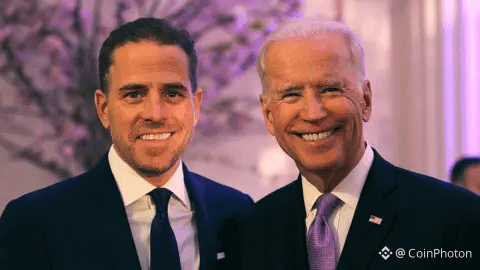
Hunter Biden, son of former US President Joe Biden, said he plans to launch a memecoin called LAPTOP, referencing the laptop that became a major political controversy ahead of the 2020 US election.
The $LAPTOP token is expected to launch on Wednesday with a total supply of 1 billion tokens. According to The Wall Street Journal, about 20% of the supply will be distributed to Substack subscribers, mailing-list members and investors in Donald Trump’s TRUMP memecoin.
The founders are reportedly set to hold 30% of the supply, with up to 30% of the tokens potentially burned based on certain milestones, including a Democratic presidential victory in 2028, Bitcoin reaching a new all-time high, or LAPTOP’s fully diluted valuation surpassing TRUMP’s.
The launch comes as Hunter Biden has become increasingly outspoken on crypto, while also criticizing the Trump family’s involvement in the industry through World Liberty Financial.
If launched as planned, LAPTOP could further highlight the growing intersection between US politics and memecoins, as lawmakers prepare for a Sept. 15 cloture vote on the CLARITY Act.
Hunter Biden, son of former US President Joe Biden, said he plans to launch a memecoin called LAPTOP, referencing the laptop that became a major political controversy ahead of the 2020 US election.
The $LAPTOP token is expected to launch on Wednesday with a total supply of 1 billion tokens. According to The Wall Street Journal, about 20% of the supply will be distributed to Substack subscribers, mailing-list members and investors in Donald Trump’s TRUMP memecoin.
The founders are reportedly set to hold 30% of the supply, with up to 30% of the tokens potentially burned based on certain milestones, including a Democratic presidential victory in 2028, Bitcoin reaching a new all-time high, or LAPTOP’s fully diluted valuation surpassing TRUMP’s.
The launch comes as Hunter Biden has become increasingly outspoken on crypto, while also criticizing the Trump family’s involvement in the industry through World Liberty Financial.
If launched as planned, LAPTOP could further highlight the growing intersection between US politics and memecoins, as lawmakers prepare for a Sept. 15 cloture vote on the CLARITY Act.
The $LAPTOP token is expected to launch on Wednesday with a total supply of 1 billion tokens. According to The Wall Street Journal, about 20% of the supply will be distributed to Substack subscribers, mailing-list members and investors in Donald Trump’s TRUMP memecoin.
The founders are reportedly set to hold 30% of the supply, with up to 30% of the tokens potentially burned based on certain milestones, including a Democratic presidential victory in 2028, Bitcoin reaching a new all-time high, or LAPTOP’s fully diluted valuation surpassing TRUMP’s.
The launch comes as Hunter Biden has become increasingly outspoken on crypto, while also criticizing the Trump family’s involvement in the industry through World Liberty Financial.
If launched as planned, LAPTOP could further highlight the growing intersection between US politics and memecoins, as lawmakers prepare for a Sept. 15 cloture vote on the CLARITY Act.
1
6
9.6k
Log in to explore more content
Join global crypto users on Binance Square
⚡️ Get latest and useful information about crypto.
💬 Trusted by the world’s largest crypto exchange.
👍 Discover real insights from verified creators.
Email / Phone number
Trending Topics
AppleDebutsFoldablePhone
51,215 views
1,006 Discussing
Apple just dropped the foldable iPhone — and the market is paying attention. This isn't just another product cycle; it's a new product category, a new CEO on stage, and a $1,999 price tag that pushes $AAPL further into ultra-premium territory. Foldables are the narrative, and Apple is now the headline.
#appledebutsfoldablephone #EUExtendsCentralContactPointToCASPs #US10YTreasuryYieldHitsHighestSinceNov2023 #BrentCrudeTops$100 #USTreasuryToBuyBackUpTo$6BLongDatedDebt
KimHotbae
·2 Likes
·3k views
TSMCAugustRevenueUp53.3%YoY
12,563 views
364 Discussing
IranSaysReadyToEscalateWarWithUS
16,139 views
363 Discussing